The landscape of refugee resettlement in the United States is changing rapidly, due to policy updates by the federal government and increasingly charged public discourse surrounding immigration. As a result, the futures of refugees and immigrants across the country—and of our new neighbors in the greater Harrisburg area—remain uncertain.
Out of a desire to hear directly from our refugee neighbors, we’ve invited two people and one family living in and around Harrisburg to share part of their stories of displacement and resettlement, along with their perspective on recent events. For further reading about the realities that resettlement agencies are facing, as well as how the community has stepped up to respond in care for newly arrived refugees, find our recently published magazine story, here.
Daria—Ukraine
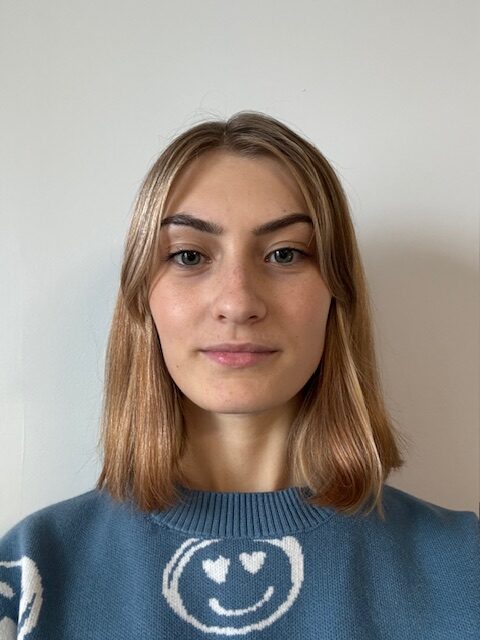
Daria
Daria was only 17 years old when Russia launched its invasion of Ukraine on Feb. 24, 2022. She had just moved from her hometown on Ukraine’s eastern border, Sumy, to Kyiv to start college. Within days of Russia’s invasion, everything changed.
“I didn’t understand what was happening. I was shocked,” she said. “I remember those first few weeks waking up every single morning scrolling through the news, and every single morning the news was horrible. [The day before the invasion] I was just a child doing homework at my college. The next day, I woke up as an adult. I grew up within one day.”
In the midst of the escalating conflict, Daria’s grandparents invited her to come stay with them in central Pennsylvania, where they were longtime residents. As soon as she received the necessary visa and documentation in August 2022, Daria booked a one-way ticket to Harrisburg. The plan was to stay for a few months with her grandparents until things settled down back home. But what was supposed to be three months turned into three years as the conflict continued to escalate and it became clear returning to Ukraine was not safe.
Even in the midst of uncertainty about where she might end up “long-term,” Daria has continued to establish her life in central Pennsylvania. She continues her college program in Ukraine online and will graduate in May, and simultaneously is taking classes at HACC while working full-time, with plans to graduate in December. She also recently got married. Even these significant life events are intertwined with sadness. Her mother and father, who are living in Ukraine and Poland, respectively, have not and will not be able to attend any of these events in person.
“It’s hard to be separated from my family—the most important moments that have happened in my life, my parents have missed. I haven’t seen my mom for almost three years,” she said.
Daria has been living in the U.S. on a humanitarian parole visa, along with roughly 500,000 other Ukrainians fleeing the war. In recent weeks, this has been the topic of much debate in the White House as some members of the Trump administration push for these visas to be revoked.
“I just want to say, people, please stop being afraid of refugees,” she said. “I see a lot of people screaming that there is a refugee ‘invasion’ in America and Europe, and that isn’t true. People are escaping violence and war from their home countries, and come to America to find a better life.”
Statistically, an estimated 1% of the global refugee population will ever be resettled to western countries such as the U.S. or Canada, according to the International Rescue Committee.
In the midst of so much uncertainty, Daria is also finding—and offering—hope in her career, where she supports newly arrived refugees from various countries and helps them navigate the many complex systems in the U.S.
“In my job, I’m responsible for bringing hope to people,” she said. “I’m an optimist. I try to tell people to hold on in the midst of so much happening. Let’s believe things can get better in our communities and in our environments.”
Yaser, Abir, Ayman and family—Syria
Leaving home was never the plan. Yaser and his wife Abir had a wonderful life in Syria, with a thriving business and community. However, as their country’s government became more oppressive, they began to worry. Military checkpoints popped up everywhere, and a new danger was discovered: Yaser shared a name with a man the government was seeking to imprison. At checkpoints, armed guards would glance at Yaser’s ID and try to detain him, not bothering to check any details beyond his name. After this happened multiple times, Yaser and Abir decided it was too dangerous to stay in Syria and fled to Egypt with their children. Their oldest son, Ayman, was 10 years old when they left.
“We had a generous life before leaving Syria, and there was this abrupt change that impacted everything,” Yaser said. “We went from [being in] a good place—having a house, a car, our kids in school—to suddenly having none of these things. We didn’t even say goodbye to our family.”
After three years of scraping by in Egypt, in late 2016, the family received hopeful news: they had been approved to resettle in the United States as refugees. However, just a few short weeks after this first message, a second message arrived that their resettlement was indefinitely on hold. The new U.S. president, Donald Trump, had paused all refugee resettlement and had ordered a travel ban preventing any Syrians from coming to America. Although they did not know it at the time, the family would end up waiting an additional seven years in Egypt. While waiting, they did all they could to set themselves up for success. Yaser kept working, the children enrolled in school, and their oldest son Ayman worked alongside his father while also diligently studying and learning English.
In early 2023, the family received notice that they once again had travel booked to resettle in America, and arrived in Harrisburg that March.
“We were so happy to come to America, and even though the first few weeks were difficult, we had so much help and support,” Ayman said.
Through the combined support of their resettlement agency and a volunteer welcome team, over their first year in Harrisburg, the family found jobs, a car and a community of other Syrians living in America. Ayman’s younger siblings were enrolled in school, and Ayman, 20 years old, began taking college classes at HACC while working full-time. Now, the family, particularly Ayman, spends part of their time coming alongside other Syrians who have recently arrived in the area, helping them navigate the beginning of life in a new country.
However, due to similar executive actions by Trump in his second term, the family is seeing history repeat itself at the expense of their fellow Syrians.
“We are sad to see everything happening, because we felt, ourselves, the effects of Trump’s decisions. The American people are very nice, but the American government is not kind to [our people],” Ayman said.
Since Trump’s inauguration, the federal government has withheld promised funding from resettlement agencies to provide essential services. Many refugees who have arrived in Harrisburg in the past few months are therefore not receiving the support they were promised.
When asked where he is finding hope and encouragement, Ayman shared, “We see that most Americans don’t like what is happening. It is encouraging to see our American neighbors raising their voices and telling the government that they love their refugee neighbors.”
Isabella*—Venezuela
Isabella’s oldest daughter Ria was critically ill, but with no available jobs in Venezuela for Isabella to earn money and pay for Ria’s medical care, staying in Venezuela was not an option. Even if she had the money, there was no guarantee that medical care would be accessible. As Ria’s health continued to deteriorate, Isabella made the difficult decision to cross the border into Colombia with her daughters—her youngest just an infant—in search of lifesaving medical support.
As soon as they arrived, Ria was taken to a hospital, where she stayed for over a month as the doctors tried to stabilize her. Ria needed a liver transplant, and badly. However, because she was not a Colombian citizen, she was denied access to a transplant.
It was at this point that Isabella applied for refugee status, hoping that she and her daughters could be resettled in the U.S., where Ria could finally get the medical attention she needed. They lived in Colombia for six years, finally receiving approval to resettle in the United States in September 2024.
“Some people were telling me we would not be approved because it was ‘just’ my daughter being sick,” said Isabella. “But I thank God the door was opened to us, and we were approved.”
Now, having been in America for just under six months, Isabella reflected on how grateful she is.
“I’ve had an excellent experience, and we are blessed to have a house,” she said.
Her daughters have enrolled in school, and they have very quickly settled into a routine and found support. Ria is in the process of getting a liver transplant, and Isabella is hoping to be her daughter’s donor.
“The people I have met so far have been good to me,” she shared.
Although there have been many challenges, Isabella noted that she has found support from her daughters’ teachers, the school social workers and the hospital social workers. She has also found significant support through her church.
However, Isabella is concerned for many of her Venezuelan friends who are in the U.S. under a Temporary Protected Status (TPS) visa, or waiting at the U.S./Mexico border to claim asylum—both legal immigration statuses that are at risk of being denied.
“People need to be empathetic towards this topic,” she said. “Everyone comes to America with a purpose, and most are good people. My daughter needs a liver transplant, and we are grateful to be here. Many other people are in similar situations, and their health and lives are being denied.”
At the same time, Isabella is also finding hope in this season, particularly from her church and in her Christian faith.
“I find my hope and encouragement in God,” she said. “Trump can be whatever he wants to be, but God is the only one who has the future.”
Finally, Isabella shared that she is encouraged to see how many American people oppose what the government is doing.
“Maybe they should make immigration a subject in the schools here, so more people learn about it,” she said.
*names changed to protect identities
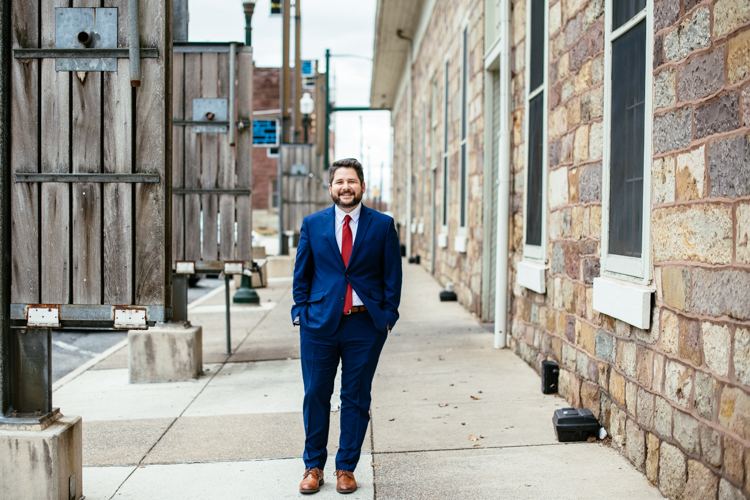
Rebekah Teuscher works for The Meeting House Church-Dillsburg Campus to coordinate volunteer efforts in assisting local refugees in the Harrisburg area.
Read more about the status of local refugee resettlement agencies and volunteer efforts, in our magazine story.
If you like what we do, please support our work. Become a Friend of TheBurg!