Tag Archives: U.S. Department of Housing and Urban Development

Governor’s Square owner moves to change bankruptcy status, seeks more time to find a buyer

Photo by Dani Fresh

The owners of a beleaguered affordable housing complex in Harrisburg are moving to change the status of their bankruptcy filing, as they seek additional time to sell the property.

Uptown Partners, LP, which owns the Residences at Governor’s Square, will seek to convert their bankruptcy filing from Chapter 7 to Chapter 11, according to their attorney, who appeared at a federal court hearing on Tuesday.

The change should give Uptown Partners additional time to market and sell the 222-unit housing development in Uptown Harrisburg, said attorney Robert Chernicoff. Currently, about half of the units are unoccupied.

While no formal offers to purchase the development are on the table, Chernicoff said that there are “people that are talking to us.”

“We are hopeful,” Chernicoff told TheBurg. “We are maintaining the status quo until we can get it sold.”

While looking for a buyer, Uptown Partners has enough money to continue to operate Governor’s Square “for now,” he said.

Chapter 11 is a “reorganization” bankruptcy in which a company formulates a plan to repay creditors, with the hope that it will be able to continue to operate under existing or new ownership. In contrast, Chapter 7 is a “liquidation” bankruptcy that requires the sale of assets to repay creditors.

The Baltimore-based owners of the housing complex filed for Chapter 7 bankruptcy in May, with Chernicoff then stating that Uptown Partners was running out of money to operate the complex.

In June, bankruptcy trustee for the case, Kara Gendron, filed for a dismissal of the case. However, at a hearing in the U.S. Bankruptcy Court for the Middle District of Pennsylvania last week, Chief Judge Henry Van Eck asked Gendron and Chernicoff to come up with another plan and continued the case for a week.

On Tuesday, Gendron and Chernicoff brought forth a new proposal to convert from Chapter 7 to Chapter 11 bankruptcy, which should give Uptown Partners more time to find a buyer for Governor’s Square.

According to Chernicoff, there has been some interest in the property, but, so far, there have been no formal offers to purchase it. The company plans to hire a national real estate broker to attempt to sell Governor’s Square, he said.

The case has been continued until Sept. 26, but that hearing would be cancelled if the filing is converted to a Chapter 11 bankruptcy.

In recent years, the apartment complex has received hundreds of code citations and condemnations from the city, and residents have dealt with issues like mold, rodent infestations and leaky roofs, among other problems. About half the units are currently unoccupied as they have been deemed uninhabitable, Chernicoff said.

At last week’s hearing, Chernicoff said that a concern of entering Chapter 11 bankruptcy would be that the owners continue to rack up code violations from the city and lose more money.

According to Matt Maisel, communications director for the city, the codes department continues to cite Uptown Partners for serious health-related violations, but has backed off citing for less serious violations, such as those related to aesthetics.

Meanwhile, Rhonda Mays of the Fair Housing Council of the Capital Region said that their organization is still receiving regular requests from residents for assistance. Currently, however, there is not much they can do to help, she said.

“We are basically letting people know that the council does not have the information for them,” she said.

The council can refer residents to other housing assistance agencies and encourage them to find other housing, but that’s a difficult task during a housing crisis, Mays said.

Gendron shared previously that she believes that Governor’s Square needs to be sold for at least $12 million or more in order to pay off lien-holders. Separately, the city has stated that $22.5 million is needed to renovate Governor’s Square, based on a building assessment report ordered by the Harrisburg Housing Authority in 2021.

Gendron told TheBurg last week that finding a buyer for the properties also may be hard because of the mortgages and entities involved. For instance, Uptown Partners received an about $9 million federal loan from the U.S. Department of Housing and Urban Development when they acquired Governor’s Square.


If you like what we do, please support our work. Become a Friend of TheBurg!  



Continue Reading

Local officials hail new federal funds to help battle homelessness, housing insecurity in Harrisburg area

City, county and federal officials gathered on Monday in Harrisburg city hall for the check presentation.

The effort to assist unhoused residents in Dauphin County received a boost on Monday, as area officials announced a multi-million federal grant to help battle housing insecurity.

In the MLK Jr. City Government Center, Harrisburg and Dauphin County officials were on hand to accept a $2.3 million check from the U.S. Department of Housing and Urban Development (HUD), money that will help area social service groups assist people who are homeless or at risk of becoming homeless.

“Thanks to HUD, $2.3 million is coming back into Harrisburg and Dauphin County to give groups like CACH [Capital Area Coalition on Homelessness] the tools we all need to give our unsheltered men, women and children the shelter they desperately crave,” said Mayor Wanda Williams.

Dauphin County/Harrisburg is one of 32 communities throughout the country selected to receive the competitive “continuum of care” grant, according to Matthew Heckles, HUD Regional Administrator, Region III, Mid-Atlantic.

“It’s not just enough to give someone a roof over their head, but also to provide the supportive services that they need to address the challenges that they face,” he said at the event. “They must be able to address those challenges while knowing that their housing is secure.”

According to Heckles, the federal government’s goal is to reduce homelessness nationwide by 25% by 2025. In January 2022, the annual “point in time count” found 423 homeless individuals in Dauphin County, including 64 living on the streets at that time, he said.

During the half-hour check presentation ceremony in city hall, HUD also announced that it would provide five additional “stability” vouchers that help with emergency housing for Dauphin County residents.

The three-year, $2.3 million grant will be distributed to several social service organizations already addressing housing insecurity and homelessness in Harrisburg and Dauphin County, said Dennise Hill, the president of CACH and the city’s director of building and housing development:

  • CACH will receive $91,030 for its homeless management information system.
  • Christian Churches United of the Tri-County Area will receive $549,784 for unsheltered rapid re-housing to quickly rehouse people experiencing homelessness; $341,800 for coordinated entry services; and $270,450 for street outreach.
  • Gaudenzia will receive $491,814 for unsheltered permanent supportive housing.
  • Scholars Inc. will receive $582,381 for Thrive Housing, joint transitional housing and rapid rehousing.

“As we all know, the need is often greater than the resources,” Hill said. “These funds will help to expand the capacity of the dedicated service providers doing incredible work as it pertains to homelessness in the city of Harrisburg and the CACH network.”

If you like what we do, please support our work. Become a Friend of TheBurg!
Continue Reading

Otto Banks announces for Harrisburg mayor, stresses qualifications, inclusiveness

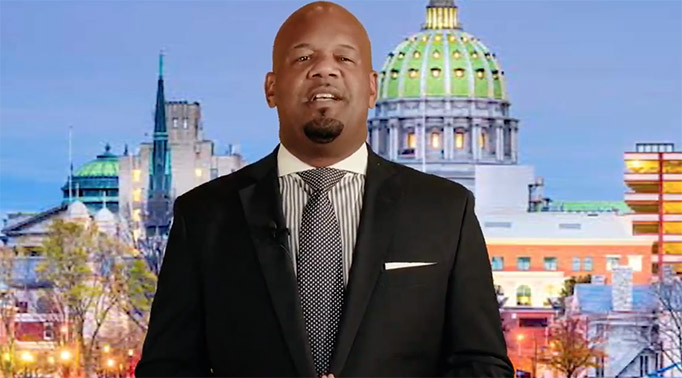
A screen shot of Otto Banks, from his announcement video on Tuesday night

Former Harrisburg City Council member Otto V. Banks made it official on Tuesday night, joining an increasingly crowded field of candidates for city mayor.

During a virtual announcement, Banks confirmed that he would seek the Democratic nomination for the city’s top elected office.

“Harrisburg has so much potential,” Banks said, making his announcement via an hour-long streamed video. “There’s nothing that we can’t achieve if we don’t come together and unify. We need to build a city that’s fair, accountable, inclusive and respectful.”

Banks is the fourth person who has stated his intention to run for Harrisburg mayor as a Democrat.

Last week, David Schankweiler, the former publisher of the Central Penn Business Journal, officially announced his candidacy, and city resident Lewis Butts recently stated on Facebook that he would make a third try for the office. Incumbent Mayor Eric Papenfuse has told TheBurg that he intends to run for a third term.

In his video, Banks, who served a single term on council from 2003-07, described a childhood growing up in houses in the city’s Capitol district and in Uptown, as well as his vision for the city, which, he said, includes promoting the arts, encouraging redevelopment and fostering opportunity.

“My sole job and purpose is to restore our collective hope and dreams of what Harrisburg can be by rebuilding our neighborhoods, creating safe and secure communities, targeting resources, growing local businesses, securing jobs for our residents and building a city where people want to come, stay, live and, above all, prosper,” he said in the video.

According to his online resume, Banks has served since 2010 as executive director of the Harrisburg-based nonprofit REACH Foundation and Alliance, which, on its website, describes itself as “champions of school choice for Pennsylvania families.” Prior to that, he served as a deputy assistant secretary for the U.S. Department of Housing and Urban Development under former President George W. Bush.

Until last year, Banks had been a registered Republican for over a decade. In his video, he said that he became a Republican because he felt he could do the most good for the community by switching parties from Democrat to Republican.

He said that he switched back to Democrat last year, nearly 3½ years into the Trump presidency, because he found “it impossible to be part of a party that is being led by someone who I believe is a racist.”

Last year, Banks also bought a house in Harrisburg, on the 1200-block of S. 19th Street, according to Dauphin County property records. According to the county, he still owns his long-time house in Swatara Township, which he bought in 2007 and which the county still lists as his mailing address.

Candidates for office are allowed to begin circulating their nominating petitions on Feb. 16, with a filing deadline of March 9. The municipal primary is slated for May 18.

Click here to watch the YouTube video of Banks’ mayoral candidacy announcement.

Support quality local journalism. Become a Friend of TheBurg!

Continue Reading

More grant money available for small businesses, nonprofits hurt by the pandemic

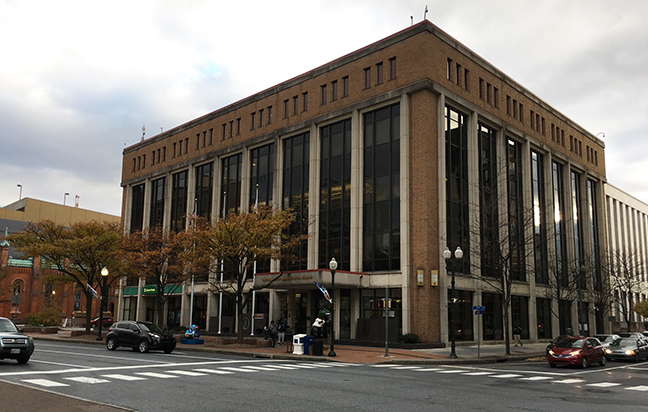
The Dauphin County administration building in downtown Harrisburg

If you have a small business or nonprofit in Dauphin County, you may be eligible for another round of grant money.

The county commissioners have announced that another $1.15 million is available through the Dauphin County COVID-19 Small Business Assistance Grant Program.

Through the program, funded with federal dollars, applicants are eligible for up to $20,000 or three months of operating expenses, whichever is less.

“We are thankful that the U.S. Department of Housing and Urban Development provided the second round of grants to help small businesses and nonprofits, who are still struggling,’’ said Commissioner Mike Pries.

The application deadline is Dec. 31.

Eligible businesses or nonprofits must be located in the county and have 100 or fewer employees. Applicants must also serve a low-to-moderate income area or employ 51 percent or more low-to-moderate income workers.

While applicants that received previous coronavirus-related assistance can still apply, the amount of funding previously received will be considered in awarding grants, according to the commissioners.

“The pandemic continues to be a hardship, especially for smaller businesses and charities,’’ said board Chairman Jeff Haste. “We appreciate how important their services and jobs are to our community and want to do what we can to help them keep the doors open.’’

In the spring, the commissioners awarded $10,000 and $20,000 grants to more than 70 businesses through an initial HUD funding round. Additionally, in October and November, the commissioners presented $17 million in federal Coronavirus Aid, Relief and Economic Security (CARES) Act grants to 20 municipalities, 190 small businesses, and 71 nonprofits.

“We especially encourage those businesses and nonprofits that have not already received some assistance to apply,’’ said Commissioner George P. Hartwick, III. “While we cannot replace all the losses and expenses caused by the pandemic, we hope the relief we provide can keep them going until everything is at least somewhat back to normal.’’

Click this link to view online application for the Dauphin County COVID-19 Small Business Assistance Grant Program.

Support quality local journalism. Become a Friend of TheBurg!


Continue Reading

Harrisburg to continue, accelerate lead abatement program with new federal grant

Uptown Harrisburg resident Joanne Chisolm spoke at a press conference today on lead abatement funding.

Harrisburg’s lead abatement efforts got a huge boost today, as the city announced a major federal grant.

In a press conference at city hall, federal, state and local officials joined together to announce that Harrisburg will receive $5 million from the federal Department of Housing and Urban Development’s Lead Based Paint Hazard Reduction grant program and $600,000 from its Healthy Homes Supplemental program.

“With the aging housing stock we have in Harrisburg, we have a lot of lead paint,” said Mayor Eric Papenfuse. “But now with the assistance of HUD, we’ll be able to move our lead abatement efforts forward for years to come.”

The funding covers five years of lead paint analysis and removal throughout the city, Papenfuse said.

The city’s program is open to residents who meet certain conditions, including income requirements. It’s been show that children who eat chipped, lead-based paint can experience learning disabilities and behavioral problems.

HUD’s Joe DeFelice, Harrisburg Building and Housing Director Franchon Dickinson and Harrisburg Mayor Eric Papenfuse pose with a ceremonial check.

HUD recently announced $319 million in funding throughout the country for its Lead Based Paint Hazard Reduction grant program and supplemental program, including $22 million for six jurisdictions throughout Pennsylvania.

Locally, besides Harrisburg’s funding, Lancaster is receiving $9.1 million through the grant program and another $600,000 through the supplemental program.

The grant marks the return of federal funds for lead abatement in Harrisburg. The city’s previous federal grant of $3.7 million expired last December. This year, Harrisburg has continued its program though a one-year, $986,245 state grant.

“The funding will enable professionals to evaluate the living conditions in the house and then address the lead hazards found there,” said Joe DeFelice, HUD’s Mid-Atlantic regional administrator.

Speaking at the event, city resident Joanne Chisolm said that Harrisburg’s program has allowed lead to be removed from her Uptown house, where she also runs a part-time daycare center.

She said that her house first was analyzed for lead and that, when it was discovered, she was put up in a hotel for 1½ weeks while the remediation took place, all at no cost to her.

“It was a wonderful experience,” she said. “The work was professionally done.”

Click here for more information on Harrisburg’s Lead Hazard Reduction Program.

Continue Reading

Harrisburg Council hears that finances steady; major lead abatement grant received; leaf collection starts

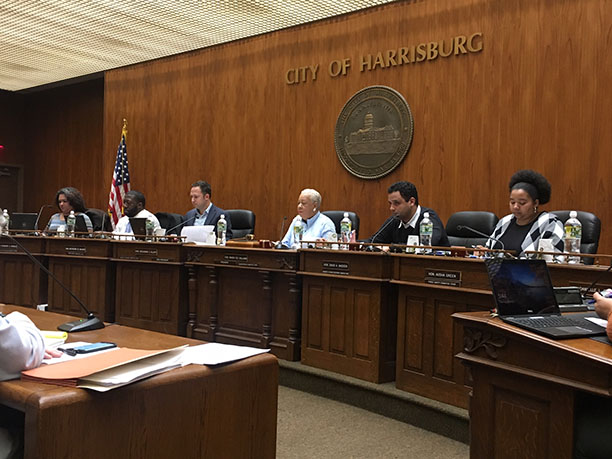
Harrisburg City Council during Tuesday’s work session

The first six months of Harrisburg’s financials are in the books, and what’s the verdict?

Steady as she goes, according to the city’s finance and budget officials, who gave an update on Tuesday night to City Council.

At a council work session, city Budget Manager Erika Regalado said that, for the first two quarters of 2019, revenues came in about on budget. Property tax revenue was flat, but local income taxes came in stronger than expected, indicating a robust local employment picture.

“The economy is steady and it’s growing, and unemployment is low,” she said.

Her presentation echoed the one that Bruce Weber, director of the city’s Bureau of Financial Management, offered last week to the Intergovernmental Cooperation Authority, a state-appointed body tasked with approving a five-year financial plan for the city.

On Tuesday night, Weber said that he expected current trends to continue through the rest of the year.

“There aren’t any surprises, hopefully,” he told council members.

The city’s 2019 budget totals nearly $110 million, which includes a $70.8 million general fund, a $20.6 million neighborhood services fund and a $9.8 million debt service fund.

In other city news, Harrisburg announced late on Tuesday that it received a $5.6 million federal grant to continue the city’s lead abatement program.

“That’s more than we’ve ever received before,” said Mayor Eric Papenfuse. “It’s good news for the city. It means we’ll be able to continue our lead efforts into future years.”

Specifically, Harrisburg will receive $5 million from the federal Department of Housing and Urban Development’s Lead Based Paint Hazard Reduction grant program and $600,000 from its Healthy Homes Supplemental program. The money will allow the city’s Department of Building and Housing Development to provide lead prevention and healthy homes activities on 480 units within Harrisburg’s Opportunity Zones.

Harrisburg also announced that its leaf collection began on Tuesday and will continue through Dec. 1.

To have their leaves collected, residents should put leaves in brown paper bags and leave them curbside the night before street sweeping. Alternatively, residents can pile leaves into streets the night before street sweeping, but should be careful not to block storm drains, the city said.

Continue Reading

Harrisburg shakes up process of applying for federal housing funds

Harrisburg City Council on Tuesday night.

Harrisburg agreed on Tuesday to switch up the process of how it distributes its annual allocation of federal housing funds.

City Council unanimously passed ordinances that will substantially change how nonprofit organizations apply for the U.S. Department of Housing and Urban Development’s Community Development Block Grant (CDBG) funds.

Previously, community groups—called “sub-recipients”—applied for grants that were individually approved by council.

Now, the sub-recipients will have to respond to a “request for proposals” that is being issued by the city. All interested applicants then will have to attend a mandatory workshop on Sept. 10 at the city Public Works building and submit their final applications by Sept. 20.

Moreover, organizations will have to apply from two separate funding buckets.

Of the $1.94 million in total CDBG funding, the city is setting aside $100,000 for “public service activities,” which includes most programming activities. It then has allocated another $407,261 for “public improvement/public facilities,” which includes most facility and building projects.

In the past, funds for these activities had been combined into a single application process and source of funds. However, HUD recently instructed the city to separate operational projects from infrastructure projects.

“The primary reason for this change is so we can get those dollars separated properly,” said Franchon Dickinson, director of the city’s Building and Housing Department. “Nonprofits can apply for both public services and public facilities dollars, but have to apply separately.”

The city will favor applications that show that a service is new or has demonstrated a quantifiable increase in a level of service over the last 12 months, said Dickinson. In addition, she said that HUD prefers to fund senior enrichment programs or programs geared towards special needs populations.

Dickinson said that a scoring matrix will be used to judge applications and determine who will receive funding. City Council then will approve the contracts with the sub-recipients, said city Business Administrator Marc Woolley.

Other CDBG allotments included:

  • $593,423 for debt service, as the city continues to pay down a federal loan it guaranteed under former Mayor Steve Reed for the disastrous Capitol View Commerce Center project
  • $387,670 for grant administration
  • $250,000 for homeowner rehabilitation
  • $200,000 for emergency demolition

Representatives from several social service agencies attended Tuesday’s meeting, speaking publicly to stress how important CDBG funds are for them.

“I hope the available funding will be such that it can help groups such as CRAM,” said Juanita Grant, director of Christian Recovery Aftercare Ministry (CRAM), which assists those recently released from prison. “We really do need that money. We really do need help to help the people in the community.”

Dickinson said that the city is now conducting a reconciliation of disbursals in recent years, matching allocations with expenditures. It’s possible, she said, that additional funds could be available following the results of that reconciliation.

Several council members complained that the allocation process this year started late and now seems rushed.

Dickinson primarily blamed HUD, which she said met with city officials only in June, leading to the unexpected change in process. She pledged that next year’s process would go more smoothly.

“We’ll be ready to go early,” she said. “We should be able to provide a timeline for next year by the end of this year.”

Council President Wanda Williams urged her to begin the 2020 process as soon as possible.

“I want to make sure next year that we have this information in front of us well before we vote,” she said.

Continue Reading

Harrisburg must act quickly on HUD funding; council puts hiatus on hold

Harrisburg City Council on Tuesday night

Harrisburg City Council had a fine plan on Tuesday night to tie up some loose ends and then clock out for seven weeks for summer recess.

It didn’t work out that way.

Instead, council members will need to return to work at least twice over their summer break or risk losing millions of dollars in federal housing money that funds everything from low-income home repairs to at-risk youth programs to paying off a federal loan.

The city blamed the change of plan on the U.S. Department of Housing and Urban Development (HUD), which issued its notice of funding to Harrisburg on June 10, several months later than usual.

The late notice gives the city just two months to scramble to work with a new technical consultant, determine allocations, hold a public hearing, have a month-long public comment period and finalize its ordinances, all before a mid-August deadline.

“We are under a crunch that is substantial,” said Mayor Eric Papenfuse.

The city now must prepare three ordinances by Friday, including one for the popular Community Development Block Grant (CDBG) program.

The city uses this grant, which, in recent years has totaled about $2 million, for city-run housing rehabilitation projects, to help support social service groups and, in recent years, to help pay off the outstanding federal debt associated with the disastrous Capitol View Commerce Center project.

The Friday deadline is necessary so that the city has enough time to properly advertise the meeting for Tuesday evening, when both the action plan will be introduced and a mandated public hearing will be held.

A 30-day comment period will follow, leaving council with just days to meet again on Aug. 6, pass a final ordinance and send it to HUD to make the federal agency’s deadline.

“It’s an all-hands on deck situation,” said city Solicitor Neil Grover.

Papenfuse is holding out some hope that HUD may extend the deadline, but said that the city can’t count on that.

“We’d be asking you to come back twice during your recess,” he told council. “If the federal government would extend the deadline, then you wouldn’t have to come back in August.”

Tuesday’s lengthy, three-hour meeting was marked by periods of bickering between the administration and some council members, especially over the process for re-appointing finance director Bruce Weber to his position.

Council members objected that they needed to act immediately on Weber’s appointment, as his 120-day period serving as “acting” director, following an administrative restructuring, was expiring. After heated exchanges between Papenfuse and several council members, the appointment was approved by a 6-1 vote.

However, in the case of the CDBG funds, both the administration and City Council were on the same page, agreeing that HUD deserved the blame.

“A lot of this is coming down from the federal government,” said Councilman Westburn Majors. “We are acting as expeditiously as possible on this HUD CDBG funding.”

Continue Reading

Harrisburg renews effort to fight lead paint hazards in city homes

Harrisburg City Council during Tuesday’s work session

Harrisburg is known for its historic homes, which often have such touches as wide moldings, pocket doors and ceiling medallions.

Sometimes, those houses have something else much less desirable—lead-based paint.

Therefore, the city government wants residents to know that it is seeking applicants for its 2019 lead paint remediation program, an effort aimed at lower- and moderate-income owners and renters.

“It’s not just homeowners,” said Franchon Beeks, program manager and interim director of the city’s Department of Building and Housing Development. “We need more tenants and landlords to be aware of the program.”

The program is open to city residents who meet certain conditions, including income requirements (50 to 80 percent of median family income) and having children in the household younger than 6 years old, since eating chipped, lead-based paint can result in learning disabilities and behavioral problems. In addition, the housing unit must have been built before 1978.

Beeks spoke on Tuesday night during a Harrisburg City Council work session, offering council members a recent history of the program and a look at plans for 2019.

She told council that a federal Department of Housing and Urban Development (HUD) “Lead Hazardous Reduction Demonstration” grant for $3.7 million had expired on Dec. 31. However, last week, the city received notice that the Pennsylvania Department of Health had approved a one-year, $986,245 grant, allowing the lead paint control and remediation program to continue through 2019.

Beeks’ presentation wasn’t all good news.

She started by saying that the three-year HUD program got off to a slow start. By June 2017—halfway through the grant period—the city had fallen 20 units short of its benchmark of 70 remediated units. By Sept. 30, 2017, the city had fallen even further behind its goal, completing just 63 of an expected 100 units.

HUD then cited Harrisburg as “noncompliant,” the program manager resigned and Beeks was hired to replace him.

“We had a real problem with this grant,” said Mayor Eric Papenfuse. “We brought on Franchon, and, since then, things have really come around.”

By the end of the grant period in December, the city had completed 181 units, one more than its benchmark of 180. Still, the city left about $1 million of the grant money unspent, but that was largely because the average cost-per-unit, at $9,600, was far below the benchmark cost, Beeks said.

Susan Brown-Wilson, a former city councilwoman who is now client outreach and relocation coordinator for the program, said that they generated interest in the program by speaking before many organizations, attending numerous events and passing out information.

“We blanketed this entire city with flyers,” she said. “We did a lot of footwork to get the applications we received.”

Beeks and Brown-Wilson said that they expect to make the same outreach effort this time around, with a goal of remediating 70 units by year-end. They even plan to include program information in the city’s monthly sanitation bills.

“Having mailers in the trash bill will help with the visibility of this program,” said Councilman Westburn Majors.

To date, most of the participants have been homeowners, but Beeks said that she would like to reach more landlords and renters, as renters make up a large percentage of the city’s lower-income residents. Reaching this population has proven to be difficult, she said, even though the cost of relocation and temporary accommodations–necessary while the work is performed–is also paid through the program.

Looking forward, Beeks said that the city plans this year to apply for the next federal HUD grant, which will run from 2020 to 2023.

“For the next grant, we hope to increase our units,” Beeks said.

Click here for more information on Harrisburg’s Lead Hazard Reduction Program or call 3-1-1 and request an application.

Continue Reading

Council Roundup: HBG council passes sanitation, funding measures before summer recess.

Harrisburg City Council at tonight’s legislative session.

Harrisburg City Council passed new sanitation laws and disbursed more than $2 million in federal grant funds on Tuesday night before adjourning for summer recess.

Over the course of a four-hour meeting, council made sweeping changes to laws governing trash and recycling collection violations in the city. The city’s new sanitation code establishes harsher fines and new enforcement powers, effective immediately.

Despite the lobbying of the city treasurer, council members rejected a provision that would have inaugurated annual trash billing. The city will continue to send homeowners and businesses monthly bills for trash services.

Treasurer Dan Miller said tonight that the proposed billing structure would save the city thousands of dollars in labor costs and increase its collection rate. But Councilman Westburn Majors, chair of the public works committee, said that many residents objected to the provision at public hearings.

Under the annual billing system, residents would have been billed their annual trash collection fee – more than $400 per household – at the beginning of each year. Residents could pay in one lump sum or pay monthly installments via direct deposit from their bank accounts.

Majors said that some residents were worried about the upfront costs of the annual payment or objected to sharing banking information with the city. The provision also did not subject commercial accounts to the same annual billing practice, he said.

“The goal is to treat residents and commercial property owners the same,” Majors said.

Under the new ordinance, owners of vacant properties will no longer be billed for trash services at those parcels. Council added an amendment tonight requiring all vacant property owners to apply for a vacant property exemption, which will be valid for one year pending approval from the city’s Department of Public Works.

The hallmark of the new sanitation code is a new fine and enforcement structure, aimed at curbing illegal trash disposal across the city.

Under the new ordinance, serious offenses – including illegal dumping, accumulation of trash exceeding 1,000 pounds, improper waste disposal and failure to register as a private trash hauler – are considered category 1 violations, punishable by a $1,000 fine or up to 90 days in jail.

Category 2 violations include failure to bag waste, obstruction of streets and sidewalks or interference with enforcement and will be met with fines starting at $100. Fines will increase up to $500 for each subsequent offense.

The ordinance also permits the Public Works Department to designate enforcement officers to patrol public streets for violations, and it authorizes police officers to issue citations and enforce the ordinance.

Council also voted to disburse $2 million in funds from the Community Development Block Grant, a program of the federal Department of Housing and Urban Development.

More than a dozen local nonprofits and city departments will receive grants ranging from $5,000 to $300,000.

Mayor Eric Papenfuse vetoed the allocations that council passed last week. He objected to a last-minute amendment granting $15,000 to Breaking the Chainz, an eligible organization that submitted an incomplete application.

Rather than override his veto, council tonight struck down that amendment and reverted back to the awards proposed by the city’s administration weeks ago. These are:

  • Christian Recovery Aftercare Ministries (C.R.A.M.): $40,000
  • TLC Work Based Training: $45,000
  • A Miracle 4 Sure: $50,000
  • Latino Hispanic Community Center: $25,000
  • Fair Housing Council: $25,000
  • PPL/IN HOUSE: $20,000
  • Shades of Greatness: $15,000
  • Heinz-Menaker Senior Center: $25,000
  • Neighborhood Dispute Settlement: $5,000
  • TriCounty HDC: $250,000
  • Habitat for Humanity: $100,000
  • Housing Rehabilitation Programs (city-run): $321,642

More than $600,000 of the $2 million grant will go to debt service, and $400,000 will reimburse the city for CDBG administration.

Council also approved a new, five-year labor contract with the city’s firefighters tonight, which will lock in 2-percent annual wage increases and establish a new policy to increase retention. Under the new contract, any firefighter who resigns from the city within that five-year period must reimburse the Fire Bureau $5,000 in training costs.

Lastly, council passed a resolution reestablishing Harrisburg’s Environmental Advocacy Council, a seven-member body that will be filled by appointments by council and the mayor’s office.

City council is not scheduled to meet again until Aug. 29. However, it may have to convene a special session once the city receives its Act 47 exit report from the state Department of Community and Economic Development on July 9.

Continue Reading