Tag Archives: Tom Wolf

A weary Harrisburg awaits presidential election results, as other races favor incumbents

State Street in Harrisburg

Lana Williams describes herself as “beyond tired.”

The 27-year-old Harrisburg resident said that she stayed awake “long past midnight” to see if there would be a final call on the U.S. presidential race between incumbent Donald Trump and Democratic challenger Joe Biden.

“I was all amped up,” she said. “I finally went to bed but still couldn’t sleep.”

Welcome to election week 2020.

On Wednesday morning, a bleary, quiet capital city arose to try to carry on with the usual workday routine, but some found that difficult to do.

“I keep checking my phone,” Williams said, as she awaited new vote updates.

On Tuesday night, Trump led Biden statewide by margin of 55% to 44%. However, many jurisdictions, including some of the most populous counties, still hadn’t tallied all of their mail-in ballots.

As of noon on Wednesday, almost half of the nearly 2.6 million mail-in votes still had to be counted, according to the PA Department of State. Under state law, counties must count mail-in votes postmarked by Election Day, Nov. 3, and received by Friday, Nov. 6.

Locally, Cumberland County did not even start counting its mail-in votes until today.

Statewide, 1.67 million registered Democrats voted by mail or absentee, as did 612,122 registered Republicans, according to the Department of State.

At a press conference this morning, Gov. Tom Wolf urged patience as many county election officials continued to tally mail-in ballots.

“The promise of democracy is that every vote counts,” he said. “I intend, here in Pennsylvania, to make sure we keep that promise.”

He said that the vote counting could continue for several days.

“We may not know the results even today, but the most important thing is that we have accurate results, again, even if that takes longer than we’re used to,” he said.

In Harrisburg, a nonprofit group called We the People—Pennsylvania has scheduled a rally “to count every vote” today at the state Capitol at 5 p.m.

In contrast to statewide data, Dauphin County mostly completed its vote count by the wee hours of Wednesday morning. County voters favored Biden over Trump by more than 8 points–53.25% vs. 45.06%, with most votes counted.

Locally, two of the area’s hottest political races were leaning Republican as of noon on Wednesday.

In PA’s 10th congressional district, Republican incumbent Scott Perry held a 59% to 41% advantage over Democratic challenger Eugene DePasquale, though mail-in votes still had to be counted in Cumberland County.

For state Senate, incumbent Republican John DiSanto held a 3.5-point lead over Democratic challenger George Scott for the 15th Senatorial District, with most of the votes counted.

For the state House, Rep. Patty Kim (D-103) ran unopposed for re-election, so will serve another two-year term. Just over the city line, long-time incumbent, Rep. Sue Helm (R-104), will also serve another term, beating back a challenge from Democrat Patty Smith by an 11-point margin, with most votes counted.

For the latest vote updates, visit the PA Department of State website.

Support quality local journalism. Become a Friend of TheBurg!

Continue Reading

Harrisburg organizations seek state grants for large-scale development projects

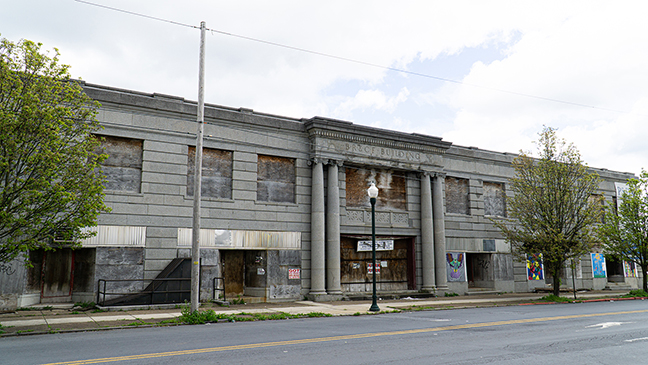
The Hudson Building on N. 6th and Maclay Streets.

Several Harrisburg companies and organizations soon will find out if they will receive state grant money for their large-scale redevelopment projects in the city.

On Friday’s edition of Community Conversations with Mayor Papenfuse, the city’s weekly Facebook Live event, the mayor spoke with several Harrisburg-based applicants who are seeking funds under the state’s Redevelopment Assistance Capital Program (RACP).

“Some of these aging, larger structures in Harrisburg have tremendous fixed costs,” Papenfuse said. “Those costs can really overwhelm an organization which is trying to maintain them.”

The City of Harrisburg is requesting the most money of the nine local applicants. It is asking for $8 million to renovate the MLK City Government Center.

The RACP funding would push forward a plan to increase accessibility and community use of the building, explained Marc Woolley, the city’s business administrator.

Starting at the first floor, the city plans to soften the current cold, brutalist architecture with an overhang on the exterior of the building and a more welcoming lobby space with tables inside. Woolley said the city would add a small business incubator space, as well. Improvements to the other three floors would follow.

“We want to take hold of the namesake of the building—the Martin Luther King Jr. Government Center,” Woolley said. “It’s really about community fairness and accessibility.”

Many types of organizations, both public and private, are eligible for RACP funding. The annual program is for regional economic, cultural, civic, recreational and historical improvement projects, according to the PA Office of Budget.

Leaders of The Bridge Ecovillage hope to secure a significant amount of funding for their renovation of the former Bishop McDevitt school building in Allison Hill. Chief Executive Officer Gary Gilliam said the requested $2 million would go towards beginning construction, installing HVAC and sprinkler systems, roofing and electrical work, among other items.

“Getting that initial funding is paramount to getting the project to succeed,” Gilliam said.

The historic improvement aspect is emphasized in applicant Mighty Group Holdings LLC’s Hudson Building project. Owner Adam Maust is asking for $3 million to renovate the 45,000-square-foot building at N. 6th and Maclay streets.

“For projects of this scale, the cost grows quickly,” Maust said. “This would allow us to get started soon.”

Maust said that he is still considering ideas for what the building will hold, but he is leaning towards an educational aspect and a grocery store.

Marc Kurowski, president of city-based K&W Engineers, also spoke of how the grant money would help fund plans to update and upgrade the historic King Mansion on the 2200-block of N. Front Street. The building serves as K&W’s headquarters, but includes event space, which is used for weddings and large events.

In Harrisburg, other projects that have applied for RACP funds include:

  • Judicial Office Center at Midtown, $3.7 million, to partially fund a five-story, 75,000-square-foot office and retail building, with a separate five-story parking structure, on a 1.5-acre site between Reily, Boyd and Fulton streets, by KevGar HoldCo LLC
  • Harrisburg Scottish Rite Cathedral, $1.38 million, for extensive building renovations and upgrades
  • Presbyterian Apartments, $2.5 million, for rehabilitation to the senior citizen high-rise downtown
  • Whitaker Center, $1.45 million, for building upgrades and renovations and to construct a new STEAM education and innovation studio
  • Olde Uptown Neighborhood Revitalization, $5 million, to continue acquisition and renovation of blighted properties, by WCI Partners LP

Typically, about one-third of applicants statewide receive RACP funds each year and often in lesser amounts than requested.

“We really have a wide array of really interesting projects being proposed for Harrisburg,” Papenfuse said. “For large-scale building projects, there is a need and role for this program.”

Local representatives including Sen. John DiSanto, Rep. Patty Kim (D-Dauphin) and Gov. Tom Wolf’s office will have the say in who is selected for the grant, Papenfuse said. A decision is expected by the end of the month, he added.

“From the city’s perspective, we hope we can fund all the projects,” Papenfuse said.

To view past Community Conversations, visit the city’s YouTube channel. For more information, visit www.budget.pa.gov/Programs/RACP.

Disclosure: Alex Hartzler, co-publisher of TheBurg, is a principal with WCI Partners.

Support quality local journalism. Join Friends of TheBurg today!


Continue Reading

Arts Aid: State grants give boost to arts groups hurting amid COVID-19

The exterior of the Susquehanna Art Museum in Harrisburg

The financial picture is a little rosier today for capital region arts organizations.

Gov. Tom Wolf announced $20 million in grant funding Tuesday for the state’s cultural and arts institutions, including a combined $308,978 headed to eight Dauphin County organizations.

“We applied because we had a tremendous loss, in that we couldn’t do anything to raise money while we were in the situation of still having to pay expenses,” said Alice Anne Schwab of the Susquehanna Art Museum (SAM), which received $25,000.

“Our utility costs are huge—we pay over $5,000 a month for utilities alone,” she said.

SAM’s current annual budget is $650,000, trimmed from 2019-20’s operating expenses, which were just shy of $800,000. The Harrisburg museum was closed to the public for 72 days, but reopened in early June with safety protocols in place.

State funding, called the “COVID-19 Cultural and Museum Preservation Grant Program,” is designed to offset lost revenue by eligible cultural organizations and museums that closed due to the governor’s disaster emergency proclamation in March. The money originates from federal CARES Act funds.

The largest Dauphin County grant recipient is the Harrisburg Symphony Association, to the tune of $64,160.

“This is a powerful expression of Pennsylvania’s values—$20 million to arts and culture—that’s huge,” said Matthew Herren, executive director of the Harrisburg Symphony Orchestra. “We don’t only improve quality of life, but we all contribute to the state’s economy.”

Herren said the grant will help offset lost revenue from ticket sales. The symphony’s annual budget is $3 million, with $1 million of that typically derived from ticket sales.

A number of HSO concerts were canceled due to COVID-19 at the conclusion of the 2019-20 season. The upcoming season’s plans will soon be announced, with “Masterworks” and pops performances available on demand—recorded by small, socially distanced orchestras. Additionally, favorite past performances will be brought out of the archives. The 78-member symphony typically reaches an annual audience of 30,000.

“The pandemic, if there’s a silver lining, has brought arts organizations together on a national scale for intense conversations because we’re all facing obstacles,” Herren said, citing statewide conference calls organized by the Pennsylvania Council on the Arts.

Harrisburg’s Gamut Theatre Group received a $25,000 grant that will help pay the pared-down staff’s salaries.

“Right now, we are $120,000 down from where we were last year, but I have to also say that many individuals have really been generous,” said Melissa Nicholson, Gamut’s executive director. “We’ve received a lot more donations than what we normally do—$30,000 more to date.”

Gamut’s budget of $520,000—based on the calendar year—is experiencing a roller coaster ride in 2020. The theater was shut down exactly six months, from March 12 to Sept. 12. For the purposes of the grant, Gamut reported their income during the March through July period as $19,000—nearly all of which was earned during the first two weeks of March. Over that same time period, Gamut typically earns $147,000.

“There’s a part of this that you can’t quantify with numbers—that’s the thing with cultural organizations,” Nicholson said. “Our reopening weekend, for example, was very emotional—a lot of people in the audience said they started to cry when the performance started.”

Gamut reopened with digital classes and live theater offerings featuring pick-your-own price ticketing, because “we’re thinking of the community,” Nicholson said. Performers are living within a quarantine bubble, and Gamut is utilizing a socially distanced, 51-person seating chart within the 200-seat theater—operating at 25% capacity rather than Wolf’s 50% allowance. They’re relying on guidelines from the organization Event Safety Alliance and a highly detailed risk assessment based on the Harvard Global Health Institute.

Additional Dauphin County grant recipients include The Hershey Story: The Museum on Chocolate Avenue ($60,237); AACA Museum at Hershey ($45,625); The National Civil War Museum ($38,956); the Hershey-Derry Township Historical Society ($25,000); and the Pennsylvania State Police Museum ($25,000).

A total of 23 central Pennsylvania museums and arts organizations are receiving grants, including the Gettysburg Foundation, which operates Gettysburg National Military Park’s Museum & Visitor Center. Their award is the region’s largest at $463,346.

Also nearby, the Carlisle Regional Performing Arts Center and Mount Gretna’s Gretna Productions Inc. are both receiving $25,000.

Within the state, 164 organizations—including zoos—received grants. The program was financed by The Commonwealth Financing Authority, an agency under the umbrella of the Department of Community and Economic Development.

Back at SAM, Schwab said the award comes during a wave of positive news. Last weekend, 352 people came through the museum’s doors during the city’s annual Gallery Walk, and “people seem to be really excited” about the upcoming “A Virtual Night at the Museum” gala.

“Maybe it’s silly of me to be optimistic, but I really see this as a time for some new ideas,” Schwab said. “We’re not going to meet challenges by doing things the same way.”

Plans are underway to develop SAM’s outdoor green space and parking lot, and replace its van, all within an initiative called “Art Beyond the Walls.”

SAM was also recently awarded a grant from Art Bridges, the foundation attached to Crystal Bridges Museum of American Art, launched by philanthropist Alice Walton of Walmart’s founding family. The Art Bridges grant underwrites two weekend staff positions at SAM.

“We are the first museum in the country they’re doing this grant program with, on visitor engagement,” Schwab said.

Crystal Bridges is also partnering with SAM to assist with educational programming for its next exhibit, “The Modernists: Witnesses to the 20th Century,” which opens Oct. 10.

“It includes art that ironically took place during the pandemic 100 years ago,” Schwab said. “We had no idea when we planned the exhibit that we would be experiencing another worldwide pandemic.”

Support local journalism! Become a Friend of TheBurg today!

Continue Reading

Commonwealth to allow restaurants to double indoor capacity to 50 percent

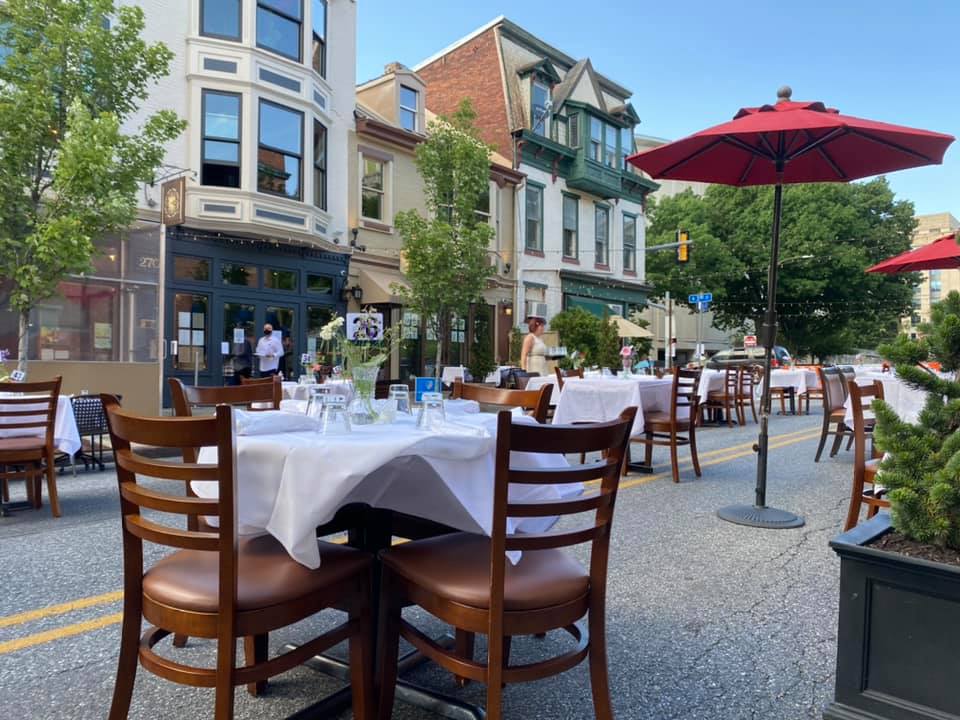
Many Harrisburg restaurants, including Mangia Qui and Rubicon, have expanded their outdoor dining this summer.

The commonwealth soon will permit restaurants to double their indoor capacity, allowing 50-percent occupancy.

Gov. Tom Wolf today said that restaurants will be allowed to increase occupancy starting on Sept. 21, but only for those who agree to a self-certification.

“While our aggressive and appropriate mitigation efforts have kept case counts low, we must continue to take important steps to protect public health and safety as we head into the fall,” Wolf said, in a statement. “At the same time, we must also support the retail food services industry that has struggled throughout this pandemic.”

In June, Wolf loosened restrictions so that restaurants in the state could operate at 50 percent capacity. However, COVID-19 caseloads began to creep up, prompting Wolf in July to reduce occupancy to 25-percent capacity indoors.

Many restaurants, including those in Harrisburg, responded by expanding outdoors dining as much as they could. However, restaurateurs have been worried about their business as the weather begins to cool, making outdoors dining less feasible.

Wolf today said restaurants could expand to 50-percent indoor capacity only if they self-certify that they are complying with all public health safety guidelines and orders.

“The self-certification ensures that restaurants can expand indoor operations and commit to all appropriate orders so that employees and customers alike can be confident they are properly protected,” he said, in a statement.

The self-certification documents and information can be found online starting Sept. 21 and will contain the following:

  • A list of requirements contained in the current restaurant industry guidanceand enforcement efforts
  • A statement that the owner has reviewed and agrees to follow these requirements
  • The business’ maximum indoor occupancy number based on the fire code
  • A statement that the owner understands that the certification is subject to penalties for unsworn falsification to authorities

Any restaurant that wishes to increase to 50 percent indoor capacity on Sept. 21 must complete the online self-certification process by Oct. 5.

Restaurants that self-certify will appear in the “Open & Certified Pennsylvania” searchable online database of certified restaurants across the commonwealth, which will be available for public viewing, according to the state.

“We recognize the impact that the COVID-19 pandemic has had on Pennsylvania’s small businesses, especially on our restaurants,” Wolf said. “Through this self-certification process, our commonwealth’s restaurant industry will ensure the safety and well-being of both employees and patrons alike, and will be able to begin a return to normal operations and financial recovery.”

Continue Reading

The Firehouse plans August reopening, with new owners, new menu

The Firehouse Restaurant is getting spruced up as new owners plan to reopen next month.

Amid pandemic restrictions, the restaurant industry has been struggling. Nonetheless, a local favorite has opted to reopen.

The Firehouse Restaurant on N. 2nd Street closed about a year ago, but was just bought last month by new owners from Atlanta. They hope to open it next month.

“We want to keep the name. We want to keep the feel, and we want to bring it back to life,” co-owner Eric Swilling said. “We know there’s a huge following here. We are going to do everything we can to exceed everyone’s expectations.”

The Firehouse is located in downtown Harrisburg’s historic Hope Fire Station, which was built in 1871. It has been a restaurant for over 20 years, though has been closed since July 2019.

The business will remain The Firehouse, and much of the aesthetic will stay the same. Swilling said there will only be small renovations to brighten up and modernize the space.

The menu will be upgraded, Swilling said, featuring numerous seafood options, as well as entrees like steak and prime rib. The team hopes to bring some dishes from their hometown of Atlanta to Harrisburg.

Most importantly, Swilling explained his desire to create a fun atmosphere that fits with the lively arts scene in the city. They plan to have cocktail hours and live music. Swilling said the third floor of the restaurant will be used as event space.

“We are truly about the community,” Swilling said. “I’ve never had a business where I wasn’t hands-on. One of us will always be here. We need to be on a first-name basis with people.”

He explained that the three owners have about 20 years of combined experience in the food service industry.

With Gov. Tom Wolf’s new restrictions on bars and restaurants due to the COVID-19 pandemic, the owners recognize it’s a difficult time to be opening. Swilling said they plan to follow the state’s orders by setting up tables outside the restaurant and keeping capacity inside limited for the time being.

Swilling sees opening during the crisis as a way to serve the community.

“Our goal is to open as soon as possible,” he said. “With the whole COVID thing, we want to give people another dining option to choose from.”

The Firehouse Restaurant is located at 606 N. 2nd St., Harrisburg.

Continue Reading

Gov. Wolf cracks down on bars, reduces restaurant capacity as he reimposes pandemic restrictions

PA Gov. Tom Wolf during today’s press conference

Gov. Tom Wolf today announced significant new restrictions to the commonwealth’s re-opening plan for businesses, rules that primarily affect bars and restaurants.

In a press conference, Wolf said that, under the new restrictions, all bars that do not offer sit-down dining would have to close until further notice, effective Thursday.

In addition, restaurants would be reduced from 50% to 25% of capacity for indoor, sit-down dining.

Wolf said that these modifications were necessary because COVID-19 cases, which had been declining, were on the rise again.

“In the last two weeks, we have seen an unsettling climb in new COVID-19 cases throughout Pennsylvania,” Wolf said. “During the past week has been especially bad.”

Wolf said that Pennsylvania had successfully “flattened the curve” of new cases, getting down to 300 to 400 new daily diagnoses in June. However, the curve has resumed an upward trajectory over the past two weeks, he said.

Today, the state Department of Health reported 994 newly diagnosed positives, the greatest number of new cases in well over a month. Much of the increase has occurred from additional cases in Allegheny County, which has seen its cases surge.

Wolf identified three catalysts for the case increase:

  • Some Pennsylvanians have ignored mask-wearing and social distancing in bars and restaurants
  • Out-of-state travel
  • A lack of national coordination

“Together, these three catalysts have turned our downward trend into an alarming escalation, and we’re already at a tipping point where we have to act,” said. “We don’t want to become Florida. We don’t want to become Texas. We don’t want to become Arizona. We have to act now.”

Wolf emphasized that it’s difficult to restrain cases in Pennsylvania when case numbers are escalating dramatically in other states, especially in the southeast and southwest United States.

“Other states have become petri dishes for COVID-19 during the same time when we were working hard here in Pennsylvania to suppress the spread,” he said. “This virus knows no boundaries, no borders, so it’s been spreading northward and eastward across the country.”

Wolf said that health specialists have learned a lot about the coronavirus since it first appeared in Pennsylvania in March, including that it spreads most effectively in crowded, indoor environments.

Therefore, his executive directive is aimed specifically at places where people gather indoors, he said.

Bars are most affected by the order. Under the new rules:

  • All bars are prohibited from conducting operations unless they offer sit-down, dine-in meals.
  • Alcohol only can be served for on-premises consumption when in the same transaction as a meal.
  • All service must be at a table or booth; bar service is prohibited.

In addition, restaurants are limited to 25% of maximum occupancy for indoor dining, as are special events. Takeout sales of alcohol are permitted.

Wolf said that gyms, salons and other businesses can remain open following current rules that limit capacity and require masks. Also, he encouraged outdoor events, including outdoor dining.

“I want people to spend time together, but I want them to do so while they’re practicing social distancing, while they’re wearing masks where required, “ he said. “Every minute that passes is one minute closer to the end of this pandemic. That’s what we’re trying to achieve.”


Continue Reading

PA averaged about 500 new daily COVID-19 cases over past week, state says

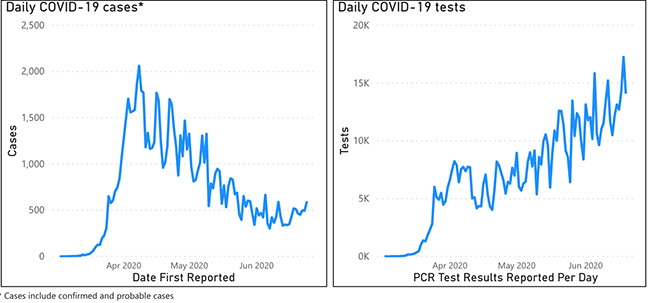
Charts of daily new cases and tests over time. Source: PA Department of Health

New COVID-19 cases in PA remained relatively stable this week, with the state reporting an average of just over 500 new diagnoses over the last seven days.

With today’s update, the state Department of Health has reported an average of 515 new cases per day since last Friday. For the past 24 hours, the department confirmed 600 new positive cases throughout Pennsylvania.

Cases peaked in early April at nearly 2,000 daily new cases. Since then, cases have shown a gradual decline, despite increasingly greater testing levels for the virus.

With the additional cases, 84,370 Pennsylvanians have now been diagnosed with the coronavirus, an increase of 3,608 over the past week.

Locally, total diagnosed cases are as follows:

  • Adams County: 324 cases (prior Friday, 309)
  • Cumberland County: 830 cases (prior Friday, 768)
  • Dauphin County: 1,917 cases (prior Friday, 1,725)
  • Franklin County: 902 cases (prior Friday, 872)
  • Lancaster County: 4,280 cases (prior Friday, 3,911)
  • Lebanon County: 1,300 cases (prior Friday, 1,226)
  • Perry County: 86 cases (prior Friday, 79)
  • York County: 1,428 cases (prior Friday, 1,229)

Overall, 11.7 percent of PA residents tested have shown to be positive for the virus.

The department also reported an additional 180 deaths since last Friday, meaning that 6,579 Pennsylvanians have died from the disease since March.

Around central PA, the COVID-19 fatality data now stands as follows:

  • Adams County: 12 deaths (prior Friday, 11)
  • Cumberland County: 63 deaths (prior Friday, 61)
  • Dauphin County: 132 deaths (prior Friday, 118)
  • Franklin County: 42 deaths (prior Friday, 42)
  • Lancaster County: 354 deaths (prior Friday, 344)
  • Lebanon County: 43 deaths (prior Friday, 40)
  • Perry County: 5 deaths (prior Friday, 5)
  • York County: 43 deaths (prior Friday, 35)

Statewide, Philadelphia County continues to have the most confirmed cases with 21,203 cases, followed by Montgomery County with 8,301 cases. The two counties also have reported the most deaths statewide from the disease: 1,587 and 794, respectively.

“As nearly the entire state is now in the green phase, we must remain committed to protecting against COVID-19,” health Secretary Rachel Levine said.

With the exception of Lebanon County, all of the Harrisburg area is now in the “green” phase of reopening, which means fewer restrictions on businesses and gatherings. Gov. Tom Wolf stated today that Lebanon County would enter the green phase on July 3.

Nursing homes and personal care facilities have been particularly hard hit by the virus. Of total deaths, 4,518, or 68.6 percent, have occurred in residents from nursing or personal care facilities, according to the health department.

In nursing and personal care homes, there are 17,527 resident cases of COVID-19, and 3,162 cases among employees, for a total of 20,689 at 678 distinct facilities in 51 counties, according to the health department.

In addition, about 6,395 of total cases in PA are in health care workers.

Statewide, 719,081 coronavirus tests have been performed, with 634,711 people testing negative, according to the state health department. A week ago, the state reported that 637,218 people had been tested for the virus.

Of the patients who have tested positive to date, the age breakdown is as follows, according to the health department:

  • Nearly 1 percent are aged 0-4
  • 1 percent are aged 5-12
  • 2 percent are aged 13-18
  • Nearly 7 percent are aged 19-24
  • Nearly 37 percent are aged 25-49
  • Nearly 25 percent are aged 50-64
  • Nearly 28 percent are aged 65 or older.

Most of the patients hospitalized are 65 or older, as are most of the reported deaths, according to the state.

Levine continued to emphasize that Pennsylvanians should do the following:

  • Wash your hands with soap and water for at least 20 seconds or use hand sanitizer if soap and water are not available.
  • Cover any coughs or sneezes with your elbow, not your hands.
  • Clean surfaces frequently.
  • Stay home to avoid spreading COVID-19, especially if you are unwell.

“Pennsylvania has been a model for the country on how to reopen effectively using a careful, measured approach,” Levine said. “However, the virus has not gone away. Each of us has a responsibility to continue to protect ourselves, our loved ones and others by wearing a mask, maintaining social distancing and washing our hands frequently. Together we can protect our most vulnerable Pennsylvanians, our essential workers and our healthcare system.”

For more information, visit the PA Department of Health’s COVID-19 website.

Currently, we are providing a COVID-19 data update weekly, each Friday, or as breaking news warrants.

Continue Reading

The Week that Was: News and features around Harrisburg

A local family poses for the “Front Steps” project

What a week! This past week, the news never seemed to stop around the country with major stories breaking, especially out of the U.S. Supreme Court. In case our local coverage got crowded out, you can catch up now, as all our stories are listed and linked below.

Allison Hill Farmers Market is up and going for its inaugural year. Our magazine feature story shows how a community group is bringing local, fresh food to an underserved area of Harrisburg.

Bethesda Mission started work on its new women’s shelter, with a ceremonial sledgehammering to the old building. Our online story offers the details on where, when and how.

Black Lives Matter protestors once again gathered at the state Capitol. Our photo gallery offered a look at the scene as people rallied and marched.

COVID-19 new case count continued to slowly fall across PA. We published our daily updates for another week, as Dauphin and Perry counties finally turned green. We’ll now switch to a weekly update unless events warrant.

Harrisburg school district this week marked one year under state receivership. So, how has it gone? In our online story, we found that the receiver and her team received pretty good grades for their performance, though student academic achievement remains a concern.

Hope is making a comeback, at least around TheBurg newsroom. In his editorial, our editor cites this past week as potentially historic and certainly a step in the right direction as people continue to struggle and strive for equality and rights.

Juneteenth is upon us, with celebratory events taking place all over Harrisburg. Our preview story showed what was planned for this celebration of Black history, culture and freedom. We then shared an online story of one of the day’s activities, as the city took possession of a bronze map replica of the Old 8th Ward from the forthcoming Commonwealth Monument Project.

Lebanon County is the state’s wallflower, the only county to retain “yellow” status as all remaining yellow counties turn green next week. In our story, Gov. Tom Wolf says the decision is based on health policy, but health Secretary Levine hinted at additional motives.

Modern Rugs combines artistry and utility, the magic taking place in a completely renovated building in Midtown Harrisburg. Our arts writer went for a visit and, in his blog, expressed threads of delight with what he found.

Roger Baumgarten made the most of life under lockdown, using his photography skills to snap people under quarantine and, in the process, raising money for Salvation Army Harrisburg. Our online feature story tells how this one man was able to use his idle time to make such a difference.

Sara Bozich spend her first full week in the green zone, slowly getting used to life at 50 percent. Check out some of her best ideas for things to do this weekend around the Harrisburg area.

Shawan Rice and her band, Shawan and the Wonton, are arguably one of the best-known Harrisburg-based bands. Fittingly, we profile Rice as part of our series on local musicians for African American Music Appreciation Month.

Summer camp may look a bit different this year, but, well, doesn’t everything? Our online feature story explains how several popular local camps are adapting to pandemic times.

Do you receive TheBurg Daily, our online daily digest of news and events delivered right to you email inbox? If not, sign up here!

Friends of TheBurg is a great way to support your favorite community magazine and daily news source. Would you like to learn about our new membership program? Then click here!

Continue Reading

For Juneteenth, Harrisburg gets a reminder of what’s been lost, a preview of what’s to come

Lenwood Sloan, right, presents a replica map of the old 8th Ward to Harrisburg Mayor Eric Papenfuse.

Although the weather is looking gloomy, today is filled with celebration as the state recognizes Juneteenth, the holiday commemorating the freedom of enslaved African Americans.

As part of the day’s events, members of the IIPT Harrisburg Peace Promenade presented the City of Harrisburg with a bronze map replica of the historic Old 8th Ward.

“This is an exciting day for our city and country,” Mayor Eric Papenfuse said of the holiday. “This is part of a national conversation about how we can continue to learn and grow.”

The bronze map shows houses, churches, synagogues and other landmarks from the neighborhood that was demolished for the expansion of the Capitol grounds. The Old 8th Ward was primarily an African American and immigrant community that was displaced with the expansion.

“The future is judged by how well we preserve the true and just stories of the past,” Lenwood Sloan, director of the project, said.

This piece, which will hang in the Harrisburg City Government Center, is one of a series of four replicas of the Old 8th Ward. The first was given to Peggy Grove, a supporter of the Peace Promenade project. The second went to Gov. Tom Wolf, the third to the city today, the fourth will go to the county, and the final has yet to be decided.

The A.R.T Foundry of Lancaster is responsible for the creation of the map.

The map will reflect the top of the Orators’ Pedestal—the base of the Commonwealth Monument Project. On the pedestal, 100 families’ names are engraved, as well as maps of Old 8th Ward streets. At the top of the pedestal will stand four historic African American figures from Harrisburg—Frances Harper, Thomas Chester, Jacob Compton and William Howard Day.

The monument will reside on the Capitol grounds at 4th and Walnut Streets, with the finished project set to be unveiled on Aug. 26.

“This will be the first African American monument on the Capitol grounds,” said Kelly Summerford, treasurer of the project. “That has to mean something.”

While just a portion of the larger Commonwealth Monument Project was presented today, it draws even greater significance from the day’s holiday.

“We find this a very fitting way to begin our festivities on Juneteenth,” Papenfuse said.

For more information on the Commonwealth Monument Project, visit https://digitalharrisburg.com/commonwealth/. For more on the IIPT Harrisburg Peace Promenade, visit their website.


Continue Reading

All PA counties to enter “green” reopening phase next week, except Lebanon County

PA Gov. Tom Wolf (right) at a recent press update

All Pennsylvania counties will enter the “green” phase of reopening next week, with one notable exception—Lebanon County.

Gov. Tom Wolf today said that 13 of the remaining 14 “yellow” counties will move to green on Friday, June 26. These include Berks, Bucks, Chester, Delaware, Erie, Lackawanna, Lancaster, Lehigh, Montgomery, Northampton, Philadelphia and Susquehanna counties.

Philadelphia County, which has been hardest hit by the COVID-19 pandemic, will move to green on June 26, but will retain some additional restrictions until July 3 at the request of county officials, according to Wolf’s office.

Then there’s Lebanon County.

Late last month, by a 2-1, party-line vote, Lebanon County commissioners declared their county to be in the “green” reopening phase without the approval of the state Department of Health.

According to Wolf’s office, the county since has seen an “uptick in cases and is unable to move to green.”

“Lebanon County’s partisan, politically driven decision to ignore public health experts and reopen prematurely is having severe consequences for the health and safety of county residents,” said health department Secretary Rachel Levine, in a statement. “Case counts have escalated and the county is not yet ready to be reopened. Lebanon County has hindered its progress by reopening too early. Because of this irresponsible decision, Lebanon County residents are at greater risk of contracting COVID-19.”

According to the state, Lebanon County has failed to meet two of the state’s four requirements for entering the less restrictive green phase. For instance, it has not shown two weeks of sustained, decreasing new case counts, as per the state’s “county dashboard.”

Today, Lebanon County reported 16 new COVID-19 cases, and yesterday, just 10.

“When these 12 counties move on June 26, we will have nearly every county in green,” Wolf said. “It’s a testament to the many residents and businesses that have sacrificed over the past three months to stay home and adhere to the guidance the state has provided to protect lives and livelihoods. As we begin to reopen, I urge everyone to stay alert and continue to follow social distancing to maintain the momentum of mitigation we have in place.”

Today, Dauphin and Perry counties locally entered the green reopening phase.

Continue Reading