Tag Archives: Lemoyne

Pup Protection: To keep kids safe around dogs, setting boundaries is essential

When my husband was 5 years old, a playmate encouraged him to blow into a dog’s face because, (wink), “Dogs really like that.” Fast-forward decades later, and yada yada yada, my husband has the cutest scar below his nose.

If that incident happened today, there may have been a news headline and a lawsuit. People may have wondered why the children and animals weren’t supervised. The dog may have even suffered a fatal punishment for reacting badly to the little boy’s well-intentioned affection.

While parenting styles have changed significantly since the 1960s, the main things that haven’t changed in this scenario: child behavior and dog behavior.

Amy Powell, CPDT (Certified Pet Dog Trainer), at Lemoyne-based Doggie U LLC works in the dog fostering community and often sees bad things happen to otherwise good dogs because children didn’t know any better, because adults weren’t paying attention or because adults and children didn’t respect the dog’s boundaries.

Many dogs boomerang into shelters or are put down because of incidents involving children. You don’t have to scroll far through your news feed to find stories of canine/child interactions going horrifically wrong.

“You could have the friendliest dog and take him faithfully to training classes, but that is no guarantee that your dog will always behave perfectly. Dogs are animals and can be unpredictable,” said Powell. “So are your children.”

So how do you prevent your household from becoming a statistic?

Simply put: education. If you have a dog, make sure you attend training classes with him, because “dog training is really for humans,” according to Powell. Consult with a dog trainer who practices positive reinforcement behavior methods, (which means no prong collars, shock collars or choke chains), and exercise recommended dog safety practices to keep all your kids safe, furry and not.

Maintaining a dog’s boundaries keeps everyone safe. For example, if your dog reacts badly to people patting his head, then do not allow anyone to put their hands near his head. And if your dog bit someone’s hand if it got near his face, according to the law books, YOU are legally liable. Unfortunately, part of the settlement may be to also punish the dog.

“As a dog owner, you are responsible for setting boundaries for the dog and for ensuring your children respect the dog’s boundaries,” Powell said. “You are also responsible for gauging whether your child is old enough and trustworthy enough to be around the dog. If you aren’t sure if the dog is safe, then keep them separated.”

It’s also important to know your dog. Most dogs that have been rescued have trigger points resulting from past traumas. My own super friendly Lucy D. Dogg snaps like the Tasmanian devil if we blow raspberries on her belly. So to keep everyone in the vicinity safe, we don’t make sputtering noises while making direct eye contact with Miss Lucille.

“A dog operates off pure instinct. He doesn’t understand reason. If someone violates his boundaries and territory and he reacts, it’s not his fault,” said Powell. “It’s your fault for not preventing it.”

Other excellent dog safety advice: “Don’t leave the dog unattended with your child. Be sure an adult supervises,” Powell said. “Those pictures of babies and dogs napping together are cute, but very risky in real life.”

If your dog is exhibiting dominant body language, or is an unfriendly dog overall, then ask your child to stay back.

“For example, if a dog is staring you down, or the dog’s ears are forward with his mouth closed, this is aggressive body language,” Powell said. “Try your introductions some other time, if ever.”

Look for friendly dog body language. This includes a loose and relaxed posture, with ears back and mouth open. He could also be doing a play bow, with his head and front paws low to the ground and butt and tail high in the air, getting ready to lunge playfully at another dog. If a dog turns his side towards you to ask for affection, he trusts you. If you see any of these signs, the dog is friendly and may be open to an introduction to your child. 

How to Introduce Your Child to a Dog

  1. An adult should supervise child/dog introductions and interactions.
  2. Take the dog and the child for a walk together, with the child walking behind the adult at first, then gradually walking alongside the adult.
  3. At the completion of the walk, both adult and child stand to the side of the dog.
  4. Place the child’s hand in yours so the child is working through the adult to get the dog to understand the exchange.
  5. Have the child hold a treat in their flat open hand, with their palm facing up and your hand underneath the child’s hand.
  6. Have the child place their palm under the dog’s chin. (Don’t pull the treat back. You don’t want the child and dog to have a game of chase.)
  7. Allow the dog to sniff and eat the treat.
  8. If the treat falls to the ground, let it roll. It is better than having the child get nipped because the dog is chasing after the child’s hand to grab the treat.
  9. If the dog doesn’t take the treat, let it fall and pick it up off the ground, or have the dog take it from the adult.
  10. Have the child praise the dog by saying, “Good dog.”
  11. Have the child pat the dog on his side or shoulder.

Make it clear to your child how to behave around dogs. Reinforce boundaries regularly. And remember, not all dogs are friendly, and not all scars are cute.

For more information on Doggie U LLC, visit www.doggieullc.net.

If you like what we do, please support our work. Become a Friend of TheBurg! 

Continue Reading

Way Above O.K.: Holmes-O.K. Lettershop is an institution in Lemoyne—and so is the owner

Arlene Holmes

Some people, approaching retirement, look enthusiastically to the days when the trusty alarm clock can be decommissioned and life can begin to feel like one long holiday.

Arlene Holmes isn’t one of them.

“[Working] keeps me out of trouble,” said the nearly 90-year-old owner of Holmes-O.K. Lettershop.

Holmes has been at the helm of the Lemoyne design and print shop ever since her husband Bob died 57 years ago.

“Bob owned the business and worked at United Telephone, and I decided to help him, and we ended up getting married,” she said, with a smile.

And if you’re wondering how they landed on the name “Holmes-O.K. Lettershop,” it’s not that they do mediocre work. Instead, it’s a stipulation that was added to the sales contract to keep the shop’s legacy alive, as the original name was O.K. Lettershop.

Originally, the shop was located on Walnut Street in Harrisburg across from the former Dauphin County jail. One day, her husband saw the business go up for sale and decided to purchase it. The rest, as they say, is history.

Those who pass by the Lettershop might see the oversized mailbox on the porch out front, or may, in the summer, be pulled in by the striking and unusual flowers that Arlene grows called “Red Hot Pokers.” Upon first impression, it may appear that the house, which dates back to the 1920s, is diminutive, but it is actually deep on the inside, with several large rooms leading back to what was once a yard.

Holmes raised three children in the family house in New Cumberland. After her kids were out of college, she moved above the shop.

“It’s convenient just to head downstairs for work,” she said.


Willing to Learn

Over the years, the business changed with the times.

Equipment, once standard, became obsolete, such as mimeographs and graphotypes, which embossed metal plates. Later came offset printing, where the inked image is transferred to a plate. This soon gave way to a cut-and-paste method and eventually to computer design and laser printing.

One might wonder how Holmes kept up with the dizzying pace of changes in the printing industry. She credits her former years as a teacher.

“I taught school for six years, two years in Hamburg and four years at William Penn, and I now teach Sunday school at the United Methodist Church in Mechanicsburg,” she said. “These jobs taught me that you have to be willing to learn, change and try different things or you aren’t going to survive.”

Over the years, she’s also had to employ fewer people to get the same amount of work done. What was once a team of eight dwindled down to two, with Holmes being one of them, along with her loyal employee of 30 years, Andrea Leach.

Andrea, who lives in Lemoyne and studied commercial art at Northampton Community College in Bethlehem, said that she enjoys her job working on newsletters, letterheads and other projects.

“Arlene is fun to work with, and I like the variety,” she said. “You never know what challenges you’re going to have.”

Holmes’ clients read like a “Who’s Who” of area civic clubs, like the Kiwanis, the West Shore Lions and the Distinguished Daughters of PA, to name a few. The business also completes tasks that club secretaries or members don’t often have time to do, like collating newsletters, then folding them and stuffing them into envelopes and driving them to the post office.

Sheri Goff, who is a member of the Penn-Cumberland Garden Club, said that her club has been using Holmes-O.K. Lettershop for many years.

“They print our annual yearbook, which is a 70-page publication, and they also print our newsletter, advertising flyers for fundraisers, our tickets and our club brochures,” Goff said. “If we’re in a bind, they always accommodate us for last-minute things, and their prices are more than fair.”

Likewise, Holmes said that she enjoys working with the public and doesn’t intend to retire anytime soon.

“Why would I?” she asked.

And the question is left hanging there. Indeed, why should she?

“I’m surprised at so many people who don’t want to work,” she said as she climbed the steps to her apartment upstairs, satisfied at the end of her day with a job well done.


Holmes-O.K. Lettershop is located at 409 Market St., Lemoyne. For more information, call 717-761-0864 or visit their Facebook page.


If you like what we do, please support our work. Become a Friend of TheBurg!  

Continue Reading

Dancing with the Locals: Swing, salsa your way to better health, happiness at Arthur Murray

Lynn Reigle always dreamed of dancing, soaking up every step from her perch on the couch in front of the television at her parent’s house.

“We all loved to watch movies like ‘Dirty Dancing’ when we were younger, but my family didn’t have the income, so I didn’t pursue it back then,” said the Perry County resident.

As time passed, the dream lingered. So, when she came across an ad for a teacher at a dance studio in Lemoyne, it was like a dream come true.

“I was 19 at the time, and the ad was for Arthur Murray Dance Studios,” she said. “What was great was the fact that no prior experience was necessary.”

Reigle worked as an instructor there for five years, then as a manager before signing on as a partner at the Lemoyne location. She appreciated the opportunity to grow within the company and learn all aspects of the business before becoming the sole owner of the Lemoyne location and then assuming ownership of Arthur Murray studios in York and Lancaster.

“What’s great about Arthur Murray is that you have to go through the ranks before you can buy,” she said.

Reigle recently took another leap and expanded her Lemoyne location, moving into a high-visibility area on Market Street. She explained that she looked for a year-and-a-half before finding the perfect studio next to the Lemoyne Post Office.

“I had worked here all these years and knew that Lemoyne was central to so many students,” she said. “We now have about 100 active students at our Lemoyne location, so it’s been a good choice so far.”


Social Outlet

Those who remember all the Arthur Murray ads from the 1970s may consider the name a bit old-fashioned, but Reigle said that dancing among all ages is as popular as ever.

“It continues to change with the times,” she said. “The popularity of ‘Saturday Night Fever’ inspired people back then. Then in the ‘80s, it was line dancing. Now it’s people drawing inspiration from ‘Dancing with the Stars.’”

According to Reigle, the five most popular dances now are the foxtrot, waltz, rumba, cha-cha and swing. In addition, Latin music has witnessed a big resurgence with people wanting to learn to salsa and merengue, she said.

Students often sign up to learn to dance for weddings, on cruises and on vacation, she said. Reigle also sees quite a few empty-nesters who want to reconnect with each other.

“Going to a movie on date night is such a passive activity,” she said. “Dancing, on the other hand, is therapeutic, healthy and, most of all, fun.”

There’s also the social aspect of meeting up with others to dance.

“We have a student who took lessons with us for 30 years and, he said, ‘Sure, you’re teaching me to dance, but what keeps me coming here is the welcoming feeling and the students getting to know one another,’” she said. “It’s a social outlet for those who aren’t fond of going to bars or clubs.”

My Passion Now

Like many businesses, Reigle’s dance studios took a hit during the height of the pandemic and were closed for several months. She also lost a few instructors, but the core team returned, she said.

“We felt blessed compared to most studios because we have a great student base, and we stayed connected,” she said. “Some of our students are still taking virtual lessons, and that was a pivot for us.”

To facilitate this new way of learning, instructors made videos so that students could practice at home. In the warmer weather, they also taught lessons outside in the parking lot.

Kelson Cowart is one of Reigle’s instructors and said that he was in the same boat as Reigle—wanting to take lessons as a child, but unable to do so because of the cost. What inspired him to learn to dance was when he was ditched by a prom date, which he suspected was due to his lack of dancing skills.

“I felt this would help me learn, which it did, and now I love to share that with people,” he said. “When I see their excitement when they finally get it, it makes me happy. I enjoy helping others feel that sense of accomplishment.”

Oksana Kerod is a four-year student at Arthur Murray.

“I was a music professor in the Ukraine and was looking for something and found the studio,” said Kerod. “It’s my passion now, well, besides my family.”

With a chuckle, she said that dancing keeps her young at age 67.

“I see all kinds of people—tall, skinny, short, fat, old, young, professional, amateur,” she said. “Every time I leave my dance class, I feel kinder, better, lighter, all these beautiful things.”

This kind of testimonial warms Reigle’s heart.

“It’s a wonderful feeling when you can go to work and see people smiling and feeling good about themselves,” she said. 

Arthur Murray Dance Studio of Lemoyne is located at 331 Market St., Lemoyne. For more information, visit www.arthurmurray.com/locations/lemoyne-studio or their Facebook page.

If you like what we do, please support our work. Become a Friend of TheBurg!


Continue Reading

Profile of a Soldier: World War II veteran Glenn W. Bushey

Glenn W. Bushey, with pictures of his wartime service

It comes as no surprise to anyone that we’re losing our World War II veterans at an alarming rate.

Glenn W. Bushey, 96, a Camp Hill member of “the greatest generation,” has no intention of joining them any time soon. A veteran of two wars, he survived a machine-gun sniper’s three bullets at age 19—one that “grazed” his left arm, removing a chunk of it; a second that struck his right leg; and the third hitting the left side of his face, above his lip and below his cheek. If it left a scar then, there’s none now.

One of his medals is a Bronze Star for combat in World War II. Another, the Combat Infantry Badge with Star, reminding him of experiencing life in the Army on two levels:  a PFC (World War II) and an officer (Korea).

Though widowed for nearly 10 years, Bushey continues to lead a busy life. He refuses to let the world pass him by staying aware of what’s going on in it; he’s active in his church, and not only mows his own lawn but that of a neighbor, taking advantage of today’s technology: a sit-down mower.

No, he’s not immune from the rigors of old-folks woes. He fights them by taking physical therapy three times a week. In fact that’s where we met—at Gilbert Physical Therapy in Mechanicsburg—admiring his determination to go through his paces, then fascinated by hearing snippets of his story. ​That’s not the extent of his physical activity; he also walks a mile six mornings a week (not Sundays).

Here’s his story:

Bushey became an Army man for no other reason than his height or, lack thereof. In his senior year at West Shore High School in Lemoyne, a Navy recruiter offered a course (called V-12) to prepare young men to be Naval officers. He was the only one who signed on. With a little boating experience, the Navy was his first choice for military service. He passed the course. But when he was ordered to report, a well-dressed Navy man told him he failed to qualify. Why? At five-foot, two-and-a-half inches, he didn’t meet the 5-4 minimum. But the officer said, “We’d love to have you in the Navy—as a sailor.”

No thanks.

While waiting to be drafted, he enrolled at Gettysburg College. Meanwhile, the draft regulations were altered from allowing draftees to express a preference of military service to taking potluck. When his number turned up, the pot showed Olive Drab. He was inducted at the New Cumberland Army Depot on the Monday before Thanksgiving 1943, and his first duty was K.P. (kitchen police, for the uninitiated), assigned the challenging duty of “pots and pans,” including Thanksgiving day, with lots to scrub in the chow hall kitchen. (As he spoke, one could almost hear Irving Berlin singing, “You’re in the Army Now.”)

Bushey, in 1944

But that Navy officer training had a delayed benefit. It made him eligible for a top-secret training program at Fort Benning, Ga., with the 86th Infantry Division. The 13 weeks included basic training, then on to Louisiana for more specialized training in weaponry, where he was hit with poison oak in August 1944, because the designated bivouac area at Fort Livingston was incorrectly called “safe,” delaying his direct participation in the war. As Bushey explains, “There was a group of privates to be sent to Europe as replacements. I was on the list but, because I was hospitalized, I did not go.

“After being released from the hospital, I was given a week’s leave. While on leave, the 86th Division moved to Camp Cook in California for amphibious training . . . then the 86th went to Boston in February 1945, then to Europe.”

He climbed aboard a former German liner that had been converted to a U.S. troop ship, landing in Le Havre, France; a train took him to Holland, then to in a small town between Bonn and Cologne, Germany.

His Military Occupational Specialty (MOS) was “rifleman,” and his assigned duty for all that specialized training, “Platoon Runner,” carrying messages between units whether or not bullets were flying.

Hello war.

While many Germans surrendered, there continued to be heavy combat and artillery fire.

How did he feel? “Afraid.” After all, he was just 19.

Nevertheless, he and a fellow dogface, a PFC Bennihoff  (“can’t recall his first name, but can’t forget him”) were ordered to “charge” as a German tank fired at his unit, along with other artillery. “I could see the bullets,” he said. Later he and Bennihoff talked about that episode before going their separate ways.

A German tiger tank, a remarkable machine, said Bushey, “couldn’t be penetrated,” and was armed with an 88-mm gun and machine gun.  “We had a bazooka, fired it, but it didn’t do much [damage] to that tank.”

“That night I was so tired; but we had a lot of German prisoners” to deal with, he recalled. “We had cut the German pocket in half,” which virtually ended that battle.

One thing the young grit-covered private wanted was to wash up.

“I came upon a house where members of my squad were preparing Easter dinner,” adding that they weren’t sure how to make mashed potatoes. “I knew how,” because his mom taught him. The house had hot and cold running water. “So, I offered to make mashed potatoes in exchange for a bath. They agreed.”

“On the way back, I saw a general coming toward me.” Turned out to be James M. Gavin, a two-star rough-and-ready officer who commanded the 82nd Airborne Division.  “How are you doing today, soldier?” he asked the young private, promising, “We’ll be relieving you soon.”

Didn’t happen soon enough.

Bushey’s unit, now attached to the 7th Army, was ordered to go from northern Germany, through Nuremburg, to the Danube River.

“We were on one side of the river, and we could see the Germans on the other side,” he said. “We weren’t sure if they were soldiers, and kept moving.

Bushey, in 1945

“We came to this town that had a dike around it. There was no shooting in town. We went down side streets.” That was April 27, 1945, 3 p.m. “We turned left to the dike. I was kneeling . . . all of a sudden, I heard, pop-pop-pop. I didn’t feel anything, but I tasted blood. Looked at my left arm and saw blood. But I still didn’t know I was hit.

“Then I looked at my leg; there was a lot of blood. I told the platoon leader—a lieutenant—I am hit.”

Bushey was told to find a medic.

“So I hobbled back around the corner, out of the line of fire,” crossed the river in a small boat, and he was dispatched to a field house, where “the bullet was removed from my right leg.”

From Germany, Bushey was transferred to a hospital in Paris, where he caught a glimpse of the Arc de Triomphe, and he could see tourists. After three days, Bushey was flown to a hospital in Cambridge, England, seeing through a window a lot of students from the college nearby.

On May 8, V.E. Day (Victory in Europe), the Germans officially surrendered, and his division was shipped to New York City to participate in a big ticker-tape parade. Shortly after that, his unit was deployed to the Philippines. The war with Japan continued.

“I wanted to go,” he said, “but they wouldn’t let me. I was very disappointed.”

Why did you want to go?

“They were my buddies. You want to be with your buddies, right?”

Not fully recovered, no parade, no redeployment.

A Liberty ship that took 14 days to cross the Atlantic and reach the states brought him back home or, rather, to the separation center at Fort Indiantown Gap, where, because he could type, he worked on providing mustering-out pay for GIs being discharged until he accumulated enough points for his own discharge.

Finally, he became a civilian in March 1946.

End of story? Hardly.

Back to Gettysburg College on the G.I. Bill, a friend persuaded him to sign up for ROTC and take a five-year hitch in the National Guard. It meant a $20-a-month stipend and, said his friend, “We just came out of a war; there won’t be another in five years.” Sure.

He had earned a bachelor’s degree with a math major and was hired to teach math at a Maryland school in 1949.

But along came Korea.

Bushey was activated from the reserves in June 1951 and ordered to take infantry training at Fort Pickard, Va., and eventually, Korea, where the 1st lieutenant was assigned as assistant commander (second in command) of a rifle unit in May 1952. The only combat he saw was in the form of “back-and-forth artillery fire.” Nevertheless, there were casualties.

As a reserve officer, he was rotated out early five months later.

“I had enough,” he said, and quit the reserves.

Glenn W. Bushey, holding his service medals, with story author Bill Blando

Again a civilian, he was hired in 1953 by West Shore High School in Lemoyne, teaching math/algebra, his favorite subject, as the school transitioned over the years from junior high to middle school. Bushey served as Lemoyne Junior High principal, later as assistant principal for the new Cedar Cliff High School, retiring in September 1982.

Lemoyne was the town his father—one of seven boys who had four sisters—settled in, supporting his family as a carpenter.

Bushey married Marian, a social worker, in 1962. She died in their golden anniversary year, 2012.

He earned two master’s degrees (education and administration at Penn State, and an arts master’s in math), and a fellowship to study at Rensselaer Polytechnic Institute in Troy, N.Y.

He is bald, but apparently not because of his educational pursuits. He blames it on the liner inside his helmet. It didn’t fit snug and kept shifting, rubbing his hair and scalp the wrong way. Result: becoming hairless “over four or five years.”

Today, he remains very active. At his church, Camp Hill’s St. Timothy’s Lutheran Church, he served on a pastor-search committee. With carpentry in his DNA, he helps build things, occasionally teaches a Sunday School class and does whatever other chores his church needs. He keeps his home of nearly 60 years as neat as a pin and just as clean (with a bit of help from a housekeeper). As for the DNA, it comes from his dad and six uncles who were all carpenters.

When asked, he is proud to show an album with family and military photos; also his medals, held in a deep frame. They include his Purple Heart, of course; Good Conduct, Weapons Proficiency and Combat Infantry medals; the Bronze Star; and the Combat Infantry Badge with Star for combat in two wars.

On the back of the frame is written: “Crossing the Danube (4-27-45) . . . the first of the 341st Infantry crossing the Danube (faced) an assault barrage, (aiming) to establish a beachhead.

“Company B, supported by a machine gun of Company D, led the attack. Casualties were: 14 killed, 27 wounded (including Bushey).” The inscription was signed by Company D’s Lawrence Bennett of Newburg, N.Y., who added, “A day I will never forget.”

PFC/Lt. Bushey might say, “Neither will I,” because he hasn’t.

A final note: At 5-2-and-a-half, being addressed as “Shorty” isn’t unusual. But Bushey really stands 10 feet tall, don’t you think?

Many thanks to Bill Blando of New Cumberland for contributing this Veterans Day story. Blando, a veteran himself after serving in the U.S. Army from 1958-60, is also a veteran journalist who—despite his retirement in 2004—is still discovering stories like this one, for which we are thankful.

If you like what we do, please support our work. Become a Friend of TheBurg!

Continue Reading

Daily Devotion: Lonely Monk remains devoted to a heavenly cup

“It’s been a long journey for me.”

That’s how Josh Willits characterizes his unlikely road from globetrotting engineer to the owner of Lonely Monk Coffee, a new coffee roaster shop in Lemoyne.

But, for Willits, it’s also been a long taste journey, which included stops along the way through the “big three” of mass production to-go jolts: McDonald’s, Dunkin Donuts and Starbucks.

At one point, he tasted some truly spectacular coffee and instantly saw the benefits of fresh-grinding his own beans. When he began to travel internationally for a private equity company to the French Alps, Amsterdam and the United Kingdom, his coffee palette became even more refined.

Then about 14 years ago, Willits met Leon Miller, the founder of Lonely Monk Coffee in Lancaster and still its brewmaster. Miller, a Mennonite minister, also had seen the coffee light while in Europe and, upon returning, had made it his mission to recreate that fine flavor in the United States.

Willits quickly became a true-blue fan.

In fact, he became such a fan that, earlier this year, when Miller began inching toward retirement, driven by the pandemic and health issues, he bought out the operation and moved it to Lemoyne.

The Lonely Monk baton was passed. Happily, Miller remains the roastmaster at Lonely Monk, named because, like Willits and Miller, monks are singularly devoted to a cause.

“I was definitely excited to bring this to the West Shore,” Willits said.

Lonely Monk Coffee has been served in Lancaster for about 15 years. Caffeine lovers still can buy it at Pop & Perk, Lancaster Sweet Shoppe and Rachel’s Crêperie in Lancaster.

With catchy options like Nun’s Habit and Holy Grounds, the coffee also can be ordered online for $14 for a 12-ounce bag.

Lonely Monk employs fluid bed roasting, which, according to Willits, offers a smoother flavor in contrast to the more-popular drum roasting method.

“It’s all very artisan for us,” he said.

Family Affair

Lonely Monk is not a sit-down or quick-serve coffee shop, though it may turn into one in the future.

The site, on Herman Avenue next to Grace United Methodist Church, was once Asana, a lime-green yoga studio that closed in July. In less than a week, it was transformed into a cozy home of hardwood, stained glass, stainless steel, lush green plants, statement pillows and pithy coffee-quote plaques for once-a-week private tastings of the aromatic roast. It also serves as home base for local deliveries.

Red and white plastic drums at the front of the shop and a large metal roasting machine are the heart of the operation.

Willits still works full-time for a web company. His wife, LaShae, a schoolteacher in Mechanicsburg, helps, as do his two kids, ages 12 and 8. They all assist in packaging the beans and delivering. His dad helps, as well.

“It’s a real family affair,” he said.

He offered a private tasting of three cups—one each from Peru, the Costa Rica/Guatemala region and Ethiopia, where coffee originated. His tastings become upper-level courses in all-things coffee.

For his tastings, the coffee has a thick crust that looks like browned crème brûlée. When the crust is broken with a spoon, Willits encourages patrons to dip their head down to drink in the aroma.

Slurping is encouraged, he said, because it wets your whole palette.

Part of Willits’ coffee course includes recounting the tale of St. Vitalis, a monk in Alexandria in the 600s who was reviled for patronizing brothels. However, after his murder, it was discovered that he was really entering the brothels to pay the women to stay off the streets. That story lies at the heart of his social consciousness, as he quietly helps others.

Willits said that, this month, Lonely Monk is supporting Polaris Project, a national nonprofit that runs a human trafficking hotline.

He hopes that you will join him in his good works and in indulging your, um, habit, making Lonely Monk part of your daily devotions. Amen.

Lonely Monk Coffee Roasting is located at 303 Herman Ave., Lemoyne. For more information, call 717-473-9607 or visit www.lonelymonkcoffeeroasting.com.

Support quality local journalism. Become a Friend of TheBurg!

Continue Reading

Sparkly Concept: Christy Hoover brings a lifetime of experience to her jewelry store.

For Christy Hoover, owner of Christy Concept Jewelry, shopping is more than just making a purchase.

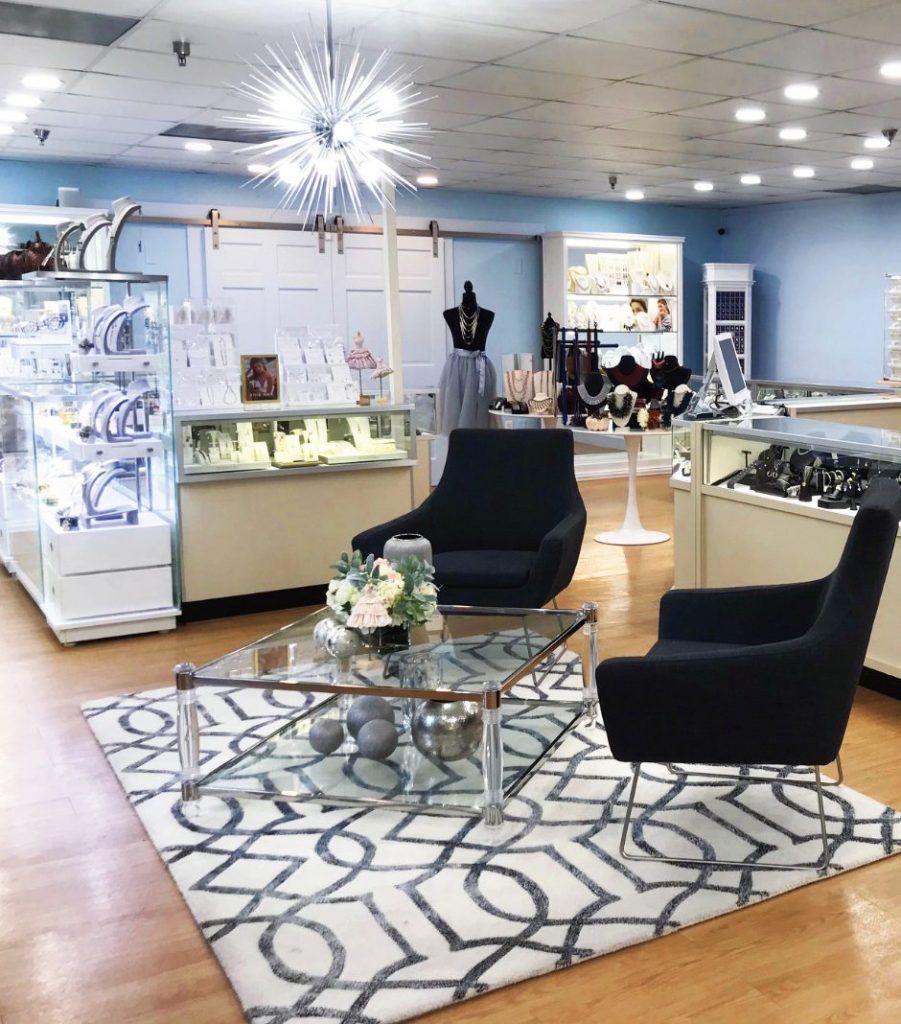
Hoover’s unique boutique at the West Shore Farmers Market in Lemoyne makes it a leisurely getaway.

“You have to give customers an experience. You can’t do it on product alone,” said Hoover, a New Cumberland resident. “I want our customers to feel comfortable here and feel they can trust us. I want them to come back, to feel wowed and have fun.”

Christy Concept Jewelry is one of those places that has something for everyone, or, at least, pretty darned close to it. It feels comfortable and friendly and has oodles of sparkly wonders to catch your eye. Its vast inventory of fine and fashion jewelry features one-of-a-kind items crafted by more than 40 designers from around the world. Prices carry a wide range from $20 to up $15,000.

“It’s a great place, especially for gifts,” said Ginny Smith, a regular customer. “I can find some more unique pieces that are in a reasonable price range. I love the atmosphere there, too. It’s a beautiful store.”

Nobody’s in a hurry at Christy Concept Jewelry. Customers are encouraged to browse around for as long as they want. In fact, many items are kept on open display.

“I like the store. It’s very welcoming,” said Beth Kuehne, another regular. “They let you try things on. Some other places won’t let you. They’re very accommodating, and there’s no pressure, either. You can go in there and just walk around. It’s kind of cozy, a nice experience.”

Hoover, a Harrisburg native, said that she was inspired to pursue fashion by her mother Nedalyn, a skilled seamstress. She began her first job in retail at Pomeroy’s department store while earning a bachelor’s degree in fashion merchandising from Indiana University of Pennsylvania.

After college, she worked as a buyer for junior dresses and outerwear at Hess’s department store in Allentown. She then moved cross-country to become a regional manager for Contempo Casuals/Wet Seal/Arden B, based in San Francisco. For this, Hoover oversaw stores in the company’s Pacific Northwest region comprising nine states.

Ten years later, Hoover returned home to Pennsylvania after her mother became ill. For the next 21 years, she worked for the Victoria’s Secret brand in several capacities, including district manager, a project manager in store operations and a regional HR manager.

All that changed, however, when Hoover learned that Susan Fotos, owner of Higashi Jewelry & Eyewear, decided to retire and close up her popular shop inside the West Shore Farmers Market.

“I loved working for the Victoria’s Secret brand, but I’d always thought about doing something on my own,” Hoover said. “The stars were aligned for me, you might say, after 21 years.”

Senior jewelry consultant, Nicole Warden, also knows a thing or two about how things were done at Higashi. Prior to her full-time post at Christy Concept Jewelry, Warden worked sales at Higashi for four years. Before that, she spent 12 years working the field with various jewelers.

Christy Concept Jewelry is a venue that truly stands out to Warden.

“This business is different,” she said. “We’re offering really nice jewelry at discount prices. Some of our designers offer us really nice discounts, and then we pass that on to our customers.”

Rounding out the staff are part-time jewelry consultants Hannah Ardnt and Fabiola Sallack.

Hoover’s biggest challenge, so far, has been the commonwealth’s pandemic orders that forced her to close in March, just four months after opening, she said. She remained closed until June.

“I look at that as a blessing, really,” she said. “After just four months, I got to learn a few things sooner rather than later. It taught me about being able to protect your business with a cushion. I put all my profit right back into my business.”

Hoover said that she is proud to be one of many women-owned businesses operating at the West Shore Farmers Market

“I really enjoy sharing our experiences and the camaraderie between us,” she said. “We really pick each other up.”


Christy Concept Jewelry is located at the West Shore Farmers Market, 900 Market St., Lemoyne. For more information, call 717-303-26277 or visit
www.christyconceptjewelry.com or their Facebook page.

Support quality local journalism. Become a Friend of TheBurg!

Continue Reading

Family Built: Excel Remodeling spans 50 years, three generations.

Business is more than just business at Excel Remodeling in Lemoyne. For president and owner Jim Mirando Jr, it’s a strong family legacy of craftsmanship and care now its 50th year.

Mirando, of Silver Spring Township, is the second generation of his family leading the enterprise that was founded by his father in 1970.

“It’s a real community atmosphere here,” he said. “Most of our staff has been with us for over 10 years. We have wonderful clients who’ve been with us years. It’s a lot about relationships. We’re a small business, and we work hard to do a good job.”

The business is based in a 6,000-square-foot showroom where customers are welcome to browse through a large display of cabinets, countertops, plumbing fixtures, tiles, interior and exterior finishes, wallpaper, floor coverings and whatever else is needed for their homes. Aided by a staff of 12, Excel specializes in kitchen and bathroom remodels and home additions.

Jim Mirando Sr. started Excel with two partners and an initial focus of land development and home building. By the late 1970s, the company had transitioned to home remodeling. Mirando’s business partners had pulled out by then, leaving Jim Sr. as sole proprietor.

As it so happened, Jim Sr. wasn’t alone in business for long. Son Jim Jr. started in the early 1980s, learning the ropes while in high school. After college, he initially pursued a career outside of the family business but decided to return a few years later. He started out as a designer, working his way up to company president in 1989. Jim Sr. subsequently retired in the early 1990s.

Jim Jr. said he’s seen a few changes in the way business is done over the past few decades.

“It’s always changing, from styles to technology to tools,” he said.

When Jim Jr. began, cell phones weren’t yet in common usage, and blueprints still were drawn by hand. Clients today tend to be “more educated and informed” than in the past due to sources like the internet and the HGTV network.

Daughter Alicia Goyette represents the family’s third generation.

“I grew up around all this,” she said. “My dad guided me through the business. It was a cool experience learning the ropes from him.”

Goyette initially pursued a college major in accounting and business but eventually felt “ready for a change,” she said. She came to Excel two years ago. Today, she is a company designer and mostly works with clients on kitchen and bath designs.

“It’s really fun to work with clients and see it all come together as a finished product,” she said. “I like coming up with a new design that maybe they didn’t think of.”

Mike Wilson, chief marketing officer for Members 1st Credit Union, ranks as a satisfied Excel customer.

The company recently completed a “very large project” that involved building a 500-square-foot addition over the garage of his Conewago Township home. The project renovated an upstairs bathroom and extended the master bedroom into a sprawling suite with custom-made closets, a beverage station and a sitting area.

Wilson said that Excel stands out from other building contractors by offering customers a “true customization” of design.

“We were looking at how to creatively maximize the space that we had,” he said. “I would highly consider using Excel again for another project.”

 Excel Remodeling is located at 570 S. 3rd St., Lemoyne. For information, call 717-774-4990 or visit www.excelremodeling.com.

Continue Reading

Head and the Heart: At Tomboys, caring comes with the cut.

Dani Waters. Photo by Dani Fresh.

Dani Waters tries to avoid being asked what she does for a living.

Far too many times, she’s answered that question, only to receive quizzical looks.

“I’m a barber,” she says.

“Don’t you mean a hair dresser?” replies the questioner.

Meanwhile, Waters holds back a sharp comment and an eye roll.

There are over a dozen barbershops in Harrisburg, but women barbers are harder to find. Barbers like Waters have to prove themselves over and over to show that they don’t only trim layers and touch up roots, but can work magic with a razor.

Sometimes, it takes tricks like going by Dani instead of Daniél, to get customers in the door, but even that isn’t foolproof. Men have walked into her shop thinking they were getting a male barber and were hesitant to stay when they saw a woman. One guy even walked out.

“I’ve had to prove myself,” Waters said.

Working her way up over the years hasn’t been quick or easy, but she now owns her own business, Tomboys Barbershop, in downtown Harrisburg.


Beauty School Dropout

Waters has been doing hair since she was a kid. Whether it was family members or her Barbie dolls, she made each look good.

Once she grew up, she tried her hand at beauty school, but left after making it only a third of the way.

“I didn’t feel like I fit into salon culture,” she said.

Waters went back to college while caring for three children as a single mom, but couldn’t stop doing people’s hair. It was her thing. Still feeling drawn to the profession, she decided she would go to barber school this time. Spoiler alert—she loved it.

She worked for a few years at Lords and Ladies Hair Salon and later, at a friend’s shop, before opening her first shop, Capital Shave Club, in Lemoyne. She was able to open a snug, 320-square-foot studio with $2,000 that she had raised through client donations.

That space served her well for two years, but, with her client base growing, she dreamed of a bigger place.

For years, Waters eyed a spot in downtown Harrisburg. It was four times the size of her Lemoyne shop and was situated in the heart of the city. She saved up money, wondering when the time would come that she could finally get her coveted spot on N. 3rd Street, a storefront that’s part of Strawberry Square.

In the beginning of December, she finally opened Tomboys Barbershop. There are four chairs in the shop, which resembles what she described as a “really nice, high-end, finished garage.”

“We offer salon services, but in a barbershop environment,” Waters said. “You can still get the pampering.”

Tomboys Barbershop does both men’s and women’s washes and cuts and offers manicures and pedicures for both, as well. These do not include nail polish so that men aren’t intimidated, and it eliminates the “nail shop smells.”

“It’s a place where you can hang out,” she said. “You can stop in on your lunch break and see who’s in the chair getting their hair cut. It’s really nice when you walk by and see your friends.”


An Artist

For Waters, her work isn’t just about making people look good, but about making them feel welcome and comfortable.

“I prepare people for job interviews,” she said. “I see them before their funerals, their graduations, their weddings and every major life event. I’m there for them, and I help them prepare mentally and physically.”

The relationships she has built mean more to her than the haircuts she’s given. Not only does she help her clients and talk them through rough life situations, but they are there for her, too.

She told the story of a client who would bring her meals to each appointment, knowing she was in the midst of a busy time in life.

“Dani is an artist in every respect of the word,” said David Roth, who has been a client for over four years. “Her listening skills are unparalleled. That’s what makes her largely successful.”

Roth recalled many times that they have opened up to each other about things in their personal lives, with the knowledge that whatever is shared stays in the chair. Over the years, he said, she has become a friend.

Johnny Baer is another client who Waters has seen for years. He remembers looking for a new barber and being nervous if she would cut his hair just as he likes it.

“She did a great job, and she’s been my barber ever since,” he said.

Although Baer said he and Waters have very different personalities, they can talk about anything and everything.

“She has a unique personality that is infectious,” he said.

Waters loves working with a wide range of customers and welcomes a challenge, like styling hair that is difficult to tame or helping non-English speaking and special needs clients. It all comes back to the people.

“Barbers are at the hub of their community, right at the core, right at the center you have your barbershop,” she said. “This business legitimately is my dream.”

Tomboys Barbershop is located at 3 N. 3rd St., Harrisburg. For more information, visit www.capital-shave-club.business.site.

Continue Reading

Forever Young: Moonshine & memories at Dead Lightning Distillery.

Andrea and Eric Montgomery stand before a life-sized image of their son, Skylar

Dead Lightning Distillery, according to its storefront sign, was born on 3-3-2018 in New Cumberland, to proud owners Andrea and Eric Montgomery. Their son, Skylar, was also born on March 3.

It’s not a coincidence. Dead Lightning is a tribute to Skylar, whose life ended tragically in an accidental overdose.

“Three months before he died, we talked about starting a business for him,” said Andrea.

Skylar, a huge Grateful Dead fan, had a penchant for making moonshine—also known as white lightning. Marry the two loves, and you have Dead Lightning.

“He made flavors that tasted so good and found places to make it,” Andrea said.

She wanted to continue that practice in his honor, at “a place where friends could hang out, like his living room.”

“Skylar had a heart of gold,” she said. “He was a welder, super tall and would walk in and light up the room. As a mom, when he died, I was ready to give up. I was married to my best friend, with two children, and I couldn’t give up, but I could keep Skylar’s spirit alive.”

Andrea does that by giving a hug to almost everyone who walks through the doors, encouraging people to sit and enjoy a sample of Skylar’s vodkas.

Skylar’s likeness, in the form of a decal at his actual 6-foot-7 height, greets you with widespread, open arms.

“This picture of Skylar was taken after he won a Go Kart race,” Andrea said. “He had his arms outstretched in victory.”

His original moonshine paddle hangs on the wall over the bar. Don’t be surprised if Andrea encourages you to “shoot the boot” from Skyler’s size 15, Red Wing, steel-toe work boot that sits on a shelf. Tapestries that hung on his bedroom wall now hang from the bar’s ceiling. Street signs that bear his name, or imbed a memory, line the bar’s backroom walls. His surfboard is a cool table top. Since he loved games, ring toss and darts are a popular activity in the bar. And Skylar’s favorite music constantly fills the venue.

“It took him to pass for me to learn the importance of music,” Andrea said. “It’s uplifting.”

If this place sounds like it’s an ode to Skylar, well, that’s exactly what his mother intended. The bar is a union of Skylar’s life and how he lived.

“Skylar was a leader,” Andrea said. “He gave his time and his entire salary to others. He always had canned goods in his car to give to homeless people. And he had all these great sayings—‘Memories over Money,’ ‘Laugh at Yourself,’ ‘Don’t Judge People.’”

Those adages grace the tie-dye label of all 14 Local Legend Flavored Vodkas.

“We only sell the distilled alcohol that we make,” said Andrea.

Like handcrafted, small batch rums. Tall Boy, a 750-ml bottle of vodka distilled nine times at a whopping 100 proof, is a fan favorite. So is their cinnamon whiskey, Liquid Lightning.

“Wasabi is the secret ingredient,” she whispered, revealing that not-so-secret knowledge with a wink and a smile.

The craft distillery—an old bank barn in Lemoyne—was originally bought in 2013 as a place to store her husband Eric’s “toys”—cars, trucks, and motorcycles.

“You can eat off the floor in there now,” said Eric, about the distillery.

Head Distiller Tom Gribb, a welder and Skylar’s best friend, built the copper still. Skylar’s brother, Trevor, also distills. Maddie, his sister, is the family business social media sage. Katrina Carpenter, Skylar’s girlfriend, bartends.

“Originally, we wanted to take things slow,” Andrea said. “We were going to try selling the vodkas in farmers markets. The mayor, Doug Morrow,” an advocate in New Cumberland’s revitalization, “approached us when he heard about Skylar’s story. He invited us to check out this space, the former Coakley’s. I walked in here, looked around and walked out. I knew this was it.”

Renovations to the former Coakley’s Cigar Bar on the walk-able section of Bridge Street happened fast—in about three months.

“Our attitude was to make enough money to pay rent and to have a place for friends to hang out,” she said.

Quickly, change happened again.

“Now, our alcohol is in 14 bars and restaurants, all local places within Camp Hill and Harrisburg,” Andrea said. “It’s about working with the locals. We want to get downtown renovated again. When Coakley’s closed, it hurt the town. We want our good vodka to stay here.”

You’re invited to try a flight, throw back a smoked cinnamon shot, order a cocktail du jour, or even create your own drink. Saturday mornings are all about the bloody Mary bar and bagels. They also sell local PA wines and beers. Simple food items, like soft pretzel logs, steak tacos and tri-colored tortillas with fresh margarita salsa, fill the menu.

“My husband and I make all the food,” Andrea said. “I’ve met so many people because of this place, so many people who’ve been touched by Skylar’s story.”

She pointed to a sign over the bar that reads, “Have a good shitty day.”

“People have bad days,” Andrea said. “But Skylar would want them to have a good bad day.”

I can’t think of a better place to sit and contemplate that contradiction.

Dead Lightning Distillery is located at 311 Bridge St., New Cumberland. For more information, call 717-695-7284 or visit www.deadlightningdistillery.com.

Continue Reading

Family Way: As Smith Land & Improvement turns 100, a new generation takes the lead.

Portrait of Luther Bruce (L.B) Smith

Family businesses are so important to the economy that Forbes Magazine has even created something it calls the “Family 500,” an index comprised of the largest family-owned businesses in the world.

You won’t find Camp Hill-based Smith Land & Improvement Corp. on that list (at least not yet), but the company has played an important role in the Harrisburg area’s economy for a century.

Founded in 1918, the company didn’t actually start out as a family venture, which came a bit later and took some good fortune.

In the 1930s, young Dick Jordan was thumbing a ride to a baseball game, which is how he met Luther Bruce (LB) Smith, a tireless entrepreneur who had started out as a butcher but then built a business in Lemoyne refurbishing government vehicles and machinery.

Smith took a liking to him and gave him a position in his purchasing department, even holding a job for him when he went off to fight in World War II.

“Between the mid-‘30s and 1968, my father worked for the company, and LB thought enough of him to make him the successor and CEO,” said Richard E. Jordan II, the current board chairman who has been with the company since 1963.

Three decades later, his son, Richard E. Jordan III, joined the business and, just this past January, as the company turns 100, replaced his father as president and CEO.

Jordan II laughed as he reflected back on LB Smith’s ambitious nature and the fact that the businessman was once involved in 77 different corporations.

“He even had gas wells in West Virginia, and we had to employ a well tender to ensure they were operating correctly,” he said.

As the decades passed, the company streamlined and divested not only of the heavy equipment business, but of most of the other businesses. It kept two main assets: the LB Smith Ford Lincoln car dealership in Lemoyne and the development arm, Smith Land & Improvement Corp.


Staying Power

The amiable father/son pair laugh when they attempt to describe the secret to their longevity in the business.

“I’ve gone through two-and-a-half economic downturns, and, the more you go through, the less hair you have,” said Jordan II, patting his smooth pate. “We managed our way into it and our way out of it. Resilience is key. It wasn’t fun, but what doesn’t kill you makes you stronger.”

The younger Jordan added that the recession years following the financial crisis of 2008 were especially challenging.

“There wasn’t a lot happening in the real estate business at that time, and some people lost their shirts,” he said. “But we were able to make a few deals.”

In part, they credit their conservative approach to being able to survive during the toughest economic times.

“We put 20 percent down and finance the rest and engage in deals that have a critical mass of tenants and equity before we get underway,” said Jordan III, explaining the company’s cautious approach.

Today, Smith Land’s portfolio is comprised of some 50 properties throughout the region, including a variety of retail establishments, including the West Shore Plaza in Lemoyne, the Silver Creek Plaza on the Pike in Hampden Township and the Leola Square in Leola, along with numerous office sites. The company currently is seeking to generate interest in a 165-acre tract of land called “Swatara Plaza at the Concourse,” a $150-million, mixed-use infill project just outside of Hershey.

On the other side of the Susquehanna, Smith Land is redeveloping the area between S. 18th and S. 19th streets in Camp Hill to make the area more pedestrian-friendly—a development that has many borough residents excited.

As the junior Jordan settles into his new position as CEO, his goals are similar to those who came before him.

“They’ve laid a good foundation for success, and we like the idea of redeveloping where we live and improving the environment for our neighbors,” he said. “We want our projects to be representative of who we are and make the residents proud of what we do. They know we have a reputation for doing it the right way, and, if something goes wrong, we’ll be here to fix it.”


Smith Land & Improvement Corp. is located at 1810 Market St., Camp Hill. For more information, call 717-731-0207 or visit
www.smithlandusa.com.

Continue Reading