Tag Archives: Lancaster County Solid Waste Management Authority

Runoff Cutoff: Rain gardens foster health for waterways, beauty for yards

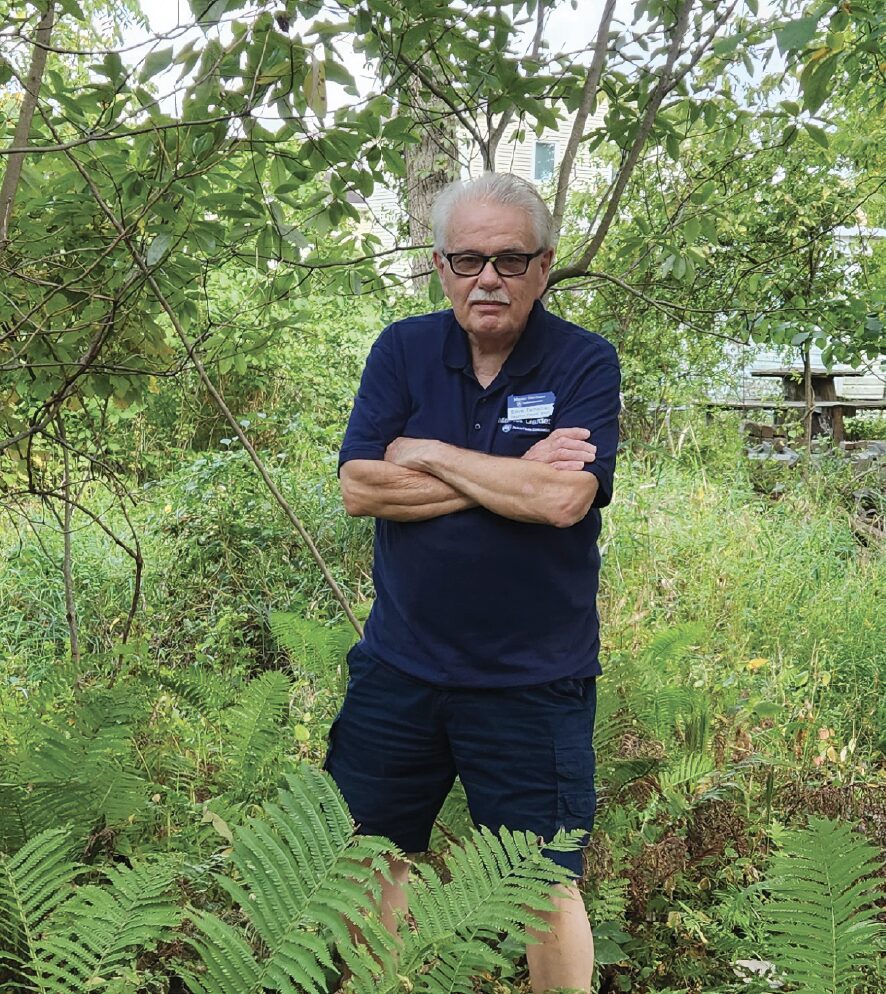
Step into Steve Tambolas’ backyard to see his “labor of love.”

“Here’s my little bit of paradise,” he said. “When we moved here, it was all grass.”

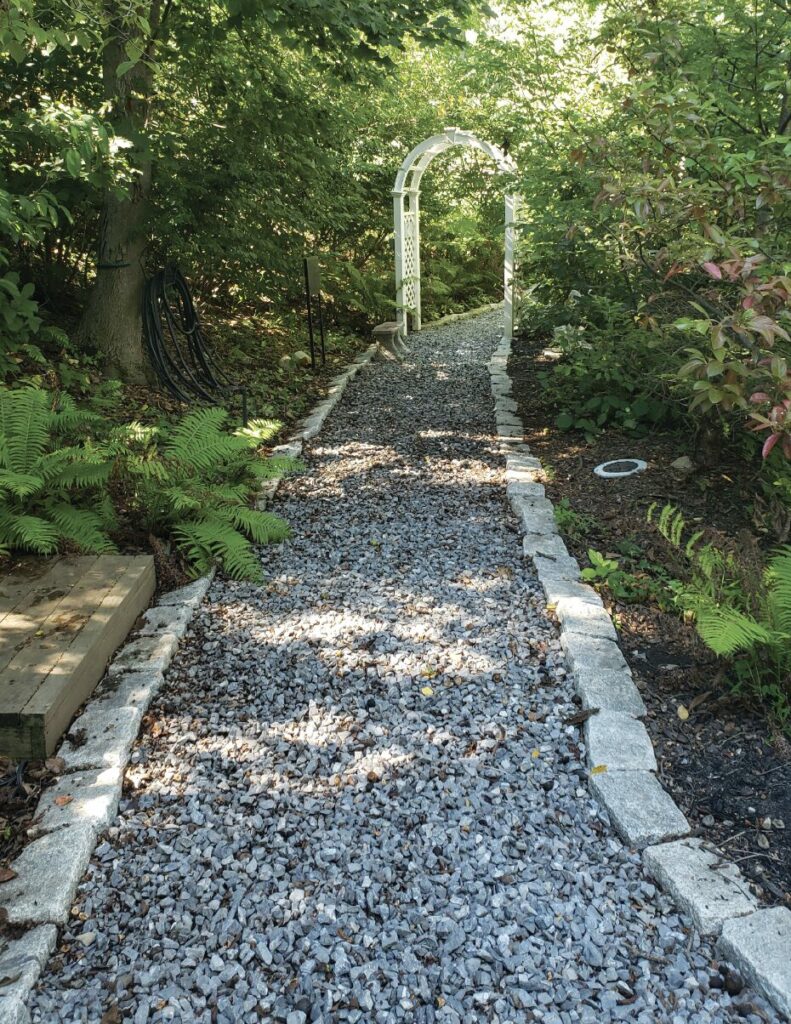
Now, the Susquehanna Township yard is a green haven. Tiered gardens bordered by stone walls hug the slope. Look more closely, and those beds of flowers and shrubs are actually rain gardens, designed to prevent stormwater runoff from cascading into the headwaters of the Paxton Creek below.

In homes and communities, area residents and groups are installing rain gardens or water-loving plants to help ease pressure on the region’s aging stormwater systems. In the process, they are greening their surroundings and, they say, playing their part in battling climate change.

“When rain falls, it’s always best if you can mimic its natural pathway and have it infiltrate as close as where it hits the ground,” said Susquehanna River Basin Commission (SRBC) Deputy Executive Director Andrew Gavin. “That really points to individual property owners as a first line of defense in preventing stormwater problems.”


Why Rain Gardens

First, know the “why” of rain gardens, said Tambolas. Cities grew up along rivers. With skyrocketing populations come pavement and roofs, which send polluted rainwater runoff into overburdened water systems and prevent it from reaching rivers and streams.

“It’s all about runoff. Period,” Tambolas said. “I no longer see rain gardens as something nice to have, but rather, I believe it’s become almost a necessary strategy for the way we design our yards and around our homes.”

Many people view rain gardens through the lens of curb bump outs that scrape their cars, but they should know that stormwater problems affect everyone, said Harrisburg community activist Rafiyqa Muhammad.

Rafiyqa Muhammad. Photo courtesy of the Chesapeake Bay Foundation.

In 2018, Muhammad worked with the Chesapeake Bay Foundation to install community rain gardens in the city’s economically challenged Allison Hill neighborhood.

“There’s a lot of stuff we still need to update our community about when it comes to rain gardens and to remind people that we are a flood city,” she said. “Harrisburg was built on the river. I’ve been through a couple floods where I lost everything. That right there is enough. Water rises. Where are you gonna go?”

Even Allison Hill regularly floods from now-commonplace gullywashers.

“When did we have floods on top of a hill?” Muhammad said. “But we have old infrastructure.”

Citywide, Capital Region Water works with community groups to install neighborhood rain gardens. Strategically placed and designed, many target high-risk areas, such as blocks where greenery is scarce, concrete is abundant, and roads create salty, oily runoff.

These are not your father’s rain gardens, if your dad happened to have one. Below the surface, networks of pipes, tanks and stone formations, depending on the site, trap and hold excess rainwater to be released into the ground or eased out to prevent it from overwhelming Harrisburg’s obsolete combined sewer-stormwater system.

At the city’s 4th & Dauphin Park, the basketball courts are porous, and gaps between stone pavers let water pass through. A pair of rain gardens facing the sidewalk are specially drained to slow the intake of downbursts. A young tree that tapped into the underground water source is thriving, in contrast to scraggly trees struggling up from the sidewalk across the street.

“It’s wild how well plants and trees do when they’re given the right conditions, even in an urban environment,” said Capital Region Water City Beautiful H20 Manager Claire Maulhardt.


Grass Power

CRW leans into community support for neighborhood projects, but Maulhardt sees individuals contributing by “doing the best they can on their own properties. That’s going to make them more resilient to weather conditions as well as other conditions of climate change, like heat islands, heat-related illnesses and air quality.”

To get started, rethink grass, suggests Maulhardt. Lawns are great for recreational activities, she said, but with their shallow roots, rain sheets off during heavy storms.

As an alternative, she pointed to the tough, deep-rooting sedges and rushes planted at 4th & Dauphin. Giving a hardy bunch of rushes a tug, she noted that “the force of water coming in here can be intense sometimes, and this really holds up.”

Maulhardt encourages residents to plant “meadow instead of lawn. Once you establish it, a meadow can be easier to maintain.”

For rain garden initiates, Capital Region Water offers Adopt-A-Rain Garden, which invites community groups to volunteer for basic site support while also receiving free resources and education. Individual property owners can even get a credit toward stormwater fees in exchange for installing stormwater controls, “because you’ve actually implemented something that helps our system and minimizes your impact,” said Maulhardt.

Steve Tambolas and his gardens.

Getting Started

Algebra. Sorry, but that’s where sizing an effective home rain garden starts, said Tambolas, the Susquehanna Township homeowner and Penn State Extension master gardener. The calculation accounts for average annual rainfall, size of the roof, and digging depth as determined by a DIY percolation (perc) test that reveals the ground’s absorption rate.

Tambolas relies on detailed instructions from thisoldhouse.com: “How to build a rain garden to filter runoff.” It’s worth checking out just for the idyllic picture of an oval rain garden bursting with black-eyed Susans and coneflowers (native plants, people).

The SRBC designed Tambolas’ high-capacity rain garden in the early 2000s as it educated homeowners about the growing problem of runoff. Native plants, including hydrangea and blue mist flowers, connect to a drip irrigation system, which is available online and easy to install, he said. His system runs on a timer, but that’s not a necessity. Anyone can turn on the faucet and turn it off 20 minutes later.

“You just watered your garden,” he said.

Rain barrels are “an absolute must” in Tambolas’ system. Even people who don’t have space for a rain garden can install rain barrels to collect and control roof runoff, he said.

Tambolas caught the eye of SRBC for a demonstration site because the headwaters of famously flood-prone Paxton Creek border the base of his yard. Headwaters are “where stormwater starts to gain the momentum to cause problems,” Gavin said. There along the stream, Tambolas has created a meditation spot abundant with statuary, trees, a riparian buffer and deep-rooted plants.

“I kinda went overboard on the ferns, but they spread very quickly,” he said.

With its eco-friendly landscaping, Tambolas’ yard is not just a rain garden. It’s also a certified wildlife and pollinator habitat. An oak tree hosts 400 species of “beneficial insects” that feed birds. The native smooth hydrangea is “nothing spectacular, but you should see the pollinators that go all over this thing.” Milkweed sustains butterflies by providing a place to plant their young.

“A lot of native insects are totally dependent on one or two plants,” he said.


 A Changing Outlook

Homeowners wondering how they can contribute to stormwater management can start by cleaning the litter that clutters the stormwater system, said Muhammad. From there, she suggests choosing flowers and plants with “wet feet”—the ones that thrive in wet soil while they hold and filter water, such as daylily, bleeding heart and blue phlox.

“There is a lot of education to do, but it’s going to take a minute,” she said.

Rain garden proponents agree: As the look of yards changes, mindsets must also change. A rain garden or corner meadow isn’t an overgrown patch but an instrumental factor in managing water resources. Minds will change as people see greening neighborhoods become more active and livable, said Capital Region Water Community Outreach Manager CJ McDougald.

Added Maulhardt, “The world around us is a living system, and it requires maintenance and care. It’s a necessity and something we should be doing globally as well as locally. It starts here.”


Get to Know Rain Gardens

For more information on the organizations mentioned in this story, visit:

Stories on environmental topics are proudly sponsored by LCSWMA.

If you like what we do, please support our work. Become a Friend of TheBurg!

Continue Reading

Snag & Bag: Make your city sparkle at annual Great Harrisburg Litter Cleanup

A past Great Harrisburg Litter Cleanup

Grab your work gloves, as the Great Harrisburg Litter Cleanup returns next month for an annual day of city beautification.

The volunteer day will take place Saturday, April 23, marking a decade for the cleanup event, which usually coincides each year around Earth Day.

“We know litter and debris have a negative impact on our city and health,” said Jennifer Wintermyer, chief executive officer of Tri County Community Action. “The Great Harrisburg Litter Cleanup is a great way to get involved in your community, to give back, and to help us all build communities of opportunity together.”

The event is a collaboration of Tri County Community Action, Clean & Green Harrisburg and Keep Harrisburg/Dauphin County Beautiful.

Sponsors include UPMC, Capital Region Water, the Lancaster County Solid Waste Management Authority, Waste Management, Harrisburg city and the city Department of Public Works.

Volunteers and groups are encouraged to register early. Pre-registration runs until the day of the event, but those registered by March 24 will receive an event T-shirt.
Volunteer roles include litter pickers, truck drivers, site coordinators and dumpster monitors.

Since the event’s start 10 years ago, volunteers have removed over 380 tons of litter off of city streets, according to Tri County.

“Just a few hours on a Saturday morning can make a huge impact that benefits us all,” Wintermyer said.

The 10th annual Great Harrisburg Litter Cleanup takes place April 23, 8 a.m. to noon. For more information and to register, visit www.cactricounty.org/ghlc or contact Tri County Community Action at [email protected].

If you like what we do, please support our work. Become a Friend of TheBurg!

Continue Reading

Harrisburg, Brenner agree to settle dispute over Public Works facility

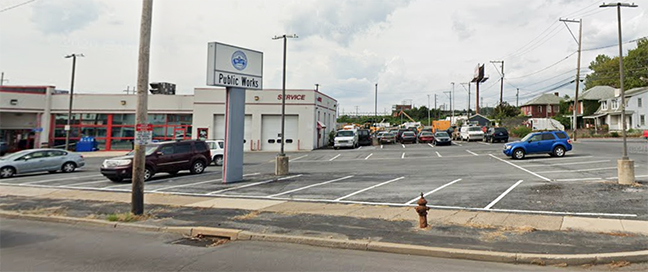
Harrisburg’s Public Works Department site on Paxton Street

A years-long disagreement over a Public Works facility lease appears to be coming to a close, as the parties have agreed to settle their disputed issues.

At a work session on Tuesday night, city Solicitor Neil Grover told Harrisburg City Council that the city had reached an agreement to pay $725,000 to MEB Partners and Brenner Motors to settle outstanding rent, tax and repair issues arising from a three-year lease of the Public Works Department site on Paxton Street.

“We never disputed that we owed some rent and that we owed taxes related to a reimbursement, ” Grover told council members at the end of the four-hour work session. “It really was just a question of the amount that we had in dispute with each other. So, this is a fair resolution to a long problem that arose from a lease that was negotiated very quickly.”

For many years, the city’s Public Works Department was located on the site of the city incinerator in South Harrisburg. The department had to relocate quickly after the incinerator was sold in 2013 to the Lancaster County Solid Waste Management Authority.

The city eventually opted for the former home of Brenner Motors on the 1800-block of Paxton Street, signing a three-year lease with the expectation that it likely would purchase the property.

However, the city stopped paying its $16,000-a-month rent in 2017 after negotiations to buy the property stalled over price. MEB and Brenner then sued the city, and the case eventually went to mediation.

Council still must approve the agreement, which may happen during next week’s legislative session. Grover said that he was awaiting some “final language” from the opposing side.

Reached by phone, Brenner attorney Adam Klein said that his client looked forward to resolving the issue.

“I think both sides are happy to put this behind us,” he said.

The agreement announced on Tuesday night solves only the outstanding issues related to the lease. It does not resolve the continuing disagreement over the fair value of the land.

In 2018, the city initiated eminent domain proceedings, taking the property a year later. It paid $2.2 million, which, following an appraisal, the city deemed to be fair compensation. The city and Brenner, however, remain at odds over the price.

“There is a dispute in the court about the just compensation for the eminent domain, which is separate,” Grover said.

Support quality local journalism. Become a Friend of TheBurg!

Continue Reading

Harrisburg officially picks up Steelton as new trash customer

Harrisburg Mayor Eric Papenfuse, surrounded by city and Steelton officials, announced a new intergovernmental agreement on Wednesday.

Usually, Harrisburg’s mayor doesn’t intentionally stand in front of trash trucks for photo ops, but this day was different.

Both Harrisburg and Steelton officials gathered at the city’s Public Works building late on Wednesday to officially announce their new intergovernmental sanitation agreement.

Last night, Harrisburg City Council voted unanimously to allow the city to begin collecting Steelton’s residential trash and recycling starting the week of July 1.

“This was an opportunity we were really pleased to grab hold of and work together on,” Mayor Eric Papenfuse said.

Steelton Council President Brian Proctor said that he was the first to approach Harrisburg officials with the idea of joining forces after borough residents voiced complaints about the service provided by their long-time hauler, Republic Services. They also were staring at a significant price increase from $24.45 to as high as $39.45 per month for trash collection.

“The borough of Steelton listened to its residents—and we listened to our residents,” Papenfuse said.

Steelton residents will now pay $25 a month for trash pickup compared to the $32.34 Harrisburg city residents pay.

Papenfuse explained that this discrepancy is due to the much higher “tipping fee” that Harrisburg pays for refuse disposal at the Lancaster County Solid Waste Management Authority (LCSWMA) facility in south Harrisburg.

Public Works Director Aaron Johnson emphasized that the new agreement will not cause a shortage of employees in Harrisburg.

“It’s my belief that we can do this better than anyone,” added Deputy Director David West.

Local officials from both municipalities said they were pleased at how quickly the agreement came together since the process began less than a month ago.

“To get two municipal councils to work together in a few weeks is remarkable,” Papenfuse said.

Steelton residents can expect welcome letters, and an initial quarterly bill, to be sent out in July, along with the dimensions and models of their new trashcans, Papenfuse said.

Steelton Planning Commission Chairman Dennis Heefner summed up the end result in a simple way–better service for borough residents.

“I’m just happy they will take their time and empty the trash,” he said.

Continue Reading

Harrisburg approves eminent domain to acquire Public Works facility

image of Public Works Department building, located at former Brenner autodealership

The Harrisburg Public Works Department on Paxton Street.

Harrisburg plans to force the sale of the land that houses its Public Works Department, as the city has not been able to reach a purchase agreement with the owner.

City Council voted unanimously on Tuesday night to begin the eminent domain process for the large tract at 1812-1820 Paxton St., the former site of a Brenner car dealership. The Allison Hill property actually includes eight separate parcels owned by MEB Partners and Brenner Motors.

“We were unable to reach a mutually agreeable price with Mr. Brenner,” Mayor Eric Papenfuse said following the council meeting.

Papenfuse would not disclose the price that the city offered or how much the owners wanted for the property. However, he said that the two sides were far apart.

“I don’t think we came close enough to be in the neighborhood,” Papenfuse said.

In its 2017 municipal budget, the city had allocated $2.5 million to obtain a public works facility.

Harrisburg moved its Public Works Department to the site in 2014. It long had been located on the grounds of the city incinerator in South Harrisburg, but had to relocate following the sale of the incinerator to the Lancaster County Solid Waste Management Authority.

Papenfuse said that negotiations for the land broke down last year, after which the city stopped paying rent. The city will compensate the owner for back rent as part of the final sales process, he said.

Harrisburg now has a year to complete the eminent domain process. The city, Papenfuse said, has the authority to take the property, but a Dauphin County judge will determine the final sales price based on an official appraisal, assuming the city and the property owner still are unable reach an agreement in the interim.

Papenfuse said the city would have preferred not to exercise eminent domain, but that the two sides couldn’t reach an agreement, and there was no other suitable site in the city for the department.

“It’s the perfect site for the city,” he said. “It needs to be outside of the flood plain and large enough to handle our entire fleet.”

In other city land news, council on Tuesday introduced a resolution to approve the land use plan for the proposed state Archives building at Harris, Hamilton, N. 6th and N. 7th streets. Council next will hold a hearing on the plan before voting on it.

A graphic of the planned state Archives building on N. 6th and Hamilton streets.

The state is seeking to build a new facility after running out of room at its iconic mid-century Archives tower on Forster Street. It plans to break ground on the project next year, with a two-year construction period expected.

Continue Reading

Waste Not: A Q&A with LCSWMA CEO Jim Warner.

Jim Warner

In 2013, Jim Warner saw a big opportunity—one that required a big risk.

He led his organization, the Lancaster County Solid Waste Management Authority, in making a major acquisition—the financially distressed Harrisburg incinerator. Since then, LCSWMA has invested millions to upgrade the plant and the property, transforming it into the Susquehanna Resource Management Complex, a state-of-the-art waste-to-energy complex.

At year-end, Warner plans to retire as LCSWMA’s long-serving CEO. So, we asked him to reflect on his past and on the career-defining decision to acquire the debt-ridden Harrisburg facility. This interview has been edited for clarity and space.

TheBurg: How did you get into this industry?

Warner: I got out of graduate school in 1984 from Ship [Shippensburg University] with a degree in environmental science. I got a job in Gloucester County (N.J.) as one of the first county recycling coordinators in America.

TheBurg: What year was that?

Warner: That was 1985, when the “garbage crisis” first manifested itself, in New Jersey. So, government responded by saying, “Well, maybe we should recycle part of the waste stream, and we wouldn’t have as big of a problem.” So, counties in the mid-‘80s began hiring . . . professionals to manage and implement recycling programs in a region or a county. Then Lancaster became the first county [in Pennsylvania] to write a comprehensive waste management plan, in 1986.

TheBurg: Where were you from originally?

Warner: I grew up in Lebanon, Pa.

TheBurg: So, you were coming back home?

Warner: Not only that. I went to Millersville for my undergrad and, actually, most of my best friends were from Lancaster. My senior year, I lived in downtown Lancaster. So, yeah, I was coming back. I’ve been here for basically 31 years.
TheBurg: So you became Lancaster County’s recycling coordinator?

Warner: I did. I was like the third or fourth employee in the office. And, during that time, we borrowed a lot of money and built a waste-to-energy plant, built the first double-lined landfill in 1988 and then implemented a recycling program. That year, July 1988, is when Pennsylvania passed their mandatory recycling law under Bob Casey’s administration.

So, I set up the recycling and hired an assistant or two. And my desire was to really get into the business component more. So, then, as we grew, I had a series of promotions and more responsibility until about 1994 or ‘95, when I was sort of the general manager. Then our executive director at the time made a pretty quick exit, and the board of directors decided that I was capable enough to manage the system as it was then, which was not nearly as complicated as it is now. So, as a young 38-year-old, I became executive director and, eventually, my title changed to CEO. The organization went from about $35 [million] to—I wouldn’t doubt if we did $90 million this year and 350,000 tons to 1 million. Some of that was organic, but a lot of it was strategic. Probably the biggest piece ever in that evolution was the acquisition of Harrisburg [incinerator], as far as a big chunk of business.

TheBurg: Let’s talk about Harrisburg then. Take me through the process of how you ended up buying the incinerator here.

Warner: It’s really interesting. As we had a growth spurt from the mid-‘90s to about 2005, we were growing at about 3½ percent per year. So, as we projected that out, it looked like we were going to run out of processing capacity in the Lancaster plant somewhere around 2010.

So, then a couple of things happened. That growth stopped suddenly in about 2007, with the recession. We started evaluating—how would we expand the Lancaster facility?

We started looking at—what would be the cost of doing that expansion? And we had a good model, in that two very similar plants in Florida—one in Hillsborough County and one Lee County—had just gone through that process, where they built a fourth unit. Each one added a 600-ton unit, and their plants went from 1,200 to 1,800 tons per day. And each of the projects cost about $135 million. So, we started modeling about $150 million, figuring we would come a decade after them.

When you do that, there’s sort of a Catch-22. If you put in a 600-ton-per-day unit, that’s 180,000 tons per year of waste going through that unit. The problem is that, when you build a unit, you don’t necessarily have 180,000 tons of waste coming in the day you open it because, if you had, you would have been landfilling all that waste until the day you open the unit. And we never wanted to get into that, where we grew so much but we waited until we could fill the unit with Lancaster County waste. The price to pay would have been too much landfilling of waste. It would have eaten up years of landfill capacity.

So, the other option is, maybe wait until you have 20,000 or 30,000 tons, and then you go and get the other 150,000. And getting the other 150,000 and bringing it in, would have been very difficult to do. And the price we would have gotten for what we call spot trash in the industry wouldn’t have supported the cost of adding a unit like that. We bought some time then because of the Great Recession, and, meanwhile, the timing of Harrisburg’s distress was progressing.

Now, at the time, the [Harrisburg] receiver [William Lynch]—he’s trying to get the highest price possible because there’s $370 million of indebtedness on the plant. [He] wanted an inflated price for the asset, which would be supported by guaranteed waste streams at above-market rates for 20 years, with put-or-pays—guaranteed amount to LCSWMA every year—in exchange for an over-inflated price for the asset. He needed $130 million because they could only value the parking [asset] at $240 million. So, those were the two assets they had: 130 for this, 240 for that.

So, all along, we had asked them—what do you want paid? Because we could make it $100 million, we could make it $80 million, we could make it $130 million. But then here’s what your tipping fees are going to be over 20 years, and the guarantee levels change the valuation. What were they willing to accept as their tipping fee? So, Dauphin County, I think we started at $85, and the city started at $190. But the market is $50, $60. And there was a lot of push/pull there between the city and the county. If you had a blended rate, the city and the county would both be paying $120 or something like that. But that wasn’t going to happen because the county didn’t feel they had as much responsibility for the mess as the city did.

But we tried to stay out of that. We were just coming in and trying to make the asset work for us and, if we could help solve this neighboring problem, that would be good, too.

TheBurg: It seemed to me, at the time, that everything seemed to align together in a serendipitous way.

Warner: If we hadn’t come in, I don’t know how the city would have avoided bankruptcy.

I think the first number we gave them was like $47 million, and people had the impression we were low-balling, but we were giving an at-market price without the guarantees. But, when all of a sudden, they wanted $130 million, then the tipping fees were going to go way up, and the guarantees had to be made on the revenue because we’re paying 20 years forward. We gave them $130 million one Monday morning—Dec. 23, 2013—on the guarantee that they’re going to be paying us some rate times some amount of tons every year for 20 years. And we can never bring that risk to our doorstep, because they got their over-inflated price that morning.

Our risk was that we had to continue to make the asset function for those 20 years. For that, we were relying on our own expertise and know-how of being in the business, and that was a risk we were willing to take on.


TheBurg: So, you bought this thing. What came next?

Warner: I think we’ve put about $22 million in, in the first four years. We added some things that we didn’t think we were going to—we could get by. And there are other things that we didn’t do that don’t need done. This building we’re sitting in, we call it the TMA building, which stands for Transfer, Maintenance and Administration. So, we built this bigger than we had thought. We built 23,000 square feet. We have two transfer bays.

And the reason we made it much more robust than we originally thought was because, the more we thought about it—our arrangement with the city of Harrisburg and Dauphin County is that we’re going to take your waste for the next 20 years. What happens if the main asset doesn’t function? Believe it or not, just in March, we went four days without a unit working because, well, everything seemed to go wrong for four consecutive days. But all the waste came here, the trucks dumped in the transfer building, and we transferred it all to our Lancaster waste facility.

When THA (the Harrisburg Authority) had the plant come down, they would just say, “Take your waste elsewhere. We’re not open.” We, first of all, can’t do that. But, secondly, we don’t want to do that because we want that revenue. With our assets, we can manage it, so that’s why we can do that.

So, this building was $5 million. We just finished a $4 million cooling tower. We thought we could put a Band-Aid on the old tower every five years. But we just decided to abandon the cooling tower. The cooling tower here was built for like a shopping center, not a power plant. So, we put in a real cooling tower. So, now we don’t have to worry about whether, over the next 20 years, it’s going to work. Then we’ve done all this site work. We changed the entrance from Cameron Street to 19th Street. We put in a new scale house. We paved the roads, new fencing, landscaping. All that was a couple million dollars. Then, inside the plant itself, we’ve upgraded, done things to the boilers and the grates, and we’re continuing to do that. So, we’ve invested about $5 million more than we thought we would during the first four years. But now we’ve made the big investments, unless something drastic would go wrong.


TheBurg: What does your future hold?

Warner: Getting back to here [the Harrisburg facility]—I could not be more pleased. This was not easy. This challenged our staff. Our board took a leap of faith with me driving this. I think it’s proved out.

The first four years, I think, will be the hardest. That’s when we had to do the most overhaul, prove ourselves in the community. People drive in here and drive out in 12 minutes. They use to have to wait in line for an hour and a half. So, the customer service has increased. We’ve taken this facility, which was substandard, and we’ve taken it—and I knew we could do this—we’ve put it to our standard, LCSWMA’s standard—and our standards are the best in the industry. So, we had a long way to go there. I think we’ve done well. The mayor, I think, is pretty pleased. I know that Public Works loves the service they get here. We don’t have any griping. When you get no griping, you know you’re doing things right.

With me—our board, my departure has been well planned. For years, I’ve been working with the board with timing. I think the board has made a wise move to promote from within, just like they took a little chance with me. They hired our current chief operating officer, Bob Zorbaugh. It’s his group that runs this and makes it function. We have an extremely strong executive team of six that Bob’s coming out of. He knows the business inside and out. It will take some time for people to get to know Bob, but he’ll do an excellent job. He knows what it is to make facilities function successfully.

To learn more about the Lancaster County Solid Waste Management Authority, visit www.lcswma.org.

Continue Reading

Path to Success: A beloved fixture, the Capital Area Greenbelt is poised for greater (and greener) days ahead.

Scott Shepler says hello to everyone he passes on the Paxtang Parkway. The woman walking a collie gets a hello. The midday jogger gets a hello.

All these people might not even know that this stretch of the Capital Area Greenbelt is called the Paxtang Parkway, but they are enjoying it for exactly the reasons that Shepler strives to keep it from washing into the creek.

“I view these natural areas as respite areas from city living,” he said. “It’s important for us to maintain it.”

As the Harrisburg region looks toward a multi-million-dollar upgrade of the Greenbelt, the Paxtang Parkway—the stretch that could be credited with launching the Greenbelt movement in the first place—gets its piece of the action.

First, where is the Paxtang Parkway? Just where its name implies. Pop into a parking lot behind City Line Diner on Derry Street, where Harrisburg adjoins Paxtang, and you’re at the gateway of a 1.3-mile stretch of wooded, creekside path. This stretch has always been meant as an urban respite. Around 1900, renowned landscape architect Warren Manning envisioned a “necklace” of naturalistic, “wild garden” parkways, accessible by pedestrians and carriages, linking city parks.

Only two of those parkways were built, and the Paxtang Parkway, dating to 1906, was one of them. Vehicles actually drove it until Hurricane Agnes wrought devastation in 1972. The parkway went dormant until 1989, when two state foresters, Norm Lacasse and Ellen Rhone, were conducting a tree inventory and discovered this forgotten parkway. In 1990, they formed the Capital Area Greenbelt Association to revive Manning’s vision. By 1999, the Greenbelt was essentially complete.

CAGA board member Shepler remembers when cars drove on the Paxtang Parkway. In recent years, he despaired over its deterioration. The parkway snugs into a kind of ravine along Spring Creek West’s meandering Paxtang tributary. Runoff from the forested hillsides and output piped from the Kline Village Plaza storm water system were washing away the asphalt walking trail. Erosion on the waterway was pushing back the creek bed almost to the point of touching the trail. Manmade features such as encasements around sewer pipes were deteriorating.

At one creek bend, Shepler pointed to a small hill.

“When I started this, many years ago, that little point was much more pronounced,” he said. ”I’ve seen that thing walk back maybe six to eight feet. All the soil was washed away. It’s all gone.”

Rapid erosion means that large quantities of sediment wash into Spring Creek, with its precious wild trout population, and eventually into the Chesapeake Bay, creating cloudy water that hampers the growth of underwater plants essential to young fish and shellfish.

In 2015, Shepler teamed with Todd Moses, an environmental restoration specialist with engineering and environmental consultant firm Skelly and Loy, to write a plan of preservation and protection.

“The Paxtang Parkway is a microcosm of the problems plaguing older urban greenspaces,” the plan noted.


Here to There

Conditions were detrimental to water quality and infrastructure, but restoration could offer “immense quality-of-life benefits” for residents with limited access to natural areas.

Phase 1 of the plan is underway this spring as part of the Greenbelt upgrades—a $500,000 project to stabilize the most egregious erosion sites. CAGA raised $60,000 from the Kline Foundation, Trout Unlimited, the city of Harrisburg, the Lancaster County Solid Waste Management Authority and its own coffers to leverage a $490,000 grant from the Pennsylvania Department of Environmental Protection. Skelly and Loy donated in-kind services for planning and funding pursuits.

“You have to start out with money,” Shepler said. “Nobody will give you any money unless you have money.”

Within the overall Greenbelt upgrades, the parkway project adds “another area where we have an opportunity to prepare and preserve the Greenbelt,” Shepler said. “It’s hard not to be excited about all the improvements.”

These improvements, kicked off in March by state and local officials, total $7.5 million. Along with the Paxtang Parkway streambank restoration, projects include:

  • Six intersections enhanced with such safety features as flashing lights, ADA-treated crosswalks and pedestrian crossing buttons. Shepler often takes children from the Boys & Girls Club on Greenbelt bicycle rides through Trips for Kids Harrisburg. “When you have a group of kids ages 8 to 16, crossing some of these intersections is really hairy, so I’m really happy about that,” he said.
  • A long-awaited connector from Wildwood Park to Fort Hunter. Pedestrians and bicyclists will avoid heavy traffic via a 1.5-mile path from Industrial Road, under Linglestown Road and along the river at Front Street.
  • Resurfacing near the PennDOT building on a former rail bed along Cameron Street between the Five Senses Garden and Paxton Street and from Rutherford House to Park Drive.

Along with the DEP’s $490,000 grant for the parkway project, the Greenbelt upgrades are funded with $5 million from the Pennsylvania Department of Transportation, $1 million from the Pennsylvania Department of Conservation and Natural Resources, $230,000 from the Pennsylvania Department of Community and Economic Development and $310,000 from Dauphin County gaming grants.

“You’re talking about a recreational resource from a biking and walking perspective, but it’s a community resource, too,” Shepler said. “People use it to get from here to there for various reasons, out of necessity and not just out of enjoyment.”

Not Tolerable

The parkway project also tackles the thorny issue of invasive plants.

All along the creek and in the woods, Shepler pointed to invasive plants, shrubs and trees. The tree of heaven is “really the tree of hell” for its aggressive reproduction and tendency to block nearby plants from growing. Japanese knotweed creates a tangled rhizome underlayer “that’s as impervious as concrete.”

It’s just a start, but Phase 1 plants reconstructed areas with native plants and funds planning for invasive plant control.

“The key word is ‘plan,’” Shepler said. “Implementing the plan, that’s a different story,” because control often requires the use of herbicides that only municipal employees—and not CAGA volunteers—can handle.

Still, it has to be done.

“If we don’t have native plants, we won’t have native insects,” Shepler said. “If they don’t survive, our birds won’t survive.”

Pointing to a meadow along the parkway that looks somewhat scruffy in the early spring but is planted with wildflowers and hosts a pair of bluebird boxes, Shepler has a message for those who like their nature manicured.

“Aesthetics, for some people, is the main issue, and we’ve got to get away from that,” he said. “It can’t be just about how things look.”

A couple with a toddler walked past, and Shepler said, “Hello.” Then he continued. “If it’s just about how things look, then kiss it all goodbye. It’s impossible.”

Future phases of the parkway project, it’s hoped, will reconstruct sewer casements and culverts, repave the trail and improve rainfall infiltration to reduce storm water runoff.

As many as 100,000 to 400,000 users, on average, enjoy different sections of the Greenbelt each year. Shepler believes that he and CAGA, an all-volunteer nonprofit, are at work for all of them.

“It’s saving a historic parkway,” he said. “If no one did anything about this particular problem, eventually it would have to be closed and a vital link in the Greenbelt would be gone. That’s not tolerable. It’s not something anyone wants to think about. We want to preserve and protect this valuable community resource.”

For more information about the Capital Area Greenbelt, visit www.caga.org.

Stories on environmental topics are proudly sponsored by LCSWMA.

Continue Reading

“Worst Municipal Finance Disaster”: Commonwealth files lawsuit against actors in HBG incinerator debacle.

Inside the Harrisburg incinerator, just before its sale in 2013.

The commonwealth of Pennsylvania filed a civil lawsuit on Monday against numerous companies involved in Harrisburg’s disastrous incinerator retrofit, seeking compensation for some of the $360 million in debt that the project piled up.

The lawsuit, filed in Commonwealth Court, names many of the law firms, finance companies and consultants familiar to those who have followed the 25-year saga of the incinerator, which nearly bankrupted Harrisburg and led the commonwealth to impose a receiver to help set the city’s finances straight.

“It is time to hold those responsible for the failed incinerator debt scheme accountable and recoup the taxpayer dollars wasted by their negligence and deception,” said Gov. Tom Wolf, in a statement. “This project, started in 2003, represents the worst of how lobbyists and special interests bilk taxpayers for their own gain. My administration is standing up to these interests on behalf of the taxpayers, and we will continue to fight to stop anyone that uses deception or fraud to take advantage of taxpayers.”

The incinerator dates from the late 1960s. However, much of the facility’s crippling debt began to accumulate with its 1993 “sale” from the city to the city’s own utility authority, the Harrisburg Authority. The state’s lawsuit mostly concerns itself with the period starting in 2003, when under the administration of former Mayor Steve Reed, the authority made the disastrous decision to “retrofit,” or upgrade, the facility using largely untested technology from Minnesota-based Barlow Projects. (Click here for a detailed history of the Harrisburg incinerator.)

In its lawsuit, the commonwealth calls the Harrisburg incinerator debacle, “. . . the worst municipal finance disaster in the history of the commonwealth of Pennsylvania.”

The respondents named in the suit include RBC Capital Markets Corp.; Obermayer, Rebmann, Maxwell & Hippel LLP; Buchanan Ingersoll & Rooney PC; Eckert, Seamans, Cherin & Mellot LLC; Public Financial Management, Inc.; Buchart Horn Inc.; and Foreman and Caraciolo PC.

The lawsuit charges that members of these firms formed a “working group” that allegedly did not act in the best interests of the city. Among the allegations, the lawsuit states that:

  • “The Working Group’s dual representation of the [Harrisburg] Authority and the city created destructive conflicts of interest.”
  • “In their efforts to close the debt transaction and collect their compensation, the Working Group’s members provided the city with false and misleading information, concealed material facts and aided others in breaching their duties to taxpaying citizens. Consequently, the city signed onto imprudent and illegal debt guarantees that rendered it insolvent.”

Because of this insolvency, former Gov. Tom Corbett declared a fiscal state of emergency and placed the city into receivership.

The lawsuit also alleges that:

  • The working group convinced Harrisburg City Council to guarantee $130 million in debt that the city could not afford.
  • The working group’s disclosures understated the financial burden of the reconstruction project and its financing.
  • The working group did not disclose to council or to residents the “unreasonable assumptions” supporting its financial analysis.
  • The engineering consultant failed to identify “key defects” in the original incinerator retrofit design by Barlow Projects.
  • The working group “falsely” advised the city that the incinerator debt complied with laws meant to prevent excessive municipal debt.
  • The working group told the city to classify debt as self-liquidating (able to pay for itself out of revenue), “even as the incinerator is about to shut down.”
  • The working group advised the city to classify new incinerator debt as self-liquidating “based on unreasonable assumptions and despite contrary evidence.”
  • The working group submitted “incomplete and inaccurate information” to obtain state approval of city debt guarantees.
  • The working group “violated” laws requiring contractors to post financial security.

In the end, the lawsuit charges that the working group was responsible for adding some $60 million to the incinerator’s debt.

“The professionals involved in these transactions reaped rewards at the taxpayers’ expense,” the lawsuit alleges.

The lawsuit further makes charges against some of the respondents, including allegations of fraud, negligent misrepresentation, breach of fiduciary duty, aiding and abetting breach of fiduciary duty, legal malpractice, aiding and abetting fraud, professional malpractice and unjust enrichment.

In its suit, the state is requesting both actual and punitive damages, as well as a jury trial.

“The action taken today by Governor Wolf is welcome news for the city of Harrisburg,” said Harrisburg Mayor Eric Papenfuse in a statement. “I’m thrilled the governor is taking the necessary step to hold accountable those responsible for the failed incinerator debt scheme. Our residents also are pleased the commonwealth is continuing to fight to secure revenues for the city.”

In 2013, the Lancaster County Solid Waste Management Authority agreed to purchase the Harrisburg incinerator, relieving about half of the outstanding debt on the facility. Tax increases and the long-term lease of the city parking system covered much of the rest of the debt.

The state exited its receivership in early 2014, though the city remains in the state’s Act 47 program for financially distressed municipalities.

In 2015, the commonwealth filed almost 500 criminal counts against Reed, many in relation to incinerator financings. However, many of the counts were eventually dismissed because a judge ruled that the statute of limitations had expired. Last year, Reed pleaded guilty to 20 theft-related counts arising from city-owned museum artifacts that were found in his possession, and he was given probation.

“I thank Gov. Wolf for his willingness to take tackle the tough issues and take on special interests to do what’s right for Harrisburg residents and Pennsylvania taxpayers,” Papenfuse said.

Continue Reading

March News Digest

Free Evening Parking

Free parking could come to downtown Harrisburg as early as this month, as City Council passed a resolution that would offset street parking costs after 5 p.m.

Council agreed unanimously last month to join Dauphin County and the Harrisburg Downtown Improvement District (HDID) in ponying up money to offset parking revenues that operator Park Harrisburg would lose between 5 and 7 p.m.

“I think it’s a boost for the city,” Mayor Eric Papenfuse said. “I think it will lead to more people visiting downtown.”

Harrisburg’s contribution will amount to $110,000 over the next year and will come from money that the parking system already owes the city, said Papenfuse. The county has also pledged $110,000, and HDID will pay $50,000.

The county and HDID had hoped for a three-year deal, though council approved just a one-year test period.

By entering into the “memorandum of understanding,” the three entities—the city, county and HDID—must finalize the exchange with the parking system operator. Papenfuse has said he expects no pushback, as the system operator, SP+/Park Harrisburg, and its asset manager, Trimont, just want to ensure that contributions offset lost revenue, which, last year, amounted to $270,000 between 5 and 7 p.m.

Papenfuse said the parking subsidy could kick in as soon as April, but may take longer.

Since 2014, the city has tried several tactics to mitigate the cost of street parking. First, the Papenfuse administration convinced the system’s operators to lower the “happy hour” rate from $3 to $2 an hour between 5 p.m. and 7 p.m. It later turned many of downtown’s loading zones into 15-minute free parking areas.

Nonetheless, downtown bar and restaurant owners continued to complain about a loss of business, which they largely blame on high parking rates.

If implemented, the plan would come with some conditions. First, it would apply only to street, not garage, parking. Secondly, it would take effect only within the HDID boundaries, which run downtown from State to Chestnut streets.


Loan Fund Launches

Whether you’re a shop owner looking to expand your storefront or an aspiring entrepreneur with a business dream, you may benefit from a new loan fund that launched last month in Harrisburg.

Impact Harrisburg is partnering with the Community First Fund and the Pennsylvania Housing Finance Agency to launch the Harrisburg Business Opportunity Fund (HBOF) with $1 million in seed money, according to Sheila Dow Ford, executive director of Impact Harrisburg.

Impact Harrisburg, which was founded with proceeds from the sale of Harrisburg’s incinerator, will contribute $350,000 to the fund. The Pennsylvania Housing and Financing Authority has pledged $650,000 through its nonprofit subsidiary, the Commonwealth Cornerstone Group.

Loans will be available to small, for-profit business owners or aspiring business owners in amounts ranging from $1,000 to $100,000. According to Dow Ford, the goal of the fund is to encourage economic development, job creation and a diverse workforce in the city of Harrisburg.

“We’re providing for a segment of the population that has, for various reasons, been overlooked by traditional lending institutions,” she said.

Any for-profit business or startup in Harrisburg can apply for a loan, Dow Ford said, though real estate trusts or businesses that buy and sell property will not be eligible.

The new fund bears some resemblance to Harrisburg’s old revolving loan fund, which was launched in 1984 and languished in the 2000s as many borrowers became delinquent.

Dow Ford acknowledged that some HBOF loans might be considered risky by traditional lending standards, since they will be issued to people and ventures that might be denied by traditional lenders. However, she hopes that the partnership with Community First Fund will prevent the same mismanagement and delinquency that plagued the city’s revolving loan fund.


Superintendent Search Begins

The Harrisburg School District is putting up a help wanted sign, but there won’t necessarily be a personnel change in its highest office.

In a 5-4 vote, the Harrisburg School Board decided last month to accept applications for the position of superintendent. The vote means that if current Superintendent Sybil Knight-Burney wishes to stay in her post, she must apply for her job and beat out other candidates.

The vote came after more than an hour of spirited public comment at last month’s school board meeting, as near-equal numbers of district residents encouraged the board to vote for or against a resolution to initiate the hiring process.

Residents who supported renewing Knight-Burney’s contract emphasized the importance of consistent leadership during the district’s recovery process. Those who called for an open hiring process said that the district deserved to consider candidates who might make more dramatic gains in student achievement.

Knight-Burney became Harrisburg’s superintendent in 2011. Since 2013, she’s been responsible for implementing the actions in a state-crafted recovery plan, which outlined almost 100 initiatives to improve the district’s academics and operations.

Her current contract, which was renewed in 2014, expires on June 30. Asked if she would reapply for her job, Knight-Burney declined to comment.


Act 47 Status Considered

“The clock is ticking” on the next step in Harrisburg’s path to financial recovery.

That’s the message that a state official had for Harrisburg’s administration and City Council last month, as both bodies were briefed on the timeline for the city’s remaining six months in the state’s Act 47 program for distressed municipalities.

Marita Kelley, Harrisburg’s Act 47 coordinator, appeared at a council work session to explain the city’s duties before Act 47 status expires on Sept. 23.

Here’s what lies ahead, according to Kelley. The mayor and the city clerk will receive a financial condition report, prepared by Kelley and the Pennsylvania Economy League. A public meeting on its contents should take place this month.

After the meeting, she and the Pennsylvania Economy League will have 90 days to prepare a final exit plan for the city. In that plan, they’ll make a formal recommendation for what the city should do in September: extend its Act 47 status, exit the program or enter the oversight of a state-appointed receiver.

The exit plan should arrive before city officials in mid-July. After another round of commenting and a public meeting, Kelley will finalize the exit plan in time for the Sept. 23 expiration deadline.

Kelley thinks it’s highly unlikely that Harrisburg will enter receivership in September. She was hesitant to recommend an action to the city last month, but said during a budget meeting in December that Harrisburg will likely spend another three years in the program, at least.


Reports Released for Train Station, Paxton Creek

A restaurant and café in Harrisburg’s train station, a pedestrian bridge over the train tracks, a flood-controlled Paxton Creek.

Those are a few of the ambitious goals laid out in two reports released last month by the state Department of Transportation, which is taking the lead on rehabilitating the blighted Market Street corridor just east of the Harrisburg Transportation Center, roughly from the train station to Cameron Street.

“These studies serve as a road map to help the city continue to develop as an attractive place to work and play,” said PennDOT Secretary Leslie S. Richards.

PennDOT’s first priority is rehabilitation of the train/bus station itself, set out in a report titled, “Harrisburg Transportation Center Transit Oriented Development Master Plan.”

That project includes removal of the large office space in the main lobby, the addition of an “open-concept café” in the lobby, new seating in the station concourse, the addition of a restaurant with indoor and outdoor seating, a new entry plaza from the lower-level Market Street entrance and the addition of office space on the upper floors.

According to Richards, work is expected to begin relatively soon, as the department has completed 90 percent of the design for the $15 million renovation and is now working with Amtrak on a construction schedule.

The next priority is a massive flood control project designed to restrain, improve and restore Paxton Creek, as delineated in the “Paxton Creek Master Plan.”

The plan outlines steps to modify the channel size and make other improvements that would take 133 acres out of the 100-year flood plan and partially remove another 275 acres, making the area far more attractive for redevelopment. The plan also envisions enhancing the creek area with recreational paths and restoring it to a more natural environment.

PennDOT anticipates four to five years of preliminary work before construction on the project could begin. The estimated cost of the creek improvements is $60 to $90 million, with potential grants coming from the state’s Multimodal Fund, the Department of Community and Economic Development and the Department of Conservation and Natural Resources.

The transportation master plan envisions other projects, which include:

  • Streetscaping and façade enhancement, including new sidewalks, landscaping, street furniture, signage and utility and lighting poles.
  • A pedestrian bridge that would extend the station concourse over the railroad tracks, through the former Harrisburg central post office and into the redevelopment area.
  • Relocation of the intercity bus terminal from Market Street to the redevelopment area and expansion of the facility.
  • Development of the area near an east entrance to the station.
  • A new plaza on Market Street.

“These projects will provide exciting opportunities for development in the city of Harrisburg, and for enhancing the quality of life for our residents,” Harrisburg Mayor Eric Papenfuse said in a statement. “We look forward to continuing our close collaboration with PennDOT on projects that will benefit not only Harrisburg residents but the entire region.”


New Districts Upheld

Pennsylvania’s redrawn congressional districts withstood two court challenges last month, clearing the way for some areas, including the Harrisburg area, to be unified under new district lines.

First, a three-judge federal panel threw out a Republican-led challenge to the new district map. The same day, the U.S. Supreme Court refused to hear a Republican request for an emergency stay that would block use of the new map in this year’s elections.

As a result, the state Supreme Court’s redrawn district map will stand. This includes a new 10th congressional district that encompasses all of Dauphin County and parts of Cumberland and York counties, including Harrisburg, York and Carlisle.

The primary election is slated for May 15.

Gaming Grants Given

The Dauphin County commissioners shelled out some $6 million to dozens of projects last month in the annual disbursal of gaming grant money.

The commissioners spread the money around to municipalities throughout the county, with the largest sums, by state law, going to those nearest to the Hollywood Casino at Penn National in Grantville.

In and around Harrisburg, grants to governments included:

* City of Harrisburg: $229,724 for police equipment, the engineering bureau and for Fire Bureau dive team equipment

* Susquehanna Township: $159,900 for sanitary sewer system extension, for Progress Fire Co. vehicle replacement and for Wedgewood Hills Swim Club heat pump installation

* Lower Paxton Township: $82,825 for Devon Manor pool improvements, Koon’s pool improvements and Ranger and George Park soccer upgrades

* Hummelstown: $58,471 for municipal building debt service

* Highspire: $57,200 for roadway rehabilitation

* Steelton: $43,000 for Fire Department apparatus and Skate Park debt reduction

* Swatara Township: $13,000 for Police Department K-9 and training

Grants to Dauphin County entities included:

* MDJ Court Administration: $200,000 for construction of MDJ buildings

* Dauphin County Industrial Development Authority: $137,000 for solar farm project debt reduction

* Dauphin County Parks & Recreation: $101,000 for Detweiler Park master plan and Fort Hunter Station planning project

* Dauphin County Redevelopment Authority: $100,000 for a project on the former State Hospital grounds

* Dauphin County Land Bank Authority: $100,000 for renovation of vacant homes

Grants to organizations included:

* Camp Curtin YMCA: $100,000 for conversion of an indoor pool into a recreational area

* Central Dauphin School District: $75,600 for a school safety improvement project

* Jewish Home of Greater Harrisburg: $75,000 for an emergency generator project

* Penn FC (Harrisburg City Islanders): $72,562 for a field conversion project

* Humane Society of Harrisburg Area: $70,000 for an expansion of veterinary services

* Salvation Army: $50,000 for a new headquarters and services facility

* Harrisburg Rugby Food Club: $50,000 for Perseverance Field improvements

* Homeland Center: $40,000 for an emergency generator project

* The Nativity School: $40,000 for furniture purchase and building renovations

* Open Stage of Harrisburg: $32,000 for facility and equipment upgrades

* Capital Region Literacy Corp.: $30,000 for books in schools and clinic program

* Habitat for Humanity: $28,000 for weatherization project

* Heinz Menaker Senior Center: $25,000 for ADA-compliant restrooms

* Midtown Action Council: $13,652 for historic marker renovation and expansion

* Beacon Clinic: $5,000 for HVAC installation and renovations

More Downtown Apartments

More apartments appear headed for downtown Harrisburg, though it may be awhile before you’ll be able to move into one.

Harrisburg City Council last month introduced a resolution that would allow Harristown Enterprises to convert a circa-1952 office building to a 25-unit apartment building with commercial space on the first floor.

The building, at 124 Pine St., currently houses Keystone Human Services, which would seek new space following a sale, said Harristown CEO Brad Jones.

Keystone currently has the six-story, 30,000-square-foot building on the market for $1.5 million.

Over the past few years, Harristown has converted several downtown office buildings to higher-end apartments, most recently at the corner of N. 2nd and Cranberry streets. That 12-unit building, Jones said, has been renamed “The Bogg on Cranberry.”

The Pine Street project, he said, would consist of 18 one-bedroom and seven two-bedroom units that would range from about 700 to 850 square feet in size. Jones said that he expects rents to be about $1,095 to $1,395 a month. The project includes 19 off-street parking spaces, which would be rented separately.

If Harristown gets City Council approval, the company hopes to close on a building purchase in May. Jones, however, expects that Keystone will then lease the building back until it can find a new home, meaning that renovation work probably won’t begin until early 2019.


So Noted

Blake Lynch was named Harrisburg’s new community policing coordinator last month. In this position, Lynch, formerly director of development at the Boys and Girls Club of Harrisburg, will serve as a liaison between the city’s Police Bureau and the community.

Club XL is set to open this month near S. Cameron and Hanna streets in an industrial area of Harrisburg. Owner Phil Dobson said the 18,500-square-foot nightclub and concert venue will feature a large stage, a sophisticated light and sound system and an exterior patio, among other amenities.

Gamut Theatre Group this month plans to begin the second phase of the build-out of its building in downtown Harrisburg. The Gamut Theatre Education Center will include the Alexander Grass Second Stage, two renovated classrooms and other areas for students to learn various aspects of theater operations. The $700,000 project should be completed by August, according to Gamut.

Iron Hill Brewery & Restaurant is making plans to open in the newly constructed Hershey Towne Square on Chocolate Avenue in Hershey. The company expects the 9,000-square-foot space to be ready late this year or early next year.

Lancaster County Solid Waste Management Authority announced last month that Robert “Bob” Zorbaugh will replace Jim Warner as CEO when Warner retires at year-end. Zorbaugh, the current chief operating officer, has served with LCSWMA, which owns Harrisburg’s waste-to-energy incinerator, since 1990.

PSECU last month announced the planned retirement of President Greg Smith, effective February 2019. Smith has served with the credit union for nearly 30 years.

Right on Reily is slated to open late this month in restaurant space across the street from Midtown Cinema in Harrisburg. Owner Dylan Simon said he plans to open at 7 a.m. and will feature freshly made breakfast items, sandwiches, soups and salads from the eatery at 263 Reily St.

Theatre Harrisburg last month announced the departure of its executive director, Allison Graham Hays, who served in the post for about one year. A search for a new director has begun. Those interested should send a resume and cover letter to [email protected].

Changing Hands

Adrian St., 2421: J. Howard to L. Brown, $69,900

Berryhill St., 2216: PA Deals LLC to A. & L. Smith, $64,900

Boas St., 111: P. & M. Keelen to J. Swope, $67,000

Boas St., 409: A. Antoun to P. Cannon & M. Hertrich, $84,000

Boas St., 1910: Dobson Family Limited to M. Cardona & S. Guzman, $36,000

Duke St., 2433: 2013 Central PA Real Estate Fund LLC to S. Henry, $65,900

Evergreen St., 17: E. Ordonez to P. Paniagua, $40,000

Fulton St., 1625: Z. & H. Khan to J. Seibert, $125,750

Fulton St., 1722: Wilmington Savings Fund & Society FSB to PA Deals LLC, $77,500

Green St., 2322: Lake Como REI LLC to Lynn & Ryan Investment Properties LLC, $36,000

Hale Ave., 383: 2013 Central PA Real Estate Fund LLC to S. Henry, $65,000

Hale Ave., 403: O. Peck to C. & A. Bullock, $71,000

Harris St., 204: G. Olives to A. Hermany & T. Minnick, $149,900

Holly St., 1916: W. Aikens Jr. to R. & B. Cook, $43,000

Hummel St., 243: Tri County HDC Ltd. to B. Dixon, $69,900

Kensington St., 2267: M. Eismann to Blackfoot Viking LLC, $40,000

Kensington St., 2328: 2013 M&M Real Estate Fund LLC to S. Henry, $65,900

Market St., 1028: J. & A. Karagiannis to R. Luu, J. Son & KS Property Management LLC, $250,000

Market St., 1800: G. Walker to Horizon Trust FBO, Timothy Carter IRA, $105,000

Mayflower St., 1366: G. Vargas to D. Tellado, $60,000

N. 2nd St., 221: CJ2 Group LLC to Second and Cranberry LLC, $350,000

N. 2nd St., 2338: H. Witte & A. Atkinson to V. Paredes, $95,000

N. 3rd St., 3218: T. & B. Seely to S. Dudek, $139,900

N. 4th St., 1911: K. & D. Fletcher to M. DeMeo, $73,900

N. 5th St., 1948: L. Blanton to B. & K. Feidt, $73,500

N. 5th St., 2554: J. Johnson to D. Mallek & W. Sarris, $60,000

N. 5th St., 3201: Branch Banking and Trust Co. to F. Nestico, $80,000

N. 15th St., 2: R. Sharma & N. Saini to D&F Realty Holdings LP, $100,000

N. 15th St., 1425: Top Notch Properties LLC to B. Wevodau Sr., $30,000

S. 24th St., 563: Lake Como REI LLC to Lynn & Ryan Investment Properties LLC, $65,000

Parkway Blvd., 2509: Harrisburg Rentals LLC to A. & L. Smith, $118,500

Peffer St., 321: K. Whitehead to V. Robinson, $74,000

Penn St., 1504: R. Davis to D. & M. Witwer, $70,000

Penn St., 1612: A. La Luz to N. Giustra, $140,000

Race St., 552: G. & K. Nguyen to A. & H. Appleberry, $144,000

Revere St., 1722: R. Brunstetter to Top Unit Properties LLC, $80,000

Rolleston St., 1153: A. Phillips to C. Suriel, $43,000

Rudy Rd., 2492: HT Properties LLC to W. Marca, $59,000

Rumson Dr., 2899: S. Markowitz to M. Gleason, $58,000

S. 14th St., 1404: S. McMurray to City of Harrisburg, $47,000

S. 14th St., 1409: V. Brice to City of Harrisburg, $48,000

S. 14th St., 1411: DRW Properties LLC to City of Harrisburg, $50,000

S. 14th St., 1412: M. Hudson to City of Harrisburg, $53,000

S. 14th St., 1420: S. Crittenden to City of Harrisburg, $52,500

S. 14th St., 1436: J. Newhouse to City of Harrisburg, $49,000

S. 14th St., 1441: W. & B. Hornung to City of Harrisburg, $39,000

S. 14th St., 1442: Blue Real Estate LLC to City of Harrisburg, $51,000

S. River St., 315: Red Realty LLC & D. Shearer to J. & S. Bachman, $109,000

State St., 1713: D. Schneider to J. Virbitsky, $85,000

Susquehanna St., 1622: R. & G. Harris to H. Maierle & C. Kostelecky, $134,500

Susquehanna St., 1704 & 1706: J. Shoop to N. Lotze & A. Anderson, $122,000

Sycamore St., 1421: G. Neff to C. Pizarro, $35,000

Waldo St., 2627: PA Deals LLC to S. Henry, $54,000

Wyeth St., 1413: M. & J. Boyer to J. Hegarty, $105,000

Harrisburg property sales for February 2018, greater than $30,000. Source: Dauphin County. Data is assumed to be accurate.

Continue Reading

Trash Can-Do: The reporters have long moved on, but the struggle against litter, dumping continues.

Johan Pacheco has worked enough trash cleanups to know the drill. When he sees something white amid the greenery, he reaches for it with his picker.

“This town, people say it’s old and dirty, but they just have to help,” Pacheco said during an Allison Hill neighborhood cleanup on a chilly Saturday morning. “If everyone helps, we can all do better.”

There is a battle going on in Harrisburg, a war of the cares vs. the don’t-cares. The don’t-cares dump giant mounds of trash anywhere they think they can get away with it. The cares mobilize to pick up the trash and, they hope, prevent dumping in the first place.

This is, of course, an issue that has its news cycles. Around 2013, it was top-of-mind, attracting reporters and cameras to trash-strewn alleys and vacant lots, especially after former Mayor Linda Thompson infamously pinned the problem on “some scumbag from Perry County.”

Eventually, the press lost interest, packed up and left. Since then, say the city’s trash-fighters, progress has been made, but the struggle never ends.

“I think it’s gotten a little bit better,” said Julie Walter, Tri County Community Action’s neighborhood revitalization coordinator. “We definitely see it’s still an issue. It’s improved slightly, but I think there is still a lot of room for improvement.”

Multiple Fronts

The trash problem boils down to two causes.

There is plain, old litter, tossed on streets by litterbugs, or spilling out from overflowing trash cans and uncovered recycling bins. And then there is dumping—the mounds of mattresses, diapers, TVs, tires and assorted junk that don’t make their way to the county waste facility.

Why all the dumping? It’s simple math. The city’s recovery plan imposed a $190-per-ton tipping fee on Harrisburg haulers using the Susquehanna Resource Management Complex, better known as the Harrisburg incinerator.

But in city neighborhoods where rentals dominate and turnover is high, some irresponsible junk-haulers don’t want to pay the tipping fee. Maybe they were called directly by homeowners; maybe landlords asked them to turn a blind eye. In any case, they find a quiet alley and empty their trucks.

“We clean a whole alley on a Monday, and it’ll look like we didn’t touch it by Thursday, because they’ll dump again,” said Harrisburg Public Works Director Aaron Johnson.

While the war is waged on multiple fronts, Tri County Community Action is a sort of clearinghouse. TCCA is coordinator for Keep Harrisburg Beautiful, an affiliate of Keep America Beautiful, and staffs Clean & Green Harrisburg, a broad-based coalition of organizations that have a stake in de-trashing the city.

Clean & Green is the driver behind the Great Harrisburg Litter Cleanup, scheduled for this month. Last year, the Earth Day event attracted 332 volunteers, who picked up 22.4 tons of trash. TCCA coordinates with incinerator owner Lancaster County Solid Waste Management Authority to waive some tipping fees to dispose of the trash collected.

“We want to get 400 volunteers this year,” Walter said. “You have more area you’re able to clean up. More hands, more work.”

New this year, volunteers will get T-shirts.

“So they can all be identified as working the same event,” Walter said.

TCCA also pilot-tested “Stop the Drop,” a homegrown initiative dreamed up by Fathom Studio to turn the city’s hulking home trash receptacles into public trash cans. In a short stretch of 6th Street, where trash receptacles sit out front anyway because they can’t squeeze behind the houses, orange trash can lids with holes signal that public use is acceptable. TCCA plans to expand the program to other city neighborhoods in the summer.

“The cans are already the homeowner’s can that they’re paying for anyway,” Walter said. “It’s part of the normal cleanup.”

An Example

While TCCA rallies the troops, South Allison Hill resident Jeremy Domenico is a one-man army in the fight.

He has, he said, personally removed more than 450,000 pounds of trash and 400 televisions from city streets in two years. As vice president of the South Allison Hill Homeowners and Residents Association, he has led efforts to remove another 200,000 pounds of trash.

“I was tired of coming out of my house every day of my life and seeing trash, so I cleaned up my street,” he said.

When trash blew in from Derry Street, he started cleaning Derry Street, and the effort radiated from there.

Today, Domenico and association President Shirley Blanton organize weekly cleanups throughout the neighborhood, distributing safety vests and needle- and cut-proof gloves. Domenico collects evidence that points to the dumping culprits and testifies in court—131 times, all successful, he said. He recruits parolees who fulfill their community service requirements by trash-picking, and “none have gone back to prison.”

Pacheco, the resident who wants to make the city better, was a DUI parolee who continued to join cleanups after completing his community service hours, no matter the weather.

“I want to make an example for my two daughters,” he said.

Domenico, too, looks to the future, encouraging children to help with summer cleanups. He used to offer candy as payment but has learned that kids mostly like wearing the vests.

“I really believe that you have to stop the mindset of Harrisburg now, and the only way you’re going to do it is through education,” he said.

In Harrisburg’s Camp Curtin neighborhood, resident Brian Mummau agrees.

“My wife and I and people we talk to ask how we change this culture where kids feel it’s OK to drop trash,” said Mummau, who helps flight blight with Camp Curtin Community Neighborhood United.

The coalition is leading the neighborhood’s April cleanup, while Mummau is starting to organize monthly, small-scale pickups.

Big cleanups make a difference, but they tend to attract volunteers from outside the area, Mummau said. The help is welcomed, but “it doesn’t give people who live here that ownership.”

His monthly cleanups are meant to target the worst sites and promote community-building, “with the thought that, if we keep it cleaned up, they may not dump or throw down as much.”

As citizens clean up or call in dump sites, the Harrisburg Public Works Department collects the trash and hauls it away, covering the tipping fee from its budget.

“It’s more of them than us right now,” said department Director Johnson. “We’re kind of losing the battle, but we’re better than we used to be because more people are paying attention to it. People are getting tired of it.”

A city enforcement officer often finds evidence of the offenders, but fines of only $50 are hardly a deterrent, said Johnson. A proposal going before City Council could create “some teeth to fine people” up to $1,000, he said.

“We need to put the word out there that the city is no longer tolerating this,” he said.

Johnson’s office also worked with the city’s Law Bureau to update littering ordinances. Offenders can get a warning and, for repeated offenses, citations to appear before the district justice. In a perfect world, Johnson said, he would have two cherry pickers constantly working in Uptown and Allison Hill, but his crew is also responsible for paving streets, which takes time during the summer.

“When we get calls (about dumping), we definitely go out and get it,” he said.

It’s Home

Another major player in this battle is Capital Region Water, which must implement pollution prevention efforts under the federal Clean Water Act. Basically, that means keeping trash out of the water system.

Since October 2015, CRW has cleared more than 115 tons of debris from inlets, but such items as rags and flattened bottles still flow into sewers and worm their way past screens in the wastewater treatment plant. In 2016, such debris had to be removed 76 times to prevent damage to pumps. A $5 million, two-year screening upgrade is underway to strengthen the system’s defenses against debris, said Community Outreach Manager Andrew Bliss.

CRW supports the work of Clean & Green Harrisburg, financially and with resources. Riffing on Clean & Green’s “2-Minute Tuesday” program (get out there and sweep up for a couple of minutes), CRW launched monthly cleanups in November 2014. Held at sites suggested by residents, each effort starts with door-knocking the week before. On the appointed day, CRW brings the tools, volunteers collect litter, and CRW hauls the trash away.

“Some months, we get just a few people and five to 10 bags of trash,” said Bliss. “There’ve been some cleanups in 30 minutes where we fill up two dumpsters of trash. It’s pretty amazing how much you can accomplish in just 30 minutes.”

On that chilly Saturday morning in South Allison Hill, the intrepid crew of Domenico, Blanton, Pacheco and a few other volunteers cleared a slope above Derry Street of its cigarette butts, plastic straws, Swiss Tea bottles, broken glass and jumbo-sized Speedway Club Chill cups. Domenico hauls the trash to the incinerator himself and has been known to use his pickup truck to block illegal haulers from getting away while he calls the authorities.

“It’s home,” Domenico said, explaining his devotion. “It’s home. We’ve got to try to do the best we can.”
The 5th annual Great Harrisburg Litter Cleanup is slated for April 22, 9 a.m. to 1 p.m., at sites throughout the city. For more information, how to participate and how to become a sponsor, visit www.cactricounty.org/great-harrisburg-litter-cleanup.

Author: M. Diane McCormick

Continue Reading