Tag Archives: Jackson House

February News Digest

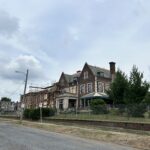
Jackson Hotel Collapses

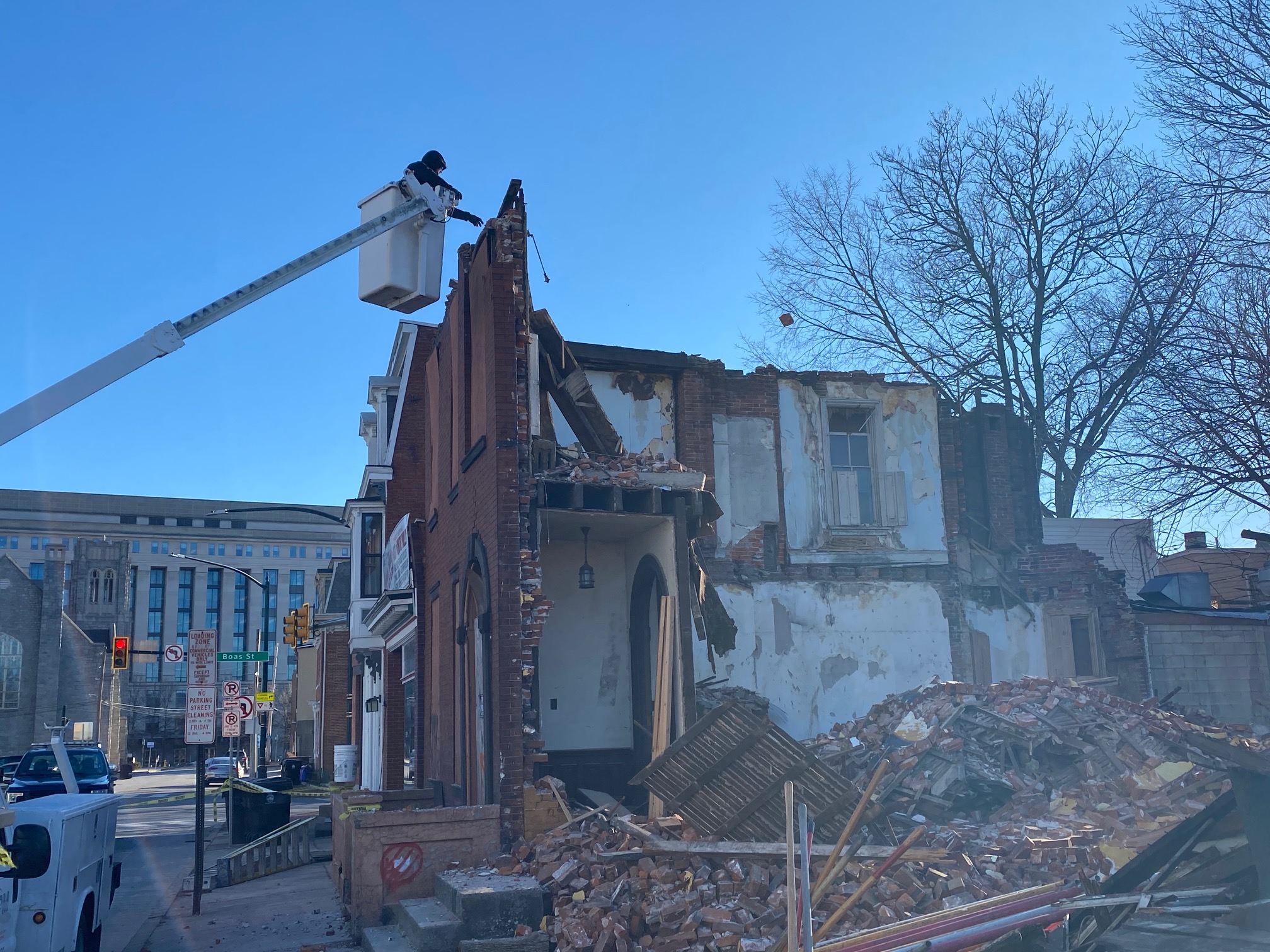
The history-rich Jackson Hotel partially collapsed last month and then was razed to prevent further danger.

Harrisburg Commercial Interiors was working to stabilize the building, located on the 1000-block of N. 6th Street, when the situation became unsafe, according to owner Matt Long. Workers were able to get to safety before the wall facing Herr Street collapsed, Long said.

Staff and customers at the neighboring Jackson House restaurant saw falling bricks hit cars and damage the restaurant’s roof and sign, said owner Dave Kegris. Within a few hours, Long began to demolish the rest of the building for safety.

The circa-1884 Jackson Hotel once catered to African-American patrons who were denied service in Harrisburg’s white-only hotels. When long-time owner German Jackson died in 1998, the building was boarded up and has remained empty since.

In his will, Jackson left the building to Kegris, who owned it until 2015. Since then, the building has changed hands several times and, for the past few years, prominently featured a mural celebrating local Black history.

Over this time, few renovations were done and, eventually, the building’s roof caved in, and the back of the building collapsed. The interior of the building pancaked, leaving it in rubble, and the city condemned it.

Long purchased the building in 2018 with plans to stabilize the foundation and construct a completely new interior and roof. He intended to create apartments and commercial space.

Long said that he now plans to build an entirely new structure on the site, closely replicating the original Jackson Hotel building.


Theater Renovation to Start

Friends of the West Shore Theatre last month announced that they had secured enough funding to begin renovation of the 80-year-old theater in New Cumberland.

The group, as well as borough officials, gathered under the building’s signature marquee to celebrate significant progress in fundraising.

“We realized the value of trying to restore and keep this theater here in New Cumberland,” Mayor Doug Morrow said. “The funding is in place. We are moving forward.”

The West Shore Theatre opened in 1940 with 25-cent tickets. It remained a beloved, small-town theater for years before its doors closed in 2015. Friends of the West Shore Theatre eventually acquired it and began planning to bring it back to life.

Morrow announced that, with several new grants, the board has raised $1.4 million of the $2 million needed for the renovation.

The most significant chunk of funds was $650,000 from the state’s Redevelopment Assistance Capital Program (RACP). The PA Department of Community and Economic Development also awarded a $250,000 grant for the project. Other local foundations provided grants, as well.

An extensive renovation is planned, including adding seating and a standing lounge area, stage improvements, new equipment and other upgrades.

Additions to the back of the theater, such as green rooms and classrooms, will likely happen a year after it opens to the public, said Dan Burke of Friends of the West Shore Theatre.

Morrow added that they intend to use the theater for showing movies, live performances, theater classes and community group meetings.


Apartment Plan for Midtown Building

A Harrisburg resident has his eye on one of the last dilapidated commercial buildings in Midtown, with plans to turn it into a small apartment building.

Nathaniel Foote has a contract to buy the former Gerber’s Department Store—also known as the “Carpets and Draperies” building for the sign on the front façade—on the 1500-block of N. 3rd Street.

His plan calls for a five-unit apartment building, along with first-floor commercial space, in the 4,800-square-foot, three-story brick structure.

“I live in the neighborhood,” he said. “I want to see the property restored.”

Foote is an attorney who owns two duplexes in Midtown and, along with his father, a parking facility. He said that his interest in the building arose simply from walking past it nearly every day, so that eventually he called the listing agent for the property.

“I’m not an out-of-town developer looking to make a buck,” he said, estimating that construction will cost about $500,000. “The cost is substantial given the number of units you can get out of it.”

Schnecksville, Pa.-based Mussani & Matz Co. has owned the century-old building since 2007, but it’s sat empty and increasingly blighted for most of that time. It’s been on the sales market for the last few years.

Six years ago, two Harrisburg residents proposed turning the building into a craft distillery, but that project was abandoned after it failed to gain approval of the city’s Zoning Hearing Board.

Foote said that he’s encouraged by a spate of development proposals for the immediate  area. Over the past year, several developers have proposed projects for the Reily Street corridor, but none have broken ground yet.

Foote’s plan calls for all two-bedroom units, which would range in size from 750 to 2,000 square feet, along with a 1,000-square-foot commercial space on the ground floor. He expects that he would live in the largest unit on the third floor.

Rents would range from about $1,000 a month to about $1,400 a month, he said, depending on unit size.

Foote expects to put the project on the agenda for the city’s Planning Commission and Zoning Hearing Board for their February meetings. If the project gains city approval, he hopes to start construction in March for completion by year-end.

The interior is gutted, so it would need to be completely rebuilt, Foote said. He plans for Harrisburg Commercial Interiors to do the construction. The notable “Carpets and Draperies” sign would be restored as part of the project, he said.

The building does not have its own off-street parking, but is surrounded by surface parking lots. Foote said that he expects to lease parking spaces from one of the lot owners.


Classrooms May Reopen

Harrisburg School District officials may be closer to welcoming some students back into school buildings.

If COVID-19 cases continue to decrease in the district, small cohorts of students could resume brick-and-mortar learning in March, Acting Superintendent Chris Celmer said last month.

“This is our hope, this is our wish,” he said. “This is what we want to see hopefully happen.”

He said that the focus would be on returning special education and elementary students to the buildings first, as well as other cohorts of students that the district determines are struggling the most.

The district has been operating with a 100% virtual learning model since the beginning of the school year. From the start, administrators have been looking for Dauphin County to meet certain benchmarks in order to bring students back to the buildings. Celmer said that they are still using those markers to determine if they will allow these small groups back to school buildings in March.

These include reduced positivity rates, below 10%, and incidence rates per 100,000 residents trending downward to a daily rate of 100 or less. He also wants to see the wastewater epidemiology tracker, Biobot, project Harrisburg virus cases closer to 100 or less per day.


December Home Sales Strong

Harrisburg-area home sales rose considerably in December, capping off a strong year for the local real estate market.

Home sales totaled 744 units compared to 611 units in December 2019 for the three-county region, while the median price rose to $217,750 versus $187,500 in the year-ago period, according to the Greater Harrisburg Association of Realtors (GHAR).

Dauphin County had 348 sales compared to 279 the previous December, as the median price rose by $20,000 to $185,000, GHAR said.

In Cumberland County, 353 homes sold versus 287 a year ago as the median price increased to $244,820 versus $215,000 the prior December.

Perry County saw monthly sales of 40 units compared to 22 units in December 2019, as the median price dropped a bit to $179,900 from $182,500, GHAR said.

Houses were also selling quickly. The average days on the market plummeted to just 26 days compared to 46 days in December 2019, according to GHAR.

The Harrisburg-area real estate market was strong throughout 2020, especially after pandemic-related restrictions were lifted in May.


So Noted

Civic Club of Harrisburg is seeking donations after thieves stole an air conditioner and caused damage last month to their historic riverfront home, Overlook. To donate to the club’s Vandalism Relief Fund or get more information about the club, contact President Mary Beth Lehtimaki at [email protected].

CommUNITY Yoga Space has moved a few doors down to a new, larger space at 1423 N. 3rd St., Harrisburg. Erika Malorzo opened the pay-what-you-can yoga studio over two years ago, and recently had to move following the sale of the building that housed her original space.

Harrisburg last month announced that it is requiring COVID-19 vaccinations for city workers. Mayor Eric Papenfuse signed an executive order requiring municipal employees to get the vaccination as quickly as possible in accordance with the state’s distribution guidance.

Harrisburg Regional Chamber & CREDC last month named their board chairs for 2021. Meron Yemane of Morgan Stanley Wealth Management will head up the Chamber’s board, while Mike Funck of Wohlsen Construction will lead CREDC’s board. The two boards also named new officers for the year.

Harrisburg University last month announced that it had successfully sold $100 million in tax-exempt bonds to institutional investors. The money is being used to finance construction of its 11-story academic building at S. 3rd and Chestnut streets in downtown Harrisburg.


Changing Hands

Adrian St., 2258: D. Bryant to J. & J. Parker, $72,000

Alricks St., 650: Consolidated Holdings International LLC to D&F Realty Holdings LP, $30,000

Bellevue Rd., 2000: G. & N. Payne to E. Gonzalez, $95,000

Boas St., 217: J. & C. Kuntz to L. Wood & T. Miller, $109,900

Boas St., 222: N. Laudeman to F. Cossick, $112,500

Boas St., 264: J. & S. Sempeles to Westfall Real Estate LLC, $185,000

Boas St., 1930: CR Property Group LLC to I. Lenny, $139,000

Calder St., 215: J. Zehring to M. & A. Zehring, $71,500

Camp St., 632: M., A. & C. Little and D. Anderson to D. & J. Porter, $57,000

Chestnut St., 1200, 1202, 1204, 1206 & 1208: Round Rock Investments LLC to 101 S. 17th Street LLC, $450,000

Chestnut St., 2112: S. Siciliano to M. Cragle & S. Hughes, $226,900

Croyden Rd., 2807: S. Camaplan LLC FBO Mark Murdoch IRA to A. Blackwell, $100,000

Cumberland St., 213: V. Lefkowitz to W. Hoover & B. Shoemaker, $105,000

Derry St., 1248: Jackson Investment Properties LLC to E. Kelly & M. Alarcon, $55,000

Derry St., 2309: S. Gutshall to A. Nunez & J. Espihal, $73,000

Derry St., 2411: B. Ahmed to B. Arismendy, $46,000

Derry St., 2532 & 2534: K. & R. Gupta to Around the Corner LLC, $163,700

Edwards St., 260: Realm Properties to C. & K. Gehman, $360,000

Emerald St., 233: D. Welliver & R. Harpster to J. & S. Compton, $65,000

Emerald St., 652: D. Fernandez to Z. Williams & B. Jones, $99,900

Evergreen St., 319: NA Capital Group LLC to A. Rivera, $60,000

Forster St., 1928: M. Bair to B. Arias, $66,000

Green St., 2410: KTT Properties LLC to T. Meriweather & S. Nichols, $160,000

Green St., 3230: C. & L. Summerscales to G. Holmes, $130,000

Harris St., 414½: Ravo Rentals to Limitless Possibilities LLC, $50,000

Herr St., 217: K. & V. Land to A. & C. Greenblatt, $180,000

Herr St., 421: F. Washington to T. Ladas & S. Maykovich, $60,000

Herr St., 1726: Mango Properties to Gold Key Properties LLC, $50,000

Holly St., 1914: D. Berhe to SPG Capital LLC, $44,000

Hudson St., 1147: R. Vega & A. Marsico to C. Yourkavitch, $125,000

Kensington St., 2347: T. Thai to C. Grant & M. Rinaldi, $65,000

Kensington St., 2365: H. Grills to C. Woods, $53,500

Kensington St., 2366: J. Robinson Jr. to L. Stewart, $70,000

Lewis St., 327: L. Seidel to 327 Lewis LLC, $76,500

Logan St., 2141: KBT Enterprises to E. Alcantara, $30,000

Maclay St., 239: M. Nelson to Awesome Tenants LLC, $73,500

Manada St., 2003: C. Holvick to Henderson & Sons LLC, $32,500

Market St., 1819: M. Kearney to 77 Estate LLC, $35,000

Market St., 1903: CAR Property Holdings LLC to W. Cajina, $89,337

Market St., 2407: J. Brown to K. Parker, $142,000

Mulberry St., 1820: Alternative Rehabilitation to Archie Group LLC, $160,000

Nagle St., 119 & 709 Showers St.: J. Baer & A. Jury to V. & B. Wagner, $262,599

N. 2nd St., 610: Wyco Investments LLC to N&R Group LLC, $175,000

N. 2nd St., 2304: L. Rapaport to T. Brown, $269,500

N. 2nd St., 2809: W. & E. Steele to E. Larios, $162,000

N. 2nd St., 2830: Equity Trust Co. Custodian Julie L. Burns IRA to J. Davis, $72,500

N. 3rd St., 1201: C. Hull to R. & C. Steele, $100,000

N. 3rd St., 1417½: Long Life LLC to Heinly Homes LLC, $130,000

N. 3rd St., 1624: Sickler Properties LLC to SJL Rentals LLC, $155,000

N. 3rd St., 1820: MMLM Realty LLC & Ian Smith Contracting Inc. to DPS Properties LLC, $150,000

N. 3rd St., 1825: D. Totton to Community First Realty, $45,000

N. 4th St., 2110: A. Clay and M. & M. Corney to NA Capital Group LLC, $30,000

N. 4th St., 3118: M. Shank to J. Kilby & J. Vargas, $105,000

N. 5th St., 1624: B. Davis to K. O’Brian, $168,000

N. 5th St., 1628: Braemer Properties LLC to B. Butzer, $142,500

N. 5th St., 1720: Freedom Mortgage Corp. to Principium LLC, $123,500

N. 6th St., 2720: L. Brown to T. Hardison, $35,000

N. 6th St., 3156: Dobson Family Partnership to J. Ulloa & A. Villar, $80,500

N. 7th St., 3133 & 3205 and 651 Alricks St.: Consolidated Holdings International LLC to DAP 3250 LP, $1,000,000

N. 15th St., 1119: J. & M. Irvin to J. Irvin, $60,000

N. 18th St., 808: C. Lovejoy, M. Miller & PA Property Brothers LLC to G. Almonte, $44,000

N. 19th St., 49: M. McWilliams to Carters Clean Up LLC, $58,000

N. Front St., 1525, Unit 503: Dowell Group Inc. to J. Davis, $115,000

N. Front St., 2405: J. Hartzler to Serene Spaces LLC, $320,000

N. Front St., 3207: 3207 N. Front St. LLC to S. Juneja, $370,000

Norwood St., 915: Integrity First Home Buyers LLC to G. Morris, $108,000

Park St., 1830: A. Caraballo to H. Ngoshi, $42,000

Peffer St., 221: N. Laume to Z. Brady & B. Blessing, $138,000

Peffer St., 435: K. Kessler to R. Clymer, $95,400

Penn St., 906: K. Holtzinger to J. Spatz, $136,000

Penn St., 1409: E. Lohss to J. Freeman, $107,000

Radnor St., 630: Integrity First Home Buyers LLC to G. & L. Boone, $46,000

Reel St., 2449: E. Stawitz to SJJR LLC, $48,000

Regina St., 1619: J. Colucci to N. Harris, $55,000

Rolleston St., 1027: R. Castillo & E. Martinez to F. Torres, $98,000

Ross St., 627: Gilligan Realty LLC to Sanhos LLC, $40,000

Rudy Rd., 2405: N. & L. Skulstad to D. Bradford, $174,900

Rumson Dr., 350: L. Rodriguez to M. McAllister, $128,100

Seneca St., 224: R. Boust to D. Daley, $102,990

South St., 105: A. Crompton to 608 N. Third LLC, $70,000

S. 13th St., 1451: RTD Properties & Management to S. Esayas, $75,000

S. 13th St., 1456: Integrity First Home Buyers LLC to 1456 S. 13th LLC, $100,000

S. 17th St., 319: 4P Ventures LLC to Pichardo LLC, $200,000

S. 24th St., 710: Equity Trust Co. Custodian Robert L. Burns IRA to D. Boyle, $39,000

S. 25th St., 350: B. Ho & S. Nguyen to R. Lyles Jr., $84,900

S. Front St., 333: 333 Sri Ganesh LLC to 101 S. 17th Street LLC, $250,000

S. Front St., 563: K. Bernhard & S. Schwab to T. Youngbluth, $76,000

State St., 223: 223 State St. LLC to PMA Foundation, $445,000

State St., 1310: M. Maniari & Z. Er Roudi to A. Ulerio, $83,500

State St., 1326: C. & T. Semancik to JMR Ventures LLC, $170,000

State St., 1502: S. Kochis to 77 Estate LLC, $30,000

State St., 1909: Atrium Gardens LLC to ZM Penn Group LLC, $59,000

State St., 1951: R. Shultz Jr. to Moxie Properties LLC, $225,000

State St., 2001: R. Shultz Jr. to Moxie Properties LLC, $275,000

Susquehanna St., 913: MR RE LLC to R. Perrego, $132,500

Susquehanna St., 1610: D. Lawyer & S. Flagle to R. Small, $182,500

Susquehanna St., 1708: J. Merx to J. Weinstock, $136,000

Susquehanna St., 2132: J. & C. Sanderson and A. Pletcher to L. de Gonzalez, $48,000

Susquehanna St., 2218: J. Grant to Heinly Homes LLC, $36,500

Verbeke St., 202: B. Hamilton to V. Filbert, $140,000

Verbeke St., 211: J. & S. Bircher to D. Leaman, $207,500

Waldo St., 2711: Mainline Funding Group Inc. to A. Hawkins, $47,800

Walnut St., 1500: E. Salah to J. Rodriguez, $32,800

Woodbine St., 241: G. & W. Banova to E. de Rosado, $117,500

Support quality local journalism. Become a Friend of TheBurg!

Continue Reading

Historic Jackson Hotel demolished for safety after partial collapse

Demolition of the historic Jackson Hotel on Thursday.

Dave Kegris, owner of the Jackson House restaurant, was busy flipping burgers and serving customers on Thursday when he heard a crashing sound and knew—this couldn’t be good.

When he looked out the window, at about 1 p.m., it was raining bricks. The historic Jackson Hotel building was crumbling.

“If someone was standing out there, they would’ve been killed,” Kegris said.

According to Matt Long of Harrisburg Commercial Interiors, the owner of the building, his crew was working to put braces on the walls of the building when the situation became unsafe. The workers were able to get to safety before the wall facing Herr Street, which featured a mural highlighting local Black history, collapsed on itself.

Staff and customers at the Jackson House on the 1000-block of N. 6th Street saw falling bricks hit cars and damage the restaurant’s roof and sign, Kegris said. A clean-up crew was on the scene shortly after.

Within a few hours, Long began to demolish the rest of the building for safety. He expected that, by night, most of it would be done.

The circa-1884 Jackson Hotel building once catered to African-American patrons who were denied service in Harrisburg’s white-only hotels. When long-time owner German Jackson died in 1998, the building was boarded up and has remained empty since.

In recent years, the building’s roof caved in, and the back of the building collapsed. The interior of the building pancaked, leaving it as no more than rubble, and the city condemned it. With the events of Thursday, soon it’ll be no more than a dusty lot.

Over the years, the building had a long history of changing hands without much improvement being done. The building was first left to Kegris in Jackson’s will and remained with him for 20 years before he sold it in 2015.

Long purchased the Jackson Hotel in 2018 with plans to stabilize the foundation and construct a completely new interior and roof. He intended to create apartments and commercial space. He had also hoped to save the exterior wall that held the mural of prominent African American figures who one stayed at the hotel.

The mural that once covered the Jackson Hotel wall.

That mural is now destroyed.

“There was always that risk,” Long said of the collapse. “The building was just a shell.”

Sprocket Mural Works created the mural during the 2017 Harrisburg Mural Festival to honor the history of the building and “the amazing Black entertainers” who stayed at the Jackson Hotel, according to co-founder Megan Caruso.

“We did it to celebrate the neighborhood and the history there,” she said.

Caruso said that she was saddened by the news, but not surprised, as she knew that the building was in very bad condition.

“We appreciate that the owner tried to disassemble the building and keep the wall up, but we knew this could happen,” she said.

The wall collapse adds urgency to Sprocket’s plan for the 2021 Harrisburg Mural Festival to paint another mural, in another location, honoring Black lives, Caruso said.

“Now, we hope to create a new one,” she said.

Long now plans to start fresh, saying he had always expected this to be a rebuilding project. He is still holding to the plan of creating four apartments and downstairs commercial space.

Ted Hanson who has lived on Boas Street for 23 years, near the Jackson Hotel, worries what it will become. He was friends with Jackson before he passed and remembers the building in “pristine” condition.

“I’m disappointed and angry, but completely unsurprised,” Hanson said. “I absolutely predicted this was going to happen.”

Long said he plans to rebuild the building as close to its original state as possible. Whereas he previously wanted to restore parts of the building, there now is little left but piles of bricks and the story of the once-bustling Jackson Hotel, before it was empty, before it fell.

Support quality local journalism. Become a Friend of TheBurg!
Continue Reading

History Keeper: As Harrisburg changes, Calobe Jackson Jr. tells the stories of what came before.

LeRon McCoy, Calobe Jackson and Ryan Sanders.

Calobe Jackson nimbly treads a narrow path behind his childhood home. He plants a hand on a low concrete wall.

“My dad had this wall put in, probably around 1937 or 1938,” he said.

Jackson’s memories are modest. Sweeping barbershop floors. Pears growing on backyard trees. But when Harrisburg’s history-keepers talk about Jackson, they pull out the superlatives. “Living treasure.” “Walking encyclopedia.” “Historian’s historian.”

Calobe Jackson, Jr., turned 90 in April. With his steel-trap memory and will-do attitude, he has spent decades in community service. His contributions have broadened the scope of Harrisburg’s past, even as he steps into the future as a muse for revitalization of a key piece of African-American entrepreneurial history.


Stories They Told

In 1934, World War I veteran Calobe Jackson, Sr., relocated his barbershop and his family, including 4-year-old Calobe, Jr., from Strawberry Alley to N. 6th Street.

In a mixed-race neighborhood, “Jack’s Barbershop” joined a thriving African-American business scene. German Jackson (no relation) ran the Green Book-listed Jackson House rooming house and restaurant next door. A beauty school was on the other side. At the funeral home on the corner, morticians would embalm bodies in the basement and carry them upstairs via a stairwell leading to the sidewalk.

These are the stories Jackson shares as he walks around his old neighborhood.

“You had the major African-American businesses right together, and that is very symbolic,” he said. “They were prosperous during segregation, and they’re still the most popular businesses. Most African Americans go to the African-American barbers or beauticians, the undertakers and the restaurants.”

As young Calobe worked around the barbershop, he heard the tales of old-time Harrisburg from the doctors, lawyers and politicians in the chairs.

“I was fascinated by the stories they told,” he said.

He especially loved stories of the Old 8th Ward, where a thriving, diverse neighborhood had given way to expansion of the Capitol grounds.

His step-grandfather would take Calobe to Negro League baseball games.

“All these great stars—(Josh) Gibson and (Satchel) Paige,” he said. “I saw them play.”

Jackson graduated from William Penn High School, where he ran track. He attended Lincoln University until being drafted into the Army, where his proclivity for math landed him a spot as a surveyor. His unit—possibly one of the last all-black units before President Harry Truman desegregated the armed forces—stayed stateside during the Korean War.

After military service, Jackson worked his way up to post office superintendent, a problem-solving role that energized his puzzle-loving brain. He married Betty Canady in 1957. They raised two sons and a daughter. Betty died in 1976.

Jackson served on the Harrisburg school district’s elected school board and appointed board of control. He never feared the future, from childhood days building crystal radios to his years leading establishment of the school district’s Marshall Math Science Academy and the Harrisburg High School SciTech Campus. From 2005 to 2010, he served on the board of the fledgling Harrisburg University of Science and Technology.

“Harrisburg University has some very innovative courses,” Jackson said. “These things they’re into with the (esports) gaming—that’s part of the future.”


A Toast

After retiring in 1990, Jackson started tracking down details on all the stories he had heard over the years. He and fellow historians bonded over their hours spent in the Pennsylvania State Library’s microfilm section.

He has contributed memories and meticulous research to a long string of projects—creating African-American history trails, commemorating U.S. Colored Troops, celebrating Harrisburg’s sesquicentennial, preserving cemeteries, exploring jazz and the Negro Leagues, researching Old 8th Ward residents for the Commonwealth Monument Project.

Ken Frew, librarian for the Historical Society of Dauphin County, remembers when Jackson asked for an obituary that wasn’t in the society’s files. Visiting the State Library the next day, Frew asked for two rolls of microfilm that might yield the obit, but they were loaned out. Frew went into the microfilm room, “and there’s Calobe with the two rolls.”

“When he has a lead on something, he follows through on it,” Frew said.

With Jackson’s contributions of informational gems from his own collection, Frew expanded the Historical Society’s file of African-American history from a small file to one now outgrowing a drawer.

Fellow historians marvel at Jackson’s accuracy and his generosity in sharing his knowledge.

“He’s sort of like a living Wikipedia,” said Historic Harrisburg Association Executive Director David Morrison.

HHA’s 2020 Preservation Celebration—postponed to Sept. 20 because of the pandemic—features “A Toast to Calobe Jackson.”

For HHA, Jackson worked with historian Jeb Stuart to create an African-American history route for the YWCA of Greater Harrisburg’s Race Against Racism. He also helped HHA intern Kristian Carter write about African-American businesses and, said Morrison, “the subtle segregation in that these black-owned businesses existed and thrived because people couldn’t go downtown and shop.”

“He was one of several people, and certainly the dean of African-American historians, who have helped to integrate African-American history into general history, locally and beyond,” said Morrison.

Jackson’s accuracy derives from his talent for matching memories “with actual documentation,” said Stuart. “He’s unbelievable. He’s sharp.”

Jackson provides context that makes pictures emerge from the scattered puzzle pieces of history, said arts activist Lenwood Sloan—even if it means, as in one case, sharing a racist account of a visit by 19th-century abolitionist and journalist Martin Delaney.

“You’re creating fact-based history and not legend and mythology,” Sloan said. “Memory tends to gild things. Some of the things that Calobe turns up are not that pretty.”


A Pillar

Post-World War II, most of the 6th Street African-American business corridor gave way to Capitol Complex expansion and urban renewal. One stretch survived—the historic buildings of Jackson House, Jack’s Barbershop and the corner funeral home that was originally the Ridge Avenue UMC parsonage, later known as the Swallow Mansion.

“They’re the only thing left from that time,” said Jackson.

Through late historian Hari Jones, Jackson connected with Ryan Sanders, a partner in Vice Capital with NFL veterans LeRon and LeSean McCoy. The team is revitalizing Jackson House and the former funeral home to create Jackson Square, transforming the dilapidated buildings into apartments and retail.

Jackson’s firsthand knowledge of the site helped forge a narrative of African-American entrepreneurship and its role in overall Harrisburg history, said Sanders.

“He is absolutely a pillar of this project,” he said. “Accuracy is very, very important here. As we’re telling the narrative and the storyline, we’re setting the groundwork for future endeavors on this property.”

Jackson’s memories helped give momentum to reinvigorating “an important anchor to the community,” added LeRon McCoy. “Hearing those original stories and what these buildings meant, it only cemented the idea that we wanted to rebuild them.”

As the new federal courthouse drives revitalization of N. 6th Street, noted Morrison, Jackson is enhancing the effort by helping restore the corridor as “a special boulevard of African-American heritage.”


Keeps Him Young

In every conversation about Calobe Jackson, someone references the man himself.

“He’s one of my favorite historians,” said Frew. “One of my favorite people, even if he wasn’t a historian. He’s just a good guy.”

“He’s just a heck of a nice guy,” seconded Morrison

Added Sloan: “He is a gentle man and a gentleman.”

But make no mistake, Sloan said. Jackson’s work counterbalances Harrisburg’s culture of “perpetually emerging” but largely peripatetic African-American organizations that have no place to call home—no black bookstore or art gallery or theater group with a sign out front and its own door to walk through, Sloan said. In a heritage marked by displacement, people such as Jackson are “temples of memory” pointing toward permanence.

“If it wasn’t for people like Calobe who remind us that we were here and that we thrived and survived for a time, we would be forgotten, or worse than forgotten, discounted,” Sloan said. “Calobe reminds us that we count.”

Jackson says simply that his work keeps him young.

“It keeps your mind flowing,” he said. “I’m in good health to be 90. A couple of ailments like some people get. The way my mind works, the idea of having this thirst for history, this thirst for knowledge, keeps you going.”

“A Tribute to Calobe Jackson and Harrisburg’s African-American Heritage,” will be live-streamed on Sunday, Sept. 20, starting at 5 p.m. Click here for more information and to view the event.

Support quality local journalism. Become a Friend of TheBurg!

Continue Reading

Have a Taste: Queen’s BBQ opens but, for now, samples only

Queen’s BBQ owners Anya and Titus Queen

For months, folks strolling down N. 3rd Street in Harrisburg have been tempted by a sign: “Coming Soon: Queen’s BBQ.”

Now, the wait is over—sort of.

The doors are open but only for sampling. It will be at least a month before the last touches and inspections are complete at the barbecue and soul food restaurant.

“This is what we love to do,” said Titus Queen, who operates the snug eatery with his wife, Anya. “We love to help people. We love to feed people.”

If you have a good memory, you may recall that Queen’s was open for a hot minute in 2018 only to close quickly due to a dispute involving their sublease. For awhile, the couple then managed the nearby Subway sandwich shop at the corner of N. 3rd and Forster streets, which has now closed.

The Queens now are putting all their efforts into getting locals hooked on their pulled pork, ribs, brisket, soups and mac and cheese as they prepare to open for good.

“Everything was stripped inside, so we had to replace and replenish everything,” said Titus, who worked for Applebee’s for a decade and as a baker in the state Capitol.

They did much of the work themselves, and other improvements were made from donations or traded for food, said Anya.

The couple is now eating away at the final $1,000 or so that they need to raise before they can officially open. So, the Queens hope you’ll stop by, sample their food and make a donation for the cause.

“The community has been very good to us so far,” Anya said. “We’re excited to get to a point where we’re finally open, and you can buy our food.”

Queen’s BBQ & Southern Cuisine is located at 912 N. 3rd St., Harrisburg. They’re open Tuesday through Friday and Sunday.

Update: Queen’s now has officially opened. For more information, visit their website.


Lunch After Subway

If you’re a state worker lamenting the passing of the Subway franchise at N. 3rd and Forster streets, you’re in luck. There are several great (um, much better), locally owned alternatives within a block or two for your sub needs.

Aleco’s, 714 N. 3rd St.: Known for the pizza, but also has terrific sandwiches, soups and, my personal favorite, the big salad.

Jackson House, 1004 N. 6th St.: They may boast the best burger in town, but they also have huge and delicious subs.

Keystone Restaurant, 1000 N. 3rd St.: Known for their breakfast fare, but don’t overlook their many other options, including tasty and affordable sandwiches.

Old Town Deli: 512 N. 3rd St.: I’m a big fan of their wraps, but they can turn almost any sandwich into a sub.

Roxy’s Cafe, 274 North St.: All the diner staples you could want.

Continue Reading

What’s Up with That? Piece by piece, a city rebuilds.

When I arrived in Harrisburg some 11 years ago, I had quite a few “what’s up with that?” moments.

For instance, a large, boarded-up stone building at 3rd and Boas streets that clearly had once been a stunner—what’s up with that? Ditto, the tall, majestic building a few blocks away, blighted and deteriorating, and the abandoned brick pile on Verbeke Street that had a few fading Art Deco flourishes.

What was up with all of these—and many others?

As a new resident, I wanted to know how they had reached their lowly states, especially since they all were located so close to the Capitol complex, home to thousands of state workers daily.

Perhaps my greatest “what’s up with that?” came the first time that I saw the 1000-block of N. 6th Street. Here was an entire block of blight, with one major exception, the popular lunchtime spot, the Jackson House.

Every day, hundreds of state employees breezed right by these ruins to grab a legendary Jackson House burger or sub. Logically, you’d think that someone would see a business opportunity to re-develop this area. But no.

So, how did this happen?

It’s actually a complex story and one that, in the ensuing years, TheBurg would return to again and again. I can’t tell it all in this space, but it shares two elements common to most blight stories in Harrisburg—and in other once-thriving industrial cities across the United States.

Element #1: Flight. Starting in the 1950s, industry closed, and people began leaving the city for the suburbs, commuting in for, increasingly, service-sector jobs, which, in Harrisburg’s case, mostly meant state government. The 1972 flood was the nail in the coffin here, as residents took their federal flood money—and the few pennies that opportunistic slumlords gave them for the properties—and fled in a second huge wave.

Element #2: Disinvestment. Property owners stopped maintaining their buildings. Typically, they rented them out, for increasingly less money, until they became utterly uninhabitable. Then, instead of fixing them up, they boarded them up, and the dilapidation continued. Some fell apart slowly, others collapsed suddenly. Some sold for taxes, some landed with the Redevelopment Authority, others were flipped to speculators who let them rot further.

All of this happened to the 1000-block of N. 6th Street.

Of the six properties on the west side of the street, one caught fire, one collapsed in a

storm, one pancaked in, one was boarded up and the other should have been. Only the Jackson House, smack-dab in the middle of the street, remained truly sound.

And that, in a nutshell, was what was up with that.

Also, the blight fed on itself so that, for more than 50 years, few imagined that any of the old commercial streets of Midtown Harrisburg could be any different.

But then they were.

Fortunately, it turned out that the opposite also could happen. Just as blight can spread, so can redevelopment, and that’s where we are now in this story.

Over the past decade, nearly every one of the blighted, boarded-up buildings I saw on my first walk through Midtown has been renovated and redeveloped.

One is now StartUp. One is H*MAC. One is the Millworks, and another is the Coba apartment building. There’s Midtown Scholar and the Susquehanna Art Museum and ModernRugs and Campus Square and numerous smaller shops and restaurants like Yellow Bird Café, Pastorante and Urban Churn. One is even TheBurg.

Redevelopment has become such a powerful force that it’s now rolled over even the most desperate of streets—the 1000-block of N. 6th.

Currently, three of the buildings are being redeveloped as a mix of apartments and retail. Brothers LeSean and LeRon McCoy, Harrisburg natives and professional football players, are investing in the block, undertaking two cellar-to-roof renovations. They also hope to buy and build new on the vacant corner parcel, where the former Bethel AME Church burned down in 1995.

This street has a great deal of meaning to Harrisburg. It is one of notable history, the last remaining block of what was once an extensive African-American commercial enclave—a street of barbers, rooming houses, hotels, groceries and other businesses that catered largely to a black clientele in segregated Harrisburg, and it was almost lost. Well, unfortunately, some of it indeed was lost, but some now will be saved, so that life will return again to the street—that is, for more than a quick bite at lunchtime.

I find that, in Harrisburg (maybe everywhere), there are the glass-half-full and the glass-half-empty people. The latter might say—well, that’s fine for Midtown, but what about the rest of the city?

I try to be an optimist, but understand their point, too. Heck, on my block, two small apartment buildings have been condemned this year alone. There are still far too many old-time property owners who regard Harrisburg as only a place to extract money from, not invest in, seemingly believing that even simple building maintenance is a dollar out of their pocket.

But I’m not going to begrudge redevelopment where it happens. A revived 6th Street is good for the city, especially because it links up with other progress nearby, creating a critical mass to attract people and motivate further investment. It’s gotten to the point that, walking around the city, I still have my “what’s up with that?” moments. However, when I do, it’s because I see the boards coming off and construction signs going up.

Lawrance Binda is editor-in-chief of TheBurg.

Continue Reading

Measure of Hope: Renovation arrives suddenly to N. 6th Street

Matt Long of Harrisburg Commercial Interiors inside the Curtis Funeral Home/Swallow Mansion

After decades of blight and inaction, a historic Harrisburg block is undergoing a rapid transformation, removing an eyesore on a prominent city street and adding new apartments to Midtown.

Currently, three long-dilapidated properties are—or soon will be—under restoration on the 1000-block of N. 6th Street, a highly visible street and one of the last remnants of a once-thriving commercial strip that catered primarily to Harrisburg’s African-American community.

Brothers LeRon and LeSean McCoy, under the name Vice Capital LLC, are renovating 1000 N. 6th St.—at the corner of Boas Street—into a five-unit, market-rate apartment building, with additional retail or community space, according to LeRon.

“We looked around and decided to find a project that would be of benefit to both Harrisburg and ourselves,” he said, in a recent phone interview.

The brothers are Harrisburg natives who played football for Bishop McDevitt High School. LeRon, a retired wide receiver, played professionally for the Arizona Cardinals, San Francisco 49ers and Houston Texans, while LeSean, a former Philadelphia Eagle, is currently a running back for the Buffalo Bills.

LeRon McCoy said that building, also known as the Swallow Mansion and, later, the Curtis Funeral Home, is an investment for the pair.

The 1000-block of N. 6th Street, looking north, with the Swallow Mansion in the foreground

“LeSean and I have a desire to develop in Harrisburg,” he said. “It’s something he’s been wanting to do for a long time.”

Last year, the circa-1896, corner building suffered a partial collapse, with bricks and debris spilling onto the sidewalk on the Boas Street side. The collapse seemed to prompt long-time owner, Annette Antoun, to finally part with the property.

Antoun bought it in 2000 from the Historic Harrisburg Association, believing it would become part of former Mayor Steve Reed’s plan to develop the block as an African-American history museum. However, that museum was never built and, over the years, the building remained boarded up and increasingly dilapidated.

LeRon said he expects the project to be completed by year-end.

“It will be high end,” he said. “We want that area to look as nice as it used to.”

Right next door, at 1002 N. 6th St., a company called LBR Properties has begun to renovate that long-neglected building, which Antoun had owned for 35 years. The company is building out three apartments—two one-bedroom units and a “large studio”—as well as a small retail space on the first floor, according to co-owner Rani Rammouni.

“We’re gutting it and bringing it up to par,” he said, expecting the project to be completed in about two months. “We want to bring them as close to class-A as possible. We’ll have all the upgrades a class-A would have.”

Rammouni said that the block was ripe for redevelopment considering all the development in Midtown over the past decade, as well as its proximity to the Capitol complex.

“It’s positioned so well with the commonwealth right there,” he said.

The view of the block looking south, with the Jackson Hotel in the foreground

Next to that building is the beloved burger and sandwich restaurant, the Jackson House, and next to that, at 1006 N. 6th St., sits the “Jackson Hotel,” a former hotel and boarding house that once catered to African-American patrons who were denied service in Harrisburg’s white-only hotels.

Harrisburg Commercial Interiors bought that building last year, and company owner Matt Long said that his company will begin demolition work in September.

The Jackson Hotel has been empty and boarded up since long-time owner German Jackson died in 1998. In recent years, the building’s roof caved in, and the back of the building has collapsed.

Nonetheless, Long expects to fully rebuild and restore the property. Last month, the Harrisburg Architectural Review Board gave Long permission to perform extensive rehabilitation work, including rebuilding the rear portion of the building and installing a new roof, new windows, new floors and other improvements.

When complete, the 3,420-square-foot building will consist of four apartments, with commercial space on the first floor, Long said. Notably, the large mural, which features African-American entertainers and historic figures, some of whom stayed at the hotel, will be preserved.

“I’ve seen these buildings boarded up for as long as I’ve been here,” Long said, adding that he tried to buy the Swallow Mansion from Antoun some 14 years ago. “But they just sat and sat and sat. Now, the time is right.”

Ted Hanson, a Boas Street resident since 1978, said that he’s waited decades for the 6th Street properties to be redeveloped.

“This finally has come to pass now that Steve Reed and Annette Antoun are out of the picture,” he said. “Forces are aligning that some needed development is happening there.”

Long’s company is also performing the restoration work on the Swallow Mansion/Curtis Funeral Home for the McCoys. LeRon McCoy said that he hired Long after seeing the work his company did to rebuild another tumbledown structure—the long-dilapidated building at North and Susquehanna streets that soon will be the new home of Elementary Coffee Co.

Demolition debris piled on the first floor of the Curtis Funeral Home/Swallow Mansion

McCoy said that he and his brother have an even grander vision for the block, which would result in dozens of new apartments.

They want to purchase the Jackson Hotel property from Long and then build a new, larger, market-rate apartment building next to it at the corner of N. 6th and Herr streets, property currently owned by Bethel AME Church. That lot has been empty since the church burned down in 1995.

McCoy said that they’re currently in talks to buy that property from the church.

“This is all part of a larger project we’re working on,” McCoy said. “We have a vision for that block.”

For more detailed history about this block, read our award-winning feature story from 2013. 

Continue Reading

Renewed Hope: Historic Jackson Hotel set for new owner; restoration planned.

The historic Jackson Hotel at 1006 N. 6th St. in Harrisburg

One of Harrisburg’s most endangered historic properties has renewed hope today, as a local contractor has agreed to buy the building and take on the ambitious restoration.

Developer Matt Long said that he expects to close next week on the purchase of the former Jackson Hotel on the 1000-block of N. 6th Street. He then plans to empty out the large quantity of rubble inside the building and stabilize it for winter.

“It probably will take us a month to pull everything out of it,” Long said. “Then we need to stabilize the foundation.”

Earlier this year, the city condemned the circa-1884, Second Empire mansion, which served for decades as the Jackson Hotel, run by hotelier German Jackson. Starting in the 1920s, Jackson ran the hotel and rooming house to serve a primarily African-American clientele, including many black celebrities, who were denied service in Harrisburg’s whites-only establishments.

Jackson, who died in 1993, willed the building to his friend Dave Kegris, owner of the Jackson House restaurant next door. But the building became caught up in a prolonged legal battle over Jackson’s estate and sat empty for years.

Recently, several Harrisburg residents have bought the building to try to save it, but the restoration has proven to be too extensive and expensive. A few years ago, much of the roof caved in, the interior staircase collapsed and the floors pancaked, leaving a large pile of debris inside.

The current owner, Jeremiah Chamberlin, said that he met Long recently while Long’s company, Harrisburg Commercial Interiors, was working on another challenging restoration—the dilapidated commercial buildings at the corner of North and Susquehanna streets in Harrisburg.

“I saw the work he was doing, and it’s quality work,” Chamberlin said, who described their meeting as “kismet.” “So, I decided to pass it on to someone else who is capable and can do a good job.”

Long said that his team will begin clearing out the Jackson Hotel soon after the sale, which is expected to close on Nov. 2.

After the building is emptied out and stabilized, Long’s company will construct a completely new interior and roof, he said. He said that he plans to build an open floor plan that can accommodate a variety of uses.

He hopes to save as much of the facade as possible, he said, including the large brick exterior wall that features a mural of prominent African Americans who once stayed at the hotel or who are locally famous.

For the project, Long has engaged structural engineer Ed Davis of Schuylkill Haven-based Miller Brothers Construction. They also worked together on the North Street project.

“We applaud this very encouraging step,” said David Morrison, executive director of Historic Harrisburg Association. “The Jackson House has been on our ‘Preservation Priorities’ list since 2000.”

Continue Reading

Brush with Greatness: African-American history mural planned for side of Jackson Hotel.

The old Jackson Hotel in Harrisburg, including, at the right, the wall where a mural is planned.

A new mural will celebrate Harrisburg’s African-American history, adorning the side of a building that once hosted such luminaries as Louis Armstrong and Pearl Bailey.

Sprocket Mural Works announced the project yesterday for the former Jackson Hotel and Rooming House on the 1000-block of N. 6th Street, a building that, decades ago, catered primarily to a black clientele refused service in the city’s major, segregated hotels.

“It will be an African-American historic mural, playing off the history itself,” said Sprocket co-founder Jeff Copus.

The Jackson Hotel painting is one of 10 murals that will be created during the Harrisburg Mural Festival, which Sprocket is organizing for the first 10 days of September.

Copus last night told the Harrisburg Architectural Review Board (HARB) that the mural will feature people who stayed at the hotel, possibly including entertainers like Armstrong, Bailey, Cab Callaway and Ella Fitzgerald. It may also incorporate images of important Harrisburg figures such as Ephraim Slaughter, an escaped slave who fought in the Civil War and later settled in the city.

In August, Sprocket will seek public input for the mural design, Copus said.

Sprocket is commissioning artist Cesar Viveros to paint the mural. Locally, Viveros is best known as the artist-in-residence who helped design and lead the creation of the Mulberry Street Bridge murals.

HARB voted 4-2 to support the mural, the two “no” votes from members who wanted more input into the actual mural design. While HARB must approve a mural project within the historic district, the details of the painting are beyond its purview.

As the building’s owner, HARB member Jeremiah Chamberlin abstained from the vote. Chamberlin bought the building about 18 months ago, hoping to save it from further deterioration. It has been unoccupied for almost 20 years since the death of long-time owner German Jackson, who bequeathed it Dave Kegris, owner of the Jackson House restaurant next door. Kegris eventually sold it to Kerry and Lessa Helm, who then sold it to Chamberlin.

Ted Hanson, a long-time resident of the Old Fox Ridge neighborhood, wanted assurances that Chamberlin would begin work to stabilize and restore the building.

“My concern is that the building is in serious distress,” Hanson told the HARB board. “I am very concerned if stability doesn’t happen very quickly, you’ll be painting a mural on a crumbling property.”

Chamberlin assured Hanson that he would begin work on the building “within the next couple of weeks.”

“I have no desire to see my investment lost either,” Chamberlin said.

Hanson also was concerned that the mural might impede development of the vacant lots next door, as new construction could block the view of the mural. Copus said that Sprocket would not stand in the way of the development of the empty lots at N. 6th and Herr streets, which are owned by the Harrisburg Redevelopment Authority and by Bethel AME Church, a historically black congregation that lost its church to an arson fire in 1995.

“Hopefully, this will generate interest in that underutilized lot,” Copus said.

Click here for more information on the Harrisburg Mural Festival.

Author:  Lawrance Binda


Continue Reading

From Burbs to Burg: For decades, companies headed in one direction–from Harrisburg to the suburbs. Welcome back!

Screenshot 2016-07-27 19.31.00

World Trade Center Harrisburg (Capitol View Commerce Center), Cameron and Herr streets.

Once upon a time, in the late 1980s, a group called the Hospital Association of Pennsylvania built its suburban ideal in Swatara Township. Plenty of surface parking. Fun stores and restaurants nearby. Accessible to highways and airport. Even for a statewide association, the struggling capital city wasn’t seen as a good home.

Fast-forward 27 years. Government has gained prominence in a complex health care system. Seeking proximity to lawmakers, what is now the Hospital & Healthsystem Association of Pennsylvania is moving back into Harrisburg proper, where—surprise—there’s convenient parking and fun stores and restaurants nearby.

“To be six miles away from the center of decision-making for Pennsylvania struck me as a lost opportunity to be both visible and accessible to policymakers who are asking hundreds of questions about health care,” said HAP President and CEO Andy Carter, who helped lead the board in making the move. “I want to be there when they ask those questions so we can give our answer as part of their due diligence.”

Nationwide, businesses have been pulling up stakes from suburban campuses or outlying spots and resettling into cities. Likewise, businesses here increasingly are making high-profile moves from the ‘burbs to the ‘Burg. Of course, finances drive the decisions, but so do proximity to power, attracting talent to remain competitive, and commitments to rebuilding the urban hub that powers the region.

“We think we’re stepping into a very rich, diverse field that will accrue many benefits,” said Carter.


Love the Location

This month, HAP moves into a building on 3rd Street, in the shadow of the Capitol dome. Meanwhile, later in August, health care data analyst Geneia will leave its cramped Swatara Township digs to take occupancy in the resurrected Capitol View Commerce Center on Cameron Street. In fact, that building has been renamed “World Trade Center Harrisburg” in honor of its eponymous anchor tenant, which is moving in this fall from York.

And that’s not all. Last year, analytics firm VisiQuate left Rossmoyne to take up one floor of a rehabbed 19th-century mansion. And Chemical Solutions, Ltd., left its overcrowded Mechanicsburg quarters for a former plasma donation center at Herr and 7th streets.

VisiQuate grabbed the opportunity to lease space in the circa-1804 mansion at 111 N. Front Street “because we just loved the location,” said President JK Kolmansberger. With three offices in the United States and two in Eastern Europe, VisiQuate was accustomed to the amenities and convenience of working and hosting clients in urban settings. From Rossmoyne, “it was always a bit of a hassle to get our employees and clients close to where hotels are,” said Kolmansberger.

VisiQuate spotted the national and worldwide trend to reoccupy cities, but Kolmansberger said he hesitated to move into Harrisburg before recovery took hold. Now, “people are starting to come back downtown and are starting to see the city in a better place.”

Geneia left business park space where employees were working “two and three to an office,” or assigned to working from home solely for lack of room, said CEO Mark Caron.

“Many of them are very anxious for the new building,” he said. “It’s cool to have the flexibility to work at home, but it’s also really important to have a connection with teams.”

As needs of the workforce evolve, operating in the city offers businesses “access to an even more diverse potential workforce,” said Carter. People leaving state government for the private or nonprofit sectors “don’t have to change location,” and convenient access from the entire midstate will attract talent from all parts of the region, he said.

Once, Carter led a nonprofit located next to the statehouse in Columbus, Ohio. There, he often struck up “serendipitous conversations” just by “stumbling into the speaker of the House or secretary of human services,” he said. But from the suburbs, HAP often had to ration the trips allowed into Harrisburg.

Moving the organization to 3rd and Walnut streets, catty-corner to the Capitol complex, allows his organization to “take advantage of the stone’s-throw location,” attending more hearings, “more readily scheduling pick-up meetings” with state officials, and enticing busy lawmakers to events.

The location also could make it convenient for visiting HAP members to “tack on some visits” with state officials and lawmakers.

“We want to strengthen the relationship between our members and the policymakers who are helping us to shape the delivery system of the future,” Carter said.


Fun Town

Like Geneia, Chemical Solutions, Ltd., left cramped space.

“We were literally moving people out of their offices to move new instruments in,” said President Brian LaBine, who moved his company into customized space straddling downtown and Midtown Harrisburg.

Many of Chemical Solutions’ employees are chemists who appreciate Harrisburg’s balance of urban environment with livability, he said. One “wonderful chemist” moved from Delaware, where “the cost-of-living differential” was substantial.

“We think Harrisburg is going in the right direction,” LaBine said. “It’s a fun town. We like the Midtown area. Being able to walk out the door and walk to the Broad Street Market or Jackson House is perhaps a nice combination of having that city feel that some of the younger generation really likes, yet not having the traffic or the prices that come with relocating to, say, Philadelphia or a larger city.”

Geneia competes for skilled talent in the “pretty tight” analytics field, said Caron. Its new space offers the “creature features” that tech-oriented people expect, including a healthy café, treadmill desks, a fitness center, “open space for people to ideate,” and high-tech videoconferencing.

“As a techy and nerd, you want the latest software tools to build the latest products,” he said. “You want an organization that’s invested in its people.”

At any technology company, “you’ll find we don’t work 9 to 5,” said Kolmansberger.

Potential hires want to work wherever they can get the job done, whether from home or on a bench by the river, and the new space is “a very functional, high-tech office that our employees find very comfortable and useful. If you need to have a client in for a meeting, it shows very well. Clients like to come here because it’s a bright, cheery office that overlooks the river.”

Downtown sites also create proximity to learning opportunities that help employees grow and that cultivate future talent, especially through internships with Harrisburg University of Science and Technology students. In Swatara Township, HAP was isolated from downtown’s “rich mix of professionals” at universities and advocacy organizations, Carter said.

“Especially, since we think of ourselves as the leading edge of the trend, we hope that more of others in this world will consider moving downtown, as well, and then we’re going to have an even richer environment,” he said.


Part of the Solution

Though the business factors driving their decisions vary, the resettlers agree that helping rebuild a once-shattered city was on their minds. Access to “the best possible workforce” only comes from providing a competitive working and living environment, with quality housing, schools, health care and amenities, “and you aren’t going to get all that if you don’t have enough people who are being hired and brought into the city,” said Carter. Metropolitan areas “struggle to thrive if the city center is withering.”

“In many ways, by moving downtown, along with many other businesses, we’re showing our cards that we believe in the health of the city, and, in promoting its health by working down there and bringing its employees and their pocketbooks into the city, that we’re going to be creating a stronger future for the city,” he said

Chemical Solutions is showing its passion for education with plans to host local students in science and chemistry activities. Employees have helped a Friends of Midtown neighborhood cleanup. The business itself, under the leadership of Technical Director Francine Walker, takes pride in “taking a formerly dormant building, vacant for six years, and transforming it,” said LaBine

“We’re definitely attracted to the concept of urban renewal,” he said. “We’ve loved the decision since the day we made it.”

Geneia has “a real conscience in investing in the community,” said Caron, and the firm has found strong partners in the effort. World Trade Center Harrisburg developer John Moran “has been incredibly accommodating,” and the tax incentives for settling in a Keystone Opportunity Zone are “an attraction to a small start-up where you can save on taxes and put those dollars to other uses investing in people.”

In Kolmansberger’s travels, he finds that “the best areas always have strong downtown life and strong city life and good hotels and good restaurants.” He wanted the same for his clients and employees. Harrisburg, he said, “is definitely a city that is on the rebound.”

“I can sit out in the suburbs and complain that Harrisburg isn’t recovering fast enough or Harrisburg doesn’t have enough good restaurants,” he said. “Or I can try to be part of the solution, and that’s by bringing business to the city and embracing our capital city and embracing the business environment in downtown Harrisburg. That’s ultimately what I decided to do, and I found a good location in the middle of everything.”

Author: M. Diane McCormick

Save

Save

Continue Reading

December News Digest


2016 Budget Passed

Harrisburg City Council last month passed the city’s 2016 spending plan, a $60.7 million budget crafted by the city administration

Council voted 5-2 in favor of the budget, though council President Wanda Williams said the spending plan would be reopened and reconsidered in January, once three new council members take their seats.

Two public hearings will precede a vote on a revised budget, she said.

As passed last month, the budget adds 36 new positions, half in a newly created Neighborhood Services division, which would be funded out of city trash bills. Besides sanitation, the new division absorbs many functions previously funded by taxes, including some road and parks maintenance.

The administration also has proposed tripling the local services tax (LST) to $3 per week per worker. The Commonwealth Court must first approve the hike, which then must be sanctioned by council.

The LST is a tax on people who have jobs in the city and earn more than an annual threshold income, which is proposed to be about $24,000. While it does affect some city residents, most of the burden falls on commuters, a point made repeatedly last month by Mayor Eric Papenfuse.

Council members Brad Koplinski and Sandra Reid were the lone votes against the spending plan. Both said they believed the budget contained excess spending and objected to any increase in the LST.

It was the final meeting for Koplinski and Reid, as well as for three-term Councilwoman Susan Brown-Wilson. Reid and Brown-Wilson did not seek re-election last year, while Koplinski lost his seat in the Democratic primary.

This month, three new council members will be sworn into office: Cornelius Johnson, Westburn Majors and Destini Hodges.


TRAN OK’d

For a third straight year, Harrisburg is issuing a tax and revenue anticipation note, a form of short-term borrowing meant to cover a potential budget shortfall.

City Council voted unanimously last month to enter into an agreement with M&T Bank for the $4.5 million TRAN, which carries an interest rate of 2.53 percent and includes a $5,000 nonrefundable fee. Any drawdown on the loan must be repaid by June 30.

Municipal finances are typically tight for the first three months of the year, until the city begins to receive property tax revenue in March. Harrisburg entered into similar loan agreements in 2014 and 2015, but never had to tap them for funds.

City officials, however, said they were more concerned this year due to the state budget deadlock. At press time, the legislature still had not passed a budget, meaning that the state’s $5 million annual contribution to the city for emergency services had not been agreed to or paid.


Streetlight Project Launched

Harrisburg last month officially launched its citywide streetlight project, which will replace all 6,100 existing streetlights with new LED bulbs.

The $3.7 million project, the largest of its kind in Pennsylvania, should be completed by April.

Officials said the project would cut the city’s electric bill by two-thirds, saving more than $500,000 per year, and that the project would pay for itself in about six years. The savings are guaranteed under a contract with The Efficiency Network, a Pittsburgh-based company managing the upgrade.

The bulk of the project cost is being paid with a $3.2 million loan from M&T Bank. The city is seeking a grant from Impact Harrisburg, a nascent nonprofit promoting infrastructure improvement and economic development, which would allow it to pay off the bank loan early if awarded.

Part of the cost is also being paid by a $500,000 grant from the Pennsylvania Energy Development Authority and a $30,000 donation from Lighten Up Harrisburg, an organization that raises money to improve city lighting through an annual 5K run.


State Rebukes Fraud Charge

The state agency overseeing Harrisburg’s financial recovery has sharply critiqued public accusations of fraud by Mayor Eric Papenfuse in a private letter, calling them “unsubstantiated” and “categorically untrue.”

Dennis M. Davin, secretary of the Department of Community and Economic Development, wrote that his agency was “distressed” by Papenfuse’s claims that consultants had intentionally misrepresented how much money the city would get from its parking system.

“The team dedicated to supporting the City of Harrisburg’s recovery efforts is committed to providing the highest level of professional assistance,” Davin wrote in the letter, which TheBurg obtained through an open records request. “Given this fact, we take any allegations of fraud very seriously.”

Davin signed the letter in his role as chairman of the Pennsylvania Economic Development Financing Authority, a funding arm of his department that issued $286 million in bonds to finance the 2013 lease of the city’s parking system.

Papenfuse made his remarks at the authority’s Oct. 21 board meeting, when he addressed shortfalls in the so-called “waterfall” payments that provide critical money to the city out of overall parking revenues. The mayor suggested that professionals working on the lease had knowingly misrepresented the amount of money the system would produce.

“Frankly, I believe that these numbers of waterfall payments were inflated simply to make the numbers work for the Strong Plan, which means that essentially a fraud was perpetrated on you and us and the residents of the city,” Papenfuse said.

Papenfuse told the board that annual parking revenues to the city were around $1 million short. He said that as a result the city would have to raise taxes, and he urged the board to “hold somebody accountable” for the incorrect projections.


New School Board President

A divided Harrisburg school board last month elected Danielle Robinson as its new president.

Robinson was elected by a 4-3 vote, eking past James Thompson, who will remain vice president.

The board needed to seat a new president after the sudden resignation of former President Jennifer Smallwood, who was just re-elected in November. At press time, the board had not yet selected a replacement for Smallwood.


HDID Reauthorized

The Harrisburg Downtown Improvement District has been reauthorized for another two years.

The Harrisburg City Council voted to reauthorize the nonprofit through Dec. 31, 2017, countering the wishes of HDID officials, who had sought a five-year extension.

Since forming in 2000, the HDID has had three, five-year renewals. However, the city administration supported just a two-year extension this time so that it could more quickly assess HDID’s progress in making downtown cleaner, more attractive and more supportive of businesses.

Most of HDID’s $780,000 annual budget derives from a tax on commercial properties within the district, which covers a 25-block area of downtown Harrisburg from State Street to just south of Harrisburg Hospital.

In a public hearing in October, HDID officials staunchly defended their record of helping to keep downtown attractive and safe, even though some business owners said it should expand its mission to include areas like parking and promotion.

“Two years, five years, 10 years—it doesn’t matter,” said HDID Executive Director Todd VanderWoude following the council vote. “We’ll just keep on rolling.”


Jackson Hotel Sells

The historic Jackson Hotel has new ownership, as former City Council candidate Jeremiah Chamberlin last month bought the dilapidated property with plans to restore it.

Chamberlin purchased the three-story building on the 1000-block of N. 6th Street in Harrisburg for $4,000 from Kerry and Lessa Helm, who had bought it earlier in the year from Dave and Diana Kegris.

For many years, German Jackson operated a hotel from the property, catering primarily to African-American visitors who were shut out of the city’s whites-only establishments.

Jackson willed the property to Kegris, who opened the Jackson House restaurant next door. Kegris, though, could not find funds to restore the large, Gothic-style main building, which became increasingly run down.


So Noted

GK Visual soon will move into a new home in the Old Fox Ridge neighborhood of Midtown Harrisburg, allowing the visual production company to grow and expand capacity. Owner Nate Kresge said his company bought the 7,000-square-foot building at 933 Rose St. last month. The building triples the company’s space from its current location in Uptown Harrisburg.

Harristown Enterprises has purchased the building housing one of Harrisburg’s oldest businesses, Walker’s Art & Framing. Under its acquisition wing, Dewberry LLC, Harristown bought the building for $350,000 from the Walker family, who will continue to run the 58-year-old business at 25 S. 3rd St., said Harristown President and CEO Brad Jones. Harristown needed the building to complete its acquisition of a five-townhouse row, which will now be renovated with commercial space on the ground floors and apartments above, Jones said. Harristown also is renovating a six-story brick building across the street, converting the long-time office space to 15 high-end, one-bedroom apartments.

Amma Jo LLC opened a showroom location last month in Strawberry Square at 320 Market St. Run by Amma Johnson, Ammo Jo focuses on designer handbags and accessories. It serves as a fulfillment center and also features special in-store retail events. For more information, visit www.shopammajo.com.

Keystone K9, a “one-stop pet service,” debuted last month at 931 N. 7th St. in Harrisburg. In addition to a doggie daycare, Keystone K9 offers training, grooming and boarding. More information can be found at www.keystone-k9.com.

Phyllo Greek Cuisine opened last month in the stone building of the Broad Street Market. Run by mother Anna Ntzanis and her daughter, Katerina, the stand offers a menu of Greek food staples, such as pastitsio, moussaka and spanakopita. The Ntzanis family has long run Harrisburg’s Midtown Tavern.

Capital Area Transit last month began new bus service between Harrisburg/Steelton and the Allen Road warehouses in Carlisle. The new Route C allows workers to connect to jobs in the growing warehouse complex, which houses several major employers.


Changing Hands

Calder St., 122 & 1332 N. 2nd St.: R. & C. Horst to Bitner Rentals LLC, $600,000

Conoy St., 117: N. Woods to Mannjeim LLC, $40,000

Edward St., 240: E. Pappas to C. Messinger, $205,000

Fulton St., 1400: PA Deals LLC to Heller Investments LLC, $110,000

Green St., 1928: M. & S. Young to J. Hardie & T. Craven, $207,000

Green St., 1935: N. Williams to R. Holder, $212,000

Hale Ave., 375: M. & V. Cecka to RDR Property Management LLC, $50,000

Kensington St., 2318: M. & V. Cecka to RDR Property Management LLC, $45,000

Lewis St., 245: Secretary of Housing & Urban Development & Michaelson, Connor & Boul to M. Sheehan, $47,011

Market St., 1435: K. Quenzer to J. & M. Fitzgibbon, $33,000

North St., 239: K. Sheetz to D. McClellan, $225,000

N. 2nd St., 935: C. Group to Zecharya International Inc., $50,000

N. 2nd St., 2135: PA Deals LLC to Heller Investments LLC, $96,400

N. 2nd St., 2743: US Bank National Association to A. McGinley, $60,000

N. 2nd St., 3107: S. Howell & F. Nedermeyer to P. Bernd, $114,900

N. 3rd St., 3221: PA Deals LLC to G. & J. Modi, $145,000

N. 4th St., 1629: GWD Capitol Heights LP to E. Harrington, $97,000

N. 5th St., 1628, L159: M. Saavedra to Braemar Properties LLC, $111,387

N. 5th St., 2552: M. Haubert to D. Mallek & W. Sarris, $99,900

N. 15th St., 183 & 185: N. Gorzynski to S. & D. Fenton & Exit Realty Capital Area Property Management, $56,935

N. Front St., 1525, Unit 313: K. Schiebel to M. Hadginske, M. Pasick & A. Steel, $89,000

N. Summit St., 28: JSD Properties LLC to L. Pitts, $32,318

Rudy Rd., 2323: O. Saleh to S. Oberlin & R. Delumen, $145,000

Rumson Dr., 310: R. & P. Giordano to E. Allen, $79,000

S. 2nd St., 304: K. Harrison to R. & C. Trimnell, $49,000

S. 3rd St., 25: D. & J. Walker to Dewberry LLC, $350,000

S. 17th St., 1038: C. & S. Vazquez to C. Nguyen, $66,000

S. 19th St., 21; 2042 N. 4th St.; 228 Boas St.; & 1901 Forster St.: R. Shokes & Shokes Enterprises LLC to JDP 2014 LLC, $327,000

S. 25th St., 602: M. & V. Cecka to RDR Property Management LLC, $50,000

S. 27th St., 737: N. Shrawder to R. Reyes, $80,000

S. Front St., 801: Wells Fargo Bank NA to M. Boyer, $66,000

Susquehanna St., 1606: F. Cadmus to S. Christ, $95,000

Harrisburg property sales for November 2015, greater than $30,000. Source: Dauphin County. Data is assumed to be accurate.

Continue Reading