Tag Archives: Heinz-Menaker Senior Center

At council meeting, Harrisburg apartment project approved, senior center director expresses frustration

Harrisburg City Council

At a Tuesday council meeting, a development project got the green light and officials with a senior center continued to ask council for funding.

City Council approved a plan to renovate a vacant office building at 315 N. Front St. and turn it into apartments, called Front Street Lofts. Developer Vernon Jones plans to convert the building into an eight-unit apartment building with six one-bedroom units and two two-bedroom units. Of the units, two will be designated as affordable housing. There will be 10 parking spaces provided for the building, four on-site and six off-site.

Les Ford

Additionally, prior to the council meeting, Les Ford, executive director of the Heinz-Menaker Senior Center in Harrisburg, held a press conference in city hall to urge council to give the center funding. Ford also addressed council on the matter during the public comment period and has done so several times before.

Harrisburg’s administration previously proposed giving the center $250,000 of its federal American Rescue Plan Act (ARPA) money, an allotment that was designated for senior programming. However, council has expressed concern with the proposal to give all of the funds for senior programs to one organization, and questioned why the city didn’t open an application process for the money.

Ford had previously said that without the city funds, the senior center would likely run out of money to operate by the beginning of 2025. However, at his press conference on Tuesday evening, he said that without the funds, the center could keep its doors open until June, but would have to cut several of its services.

“I don’t understand the reluctance to move forward,” Ford said. “It did not have to come to this.”

If you like what we do, please support our work. Become a Friend of TheBurg! 

Continue Reading

The Week that Was: News and features around Harrisburg

Harrisburg City Council meeting on Tuesday.

Happy Holidays to all of our Burg readers! In the midst of the festivities and busy-ness, take some time to check in on all of our community coverage from this week that you may have missed, our gift to you.

Bob’s Art Blog wraps up the year with some final artsy thoughts, featuring artists from Carlisle and Harrisburg.

The Broad Street Market announced that it is seeking a new market manager, our online story reported. The manager will oversee day-to-day operations of the market.

The Broad Street Market’s turnaround from last year’s fire and financial turmoil is commendable, says our publisher. He gives credit to the community for supporting the market through its challenges.

Dauphin County passed its 2025 budget, which included a property tax raise for the first time in 20 years, our online story reported. The increase will help fill a budget deficit.

Gifting local items is the perfect way to find one-of-a-kind treasures, while supporting your community. Our writer rounds up all of the best Harrisburg-area giftables, here.

Harrisburg has extended its Local Economic Revitalization Tax Abatement program, which aims to incentivize development. In his editorial, our publisher encourages the city to improve the much-needed initiative.

Harrisburg passed its 2025 budget, which includes no tax increase, our online story reported. The $142 million general fund budget includes infrastructure investments and personnel costs.

Heinz-Menaker Senior Center petitioned Harrisburg to give it some of its federal COVID relief money, our online story reported. The center’s director said that without financial support, the center may need to close.

Honey Bear Ice Cream opened in the Broad Street Market, our online story reported. The vendor offers dairy-free, gluten-free scoops and treats.

Lamont Jones, a Harrisburg City Council member, has announced his bid for mayor, our online story reported. Jones said he is running on the ideas of “change” and “progressive leadership.”

New Year’s Eve celebrations will return to downtown Harrisburg on Dec. 31, our online story reported. The festivities will include the traditional strawberry drop and fireworks.

Open Stage and Dr. David Bronstein, an arts advocate, have received Theatre Harrisburg’s Arts Awards, our online story reported.

Sara Bozich has her list of weekend events ready for you, here.

The Susquehanna Chorale announced its new director as Michael McCarthy, our online story reported. He was the former director of music at the Washington National Cathedral in Washington, D.C., where he led their choirs for 21 years.

Do you receive TheBurg Daily, our daily digest of news and events delivered right to your email inbox? If not, sign up here!

Support quality local journalism. Join Friends of TheBurg today!

Continue Reading

Harrisburg senior center appeals for city funds to keep it running

Executive Director Les Ford addressed media and community members at the Heinz-Menaker Senior Center.

A Harrisburg senior center is pleading with the city for funds to remain open.

At a press conference on Tuesday at the Heinz-Menaker Senior Center, Executive Director Les Ford made his case for why the center should receive a portion of Harrisburg’s federal COVID relief money.

In November, the city proposed giving $250,000 of its share of American Rescue Plan Act (ARPA) funding, which is currently in Harrisburg’s general fund, to the senior center. That money was originally earmarked by City Council to go to senior programming. However, council had concerns about how the decision was made to award the total allocation to Heinz-Menaker and why there was no application process for the funds.

City officials and Heinz-Menaker representatives stated that Heinz-Menaker is the only full-service, stand-alone senior center in the city, while members of council stated that according to Dauphin County information, there were several others.

According to Ford, the center, which opened in 1992, will not be able to operate for much longer without the funds.

“We are in a crisis right now. We accrued debt during COVID, specifically related to COVID activities,” he said. “We did our part to help during COVID. Now, we are looking to build back better.”

Ford said that the center has long relied on county, state and local funds to stay afloat, but began to really struggle financially during the pandemic, as they ramped up their Meals on Wheels services and other community assistance.

With the city money, Ford said, the center could pay off its debt accrued during COVID and begin building back its programming.

“It really shouldn’t be a discussion,” said Eric Jackson, a pastor at Kingdom Embassy Church in Harrisburg. “There should’ve been at the top of the list, a priority, this particular center.”

Without an infusion of funds, the center may be able to make it into the new year, relying on remaining county COVID-relief funds, but will likely run out of money to operate in the first quarter, Ford said.

“I would be downhearted,” said Mildred Watts, who crochets hats for premature babies and weaves mats for the homeless in the center’s craft room. “This is my life in here.”

Several council members have stated that they don’t have an issue with Heinz-Menaker receiving funds, but rather have concerns about why all of the money is being given to them.

Ultimately, council has to vote on how to distribute the $250,000 in ARPA money for senior programming.

If you like what we do, please support our work. Become a Friend of TheBurg! 

Continue Reading

At meeting, council extends tax abatement program for developers; senior center petitions for city funds

The Heinz-Menaker Senior Center

Harrisburg City Council has extended the city’s tax abatement program for another year, while weighing a plea for financial support for a senior center.

On Monday, City Council approved the extension of the Local Economic Revitalization Tax Abatement (LERTA) program, which gives tax break incentives to developers, while also questioning its success.

“We want time to be able to convene a committee, that will involve council as well, to talk about the LERTA, whether the LERTA has been as successful as we want it to be over the last 10 years,” said Gloria Martin-Roberts, interim director of building and housing development. “We need a year to just have that meeting to give us some time to be able to come up with a better LERTA.”

The city’s program was first approved by council in 2015, giving developers 100% tax abatement for 10 years for residential renovations and construction. Commercial and mixed-use projects were eligible for 50-100% abatement. However, to qualify, the city imposed certain requirements on new construction and commercial buildings, such as employing 15% minority businesses and 15% city-resident workers, and paying prevailing wage.

Over the years, the effectiveness of LERTA has been questioned by developers, some who say the requirements significantly raise the project cost, and city officials who see low numbers of developers erecting new buildings opting in.

At Monday’s meeting, Jason Graves, director of economic development for the city, shared that, in the past three years, only 43 out of 426 eligible projects applied for LERTA.

By extending the program, which was set to expire Dec. 31, officials said the city will have more time to move current applicants through the process, while brainstorming ways to improve LERTA.

Council voted 6-1 in favor of the extension, with council member Shamaine Daniels voting against it.

“There is a lot of work that needs to be done, and we do need the partnerships and it does need to be revamped, and the economic environment we are in is significantly different from the one we were in in 2015,” Daniels said. “So, giving us this time to work on a better bill is more valuable than simply extending something that’s kind of halfway working.”

Also on Monday, several staff and supporters of the Heinz-Menaker Senior Center in Harrisburg spoke during public comment on a city proposal to award the center a significant grant. They explained that, without the money, the center may close.

At a November council meeting, the city proposed awarding the senior center $250,000 of its share of federal American Rescue Plan Act (ARPA) funding that it received as COVID relief.

In March, council voted to move a large chunk of its multi-million grant into the city’s general fund, but earmarked portions of the money for specific uses. One of those allocations was the $250,000 for senior programming.

While the city administration has proposed giving 100% of that allocation to the Heinz-Menaker Senior Center, claiming it’s the only senior center in the city, council pushed back on the idea. Several council members said that they believe there should’ve been a process for organizations to apply for the money. Some council members also suggested that the way the proposal was introduced to council wasn’t fully transparent, as the allocation was lumped into another resolution for budget reallocations.

“This isn’t questions we are asking just particularly of the Heinz senior center, we’ve asked these process questions as far the ARPA money about every program,” said council member Ausha Green.

At that meeting, council members also questioned whether Martin-Roberts, the department head, was on the senior center’s board of directors.

Sheila Dow Ford, speaking on behalf of the center, has since said that Martin-Roberts was previously on the board, but has not been since she has been a city employee.

Ultimately, council decided to remove the allocation for Heinz-Menaker from the resolution.

In a press release following the November meeting, the city held their position that Heinz-Menaker was the only “viable contender” for the money. They stated that, out of four senior centers listed on Dauphin County’s website, Heinz Menaker was the only one certified by the county and city and providing social, cultural and health-related services.

At Monday’s meeting, Les Ford of Heinz-Menaker said that, without the money, the center would not be able to continue operations.

“We don’t have funding to go beyond Dec. 31,” said Ford. “If we don’t get some additional funding from somewhere, by the 31st of December, we are in no position to continue to operate.”

After hearing comments from Heinz Menaker supporters, council member Jocelyn Rawls said that she isn’t against giving the center money, but rather has concerns about how the decision was made.

“It was never that I didn’t think you all deserved funding, that wasn’t it,” Rawls said. “My concern was, why is it that Heinz Menaker Senior Center was the only senior center to get the $250,000? They were going to get all of it.”

If you like what we do, please support our work. Become a Friend of TheBurg!   

Continue Reading

Harrisburg mayor proposes using $12 million in federal funds for senior assistance, including direct monthly payments

Mayor Eric Papenfuse announced, at the Heinz-Menaker Senior Center, his proposal to use American Rescue Plan funds to support seniors.

On a sunny Thursday morning, a small group of senior citizens gathered near the Heinz-Menaker Senior Center to hear a proposal that would benefit them.

Harrisburg Mayor Eric Papenfuse announced his proposal to use over $12 million of the city’s federal American Rescue Plan Act money to invest in senior residents.

Those plans would create a one-year, guaranteed income program for seniors, would devote money to a proposed affordable housing project and would fund improvements to the senior center.

“It is our seniors that have been most affected by this COVID crisis and could most use our assistance as we begin to bounce back next year as a city,” Papenfuse said.

The over $12 million in funding constitutes about half of the federal dollars that Harrisburg has already received. With additional money coming next year, the city is set to receive $48.8 million in total.

His proposal is to use $10.8 million to provide 3,000 Harrisburg senior residents experiencing poverty with a $300 monthly check. The payments would last for just one year, he said, explaining that this is a pilot program.

According to Papenfuse, a majority of Harrisburg’s seniors are facing poverty, living on 30% of the area’s median income.

Any senior 65 and older, whose income does not exceed $17,850 per year, would be eligible for the guaranteed income program. The program, he said, will accept all eligible applicants.

“The choice on how to spend that income rests with the individual, and this is something we believe very strongly in,” Papenfuse said. “If a senior needs to be able to spend that money on food or transportation or rent, whatever the issue is, that choice lies with the senior.”

The program would serve as a pilot, and the city would collect data throughout the year, Papenfuse said. There eventually could be a discussion about continuing the program in the future, he said.

The Harrisburg Housing Authority would help with marketing the program and assisting seniors with applying.

In addition to the guaranteed income program, Papenfuse proposed allotting $1 million for affordable housing development. Most of that would go to the Harrisburg Housing Authority for the recently approved Bethel Village project planned for N. 6th and Herr streets, in partnership with local RB Development.

The affordable housing project received praise from city council members for its commitment to providing housing for low-income seniors. However, it solicited concern from the community over its lack of parking.

Papenfuse said that the rescue plan dollars would likely fund the creation of an underground parking garage at the site.

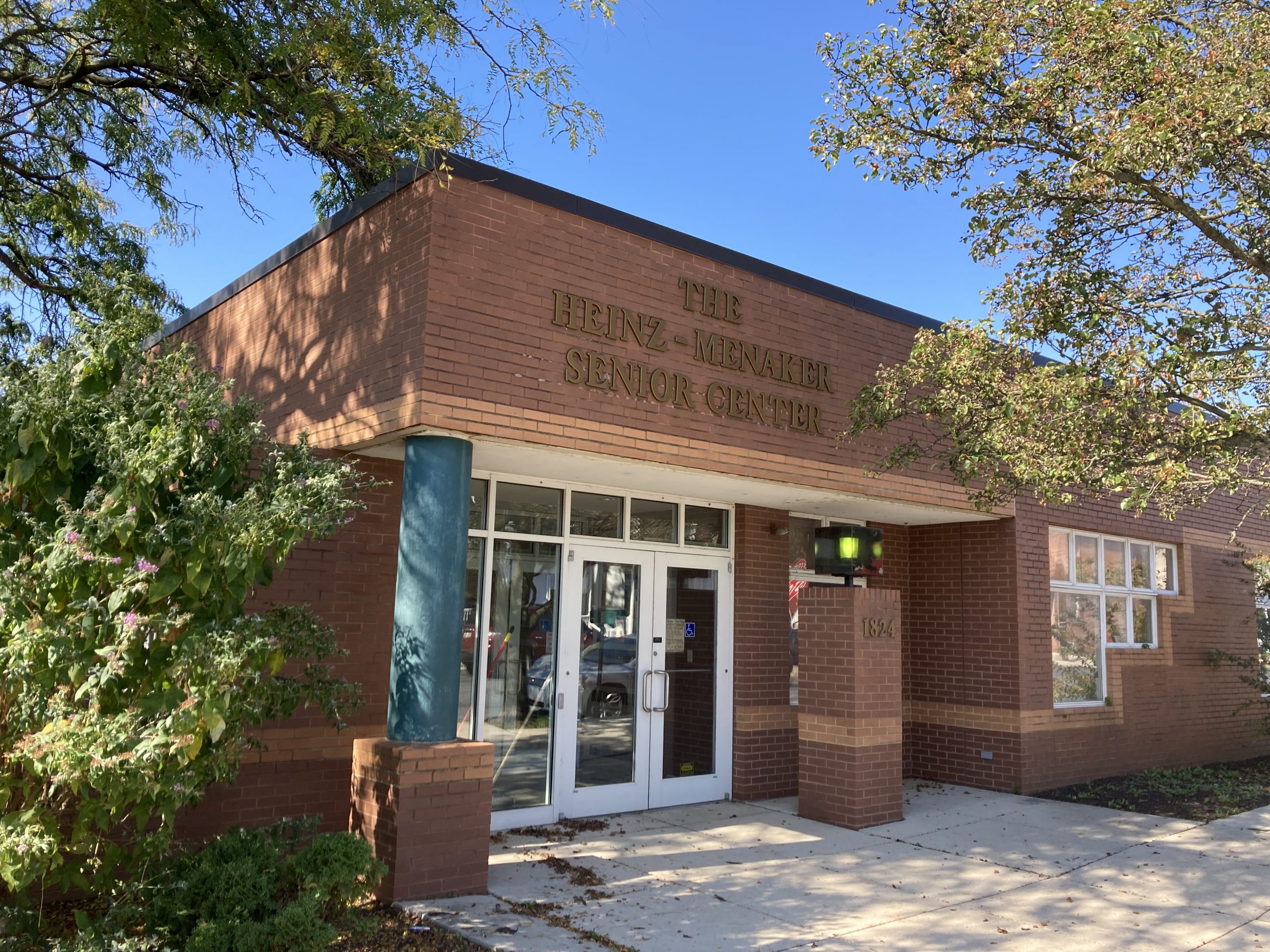
The Heinz Menaker Senior Center at 1824 N. 4th St., Harrisburg

The Heinz-Menaker Senior Center would also benefit from Papenfuse’s proposal as he suggested giving the facility $500,000 for building and program improvements and expansions.

“There’s a lot of deferred maintenance on this center,” said Les Ford, director of the senior center. “I want to make sure that, as we try this round of rebuilding, we focus on our senior citizens. It is money that will be well spent.”

A final $50,000 of the over $12 million total would be spent to purchase a senior shuttle for city residents, Papenfuse said.

As part of this initiative to assist seniors, Papenfuse proposed establishing a new senior services advocate position to help coordinate services for seniors and work with the state and county departments of aging.

Papenfuse is hoping to receive feedback from residents on his proposals through online surveys, comment drop boxes and pop-ups around the city.

“It would be nice if this happens,” said 83-year-old resident Phyllis Hinnant, who is also a member of the Heinz-Menaker Senior Center. “It would help all of us. We deserve that.”

Papenfuse recently announced his plan for another $13 million of the rescue funds. He proposed reconstructing the city’s Hall Manor and Jackson Lick pools, which are over 50 years old.

He plans to present both of these ideas to city council as part of the 2022 budget process in November, he said. Papenfuse stated that he believes council members are on board with the proposals.

However, city council has increasingly voiced frustration with the lack of communication from Papenfuse on his plans for the rescue plan money. Many members have spoken out at council meetings, asking to be included in the planning process.

City council will need to approve these proposals in order for them to move forward.

“I’m glad we are in the position with these American Rescue Plan funds to make a difference in this important way,” Papenfuse said.

To complete the senior assistance proposal survey, click here. For more information, visit the city’s website.

If you like what we do, please support our work. Become a Friend of TheBurg!


Continue Reading

Harrisburg proposes changing procedures, timeframe for disbursing federal housing funds

Franchon Dickinson, Harrisburg’s director of building and housing, speaks to City Council on Tuesday night.

Harrisburg plans to shake up the yearly process of doling out federal housing dollars under its “Annual Action Plan” unveiled on Tuesday night.

Franchon Dickinson, director of the city’s Department of Building and Housing, told City Council that the administration wants to tighten requirements for Harrisburg-based social service agencies seeking funding under the U.S. Department of Housing and Urban Development’s (HUD) Community Development Block Grant (CDBG) program.

“If we want to effectuate change, we’re going to need to change the way we do business,” she said.

In recent years, council has doled out relatively small amounts of CDBG money to a dozen or so specific service agencies. HUD, however, recently has questioned the way Harrisburg has distributed some of those funds, said Mayor Eric Papenfuse. Therefore, the city needs to make certain it strictly follows HUD guidelines, he said.

Specifically, agencies must show that a service is new or must demonstrate a “quantifiable increase in the level of service in the last 12 months,” said Dickinson. In addition, she said that HUD prefers to fund “senior enrichment programs or special needs populations.”

Moreover, the administration wants to change the funding structure for CDBG, which, this year, will total nearly $1.94 million, down a bit from last year’s pot of $2 million.

Under the current proposal, just $100,000 will be set aside for social service programming, down from about $240,000 last year. However, for facilities projects, agencies will be able to apply for money from a second bucket, one reserved for “public improvement/public facilities,” which totals $407,261, Dickinson said.

Papenfuse said that HUD didn’t like that, in the past, Harrisburg permitted facility improvements with money meant for “public service activities,” funds that were supposed be reserved for programming and other service activities.

The application process also is changing.

This year, the city will not determine recipients before submitting its action plan to HUD in mid-August. Specific recipients will be determined later through a request for proposals (RFP) process, which will be issued in late August, and applications will be scored to make sure they meet HUD guidelines, Papenfuse said.

“It’s a change in procedure, but it’s a good one,” he said. “It makes sure that every dollar we spend will be spent wisely.”

Other proposed CDBG allotments include:

  • $593,423 for debt service, as the city continues to pay down a federal loan it guaranteed under former Mayor Steve Reed for the disastrous Capitol View Commerce Center project
  • $387,670 for grant administration
  • $250,000 for homeowner rehabilitation
  • $200,000 for emergency demolition

In addition to the CDBG ordinance, council tonight introduced ordinances for the HUD Emergency Solutions Grant Program for $166,243, which mostly goes to the Capital Area Coalition on Homelessness to fund emergency shelter and rehousing, and another for HUD’s HOME Investment Partnerships Program for $432,187, which funds affordable housing solutions.

Now that council has introduced its ordinances, the public has 30 days to comment before council takes a final vote on them on Aug. 13. In addition, a public meeting will be held on July 31 at 6 p.m. at Hamilton Health Center.

Only one current CDBG recipient attended Tuesday’s meeting—Les Ford, executive director of the Heinz-Menaker Senior Center.

Following the meeting, Ford said he was unsure what to make of the proposed changes to the program. He said he was concerned that the funds allotted for “public service programs” had been cut from $240,000 to $100,000 under the administration’s proposal, leaving little for the city’s many service providers to split.

“I don’t even know if it’s worth applying for,” he said. “I need to get more information tomorrow. At this point, my head is spinning.”

Continue Reading

Healthy Habits: New program aims to improve nutrition, battle chronic disease for seniors.

Pat Mueller knows all about healthy eating, the kind that helps keep the rash and weakness of dermatomyositis at bay and got her off the steroid that caused annoying weight gain.

“Five fruits and veggies per day. Lean meat. Avoid highly processed foods. Avoid the whites, the sugars, the flours,” said Mueller. “What we put in our bodies is very important.”

Sitting at a long table at the bustling Heinz-Menaker Senior Center, Mueller declared her lunch of chicken, Brussels sprouts and brown rice as acceptable. She has taught herself the lessons in nutrition that her fellow center members and others are about to learn, through a new initiative tackling chronic disease in the community.

The Chronic Disease Prevention Program is a partnership of UPMC Pinnacle and the Central Pennsylvania Food Bank, in conjunction with Heinz-Menaker Senior Center in Harrisburg. Their combined efforts will bring more fresh fruit and vegetables into the community, paired with screenings and education on the links between diet and health.

A Dent

Chronic diseases are the leading causes of death and disability in America, according to UPMC Pinnacle. Affecting 190 million Americans—nearly two out of three—their cost to the health care system from 2016 to 2030 is projected to be an incredible $42 trillion, according to the Partnership to Fight Chronic Disease.

That is, if nothing changes. Officials with the Chronic Disease Prevention Program hope that leveraging their resources will make a dent. They can achieve their individual missions without “reinventing the wheel and by breaking down siloes,” said Tina Nixon, UPMC Pinnacle’s vice president of mission effectiveness and chief diversity officer.

“At the food bank, they understand hunger and access to food,” she said. “Where can we partner to bring in the healthy component of prevention education and how to utilize the foods you’re receiving if you have a chronic disease?”

Add assessments for such leading chronic conditions as high blood pressure, diabetes and high cholesterol, and “we are able to catch things early and provide the resources and tools so individuals don’t have to come into our hospital.”

For about a decade, the Central Pennsylvania Food Bank has expanded its capacities for acquiring, storing and distributing fresh and frozen meats and produce, said Executive Director Joe Arthur. In recent years, the food bank has also connected with health care providers and insurers at the intersection of health and food insecurity, because a doctor’s order to eat healthy foods can be an insurmountable challenge for some patients.

“The guidance to eat more fruits and vegetables is wonderful advice, but if you don’t have the dollars to do that consistently and steadily, it becomes more of a struggle,” Arthur said. “One of the coping mechanisms is to eat cheaper, less healthy foods.”

Barriers preventing access to fresh food include more than a scarcity of grocery stores. Unemployment and low incomes limit buying power. Unsafe neighborhoods make it hard to venture outside. Those without cars have to lug grocery bags home on the bus. Even those with access to groceries might need “some education and tactics around shopping” in the produce section, said Arthur.

“About 45 percent of the food Central Pennsylvania Food Bank provides is actually fresh or frozen,” he said. “That stacks up pretty well to the American grocery cart, but there’s more work to be done around the education part and the access part of it. With health care moving very rapidly to help patients in that way, it’s a natural partnership.”

Food Oasis

For the recent “Chronic Disease Prevention Program” kickoff, the Central Pennsylvania Food Bank delivered lettuce, apples, zucchini and milk to the Heinz-Menaker Senior Center. Nestled in a central part of Harrisburg, Heinz-Menaker could be called a food oasis in a food desert.

The center serves lunches provided through Dauphin County, and it is the county’s largest Meals on Wheels distributor, delivering to about 40 clients daily, according to Executive Director Les Ford. The food pantry, unique for stocking fresh and frozen meats, provides food for the kitchens of qualified center members and community residents.

The chronic disease initiative introduced fresh produce, dairy and eggs to Heinz-Menaker’s food pantry, stocked in a space equipped with a refrigerator funded by UPMC Pinnacle. While the Central Pennsylvania Food Bank delivers the pantry’s boxed and canned staples on Fridays, center personnel arrange for produce deliveries on Mondays, to assure freshness through the week.

UPMC Pinnacle nursing staff offers health screenings and chronic disease management to center members, while food bank personnel will supplement nutrition education already provided by Penn State, said Ford.

Ford hopes to see members “take a more focused approach to their diets, specifically the fruits and vegetables.” The center’s served lunch is separate from the food pantry, but, as Ford said, “I hear the complaints when we serve them lunch that doesn’t have a green vegetable.”

“Now we have the opportunity to acquire those, supplemental to our luncheon, but still just as important,” he said. “I hope they will take that to heart and use those wisely even when we cannot provide them here in the institutional meal.”

Poised for Growth

As the center positions itself as a community resource, Ford also hopes for a ripple effect beyond its walls.

Institutions have always struggled to keep food fresh, but, as the center takes on the challenge, “by virtue of us having this footprint in the community, we hope to make people in the surrounding community aware of the urgency of their health, their nutrition and the preparation and consumption of fruits and vegetables.”

Food insecurity, like other embedded health issues, affects all segments of the midstate’s unique mix of rural, urban, suburban and “quasi-urban” regions, said Nixon. The chronic disease program is a sort of pilot, with UPMC Pinnacle collecting and assessing baseline data and, in time, rolling findings into its ongoing community outreach. From there, it’s a matter of building trust between institutions and community residents.

“We know it takes three years to see a significant change,” Nixon said. “We’re talking about changing human behavior. Especially with the senior population, it’s changing the way you’ve eaten for the majority of your life. That’s a mountain to climb, but if you do it the right way and you’re culturally conscious of how to go about it, it’s a win-win, and you will see changes.”

Joint efforts between health care and food banks are sustainable and poised for growth because “this is a money-saver for chronic diseases,” Arthur said. Everyone should pay attention to their eating habits—“myself included,” he added—but the elderly are among the most vulnerable to the consequences.

“Those things don’t need to be solved with medications or more appointments and medical intervention,” Arthur said. “As a culture, we’ve known that for a long time, but in recent years, that preventative medicine has become a movement. We feel like we can be a valuable partner in that movement.”

Continue Reading

Who Was Chosen? Harrisburg proposes recipients for federal housing funds.

Members of Harrisburg City Council listen as a resident speaks at tonight’s meeting.

The annual process of disbursing federal housing funds began tonight, as Harrisburg City Council introduced an ordinance that would provide money to nearly a dozen nonprofit groups.

Mayor Eric Papenfuse said that the city used the same process in selecting award recipients as last year, using a point-based merit system to judge applications.

“It’s a number of small grants,” Papenfuse said. “It’s not as much as anyone wanted.”

In all, the city will distribute $2.04 million in Community Development Block Grant (CDBG) money, a program of the federal Department of Housing and Urban Development. This amount includes almost $1.9 million from the 2018 allocation, plus a small supplemental amount tied to unallocated funds from a prior year.

Like last year, the greatest single amount of money, $593,423, will go to repay federal loans the city backed during the Reed administration for several development projects, including the disastrous Capitol View Commerce Center project, which went bankrupt before being completed years later by a new owner.

“If we didn’t have an exorbitant debt service, we’d have a lot more money for housing,” Papenfuse said.

Most of the nonprofits proposed to receive funds have gotten some money from previous CDBG allocations. The proposed recipients include:

  • TriCounty HDC: $250,000
  • Habitat for Humanity: $100,000
  • A Miracle 4 Sure: $50,000
  • TLC Work Based Training: $45,000
  • Christian Recovery Aftercare Ministries (C.R.A.M.): $40,000
  • Latino Hispanic Community Center: $25,000
  • Heinz-Menaker Senior Center: $25,000
  • Fair Housing Council: $25,000
  • PPL/IN HOUSE: $20,000
  • Shades of Greatness: $15,000
  • Neighborhood Dispute Settlement: $5,000

Like last year, Tina Nixon, an executive with UPMC Pinnacle, scored the applications, Papenfuse said. While most nonprofits that applied received some funding, several did not make the cut, he said.

In addition, the city is proposing to allocate $321,642 for its housing rehabilitation programs and another $408,765 to CDBG administration.

At tonight’s meeting, Les Ford, executive director of Heinz-Menaker, addressed council to emphasize the importance of the Midtown Harrisburg facility.

“The Heinz-Menaker Senior Center is the most active senior center in Dauphin County, bar none,” he said. “We’re just lucky enough to have that in the city of Harrisburg.”

Last year, the administration did not recommend that Heinz-Menaker receive CDBG funds, saying its application did not make the cut. In the end, council reversed that decision and approved $25,000 for the center.

Council is slated to discuss CDBG funding at its next work session, scheduled for June 5. In recent years, it has made some adjustments to the administration’s proposal.

Continue Reading

February News Digest

CRW Releases Infrastructure, Rate Plan

Capital Region Water last month announced plans to spend more than $315 million over the next 20 years upgrading the city’s antiquated sewer system, which will bring Harrisburg into compliance with federal guidelines and carry a cumulative 150 percent increase to water and sewer rates.

Known collectively as the City Beautiful H2O plan, the improvements come following years of deferred maintenance to Harrisburg’s centuries-old combined sewer system. CRW says the updates will reduce sewer discharge into natural waterways, enhance sewer efficiency, and improve neighborhoods through the implementation of green storm water management systems.

The improvements also will significantly raise the rate burden for city households. The draft plan includes an extensive affordability assessment that helped CRW set rate projections for the duration of the project. The analysis concluded that many CRW ratepayers have significant financial limitations that preclude aggressive rate hikes.

As a result, CRW decided to seek the lengthiest improvement schedule permitted by federal environmental agencies, giving the authority 20 years to complete the projects. Water and sewage rates are set to increase by a cumulative 150 percent over that time period.

The rate increases will be most dramatic in the next decade, with annual 10 percent hikes projected from 2019 to 2022. After reaching a 106-percent cumulative increase in 2027, rate hikes will level off to just 2 percent a year from 2027 to 2038.

CRW set rates so that an average household will not spend more than 2 percent of its annual income on water, but households earning less than the median income could face significant burdens

“It is anticipated that there will still be affordability issues for some customers within the City, with some customers experiencing wastewater and storm water costs as a percentage of income exceeding 3.0 percent,” the report says.

The draft plan is part of CRW’s response to a partial consent decree it negotiated with the U.S. Department of Environmental Protection in late 2014. Earlier that year, the EPA alleged that sewage runoff in Harrisburg violated the federal Clean Water Act and PA Clean Streams Law.

Like many old cities, Harrisburg has a combined sewer system, in which storm drains connect to the same sewer system as toilets and showers.

When it’s not raining, all the contents of the sewer system flow to a treatment plant on Cameron Street, where they are cleaned and then discharged into the Susquehanna River. But heavy rain can cause the system to overflow, sending untreated water into the river and Paxton Creek.

Under state and federal environmental laws, Harrisburg would have faced financial penalties for those runoff incidents. After a year of negotiations, the EPA agreed to spare the city financial penalties as long as CRW agreed to update its long-term plan for the city’s sewer system.

A public meeting on the proposal is slated for March 1, 6 to 8 p.m., at the Camp Curtin YMCA.


Fight Against Dogfighting

Citing concerns over animal welfare and illegal gambling, Harrisburg is asking its residents to help stop a scourge of illegal dogfighting.

City communications Director Joyce Davis announced last month that Harrisburg obtained a $20,000 grant from the Pennsylvania Gaming Control Board to launch a public information campaign about dogfighting. So far, city officials have purchased ads on Facebook that explain the warning signs of dogfighting and ways to report it to law enforcement.

Davis said that the campaign did not arise as a response to a single incident or spate of reports. Rather, it seeks to curb an on-going animal abuse problem that also enables illegal gambling.

“We want to stamp this out,” she said.

The issue of dogfighting came to the fore locally in June 2017, when Harrisburg police officers staged a raid on a dogfighting ring on S. 14th Street. Since then, the bureau has issued charges on three counts of illegal dogfighting in the past year, as well as one count of possession of dogfighting paraphernalia, according to animal control officer William Sandstrom.

If city residents suspect dogfighting, they can call 311 from within city limits to report it. Reports that result in charges are eligible for a $5,000 reward from the Humane Society of the United States.


Zembo Shrine to Sell

The historic Zembo Mosque and Shrine is set to sell after almost one year on the market.

The 65,000-square-foot property at Division and N. 3rd streets will be sold to Arkansas-based TempleLive LLC, which plans to operate the building as a meeting, gathering and performing arts venue, said city communications Director Joyce Davis.

“The goal is to make it a more culturally active space,” Davis said

TempleLive currently owns two Masonic temples similar to Zembo, one in Cleveland and one in Fort Smith, Ark. The company runs both properties as multi-purpose event spaces, according to the venues’ websites.

Mike Brown, vice president of acquisitions for Beaty Capital Group, TempleLive’s parent company, expects the sale to close at the end of March or beginning of April. He hopes the site will be operational by the fall.

Zembo went on the market in February 2017 with a $950,000 asking price. Davis could not confirm the property’s final sale price, which was reportedly reached at a special meeting on Jan. 11.

The deal includes 396 parking spaces adjacent to the building.

Since its opening, Zembo has been home to the Shriners, a fraternal organization affiliated with the Freemasons. The Shriners continue to meet there, but the group’s declining membership, coupled with the building’s high operating costs, forced them to sell the historic property.

Zembo was constructed in 1930 in a Moorish Revival architectural style. The building features interior arches, hand-painted motifs and ornate stone detailing. It houses large meeting rooms and a theater with a 2,500-seat capacity.

Youth Center Approved

The Harrisburg City Council last month approved the expansion of a teen center in North Allison Hill, which will double the facility in size.

Bethesda Mission plans to renovate an old printing plant on Herr Street adjacent to its current Youth Center, adding a full-size gymnasium, classrooms, office space and an event hall with a full-service kitchen.

The result will be a full-service community center with classes and amenities for all age groups, said Cindy Mallow, director of development at Bethesda Mission. The current youth center only serves children and teens.

“We’re hoping to involve families and expand out into the community even more,” Mallow said.

Bethesda Mission hopes to break ground on the $2.8 million project this summer and finish it by the end of 2018, Mallow said.

Bethesda Mission has operated its teen center from a former fire station at 1428 Herr St. since 1990. It purchased the former Kurzenkabe Press facility at 1424 Herr for $275,000 in 2015, according to Dauphin County property records.

The 10,000-square-foot space needs extensive renovations, Mallow said, including an overhaul of its HVAC, plumbing and electrical systems. Contractors will also raise the ceilings to accommodate the gymnasium and construct a connection between the print facility and the youth center.

Since Bethesda Mission announced its plan to renovate the printing facility back in 2015, it has raised more than $1.5 million from the community and private foundations, including $600,000 from the York-based Stabler Foundation.

The expansion will also allow the mission to double or triple the enrollment in its after-school program and summer programs for youth, Mallow said.

“There’s just a need for a place for the kids to go,” she said. “Our center gives them the opportunity to be with other kids and have a mentor.”


Grant Input Sought

Is there a nonprofit that’s doing good in your neighborhood?

That’s one of the questions that city administrators will pose at a public meeting this month, as Harrisburg begins to chart its priorities for Community Development Block Grant (CDBG) money over the next five years.

CDBG funds are allocated annually to organizations that help build community and stabilize neighborhoods in low- and moderate-income areas. The city received $1.9 million last year and expects the same this year, according to city communications Director Joyce Davis.

The federal Department of Housing and Urban Development (HUD), which disburses CDBG money, requires each municipality receiving grants to have a “consolidated plan” describing its development priorities and goals.

Harrisburg’s current three-year plan is set to expire in September. Roy Christ, Harrisburg’s director of Building and Housing, said that development projects started during Mayor Eric Papenfuse’s first term require a new plan with a longer duration.

In past years, CDBG funds have supported organizations such as the Heinz-Menaker Senior Center, Habitat for Humanity of Greater Harrisburg, the Latino Hispanic American Community Center and MidPenn Legal Services.

City departments can also apply for grants. Last year, the Harrisburg Police Bureau received $90,000, which paid for a community policing van and helped launch the police cadet program.

For this planning cycle, Christ said Harrisburg hopes to target projects in “tipping point” neighborhoods.

“These are neighborhoods that need a bit of help to bounce back and become self-sustaining,” he said.

City residents can contribute input at the public meeting or through an online survey. The meeting will be held on March 5 at Jackson-Lick Tower at 5:30 p.m.

Strawberry Square Apartments

Harrisburg City Council last month gave the green light to another set of apartments inside Strawberry Square.

Council unanimously approved a land development plan submitted by Brad Jones, CEO of Harristown Enterprises, which will convert vacant office space in Strawberry Square into 13 apartment units. The project will add to the 24 apartments already inside Strawberry Square, the result of a 2016 office-to-residential conversion by Harristown.

It’s also the third project that Jones has put before council just this year, as, in January, council approved two other downtown projects proposed by Harristown: a new office building on S. 2nd Street just off Market Square and a small office-to-residential conversion at 221 N. 2nd St.

Approval came despite recent statements from some council members that they are concerned about affordable housing in the downtown district.

Earlier in the month, Jones defended his pricing structure, telling council that 15 percent of Harristown’s apartment units could be rented by someone with an annual income of just $25,000 to $40,000 a year, while another 40 percent could be afforded by someone with an average income of $60,000 a year.

Council has not proposed any plans to regulate rents in Harrisburg. In January, however, council President Wanda Williams said that she would continue to monitor housing development and advocate for affordable options.

Comp Plan Chugs Forward

The Harrisburg Planning Commission last month made plans to advance the city’s comprehensive plan towards completion, a process that could last into the summer.

City officials and business developers excoriated the plan at a meeting in January, saying it limited the discretion of private property owners. Mayor Eric Papenfuse called the document “unsalvageable” and urged the commission to reject it in favor of a plan proposed by the city.

Last month, though, commissioners hardly mentioned the planning document submitted by the city, except to ask if and when it had been published online.

“We’re moving ahead with our product,” said commissioner Vern McKissick, referring to the document that the commission developed with local architect Bret Peters and his assistants at the Harrisburg-based Office for Planning and Architecture.

The commission will host monthly workshop meetings for the next three months to incorporate public feedback and professional advice into the draft document, which is published online at BeHBG.org. They hope to reengage some of the consultants that Peters hired while drafting the plan in 2015 and 2016.

To do that, however, they’ll need to secure additional funding. They already have $10,000 allotted by City Council in the 2018 city budget, but McKissick said they will likely need more to consult with subcontractors and see the plan to completion. Commissioners will evaluate grants and other funding opportunities at a workshop later this month.

Spradley Chosen for School Board

The Harrisburg school board last month selected Tyrell Spradley, a tax consultant and former city treasurer, to serve an appointed term until 2019.

Spradley replaced Matt Krupp, a board director who resigned in January to serve as Dauphin County prothonotary.

After two rounds of voting, the board picked Spradley over three other candidates: newcomer Mariah Rodriguez and board veterans James Thompson and Kia Hansard.

In his interview before the board, Spradley touted his financial background and his two years of experience working in the district’s accounting department. He said he thinks many of the issues facing the district can be resolved, given the improved fiscal health he has seen since he worked as a district accountant.

“A lot of the issues I see are administrative issues, communication,” Spradley said. “Money isn’t a problem like it was before. We’re stronger now and have a stronger administration.”

Spradley joins the board as it braces for a number of contentious discussions, including the annual budget process and the expiration of Superintendent Sybil Knight-Burney’s contract this June. The board must decide soon whether it will renew Knight-Burney’s contract or open an application process in which she may participate.

So Noted

AAA Central Penn
last month named Jodie Daubert as its new president and CEO. In this position, Daubert will lead the nine-county club composed of 290 employees serving 11 offices. She succeeds David Meckley, who served as interim CEO. 

Brandalynn Armstrong, co-owner of Harrisburg-based Zeroday Brewing Co., has been elected to the Brewers of Pennsylvania board of directors. The trade association works to protect and promote the brewing industry in the state.

Excel Interior Concepts & Construction last month announced two new hires. Thomas Fogie joined the Lemoyne-based company as project coordinator, and Alicia Mirando came on as designer.

The Harrisburg Senators last month signed a two-year extension with the Washington Nationals, their player development agreement now extending through 2020. The Senators are the Nationals’ AA-affiliate Minor League baseball team. Separately, the Senators announced that Dan and Michael Schwab, co-presidents of Harrisburg-based D&H Distributing, along with their sister, Amy Silfen, have joined the team’s ownership group as minority owners.

S&T Bank has named Jeffrey Scoutelas as vice president, private banker for central Pennsylvania region. Scoutelas, a graduate of Lynchburg College, has 12 years of private banking and management experience in the area, said the company.

Changing Hands

Berryhill St., 2155: L. & D. Sandoe to M. Macas & C. Pulla, $55,500

Boas St., 1826: Z. Weist to S. Henry, $59,900

Brookwood St., 2448: Wilmington Savings Fund Society to HT Properties LLC, $35,500

Capital St., 907: A. Sheaf to E. Ashenfelder, $148,000

Capital St., 1200: 8219 Ventures to R. & C. Steele, $76,000

Croyden Rd., 2951: K. & M. Zinn to A. Smith, $70,000

Derry St., 1433: A. Vaughn to Aum Investments LP, $32,000

Derry St., 1901: L. Nguyen to T. Nguyen, $150,000

Derry St., 2022: M. Khatoon to A. Saeed, $30,000

Emerald St., 226: C. Shokes to HBG Rents LLC, $210,000

Forster St., 1815: Blackscotch LLC to C. Burke, $50,000

Green St., 914: P. Vanitem to C. Williams, $138,900

Green St., 1401½: C. & C. Kellar to R. & F. Armetta, $80,000

Green St., 1623: S. Vemula & M. Chada to B. Golper & J. Wu, $132,000

Green St., 3118: US Bank NA Trustee & PA Housing Finance Agency to Hawk Vesta LLC, $65,750

Hale Ave., 436: M. Davis to J. Sayed & S. Sherin, $40,000

Hanna St., 103: S. Brown to DLK Properties LLC, $63,500

Harris St., 434: Alta Reo LLC to B. Parfitt, $83,000

Herr St., 1001: Harsco Corp. to Capital Region Economic Development Corp., $505,000

Hanover St., 1312 and 1283 & 1285 S. 13th St.: Y. & C. Lee to D&F Realty Holdings LP, $50,000

Hoffman St., 3131: G. Hanslovan to O. Perry, $63,000

James St., 1315: J. Brinks & C. Wise to S., J. & N. Kindler, $95,000

Kensington St., 2101: Nationstar Mortgage LLC to HT Properties LLC, $48,500

Kensington St., 2103: PA Deals LLC to L. Myers, $65,900

Lawton St., 1416: M. Maloney to J. Foote & R. Tompkins, $429,500

Luce St., 2365: T. Nguyen & H. Truong to M. Phan, $30,000

Maclay St., 332: S. Hite & L. Ware Jr. to JTA Consulting Group LLC, $51,000

North St., 1836 & 1838: Reyart Properties to B. & R. Lomax, $72,000

N. 2nd St., 1404: Tang Liu Realty LLC to C. Albers, $121,000

N. 2nd St., 2323: M. Horgan & CR Services Inc. to A. & A. Mathew, $147,500

N. 2nd St., 3118: P. & M. Rowan to D. Inghilterra, $203,000

N. 2nd St., 3303: C. Myers to J. Myers, $90,000

N. 4th St., 2735: S. Patrick to T. & L. Lydell, $107,900

N. 6th St., 3111: R. & S. Hopkins to C. Morel, $62,000

N. 13th St., 142: J. Forsyth LLC to 37 Estate LLC, $41,000

N. Front St., 1125: D. & J. McEnany to RMK Management Group LLC, $233,000

N. Front St., 1525, Unit 301: W. Cohen to W. Krenz & P. Meehan, $135,000

N. Front St., 3029: Pumphouse Partners LP to BXF Real Estate LLC, $450,000

Penn St., 1324: D. Stridacchio to S. Olsen, $117,000

Penn St., 1715: BencMarq Holdings LLC to Fratelli Property Investments LLC, $116,000

Race St., 568: R. Hunter to E. Fultz, $157,968

Rolleston St., 1239: G. Neff to J. McCloud, $45,000

Seneca St., 330: J. Runion to M. Saldana & R. Zavala, $87,500

S. 14th St., 1418: R. Scott to City of Harrisburg, $52,000

S. 14th St., 1422: G. Neff to City of Harrisburg, $48,500

S. 14th St., 1424: C. Gamble to City of Harrisburg, $45,000

S. 14th St., 1433: Z. Owens to City of Harrisburg, $51,000

S. 14th St., 1440: G. Neff to City of Harrisburg, $51,000

S. 19th St., 850: S. & N. Fulginiti to City of Harrisburg, $60,000

S. 23rd St., 616: R. Bowers to D. & N. Gonzalez, $89,900

S. Front St., 601: A. Poindexter to R. & L. Firestone, $174,900

State St., 1504: A. Sandoval to 77 Estate LLC, $37,000

Susquehanna St., 1612: K. O’Neill & PA Housing Finance Agency to T. Weaver, $146,500

Susquehanna St., 1723: G. Neff to J. Hirt, $104,000

Valley Rd., 2308: L. & N. Eikenberry to Bean GST Trust II, $218,000

Washington St., 103: R. Bray to Q. Tran, $32,000

Continue Reading

Grant Plan: Harrisburg seeks input for next 5 years of HUD funding

CDBG funds enable neighborhood improvement projects in low- and moderate-income areas.

Is there a nonprofit that’s doing good in your neighborhood?

That’s one of the questions that city administrators will pose at a pair of upcoming public meetings in February and March, as Harrisburg begins to chart its priorities for Community Development Block Grant (CDBG) money over the next five years.

CDBG funds are allocated annually to organizations that help build community and stabilize neighborhoods in low- and moderate-income areas. The city received $1.9 million last year and expects the same this year, according to city communications director Joyce Davis.

The federal Department of Housing and Urban Development (HUD), which disburses CDBG money, requires each municipality receiving grants to have a “consolidated plan” describing its development priorities and goals.

Harrisburg’s current three-year plan is set to expire in September. Roy Christ, Harrisburg’s director of Building and Housing, said that development projects started during Mayor Eric Papenfuse’s first term require a new plan with a longer duration.

“We planted a lot of seeds in these past few years,” Christ said. “We want to drive our roots deeper, because the projects we’re doing now are going to come to fruition in the next five years.”

In past years, CDBG funds have supported organizations such as the Heinz-Menaker Senior Center, Habitat for Humanity of Greater Harrisburg, the Latino Hispanic American Community Center and MidPenn Legal Services.

City departments can also apply for grants. Last year, the Harrisburg Police Bureau received $90,000, which paid for a community policing van and helped launch the police cadet program.

For this planning cycle, Christ said Harrisburg hopes to target projects in “tipping point” neighborhoods.

“These are neighborhoods that need a bit of help to bounce back and become self-sustaining,” he said.

City residents can contribute input at public meetings or through a forthcoming online survey. The meetings will be held on Feb. 20 at the Latino Hispanic American Community Center and March 5 at Jackson-Lick Tower, both at 5:30 p.m.

Christ and Jackie Parker, director of Community and Economic Development, hope that public input will help the department determine which neighborhoods need investment in the next half-decade and which nonprofit groups can help them achieve those goals. The city’s five-year plan won’t dictate which groups will get funding in the future, but it will outline broad development strategies that will guide the city’s allocations.

CDBG funds vary year to year, which can complicate this type of planning exercise, Christ said. Local agencies expect that HUD cutbacks will continue under the Trump administration, which makes the process of allocating money more labored.

Harrisburg also has a significant limitation on its funding—almost a third of it goes straight into debt service. The city is still paying for the crimes of local developer David Dodd, who embezzled federal money while constructing the Capitol View Commerce Center at Cameron and Herr streets.

Harrisburg and Dauphin County awarded Dodd $860,000 in HUD funds to construct the building, which was abandoned halfway through the project and finally completed by another developer in 2015. Both parties also guaranteed loans for Dodd’s $28 million project, bringing the city’s liability alone up to $5 million.

As a result, Harrisburg has diverted as much as $600,000 of its annual CDBG funding to debt service in the years since Dodd’s conviction.

Limited funds have made CDBG allocations an annual point of contention between City Council and the mayor’s office. Nonprofit leaders who apply for grants don’t think that any long-term planning effort will change that.

“It’s the nature of the beast,” said Les Ford, director of the Heinz-Menaker center.

Ford has applied for HUD funding almost every year since he began leading the center in 2012. He said he’ll do so reluctantly this year, despite the shrinking pot of money and the cumbersome application process.

While Ford is ambivalent that a new five-year plan will streamline Harrisburg’s CDBG allocation process, he does hope that it will at least help the city communicate its development goals clearly to applicants.

Continue Reading