Tag Archives: harrisburg

Grass Campus will soon be up for sale, as Jewish Federation begins recalibration

alexander grass jewish federation of harrisburg

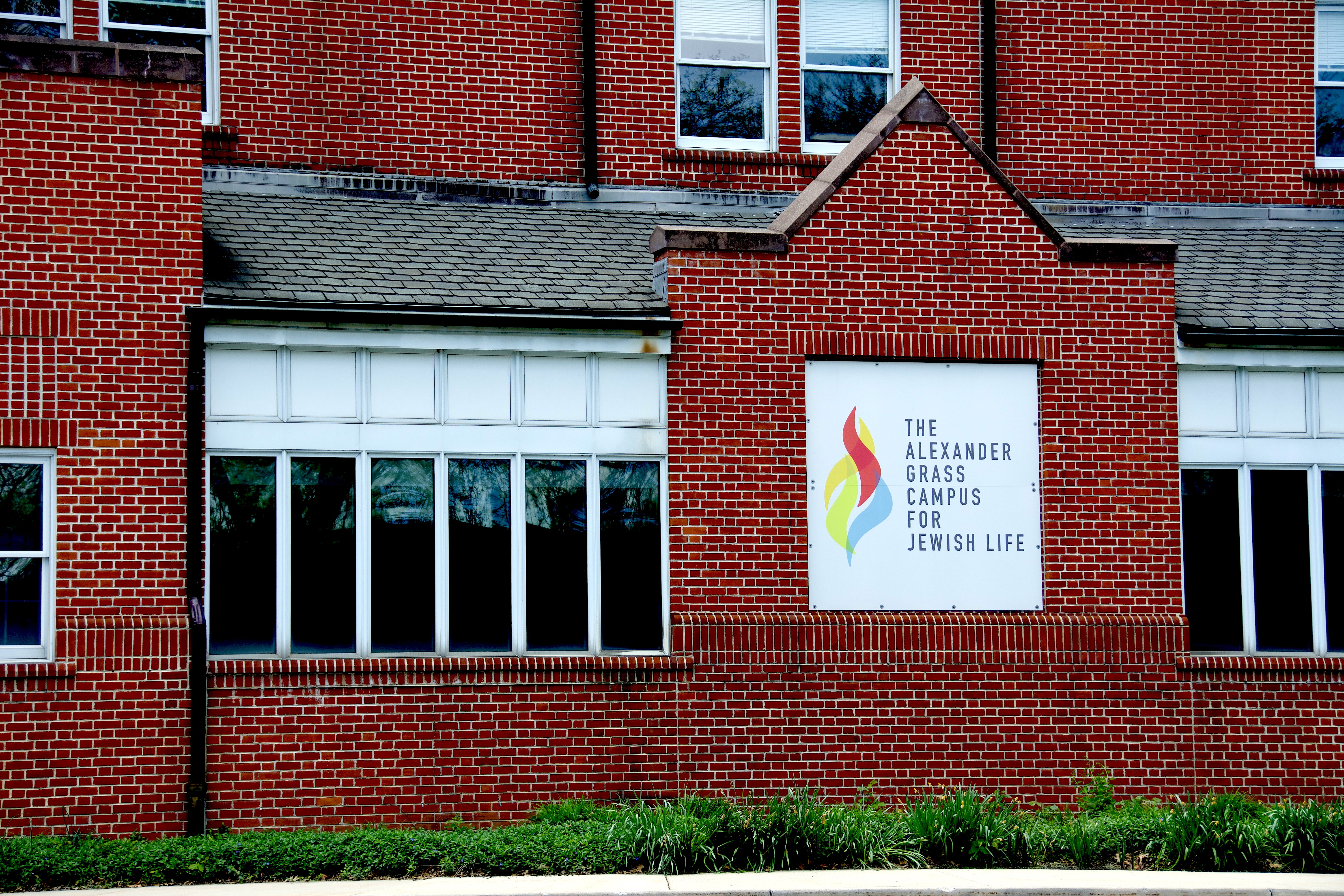
The Alexander Grass Campus for Jewish Life

The Alexander Grass Campus for Jewish Life will soon be up for sale.

The Jewish Federation of Greater Harrisburg is planning to list the 6.4-acre campus as early as June, according to Sam Levine, a member of the federation’s transition committee. 

This move, in addition to others, will help the nonprofit avoid filing for bankruptcy, which is “the last thing” that the federation wants to do,” Levine said. 

“We are working very hard to cover our obligations,” he said.

The federation appointed the transition committee last month to make “difficult” decisions as the organization moves away from the Grass campus, which it purchased in 2022 for $4.56 million. It announced at that time that the campus business model (housing Jewish agencies that were both part of the federation and independent of it) was unsustainable. 

“The expenses were considerably higher than anticipated to run the campus,” Levine explained. “We also were depending on some donations, which unfortunately did not materialize.”

According to Levine, the federation has an outstanding mortgage of around $9 million for the campus, which includes the cost of substantial renovations made to the campus for the federation’s needs. The scope of work included outfitting the campus to house the Silver Academy and Early Learning Center, as well as a workout facility.

“Expenses far exceeded what was anticipated for the renovations,” Levine said. “We were given quotes, and it just turned out that some of the architectural plans that were initially drawn up weren’t accurate, which ended up costing a lot of money to correct…considerably higher than what was budgeted for.”

The expanded renovation budget is part of what caused the federation’s debt to grow larger than anticipated, he added. On top of the mortgage, the federation holds an additional $500,000 debt—money Levine said was used for renovations, maintenance and operating expenses.

He added that the need for security for the campus has surged in the last few years following the Oct. 7 attacks on Israel in 2023, ballooning operation costs further.

In addition to selling the campus, the federation is also looking to liquidate internal assets, such as gym and audio visual equipment, which could help pay off the deb, Levine said.

“We have not actively started to market those items. Our first order of business is to get the real estate on the market, and perhaps we’ll find a purchaser who would be interested in a lot of that equipment,” he said.
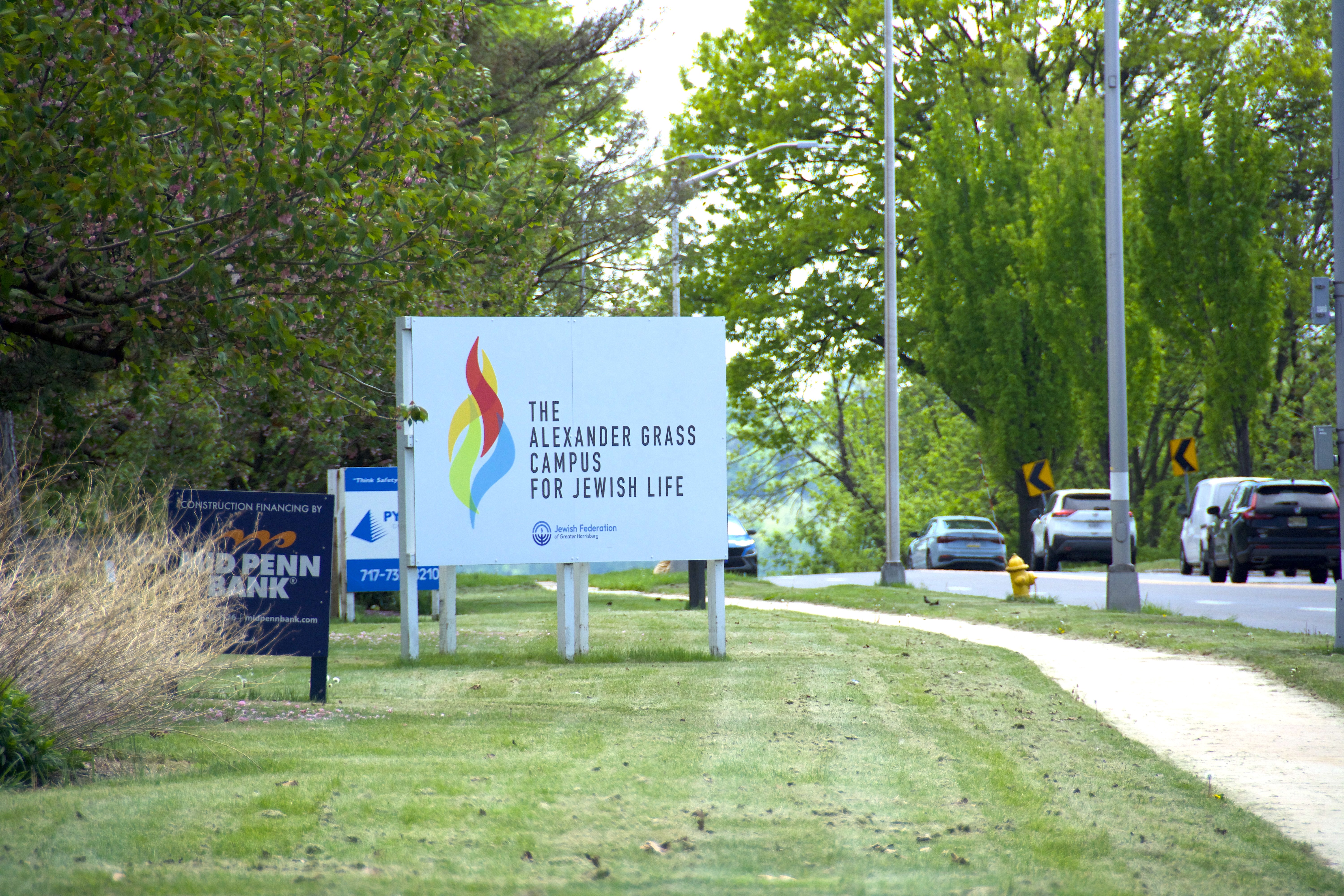
The Alexander Grass Campus for Jewish Life, The Jewish Foundation of Greater Harrisburg

The Alexander Grass Campus for Jewish Life

The committee held a meeting on Sunday with the Jewish community to provide status updates on the federation’s move away from the campus and give more information on the organization’s financial situation. Levine said the community’s leaders expressed at the meeting that they are “extremely sorry this has happened.” 

“A lot of things were out of our control. I think some were in our control that we could have possibly controlled better,” he said.

In terms of the organization’s future, Levine said the federation plans to relocate staff within one of the four synagogues it’s associated with in the Harrisburg area, rather than taking on a new space. 

“Our eventual objective is to rebuild and reimagine the whole Jewish community center concept and try to reimagine some common space that we can have for the community,” Levine said.

But it will take time to rebuild both the organization’s structure and confidence among members, he acknowledged. 

“It’s a very difficult time for our community, but we have a strong community, and fortunately our agencies remain strong, our synagogues remain strong, and those agencies and our synagogues will get us through this,” Levine said.

The Silver Academy will remain in operation on the Grass campus until the end of the school year thanks to a generous donor who stepped up to pay the utilities through that time.

Entities on the Grass campus included the Silver Academy (a Jewish school ranging from pre-K to 8th grade); the Early Learning Center (for kids 6 weeks to 5 years old); Jewish Family Services (a counseling center); and the Jewish Community Foundation (which manages endowments and donor advised funds for community members). Some entities have already found new spaces for operation.

If you like what we do, please support our work. Become a Friend of TheBurg! 
Continue Reading

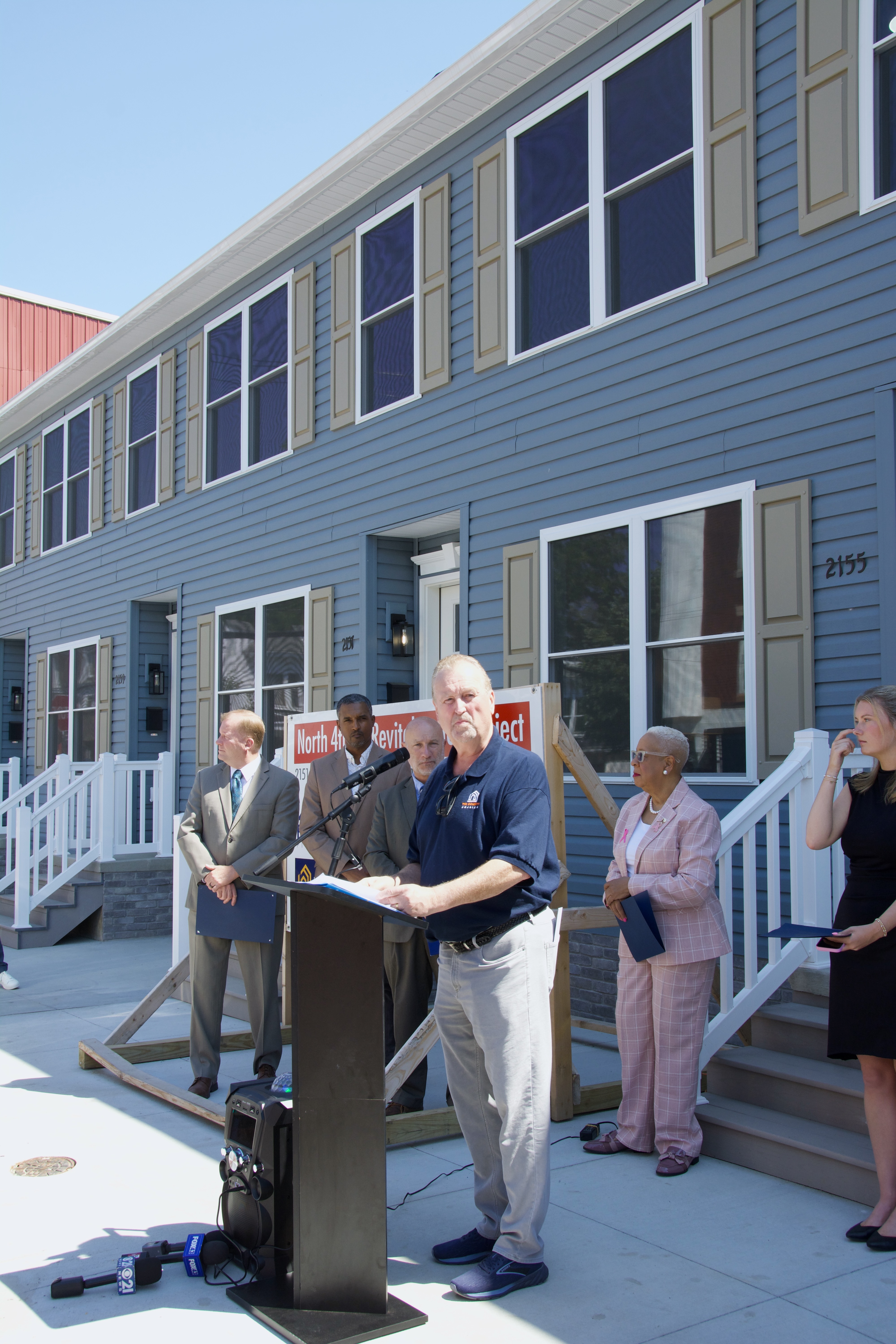
Tri-County Housing celebrates completion of Uptown affordable housing project

Gary Lenker, executive director of Tri-County Housing

Gary Lenker, executive director of Tri-County Housing in front of the Uptown project

Harrisburg is celebrating the addition of five new affordable housing units Uptown.

The nonprofit developer Tri-County Housing joined state, city and county representatives to cut the ribbon on five new affordable townhouses along the 2100 block of N. 4th Street Monday.

Gary Lenker, executive director of Tri-County Housing, the owner/developer of the project, thanked Mayor Wanda Williams for encouraging his organization to pursue affordable housing projects in Uptown. 

“This is our living proof we have delivered,” he said, of Tri-County’s first city project outside of South Allison Hill.       

The townhomes were built on vacant lots acquired from the Harrisburg Redevelopment Authority. Each has three bedrooms and one-and-a-half bathrooms. They will be sold to eligible low- to moderate-income homeowners, giving veterans a preference.

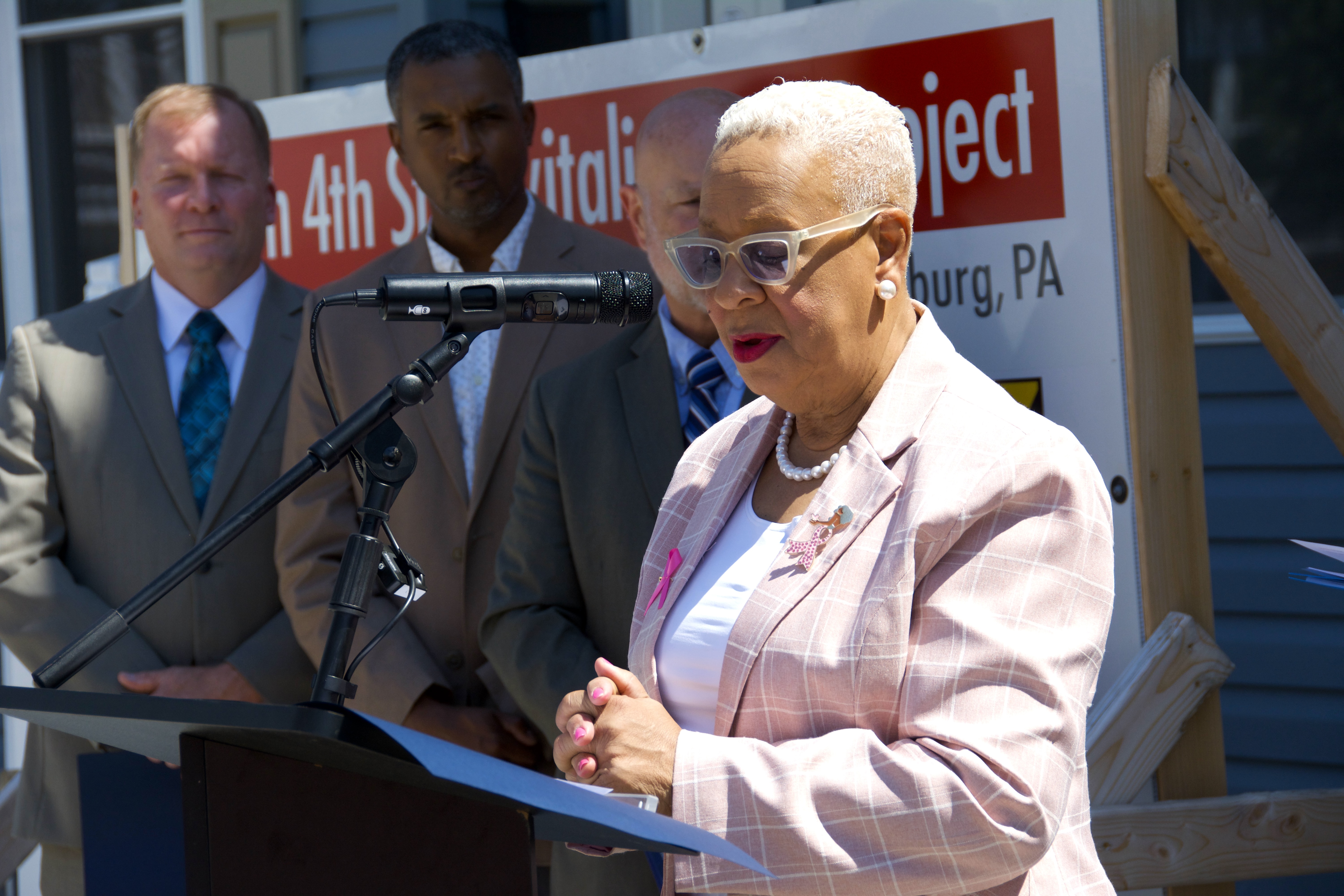
Williams spoke to the importance of such projects at the event.

“What we are celebrating may look like five town homes, but for five families, this represents something much greater,” she said. “It represents stability, dignity, and the opportunity to build a future here in the city of Harrisburg.”

Mayor Wanda Williams

Mayor Wanda Williams

Williams emphasized that housing remains one of her top priorities as mayor because she believes safe and affordable homeownership changes lives.

“It strengthens families, it stabilizes neighborhoods, and creates long-term investment in our communities,” Williams said.

The Federal Home Loan Bank (FHLB) Pittsburgh AHP Program provided a $750,000 grant for the project, which also received $400,000 in Pennsylvania Housing Affordability and Rehabilitation Enhancement funds from the PA Housing Finance Agency. 

The Pennsylvania Department of Community and Economic Development provided funds from the Neighborhood Assistance Program and a Keystone Communities Program Grant.

If you like what we do, please support our work. Become a Friend of TheBurg!
Continue Reading

Harrisburg School Board appoints Camp Curtin principal, reviews budget draft

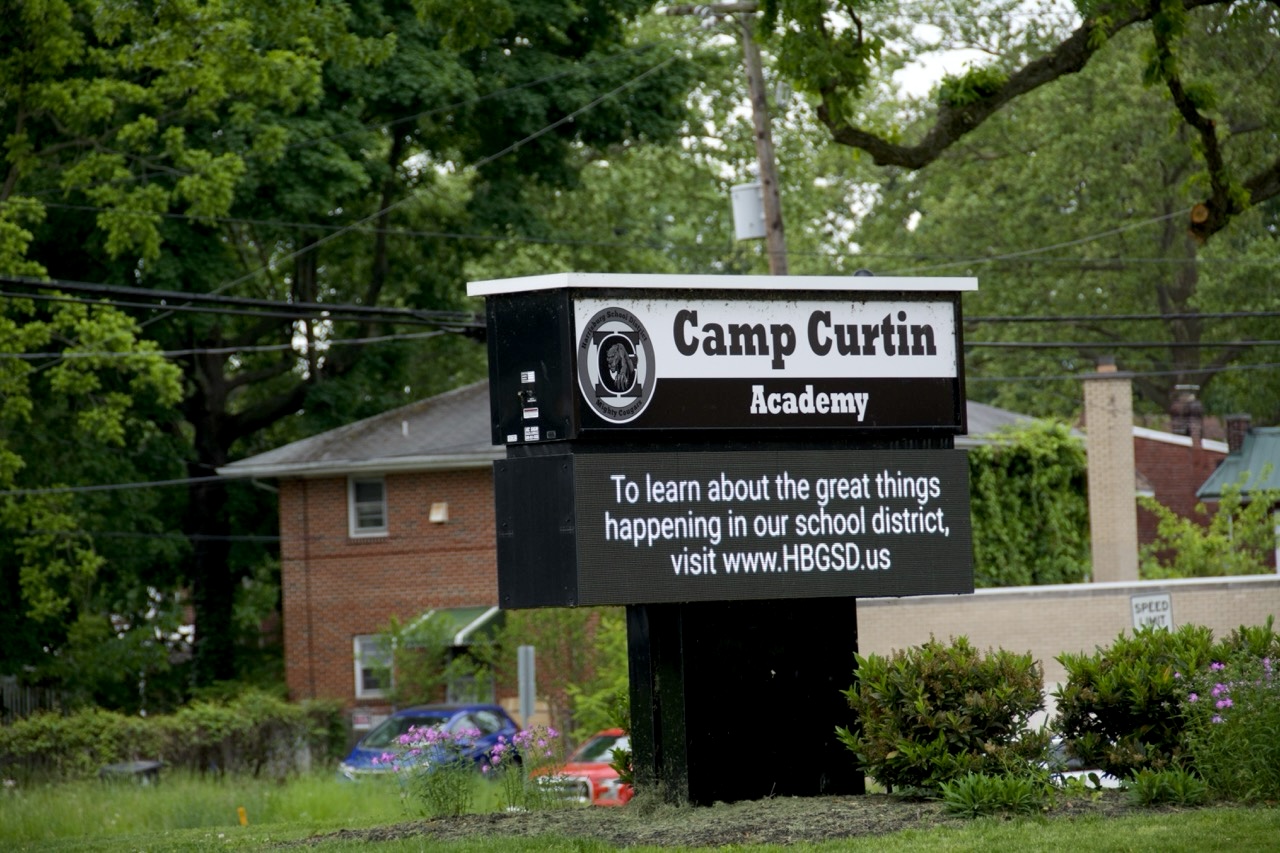
Camp Curtin Middle School sign

The Harrisburg School District has a hired a new principal for its flagship middle school campus.

Ryan Jones, formerly the principal at Marshall Math and Science Academy, will lead Camp Curtin next school year, following a 7-1 vote to approve his hire at a school board meeting Tuesday night.

“We have to have strong leaders to lead our children, and I think he’s done a great job at Marshall Math and Science,” said board president Rosyln Copeland.

Jones will begin his role effective July 1 with a salary of $131,648. He replaces Darnell Montgomery, Camp Curtin’s principal since 2023, who was tapped to serve as assistant principal at John Harris last month under new principal Roma Benjamin.

Chief Financial Officer Marcia Stokes

At the meeting, Chief Financial Officer Marcia Stokes presented an early draft of the district’s expected budget for the 2026-2027 school year in the amount of $227.7 million—not a final number as the draft uses estimates.

Stokes said that the district’s budget priorities include more support for special education and autistic support program instruction, math intervention, school clubs and tutoring programs.

The board will vote to approve the budget at a meeting later this month. The proposed budget will then be subject to a public comment period before it is ultimately adopted in June.

Stokes has recommended a 3% property tax increase this year. The district would generate roughly $37.7 million in property tax revenue with such an increase, roughly on par with the $37 million it generated in 2025-2026, per Stokes’ presentation.

“I don’t want to overtax, but I also want to make sure the board has solid financial footing,” Stokes said, noting the district’s assessed property values have been declining.

With a 3% hike, Stokes said that those with homes assessed around $54,000 (the median assessment in Harrisburg) would see an increase of approximately $31 on their property tax bills. For $100,000 assessed homes, owners would see an increase of about $73.

“Looking at whether we absolutely need it today might not be the question to ask,” Stokes said. “Do we need it five years out? Do we need it three years out? What is the cumulative impact of not doing it today?”

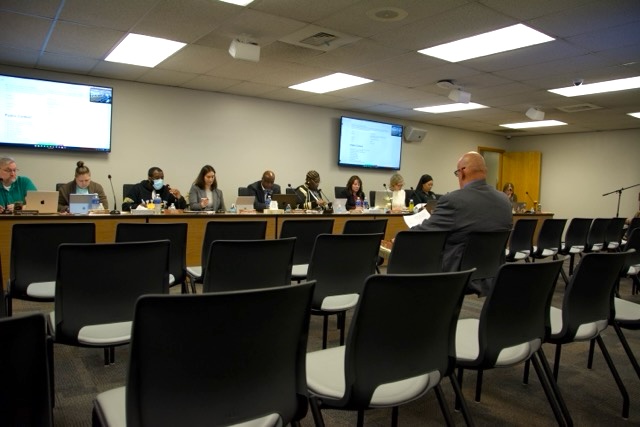
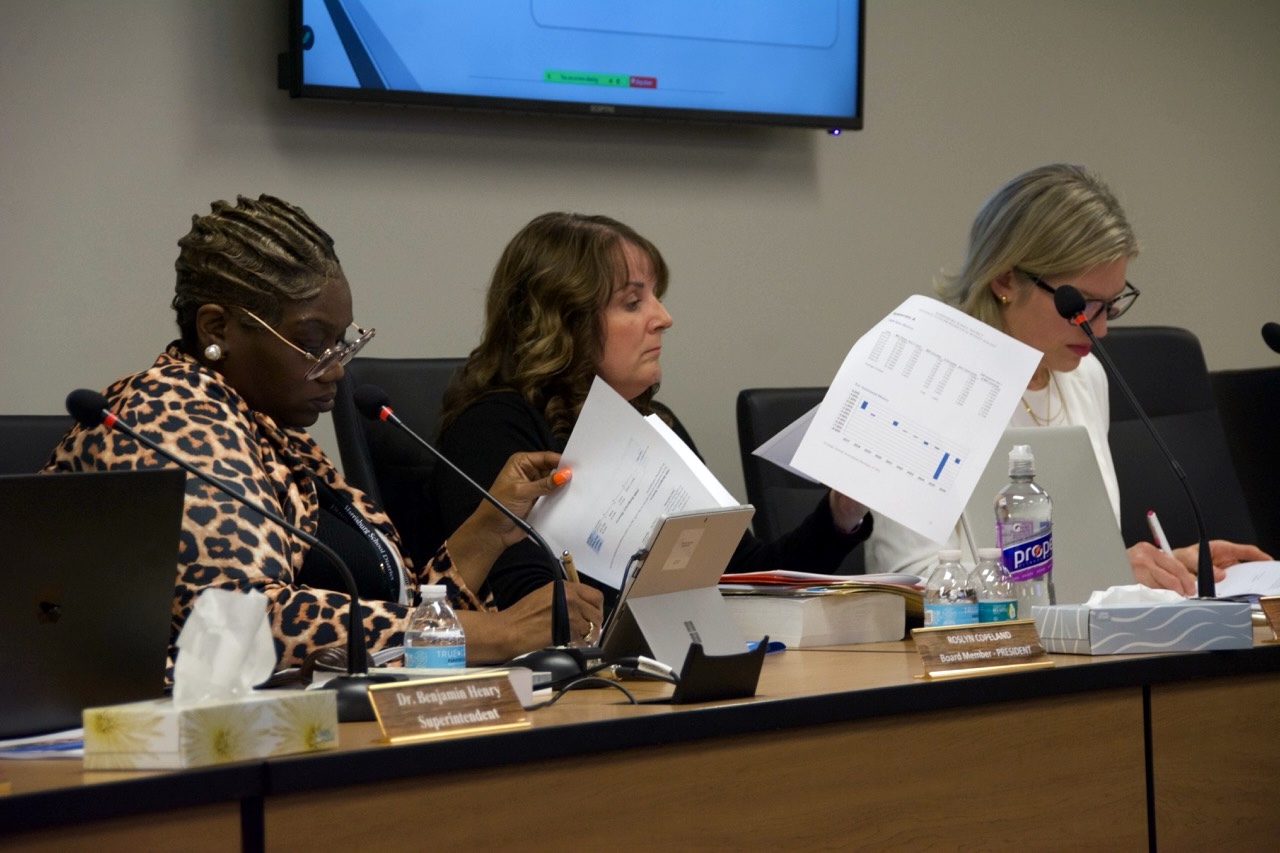
Harrisburg School Board hears budget presentation.

Board Vice President Autumn Anderson noted that raising local property taxes “crunches” the city’s limited tax pool, as 52% of properties in the city are tax-exempt. Just 48% of the city’s property owners pay property taxes, largely due to the massive impact of non-taxable state and nonprofit property holdings.

Over the last 10 years, the district has raised property taxes five times.

“As a school district, when we’re deciding whether or not to raise taxes, it’s difficult because we need to have a consistent source of revenue, which could be local taxes, but in doing that, we’re also putting more of a tax burden on our local residents,” Anderson said.

Board member Brian Carter joined the board in 2017, a year the district declined to raise taxes to not burden residents.

“We had accumulated a $20 million surplus, so we thought that we were a good standing where we didn’t have to raise taxes,” Carter told his fellow board members. “But here in 2018-2019, we were in the burden of possibly filing for bankruptcy.”

The district entered state receivership in June 2019. It exited state control last year, becoming the first district in the state to ever do so.

Stokes said that, if the district wants to increase student achievement and attendance, it must account for programs to do so in its budget.

“What do we need in place to be able to actually meet those goals?” she said.

Copeland noted that the district’s students are underfunded, and it affects their learning and their education.

More than two-thirds of the district’s budget (67%) typically comes from the state of Pennsylvania, as a result of Harrisburg’s high volume of tax-exempt government property and its high student poverty rates. While the state’s budget is officially due by June 30, it has been late in recent years. Last year, the state passed its budget in November.

The remaining third of the district’s money comes from local (27%) and federal (6%) sources.

Board member Danielle Robinson was absent from the meeting.

If you like what we do, please support our work. Become a Friend of TheBurg!

Continue Reading

The Week that Was: News and features around Harrisburg

A CASA student shows a hat designed for CASALive’s “Waves”

Happy May, everyone! We published our new issue this week, thick with stories on Harrisburg’s restaurants, bakeries, coffee shops and more. It’s one of our favorite issues of the year—and we hope it’s one of yours, too! 

Around town this week, we also covered lots of exciting developments, including the Harrisburg School Board’s hiring of a new principal and the Harrisburg YMCA’s takeover of a downtown fitness studio. Check out the full news haul below:

CASA Live, an all-original student-led production, will take place later this month. Students have created the music, scenes and everything in-between.

Excel Remodeling’s president shares tips for a smooth home remodel in a column from April’s home and gardens issue.

HACC reversed course on its decision to cancel fall sports programming as part of a plan to reduce costs as it attempts to narrow a large budget deficit.

Harrisburg School Board hired a new high school principal and approved $6.8 million in William Penn demo contracts earlier this week.

Harrisburg YMCA has taken over operations of the former “Fit on Market” fitness studio in Strawberry Square downtown, now called “Y on Market.”

LGBT Center of Central PA announced its schedule of happenings for the coming months, including exhibits, screenings and celebrations.

TheBurg captured the “Sweepstakes” award for best performance in an annual ad contest sponsored by the Pennsylvania NewsMedia Association Foundation.

The Jewish Federation of Greater Harrisburg is set to shift its business model with the help of a transition team, after an open letter said its development of the Alexander Grass Campus was “not viable.”

Our Adventure Together columnist highlights Cunningham Falls State Park as a fun family trip just over the Maryland state line.

Our editor wonders why Harrisburg feels like it’s constantly in crisis in his May editorial—and proposes some potential answers.

Sara Bozich has compiled the best events of the weekend in her Weekend Roundup, including Books & Brews in Coronet Park. Check out the full list.

If you like what we do, please support our work. Become a Friend of TheBurg!
Continue Reading

Harrisburg school board hires high school principal, approves $6.8M in William Penn demo contracts

John Harris principal Roma Benjamin

Harrisburg’s main high school has a new, but familiar, principal.

Board members moved unanimously at a Tuesday night meeting to hire John Harris’s acting principal, Roma Benjamin, to fill the role permanently.

A longtime school district employee, Benjamin was brought on temporarily to fill the post in December. Following a string of former John Harris principals who had short-lived stints at the school, the district began a national search for a principal who would be “committed” long term and could help improve student performance earlier this year.

“You are the person for that job, and we support you. We’re behind you, and we appreciate you,” board President Roslyn Copeland told Benjamin after the vote.

Benjamin has more than 20 years of administrative experience and holds a doctorate in education leadership from Nova Southeastern University.

“I’m just so appreciative to be back with the Harrisburg board school district,” Benjamin said.

Harrisburg School Board

The board also voted Tuesday to approve $6.8 million worth of demolition contracts for William Penn after discussing project quotes for the 100-year-old, long-vacant building earlier this month.

The cost includes a $6.2 million contract with the Gordian Group to raze the structure, plus contracts to remove asbestos prior to demolition ($257,000), to remove asbestos discovered during demolition ($200,000), and to conduct on-site airborne asbestos testing ($100,000). 

The project also spends roughly $25,000 for compaction testing—to ensure the site of the building can be built on later, if needed.

The demolition, proposed to begin this summer, would take an estimated six to eight months to complete.

“We will be providing weekly updates on the progress of the demo, as well as certainly any asbestos that we find, or any type of issues that we find during that project,” Chief Operations Administrator John Reedy said.

Brian Carter marked the board’s sole member voting ‘no’ on William Penn’s demolition contracts.

Marcia Stokes, chief financial officer for the district

Beginning a conversation that will continue next month, Chief Financial Officer Marcia Stokes also spoke to the board about property taxes, advocating to continue with small, incremental increases, building on last year’s 2% hike.

“Our community can at least plan for that,” she said.

She recommended that the district increase the tax rate by at least 2% for the upcoming school year as not increasing taxes would leave the district with an approximate $1 million deficit.

Chief Recovery Officer Lori Suski noted that the only way to overcome a deficit, without raising taxes, is to cut expenses.

“Cutting reams of paper isn’t going to make a million dollars. It’s cutting people, and that’s what we don’t want to see happen,” she said.

Board member Danielle Robinson voiced concerns about whether continuous raises might drive residents out of the city or force them to make hard choices about which bills to pay.

“We have to be realistic in our community—how it affects the people that are living here,” Robinson said.

The final budget is due in June.

The board also unanimously approved a $12.8 million capital budget for the 2026-2027 school year. 

Alongside William Penn’s demo, the budget included $1.8 million in summer upgrades for Lincoln Elementary (approved unanimously earlier in the meeting), a $2.7 million roof restoration for Marshall Math and Science Academy (partially funded through a grant) and $500,000 to build out a wing of John Harris for career and technical education (CTE) programming.

The board approved the budget 8-1, with Carter voting ‘no.’

Board member Danielle Robinson

If you like what we do, please support our work. Become a Friend of TheBurg!
Continue Reading

One Battle after Another: Why is Harrisburg constantly in crisis?

Illustration by Rich Hauck

I co-founded TheBurg back in 2008, at the start of the worldwide financial crisis.

At the time, I described to a friend my less-than-ideal timing.

“I feel like I’m starting a company in 1929,” I said, referring to the stock market crash and start of the Great Depression.

As it turned out, the “Great Recession” wasn’t quite as terrible as that earlier economic calamity, and we were able to muddle through, though not without considerable challenges and sacrifices.

The thing I didn’t see coming was the precarious situation in Harrisburg, that the city where I would start my business was about to enter its own financial crisis apart from the national one. In fact, since my arrival, I feel that Harrisburg has veered from one crisis to the next. Just as one ends, another seems to take its place.

As a resident, as a homeowner, as a business owner, as a stakeholder, as someone who cares deeply about this place, I’ve felt knocked about for much of the past 18 years.

To me, the question is—why? Why is this little city—seemingly so blessed by its setting on a magnificent river and by its status as a state capital—in a constant state of crisis?

To me, the answer is twofold. The first part is beyond our control. The second part is very much within our control.

Since the 1950s, Harrisburg has been buffeted by misfortune. The steel industry collapsed. The railroads died out. Floods devastated neighborhoods. All these caused large and small businesses to close, people to leave and investment to wither.

By the 1980s, Harrisburg’s population had been halved, downtown was a ghost town after dark, and large swaths of neighborhoods were boarded up or razed in the name of slum clearance.

More recently, the city has been walloped again by forces beyond its control. This time, it’s taken the form of COVID, of remote office work, of the heartbreaking fire at the Broad Street Market.

The head swims.

But Harrisburg’s lowly state isn’t just because of exogenous forces or “acts of God,” as the insurance people like to say. It’s also been a matter of leaders’ flawed responses to these crises, which, in my opinion, constitutes the second part of the equation.

I know that, in Harrisburg, many people are tired of the nagging comparison with Lancaster, which, yes, is overstated. But bear with me, because this part is apt.

Lancaster also suffered from such problems as the collapse of heavy industry, aging infrastructure, and the rise of the suburbs. But the people of Lancaster, as a whole, never forsook their city. Key stakeholders stayed, the population remained stable, and business and government combined forces to find creative solutions to tough problems, including making and financing long-range plans.

Contrast that to Harrisburg.

Here, people abandoned their city. Harrisburg-born companies, some very successful, moved out, taking their workforces and money with them. Investment dried up; residents fled. The city got caught in a vicious downward spiral, left to the predations of arsonists, slumlords and profiteers.

Into this vacuum stepped the city’s self-styled savior, seven-term Mayor Steve Reed. Reed legitimately wanted to help Harrisburg, but his ambitions vastly overwhelmed his wallet. He built the city’s rebirth on a quicksand of massive debt, resulting in short-term gain but long-term pain.

In addition, Reed set a terrible precedent. His leadership style could be described as self-important and high-handed, the first in a string of such mayors. In my view, this shared trait has led to many unforced errors, as the city’s leaders often have chosen control, command and conflict over modesty, cooperation and pragmatism.

The state government’s approach to its capital city hasn’t helped either.

For much of history, the commonwealth largely ignored Harrisburg, except when it wanted something from it, like ever-more land. When it did intervene, in 2011, it was to ban the city from declaring municipal bankruptcy and then imposing its own heavy-handed solution, which caused the city to lose control of its valuable parking system. The state then looked the other way as its chosen parking manager ran amok, repeatedly raising rates until people stopped coming downtown. Its lenient work-from-home policy was another nail in the coffin.

The commonwealth now is promising to work with city stakeholders to help revive the downtown. We’ll have to see if their current pledges work out any better than their past ones. I, for one, will wait and see.

Honestly, it’s exhausting. Since I’ve been in Harrisburg, it’s been one battle after another, to crib from the recent Oscar-winning film.

Unfortunately, Harrisburg can’t do much about the external forces that seem to bedevil it. One day, for instance, there will be another flood. But it can do something about its response to these crises, as well as to the routine challenges that bubble up each day.

Harrisburg needs leadership that puts pragmatism before politics, caring over conceit. It needs hard-working people in government who will cast their egos aside and selflessly serve others. It needs leaders who understand how to set priorities, collaborate, motivate and efficiently get things done for the common good.

The best government works in the background, humming along, delivering services as quietly and responsibly as possible. It doesn’t create problems; it solves them. It places the long-term welfare of people over the short-lived allure of self-interested power.

Lawrance Binda is editor and publisher of TheBurg.

If you like what we do, please support our work. Become a Friend of TheBurg!    
Continue Reading

Burg Review: Groovy, joyous and ‘so darn fun,’ Theatre Harrisburg’s “Godspell” is sure to have you dancing in your seat

If you invited a Christian Vaudeville variety show act to perform Jesus’s teachings and parables at a Pentecostal church service held on Venice Beach, you would get Theatre Harrisburg’s “Godspell, 2012 Revised Version”—an exuberantly off-the-charts, high-energy re-telling of the Gospel of St. Matthew. 

Being raised Catholic, I automatically mumble “Glory to you, O Lord” when I hear the Gospel author’s name. 

But let’s also give earthly credit to John-Michael Tebelak for his original concept and directorship, to Stephen Schwartz for his music and new lyrics, to Theatre Harrisburg Director Dave Olmsted for modernizing this piece by sprinkling some sand on it. And to Music Director Ellen Carnahan for bringing an arena rock feel to the Krevsky Center, with a memorable musical score that will have you humming after you leave the theater.

Although this “Godspell” rendition is a revised version of the 1972 award-winning Broadway classic, with many updated songs, so much groovy-ness from that era remains in this rendition – especially the skit format and the boldly clashing beachwear (Sarah Murphy, costume coordinator). 

Back in the 1970s, variety shows permeated cathode ray television sets, with co-hosts like “Sonny & Cher” and “Donny & Marie” and masterpieces like “Laugh-In” and “The Gong Show.” This same decade was the age of a vaudeville resurgence without calling it that. I imagine if a playwright were starting with a blank sheet of paper in the year 2012, s/he might opt for an adaptation in the form of a reality show or a sitcom dramedy, for example. 

But, no matter. 

The skit format makes religion go down easy because everyone is smiling, and the play is so darn fun to watch.

There are only 10 players onstage – not enough to suggest Apostles, but more the “Everyman” disciples, conveying that following Jesus is accessible to everyone, no matter who we are or how gaily we’re dressed. 

With his animated delivery, Jesus (Anthony Arbiaiza) seems like a good hang. He tells jokes, he flirts a little, he brings the wine, and he rips through “Save the People” and “Alas for You” just as gently as he delivers the melancholy “Beautiful City.” His comedic soft-shoe duet with William McCarthy as John the Baptist/Judas had me laughing. McCarthy also excelled in the rousing hymn-sing, “Prepare Ye,” and the downright sad goodbye song “On the Willows.”

Jesus is passionate enough about his work to ask his followers (Gabriel Martinez Castellano, Anna Clemens, Regilynn Haywood, Bryden McCurdy, Jessica Mowery, Taye Olivia, Tim Servinsky, Marcus Weaver) to be part of his act. The storytelling is upbeat and joyous, at least until we get to the somber final events punctuating Jesus’s life. (I hope that isn’t a spoiler for you.) 

The language is in the New International Version translation, which absorbs more easily in our modern ears than 1972’s King James Version. 

Fortunately for the audience, this talented cast is also easy on the ears, singing better than anyone from my congregation. That is… everything but the opening number. The score starts out intentionally disjointed with the a cappella “Tower of Babble.”  Executive Director Lorien Reese Mahay calls attention to the followers’ “cacophony of conflicting philosophies and isolated voices.” After this first song, “They learn to listen, to support one another, and to build something beautiful together.”

You may recognize some songs from a pew hymnal, or maybe from mainstream radio, with each follower taking turns shining. 

McCurdy tenderly delivers the signature “By My Side,” tingeing it with mellow and moody folk overtones. All that’s missing from that song is a beach bonfire. She also poses as a hilarious rich woman in one of the parables. 

In fine voice, Olivia delivers the poppy “Day by Day,” one of the score’s most recognizable songs. Haywood ignites the picnic table with the rousing “Bless the Lord,” starting out as a lounge act, and ending with the crescendo frenzy that is Black Church. In “We Beseech Thee,” Servinsky’s enviable vocal range drifts up and down the scales seamlessly. And the creative choreography? 

Cleverly done. “Light of the Word” is another favorite, with lead vocalist Castellano rocking and funking through it. In a style reminiscent of a 1970’s singer/songwriter, Weaver croons the folksy “All Good Gifts” with an honest amount of sincerity. Mowery belts out the rollicking “Learn Your Lessons Well.” And Clemens brings light comedy and strong voice to her siren song “Turn Back, O Man.”

The Catholic in me felt a little naughty, chair-dancing along with the cast. Like most sins that drove me to the principal’s office when I attended Catholic school, mortal or venial, standing in the corner for dancing would have been worth it. And just like church, the cast is going to want to get to know you through audience participation.

If you feel led to see this cheerful, inspired cast bring you the Holy Spirit, you don’t need to follow anyone to the theater – well, anyone human, anyway. 

“Godspell” runs April 24 through May 10 at Krevsky Center, 513 Hurlock St., Harrisburg. Visit https://theatreharrisburg.com/godspell/ for tickets.

If you like what we do, please support our work. Become a Friend of TheBurg!
Continue Reading

CREDC offers first look of downtown Harrisburg revitalization survey results, outlines next steps

Harrisburg Regional Chamber and CREDC CEO Ryan Unger presented to the ICA on Wednesday.

The downtown Harrisburg perception survey has received more than 4,000 responses, according to a key leader in revitalization plans for the city’s struggling downtown.

Ryan Unger, president and CEO of the Harrisburg Regional Chamber and the Capital Region Economic Development Corporation (CREDC), spoke about the responses at an Intergovernmental Cooperation Authority meeting Wednesday.

“There are concerns with cleanliness and safety,” Unger said. “That’s not different than we’ve seen in other towns.”

In February, the PA Downtown Center released the survey. It was shared by several entities backing the project, including CREDC, the city, and area legislators. It was also posted by the city, sent to school district parents, and sent to state employees by the commonwealth.

Unger said that one of the things the survey found is that people love Harrisburg’s concert series, Artsfest and Kipona, all of which bring people downtown. But the big events take a lot of time, effort and capital to pull off.

Unger said planners wonder if the downtown can develop more small-scale events and create more third spaces.

“Pop-up parks, pop-up beer gardens, for example,” Unger said. They’re also thinking on how to make Market Square a “hub” for the city.

Unger said engagement numbers with the survey far surpassed planners’ initial goal of 1,500 responses and that more than 800 survey-takers left their emails, so planners could tap them for further conversation as planning moves forward.

Unger said the responses will guide policy decisions, economic development priorities and public-private partnerships. They will also help planners identify early implementation wins—like office to residential conversions, streetscape improvements, or gateway projects—that could be quickly completed.

According to Unger, planners have been conducting one-on-one “stakeholder” interviews with key city and community leaders. And more conversations with community stakeholders are underway.

Ryan Unger (right) and the ICA board

In May, he said, they plan to hold focus groups with groups of office workers, residents, state workers, small business owners, arts and entertainment leaders, and more.

In June and July, planners hope to hold public workshops “all over the city” that will allow them to have small group conversations with people about things like green spaces, walkability, programming and resident livability

Unger said that, at the end of the summer, planners hope to potentially enroll Harrisburg in a Main Street program that would allow Harrisburg to get priority funding from the state for the downtown plan.

“You need to have a five-year revitalization strategy as part of that, and also more formalized vision statements and mission statements for what our goals will be downtown,” Unger noted.

The ICA has contributed $50,000 to the planning efforts. In March, CREDC was awarded $350,000 to begin early implementation improvement projects, and the state gave $75,000 to the Harrisburg Downtown Improvement District (DID) to extend its safety measures during evenings and weekends downtown. Unger said that increased patrolling began immediately.

If you like what we do, please support our work. Become a Friend of TheBurg!       

Continue Reading

Dauphin County awards gaming grants with slight changes to original list

Commissioner George Hartwick

Dauphin County Commissioners on Wednesday approved the awarding of $10.4 million worth of gaming grants as they were put forth by the Gaming Advisory Board last week.

Elsewhere, they made changes.

After tabling the approval of gaming grants last Wednesday due to concerns about the selection and funding process, the commission upped the grants of several organizations recommended by the board. Each had requested more funds than the board allotted. 

The seven groups included local food pantries, iron and plumbers unions, and religious groups. 

Commissioner George Hartwick said he went back and reviewed the board’s recommendations for “gaps” in food insecurity, affordable housing and workforce development funding ahead of recommending the $120,000 total in increases.

“My approach today is guided by simple principles in a time of rising costs and economic pressure,” Hartwick said. “We must prioritize food security, affordable housing and job creation—the foundational needs of the residents that we serve.”

The commissioners also voted 2-1 to tack on an additional $595,000 of gaming grants for groups that applied for funds but were not selected by the board. Money for these grants will come out of the county’s unrestricted funds.

Pries said the county has around $16 million in unrestricted gaming funds right now to pull from. 

“We certainly don’t want to raid that, but $595,000 to go to organizations that Commissioner Hartwick has just listed, I think is a very fair and equitable distribution,” Pries said.

Douglas thought differently. 

“This is ultimately our savings account,” he said, noting that he could not support the additional grants. The county has to make difficult decisions to avoid additional property tax increases at this time, he said, referencing the county’s failure to raise property taxes for a 19-year stretch that ended in 2024.

Commission Chair Justin Douglas

Gaming grants redistribute a portion of gaming revenue from the Hollywood Casino at Penn National to Dauphin County nonprofits, municipalities and businesses. Restricted gaming grant funds cannot be used for county tax relief purposes, while unrestricted funds can. 

“I have supported recommendations of the Gaming Board except the recommendation to go over budget,” Douglas said.

The commissioners also eliminated $281,187 worth of grants from the prior list, removing awards for the Dauphin County Public Safety for facility enhancements ($244,187) and the Steelton Borough of Police for a co-responder program ($37,000.) Funds have been secured for both projects by other means, they said.

Pries requested the county solicitor’s office to take a thorough overview of gaming law and review conflicts of interest provisions. 

“This, I believe, will lay the groundwork for meaningful reform,” Pries said.

Three of the Gaming Advisory Board’s five members, all newly appointed in 2025, resigned after last week’s failure to approve the grants.

Among Wednesday’s approved grants, the Capital Area Greenbelt was awarded $75,000 to buy land and a right-of-way in South Harrisburg from construction material supplier Pennsy Supply to relocate the Greenbelt trail.

The Harrisburg Green Alliance, a nonprofit conservancy launched earlier this year, received $25,000 to beautify Riverfront Park and city entrance points along N. Front Street and at S. 2nd and Paxton streets.

The Capital City Sports Group, which owns and operates the City Islanders, was given $50,000 to rehabilitate City Island’s Skyline Sports Complex.

Money for facility upgrades and repairs was awarded to the Harrisburg Area YMCA, the Harrisburg City Bureau of Fire, the Historical Society of Dauphin County and the Civic Club.

All Harrisburg-based gaming grant awards are listed below:

  • AKA Foundation of Central PA—6th annual “It’s About You” community event, financial literacy programs, literacy program—$5,000  
  • All You Can—Program for at risk students that provides essential life skills, trade skills and certifications—$10,000
  • Amiracle4Sure—A community for people to have access to clean drinking water, restrooms and showers—$10,000
  • A New Tomorrow—Purchase a 15-passenger van and hire a full-time driver—$17,250   
  • Beacon Clinic for Health and Hope—Expand access to diagnostic testing and upgrade office infrastructure—$30,000
  • Beahive Affordable Housing Outreach—Affordable housing development project—$50,000
  • Bethany AME Church—Roof replacement, renovations—$25,000
  • Boys & Girls Club of Harrisburg—Safety and infrastructure upgrades at Angino and John N. Hall Clubhouse (HVAC and ventilation upgrades, bathroom renovations, new door awnings, reinforced entry doors and fencing)—$40,000   
  • Breadcoin—Distribute tokens to Harrisburg human service, shelter and faith-based non-profits—$20,000
  • Brethren Housing—Transitional housing, individualized case management, renter education and community resources—$50,000
  • Capital Area Greenbelt Association—Acquire a 1.3-acre tract and a 0.4 acre right-of-way from Pennsy Supply to relocate the Greenbelt Trail in South Harrisburg—$75,000
  • Capital City Sports Group—Rehabilitation of Skyline Sports Complex at City Island—$50,000   
  • Cathedral Parish of St. Patrick—To restore, enhance and improve lighting—$50,000
  • Contact Helpline—Enhance and strengthen IT infrastructure—$22,656
  • Dauphin County Court Appointed Special Advocates (CASA)—Recruit, train and supervise community volunteer court-appointed special advocates for children—$30,000   
  • Downtown Daily Bread—Facility Upgrades—$35,000   
  • Gather the Spirit for Justice—Repair/replacement of door locks and installation of a defibrillator—$30,000   
  • Greater Zion Missionary Baptist Church—Repair sidewalk along Progress Avenue (Phase 1)—$22,650 
  • Handles’ Helping Hand Foundation—Construct four single-family homes on Market Street—$50,000
  • Harrisburg Area Food Pantry—Meet the demand for emergency food supplies for community—$50,000   
  • Harrisburg Area YMCA—Modernize existing facility to improve safety, functionality and service capacity—$75,000   
  • Harrisburg City Bureau of Fire—Critical upgrades to bedroom and bathroom facilities at Fire Station #1—$250,000   
  • Harrisburg Cougar Midget Football Association—Purchase new football and cheer equipment—$49,341
  • Harrisburg Green Alliance—Revamp the city entrances at N. Front Street and at 2nd & Paxton Street and enhance River Front Park—$25,000
  • Helping the Harrisburg Family—Care and essential distribution and related transportation expenses—$23,125   
  • Historic Harrisburg Association—Procurement of contracted services to design, develop and install new HVAC system—$30,000   
  • Historical Society of Dauphin County—Restore, repair and renovate the grounds of John Harris-Simon Cameron Mansion—$35,000   
  • Ironworkers Local 404—Critical training materials and equipment upgrades—$50,000
  • JT Dorsey Foundation—Support organizational capacity through marketing and programming—$10,000   
  • Justice House of Hope—Purchase and installation of security camera system at Justice House of Hope—$6,000   
  • Kicks 4 All Foundation—Year-round equipment aid program—$15,000  
  • Latino Connection Foundation—New construction of three townhomes—$50,000
  • Latino Hispanic American Community Center—Funds to hire a dedicated case manager—$50,000   
  • LGBT Community Center Coalition of Central PA—Installation of shower, roof replacement, HVAC system—$50,000   
  • Market Square Presbyterian Church—Upgrade to the functionality of church kitchen—$25,000   
  • Messiah Lutheran Church—Removal of damaged concrete sidewalk and 97 feet of slate curbing on 6th Street—$25,000   
  • Mount Olive Baptist Church—Roof replacement—$50,000   
  • Neighborhood Dispute Settlement—Expand mediation services and community outreach training and upgrade office infrastructure—$2,500   
  • Neighborhood Football Club—New uniforms and advanced sports analytics tools—$10,000   
  • Open Stage—Debt relief on facility upgrades, and construction and outfitting of recording studio—$10,000   
  • Operation Light of Hope Disaster Relief—Purchase drone, emergency response trailer and relief supplies—$25,000   
  • Organization of Hindu Religion and Culture—Replace outdated HVAC system—$50,000   
  • PA Council of Churches—Replacement of hot water heater—$25,000   
  • Planned Parenthood Keystone—Harrisburg Health Center upgrades —$40,000   
  • Plumbers & Pipefitters Local Union 520—Maximize weld training space —$50,000   
  • SOAL: SavingOurAncestorsLegacy—Enhance public safety, accessibility and public engagement—$25,000
  • South Central PA JUDO Foundation—Purchasing two full mats to be used for different locations—$15,000   
  • St. Mark Coptic Orthodox Church—Installation of fire alarm system and replace HVAC—$70,000   
  • St. Mark’s Evangelical Lutheran Church—Regulation size multi-use court for basketball, pickleball and tennis—$50,000   
  • St. Paul’s Episcopal Church—Lighting and security system upgrades—$25,000   
  • St. Stephen’s Episcopal School—Replace school’s failing heat sources—$30,000
  • Summit Terrace Neighborhood Association—Upgrades to 3-bedroom apartment—$50,000  
  • Tec Centro Capital Region—Purchase equipment such as Amatrol trainers, trade related equipment, tools and supplies—$50,000   
  • Technology4Me—Purchase computer provisions for students, veterans and elderly—$18,500   
  • Temple Ohev Sholom—Replace two HVAC systems—$75,000   
  • The Civic Club—Complete exterior restoration of Fleming Mansion—$26,700   
  • The Macedonia Missionary Baptist Church—Restore church edifice and remodel church parsonage—$50,000
  • The Martin Luther King Baptist Church—Replacement of current roof —$75,000
  • The Nativity School—Purchase new appliances, classroom equipment and furniture and dedicated STEM lab—$75,000
  • The Salvation Army—Funding to make facility more accessible and secure—$35,000
  • The South Central PA Sickle Cell Council—Expand sickle cell education, patient and family support services—$25,000
  • TLC Work Based Training Program—Replacement of gym floor and installation of electric partition—$125,000
  • Tri-County OIC—Provide reliable transportation to ensure students can access classes—$50,000   
  • Tri-County Regional Planning—Review and update comprehensive plan—$75,000
  • Trinity Preschool of Harrisburg—Creation of a functional kitchen for students—$15,000   
  • Unite Central PA—Low-cost or free transportation services for children and youth—$25,000   
  • Wildheart Ministries—Create nine new affordable homeownership units and three commercial spaces—$50,000
  • Zembo Shriners—Replacement of existing roof system—$75,000

If you like what we do, please support our work. Become a Friend of TheBurg!
Continue Reading

Joy Ride: Families Invited to Pedal Past the Best of the ‘Burg at the Tour de Belt June 7


The Capital Area Greenbelt Association (CAGA) is rolling out a personal invitation: Join them for a “party on wheels” on Sunday, June 7th.


That’s when the 26 th annual, family-friendly Tour de Belt (TDB) weaves its way through
an 18-mile-long highlight reel of Harrisburg in all its early summertime glory.
CAGA–an all-volunteer nonprofit devoted to keeping the region moving, connected,
clean and green–invites everyone to enjoy the ride: everyone from the tiniest trike
riders to long-time retirees, from amateurs to pros, and from true-blue residents to
inquisitive tourists.

CAGA Vice President Diane Kripas said she would be thrilled to break the 1,000-rider
mark this year, touting it as the “most fun way to see the city.” The ride occurs rain or
shine and begins and ends at HACC, starting at 9 am and ending in a high-spirited
Finish Line Fest, complete with food trucks and fellowship.

CAGA President Doug Hill emphasized that Tour de Belt is the one and only fundraiser
held each year for the Greenbelt, raising vital funds to “repair, maintain and expand” the
leafy 20-mile loop nicknamed the “emerald necklace.” Every fresh-air fan who uses the
trail has the opportunity to support it during TDB.

The TDB loop snakes through rustic nature trails, majestic urban cityscapes, glistening
riverside views, and charming neighborhoods, with fully supported rest stops and the
occasional strutting-geese obstacle course. Favorite destinations along the route
include Wildwood Lake, Reservoir Park, the Five Senses Garden and the Farm Show
Complex.

The ride is well staffed and safe, Kripas and Hill underscore, with 40 ride guides;
frequent water stations; clean rest stops with fresh oranges, crackers, fig bars and other
snacks donated by Karns; first aid stations; bike mechanics; and traffic support. There’s
no need to puzzle out a map or decipher a byzantine route on your phone. Safety is the
organizers’ number one priority. Strategic road closures are in effect so all is safe,
especially along detours across busy city streets.

Hill, Kripas and event chair Doug Knauss send special thanks to municipal partners that include
the City of Harrisburg, Paxtang and Penbrook boroughs, Susquehanna and Swatara townships,
and Dauphin County. The goal is “No riders left behind,” Kripas said.

After participating in the event for nine years and chairing it for four, the state retiree
said her favorite memories include seeing young parents pulling babies in trailers, and
80-somethings pedaling along with vigor, or at least, fortitude. She has seen 10-year-
olds complete all 20 miles with gusto, and older bikers who struggle but still triumph.
She also enjoys seeing hard-core cyclists, first-timers and people who never saw the
city on two wheels before. She also enjoys seeing groups sporting matching themed
shirts, like TDB regulars, the Dauphin County Parks and Recreation team.
Hill shares her enthusiasm.

“My favorite memory of TDB is watching riders of every stripe – families, couples, bike
clubs, church groups, fitness clubs and more, from the City, from the suburbs, and from
across the country – sharing an early summer day on the trail,” Hill said. “It’s so good to
see the connection of neighborhoods, nature, and community.”
Kripas said the route is mostly flat but the dreaded “mountain” at Reservoir Park looms
large in her memory banks when she scaled it her first year with her then-15-year-old
daughter.

She also embraces the connections she witnesses—neighbors greeting neighbors,
annual riders reuniting, strangers meeting, and even our own residents seeing
Harrisburg’s most breathtaking sites with fresh eyes. A majority of the trail is on dedicated paths with parts on local roads, she said. The trail is a mixture of paved, gravel, and crushed stone.
Hill also reassures riders that the Tour de Belt is not the Tour de France. It’s not a
race…it’s a ride-at-your-own pace, hang-out-if-you-want, enjoy-the-ride experience.
“The TdB is a wonderful friends-and-family event, a great opportunity to be outdoors
and see Harrisburg at its finest,” he said.
.
This year, the need for funds is heightened, as new construction by the PennDOT office
building in south Harrisburg has caused a breach in the belt that CAGA volunteers are
working to close. Fortunately, the city gave CAGA’s “Buckle the Best” campaign a big push, in the form of a $750,000 grant from the state Department of Community and Economic Development, augmented by another $150,000 grant from the state Department of Conservation and
Natural Resources.

Hill, as a diehard runner, walker and cyclist himself hailing from midtown Harrisburg, is
one of the event’s biggest boosters: “Find a group of friends, have a wonderful day in
the saddle, and join us in supporting the Capital Area Greenbelt.”

For more information about the Capital Area Greenbelt, visit www.caga.org.


Sponsored Content

Continue Reading