Tag Archives: Harrisburg School District

Year in Review: The most popular stories of 2025, click by click

Has another news year already passed us by in Harrisburg?

Indeed, it’s the annual slow holiday week between Christmas and New Year’s, which can only mean one thing: TheBurg’s annual rundown of our most popular stories of the year.

These are the stories that you clicked on most often. This favors our online-only reporting, which means that our print magazine stories may be at a disadvantage. But those are the digital breaks so, without further delay, here are the stories that garnered the most page views on our website in 2025 out of nearly 1,000 stories we published over the last year.

10. Senior Spot
In Harrisburg, housing was a big topic this past year, and several of our stories on the subject cracked the most-read list in 2025. In the No. 10 spot: an online news story from July that reported that Harristown Development would begin work to convert a downtown office building into a new, 39-unit senior living complex, in conjunction with Select Capital and Garden Spot Communities. When complete, the building, at 112 Market St., will be Harrisburg’s first market-rate building for ages 55-plus, in a city touted as one of the best places for retirement in the country.
 

9. Where There’s Hope
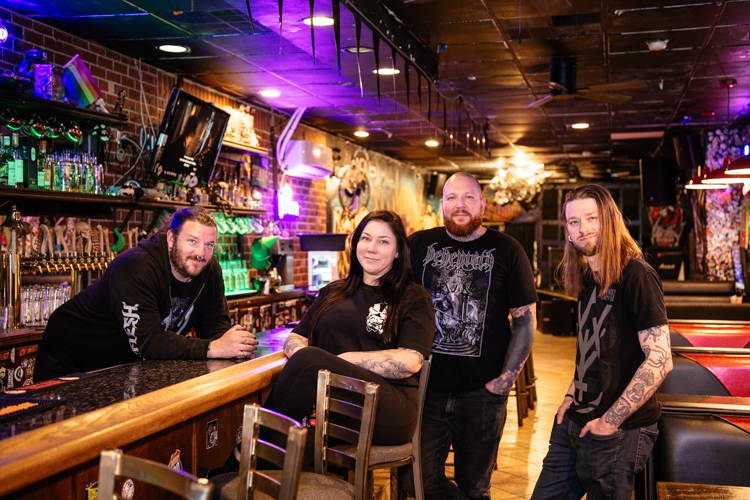
The struggles of downtown Harrisburg continued unabated in 2025 and, arguably, got worse, as more small businesses closed. As is often the case, we wanted to emphasize possible solutions, not just problems. So, in May, we published a lengthy magazine feature about folks who are remaining in, and even investing in, the downtown. The story featured restaurant owners, arts groups and nightlife impresarios who look at downtown and see a bright future ahead, albeit one with considerable challenges. As a common thread, they seemed ready to move into a future far less reliant on what has long driven the city’s economy—the huge state workforce that now largely works remotely.

8. Gee Whiz!
Every year, one story makes the top 10 list that comes as a total surprise to me. In 2025, that story was a May magazine feature on the reopening of the Cheesesteak Guy, a small eatery that moved to Lemoyne from the Broad Street Market. Restaurant stories are a staple of TheBurg, and they often do well eyeball-wise. This story, though, proved especially appetizing, likely due to the highly rated food and the local renown of the owners, who also understand how to use social media. So, hit the link and discover their secret sauce, or, better yet, pay them a visit and chomp down on one of the best cheesesteaks in central Pa.
7. Principal Problem
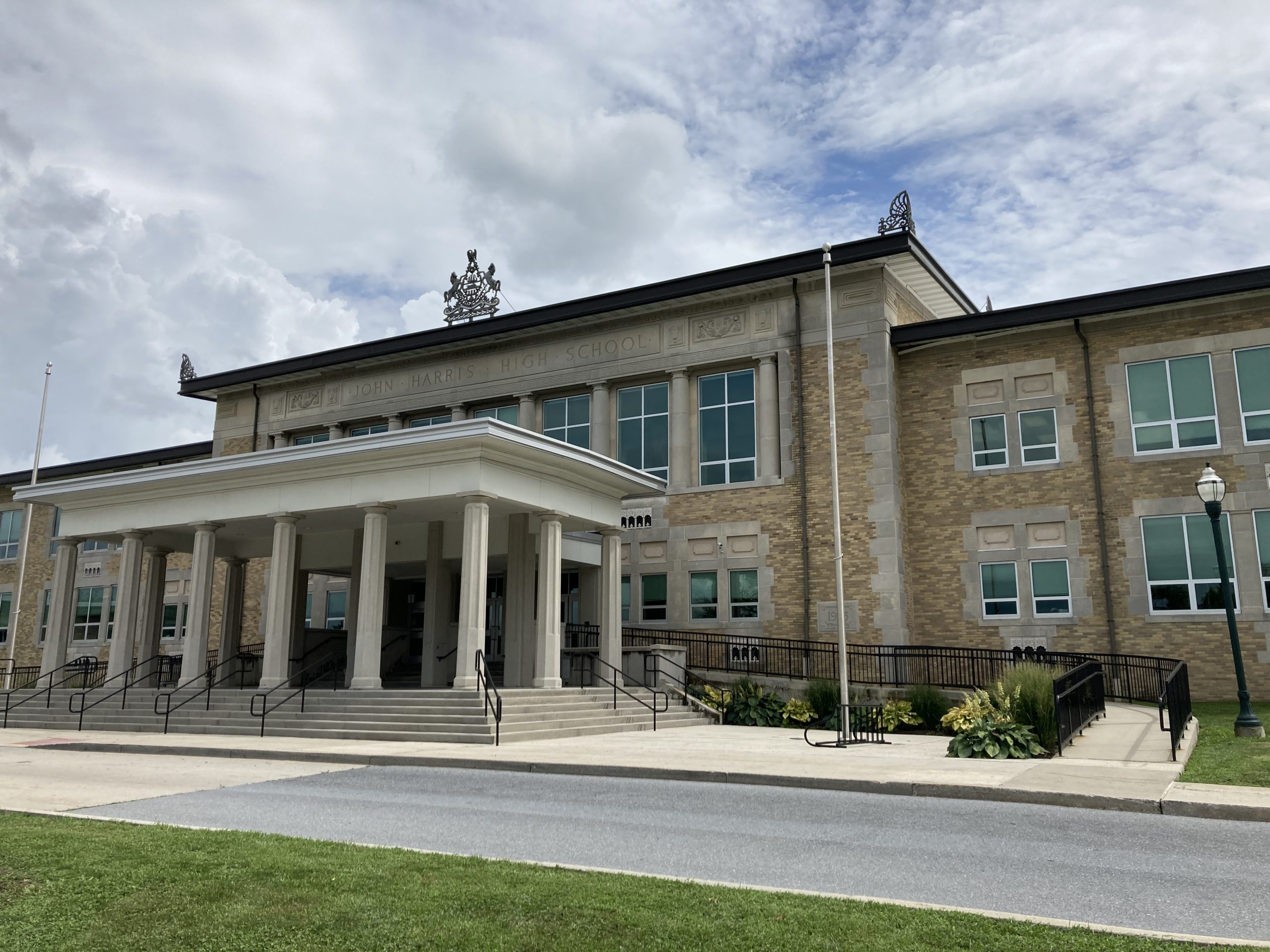
The Harrisburg School District is one of our core beats but rarely does a school story rank among the most read. In 2025, one did just that, as we reported in October that Harrisburg High Principal Christopher Sattele would resign after just a year on the job. In recent years, the position has been something of a revolving door. Sattele replaced Laquan Magruder, who similarly lasted just over a year. The school board then appointed long-time district official Roma Benjamin to replace Sattele on an interim basis until a new full-time principal could be recruited in 2026. In my view, there was little compelling about this short, online news story to cause it to climb up the charts, other than the continuing drama surrounding this vital, if volatile, position.

6. Housing Hits
In recent years, affordable housing projects have popped up in several Harrisburg neighborhoods. Sycamore Homes is one, as developer George Fernandez and local officials cut the ribbon on the 23-unit building in late April. Later in the year, Fernandez broke ground on another affordable housing project, the 48-unit Woodward Lofts project for seniors. Fernandez has been quite active in Harrisburg, and his projects always get plenty of attention. So, I expect big web traffic with the eventual ribbon-cutting, likely in 2027, for that ground-up development.

5. Home Fronts
In Harrisburg, all kinds of new housing are needed: market rate, affordable and transitional. In October, we ran a magazine feature detailing how several groups are offering solutions for the unhoused, often in innovative ways. These new developments range widely, from a better organized tent community to tiny house developments to a large apartment building, all in south Harrisburg. Together, these projects promise more humane living conditions than the jumble of makeshift structures from “tent city,” often with vital social services embedded into the plan.

4. Building Boom
Another day, another affordable housing project in Harrisburg. This time, former NFL player LeSean McCoy and his company, Vice Capital, cut the ribbon in June on JMB Gardens, a 41-unit development in the Uptown neighborhood. Much like fellow developer George Fernandez, McCoy has even bigger plans ahead. Vice Capital also expects to build “The Savoy 48,” a 48-unit development on the 1500-block of N. 6th Street. That project will be a mix of affordable and market-rate units, offering Harrisburg two types of housing that it desperately needs. In Harrisburg, new housing—plus a hometown hero—equals big clicks.

3. Zero’d Out
I begin writing this annual column in early December, and it seems that, every year, some late-breaking story tosses my list into the air. That tradition continued in 2025, as Zeroday Brewing Co. announced it would close its flagship taproom at the end of the year. The story rocketed up the list, the latest bad news in a very bad year for the Harrisburg small business community. Throughout the year, TheBurg wrote numerous other stories and columns about the fallout from a largely absent state and office workforce, a years-long trend that has slammed shops and restaurants in the city, especially downtown.

2. Sound Space
Every year, a local business opening makes the top 10 list, often near the top. For instance, just last year, the debut of Karma was our No. 1 story. This year, the April announcement of another nightlife venue, Capital City Music Hall, nearly replicated the feat, placing second. The story explained how local businessman and impresario Justin Browning and a partner planned to renovate the former Federal Taphouse and transform it into a music space. The story also offered some hope for downtown Harrisburg, which has suffered immensely without the presence of the state workforce. A subsequent magazine feature offered further details about the venue, which opened its doors in September.

1. It’s a Miracle
This August story, about the opening of “A Miracle Community” in south Harrisburg, was our most-read story of the year, by a lot, which came as no surprise to this editor. It had it all. It was a well-written, well-reported, online-only breaking news feature about a subject that folks really care about—a new encampment for the unhoused. This project offered some hope following the years-long saga of the chaotic “tent city” encampment and what would happen after its closure.

For a different take on 2025, I will have my annual list of top local news stories in the January magazine, which drops on Dec. 30. Does my subjective list differ from that of our readers, who voted with their clicks? Return on Tuesday to find out!

Lawrance Binda is publisher/editor of TheBurg.

Support quality local journalism. Become a Friend of TheBurg!
Continue Reading

Harrisburg School District to hire outside firm for payroll; approves extension for group’s use of Hill Farm

The Harrisburg School District board on Tuesday

At a meeting Tuesday night, Harrisburg School Board members moved to eliminate the district’s payroll coordinator position and begin running payroll services through an outside firm.

After much discussion, board members voted 7-2 to immediately begin using EDM Financial for employee payroll. The company estimated the cost would be $80,000 to $89,000 per year for its services, which will be billed hourly and extend through Dec. 31, 2026.

Chief Financial Officer Marcia Stokes explained that the move would save the district an estimated $45,000 and help streamline the payroll process.

However, Chief Recovery Officer Lori Suski, the district’s former state-appointed receiver, cautioned the board Tuesday about the estimate.

The district, which exited receivership in June, is still on a tight leash financially as it is monitored by the state.

“I just want to make sure that it doesn’t exceed $89,000 because, obviously, there would be a lot more costs incurred, considering the fact that we are not reducing personnel to offset this cost,” commented Suski, who continues to advise the board.

Up until this point, a single school district employee had overseen all payroll operations. In line with bringing on EDM, the board moved 8-1 to eliminate the employee’s payroll coordinator position. It then voted unanimously to create a new staffing accountant position for the same employee.

According to Human Resources Director Marlena Lang, the employee’s salary as payroll coordinator fell between $71,000 and $96,000 and will remain the same in her new role.

Board members Ellis Roy and Brian Carter questioned the payroll’s outsourcing.

“My biggest thing is: Is this cost effective for the district?” asked Roy.

Carter, the lone ‘no’ vote for eliminating the payroll position, questioned why district employees couldn’t continue to do payroll themselves.

“Shouldn’t we be cross training our employees to do these jobs, so we don’t have to outsource anything?” Carter said.

Stokes added that having payroll people “who service other districts” could help Harrisburg improve its process, which is currently “a pretty heavy lift.”

“This is just a payroll accountant, who is hired through EDM,” she said.

Stokes clarified that the district can get out of the contract with EDM “with very little notice,” if payroll services end up costing more than expected.

In another decision, the board approved extending a license agreement with Harrisburg-based Wildheart Ministries in a 5-3 vote. The organization will continue operating the Hill Farm, located on district-owned property at 18th Street and Eugene Alley, through November 2028, using the land to grow food and provide educational opportunities for students.

Board members Danielle Robinson, Carter and Roy voted ‘no,’ while board member Annie Hughes abstained from the vote, as a member of Hill Farm’s advisory board.

The district also unanimously greenlit several other contracts at the meeting.

One contract continued a dual enrollment agreement with Temple University that gives qualifying 11th- and 12th-grade students, with a GPA of at least 3.0, the chance to take college courses for both high school and college credit. Per the contract, Temple will offer a range of classes, including those on interpersonal communication, mental illness, special education, and child and teen development. Additional classes will examine hip hop and young adult books through lenses of race and identity and the importance of college.

Additional contracts approved a total of $2.1 million for roof restorations for four school buildings: Foose Elementary, Lincoln Elementary, Camp Curtin and SciTech. The work will be done by Tremco Roofing and Building Maintenance.

The board also approved $3,879 for John Harris High School’s spring musical. The amount will cover licensing and materials to run three performances of the one-act musical “Once on This Island” between March 27-29, 2026.

If you like what we do, please support our work. Become a Friend of TheBurg!           

Continue Reading

Harrisburg School District to receive months-delayed state funds; board weighs contracts

The Harrisburg School District’s administration building.

At a meeting Tuesday night, following four months waiting for state funds tied up in a lengthy budget impasse, Harrisburg school board members reviewed the district’s financial state.

A treasurer’s report presented at the meeting showed the school district had more than $60 million in its coffers at the end of the federal fiscal year in September, about $10 million less than the same time last year, according to Chief Financial Officer Marcia Stokes. Stokes attributed the lower 2025 total to Pennsylvania’s delay in passing the state budget.

The district heavily relies on state funding and was forced in June to pass its 2025-26 general fund budget without the state having passed its own budget, which decides how much money the district receives. For the 2025-26 school year, the state will send Harrisburg $88.1 million for basic education and $8.7 million for special education. The district will also receive $18 million in grant funding.

Stokes added that, due to the delayed state funds, the district opted not to pay its charter schools for the time being.

“It would have been a significantly greater discrepancy had we paid our bills,” she said.

Now that the significantly delayed state budget has passed, officials said they were relieved.

“I’m just glad to see that the budget has been passed to continue our support for our children and our services here in the district,” board President Roslyn Copeland said.

The board also voted 5-4 Tuesday night to hire an armed guard from St. Moritz Security Services for the district’s administration building at 1010 N. 7th St. at $35.60 per hour.

Superintendent Benjamin Henry said it was an appropriate safety measure.

“We don’t have anyone to really control who comes in and out of our office in this building,” he said.

The security guard will work Monday to Friday, 8 a.m. to 4:30 p.m..

Additionally, the board discussed $2.1 million in contracts for roof restorations for four school buildings: Foose Elementary, Lincoln Elementary, Camp Curtin and SciTech. The work would be done by Tremco Roofing and Building Maintenance.

Members also weighed extending a license agreement with Harrisburg-based Wildheart Ministries to continue operating the Hill Farm, located on district-owned property at 18th Street and Eugene Alley, through November 2028. Wildheart uses the land to grow food and provide educational opportunities for students.

Board member Danielle Robinson questioned the length of the contract, as previous contracts between the district and Wildheart had been one year.

Board member Annie Hughes spoke in favor of the longer term.

“Farms have to plant a year ahead, so a yearly agreement is very difficult for a farm to manage,” she said.

Chief Operations Administrator John Reedy noted the board can end the contract prematurely, if needed.

The board is slated to vote on the roofing and Hill Farm contracts at next week’s board meeting.

If you like what we do, please support our work.
Continue Reading

At special school board meeting, district discusses options for future of William Penn

Harrisburg School District officials and board members discussed William Penn at a meeting at Harrisburg High School-John Harris Campus.

All options for the future of Harrisburg’s William Penn building are on the table.

The Harrisburg School Board held an information gathering hearing on Thursday night to weigh proposals for its long vacant, blighted building, including demolition, sale or reuse.

The sprawling 99-year-old building, once a vocational school, has sat vacant for 14 years on its 27-acre campus, overlooking Italian Lake. For years, the district has weighed what to do with it.

“As many of you know, restoring and reimagining this facility costs a lot,” Harrisburg superintendent Benjamin Henry told about 30 members of the public who attended the meeting. “Well into the tens of millions of dollars for a district that has only recently exited financial recovery and receivership.”

District solicitor Jeffrey Sultanik presented the district’s current menu of options, to be voted upon at future board meeting, which included demolishing, selling, keeping or leasing the building.

Demolishing the building would cost $5 million, the solicitor said. While subdividing the land and selling it off in pieces would generate revenue, keeping it as is and paying for security would cost the district between $177,000 and $566,00, per year, depending on the level of security provided for the building— plus the cost of liability insurance.

The William Penn Task Force, which was created by the district in 2023 to generate ideas for the use of the property, previously recommended retaining the building and turning it into a career technical education center, with options for partial and full restoration, the solicitor recounted.

Sultanik noted that the district cannot take on new initiatives for five years following its exit from receivership, and that it has an existing debt burden of $19 million per year through 2036 “and is not in a position to borrow for a renovation of William Penn.” Additionally, Harrisburg school district enrollment numbers are expected to slightly decline over the next decade, he said.

Taking into account the current district needs, school administrators have recommended demolishing the building and constructing athletic fields on the land for the district’s sports. The plan would address the district’s need for a field for its new high school girls’ soccer teams. 

The last three proposals came from developer groups, who had presented options for renovating the building earlier in 2025. At the meeting, district officials questioned the plans.

Sultanik asked about the “magnitude” of a concept from Harrisburg-native and retired NFL player Garry Gilliam, CEO of The Bridge.

Gilliam proposed turning William Penn’s campus into an eco-village, redesigning the property to include areas for student learning, businesses, restaurants and a housing component. Gilliam and his team proposed a similar concept for the former Bishop McDevitt school in 2019 and leased the building until earlier this year. The team operated a garden on-site, but never completed work on the building.

“How much seed money do you have available at The Bridge to put together such an ambitious program?” Sultanik said.

Tom Jones, co-developer on the project, responded that they don’t have any capital because a decision hasn’t yet been made to move forward with their plan.

School board member Danielle Robinson questioned how long the project would “actually take” to complete and expressed skepticism about whether such a project would benefit Harrisburg’s students. Board member Annie Hughes questioned whether housing would be allowed on district property.

The district also questioned proposals presented by Bret Peters, of the Harrisburg-based Office for Planning and Architecture, and the Capital Rebirth Project.

Presenting his plan through the Pennsylvania Social Equity Investment Fund, Peters proposed an adaptive reuse to lease and restore the building to be used as a vocational training center for adult education.

“The entire building will be carefully and lovingly restored to its original condition,” Peters told the board.

Sultanik asked for assurance that the group would be “financially strong enough” to do the project. Robinson, meanwhile, expressed concerns that such a facility would only serve students over 18. It would also be located next to Camp Curtin Middle School, she noted, which could present security concerns.

Capital Rebirth Project’s plan, inspired by Lancaster’s Spooky Nook sports center, focused on developing the fields around William Penn to make the property a large-scale sports complex that would serve as a venue for regional sports. The development would also include housing, restaurants, childcare and retail.

“I have been at this for six years now and I don’t think I could answer another question about this to be honest with you,” said Mikell Simpson, a Harrisburg High School graduate. He read a prepared statement about not being able to answer specifics about financing partners or tenants at this time.

“I understand your frustration. I do,” Robinson told him. “This party right here, this is the first time that they’re actually seeing this,” she said. “We’re trying to collect the information to make an informed decision.”

She explained that he’s presenting the information to a school board just coming out of receivership, which will be tasked with making one of its biggest decisions since it has been back under local control.

During the meeting’s public comment period, several Harrisburg residents voiced support for rehabbing the building as well as for providing more vocational education opportunities for Harrisburg students.

The board will make a decision on the future of the building at a future board meeting.

As it stands, the 228,141 square-foot building has no plumbing, no electricity and no HVAC. Its walls, ceilings, and floors are crumbling, and its doors and windows are in poor condition, district officials have explained. The building has regularly been a target of thieves, who’ve stolen copper piping and wiring, and arsonists.

Last year, the district cleared the building of all asbestos, debris, and hazardous materials, preparing it for either demolition or the next phase.

The William Penn building is located on the 2000-block of N. 4th St., Harrisburg. 

If you like what we do, please support our work. Become a Friend of TheBurg!

Continue Reading

Harrisburg High School principal to resign at end of year

Harrisburg High School-John Harris Campus. File photo.

Harrisburg will again be on the search for a new principal for its main high school.

Harrisburg High School-John Harris Campus Principal Christopher Sattele is set to resign on Dec. 8, according to the district’s board meeting agenda on Tuesday.

Sattele became the interim principal in October 2024, following the resignation of Laquan Magruder. Before that, Sattele was the assistant principal, starting in July 2023.

Sattele is leaving Harrisburg for another district, Superintendent Dr. Benjamin Henry told TheBurg.

“Over the past three years, Dr. Sattele has been deeply committed to the Harrisburg School District and the John Harris Campus,” Henry said. “He has been a true champion for our students—his leadership, compassion, and dedication to student success will be greatly missed.”

Henry said that he would be meeting with human resources to review a list of potential replacements. Since the district recently conducted a search for a principal, Henry said he was confident that they’d find a candidate.

At past board meetings, several members of the public have expressed concern over the amount of turnover in the principal position at John Harris.

Before Sattele, Magruder served in the role for a little over a year before he was arrested for violating a protection-from-abuse order and later resigned. Before Magruder, Michelle Felton held the post for about two years.

“John Harris, like many high schools across the country, faces both incredible opportunities and significant challenges,” Henry said. “As the national teacher shortage continues, we’re also seeing a growing shortage of experienced school leaders. This makes retaining and recruiting strong principals increasingly difficult across districts.”

For more information, visit Harrisburg School District’s website.

 If you like what we do, please support our work. Become a Friend of TheBurg!  

Continue Reading

The Week that Was: News and features around Harrisburg

315 N. 2nd St., the site of a proposed apartment project

The weather in Harrisburg has been perfect, so make sure you get out and about in the city. Before you head out to one of our local parks or businesses, make sure you’re all caught up on our news from this week.

Affordable housing funds will be available to developers through a new program that Harrisburg announced this week, our online story reported. Developers will soon be able to apply for financial assistance for construction projects.

The Broad Street Market rebuild will have its groundbreaking at the end of September, our online story reported. Harrisburg has reviewed the final design for the project and will solicit bids from contractors in the coming weeks.

Catherine Hershey Schools for Early Learning cut the ribbon on its third Early Childhood Education Center, this time in Middletown, our online story reported. The schools offer free admission and instruction for children.

Events are plentiful in August. As always, we have our comprehensive listing of happenings.

The Harrisburg Planning Commission threw its support behind two projects to convert vacant offices into apartments, our online story reported. They also recommended approval of a project to construct a new transportation center on Cameron Street.

The Harrisburg School District has exited state receivership after six years. For our magazine story, we talk to district officials about how far the district has come and where it’s headed.

Midtown Cinema is showing “Folktales” this month, which features the story of a remote school in Norway at which students care for sled dogs. Find out more, here.

The “Miracle Community” saw its first occupants over the weekend, welcoming people from Harrisburg’s PennDOT homeless encampment, which is required to vacate. In our story, hear from organizers and residents of the new community.

The Neighboring Academy at Steelton-Highspire High School aims to break cycles of poverty by creating pathways to homeownership for students. In our magazine story, read about founder Chad Frey’s passion for the initiative.

Sara Bozich’s Weekend Roundup has you covered on plans, with a listing of Harrisburg area festivities.

Do you receive TheBurg Daily, our daily digest of news and events delivered right to your email inbox? If not, sign up here!

Support quality local journalism. Join Friends of TheBurg today!

Continue Reading

Tested, Invested: The Harrisburg School District exits state-control after turbulent times; focuses on future growth, challenges

Dr. Benjamin Henry, Dr. Lori Suski and Dr. Carrie Rowe, acting secretary of the PA Department of Education, formalize the receivership exit. Photo courtesy of Shawn Oliveira, Harrisburg School District.

Dozens of Harrisburg School District graduates moved tassels from right to left during a ceremony in June.

Photos from the day show student after student holding diplomas, dressed in gowns signifying their exit from high school. Each smiling face represents a 12-year educational journey.

For half of the class of 2025’s dozen years of schooling, behind the scenes, district administrators have been working to clean up what was once a district in turmoil. While these students navigated a daunting move from middle school to high school, officials uncovered missing financial records. While students took tests and turned in homework, administrators found teachers lacking certifications. While students navigated pandemic remote learning, the district did too.

Six classes of teens graduated while the school district was under state control, with the district spending as long attempting to right a ship gone very, very wrong.

So much has changed since June 2019, when the then-spiraling district was ordered by a Dauphin County judge to enter state receivership, and when this year’s graduates had just finished sixth grade. The two fates have always been linked—the district’s and the students’—administrators know that. That’s what office staff say their work has been for, when it comes down to it—the students.

So, when district officials smiled for the cameras at a press conference this past June and shared that Harrisburg would exit receivership six years after entering, the impact ultimately would be on the following generations of students.

The Pennsylvania Department of Education (PDE) ruled that the district had cleaned things up enough to return to local control, making it the first district in the commonwealth to exit receivership. The power would now shift from the court-appointed receiver, who had the final say on nearly all matters, back to the elected board and district staff.

Officials and stakeholders largely feel hopeful about where Harrisburg is now and where it’s headed, but, of course, recognize that significant challenges still lie ahead. Harrisburg has historically been underfunded and still underperforms academically.

“This is a book that we’ve been writing, and this is just another chapter in this book. I’m so excited about this new chapter,” Superintendent Dr. Benjamin Henry said. “We have a theme for this year: our students are waiting. Our kids are waiting on us, and it’s time for the adults to do right by our kids.”


Fire Alar

Rewind to 2019, just as state receivership began.

The district had already been in financial recovery since 2012 but failed to comply with PDE requirements. Money wasn’t accounted for. The FBI was investigating missing district computers. The first receiver at the time, Dr. Janet Samuels, wasted no time firing most of the district’s top officials, including the superintendent. A new slate of administrators was brought in through a contract with the Montgomery County Intermediate Unit No. 23, which provides support to local districts

Chris Celmer was one of those from MCIU who became the acting superintendent in December 2019.

“Fires would be minute to minute early on, not even day to day,” Celmer said

Early on, Celmer’s time was mainly spent attempting to stop the bleeding of the hemorrhaging district, like making sure payroll was processed, and addressing a thick stack of neglected union grievances—basic operations

Originally, Celmer’s goal was to get the district out of receivership in three years, when it would be due for re-evaluation. But ultimately, complications like superintendent turnover and, of course, the pandemic, made that unfeasible.

“That wasn’t in the gameplan, when we went in in 2019, to have a one-in-a-hundred-year pandemic right in our laps and having to navigate that,” he said.

Because of all the chaos and complication, the district wasn’t even able to complete a recovery plan until 2021. The plan, which outlines specific goals for a school district working to regain financial footing, is typically finalized months after entering state-control, not years.

Dr. Lori Suski remembers those days, as she served as the chief recovery officer, starting in 2021, and would take the position of receiver from 2022 through the end of receivership.

“Usually, the plan should be done in like 90 days, but there were extensions granted because there was so much they uncovered when MCIU got here that they were just putting out fire after fire,” Suski said. “It took longer to get that plan developed because of the fact that they were everyday reacting to the crisis of the day.”

When the first receiver resigned and Suski stepped up to fill her position, significant work had been done, but still so much remained and the recovery plan had only just begun.

“I’m thinking, oh my gosh, what did I sign up for here?” Suski said. “It was overwhelming.” 


Second Semester

Shortly after Suski’s appointment, the court would decide to leave the district in receivership for another three years.

“So, at that point, I thought, OK, we’ve got three years now to really make something happen here,” she said.

When Dr. Marcia Stokes joined the school district as chief financial officer in January 2022, just before the second receivership term began, she quickly found herself working 15-hour days, seven days a week.

Almost three years into receivership and still, the business office was in shambles.

“There was a complete lack of systems, a complete lack of structure in the business office,” she said. “My very first week on the job, the audit had to stop for the 2021 school year because the transactions weren’t recorded and there was a lack of independence from the auditor.”

There had been a constant churn of top officials in the office before her. Financial documentation was missing. Tax revenue wasn’t recorded. There was never a cash flow issue, Stokes said, but rather, the budget and other records weren’t trustworthy. Long story short, the math wasn’t mathing.

If that’s where things were at almost three years into receivership, Stokes couldn’t imagine where they stood before the district was even under the state’s microscope.

Along with Stokes, the district hired a superhero team of new top administrators as many of the temporary MCIU team members transitioned out. As Stokes worked on finances, others addressed gaping holes in maintenance needs, attended to HR dysfunction and began planning to address dismal academic stats.

Once the second three-year receivership period neared its end, the state decided that Harrisburg had made enough financial progress to exit, while citing that improvement was still needed academically.

“Ultimately, the goal was to get to where I see Harrisburg today,” Celmer said. “They know where their finances are. They’re in a much more stable place than they were six years ago. And, if you’re like that financially, then you can truly focus on what is the most important piece of the school district and why we’re all there—it’s the kids.”


Right Direction

For all the improvements that have been made over the six years, academics have lagged.

As Celmer explained, for much of the early receivership days, district officials couldn’t fully focus on student outcomes because they were focused on, frankly, keeping the lights on.

Graduation rates at Harrisburg High School-John Harris Campus are still only at about 63%, as of the 2024-25 year, and math and literacy skills district-wide are still lacking. The pandemic didn’t help either, only widening the learning gap and worsening behavioral issues.

“Once I saw the data, it spoke to me,” Superintendent Henry said. “That’s one of the main reasons why I applied and why I’m here.”

Henry, who was hired in the fall of 2024, has plans in the works to bolster Harrisburg’s educational programming. The district has already started a new corrective reading program at the elementary level and is looking to add more post-secondary preparation for high schoolers, along with other initiatives.

According to Suski, the new approach is to “laser focus” on just a few evidence-based educational initiatives, rather than “throwing everything at the wall to see what sticks.”

Enhanced extracurricular activities have also been added, such as the first student musical in years and additional sports teams and clubs.

Longtime district teacher Jody Barksdale has seen supports and training for teachers improve as well, which ultimately makes the learning experience better for students. New curriculum was introduced during receivership, more counseling services for students were initiated, and educators were trained on research-based practices. Henry has also worked to make sure all teachers understand state education standards, especially the many teachers who work using emergency certifications, allowed for districts with staffing issues.

With updated programming, Barksdale has already started to see the changes in her students.

“I think we are definitely moving in the right direction academically,” said Barksdale, a fifth-grade teacher at Melrose Elementary School and the president of the Harrisburg Education Association teachers’ union.

Suski explained that work to improve the culture in the schools has already started paying off, as they’ve worked to make sure students and teachers feel safe and able to learn. Attendance levels even rose by around 2% last year, a small but significant number, she said.

The physical school buildings in the district are undergoing changes as well, both during receivership and ongoing. The long-shuttered Steele Elementary School in Uptown Harrisburg was renovated and reopened, several other buildings are being updated, and some aging school buildings, such as Scott Elementary School, are being phased out and repurposed.

With all the changes and a new sense of stability in the district, officials are feeling hopeful about the future.

“I’m optimistic,” Suski said. “This is a new day for the district.”


Finance Fears

Stokes’ office has come a long way since her first grueling year on the job.

“I would put our practices, from a financial position, up against any other district across the commonwealth, and know that we are doing what is right for our community when it comes to our business office practices and procedures. We even have some that are probably state-of-the-art now compared to other districts,” she said. “It’s like night and day.”

Stokes explained that, while everything within her office’s control is running smoothly, she does have concerns about balancing budgets in the coming years.

In June, the Harrisburg School Board approved a 2025-26 budget of $213.1 million with a 2% property tax hike. It was a tough decision for board members who found themselves weighing differing advice from Stokes and Suski, now serving again as chief recovery officer, who suggested that the tax increase may need to be even higher.

Stokes explained that the district needed to begin raising taxes incrementally over the next several years to keep up with decreasing revenue, inflation and, this year, to counteract the federal COVID funding cliff.

But the district was ultimately left guessing how much of a potential budget hole they would need to plug.

Year after year, the commonwealth has passed its budget late, forcing school districts to adopt their budgets before knowing how much state grant money they will get. Districts like Harrisburg, in lower income communities and historically underfunded, rely on that money. Stokes factored into the district’s budget a conservative guess that the district would get half of the funding that the governor has proposed, about $110 million. That amount alone would make up over half of Harrisburg’s budget.

“If we could rely on that Harrisburg is going to get its fair share of what it deserves, we could plan and really implement some wonderful things for our students,” Stokes said. “But if we can’t rely on something that’s supposed to be in place for July 1, 2025, how can we plan for July of 2026 and 2027 and so forth?”

To grow programming for students, the district needs to know how much money it has to do the job.

And with several revenue source concerns, that money becomes even more crucial.

For one, the city tax base is shrinking, and more and more properties pay less and less. Stokes explained that, for this year alone, their tax revenue plummeted by over 7% as more properties qualify for tax exemptions and large, often office, buildings appeal their tax assessments, claiming that their assessed value is too high in a post-COVID, work-from-home world.

“Even with small, incremental [tax] increases, if we continue to see drops like we did this year in taxable assessed value, we will never be able to keep up. My hope is that this year was a one-time occurrence,” Stokes said. “That definitely would be, in the long-term, a devastating impact to the district.”

Stokes said that her office actually plans to explain the dilemma and solicit donations from tax-exempt properties.

Another challenge: the federal government spending cuts and changes. Recently, the government cut Title II and III funding, which provided over $900,000 to Harrisburg to support training for teachers and support for English language learners.

Add onto that over $30 million in payments to charter schools for the coming year, a number that may steadily continue to rise for the district without state-level reforms.

The financial challenges also impact things like teacher shortages, a nationwide struggle that Harrisburg feels as well. Without the money to fund higher wages, recruitment may suffer, and without sufficient faculty, programs may be cut.

Barksdale said she believes that challenges with recruiting and retaining teachers are some of the most pressing issues currently, as salaries and opportunities for raises lag.

Those who have stuck with the district for years, she said, are there because they find purpose in their career and care about the students.

“It’s been a rollercoaster,” she said. “But it’s the kids—100% the kids have kept me.”


Turned Around

Autumn Anderson ran for the volunteer school board about a year ago, when she realized that no one else was running for an open seat.

“I felt like Harrisburg deserved a full board,” she said.

Like Barksdale, Anderson saw the opportunity as a way to positively impact her community.

However, when she was sworn in, the district was still in receivership and the board’s power extremely limited. But now, the board is once again tasked with governance and has begun to feel the weight of making decisions and ensuring accountability.

One of the top issues that the board is tasked with examining is the district’s historic William Penn High School property, which has sat vacant and deteriorating for years. The district’s conversation on what to do with the property has stretched for years as they’ve pondered selling, demoing, renting out and even rehabbing the massive building, all with mixed opinions from concerned community members. As a decision has yet to be made, that will now fall into the board’s lap.

“William Penn is definitely a big decision that the board is going to have to make,” Anderson said.

The board dynamic of pre-receivership was often divisive, with some board members loyal to the then-superintendent and others critical. Suski viewed that board as a big part of the dysfunction that forced the district into receivership in the first place.

Today’s board dynamic remains to be seen, as most directors have sat together for some time, but have yet to be tried by the fire that comes with power and tough decisions. But Anderson is hopeful. She’s also seen how hard they’ve worked to train and prepare for their post-receivership role.

“The board as a whole has been working really hard,” she said. “We are still working on developing a board dynamic, but I think we share a respect for each other.”

While Harrisburg is out of receivership, the district has headed into a monitoring period where they will continue following the recovery plan and Suski will be making sure they follow state requirements. Most district officials see this milestone as the beginning of a new era for a district that has been through the wringer. Still, the work must continue.

“Every time I hear the story of our history, I’m like, someone’s going to do a movie one day about the Harrisburg School District,” Henry said. “But at the conclusion, I want there to be something written into the movie that, this district had a lot of challenges, but look how they turned it around.”

Each district official shared that their guidepost remains doing what’s best for the students and community that have persevered through the lowest-lows and the growing pains.

“We saw that at graduation […] when we saw the football field filled with the class of 2025, and despite all the turmoil and everything else, these kids made it,” Suski said. “That’s a testament to them, to the staff, to the parents, to the community. Everybody has stuck by the district through all of this. And I’m optimistic.”

For more information on the Harrisburg School District, visit www.hbgsd.us.

If you like what we do, please support our work. Become a Friend of TheBurg! 

Continue Reading

July News Digest

July News Digest

Harrisburg School District Resumes Local Control

The Harrisburg School District regained local control last month.

Effective June 17, the district exited state receivership, imposed six years ago to provide oversight and direction for the then-distressed district.

Harrisburg has been under state oversight since June 2019, when a Dauphin County judge determined that the Pennsylvania Department of Education would take over the district.

Dr. Janet Samuels was then appointed as the receiver for the district, with Dr. Lori Suski taking her place in 2022, after Samuels resigned. Under receivership, the school board only had the power to levy taxes. The receiver had the sole vote on all other matters.

At the three-year mark, in June 2022, when the receivership was set to expire, the court extended receivership for another three years, until June 2025. At that time, district officials and board members were in favor of remaining under state control, as they made progress toward financial and academic goals.

Now, six years in, the district moved back to board control, with elected board members voting on district matters. PDE Acting Secretary Dr. Carrie Rowe made the decision to end Harrisburg’s receivership, which was announced in early June.

Zoning Change for Apartment Proposal

A project to construct a large apartment building in Midtown that has faced several delays now has taken a step forward.

In late May, Harrisburg City Council approved a zoning change for a swath of land around 320 Reily St., 1511 N. 3rd St. and 329 Harris St., a necessary step before developers can move forward with a proposed 144-unit apartment building.

The zoning modification changed the land from institutional zoning to commercial neighborhood zoning.

The project, proposed by Harrisburg-based GreenWorks Development, originally received zoning variances and special exceptions in 2021, but a land development plan was never filed. Then in February 2024, GreenWorks received new zoning approval, but the Zoning Hearing Board excluded parking relief from the approval.

Currently, the proposed project site is occupied by parking and vacant lots. The area was long zoned institutional as HACC was slated to use the space as part of its Midtown campus in the early 2000s but later abandoned the plan.

The proposed apartment building also would include first-floor commercial space and amenities for residents.

At the meeting, council also made several board appointments.

Council appointed Shea Zwerver, by a vote of 5-2, and Pierre MaCoy, by a vote of 4-3, to serve on the Capital Region Water board. Council also appointed Leon Hueston Sr. and Amechie Walker Sr. to the city’s newly formed Citizen’s Law Enforcement Advisory Board.


Housing Nonprofit Buys Midtown Building

A Harrisburg housing organization plans to expand their mission to include another basic necessity—food.

Last month, Thrive Housing Services told TheBurg that they will open a pay-what-you-can restaurant in Midtown Harrisburg in hopes of addressing local food insecurity and giving youth a place to get work experience.

The nonprofit was gifted the building at 1120 and 1122 N. 3rd St. in March from the former owners of Heartshine, which renovated the property and had also planned to open a pay-what-you-can restaurant, but did not.

Thrive Executive Director Dee Allen said that Thrive paid Heartshine a sum of money to help them dissolve the company in exchange for the building. Allen said that the previous owners requested that Thrive stick with the restaurant concept.

Thrive currently provides housing for young adults experiencing homelessness and has opened and planned several new housing developments recently. This would be their first entry into the food service world, but Allen believes the concept fits with their mission by filling hungry bellies and giving youth job training.

“It’s basically going to be a place where anybody can eat,” she said. “It will be an opportunity to serve the community.”

The building, which sits on two land parcels, will house the restaurant, as well as five apartments for young adults and a drop-in resource center for young people. The center will allow people to get mail, wash clothes and connect with agencies and assistance.

Allen also views the restaurant as a resource for Thrive’s clients, as it gives young people a place to work that will train them and help them build a resume, while being understanding of their life circumstances and struggles.

“A lot of kids don’t have the marketable things that people are looking for,” she said. “Now, we are helping to accommodate them […] so they can successfully transition out of homelessness.”

Additionally, Allen believes that the unique restaurant model will help Thrive serve the community in a new way by providing hot meals and de-stigmatizing food insecurity. Patrons will be seated, given menus to order from and served like any other restaurant, regardless of their income level and ability to pay.

However, she’s hopeful that community members of all economic statuses will come to dine.

According to Allen, the exterior of the building is in decent shape, but the interior of much of the structure is essentially “a shell.” Thrive will need to work to renovate the restaurant and apartment spaces. She estimated that the restaurant may be ready to open in fall 2026.

Home Sales, Prices Steady

The Harrisburg-area housing market held steady in May, as sales and prices were relatively unchanged from a year ago.

For the three-county region, sales totaled 599 homes in May compared to 616 in May 2024, as the median sales price edged up to $290,000 from $284,950, according to the latest sales report from the Greater Harrisburg Association of Realtors (GHAR).

In Dauphin County, 290 houses sold in May, a drop from 300 a year ago, as the median sales prices dipped to $250,000 from $265,000 in the year-ago period, GHAR said.

Cumberland County had 273 sales in May, a dip of two, while the median sales price increased to $324,900 from $314,900 in May 2024, GHAR stated.

In Perry County, 35 houses sold versus 33 a year ago, as the median sales price dropped to $257,500 from $285,000, according to GHAR.

The pace of home sales was nearly unchanged in May, as “average days on market” dipped to 24 days from 25 days in May 2024, GHAR said.

So Noted

John J. “Ski” Sygielski will extend his tenure as president and CEO of HACC due to the continued search for his replacement. Sygielski was due to retire last month, but now will serve until June 30, 2026, or until his successor is hired, whichever occurs first, according to HACC.

The Lexis Group has acquired RIG Consulting, a Pittsburgh-based construction management and inspection firm. The acquisition bolsters the Lexis Group’s construction inspection division, adding to its capacity for transportation and infrastructure projects, according to the Harrisburg-based company.

Sprocket Mural Works last month undertook its latest project, a number of murals in and around the Hall Manor housing development. Mural subjects were based upon answers to a survey of Hall Manor residents and include themes based upon inspirational people, nature and cultures.

Correction

Photos of mushrooms that ran with the “Foray into Foraging” story in the June issue were mistakenly credited to Debbie Naha-Koretzky. They were taken by Emily Rosmus of the Ned Smith Center. The mushrooms pictured are not edible.

Changing Hands

Allison St., 1519: HBG Rents LLC to Echo PropCo1 LLC, $90,000

Bellevue Rd., 2315: G. Ferkel to M. Will, $365,115

Berryhill St., 1635: Integrity First Home Buyers LLC to BAJ Holdings LLC, $95,000

Boas St., 124: R. Schlicker & D. Della Loggia to C. Talbott & B. Dincau, $225,000

Boas St., 233: E. Kepner to Integrity First Home Buyers LLC, $55,000

Boas St., 314: W. James to J. Parker, $169,500

Boas St., 402: McCarty Business LLC to J. Hammond, $213,000

Boas St., 1804: PA Deals LLC to M. Lindor, $89,000

Boas St., 1818: HBG Rents LLC to Echo Propco 1 LLC, $90,000

Briggs St., 2016: B. Rogers to S. Maurer, $62,500

Brookwood St., 2202: GTG Rentals LLC to Naders Property Solutions LLC, $125,000

Christian St., 1181: BST Services to C. Gutierrez, $95,000

Cumberland St., 258: S. Wood to Q. Nguyen, $220,000

Curtin St., 520: Sheaffer & Sheaffer Properties LLC to JR Hellercom LLC, $110,000

Derry St., 1615: B. & S. Aleman to Instant Home Solutions LLC, $57,000

Derry St., 2024: Bertao Family Investments Penn LLC to J7 Properties LLC, $110,000

Duke St., 2435: V. & T. Raskot to S. Rubinstein, $143,000

Emerald St., 615: Sheaffer & Sheaffer Properties LLC to JR Hellercom LLC, $125,000

Graham St., 510: P. George to PKM Enterprise369 LLC, $140,000

Green St., 1920: A. Hanlon to PKM Enterprises369 LLC, $172,500

Green St., 2148: M. Grubb to First Choice Home Buyers LLC, $119,000

Green St., 2330: Sheaffer & Sheaffer Properties LLC to JR Hellercom LLC, $110,000

Hamilton St., 204: F. Pryzbylkowski to D. Showers, $200,000

Holly St., 1941: T. Hardison to M. Lucas, $168,300

Hummel St., 344: M. Metallo to Dallas Property Investments LLC, $76,000

Jefferson St., 2616: N. Lucia to E. Epah, $82,000

Kensington St., 2116: NA Capital Group LLC to 248 S Quince St LLC, $104,500

Logan St., 1733: J. Wagoner to B. & A. Stein, $186,000 (start here)

Logan St., 2155: Sheaffer & Sheaffer Properties LLC to JR Hellercom LLC, $115,000

Logan St., 2159: J. Sheaffer to JR Hellercom LLC, $115,000

Luce St., 2320: J. Zabala to G. Messina, $117,500

Manada St., 1901A: E. Fajardo, N. Faviola & Z. Cobos to S. Marshall & J. Colbert, $145,000

Market St., 319: Market View II LP PMI to VAB Investments LLC, $1,750,000

Muench St., 411: Figueroa Enterprises LLC to PACC Homes and Development LLC, $100,000

Mulberry St., 1815: S. Swayze to A. Garcia & J. Cortijo, $148,000

Mulberry St., 1945: House Cash LLC to C. Little, $167,000

Naudain St., 1632: I. Colon to M. Martinez, $65,000

Nectarine St., 348: Amnesty Realty Group LLC to BZDEL Global Investment LLC, $128,000

N. 3rd St., 1101: A. Blaylok to J. Kyle, $215,000

N. 3rd St., 1105: W. & D. Henninger to S. Angelopoulos & N. Isaykin, $230,000

N. 3rd St., 1721: J. Lloyd to A. Joseph, $249,000

N. 3rd St., 3217: P. & J. Carnathan to Cummings Real Estate LLC, $450,000

N. 4th St., 1432: Keystone Brothers Investment LLC to Titania Real Estate LLC, $90,000

N. 4th St., 2410: K. Moulds to A. Poyrazli, $143,000

N. 5th St., 2218: C. Shokes to Echo Propco1 LLC, $100,000

N. 5th St., 2429: J. Sheaffer to JR Hellercom LLC, $115,000

N. 5th St., 2430: KDR Investments LLC to Lehav Properties LLC, $95,000

N. 6th St., 2517: A. Spence to TKO Rental LLC, $145,000

N. 6th St., 2728: J. Sheaffer to JR Hellercom LLC, $110,000

N. 7th St., 2103: RMP Real Estate II LLC to Lorfax1 LLC, $1,105,000

N. 7th St., 2244: DAP III LP to Willow Mill Commercial 7th LLC, $2,600,000

N. 15th St., 1304: PKM Enterrpises369 LLC to G. Cuff, $167,999

N. 16th St., 704: D. Bailey & N. Hassel to G. & E. Suryn, $279,900

N. 17th St., 708: R. Kent to J. & D. Zapata, $200,000

N. 17th St., 1208: A. Pherribo to Faith Walk Homes LLC, $65,000

Peffer St., 325: JR Hellercom LLC to Core 4 Investing LLC, $75,000

Peffer St., 433: E. Williams & J. Lawson to A. Bouhach, $105,000

Penn St., 1101: R. Thompson to N. Lam, $202,000

Penn St., 1622: V. Kauffman to R. Fraleigh & D. Ray, $242,000

Penn St., 2122: JR Hellercom LLC to Core 4 Investing LLC, $75,000

Prince St., 709: F. Boyle to First Daughters LLC, $107,000

Reel St., 2451: J. Pearsall to E. Epah, $76,500

Reel St., 2710: D&F Realty Holdings LP to 535 Curtin LLC, $120,000

Reily St., 335: H. Bailor to J. Meck, $188,000

Revere St., 1715: Renovestate LLC to A. Pichardo, $210,000

Ross St., 616: BCR 2 Properties LLC to Echo Propco 1 LLC, $75,000

Rudy Rd., 1833: CBMB Global Real Estate LLC to Normans Realty Services Inc., $50,000

Rudy Rd., 1913: R&LS Living Proof LLC to T Wy Enterprise LLC, $70,000

Schuylkill St., 522: J. & B. Readinger to Z. Mammadov, $173,500

Seneca St., 618: J. & M. Sheaffer to JR Hellercom LLC, $125,000

S. 13th St., 1516: B. Arias to W. Sis, $155,000

S. 15th St., 29: Sunnyside RE Enterprises LLC to L. Lapp, $195,000

S. 17th St., 831: S&P Property Holdings LLC to Echo Propco LLC, $275,000

S. 17th St., 1116: A. Clerk to AKS Real Estate Group LLC, $110,000

S. 19th St., 523: U. Doub to P and F Estate Investment LLC, $80,000

S. 20th St., 222: F. Ramirez to Future View Restoration Co, $113,000

S. 21st St., 100: R. Stewart to C. & C. Pfister, $349,900

Susquehanna St., 1626: A. Henry & A. Escarcega to L. Gangai, $220,000

Susquehanna St., 2124: J. Sheaffer to JR Hellercom LLC, $115,000

Swatara St., 1205: R. & P. Noss to A. Walker, $109,900

Taylor Blvd., 56: K. Bowman to S. Howard, $273,000

Verbeke St., 1419: I. Anderson to Fourvision Consulting LLC, $80,000

Walnut St., 1209: G. Bond to E. Inoa, $145,000

Walnut St., 1220: J. White to C. Morris, $149,000

Walnut St., 1908: C. Wise to H. Tejada, $140,000

Whitehall St., 1925: W. & D. Hodgkiss to K. Sekera, $207,000

Wiconisco St., 624: J. Sheaffer to JR Hellercom LLC, $80,000

Woodbine St., 317: Sheaffer & Sheaffer Properties LLC to JR Hellercom LLC, $115,000

Zarker St., 1462: A. Rollocks to RKE Investments LLC, $50,000

Zarker St., 2045: B. Williams to G&W Rentals LLC, $110,000

Harrisburg property sales, May 2025, greater than $50,000. Source: Dauphin County. Data is assumed to be accurate.

If you like what we do, please support our work. Become a Friend of TheBurg!  

Continue Reading

Harrisburg School Board approves budget, raises taxes, while weighing post-receivership future

Harrisburg School District Administration Building

For the first time in six years, Harrisburg’s local school board has approved a budget, and it includes a property tax hike.

Having exited state receivership last week, the Harrisburg School District returned to local control, giving power back to the board to pass the 2025-26 budget on Tuesday.

The $213.1 million budget includes a 2% tax hike, bringing the mill rate from 30.78 to 31.4 mills. The tax raise will likely be the first in a series of increases over the coming years as the district continues working on financial recovery.

Budget approval was a new action for the board post-receivership, as the state-appointed receiver, Dr. Lori Suski, previously held almost all approval power. Levying taxes was the only power the board held during the six years of state control. But this year’s tax decision found the board weighing unique circumstances as the district faces a post-COVID funding cliff and a five-year state monitoring period with requirements following receivership.

In May, district officials proposed an initial budget with a 2% tax increase. Tuesday’s final budget was about $1 million more than the original proposal, due to receiving federal funding that will be used for expenditures such as additional staff, HVAC upgrades, added security measures at schools, and other items.

The approved 2% property tax hike mirrored the original proposal by Chief Financial Officer Dr. Marcia Stokes, who explained that additional revenue is needed. The district has used all of its federal Elementary and Secondary School Emergency Relief (ESSER) funds awarded during the pandemic, is seeing impacts of inflation and is experiencing an unprecedented drop in valuations from taxable properties in the city, especially large commercial properties.

In response, Stokes recommended that the board make small, incremental tax increases over the coming years.

“Our community is facing a 20% increase in their county taxes this year that they’re factoring in because they’ve [Dauphin County] not done cumulative increases,” she said. “So, how can we can we, as a board, make sure part of all of our processes when it comes to setting budget parameters is to look at not only the budget year we are developing but what’s that impact two, three, five years from now.”

Ultimately, the board unanimously voted in favor of Stokes’ plan.

The district’s previous top administrator, former receiver Suski, now sits as the district’s chief recovery officer, tasked with monitoring how the district follows its Amended Recovery Plan post-receivership.

When the budget was proposed, and again on Tuesday, Suski stated that the 2% tax increase may not go far enough to satisfy the recovery plan and the Pennsylvania Department of Education (PDE). According to Suski, the district received a recommendation from outside financial advisory firm Public Financial Management (PFM) for a 4.81% tax hike, which was recently increased to a recommendation of a 6.3% increase. PFM made that adjustment after learning that property tax revenue had dropped substantially.

The board and district officials faced the challenge of having to make budget and tax determinations without knowing how much state funding they would get. The district frequently has to adopt its budget before the commonwealth finalizes its budget, which is typically late.

Stokes explained that PFM calculated its suggestion using much more conservative revenue projections, assuming that the district would receive no increase in state funding. Stokes made her revenue calculations based on an assumption that the district would receive half of proposed state funding increases.

“We, as a district that are so heavily reliant on state aid, we have to gamble a little bit,” Stokes said.

She noted that she felt confident that Harrisburg would receive additional funding from the state, as it is a historically underfunded district and has already been awarded over $1 million in extra federal funding. An large tax increase would be a burden on the community that could not be reversed once the district learns of its awarded funding, she said. Stokes also noted that she has factored in $4 million in budgetary reserves in case the district doesn’t receive assumed state grants, so that significant cost-cutting won’t be necessary.

“I fully understand that the assumptions that Dr. Stokes is making are based on what we have seen historically in terms of state funding. However, there is no guarantee, as we know, that we’re going to receive 50% of the governor’s proposed budget. I hope we do. I hope we receive more of it,” Suski said. “We need to consider the long-term implications of that decision.”

Suski previously shared that she wasn’t sure how PDE would respond to the district not adopting PFM’s recommendation for the tax hike, as Harrisburg is the first district in Pennsylvania to exit receivership.

“I don’t think the playbook’s been written yet,” she said.

School board members expressed the difficult decision-making position they were placed in.

“It’s kind of a tough gamble because it’s like if we don’t go by the 4.81% and there’s nothing put in play and then later on down the line this conversation comes back up and it’s like, well, we did not abide by what they presented,” board member Brian Carter said.

District officials agreed that, for the upcoming school year, the district will be fine with the 2% tax increase, but the future impact will remain to be seen.

“Yes, this is a calculated risk,” Superintendent Dr. Benjamin Henry said. “Next year, in particular, we are just going to have to continue to monitor–monitor what is going on. If we have any additional properties that we have to get refunds or even state funding, we have to monitor it. And we will have to adjust next year’s taxes.”

The 2025-26 budget includes expenditures such as salaries and benefits, instructional costs, debt payments and over $30 million in payments to charter schools.

Also on Tuesday, the board approved a $6.2 million Capital Plan Budget, which draws on grant sources to make infrastructure improvements in the district.

If you like what we do, please support our work. Become a Friend of TheBurg! 

Continue Reading

The Week that Was: News and features around Harrisburg

“Love’s Labour’s Lost” cast

While it can be easy to take your city for granted or get hung up on the challenges in your hometown, we encourage you to think positive this weekend! Harrisburg has its hurdles, like any other city, but is truly a great community, for so many reasons. From this week’s stories, below, find some new ways to enjoy, appreciate and explore your city.

The Appalachian Trail is the perfect place to explore with your family. Our columnist has some recommendations for ways to spend the month on and around the trail.

Bob’s Art Blog showcases upcoming summer exhibits and art shows in central PA, here.

“The Colored Museum” takes viewers on a museum tour without ever leaving their seats, says our reviewer. The show, presented by Sankofa African American Theatre Company and Open Stage shows through June 19.

Community Corner gives you a taste of special events taking place this month in the region. An even longer list of June Happenings can be found here.

The Harrisburg School District found out this week that it is slated to exit state receivership this month, our reporting found. The district, which has been under state oversight for six years, will soon return to local control.

“Love’s Labour’s Lost,” Gamut Theatre Group’s selection for its 32nd annual Free Shakespeare in the Park, runs through June 14 at Harrisburg’s Reservoir Park. Find out what our reviewer has to say about the production, here.

Pride Parade will return to Harrisburg on July 26, our online story reported. The parade will march downtown and feature floats, performances and speakers.

Sara Bozich has you covered with fun ways to spend the weekend in Harrisburg, here.

The scrap economy in Harrisburg may fly under the radar, but serves an important purpose. In our magazine story, find out more about the local industry that creates jobs, supplies manufacturers with recycled materials, and diverts discards away from landfills. 

Summer is here and it’s the perfect time to start a Burg Bucket List. Find a few of our favorite hidden gems in Harrisburg and try something new in your city.

The Foundation for Enhancing Communities (TFEC) announced several funding options available for local nonprofits, our online story reported.

Do you receive TheBurg Daily, our daily digest of news and events delivered right to your email inbox? If not, sign up here!

Support quality local journalism. Join Friends of TheBurg today!

Continue Reading