
Tag Archives: David Morrison

Renewed Hope: Historic Jackson Hotel set for new owner; restoration planned.

The historic Jackson Hotel at 1006 N. 6th St. in Harrisburg

One of Harrisburg’s most endangered historic properties has renewed hope today, as a local contractor has agreed to buy the building and take on the ambitious restoration.

Developer Matt Long said that he expects to close next week on the purchase of the former Jackson Hotel on the 1000-block of N. 6th Street. He then plans to empty out the large quantity of rubble inside the building and stabilize it for winter.

“It probably will take us a month to pull everything out of it,” Long said. “Then we need to stabilize the foundation.”

Earlier this year, the city condemned the circa-1884, Second Empire mansion, which served for decades as the Jackson Hotel, run by hotelier German Jackson. Starting in the 1920s, Jackson ran the hotel and rooming house to serve a primarily African-American clientele, including many black celebrities, who were denied service in Harrisburg’s whites-only establishments.

Jackson, who died in 1993, willed the building to his friend Dave Kegris, owner of the Jackson House restaurant next door. But the building became caught up in a prolonged legal battle over Jackson’s estate and sat empty for years.

Recently, several Harrisburg residents have bought the building to try to save it, but the restoration has proven to be too extensive and expensive. A few years ago, much of the roof caved in, the interior staircase collapsed and the floors pancaked, leaving a large pile of debris inside.

The current owner, Jeremiah Chamberlin, said that he met Long recently while Long’s company, Harrisburg Commercial Interiors, was working on another challenging restoration—the dilapidated commercial buildings at the corner of North and Susquehanna streets in Harrisburg.

“I saw the work he was doing, and it’s quality work,” Chamberlin said, who described their meeting as “kismet.” “So, I decided to pass it on to someone else who is capable and can do a good job.”

Long said that his team will begin clearing out the Jackson Hotel soon after the sale, which is expected to close on Nov. 2.

After the building is emptied out and stabilized, Long’s company will construct a completely new interior and roof, he said. He said that he plans to build an open floor plan that can accommodate a variety of uses.

He hopes to save as much of the facade as possible, he said, including the large brick exterior wall that features a mural of prominent African Americans who once stayed at the hotel or who are locally famous.

For the project, Long has engaged structural engineer Ed Davis of Schuylkill Haven-based Miller Brothers Construction. They also worked together on the North Street project.

“We applaud this very encouraging step,” said David Morrison, executive director of Historic Harrisburg Association. “The Jackson House has been on our ‘Preservation Priorities’ list since 2000.”
Continue Reading

She Wore It Well: A reflection, an appreciation on the centennial of the first Mary Sachs store.

Mary Sachs

On Sept. 6, 1918, a young immigrant from Russia with little formal education opened a clothing store in downtown Harrisburg that would become legendary for its elegance and high fashion.

Mary Sachs dominated the entrepreneurial world of the capital city for decades—until her death in 1960—eventually earning the moniker, “Merchant Princess.”

At first, Sachs sold only upscale women’s clothing, but, eventually, she expanded the store to include several departments. Satellite stores in Lancaster and Reading followed.

Sachs was nothing if not resourceful and determined. After a fire destroyed her original store in 1931, she constructed a new, expanded one, in 1932.

In time, she also became known for her charitable work, earning the additional title of “Princess of Philanthropy.” Eleanor Roosevelt, the country’s first lady and a good friend, declared, “Few can ever match her generosity.”

Historic Harrisburg Association, along with the Mary Sachs Charitable Trust, is now honoring this centennial and her legacy with a celebration that will launch 100 years to the day that Sachs opened her Harrisburg store.

The celebration will highlight three cornerstones of Sachs’s importance to the capital city, said David Morrison, HHA’s executive director.

“One is her introduction of world-class fashion retailing and an international following,” he said. “Second, her elegant shop on N. 3rd Street opposite Capitol Park helped establish downtown Harrisburg as a thriving center of commerce and culture. Then there was her charitable work, helping the needy and inspiring those who were well off.”


Retail Royalty

The remembrance actually begins on Sept. 5 with “Harrisburg’s Merchant Heritage and the Legacy of Mary Sachs,” a “Smart Talk” segment with host Scott LaMar that will air at 9 a.m. on WITF.

Then, at noon on Sept. 6, a “Centennial Ceremony” and live TV newscast will take place in Capital Park, near the former Mary Sachs store at 208 N. 3rd St., a Lawrie & Green landmark building that still stands and bears her name.

That same day, a new exhibit, “Harrisburg’s Merchant Heritage,” will open at the HHA Resource Center in Midtown, with an opening reception that begins at 5:30 p.m. Local historian Jeb Stuart, whose father was a business associate of Sachs, is curating the exhibit.

The 35-panel exhibit will cover the retail legacy not only of Sachs and Stuart but of such famed entrepreneurs as the Goldsmiths, Troups and others. It will include photos of downtown landmarks, pictures of other important buildings, newspaper clips and some of the ads for which Sachs was famous.

“The exhibit will focus on the capital city’s historic architecture, buildings and places,” said Stuart. “Imagery drives it.”

One special aspect will be the half-dozen Mary Sachs dresses owned by Alyce Spector, a community leader, from the days of her trousseau. Alyce’s husband, Morton, has been a long-time advisor to the Mary Sachs Charitable Trust.

In addition, the exhibit will be one of 30 stops along Gallery Walk, sponsored by the Art Association of Harrisburg, on Sunday, Sept. 9.

Future programming includes a walking tour of the “Retail Landmarks of Downtown Harrisburg” and a panel discussion on “Harrisburg Retail Royalty” at HHA.


A Revival

Sachs’s star still hasn’t faded.

Both the State Archives and the Dauphin County Historical Society have collections of material by and about her. And, if you search online for “Mary Sachs Vintage Clothing,” you’ll find some of the items from her stores.

Then there’s the continuing work of the Mary Sachs Charitable Trust, which she founded. These many years later, the trust is still doing great things, such as offering college scholarships for local students.

“We are proud of the Mary Sachs story from a business as well as a philanthropic perspective and strive to continue her legacy through significant scholarship aid to young women in the tri-county area (Dauphin, Perry, Cumberland) who are going to college with a major in either fashion design, retailing or general business,” said Paul Hoch, a great-nephew of Mary Sachs and chair of the Mary Sachs Trust.

Sachs’s 42-year reign as Harrisburg’s “Merchant Princess” coincided with the city’s golden age, shaped in part by a thriving climate of locally owned downtown retail establishments and other independent urban businesses, Morrison said.

He added that, after many decades in decline, Harrisburg retail is experiencing a revival. He cited the numerous small businesses that have opened in recent years, including Midtown Scholar Bookstore, Provisions grocery store and numerous new shops along N. 3rd Street.

“It’s an age that hasn’t completely passed,” he said.

The Historic Harrisburg Association Resource Center is located at 1230 N. 3rd St., Harrisburg. For information about the Mary Sachs centennial and “Harrisburg’s Merchant Heritage,” visit www.historicharrisburg.com, call 717-233-4646 or e-mail [email protected].


Fashion Shows

Mary Sachs opened her first store on Sept. 6, 1918. The centennial will be celebrated with a series of events.

  • Sept. 5, 9 a.m.: “Harrisburg’s Merchant Heritage and the Legacy of Mary Sachs,” a “Smart Talk” segment with host Scott LaMar on WITF. Rebroadcast at 7 p.m.
  • Sept. 6, noon: “Centennial Ceremony” in Capitol Park across from Mary Sachs building, 208 N. 3rd St. Living relatives of Mary Sachs and other dignitaries will commemorate the opening of her famous store.
  • Sept. 6, 5 to 7:30 p.m.: Opening reception for new exhibit, “Harrisburg’s Merchant Heritage and the Legacy of Mary Sachs,” Historic Harrisburg Resource Center, 1230 N. 3rd St.
  • Sept. 9:  Harrisburg Gallery Walk, 11 a.m. to 6 p.m.: “Harrisburg’s Merchant Heritage and the Legacy of Mary Sachs” exhibit is featured at Historic Harrisburg Resource Center, 1230 N. 3rd St.
  • Sept. 22: Walking Tour: “Retail Landmarks of Downtown Harrisburg,” a new narrated tour led by Jeb Stuart and David Morrison. Meet at Capitol East Wing fountain. Fee, payable on arrival, is $15, $10 for HHA members, $5 for students.
  • Oct. 23: Historic Harrisburg Monthly Education Program, “Harrisburg’s Retail Royalty.” This panel discussion features members of prominent local merchant families from decades past, plus current, 21st-century entrepreneurs. Open to the public free of charge at 6 p.m. Historic Harrisburg Resource Center, 1230 N. 3rd St.
Continue Reading

Past Is Present: Preservation, education, events–all in a year’s work for Historic Harrisburg.

Each month, during 3rd in the Burg, a stream of people enter and exit an old bank building at the corner of Verbeke and N. 3rd streets in Harrisburg.

It’s the Historic Harrisburg Resource Center, a brownstone-faced building that monthly features art, often of a local historical nature.

For many people, that’s their sole exposure to the Historic Harrisburg Association. But HHA, as it’s known, does so much more than mount the occasional art exhibit. All year long, it focuses on preservation, education and programming.

According to Patricia Cameron, a preservation activist and founder of St. Stephen’s Episcopal School, HHA was spearheaded by Harrisburg activist Marianne Faust in 1972.

“In the months after the June 1972 flood, she went around the devastated neighborhoods, particularly Shipoke and Midtown, identifying houses that should be saved,” Cameron said.

In the next year, Faust was named the president of the association.

“Two important things happened in Marianne’s presidency,” said Jeb Stuart, the association’s preservation advisor. “The Candlelight House Tour was initiated in December 1973 to showcase and promote city living in historic neighborhoods, just as it does 45 years later, and Harrisburg’s first historic district was established shortly thereafter by City Council.”

Since then, HHA has made it its mission to teach people about the history of Harrisburg. Members do this through their awards ceremonies, the annual Candlelight House Tour, the Elegant Progressions dinner and, more recently, a Speakeasy event.

The Candlelight House Tour, a walking tour of Harrisburg held each December, highlights residential and non-residential preserved buildings. The tour regularly features the best of the city’s preserved homes, all decked out for the holidays.

The Elegant Progressions dinner, another wintertime event, allows guests to visit some of the area’s most stylish homes, a different dinner course awaiting in each one.

The Speakeasy event arrives a few months later, in early springtime, and features Prohibition-era cocktails and dancers, with the circa-1920s HHA building adorned in period décor. It’s one of HHA’s newer events, organized by and tailored to a younger crowd.

“In doing [these events], the hope is to inspire others to take action to preserve, protect and to enhance historic resources,” said David Morrison, HHA’s executive director.

As a nonprofit, the association is nearly all volunteer. This diverse group ranges from high school students to retired Harrisburg residents. All proceeds that are donated help fund Historic Harrisburg and the Kidney Foundation of Central Pennsylvania.

“It’s more than saving old buildings,” said Chris Zyroll, the operations director. “It’s making sure neighborhoods keep their architectural history.”

To that important end, HHA hands out annual preservation awards.

This year’s ceremony, which took place in May, honored Donna and David Schankweiler for preserving the historic Stroh Mansion on N. Front Street and the Harrisburg Chapter of the National Railway Historical Society for creating the Harris Tower Railroad Museum on Walnut Street.

The award winners received a bronze plaque to showcase to their community.

“Since 1986, HHA has recognized excellence in historic preservation in our community,” said HHA President Tom Darr. “With the award of the bronze plaques, more than 130 can be seen around the city and the area on buildings of every description and in every neighborhood.”

At the ceremony, which this year took place in the Harrisburg Transporation Center, HHA also toasts a person or organization for their general preservation efforts. This year, Harristown Enterprises received that honor for work in renovating and repurposing several historic buildings in downtown Harrisburg.

HHA also awards preservation grants, which recently have gone to the Midland Cemetery, just outside Harrisburg, and Christ Lutheran Church in Allison Hill to help with their projects, Morrison said.

Friends of Midland Cemetery has been undertaking a multi-year effort to restore the historic African-American burial ground, which predates the Civil War and is the final resting place of slaves, of U.S. Colored Troops from the Civil War, of Buffalo Soldiers from World War I and of many prominent African-American community leaders from the Harrisburg area. The grant to Christ Lutheran Church helped finish interior plaster renovations to the 130-year-old, Gothic-style building, Morrison said.

Morrison has been with the group for decades, chronicling and facilitating the redevelopment of Harrisburg. Besides overseeing the organization’s day-to-day operations, he often can be found running events, moderating lectures and leading neighborhood tours. Together, these activities reflect his holistic view of historic preservation, which goes far beyond handing out an annual award or two.

“We not only care about preserving old buildings,” Morrison said. “We promote urban revitalization, economic development and smart growth.”

The Historic Harrisburg Resource Center is located 1230 N. 3rd St., Harrisburg. For more information on the organization or to see previous award winners, visit historicharrisburg.com.

Continue Reading

Bringing It Back: Long-blighted buildings marked for renovation in downtown Harrisburg.

The blighted exteriors of 254 and 256 North St., Harrisburg.

There’s an old saying in real estate that one should try to buy the worst property in the best neighborhood.

By that measure, Matt Krupp would seem like a savvy buyer, as he recently purchased two terribly blighted, yet well-located and widely recognized buildings in downtown Harrisburg.

On March 14, Krupp, the Dauphin County prothonotary, closed on the purchase of 254 and 256 North St., and, this week, began the long process of clearing out and stabilizing the Civil War-era, brick-and-clapboard buildings.

Krupp lives just across the street from them and, decided that, since no one else seemed interested in taking on the costly rehabilitation, he would do it. So, he purchased the two buildings from the Harrisburg Redevelopment Authority, which owned them for nearly 11 years, for $34,300.

“If you go up and down North Street, these are the only remaining, boarded-up buildings on the block,” he said. “It got to me living next to them for four years.”

The buildings sit on an otherwise-charming, tree-lined block, home to such restaurants as Mangia Qui, Rubicon and Home 231, and just down the street from the state Capitol complex. Nonetheless, they’ve been vacant for decades, marred by graffiti, holes, shattered glass, peeling paint and boarded-up windows.

The two, two-story buildings, which together total about 3,000 square feet of interior space, have first-floor commercial areas with apartments on the second floor and parking in the rear. The corner building at 256 North St. once housed an upscale, reservation-only French restaurant called The Coventry, which closed around 1990. The Redevelopment Authority took possession of the buildings in 2007.

“Because of where they sit, I was surprised that nobody had bought them after all this time,” Krupp said.

Amid piles of trash, one of the buildings still shows signs of when it was a French restaurant, more than 25 years ago.

Krupp expects a two-year turnaround for the project. The first year, he said, will be devoted to shoring up the structures to ensure they’re safe and dry. Much of the renovation work will take place the second year, he said.

He said that he doesn’t expect any changes to the buildings’ historic uses, with expectations that a small business, such as a law firm or lobbying firm, will take the first-floor commercial space.

David Morrison, executive director of Historic Harrisburg Association, applauded the purchase, saying that HHA was about to place the buildings on its annual “Preservation Priority” list, as they were considered endangered.

“This is great to finally see,” Morrison said. “They’re high-profile buildings on a street that gets a lot of visitation.”

Continue Reading

Tagged for Removal: Paint, snot and a less blighted Harrisburg.

City resident Justin Heinly dons a heavy smock and smears on “Elephant Snot” to remove graffiti on a building in Midtown Harrisburg.

There’s a killer substance that goes by the less-than-elegant name of Elephant Snot.

And kill it does. It destroys, exterminates, eradicates and generally massacres unwanted graffiti (stress the unwanted). And it may be coming soon to a wall near you.

Three Midtown groups—Friends of Midtown, Midtown Square Action Council and Historic Harrisburg Association—have combined forces to fight the scourge of undesired graffiti and tags that mar brick and stone walls all over Harrisburg.

And, to accomplish this work, they’re employing a goopy substance that gets its name from the nasal discharge of the pachyderm.

“It’s truly a wonder substance,” said HHA Executive Director David Morrison. “It’s amazing how well it works.”

The groups settled on Elephant Snot (not actual elephant snot) after studying the best practices of Philadelphia’s anti-graffiti task force. The fast-acting product penetrates porous surfaces to remove paint without harming the building or environment.

A $1,000 grant from the Auchincloss Family Fund paid for the equipment and the initial dose of the substance, said Morrison.

The first target was the graffiti-pocked wall outside HHA on the driveway side. Other successes to date include the Salvation Army building and Kunkel Plaza. These removals also have served as educational events for Harrisburg residents with a goal of home and property owners taking graffiti removal into their own hands.

“We want to train as many people as we can to be removers,” Morrison said.

The process requires donning a chemical resistant smock before the product is glommed onto the wall, and, after five to 30 minutes, sprayed off with a pressure washer. All of these items are available for checkout through Friends of Midtown and HHA. Elephant Snot does not discriminate against paint types, so all painted materials, including painted brick, will need to be repainted.

In Harrisburg, graffiti removal can be a touchy subject, something acknowledged by Friends of Midtown’s Cate Rowe, who stressed that the target is unwanted graffiti as determined by property owners.

“The reason why we’re having property owners contact us is because we believe it’s up to the property owner to decide whether something is a tag or art,” said Rowe, Friends of Midtown’s beautification committee chair. “If you are a graffiti artist, and you put your mark on somebody’s home, and that person decides that it is not art, then they have the right to remove it.”

Rowe warned that property owners may need to remove graffiti multiple times as the tag might show up on the property again after initial removal. In cities like Philadelphia, murals have proven to be a strong deterrent, she said. In fact, it’s hoped that last month’s Harrisburg Mural Fest will deter grafitti on some of Harrisburg’s largest, most exposed and frequently tagged exterior walls.

“A graffiti-free city is missing the point,” Rowe explained. “You get into this decision of are you removing graffiti or are you removing art? As a property owner, you own it. You have the right to make it look beautiful and the way you want it.”

In some cases, there’s a fine line between art and graffiti, Rowe acknowledged, especially as some renegade artists have used city-owned surfaces as their canvasses, including utility boxes and street poles. What to do about that is up to the city.

“There are some really beautiful ones, and that’s the hard part,” Rowe said.

Morrison concurred that what is art and what is unwanted graffiti is in the eye of the property-owning beholder. To that end, he said he has been contacted by several building owners who would like tags removed. Removal efforts will include abandoned buildings if the property owner is open to it.

“We have a request to go to another site in Midtown next week,” he said.

Rowe hopes to work with residents to designate a wall where artists can express themselves without illegally defacing property. The idea, brought to them by a graffiti artist, also would remove the risk of graffiti art being removed by a property owner.

“Our goal is beautification of the whole city,” Rowe said.

For more information on graffiti removal, email [email protected].

Continue Reading

Fixing History: Harrisburg begins to replace, refresh historical signs.

Harrisburg recently replaced some of its damaged historical signs, including this one in Riverfront Park.

On a visit to Harrisburg’s Riverfront Park, you may have wondered about the history of your surroundings—the story behind such prominent structures as the Walnut Street Bridge and the J. Donald Cameron Mansion.

The information is there for you. It’s just been hard to read on the soiled, bleached, tagged and damaged historical markers scattered throughout the park and the city.

The city administration now has begun to freshen up Harrisburg’s history by replacing many of the Plexiglas-covered signs that offer information on everything from Governors’ Row to the Hope Fire Station.

“Many were in terrible shape,” said Mayor Eric Papenfuse. “Over the years, they had been covered in graffiti and damaged from sun bleach.”

The signs themselves aren’t actually very old. Part of the “Harrisburg History Project,” they were installed between 2002 and 2004 at 113 locations throughout the city. However, by 2015, they already were in such poor shape that Historic Harrisburg Association placed them on its list of preservation priorities.

“We were delighted when we started seeing the new signs appearing,” HHA Executive Director David Morrison said today. “They’re a wonderful asset to the city.”

In June, the city replaced about 30 signs, part of a duplicate set it received along with the project 15 years ago. Over the years, the duplicates apparently had been moved from one storage facility to another, and, through administration turnover, had been forgotten about, Papenfuse said.

“Security rediscovered them, and we put them out,” he said.

Unfortunately, the rest of the duplicate set is missing. Papenfuse believes these signs were used for other purposes—for instance, mounted as part of other historical displays during the Reed administration.

This worn and vandalized sign, which tells the story of Verbeke Street, awaits replacement.

“We don’t have a complete set,” he said.

Not all of the signs need to be replaced, as some are still in good shape, Papenfuse said. He added that he hopes to find funds to replace the others. In addition to the signs, some of the metallic, podium-style stands have suffered damage and need to be replaced. In fact, over the years, some units have been removed entirely after getting hit by cars or otherwise destroyed.

But, to Morrison, 30 new signs is a good start.

“This is wonderful,” he said. “We’d love to see it completely restored.”

Author: Lawrance Binda 

Continue Reading

History for Sale: Harrisburg’s Zembo Shrine Put on the Market

ZemboWeb

The stunning Zembo Shrine

One of Harrisburg’s most unique historic buildings is up for sale, as the Zembo Shriners have placed their iconic temple on the market.

A few weeks ago, the Lemoyne-based Bill Gladstone Group listed the 62,621-square-foot building for sale for $950,000.

The building, at N. 3rd and Division streets, long has been home to the Shriners, the Harrisburg affiliate of the international fraternity that follows Masonic principles. In addition to serving as meeting space for the society, the building may be best known throughout central PA for hosting the annual Zembo Shrine circus, in addition to many other large-scale events.

“It’s been a kick in the gut,” said Michael T. Govora Jr., a past potentate of the Zembo Shriners. “But we simply can’t afford to do it anymore. It’s a matter of manpower and money.”

Govora said that aging and declining membership, as well as increasing costs for such expenses as property taxes and utilities, are forcing the sale. Moreover, the Shriners want to make certain that they’re able to continue with their principal mission—raising money for 22 children’s hospitals.

“We’re looking at this as a positive,” Govora said. “We’re looking for our fraternity to be fruitful for years to come and not run out of money keeping something we can’t afford.”

The local organization currently has about 2,200 members, he said, down from about 10,000 four decades ago.

Built in 1928-29, Zembo was designed in the Moorish Revival style, with flourishes of Art Deco, by noted local architect Charles Howard Lloyd. The Shriners selected Lloyd’s design following a heated competition involving some of Harrisburg’s best-known architects, according to “Building Harrisburg,” Ken Frew’s history of the city’s architecture. Zembo cost about $1 million to build.

Both Govora and Gladstone said that it may take awhile to sell the cavernous stone-and-masonry building, given its unique design and features, which include rooms full of dazzling, imported tiles, a large auditorium, a 120-foot minaret and 300 parking spaces.

“So much history is attached to it, so many events have been held there,” Gladstone said. “To their credit, they realized that the time had come to sell.”

David Morrison, executive director of Historic Harrisburg Association, described Zembo as “the second-most iconic building in Harrisburg after the Capitol.”

“It’s played a huge role in the community,” he said. “A lot of events have taken place there over so many years–presidential candidates, important performers. So, its history is unique.”

Morrison said he expects another institutional user would be most interested in the property.

“Across the street, you have the William Penn campus,” he said. “That makes it a unique district, and the centerpiece is the Zembo center.”

As for the Shriners, Govora said that sale of the property will help them survive as a group and continue their mission. They may ask the buyer to lease back meeting space to them or they might find another, smaller location in the Harrisburg area.

“There’s no need for people to get too nervous because we’re not going anywhere as a fraternity,” he said.

To learn more about sale of the Zembo Shrine, visit https://billgladstone.com/Listings/Commercial/Sale/2801_North_Third_Street/2801_North_Third_Street.html.

Author: Lawrance Binda

Continue Reading

In Good Taste: Elegant Progressions marks 25 years of style, dining, giving.

Screenshot 2016-09-28 10.56.26“You can leave your wallet at home.”

So says David Morrison, executive director of Historic Harrisburg Association, when he talks about the annual fundraiser called Elegant Progressions.

“You pay your entrance fee. There is no silent auction, no raffle and no bar bill,” he said. “You can relax and enjoy the evening with your friends.”

Elegant Progressions is, at its name suggests, an upscale progressive dinner that offers both delicious food by some of the area’s top caterers and restaurants and a chance to glimpse several of central Pennsylvania’s most elegant, historic and architecturally significant properties. Transportation between houses is even provided.

A partnership between HHA and the Kidney Foundation of Central Pennsylvania, Elegant Progressions celebrates 25 years this year.

“Funds raised during this event stay right here in our community,” said Joan Line, the foundation’s executive director. “Once the bills are paid, we spilt the proceeds equally.”

Started in 1992 by kidney transplant recipient Peggy Jayne Pierce, Elegant Progressions is the result of a friendship between Pierce and Morrison. Pierce spent her days guiding the spouses of physician recruits on tours of Harrisburg. Learning that she would receive a new kidney, she asked Morrison to lead her tours. Elegant Progressions became a way to celebrate this longstanding friendship and to showcase the many elegant, historic homes in our region.

Alyce Spector started the foundation in 1979 after learning that two close friends were diagnosed with kidney disease.

“I could have worked, but decided to do service instead,” she said. “I wanted to help people in need of new kidneys. Through Elegant Progressions, we work together to restore and sustain lives in our community and the life of our community.”

Last year, the foundation helped more than 3,000 people affected by kidney disease in a 28-county region in central Pennsylvania. Proceeds from Elegant Progressions fund Camp Kydnie, a special, weeklong overnight camp for children ages 6 through 18 with kidney disease. Money raised also provides services and support to those afflicted with kidney disease and helps educates the public about the importance of kidney and organ donations.

Established in 1973, Historic Harrisburg Association serves as the capital region’s advocacy organization for historic preservation and urban revitalization. HHA’s primary goals are to promote the restoration, preservation and enjoyment of historic neighborhoods and landmarks.

“Largely because of the work of HHA and its civic partners, Harrisburg now stands as a primary example of how preservation can contribute to the reversal of decline in American cities,” said Morrison.

During Elegant Progressions, Unique Limousine will chauffer guests to the houses serving, first of all, cocktails and hors d’oeuvres; secondly, the main course; and, lastly, of course, dessert. The original brownstone of Common Pleas Court Judge James S. Bowman, now owned by Stephen and Susan Symons, will be one of the houses. Chilton, a spectacular Georgian home designed by William Lawrence Bottomley in 1929, now owned by Robert and Susan Mumma, is also on the tour. A third home has yet to be confirmed.

Line hopes that this year’s event will attract not only long-time supporters, but younger patrons, as well. In fact, a special ticket price, subsidized by the Hall Foundation Scholarship, is offered for those under age 40.

“We want to engage the next generation of patrons and volunteers,” she said. “It would be great to celebrate a 50th anniversary, and, with the help of one of our early supporters, the Hall Foundation, we have an initiative to inspire younger participants.”

Moreover, Line said, Elegant Progressions offers a stylish way to kick off the most festive time of the year.

“This progressive, black-tie dinner will provide a sparkling launch to the holiday season,” she said.

Elegant Progressions takes place the weekend of Dec. 2 to 3. For sponsorship opportunities or to register online, visit www.elegantprogressions.org. For more information, contact the Historic Harrisburg Association at 717-233-4646 (www.historicharrisburg.com) or the Kidney Foundation of Central PA at 717-652-8123 (www.kfcp.org).

Author: Ann Myers

Continue Reading

It’s in His Blood: Jeb Stuart has spent his life devoted to a single cause—the welfare of the historic capital city.

Screenshot 2016-06-23 14.45.26Ask Jeb Stuart to speak about himself, and he’ll likely steer the conversation right to Harrisburg.
Growing up in Camp Hill, he used to ride his bicycle into the capital city, taking in the church architecture, getting a haircut at the old Penn Harris Hotel, and dropping by his father’s clothing store.

“I gravitated toward Harrisburg,” he said. “It was in my blood from day one.”

Stuart’s maternal grandparents lived on N. Front Street, in a 1927 southern Colonial-style home built by his grandfather, E. C. Snyder—founder of a Harrisburg lumber mill—in 1911.

The Snyder home is now the residence of Stuart and his wife, Robin. Its preservation in near-original appearance has been an extensive labor of love for the couple, one that earned the Historic Harrisburg Preservation Award in 2008.

But that’s just one of Stuart’s many efforts on behalf of the city. Historian, preservationist, developer, civil servant—he’s done it all.

For his lifetime of commitment, Historic Harrisburg recently sponsored “A Toast to Jeb Stuart.” Appropriately, the celebration was held at Harrisburg’s most historic building, the John Harris and Simon Cameron Mansion, which celebrates its 250th anniversary this year.

“Few people have contributed to the vitality of this community as extensively, and with as much dedication, as Jeb Stuart, “ said HHA interim executive director David Morrison. “Jeb has devoted his life to Harrisburg.”


A Different Path

Stuart might easily have become a businessperson—that was in his blood, too. His father, Allan Stuart, opened his first store in 1935. Later, he ran the 212 Men’s Shop in the Mary Sachs store before going off on his own again.

But the younger Stuart took a different path. A special consultant to the city of Harrisburg for 10 years, he helped coordinate the Civil War Trails project. He also was involved in the creation of the African-American Heritage Trail and chaired the Harrisburg SusqueCentennial Commission from 2009 to 2010.

Among other commitments, Stuart is a board member of the Historical Society of Dauphin County, the Harrisburg Cemetery Association and Historic Harrisburg’s Community Historic Preservation Fund.

Previously, he was on the boards of Historic Harrisburg Association and the National Civil War Museum.

In fact, Stuart shares the name of a famous Civil War general, but, ironically, one from the Confederate side. His given name is James Allan III, but even before birth, he was told, his father called him “Little Jeb.”

“My father went to the University of Virginia and was always into the romance of the South,” he said.


A Gem

After graduating with a bachelor’s degree in psychology from Susquehanna University, Stuart went to work for Harrisburg—as city clerk. He hasn’t stopped serving the city since.

It’s hard to summarize all of his accomplishments, so I asked him what he considers to be most significant. One, he said, was historic preservation.

Decades ago, when the Harristown Urban Renewal Plan was being developed, one of the goals of the Downtown Harrisburg Historic Preservation Project, which Stuart directed, was to target buildings for preservation that were potentially included on the plan’s demolition list.

This was particularly true with Old City Hall on Walnut Street. Stuart nominated it to be listed on the National Register of Historic Places, and it was subsequently sold for adaptive re-use and market rate housing.

Another was the Cameron School project, for which Stuart was managing general partner, with Arnie Kogan as his business partner. Stuart oversaw the drive to convert the old schoolhouse, in a transitional neighborhood, to 35 upscale apartments.

“The apartment project, the Simon Cameron School Apartments, at 1839 Green St., planted the seed to transform and stabilize the neighborhood,” Stuart said.

He placed the property on the National Register of Historic Places and gained historic tax credits to bring in an investor. He also managed the building for 12 years.

Stuart also was director of the Dauphin County Office of Economic Development and a charter member of the Susquehanna Area Regional Airport Authority, as well as chair of the Authority’s Economic Development Committee.

From 2011 on, he has been a consultant-at-large. He was instrumental in reestablishing the Harrisburg Parks Foundation, which he chairs. The foundation raises funds to support the preservation, maintenance, expansion and development of parks throughout the city.

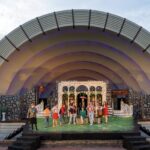
A golf outing sponsored by the foundation recently raised $8,000, a portion of which was used to buy a new swing set for an Allison Hill playground. This summer’s outing will raise money for the band shell in Reservoir Park.

Stuart is not a man of intensely pursued hobbies. He works “all the time,” he said, including on his landmark house. But he does enjoy classical music—especially Baroque—and historic photography.

“I’m a stay-at-home guy,” he said.

With one clear exception. He and Robin always make time for the beach they love at their house in Cape Hatteras, N.C.

Still, his ongoing love affair with Harrisburg takes precedence. When David Morrison interviewed him as a “living legacy” as part of the SusqueCentennial celebration, Stuart spoke eloquently.

“The city is a wonderful urban environment,” he said. “The setting is stunning…. It is architecturally a gem.”

Continue Reading

Capital in Conflict: Civil War Days stresses Harrisburg’s role in the war.

Camp Curtin

Camp Curtin

Harrisburg’s relationship to the Civil War is a complicated one.

The city was targeted, but never invaded. It played a vital role as a logistics and training center, but never saw battle itself. Today, Civil War buffs and tourists flock to Gettysburg, but usually bypass Harrisburg.

This month, the city’s story will be in focus during the first annual Civil War Days, a widespread historic celebration touching on many aspects of Harrisburg’s important place in the war, particularly in the Battle of Gettysburg.

“A National Civil War Museum was built (in Harrisburg) 15 years ago and a lot of people said, ‘Why?’” noted Joe Benish, a member of the event’s organizing committee, noting the need for public education.

The three-day extravaganza overflows with events, including a Civil War narrative cruise on the Susquehanna, a re-enactors’ encampment at the National Civil War Museum and historic site bus tours.

Civil War Days is the brainchild of Gary Crowell, event chairman and a Civil War history enthusiast since relocating to Harrisburg from California in 1969. Although he initially focused his interest on Gettysburg, he eventually realized that Harrisburg, too, played a significant role in the events that led to the battle on July 1 to 3, 1863.

“I found out that (Confederate Gen. Robert E.) Lee came into Harrisburg three days before Gettysburg,” Crowell said. “Then I thought, we should just dedicate a whole weekend about this for the whole community.”

To publicize the events, organizers have coined the slogan, “Before Gettysburg, Lee headed for Harrisburg. So why don’t you?”

Cooper Wingert, already a prolific author of 10 Civil War books at age 17, said it was an easy choice for him to join the gala’s organizing committee that’s comprised of a dozen local Civil War enthusiasts.

“Gary had the best plan ever,” the East Pennsboro High School senior explained.

Wingert, who begins studies this fall at Dickinson College, said Lee’s initial plan before Gettysburg was to burn and cripple Harrisburg, which was the capital of the second-most populous state in the North.

On June 28, 1863, Gen. Richard S. Ewell and 1,500 Confederates were based in Carlisle in anticipation of a Harrisburg attack. On the same day, Gen. Albert Jenkins and 1,200 members of the Virginia Calvary arrived in Mechanicsburg, ready for a fight.

On June 29, Confederates became engaged in battle with the Union militia at Oyster Point at 31st and Market streets in Camp Hill. The next day, the Skirmish of Sporting Hill occurred at the Carlisle Pike and Sporting Hill Road in Mechanicsburg, the northernmost town to surrender to Gen. Jenkins’ troops.

The South’s next goal was to overtake Fort Washington, a Union fortification site on Lemoyne’s heights, and Fort Couch, situated about a half-mile west. The Confederates, though, were ordered to leave for Gettysburg due to encroaching Northern troops.

“(The Confederates) were only a couple of minutes away from attacking Fort Washington,” Wingert said, which could have marked a Battle of Harrisburg instead of Gettysburg’s famous fight.

Harrisburg also played a notable part in the Underground Railroad, a network that helped slaves escape from the South, Wingert noted. President Abraham Lincoln was no stranger to Harrisburg, either. In 1861, the president-elect was welcomed with a citywide celebration. In 1865, Lincoln’s funeral train stopped in Harrisburg, as well, and his body lay in state at the Capitol building.

Civil War Days kicks off on Friday, June 17, with “Breakfast with Mr. Lincoln” at the Hilton Harrisburg, followed by a historic Harrisburg bus tour, a bus tour of historic Civil War sites on the West Shore and a Civil War narrative cruise on the Pride of the Susquehanna.

Friday also offers Civil War dance demonstrations, a Civil War social at the Harrisburg Midtown Arts Center, a Civil War artist and author gathering, and the re-enactor encampment at the National Civil War Museum.

Several panel presentations take place on Saturday, including “Harrisburg’s Black Community,” “Camp Curtin,” “Lee’s Second Invasion of Pennsylvania” and “Abolitionist John Brown—PA and Harrisburg Connections.” A historic Harrisburg walking tour also is available on Saturday, and the re-enactor encampment continues at the museum.

On Sunday, June 19, a Civil War commemorative church service will feature Negro spirituals and other songs of the era, and the re-enactor encampment concludes. A Civil War tour of the historic Harrisburg Cemetery also is available that day.

David Morrison, acting executive director of Historic Harrisburg Association, hopes that the weekend will help people not only understand Civil War-era Harrisburg, but modern-day Harrisburg, as well.

“If people have a stronger understanding of Harrisburg’s history, it leads to a greater understanding of what makes this town tick,” he said.

Civil War Days takes place June 17 to 19 at locations throughout the Harrisburg area. Many events are open to the public at no cost, but some require advance registration and a small fee. More information is available on Facebook: Civil War Days in Harrisburg.

Continue Reading