Tag Archives: Civil War

A Cemetery Swing: The region’s historic graveyards offer a fascinating take on the past.

Screenshot 2015-06-01 08.25.46Search the web for things to do in Harrisburg and you will find the typical list of “Harrisburg-y” possibilities: tour the Capitol, visit the National Civil War Museum, ride the Pride. However, No. 24 on the list of 30 offers an unexpected option— visit Harrisburg Cemetery.

A cemetery as a tourist attraction? I couldn’t resist.

Cemeteries meet the interests of a number of groups, especially history buffs. With a cemetery visit, you get the collective history of those buried there, the history of art used to commemorate their lives, and the history of wars or struggles in which they participated.

“So many interesting stories, that’s the way it is, though—all the old cemeteries, they have a story to tell,” said Barbara Barksdale, co-chairwoman of the Pennsylvania Hallowed Grounds Project and president of Friends of Midland, a non-profit that cares for the predominantly African-American Midland Cemetery in Steelton. “The history is just crazy in cemeteries around here.”

Some of those stories are individual, such as Herbert “Rap” Dixon, who, in 1930, became the first black man to hit a home run in Yankee Stadium. Then there’s Lemuel Butler, born in Harrisburg in 1844, a teamster who served with the U.S. Colored Troops during the Civil War.

Other stories are broader. Looking at the dates on the stones, it’s clear that some of those buried in Midland were slaves or freed slaves who mostly likely worked on the farm where the cemetery now sits. Midland is also the resting place of veterans of numerous storied African-American military groups, including the Buffalo Soldiers, the U.S. Colored Troops, Montford Point Marines and the Tuskegee Airmen.

“I want people to go away with—it’s more than a headstone,” said Barksdale, who gives tours of the cemetery.

Local Notables

Screenshot 2015-06-01 08.25.35Harrisburg Cemetery, listed in the National Registry of Historic Places, holds local and national history, as well.

In the walking tour, David Via, superintendent of the cemetery, pointed out the governors, soldiers and local people of interest buried there. Names like Berryhill, Calder, Cameron and Kelker, among many others, read like the street signs of Harrisburg.

“The Walking Tour Guide of Harrisburg Cemetery,” available at the caretaker’s house at the entrance to the cemetery, provides information on those buried there, as well as other intriguing aspects of the place.

Via said that 155 Civil War soldiers are buried in the cemetery and pointed out that the simple, white tombstones differ. The monuments for the Union soldiers have rounded tops, while the Confederate soldiers have pointed tops.

“Supposedly, so the damn Yankees couldn’t sit on them,” Via said of the Confederate stones.

Veterans of the American Revolution, the War of 1812, the Mexican War and the Civil War are all represented in the cemetery.

Down the highway a bit, the Old Public Graveyard in Carlisle holds the remains of 53 Revolutionary War soldiers, including Molly Pitcher, the famous female fighter and heroine. Her monument is one of the larger ones in the graveyard.

A guide mentions that the oldest marker is from 1757 and that the cemetery is the final resting place of a Civil War drummer boy and of Judge Frederick Watts, president of the Cumberland Valley Railroad, a U.S. Commissioner of Agriculture and a person “instrumental in the founding of Penn State.”

Manmade, Natural Beauty

While civic and war history engage many, the art history in cemeteries also should be noticed. Cemeteries large and small typically contain a gate, sometimes simple, sometimes ornate, which signifies the separation between the everyday world and the cemetery space.

A 30-foot-tall obelisk, representing eternal life from the Haldeman family plot, greets visitors to Harrisburg Cemetery. Tombstones on the grounds hold symbolic art. Anchors represent hope, ferns sorrow and lambs innocence.

The Old Public Graveyard contains many family plots with iron gates, some with intricate scrollwork, conveying a sense of privacy for the deceased.

Examples of white bronzes exist in both Harrisburg Cemetery and the Old Public Graveyard. These gray headstones, made of a combination of copper, tin and zinc, show little weathering even after a century of exposure.

The natural beauty of cemeteries is another draw. Quiet places, they provide a serene environment to walk, write, read or explore. Harrisburg Cemetery, in particular, has a wonderful array of plant life. In appreciation of its many flowering trees, the cemetery held a tree walk in April.

Trees include the well-known flowering dogwood, the crabapple and the northern red oak, as well as the less-recognized Kentucky coffee tree with its unusual pods, the English hawthorn lined with thorns and the Japanese pagoda tree, which sports bumpy, string bean-type seeds.

Via pointed out ivy growing on a stone that originated from a trimming from Martin Luther’s grave. Similar to English ivy but smaller in size, he calls it “Martin Luther’s ivy.”

Before visiting a cemetery, do a little research. Often, online, printable guides will direct visitors to points of interest within the cemetery and to any special artistic and planting features.

Visitors should follow posted rules, which often vary from cemetery to cemetery. While they provide a park-like atmosphere, with lots of space, grass and trees, cemeteries are not playgrounds. Stones are heavy and often old and could seriously injure someone standing or leaning on them. Groundhogs, which frequent cemeteries, burrow under stones, leaving large holes. Tread carefully.

Cemeteries serve as the burial ground for the dead, but offer much to the living. Those looking for a way to spend a summer day may want to consider a visit. Even the skeptical should try it once, as they may have a similar reaction to students who spent time in Midland Cemetery. As Barksdale put it, “Once I got them, they were hooked.”

For more information on the cemeteries mentioned:

  • Hallowed Grounds tour: https://centralpahallowedgrounds.blogspot.com
  • Harrisburg Cemetery: https://sites.google.com/site/harrisburgcemetery
  • Midland Cemetery: Friends of Midland Cemetery on Facebook
  • Old Public Graveyard, Carlisle: https://www.visitcumberlandvalley.com
Continue Reading

Centuries of Service: Harrisburg Fire Bureau has grown, evolved with the city.

Screenshot 2014-12-29 08.59.07The city of Harrisburg was laid out by John Harris in the mid-18th century, but it was not until 1791 that citizens began forming the first volunteer fire company in the city, the Union Fire Company.

Without a water system, the earliest companies were largely volunteer bucket brigades, which transported water to fill small, hand-operated pumps. Throughout the first part of the 19th century, companies would form in the various city wards, last several years and then disband.

According to Harrisburg fire historian David Houseal, 1841 and 1858 marked significant years in the early development of the fire company. In 1841, the city’s first water system was completed and water became readily available in most locations. With this came the first hose companies and carriages. In 1858, the first hook and ladder companies formed, largely because buildings in the downtown area approached three stories.

As the Civil War came and Harrisburg transitioned into a rail and industrial center, more local companies were founded and steam pumpers and horses were added to the city’s fire apparatus.

Petitions were circulated throughout the late 19th and early 20th century in an attempt to abolish the volunteer companies and establish a full-time, paid force, but it was not until 1913 that the Harrisburg Fire Bureau was established.

Over the course of the 20th century, numerous smaller companies were closed as fire houses were abandoned, torn down (in the case of those formerly in the Capitol complex area), or converted to different uses. The department also moved further toward full-time paid staff and relied less on volunteer companies, though, according to Houseal, numerous volunteer companies still exist on the books.

Additionally, the city restored the Reily #10 firehouse and opened the Pennsylvania National Fire Museum, which catalogs and honors the 223-year history of Harrisburg’s fire department.

At one time, Harrisburg had more than a dozen firehouses scattered throughout the city. With the recent closing of Paxton Station No. 6 in Shipoke, only three remain: one in Uptown and two on Allison Hill.

Moreover, the spirit and function of these firehouses has changed greatly through the years. The buildings once functioned not only as firefighting units, but almost as much as neighborhood and social centers.

Today, that function has largely been lost. However, in its stead, Harrisburg has gained a well-trained, professional and capable force focused on its job of fighting fires.

Jason Wilson is an historian for the Capitol Preservation Committee.

Continue Reading

Flag Day, 1914: A century ago, Harrisburg celebrated a unique gift.

Screenshot 2014-05-29 16.26.19

This June 14 marks the 100th anniversary of the transfer of the commonwealth’s Civil War flags to the Capitol’s main rotunda.

It was also the last time the aged veteran bearers carried the colors that they had carried during the Civil War. They had been offered an all-expenses-paid trip to Harrisburg to be honored for their service and to transfer their beloved colors to the cases that had been designed specifically for the flags in 1911.

The flag-bearers met outside the old Library and Museum building well before the 1 p.m. assembly time, and each was handed the furled color that they had carried during the war. Many of the men wept openly upon holding the colors again, and the parade was delayed slightly while they regained their composure.

In the end, the parade began nearly on time at 2 p.m. and followed 4th Street to Market then on to Front and up State Street to the Capitol’s steps with the ceremony beginning at 3:15. As the veterans turned up State Street, the six companies of the National Guard formed an honor guard fringing the sides of the street, which were thronged with masses of people eager to see the veterans and their colors.

The ceremony began with a playing of the song “Pennsylvania,” followed by the invocation and the “Battle Hymn of the Republic.” Gov. John K. Tener made a short welcome speech, followed by Sen. Martin of the Flag Transfer Commission.

Martin stated that the colors needed no eulogy and that their history was written in the blood of thousands of loyal Pennsylvanians who fought and died to preserve the nation. He further asked that they be preserved for all time as a tribute to fallen heroes and an inspiration of loyalty and patriotism. More music followed, as did a keynote address by Maj. Moses Veale of the 109th PA. He recounted how truly young the men were who went off to war and assessed the contributions of the entire generation to the strength of the nation. “America” was then sung, and the benediction ended the ceremony.

As the band played a medley of Civil War tunes, the veterans placed their banners one by one in the Capitol’s main rotunda.

All told, 352 flags representing some 340,000 veterans of the commonwealth were carried and commemorated that day. The parade and ceremony were touted as among the most memorable and emotional events in Harrisburg’s history, not just for the participants but for thousands of residents who watched the procession. It was highly photographed and  one of the first events to be filmed by the Harrisburg Telegraph and shown in local theaters.

Within several decades, the veterans who bore the colors would be gone, but the flags that they carried remain and were removed from the rotunda and preserved in 1985. They remain as a lasting testament and tangible connection to the valor of Pennsylvania’s Civil War soldiers and one of the largest single collections of Civil War flags in the nation.

Jason Wilson is an historian with the Pennsylvania Capitol Preservation Committee.

Continue Reading

Harrisburg’s Mr. Lincoln: James Hayney has built a career portraying the Great Emancipator.

Screenshot 2014-01-31 09.32.25

“My mission is to keep history alive.”

So says James Hayney about his role as an Abraham Lincoln presenter. Hayney, a Camp Hill resident, has been keeping history alive around central Pennsylvania and beyond for most of the last decade.

He certainly looks the part. Hayney’s body is long and lean; he stands well over 6 feet tall and sports the trademark beard worn by the 16th president. Hayney states, with a wink, that he is about the same age as Lincoln at the end of his presidency.

Hayney took a circuitous route to the role of Abraham Lincoln, which he now plays full-time. He explained that, during his 20s and 30s, he was a telephone man, but had this dream of becoming an actor. As he approached his 40s, he saved enough to take a leap of faith and follow his dream. He resigned from corporate life and spent some time in New York, expanding his acting skills and trying to break into commercials. After a few months, he moved back to the Harrisburg area to work in the local theater scene.

“I’m a Harrisburg guy,” he explains, noting the terrific location for a professional Lincoln portrayer. “My roots are here. My son was born here.”

He began to find acting gigs around central Pennsylvania. He acted in Harrisburg’s Open Stage and Gamut Theatre. He soon began getting parts at Allenberry Playhouse and became a regular there. Then he received an unexpected break.

In 2002, the National Civil War Museum contacted him about playing the role of Lincoln for one of its fundraisers. Hayney accepted and began to research his new role, as any good actor would. He soon found that Lincoln fascinated him.

A short time later, Hayney began to look for a one-man play about Lincoln, one that spoke to him. He found it—“Mr. Lincoln”—by Herbert Mitgang. The one-man play begins at Ford’s Theater just as Lincoln is about to be assassinated. Lincoln sees his life in a series of flashbacks just as Booth pulls the trigger: from his early days as a rail-splitter to his latter years as a lawyer and politician.

Hayney presented “Mr. Lincoln” on Lincoln’s birthday and President’s Day at theaters in Carlisle and Harrisburg. As he continued to play the role, he began to wonder if he could work full-time as a Lincoln portrayer.

Jim Getty, the long-time Lincoln presenter from Gettysburg, became an early mentor to Hayney. After Hayney approached him, Getty explained the thorough research he had conducted for the role and allowed him to peruse his extensive library.

Getty also put him in touch with people and organizations that helped him make his start.

“Jim Getty is a terrific guy and was a tremendous help to me,” Hayney said.

Hayney started to build his own Lincoln library, which includes David Herbert Donald’s “Lincoln,” Harold Holzer’s “Lincoln President-Elect” and “Team of Rivals” by Doris Kearns Goodwin, among many other writings and biographies. Hayney purchased the complete collection of Lincoln’s writings and studied them extensively. He discovered that, the more he learned about the Great Emancipator, the more he admired him. 

“There is no point of diminishing returns with Lincoln,” Hayney states.  “The more I learn about him, the better he gets.”

Hayney turned his love for Lincoln into a career in 2005.  He now spends a lot of time at Gettysburg, performing or giving presentations at the Battle Theater, the Dobbin House and the Fairfield Inn, just outside of the city. He also speaks to many corporate and school groups. 

He explains that he prepares for his presentations by researching the group he will be speaking to and makes sure his knowledge of Lincoln coincides with their interests and their mission. Then he takes off his wedding ring—Lincoln never wore one—and puts on the mole. When he speaks to a group, he presses forward with a two-pronged attack.

“I always try to start out with humor,” Hayney says. “Lincoln was an extremely funny guy. Back in Illinois during his circuit-riding days, people would travel from miles around to hear him tell his stories at the taverns at night. He was almost a stand-up comedian.”

Once Hayney has his audience chuckling at one of his Lincoln stories, he hits them with a finishing punch. “When I get folks good and relaxed, then I sneak in some history lessons,” he says with a laugh.

In 2009, the National Civil War Museum contacted him about a project. The museum wanted Hayney to become the Lincoln that it displays on a daily basis. The “Meet Mr. Lincoln” video, which can be found both in the museum and on its online website, is Hayney’s portrayal of Lincoln answering questions about the Civil War, slavery and his presidency. 

Hayney traveled to Carnegie-Mellon University in Pittsburgh to film the project. “It was an exhausting experience,” he remembers. “We worked 12-hour days doing the filming.  I had to be at the top of my game every minute.”

But Hayney remains thrilled about the final product, which puts his talents on full display. He is grateful that the museum gave him such an opportunity.

“The folks at the museum—Wayne Motts, Trini Nye and Kate McDermott—do such great things and have been so supportive,” he said. “I love to go there whenever I can.”

Being a Lincoln presenter has given Hayney a wide range of opportunities. He performed at the National Portrait Gallery in Washington, D.C., on the day of President Obama’s first inauguration. He received the key to the town of Hummelstown and, earlier this year, was grand marshal for the Pennsylvania Farm Show. He even threw out the first pitch at a Harrisburg Senator’s baseball game.   

Hayney sometimes appears with other historical presenters, including a woman who plays the part of Mrs. Lincoln, a man who portrays the powerful abolitionist, Frederick Douglass and, of course, another presenter who portrays Lincoln’s favorite general, Ulysses Grant. On occasion, Hayney even gets on television. He recently completed a commercial for the History Channel.

When asked which of Lincoln’s speeches is his best, Hayney immediately points to the second inaugural address. He also considers Lincoln’s first inaugural speech important, simply because of the gravity of a nation in crisis. Naturally, Hayney admires the Gettysburg Address, as he feels the president’s “few appropriate remarks” were exactly right for the occasion.

“Of course, not everyone was thrilled with that speech,” Hayney chuckles. “Some folks didn’t like it at all, like the Harrisburg Patriot.” 

Hayney remains more than a little amused that the Patriot finally apologized for bashing Lincoln’s speech at Gettysburg as the “silly remarks of the President” that “shall be no more repeated or thought of.” Hayney acknowledges that pointing out the Patriot’s lack of vision gets him lots of laughs and applause. 

“When I point out that editorial, I always like to add that it’s no wonder that the Patriot is only now published three days a week,” he said, smiling. “People always burst out laughing and clapping about that line.”

Hayney readily admits he has had to change with the times. When he started out doing his Lincoln research, he usually bought books, many of them hardcover. Now, he downloads them and reads them on his Kindle. When he started out in 2005, he had a brochure, with his address and phone number. Now, he has a website where people can get all his contact information, as well as information, pictures and testimonies about his Lincoln presentation.

One thing that hasn’t changed is the support Hayney gets from his wife, Beverly.  Though she prefers to stay in the background, she clearly is very important to him.

“She is the love of my life,” he said. “We have been married 11 years, and I have loved every day.” Beverly is a nurse practitioner and works for the PinnacleHealth, where Hayney also volunteers one day a week.

When Hayney is asked how portraying Lincoln has touched his life, he is quick to answer. “Lincoln makes me a better person. Whether I am dressed like Lincoln or I am wearing a ball cap and T-shirt and just driving around town, I don’t want to do anything to denigrate his name.”   

Spend any amount of time with James Hayney talking about Abraham Lincoln, and his admiration for the man is bound to rub off on you.

You can find out more information about James Hayney at his website, www.lookingforalincoln.com. He also appears in the video, “Meet Mr. Lincoln,” at the National Civil War Museum and at the museum’s website.


Continue Reading

Widgets, Not Words: Before becoming a government town, Harrisburg was an industrial powerhouse.

Screenshot 2013-11-29 10.16.58

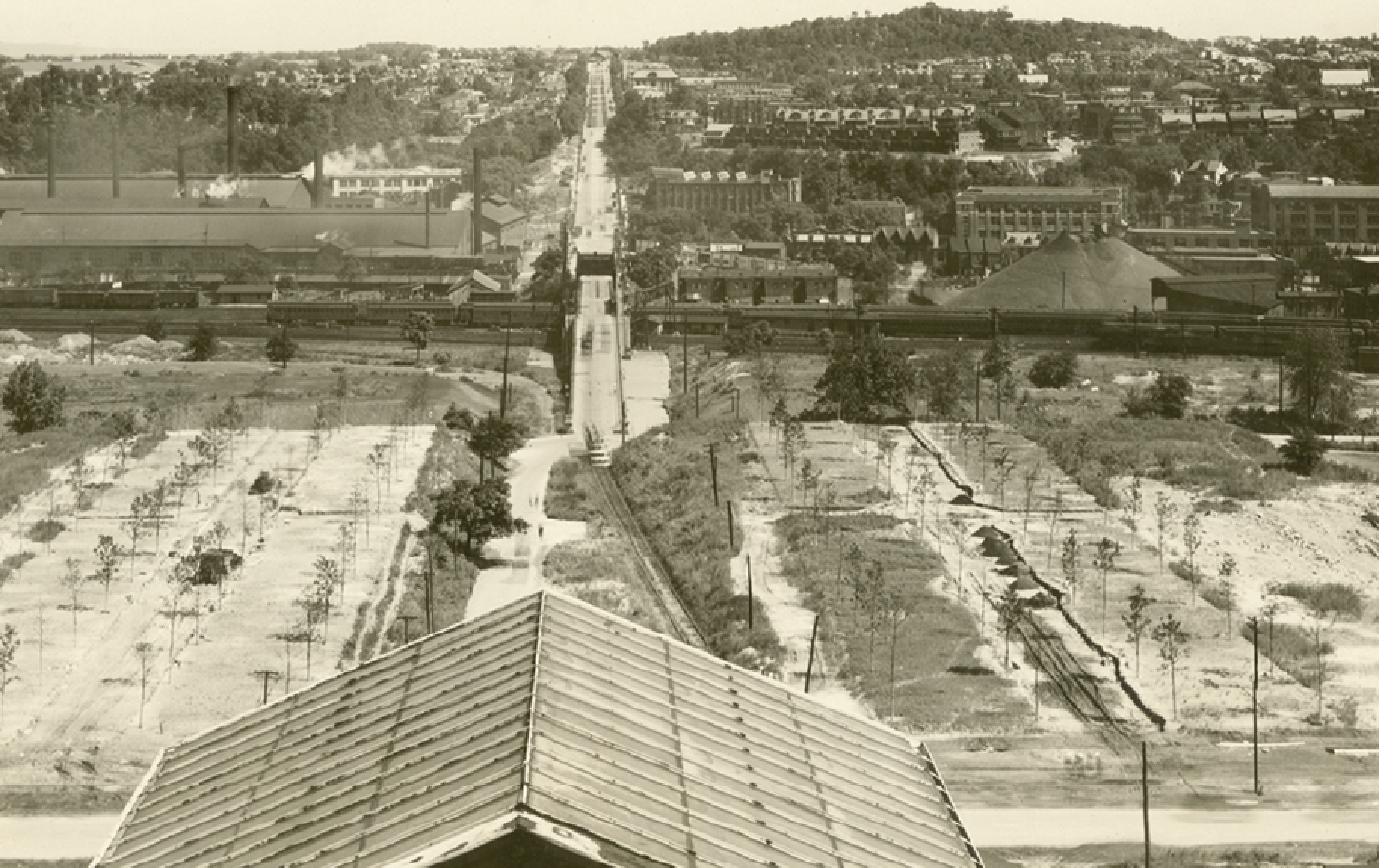
The rise of Harrisburg as an industrial city is linked to its rise as a transportation hub in the earliest years of the 19th century.

After the completion of the Camelback Bridge over the Susquehanna in 1820 and the state canal system, smaller forges, furnaces and foundries began locating in the city. The railroad revolution of the 1840s increased the ability to move raw materials, and larger industries began to locate in the city. In 1850, the Porter Furnace, the first anthracite furnace in the city, was built. In 1852, the Harrisburg Cotton Manufacturing Co. began, followed by the Central Iron Works a year later. The Hickok Eagle Works began printing ruled paper in the 1850s, and the Harrisburg Car Co. produced railroad cars.

The Civil War saw Harrisburg’s industries producing material, mainly iron, for the war effort, including the Lochiel Rolling Mill, Paxton Rolling Mills (1866) and, in 1867, the Pennsylvania Steel Works, located just south of town. By the 1880s, steel and railroads had grown into massive industries in Harrisburg, but other, smaller industries were still present to meet the demands of a growing population.

Throughout much of the 20th century, the steel and iron industries dominated Harrisburg’s landscape, and their owners and financiers contributed to the “City Beautiful” improvements within the city. The Great Depression took its toll on smaller industries, but the steel, railroads and large construction projects helped to lessen the burden somewhat.

In the early 1940s, Harrisburg, like other American cities, had ramped-up production for World War II. By 1950, Harrisburg was just shy of 90,000 people—its largest population to date. As the 1950s wore on, both the railroads and steel mills began to decline across America, and many of Harrisburg’s factories closed down in the 1960s and ‘70s.

Though many of the earlier industries are gone, Harrisburg’s steel heritage is still evident in the works at Steelton, now ArcelorMittal, and Harsco, which evolved from the Harrisburg Steel Corp. to become a global industrial services company, now based in Camp Hill.

Jason Wilson is an historian for the Capitol Preservation Committee.

Continue Reading

Protecting Harrisburg: Defense of important city was sudden, ad hoc.

From its beginnings, Harrisburg’s location astride the Susquehanna River and Appalachians made it a significant hub for transportation from all directions. This significance was even more evident when the Pennsylvania canal, and later Cumberland Valley, Pennsylvania and Northern Central railroads constructed bridges around the city.

Owing not only to its stature as the Capitol of the Commonwealth, but also to this network of roads, railroads and canals, it was a logical location during the Civil War for Camp Curtin, the largest mustering and training camp in the north during the war. Despite the location, importance and presence of Camp Curtin, Harrisburg was scarcely defended when compared with other important military targets.

One reason for this might be the initial consensus that the war would be short, therefore there was no real hurry to fortify the bluffs across the river. After this myth was dispelled by the First Battle of Bull Run, military resources were largely focused southward and no one believed the city could be a legitimate target, until the north’s military set-backs of July and August 1862.

By early September 1862, Robert E. Lee’s army was on the move northward. Quickly, Pennsylvania emergency militia troops were formed to help repel the invasion. Fortunately, Lee’s army was fought to a draw at the battle of Antietam, the bloodiest single day in American history. Ideally, this dramatic and bloody battle, in which the Union claimed victory, should have alerted state and city officials to the need for increased forts and earthworks west and south of Harrisburg, but again, nothing was done until early June of 1863.

In June, victorious after smashing the Union army at Chancellorsville, Lee’s rebels again marched north. This time there was little to impede their march. Harrisburg, like the rest of south-central Pennsylvania, was in turmoil and stood open to invasion. President Lincoln called for another 100,000 emergency troops, but only 30,000 responded. General Darius N. Couch, head of the newly created Department of the Susquehanna now at Harrisburg, finally began creating a series of earthworks opposite the city. It also prepared to fire or dynamite most of the bridges crossing the Susquehanna River near the city. As the Confederate’s approached and captured York, the bridge at Columbia/Wrightsville was burned on June 28th. The next day Lee’s army was ordered to concentrate around Gettysburg, saving Harrisburg from potential capture.

After Gettysburg, the Department of the Susquehanna moved back to Chambersburg and Camp Curtin returned to the business of sending troops and supplies to the front. It also was used as a prisoner-of-war camp. Some of the Confederate POW’s who died as laborers are buried in Harrisburg Cemetery, as well as other cemeteries around Dauphin County.

The Gettysburg campaign was the last time during the Civil War that Harrisburg was in peril as the war continued to rage in southern Virginia. Camp Curtin lasted until November of 1865 when it was officially closed.

Continue Reading