Tag Archives: Capitol

Lack of Capitol: In Harrisburg, an absent state workforce shatters small business dreams

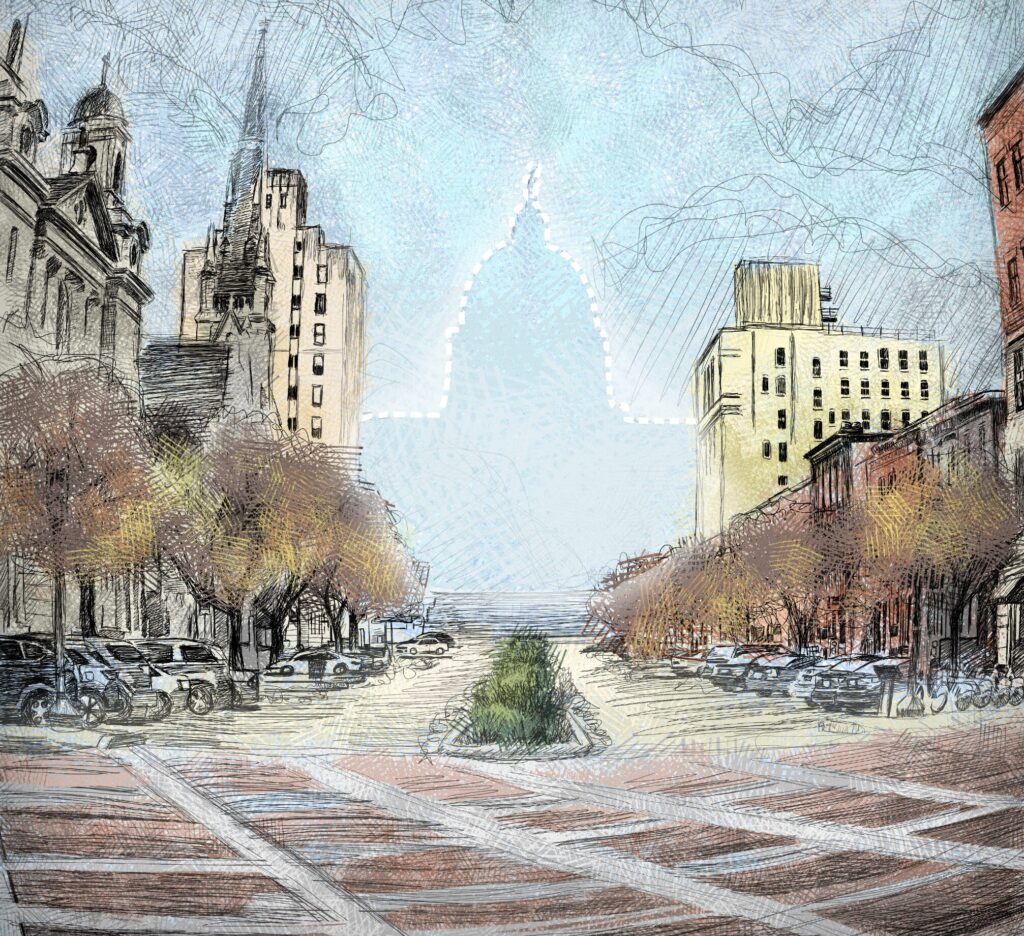
Illustration by Rich Hauck

When I first moved to Harrisburg, Aleco’s was my go-to spot for a quick, cheap meal.

At the time, the (very) casual eatery was located at North and 2nd streets, a cozy spot frequented mostly by neighborhood denizens like me.

Aleco’s was run by Jose, originally from Mexico and one of the hardest-working people I’ve ever met. If you dropped in at 7 a.m., he’d happily grill up a breakfast sandwich for you. For lunch and dinner, he furiously dished out burgers, cheesesteaks, sandwiches and huge salads. On Saturday nights, the late-night drinking crowd showed up, standing in a long line that often wound up the block, for greasy slabs of pizza at 2 a.m.

The place never seemed to close, and Jose never seemed to take a day off.

Mike, an older guy who lived nearby, waited every week for the Tuesday night pasta special—a mountain of spaghetti, meatballs, salad and garlic bread, all for about eight bucks.

“Look at all this food,” he said to me more than once, marveling at the pile on his plate. “It’s the best deal in town.”

Unfortunately, Aleco’s salad days (excuse the pun) wouldn’t last. About eight years ago, his landlord didn’t renew his lease, wanting the first-floor storefront for himself. So, Jose relocated a few blocks away, just across from the Capitol building, hoping to tap into the state worker market. Unfortunately, by now, we all know how this story ends.

A pandemic, 25,000 missing state employees, empty office buildings—and another Harrisburg small business down the drain, another dream shattered. In late October, I tried to stop in for lunch, but found the doors locked, the always-open place dark and empty. I tried calling, and the phone went unanswered.

Recently, TheBurg was named Small Business of the Year by the Harrisburg Regional Chamber, and, this month, I have the great honor of accepting this award on behalf of my amazing, creative, committed staff.

Because of this, I thought I might write a column about what it takes to be a successful small business in Harrisburg, an admittedly tough place to make it. I even sketched out a few ideas, addressing concepts like consistency, quality, flexibility, responsibility and dedication, which I believe are components of our success.

But then I realized that, no, that’s not enough. In Harrisburg, you can be a business that does all these things right—and still find yourself run over by some force beyond your control.

A pandemic might hit. Inflation may roar. And, worse of all, your Capitol customer base might stop showing up for work. Over the last five years, all these things happened to the hardest-working man in Harrisburg.

Of course, it isn’t only Jose. The catalogue of shuttered downtown businesses is a long one. Just last March, I wrote about another sandwich shop, Deco Grab & Go, which suffered a similar fate, and, well, I could go on and on. The list goes far beyond lunch spots, including law firms, lobbyists, banks, shops, consultants, bars, etc., which, since the pandemic, have closed, downsized or relocated, leaving many buildings half or fully empty.

My phone rang recently and a building owner, clearly upset, told me that he feared losing his anchor tenant, a downtown business that likely wasn’t renewing its expiring lease. He placed the blame squarely on Gov. Shapiro, who continues to allow most state workers, much of the time, to work remotely.

He said that he believed Shapiro had a responsibility either to order all state workers back to the office or to help fund the redevelopment of downtown Harrisburg—say, a one-time $100 million payment to help convert empty offices into residential space, where there is a demand.

Great idea, I told him, but, also, good luck with that. The problem, I said, is that Harrisburg is an orphan. Neither party gives a hoot about its own capital city.

For the Democratic governor, allowing state employees to continue working from home is the path of least resistance. Why rock the boat, upsetting the workforce, even if in-office work is superior? A future Republican governor might try to reverse that. However, that could prove difficult, considering that so many workers have grown accustomed to remote work or hybrid schedules.

Last year, I wrote a column saying that we, in Harrisburg, need to admit that state workers aren’t coming back and move on, opening a new chapter in the city’s history. I imagine a future in which Harrisburg finally fulfills its destiny as a great small city located on a majestic river, with a walkable, mixed-use downtown full of shops, restaurants and attractions. But, sure, such a transition will take gobs of money, and I have no idea where that will come from.

Even if it happened, it’ll be far too late for Jose and the many other small business owners who have become collateral damage since the pandemic. One day, a whole new crop of starry-eyed entrepreneurs will take their place. I can only wish them better luck than the poor souls who, deciding where to locate their businesses, once looked at the sprawling, stately Capitol Complex, with thousands of weekday workers, a guaranteed customer base, and confidently thought, “Well, at least this will never go away.”

Lawrance Binda is publisher and editor of TheBurg.

If you like what we do, please support our work. Become a Friend of TheBurg!          

 

Continue Reading

Belong, Together: Pride Festival of Central PA brings back parade after years off, celebrates LGBTQ community

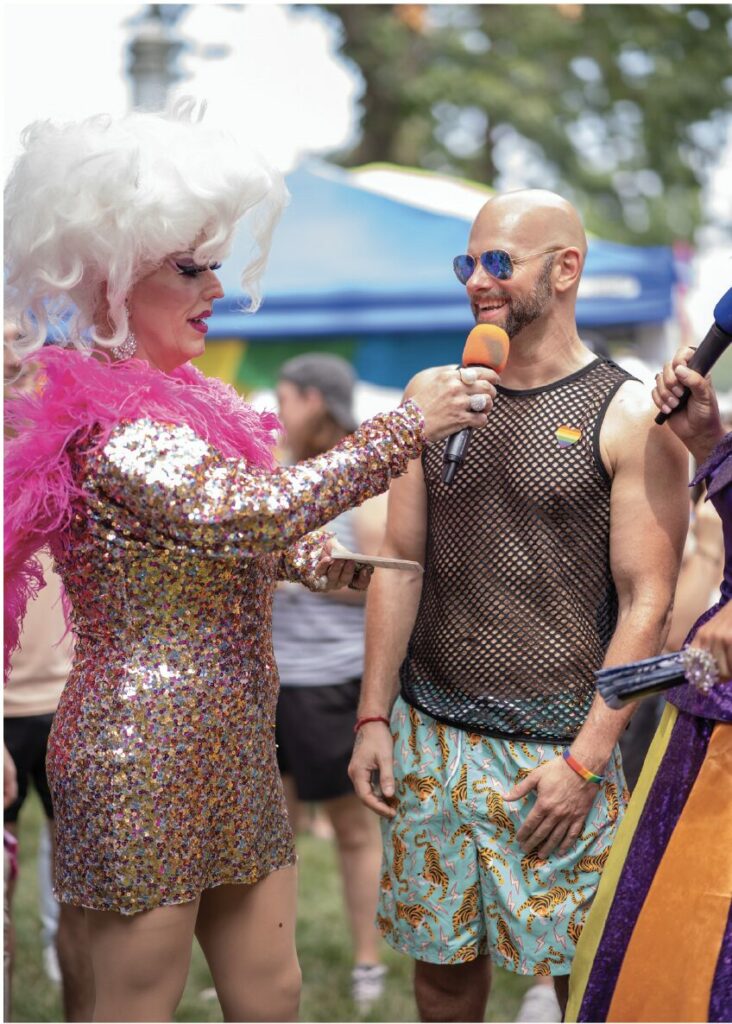
Pride Festival attendees, 2023.

It’s been over a decade since the last Pride parade filled Harrisburg streets with rainbow flags, balloons, music and colorful floats.

This year, it will return.

The Pride Festival of Central PA had already been dreaming up a way to bring back the popular event, which was last held in 2012, when Harrisburg Mayor Wanda Williams threw in her support. With the city behind them, organizers knew it was time to get the marching route ready.

“A lot of bigger cities have Pride parades, and everybody wanted to see that return to Harrisburg,” said Dr. Eric Selvey, president of the Pride Fest board of directors.

Williams too said that she’d observed Pride parades in other cities and was happy when the festival board approached her about bringing the parade back to Harrisburg for 2024.

“We have a St. Patty’s Day parade […] all types of parades, so why don’t we have this parade?” she said. “We want to send a message that the City of Harrisburg is a unified city.”

The parade will kick off the 32nd annual Pride Festival of Central PA on July 27, which takes place at Soldier’s Grove Park behind the state Capitol building. The parade will begin at 10 a.m. and march around the Capitol complex before returning to the park at noon for the festival, which runs from 11 a.m. to 6 p.m.

This year, Selvey is especially excited about the amount of community support for the festival, as more and more companies, organizations, churches and businesses are participating as vendors and sponsors.

Pride Festival attendees, 2023.

The festival has come a long way in getting the community to recognize the importance of the day. When the event started in the late 1980s, it was called “Open Air,” to leave any mention of the LGBTQ community out of the name. At the time, organizers thought people may be unwilling to attend something labeled as a Pride event in a generally more conservative region, Selvey explained.

However, this year, he expects around 7,000 people to join the celebration, coming from all over the region and even from surrounding states.

“It’s a day of just celebration, a day of being ourselves,” he said.


Feeling that Lasts

The Brownstone Lounge in Harrisburg has participated in the Pride Festival for years and, this year, owner Kimberly Stekovich is looking forward to interacting with the community.

She is working on creating a float to represent her business in the parade, and while she wants to keep the design a surprise, it will feature an Alice in Wonderland theme.

“It gives us a chance to come out and show our pride,” Stekovich said.

Selvey explained that the theme of the parade is “Lead with Love,” and encouraged anyone who wants to get involved to participate, whether they’re part of the LGBTQ community or an ally.

Following the parade, the festival will welcome visitors at the Capitol, which Selvey said is a notable location, as he believes the Central PA festival is the only Pride Fest to happen on state grounds.

In the park, two stages will offer live entertainment from musical groups and drag performers. Taking the spotlight this year will be pop artist and “American Idol” finalist David Archuleta, who will also hold a meet-and-greet with fans.

Vendors will be set up around the festival grounds, as well as food trucks and kids’ activities.

The family-friendly atmosphere of the event is something that’s important to board secretary Joelle Liller, who started volunteering with the festival a few years ago. Liller was happy to get involved with the event, having a child who is part of the LGBTQ community.

“We make it so families can come because that’s how kids learn,” Liller said. “That’s our goal: to have everybody feel welcomed.”

And while Selvey said that the LGBTQ community has seen progress in terms of acceptance and equality, there is still work to be done.

Two days before the festival, on July 25, the organization will host a Pride Candlelight Vigil at Italian Lake to remember those the community has lost.

To foster a safe environment for attendees on the day of the festival, there will be “silent witnesses,” volunteers who stand around the perimeter of the area to deter potential protesters and encourage safety.

Drag performer Betty Whitecastle interacts with an audience member.

However, Selvey is hopeful for a smooth day, with plenty of hugging, smiles and unity.

The feeling that Selvey gets from attending Pride each year is like no other, and he looks forward to sharing those feelings of pride, joy and inspiration with everyone who attends.

“It’s sad that it’s only one day, but that feeling you get from the one day lasts a long time,” Selvey said. “Pride is a celebration of oneself, our community and those who support our community.”

For more information about the Pride Festival of Central PA, visit www.centralpapride.org.
Photos courtesy of Emmitt Dwight McKell.

If you like what we do, please support our work. Become a Friend of TheBurg! 

Continue Reading

In the Shadow of the Dome: It’s been an unprecedented year of protests in the backyard of residents, businesses near the Capitol

An armed man stands in front of the PA Capitol during a pro-Trump rally. Photo by Jelani Splawn.

Every Sunday morning, Kevin Burrell walks a few blocks from his downtown Harrisburg home, where he’s lived for 20 years, to Market Square Presbyterian Church. There, he serves breakfast to those in need. He loves his church and is very involved.

But on one particular Sunday, Burrell stayed home. It was the weekend before the U.S. presidential inauguration and state capitals around the country were preparing for what the FBI warned could be armed protests by supporters of then-President Donald Trump.

“I was very concerned as a person of color,” said Burrell, who is Black. “I didn’t leave my house. I’ve never felt this way in my community and my neighborhood.”

State, Capitol and city police, along with Pennsylvania National Guard troops, patrolled the Capitol grounds and surrounding roads, hoping to deter anyone with violent intentions from coming. And it worked. Hardly anyone showed up.

But that wasn’t much consolation to Burrell, considering what he witnessed in the past months. Neither were local officials’ promises that they would keep the city safe during that inauguration week reassuring, not when Burrell had already seen men strapped with guns and Confederate flags parading the streets of his neighborhood.

Burrell described his feelings with words like “unsettling” and “unnerving.” His partner, Jon Podany, who is white, jumped in, as we do when we feel those we love are minimizing their experience, saying that Burrell was being too polite.

Podany, painted a picture of chaos, fear and white privilege on display.

For this Harrisburg couple, the string of protests that began in April wasn’t something they could switch off with a remote or scroll past on their Facebook feed, not when it was happening in their own backyard.

Such was the case with many residents, businesses and organizations in the neighborhoods surrounding the Capitol. And while everyone interviewed supported the right to gather and voice an opinion, they weren’t happy that some people purposely intended to invoke fear among those who call the city their home. Each was directly impacted by the large protests, especially the ones that weren’t kept to the Capitol steps.

“I love my neighborhood,” Burrell said. “It’s usually very peaceful and predictable. I’m very connected to this place. But now I’m feeling I need to be more mindful of my comings and goings.”

Block Crashers

In April, a large group of people arrived in downtown Harrisburg for a “ReOpen PA” rally, kicking off what would be months of protests, some tense, many peaceful, by both left- and right-wing groups.

A string of Black Lives Matter protests began in May, the first of which led to clashes between some marchers and police. There were additional anti-lockdown rallies, and, during November and December, numerous “Stop the Steal” protests that opposed the U.S. presidential election results.

At the first “Reopen PA” rally in April, people gathered to show their opposition to Gov. Tom Wolf’s orders to shut down nonessential businesses and to stay at home to try to fight the COVID-19 pandemic. Many brought pro-Trump flags and homemade signs saying things like “Freedom is essential,” or “Honk to reopen.” Others drove their cars and trucks around the Capitol honking and gridlocking streets.

Podany remembers people racing cars down the streets.

Pam MacNett, head of the Capitol Area Neighbors group, has video footage from her security camera of a man walking past her house with an assault rifle. She also recalls seeing an armed person walk by the Harrisburg Catholic Elementary School’s State Street campus.

“I really wish they would stay at the Capitol grounds,” said Dave Rushinski, principal of the school. “There are people whose livelihoods depend on these small neighborhoods.”

Andrea Grove is the owner of Elementary Coffee Co. on North Street in Harrisburg, about two blocks from the Capitol steps.

Grove said that one of the reasons why she chose to open up shop downtown in 2019 was specifically for its proximity to the Capitol. She wanted Elementary to be a safe space for protesters, especially Black Lives Matter protesters, to refuel and receive help, if needed.

In fact, Grove participated in some of the Black Lives Matter rallies this past summer.

While she recognized there was definitely passion and strong emotion fueling the BLM, ReOpen PA and “Stop the Steal” rallies, something about each felt different to her.

“The tone changes quickly when there are guns,” Grove said.

After the ReOpen PA rally in April, Grove and employees began internal discussions about how to stay safe and respond to future protests like that one. She said that they talked about de-escalation and workers’ comfort levels.

Grove had a feeling that Elementary could be a target for right-wing protesters. She isn’t shy about making her political stance part of her business. Social media posts and signs on their shop windows reflect their views. Grove said that Elementary had been “trolled” on social media by some “Proud Boys,” a far-right group, before.

But when armed men wearing “Proud Boys” jackets showed up outside their North Street shop on the day the U.S. Capitol was stormed in January—that was scary, Grove said. The group of men yelled and shouted racist slurs at Elementary Coffee while employees remained inside.

Grove could see neighbors looking out their doors and walking by the scene, which made her feel a little bit better.

Band Together

By the time the state brought in troops and police during pre-inauguration weekend, local residents and businesses had already witnessed their fair share of rallies. They already knew what was possible.

The Philadelphia Inquirer published a story that weekend, as well, quoting Harrisburg residents on what they were expecting.

“Harrisburg, Pa., is not Washington D.C.,” wrote reporter Anna Orso. “The ornate state Capitol building is smack in the middle of the city’s downtown. There is no two-mile National Mall lined with monuments leading up to it. It’s surrounded by shops and cafés, and hundreds of people live a football field’s distance from the stairs.”

She was right.

Podany remembers a Saturday he spent outside painting his and Burrell’s porch steps. It was a quiet weekend morning until the protesters arrived. He described the noise and yelling that he could hear from his house and the air that felt thick with tension.

On the days before the inauguration, some businesses closed or boarded up, like Mangia Qui and Rubicon, both under the same ownership. Some residents chose to stay home, including Burrell and MacNett.

People asked Grove if it was time to erase the “Black Lives Matter” sign written on the windows. She had her concerns like they did, but she couldn’t stand the thought of giving into fear.

“If we don’t stand for these things now, when do we stand for them?” Grove said. “We decided to just keep doing our thing and there’s a strength in that.”

Burrell described his experience with the protests as seeing a genie let out of a bottle—something coming to the surface that had been lingering underneath. But the division that Burrell witnessed has given him a renewed strength in the work he does with the Harrisburg Human Relations Commission.

“We are not done with these issues,” he said. “We need to work.”

For Grove, the experience included exchanging phone numbers with people who live near the shop, in case anyone needed to call on each other. Ultimately, she believes it all drove conversation and strengthened neighborhood bonds.

“The downtown community is strong,” she said. “People are going to look out for each other.”

Support quality local journalism. Become a Friend of TheBurg!


Continue Reading

The People in My Neighborhood: Harrisburg finally gets some decent housing—and quickly turns it into a problem.

Recently, early one morning, bright flashes lit up my bedroom, the light filtering through the curtains into my downtown Harrisburg house from the street below.

At first, I figured it was just the usual car headlight, maybe someone stopped at the intersection. But, it persisted, so I got up to see what the problem was.

From my window, I witnessed a raid on the rundown building across the street. U.S. marshals and city police simultaneously smashed through two windows and a door to a first-floor apartment, put someone in cuffs and hauled him away.

Four days later, I attended, as I regularly do, a meeting of the Harrisburg City Council.

At that meeting, council considered its own downtown issue.

A developer was seeking approval for two projects: construction of a small office building on one site and, on another, the renovation of a long-vacant office building into 12 higher-end apartments.

So, now, a quiz.

Which of these two is a bigger problem?

1. Downtown Harrisburg, despite progress over the past decade, remains saddled with numerous dilapidated buildings, which attract drugs and crime.

2. A developer wishes to spend nearly $9 million on projects that will bring new office and residential tenants into downtown Harrisburg.

There’s an old saying about finding only thorns in a bushel of roses, and that’s how I felt after I heard council President Wanda Williams deliver a tongue-lashing to city developers. Before voting “yes” on the projects at issue, she read a lengthy statement warning developers, going forward, to include more affordable housing in their downtown projects.

“I certainly will be watching,” she told them.

Like Williams, I would love to see more quality affordable housing in Harrisburg. However, as a downtown resident, I can say, with great confidence, that the problem in the neighborhood is not that a few developers have built a smattering of higher-end units over the past few years. It’s that downtown remains plagued with shabby housing, owned by negligent landlords, which adversely affects the quality of life for those who of us live and work there.

The real problem, in other words, is not too much investment, but a lack of investment, especially in the existing housing stock.

Let’s examine some data.

According to the city, Harrisburg has about 13,500 total rental units, which constitute around two-thirds of the city’s housing stock. Of these units, about 2,300 are located downtown.

The downtown apartments are a mix. Two 1960s-era high rises contribute a few hundred market-rate units. Several hundred more apartments are in high rises for low-income seniors and the disabled.

Much of the rest are scattered in small apartment buildings, in row houses carved up into apartments and in units over commercial buildings. Much of that housing is in terrible shape and, thus, rented relatively cheaply. Some buildings are little more than rooming houses, and several are notorious for drug activity.

Against that unpromising backdrop, a few developers, over the past few years, have taken huge risks to try to create a class of multi-family housing that practically didn’t exist before in downtown Harrisburg—I’ll call it “professional-grade.”

Harristown, WCI and Vartan all have acquired empty or nearly empty structures, mostly rundown, historic office buildings, and invested millions to bring them back to life as residences. The projects have been small—from three to a few dozen units each.

Most (though not all) have higher-quality finishes, such as granite countertops and stainless steel appliances. Some are small in size; others are spacious. They rent in the range of about $850 to $1,300 a month depending on size, quality, location and number of bedrooms and baths.

The idea is to appeal to the small army of professionals who go to work each day in and around the Capitol complex but who otherwise would commute in. If we offer them decent housing, the theory goes, maybe some will stay, frequenting downtown businesses and restaurants instead dashing out of town as quickly as possible and spending all their money—earned in Harrisburg—in the suburbs. Their tax dollars would stay here, too.

And if you’re looking for a solution to the problem of high parking rates that keep away suburban customers—this is a good one.

Now, I might be less sanguine if people were being displaced en masse, as has occurred in some other cities. But, in downtown Harrisburg, that’s not happening. In total, the three developers have added about 100 units to the downtown, about 4 percent of downtown’s total apartment stock and far less than 1 percent of the city’s. And, again, these are additions to the housing stock, not replacements, since nearly all of these buildings previously were low-end office space or just empty.

As I walk around my downtown neighborhood, I see some wonderful historic buildings and caring people. But I also see far too much blight, neglect and trash. I see dozens of rundown buildings owned by exploitative landlords who don’t care a damn about the neighborhood or even their own tenants and who refuse to put a penny into their derelict properties.

That’s the real problem in downtown Harrisburg. When will that be addressed?

Lawrance Binda is editor in chief of TheBurg.

Disclosure: Alex Hartzler, TheBurg’s publisher, is a principal with WCI Partners.

Continue Reading

Waiting Game: Contributions withheld from nonprofits, schools in state budget impasse

The Pennsylvania state budget impasse is preventing millions of dollars in corporate contributions from getting to nonprofit groups and schools.

Kathy Anderson-Martin wants the state to pass a budget.

Since the summer, Anderson-Martin, director of philanthropy at the Salvation Army of Harrisburg, has watched weeks turn into months as the state legislature delays approving a budget for the 2017-18 fiscal year, which officially began on July 1.

Lawmakers have already adopted a spending plan but can’t agree on a revenue package. Until they reach consensus, millions of dollars in tax-deductible corporate donations are on hold, too.

That’s because the budget impasse has stalled approvals for the Education Improvement Tax Credit program, which qualifies businesses for tax credits if they donate to scholarship organizations, educational improvement organizations or pre-K scholarship funds.

Local schools and nonprofits, including the Salvation Army, say that the delayed approvals have paralyzed their planning for future programs and scholarships.

“We can’t receive almost $200,000 in gifts because that program is on hold,” said Anderson-Martin.

According to Anderson-Martin, the Salvation Army of Harrisburg uses EITC dollars to fund its summer youth enrichment program. Last year, the program served 400 children, 130 of whom were in their care all day, every day, for nine weeks while their parents worked, she said.

David Smith, communications director at the state Department of Community and Economic Development, said that the EITC allocations will be approved as part of the state’s final budget agreement.

If partisan gridlock delays that agreement any longer, Anderson-Martin says the Salvation Army might have to scale down its summer plans.

“We can’t wait until January to decide what we’re going to do in June,” she said. “We have to start planning how many kids we’ll serve this summer, and, if that money isn’t there, we have to serve fewer children.”

EITC dollars also fund scholarships to private and religious schools across the commonwealth. The Joshua Group, a nonprofit in Allison Hill, relies on EITC funding to provide low-income Harrisburg students with scholarships to local private schools.

Joshua Group director Kirk Hallett criticized lawmakers for using the EITC program as a “political toy,” and said that the delay could limit Joshua Group’s ability to serve more students.

“The immediate impact is fear,” Hallett said. “This is very frustrating to us, that all this politics ends up affecting our kids.”

Mary Anne Bedhar, principal at Bishop McDevitt High School in Harrisburg, said that “everything is on hold” in the school’s scholarship office until the EITC funds are approved.

If the budget impasse continues through the end of the calendar year, it’s possible that businesses will withdraw their applications for tax credits, thereby reducing the total amount of EITC distributions. Bedhar and Hallett said that’s what happened in 2015, the last time the state endured a long-term budget impasse.

Bedhar reported that Bishop McDevitt lost $200,000 in donations that year, the result of fewer businesses applying for tax credits. She said that the school hasn’t fully recovered from the loss.

The Joshua Group lost about $100,000 in scholarships as a result of the 2015 budget impasse, according to Hallett. He and his staff were able to maintain their operations by approaching private donors, but they weren’t able to take on any new students during that period, he said.

Smith said that businesses withdraw EITC applications every year and declined to draw a connection between application withdrawals and the last budget impasse.

Even so, the program has been perennially popular among businesses. Smith said that the DCED expects to maximize the program allocation this year, just as it did last year when the program budget was $125 million.

The EITC program was signed into law in 2001 by former Gov. Tom Ridge. Companies can apply to give a maximum of $750,000 to an eligible educational organization and receive a tax credit equaling 75 percent of their contribution or 90 percent if they pledge contributions for two years.

Democrats and Republicans have supported expansions to EITC since its inception, according to reporting from PennLive. This May, the House voted 166-26 to pass a $100-million-dollar expansion to the EITC program and a similar program called the Opportunity Scholarship Tax Credit.

Critics of EITC say that it promotes school choice, and fear it could lay the groundwork for a school voucher program by directing more students out of public schools.

Hallett, however, doesn’t see the scholarships funded by EITC dollars as a public-versus-private school matter. His organization views education as an anti-poverty program, and he says that jeopardizing its funding will only harm vulnerable students.

“The bottom line is it affected the poor once again,” Hallett said, referring to loss of EITC funding in 2015. “This is me talking on Allison Hill, but, sometimes, I just don’t know what the guys on Capitol Hill don’t get.”

State lawmakers will return to Harrisburg today for a week of negotiations and closed door meetings, according to the AP.

Continue Reading

“1 Billion Percent Grassroots”: Immigrants Solidarity Demonstration coming to Capitol

CapitolWebLast weekend, demonstrators gathered in airports and urban centers across the country in response to President Donald Trump’s travel ban on refugees and those from seven Muslim-majority countries.

Now, two Harrisburg-area grassroots organizers are bringing the idea to Harrisburg.

This Sunday, more than 700 people are expected to gather for a rally and march in support of immigrant rights and solidarity, according to the organizers.

“We just want we want to convey solidarity,” said co-organizer Joy Manbeck. “There are people who support immigrants, and we are not going to judge immigrants.”

Demonstrators will gather at 2 p.m. on the Capitol steps. Then speakers, including representatives of the American Civil Liberties Union and the Movement of Immigrant Leaders in Pennsylvania, will address the crowd, said the organizers. A march of about a mile will follow.

Manbeck said that she and co-organizer Katherine Lugaro have organized about seven peaceful demonstrations together in the past two years.

“We’re 1 billion percent grassroots,” she said.

Lugaro said she expects Sunday’s march to draw a “larger than normal” crowd than other demonstrations they’ve organized.

Both women said they’ve seen an increasing number of local people interested in progressive activism since the middle of last year.

For instance, more than 300 demonstrators gathered near the state Capitol the Friday after Election Day, and more than 1,000 gathered for the recent Women’s March, a progressive worldwide demonstration in response to Trump’s inauguration.

Manbeck said that, since November, at least 20 friends and acquaintances in the area have reached out asking how to get involved.

“Trump is definitely, ironically, uniting us in some ways,” she said.

Manbeck said she became an activist nearly two years ago after working for the Sen. Bernie Sanders campaign for the Democratic presidential nomination. Lugaro has been organizing since she was 15, she said, when she co-founded the minority student union in high school.

“We are trying to get Harrisburg activated,” Lugaro said.

To learn more about the protest and how to participate, visit their Facebook event

Author: Danielle Roth

Continue Reading

Capitol Capital: To fight real and perceived corruption, we must strengthen our campaign fundraising rules.

Last year, we authored an article discussing the conflict of political consultants as registered lobbyists in Pennsylvania—those providing services to the same lawmakers they seek to lobby.  

Despite the mostly positive feedback, the legislative process in the commonwealth moves slowly on issues that impact the business of politics and so, a year later, no meaningful action has occurred on the legislation discussed or introduced on the topic. We remain hopeful that these issues will be a priority in the next legislative session.

As this year’s presidential election illustrates, the perception of government and elected officials amongst the public may be at its lowest point. Both federal and state elected officials collectively endure low ratings and remain the target of public criticism and dissatisfaction. Many elected officials are well intentioned and whole-heartedly committed to their constituents. However, the perceived arrogance and entitlement pervading Washington and Harrisburg alike reveal a woefully unbalanced system.

Perhaps now is the ideal time for serious introspection and constructive self-criticism. Society, admit it or not, comprises the haves and the have nots; those in power reside in the obvious. Arrogance and entitlement led to recent investigations and prosecutions against various members of the General Assembly, an attorney general and state treasurers. Conflicts of interest permeate government operations and the public largely ignores it.  

On any given day when the Pennsylvania General Assembly is in voting session, Harrisburg is flooded with a small army of “suits” bustling about downtown. The business of political fundraising and the proximity of lawmakers to viable fundraising sources provide an exceptional casting opportunity to snag lobbyists, interest groups and each other in a quest to fund their political action committees (PACs) and, in some cases, their own elections. In Pennsylvania, this has become a “cost of doing business” in the lobbying community.  

To be fair, getting elected is expensive and message delivery is vital. Full-color mailers, television and radio advertisements, door hangers, stickers, yard signs, billboards and the like are not cheap. To compete, many times a candidate will hire someone who knows how to best maximize available resources, a political consultant. Getting money for all this is no easy task either. It can be full-time work, so candidates better hire a fundraiser to help coordinate donors back in the district and in the target-rich environment of Harrisburg—full of lobbyists and special interests willing to help fill the coffers.

During the course of 2016, the General Assembly scheduled 65 House session days and 54 Senate session days, days when the 253 members traveled to Harrisburg to deliberate, subsequently act upon legislation and conduct the business that the citizens of Pennsylvania elected, and entrusted, them to do.

Nevertheless, fundraisers have become a regular part of session days in Harrisburg. Keep in mind: The legislature travels to Harrisburg to focus on the people’s business and not to raise monies for their own campaigns. Their time in the Capitol is funded by taxpayers in the interest of those taxpayers and the commonwealth. To equalize the travel for some lawmakers, per diems on top of salaries, and, in some cases, additional expenses, are allowed so lawmakers may address the plethora of challenging issues facing the state. The increasing perception in Harrisburg and Washington is that discussions of issues and policy are pushed aside for the business of fundraising, especially during election years.

One solution to prevent distractions during legislative session days would be to change the campaign finance laws to prohibit PAC events during those session days. Why, you might ask? Pretty simple, according to the Maryland Joint Legislative Committee on Ethics Advisory Commission from March 13, 1989:

“The purpose (of Section 13-235 of the Election Law Article) is to curtail corruption or the appearance of corruption by eliminating financial quid pro quo contributions in return for a vote on legislation during the regular session of the General Assembly.”

This proposal removes intimations of impropriety between legislative action and fundraising without an outright prohibition of fundraising in Harrisburg. Events currently held in legislative districts routinely draw many from Harrisburg and will continue to do so, muting the perceived financial impact on fundraising.  

Second, focus on how monies are raised and how funds are reported. Demand stringent penalties for ethics violations and resources for the State Ethics Commission to investigate elected officials, lobbyists, fundraisers and political consultants. Enable the commission to enforce a strengthened law. Ignorance of the law is not the issue; beguiling and complacency in a broken system is.  

Several pieces of legislation were proposed this session to address related ethical dilemmas, none specifically on the timing of fundraisers, mind you, and none saw the governor’s desk. Among the many challenges required to restore the image of government, the prohibition of fundraisers on session days lacks complication and addresses part of the perception of elected, governmental and political professionals. Will we see action on these proposals in the next session of the Pennsylvania General Assembly? Only time will tell.

The authors are partners and associates with Greenlee Partners, a community publisher of TheBurg.

Authors: Stan Rapp, Matt Steck, Clint Cullison and Ken Rapp

Continue Reading

Harrisburg as Capital: Backwater town becomes government center.

Screenshot 2015-12-27 12.17.03Judging by the solid, stone- and marble-structures of the Capitol complex, it might seem as if the state government has been in Harrisburg forever, since the very beginning of Pennsylvania. However, that’s not the case. Several cities preceded Harrisburg as the state capital.

From 1682 until 1799, Philadelphia served as the seat of government and, from its humble beginnings, rose to be the largest city in the colonies by the time of the American Revolution. By the end of the 18th century, people were moving westward, across the Susquehanna, down the Shenandoah and Ohio River valleys. As a result, the General Assembly began, in 1789, to search for a more centrally located site for a new capital city.

In 1785, John Harris Jr. offered the commonwealth four acres of “publick ground,” free of charge, so long as his town (initially called Louisburg but quickly changed to Harrisburg) was selected as the capital city. Throughout the 1790s, the debate of when and where to move the capital raged, but it was fear prompted by several yellow fever epidemics in Philadelphia that finally motivated the Assembly to move the seat of government to Lancaster in 1799. On December 3, 1799, state legislators met for the first time in the Lancaster County Courthouse.

The move, however, did not settle the issue. Lancaster, though a better choice than Philadelphia, did not satisfy many legislators, and the debate over moving the seat of government ensued nearly every time the Assembly met. Lancaster’s citizens attempted to offer free land, as John Harris had done, to keep the capital in their city, but this was never fully accomplished.

As a result, in 1809, a full-scale debate occurred, and every city and town that had ever entertained thoughts of becoming the capital city made a proposal, perhaps sensing that this was the last time a permanent change in the seat of government would occur.

In the end, Philadelphia, Lancaster, Pittsburgh, Harrisburg, Middletown, Northumberland, Bellefonte, Carlisle, Reading, Sunbury and Columbia were locations that were proposed and voted upon. On Feb. 21, 1810, Gov. Simon Snyder signed the act moving the seat of government, and, in October 1812, the General Assembly met in Harrisburg for the first time.

The Assembly soon purchased another 10 acres of ground north of Harris’ tract, from U.S. Sen. William Maclay. (The Harris tract is now Capitol Park, while Maclay’s tract, a low rising hill, is where the Capitol is located.) Commissioners were appointed to supervise the movement of books, desks and other items from Lancaster to the old Dauphin County Courthouse, which served as the temporary Capitol.

The Assembly contracted the services of master builder Stephen Hills for two state office buildings and a brick, federal-style Capitol between them, which was completed in 1822. That building burned to the ground in 1897, replaced, nine years later, by the current, magnificent Beaux Arts-style Capitol building, as Harrisburg completed its long transformation from muddy backwater to modern capital city.

Continue Reading

Flag Day, 1914: A century ago, Harrisburg celebrated a unique gift.

Screenshot 2014-05-29 16.26.19

This June 14 marks the 100th anniversary of the transfer of the commonwealth’s Civil War flags to the Capitol’s main rotunda.

It was also the last time the aged veteran bearers carried the colors that they had carried during the Civil War. They had been offered an all-expenses-paid trip to Harrisburg to be honored for their service and to transfer their beloved colors to the cases that had been designed specifically for the flags in 1911.

The flag-bearers met outside the old Library and Museum building well before the 1 p.m. assembly time, and each was handed the furled color that they had carried during the war. Many of the men wept openly upon holding the colors again, and the parade was delayed slightly while they regained their composure.

In the end, the parade began nearly on time at 2 p.m. and followed 4th Street to Market then on to Front and up State Street to the Capitol’s steps with the ceremony beginning at 3:15. As the veterans turned up State Street, the six companies of the National Guard formed an honor guard fringing the sides of the street, which were thronged with masses of people eager to see the veterans and their colors.

The ceremony began with a playing of the song “Pennsylvania,” followed by the invocation and the “Battle Hymn of the Republic.” Gov. John K. Tener made a short welcome speech, followed by Sen. Martin of the Flag Transfer Commission.

Martin stated that the colors needed no eulogy and that their history was written in the blood of thousands of loyal Pennsylvanians who fought and died to preserve the nation. He further asked that they be preserved for all time as a tribute to fallen heroes and an inspiration of loyalty and patriotism. More music followed, as did a keynote address by Maj. Moses Veale of the 109th PA. He recounted how truly young the men were who went off to war and assessed the contributions of the entire generation to the strength of the nation. “America” was then sung, and the benediction ended the ceremony.

As the band played a medley of Civil War tunes, the veterans placed their banners one by one in the Capitol’s main rotunda.

All told, 352 flags representing some 340,000 veterans of the commonwealth were carried and commemorated that day. The parade and ceremony were touted as among the most memorable and emotional events in Harrisburg’s history, not just for the participants but for thousands of residents who watched the procession. It was highly photographed and  one of the first events to be filmed by the Harrisburg Telegraph and shown in local theaters.

Within several decades, the veterans who bore the colors would be gone, but the flags that they carried remain and were removed from the rotunda and preserved in 1985. They remain as a lasting testament and tangible connection to the valor of Pennsylvania’s Civil War soldiers and one of the largest single collections of Civil War flags in the nation.

Jason Wilson is an historian with the Pennsylvania Capitol Preservation Committee.

Continue Reading

Great Jump Forward: From a single program, Jump Street has become a connecting point for the arts.

Shailen Vines, Xavier Farrow & Ayat Muhammad in period costume after training to become docents for the Bethel Trail.

Shailen Vines, Xavier Farrow & Ayat Muhammad in period costume after training to become docents for the Bethel Trail.

Bob Welsh, Jump Street’s impressive executive director, wasn’t always at the helm of a top-notch non-profit that provides creative opportunities for youth and adults. Back in the day, he was just an ordinary city resident who was unhappy about what he saw happening in the city school’s music programs.

“Music education was really in terrible shape,” he said. “Not that the teachers weren’t great, there were just not many resources.”

Wanting to do something about it, he came up with the idea of starting an instrument donation program.

“I went to Mayor Reed to see what he thought, and he basically told me I have lots of energy and good ideas but no clue how to execute. He told me that I needed to go out and find some agencies that do this kind of work and find out how this work gets done. It was the best advice I ever got.”

Welsh found a kindred spirit in Metro Arts, where he was able to learn about non-profit management and how to write grants. One of the grants that he got allowed him to start the fledgling “Gift of Music Program.” Welsh served as a volunteer, a board member and then was hired as executive director of Metro Arts. A year later, in 2000, the organization changed its name to Jump Street.

Now, Jump Street is a thriving organization providing multiple programs for youth, teens and the community at large. It operates a facility on N. Cameron Street that includes the Thrive Art and Fitness Center for Seniors, teaching and rehearsal space, arts business incubator/office space, gallery space and administrative offices.

The following is a spotlight on three of Jump Street’s programs.

The Gift of Music

The Gift of Music is Jump Street’s oldest program. Through the program, band and orchestral instruments are collected, restored and distributed to students interested in learning to play an instrument. It’s not the first time that organizations have collected instruments, but Welsh has come up with some ideas that have streamlined the process.

“We decided not to get involved with trying to determine if individuals qualify for an instrument,” Welsh said. “Instead, we qualify programs.”

Accordingly, Jump Street works with 40 or 50 schools, community organizations or churches.

“They let us know what they need, and then they take responsibility for determining which students should get the instruments,” he said.

Repair of the instruments is done in local repair shops and typically costs about $100.

“In a former life, I repaired instruments, so that helps,” said Welsh. “So that’s one place that we have a leg up because I can identify what will probably get out into the field.”

Welsh says that he has a rule of thumb that, if the repair is more than one-third of the value of the instrument, check with him. If it doesn’t, the shop can just go ahead. “That saves time and cost,” he said.

During the 12 years of the program, Jump Street has refurbished and distributed around 500 instruments in the Harrisburg region, but the program expanded several years ago and now operates in four other cities. “All across the state, we’re probably pushing towards a distribution of 5,000,” Welsh said.

Jump Street accepts instrument donations at its offices in Harrisburg or at any area Classic Cleaners.

AND Magazine

One of Jump Street’s major literary projects is the publication of a magazine for teens written exclusively by teenaged journalists.

AND Magazine (which stands for “A New Diversion”) has been in publication for seven years and, since its inception, has had about 150,000 readers. The magazine was conceived as a way to provide opportunities for regional teens to participate in all phases of the magazine publishing process, including writing, editing, graphic design, photograph and marketing.

“Most magazines [geared towards teens] are people our age writing what we think and what wisdom we can offer to teens,” said Welsh. “It occurred to me that it might be more interesting to mentor young writers or just be with them to facilitate their own process.”

So far, the project has involved around 100 dedicated writers and about 100 more who may have contributed one or two stories, poems or photographs. One of the magazine’s most famous graduates, and its first editor, is Annie Stone, who is now editor of teen books with Harlequin. Many other students also have benefited from working on the magazine by being able to include stories they have written in their college portfolios. Welsh notes that the literary work of AND Magazine writers has helped them to net scholarships to many prestigious schools, such as Point Park University in Pittsburgh, Temple University, the University of Pennsylvania and Shippensburg University.

Every year, the project attracts a core of roughly half-a-dozen students from local school districts, many of whom travel to Jump Street’s offices on a daily basis as part of their school’s senior project programs, during a free period or after school. Working together as a team gives these students an opportunity to learn to work with people who have different backgrounds and skills.

“We may have a Harrisburg High School student sitting next to a Boiling Springs student so, for the first week or two, they may as well be from different galaxies,” said Welsh. “They won’t know very much about where each other is living, but it’s personally been a joy for me to watch those barriers dissolve—and they almost always do.”

Jump Street staff also goes out to schools to work with groups of students, tasking them to create pieces around a particular editorial thread, such as young people’s attitude towards voting during election time. Teens also can contribute work remotely on their own or through their teacher, counselor, community organizations or probation officer.

“Some of the most interesting work in one issue was from a kid in lock-up,” said Welsh. “He actually received a small scholarship from what he submitted to AND Magazine while incarcerated.”

The Speak Team

Besides its regular staff, Jump Street pulls in other professionals to help develop and facilitate creative projects for area teens.

Currently Lenwood Sloan, an actor, playwright, director and self-described “catalytic agent,” is the lead resident artist. Under the direction of Jump Street, he spent this past school year heading up an intensive theater lab program at Susquehanna Township High School, where students learned everything from basic acting skills to set design, lighting and make-up. The theater lab is part of the high school’s new School of the Performing Arts, which also focuses on the visual arts and fashion.

When some of the students asked to continue working with Sloan during the summer months, Welsh created a program that trained the students to be historical actors and docents in Harrisburg. Modeled after a decade-old tourism model called the “Past Players,” the young members of the “Speak Team” were trained to portray civilians and military personnel from the 19th century and went out as an ensemble to the city’s historical places such as the train station, the Capitol building and the Broad Street Market. There, they engaged tourists and school groups with renditions of period stories, poetry, dances and songs.

“They were scheduled on Tuesdays and Thursdays to appear in different places,” said Welsh. “They would start at the market and stroll through a scripted batch of locations while another Past Player might be going in the opposite direction. The two teams might meet up in the Capitol, one heading north and one heading south. It was very, very well received.“

At times, group members portrayed composite or generic people of the era, but, more often, they reenacted actual Pennsylvanians that they had studied. The message was mostly focused on African American history, which is where Sloan’s professional experience lies.  In a typical day, passersby would be able to hear stories of the Underground Railroad and African American life during war and Jim Crow. The goal was to get history to come out of the books and celebrate the lives of people in Pennsylvania who made a change, one person at a time, one neighborhood at a time.

During the inaugural year of the “Speak Team,” members of the ensemble received more than 100 hours of training. In addition to learning historic songs, stories, poetry and dances, they took elocution lessons and received tips on how to adopt mid-19th century postures.

“The cool thing for the kids is that they are working with a total pro,” said Welsh. “Lenwood Sloan is a treasure. We are lucky he hangs out with us.”

Moving forward, Jump Street is looking towards continuing to serve the community.

“Much of our success has been based on assessing needs in our sector,” says Welsh. “Then we train up our staff in certain responsive skill sets and take reasonable risks to grow toward the opportunities. “

Welsh says that he’s sure that Jump Street can meet any challenge that the community throws at them. “I have one of the best non-profit staffs around,” he said.

To learn more about Jump Street, visit www.jumpstreet.org.

Continue Reading