
Tag Archives: Capital Blue Cross

Five Ways to Save on Prescription Drugs

Gary Petruzzelli

For many people, the pharmacy counter can feel like a guessing game.

With prices varying widely depending on the drug, pharmacy and whether you use insurance or a discount program, finding the best deal isn’t always straightforward.

But there are practical ways to bring those costs down. Here are five strategies that can help you save throughout the year—and how to navigate the sometimes‑confusing choice between coupons, discount cards and your health insurance.

1. Discount cards vs. insurance

Prescription discount cards and manufacturer coupons can sometimes beat your insurance price at the register. These programs access negotiated cash‑pay rates that may be lower than the copay with your health insurance plan.

But here’s the tradeoff: When you use a coupon or discount card, the pharmacy typically processes your prescription outside your insurance. That means the money you spend usually does not count toward your deductible or out‑of‑pocket maximum.

That can be fine if you don’t expect to meet your deductible—or if you simply need the lowest price that day. But if you’re actively working toward meeting your deductible by the end of the year, using your insurance may be the better long‑term value even if the upfront cost is higher.

In most cases, once you meet your deductible, your insurance plan will start paying for more on your medical and prescription drug costs

It’s also worth noting that prescriptions filled using discount cards usually aren’t shared with your health insurer. When all your prescriptions are tracked in one place, it’s easier for pharmacists and care teams to spot medications that might not be safe to take together or could cause side effects.

2. Tools that automatically help you find savings

Some health insurers have tools that automatically compare your insurance price with available discount prices at the pharmacy counter. When you fill a prescription using your insurance information, the system may check multiple pricing options behind the scenes and apply the lowest available price.

If the medication is processed through your health insurance plan, the amount you pay may still apply to your deductible and out-of-pocket maximum (depending on your coverage and the pharmacy’s billing).

This removes much of the guesswork and can help you avoid juggling multiple discount programs.

It also gives pharmacists at your health insurer a complete picture of your medications, which helps them ensure you’re receiving coverage for safe and appropriate care.

3. Ask about generic alternatives

Regardless of how you pay for it, one of the easiest ways to lower your prescription costs is to ask your doctor or pharmacist whether a generic version is available.

Generics contain the same active ingredients and offer the same clinical benefits as brand‑name medications but are often a fraction of the price. When a generic exists, switching can immediately reduce what you pay.

4. Explore reputable low‑cost online pharmacies

Online pharmacies may be an option for people looking to save. One reputable example is the Mark Cuban Cost Plus Drug Company, which sells many generics at transparent pricing based on manufacturing cost plus a small markup.

Depending on the medication and your coverage, it may be worth checking whether an online pharmacy offers a lower cash price than your local pharmacy. This can be especially helpful for long-term maintenance medications or drugs that aren’t fully covered by insurance.

5. Compare prices across pharmacies

It may come as a surprise, but retail pharmacy prices for the exact same medication can vary significantly. This is especially true for generics, where pricing isn’t as tightly standardized.

Checking prices at different pharmacies—either online or by calling ahead—can reveal meaningful savings. Even within the same town, cash prices may differ by tens of dollars or more.

The Bottom Line

Coupons, discount cards, insurance benefits and online pharmacies can all help lower prescription costs—but each works differently, and the final price can vary from one medication to the next. Understanding how these work can help you save.

Gary Petruzzelli is vice president of Pharmacy Strategy & Services at Capital Blue Cross. Learn more at www.capitalbluecross.com. This is sponsored content.

If you like what we do, please support our work. Become a Friend of TheBurg!  

Continue Reading

Flu shot offers proven health and cost benefits, Capital Blue Cross finds

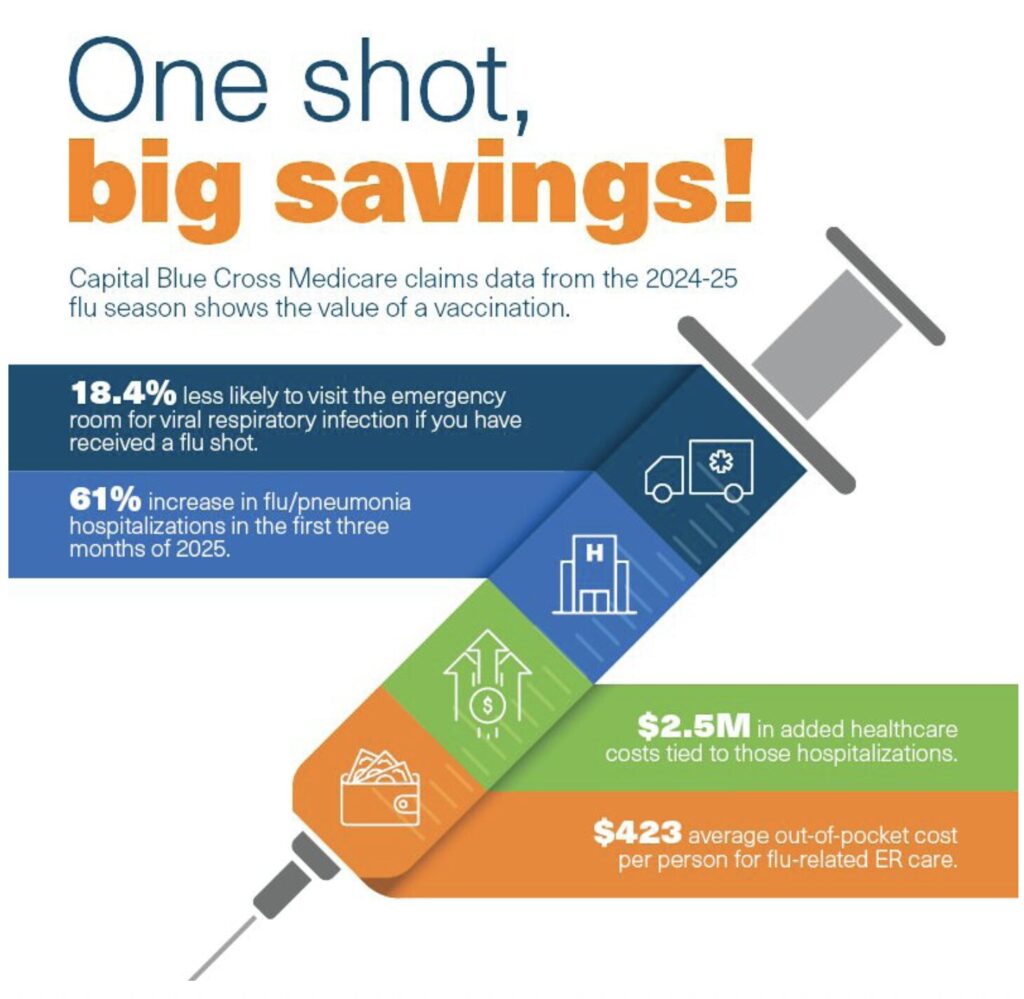
For seniors age 65 and older, getting an annual flu shot can do more than help avoid a few days of illness – it can keep them out of the hospital and save them money, according to new Capital Blue Cross findings that highlight the value of flu vaccinations.

Capital data from the 2024-25 flu season showed that seniors who received their flu shots were nearly 20% less likely to visit the emergency room for viral respiratory infections than those who were not vaccinated. By avoiding the emergency room, seniors also avoided out-of-pocket costs averaging $423 per ER visit and $765 when an ER visit resulted in a hospital admission.

“Vaccines aren’t just about fighting the flu – they’re about preventing serious illness that can lead to emergency care or hospitalization,” said Dr. Shikha Doomra, Clinical Medical Director at Capital Blue Cross. “This data shows that skipping the flu shot can have real consequences, especially for older adults.”

U.S. flu hospitalizations in 2024-25 were the highest in more than a decade, according to the Centers for Disease Control and Prevention. In January through March 2025, which roughly coincides with peak flu season, Capital Blue Cross saw flu and pneumonia-related hospital admissions among its Medicare Advantage members rise by more than 60% compared to the same period in 2024. That added $2.5 million in healthcare costs.

With another flu season unfolding, Capital Blue Cross is encouraging members to protect their health – and wallets – by getting a flu shot.

Flu season typically begins in the fall with peak flu activity usually occurring in the winter. Getting vaccinated now gives your body time to build strong protection, said Dr. Doomra.

While flu vaccines are especially critical for older adults, preventive care is important for everyone, Dr. Doomra said. In addition to the flu shot, vaccines for RSV and pneumonia can offer added protection – particularly for those with underlying health conditions or weakened immune systems.

“Whether you’re a senior, a caregiver, or simply preparing for the season, taking a few simple steps now can help you stay healthier through the fall and winter months,” Dr. Doomra said.

Here are simple steps to ensure you’re prepared.


Know what vaccines you need
.

The CDC recommends a flu shot for everyone age 6 months and older. RSV and pneumonia vaccines also are available for eligible individuals, including older adults and those with certain health conditions. Talk to your doctor to find out which vaccines are right for you.


Find a convenient location
.

Vaccines are available at doctor’s offices, pharmacies, clinics, and health departments. Many offer online scheduling.


Check your insurance coverage
.

Flu, pneumonia, and RSV vaccines may be covered under your health plan, but double check to make sure. If you don’t have health insurance, you may still be able to get vaccinated at low or no cost through local health departments, community health clinics, or federally funded programs.

For more details on who should get vaccinated, where to go, and how to check your coverage, visit the Capital Journal.

This story is sponsored content.

Continue Reading

Making Healthcare More Affordable in Central PA

Todd Shamash is president and CEO of Capital Blue Cross.

As a company founded in Harrisburg nearly 90 years ago, Capital Blue Cross has always had a vested interest in the health and well-being of this community. We’re proud to do our part to help make the Harrisburg region a great place to live, work, and raise families.

Central Pennsylvania, like so many areas of the country, struggles to ensure everyone has access to affordable, quality healthcare that can help them enjoy fulfilling, productive lives.

So why is healthcare so expensive?

There are a lot of factors driving healthcare costs, but let’s look at how Capital Blue Cross is effectively addressing three major ones: how services are paid for, how chronic illnesses like diabetes and heart disease are treated, and the growing demand for prescription drugs.


Capital Promotes a Better Healthcare Payment Model

Healthcare providers, whether it’s a hospital or your family doctor, are often paid based on the number of tests and treatments provided rather than the quality and effectiveness of those services. But what if they were paid based on whether your health actually improved?

Capital advocates a payment model that rewards healthcare providers based on how much they help patients improve or maintain their health. Our model looks at factors that historically were often absent from the payment equation—quality of care, patient satisfaction, and appropriate cost. And we look at data on the effectiveness of care to continually find ways to further improve care.

The end result is more effective care at lower costs.


Capital Helps Manage Chronic Illnesses

Odds are you or someone you know has diabetes, heart disease, or another chronic condition that requires ongoing monitoring and care. In fact, 6 in 10 Americans are living with at least one chronic disease.

The complexity and cost of treating chronic illnesses continues to rise in part because traditional care models can sometimes lack the coordinated care and proactive support patients need.

Capital is working to fix this. We have care teams that focus on coordinating care and engaging our members with chronic illnesses to help improve their health outcomes and reduce costs of care without compromising the quality of care. We also work closely with our network provider and health systems to strengthen traditional care models.

We also promote a concept of “whole-person care,” which takes into account all the social and economic factors that might be impacting a person’s well-being. For instance, if someone dealing with a chronic illness has difficulty affording medications or arranging transportation to a doctor, we look at ways to overcome those challenges so they can get the care they need.


Capital is Making Prescription Drugs More Affordable

Nearly half of Americans routinely take a prescription medication and spending on retail prescription drugs has steadily increased for decades. The cost of these drugs can lead some to stop taking necessary medications, putting their health at risk.

Capital Blue Cross has proven programs to rein in drug costs. For businesses that have Capital coverage for their employees, we’ve managed to lower the cost of expensive specialty drugs that treat conditions like arthritis, psoriasis, and Crohn’s Disease. Our strategies saved those employers more than $11 million in 2024, while also saving the employees thousands of dollars annually.

We also were the first health insurer in the nation to work with Mark Cuban Cost Plus Drugs to help people save on their prescriptions, helping our members get dramatic savings on critical prescriptions. Cost Plus Drugs has a simple, transparent cost formula on hundreds of commonly used medications to treat everything from high blood pressure to diabetes to mental health.

We know there will continue to be challenges in addressing the cost and access to healthcare, but Capital is continually looking at ways to proactively address these challenges. As a locally based and not-for-profit insurer, It’s part of our commitment to go the extra mile for Harrisburg and all the communities we call home.

Todd Shamash is president and CEO of Capital Blue Cross. For more information, visit www.capbluecross.com. This article is sponsored content.

If you like what we do, please support our work. Become a Friend of TheBurg!    

Continue Reading

Your Guide to Flu Season: Knowing when and where to get care can save you time and money

Central Pennsylvania, like much of the country, is experiencing a late-season surge in flu, RSV, norovirus and other virus-borne illnesses. If you contract a seasonal virus, knowing when and where to seek care can help minimize the spread of illness and ensure local healthcare facilities are not overwhelmed.

“This time of year, we are seeing some emergency rooms inundated with cases of flu and stomach viruses—conditions that sometimes can be treated just as effectively by a family doctor or urgent care,” says Dr. Jeremy Wigginton, Chief Medical Officer at Capital Blue Cross. “Weighing your best options for care not only can save you time and money, it can help keep hospital caregivers from being stretched too thin.”

Dr. Wigginton notes that self-care practices—such as rest, fluids and over-the-counter medications—are important first steps, but it’s also crucial to know when and how to seek professional healthcare.

Here’s how to choose the best care option for your symptoms and help ensure a speedy recovery.


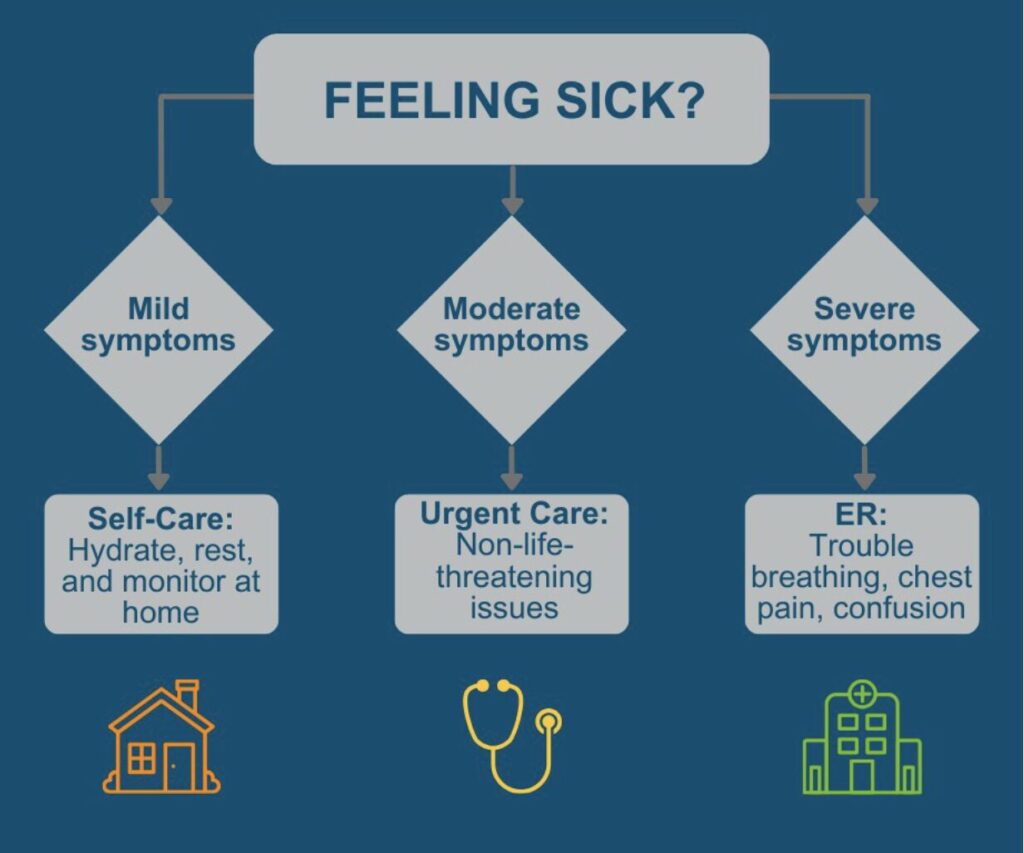
Self-Care at Home

For mild to moderate flu symptoms, self-care is often the best first step. Rest, stay hydrated, and use over-the-counter medications to manage your symptoms. “Staying home and taking care of yourself not only helps you, but it also helps prevent the further spread of viruses,” Dr. Wigginton advises. “If you have chronic conditions like diabetes or high blood pressure, talk to your regular healthcare provider about which over-the-counter medications are best for you. Pharmacists also can help answer questions when you’re choosing over-the-counter treatments.”


Your Family Doctor

If your symptoms persist or get worse, contact your primary care physician (PCP), commonly known as a family doctor. They can provide guidance on managing your symptoms and prescribe medications if necessary. Regular check-ups with your PCP also can help manage chronic conditions and prevent complications.


Telehealth Services

Many healthcare providers and insurance carriers offer telehealth services, allowing you to see a doctor without leaving home. These options can be especially useful if you need medical advice outside of regular office hours. Many telehealth providers also can refill and prescribe medications and help determine if you need to visit an urgent care center or the ER.


Urgent Care Centers

If you need immediate attention and can’t see your family doctor, urgent care centers might be a good option. They can handle non-life-threatening issues and usually have shorter wait times and lower costs compared to ERs. They are equipped to deal with a variety of medical issues that require prompt attention but are not severe enough to warrant an ER visit.


When to Visit the ER

The emergency room should be reserved for critical symptoms such as severe breathing trouble, chest pain, confusion or other life-threatening conditions that require immediate and intensive medical intervention. Keep in mind emergency rooms tend to see the sickest patients first, regardless of when they arrive, so you might wait longer if your condition is less urgent. ER visits also typically cost more than a family doctor or urgent care.


Making the Right Choice

Making informed healthcare decisions during flu season can save you both time and money, while ensuring that emergency rooms are available for those who really need them. By knowing when to practice self-care, consult your family doctor, use virtual care, or visit an urgent care or ER, you can manage your health more effectively and make the best choices for your well-being.

For more information, visit www.capitalbluecross.com.

If you like what we do, please support our work. Become a Friend of TheBurg! 

This column is sponsored content.

Continue Reading

Site of Care: Knowing where to go for care can save time, money

When to go to urgent care vs. ER vs. family doctor

You twisted your back and the pain is growing worse. Should you call your family doctor, head to an urgent care, or drive straight to a hospital emergency room?

Knowing which one to choose – and when – can save you time and money.


What is a Primary Care Provider and when should you see one?

A primary care provider (PCP) is a doctor, nurse practitioner, or physician assistant who gets to know you through regular appointments. You typically see your PCP, commonly referred to as a family doctor, for nonemergency medical issues such as:

  • Yearly exams
  • Preventive screenings
  • Stress management
  • Medication management
  • Minor illnesses and injuries

PCPs also can help coordinate care for chronic conditions such as diabetes or a heart condition and refer you to a specialist when needed. Generally, copays are lower for PCP visits than they are for urgent care or emergency room visits.

But when an unexpected illness or injury takes place, you may not be able to see your PCP right away. Or you might not have a PCP (if that’s the case and you’re a Capital Blue Cross member, try MyCare Finder).


When to choose urgent care over the emergency room

Urgent care is the middle ground between your PCP and the emergency room (ER). If you have an illness or injury that needs immediate attention and can’t schedule an appointment with your family doctor, urgent care might be your best option.

Urgent care centers can help with immediate concerns such as:

  • Minor bone fractures
  • Back, joint, or muscle pain
  • Bronchitis
  • Cuts and minor burns
  • Diarrhea or vomiting
  • Skin conditions
  • Infections
  • Allergic reactions
  • Abdominal pain
  • Fevers

Generally, copayments at an urgent care are more than a PCP visit, but less than an emergency room copay.


When might an ER visit be needed?

According to the Mayo Clinic, ER visits are typically for more serious medical issues such as:

  • Chest pain or pressure
  • Compound fractures (bone that protrudes through the skin)
  • Head injuries
  • Pneumonia
  • Seizures
  • Severe abdominal pain
  • Shortness of breath
  • Sudden, severe headache, or paralysis or weakness
  • Uncontrolled bleeding

If your emergency is life-threatening, such as choking, a heart attack, or sudden events that prevent you from getting to a hospital but require immediate attention, call 9-1-1.

ERs tend to see the sickest patients first, regardless of when they arrive, so you might wait longer if your condition is less urgent. The median wait time at an ER is 90 minutes.

An ER visit also typically costs more. According to claims data from Capital Blue Cross, the average estimated cost for an urgent care visit is about $137 compared to nearly $2,300 for an emergency department visit.

If you are admitted to the hospital, an ER copay is waived.


Consider telehealth for convenience and cost

Some providers and insurance carriers have telehealth options, which means you can see a doctor using your phone, tablet, or PC. Many can refill and prescribe medications and help determine if you may need to go to an urgent care center or emergency room.

If you’re a Capital Blue Cross member and your plan covers it, our VirtualCare service can help you see a doctor or nurse right away – seven days a week, 24 hours a day. Refer to your Benefits Booklet after logging in to your secure account to make sure your plan covers VirtualCare.


Sources:

A Family Doctor Can Be Your Pathway to Better Health – THINK

Emergency vs. Urgent Care: Differences – Mayo Clinic Health System

Should You Go to the ER or Urgent Care? How to Decide

Continue Reading

Half of Parents Are ‘Completely Overwhelmed,’ but Help Is Out There

Hilary Baude and her daughters

Saying that Hilary Baude has a few things going on is like calling Times Square sort of crowded.

Baude is a 42-year-old mother of 11- and 5-year-old girls. She’s a full-time kindergarten teacher, an Ironman athlete and marathon runner, a kidney donor, and a doctoral candidate in her dissertation year.

“Every single moment of my day is occupied with the demands of a full-time job plus the typical motherhood routines, coupled with the requirements of my personal endeavors,” Baude said, adding that her stress “often manifests itself in ways that make me not present in the moment with my children.”

“For example,” she says, “I read to my daughter every night before bed, and being a kindergarten teacher, I can read pretty much any children’s book with expression and engagement. However, I have found myself not even remembering what I had just read to her because I was thinking about the several other things I needed to do before the morning.”


Stressors and Stats

Baude’s jammed-packed life may be exceptional, but her parental stress level is not.

According to a recent advisory from U.S. Surgeon General Dr. Vivek Murthy, 48% of parents rate their daily stress levels as completely overwhelming.

“Parental stress is both an enormously significant and under-addressed issue,” said Jen Carricato, Senior Health Education Consultant at Capital Blue Cross. “Millions of American moms and dads deal with multiple challenges every day, and it can sometimes simply be too much.

“Yet as common as it is, there has been too little in the way of organized approaches to cope with this problem on either personal or societal levels, and we need to change that.”

According to the surgeon general’s 2023 data, parents are 65% more likely to say they’ve faced high stress levels in the past month than other adults.

The main stressors cited in the advisory are:

  • Financial strain, economic instability, and poverty.
  • Time demands.
  • Children’s health and safety.
  • Parental isolation and loneliness.
  • Technology and social media.
  • Cultural pressures and children’s futures.


Remedies

If you’re a stressed-out parent or caregiver, remember that caring for yourself is critical to caring for your family. Advocate for the care that helps you cope.

Consider these tips:

  • Nurture connections with other parents and caregivers. For example, join or create an Employee Resource Group at work that provides specific support for parents and caregivers.
  • Recognize how mental health challenges manifest and seek help when needed. Explore comprehensive, affordable healthcare plans that include quality mental health coverage. Capital Blue Cross, for instance, offers a VirtualCare telehealth option and can connect members to behavioral health professionals online or by calling 866.322.1657. Some companies, including Capital, offer employee assistance programs that make it easy for employees to access mental health professionals for any issue.
  • Take advantage of helpful resources. Members covered by many Capital employer plans enjoy access to the insurer’s parenting-support app, which include comprehensive maternity and family health programs that include guidance and health coaching. The app also guides employers and employees through resources such as parental-leave and return-to-work frameworks, a supporting-families checklist, and other family planning information.


Taking Steps to De-stress

What’s most important, Capital’s Carricato said, is that parents acknowledge their stress and its potential perils, and take steps to address it.

“Not only for their own sake, but also for their children’s well-being,” she said. “Because there is an obvious trickle-down – if a parent is struggling badly with stress to the point of being perpetually overwhelmed, that will inevitably carry over to the kids.”

Which brings us back to Hilary Baude, the multi-tasking, athletic, goal-oriented – and sometimes overwhelmed – supermom of two, who says that a reliable set of coping techniques and supportive resources are “key for parents as they try to navigate this chaotic, overwhelming, and stressful period of life.”

“There is no time to go searching for these supports on my own,” she says, “so having a go-to list is essential for reminding me that I am not alone in this fog of motherhood, and that my stress is normal and expected considering the demands of daily life with children.”

For more resources and stories that can help you on your health and wellness journey, visit Capital Journal by Capital Blue Cross.


Continue Reading

Capital Blue Cross Offers Proven Ways to Manage – and Even Reverse – Type 2 Diabetes

About one-third of Americans will develop diabetes sometime in their lifetime. This chronic disease can cause severe health problems, damage vital organs, and shorten life expectancy.

Capital Blue Cross offers a broad range of proven resources and support to help get diabetes under control and encourage healthier lifestyle choices that can prevent diabetes.

In 2021, Capital became the first Pennsylvania health insurer to offer a unique program that works to reverse type 2 diabetes through a well-formulated, ketogenic diet that helps the body use fat, rather than carbohydrates, as its primary fuel. Capital also offers a separate program that helps members reduce their risk of developing type 2 diabetes, and helps those with types 1 or 2 manage their disease.

Our efforts to fight the diabetes epidemic are paying off for members and employers:

  • Capital members using the diabetes control program have collectively lost more than 66,000 pounds since 2021.
  • Capital members using the diabetes reversal program saw their A1c levels drop by about one full point on average during their first year in the program. Higher A1c levels are linked to diabetes complications.
  • On average, Capital members were able to reduce prescription medications by about 46% in the first year of the diabetes reversal strategy.
  • Combined, the programs have helped Capital customers save about $20 million collectively since 2021.

In addition to these tools, Capital reaches out to high-risk members with diabetes to provide care management opportunities. And our Healthy Blue Rewards program offers members a highly personalized roadmap to healthier living, guiding them to the “next right thing” for their health and allowing them to take advantage of online tools and challenges to help stay motivated.

For those who want a more personalized healthcare experience or are unsure where to start on their journey to better health, consider a one-on-one consultation at one of the Capital Blue Cross Connect health and wellness centers.

For more health and wellness news and information visit Capital Journal by Capital Blue Cross.  

Continue Reading

The Week that Was: News and features around Harrisburg

Dauphin County Court of Common Pleas Judge William Tully swore in the Harrisburg School District’s new superintendent Dr. Benjamin Henry, who was joined by his family.

What a great sunny, fall week here in Harrisburg. Take this weekend to stroll around the city, shop local, enjoy river views and, of course, catch up on your Burg reading. You can start with all of our recent reporting, below.

Allen Theatre in Annville, which has decades of history, is now under new ownership, our magazine story reported. The theater and its new accompanying Salamander Bookstore offer movies, live music and magic shows.

Big Brothers Big Sisters of the Capital Region announced that it will expand its service area to include its York and Adams county affiliate, our online story reported. The organization will also rebrand at Big Brothers Big Sisters of South-Central PA.

The Broad Street Market announced that two new vegan vendors would join its stone building, our online story reported. Harrisburg-based Honey Bear Ice Cream and Ve’Lightfully Vegan will open in the market in the coming weeks.

Capital Blue Cross warns the community that measles and whooping cough cases are rising nationwide. Click here, to find out more about the viruses.

Dennise Hill recently became the executive director of Brethren Housing Association, which provides housing to single mothers and children, our magazine story reported. Hill left her city government director position to follow her passion and return to the nonprofit world.

Harrisburg School District swore in its new superintendent, Dr. Benjamin Henry, at a board meeting this week, our online story reported. Also that evening, the district approved the resignation of the John Harris High School principal.

Mayor Wanda Williams announced Samuel Sulkosky as her new business administrator, filling a position that sat vacant for several months, our online story reported. Sulkosky served in borough and city manager positions over the last several years, most recently as the interim borough manager of Punxsutawney.

Pennsylvania Lt. Gov. Austin Davis held a press conference at the LGBT Center of Central PA to announce the recipients of a state safety grant, our online story reported. The LGBT Center, as well as community organizations and places of worship, were awarded money for safety improvements in light of a rise in hate crimes nationally.

Pittsburgh is the perfect place for a fall trip, offering delicious cuisine, museums and a conservatory, among other features. Click here, for recommendations.

Sara Bozich has the hookup for fun fall events this weekend. Click here for the list.

Do you receive TheBurg Daily, our daily digest of news and events delivered right to your email inbox? If not, sign up here!

Support quality local journalism. Join Friends of TheBurg today!

Continue Reading

The Week that Was: News and Features around Harrisburg

Midwest Food Bank PA and local officials kicked off a new wellness program at the state Capitol.

You know it’s officially fall when our October issue of the magazine drops! Inside, we have tons of fun autumn activities and stories, so grab a copy and get to reading. First, get up to speed on this week’s news, below.

Anna Rose Bakery & Coffee Shop in downtown Harrisburg is under new ownership, our online story reported. Former employee and baker Riley Madar has taken the reins and plans updates.

Arts on the Square, hosted by Market Square Presbyterian Church, features international, national and local musical performers and visual artists throughout the year. In our magazine story, find out what’s to come for the season.

Bethesda Mission announced that its executive director, Scott Dunwoody, would retire at the end of January, our online story reported. Dunwoody served with Bethesda for 18 years, including eight years as director.

Harrisburg School District receiver Dr. Lori Suski approved the purchase of locked cell phone cases for high school students, at a board meeting, our online story reported. District officials shared that the phone ban has been implemented to help remove distractions from learning.

Harrisburg was awarded a $2 million federal grant for planting and maintaining city trees, our online story reported. The city will also use funds to offer environmental education to youth and adult residents.

Health equity is an important part of Capital Blue Cross’s work, which has included providing resources and services to lower-income patients. Read more in this sponsored post.

Market Square Concerts is kicking off its 2024-25 season with new experiences for audiences, our online story reported. The next show on the schedule will feature Philadelphia-based Tempesta di Mare on Nov. 9 at St. Michael Lutheran Church.

Midwest Food Bank PA kicked off its Giving Wellness initiative at a press conference in the state Capitol, our online story reported. The program offers businesses and community groups fitness and health resources in exchange for support for the organization.

Our publisher introduces the October issue of the magazine, here, and reflects on the many tourists that visit our area, especially in the fall.

Sara Bozich has fall happenings galore to fill your weekend with, here.

Do you receive TheBurg Daily, our daily digest of news and events delivered right to your email inbox? If not, sign up here!

Support quality local journalism. Join Friends of TheBurg today!

Continue Reading

A Resurgence: Measles and whooping cough, what you need to know

With cases of measles and whooping cough rising nationwide, Dr. Michael Colli said he has more parents’ attention.

“When the numbers are low, those conversations are harder because you’re trying to protect against this mystery virus,” said Dr. Colli, a pediatrician from Keystone Health in Chambersburg. “Once (the numbers) start to go up, it becomes easier.”

Through Sept. 9, measles cases are four times higher in 2024 than all of 2023 (247 compared to 58), according to the Centers for Disease Control and Prevention (CDC). The U.S. has experienced a similar uptick with whooping cough, with cases also four times higher in 2024.

Here are four things everyone should know about this sudden surge:

1. Measles and whooping cough can cause serious health problems.

Both can cause serious and lasting health effects, especially with children.

“Measles is not just a rash,” said Dr. Jeremy Wigginton, chief medical officer at Capital Blue Cross. “It can have very serious complications, including ear infections that lead to permanent hearing loss, pneumonia, and encephalitis (swelling of the brain).”

For whooping cough (also called pertussis), Dr. Colli said infants are at greatest risk because their immune systems are still developing.

“The younger you are when you get it, the more devastating it can be,” he said.


2. Measles is extremely contagious.

Achieving herd immunity is different for every virus depending on how contagious it is. Measles spreads so easily that an estimated 95% of the population needs to be vaccinated to reach herd immunity.

Dr. Colli said only two doses of the measles, mumps and rubella (MMR) vaccine can provide lifelong protection for most people.

In most states, children are required to get the MMR vaccine before entering kindergarten. But kindergarten classes in 37 states have rates below the 95% needed for herd immunity, according to the CDC.

One of those states is Pennsylvania, which had vaccinated 95% of its incoming kindergarteners from 2017 to 2022 until dropping below that mark for the 2022-2023 school year.

Of the 2024 measles cases through mid-September, the CDC said more than two-thirds involve people under 19, and 87% were unvaccinated.


3. Whooping cough vaccine is NOT one and done.

Unlike the MMR vaccine, the whooping cough vaccine wanes over time, said Dr. Colli.

The CDC recommends everyone receive five doses of the pertussis vaccine between 2 months and 6 years of age, with a final dose at age 11 or 12. Pregnant women also should receive it.

Whooping cough is most dangerous to infants, but Dr. Colli said teens and adults also should follow CDC guidelines.

“The best thing we can do to protect our infants is to make sure all the adults around them are vaccinated with a recent Tdap booster,” he said.


4. Outbreaks impact entire communities.

Outbreaks inflict painful consequences that can ripple through entire communities. A study from the journal Pediatrics estimated that a 2021 measles outbreak in Washington state cost $1 million in lost workforce production.

In 2016, Dr. Colli helped address a whooping cough outbreak in Chambersburg that started in a local school.

With similar outbreaks occurring in 2024, including at a school in Montgomery County (Pa.),  doctors are again calling to ramp up vaccinations.

“The real risk lies in not getting vaccinated,” Dr. Wigginton said. “It leaves yourself, your family, and others in your community vulnerable.”

Because they are a preventive measure, MMR and pertussis vaccines are covered by most plans offered by Capital Blue Cross if you meet the CDC criteria.

For more health and wellness news and information that can benefit you or your family, visit thinkcapitalbluecross.com.

This is sponsored content.

Continue Reading