
Ramon Contreras
The habits of three Harrisburg residents just might tell you most of what you need to know about grocery shopping in the city.
The three customers milled about the C-Town market on N. 6th Street on a Monday afternoon, all for different reasons.
Sandra Chandler—the regular—shops for groceries at the store around three times a week. Some of the staff know her. She picks up items she needs for cooking meals, restocks throughout the week and buys cat food, which she was filling her basket with that Monday. Chandler doesn’t have a car but can easily walk from her Uptown home to C-Town.
James Wright—the returner—stops into C-Town once in a while for small items and quick pickups. He also lives in Uptown, near the store, but most of the time travels to Middletown’s Sharp Shopper for its affordable products.
Willie Linder—the newbie—had a plastic container of cut fruit in hand. It was his first time at C-Town. He was impressed by the expansive selection of fresh food and said he’d be back. Linder typically shops at Giant in Kline Village or at the corner store near his house in South Harrisburg.
Access to groceries and shopping habits in Harrisburg depend on factors like those exemplified by Chandler, Wright and Linder—transportation and location, affordability, preference and ease.
Discussion on food availability in Harrisburg has recently resurfaced on social media, although it has been a topic city officials and community members have chewed on often over the years. Is Harrisburg a food desert? Are city residents well served by grocery stores? In all neighborhoods? Is a car necessary to get fresh food? Should people have to travel across or outside of the city to get it?
In an attempt to take inventory of Harrisburg’s grocery store options and to find out if people think they’re enough, TheBurg spoke to business owners, customers, officials and others, who shared their experiences.
Aisle 1—Running Low
“We need new ideas and new passion,” said Ash Zimmerman, a Shipoke resident and downtown business owner.
Zimmerman wants a grocery store downtown. She wants one so badly that she’s been calling grocery chains herself, trying to reel one in.
“I’m very passionate about this grocery store,” she said.
Outside of a few convenience stores, there is no grocery store downtown. For Zimmerman, this is a challenge. Due to a disability, driving isn’t easy for her. She mostly walks to her shop outside Strawberry Square. Food delivery services like DoorDash aren’t affordable long-term either.
She’s also talked to Harrisburg University students who’ve told her they don’t have a meal plan and struggle to access food close by.
“I think it would make such a significant difference in the quality of life downtown,” she said.
Zimmerman thinks she has a lead on an East Coast grocery chain that may consider opening in Harrisburg if it can find a big enough location, with parking and easy access for delivery trucks. She’s working with local realtors and city and county officials, and even started a weekly group for community members to discuss ideas.
“It could be possible. It just depends on the right partner,” said Harrisburg’s Business Development Director Jason Graves.
Graves said that he would love to see several new grocery stores throughout the city, but that so far, he hasn’t had any luck getting stores to bite.
“The answer has always been ‘no,’” he said.
Outside of downtown, most other sections of the city have at least one grocery store within their bounds, including Allison Hill, Uptown and Midtown. But, if you live around Maclay Street, for example, you’re over a half mile from the closest stores in Uptown and Midtown. The same goes for many sections of Harrisburg where, if you don’t have a car, you may be lugging your gallon of milk for blocks.
According to data from the U.S. Department of Agriculture, most of Harrisburg is considered low-income/low-access, the updated term for a “food desert.” Only a section of Midtown and a section of Allison Hill are not included in the designation. The most recent data is pulled from the 2019 census and only includes large supermarkets, most likely knocking several of Harrisburg’s smaller stores out of the running. In most of the low-income/low-access areas, residents may be a half mile to a mile away from a store and many are limited by access to transportation.
“If I didn’t have this place, I’d have to get on a bus,” explained Chandler, the regular at C-Town.
Aisle 2—Stocked Up
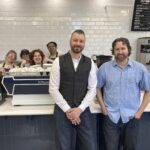
Ramon Contreras, a Harrisburg area resident originally from the Dominican Republic, opened C-Town, also called Market Fresh, in Uptown in 2021, having seen no other options in the neighborhood. Since then, he’s established his store as an organized and clean shop with a vast selection of products and friendly staff. He makes sure their displays are stocked with tomatoes, squash, bananas, apples—plenty of fruit, veggies, meat and dry goods—and trains his staff heavily on customer service.
“We always say, ‘Good morning,’ ‘Hello,’” he said. “My father taught me. If you make them happy, the customers will come back.”
And if they don’t have something that a customer is looking for, Contreras will special order it.
Rafael Bernal Jr., who runs Derry Family Supermarket in Allison Hill with his father and family members, will do the same for customers.
The family-run store has around a dozen aisles, a fresh meat counter and produce section with food from a wide range of cultures.
Bernal said that the demand for a variety of cultural cuisines has only continued to rise as the community becomes more and more diverse, especially in the Latino and African communities.
“We always try to have what they need,” he said.
That effort includes working with over 20 vendors, receiving meat deliveries four times a week and sometimes stocking non-name brand items to keep costs down.
Bernal said that their prices are mostly on par with other grocery stores, but making the numbers work is a challenge for many small, independent grocers.
While stores like C-Town and Derry Family do well with the international community, they also have plenty of “American” products.
But Bernal thinks that people forget that even brands that are Spanish, such as Goya, often carry the same products as others. For example: a can of Goya corn.
“It’s the same corn inside,” Bernal said with a chuckle.
Harrisburg is relatively well off with diverse, cultural food shopping options, although many of the snug bodegas, corner stores and tight markets wouldn’t make the USDA’s list.
In Allison Hill, there’s the sprawling Asia Mall, which boasts aisles and aisles of noodles, rice, seafood, sauces, greens and much more. There’s Eniola African Store on Derry Street with yams, cassava flour, goat meat and lots of Nigerian products. Los Tres Hermanos on Cameron Street has a grocery section in back of its restaurant stocked with Mexican items.
Aisle 3—Price Check
In Midtown, husband and wife team Sang and Yeon Kwak have operated Deardorff Grocery corner store for 28 years on the corner of Green and Hamilton streets. The shop is more of a quick pick-up spot, with a small selection of cooking and baking items, frozen foods, dairy products like eggs and milk, and a counter with lunchmeat and cheese. Neighbors often pop in for a refill of something, a snack or supplement for a meal.
When they first opened, they were among nearly two dozen Korean-owned stores, Yeon said. Now they’re just one of a few left, Yeon believes, explaining that she thinks people have retired. In fact, that may not be long down the road for this couple, who are in their 60s and think they have maybe five years of business ownership left in them.
Yeon, who spoke using a translation app, wasn’t shy about saying how tired she is from the day-in and day-out grind. The little, reliable store is only closed three days out of the year. And Yeon is worried.
Profit margins have been shrinking significantly as prices of goods have risen and as more people are driving to bigger stores rather than walking around the corner. But the couple also can’t afford to pass the burden onto shoppers.
Finances have become very tight, and it’s been hard.
“It’s going to get harder and harder,” she said.
This is a common issue for many small, independent stores, as both Deardorff and Derry Family owners explained. Unlike supermarkets, they don’t receive the big buying discounts and have to pay much higher prices for goods. That often then results in the stores needing to increase prices for customers, and, in a lower-income city like Harrisburg, that can drive people away, literally, as they head to suburban options—that is, if they have a car to do so.
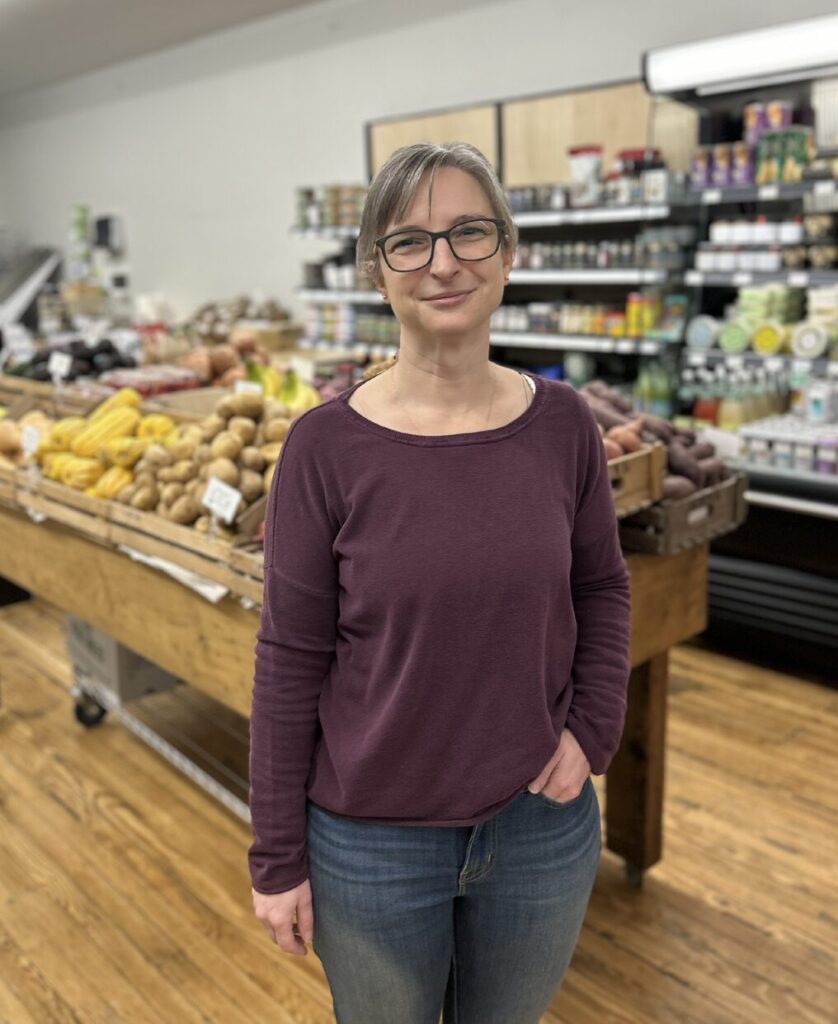
Julia James
Radish & Rye Food Hub on N. 3rd Street knows the challenges of independent food stores well.
“The grocery industry is not friendly to small, independent operators,” said Julia James, co-owner of Radish & Rye. “Grocery is always an extremely low margin business for everybody, including the big guys. But if you’re serving a low-income area as an independent operator, you’re going to have a really hard time competing on price in a way that is accessible to your neighborhood.”
Radish & Rye is different from most Harrisburg grocery stores—its focus is on local and organic foods. It began in the Broad Street Market, yet another Harrisburg location for fresh and prepared food.
With the organic angle, Radish & Rye found a way to work around some of the price troubles small stores face. They recently joined the INFRA Natural Food Retailers co-op, which connects them to a network of other independent stores and gives them joint buying power and a voice.
But not all stores have that option, and for some, urban store ownership is just too hard.
While many dream of a downtown grocer now, Harrisburg resident Adam Porter put that dream to action in 2017, when he and a partner opened Provisions, a bulk-model store inside Strawberry Square. The store, which had customers bag and weigh spices and dry goods, and where they could purchase a single banana instead of a bunch, lasted until 2020, closing just before the pandemic. The bulk model’s aim was sustainability, Porter explained, but ultimately he felt it may have been too ahead of its time for Harrisburg.
Porter said that, while people were coming in the door, purchases were too small, as they steadily drew in the downtown lunch crowd for snacks, while having trouble getting residents to change their shopping habits to fit with their progressive model.
However, Porter did learn that the demand for a grocer is there. He frankly doesn’t foresee a large chain grocer setting its sights on downtown, as they look for things like large physical space and higher average household incomes. But an independent store could have a chance, he thinks.
“They would have to […] commit to it and only it full time. That’s the only way it works when you’re a small independent,” he said. “We could help them not make some of the same mistakes that we did.”
Porter also thinks that the city government could do more to incentivize business growth, like eliminating the Business Privilege and Mercantile Taxes for grocers, who already have thin margins.
“That one thing wouldn’t be a silver bullet, but I think it would go a long way,” he said.
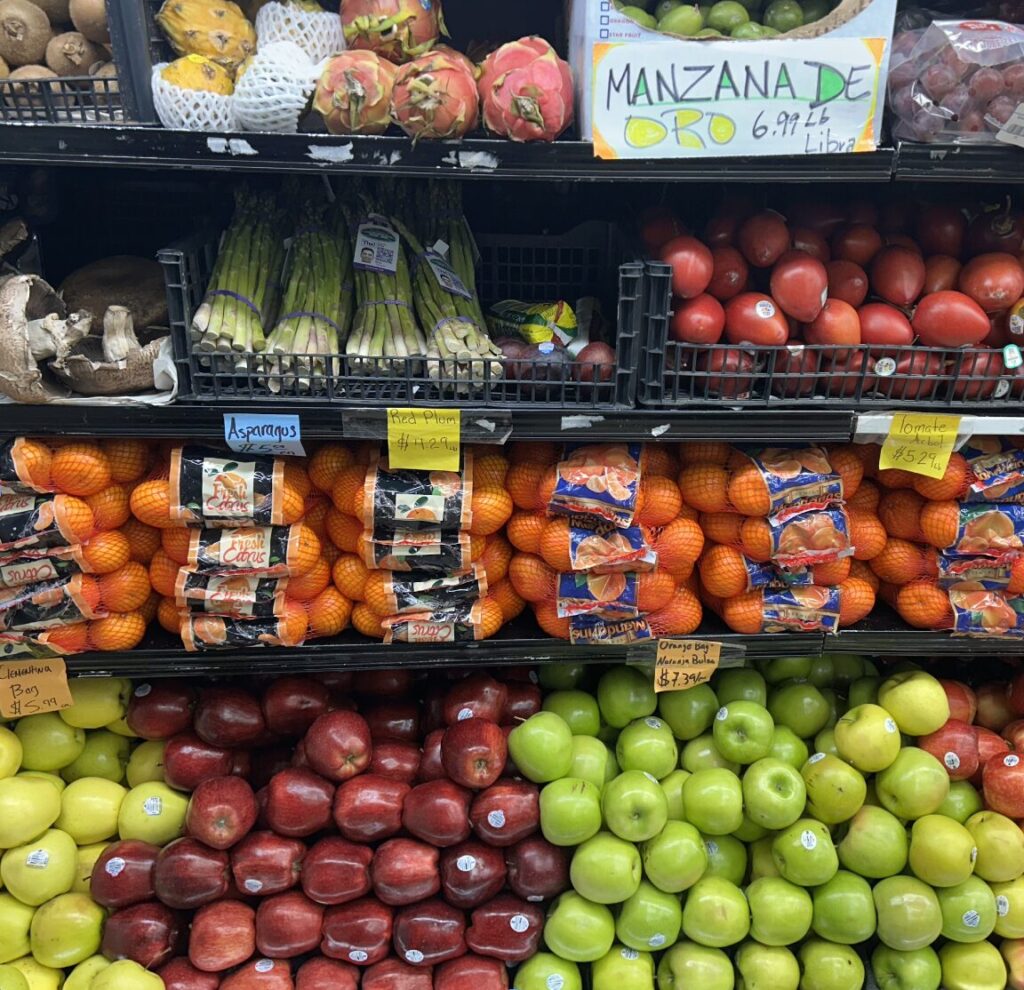
Derry Family Supermarket
Aisle 4—Meal Planning
While most of Harrisburg is a food desert by definition, people have mixed feelings about whether or not the city is well served by grocers.
Many think there aren’t enough—like Porter and James who purposely opened their own stores to fill that need.
“I think one of the reasons that people live in cities is to have a walkable lifestyle and so then not having a grocery store is a pretty big missing amenity from city life,” James said.
Many of her customers are walkers. In fact, she even has to take that into consideration when choosing what she stocks in the store—smaller bottles of mayo and salad dressings sell better because they’re lighter to carry home.
Some of the interviewed customers confirmed James’ sentiment, saying how, without key stores in their neighborhoods, they’d be forced to walk far distances or wait for buses. Some likely already have to do that, especially if stores nearby aren’t in their price range.
Porter has seen the struggle many carless residents face firsthand, when he drove briefly for the rideshare platform Lyft.
“The amount of ride requests to the Kline Plaza Giant would blow your mind,” he said.
Some store owners like Contreras at C-Town feel somewhat overlooked by those who may not think Harrisburg has options. When asked if he thought Harrisburg was a food desert, he said “no”, that those who say it is must “not be coming to my store.”
James, while not completely in agreement, does take issue with some of the methodology of the USDA low income/low access data, which excludes counting small stores, which often encompasses international grocers.
“USDA’s definition doesn’t feel to me like a complete one. It feels very white-centric,” she said.
Then there are others who fall somewhere in between, like Bernal at Derry Family Supermarket.
“It’s hard to say,” he said. “To a certain degree, I kind of agree that there are not enough. But it’s not like there’s nothing.”
Meanwhile, a few customers and shop owners interviewed weren’t overly familiar with the term food desert or hadn’t thought much about it before. Because to most, grocery shopping isn’t a part of some urban planning term or concept, but just a part of daily life. Whether that daily reality is a challenge or something of ease, is the result of a complex web of factors.
In the meantime, the businesses that are invested in keeping Harrisburg fed plan to keep their doors open and their fridges stocked.
“We definitely owe our thanks to the community,” Bernal said. “They help us. We help them.”
C-Town/Market Fresh is located at 2446 N. 6th St., Harrisburg.
Derry Family Supermarket is located at 345 Carlisle St. (off Derry Street), Harrisburg.
Deardorff Grocery is located at 224 Hamilton St., Harrisburg.
Radish & Rye Food Hub is located at 1308 N. 3rd St., Harrisburg.
If you like what we do, please support our work. Become a Friend of TheBurg!