
 It’s no secret that prescription drugs can take a toll on your wallet. One classification of medication in particular—biologics—has had an oversized impact on the rising cost of prescription drugs.
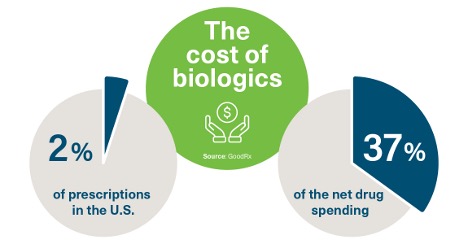
Biologics make up only 2% of prescriptions in the U.S. but account for 37% of net drug spending, according to a report in the Journal of the American Medical Association (JAMA). The good news: With patents on many of the biologics developed in the 1990s and early 2000s starting to expire, the U.S. saw a record number of biosimilars introduced in 2024 as a lower-cost alternative.
For patients, using biologics to treat immune diseases, inflammatory conditions, cancer or diabetes, switching to a biosimilar may be worth exploring with your doctor. But it is important to understand how biosimilars work and why they are different than “generic” drugs.
How Biosimilars Are Different from Biologics
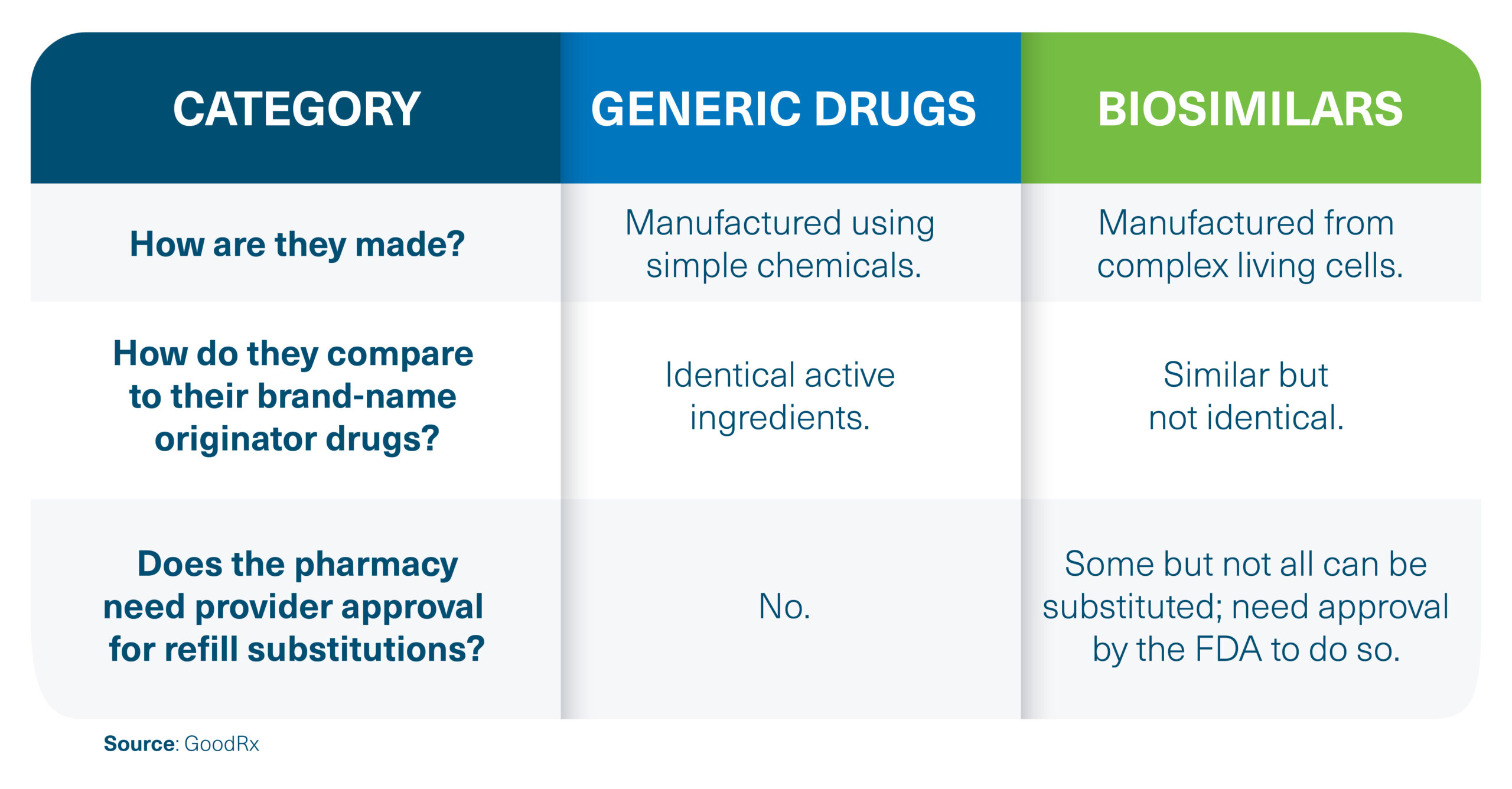
Biosimilars are similar but not identical to its original biologic. Both biologics and biosimilars are manufactured from complex living cells, which set them apart from other types of medications that are made using simple chemicals.
Like their biologic counterparts, biosimilars need to go through clinical trials and be approved by the FDA before becoming available in the U.S. In clinical trials, biosimilars are compared to their original biologic and need to demonstrate that they:
- Are made from the same source.
- Have the same dose and strength.
- Are given to patients in the same way (for example, by mouth).
- Have the same benefits in treating a disease.
- Have the same possible side effects.
How Biosimilars Are Different from Generics
Biosimilars are meant to be an alternative option to an original biologic and are required by the FDA to show the same effectiveness and side effects. While that sounds like a generic drug, there are important differences.
Not all biosimilars can be substituted by a pharmacist like generics can, because not all biosimilar manufacturers undergo the time-consuming process that is required by the FDA to gain what’s called “interchangeable” status. In fact, only 13 of the 71 biosimilars on the market (as of early 2025) have gained the FDA’s “interchangeable” designation.
How Biosimilars Work
Biologics and biosimilars target certain cells in your immune system, while more traditional drugs activate the entire immune system. For this reason, some biologics and biosimilars produce less predictable results and effectiveness may change over time.
Surveys from doctors show that the medical community continues to have concerns about the disruption that being forced to switch to a certain biosimilar may have on certain patients.
For that reason, Capital Blue Cross updated its drug formularies in 2025 to include both biosimilars and their biologic counterpart. For example, Capital is offering Humira (an original biologic) and four biosimilars to treat inflammatory conditions like rheumatoid arthritis and Crohn’s disease.
“This approach gives our members the flexibility to work with their providers to determine the best treatment options for them,” said Jamie Mazzocco, Director of Pharmacy Trade and Pricing at Capital Blue Cross. “We will continue to evaluate the best approach and adjust when we feel that it can provide maximum value and minimal disruption for our members.”
For a list of FDA-approved biosimilars, visit www.fda.gov/drugs/biosimilars/biosimilar-product-information. For more information on Capital Blue Cross, visit www.capitalbluecross.com.
This story is sponsored content.
If you like what we do, please support our work. Become a Friend of TheBurg!