Regaining a Foothold: PAVCOC helps vets adjust to civilian life, start new businesses.

Screenshot 2014-02-28 08.38.08

Members at the Veteran Connection Center, grand opening

When Kyle Estep joined the National Guard in 2002, he was unaware of the complications he would face down the road after spending nearly a year in Iraq.

“I suffered some injuries to my knees and developed severe tendonitis,” he said. “It was frustrating when I learned that the VA had a backlog, which forced me to wait almost two years before I could get my surgery done.”

And that was just the physical part of his pain. When he returned home, he had a hard time readjusting.

“One day, I was in Iraq, and, the next day, I was home,” he said. “The post-traumatic stress disorder (PTSD) started to set in, so I spent a lot of that summer drinking in order to cope. I found myself uncomfortable in my surroundings. Things that didn’t bother me before suddenly did, like crowds and traffic.”

Estep sought counseling at the Vet Center in Harrisburg, spending almost five years working on his issues with now-retired readjustment Counselor Thomas Murray.

“He was like a second father to me and brought me through it,” said Estep, who is now paying it forward by volunteering at the PA Veterans Chamber of Commerce (PAVCOC) Connection Center, located off the Carlisle Pike on 36th Street in Camp Hill.

PAVCOC was created to help veterans like Estep find resources that will help them succeed in civilian life. The Connection Center, which opened in November, is the nucleus of the operation. Housed on the second floor of the Shin Building, the space is comprised of four meeting rooms and a large conference area containing banks of computers where veterans can job search, update resumes and cover letters, work on school assignments and perform other tasks that will help them succeed. Currently, the Center houses 15 computers, and founder and President Robert Brandt expects that number soon to increase to 40.

Vets who need appropriate attire for upcoming interviews are invited to visit the Center and choose from among an array of suits for both men and women. “All they need to do is sign them out and bring them back, and we’ll have them cleaned,” said Brandt.

Books with such titles as “You Are Tremendous” by Charlie ‘Tremendous” Jones, “The One Minute Entrepreneur” by Kenneth Blanchard and “Leadership without Excuses” by Jim Grimshaw line the shelves of the back wall and are available as handy guides for those seeking their advice.

Help is also available for sprucing up resumes. “We help them translate their military field work into the civilian sector,” said Brandt.

Estep learned of the Connection Center when he was watching the news.

“I rarely watch the local news,” he said. “It just happened to be the day they were holding their grand opening.”

He reached out to the PAVCOC and was soon volunteering to help others like him navigate the sometimes-difficult world that awaits returning veterans. With the help of Brandt, Estep, who was unemployed at the time, found work and recently began a new job.

As more businesses are learning about the organization, they are beginning to reach out.

“Just recently, we were contacted by a delivery company that had 20 open slots they wanted to fill with veterans,” said Brandt. “They hired 12 out of 18 of our vets who applied, and they were paying between $15 and $18 an hour.”

The Center is partnering with several organizations, including the Hispanic Chamber of Commerce, the American Legion and Fort Indiantown Gap, and intends to add more to the mix as the year unfolds.

Veterans also will be invited to take advantage of workshops that will cover a wide range of topics from managing health and stress to small business development, where they can learn how to bid on federal, local and state contracts. The Center also will follow up on the careers of those they place. “We’ll offer that help, as well, and reach out to ensure that our veterans are secure in their future,” said Brandt.

Dr. Oralia Dominic is currently spearheading an effort to spread health literacy among underserved populations for Highmark.

“I was real enthused when I learned about the organization,” she said. “A person who serves our country and returns, if they are fortunate enough to make it home alive, has unique needs.”

Dominic uses her knowledge to educate veterans on nutrition and advise them on managing chronic health issues like diabetes and hypertension. In addition, she serves as president of Estamos Unidos de Pennsylvania and sits on various boards, affiliations that help the organization move forward.

As a newly formed non-profit, PAVCOC plans to add more members and services, like weekly counseling, in upcoming months. Currently, 17 businesses have signed on and 11 professional members have joined the organization, including U.S. Rep. Scott Perry and state Rep. Patty Kim.

Brandt said the entire experience has been extremely rewarding, and he is looking forward to a bright future for the organization.

“I am glad we are helping folks get a solid foothold on the life they are meant to have,” he said.

The PA Veterans Chamber of Commerce is located at 20 S. 36th St., 2nd floor, Camp Hill. For more information, visit pavcoc.org or call 717-889-1217.

 

Continue Reading

Receivership in Rearview: Why did it turn out so differently than expected?

Screenshot 2014-02-28 08.34.09In December 2011, just as Harrisburg was beginning life under a state-appointed receiver, I wrote the following:


“Harrisburg is about to enter a new period, a time it’s never before experienced. The state takeover is unlike the city’s previous downs. In this down, Harrisburg is almost completely at the mercy of outsiders, who, most certainly, will not have the interest of the people who live here as a first priority.”

In other writings, I described receivership as an attempt to force the thrice-rejected Act 47 plan down the city’s throat, which would lead to a fire sale of city assets so creditors complicit in its financial crisis would be paid in full.

And so it seemed.

The receivership legislation appeared designed to punish Harrisburg more than help it, to ensure that creditors would get all their money, to protect suburban commuters, to stick it to defiant members of City Council.

Why else would bankruptcy be banned, would a commuter tax be forbidden, would a regional sales tax be off the table? What else could explain the ridiculous timeframe that gave the receiver just 30 days to draft a recovery plan, with the expectation that he’d have six months to implement it? Clearly, the fix was in.

Fast-forward two years.

In late January, the state announced that it expected the receivership to end on March 1, which caused me to think back on my initial impressions, thoughts and writings. For the most part, I think my analysis at the time was correct. The enabling legislation, SB1151, was intended to force city residents to bear this burden. Why, then, did the receivership turn out so differently?

Last month, our columnist, Tara Leo Auchey, credited the people of Harrisburg for influencing and inspiring the first receiver, David Unkovic, who, moved by their plight, drafted a recovery plan that treated residents as fairly as possible.

Indeed, Unkovic repeatedly made himself available to the public and, during his short but critical tenure, seemed far more concerned with the predicament of residents than I ever would have imagined on that cold day in November 2011, when, with great skepticism, I watched him being introduced at a press conference in the state Capitol.

At his core, however, Unkovic is a finance guy, a bond attorney. While he showed remarkable cause with the people of Harrisburg, he showed even more outrage over how his passion, the thing he had dedicated his life to—municipal finance—had been perverted by the Reed administration and its many enablers.

“It stunk like a kettle of rotten fish,” Unkovic said of the incinerator financings in testimony before a state Senate committee hearing. “This is the worst set of financings I’ve ever seen.”

Once he unraveled the nonsense behind the incinerator, the museum artifacts, the deceptive city budgets, Unkovic felt compelled to right the situation as best he could. Yes, Harrisburg had to pay down its debt by shedding some valuable assets, but that, he believed, could be done in a fiscally responsible way that also didn’t punish the people, who largely had been left in the dark during the Reed years and then left holding the bag.

In late March 2012, Unkovic resigned abruptly, citing unyielding pressure from creditors unhappy with his focus on fairness. That turn of events had an “Empire Strikes Back” quality to it, and many residents, myself included, again feared that the state would enforce the payback of creditors with little concern for the consequences to the city.

But that didn’t happen either.

The new receiver, Air Force Maj. Gen. William Lynch, couldn’t have been more different from Unkovic. He had no municipal finance experience, did not readily engage the public and had a direct, taciturn style. However, he sustained the focus on fairness, and his final recovery plan boldly built upon his predecessor’s already-creative approach to solving Harrisburg’s financial crisis.

Just as importantly, the receiver’s main consultants and advisers were finance people, ones who shared Unkovic’s affront over the financial games that had buried this city in debt. So, an impressive, experienced team of professionals bridged the two tenures, despite turmoil at the top.

I’ve written previously that I believe the receivership is ending too quickly, that it would have been better to wind it down over the course of this year. I continue to think this. However, I am glad that Harrisburg’s experience with state intervention ended up so much better than I had expected and, I believe, very differently than its architects had envisioned.

With the backing of Gov. Tom Corbett, Unkovic, Lynch and their “geniuses” (as Lynch liked to call his main staffers) crafted a plan that tried to do right by the city, its residents and the principles of good municipal finance, while completing their assigned job of settling Harrisburg’s mind-blowing debt.

As we wave good-bye to the receiver, I am thankful that Harrisburg has a chance to build a brighter future, something unimaginable until recently. And, looking back at the language of SB1151, I’m also thankful that the law of unintended consequences finally seemed to favor this long-luckless city.

 Lawrance Binda is editor-in-chief of TheBurg.


Continue Reading

Community Corner: Notable Events in March


Oral History Project

March 1-April 11: See the beautiful Landis family mansion in Newport and experience an interactive art exhibit that details the family’s unique history and their many artifacts. The students of Newport High crafted the “Tangents” exhibit, performing the research and making the event technologically advanced. For more information, visit www.perrycountyarts.com.


Eaken Piano Trio

March 2: Be entertained by the music of the Eaken Piano Trio, composed of violinist John Eaken, pianist Gloria Whitney and cellist Andrew Rammon. The trio will play at the Sunday Arts Hour at 3 p.m. at the Landis House in Newport, Perry County. The event is free and open to the public. For more information, visit www.perrycountyarts.org.


Network Mixer

March 4: Meet new customers and make new connections at the monthly evening mixer of the West Shore Chamber of Commerce, held this month at Mission Central in Mechanicsburg. There will be a chance to tour the building and learn about the mission. There is no cost, and there will be prizes and giveaways for some attendees. For more information, visit www.wschamber.com.


Tuscan History, Culture & Cuisine

March 5: Learn about Tuscany, Italy, and its delicious cuisine at this free program. Pamela Yascavage, owner of Tuscany Tours, will lead the discussion based on her personal experience of the region. The program begins at 7 p.m. at the Penn State Hershey Medical Center, 500 University Dr., fifth floor, lecture room C. Refreshments will be served. Visit www.worldcultureclubpa.org.


Art Reception

March 7: Abstract, mixed media sculptures by Harrisburg artist Reina Aguilar Wooden (aka Reina 76 Artist) will be featured at an art reception in the Public Media Center of local public media station, WITF. The wine-and-cheese reception will include a discussion with the artist and a free screening of “The Midwife.” The 5-7 p.m. event is at 4801 Lindle Rd., Harrisburg, and the exhibit runs through April 11. More is at www.witf.org/community/witf-events.


Of Carnivals and Kings

March 7: Experience a circus-themed exhibit and reception at Metropolis Collective, 17 W. Main St., Mechanicsburg. There will be live music by Buzzchopper, as well as performances, interactive surprises and art for sale. The event is free and donations are welcome. The opening reception will be 6 to 10 p.m., and the exhibit runs through April 25. For more information, visit www.metropoliscollective.com.


West Shore Chamber Foundation Graduation

March 7: Congratulate the 30 graduates of the West Shore Chamber of Commerce Foundation’s 2013-2014 Junior Leadership Central PA class. Eric Morris, internal operations coordinator for Uplifting Athletes, will speak and congratulate the graduates. Event will take place at 7:30 a.m. at the Park Inn by Radisson Harrisburg West. For more information, visit www.wschamber.org.


Annual Meeting & Dinner

March 8: Join the Central Pennsylvania Gay and Lesbian Chamber of Commerce for its annual meeting and dinner at the Sheraton Harrisburg Hershey Hotel. Member registration costs $100 and non-member registration is $125. For more information, visit www.cpglcc.org.


Commercial Acting Workshop

March 9: All skill levels of acting are welcome at this workshop for kids. New York casting director Allison Franck of Liz Lewis Casting Partners will help children learn the techniques for on-screen acting and auditioning. The workshop is open for children ages 7 to 16 and will be held at the Jewish Federation of Greater Harrisburg, 1 to 5 p.m. To register, call Andrew Weikert at 717-236-9555. For more information, visit www.aclassacctny.com.


Affordable Healthcare Act Impact

March 9: Dr. George Beauregard, senior vice president and chief clinical officer of PinnacleHealth System, will discuss the Affordable Healthcare Act’s impact on medical professionals at the Harrisburg Jewish Community Center. The 1 p.m. program costs $25 for general admission, $20 for Maimonides Society members and $10 for medical students. Price includes lunch and one continuing educational credit. For more information, visit www.jewishharrisburg.org.


Second Sunday at the Mansion

March 9: Learn about the Civil War Hallowed Ground Project and website at this talk by Matthew Pinker, professor of Dickinson College. Tours of the Harris-Cameron Mansion in Harrisburg begin at 1 p.m., and the talk starts at 2:30 p.m. The event is free for members of the Historical Society of Dauphin County, and a donation of $5 is requested of non-members. For more, visit www.dauphincountyhistory.org.


Streetcar Lecture

March 11: Bruce P. Wells, former director of the Pennsylvania Trolley Museum, will give an illustrated talk entitled “Streetcar Rescue and Restoration” to the Harrisburg Chapter, National Railway Historical Society. The event takes place at Hoss’s Restaurant, 743 Wertzville Rd., Enola. Business meeting and speaker begin at 7 p.m., with dinner available as early as 5 p.m. Dinner and meeting are open to the public. For more information, contact Sloan Auchincloss at 717-238-2131 or [email protected].


Together in Song

March 13: Hear music from varying cultures, including West African, aboriginal, Australian, South African and Native American. Maggie Wheeler and Emile Hassan Dyer also will lead a music workshop for adults. The workshop, 5 to 7 p.m., costs $20. A concert and community sing follows at 7:30 p.m. and costs $10. Event takes place at Chisuk Emuna Synagogue in Harrisburg. Proceeds benefit the REMember Foundation. For more information, visit www.rememberfund.org.


Celebrate the Irish

March 15: Celebrate the ancestry of the Irish with Irish dancers and a bagpipe serenade while you dine and participate in silent and live auctions to support Harrisburg Catholic Elementary School. Festivities begin at 6 p.m. and last until midnight at the West Shore Country Club. Tickets are $100 per person. For more information, visit www.hbgcathelem.org.


A Celtic Concert with Seasons

March 18: Celebrate St. Patrick’s Day with music that embodies the spirit of the holiday. With harps, mandolin and pennywhistle, this trio of siblings will provide entertainment as refreshments are offered. Event starts at 7 p.m. at Fredricksen Library in Camp Hill. For more information, visit www.fredricksenlibrary.org.


Legislative Breakfast

March 18: Join members of the Pennsylvania Senate from Cumberland, Dauphin and Perry counties for breakfast at the Hilton Harrisburg. Senate members will discuss issues that affect the business community. The Legislative Forum Breakfast will be 7:30 to 9:30 a.m. The cost to attend is $35 for West Shore Chamber of Commerce members and $40 for non-members. For more information, visit www.wschamber.org.


Bees, Bugs and Blooms

March 20: Connie Schmotzer will discuss issues, such as pesticides, degraded nesting habitat, disease and lack of floral resources, which are endangering pollinating insects. Refreshments will start at 7 p.m. with the talk to follow at 7:30 p.m. at Christ Presbyterian Church, 421 Deerfield Rd., Camp Hill. For more information, visit www.appalachianaudubon.org.


Genealogy Workshop

March 22: Foster your interest in genealogy by attending a workshop with Kathy Hale of the State Library of Pennsylvania at the Historical Society of Society of Dauphin County in Harrisburg. The workshop is for beginning genealogists and will be from 10 a.m. to noon. The fee is $15 per person and $10 for members of the Historical Society. Reservations are recommended. For more information, visit www.dauphincountyhistory.org.


Drop In and Discover

March 26: Get a taste of the programs of the Madeline L. Olewine Memorial Library in Uptown Harrisburg by dropping in at 4 p.m. There will be a chance to sample stories, crafts and activities or explore art, math and science. There is no registration required. For more information, visit www.dcls.org.


Spring Stamp Show

March. 26: Introduce yourself to stamp collecting with the Capital City Philatelic Society. The show will feature a 15-dealer bourse, free admission and free parking. Dealers will be present to aid in the buying and selling of stamps, postcards and other supplies. Show hours are 10 a.m. to 4 p.m., Susquehanna High School. For more information, contact Linn Kinney at 717-732-7813.


Foreign Film Friday

March 28: The Fredricksen Library in Camp Hill invites you to experience “Shun Li and the Poet,” an Italian film that underscores the beauty of friendship. No registration is necessary, though it is not recommended for those under 17 without parental permission. For more information, visit www.fredricksenlibrary.org.


Guns of 1864

March 29: Explore the evolution of weaponry during the Civil War in this lecture by author and firearms expert Joseph G. Bilby. The presentation will cover weapons used from 1863 to 1864, offering information on their usage and innovations. The lecture will be held 1 to 2 p.m. in the Education Gallery of the National Civil War Museum in Harrisburg. For more, visit www.nationalcivilwarmuseum.org.


Continue Reading

The First Capitol: Harrisburg’s original statehouse had a very different look.

Screenshot 2014-02-28 08.37.50From 1682 until the late 1700s, Philadelphia had served as the commonwealth’s capital city. By 1799, the center of population had shifted and, after citing disease and the unfair influence of city and national politics, the legislature voted to move the seat of government to Lancaster.

State government first met in Lancaster in April of 1799. Because Pennsylvania contained 30-some counties, many of them to the west of the Susquehanna, almost immediately the debate began about when and where to again move the government seat.

In 1801, there were calls to move to the Susquehanna Valley, but the measure failed to get the necessary votes. In 1809, the citizens of Northumberland County sent a surprise petition to the Senate, asking that the capital be transferred there. This petition seemed to open a wide-ranging debate with Philadelphia, Lancaster, Pittsburgh, Harrisburg and Middletown all vying to be the new capital city.

By 1810, the House and Senate seemed to come to an agreement that the new and, hopefully, final capital should remain somewhere in the central portion of the state. Harrisburg was eventually selected, voted and agreed upon, but only after Northumberland, Lancaster, Bellefonte, Carlisle, Columbia, Reading and Sunbury had all been rejected. It may be that John Harris Jr.’s 1785 gift of four acres of land for the commonwealth’s use prompted the legislature to select Harrisburg. In any event, on Feb. 21, 1810, Gov. Simon Snyder signed the act moving the seat of government to Harrisburg, on or before October 1812.

As part of this 1810 act, Robert Harris, George Hoyer and George Zeigler were appointed as commissioners to supervise the removal of all state documents to Harrisburg and to find suitable lodging and accommodations for the legislature. The cost of the move was estimated at $2,000. The commissioners also hired master builder Stephen Hills to build two “fireproof” buildings on Harris’ tract and arranged with Dauphin County to use the courthouse, which Hills also renovated, for legislative sessions. The legislature would meet in the old court house from December 1812 until the completion of the Hills Capitol in 1822.

In 1816, the legislature, partly through the sale of Independence Hall to the city of Philadelphia, began funding the construction of a new Capitol building in Harrisburg. Hills began stockpiling materials on the site and, after winning the design competition of 1819, started building the structure.

Work progressed fairly rapidly for the size and scale of the project and was completed in less than two-and-a-half years. The Hills Capitol measured 180 feet along its front and was 80-feet deep. The front portico had 56-foot-high Ionic columns measuring 4 feet in diameter. The red-brick, Federal-style building was dedicated on Jan. 2, 1822 and served the commonwealth for 71 years before it was consumed by fire, creating the need for a new Capitol, which was completed in 1906.

Jason Wilson is an historian for the Capitol Preservation Committee. 

Continue Reading

Musical Notes: Spring Strings–Warm up to these acts in March.

Screenshot 2014-02-28 08.42.36

Reverend Peyton’s Big Damn Band (Photo credit: bigdamnband.com)

This month, a wide variety of guitar personalities enter the midstate, from fingerpickers to free range stylists. Unique acts await you. I didn’t mean that to sound like a fortune cookie, but we’re certainly fortunate to have these musicians rollin’ on through during the doorstep to spring.


Reverend Peyton’s Big Damn Band, Abbey Bar, 3/20, Doors @ 7 p.m., $15 (advance)/$18 (door)

The blues has found a place to hang its hat in Harrisburg, and Reverend Peyton’s Big Damn Band adds to our odd love for the Delta sounds. Josh “The Reverend” Peyton leads his trio to and fro in the United States, fingerpicking his way through 250 appearances per year. Peyton’s guitar playing is as good as it gets, and his band’s newest album, “Between the Ditches,” does justice to the bellow-voiced, barrel-chested vocalist. This one will be a foot-tapping special.


Diane Cluck, The MakeSpace, 3/23, 7 p.m., $5-$10 (Donation)

Cluck came highly recommended to this Musical Notes via Matt Hickey, a trusted booker in the area, who has been on the pulse of anything musically underground for many years. He’s spot on with this choice. Cluck’s wobbly vibrato, dense lyrics and unique guitar playing (“she plucks the strings where the neck meets the body of the guitar, producing a harp-like tone,” says NPR’s David Farland), will not be everyone’s folk fancy, but this Lancaster-raised wonder is held in high esteem throughout the music world. The MakeSpace is lucky to have landed Cluck, so, if you want to see something different and exploratory, stop on by the N. 3rd Street venue.


Delicate Steve, Messiah College Student Union, 3/26, 9 p.m., Free

Messiah College’s Student Union has been bringing names upon names to its weekly B-Sides event on Wednesday nights for many years, including Josh Ritter, Brooke Waggoner, Rosie Thomas, Justin Townes Earle and Over the Rhine. Now comes Steven Marion, a New Jersey native, who has essentially created his own genre of ethereal, electronic riffs (Filter Magazine refers to it as the Asian Blues). Some songs, like “Wally Wilder,” sound cartoonish. Others bleed into the psychedelic realm, but they all have one thing in common: no lyrics. One time, essayist and author Chuck Klosterman wrote a fake bio for Delicate Steve for the Luaka Bop Label. It’s absurd and funny—you should read it. Anyway, sit back, enjoy one of the many non-alcoholic treats at Messiah, and take in the sonic pleasures of Delicate Steve. It’s free—what the heck?

Mentionables: The Fleshtones, HMAC, 3/8; Hayes Carll and Bob Schneider, York Strand Capitol, 3/21; Keb Mo, Whitaker Center, 3/26


Continue Reading

Over the River: Messiah College graduates are streaming into Harrisburg, bringing youth, creativity & change to the city.

Screenshot 2014-02-28 08.36.31 Screenshot 2014-02-28 08.36.42 Screenshot 2014-02-28 08.36.21 Screenshot 2014-02-28 08.36.10 Screenshot 2014-02-28 08.36.03 Screenshot 2014-02-28 08.35.52 Screenshot 2014-02-28 08.35.44 Screenshot 2014-02-28 08.35.35Louie Marven, executive director of the LGBT Center of Central PA, is tired of hearing the phrase, “What’s in the water at Messiah?”
“Oh my god,” he mimics sarcastically while sipping on a Nugget Nectar ale, “another gay person that went to Messiah and lives in Harrisburg?”

But the question, “What’s in the water at Messiah College?” can be applied to more groups than just the gay community. There are lots of us settling down here.

Marven, ’07, is one of countless graduates who moved to the Sycamore House, an intentional Christian service corps, after graduation. While he hesitates to categorize himself as a “Messiah shill,” Marven admits that it was attractive to stay local, with friends who were staying local, to live and work in community together—one of Messiah’s big thrusts.

Nearly six years later, Marven says he finally feels like a Harrisburg citizen who happened to go to Messiah rather than a Messiah grad living in Harrisburg. “I think it can feel very forceful that we’re this sort of army,” he says, “and I don’t want to be a part of that.”

On the other hand, Marven thinks that Messiah’s supposed “city takeover” is overstated. “It’s a local college, and it’s the closest city. It’s not that weird.”

Indeed, Messiah students long have moved into Harrisburg after graduation. (An amusing confirmation of this came when two of my interviewees bonded over annoyances about their respective Messiah-bred landlords). And in a small city like Harrisburg, we can’t help but cross paths.

But for many fresh graduates, Harrisburg—especially in Midtown and Uptown—is starting to feel like campus, minus the hanging baskets. There are a couple of caffeine hubs where everyone does their homework (job searching), a few small restaurants where they spend their flex dollars (savings), taverns within biking distance that serve adult fountain drinks, and places like the Sycamore House and The MakeSpace, where give-or-take 20-somethings can dine potluck style or catch a live performance.

So, were these hotspots mapped out on diploma backs? Or is there something else going on here?

Growing Network

While Messiah-gration isn’t new, it’s clear that we are connecting and clustering much more visibly than before.

Take Hana Grosh, ’12, who moved to the city seven months ago after feeling a bit nostalgic for her college life and a bit stymied in Lancaster, where her family lives. I see her working her barista magic at Little Amps on Green and State streets. She’ll see my boyfriend, ’09, at band practice and my good friend Liz Laribee, ’07, at the back shop table most days of the week. Laribee is an artist who led the founding of The MakeSpace, a studio, gallery and concert venue situated in Olde Uptown.

A table or three away from Laribee sits Dave Robertson, ’00, who operates a web design business called Factory 44. For years, he was very involved with the civic organization Friends of Midtown. “I was here before it was cool,” he volunteers proudly for a laugh.

“You’re the reason we started The MakeSpace,” says Laribee. “I had about eight ideas brewing at once, and you encouraged me to focus on one at a time, starting with an art center.”

This sort of rap session isn’t unique to certain personalities or to environments with psychedelic tables (we were at Ted’s Bar & Grill; rest in peace, Brick City). Instead, it demonstrates how a growing alumni network has been functioning well in the city.

“Even if I hadn’t known people before moving,” says Marven, “there were mechanisms for meeting them.” Something as simple as a free darts and pool night at Appalachian Brewing Co., advertised through the grapevine, made newcomers feel connected.

“I don’t know how I would have tried to make friends without knowing what previous Messiah people did,” he says.

For example, almost every Messiah student I’ve run into has at least heard of the Sycamore House, if not attended an event or actually lived there for a year. (As a sophomore, I remember sitting on the creaky floor for some benefit concert wondering if this is what a rockin’ house party looked like in the real world.)

Laribee, who helped start the Sycamore House and who lived there between her junior and senior years, saw how easy it was to get involved in the city, thanks to a friend she met through juggling club. She began volunteering at the Center for Champions and moved back into the Sycamore House with Marven after graduation.

While some Sycamore alumni have communicated their frustrations with the program’s growing pains, it continues to offer free housing in exchange for community service pursuits, which is a pretty excellent deal. And for someone like Marven who was helping to write the rules and form the board early on, the program was an invaluable way to find a job in Harrisburg and assist in the formation of the LGBT Center.

Inevitable Intimacy

For Marven and Laribee, the city has certainly provided great resources for growth and creativity, but it can also get tiring after awhile. “Harrisburg is a fascinating, enriching, endless blank canvass for me to figure out how I like to pursue development, creativity and grassroots projects,” says Laribee. “But being so involved here means that there’s a lot to do. As easy as it is to feel you’re in community here, you can also feel trapped.”

Paul Boyed, ’13, who lives within snowball-throwing distance of Laribee, Grosh and me, has started to feel a bit trapped by this inevitable intimacy. “The world that Messiah students live in in Harrisburg is kind of like the activities in college,” he says. He points to the coffee shops and alternative music scenes occupied by local young people.

Boyed lived in Harrisburg his senior year because it was much more affordable than living on campus. Now as a Children’s Targeted Case Manager for Dauphin County, a position he heard about through the Messiah grapevine, Boyed says he’s becoming more frustrated with Harrisburg’s dichotomy of socioeconomic experiences.

“I hear the complaints of people who live here—there are bigger problems,” he says. “But then, when I’m in my own life, it’s peppy, fun. The bigger picture of Harrisburg is the school district. It’s exhausting.”

Henok Begashaw, ’11, works with Boyed as a targeted case manager, and, like Boyed, wrestles with the positives and negatives of the conspicuous Messiah bubble. “The whole point of the city is to attract young people, [but] I hope that people come in and that they’re very aware of the people and space that were here,” he says. “A lot of Messiah alums move to Harrisburg with a missionary mentality. That can be a good thing; that can also be a bad thing.”

Begashaw lived at Messiah’s Harrisburg Institute his senior year and then at the Sycamore House after graduation. Institute/SALT Program Director Ashley Sheaffer, ’06, who remembers Begashaw causing an appropriate amount of mischief during his time there, sees a trend for many students who spend a semester in the city. “They deepen their understanding of the forces at play in a city and become acutely aware of their privilege, while genuinely developing a heart for Harrisburg,” she says. “Most students,” she clarifies, “not all.”

Marven himself remembers that aha moment of discovering the city with friends, and it seemed “a little bit imperialistic for a lot of people,” he admits. Except, then again, Harrisburg was where students, particularly LGBT students, knew to seek community because it was more open, he says.

Project opportunities and left-wing safe spaces aside, students seem to like Harrisburg for its “platform city” feel. Fewer amenities aren’t always a bad thing, and many transplants eventually want to call what was once a platform for better prospects “home.”

“Philly was so big I couldn’t take a bite out of it,” says Katie Manzullo-Thomas, ’10, who moved to Philadelphia after graduation, but is now living in Olde Uptown. “I would rather live in a city with two Little Amps instead of 15 amazing coffee houses. You couldn’t show up somewhere [in Philly] and see someone you know—unlike here.”

And, for Grosh, whose Ethiopian heritage has always inspired her to work with coffee, a part-time barista income can go a long way in Harrisburg. It nearly covers her rent, and she’s able to use her downtime for projects that she cares about—writing and playing music, modeling for Stash Collective, baking for Little Amps, auditioning at Carley’s.

She acknowledges, though, that working part-time isn’t by choice, and that living this way doesn’t facilitate any savings, an ever-increasing problem facing Millennials. Nevertheless, Grosh is grateful to be in a city that is accessible and artistically minded.

“I think Harrisburg has a lot to offer if you really want it to,” she says. “I needed it to be a platform for something bigger [at first], but I don’t want to be waiting on the next best thing. It’s not like you’re biding your time here—you’re making the best of it.”

Samantha Moore, a 2010 Messiah grad, lives in Olde Uptown.

Continue Reading

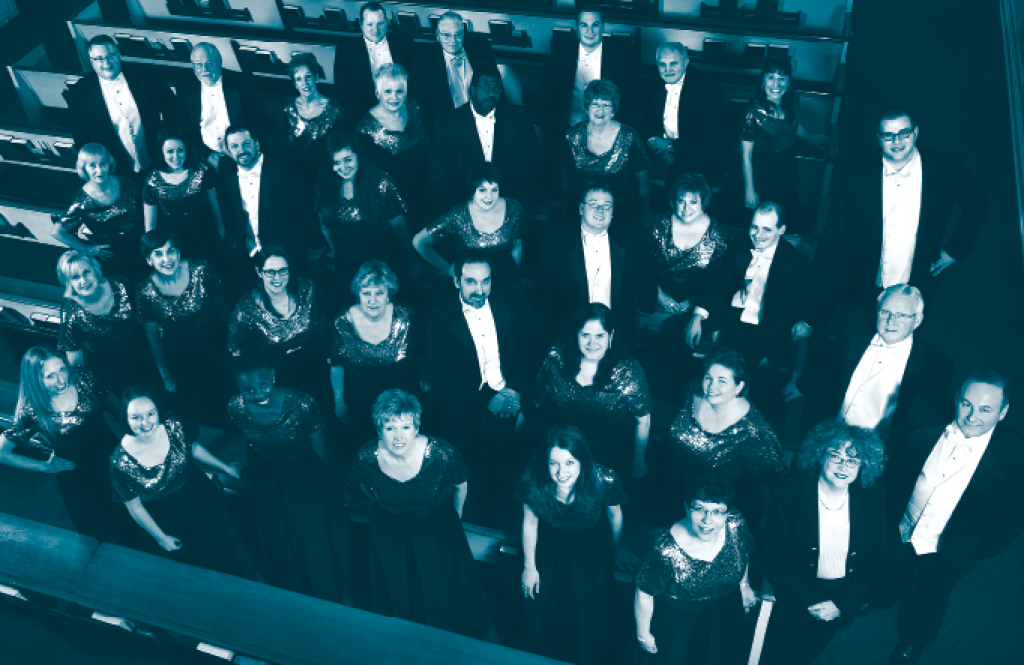
A Powerful Sound: Many voices become one at biannual Choral Festival.

Screenshot 2014-02-28 08.42.09Pianos, trombones, violins—all musical instruments, of course. But so is the voice, the sounds uttered through the mouth of living creatures while speaking, shouting, singing. It can be considered a musical instrument, too.

There will be no denying that fact later this month when the Harrisburg Singers, along with choir members from 10 area churches, combine their vocal “instruments” at the third American Composer’s Choral Festival. In all, about 225 singers will raise high their voices inside Trinity Lutheran Church in Camp Hill.

“There are two things that make the American Composer’s Festival special,” says Charles Beckley, chair of the Choral Festival, which has taken place every two years since 2010. “How often do you get to see a mass choir and, two, you rarely get to see the person who composed the music also conduct it.”

That composer—and the one directing the choir this year—is Dr. Robert Lau, organist/choirmaster at Mt. Calvary Episcopal Church in Camp Hill, where he has served for more than 25 years. He is the creator of more than 250 choral and keyboard works, published by leading musical publishing companies in this country.

“Also featured in the concert will be a brass quintet and organ,” Beckley adds. “Many of the choir directors from the participating churches play the organ, and they will take turns accompanying the mass choir under Dr. Lau’s leadership.”

Choosing a guest composer is no easy task when you get people together with different musical tastes. Beckley explains that six or seven possibilities were brought to the table, narrowed down to the top two choices—and then a decision was made from there.

“The appeal with Dr. Lau is that everyone likes his music, and it’s extra special that he’s a Pennsylvania native,” Beckley says. “Here’s a guy who’s nationally recognized, and he’s right in our own backyard.”

It’s one thing to be directing 225 choral members; it’s another to be one of those voices in a crowd of sopranos, altos, basses and tenors.

Kat Prickett knows that feeling well. As a member of the participating Harrisburg Singers, secretary of the Singers’ board and a committee member for the festival, Prickett has been singing in choral groups since kindergarten. She’s excited about all the pieces that make up this year’s event.

“There is something magical about singing with over 200 other voices and coming together as one,” she says. “It’s a wall of powerful sound, and, when you add the magic of brass, organ and a notable American composer, it’s truly amazing.”

Two of Prickett’s favorite selections include the “Ave Verum Corpus,” an a cappella piece with beautiful, lush harmonies, and “The Lord is My Shepherd,” which was created in memory of a member of the Jubilate Choral Ensemble who passed away rather young.

“It is hauntingly beautiful and, with all of the recent losses that the central Pennsylvania theater community has experienced, I think this piece has the potential to provide comfort for anyone who hears it,” Prickett says. “Music is a powerful gift that the Singers and mass choir have the opportunity to share on March 29, and we hope that people will take part of that gift away with them.”

Musical selections at the event also include Lau’s own music, along with pieces by past Choral Festival guests K. Lee Scott and Dr. Mack Wilberg. In addition, the Singers will perform a selection commissioned especially for this concert, entitled “Come, Let Us Sing to the Lord.”

“For me, this is always the most exciting part of singing in the Choral Festivals,” Prickett says. “We get to sing a brand new piece that was written especially for us on this occasion, and to sing it under the direction of the composer himself is the icing on the cake.”

The American Composer’s Choral Festival will take place on Saturday, March 29 at Trinity Lutheran Church, 2000 Chestnut St., Camp Hill. Tickets can be purchased by calling 717-737-8635 or by visiting www.harrisburgsingers.org/concerts. General admission is $10.


Continue Reading

Life of Service: For 20 years, Susquehanna Service Dogs have helped their humans cope, survive.

Screenshot 2014-02-28 08.41.15It’s a little after 9 o’clock on a Thursday morning, and SSD (Susquehanna Service Dog) Hamlet, along with seven of his mates, is being loaded into a van, headed for an area mall. They’re not going to shop ‘til they drop, but are destined for serious business—a training expedition.


“Each Tuesday and Thursday, we transport the dogs to malls around the area for training on how to behave among distractions such as other people, shopping carts and so forth,” said Amanda Nicholson, training coordinator for Susquehanna Service Dogs. “These dogs are permitted by law to travel with and help their partners inside crowded areas, and they must be trained, then tested periodically, to prove they are able to do that.”

At the mall, the dogs work with their professional and volunteer trainers who practice the various commands the dogs have already learned from their puppy-raisers—sit, stand, stay, come, heel, retrieve—then help them learn the advanced tasks they must know to support their potential partners. 

These more advanced tasks include visit (putting his chin on his partner’s knee to calm him in the event of a meltdown), take it (picking up a leash or something else his partner may have dropped on the floor and can’t reach) and maybe 20 other commands that will be of value. 

During this time, the trainer may take the dog to a food court to practice lying quietly under a table while his partner has lunch or a cup of tea. “Down stays” of 30 minutes or more are required. It’s critical that SSD Hamlet only pay attention to his trainer and no one else. Later, his partner’s safety may depend on it.

20 Years of Service

Two decades ago, Nancy Fierer founded Susquehanna Service Dogs, now a program of Keystone Human Services. Since then, SSD has placed 225 service dogs that provide assistance to their partners on a daily basis.

“I’m so proud of each one of these dogs,” Fierer says.

Every dog has his or her own special story, one that starts at birth and culminates in a unique human/animal bond.

SSD Hamlet, for one, began his career (and his life) on June 12, 2012, snuggled up with other pups and his mom. Each litter receives a name, so Hamlet was from the Shakespeare litter. At about eight weeks, he left the friendly environs of the litter and, after a week in the kennel for a physical and other health checks, moved to the next step in his training: life with a puppy-raiser.

For more than a year, SSD Hamlet lived with his raiser/trainer in State College, learning not only basic commands, but how to control the urges that most dogs have every day—running, barking, playing. SSD Hamlet must be given time to be a dog, of course. However, as a service dog in training, he has to learn the skills and behavior he needs. At 18 months, SSD Hamlet moved from his puppy-raiser into a kennel with other dogs his age to begin learning advanced skills.

SSD Hamlet, along with three or four other dogs, now will spend about three months in the kennel working with trainers. Afterwards, he finally will meet his potential partner. It may be a soldier with PTSD, a woman in a wheelchair, a child with autism or a man with multiple sclerosis. Potential partners greet and play with each dog before a decision is made on placement. Every partner is special, and each dog must be carefully matched to meet the needs of that partner. For example, it takes a relatively large, strong dog to pull a wheelchair or act as a balance dog.

Positive Effect

Once SSD Hamlet is matched with a partner, he will spend the next two to three months learning the specific skills required. Afterwards, the pair will spend three weeks working together with trainers, polishing the skills they will use. 

In SSD Hamlet’s case, he may become a courthouse dog. If that’s the decision, he must be sensitive to the moods of all around him and be able to calm people who are under pressure or stress. After the three-week training period, the partnership will be tested to make sure the pair works well together and both have learned the skills required to be able to move around their community and support one another.

Alternatively, he may serve an older person or even a child, which was the case with a recent success story cited by Fierer.

“We placed a service dog with an 11-year-old girl with a significant psychiatric illness and autism,” she said.

The girl’s family had tried many other support services with little success, but nothing helped until their service dog came into their lives.

“At the time the girl was a D/F student in school, with few friends and many meltdowns,” she said. “The service dog had an immediate positive effect.”

Together, the family taught the dog to exert full-body pressure, which provided a significant calming effect. Immediately, the girl’s meltdowns decreased in duration and slowly decreased in frequency. And her grades improved dramatically. 

“That girl is now 16, and her life has changed markedly for the better because of her service dog,” said Fierer.

There are many other success stories involving these dogs. If you’re inspired, consider volunteering with Susquehanna Service Dogs.  You’ll be proud of what, together, you can accomplish.


Coming Soon: PawsAbilities

If you’re interested in meeting service dogs and having fun with your own dog, then go for a walk this month to PawsAbilities, the annual canine extravaganza and fundraiser for Susquehanna Service Dogs.

“This is a fun family program,” said Vikki Lagaza, who coordinates PawsAbilities. “It consists of a number of events—we have a Dog Olympics, the Great Biscuit Bite-Off, Cutest Dog Contest, Dog Parade, agility tryouts and more.”

The event will be held on March 8 and 9 at the state Farm Show Complex in Harrisburg from 9 a.m. to 4 p.m. each day. As a special treat this year, New York Times best-selling author Luis Carlos Montalván and his dog, Tuesday, will be featured on the main stage on March 8 at 1 p.m.

Pre-sale tickets (ends March 4): adults $8, children $4. At the door: adults $10, children $5. Tickets are good for both days. Proceeds support the mission of Susquehanna Service Dogs.

For more information on Susquehanna Service Dogs, visit www.keystonehumanservices.org/susquehannaservicedogs; for PawsAbilities, visit www.pawsabilities.net.

Don Helin published his first thriller, “Thy Kingdom Come,” in 2009.  His second, “Devil’s Den,” has been selected as a finalist in the Indie Book Awards.  His next, “Secret Assault,” will be published in May 2014. Contact him at www.donhelin.com.

Continue Reading

Under Water: A change in flood insurance policy has left some property owners feeling stranded.

Screenshot 2014-02-28 08.34.46Sure, David DeKok might be safe from any flood insurance rate spikes for now. Then again, maybe not. And almost certainly, if he tries to sell the place, the new owner could be charged $6,000 a year, the same rate that brought the imminent sale of a neighbor’s home to a screeching halt.

“That’s a tremendous hurdle to selling a house here,” said DeKok. “It’s gonna really hurt property values. It’s gonna make houses all but unsaleable.”

In 2012, Congress passed the Biggert-Waters Act, or BW12, to erase a $24 billion deficit in the National Flood Insurance Program by limiting federal subsidies on premiums and making property owners pay market rates. In Harrisburg, the impact could be huge, and it’s not just property owners along the Susquehanna River and Paxton Creek likely to feel the effect. If flood insurance rates dampen home values or force owners to walk away from their properties, the entire city may suffer another hit to its economic prospects, some say.

First, a primer. All flood insurance follows rules and rates established by the Federal Emergency Management Agency’s National Flood Insurance Program, according to James C. Enders, vice president, Enders Insurance Associates, based in Lower Paxton Township. Adopted in 1968, the NFIP extended rate subsidies that assured the continued viability—or foolhardy development, depending on your perspective—of flood-prone areas. Any property with a federally backed mortgage that’s sitting in a high-risk zone must have flood insurance.

Under BW12, rates for homes and businesses sitting in high-risk zones or frequently flooded will rise 25 percent a year until the subsidy is erased. When a property is sold, the new owner immediately pays the highest rate.

One significant change comes at policy renewal time. Under BW12, owners of homes built before implementation of a 1976 Flood Insurance Rate Map—known in the insurance industry as pre-FIRM buildings—must have certificates showing the property’s relation to flood elevations. That certificate, always required in post-FIRM buildings, is used to determine insurance rates and could send premiums skyrocketing on older buildings, said Enders.         

The idea behind BW12 makes sense, Enders said. What doesn’t make sense are drastic changes after 45 years of business as usual.

“You and I as taxpayers are not going to continue to fund a program that is broken, and its intentions were all very good upon its inception—get communities involved, keep the rates down, and we know we’re going to foot the bill a little bit,” he said. “But I think we waited a little bit too long from 1968.”

DeKok now pays $1,700 a year for flood insurance on his Shipoke home. It’s pricey, he said, but the availability of affordable flood insurance convinced him and his wife to “buy here in this beautiful neighborhood.”

“They talk about bringing the price of policies up to market rates,” he said. “Where’s the market? There is no market. It’s somebody’s calculation of what the policy would be on open market.”

Sticker Shock

The issue isn’t new development in flood zones but protection of longstanding, taxpaying communities, said William J. Cluck, environmental energy and land use attorney, chairman of the Harrisburg Authority and a Shipoke resident.

“When we bought our house, this was a contract,” said Cluck.

In Harrisburg, Cluck sees the potential for higher taxes and utility bills citywide when property owners walk away from their mortgages.

“There’s real concern that the cost of the flood insurance program is going to be higher than their mortgage,” he said.

Many city property owners don’t realize their relation to flood zones and will experience the sticker shock of higher premiums, said Cluck.

“We allegedly have a recovery plan, but this is going to have a huge impact,” he said.

Though other states have taken steps to lessen the blow of rate hikes, Pennsylvania is not among them. Gov. Tom Corbett directed the Department of Community and Economic Development to form a task force of state agencies to assess “what resources we have available to homeowners” if the increases go through, said DCED spokesman Steve Kratz.

“The agencies met a few weeks ago and were taking the information back to their agencies and determining, from a proactive standpoint if this goes through, what they can provide in terms of support, hoping that the federal government does reverse this, but preparing in the event that they don’t,” Kratz said in early February.

Official inertia mystifies Cluck.

“As I understand it, Pennsylvania has the most miles of rivers and creeks in the country,” he said. “The economic impact on Pennsylvania has to be unbelievable. The fact that there’s nothing in our state government doing anything is just amazing to me.”

Deluge of Appeals

By contrast, Dauphin County commissioners are leaning on members of Congress and documenting the impact of drastic hikes on homeowners and businesses. One-fifth of Harrisburg real estate, comprising 2,500 properties, occupies the 100-year floodplain, they report. In Dauphin County, 12 percent of properties—13,205 total—are in 100-year or 500-year floodplains.

The county expects a deluge of homeowners appealing assessments on unsaleable homes with market values that have plunged, said Commissioner George Hartwick. Revenue drains would follow—tax losses of $3.3 million for municipalities, $20.8 million for schools and $9 million for libraries, according to county estimates. Services would be cut, or more revenue would have to be raised to keep services going, Hartwick said.

“When we see that kind of assessed loss in value and loss in revenue, who do you think is going to be making up that real estate tax loss?” Hartwick said. “It’s going to be everybody else not in the flood zone. The idea that this is somebody else’s problem couldn’t be further from the truth.”

In Congress, the issue has been snared like a dolphin in a tuna net—with some lawmakers from flood-prone areas scrambling for a moratorium, conservatives refusing to further subsidize an essentially bankrupt program, the White House backing NFIP reforms but probably disinclined to veto any delay bills.

For its part, FEMA last month announced a delay in some rate hikes until October 2015. However, the rate-hike delay apparently applies only to properties newly captured by redrawn flood-zone maps, not to those with existing policies, said Andrew Enders of Enders Insurance Associates.

“If you had been benefiting from subsidized rates, the stay or hold is not going to do anything for the phase-out of the subsidies,” he said.

Without compromise, RE/MAX realtor Ray Davis worries that the specter of high flood insurance costs is “bound to have an impact” on home sales in Harrisburg and elsewhere.

“It’s difficult enough when you have a property in the flood plain for buyers to overcome their concerns about living there,” he said.

As contributing citizens, Shipoke homeowners have “a right to continuation of reasonable subsidies,” no more unfair to other taxpayers than “for us to pay taxes to build a highway in Nevada that we may never drive on,” DeKok said.

Since 1888, DeKok’s house has withstood the floods of 1936, 1972 and 2011. The same goes for the people in it.

“We survive, we rebuild, and we keep a strong community going,” he said.


Continue Reading

Reform the Formula: Gov. candidates should consider impact of school funding on local economy.

When the snow finally begins to melt this spring, the race for governor of Pennsylvania will begin to heat up. By last count, not less than four or five major Democratic candidates have lined up to face incumbent Republican Gov. Tom Corbett, who is seeking election to a second term. The May primary will also help shape the races for the state House and Senate, which will go a long way in determining the balance of political power in Pennsylvania.

Now that Harrisburg has adopted the state-supported fiscal recovery plan, local and state attention should turn to pro-growth policies that will encourage our capital city to realize its full potential. The city’s population peaked at nearly 100,000 people in the 1950s before bottoming out at less than 48,000 at the turn of the century. The slight but important increase in population of about 600 people over the last decade shows promise for further growth and prosperity if the right conditions can be put into place.

 There are many local pro-growth policies that are effective, such as crime-prevention, urban transportation, improved sanitation and water, efficient and operating streetlights, and other civic infrastructure like parks and green space, which the city can and should work on and implement. However, other important economic policy issues can only be handled at the state level. One of those is education funding.

The topic of public education is sure to predominate the governor’s race, particularly the proper state support for local school districts and the ability of students and parents to access educational alternatives. There are few issues more powerful than how we educate our children and the level and fairness in state funding (perhaps a topic for a future column). However, a related issue, which typically receives less attention on either side, is the methodology for funding our school districts via real estate taxes and, importantly, the impact that those policies have on the local economies of those districts.

As a whole, Pennsylvania relies far more heavily on local real estate taxes to pay for public education than most other states in the country. A 2006 study showed that the commonwealth ranked fourth in the nation in that regard. Other states use a broader mix of income, sales and other taxes, along with real estate taxes, to make up total funding for education.

Take Harrisburg, for example. The total millage rate paid on real estate in Harrisburg is around 45 mills. That means, for every $1,000 in taxable real estate, the owner must pay about $45 in annual taxes. On a $100,000 home, that is $4,500 in annual taxes. Fully two-thirds ($3,000) of that bill is payable to the school district, with the county and city dividing the remaining one-third, or $1,500. (The figures are an estimated average as the city has a two-tier system, with a higher rate on land than on improvements, making each parcel somewhat different.)

This tax burden, which is far higher than in surrounding communities, is a powerful disincentive to anyone considering buying a home in the city, regardless of the quality of education provided or available alternatives. New homes that would be assessed at the full cost of building could face tax bills of $5,000, $7,000 or even higher annually. Knowing this, builders have simply not built new homes in Harrisburg at any scale—and none without outside subsidy—over the past several decades, thereby contributing to the decline in population. (The burden on renovated homes is a more complicated story, but the disincentive is also significant, if not as strong as against new home construction.) In contrast, surrounding communities with lower real estate tax burdens have grown their housing supply along with their populations.

The true problem, however, is that cities like Harrisburg have little to no choice or control over the matter. The poorer urban districts have been forced to crank up their millage rates to try to keep up with falling populations, making their real estate even less competitive with surrounding communities. Meanwhile, regional growth has pushed up real estate values in lower-tax suburban communities, making the properties more valuable with greater revenue overall and lower individual rates. 

In other words, cities, like Harrisburg, have small tax bases with high tax rates, while suburban municipalities generally have large tax bases with low tax rates. As a result, the suburban tax structure enables and promotes growth, while the urban tax structure almost completely prohibits it. Once in place, these conditions are nearly impossible to break absent extraordinary measures like tax abatement, as successfully implemented in Philadelphia (which only abates taxes on improvements that otherwise would not happen), or other policies like Keystone Opportunity Zones (KOZs). 

Beyond these local fixes, true reform at the state level would re-examine not only the funding formula that the state contributes to local districts, but alternatives to the excessive local real estate tax burdens. Some states, like Michigan, have tried to address these burdens by shifting taxes away from real estate to income, sales taxes and even cigarette taxes. Interestingly, the burden in Michigan prior to its reform in 1993-‘94 was 34 mills, which ended up causing a taxpayer revolt (it is now about half that). Harrisburg citizens face a 45-mill burden, but have no way to “revolt” without help from the state legislature and governor. 

Whether you are a Harrisburg resident or a resident of the region who wishes Harrisburg well—and you’re concerned about fairness and the ability of our capital to fully recover—this is an issue that should be high on your agenda when thinking about voting this spring.

A real solution would be for this governor or the next to consider comprehensive reform of the funding source for our Pennsylvania schools, changing the mix of taxes away from real estate toward other sources, without raising overall tax revenues. Any candidate who brings this issue to fore deserves consideration and support.   

 J. Alex Hartzler is publisher of TheBurg.


Continue Reading