Degrees of Success: Reflecting on the past, planning for the future, HACC turns 50.

Screenshot 2014-03-30 11.05.08Bryell Turner enrolled in HACC after receiving a postcard in the mail geared towards adults who were looking to return to school.

“Ten years after I graduated high school, I decided I was tired of being a broke, single mother, so I enrolled at HACC,” she said. “The age, ethnic and socioeconomic diversity appealed to me.”

Turner signed up for the Community College Scholars Program, geared towards high-performing, low-income students.

“You take two summer courses at Bucknell while studying at HACC, and then, when you obtain your associate’s degree, you transfer into the junior program at the university,” she explained. 

The Hanover student graduated with her associate’s degree in social sciences, crediting the flexibility of Saturday and evening classes, coupled with an online learning option, for allowing her to launch her dreams of a better life.

Turner said she is looking forward to graduating in May with a bachelor’s degree in women’s and gender studies and a minor in sociology. She now wants to become a professor herself, so will be applying to Ph.D. programs.

In the Beginning

Turner’s success story is just one of many throughout the history of HACC, which this year marks its 50th anniversary with a yearlong celebration.

In 1963, Gov. William Scranton signed Act 484 creating the community college system in Pennsylvania. On Valentine’s Day of the following year, the state Board of Education approved HACC as the commonwealth’s first community college.

An article in the Lebanon Daily News, dated Jan. 13, 1965, reported how officials sprang into action to get the institution up and running.

“In a froth of community activity, it came into being,” said the article, which described the chosen location and the rather crowded conditions. “The hurriedly scrambled site of the new institution was the old and revered Harrisburg Academy in uptown Harrisburg, now used by the Naval Reserve.”

It then explained that officials, who anticipated 350 enrollees, ended up admitting 429.

“The kids go to classes in every conceivable nook and cranny,” said the newspaper, which described the student “hub” as a boarded-over swimming pool.

Since then, HACC’s digs have improved considerably, and, today, there is no lack of elbow room on any of the five campuses located in Harrisburg, Gettysburg, Lancaster, Lebanon and York. The largest and oldest of Pennsylvania’s 14 community colleges, HACC now touts an impressive enrollment of about 20,000 students, offering nearly 200 academic, career associate and transfer degrees, diploma and certificate programs.

“The reasons students choose HACC are many—undecided majors, convenience in proximity, cost, course offerings, credit or non-credit, methods available, including virtual or face-to-face learning,” said President John J. Sygielski. “We also offer non-credit courses and short-term classes from leadership training to writing skills, language skills, accounting and marketing.”

Known affectionately to both staff and students as “Dr. Ski,” Sygielski chose to come to HACC due to the college’s reputation and its location, returning east after serving as president of Mount Hood Community College in Portland, Ore.

“It’s closer to my home of Ohio, and I wanted to be part of an innovative institution that stays close to its community and understands the educational and training needs of the individuals,” he said.

Sygielski’s eyes light up as he speaks enthusiastically about the students he serves and the diversity among the population.

“Working with them is really rewarding because many of them remind me of myself—a first-generation college student,” he said. “The average age is 27, but we’ve also had 16-year-olds study here, and we even had a 97-year-old take a class at our Gettysburg campus.”

Rocky Terrain

When Sygielski took the helm, he faced many unexpected issues that needed to be addressed immediately, before he could implement real change.

“I arrived with great excitement and plans of innovation,” he said.

Instead, he was forced to focus on issues like a $9-million-dollar deficit and non-compliance warnings issued by the Middle States Commission on Higher Education for concerns about accreditation standards. 

“The first six months of my tenure, I spent listening, observing and understanding the culture of the college, the communities we serve and learning about prior mismanagement,” he said. “That information and communication enabled me to work with the college and the community.”

Today the budget is balanced, and the college is in compliance with two of the three standards it was originally on warning for in November 2012. In March, HACC submitted a report outlining evidence that it is in compliance and has the structures in place to maintain compliance with the third standard.

Towards the Future

Sygielski envisions a bright future for HACC, in which technology will continue to play an even larger role.

“We are involved in Apple iTunes U. There are courses there from Harvard, Yale, MIT and, right in the middle of it all, is HACC. We’ve hit our billionth download,” he said, shaking his head in disbelief.

The college launched its 50th anniversary celebration last month. HACC employees, students, board of trustees members, HACC Foundation Board members, politicians, donors and alumni joined together at the Harrisburg campus to hear speakers and attend the formal dedication of the recently renovated Ted Lick Administration building, named in honor of the late Ted Lick, a founding HACC Foundation Board member and donor.

Throughout the year, the college will host additional events to continue the anniversary celebration, and the university president will be embarking on his own style of ambassadorship.

On April 22, the avid cyclist will kick off “Dr. Ski’s Miles of Gratitude, Tour de HACC,” a three-day bike ride across 150 miles to express his gratitude for all that central Pennsylvania does for its community college. Sygielski will stop at each of the five campuses, where he will give away a variety of items ranging from water bottles to bikes and even scholarships.

“My goal for the next several years is that every household in our service district will be touched in one way or another by HACC,” he said.

For more information on other 50th anniversary events, or to learn how you can work or study at HACC, or to learn more about Dr. Ski’s Tour de HACC and how you can participate or be a sponsor, visit the website at www.hacc.edu.
Continue Reading

A Walk on the Wild Side: At Wildwood Park, nature’s creations meet human creativity.

Screenshot 2014-03-30 11.09.14

Photography by Karen Carlson

There are lots of great reasons to strap on your sneaks and visit Harrisburg’s Wildwood Park in the spring: leaves are turning green, birds are coming back, and, for the second year, an exhibition of nature-inspired art is lining Wildwood’s sprawling trails.

“Art in the Wild” opens on April 12 and will feature outdoor art installations by 15 artists—up from nine last year—in Wildwood’s lush setting. According to planning committee members Elizabeth Johnson and Jim Caufield, the exhibit fits right in with Wildwood’s larger purpose.

“'[Art in the Wild]’ is a terrific match with our mission,” said Johnson. “Wildwood Park welcomes visitors to enjoy and learn about its natural and cultural resources. ‘Art In The Wild’ is one of the many park programs that teach people about the natural world. We’re always looking to attract new visitors and ‘invigorate’ our loyal users.”

Caufield added that the environmental art installations allow visitors to see positive human interactions with nature.

“Our support group, the Friends of Wildwood, and our volunteer ‘Art In The Wild’ committee are very keen on visitors enjoying Wildwood through artistic interpretations,” he said. “The exhibit is one more way to bring awareness to Wildwood’s mission—preserving, enhancing and interpreting the park’s resources.”

Everyone was invited to submit a proposal for entry in the exhibit; it wasn’t limited to professional artists. The only rules were that artwork had to be “responsive and sensitive to the environment and aesthetic of the site’s landscape and surroundings” and durable enough to withstand being outdoors for seven months, according to the submission criteria. The planning committee reached out to area schools, colleges and arts organizations and received a surprising response.

“Elementary and high school students, teachers, architects, professional artists, etc., sent us proposals—even some from Canada, New York and South Carolina,” said Johnson.

Fifteen artists were selected to participate, and they began the installation process in mid-March. Installations are, by nature (no pun intended), public, but artists are encouraged to engage park visitors in their work. Artists will be on hand for many public programs throughout the exhibit, starting with a lecture and workshop by Warwick, N.Y.-based artist Dan Mack, who had a piece in last year’s exhibit and is now serving as a judge and lecturer.

“I was so impressed with this event last year, I started a sister one here in New York,” Mack said.  “Wildwood has pioneered a very exciting format for the discovery of art and nature.”

Mack will present a lecture on April 10, which will focus on the use of natural elements in art, a subject he knows a thing or two about. His renowned rustic furniture has found some pretty prestigious homes, including the Smithsonian Institution in Washington, D.C. He also will conduct a workshop called “Working Rustic: A One-Day Introduction” on April 12, in conjunction with the opening of “Art in the Wild,” during which participants will learn to create a chair from branches, saplings and other natural materials.

In addition to these programs, Wildwood is toying with some other unique ways to engage the public with the art installations.

“Various interactive events are being considered [like] guided tours of the installations, poetry readings in the woods, and on-site artist visits,” explained Caufield.

The works are all judged immediately upon installation, and first, second and third prizes will be awarded. The committee has also added a “People’s Choice Award” this year.

“Visitors to the site will be able to vote for their own favorite installations, the winner of which will be announced on June 30,” said Johnson.

Ultimately, the organizers of “Art in the Wild” hope that the exhibit encourages visitors to connect with nature.

“Nature is the great leveler,” said Mack. “Everybody has primary experience with nature. They feel alive in nature. To show art in such an environment returns the art-making process to where it began—as the way humans recognize, respond and respect the awesome forces of nature.”

“Art in the Wild” opens on April 12 and runs through Oct. 31 along the trails of Wildwood Park in Harrisburg. Dan Mack’s introductory lecture is April 10, 7 to 8:30 p.m., at the Nature Center. He also will lead a day-long workshop on April 12. For more information, visit www.wildwoodlake.org.

Continue Reading

SAM, Rising: After numerous delays, construction has begun and an opening is set for the new Susquehanna Art Museum.

Screenshot 2014-03-30 11.07.57On Jan. 16, 2015, the Susquehanna Art Museum expects to open the doors of its new museum with an appropriately named exhibit. It’s “Pop Open,” Niagara University’s sparkling collection featuring such pop art icons as Oldenburg, Rauschenberg, and—of course—Warhol.

“We’ve got a soup can,” assures SAM Executive Director Laurene Buckley.

In other words, the train that is SAM is now moving ahead at full-speed.

More than three years have passed since SAM announced it had selected a site in Midtown Harrisburg as its permanent home. However, fundraising challenges and design changes delayed construction beyond some demolition, which began last summer. In the meantime, SAM has used space in the State Museum to mount exhibits.

The bid now has been awarded for renovating and adding on to the former Keystone/Fulton bank branch at N. 3rd and Calder streets to create a permanent home for the capital city’s art museum. The partnership of JEM Group-Carrolton Design broke ground in mid-March. SAM will get the building on Dec. 22, and exhibits secured for some vague future point now have official opening dates.

A $7 million project seen as a major piece in the Midtown revival puzzle is taking shape. Now, say museum officials, the capital city’s dedicated art museum will rejoin the community and rededicate itself to showcasing art as a tool for entertainment, economic activity and, most importantly, education.

Buckley admits that calling SAM a “Kunstehalle”—the European term for an art exhibition museum lacking a permanent collection—might sound pretentious, so she settles on “potpourri.”

“And that’s just fine with me,” she says. “Art is broadly defined, and we intend it to be broadly defined.”

With 3,500 square feet of space in its exhibition hall, the new SAM can mix and match exhibits. Maybe a show on art furniture will augment an exhibit on past and present architecture planned in conjunction with Historic Harrisburg Association, the Art Association of Harrisburg and the American Institute of Architects.

Harrisburg needs destinations, says SAM Board Chair Jack Scott, and the new space, from Philadelphia architectural firm EwingCole, is designed to attract. In the high-ceilinged, renovated bank space that greets visitors, works from SAM’s DOSHI Gallery will line the wall. The bank vault will be a family orientation area, “maybe with storytime on Sundays,” says Buckley.

A high-tech education room will allow streaming of lessons and talks. Perhaps the café will set up tables outdoors on nice days. Students from the Channels Food Rescue Kitchen School might operate a mobile snack cart. A garden, the size of two Midtown lots, will offer please-touch sculptures and maybe a sensory garden with herbs and braille plaques.

Scott is a retired technologist who claims not to have “an art bone in my body.” But while his artist wife, Carol Scott, was vice president of the Garden State Watercolor Society in New Jersey, he helped build membership from 50 to 250 by capturing names of artists, donors, buyers and browsers in a 3,000-person database.

“The object lesson there is, you must market art,” says Scott. “It isn’t that you have to sell art, but you have to market. People have to be aware that it’s there. They need to understand its value, and they need the opportunity to make a choice to experience art.”

Art is essential to “creative expression and developing creative thinking,” says Scott. It also returns $5 to $8 in commercial value.

“It comes back in commerce. It comes back in child creativity. It comes back in freedom of expression,” he says. “Why would we not do this?”

The new building is revitalizing SAM’s mission to educate. The VanGO! bus that takes artwork to schoolchildren and events is no longer a bus but a retrofitted RV (staffers are excited—much easier to drive and cheaper to operate). “Art to Go” portfolios for teachers, with lesson plans on topics ranging from Pennsylvania artists to Georgia O’Keeffe, are newly customized and digitized.

SAM’s second exhibit will feature the works of renowned children’s book artist Faith Ringgold, with local, award-winning artist Jonathan Bean—a Publisher’s Weekly “Artist to Watch”—setting up his studio in the exhibit area.

“We’re really trying to build partnerships with as many audiences as we can, as well as bring museum education into the 21st century with lots of interactives,” says Director of Education and E-learning Andrea Glass.

Name a Midtown business or nonprofit, and SAM is probably partnering with it. Movies and Midtown Cinema. Food and Yellow Bird Café and Sayford Market. Parking and HACC.

Scott is intent on “narrowing the width of the river” that divides east and west shores, and the addition of Dave Reager, the Camp Hill attorney and a founder of Plein Air Camp Hill, to the board should help. Putting the new museum in Midtown was a risk, says Scott, but it’s the “right choice” for a Harrisburg arts corridor.

SAM expects to hire from the community and keep its doors open to the community, says Buckley. Though admission will probably be charged, at least initially, museum officials are brainstorming ways to schedule free-admission days, she says. Regular events will range from “fancy preview sit-down dinners, all the way to block parties—which we’ve already instituted—with local bands.”

The museum can also serve as a catalyst for further development in Midtown and greatly enhance its growing reputation as an arts district, says Glass.

“Being part of the community is being a cultural hub and having the community invest value in what we are doing,” she says. “It’s really about building ties with the community at all levels.”

Follow SAM’s progress, see events and learn about discussing partnerships (naming opportunities in the new building are still available) by visiting sqart.org or SAM’s Facebook page. 

Continue Reading

Service through Soccer: JT Dorsey Foundation nurtures area youth through sport.

Screenshot 2014-03-30 11.07.33Julian Dorsey has found personal fulfillment in soccer for most of his life.

He began playing three decades ago, when he was 8 years old, and, with his passion and skill set, later competed at Loyola University in Maryland and went on to play for the Hershey Wildcats and the Harrisburg City Islanders.

When he was in third grade, Dorsey’s teacher noticed how fast he could run during a school field day and encouraged him to try out for soccer. Dorsey said his coach picked him not necessarily for his skills, which needed to be strengthened, but because of his strong work ethic.

“I practiced a lot because I was doing something different than anyone else in my neighborhood, and that was cool to me,” said Dorsey, who grew up in a tough area outside of Philadelphia. “I enjoyed not playing traditional inner city sports, like everyone else.”

During his childhood, Dorsey’s family didn’t have much money to pay for the soccer training that the budding player needed.

“My family had a difficult time making enough to pay our bills,” he said. “At the age of 13, my mom told me I couldn’t play anymore because she didn’t have the money.”

The parents of his best friend, Brad, whom he had met on the soccer field, then stepped up.

“They said to my mom, ‘Pay what you can and we’ll pay the rest,’” he said. “I was blessed to have his parents, family members and friends of our family help my mom financially to allow me to play. I wanted to create the same opportunity for kids.”

So, in 2007, Julian, otherwise known as “JT,” created the JT Dorsey Foundation, a non-profit youth development organization that uses soccer as a means to develop well-rounded kids from the ages of 5 to 18 throughout Harrisburg, Lancaster, Lebanon, York and surrounding regions. As previous director of an alternative school with a special education degree, Dorsey knew he wanted to combine his love of soccer with working alongside kids.

“I saw how soccer created a lot of opportunities for me,” he said. “I thought, ‘How could we use sport to educate kids and create learning through play?’”

Dorsey also wanted to provide important services that are often lacking in inner city communities. So, JT Dorsey Foundation provides wellness education, physical activity and obesity prevention, mentoring, leadership skills, employment training and a safe, nurturing environment for at-risk children to grow up in.

Mark Malhenzie of Etters is thrilled with what his children experience with JT Dorsey. Both his son Matthew, 13, and daughter Lauren, 12, participate in the soccer program. When Mark began looking for soccer training over the winter, he discovered JT Dorsey.

“I came and watched a practice, and I loved what I saw,” reflected Malhenzie, who often volunteers with his wife Suzanne at various JT Dorsey events. “What they stand for is excellence. It’s not just about skills. They teach the kids to be the best they can be. My kids can’t wait to come here.”

Matthew echoed his father’s sentiment. “I look forward to it every week. I remember the first day I came here, and I walked in, the coaches just took me in as if they already knew me.”

For Dorsey and his coaching staff, that is what it’s all about, supporting the youth in our communities and helping them to grow into successful, responsible and healthy young adults. True to the spirit of many non-profits, the coaches pour their passion into the labor of love.

“None of the coaches here want to get rich,” said Dorsey. “These are good people who are good citizens in the community with strong soccer values. The kids know that they will get quality coaches that care about them.”

Given the nature of being a non-profit, Dorsey is tasked with keeping his organization afloat financially to make sure it can continue to provide its developmental services through soccer. To keep costs low or free to its players, the JT Dorsey Foundation collects funds from donors and corporate sponsors, such as Adidas, Score Sports, Angelo’s Soccer Corner, the City Islanders and the U.S. Soccer Foundation. But, Dorsey said that the foundation can always use financial support and manpower.

Soccer is Dorsey’s life, and it’s not just fun and games for him. “I am a teacher by trade, and I love to see kids learn and develop not only as soccer players, but as people,” he said. “That is very rewarding.”

Those interested in giving time or money can learn how to contribute on the JT Dorsey Foundation website, www.jtdorsey.org.

Continue Reading

A Wild Life: For photographer Shannon Rose O’Shea, a post-retirement hobby blossomed into a second career.

Screenshot 2014-03-30 11.08.14Anyone who sees the photo of the green heron, captured so vividly by wildlife photographer Shannon Rose O’Shea, can’t help but notice that the bird is straining to grab something that is out of reach.

But for O’Shea, a native of Steelton who now resides in Susquehanna Township, that photo represents her mantra that sometimes, in order to get what you want, you have to stick your neck out. And, indeed, she does and has to when she wants to capture that perfect shot.

“I’ve had so many wonderful experiences photographing wildlife,” O’Shea says. “It is both immensely rewarding and totally frustrating at the same time. I can sit for an hour waiting for that moment when a great blue heron catches a largemouth bass, only to have it happen as I turn to walk away. It certainly teaches you patience.”

And patience is needed in order for O’Shea to create these works of reality art—from an egret taking flight in Kiwanis Park in York to a majestic sunset above Coligny Beach on Hilton Head Island in South Carolina. She even was able to photograph a bighorn sheep that had come down from a rocky hillside to stand in a parking lot bordered by playground equipment.

O’Shea’s interest in photography began only three short years ago, when her husband noticed her taking a picture of a tulip in her garden with a little, film-loaded Olympus camera.

“He thought I needed a grown-up camera, so he bought me a Nikon L120, a bridge camera between a point-and-shoot and an SLR,” O’Shea says.

After downloading her first photos from her “grown-up camera,” O’Shea was hooked. She quickly outgrew the Nikon and purchased her first SLR, a Canon EOS Rebel t2i, then moved up to a Canon 7D complete with assorted lenses, tripods, a loupe, filters, hoods, a backpack and other accessories she calls “the camera stuff.”

Now retired, O’Shea and her husband travel around the country not only for rest and relaxation, but also for her to take pictures of the great outdoors. While her preferred places to take photos include Hawaii, Florida (the Circle B Bar Reserve there is a particular favorite) and South Carolina, O’Shea began honing her trade right in her own backyard at Wildwood Lake in Harrisburg.

But this photography obsession has gone way beyond anything O’Shea could have imagined. Her work has appeared on websites all over the world, such as Booking.com, the Orlando City Guide, The Huffington Post, Pinterest, Tumblr, iWitness Weather, a Hawaiian travel site, numerous blogs and many more.

This year, one of her shots will be published in a book of lighthouses of South Carolina, and she recently received and accepted an invitation to become a Getty Images contributor photographer. One of O’Shea’s photos of an egret at Wildwood Lake is included in a youtube music video of the song “Promised Land” performed by Amy Goldstein.

O’Shea plans on continuing her travels, mostly along the east coast, taking pictures of wildlife, landscapes and architecture.

“I hope to continue improving my skills and having many opportunities for people to see and appreciate my work,” she says.

What began with a little, film-loaded Olympus camera and tulips in her garden has turned into quite a career and a sense of fulfillment. Looking through that lens has offered O’Shea an incredible appreciation for wildlife and nature, along with connections with others who share this love of photography.

“I love travelling around the country and meeting other photographers,” she says. “I’ve learned so much and met so many wonderful people from all over the world.”

You can see more work by Shannon Rose O’Shea by visiting www.flickr.com/photos/shannonroseoshea.

Continue Reading

Restoration on the River: Life returns to the Moffitt Mansion.

Last month, the employees of WebpageFX moved into the fully renovated Moffitt Mansion at 1703-05 N. Front Street in Harrisburg.

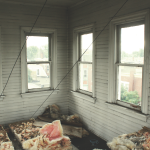
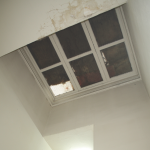
The re-location of the company from Carlisle marked not only a significant development for the city, but a major milestone in the history of the dressed blue limestone mansion, which long ago was divided into a warren of small offices, then fell into disrepair. For many years, it even served as the home of the former Midtown magisterial justice’s office.

WCI Partners, Urban Interiors and Trinity Construction now have brought the mansion back to life, restoring and opening it up to serve the needs of WebpageFX, an Internet/Web design firm. Last July, we featured a series of photos showing the mansion before the renovation. We now present the “after” photos, so readers can see the potential for Harrisburg’s historic buildings, increasingly restructured for modern use and given new purpose and new life.

In addition to these images of the completed renovation, please check out the “before” shots of the mansion and additional history on the building from our July issue.

Continue Reading

A Venezuela Victual: When the owner of Arepa City moved to Harrisburg, he brought his native food with him.

Screenshot 2014-03-30 11.07.09Those who know Daniel Farias describe him as a “people person,” an important trait for someone who works long hours serving the public.

And those who visit his downtown Harrisburg restaurant, Arepa City, look forward both to chatting with the ever-present, typically smiling businessman and dining on his delicious cuisine, which is based upon the Venezuelan staple known as an arepa.

“He really cares about his customers and wants everyone to have an enjoyable experience,” said Camp Hill resident Allen Gordon, who considers himself a regular and has been frequenting the establishment since it opened.

Gordon and his wife even took friends who were visiting from Venezuela to the restaurant, and they gave the food rave reviews.

Farias began his career in the hospitality industry working on a cruise line after leaving his native country.  

“I started out as a busboy; it was the only position they were able to give me,” he said, explaining that he knew little English at the time. “I then decided that I wanted to grow and made up my mind to master the language in order to open up better opportunities.”

Farias turned out to be a quick and astute learner, and, before long, he was promoted to assistant manager.

While working on the cruise ship, Farias met his wife Mildred, who was living in Boston. So, he decided to move there and began working in a hotel. His career eventually took him to Florida, and then Hershey Entertainment came knocking, so he moved Mildred and his twin daughters Diliana and Daniela to the central Pennsylvania area, where he became banquet director at the Hershey Lodge.

Farias, though, dreamed of working for himself, so was always on alert for the opportunity. When he heard that a small, turnkey establishment was for sale on N. 2nd Street in Harrisburg, he decided to investigate.

“Turns out the owner wanted out, and I wanted in, so it was mutually beneficial,” he said.

For Farias, who studied at culinary school back in Venezuela and spent his career in hospitality, making the decision to open a restaurant was a no-brainer. Choosing what to serve was an equally easy decision. 

“I decided to stick with what I know best, which is my cuisine,” he said. “In Venezuela, I grew up eating arepas almost every day and wanted to offer the public authentic Venezuelan cuisine. If you go to my country tomorrow and ask for an arepa, you will get the same thing.”

Arepas are a sandwich, a bit like a pita, with the dough made from corn meal, salt, sugar and water, said Farias. Customers can choose from a variety of fillings, including pork, lamb, chicken, chorizo, beans, flank steak—whatever strikes their fancy.  

“Since it’s a bread, anything goes with it,” he said. “Only a few people have asked me to customize them according to what they want, but I want people to feel free to do that, too.”

Patrons also can order other Venezuelan specialties like pernil asado, which is slow-roasted pork leg, cassava sticks and spicy cabbage, and patacones—green plantain open sandwiches that are offered with a selection of toppings from shredded flank steak to chicken to avocado salad.

Ana Yost lives in Etters and makes the trip to the restaurant often.

“My daughters and I love it there,” she said. “He puts his special touch on every dish. Everything is fresh, and he comes out and talks to people, too.”

For Farias, the future looks bright, as he plans to continue pleasing his patrons for years to come.

“I’m very positive about Harrisburg and the renewed focus on business in the area,” he said. “I know that this restaurant is unique in many ways. There is no restaurant around here similar to this. Philly is the closest, and they say this is better.”

Then, with a laugh, he adds, “Who knows?”

Arepa City is located at 316 N. 2nd St., Harrisburg. For more information, visit www.arepacity.com or call 717-233-3332.

Continue Reading

Battling Bias: Community Responders Network offers support for victims of discrimination.

Screenshot 2014-03-30 10.59.40It hasn’t been easy for American Muslims since 9/11.

Samia Malik, a central Pennsylvania community activist, is aware of the looks of fear that people give her, of the doors closed in her face and incidents that affected her kids when they were in college.

But things came to a head in 2008. Before the presidential election, millions of free copies of a DVD called “Obsession” were mailed to people. The film “claimed that all Muslims are against America and the west,” Malik said.

Shortly afterward, a chemical irritant was sprayed inside a Dayton, Ohio, mosque, afflicting children whose parents were praying nearby. Then someone set a fire outside the Malik house, though the family wasn’t sure this was connected.

Malik turned to other activists she knew, among them Margee Koistra and the Rev. Sandy Strauss—both serving on the peacemaking committee of Market Square Presbyterian Church.        

They agreed that something needed to be done, and the Community Responders Network was born.

The non-profit organization is comprised of a coalition of local leaders and concerned citizens seeking to build a stronger, more inclusive community in central Pennsylvania by educating people about, preventing and responding to instances of bias and intolerance based on such personal characteristics as religion, race, gender, age or sexual orientation.  

The network provides support, information and referral to services to the victims of a hate crime or incident of bias. It also aims to serve as a “moral voice,” reinforcing the message that intolerance is not acceptable.

Members of the Community Responders Network represent a variety of faith communities, non-profit organizations, state and county governments, as well as YWCAs. Its administrative home is at the YWCA of Greater Harrisburg, where its volunteer members meet about once a month.

The network has been busy. One incident under investigation concerns a middle-aged African-American woman who was stopped by a police officer because the windows of her car were tinted, which is illegal in Pennsylvania.  She explained her unfamiliarity with the law, and the officer seemed satisfied.

But then two other officers from another municipality, in an unmarked car, stopped by.

“It was an exacerbation of the situation already resolved by the first officer,” said the woman, who asked to remain anonymous. “I felt it was overkill and filed a complaint. It was very intimidating. I felt it was racial profiling.”

There is also the case of a midget football game in which a primarily white team shouted racial slurs at a primarily African-American one. The Community Responders Network is helping to provide guidelines for behavior for players, coaches, officials, cheerleaders and fans.

“We’re working with the league to beef up policies and procedures,” said Amanda Arbour, racial justice development specialist at the YWCA and liaison to the network. “We felt the incident had not been adequately addressed.”

A classic situation involving bias is when a family of a different race, religion or ethnicity than the majority moves into a neighborhood. Suddenly, there is hate graffiti or slashed tires, explained Ann Van Dyke, a long-time executive of the state Human Relations Commission who now volunteers for the network.

“Law enforcement may do what it can, but the family is often left shaking in its boots, and it’s often hard to prove who did these things,” Van Dyke said. “Moreover, many incidents go unreported.”

Van Dyke helped the network compose a manual subtitled, “A Guide to Engaging the Community in Prevention and Response to Intolerance, “ which was updated in July.

The manual includes a “flow chart” of procedures of how community organizations and citizens can respond to hate and bias incidents, said Arbour.

In addition to its coordinating committee, the network has a rapid response team to help community members who feel they have been targeted, as well as a prevention and education team, which strives to address the root causes of intolerance.

The network will be working with local school districts since intolerance “starts at a young age,” said Koistra, chair of the coordinating committee.

“We’re a citizens group,” she added. “The Human Relations Commission follows through, but not all incidents come to their attention. We needed a way for ordinary citizens to work together in a supportive way. “

The network does inform the Human Relations Commission and, if appropriate, the local police—which both track trends of hate crimes and incidents. “We try not to step on toes but to be collaborative,” said Koistra.  

Carl Choper, chair of the Interfaith Alliance of Pennsylvania and rabbi at the Jewish Home of Greater Harrisburg, has been involved with the network from the beginning.

“It offered a way to have a united response when hate incidents happen,” he said.

Some of the tension that develops in communities between perceived “insiders and outsiders” is “beyond our control, but the silence of people about the incidents is not beyond our control,” Choper said. “We have to speak out early and make the community inhospitable to hate.”

Part of the Community Responders Network’s mission is to make itself and its work better known. The organization recently enhanced its website and is using social media more. It’s trying to increase the involvement of faith groups, as well as LGBT and minority communities.

The network hopes the number of victims who are willing to report incidents will increase. To assist that effort, it held two informational events last spring for the community, which attracted more than 50 people. Similar events may be held again this year.  

Most people who feel they have been targeted come to the Community Responders Network through word of mouth or because they personally know a network volunteer. But community members also can reach the network through the CONTACT Helpline, 717-652-4400, which will refer them to an individual on call from the network.

For more information, visit www.communityrespondersnetwork.org. The YWCA of Greater Harrisburg is located at 1101 Market St., Harrisburg, 717-234-7931. 

Continue Reading

News & Brews: Sure, Harrisburg is just emerging from an historic financial catastrophe, but, hey, where’s the beer?

Screenshot 2014-03-30 10.57.31A lot of reporters go into journalism because (believe it or not) they love government. Or, at least, they think it’s important, which, in fact, it is.

Public policy affects our lives in so many ways, and most college journalism majors can’t wait to get out there to cover their first City Council meeting or mayoral press conference or legislative hearing  (even if they later end up working for a trade magazine or in communications or as someone’s shill, which, these days, is more likely than not).

I was like that, too. As a kid, I was a voracious reader and, following graduate school, spent several years in the trenches of local newspapers before becoming a freelance technology writer. I later circled back to real journalism when I co-founded TheBurg.

I found it refreshing to cover stories again that actually mattered to people—taxes, schools, sanitation. That said: I quickly realized that covering Harrisburg was the journalism equivalent of a middle-aged man deciding to take up skiing again with a first run down the perilous “Harikiri” slope in Austria.

I spent endless hours, so many late nights, covering fights over budgets; fights over the financial crisis; fights over bankruptcy; fights over the Harrisburg Authority. In my mind, it was important that our readers had our perspective of some of the most significant events in the history of this city.

Silly me. You want to know what really interests our readers? Beer. Hey, at least, it’s good beer!

Last year, we re-designed and upgraded TheBurg’s website, which, among other things, allowed us to track which stories were the most popular online. Since then, the most-read and most-shared story, by far, has been a news article that I wrote in January about Alter Ego Brewing Co. planning to build a brewhouse in Midtown Harrisburg.

It wasn’t even close.

As of this writing, that story had more than 3,400 views and nearly 1,500 Facebook shares. In second place: a photo feature on the renovation of the Moffitt Mansion for WebpageFX (the company moved into Harrisburg and into the building last month), followed by stories on our November cover, a Whitaker Center exhibit, the Mary K properties and the purchase of the First Church of God by Gamut Theatre Group.

Now, at TheBurg, we do journalism the old-fashioned way. We don’t measure our success by clicks or by the apparent online popularity of content. In other words, we’re not in it for the eyeballs.

Therefore, I don’t really care which story ranks first in page views. It’s not going to change our news judgment, nor make any difference to our bottom line. Besides, most readers still cherish our print product above all, and, indeed, we believe it’s vital for us to have a strong physical presence in the community we serve.

Nonetheless, as a close follower of all things Harrisburg, I find the relative popularity of our stories fascinating, even if forced to use the deeply flawed measure of page views and Facebook shares.

So, Harrisburg, you care a lot about beer, culture and development issues. You also like to read about dogs, restaurants and small business. Interestingly, the two bread-and-butter issues of local reporting—politics and government—rank lower in the order.

I guess that doesn’t surprise me. As I’ve said time and again, TheBurg tries to reflect the totality of life here. We often report and comment on government matters, but also know that, unlike most young journalists, politics and policy aren’t everyone’s obsessions.

In the end, I do find one common thread among our most-read online content. These stories tend to be hyper-local—both news and features—that have a big impact on our small community and that are hard (if not impossible) to find elsewhere. And we definitely plan to bring you more of those.

Continue Reading

Community Corner: Notable Events in April


Leads Over Lunch

April 1: The Harrisburg Regional Chamber & CREDC will hold its free monthly lunchtime networking event, with a chance to mix and mingle with the regional business community. Event is 11:30 a.m. to 1 p.m.  at the Hershey Center for Applied Research, 1214 Research Blvd., Hummelstown. Registration is required. For more information, visit www.harrisburgregionalchamber.org/events.


Embracing the Future

April 2: Luann Zinsmeister will give a talk on nursing informatics at Messiah College, in the Alexander Auditorium in the Frey Hall Academic Building, Mechanicsburg. Admission is free. For more information, visit www.messiah.edu. 


Journey to the West

April 3-6, 10-13: Mary Zimmerman’s play “Journey to the West” will be performed at Messiah College. The production is suitable for all ages. Cost of admission is $10. Student and senior tickets are $7. For more information, visit www.messiah.edu/theatretickets.


Mini Mountain Laurel Concert Series

April 4, 5: The four-piece band Mountain Fling will hold two performances in our area. The first concert will be at St. John’s Evangelical Lutheran Church, 120 Main St., Lewistown, on April 4, and the second will be held at Highland United Presbyterian Church, 11 Church Rd., Newport, on April 5. Both shows are free and begin at 7:30 p.m. For more information, call 717-567-66406 or 717-567-9469.


Youth Workers Conference

April 5: A one-day Youth Ministry conference will be held at Messiah College in Mechanicsburg. Featuring keynote speaker Duffy Robbins, the session will last from 9 a.m. to 4:30 p.m. For more information, visit www.messiah.edu/ywc.


Camera Club

April 5: Drop in for the 4th Annual Light & Creativity Workshop, open to anyone who would like to expand his or her photography knowledge. The event will be held from 9 a.m. to 5 p.m. at Central Penn College Conference Center, 600 Valley Rd. Summerdale. Registration is $60 for Harrisburg Camera Club Members and $70 for non-members. For more information, visit www.harrisburgcameraclub.org.


Sunday Arts Hour

April 6: Join the Perry County Council of the Arts for an educational and entertaining program about opera composer, Richard Wagner. There will be a short recital in addition to the historical presentation and an opportunity to tour the current exhibit. The event will be held at the Landis House, 67 N. Fourth St. at 3 p.m. For more information, visit www.perrycountyarts.org.


“The Wizard of Oz”

April 6: Authors Jay Scarfone and William Stillman will discuss the beloved film “The Wizard of Oz” based on the research for their book, “The Wizard of Oz: The Official 75th Anniversary Companion.” New and rare information on the film will be the focus of the event, which will take place at the Art Association of Harrisburg, 21 N. Front St. A $10 donation is requested at the door. For more information, visit www.artassocofhbg.com. 


Taste of the Chamber

April 9: Local banquet facilities, caterers and restaurants will offer samples of their finest dishes at Sun Motor Cars Porsche/Audi, 6691 Carlisle Pike, Mechanicsburg. The event is open to the public, and tickets are $25 per person. For more information, visit www.wschamber.org. 


Egg Hunt

April 12: Easter bunny visits will be held at the Antique Auto Museum of Hershey, 161 Museum Dr., 11 a.m. to 1 p.m., followed by several egg hunts for various age groups up to 10 years old. Hot dogs and popcorn will be served. For more information, visit www.aacamuseumm.org.


Harrisburg Cemetery Walk

April 12: See spring bloom in a beautiful setting at Harrisburg Cemetery, 521 N. 13th St. The 1-4 p.m. event is self-guided, but members of Penn State Master Gardeners will be on hand to answer questions and provide assistance.  Light refreshments will be available. Rain date is April 13. For more information, call 717-635-8949.


Dauphin County Egg Hunt

April 13: Bring the kiddies to the annual egg hunt on the grounds of Fort Hunter Park. The event runs 2-5 p.m. and features face painting, pony rides and other activities, in addition to the hunt, which is staggered for various age groups up to 9 years old. Learn more at https://forthunter.org.


Fashion for Awareness

April 13: Local fashion label, Artemisia, will be showcased for a good cause at the Holiday Inn Grand Ballroom in Grantville. Before the show, there will be makeup and skin care demonstrations by Artistry. The event also will feature a cash bar, silent, auction, raffle and special guests. The event begins at 2 p.m. Tickets are $20. For more information, visit www.artemisiafashionforawareness.myevent.com.


Second Sunday at the Mansion

April 13: A presentation, “Andrew Curtin, Civil War Governor,” will be held by Civil War re-enactor David Klinepeter at the Harris-Cameron Mansion, 219 S. Front St. Tours of the mansion begin at 1 p.m. Admission is free for members of the Historical Society of Dauphin County and by donation for nonmembers. For more information, visit www.dauphincountyhistory.org.


“Twenty Feet From Stardom”

April 15: This Oscar award-winning film tells the story of the backup singers of some of the greatest musicians of the last century. There will be two showings at the Fredricksen Library in Camp Hill at 2 p.m. and 7 p.m., with a discussion following the final showing. This film is rated PG-13. For more information, visit www.fredricksenlibrary.org.


Meet Your Elected Officials

April 17: The opportunity to talk to local, county and state legislators will held at Capital BlueCross, 2500 Elmerton Ave., Harrisburg. The event is open to anyone who would like to attend and will be from 5 to 7 p.m. For more information, visit www.harrisburgregionalchamber.org/events.


Spring Warblers

April 17: Learn 10 different techniques to help identify warblers this spring. Presenter Terry Neumyer will provide photographs and songs of the warblers. The program will be held in the Christ Presbyterian Church in Camp Hill. Refreshments will be served at 7 p.m. The program begins at 7:30 p.m. For more information, visit www.appalachianaudubon.org.


Jersey Mike Rock + Run 5K

April 19: Celebrate the life of Jersey Mike Van Jura and run for a good cause at the Jersey Mike Rock + Run 5K. The 5-kilometer race begins at noon on City Island, Harrisburg, and benefits children who have tragically lost a parent. There is also a one-mile fun run for kids. An after-party follows at Ceolta’s Irish Bar on N. 2nd St. Pre-register or register on the day of the race starting at 10 a.m. For more information, visit www.jerseymikerun.com.


Changing 401(k) Landscape

April 22: The West Shore Chamber of Commerce will present an event on 401(k) plans, focused on recent changes to the rules and laws of these employer-sponsored retirement plans. The event will be from 9 to 11:30 a.m. Cost of admission is $10 for members and $20 for non-members. For more information, visit www.wschamber.org.


First-Time Home Buyers

April 26: Learn about the home-buying process from a panel of local experts, who will explain the basics of home insurance, pre-qualification, financial preparation and more. The course will be held at the Charlie “T” Jones Conference Center in Mechanicsburg from 9 to 11 a.m. For more information, visit www.wschamber.org.


Race Against Racism

April 26: The YWCA Greater Harrisburg will hold its 10th annual Race Against Racism, a 5K to promote awareness of the issue of racial injustice and to raise funds for the organization’s racial justice programs. The race begins at 9:30 a.m. on City Island in Harrisburg with a kid’s fun run at 9 a.m. A Humanity Fest will coincide with the race. Pre-register online at www.ywcahbg.org/events.  


Hershey Handbell Ensemble

April 26: The Hershey Handbell Ensemble will present a concert, “A Celebration of Our Ten Years,” featuring Malmark handbells, hand chimes and other instruments. The concert will take place at the Grace United Methodist Church of Christ, 1947 New Holland Pike, Lancaster, beginning at 7 p.m. A donation of $10 is suggested. For more information, visit www.hersheyhandbellensemble.org.


Little Miss Tea Party

April 26: Penbrook Community Center will hold a tea party complete with food, prizes, entertainment and more. Dress clothing is required. Admission for those ages 0 to 17 is $10 and $15 for anyone over the age of 18. For more information, call 717-503-2242 or email [email protected].


Broadway Comes to York

April 27: A theater workshop will be held in the York JCC building by Geoffrey Goldberg, Broadway performer, for kids ages 7 to 16. All skill levels are welcome at this workshop, and participants should expect the opportunity to perform mock auditions and receive feedback. For more information, visit www.aclassactny.com.


Downton Abbey Tea

April 27: View the costumes from the hit show “Downton Abbey” at the Fort Hunter Mansion and Park in Harrisburg. There will be an educational talk of the era and the characters featured on the show. An afternoon tea will take place, in addition to the preview tour of the exhibit. For more information, visit www.forthunter.org.


Fight for Air Climb

April 27: Climb the 2,000 stairs of Hersheypark Stadium, 100 Hershey Park Dr., during the Fifth Annual Fight for Air Climb. Participants may climb individually or with a group. Registration is $25 and will begin at 11:30 a.m. The climb begins at 1 p.m. For more information, visit www.lunginfo.org/stadiumclimb.


“The Rocket”

April 29: Come to the Fredricksen Library in Camp Hill to see this award-winning film of a boy living in a war torn land, attempting to make a new life and home for himself. There will be two showings, at 2 p.m. and at 7 p.m. The final showing will feature an open discussion after the film. The film is not recommended for children under 17 without an adult. For more information, visit www.fredricksenlibrary.org.


Continue Reading