Your Table Is Ready: A unique dining experience (and maybe a few new friends) awaits at Table at Bricco.

Screenshot 2014-04-30 10.20.23Do you think Harrisburg will support a . . . wine bar, upscale restaurant, French bistro, nice pasta joint, gourmet café?

I’m asked this question each time something new opens, something better or different than this city has seen before.

The answer usually is “yes,” as food establishments here, as long as they’re good and well run, seem to gain a reputation and a following.

So, I expect to be asked this same question when word hits about Table at Bricco, the newest concept from the enterprising folks at one of Harrisburg’s finest Italian restaurants.

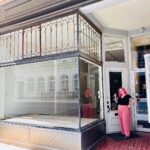
This month, Executive Chef Jason Viscount opens the door to the small storefront that once housed another Bricco creation, the greatly missed Olewine’s Meat & Cheese House.

A huge, 13-by-3-foot mahogany table (the “Table”) now dominates the tight space, around which 14 lucky people will share a dining experience that may be unmatched in the Harrisburg area.

“I wanted to offer an experience that’s more upscale than Bricco,” said Viscount. “I wanted to do something to really showcase the talent that we have here.”

Originally, he wanted diners to watch him cook right in front of them. However, the space proved too small for that, so he tweaked the concept.

The seven-course dinner now will be prepared in Bricco’s second kitchen, with Viscount himself doing much of the cooking. The night’s prix fixe menu will be set less than a week before, based upon his knowledge of that week’s freshest, most desirable local meats, dairy and produce.

In other words, before making a reservation, you should be comfortable trusting the culinary judgment of one of Harrisburg’s top chefs as opposed to, well, yourself.

“If I make my menu any earlier, I won’t be able to get freshest available,” he said.

So far, plenty of people have decided to put their evening into his hands, as, just by word of mouth, spots were filling up quickly for the dinners, which start May 3 and 4 and run every Friday and Saturday night thereafter.

Décor-wise, Viscount decided to stick with his original concept of making the dining room feel like an extension of the kitchen. So, the room will feature a menu board that you might find in a restaurant kitchen, a wall of wine crates and bottles and a funky, custom-made chandelier adorned with kitchen equipment, such as pots, pans and spoons.

Though, once the dinner starts, you may forget about your surroundings and lose yourself in the food, the company and the conversation, as you’ll likely be sharing your meal with at least a few strangers, unless you’re able to assemble a party to take all 14 seats.

The communal table is another part of the concept that Bricco is introducing. It has gained traction in larger cities but is relatively unknown in Harrisburg, particularly for high-end dining.

“There is nothing in central PA like this,” Viscount said.

He expects the seven-course meal to average $78 per person excluding taxes, tip and drinks. While pricey for Harrisburg, similar concepts in larger cities are actually much more expensive, especially when accounting for the amount and quality of food, as well as the personal service, offered by Table at Bricco, he said.

Drawing on his years in Harrisburg, Viscount believes there is a market here for such a unique, upscale dining experience.

“Based upon my conversations with people, there seems to be a huge interest in it,” he said. “It’s meant to be a food adventure. It’s all part of the experience and the fun.”

Find out more about Table at Bricco and make a reservation by calling 717-724-0222 or visiting www.briccopa.com.


Continue Reading

Harrisburg Needs People: We should welcome change, not fear it.

Screenshot 2014-04-30 10.58.20About a week after I moved to Harrisburg, I decided to take a long walk through downtown and Midtown to get a feel for my new city.

From my house on Front Street, I hiked up 2nd Street then looped around to 3rd, past the Capitol, across Forster, up past the Broad Street Market and home again.

After my journey, I had an uneasy feeling that can be best be summarized by the following: “What is the deal with this place?”

I had been to Harrisburg before, but had never looked at it or thought about it from the perspective as a resident, as someone who planned to stay and make it his home.

But it wasn’t so much the unrestored buildings that I passed that bothered me, or the trash in the streets, or the ugliness and perilous vibe of Forster Street. I was most unnerved by the sense of desolation, the fact that I was the only person on the street for much of my walk.

“It’s like a neutron bomb went off,” I told a friend who lives in Washington, D.C., where I had come from. “There are all these buildings, but no people.”

Granted, it was a cold January day, but it also was the center of a city, right near the Capitol building, a place that should have been busy in the middle of the afternoon. But it wasn’t, and the surreal, eerie sense of isolation I felt only grew as I headed back to Midtown.

Five years later, the situation has improved somewhat. I see more people about, even during the past nasty winter, helped by the opening of several terrific businesses and the renovation of a few historic buildings.

That said, when someone asks me what Harrisburg most needs, my answer is quick and unwavering: Harrisburg needs people.

Empty Spaces

That’s why I found the recent discussion about gentrification to be so puzzling. Harrisburg has many problems, from crime to infrastructure woes to service delivery challenges. Population displacement is not among them.

Look around almost any neighborhood. What do you see? Empty lots, places where houses and buildings used to be. There are empty lots downtown used for parking; empty lots in Midtown used for nothing; empty lots all over Allison Hill and Southside. There’s a large, empty lot right outside my office window.

Fifty years ago, people went in and out of buildings on these lots each day, all day long. Take a look at page 16 of last month’s issue, and you’ll see a century-old aerial view of the neighborhood around the Broad Street Market, commercial and residential buildings packed into every inch of space, places where people resided, shopped and socialized—lived their lives.

What’s there today? Two large, empty fields, a parking lot, some low-density housing. In some cases, ghosts of the past remain, historic buildings struggling to find new purpose.

Throughout the city, buildings are underutilized. Some are empty; others exist as shadows of what they once were; a number are tumbling down. Harrisburg is a city built for 100,000 people. It has half that population today.

These lots, abandoned buildings and barely habitable structures are just waiting for someone to want them. The day there is demand, developers will rush in, seizing them from the city’s army of slumlords and negligent owners and giving them new purpose and function. Harrisburg has a long, long way to go before so much land is redeveloped that displacement is a serious issue.

Amazing Renaissance

About 15 years ago, former Washington Mayor Anthony Williams declared a goal to increase his city’s population by 100,000 people. Like many American cities, D.C. had long suffered the ravages of disinvestment and blight and, as a consequence, had lost a large percentage of its population, though never proportionally as much as Harrisburg.

At the time, Washington’s alternative newspaper, The City Paper, in its usual snarky way, poked fun at Williams’ grand ambition by creating (if memory serves) what it called a “Tony-O-Meter.”

Each week, it documented some event (a crime, a subway breakdown, a dumb thing a City Council member said, etc.) and then made up a number to sarcastically show how many people the city had gained or lost as a result. Williams’ image was plastered to the face of this meter, with a pointer fluttering over it to represent the weekly fictional changes in the populace.

But you know what? The city achieved exactly what Williams sought to do. Washington has increased its population from about 550,000 at its low point in the mid-1990s to about 650,000 today. And those additional people have brought money and investment that has led to an amazing urban renaissance.

Harrisburg reminds me a lot of Washington back in the 1990s, during Williams’ day. Back then, D.C., like Harrisburg today, was just emerging from an historic financial crisis, with fresh leadership that refused to be deterred by cynics, armchair critics or by those who perversely wanted to keep the city down so they could continue to profit from its misery.

Harrisburg can plant the seeds of its own revival. But, to make it happen, we need to attract, not be afraid of, people and the investment and change they’ll bring. We have to be welcoming, a place where people will want to live, work and visit. We need to focus on making Harrisburg better and more prosperous, not become complacent or cynical or, even worse, distracted by phony controversies that get us nowhere. 

Continue Reading

For the City: This election cycle, candidates need to embrace a smart, pro-urban agenda.

TheBurg tries to bring engaged community reporting to you every month.

We attempt to tell local stories about the 95 percent of what is right in our area, not only the 5 percent that is wrong. Where we point out problems, we try to focus on contextual analysis and concrete suggestions about how to make things better for Harrisburg and the region.

However, one of the major challenges for Harrisburg—similar to the struggles of many small urban areas in Pennsylvania—is that, far too often, the small urban core is highly dependent on policies, economic structures and laws that are beyond the control of city government and its citizens.  

Harrisburg, for instance, has less than 10 percent of the population of the larger Metropolitan Statistic Area (MSA) (fewer than 50,000 residents compared to more than 600,000 in the surrounding region). Locally, Lancaster and York cities are similarly around 10 percent (York) and 11 percent (Lancaster) of the population of their surrounding counties. The wider regions can and do thrive economically, while problems get concentrated in the relatively small, poorer urban cores.

These arbitrary political boundaries are part of a legacy derived loosely from a German city-state government model, as opposed to a British (county) system used by other states (and perhaps a subject of a future column). Nonetheless, they have very real and current effects on the day-to-day operation of our city and similar cities throughout the commonwealth.

So, it is no wonder that cities across Pennsylvania have multiple problems at the municipal level. Recently, as many as 26 municipalities across the state have been under Act 47, and many others are similarly distressed. While the state-appointed receiver recently ceded his power back to local government in Harrisburg, the city remains under Act 47. 

If we are to hope that Harrisburg returns to long-term fiscal health, municipal leaders need to do the hard work here locally, much of which is underway due to the Harrisburg Strong Plan, but we also need to fight for better statewide and regional policies. In that spirit, here are my “Top 5” issues that I hope to hear more about in the fall legislative and gubernatorial campaigns.

1. Reform the public school funding formula. As I have mentioned in this space before, one of the principal impediments to economic growth in Harrisburg is the tax rate on real estate. At a total of 45 mils (30 mils from the school district alone), a homeowner with a house assessed at $100,000 faces a $4,500 annual tax bill. These rates make it nearly impossible to build new housing in Harrisburg without other incentives. Other states—like Michigan—have faced similar burdens and have shifted away from real estate taxes as the primary funding source for public schools. We should do that in PA.

2. Reform municipal pensions. One of the greatest costs faced by municipal government is the health care and pension costs of retired city workers. These contracts and rules are often beyond the power of local officials to deal with, but are projected to reach nearly 30 percent of the entire city budget in some cities like Allentown as early as 2015. A statewide solution to this issue must be implemented for cities like Harrisburg to thrive.

3. Land banking of vacant properties. Pittsburgh just passed a new “Land Bank” proposal that has the support of its popular new Mayor Bill Peduto. Harrisburg has a long-standing program to acquire and demolish or restore distressed properties, but it suffers from a severe lack of funding. The budget for 2014, for instance, will be largely consumed by one recent structure that fell on its neighbors and required immediate removal. A state program that provides long-term low or no-interest loans (or better, grants) to cities for the purpose of blight removal, land banking and re-use/restoration would go a long way toward addressing blight issues throughout the state.

4. Repair public works. Major public works, such as Riverfront Park’s river walk in Harrisburg, are in need of repair and refurbishment. These public spaces are enjoyed by a wide variety of citizens throughout the area. By involving the county, region and state in the maintenance and care of these important public amenities, the burden easily can be shared by all who enjoy them, not merely the ones who choose to live in the municipality where they are located. 

5. Take action on tax-exempt properties. The argument that non-profits should be free riders that do not pay for police and fire protection, road maintenance and the like and, thus, are exempt from city property taxes, is difficult to maintain as cities come under increased stress to pay for these services. If school funding were handled by implementing suggestion No. 1, this change would be far less painful for existing non-profits. Mayor Rick Gray in Lancaster recently addressed this problem as one of his top issues.  Harrisburg Mayor Eric Papenfuse has mentioned it as one of his options for closing the city budget gap in Harrisburg in 2014. However, both leaders are largely reduced to trying to persuade civic-minded non-profit leaders to make payments in lieu of taxes (so-called PILOTs). Providing municipalities with the ability to require payments for police and fire would dramatically work to relieve and more equitably share the burden of local government services.

These are just of few of the many issues that could help Pennsylvania revitalize its small towns and cities to the benefit of all of us. Hopefully, we will hear these issues discussed this year.

J. Alex Hartzler is publisher of TheBurg.

Continue Reading

Plein & Simple: Art, music, fun–in the open air.

Screenshot 2014-04-30 10.22.49Here are some things that are fun: eating food, listening to live music, walking around outside in beautiful spring weather, and watching artists work.

Well, head to Camp Hill for the fourth annual Plein Air Camp Hill Competition and Arts Festival, held all over town from May 16 to 18, and you can do all of those fun things.

“Plein air” is used to describe the act of painting outdoors. It comes from the French phrase “en plein air,” meaning “in the open air.” The 19th-century impressionists were famous for plein air painting, used to capture the effects of sunlight at different times of the day.

Plein Air Camp Hill started in 2011 by the nonprofit Economic and Cultural Development Group of Camp Hill, which organizes the festival in partnership with Camp Hill Borough. It has grown in size and scope ever since.

“This competition and festival have become a ‘don’t miss’ event showcasing regional and national artists, all painting live outdoors, and Camp Hill’s commitment to the arts, education, our youth, and business and economic development,” said Craig Bachik, executive director of the Economic and Cultural Development Group. “Each year, attendance has grown as artists and guests are traveling from as far away as Massachusetts to participate and attend.”

Julie Riker of Camp Hill is one of the participating artists. She’s also president of the Susquehanna Plein Air Painters and has participated every year since the festival began. I asked her about her experience painting “for a crowd.”

“Well, every time you paint outside, it’s likely that you’ll run into the public in some capacity,” she explained. “People often ask questions or just watch you work. I’ve actually sold paintings that way. Someone watches you paint a piece, and they feel a sense of ownership.”

Why paint plein air instead of in a studio?

“I love being outside,” Riker explained. “Some people like to golf outside, some people like to fish outside…I like to paint outside. I also like painting from life rather than from a photograph. Even if I’m painting indoors, I set up a still life rather than paint from a photograph. And painting plein air is challenging simply because you’re sort of racing against the clock. The light changes, so you have to make decisions quickly.”

The festival kicks off Friday morning as artists set up easels all over Camp Hill. A special Collectors’ Preview Party begins at 5 p.m. at Gallery 2318 (2318 Market St., Camp Hill), where partygoers will have an opportunity to check out the work of 72 artists and photographers from five states who have entered into the festival’s juried portion, as well as student artwork. The $25 tickets can be purchased on the festival’s website.

While there are activities on both Saturday and Sunday, Saturday boasts the most action. In addition to artists painting plein air all day, there are “Quick Draw” competitions for both youth and adults. Participants will choose a location within a designated area and will have two hours to create a piece of art from scratch.

There will also be a “Quick Shoot” photography competition on Saturday, during which photographers will have 24 hours to take photos within the borough, print and frame their photos, and hang them for exhibition and judging.

Additionally, there will be free workshops on all sorts of art media from painting to glass blowing, bonsai, jewelry and more, as well as painting activities for artists of all ages. The “Youth Paint Out” is always a hit among the younger set as everybody wins free ice cream and older participants compete for cash prizes.

While focused on art, live music will be found in several locations, including Willow Park Gazebo. On Saturday morning, for instance, renowned local classical/jazz/flamenco guitarist John Catalano will perform.

This year, the festival will add a “business scavenger hunt” involving businesses from Camp Hill and surrounding areas. It begins before the festival does, on May 12, and lasts until May 17.

“At each participating location, a tidbit of local Camp Hill history or trivia will be posted in plain view on a petal-shaped piece of colored paper,” explained Bachik. “Teams will have the week to locate and glean certain information from them, [which] will be useful in solving the scavenger hunt final answer.”

When a team has visited each location, it will have to decipher a final question, he said. The answer to that question will be revealed on Saturday, and a drawing from the teams’ submitted answers will determine the winner. The grand prize is $1,000.

Proceeds from the festival benefit a variety of activities and projects. Among the most visible are banners featuring student artwork.

“I love to see the student art banners blowing in the breeze along Market Street, knowing that 10 area schools have worked on this cooperative project,” said Susan Schreckengaust, a member of the festival planning committee.

Proceeds from this year’s event also will be placed in an endowment fund created to provide scholarships to art students of all ages and for organizations and events seeking funding to support community-based arts programming, said Bachik. 

“The proceeds go towards promoting and enhancing artistic expression in our region and to improve our quality of life through the arts,” he said.

For a complete schedule of events and to learn how you can be a part of the festival, visit pleinaircamphill.org.


Continue Reading

Business Still Hopping at Red Rabbit: So many years, so many Bunny Burgers.

Screenshot 2014-04-30 10.19.58When did you take a bite of your first Bunny Burger?

Since 1964, millions of midstaters have regarded their first trip to the Red Rabbit Drive-In as almost a rite of passage, a tradition that continues as the old-school eatery celebrates its 50th anniversary this year.

The 1950s retro vibe is reminiscent of the popular “Happy Days” television show, with orders delivered curbside. Pull up, park and give your order; it’s that convenient. A waiter or waitress will return with a tray, and you’ll be on your way to enjoying a meal with the family within the cozy confines of your vehicle. Nearby picnic tables are nestled beneath a roof for those who prefer more elbow room and the opportunity to dine al fresco.

On the menu is an array of standard, uncomplicated family fare from hamburgers to cheeseburgers, fish sandwiches, ham and pork barbecue and, of course, fries. Dinners include chicken, shrimp and fish, to name a few, and the homemade coleslaw is always a hit. Hungry guests can warm up with a bowl of chili during the colder months, and little ones especially enjoy the chicken fingers, grilled cheese, hot dogs, ice cream, shakes and slush puppies.

Because the Red Rabbit closes for 10 weeks each year after Thanksgiving, many customers anxiously await its re-opening in February as a harbinger of spring, when families can shake off those winter doldrums and hit the open road for a bite of something tasty.

First-timers take note and plan accordingly: The Red Rabbit only serves customers from Friday through Sunday.

A Tasty Idea

Manager Sam Berger’s grandparents, Sam and Maggie Snyder, started the little roadside restaurant on a plot of land about 15 miles upriver from Harrisburg, where Distlefink’s Ice Cream and Sandwich Shop was previously located.

“Grandpop had always been involved in the restaurant business, and he was a baker on a ship during WWII,” said Berger. “He later worked with his brothers in a restaurant called the Barbecue Cottage before deciding to go off on his own. He and my grandmother purchased a house off the Amity Hall exit and would drive back and forth to Harrisburg for work. When Distlefink’s closed, they sat in the car before buying the property to determine the amount of traffic they would have.”

It turned out the decision to buy the property was a wise one, and the business with the catchy phrase and cute logo took off.

“The bunny logo is my mother’s artwork; she designed it while in high school,” said Berger. “My grandparents then created the catchphrase, ‘Make Red Rabbit a Habit.’”

Berger’s parents, Sam and Cindy, took over the business in 1988, and, today, they employ 30 staffers. Sam helps manage the business that has remained fairly steady throughout the years.

“We do our best to stay with the original concept of quality and good service,” he said. “They are the two mainstays that my parents and grandparents have continued.”

One of the few things that has changed is online traffic. Thanks to social media, the Red Rabbit is now mentioned on Yelp, Foursquare and TripAdvisor, and the Facebook page is gaining in popularity.

As for traditional traffic, Berger said that’s been fairly constant and is almost evenly split between locals and those just passing through.

“We do get a lot of business from Penn State fans during football season,” said Berger.

Fan Stories

Lancaster resident Christina Schoffstall is one of those Penn State fans who makes it a point to stop when passing through. 

“My husband and his family went to the Red Rabbit as a family tradition on the way to their cabin every few weeks, and one of the highlights was eating dinner in the car,” she said. “He had such a fond memory of those times that he started taking me. We now take our children there after the Penn State games. As parents, it’s enjoyable for us to hear them say, ‘there is the wed wabbit.’”

Cindy Moyer of Northumberland has been a fan for years.

“When my brother and I were kids, we made many trips to Linglestown to visit my aunt, uncle and their kids,” she said. “Every time we went to visit, we’d stop for Bunny Burgers. I’ve been eating Bunny Burgers my entire life.”

For those unfamiliar with Bunny Burgers, take heart—they have nothing to do with the cute furry animals that hop. The popular menu item consists of a ground beef burger, hickory smoked bacon, melted cheese, shredded lettuce, tomato slices, pickles, onions and a special sauce on a seeded roll.

Moyer lost her parents in the ‘90s, so the pilgrimage fills her with nostalgia.

“Each time my husband and I stop for Bunny Burgers, we order three—one for each of us, and one we get cut in half to eat in honor/memory of my parents and my husband’s mother who also loved stopping for Bunny Burgers,” she said. “We will make the trek for Bunny Burgers until we are unable to do so.”

Berger said hearing such stories warms the hearts of the family that works so hard at what they do.

“We’re thrilled when we hear stories of customers who come back year after year and generation after generation, and we are thankful to work with the employees that we do—some of them third generation,” he said. “Of course, we very much appreciate all of our customers and the fans of the Red Rabbit. We expect to be around for a long time, who knows, maybe another 50 years.”

The Red Rabbit is located at 60 Benvenue Rd. (Route 322), Duncannon, a half-mile west of the Clarks Ferry Bridge. For hours of operation and more, visit www.redrabbitdrivein.com.


Continue Reading

Hey, Bike Dude! Recycle Bicycle’s Ross Willard is Harrisburg’s go-to bike guy.

Screenshot 2014-04-30 10.24.28Ross Willard has some serious energy. When I recently visited his Bike Warehouse on a rainy Saturday, I was ready to go with my camera and a list of questions that I hoped to have answered about his non-profit organization, Recycle Bicycle.

After getting introductions out of the way, he jumped right in about the building we were standing in, a dim, damp, yet expansive warehouse that was donated to his organization to use as a repair shop. He told me about the countless bikes that go through triage at the warehouse and the importance of teaching people how to fix their own bicycles. About the personal transformations that people experience through the organization. About the self-sufficiency, empowerment and public service that the organization provides.

After a thorough tour of the warehouse, I had quite a lot of my questions answered without having to ask. Willard is passionate, animated, relentless and strong-willed about a free public service that strives to keep the city’s bikers safe—so much so that he left a corporate job on an early buyout to repair bikes.


Moral Dilemma

Fourteen years ago, Willard encountered the personal resolve that would fuel the all-volunteer Recycle Bicycle community. As part of a food drive to feed people in Harrisburg, he acted as security for the group’s food van and became disturbed by all of the kids who would pass by on the street, pushing bicycles without brakes on the tires. “I faced a moral dilemma,” he reflects.

He remembers thinking that people who didn’t have access to enough food wouldn’t necessarily face the imminent threat of death. “But kids going through the intersection without breaks, that scared me.”

So, he began setting up shop at intersections throughout the city with a little bike repair bag and waited for people with bikes that needed a little love. Recycle Bicycle volunteers would also crash block parties with large crowds, where they would set up a makeshift street repair shop. That small repair bag became a toolbox, which became a chest, then later a van, then a trailer and finally, the Bike Warehouse, where Recycle Bicycle has operated for five years.

Within 15,000 square feet, Bike Warehouse is jam-packed with tires, wheels, brakes, chains, pedals, you name it. Most of the bike parts are donated or removed from bikes that are no longer suited for riding. These parts go toward the repair or the building of bikes, and the scrap metal is recycled.

“We’re here to help people build their own bikes,” says Willard. “We are a do-it-yourself shop that costs you nothing, but you have to invest in helping.”

Willard doesn’t believe in taking someone’s bike and merely fixing it. Instead, Recycle Bicycle provides the tools and expertise to help people learn how to fix their bikes for themselves, at what he calls his “teaching warehouse.” One of the greatest advantages that the organization provides is a sense of empowerment.

“Kids will be savvier when dealing with mechanics later in life,” Williard explains. “They will know what questions to ask.”

Other people come in to donate their time, helping with repairs, in sort of a work-share program, during which they can earn a bike after putting in the allotted number of hours.

“Recycle” is key in the organization’s name. Willard is able to supply free bikes to the Harrisburg community because the parts that go toward repairs have been recycled from other bikes. Excess parts get shipped to other bike organizations throughout Pennsylvania and the world.

“We recycle everything: steel, aluminum, boxes [that held] parts that people donated, water bottles,” Willard says. Any scrap metal that the organization collects, it recycles for cash that goes toward the purchase of tools.

Obviously, biking in an urban community, in and of itself, is a natural way to conserve resources. Within his organization, Willard not only demands bike safety, but he takes a strong stand on ecologically friendly habits and ways of life. 

“Let’s live on a bike in the city and be ecologically correct,” he says. “We spend too much money on gas and oil. [Recycle Bicycle] is ecologically correct, and we help prevent too much car use.”


Not a Toy

Volunteers provide an integral component to the organization. When I visited the Bike Warehouse, I met Greg Chiesa of Camp Hill, who was hard at work repairing bikes. By day, Chiesa works for the commonwealth and, in his spare time, he gives to the bike-building cause.

“I’ve always loved bikes, fixing them, riding them,” says Chiesa, who says he didn’t know about Recycle Bicycle until he started looking for a place where he could donate biking equipment. Before volunteering with the organization, he says, “I was always into ‘the new.’ But now, I ask, ‘Can I fix it or recycle it?’”

While Recycle Bicycle reuses most of the frames and parts to build new bikes, some bike frames beyond repair are stowed away in their own special room at the Bike Warehouse. He and his team paint the unsalvageable bikes white and break out the “ghost bikes” once a year during the “Ride of Silence,” in which they display the bikes as a memorial to the Pennsylvania bikers who died while riding in that particular year.

One particular bike that hangs within the warehouse, just beyond the entrance, leaves visitors with an uneasy feeling and a resonating lesson. It is painted in the innocent pink-and-white pattern of a child’s bike, but has mangled wheels that offer a grim picture of what happened. Willard explains that the owner was a young girl who crashed with an oncoming motorist and lost her life.

“I use it as an illustration that [a bike] is not a toy, but a vehicle that can be deadly,” Willard explains.  

The smashed bike serves as a stark reminder that bike safety is important, and it paints a clear picture of why Willard is so impassioned about his volunteer service to the community.

Screenshot 2014-04-30 10.24.05He says that the organization needs more dedicated volunteers like Chiesa who have the serious desire to keep Harrisburg’s biking community safe.

“I don’t want the kids to die. I want people to learn that it’s dangerous out there,” he says. “We need more volunteers who understand that. They have to have my heart. I didn’t burn out because I’m hyper.”

His charismatic and entertaining personality, his fiery drive to make bikers safe and his non-profit repair shop have made Willard a popular sight in Harrisburg. He jokes that, when he isn’t riding a bike, people will recognize his vehicle, run up to him and ask when the warehouse is open. Some nights, he will pass through rough parts of the city and, “Out of the shadows, I’ll hear, ‘Hey, bike dude,’” he laughs.

“We are the best guys in town, and we feel good about it,” says Willard. “With whatever power you’re given, use it correctly.”

The Recycle Bicycle Bike Warehouse is located at 821 Elder St., Harrisburg; [email protected].


Continue Reading

After the Fall: A church collapse, a bishop’s arrest and the mayor’s crackdown on blight.

church collapse

On the night of Feb. 21, just after 6 p.m., the Harrisburg fire department responded to a call about the partial collapse of a building on S. 12th Street, near the border between Harrisburg and Steelton.

The building, a three-story brick warehouse on a steeply sloping road above S. Cameron, had been abandoned for several years. Its south wall, covered in scraggly vegetation, had long showed a 10-foot-by-5-foot hole from a prior collapse. This time, the roof had caved in, dragging power lines down onto a neighbor’s porch and spilling bricks from the north wall into a nearby yard.

Crews evacuated two families from a neighboring property and searched the premises for squatters. More than an hour later, around 7:40 p.m., police arrived with the building’s owner, a 48-year-old pastor named Augustus Sullivan. Sullivan is the founder of the Victory Outreach Christian Church, which had once called the building home. Tall and fit, with closely shaved salt-and-pepper hair and a trim goatee, he showed up wearing a baseball cap and a nondescript puffy coat. Most of the reporters on the scene appear not to have recognized him. Ewa Roman, with CBS21, later recalled hearing a small commotion, followed by a voice saying, “The owner’s here, the owner’s here.” News cameras surrounded Sullivan, filming and taking pictures while officers led him in handcuffs to a police van.

A few days before the collapse, at a public forum in city hall, Harrisburg’s new mayor, Eric Papenfuse, had promised to take a harder line on blight. The forum, hosted by PennLive, featured a panel discussion with the mayor, the police chief, the public works director and members of City Council. It covered topics ranging from snow removal to police patrols and potholes.

When the moderator brought up blight, Papenfuse laid out his vision for enforcement. It included merging the city’s codes office into the police department and conducting warrant sweeps to catch known offenders. It also included increasing misdemeanor charges for negligent property owners, for things like creating a public nuisance and reckless endangerment. “In many cases we know who the largest offenders are, we know where they live, and it’s simply a matter of going out and, basically, getting them,” Papenfuse said.

On Friday night, police stood outside long enough for Sullivan, ball cap removed, to be photographed and filmed by news media. He was ultimately charged with three misdemeanors: public nuisance, reckless endangerment and failure to prevent a catastrophe. After his arrest, the fire chief held an impromptu press conference at the scene, during which he adopted the same tough stance as the mayor. “I think this should send a resounding message to the slumlords in the city of Harrisburg that we will no longer play the game with you,” he said. “We are going to come after you, and we are going to make the city right again.”

On Monday, the city released a stack of records showing a series of codes violations for the church going back to 2008. By that point, a clearer picture had emerged of exactly whom the city had arrested. Sullivan, who formally goes by the title The Apostle Dr. A. E. Sullivan, Jr., is the president of the Interdenominational Ministers Conference of Greater Harrisburg, a politically active association of black preachers. In the fall, he had spoken out forcefully against the state-appointed receiver’s recovery plan for the city. He had even shown up in Commonwealth Court to protest its confirmation, though he filed no formal objection. In early 2013, it was rumored that he had contemplated running for mayor.

Sullivan’s arrest polarized the community. Some saw a justly harsh response to dangerous negligence—the collapse would ultimately displace nine people for more than a month. But others saw a politically motivated attempt to humiliate a prominent black leader. The day after the arrest, Sullivan’s attorney told a reporter for PennLive that her client had no knowledge that the building was unsound. She would later complain of “disparate treatment,” citing a “long list of people” facing similar violations who were not arrested in the same manner. (Sullivan has since filed a civil complaint, alleging that, when the city eventually demolished the church, it did so without proper notice and at an excessively high cost.)

It’s one thing to make a campaign promise, and another actually to follow through, especially when doing so implicates people with deep ties in the community you serve. In the weeks after the collapse, Papenfuse stood by his officers while Sullivan’s supporters rallied. The mayor’s crackdown on blight, barely inscribed as policy, was facing its first real test. 

________________________________

A week and a half before the collapse, Sullivan was preaching in a church in São Marcos, a town in the southernmost state of Brazil. He had arrived that morning, Tuesday, Feb. 11, and would stay in the country for nearly a week, preaching in and around the state capital, Porto Alegre. His host for the trip, a pastor named Mauro Lastra, recorded his itinerary in a guestbook on Sullivan’s website. According to Lastra, Sullivan mostly preached in the evening, in services that ran until midnight or later, and that often included weeping, speaking in tongues, “healings” and “deliverances.” “The service ended and no one wanted to leave,” Lastra wrote of one church visit, from which the pastors didn’t return home until 4 a.m. “The Ap. Sullivan was praying one by one until all are blessed by God.”

The Brazil visit was one of the several international trips Sullivan has made in recent years, in his capacity as the CEO of Apostle A. E. Sullivan Global Ministries. On his website, Sullivan identifies himself as the “Founder, Chief Apostle, Senior Bishop & Presiding Prelate” of a global network that includes “over 5,750 churches in 54 nations.” In 2010, according to a related Facebook page, he went on a “gospel crusade” to Kenya, Uganda, Rwanda and the Democratic Republic of the Congo. In November of 2012, he traveled to the Caribbean for 18 days, visiting places like St. Kitts and the Cayman Islands. In June of 2013, he spent 11 days in the Philippines; in November, he traveled to Paris and Brussels.

It’s not clear whether Sullivan funded these trips on his own or through his corporation. Although the Global Ministries is a registered non-profit in the state of Pennsylvania, it was only incorporated last October, and there’s little public record of its activities. Before each trip, however, the network would petition Facebook followers for financial assistance, referred to as a “love gift” or “seed.” The fundraising was usually explicitly about Sullivan’s international ministry; in requesting checks for the trip to Paris, for example, supporters were instructed to put “Attn: Crusade to France” on the envelope. But the checks were usually to be made out to an entity closer to home—the Victory Outreach Christian Church.

Sullivan founded the V.O.C.C. in January of 1999. His church was non-denominational and formed in the evangelical mold, with a strong reliance on scriptural interpretation and a tone of revivalist fervor. “We are anticipating a mighty move of God,” the church’s Facebook page says in one post. “God is confirming His word with signs & wonders following,” it says in another. His services often featured “altar calls,” during which people in attendance come forward to the preacher and publicly recommit themselves to Jesus Christ. In a photo of one altar call, during his trip to Brazil, a small crowd presses towards Sullivan, their eyes closed and their arms raised. In the center is a woman with a stricken look. Sullivan, his back to the camera, reaches out to touch her cheek.

Sullivan’s formal religious training took place at the Grace Bible Institute, a school of theology that opened around the same time as the V.O.C.C., initially operating out of a church basement in Steelton. (In his resume, Sullivan also claims to have graduated from the Interdenominational Theological Center, a consortium of historically black seminaries in Atlanta, although the ITC’s registrar had no record of this.) Isaac Edwards, a graduate of the Grace Bible Institute whose father, Peter Edwards, was its founder and president, told me the school had an open-ended style of instruction, emphasizing that many matters of religion were “up for interpretation.” Its curriculum drew on the work of various Protestant theologians, especially Charles Hodge, a leading figure in a 19th-century tradition known as the Princeton Theology, which emphasized scholarship and devotion to the Bible.

Grace Bible Institute had a brief tenure. Isaac told me it was “hard to get people to pay” their tuition, and after his mother died in 2005, his father closed the school. While it lasted, Grace also seems to have struggled with a tension, not unheard of in religious studies, between the anxiety over official recognition and the primacy of personal faith. In one sense, the thinkers who inspired its creation spurned the need for official endorsement. Another theologian who featured prominently in studies at Grace was John Wycliffe, the 14th-century English reformer who, in a rejection of Roman Catholic hierarchy, encouraged a movement of itinerant preachers who lacked any formal consecration. At the same time, like other institutes of higher education, Grace offered bachelor’s, master’s and doctoral degrees. It sought accreditation, and, according to Isaac, received it, though the agency he referred me to, TransWorld Accrediting Commission, claimed never to have heard of the school.

In the summer of 1999, Sullivan moved his church into the property on S. 12th Street. After the collapse, it was reported that the building was 117 years old, but Ken Frew, with the Dauphin County Historical Society, says it might be significantly older. An 1871 city map identifies a brick building on the site as the Lochiel School, which educated the children of immigrant workers at the nearby Lochiel Iron Works. Apparently it was conceived as a market house, with an auditorium on an upper floor, but that purpose was quickly abandoned. In 1909, students relocated to the new Foose School on S. 13th Street, after years of what a Harrisburg Telegraph article described as “many severe criticisms” of the 12th Street building’s “poor adaptation for school purposes.” The paper said people called it the “old barn.” Sometime after the students left, it became a candy factory. In 1967, Cumberland Electronics bought it, and it spent 26 years as a warehouse, storing TV antennas and vacuum tubes.

By the time Sullivan’s V.O.C.C. held services there, the building had been a church for several years. Initially, Sullivan rented the space from a Spanish-language congregation that had bought it in 1993. In 2004, Sullivan entered an agreement to purchase the building for $25,000—$10,000 upfront, plus three-and-a-half years of interest-free monthly installments of $350. The agreement included a clause acknowledging the property’s “good condition” at the time of sale, although David Rodriguez, a reverend with the Spanish church, told me that bricks were already falling down when the building changed hands. “They told me they were going to renovate,” he said.

________________________________

In July of 2008, about a year later than expected, the V.O.C.C. finally finished its monthly payments, and Rodriguez deeded the building to Sullivan. The trouble with the city’s codes department began almost immediately. In October, the fire bureau forwarded a complaint that bricks were falling from the building’s south wall. A codes inspector named Charles Jenakovich paid a visit and filed a notice of non-compliance. A month and a half later, after Sullivan took no action, he returned and issued a citation. “Extremely hazardous condition as bricks falling from over 30 feet onto public area,” he wrote. A couple of months later, in January of 2009, the city condemned the building.

The paper trail following the condemnation order is a good study in the frustrations of codes enforcement. Per the order, the V.O.C.C. had to cease use of the building immediately and, within 20 days, obtain permits for either demolishing the property or bringing it up to code. Sullivan acknowledged the order within a couple of days, eventually obtaining a $50,000 bid from a renovations company for necessary repairs. But after that, Sullivan appears to have done nothing further for more than a year. The next citation is dated April 23, 2010, when Jenakovich visited and noted a “[f]ailure to repair or demolish unsafe structure.”

The first delay was only the beginning. For the next year, Jenakovich issued citation upon citation, about once every two months, as Sullivan continued to do nothing. Codes citations work like parking tickets: the owner can plead guilty and pay the fine, or he can appeal, but the city will continue citing until the underlying issue—the illegally parked car, the property’s non-compliance—is resolved. There is a way to ramp up the pressure: upon the fifth guilty plea, the citation becomes a misdemeanor. But unfortunately, as with parking tickets, building citations can also be ignored, at which point enforcement depends on the district judge.

In April of 2011, the church building suffered another partial collapse. On April 25, Jenakovich issued a final citation—his ninth since the condemnation. David Patton, the city’s codes administrator, wrote to Pierre Ritter, then the police chief, requesting a reckless endangerment charge. That same month, Sullivan’s wife had passed away, and, according to Patton, then-Mayor Linda Thompson postponed enforcement, saying that Sullivan needed time. Patton recalls telling Thompson he was sorry about Sullivan’s wife, but then adding, “Some people are going to join her if we don’t do something.”

On June 2, 2011, Sullivan met with city officials and Thompson, who granted him 30 days to come up with a plan. Once again, Sullivan stalled. In early August, Patton emailed Thompson’s director of building and housing, Jack Robinson: “The time for him to do something has way expired. I need to know what’s going on.” On Aug. 17, a passerby called to alert the city that bricks were falling from the building and the barricade had been removed. On Oct. 7, Patton sent another email to Robinson: “Bishop Sullivan has yet to do anything about his deteriorating property…As we approach the freeze thaw season, my fear is that there will be a collapse…again.”

Finally, in late October of 2011, Sullivan obtained a structural analysis of the church, which determined that the building was salvageable but had “a number of major structural deficiencies.” In addition to the partially collapsed wall, the engineer also noted that the roof was caving in and that the floors on the lower stories were insufficiently supported. A month later, at the behest of the city, a York-based contractor provided a demolition estimate of $212,000.

At some point, Sullivan seems to have gotten the impression that the city would delay enforcement indefinitely while he sought funding for repairs. In February of 2012, after a few failed attempts to find financing and four months of inaction on the property, he met with PNC Bank. A week later, he wrote to Patton: “We talked about a number of things but some of these things do not move as fast as we like. Bankers and banking moves at a pace all of its own unfortunately.” He seems to have placed a higher priority on other parts of his ministry. In one Facebook post, from March of 2013, Sullivan directed followers to verses in Matthew and II Timothy “to firmly see & accurately know that we are living in ‘the last days’ and ‘the end times.’”

“I didn’t understand how somebody so vocal in the community could be doing this,” Patton told me. During a site visit, one of his officers noticed that the V.O.C.C.’s signs had been removed from the building. They assumed Sullivan was trying to dissociate himself from the property. Feeling no support from the mayor, Patton kept a subfolder of email correspondence and other records on the building—in the event of a collapse, he wanted a record of his efforts.

After Sullivan filed his civil suit, many of the folder’s contents wound up appended to the city’s objections. At the bottom of the file is an email Patton sent to Mayor Thompson, dated Feb. 12, 2013. The church property, he wrote, was “getting worse,” and he had managed to track down Sullivan’s home address. “I have 5 warrants for his arrest,” he concluded. “Permission to execute.” The mayor did not reply. (In a March 21 interview with abc27, Mayor Thompson said she had given Sullivan “no preferential treatment,” though she did acknowledge working with him while he sought “financial aid.”)

Patton, who continued paying visits to the site, told me he had a feeling something would happen this year. “It was really plaguing my mind, that someone would get hurt,” he said. I thought of a clip from Fox43’s coverage the night of the collapse, in which one of the evacuated neighbors, rattled and on the verge of tears, wonders in fragmented English about what might have happened if the church fell another way. “How many families, you know?” she says. “We can die.”           

________________________________

In the weeks after the collapse, the church community rallied behind Sullivan. As president of the Interdenominational Ministers Conference, Sullivan had close ties to local black church leaders, several of whom complained about the city’s response. Among those church leaders was the Rev. Earl Harris, one of the IMC’s vice presidents and the longtime pastor of St. Paul Missionary Baptist Church.

On Sunday, March 16, St. Paul’s hosted a summit for regional civil rights leaders, union organizers, clergy members and other community leaders. The event was originally slated to discuss anti-union measures in the state legislature, but, by the time it arrived, Sullivan’s arrest had become part of the program. “Come Hear the Community Response to the Unprecedented Handling of a Community Leader Bishop A.E. Sullivan of the IMC,” one event poster said.

At the summit, a long succession of speakers took to the podium, including Rick Bloomingdale, the president of the Pennsylvania AFL-CIO, several local pastors, and Jerry Mondesire, the president of the Philadelphia chapter of the NAACP. (Mondesire has since been suspended, following an inquiry into his alleged financial mismanagement of his chapter.) State Rep. Patty Kim, whose district includes Harrisburg, and who meets regularly with Mayor Papenfuse, offered a word of support for Sullivan that was noticeably hedged: “I wish he wasn’t the one to be an example of a slum landlord.”

Harris, when he spoke, described the mayor’s actions as “bullying.” He worked up to a climactic conclusion, urging people to translate their anger into political action. “We need to band together, we need to raise finances together, we need to make sure that this man gets the message that he will never do this again,” he said. “And if he keeps this attitude, if he doesn’t change it, we need to drive him out of office!” The crowd erupted with applause.

Two weeks later, I attended a lunchtime strategy meeting in the basement of St. Paul’s. Following Sullivan’s arrest, a group calling itself the Coalition for Social Justice of Greater Harrisburg had begun to meet regularly, to discuss possible actions in Sullivan’s case and, according to its Facebook page, to more broadly “affect social change.” Harris and Sullivan were there, along with Reggie Guy, of the MLK Leadership Development Institute, a local non-profit. A circle of chairs had been set out at the foot of a small soundstage, and a group of 20 or so gradually filled them, including Sullivan’s daughter and mother and a couple of his parishioners.

Sullivan wore a maroon suit and glasses. He led an opening prayer, closing his eyes and rocking back and forth gently. Afterwards, while people filled their plates with food, I took a seat beside Sullivan and asked him about the history of the V.O.C.C. He didn’t have an exact date for when the church moved to 12th Street, saying it “started piecemeal,” but that it was “early on.” I asked about the circumstances that led to his founding a church, and he said he would have to speak with his legal counsel before answering any more questions. (Sullivan and his lawyers declined subsequent interview requests.)

Harris, wearing a sweater and blue jeans, approached the podium. He began by discussing a City Council hearing scheduled for that evening, during which the heads of fire, police and codes were supposed to discuss “standard procedure” for handling building violations. Questions about procedure had become a fixation for Sullivan’s supporters—the claim that he received unfair treatment depended on how such cases were normally handled. In particular, Harris took issue with what he described as Sullivan being brought to the scene and “posed” for the news cameras. As a local deacon had put it, speaking to a television crew during the March 16 summit, Sullivan had been made to “do the ‘perp walk,’ handcuffed and shackled.”

“We’ve never had an arrest handled like this,” Harris said. He insinuated that the mayor had some control over when the collapse occurred, noting that the timing of the arrest looked “preconceived.” “If you want someone to spend the night and the weekend, when do you arrest them? Friday night,” he said. (In fact, Sullivan was released early Saturday morning.)

Harris then linked Sullivan’s treatment to larger trends of injustice. He and other ministers had recently returned from a trip with local rabbis and high school students to the Holocaust Museum in Washington, D.C. He had been particularly moved, he said, by an exhibit called “Some Were Neighbors,” which emphasized the point that Nazi collaborators “were those that were complicit with their silence.” He then returned to Sullivan and the response from certain local ministers. “I’ve heard nothing from the downtown clergy. I’ve heard nothing from the Jewish community. I’ve heard nothing from the Roman Catholic community. I’ve heard nothing from the Lutheran community,” he said. “The silence has been deafening.”

Sullivan spoke next. His attorney was there, and there was a limit to what he could say, but he wanted to clear a few things up. He began by addressing something “lingering out there” about his past. In the month since his arrest, some outlets had reported on a guilty plea Sullivan had entered in 1998 for a harassment charge—a low-grade misdemeanor. “The inference was that it involved a woman,” Sullivan said. “And it did not involve a woman. I was protecting my child, and it was 16 years ago. And every father worth a grain of salt protects his child.” He suggested that people had dredged up his court record “as a way to fracture this community.”

Sullivan also wanted to discuss the breadth of his work outside the church. For many years, he said, his attention to his own affairs “went lacking” because he was “always being called on for everything else.” On top of being president of the IMC, pastoring his church and overseeing his global network, he had served as a vice president of the NAACP, as religious affairs chair for the state and on the governor’s advisory commission for African American affairs. “In all these different capacities and in other ways, I was always giving, giving, giving,” he said. When his wife passed away, he lost the “one person” who was looking out for him. “There was nobody right there on the scene to take care of my things,” he said. But, he added, “I was not just sitting around. I was fighting for everybody else, and a lot of my things did not get addressed.”

The discussion turned to local issues of social justice. The group talked about the need to accurately inform their community, especially young people. Sullivan noted—and “we keep saying it,” he said—that there was “no black newspaper, no black radio station, nothing of that.” It was hoped that the Coalition’s Facebook page could help fulfill that role. (The next day, the page posted a photo of the city’s new firefighter hires, along with a short article that included the line, “Don’t strain your eyes, there are no known African Americans or Hispanics in this group of fire recruits.”) Reggie Guy, of the MLK Leadership Development Institute, spoke at length, connecting Sullivan’s experience to what he perceived as a larger assault on minority power in the city. “We are gentrifying this community, and we are chasing people out,” he said.

Afterwards, I spoke with a young couple introducing themselves as the Davises, who sat against one wall with a baby in a car seat at their feet. The mother, Clarissa, had joined the V.O.C.C. in its beginnings, in the summer of 1999. Through Sullivan’s church, she said, she had come to know her purpose. She felt his arrest was a “very big injustice”: if there were anything he could have done to avoid the collapse, he would have done it. “He’s an impeccable man,” she said. 

________________________________

After the meeting at St. Paul’s, I visited the demolition site. The downslope side of the building was completely intact, while the other half was torn wide open. Beyond a pile of bricks, lumber and split-face concrete blocks, you could see into the room where services must have been held. A drum set and a pair of pulpits remained onstage, beneath a large painting of a lake under a clear blue sky.

The demolition bid was awarded to Empire Services, a firm with an office in Reading, for $132,000. In the civil complaint, Sullivan says he obtained a qualified bid for $83,000, but the city claimed publicly that the job required specialized equipment, citing the church’s proximity to power lines and neighbors. At the site, an employee for Empire named Tony pointed out the massive excavator, which he said had a reach of 130 feet. “This thing was horrible,” he said of the building. “The trees were what was holding it together.”

A couple of guys drifted over. One of them, wearing a Standard Parking jacket and introducing himself as John, said he had lived in the neighborhood since 1973. Papenfuse had told me that, while he was going door-to-door during his campaign, residents in the area had “begged” him to address the church property. John now told me he was circulating a petition to get the city to knock down more structures. “I’d rather have empty lots than condemned houses,” he said. “How often do you drive through the suburbs and see a burned-out house?”

John lived next door to a rotting corner store that had been abandoned for around 10 years. Last year, some of the building’s windows had fallen out of their frames into his yard. “I got grandkids, man,” he said. 

________________________________

That evening, April 1, City Council held its hearing to discuss the city’s procedures for violators of building codes. For Sullivan’s supporters, the hearing was bound to be a disappointment before it started. They had originally called for an inquiry into Sullivan’s arrest, hoping council would hear sworn testimony from the officials involved, as it is theoretically empowered to do under the city’s charter. But Neil Grover, the city solicitor, advised that the relevant statute was seldom used and possibly unconstitutional—it would involve council questioning people under oath about matters that might be pending litigation. Instead, as Grover and Council President Wanda Williams explained at the beginning of the hearing, council would simply ask about procedures in general, and not about Sullivan’s case.

The result was a stunted and often bizarre conversation, as council tried to phrase questions specific to Sullivan’s case in sufficiently general terms. Williams began by interviewing the police chief, Thomas Carter, who gave a brisk overview of the police department’s role in a building collapse: secure the area, assist fire and codes. Then Williams asked a question at the heart of the Sullivan case. “Chief, are we consistent in what we do for every violator throughout the city of Harrisburg?”

“I don’t know what you mean by that, ma’am,” Carter said.

“Well, there was some concern that there was an inconsistency in how we, um, attempt to prosecute, or what would you say, arrest the individual,” Williams went on. “Are we consistent when we have violators of building codes? Are we consistent in what we do and how we arrest them?”

“Yes.”

“And this process has been used with other violators?”

“Yes.”

“Other code violators?”

“Yes.”

Williams turned to fellow council members. “Any other questions?”

Five minutes later, Councilwoman Sandra Reid tried to pursue a similar line. After Sullivan’s arrest, it had come out that police had escorted him from his home to the site of the collapse. Afterwards, the city attributed this to Sullivan having a suspended driver’s license, but his supporters suspected an intention to deliver him to news cameras. “Have you ever been called on in your 25 years to take someone to a collapsed building?” Reid asked Carter.

Grover interrupted. “I think you’re now moving into where we are in the middle of the litigation in questions like that,” he said. He offered a rephrasing of the question: do the police ever transport someone with a suspended license when a matter between the person and police arises? But Reid passed on Grover’s suggestion and asked instead about “standard practice” when police show up at someone’s home and have a warrant for his arrest.

“Every situation’s different,” Carter said finally. “But to answer your question, without taking into consideration this situation here, basically, yes, when we go to someone’s house and we have warrants on them, we do charge them right there. But in this particular situation—”

“We can’t talk—I don’t want to talk about this particular situation,” Reid said. “I just want to know, if somebody has a warrant, do you generally arrest them at that time.”

“It depends on the situation,” Carter said.

Eventually, after several false starts, the conversation opened up, and council members began to ask about the blight problem in general. David Patton, the codes administrator, explained that the city’s condemned-buildings list included 364 properties, many of whose owners were “whereabouts unknown.” State law allows potential buyers to start a corporation with virtually no identifying information, and when owners use those corporations to purchase properties, there’s almost no way for codes to track them down. “They go to the corporations bureau, they list a vacant lot or building as an address, and they don’t have to list any principals, agents or fiduciaries,” Patton said. “So who’re we gonna go after?”

At the end of the hearing, during public comment, Rev. Harris stood up and remarked that council’s questions, which he thought were “exceedingly good,” had revealed “inequities in how laws and rules are administered to people.” He revisited his point from the lunch session, about Nazis and their silent collaborators. “They used tactics of humiliation and shame,” he said. “Sound familiar?”

Why has the notion that the mayor staged Sullivan’s arrest to shame him proven so hard to dislodge? The city, for its part, maintains there was nothing personal about Sullivan’s treatment.  Papenfuse claims not to have even spoken with police the night of the collapse; the fire chief, Brian Enterline, told me that when codes gave him Sullivan’s name, he “didn’t even realize who it was.”

Yet the perception of a deliberate shaming has persisted. Perhaps, in part, it’s because Sullivan’s treatment had the effect a staged arrest would have aimed for. In an interview a week after the council hearing, Papenfuse suggested that the sequence of cause and effect surrounding the collapse couldn’t have been clearer. Days before it, he publicly pledged misdemeanor charges for negligent landlords. When the collapse happened, the police charged Sullivan accordingly. Afterwards, the city released its list of top violators, many of whom had since “quietly come forward to discharge their warrants.” If Sullivan’s treatment looked like “unprecedented” tough enforcement, perhaps that’s because it was. The new administration had sent the message that it was serious about conquering blight.

________________________________

In the weeks since the council hearing, Harris, the IMC and the MLK Leadership Institute have continued to keep the issue alive. On April 4, MLK hosted its annual “foot soldiers” dinner to honor regional civil rights leaders. Tickets cost $45 a head; proceeds, Guy told me, would be split evenly between Sullivan and the families displaced by the collapse of his church. (As of this writing, the IMC had made one donation, a down payment of around $2,000 towards a $4,200 electrical repair it had commissioned from an acquaintance of Guy’s.) Before dinner, Sullivan offered an invocation, and Harris gave a short speech, during which he said Harrisburg was “lucky and blessed” to face financial difficulties, problems in education, “soaring rates of STDs” and blight, “because only God can turn it around.”

On April 8, Harris joined two local rabbis at the Beth El Temple Uptown for a “Freedom Seder,” a shared Passover meal with roots in the Civil Rights era, during which blacks and Jews are urged to contemplate the meaning of freedom and slavery. (Sullivan was billed to co-lead the event, but wound up taking time off to recuperate following the stress of the collapse, Guy said.) Members of the IMC Revival Choir sang spirituals throughout the meal, including several verses of “We Shall Overcome”: “Black and white together, black and white together someday.”

At the end of the meal, I spoke to Guy in the hallway. The council hearing, he said, indicated that Sullivan’s treatment was “a sore that requires healing.” And, he added, it wasn’t just Sullivan. He urged me to consider two other recent issues: the school district, where Papenfuse had publicly called for the removal of the state-appointed recovery officer, and the Paxton fire station, which he had announced would close as a result of the firefighters’ new labor agreement. All of these events, Guy said, pointed to the mayor’s “impulsiveness and inability to sense the mood of his constituency.” “The mayor doesn’t get it,” he said.

I wondered if, conversely, Guy didn’t quite get Papenfuse. Since the moment he first spoke about Sullivan’s arrest, the mayor has been resolute that the city did the right thing, regardless of voters’ moods. “These charges are just the beginning,” Papenfuse said, at his initial press conference after the collapse. Since taking office, he has revamped the city’s in-house demolition team, assembled a task force on blight and embarked on a citywide housing strategy. He also has plans to resurrect a housing court, to remedy what he described as “inconsistent” enforcement by the district courts.

Patton, the codes administrator, says he feels his department is “gaining strength.” The city is slated to hire two additional codes officers this year; in the long-term, Patton also hopes it will assign a police investigator, who can access the state’s law-enforcement database, to building violations. (As a codes officer, Patton is barred from using the database, so he often resorts to Facebook and Google to track down delinquent owners.) Meanwhile, the merger of codes and police, which he credited to Papenfuse, had brought previously disparate efforts “under the same umbrella.” He said the move was emblematic of the mayor’s “government logic” approach—ensuring that people with a common purpose were coordinating their efforts. He was “extremely optimistic” about the mayor’s initiatives, he said. “You can see the electrification of everything here.”


Continue Reading

Sweet Taste of Success: Macris Chocolates takes its edible treats to the West Shore.

Screenshot 2014-04-30 10.18.01In Malcolm Gladwell’s bestseller, “Outliers: The Story of Success,” the author posits a theory that excellence is attained by spending at least 10,000 hours dedicated to a particular effort. For some, that number might seem daunting, but not for Elena Macris, who has been working around chocolate since she was a small child.

“I began when I was around 10 years old,” she said. “For a few hours after school, when we were on break, we would work in our retail store located about 45 minutes north of Pittsburgh.”

Elena’s mother, who ran the store, would pay her and her brother an allowance to lend a hand. “We grew up in a good environment where you learned the meaning of hard work, and, if you wanted to accomplish something, you had to put effort into it,” she said.

That work ethic is paying off.  Opened just a few months ago in the West Shore Plaza in Lemoyne, Macris Chocolates already is growing in popularity as word spreads about the array of edible delights available at her shop.

In the Beginning

Elena, who is a third-generation chocolatier, tells the story of how it all began.

“My grandfather and his brothers emigrated here from Greece,” she said. “He started out as a furrier in New York before joining his brothers in purchasing a small candy store in western Pennsylvania.”

That was back in 1919.

“They learned the craft from Greek friends in the community,” she continued. “Over the years, they attended various chocolate and candy schools, as well.”

Although their store was located in western Pennsylvania, they called their line “Philadelphia Candies” to connote that they were “Chocolates Made with Brotherly Love.”  To this day, Elena marvels at how the Greek community knew so much about chocolate making.

“It’s kind of a mystery, since there aren’t a lot of chocolate places in Greece,” she said with a chuckle.

Her grandfather passed the business down to her father, and, today, the family operates two retail locations—one in Hermitage and another in Canfield, Ohio.

Eastward, Ho

After Elena graduated college, she worked at the family business for a few years before deciding the time was right to branch out on her own and open a “sister location,” as she prefers to call it.

“I studied this area for about a year and talked to different business owners,” she said. “I also spoke to tenants and friends who lived here. After traveling here, I realized there was a need and found a really good real estate agent.”

She decided on a location near Karns in Lemoyne, and, by October of 2013, everything was up and running at the 2,000-square-foot store.

Inside, customers can choose from among 100 different varieties of chocolates designed to appeal to even the pickiest sweet tooth. No order is too small, so even those on a diet can drop in and select just a few.  “It’s all sold by weight,” she said.

And, because she receives shipments of items like caramels, nougats and nuts roasted at her home factory four times a week, you can be sure that everything is fresh.

“We try to keep everything standard to maintain consistency. For instance, we get huge apricots from a vendor in California. We won’t change that. When my father finds a supplier he likes, he sticks with them. If you change one little ingredient, you can taste the difference.”

For those interested in a hostess gift, it’s hard to go wrong, and Elena will be happy to wrap your purchase in an elegant package.

To keep abreast of what’s new in the chocolate world, she often travels to food shows. “Spices are becoming more popular now,” she said.

Current customer favorites at the Lemoyne store include sea salt caramels and peanut butter truffles. Her “signature piece,” a buttercream coated in nuts and chocolate called the “Croquette,” is also selling well. Personalized eggs and bunnies were big hits during the recent Easter season, which followed a busy Valentine’s Day when chocolate-coated, long-stemmed, California strawberries seemed to fly off the shelves. 

Despite the harsh winter, business has been good, according to Elena, who started with two employees and now has six.

Customer Jenny Myers said, “I like how classy her place is and the fact that everything is made from scratch. It has such an elegant, boutique feel. She puts her heart into it, and it’s gorgeous.”

The Mechanicsburg resident favors the sea salt caramels, but her daughters Katelyn and Emily, ages 16 and 13, love the chocolate-covered potato chips. Her 11-year-old son Parker enjoys the chocolate-covered pretzels.

Myers, who owns a beauty salon in Mechanicsburg, said she likes purchasing gifts with a personal touch. “She has hundreds of molds and made chocolate hair dryers and scissors for my staff. She’ll work with you to personalize your gifts,” she said.

Camp Hill resident Dina Clarke works at Macris and said she loves it.

“I retired from radio and never missed getting up at 3 a.m.,” she said. “When my daughter went to college, I decided to do something different. It’s so elegant, and I love to see people leave smiling. It’s just a fun place to work.”

Macris Chocolates is open Monday to Saturday, 10 a.m. to 6 p.m. For more information, visit www.macrischocolates.com or call 717-412-7129.

Continue Reading

Musical Mobility: In May, the tunes are worth a drive.

Wye Oak (Photo credit: finelinemusic.com)

Wye Oak (Photo credit: finelinemusic.com)

Get out of town. No, really.

I’ve got two excellent acts to check out that are within the bounds of the commonwealth and one central PA headliner that is fit to go national, but will be gracing the stage of a local venue. So, dust off your car or stay put. I’m wagering the weather and the tunes will be good either way.

Wye Oak, 5/3, 7 p.m., The Chameleon Club (Lancaster), $12/$14

A Baltimore duo at a Lancaster landmark makes a nice pairing. I first listened to Wye Oak’s LP, “My Neighbor/My Creator,” when released in 2010. The song, “I Hope You Die,” made a great impact, a melodic tune in contrast to its rather brash title; Jenn Wasner (lead vocals, guitar) brings lyrical significance and potent vocal control to this track. While that single track is not entirely exemplary of their body of work (she plays alongside her maybe-boyfriend and drummer, Andy Stack), employing more synth and piano than their more customary heavy guitar and drum work, they are one of Baltimore’s darlings. Atomic Books even had a listening party on April 30for their new album, “Shriek.” See them while they’re still affordable and playing in honest, local spaces like The Chameleon Club.

Dana Fuchs, 5/23, 7 p.m., World Café Live (Philadelphia), $18-$20

As billed by the World Café Live, all Dana Fuchs has to do is sing. After a few listens, Fuchs’ southern rock ‘n’ roll and blues fusion songs are for just that. Her sultry, powerful voice is on display in every track, and it’s no wonder she was cast as Janis Joplin in the hit off-Broadway musical show “Love Janis.” Taking in a show in the three-tiered World Café Live, WXPN’s headquarters, is a full-service treat that concert-goers will appreciate.

Very Americans & Ducky & the Vintage, 5/31, 8 p.m., FedLive, $8 (in advance) $10 (door)

The indie rock band Very Americans is comprised entirely of central PA’ers. Their EP “Stereo Types” on Eulogy Recordings, a subsidiary of Sony, aims to take the local boys into new territory by selling this production internationally. The band’s sound takes cues from its punk background, particularly in the song “Floodgates,” but Garrett Rothman’s vocals bring them back to a more traditional, Brandon Flower-like (The Killers) ring to it. While more comparisons could be made, give their four-track a listen, and, if you enjoy, support these good ole Americans.

Mentionables: Of Montreal, Union Transfer (Philadelphia), 5/12; The Pains of Being Pure at Heart, Johnny Brenda’s (Philadelphia), 5/19; Ethan Bortnick, Whitaker Center, 5/31

Continue Reading

Oy Carumba! Two decades old, the Jewish Film Festival reflects on growing pains, Middle East conflict and, yes, the Simpsons.

Screenshot 2014-04-30 10.22.24Mike Reiss has been speaking publicly for years—about “The Simpsons.”

That’s to be expected. He was the writer-producer and 20-year veteran of the wildly popular Fox Network animated TV show, winning four Emmy Awards for his work.

What Reiss didn’t expect was to present about “The Simpsons” and the Jews.

It started when a friend invited him a few years ago to speak at the San Francisco Jewish Film Festival. About a thousand people showed up to hear him—including some who weren’t fans of the show and others who hadn’t seen it.

“Jews like a good laugh,” is how Reiss explained the turnout.

Since then, he has spoken around the country about Jewish-themed episodes of “The Simpsons”—including the one in which Bart celebrates his bar mitzvah—and the Jewish producers, writers, actors and guest stars of the show.

“There’s enough Jewish material there for an hour or 75-minute multimedia presentation interspersed with clips,” Reiss said.

He is bringing “Jews and Toons” to the 2014 Harrisburg Jewish Film Festival, which opens May 15 at the Jewish Community Center and continues at Midtown Cinema and the State Museum of Pennsylvania through May 22.

Reiss’s presentation will take place in the State Museum auditorium on Sunday, May 18, at 7 p.m. (material appropriate for ages 14 and up), preceded by a reception at 6 p.m.

You don’t have to be Jewish to appreciate “Jews and Toons,” insists Reiss, who also created and wrote the webtoon “Queer Duck” and worked on such screenplays as “Ice Age: Dawn of the Dinosaurs,” “Horton Hears a Who!” and “The Simpsons Movie.”

For Everyone

Given the broad appeal of The Simpsons, “Jews and Toons” certainly will be a highlight of the weeklong festival. But the filmfest is about so much more than cartoons, continuing a 20-year tradition of appealing to diverse audiences.

“Our mission is to share movies of Jewish and Israeli historical value and about Jewish and Israeli culture and experiences, and not just with Jewish audiences,” said Julie Sherman, festival chairwoman.

“Diverse audiences” also refers to different age and interest groups.

It’s a cliché, Sherman added, but the 2014 festival has “something for everyone, something for the young and old. Among its nine films are documentaries, dramas, comedies.”

This year’s festival includes “Defiance Requiem,” the story of an uprising at the Terezin concentration camp, in which the performance of Verdi’s renowned choral work became both a lifeline for the inmates and an act of rebellion against their Nazi captors. American conductor Murry Sidlin, who returned to Terezin with some of the survivors to recreate this performance in 2006, will hold a Q&A after the screening. A reception will follow.

While sometimes members of the festival planning committee have lively discussions and disagree about the potential films, in the case of “Defiance Requiem,” “everyone agreed to include it,” Sherman noted.

Also part of the festival is “Bethlehem,” Israel’s entry into the Academy Awards in the Foreign Language Film category this past year. Shuttling back and forth between conflicting points of view, it tells the story of the complex relationship between an Israeli Secret Service officer and his teenage Palestinian informant.

“The film has no good guys and no bad guys,” said Sherman. “Everyone is both.”

A classic film with a Jewish theme is included, as well. This year, it’s “Goodbye, Columbus,” a romantic comedy-drama from 1969. The screening will be followed by a discussion of the film and the Philip Roth novel on which it was based.

On the lighter side is “Igor and the Cranes’ Journey,” about a young boy who tries to find his way in life—made in Russia and Israel, with subtitles.

“It’s lyrical, almost like a live fairy tale for all ages,” said Sherman.

 “The Dandelions” is a comedy-drama, about the friendship between two lonely children (and starring Isabella Rossellini as a sympathetic psychiatrist) while “Kidon,” a comedy, is almost like an “Israeli ‘Oceans 11,’” she added.

In a much-darker tone is “Aftermath,” a fictional Holocaust-related thriller and drama inspired by the 1941 Jedwabne pogrom, in which Jews were killed both by Nazis as well as some of their Polish neighbors.

 A Few Changes

One difference from the festivals of recent years, Sherman pointed out, is the smaller number of films and screenings.

“Audience members complained there were too many—that they can’t come to the movies every day and were missing films,” she explained.

There is also a change in locations. Recently, except for the opening event, most films were at the State Museum. While the museum is still a venue, the Midtown Cinema—a location in the festival’s early years—is included again.  

One reason is that Midtown has gone fully digital, a format that is eclipsing DVD and Blu-Ray among movie distributors.

When the festival began, it was unusual for a city the size of Harrisburg to have a Jewish Film Festival at all. Recently, when Sherman attended a Conference of Jewish Film Festivals, a total of 80 festivals were represented—a number of them from smaller cities.

That means that Harrisburg was at the forefront of a growing trend, as the festival’s organizers have long regarded film as a compelling way to connect with a larger audience.

“We want to enlighten and educate, foster dialogue and have a broader conversation,” said Sherman.

2014 JEWISH FILM FESTIVAL

Thursday, May 15 – OPENING EVENT, JEWISH COMMUNITY CENTER (3301 N. Front St.)

7 p.m. – “Defiant Requiem,” with guest speaker Marry Sidlin. Reception follows.

Saturday, May 17 – MIDTOWN CINEMA (250 Reily St.)

7:30 p.m. – “Kidon”

Sunday, May 18 – SPECIAL EVENTS, STATE MUSEUM OF PA (300 North St.)

2:30 p.m. – “Goodbye Columbus,” discussion follows

6:30 p.m. – “Jews in Toons,” with guest speaker Mike Reiss

Monday, May 19 – MIDTOWN CINEMA

3 p.m. – “Aftermath”

5:30 p.m. – “Igor and the Cranes’ Journey”

7:30 p.m. – “The Dandelions”

Tuesday, May 20 – MIDTOWN CINEMA

3 p.m. – “Goodbye, Columbus”

5:30 p.m. – “The Gatekeepers”

7:30 p.m. – “Bethlehem”

Wednesday, May 21– MIDTOWN CINEMA

3 p.m. – “Defiant Requiem”

5:30 p.m. – “The Dandelions”

7:30 p.m. – “Aftermath”

Thursday, May 22 – MIDTOWN CINEMA

3 p.m. – “Bethlehem”

5:30 p.m. – “Kidon”

7:30 p.m. – “Igor and the Cranes’ Journey”


Tickets for the JCC opening event and for “Jews in Toons” are $10. Matinees at the Midtown Cinema are $7; all other sessions are $8.

Tickets for all sessions can be purchased at the door (cash or check only at the State Museum); tickets for Midtown Cinema screenings can also be purchased online at www.midtowncinema.com.

For more information, visit the festival website: www.hbgjff.com.

Continue Reading