FutureBurg: The world of tomorrow—today!

Screenshot 2014-05-29 16.24.11

What will the future look like?

Recently, New York Times columnist Gail Collins considered that question as she looked back with bemusement to the 1964 World’s Fair, which opened 50 years ago this spring.

It was a hopeful time, she wrote, and many exhibits celebrated American ingenuity and technical can-do. There was a “Tent of Tomorrow,” a “Carousel of Progress” and a “Futurama” exhibit.

The World’s Fair postulated that America’s great cities would be even greater, just different. Architecture would be sleek and soaring; cars would fly; moving walkways would connect buildings.

It didn’t pan out that way.

In truth, the die already had been cast for the rapid decline of the American city. Since the 1940s, government policies had favored the suburban cul-de-sac over the urban neighborhood; the car over mass transit; the highway over the block. By 1964, these patterns were well established, and once-teeming cities were emptying out fast.

I read this column while sitting in the middle of one of the cities most devastated by post-industrial decline, Harrisburg. I was eating lunch in Yellow Bird Café in Midtown when I picked up a copy of the Times, which someone had left in the lounge area near the entrance of the cozy eatery.

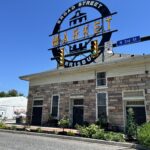
Out the window, I saw the open lots across 3rd Street. A hundred years ago, these three large blocks contained dozens of Victorian-era buildings, most commercial—stores, bars, eateries—that made up the heart of Midtown across from the Broad Street Market. After the war, business slowed then slowed more. One by one, the shops closed, with the buildings falling to ruin. Over time, the city razed the properties.

Today, the first empty field is owned by Radnor, Pa.-based Kidder Wilkes LP, which bought it in 2005 and has done nothing with it except mow the grass. Several people own parts of the second. The third is a city parking lot, where the only structure is a big trash dumpster.

No flying machines. No jetpacks. No pneumatic tubes. Nothing but for some squirrels, a few birds, a pile of dumped gravel and a collection of litter.

That’s the city of the present.

But, peering out at this bleak scene, I suddenly felt myself caught in a time warp. I was reading about the past while sitting amid the sad present—but I had a strange sense that I was staring at a much better future.

Marked Improvement

By design, I’m neither an optimist nor a pessimist. I consider myself a realist. So, to me, here’s the reality of where we stand.

It’s not good. It’s not bad, either. Harrisburg is a city in transition.

Now, some old-timers might say that Harrisburg has been a city in transition forever, and they’d have a point. As I’ve written before, my late friend Ronn Fink, the long-time owner of the Bare Wall Gallery, had that opinion and didn’t hesitate to share it with me. Near the end of his life, he clearly was jaded by the struggle, by Harrisburg’s frustrating two-steps-forward, almost-two steps back routine.

That said: If you could time-lapse the city over 40 years, you would see marked improvement from the 1970s low point, when people were fleeing and downtown closed down after dark. Since then, Harrisburg has tried to put itself back together piece by painstaking piece.

So, glancing out the window of Yellow Bird, yes, I saw three large, empty lots. But, in the distance, on the fourth lot, I could see the last surviving building on that long stretch between N. 3rd and 6th streets—the Stokes Millworks building.

Currently, that sprawling former factory, which had fallen into dilapidation, is undergoing a complete renovation and, later this year, will reopen as a farm-to-table restaurant with art space and a beer garden. The artist studios, in fact, have been pre-rented for months already, with demand far outstripping supply.

Down the street, the new Susquehanna Art Museum is rising, and, a few doors from there, Emma Newman recently opened her new salon. Across the street, both a creamery and a brewery are being carved out of the long-empty space at the rear of Midtown Cinema, itself recently upgraded.

These are all substantial businesses run by committed and veteran entrepreneurs, who are making huge investments to bring Harrisburg something more, something better, and to get people into the city. Unlike some past efforts, they’re not wobbly operations built on a framework of hope and bounced checks, something that Ronn had repeatedly seen—and had come to expect whenever a new business opened.

Moreover, this time around, the government isn’t taking the lead. For decades, former Mayor Steve Reed tried to conjure money into existence to fund his favored projects in an economic development strategy based on a bizarre blend of centralized planning and magical realism. The merits of that approach are now being weighed by a grand jury in Pittsburgh.

Leaning Forward

To me, the evidence points to a city slowly reassembling itself after a near-breakdown. The investments—and others not mentioned above—would not be made unless these businesspeople saw Harrisburg as a good place to open.

Furthermore, success breeds success. That’s why I had an eerie sense of gazing at a hopeful future. If these enterprises work, Midtown Harrisburg—the heart of the city—would become more of a destination for foodies and art lovers and beer geeks and tourists. Why would it stop there?

Ultimately, the fate of Harrisburg’s comeback depends on demand. Right now, a few businesspeople are leaning forward, taking considerable risk on major projects amid the fields and battered buildings of Midtown. Once customer demand is established, others will follow. Over the past couple of decades, early entrepreneurs have paved the way for the more risk-averse in cities across America.

So, Harrisburg may never get its googie buildings, underwater hotels or robot waitresses. But, in the course of a few blocks, its about to get a new museum, restaurants, an art center, a brewery and more. Staring out across 3rd Street, I felt that to be a pretty strong case for optimism.

Lawrance Binda is editor-in-chief of TheBurg.

Continue Reading

Italian Disneyland: If you can’t make it to Italy, there’s always Eataly.

Screenshot 2014-05-29 16.35.14

From the first time I heard about the place they call Eataly, I wanted to go there. I have no “bucket list” in my life other than being close to my little family, with good health and happiness for all. But a New York Times description of this Italian Disneyland in New York convinced me I definitely had to visit before the great gondola takes me away.

Eataly, owned by famed chefs and restaurant owners Mario Batali, Lidia Bastianich and her son, Joe Bastianich, is located close to the quaint shopping districts of Chelsea and Soho. I had the privilege to visit Eataly in late April, a place that New York magazine referred to as an “Italian temple.” If not that, it is an Italian superstore for sure, and I couldn’t believe my eyes.

We entered at the “vegetable end” of the store, and it was love at first sight. There were artichokes as large as softballs, but little ones too, green and purple, that I wanted to grab and cook on the spot. There was every fresh herb and salad green you can imagine. Fresh chickpeas in a pod were a surprise, as were the much loved and hard to find porcini mushrooms at $60 a pound (well, if I only bought a few…).

Next, we entered the condiment and bakery area. The pastries, so beautifully arranged in the case, were restaurant quality. I grabbed some Sicilian orange marmalade from shelves that held jellies, preserves and honey of every variety. By this time, I thought I was perhaps in heaven and hoping that our friends would be patient with my euphoria. I lost track of my husband for a while (he was seeking out the espresso bar), but it didn’t matter. I was making my way through cases of cheeses I had never heard of along with wheels of Parmesan Reggiano at least two feet in diameter stacked on the floor. I bought a small pyramid of goat cheese dusted with fennel pollen for my son and daughter-in-law, as well as a container of creamy burrata (soft mozzarella with a center of clotted cream). I was amazed to see fresh mozzarella being made in a mozzarella lab and, well, that kind of takes “fresh” to a new level.

The highlight of my visit to Eataly was the fresh pasta, which is made every day. White and spinach tagliatelle, wide pappardelle noodles, and fat ravioli all called to me.  But I bought some agnolotti, little filled pastas much like tortellini stuffed with beef, lamb and veal. My husband had these for lunch in the pasta/pizza restaurant, one of the many food venues to choose from.

The bread bakery was amazing—crusty Italian loaves of every shape and type. We learned that Eataly makes anywhere from 2,500 to 5,000 loaves of bread a day. Large squares of focaccia were topped with olives, onions, peppers, mushrooms, anchovies and tomato sauce, all of which could also be grabbed for lunch.

The fish and meat cases almost took my breath away. I began thinking that maybe those tiny clams would be just fine during the long car ride home. I was happy to leave the sea urchins right there, but it was hard to walk by the lovely pink veal shanks that were just waiting to become osso bucco. And who knew one could choose different types of prosciutto based on the number of months aged?

Finally, I lost myself in the olive oil library, where bottles were lined up like soldiers according to the various regions in Italy. I bought three small bottles of Ligurian oil from northern Italy and lemon oil from Sicily. It was hard to choose.

My basket was full after an hour, and I knew I couldn’t begin to buy everything I wanted. So we ended our adventure with lunch: pasta, pizza and a cool white Orvieto wine in the pasta venue, Eataly’s most popular place to eat.

Is there a downside to Eataly? Well, we were told it can get terribly crowded, often with 45-minute wait times to eat. A late Sunday morning visit was a good choice as crowds were manageable. Eataly is also expensive. We now can get good olive oils and imported pasta right here. But to me, it was a fantastic experience and lots of fun. If you are an Italian food junkie and are planning a trip to the Big Apple, forget the fake purses on Houston Street and drop into Eataly!

Eataly is located at 200 5th Ave., New York, www.eataly.com. 

Continue Reading

Lessons in Money, Life: With the Nubians, you’ll learn a lot more than how to pick a decent stock.

Screenshot 2014-05-29 16.35.30

Allow me to introduce you to a group of dynamic, well-seasoned ladies—oh, and one gentleman—who have quietly and successfully been running an investment club in Harrisburg for more than 10 years.

Until the addition of the lone gentleman in the club, the group was affectionately known as “The Nubian Ladies.” They are now known as The Nubians—natives or inhabitants of Nubia (an ancient region of northeastern Africa).

Now, let me give you a bit of a historical perspective.

For the majority of our history in America as black women, talk of investing, purchasing stock, reading the stock pages was largely unheard of. Black women were busy being “the help,” with little time to care for their own families and households. Yes, money was made, but very little, and every cent of it was used to exist, not prosper.

Well, that certainly has changed, granted from the countless sacrifices and unyielding determination to improve our socioeconomic status. However, let’s be clear: the ebb and flow of contemporary life has stagnated conversations on the importance of financial literacy for many in our urban communities.

Recently, I had the immense pleasure to speak with a founding member of the Nubian Ladies, Mrs. Phyllis Britton.

Mrs. Britton was born in Uptown Harrisburg in 1936 and attended Edison and John Harris, graduating in 1954. After high school, she graduated from Cheyney University and earned her master’s degree in Special Education and Supervision from Bloomsburg University. She then taught in the Harrisburg public school system for 42 years.

None of the investment club members had formal training in investing or financial services. They did, though, attend college, many obtaining their master’s degrees, and two became members of the Delta Sigma Theta sorority. In other words, they are all self-taught in the area of investing.

Mrs. Britton said she was inspired to start the club by the wise words instilled by her grandmother, who always said that you should own something.  She also recalls a workbook The Patriot-News ran in the 1960s, when she was teaching at John Harris. It gave children lessons by using imaginary money to invest.

Years later, when a fellow church member mentioned she was interested in starting an investment club, it was a no-brainer for Mrs. Britton.

The 15 original members drew up the bylaws and began to read Carolyn Brown’s book, “The Millionaires Club.”

“This was a good jumping off point for us,” said Mrs. Britton. “When we began, our members ranged in age from 40 to 68. We didn’t make much money at first, but now it’s paying dividends.”

The club has a president, vice president, recording secretary, corresponding secretary, financial secretary and treasurer. Members had their first meeting at a local library and still meet there. Meetings last about an hour.

“Everyone is given a specific stock to report on,” said Mrs. Britton. “We follow that stock and bring our information to the meeting. Our reports are due quarterly. We research the stocks we have, as well as new ones to consider.”

The group’s portfolio consists of 13 stocks, including retailer Dollar Tree, which was an early investment for the club and has, over time, proven to be one of the more successful buys.

“We are now in search of the next Dollar Tree!” said Mrs. Britton.

The year is capped off by a June dinner for all members before they take a much-needed summer break in July and August.

The social aspect of the club, in fact, is a big part of it.

“We call it an investment club, but it may be a social club as well,” she said. “We love our meetings and always look forward to them. We enjoy our meetings because we have common interests of family, education, self-reliance and pride.”

The group tries to keep membership to around 15 people, which is large enough to ensure a well-functioning club, but still is manageable. Prospective members must have some computer knowledge, a strong willingness to read, the ability to get along with members and the means to pay the monthly $25 contribution.

What advice does this veteran investor have for younger people?

“Start saving early!” she said without hesitation. “There is something more important than material things. Young people spend too much money on material things that lose value. Those of us who are older must pass these values down to our children and grandchildren. We hold on to our stocks—you just can’t sell at the first dip. Have patience.”

Interested in your own investment club? Mrs. Britton suggests checking out www.betterinvesting.org as a starting point, as well as seeking the advice of a certified professional.

My visit with Mrs. Britton took me back to those years as a child sitting around my older “kinfolk” listening to their stories with big eyes, just soaking everything in. I treasure those times and now have another story to add to my “treasure chest” of memories and life lessons.

Thank you Mrs. Britton and all the members, past and present, of The Nubians.  Oh, did I mention that my mom is a founding member too? Thanks Mom… I’m so proud of you!

Continue Reading

Purl Hunting: Since opening, Little Owls has become a sanctuary for knitters.

Screenshot 2014-05-29 16.27.51Sadie deWall called central Pennsylvania her home for many years, graduating from CD East in the ‘90s before embarking on a career as a classical viola player. After moving to Manhattan, she spent a large amount of time on the road as a freelance musician.

“I traveled the world for 17 years, and I just got tired,” she said.

Three years ago, when her daughter was born, the urge to settle into a calmer lifestyle grew stronger, she recounts.

“I took her on the road with me, and she was fine, but I was looking ahead to schooling and realized I needed to work regular hours.”

Although still involved in music (she plays in the Harrisburg Symphony as a substitute), deWall is opting for a more serene scene these days. To that end, she recently opened a quiet, cozy boutique business she named Little Owls Knit Shop.

Located on Market Street in Camp Hill near the Cornerstone Coffeehouse, the shop is a respite from the hustle and bustle of everyday life, a place where crafters can sink into a cozy couch and knit away the day if they choose.

When the forecast called for snow on the planned Jan. 7 grand opening, deWall was a bit apprehensive, concerned that potential customers might hunker down inside their houses. Instead, she was pleasantly surprised. “We were slammed that day,” she said.

Curious crocheters, knitters and would-be crafters packed the shop, marveling at the array of needles, yarn, patterns and books, suitable for a host of projects.

For those who need a little help envisioning a final product, a variety of finished items like mittens, blankets, shawls and scarves are displayed throughout the shop.

Employees, skilled and enthusiastic, are at the ready, willing and able to answer customers’ questions or to help them get past that bump in the road they may encounter while working on a piece. Employee Beth Kurtz from Susquehanna Township is excited to share her expertise.

“I retired from teaching and enjoy using my creativity to help others with projects and challenges,” she said.

During a recent visit, Keri Feldman relaxed on a comfy couch in a bright corner of a room next to a floor-to-ceiling chalkboard, on which was drawn three colorful owls perched on a branch, busying themselves with knitting needles. As she rolled yarn for a project, the Camp Hill resident shared her reason for patronizing the business, saying she enjoys the quiet respite from her busy life and finds knitting calming and therapeutic.

Zella Anderson sat nearby, listening carefully to instructor Kurtz sharing tips on the hobby.

“I learned to knit as a child and never really did anything with it. When the shop opened, I thought it was a great opportunity to learn more,” she said, as Kurtz demonstrated a variety of different stitches to help her complete her “sampler scarf.”

Employee Nicole Kostelec, a Harrisburg resident with a degree in fine arts, said she enjoys the job because it enables her to keep up with her knitting skills since she’s expanding into design work.

Customer Mia Bachman, a Mechanicsburg resident, has been knitting “on and off” for three years.

“I taught myself by reading a book and googling YouTube videos,” she said. “When I moved here and was visiting the coffee shop nearby, I saw the business and have been visiting weekly since it opened.”

She added that she’s received help on many projects since then.

“I knitted one scarf that was very complicated,” she said. “Sadie explained it over the phone and was amazingly helpful. I am now full-blown, madly in love with knitting and her shop. Sadie and her staff love knitting and helping customers.”

She credits the shop for allowing her to tackle a Paloma scarf, which she describes as quite a challenge. “I gave it to my best friend as a birthday present, and she was thrilled.”

For those interested in enrolling in formal classes, times and costs are listed on the store’s website. Classes are tailored to most ages and abilities.

Children who are interested in learning to knit with a group of their peers can enroll in a kids’ knitting club held every Wednesday from 4 to 5 p.m.

“I teach kids how to knit, or if they already know how, we work on a project together. I really want to empower children. We make little arm warmers and leg warmers, and I can see in their faces how proud they are when they finish a project,” said deWall.

For those who are free on Sundays, 12 to 2 p.m., and want to contribute their efforts to a good cause, deWall holds a “knit for charity” social, where members of the community can gather to knit blankets, scarves and hats for the homeless and chemo caps for cancer patients. Free yarn and patterns are provided.

As for the future, deWall has even more plans for area residents to get together to learn from each other and socialize.

“I would like to plan even more community events and want this to be a gathering place for knitters to inspire each other,” she said. “There was a need here in the community, and I hope to continue to fulfill that need.”

Little Owls Knit Shop is located at 2138 Market St., Camp Hill. Call 717-737-6700 or visit www.littleowlsknitshop.com.

Continue Reading

Highway for Hawks: A short drive away, Hawk Mountain transports you to the world of raptors.

Screenshot 2014-05-29 16.31.09

The spotter’s voice sounded to my right, “Bald eagle over Pinnacle.”

My gaze swiveled toward the landmark ridge visible along the nearby Appalachian Trail and, there, the eagle flew, sweeping out of the clouds in all its majestic glory then disappearing into the clouds once more.

I kept my binoculars trained on the same spot, hoping the eagle would reappear, and it didn’t disappoint. Once more, it flew across the sky before disappearing to the south.

Each season, an average of 18,000 birds of prey soar over the sanctuary’s rocky North Lookout, a 1,500-foot outcropping along the Kittatinny Ridge in east-central Pennsylvania. And, what luck—those of us in the Harrisburg area have this amazing spectacle of nature practically at our doorstep.

From Hunted to Saved

Eighty years ago, hunters would have blasted that same eagle from the sky.

The history of Hawk Mountain Sanctuary dates back to a time when the Pennsylvania Game Commission first placed a price tag on the goshawk’s head. In 1931, Richard Pough, an amateur ornithologist, was opposed to the widespread movement to kill wild predators and became determined to do something about the senseless murder of these raptors.

Pough visited Hawk Mountain later that year. He watched men scattered about the rocks, shooting and killing hundreds of hawks, apparently just for sport. After the slaughter was over, he gathered the carcasses and took photographs. Frustrated, he mailed the photos to a number of people, including Rosalie Edge, a conservation activist living in New York.

Horrified by what she saw, Edge traveled to Hawk Mountain and installed a protection system on the 1,400 acres she leased. Maurice Broun and his wife Irma, both New England bird enthusiasts, became the first wardens to protect these birds.

The program proved effective in preventing the killings and, that same year, Edge opened the sanctuary to the public. She raised funds to purchase the land, and, in 1938, deeded the 1,400 acres to the Hawk Mountain Sanctuary Association, a new nonprofit.

Three-Legged Stool

During my visit, my long-time friend and Hawk Mountain President Jerry Regan played host. I asked Regan about the facility.

“Our mission,” he said, “is broken down into three elements, much like a three-legged stool, because each depends on the other. The first is the sanctuary itself where people come to view the birds. The second is education, and the third is research.”

Regan pointed at the wooded terrain as we hiked along the trail to the North Lookout. “We’re best known for our sanctuary. People flock here from all over the world for a glimpse of the birds and the Appalachian Mountains scenery.”

He told me he was particularly proud of the dedicated staff and volunteers, who point out and identify approaching birds to visitors.

“This makes hawk watching easy and enjoyable,” he said.

Rare Treat

The phenomenon of migration “is an age-old story,” said Mary Linkevich, communications director for Hawk Mountain.

“Raptors have followed the Appalachian Mountains southward for longer than we probably know,” she said. “They use pockets of rising air called ‘thermals’ to fuel their long-distance journeys. Thermals allow birds of prey to ascend quickly, then glide in toward their destination.”

I asked her about the best time to visit and watch the hawks move through.

“It’s fun all year-round,” she said, “but the premier time is early to late fall.  And best of all, you don’t have to walk far to enjoy both the mountains and the migration.”

South Lookout is just 100 yards from the parking area, and here the trails are smooth and wide. For those with limited mobility, an all-terrain wheelchair is available at the visitor center. A golf cart is on hand during autumn weekends.

Once at the Lookout, visitors are enraptured at the flight of these graceful birds.

Passing through in late summer and early fall are ospreys, bald eagles and American kestrels. In mid-September, the numbers of broad-winged hawks increase. If your timing is right, you can spot hundreds in one afternoon, sometimes more than 1,000. For example, on Sept. 12, 2007, counters recorded an incredible 7,639 broad-winged hawks, the largest one-day flight recorded at Hawk Mountain since 1978.

By mid-October, northwest winds bring the greatest species diversity—16 in all—and fall foliage is at its peak. During prime conditions, visitors can view red-tailed, red-shouldered, rough-legged, sharp-shinned and Cooper’s hawks, northern harriers, peregrine falcons and merlins.

In November, the migration begins to ebb, but this is when hawk watchers can expect to see golden eagles and northern goshawks. By December, the skies have emptied, but the North Lookout draws visitors seeking solitude and an occasional bald eagle.

“Fall is not the only time you can enjoy Hawk Mountain,” Linkevich said. “The sanctuary offers exceptional hiking, birding and wildlife watching all year long. Ridge-top trails and scenic overlooks offer jaw-dropping views, ideal spots for nature photography or quiet reflection.”

Come spring, the bird-spotting picks up again, as anywhere from 50 to 300 migrating raptors may pass through during that migration. Songbird viewing peaks in early May, when colorful wood warblers and other migrants dart about the valley treetops during the early morning hours. In all, the sanctuary’s bird checklist includes nearly 200 species.

“And finally,” Linkevich adds, “our native plant garden boasts more than 250 plant species that attract up to 40 species of butterflies, as well as ruby-throated hummingbirds. The deck overhanging a small pond offers a spot to watch for painted turtles, spring peepers and newts.”

Screenshot 2014-05-29 16.31.20

School in the Clouds

The Hawk Mountain research program is headquartered at the Acopian Center for Conservation Learning, where a five-member professional team develops and conducts integrated programs in research, monitoring and education.

“We have a professional relationship with a number of organizations worldwide,” said Regan. “This includes the Asian Raptor Research and Conservation Network in Japan, the Belize Raptor Project, Bird Studies of Canada and the Hawk Migration Association of North America.”

The programs are local to international in scope. David Barber, one of the researchers, spoke of the center’s program focused on turkey vultures.

“Tracking individual turkey vultures offers an intimate look into the lives of these often misunderstood scavenging birds of prey,” he said. “Understanding where they go helps me to better protect them.”

In 2008, Hawk Mountain celebrated its 75th anniversary as the first refuge for birds of prey. The Acopian Center hosted an international workshop for nearly 40 scientists to establish a common repository for collecting satellite telemetry data on migrating raptors.

General education also is a big part of Hawk Mountain’s mission. For example, teacher guides, classroom lessons and PowerPoint presentations are designed as resources for schools. A few of the topics include raptor biology, migration, Appalachian ecology and Hawk Mountain history and early land uses.

“Hawk Mountain conducts programs year-round,” Linkevich said,” but people are invited to do a tour on their own around the grounds. And if you can’t come to Hawk Mountain, we have a virtual educational program where we can bring Hawk Mountain into your classroom via videoconferencing.”

Hawk Mountain is only a short, one-hour drive from Harrisburg. Maybe that bald eagle will return just for you. But you’ll have to visit to find out.

Don Helin published his first thriller, “Thy Kingdom Come,” in 2009.  His recently published thriller, “Devil’s Den,” has been selected as a finalist in the Indie Book Awards.  He lives in central Pennsylvania, and his next thriller, “Secret Assault,” will be published in the spring. Contact Don on his website, www.donhelin.com.

Going There

Hawk Mountain Sanctuary is located in Kempton, Pa., about seven miles north of I-78 and Cabela’s. The visitor’s center, the “Wings of Wonder” raptor gallery, bookstore and gift shop are open year-round, 9 a.m. to 5 p.m., and from 8 a.m. to 5 p.m. in the autumn. Closed on Thanksgiving, Christmas and New Years Day.

Trail fees cost $6 for adults, $5 for seniors and $3 for children ages 6 to 12. Children ages 5 and under are free. On weekends, September through November, trail fees increase to $8 for adults and $4 for seniors. For more information, call 610-756-6961 or visit www.hawkmountain.org.

Continue Reading

Musical Notes: Showing Your Roots–Americana steams in for June.

Dan Webster is stepping away from “Musical Notes” for the time being, so I’ll be covering his duties. They’re big shoes to fill, but I hope to do justice to his monthly guide to Harrisburg’s wealth of live music.

This month finds the city’s music scene taking on an air of Americana, with both established and upstart song-writers and musicians bringing their brands of traditional American folk music to Harrisburg’s stages. With the summer heat rolling in, now is the perfect time to get in touch with our nation’s musical roots and soak up the sounds of our nation’s ramblin’ troubadours.

GLENN JONES with author STEVE LOWENTHAL, 6/5, 7 P.M., MIDTOWN SCHOLAR, $8/$10

Glenn Jones first gained acclaim as the guitarist and principal composer for the experimental, post-rock band Cul de Sac. However, his current work takes him in a different direction. Always fascinated by the compositional opportunities made available by open tunings, his solo work features complex, finger-picked melodies rooted in primitive American folk traditions. Despite being instrumental, Jones’ performances are seemingly narrative, weaving stories through sound that are instantly recognizable even in their wordlessness. However, this particular show, presented by Moviate, will not be totally devoid of speech as Jones will be joined by Steve Lowenthal, who will be reading from his recent biography of guitarist and Jones collaborator, John Fahey, titled “Dance of Death.”

LUCINDA WILLIAMS, 6/10, 7:30 P.M., THE WHITAKER CENTER, $38.50/$48.50

The folk-rock and country songwriter Lucinda Williams released her first record, “Ramblin’,” in 1978; her most recent, “Blessed,” came out in 2011. Within this span of time, she garnered considerable attention, won three Grammy Awards, and collaborated with Elvis Costello, Willie Nelson and M. Ward, among countless others. Her songs represent the best that folky roots rock has to offer, that smoky moodiness that evokes memories of lost love and the darker secrets of the past. This show will especially appeal to those who have grown tired of the market-driven, focus-group approved, honky-tonk pop that Nashville keeps churning out these days.

DAVID MAYFIELD PARADE, 6/25, 8 P.M., THE ABBEY BAR, $8/$10

The David Mayfield Parade is traveling the trail blazed by bands such as the Avett Brothers and Mumford & Sons, a new generation of alt-country rockers trying to reclaim their roots. Combining traditional Americana with a youthful, do-it-yourself aesthetic, Mayfield brings driving energy to songs of heartbreak and hard traveling, all sung with a voice that sounds old and seasoned. His most recent album, “Good Man Down,” was crowd-funded and released in 2013. It is fitting that this show takes place at a bar, as Mayfield’s sound conjures up images of late nights spent in dive bars with pitchers of beer, whiskey shots and the pain caused by the girl who got away.

Mentionables: MV & EE w/Banners and Floats, Little Amps Uptown, 6/1; Sam Moss, Midtown Scholar, 6/6; Bob Mould, HMAC, 6/12; Vinegar Creek Constituency w/The Vulcans, HMAC 6/20; Star Rover, The MakeSpace, 6/29


Continue Reading

Community Corner: Notable Events in June


Tee Off FORE Children’s Cancer

June 2: The Children’s Cancer Recovery Foundation’s charity golf outing returns this year to The Country Club of Harrisburg, 401 Fishing Creek Valley Rd., Harrisburg. Registration is required and begins at noon. Activities start at 1 p.m. and include an 18-hole outing followed by an awards dinner at 6 p.m. Foursomes are $400 and individual golfers are $100. For more information or to register, visit golf.childrenscancerrecovery.org.

Leads Over Lunch

June 3: The Harrisburg Regional Chamber & CREDC will hold its monthly lunchtime networking event, with a chance to mix and mingle with the regional business community. The event takes place 11:30 a.m. to 1 p.m. at the Hershey Center for Applied Research, 1214 Research Blvd., Hummelstown. The event is free. Registration is required. For more, visit www.harrisburgregionalchamber.org.

Appalachian Trail Banquet

June 6: The Allenberry Resort in Boiling Springs will host the Appalachian Trail Hall of Fame Banquet, conducted by the Appalachian Trail Museum. There will be musical entertainment, a book signing and a speaker. The events begin at 6 p.m. The cost for the reception and dinner is $30 for members and $40 for others. For more information, visit www.atmbanquet2014.eventbrite.com.

Glow Run

June 7: Grab a glow stick and help make Harrisburg brighter. The 5K will raise money to replace lights along Front Street. It begins at 8:30 p.m. in Riverfront Park, with an after-party at Sawyer’s Cantina, 210 N. 2nd St. Pre-registration is $25 for adults and $10 for children under 14. Day-of registration is $28 for adults and $15 for children. For more information and to register, sponsor or donate, visit https://historicharrisburg.com.

Launch Party

June 7: Local Magazine will hold a launch party for its new issue, which focuses on stories from Harrisburg and includes an interview with former Mayor Steve Reed. The party begins at 8 p.m. at Der Maennerchor, 221 North St., Harrisburg. Cover is $10 and includes food, music, contributor readings and video shorts. For more information, visit https://localmag.us

Spring Fling

June 7: The Museum of Bus Transportation will hold a Spring Fling during which visitors can view the largest collection of antique buses in the United States, 9 a.m. to 3 p.m. Displays will be located in the Antique Auto Museum in Hershey with a shuttle bus available to the Museum of Bus Transportation. The cost is $5. More information is at www.aacamuseum.org.

Tour de Belt

June 8: The ride around the Capital Area Greenbelt returns for a twelfth year, kicking off at 10 a.m. at the main HACC campus in Harrisburg. The 20-mile bike trip raises money for the Capital Area Greenbelt Association, which helps maintain the trail. Register online at www.caga.org or in person on the day of the event.

Fund Raising Gala

June 8: The Civic Club of Harrisburg will host its second fund-raising gala for the restoration of the “Outlook” building at 612 N. Front St., Harrisburg. All proceeds go to the mansion’s restoration. The gala begins at 5:30 p.m. For more information, visit www.civicclubofharrisburg.com.

History Day Presentations

June 8: Students will present their History Day projects to mark National History Day at the Harris-Cameron Mansion, 219 S. Front St., Harrisburg. Tours of the mansion will begin at 1 p.m., followed by the event at 2:30 p.m. A $5 donation is suggested. This event is free for members of the Historical Society of Dauphin County. For more information, visit www.dauphincountyhistory.org.

School Introduction

June 9: The Circle School of Harrisburg will host a video presentation and program to introduce parents, children and teenagers to student-directed education. Refreshments will be served and limited childcare is available. The program begins 6:30 p.m. at the school, 210 Oakleigh Ave., Harrisburg. Registration is free at www.circleschool.org or by calling 717-564-6700.

Discovery Programs

June 9: Register your child for a five-week session that begins this week. Topics range from math, science, and art to healthy eating. Discovery programs are free and advance registration is required, with registration beginning May 27 and ending July 23. For more information, visit www.dcls.org or call your local library.

Afternoon Networking Mixer

June 12: Make connections with the PA Landscape Group at PA Landscape Group Inc., 920 Limekiln Rd, New Cumberland. There will be an opportunity to enjoy the latest in outdoor living and the display garden. The event is free to attend and begins at 11:30 a.m. For more information, visit www.wschamber.org.

Baltimore Steel Orchestra

June 12: Baltimore’s official steel drum band kicks off the 2014 Summer Concerts on the Lawn at the Fredricksen Library at 7 p.m. This is an all-ages event. For more information, visit www.fredricksenlibrary.org.

The Elegance and Ascent at Hershey

June 13-15: This weekend-long event includes The Grand Ascent, a challenging automobile hill climb; the Elegance Challenge, a timed 5K; and the Elegance at Hershey, a judged event featuring some of the world’s rarest vehicles. For registration and more information, visit www.aacamuseum.org.

Volunteer Work Day

June 14: Take an opportunity to work outdoors while helping the mission of Wildwood Park. Meet at the Nature Center at 10 a.m. No registration is required but call 717-221-0292 if bringing a group of six or more. More information is available at www.wildwoodlake.org.

The Journey of a Victim

June 14: Run a 5k that will help provide support to crime victims, witnesses and others at City Island, Harrisburg. Registration begins at 7 a.m. at a cost of $30. All ages are welcome and the run begins at 8 a.m. For more information, visit www.victimwitness.org.

Knit in Public Day

June 14: Bring a blanket or lawn chair and your latest knitting project to knit on the lawn at the Fredricksen Library, 1 to 4 p.m. An experienced knitter will be on hand to help and answer questions. This is a free event. For more information, visit www.fredricksenlibrary.org.

Music & Wine Festival

June 14-15: Listen to music of national and local artists and sip local wines at the annual Dauphin County Music & Wine Festival in Fort Hunter Park. Tickets are $25 in advance or $30 at the gate, good for both days. Remember to bring a lawn chair or blanket. For more information, visit www.forthunter.org.

Day Out with Thomas

June 14-22; Sep. 13-21: Thomas the Tank Engine from the “Thomas & Friends” series is coming to Strasburg Rail Road, 301 Gap Rd., Ronks. Families can ride with Thomas and take part in various Thomas-themed activities. Tickets are $21 for ages two and up. For more information and directions, visit www.strasburgrailroad.com or call 866-725-9666.

Summer Soirees

June 14, 21: The first of five summer garden parties will be held to raise funds for the Art Association of Harrisburg programs. The Shipoke Soiree will be held June 14, 5 to 8 p.m., hosted by Melissa and Michael Snyder. The Italian Lake Soiree will take place June 21, 5to 8 p.m., at the home of Wendell and Brenda Hoover. For more information, visit www.artassocofhbg.com.

Business After Hours

June 19: Join the Harrisburg Regional Chamber & CREDC and David’s Furniture & Interiors at the June Business After Hours to mingle with other local business professionals. This event is free. Registration is required. For more information, visit www.harrisburgregionalchamber.org.

3rd in The Burg

June 20: Enjoy a night out on the town during Harrisburg’s monthly arts event, held each third Friday. Walk among numerous galleries, art spaces, restaurants and music venues—or hop the Sutliff shuttle for a free ride. Check the back cover of TheBurg for a list of venues and times or visit www.thirdintheburg.org.

Museum Car Show

June 21: A car show will be held, open to all makes, models and years of cars. The event will celebrate the 50th anniversary of the Mustang and will have raffle prizes, live entertainment and more. Advance registration is $10 or $15 the day of the show. For registration and more information, visit www.aacamuseum.org.

Classics at the Mansion

June 22: Listen to classical music and view classic cars at Fort Hunter Mansion, Harrisburg. While visiting the gardens, enjoy the strains of classical guitarist Steve Jewette and view vintage Rolls Royce cars. More information is at www.forthunter.org.

Evening Network Mixer

June 24: Holy Spirit Hospital will host a networking event at the Holy Spirit Health System Auditorium, 503 N. 21st St, Camp Hill. The mixer is an opportunity to build business relationships in a fun atmosphere. The event begins at 5:30 p.m. and is free to attend. For more information, visit www.wschamber.org.

Celebrate Diversity Reception

June 25: The Rose Garden at the Rose Lehrman Arts Center at HACC will host an evening of networking that brings together diverse organizations from across the region. There is no charge to attend, but pre-registration is required. For more information, visit www.harrisburgregionalchamber.org.

FolkLife Festival Bus Trip

June 28: A bus trip to Washington, D.C., will take place for the annual Smithsonian FolkLife Festival. This year’s festival focuses on China and Kenya. The bus departs from the Camp Hill Radisson at 8:30 a.m. and returns 9:30 p.m. For more information visit www.fredricksenlibrary.org.

Continue Reading

Pride of the County: In Dauphin County, Harrisburg went from being embraced to shunned. Is the pendulum swinging back?

Screenshot 2014-05-29 16.24.30

The relationship between Dauphin County and the City of Harrisburg is an interesting one to ponder.

Historically, the two entities go hand in hand. John Harris, Jr. famously lobbied for the establishment of Dauphin County, as well as for the location of the county seat. The to-be-named Harrisburg became the hub, winning out over Middletown.

Harris was even wise to seal the deal by giving the county several plots of land on Market and Walnut Streets. Together the city and the county evolved to be prominent and significant, most especially when designated the state’s capital.

Currently, there are 40 municipalities in Dauphin County. It’s typical, though, to think of the county as being made up of “the city” and “the 39 municipalities.”

Technically inextricable from one another, in most people’s minds—including many county and city elected officials’—the city is separate and apart from the rest of the county.

Over time, it has increasingly stood alone and not necessarily in high esteem.

When the financial crisis bubbled to the surface, mass disregard for the city became more apparent. Few people in Dauphin County believed the city was worth saving, especially if they were expected to help or care. If that were the case, they were prepared to let it die.

More and more, the city was alienated and scoffed at. Ridiculed and scorned.

Of course, it wasn’t always like that. There was a time when the city was the center of the entire region, the place to be. It was where people came for commerce, business, shopping, education, art, culture, food, music, socializing and work.

However, it wasn’t just Harrisburg’s recent fiscal woes that altered its reputation and attraction. The decline started a long time ago. As post-World War II suburbia began its sprawl and superhighways enabled people to move faster and more freely to places like shopping malls, places of employment and homes with big yards, the city lost its appeal.

People stopped coming here and industry and businesses left.

As that happened over decades, the other Dauphin County municipalities grew more robust and stable. The city—once the nexus—was practically useless to them. If it weren’t for the fact that Harrisburg is the capital and county seat, it might have perished a long time ago.

This situation wasn’t unique to Harrisburg. It was a statewide and national trend. Cities emptied out as their usefulness was replaced. This is why Pennsylvania has so many cities in the state’s Act 47 fiscal distress program—and why more continue to enter.

Harrisburg had the added condition of Hurricane Agnes in 1972. That did nothing but add incredible injury to an already insulted place. The flood waters soaked and rotted whole sections of the city, leaving not much more than prime pickings for those looking for places on the cheap, slumlords included.

By the 1980s, the city had become “that place.” Dirty, blighted, crime-ridden, and, yes, poor.

Most of Dauphin County pretended it didn’t exist. Necessary trips to the city were lamented, done during the day, and executed with an in-and-out intent.

Then that began to change little by little. When Harrisburg’s renaissance got started in the last years of the millennium, downtown transformed from a virtual wasteland to an improving urban center, with Strawberry Square, the Hilton, Restaurant Row and the Whitaker Center.

People started to visit again for more than just errands. Commuters stayed longer and lingered and even returned on the weekends. Visitors had a place to stay overnight and enjoy the scene.

While this provided a useful, interesting, entertaining and enjoyable urban space for some people’s use, it did not succeed in re-earning much of the county’s acceptance. It didn’t succeed in redeeming the city’s position as an integral place.

There are still far too many county neighbors who don’t venture to the city. Too many of those who do visit and work here fail to go beyond the lines of downtown to experience more of the city’s revitalization. Destinations like the Broad Street Market, Harrisburg Cemetery, Italian Lake, Allison Hill murals and the statues of Reservoir Park are missed. Delicious eateries throughout the city go unnoticed. Boutiques and special events are overlooked.

At the annual State of the County dinner in April, each one of the commissioners remarked on the city’s value. They applauded its recovery and potential. They talked of collaboration and cooperation. They commended the city’s elected leadership and its residents. For the first time in a long time, they spoke highly of the city.

Hopefully, their speeches signify a change in attitude and symbolize a sincere reconciliation between the city and the county. Optimistically, their new attitudes will influence many others. It’s a message we should all be touting and spreading around the region—Harrisburg is a virtue of Dauphin County rather than its bane.

Tara Leo Auchey is creator and editor of today’s the day Harrisburg. www.todaysthedayhbg.com.

Continue Reading

A Murder & a Mullet: “Cold in July” revives the southern Gothic thriller.

Screenshot 2014-05-29 16.37.56

This month’s review is another adaptation, this time of Joe R. Lansdale’s book, “Cold in July,” about a man in east Texas and the mess he gets himself in.

The only thing Richard Dane (Michael C. Hall) ever wanted was to protect his family. And one night, when he and his wife awaken to the sound of breaking glass in their east Texas home, Richard gets that opportunity.

Our quiet, mullet-wearing everyman immediately breaks out his gun to protect his wife and son, but jumpy nerves cause him to misfire and kill the unarmed intruder. The police comfort Richard, telling him the intruder was Freddy Russell, a wanted felon, and that he merely pulled the trigger out of self-defense. It seems, according to the whole of the police force, that Richard did the right thing.

Unfortunately, Freddy’s father, Ben Russell (Sam Shepard), doesn’t think so. Ben has just gotten parole, and, when he sees Richard at the funeral, threatens him and his own son, calm and confident. Richard goes to the police, and after some slight difficulties, the police take action, using the Dane family as bait in order to take in Ben.

However, Richard feels that something is awry when he spots a picture of Freddy in the police station that doesn’t look like the man he killed. He does some snooping, and ends up running into Ben again, this time teaming up with him and a pig-farmer-gone-detective, Jim Bob Luke (Don Johnson), as they realize that the police are covering up something big—something involving the Dixie Mafia.

There are plenty of plot holes in this thriller. Richard starts off wanting to know whom he killed and then drops the search at some point. Also, he and the man who just terrorized his family seem pretty quick to jump on the same team to work together.

It is fair to say that director Jim Mickle focused on drawing out the action instead of finding a seamless plot, but the film is gripping, nonetheless, and draws you into a fascinating scenario as the three men take fate into their own hands. Hall leads with a quiet yet resolute performance, and Johnson charms his way through the film. But Shepard gives the most heartbreaking performance as his character wrestles with the situation at hand, transforming from a chilling baddie to a jaded father.

The performances are just part of the fun. The film’s 1980s-style art direction (did I mention Hall’s mullet?) draws you into the characters’ world, right down to the synth-y score by Jeff Grace. The film basically has all the general necessities of a fun watch: some great actors, a little action and violence, and a bit of humor. Overall, “Cold In July is enjoyable and definitely something you should check out.

Sammi Leigh Melville is a staff member and film reviewer at the Midtown Cinema.

Midtown Cinema June Events

1st Sunday Brunch & a Movie

6/1 10:30 a.m. brunch and 11 a.m. screening of “Shakespeare in Love”

2nd Sunday Foreign Series

6/8 7 p.m. Fritz Lang’s 1927 German sci-fi drama “Metropolis”

2nd Friday Outdoor Film Series

6/13 Starts at dusk. The 1988 Tom Hanks comedy “Big”

2nd Saturday Morning Cartoons

6/14 Looney Toons 9:30-11:30

3rd Sunday Down in Front! Comedy riffing w/Jennie Adams

6/18 7 p.m. “Fire Maidens of Outer Space” (1956) BYOB

3rd in the Burg $3 Movie

6/20 9:30ish Baz Luhrmann’s 2001 musical romance “Moulin Rouge” BYOB

3rd Saturday Morning Cartoons

6/21 Looney Toons 9:30-11:30 a.m.

Sunday 6/22 2 p.m.

Short Film Micro Festival of PA filmmakers. Pay-what-you-will, showing the films “28 Hot Dogs,” “Here,” “Sitting,” “Fade In” and “Autumn”

4th Friday Outdoor Film Series

6/27 Starts at dusk. Spielberg’s 1981 “Raiders of the Lost Ark”

Sunday 6/29 4-7 p.m. Electric Car Fair

w/ 7p.m. screening of the 2011 documentary “Revenge of the Electric Car”

Sammi Leigh Melville is a staff member and film reviewer at the Midtown Cinema.

Continue Reading

Fight the Blight: Harrisburg has engaged the battle, but there’s still much work to do.

Spring is in the air in central Pennsylvania, and positive change can already be felt in our capital city. A renewed emphasis on cleaning up, fixing up and beautification has been evident in City Hall, and, indeed, in many areas of the city, through both private and public initiatives.

It is encouraging to see Councilwoman Sandra Reid working with the Papenfuse administration, and particularly Economic Development Director Jackie Parker, in an initiative to provide as many as 2,000 new trash cans to residents in areas that need them. Backed by significant private donations from PinnacleHealth and others, Ms. Reid has taken a positive first step, not only for the cleanup it promises, but perhaps for the signal it sends of a new era of much-needed cooperation between council and the mayor.

For his part, Mayor Eric Papenfuse has taken forceful action with his emphasis on cracking down on blight, abandoned buildings and property owners who let their buildings fall into disrepair. As reported by Paul Barker in his terrific article in TheBurg last month (“After the Fall,” p. 14), this emphasis has put all property owners (regardless of their standing in the community) on notice that now is the time to fix up properties or turn them over to others who will or face fines and even arrest.

Reporter Emily Previti also wrote an excellent in-depth piece for PennLive (just prior to taking her new position at WITF radio) where she contacted and called out several slum property owners, one as far away as Chicago. Talking to a property owner from his big-city mansion and asking tough questions is exactly the type of reporting that is both needed and welcome. Prospective buyers may think twice if they know the community is aware and watching.

Unfortunately, the problem is extensive in many parts of Harrisburg.  According to city records, 391 buildings are currently condemned and in terrible condition. The city owns hundreds more through its Vacant Property Rehabilitation Board, and many other parcels are vacant and thus magnets for trash and weeds, besides generating no tax revenue.

If we are to solve the issue of blight in Harrisburg, it will take long-term, coordinated efforts by local, state and even federal governments to reverse the broader issues that led to the decline in the first place. The underlying causes are the subject of a future article, but, suffice it to say, they stem largely from the fact that these properties are, for the most part, not economically viable and may in fact have “negative value” (in other words, their worth is less than $0.00). The reasons for “negative value” are complex and relate to extremely high local real estate tax rates that drive out investment, distressed city schools, nearby properties of similar condition and so forth. All of these conditions make it economically irrational for any one person to invest in a property where the resulting investment is worth less than what one would need to spend to fix it up or build on it. Correcting these circumstances is a very complex issue that will not be solved quickly or easily.

In the meantime, however, we can and must take concrete efforts to do the best that we can with the situation we have currently.

  • Shine the light. Articles like Paul’s and Emily’s that report on specific cases are critical. Many of the offenders live out of town, but it is unlikely that their friends and neighbors will be impressed that the person they know is, in fact, a slumlord and part of the problem in the capital city of Pennsylvania. We need regular reporting with names, addresses and even pictures of the worst offenders. Watch these pages in the coming months for who is helping and who is hurting our city.
  • Clean up the trash. Many neighborhood and community groups have been working at cleaning up their local streets and neighborhoods. In addition to her city efforts, our columnist Tara Leo Auchey has been tireless in promoting her “2-Minute Tuesday” clean-up efforts, and we need more people to join her. Numerous community groups such as HYP, Friends of Midtown, the Olde Uptown Neighborhood Association and others have regular seasonal clean-up and beautification efforts. These need to be ongoing and have more volunteer support.
  • Fine the offenders. One of Mayor Papenfuse’s first initiatives was to move codes enforcement into the city’s police bureau. This effort to provide real teeth to codes enforcement is an example of smart city government that works. Fines should be real, they should be substantial, and they should be enforced with vigor. The mayor’s revival of a Housing Court is also an encouraging development. If local district justices refuse to enforce the rules, the public should be made aware, and they should be voted out and replaced by ones who will.
  • Land banking. The city should work with the state to expand its efforts to acquire vacant and condemned property and assemble them for re-sale to people and entities that will responsibly redevelop the properties and place them back on the tax rolls. The City of York has an aggressive program that regularly gives vacant property to responsible developers for exactly this purpose.
  • Transparency at the state corporation bureau. The state should require that a “real” person be named responsible for the formation of a company that is legally allowed to purchase real estate in Pennsylvania. This would ensure that prospective buyers know that they could be personally liable if such property falls into disrepair and violates local codes and ordinances.
  • Seek additional state and federal participation through Community Development Block Grant funding and similar programs.

These and other innovative ideas will go a long way to addressing this issue and are worthy of community support.

J. Alex Hartzler is publisher of TheBurg.

Continue Reading