A Dress to Impress: Unique, affordable fashions slip into Camp Hill.

Screenshot 2014-09-30 00.26.17Pretty, sophisticated yet understated clothes, eclectic music, and helpful staff greet those who enter Camp Hill’s newest clothing boutique, Little Black Dress.

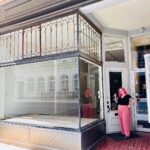
Located on Market Street in Camp Hill, Little Black Dress, with its distinctive yellow awning, sits between Nino’s Bistro and Body Logic Therapeutic Massage.

Lisa Bedway DeCavalcante opened Little Black Dress, which shares her initials, on Sept. 1. After 12 years of retail experience as a buyer and co-manager of a local boutique, she wanted to create a unique clothing experience.

“Little Black Dress tries to fill a niche that isn’t currently being addressed in the retail scene in the greater Harrisburg area,” said Bedway DeCavalcante.

That niche is affordable, comfortable and unique designer clothing. The shop carries everything from exercise wear to swing dresses.

An Edge, a Twist

Little Black Dress recognizes that women’s lives and personalities are multidimensional, busy and diverse. So, their clothes should negotiate the many aspects of their lives.

According to Bedway DeCavalcante, women, at the end of the day, should “never feel like ‘get me out of this outfit,’” and clothes at Little Black Dress are “no Spanx required.”

Comfort and good design aren’t mutually exclusive, however. Little Black Dress carries clothes that are not only comfortable but also fashion forward— designer lines such as Cartise, Lucky Brand and Julie Brown Designs.

The store offers what Bedway DeCavalcante called “staples with an edge, a twist.” The python print exercise leggings by Pheel, the Barbara Gerwit two-toned gray, long sleeve T-shirt with a twisted back panel, and the slate blue Baci top with dolman sleeves exemplify this edge.

Sales associate Jocelyn Hambrook has known Bedway DeCavalcante for three years and is excited about seeing the vision of Little Black Dress come to life. A 20-something, she is particularly enthusiastic about the Lysee Leggings and Turk Collection for the younger set and what she calls the store’s “cool vibe.”

Little Black Dress desires to meet the needs of fashion newbies as well as sophisticates. Women unfamiliar with designer fashion can come to Little Black Dress and get help maneuvering the brands and making good choices.

Asking questions serves as the first step in assisting women through fashion decisions. If a woman isn’t sure what to purchase, Bedway DeCavalcante asks about her type of work, likes, dislikes and personality. Based on that information, the staff makes suggestions about what might work.

This represents another hallmark of Little Black Dress—customer service. Staff members take pride in providing great service, whether a person is spending $20 on accessories or $2,000 on a new wardrobe.

“We know the clothes well, and we know women’s lives well,” said Bedway DeCavalcante.

Not Everywhere

At Little Black Dress, the expectation to understand the customers’ wants and needs is paramount.

It offers designers that women know and want, such as its two denim lines, Not Your Daughter’s Jeans and Kut from the Kloth. However, it also stocks lines that women may not know as well, such as Barbara Gerwit. In fact, the store may stock a limited number of a specific garment to allow for uncommon clothing expression.

“You aren’t going to see these clothes everywhere,” said Bedway DeCavalcante.

Julie Nagle of York visited the shop during its first week of business. She said that the clothing is ”very nice quality” and that there aren’t many shops in the area like it.

Two doors down at Underneath It All, owner Kimberly Over hasn’t been in the shop yet, but is looking forward to visiting.

“I am so happy to see a new business in there, and I wish them the best of luck,” she said.

Bedway DeCavalcante wants to collaborate with other small businesses in Camp Hill to support one another. For example, Blooms by Vickrey, a few blocks up on Market, supplies the shop’s flowers. One Good Woman, just behind Little Black Dress, will provide refreshments for the Oct. 4 premier party.

Little Black Dress seeks to offer clothing that women will feel comfortable and confident in when attending events, working, relaxing and, as Bedway DeCavalcante put it, “shlepping bags” from the grocery store.

The clothing staple, the little black dress, offers women economy, flexibility and style in their wardrobe. The boutique Little Black Dress desires to do the same.

Little Black Dress is located at 1845 Market St., Camp Hill. Hours are Monday, Tuesday, Wednesday and Friday, 10 a.m. to 5 p.m.; Thursday, 10 a.m. to 7 p.m.; and Saturday, 9 a.m. to 4 p.m.; closed Sunday. For more information, call 717-525-7488, email [email protected] or visit www.littleblackdresscamphill.com.

Continue Reading

It Affects Everyone: During Breast Cancer Awareness Month, ensure your health in body, mind and spirit.

Screenshot 2014-09-30 00.35.52As a licensed professional counselor, my clients come to me for support, guidance and active listening with a variety of issues and concerns from behavioral to medical.  Medical problems affect your mental health and therefore may affect your recovery even more. It is important that people look at the whole picture: healthy mind, body and spirit.  As people take care of themselves, they tend to heal with best results.

Wellness with your body starts in your mind; get comfortable with making sure you do a good breast exam. Feel your boobs. No, seriously, feel your boobs. When is the last time you gave yourself a breast exam? Many times, people avoid feeling their boobs because they feel uncomfortable, or they touch them but don’t give a thorough exam to feel for lumps. By being pro-active with your boobs, you are protecting yourself and others. Educating others on what to look for if you do have a lump is very important, as many times it is easily missed. The month of October is Breast Cancer Awareness Month. This is the time when people around the country do their efforts to raise money towards research.

Someone recently stated to me, “It only affects 50 percent of the population.” The truth is it affects everyone. We all know someone who has breasts and may be affected: whether it’s your mom, grandmother, sister, aunt, girlfriend, wife and even men. Yes, men can get breast cancer, too. Men can develop breast cancer, but this disease is about 100 times more common among women than men. This is probably because men have less of the female hormones estrogen and progesterone, which can promote breast cancer cell growth.

Many times, people fear the unknown. So, instead of getting help or going to the doctor, they don’t get the help they need. This would include early preventatives, as well. The earlier the detection, the earlier you can get the proper help needed. Many women fear the unknown of their breasts. As children, most girls anxiously await puberty to fit into their first bra and, as they develop, their breasts help make them feel sexy, confident and womanly. The prospect of having them altered or destroyed can be devastating.

Choosing the right treatment for you may be difficult. Be proactive and talk to your support system, talk to your doctors, think of what is best for you with the best possible outcomes. It is important to choose treatment over waiting for something to fix itself. It may seem scary and a long process, but life is more important than the alternative.

When people go through a crisis in life, such as cancer, they may have additional stress, anxiety and depression, with a variety of other symptoms. It is completely natural to feel these emotions when going through such a big, unexpected change. It is important as a supporter of the individual to listen and to be there for her, through both good and bad times. Epictetus said, “We have two ears and one mouth so that we can listen twice as much as we can speak.” During this time, try listening more to the person who is experiencing the pain.

As a counselor, it’s essential to see the entire scope of breast cancer for mind and body.I have seen people who have cancer and, during this time, some seem to talk about the devastation of their disease. It is important to recognize it is a horrible thing but not to catastrophize everything. Things may improve with proper care and a proper mindset.  Surround yourself with loved ones who are optimistic and make you laugh—most of all, those who support you.

Amanda Levison is a Licensed Professional Counselor at the Neurofeedback & Counseling Center of Pennsylvania. For more information or to reach her, please visit www.neuroandcounselingcenter.com or call 717-202-2510.

Continue Reading

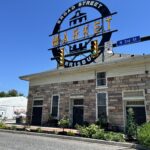
Market Milestone: A big “Happy Birthday,” as the Broad Street Market turns 150.

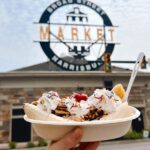
Screenshot 2014-09-30 00.25.06You may never have noticed it, but high on the southwest corner of the stone Broad Street Market building is a rather marvelous street sign. Etched into a block of what appears to be white marble, its time-worn lettering reads: “Third Street/Verbeke Street,” as if to put to rest all the brouhaha from the neighborhood back in 1864 about salvaging the original name, Broad Street.

One hundred and fifty years ago in Harrisburg, corner buildings—particularly formidable stone piles such as this—were expected to serve as informational centers, as well as anchors for the block. In some places in the city (the old 8th Ward comes to mind), they were placarded with advertising. For a state capital, one that had yet to pave its streets much less lay stone curbing or replace its creaky wooden sidewalks with brick ones, mounting street directional signs on poles at each intersection was about as unlikely as finding a way to avoid the mud.

Capping off the topmost course of stone after a year of construction had to have been exhilarating for the market construction crew. The West Harrisburg Market House, as it was known in those days, was the crown jewel of everything that William K. Verbeke had worked for since the founding of his “Village of West Harrisburg.”

 *     *     *

In 1856, William and his sister Margaretta were left some real estate on Walnut Street following the death of their father Dr. James C. Verbeke, a prominent city druggist and physician (back in Europe, he had been a surgeon at the Battle of Waterloo). Margaretta, married to Pennsylvania Telegraph Publisher Theophilus Fenn, invested her proceeds into some of what became the borough of Marysville on the West Shore. Verbeke Street there is named for her. William, the older of the two, plowed his inheritance into 30 acres of some of the soggiest, unforgiving-looking, cow-manure infested scrubland in the Harrisburg environs.

Stretching north along the river, the patchwork of smelly farms, marshland and scraggly woods lay legally in Susquehanna Township, although that disorganized body had evidently neither the resources nor the inclination to develop it. Verbeke believed that the state legislature’s approval of Harrisburg’s charter—allowing it to shed its 66-year-old borough form of government for third-class city status—would go hand-in-glove with the annexation of land running northwest to Maclay Street and east to 13th.

Verbeke’s gamble—the land, most of it purchased from farmer Robert Gillmor—lay principally between Charles and Reily streets and Front and Fulton streets. For all intents and purposes, it was a builder’s nightmare. The river district had, since time immemorial (likely the end of the Ice Age), endured regular flooding. According to newspaper accounts, when Verbeke began his development, a large sand dune sat somewhere in the middle of Verbeke Street. He would later put it to good use as mortar for brick.

The plan was basically “build a village and they will come.” With annexation, Verbeke was either sitting on a veritable goldmine or destined to end up back in the family drugstore. Either way, he hoped to prove that West Harrisburg, as it was so quaintly called, was worthy of investment, tax dollars, infrastructure and other amenities. To get his town quickly up and running, Verbeke took a shortcut. He purchased wood frame houses downtown, hauled them up 2nd Street and had them set on new foundations. For antsy developers, perception (in the form of visible occupants) can be everything.

Raised a benevolent, Christian gentleman, Verbeke offered lots to some of the most downtrodden of Harrisburgers. The black community, much of it squatting in shacks behind the old state Capitol where only the luckiest souls worked as charwomen, was already earmarked for removal anticipating site improvements for the 1864 East Wing extension program. As non-homeowners, African Americans couldn’t even expect reasonable compensation.

So, Calder Street from 3rd to Fulton eventually boasted its own “all-colored” schoolhouse, Calder School, at the corner of Marion Street. Joyous over their new neighborhood, residents began calling their little section of town “Verbeketown”—Bill Verbeke may as well have been Abe Lincoln.

Verbeke didn’t seem to care what people called his town just so they called on it. On his plot plan, the main, wide thoroughfare, plainly named Broad Street (although a few wisecrackers began calling it “Broadway”), was an obvious takeoff on the State Street approach to the Capitol as planned by William Maclay. Instead of a government building, there were plans for a pair of market houses so residents wouldn’t have to trudge down to Market Square to buy groceries.

*     *     *

Papers to incorporate the West Harrisburg Market House Company were drawn up on April 20, 1860. As originally planned, the markets were to be a pair of two-story buildings constructed of river stone at a price not to exceed $10,000. The ground floors were to be used by vendors and the second floors as rental space.

However, the timing could not have been worse, the beginning of four anxious, mostly war-torn, nail-biting years. By the time of the Confederacy’s attack on Fort Sumter, S.C, on April 12, 1861, the only visible progress made on the market—at least that reported by the newspapers—consisted of an excavation. As it was filling up with rainwater, Verbeke and his primary partners, Jacob and Lewis Haehnlen and Theophilus Fenn, might have been forgiven if they had thrown in the towel.

With the war, Verbeke and his wife Marion (sometimes spelled Marian) busied themselves as volunteers. Sacrificing precious capital that could have been used to build the markethouse, they organized the Marion Verbeke Rifles (evolving eventually into Company F of the 54th Pennsylvania Infantry). Meanwhile, Dr. Verbeke’s old notions store on Walnut Street was converted into a camphouse for soldiers who weathered the winter of 1861-62 there. Marion helped nurse the wounded as mangled men began streaming into town.

In the Sixth Ward, talk of a temporary market facility cropped up in both city papers in early 1863, but came to naught. The Daily Telegraph gamely announced on June 3 that a foundation finally was under construction.

The popular name Broad Street was already becoming ingrained in the general population. However, that summer, Common Council, with Verbeke elected to it (and installed on the newly formed Street Committee), voted to officially rename it Verbeke Street. One wonders how the purportedly self-effacing developer voted, having already named William Street after himself and Marion Street for his wife. But proposals to change the name back to Broad Street would not go away.

As a 10-year-old in 1920, my mother, who lived at 260 Verbeke and spent some of her formative years attending Verbeke Street Elementary School across the street, vividly remembered holding hands with her sisters on their way to visit the Broad Street Theatre, now the site of the Midtown Scholar Bookstore, to see films in the days before talking pictures. Ethel Janes Frew, to her dying day—even though she begrudgingly acknowledged that it was the “Verbeke Street School”—clung stubbornly to “Broad Street” and all that the name implied.

Although the Aug. 8, 1863 edition of the Telegraph reported the foundation as finished and stonemasons raising the walls, the force employed was small. Charles S. Swartz, a State Street plasterer and a one-share holder in the market who was hired to supervise construction, hoped to have the first building ready by October or November but, with the war on, well, good tradesmen were always hard to find and now harder to rehire, with many missing arms and legs. One mason, reported the paper in a later edition, while dressing one of the stones and chipping off a block, was startled to discover a large, petrified rattlesnake inside.

*     *     *

Work ground to a halt for the winter and did not recommence until the following spring. The winter of 1863-64, a bitterly cold one in Harrisburg according to reports, saw the roofless and windowless market building become a sleeping place for homeless people trying to get out of the wind. Verbeke eventually turned it over to the “Invalid Corps” for wounded soldiers. Construction ratcheted up again in the spring, and the June 21 issue of the Patriot & Union noted that things were moving along. About this time, the “Third Street/Verbeke Street” lettering was set in place, no doubt with some fanfare from the stockholders. By Sept. 1, 1864, workmen were observed finally roofing the building.

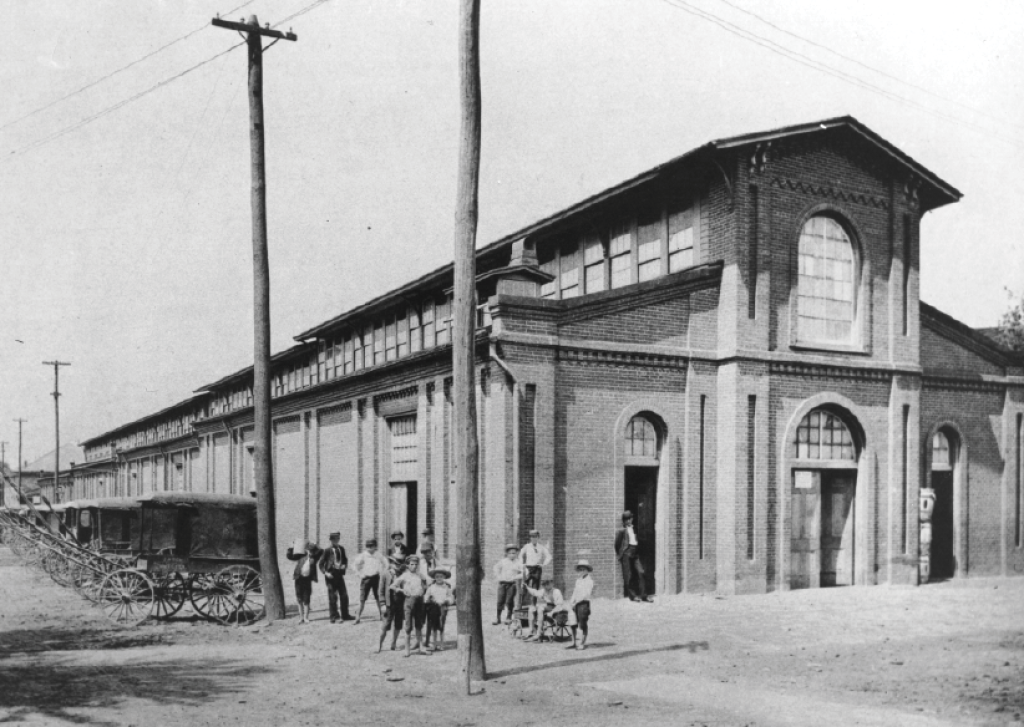
In its original form, the stone market was a diamond in the rough. Described as having a brick floor with plaster interior walls (which were lined to imitate stone), heavy timber framing held up the roof. Historians have long wondered about the structural system at this point—how many floors actually were there in the original market?

Newspaper accounts tell of the YMCA holding Sunday school services on the “second floor.” Construction specs as published by both city newspapers mention a building 200 feet long, 50 feet wide and 40 feet high, with a hip roof at either end. Verbeke, in a letter to the Patriot & Union on Sept. 6, 1860, wrote that he hoped that the upper story could be rented out for machine shops or for public purposes. So, a substantial support system—perhaps post-and-beam—from the ground floor up must have been in place. The main hall had a ceiling 20 feet high; the second story was to be 150 feet deep with a 20-foot ceiling. It is currently a jumble of ductwork for the steam and ventilating systems. Photos of how it originally looked have yet to be discovered.

On Oct. 28, 1864, with the project ready to come on line, Secretary of the Commonwealth Eli Slifer finally signed the long-dormant market agreement into law, while a call went out in both the Telegraph and Patriot & Union for vendors. West Harrisburg Market House opened for its first day of business on Tuesday, Nov. 1, with nearly all of its 22 stalls rented, and all were reported gone by Nov. 19. The original market days were Tuesday and Friday morning between 5 and 10 a.m. and Saturday afternoon and evening between 3 and 8 p.m. But, interestingly, it was not until 1964 that the company would begin calling itself Broad Street Market in the city directory. Ironically, by then, most of the generation who still called it that had long since died or moved away.

Gradually, the market expanded. In 1869, a 50-by-86-foot wood frame extension, jerrybuilt, was added onto the James Street elevation. In 1880, it was replaced by yet another one-story frame, this time surmounted by a lantern or windowed superstructure on the roof. This building would stand until 1977, when it was torn down to create the current pedestrian plaza. Meanwhile, a more substantial freestanding brick market—constructed on the site where the second stone building should have gone—was built in three stages: 1874, 1877 and 1886.

In 1974-75, with the Broad Street Market proudly placed on the National Register of Historic Places and sold to the Harrisburg Redevelopment Authority (the city would acquire the market from HRA in 1978), some $1.4 million in federal funds was used to restore and improve what had become the last of Harrisburg’s once-vaunted farmer’s market system. In 1889, demolition of the original wooden sheds on Market Square had given way to convenient, well-situated neighborhood markets at Chestnut and Court, 4th and State, Market and 14th and Kelker and 4th streets, but all have been razed or closed down in the name of progress.

And now, 150 years on, we’ve come to a crossroads, so to speak, with people returning to the city to buy farmers’ fresh produce. Come Saturday, Nov. 1, Harrisburg needs to celebrate the diamond in the rough it still has, the crown jewel the Broad Street Market can be once again, if only we support it.

Happy Birthday, Broad Street Market.

Ken Frew is the librarian for the Historical Society of Dauphin County and the author of “Building Harrisburg: The Architects and Builders, 1719-1941.”


Continue Reading

Pedal Masters: Five decades old, the Harrisburg Bicycle Club gears up for many more.

Screenshot 2014-09-30 00.36.21It started out simple enough.

Nine people gathered together with a specific, modest goal — to see more of the beautiful countryside of central Pennsylvania. Under the leadership of Sydney Lustig, they proudly proclaimed their slogan: “Cyclists of the Harrisburg area, unite!”

That was in 1964, and, as it marks its 50th anniversary, the Harrisburg Bicycle Club is still going strong.

Cynthia Gorski, current HBC president, said that, the year before, Lustig posted an ad in the Harrisburg Evening News for a 12-mile bike ride to Gifford Pinchot State Park in northern York County. By the spring of 1964, the club had held its first ride.

Though small at first, HBC has grown to include about 800 members who bike in Cumberland, Dauphin and Perry counties but occasionally find themselves in Adams, York and Lebanon
counties, too.

“There’s something very freeing in exploring these areas,” Gorski said. “When you can do it with others who appreciate it as much, it’s pretty indescribable.”

These People Move

Membership for the Harrisburg Bicycle Club comes in waves, Gorski said. 

Larger groups participate in the summer, while people go into hiding during the colder
winter months.

Because they avoid races and focus more on biking for pleasure, Gorski said that members range from 30 to 80 years old.

“As members age, new rides are created,” she said. “Some of the rides that have evolved have been the ‘Old Spokes,’ the ‘Silver Spokes’ and ‘Learning to Linger.’”

These rides take on a slower pace and usually happen during the day, she added.

But don’t let the names fool you. These riders have fine-tuned their skills.

“They have more disposable income to purchase a higher-quality and lighter bike and, with more time to ride, they improve,” she said. “Aging doesn’t necessarily slow you down — non-movement does. And believe me, these people move.”

Worth the Work

Owen Moore of Lemoyne has put thousands of miles behind him since joining the club in 1971. At 78, he’s learned to enjoy a variety of tours, from the trips to Williamsburg to the annual fall tour to Cape May, a ride that celebrates its 40th anniversary this year.

He completed his first fall tour alongside one of the club’s first members, Jim Kehew. Moore followed behind his more seasoned companion, looping around Lancaster County to Newark, Del., over to Dover, Del., and, from Lewes, they victoriously rode the ferry to Cape May.

“At the end of the first day, I was one tired puppy,” Moore said. “I was really concerned if I could get up and go the next day. But I was a lot younger then, and a good night’s sleep was enough to help
me recover.”

When the fall tours started four decades ago, riders would clock in about 100 miles a day, nearly half of the entire trip. As the group ages, and in hopes of attracting less experienced riders, they’ve cut back to about 50 miles a day, Moore said.

They’ve also learned to break off into smaller groups of about six, making it easier for cars to pass by and to provide each other support if a tire blows out or someone’s hurt.

Spouses who opt out of biking alongside their significant others travel close by in a car. Moore’s wife, Fran, has done her fair share of bailing out a troubled rider.

Gorski, who lives in Monroe Township, said the official starting point of the fall tour is in Elizabethtown, but many riders start from their homes in the Harrisburg area and meet up along the way before joining as one large group.

Overcoming Obstacles

The club first started going to Cape May when sponsors opened up their homes to riders. Over the years, they switched it up, sometimes going to different beaches in Maryland. But they’ve continued the tradition of traveling to Cape May the past few years, Moore said.

Even though it’s one of his favorite rides, Moore might have to skip on this year’s excursion. In March, doctors removed a golf-ball-sized tumor from his brain. He was told to stay off his bike a little more than a month after the surgery, and heavy rains that turned to hot and humid weather kept the senior rider from training.

While Moore’s physical obstacles might set him back this year, other riders have found their strength through the club.

Ann Brooks, 58, of Hampden Township, joined HBC in 2004. She had been an avid spinner, taking part in indoor cycling classes at the local YMCA to stay in shape. When she was diagnosed with breast cancer in 2003, she took a break from her exercise routine to undergo numerous surgeries
and procedures.

When she finished her treatment a year later, she sought ways to get back into shape.

The Lance Armstrong Ride for the Roses, a century ride hosted by HBC, inspired Brooks to try
cycling outdoors.

“I started training on my ancient mountain bike riding the 2-mile loop in my neighborhood,” she said. “I quickly realized that wouldn’t cut it. My sweet husband bought me a new road bike for Mother’s Day, and I began serious training by riding with the Harrisburg (Bicycle) Club.”

Her first fall tour later that year was alongside her good friend, Gorski. Together, they rode with several others through a 60-mile downpour thanks to Hurricane Jeanne, Brooks said.

“It was extremely challenging, dirty and something I probably would not willingly repeat,” she said. “We did arrive in Cape May in one piece a few days later and enjoyed a couple of days relaxing with fellow riders and the families that met up with us.”

Even as a new rider, Brooks found guidance in the experienced riders who took the time to go at her pace, providing encouragement and friendship,
she said.

“You will meet a great group of people, hear wonderful stories and participate in a great adventure that is the open road,” Brooks said of the club. “You will truly begin to appreciate the beauty of central Pennsylvania when you travel on the seat
of a bike.”

For more information on the Harrisburg Bicycle Club, visit www.harrisburgbicycleclub.org.

Continue Reading

Healthy Imagination: In Newport, a local café takes a creative, tasty turn.

Screenshot 2014-09-30 00.30.23Downtown Newport is a small town hub of activity surrounded by gorgeous Perry County farmland. Sitting on the corner of Market and Second streets is a well-loved eatery that brings a variety of local food under one roof for eye-catching and delicious plates of café-style meals.

For more than 10 years, Cheryl Miller has operated Espresso Yourself Café, the popular breakfast and lunch spot on the Newport square. With a personal passion for healthy cooking and eating, Miller set out to bring her delicious, from-scratch recipes to her hometown.

“It’s what I eat, and I wanted to have something healthy available in this town, because this is where I grew up,” she says.

Miller works with a variety of local farmers who use sustainable practices, raise animals humanely without the use of antibiotics or hormones, and produce food without using pesticides or other chemicals.

While sustainably sourced food is a high priority for Miller, so is showing people that healthy eating can be delicious. She has often heard people refer to healthy, organic food as flat or uninteresting.

“Sometimes people think that health food is all tofu,” she says.

When she set out to craft her menu, she was sure to create recipes that would prove this assumption wrong. Her menu options show that eating for health can be flavorful and familiar.

With a nod to her grandmother’s Perry County cooking traditions, a love of from-scratch cooking, a respect for individual dietary needs and a flair for exciting ingredient combinations, Miller offers imaginative, yet recognizable flavors to her loyal regulars and those traveling through town.

“I love coming up with different kinds of food,” says Miller, explaining that her eclectic repertoire combines old recipes with modern flavors.

Menu Adventures

What makes Espresso Yourself’s menu so inviting is that you can order restaurant standards with a twist, often with vegetarians, vegans and gluten-free eaters in mind.

You will find artistic flavor combinations on the specials board, which recently have included a fig and goat cheese quesadilla with fresh fruit salsa, cream of asparagus soup, fresh blueberry mint salad, cilantro and avocado grilled cheese, and dandelion and bacon pizza.

Adventure is readily available for thrill-seeking foodies via Espresso’s specials menus, but the main menu is full of popular standards.

One customer favorite, the Waldorf sandwich, includes natural turkey breast, mozzarella cheese, apples, lettuce, mayo and maple-glazed walnuts, and also can be ordered as a wrap. Menu staples like the Reuben and BLT are also offered at the café. Of course, kids’ fare is available too, with grilled cheese and organic peanut butter and jelly as perfect standbys for the little ones.

Another prized menu item is served during breakfast hours and pairs deliciously with a cup of coffee. The grilled oat cinnamon swirl, with a side of maple syrup or honey and the option of maple pecan and fresh-fruit toppings, is a regular crowd-pleaser. Other breakfast items include make-your-own omelets, breakfast sandwiches, a breakfast quesadilla and fresh fruit yogurt parfaits. 

Coffee & Danish

Of course, what would Espresso Yourself be without great coffee?

Serving organic, fair trade coffees, in decaf, regular and flavored varieties, the café offers patrons a pick-me-up at a self-serve coffee station, where refills are free if dining in. Specialty café menu items include espresso, cappuccino, latte, café mocha, hammerhead (coffee with a shot of espresso) and hot chocolate. Customers can also enjoy a loose tea bar where they pick their own flavors for brewing. During the hot summer months, iced coffee, iced chai latte, herbal mint iced tea and Italian sodas are refreshing options.

Delectably displayed baked goods sit in a beautiful wooden case at the register, making the café experience extra sweet. Chocolate ginger cookies, blueberry muffins, Danishes and cupcakes are among the regular offerings. Lucky for vegan and gluten-free customers, many of these are created with dietary restrictions in mind.

“I have always had access to vegetarian and vegan food,” says Miller. “I have always been open to that kind of diet. It’s a fun challenge to make something vegan that tastes good.”

Dining in allows patrons to enjoy the café-style décor and local art, as part of the Perry County Council of the Arts’ Traveling Art Exhibit. A private lounge area makes for a great private workspace, where customers can use the complimentary WiFi, and it’s a perfect play space for kids, complete with cooking toys and food-themed books. Large groups or business meetings often gather in a dining room adjacent to the main café floor.

For those stopping in for a quick bite on their way to work or through town, all of the menu items and beverages can be ordered to-go. Miller also stocks refrigerated cases with organic produce and prepared foods for mini grocery trips or to stock up for lunch.

If it seems like Miller has covered all of her bases, you can credit it to her passion for all things food. She works hard to ensure that she keeps bringing her customers back for delicious and satisfying small-town café experiences.

Farm to Table

Over the last year, Espresso Yourself has hosted farm-to-table dinners to showcase delicious recipes made with food provided by local farms. Creative dinner menus can be expected, as well as an evening to get to know people in the local community.

“Most of the time, we put all of the tables together so people can mingle,” says Miller. “For some dinners, we serve individual plates and sometimes we serve family-style, depending on the meal. People listen to live music, talk and have a lot of fun.”

The farmers who supply food for the dinners often attend, giving patrons the chance to meet the people who produce the food they will be enjoying. Handpicking the farmers allows Miller to be selective about the food she uses. Not everything has to be certified organic, but she insists that the farms follow organic farming practices and treat their animals ethically.

“Serving local food, instead of ordering food products out of a book, takes a lot more time and effort, but it is definitely worth it,” she says.

Last month, Espresso Yourself hosted a donation-based pig roast, in a portion of Newport square’s parking lot in front of the café, with local act Rough Edges String Band providing accompaniment for the outside meal. Miller opened her farm-to-table dinner up on a pay-as-you-can basis for a meal that generally costs about $35 per person. Diners enjoyed pulled pork, quinoa, beef or vegan chili, polenta, potatoes, roasted vegetables, pepper slaw, homemade breads, bread pudding, apple crisp, local ice cream, and of course, teas and coffee.

Miller was motivated by the desire to share healthy, delicious recipes with a broad audience.

“I wanted to hold this dinner so that the community would be able to attend to get to know what we do and to taste our food,” she explains. “I saw some people that I know couldn’t afford the regular price and that made me very happy that they could share in the experience.”

To help pull off the donation-based dinner, some of the participating farmers and local businesses donated food for the event. Farms that generally participate in Miller’s farm-to-table dinners include Edible Gardens, Mountain View Organics, Newport Natural Foods, North Mountain Pastures, Perry County Land and Cattle and Wayside Acres, all from Newport; Chicano Sol and JuJu Acres, of Blain; and Talking Breads, of Duncannon.

While hosting a pay-what-you-can dinner could be risky, Miller believes many of her loyal farm-to-table diners threw large bills into the canning jars that served as the donation vessels. “It was a risk, but we covered our costs and had some extra money,” she says.

But, for Miller, this dinner was all about the people, and she was visibly thrilled with the true community event that the Espresso Yourself team pulled off.

Espresso Yourself Café is at 8 S. Second Street, Newport. Hours are Monday to Saturday, 7 a.m. to 4 p.m. For more information, call 717-567-9882 or visit www.espressoyourselfcafepa.com.

Continue Reading

Community Corner: Notable events in October.


Blue & Gray Gala

Oct. 2: Attendees will tour the National Civil War Museum’s galleries while enjoying locally catered food and an extensive collection of artifacts on display during the eighth annual gala. Tickets are $75. Visit nationalcivilwarmuseum.org or call 260-1861.


3rd Annual Power of the Purse

Oct. 2: Enjoy a present-filled purse auction, a cash bar, light appetizers, “Women in Philanthropy” award presentation and “Dream Team” pinning at the Hershey Lodge, 5 to 7:30 p.m. $50/person. Call 236-5040 or visit tfec.org.


Modern Hymn-Writers

Oct. 3: Messiah College welcomes singer/songwriters Keith and Kristyn Getty to present “Hymns for the Christian Life” at 7:30 p.m. in Parmer Hall, located in the Calvin and Janet High Center. Tickets are $20. Call 691-6036 or visit messiah.edu/tickets.


Walking Tour

Oct. 4: Historic Harrisburg hosts “The History and Natural Wonders of Wildwood Park,”a walking tour of Harrisburg’s one-time zoo and recreational park. Meet at Benjamin Olewine Nature Center at 10 a.m. $15 ($10 for HHA members, $5 students). RSVP to [email protected].


Canal Day

Oct. 4: This annual celebration on the square in downtown Newport, Perry County, features arts, crafts, food, vendors, entertainment and more. Author Linda Martin Gilmore will be on hand at the PCCA Gallery from 9 a.m. to 2 p.m. to sign copies of her two latest works. Visit nrps.pa.net/canalday.html.


HYP 5 Miler for 5 Charities

Oct. 4: Walk, run or jog through scenic downtown Harrisburg while raising money for five local charitable organizations. The race starts and ends on City Island beginning at 8:30 a.m. Visit hyp.org.


21st Annual Wildlife Art Auction

Oct. 4: View the largest collection of Ned Smith prints and works by Pennsylvania wildlife artists at one auction at the Ned Smith Center for Nature and Art, Millersburg, starting at 9 a.m. Visit nedsmithcenter.com.


Junior Board 5th Annual Fall Fest

Oct. 4: The YWCA of Harrisburg’s Junior Board will sponsor this event at Camp Reily, 300 Camp Reily Rd., featuring beer tasting, food and live music, 4 to 7 p.m. Tickets $35. Visit ywcahbg.org/events.


Jazz-Themed Sunday Arts Hour

Oct. 5: Jazz enthusiasts are encouraged to join the PCCA at the Fetter House in Landisburg for free jazz concerts all day, with a special concert by jazz pianist Steve Rudolph and guest vocalist Erin Cruise at 3 p.m. Donations appreciated. Call 567-7023 or visit perrycountyarts.org.


Film and Panel Discussion

Oct. 7: Take part in a film discussion with the World Affairs Council of Harrisburg following a showing of the documentary, “Not My Life” at the Fredricksen Library at 7 p.m. Not recommended for ages under 18.


Night at the Museum

Oct. 8: See live entertainment at the grand opening of the Cammack Tucker Gallery, the world’s largest collection of Tucker automobiles, at the Antique Auto Museum of Hershey, 6 to 10 p.m. Food and cocktails provided. Call 566-7100, ext. 100 for tickets.


State of the City Address

Oct. 8: Hear Harrisburg Mayor Eric Papenfuse review his first year in office and his thoughts going forward at the 2014 State of the City Address, 7:30 to 9 a.m., at the Hilton Harrisburg. $85/person, $60 for Harrisburg Chamber of Commerce members.


Art Pottery Lecture

Oct. 9: Arnie Small, president of American Art Pottery Association, presents “American Art Pottery: History and Heart” at Historic Harrisburg Resource Center, 1230 N. 3rd St., Harrisburg. Free. RSVP to [email protected].


Fall Family Fun Day

Oct. 11: See a live animal presentation from ZooAmerica and an assortment of fall-themed activities throughout the Ned Smith Center for Nature and Art, Millersburg, noon to 4 p.m. $5 for ages 2 and older. $15 family four-pack available. Visit nedsmithcenter.org.


Introduction to Rug Hooking

Oct. 11: Perry County Council of the Arts will offer an introductory rug hooking course for students to learn the basics of rug hooking, from design to completion. $42 per person, $38 for PCCA members. Call 567-7023 or visit perrycountyarts.org.


Second Sunday at the Mansion

Oct. 12: Join the Historical Society of Dauphin County at the Harris-Cameron Mansion for a presentation geared to learning about local history, 1 to 4 p.m. A tour of the mansion will be held at 1 p.m. Call 233-3462, email [email protected] or visit dauphincountyhistory.org.


Progressive Jewish Voice

Oct. 12: The Progressive Jewish Voice of Central Pennsylvania is sponsoring a free family event featuring discussions on the formation and activities of the group. An invited speaker will discuss “The Overview of the U.S. Progressive Jewish Movement,” 4 p.m. to 5 p.m. at the Jewish Community Center of Greater Harrisburg. 3301 N. Front St.


BHA’S Silver Celebration

Oct. 14: Celebrate The Brethren Housing Association’s 25 years of service with an hors d’oeuvres reception, a silent and live auction, and personal testimonies from those at BHA, concluding with a dessert social at the Sheraton Harrisburg Hershey at 6 p.m. Doors at 5:30 p.m. Email [email protected] or call 508-7242.


Railway Film Screening

Oct. 14: The National Railway Historical Society will present a 16-mm film by railroad historian Frank Kyper entitled “East Broad Top Narrow Gauge Railroad Scenes: 1954-1956 & 1960,” at Hoss’s restaurant in Enola. Meal available as early as 5 p.m. Call 238-2131 or visit harrisburgnrhs.org.


Business Networking Mixer

Oct. 15: Bring your business cards and 30-second elevator speech to the monthly mixer at Juice & Grind, 271 Market St., Lemoyne, 6 to 8 p.m., sponsored by the Central Pennsylvania Gay and Lesbian Chamber of Commerce. To register, visit cpglcc.org.


Business After Hours

Oct. 16: Mix and mingle with local business professionals and enjoy food and drinks at this monthly informal networking event at Highmark Blue Shield in Camp Hill, 5 to 7 p.m. Members of the Harrisburg Regional Chamber only. Call 232-4099.


Pumpkin Glow

Oct. 17, 18 and 25: Stroll through Hershey Gardens and see more than 150 carved, illuminated pumpkins and a large display of mums. There will be storytelling and trick-or-treat, and children are encouraged to come in costume, 6 to 8 p.m. Live pumpkin-carving demonstrations included with admission.


Free Classical Music Concert

Oct. 18: The York Symphony Orchestra will kick off its new season and new music director, Lawrence Golan, with this event at the Strand-Capitol in York at 7:30 p.m. First-come, first-served seating. Visit mystrandcapitol.org.


Fort Hunter Fundraiser

Oct. 18: Join the Friends of Fort Hunter for its annual fundraiser featuring an array of themed foods, wine and beer stations throughout the Centennial Barn, 6 to 10 p.m. Invitation only. $125 per person. Call 599-5188, ext. 2116 for invitation.


Fall Book Sale and Collection

Oct. 23, 24, 25: New and gently used books, videos, CDs and other items will be on sale at the East Shore Area Library in Harrisburg.  Times vary each day. Donations appreciated. Call 652-9380 or visit dcls.org.


Trunk or Treat

Oct. 25: Visitors 12 and under are invited to decorate their own treat bags and hunt for various “trunk or treat” spots throughout the Antique Auto Museum of Hershey from noon to 3 p.m. Admission is $5. Visit www.aacamuseum.org.


GIS Mapping

Oct. 25: HACC faculty member Nicole Ernst presents “Mapping Harrisburg GIS Workshop” at HACC Midtown, N. 3rd and Reily streets, 10 a.m. to noon. RSVP to [email protected].


Harrisburg Hope Forum

Oct. 27: Harrisburg Hope will host a two-part community forum. A “Mayoral Summit,” featuring mayors of nearby municipalities, begins at 6 p.m. to discuss topics of interest to cities and towns. A 7 p.m. “Governor Forum” follows, highlighting this year’s gubernatorial race. Both events are at HACC, 1 HACC Dr., Harrisburg. Questions from the public encouraged. Visit harrisburghope.com.


Halloween Ghost Tours

Oct. 31: Take a guided, candle-lit tour of the Harris-Cameron Mansion and hear ghost stories of old Harrisburg. The 6 p.m. tour is open to all ages; 7:30 p.m. is recommended for adults only. Admission is $15 for adults and $5 for ages 12 and under. Space is limited. Call 233-3462 for reservations. Visit www.dauphincountyhistory.org.

Continue Reading

Digging Into Autumn: Time to prepare your soil for nature’s winter slumber.

Screenshot 2014-09-30 00.29.58And in the blink of an eye, it is autumn.

I like the sound of “autumn” much better than calling it “fall.” Fall? Did you scrape your knee? Our internal rhythm clicks and searches. We are somewhere between the primal urge to get ready for winter and the need to slow down and savor the beauty of changing foliage and magnificent sunsets.

But wait. We aren’t done gardening! Chores to do and spring plans to make!

Keeping up on the weeding is really important. These opportunists will be next spring’s seeders. After clearing areas, a 2- to 3-inch layer of mulch will make a huge difference in the populations next spring. Mulch is the best organic way to keep weeds at bay in landscaped areas.

Of course, after the fall foliage’s parade of beautiful colors, we may have a lot of raking to do. A small price to pay for having the luxury of trees in our gardens! Mother Nature has an awesome system in place. The leaves fall down, providing both weed control and soil-building compost.

Somewhere along the years, we lost complete contact with this perfect plan. We rake our leaves, put them in plastic bags (egads!) and send them out with the…*gulp*…trash. How sad really that we throw out this gardener’s gold. I rake mine into the center of the lawn, run over them with my mulching mower (bagging the clippings), and dump the contents right back on to my landscape beds. My leaves aren’t leaving!

Fertilizing in autumn is also good practice. I use Espoma fertilizer. Granular and organic, it is as easy as throwing handfuls around (read package for application rates). Spreading later in the season means the nutrients go to the root system. Stronger root systems equal stronger plants.

Give your vegetable garden some seasonal love, too. Clean up and discard any diseased plants, including shriveled up leaves on the ground. They are next year’s issues—spores typically overwinter in the dead foliage. After the cleanup, a soil test is an excellent idea to see what you will need for next year’s garden. Penn State provides an easy-to-accomplish test (available at Highland Gardens).

Many organic nutrients take three to six months to break down enough for plants to use them. Top the whole area off with a nice, thick cover (3 inches plus) of your chopped tree leaves. It’s all about the soil! A thick layer of newspapers (or your paper shredder contents) on top of the soil, under the chopped leaves, is earthworm paradise. A great way to recycle paper, it also provides excellent weed control. I also want to encourage you to plant your own garlic this autumn. It’s easy-breezy and inexpensive to plant—plus it keeps the neighborhood vampires at bay!

Time to bury some treasure! Planting flower bulbs this time of year is what gives your garden the wow-zee factor next spring. I like to plant bulbs several at a time in the same hole. Makes the diggin’ go faster, and the result is clusters of flower bouquets. Once you have dug the hole, it is always a good idea to throw a few handfuls of…you guessed it…chopped leaves in to help the soil at a deeper level. Point goes up, like a Hershey’s kiss. When planting in these clusters, the bulbs can be quite snug in the hole, nearly touching. Of course, as with anything, there are qualities of bulbs to choose from. Cheap ones are puny and give puny results. Look for fat, plump bulbs. Size does matter!

I always need to share a bit of lawn information in these chats. Autumn is an excellent time to give your lawn some extra love. A soil test is the number-one investment to a healthier lawn. This test allows the knowledge (not the guessing!) of nutrient levels and proper pH, both of which are critical to good grass growing. Are we stuck in the pasture being sheep, buying bags of this or that because it seems like the thing to do (perhaps because the commercials tell us to)? The soil test results make for precise additions—saving both time and money. The grass responds by being healthier and more able to hold its ground against weeds.

Gypsum is another great organic nutrient to spread now. It breaks up clay and adds calcium to the soil. Choose organic additions every time to make the soil better, thus the grass better. Aerating your lawn is another excellent thing to do. It involves making holes throughout, allowing water and nutrients to reach deeper levels. This, in turn, helps improve clay soils. It’s all about the soil!

Happy Autumn!

Erica Shaffer is a nursery manager with 24 years of experience at Highland Gardens, Camp Hill. She’s also a proud landscape designer, consultant, lecturer, writer, blogger and tree-hugging plant geek. www.highlandgardens.org.

Continue Reading

Dinner With Wine: Chianti is good for drinking, great for cooking.

Screenshot 2014-09-30 00.31.31One of the highlights of our trip to Sicily four years ago was a visit to a winery high in the hills above Palermo.

It was springtime, so the bright green grape vines were just in their infancy. I imagined the flurry of activity that would occur in fall and the rush to harvest to make the lovely wines we tasted that evening.

I grew up with Italian wines, although my dear father stuck with a few favorites that could be bought at the state store at the time: Bolla’s Valpolicella and Soave, the Corvo white and red from Sicily, and a light, white Verdiccio that came in a delightful, fish-shaped bottle. His favorite, when he could find it, was a white wine from Campania called Lacrima Christi or “Tears of Christ.”

We had wine on holidays but not every day. And, other than the dry sherry she used in her orange and walnut holiday cake, my mother didn’t cook with wine either. Wine in the Baer household, however, is another matter. My husband jokes that our monthly wine bill is like a car payment. In recent years, we’ve gravitated to mostly Italian wines. To me, they are soft and lovely and very unlike the dry French reds and whites we drank in our youth.

Wines are a special part of our family dinners, and we try to pair what we are drinking with our menu. I admit to liking Pinot Grigio, although there are some bad ones out there. Soave from Venice and Gavi from northwest Italy are crisp whites that go with almost everything. For reds, there is Bardolino and Dolcetta d’Alba.

And then there is the unique Chianti made from the Sangiovese grape and perhaps the best-known Italian wine in America. Chianti is produced in the green hills between Florence and Siena in Tuscany. Remember the straw-and-wax-covered Chianti bottles that graced tables in Italian bistros in the 1950s and ‘60s?  Well, Chiantis have come a long way. Good ones can be found at our state stores often as a “Chairman’s Selection,” a promotion offering nice wines at reasonable prices. Some Chiantis we’ve tried are Banfi Chianti Superiore, Castello D’Albola Chianti Classico and Straccali Chianti.

The recipe that follows is a favorite of mine from“Savoring Tuscany,”another of my much-loved cookbooks. It calls specifically for Chianti and, in Italian, is known as “bistecchine di maiale ubriache” or “drunken pork chops.” This dish pairs a rather unusual taste combination, fennel and red wine.

This fall, re-discover Chianti. Try it with red sauce pasta or polenta with a mushroom ragu. Substitute Chianti for Burgundy in a hearty beef stew. Or sip it with rosemary-scented lamp chops.

I love drinking wine and cooking with wine. Some time ago, one of my doctors told me never to drink more than four ounces of wine a day. I don’t follow his advice.

DRUNKEN PORK CHOPS

Ingredients

4 center cut loin pork chops
Salt and pepper
2 tablespoons crushed fennel seeds
2 tablespoons olive oil
I cup crushed canned or boxed tomatoes
½ cup Chianti
1 teaspoon whole fennel seeds

  • Season the pork chops with salt and pepper and the crushed fennel seed.
  • Heat the olive oil in a large skillet (that is large enough to hold all 4 chops) over medium heat.  Sear the chops briefly on both sides and sprinkle with salt.
  • Raise the heat to high and add the crushed tomatoes and Chianti.
  • After 1 minute, reduce the heat to medium, cover the pan and let the chops and sauce simmer, turning once until the chops are browned on both sides, about 15 minutes.
  • Transfer the chops to a platter.
  • Toss the whole fennel seed into the sauce and cook for an additional 5 minutes.  Spoon the sauce over the chops and serve.
  • Serve with creamy mashed potatoes and brussel sprouts that have been roasted with a little balsamic vinegar and sea salt.
Continue Reading

A Place for Healing: Emma’s on Third is an oasis for relaxation, wellness.

Emma Newman

Emma Newman

Lying on the massage table in the calming, colorful third-floor room of Emma’s on Third, the reiki pendulum floating and spinning over my body, I realized that the building housed more than a salon and health spa. This was truly an oasis from the frantic urban life just outside the door.

In April, owner Emma Newman moved into the building that once housed the eatery, breads n spreads, because she felt that Midtown Harrisburg would want—and would support—her services.

“I thought the folks here needed this,” she said. “I looked at the people who live and work here and took a look at Midtown and realized this could be a really beautiful place. And I thought people would appreciate that they could walk to it. I loved the sense of community here. It really attracted me to the area.”

Emma’s interest in healing began with her own health issues, which she suffered due to the effects of exposure to DDT while growing up. About five years ago, she opened Emma’s Center for Body and Soul on Mountain Road in Linglestown.

But it was another personal issue that led her to take the leap to open a location in Midtown. She lost several clients to cancer last year, which caused her greater concern over the effect of cosmetics that women put on their bodies.

“I’m familiar with the differences between products out there so I thought it was important to introduce this natural piece to women, especially women who are survivors,” Emma said. “I just thought this was the prime time to expand on this and entertain this and see if there was a need for it. There has been an overwhelming response.”

She proudly and passionately told the story of a woman who visited Emma’s on Third shortly after its grand opening in April.

“A woman came in and thanked us for opening, and, during the conversation, she proceeded to tell me that she had breast cancer two years ago,” she said.

The client explained that she had changed how she did things after coming through that experience. She had no idea that there was organic hair color and products, as well as other treatments.

Screenshot 2014-09-30 00.25.36“That interaction made the hard work of opening a new business all worthwhile,” said Emma. “Even for just that one individual to know that she can come in here and enjoy things like everyone else and know that nothing will harm her—it makes it worth it.”

Emma also explained that many of her clients are fighting through other issues.

“A lot of people who are in chronic pain need to be seen almost weekly,” she said. “They come here because they appreciate the fact that they can come to a place that’s very comfortable, very clean and very private.”

Emma’s clients seem to appreciate the time and care the practitioners put into each service. After experiencing the Emma’s on Third approach, I couldn’t agree more.

A personal and welcoming staff greeted me as I walked in from the day. After receiving a tour of the “green” facility, complete with an herb garden and reused and re-beautified furniture, the staff took the time to dig deep into the details of my day. Based on this information, they personalized treatments so that I would leave in a much more peaceful state than when I entered.

When considering what to have done, I had thought about a traditional service like a manicure, with an Emma’s organic twist, of course—the products so gentle that they can even be used on children. Or maybe I would try something new, such as reiki or reflexology?

I’m ashamed to say I didn’t know much about either service until my appointment. One of my practitioners, Aisha Mosby-Newton, explained to me that both are meant to identify imbalances in the body either through massaging specific points on the feet for reflexology or through an energy-focused approach, with no hand-to-body interaction. Both are natural approaches to common problems like stress.

When I asked Emma how she’s seen the arena of holistic health change in the past 20 years, she explained that a newfound focus on personal health has made the natural approach more popular.

“I think people are more proactive with their health now,” she said. “The medical community is very much promoting this as a complementary treatment, in addition to what they do. People are really recognizing the value of this work.”

After finishing my consultations for each service and upon the detailed observation by the practitioners, I was told my chakras were off balance. Imbalanced chakras, I was told, are simply signs of energy imbalance in the body. It could be stress at work or sadness over relationship issues or even digestive issues.

When I asked my practitioners how they discovered their interest in holistic health, they mentioned a calling towards the services, whether an almost supernatural calling or simply a distaste for harmful chemicals on the body.

I, too, was concerned about chemicals on my skin when making the appointment for my third and final treatment of the afternoon, a facial. Not only was the facial relaxing and revitalizing, but I’m pleased to say that it did not upset my sensitive skin.

Other services offered range from traditional hair cutting and styling services with organic products to Indian head massages and classes to gain experience in helping others through holistic healing. On the third floor, there is also a yoga studio, Urban Hermitage, offering corporate and private sessions.

I entered Emma’s on Third anticipating a typical day at a spa, but was pleasantly surprised. After experiencing the client-centric way of business and the personal, yet professional, approach, I can say that Midtown’s urban oasis gained a life-long client. Hopefully, the next time I visit, my chakras will be more in tune (particularly since I now know what that means).

Emma’s on Third is located at 1419 N. 3rd St., Harrisburg. For more information, visit www.emmasonthird.com or call 717-233-3662.

Continue Reading

Crossing the Great Divide: East Shore boys, West Shore girls.

Screenshot 2014-09-30 00.22.17I grew up on the West Shore. That’s where I lived all of my life until eight years ago, when my husband and I bought a house in the city. Then we became East Shore people.

Even to this day, though, we think nothing of making the crossing. I’d grown up travelling over the river to visit family, go shopping, work and play.

Since I grew up around here, I know my willingness to make the trip back and forth is not one that everyone shares.

A lot of people on the East Shore scoff at going to the West Shore, and many on the West feel the same about heading to the East. To the opposing view, the other place is alien and confusing except for maybe a few key destinations like Wegman’s or Hersheypark.

To point out that it’s less than a mile from shore to shore is enough to invite scorn. People feel discomfort, distaste and dislike at the mere thought of making the passage. So, unless they have to, they never do.

It’s called the East Shore, West Shore divide.

This is a phenomenon that initially confounds people who are not from around here. For one, they have no inherent understanding of it. Secondly, from the outside looking in, the short distance over the river is really an insignificant interference.

No matter, though. Transplants to this region quickly learn that East Shore, West Shore is a very real thing.

Quite literally, the East Shore is made up of the municipalities located along the east bank of the Susquehanna River, and the West Shore is the boroughs and townships situated along the west.

Sometimes, it’s misunderstood that East Shore means Dauphin County and West Shore means Cumberland County. Yes, technically those territories are correct. But the “East Shore, West Shore thing” isn’t that widespread throughout the counties.

People in the northern tier of Dauphin County and those in Shippensburg (the first settlement in Cumberland County) probably don’t think of themselves as East Shore, West Shore in the same way as people from Derry Township and Hampden Township do.

The farther away you get from the river, the less apt you are to hear the term.

East Shore, West Shore. So what does it mean?

Well, if you’re born and raised in the area like me, you’re expected to innately know what the division means. However, when asked to define the great divide, most people are hard-pressed to articulate the distinctions between the two shores.

If you do press them, though, you may get mumbled responses about the different airs of “those people” over there. There are distinct impressions that one side is better than the other and that the people who live “on that side” are better or less than, too.

The West Shore tends to have a stigma for elitism and conventionalism, newer homes, box stores and chain restaurants built on diminishing farmland. The East Shore is thought to be stagnant and outdated, a network of curved highways and stale malls.

The East Shore has the added dynamic of including the City of Harrisburg.

Regardless of the benefits the city indisputably contains, its recent fiscal woes, continued dramatized politics, and dilapidating infrastructure have tainted the East Shore’s reputation.

The gap of river and county allows the West Shore to act distant from the region’s urban core, and, in several aspects, even pull away from it.

Of course, that has exacerbated the East Shore, West Shore divide.

When I ask my grandparents about the “East Shore, West Shore thing,” they tell me it’s how it’s always been, although not as antagonistic as it came to be today.

They both grew up in the region. They bought their first house on Greenwood Street in Allison Hill in 1953. They lived there with their four children before moving to Susquehanna Township in 1966 in a house they still live in.

They’ve seen a lot of Harrisburg in their time. They’ve seen the city’s evolution over 70 years. They’ve seen the area expand and the region grow.

They talk about living in the city so long ago. They talk about the neighborhoods, businesses and people who used to be here. They talk about the development of the suburbs.

They also talk about racial tensions, Hurricane Agnes devastation and the blight of a neglected city.

They say it has all exacerbated the East Shore, West Shore divide.

“The East Shore, West Shore thing has a lot to do with the city more than anything else,” my grandfather says.

He may be right about the divide that exists today.

But, at one time, more people thought nothing of travelling east to west and west to east, coming and going through the city. The relationship of the sides of the river was one of fluid reciprocity.

If it was like that once, it can happen again.

In fact, it seems the reconstruction of Harrisburg could help make that occur. If we focused positively on the city again, we’d probably see a good bit of the “East Shore, West Shore thing” disappear.

Tara Leo Auchey is creator and editor of today’s the day Harrisburg, www.todaysthedayhbg.com.

Continue Reading