A Mother’s Legacy: 4 decades ago, Rose Lehrman Arts Center was built as a tribute to a woman who wanted to share her love of the arts.

Screenshot 2014-10-30 14.46.53Before Rose Lehrman’s death in 1968 at the age of 60, she made sure to instill in her children a love for the arts—dance lessons, piano lessons and trips to Philadelphia to delight in concerts conducted by Toscanini and Ormandy.

“My mother used to say that, if you can’t be the artist or the pianist, you can be the audience,” recalls her daughter Lois Grass.

Grass took those wise words to heart. Not only is she part of “the audience,” but she’s helped create a place and space for performers, visual artists and others who entertain or who are working and learning to perfect their craft. The Rose Lehrman Arts Center at the main HACC campus in Harrisburg is that place and space, and this year it celebrates 40 years of bringing the arts to central Pennsylvania.

Constructed in 1974 and officially opened the following year, the Center came to be through a donation from the Lois Lehrman Grass Foundation. Early programs were primarily student-produced and community-focused, with a smattering of professional productions and a free “Friday Night Flicks” series.

Later, things changed. Teri Guerrisi, now the director of the Live at Rose Lehrman Artist Series, came on board in 1989 and, with Grass’ continuing support, the theater underwent a major renovation that upgraded the entire infrastructure—from state-of-the-art audio and lighting to a new stage floor and seating.

“This renovation enabled us to grow our artist series programs to include touring professional dance, theater and music events,” Guerrisi says. “It led us to further define our program mission and create the Live At Rose Lehrman artist series.”

Many Center-goers frequent the venue for its dance performances, but there’s also theater, music and an art gallery within its walls that host visiting artists and offer exhibitions of national and international artists. Three or four professional dance events are featured every season, and many have a contemporary edge. There’s diversity, too, with an emphasis on presenting the performing arts of cultures in this country and across the globe.

The mission of Live at Rose Lehrman, as Guerrisi tells it, is to serve HACC as both a community outreach and extension of the college classroom, providing residency and educational programs.

“Many patrons may not know that we often contract with our artists to arrive in the community a day or two before the ticketed performance,” Guerrisi says. “We engage them to provide more than a show, with a variety of programs such as master classes, lectures, demonstrations and pre- and post-show events.”

The performance series attracts around 8,000 attendees annually who come not only from central Pennsylvania, but as far away as Allentown, Philadelphia, Washington, D.C., and Maryland. Guerrisi strives to fill each and every seat in the venue, but that is not the sole measure of success.

“When audience members wait in line to get into the theater and then give the performer a rousing standing ovation at the end of a great show, there is that buzz, awe and energy of audience and performer connection,” she says. “When you see young people engaging in dance master classes or theater workshops, and you see that spark and excitement, you know that you have made an impact.”

In this celebratory season, Live at Rose Lehrman will present Cirk La Putyka, BalletX and Janis Ian in November, Jasmine Guy in “Raisin’ Cane” in January, the renowned Martha Graham Dance Company in February, San Jose Taiko in March, and The Brubeck Brothers Quartet in April.

“The Brubeck Brothers were on our stage in April 1975, and it is very fitting to have them back to celebrate the 40th anniversary of the Rose Lehrman Arts Center,” Guerrisi adds.

Guerrisi often tells HACC students and other young people that they need to include attendance at live professional cultural events to round out their education during the college years.

“So many young people have not had a full arts education during the K-12 years,” she says. “I love to see them attend a show and come out in the lobby afterward saying, ‘Wow! That was really amazing. I am so glad that I came to the show.'”

And so every show at the Rose Lehrman Arts Center is all about that “wow!” After all, the building’s namesake knew a thing or two about the arts, about being an audience member, about passing along her love of music, theater and dance to her children who, in turn, have paid it forward.

It’s fitting then that an oil portrait of Rose Lehrman is proudly displayed in the Center’s lobby. No doubt she is watching, listening and delighting in the applause.

For more information about the Rose Lehrman Arts Center and a schedule of performances, visit www.hacc.edu/RLAC.


Continue Reading

Knock, Knock, It’s Italy: A surprise visit, a great book and a uniquely Harrisburg story.

Screenshot 2014-10-30 14.45.49There are still surprises out there.

One evening, I was scurrying around the kitchen preparing dinner when the doorbell rang. At the door was someone I had met only once before, at the home of a mutual friend. It was Dave Kegris, known to many Harrisburgers as owner of the Jackson House restaurant on N. 6th Street. I haven’t been to Jackson House, but my older son tells me Dave makes the best burgers in town.

He presented me with a book he purchased in New York City. He said it was the story of an Italian grocery store in New York and that, when he saw it, he knew that he had to buy it. I excitedly thanked him and said I would return the book when after reading it. “No,” he said, “it’s for you.” And then, he flew out the door.

And what a book it is. It’s the story of an Italian family, the Santomauro’s, who were among the waves of Italian immigrants who came to New York in the early 1900s in search of a better life. For 104 years, this family has operated Di Palo’s, an Italian grocery store on the Lower East Side.

Back then, Italians from every region packed into what would become known as “Little Italy.” Although Little Italy has all but disappeared, Di Palo’s is still there, owned and operated by Lou, his brother Sal and his sister Marie. They carry on the tradition of their great-grandparents, grandparents and parents in not just importing and selling Italian food, but honoring its origins and sharing their love and knowledge of Italy with others.

A soon as I started reading this book: “Di Palo’s Guide to the Essential Foods of Italy,”I knew I wanted to share it with readers of TheBurg. But how to do that? The book is a primer for the most prized Italian foods: mozzarella, pecorino cheese, ricotta cheese, sea salt, grana Padano and Parmigiano-Reggiano cheeses, coffee, olive oil, balsamic vinegar, prosciutto, pasta, the “mountain cheeses” and speck. These are the building blocks of Italian cuisine and, while I always thought I knew a lot about them, I found out I have a lot to learn.

The book is about a journey—the story of a family who gave their hearts to a store where customers still come to learn about food and life.

Lou Di Palo travels to Italy several times a year, both to see where his imported food comes from and to spend time with the artisans who produce it. He has visited all 20 regions of Italy and every province within them. He now knows how each and every product is made and how it was made hundreds of years ago. He has walked the hills of Umbria and Tuscany, Lazio’s grasslands and the salt fields of Sicily. You can sense the love in his heart when he describes the farmers, olive growers and pasta makers he has met along the way who have become his friends.

I described the book as a “primer,” but it is really a three-credit college course! Each chapter contains everything you ever could know about buying, storing and serving each of the “essential” Italian foods. Here are some tidbits from the book.

Ricotta Cheese:

The taste of ricotta varies with the type of sheep’s milk used to produce it. It is best in the spring when the grass eaten by the sheep is new and sweet. If you see imported sheep’s ricotta in the summer, it will likely not be very good. Good, fresh ricotta is best served by itself on a plate or with a piece of bread topped with a little olive oil or honey.

Mozzarella:

Good, fresh mozzarella should be eaten the same day it is made (we’ll have to visit Di Palo’s for that!). Different shapes of mozzarella serve different purposes. The drier, braided shape is nice shredded into salads, while creamy burrata is excellent when topped with fresh tomatoes or preserved peppers. The little balls of bocconcini are perfect as appetizers wrapped in prosciutto, marinated in oil and herbs or doused with good vinegar.

Prosciutto:

Prosciutto di Parma is the best and is expensive. It can be aged as long as 20 months. According to Lou, never buy it pre-packaged. A good Italian butcher will always give you a thin slice to taste before you buy. Prosciutto will taste differently depending from where in the leg of ham the slice is cut. Try it in a panini made with focaccia (soft, cake-like bread), mozzarella and maybe some mortadela, a salami made with little cubes of fat and pistachios. Toss bits of prosciutto into scrambled eggs for breakfast or into a salad for dinner.

There is no recipe in my column this month, rather some thoughts to share. Italian cooking with quality ingredients is, for me, about a link to my heritage. I remember my parents searching high and low for the best cheeses, olive oils, dried beans and canned plum tomatoes in their adopted country. Good Italian foods are works of art and make a big difference in the dish you end up with.

And this column is a big “thank you” to Dave Kegris. TheBurg and a love of Italian food brought him to my door with a book I will treasure. Di Palo’s is now on my list to visit someday. And I think I could talk with Lou Di Palo all day long. Grazie, Dave.

To learn more, pick up a copy of “Di Palo’s Guide to the Essential Foods of Italy: 100 years of Wisdom and Stories from Behind the Counter” by Lou Di Palo (Ballantine Books, New York).

Continue Reading

A Picture of Government: If it’s Tuesday, this must be Harrisburg.

Allegory of Good Government

Allegory of Good Government

On the second floor of the Old Palace in Florence, Italy, there’s a snug, sumptuous corner room where dazzling crystal chandeliers hang from the ceiling and centuries-old tapestries adorn the walls. Tuscan provincial officials hold their meetings there, and even the spectator seats—a long semicircle of mahogany desks, each with its own microphone have an air of elegance.

“Well, it’s not exactly like Harrisburg city hall, is it?” I joked while on a trip to Italy last month. Yes, both venues host the often-dull business of government. But one does so, after 700 years, in profound dignity and beauty. The other goes about its business in a leaky boat of a building that’s barely 30 years old.

And so (egads, I’m about to quote Britney Spears), I did it again.

I went somewhere, saw some stuff and compared it to Harrisburg.

In Florence, my wife and I visited the Central Market and thought about the Broad Street Market. We compared the gelato at Vivoli to that of Alvaro. We saw that Florentines keep their streets fixed and clean and lamented that Harrisburg couldn’t do the same (yes, I know, money).

The sight that had the greatest impact on me, however, came not in Florence, but during a day trip we took to Siena, a lovely walled city about 30 miles south of the Tuscan capital.

Like Florence, Siena long ago toggled between despotism and a type of nascent democracy. Today, the city is most proud of its centuries as a republic, and the grand, brown-brick city hall, the Palazzo Pubblico, built when most of Europe was mired in medieval gloom, is rightly its centerpiece.

After seven centuries, Siena still uses the palace as its municipal building, though half the enormous structure is now a museum, which is what the tourists get to see. This collection of rooms includes reception areas, a gorgeous chapel and a series of meeting rooms. For me, the highlight of the visit was a huge fresco entitled “An Allegory of Good and Bad Government” painted on opposing walls of the great Council Room.

One half of the fresco was designed as a symbolic story of good government. So, it shows a lively scene of happy people dancing and singing amidst a prosperous, peaceful city. The other half represents bad government—people impoverished, suffering, forced to pay tribute to a demonic tyrant.

These paintings were supposed to inspire the city’s nine council members as they made decisions in the room. It instructed them to be wise, to exercise power responsibly and to work for the common good. If they didn’t, all would suffer, the frescoes warn. And that’s, again, when I thought of Harrisburg.

Time Bombs

Harrisburg, of course, is no stranger to bad government. The city’s first receiver, David Unkovic, bluntly stated that the city had been misruled for 30 years, which, in my estimation, is no exaggeration.

However, looking up at the “Allegory of Bad Government,” I thought of two recent events, both of which happened as I was about to leave for my trip in late September. The first had its origins (as so many things in Harrisburg still do) in the Reed years. Former Mayor Steve Reed was a master of planting time bombs into the municipal budget, engineering noxious financial deals that coughed up some quick cash but committed the city to obligations it couldn’t afford over the long run. Recently, that unwelcome future arrived for one especially awful deal.

In 1998, Reed, as per usual, needed money. He opted for one of his classic tricks: “selling” a city asset to another city body, one that he controlled. So, the Harrisburg Redevelopment Authority “bought” the Verizon Tower (and the land underneath it) in Strawberry Square for $23.6 million. To make the matter worse, the city guaranteed $6.9 million of the bonds used to make the purchase, meaning it would be on the hook if rents did not cover the bond payments.

Reed then arranged the deal so that no payments on the bonds would be made until 2016, by which time the $6.9 million sum would have ballooned to a massive debt bomb of $41.6 million.

He did so despite the fact that Verizon’s lease on the tower ended in 2016, the very year the first bond payments would be made (how crazy is that?). And, as Harrisburg’s usual bad luck would have it, Verizon did not renew its lease, placing the city, once more, in financial peril. So, a month ago, the state again swooped in to save the desperate city from itself, scoring some cheap, much-needed office space in the process.

The state now will relocate 900 workers from the State Hospital grounds, which it’s putting on the market. The 17-year lease won’t even cover all of the building’s debt payments. After expenses, Harrisburg will still be on the hook for about $750,000 a year. In addition, after the lease’s expiration, the state will have the option to buy the entire building for a mere $4 million, which, if exercised, would make the deal less a lease than a rent-to-own.

Financial recklessness. Wishful thinking. Disregard for the future. This is bad government defined. And this was just one of Reed’s many financial schemes.

Versus Midtown

As I stared up at “Bad Government,” a second recent issue came to mind, one less financially consequential, but pernicious in its own ugly way.

Just as I left for vacation, two council members decided to use a hearing on the future of the Broad Street Market to give into rumors and spread untruths that can do nothing but further divide the people of this still-fragile city.

Among the assertions: The Broad Street Market Task Force planned to change the name of the market to include the word “Midtown”; there is no historic neighborhood called Midtown; there are no families in Midtown; there are no “generational kids” in Midtown.

All are false. I live on the fringe of historic Midtown and, just on my block, there are numerous families—black, white, straight, gay—tons of kids and several families that span generations. Not that these distinctions should matter to at-large council members who are legally and morally bound to represent all Harrisburg citizens, of every race and class, whether their roots go back a year or 100.

The Midtown pile-on also revealed an unsettling bias among some elected officials against their own constituents. They took an initial falsehood (that the market name would change) then used that to string together more untruths, all directed against the people of the sprawling, still-struggling, neighborhood of Midtown.

Harrisburg has a choice. Largely freed from Reed’s fiscal fun house, the city can come together to rebuild itself into a more welcoming, friendly and desirable place for residents, businesses and visitors. Or, like some medieval Italian city-state, it can sink into infighting,factions, bitterness and provincialism.

Anyone up for frescoing city hall?

Lawrance Binda is editor-in-chief of TheBurg.

Continue Reading

Trail Fix: For 60 years, a group of volunteers has taken a stretch of the Appalachian Trail into its care.

Screenshot 2014-10-30 14.42.18A 20-minute drive north of Harrisburg up PA-225, and you’re there—the tree-shrouded Appalachian Trail, pothole-free and quiet except for the occasional squirrel or rabbit in the leaves.

The 20-mile section of the Appalachian Trail that runs north of the city on Peters Mountain is clean, and the branches of the tall trees weave together, creating a “green tunnel,” as experienced through-hikers call it.

The Susquehanna Appalachian Trail Club, comprised of 431 nature-loving volunteers, is responsible for the maintenance of this stretch of trail. That means that, on any given day, members might be picking up trash, leading hikes or doing major manual labor, like carting construction supplies for miles into and out of the trail.

“We want to encourage people to be active in the club,” said member Karen Balaban.

This year, SATC celebrates its 60th anniversary, an event marked by numerous activities, such as a trail photo contest and a special hiking trip. Members of the club also did a “60 Miles for 60 Years” hike, in which 59 volunteers collectively hiked a total of 60 miles of the trail contiguous with the SATC’s section. At the club’s annual banquet, attendees received mugs proudly emblazoned with the SATC’s special 60th anniversary logo.

Notably, the club is responsible for the Peters Mountain Shelter, which sits about three miles from the southernmost point of the SATC’s 20-mile stretch. Unlike most trail shelters, which are often small, three-sided lean-tos, the Peters Mountain Shelter is structured more like a cabin, with a full roof and a loft for extra sleeping space. Some added perks to this shelter: there’s a bear-proof storage box for food in the back, a contained fire pit and a well-maintained privy just a short walk away.

Screenshot 2014-10-30 14.42.05SATC maintains the shelter to keep it safe and clean for the many through-hikers who pass through—those hiking the entire 2,200-mile length of the Appalachian Trail, from Georgia to Maine. SATC volunteers cut down trees that are too close to the shelter and pose a risk of falling. They also remove trash from the site, although, as the trail operates on a “leave no trace” policy, they prefer if hikers remove their own trash.

Hikers who make shorter treks on the trail also benefit from SATC’s work. For example, club volunteers constructed a large number of stone steps to help hikers make their way through the trail’s steeper, trickier areas. In addition, volunteers make frequent trips along the trail to pick up cans and bottles that have been left behind.

More strenuous projects are completed on work trips. Club volunteers take part in work trips as needed, and volunteer support is critical. This fall, the club will replace the old roof on the Peters Mountain Shelter, a project that will need plenty of volunteers to complete. The new roof will be made from durable aluminum, which will hold up well against the weather.

The most difficult part of work trips is getting supplies to and from the site. Volunteers have to carry their supplies onto the trail by hand and then move them back out when they’re finished. Sometimes, volunteers have to make multiple trips in and out of the trail to move all of their supplies. Because of this, the process can take a long time.

For those less inclined to sign up for heavy lifting, the club has something for everybody. SATC sponsors hikes that vary in length and difficulty. Also, there are club meetings and events for those more interested in the social aspect. Though SATC is the only Appalachian Trail Club in Dauphin County, members don’t have to live in the area. Some hail from places as far away as West Virginia.

SATC hopes to have members that stay involved and active. The group also tries to educate members and hikers about good outdoor habits and to keep the trail clean and safe. Above all, though, SATC wants to get people in the Harrisburg area outdoors—enjoying the trail whenever they can.

Learn more about the Susquehanna Appalachian Trail Club at www.satc-hike.org.

Continue Reading

One Good Shop: Variety, quality, fun in the heart of Camp Hill.

Screenshot 2014-10-30 14.44.05Stainless steel racks of delectable edibles, glass jars brimming with loose tea and whole-bean coffee, eclectic books and soft goods all contained in one little place. A small hand-written sign outside encourages customers to live, love, laugh local. The tidy, yet warm, shop beckons visitors to come in and have a look around.

One Good Woman, a coffee, tea and so-much-more store rests in the commercial shopping center of Camp Hill, though, ever unimposing, it’s tucked neatly in the back off of busy Market Street.

Owner Holly O’Connor always wanted to open a shop and took the plunge 18 years ago. When deciding what type of place to open, she asked herself “What do I like?” So, she set out to build a business focused on good tea and coffee, starting small.

“The first two years was delivery out of the back of my truck to businesses and in neighborhoods,” said O’Connor.

As the business grew and O’Connor was encouraged to open a storefront, she moved into the old Camp Hill borough hall garage and then to the present location at the corner of Market and S. 19th Street.

Today, the smell of coffee permeates the store, and an aisle of coffee greets customers directly inside the door—varieties such as dark Kenya and Ethiopian harrar. For those who prefer a more accentuated taste, there’s snickerdoodle, moon pie and toasted coconut coffee, as well as fair trade options for the socially conscious coffee drinker.

The small batch roasting process from a Baltimore roaster makes One Good Woman coffee special. According to O’Connor, small batch roasting prevents the bitterness that comes with large batch processes. One Good Woman’s coffee is roasted on Monday and arrives at the store on Tuesday. A number of Harrisburg businesses—Yellow Bird Café, Mount Hill Tavern, Harvest in the Broad Street Market and note. Bistro and Wine Bar—serve One Good Woman coffee.

Screenshot 2014-10-30 14.43.55Let’s not forget the tea, which lines the back wall of the store, just past the chalkboard wall scrawled with inspirational daily messages. There are white, green, oolong and black teas from which to choose, plus herbal and flavored teas. The shop doesn’t serve food or beverages, but customers can sample the coffee of the day for a small charge.

While coffee and tea remain the hallmarks of the store, it has grown into an amalgamation of unique items.

“It always has different, obscure stuff,” said Cate Hallman, who travels from Fishing Creek Valley to buy her coffee and tea at One Good Woman.

Some of these rarified items include gourmet food like linguine with squid ink, pumpkin chowder and Thai sweet potato chowder mixes; sauces, including Stonewall Kitchen brand dark chocolate sea salt caramel sauce and white chocolate fig sauce; and jams like peach raspberry jam. Savory spreads, including a roasted onion garlic jam and hot pepper jelly, line the shelves, as well.

Interesting textiles, tablet covers made from recycled fabrics, One Good Woman canvas bags and colorful scarves are scattered about the store.

Need a good book? One Good Woman’s got them too. Customers can consider titles including “In Dog Years I’m Dead,” “Soul Sisters” and “What Would You Do If You Ran the World?”

There’s no worry about finding just the right item. If you’re not sure what to buy, all you need to say is, “I like this, what else will I like?” said Hallman, and the staff will guide you to the perfect fit.

O’Connor credits her customers with the business’s success. She said that the best advice she’s ever received, given to her by her husband Joe, has never failed: “Listen to your customers, they will tell you what to do.”

She said that she continually finds new items for the shop based on customer input. A few years into the business, customers told O’Connor that they wanted gift baskets, and she obliged. With no gift basket-making experience, O’Connor and her mother, now deceased, began creating beautiful baskets filled with delicious products.

Most of all, she wants One Good Woman to be part of and in service to the community.

To that end, she hosts a “Meet Your Maker Series,” in which merchandise producers come to the store to meet the customers, paired with local artists who share their work. The Nov. 1 event, for example, includes a Stonewall Kitchen jam tasting with artist Karen Larsen from Crows Foot Farm Designs.

One Good Woman is a great place to shop, but it’s seemingly also a great place to work. O’Connor has high praise for her employees as customer service purveyors and as a part of the One Good Woman team. They feel the same about her. When asked what makes One Good Woman so special, Laurie, an eight-year employee who runs the warehouse, said the answer is “kind, wonderful people.”

“It’s a friendly place to work,” she added.

Brenda, a part-time employee, said she both works and shops at One Good Woman, adding that that’s where she did most of her Christmas shopping last year.

O’Connor said that patrons often compare the place to shops in Maine, which is a compliment for someone who enjoys spending time in that northern state.

Those who delight in the aroma of coffee, are looking to relax with premium coffee or tea, or find themselves wanting to brighten someone’s day with a distinct gift, might want to pay a visit.

“I try to offer really wonderful products at a great price point so that everyone can shop here,” said O’Connor.

One Good Woman is located at 1845 Market St., Camp Hill. Hours are Tuesday, Wednesday and Friday, 10 a.m. to 5 p.m.; Thursday, 10 a.m. to 6 p.m.; and Saturday, 9 a.m. to 3 p.m.; closed Sunday and Monday. For more information, please visit www.onegoodwoman.com or the shop’s Facebook page.

Continue Reading

Student Scribes: “3 Poems”

Porcelain

I am small

enough to ice skate over

tiny frozen waterfalls,

pirouetting along cliff sides

from the backseat of my parents’ car, dancing

circles around trees that wait

in silent urgency, decaying

leaves on their breath, sneaking into my

porcelain lungs.


I was center

stage in my own roadside

marvel, eyes peeled for eyes

peeking through thick forest, creatures

coming to observe my imaginary frolic. Yes,

I knew it was imagined, but details didn’t

matter to my audience of pine, and when I

closed my eyes, head smacking

now and then against cold window,

they still spied, a silent army in defense

of a microscopic ballerina.


Pinch

“If you can pinch more

than an inch,” my uncle laughed in the kitchen,

“it’s too much.” I was eight

years old

when I overheard these words and felt

my hands reach up and grab, like I

had been trained,

at the skin around my waist.


I heard those words one

year later as I pulled out my new

hot pink ruler with the tiny notches:

inches, centimeters, millimeters, I

marked my skin like the boys marked

their height, yard sticks

held up to the wall, standing

tall while I recoiled, drew

myself in until I was sixteen, standing

in front of my mirror with my shirt off, pinching

my stomach, my sides, my thighs,

hips too wide, breasts too small.


I kept a diary where I notched off calories, crunching

numbers on my bedroom floor counting crunches. I

followed blogs where girls like me kept

diaries, crunching celery at 100 lbs and 5’3”,

I could lose a little more.


They called it Thinspiration—a whole

community devoted

to a common goal,

where we never knew

each other but we knew

each other better than our

families, banded together, soldiers

waging war against

fat, carbs, and sugar. All

I wanted

for my seventeenth birthday

was a piece of cake.


Thinspiration: “Photographs

or other material intended to provide inspiration

for anorexia nervosa as a lifestyle

choice.” It has a Wikipedia definition. We

were pioneers of a new epidemic, sweeping

the nation: girls

with hollow cheek bones, posting pictures of our

ribcages, white bone pressing through skin that we

hated.


Now we need support groups for our

support group because we couldn’t hold

each other together, even though we tried, our bones

too brittle to support the weight of our

withering sisters and our rulers

shrinking with our waistlines not fast enough

for people to notice us as we


Boots

I used my black ink pen to dig

for rocks but it got jammed with dirt, clumsily

shoved in my pocket, weighing me down

along with those rocks, tripping over soft sinking mud seeping

into holes in my Chucks and onto decaying

tree bark that slipped out from underneath my rubber

sole tread like tree bark like skin.


You always told me to buy hiking boots but I

refused every time. I wore my Chucks because I loved the blisters

on my heels and the way my feet ached

when we finally reached the top of Shock Rock before

we knew they called it Shock Rock. I

swallowed sand

as I watched them pour you out

underneath a Weeping Cherry Willow while your mother wept and all I could think of was those goddamned boots that I never bought.

I threw my Chucks away the other day and wept

on my kitchen floor because I couldn’t remember how we met only

how you hated my shoes but loved the way

I set you on fire and wouldn’t you love

to see me now, the girl with the fire red hair and the tree

growing out of my back, branches creeping out

from underneath my bra straps?

Emily Kramer is an English major at Penn State Harrisburg. She is a student-bartender-waitress-writer born and raised in Harrisburg.


Continue Reading

Vintage Look, Modern Style: In her jewelry, Zoe Schulder merges classic design with current trends.

Screenshot 2014-10-30 14.43.03As Zoe breezed into the Cornerstone Coffeehouse, her boho chic look and warm smile were as dazzling as the antique gold bangles that dangled from her arm.

“Sorry I’m a little late,” she said. “My client’s appointment ran longer than expected.”

She smiled, as her exquisite, custom-made coin ring clanked on the side of her latte mug.

Zoe Schulder is the owner of Zoe’s Antiques & Estate Jewelry, a business offering one-of-a-kind, affordable luxury jewelry that incorporates the past with the present. And, while her pieces are primarily antique or vintage, Zoe scours the marketplace for jewelry that speaks to the modern client. Whether you spotted leopard at Gucci or feminine florals at Dior this fall fashion season, Zoe is sure to have a piece that represents today’s trends.

Zoe’s love of luxury jewelry has deep roots. She recalls her mother’s style as “bohemian,” not unlike her own, with “a refined taste in simple gold and silver jewelry. She was a lover of the arts and a believer of supporting local businesses.”

This mindset fueled Zoe’s artistic and entrepreneurial spirit. She developed an awareness of fine things at a young age, fostered by her parents but enhanced by her aunt and uncle, with whom she traveled the world in her early years. This experience opened her eyes to the beauty of different cultures and gave her a greater appreciation of art and jewelry.

Yet, despite this artistic sensibility, Zoe graduated with a degree in psychology and decided to give the world of government a whirl, working in the House of Representatives as a legislative analyst for one year.

Finding this was not for her, she followed her artistic and creative calling, which led her to enroll at The New School for Design in New York City. After several years, the cost of big city living became exorbitant, and she made the decision to return to Harrisburg, a move that unknowingly would launch the start of her career as a visual artist and business owner.

On her return, she promoted herself as a freelance visual merchandiser and began creating signage for the Colonial Park Mall, which, in a short time, resulted in her executing all of the visual merchandising for the mall property. This job led to additional clients, such as The York Galleria and The Avenue at White Marsh in Baltimore, where she served as the sole, freelance visual merchandiser. Simultaneously, she marketed herself as an interior decorator to local boutiques and businesses in the Harrisburg area and decided to open a brick-and-mortar business in Camp Hill on Market Street, Zoe’s Signature Antiques. Here, for 10 years, she combined her visual merchandising and design expertise with her love of “found objects,” both vintage and antique.

However, as life changed and family became a central focus, Zoe made the difficult decision to close her doors in Camp Hill, which brings us to her current business. Zoe’s Antiques & Estate Jewelry merges her entrepreneurial spirit, artistic sensibility, industry knowledge and passion for jewelry.

When she discusses this venture, Zoe’s enthusiasm can’t be contained.

“I keep up with the trends when buying for my business,” she said. “I look for items that have a history but also represent current styles. Not only do I find unique pieces with a past, but also I create special, contemporary pieces with vintage components.”

And some of Zoe’s personal favorite pieces might fool one to think they were uncovered in the aisles of Neiman Marcus or discovered tucked away at Tory Burch—like a tortoise, vintage lucite chain with a flower pendant; a yellow-gold, mesh handkerchief choker; and an Art Deco rose-gold tassel necklace, all vintage interpretations of modern trends at a fraction of today’s retail costs.

“The difference lies in the materials and the construction,” Zoe points out. “Most of my pieces are either gold, silver or gold-filled and one-of-a-kind, unlike some of the current leading designer brands that use only base metals, like brass and surgical steel, but then charge an excessive price.”

Zoe quickly found an enthusiastic clientele for her jewelry. Susan Rohn, executive director of the Yocum Institute for Arts Education, describes Zoe’s collection as “wonderfully assorted” and finds “shopping with Zoe a lovely experience.”

“Zoe has an amazing eye, an artist’s eye,” added local attorney and long-time client Diana Clark. “Her pieces are remarkable, and she is fair with her pricing. She has something for everyone.”

So, for those of you who appreciate loved luxury, Zoe’s Antiques & Estate Jewelry offers heritage pieces with a modern interpretation to the sophisticated, metropolitan client.

Zoe’s Antiques & Estate Jewelry can be found at the Antique Marketplace, 415 Bosler Ave., Lemoyne, and at Historic Acres of Hershey, 2975 Elizabethtown Rd., Hershey. More information is at www.zoeschulder.com and on Facebook. She is in the process of launching an e-commerce site.

Continue Reading

Big Ideas: At Ideas and Objects, items come with a philosophy–care about where you shop and what you buy.

Screenshot 2014-10-30 14.43.44Just across the way from the candy counter in downtown Harrisburg’s Strawberry Square sits Ideas and Objects, a store that’s full of “neat stuff to give and to get,” according to the shop’s slogan.

Owner Susan Johnson has been filling her shelves with unique items since 1987, though not always in the current location. For its first 14 years, Ideas and Objects was upstairs, on the second floor of Strawberry Square. Temple University then moved into the building, and all retail moved downstairs.

She couldn’t imagine her store being anywhere else but Harrisburg.

“I believe in downtown,” she said. “I believe in growing the U.S. economy.”

Initially focused on selling gift items, Johnson added wearables in later years to fill in a gap from the loss of several clothing boutiques downtown.

Many of the items sold in the store are made in the United States, and several lines are handcrafted in Pennsylvania. It is a high priority for Johnson to sell well-made, local goods as much as possible.

Screenshot 2014-10-30 14.43.30One such product line comes from Bettina Riedel, who makes unique kid couture items. Another is Jonathan’s Spoons, maker of handcrafted cherry wood kitchen utensils. Gatski Metals products are also sold at the store; they make sculptures and furniture right here in Pennsylvania.

What else will you find on the shelves at Ideas and Objects? Almost anything you can imagine: jewelry made from recycled materials like license plates and beer bottles (as well as from more traditional materials), wallets and handbags, scarves, sweaters and jackets, pottery, photo frames, artwork and children’s toys.

Johnson purchases all the items for the store at gift shows and direct from artists, not from catalogues or the Internet. When the products arrive, she and her two part-time staff look at each one to make sure it’s in perfect shape. If an object has a defect, back it goes to the manufacturer. It is that attention to detail that keeps her customers coming back time after time, said Johnson.

The items that Johnson sells separate Ideas and Objects from other stores. Many of those products are unique to the area. Johnson says she “would never knowingly sell a line that Plum or another downtown store would sell,” to minimize competition. New merchandise comes in every week and can sell out quickly. You can find out what new things are being sold by following the store on Facebook. Johnson frequently posts photos of up-and-coming merchandise, in addition to tidbits on healthy eating and living well.

“Some people sell trendy things,” said Johnson, “but we sell the basics that stand the test of time.”

Her goal: if you purchase an item at Ideas and Objects, you’ll be able to wear it for years and not look out of style. And, if you need assistance finding your style, she’s happy to help you locate the right piece with the right fit. She will offer her opinion on something, “whether they like it or not,” because she’s not pushing for a sale. She wants to make sure customers are happy with their purchases.

Finally, Johnson is an outspoken evangelist for shopping locally, a mantra she repeats over and over in person and on the shop’s Facebook page. This may sound self-serving, but it’s a cause with a social mission. When people spend local, their money stays local, helping the community where we all live.

“The taxes will go to your municipality,” she said. “You know where your money goes and you support your neighborhood. It makes sense financially and on so many other levels.”

Ideas and Objects is located at 11 N. 3rd St., Harrisburg, within Strawberry Square. Hours are Monday to Friday, 10 a.m. to 6 p.m., and Saturday, 10 a.m. to 5 p.m., and nearly anytime by appointment. Call 717-234-4505 to schedule an appointment and visit the store’s Facebook page to find out what’s new.

Continue Reading

Rail Revival: Regional rail would greatly improve the quality of life in the Harrisburg area.

Screenshot 2014-10-30 14.38.27Imagine riding your bicycle to a regional rail stop. After a short wait, a sleek, self-propelled, articulated railcar arrives. Its double doors open, and you board. While locking your bike to the on-board rack, the railcar glides towards your destination.

For quite a few American cities, this is a reality—a transportation connectivity in an urban core featuring light rail or streetcar service that encourages intermodal transfer by pedestrians, bicyclists and autos. The national trend towards building and/or expanding rail transit coincides with a current demographic shift back to urban living. Harrisburg should take advantage of that movement by building a rail transit line, thereby improving the region’s attractiveness to present and future residents.

Downtown streetcar service, for example, was a major factor in the selection process for the Republican Party’s 2016 National Convention site. The GOP dropped from consideration Columbus, Ohio, which has no passenger rail service of any kind. Both Cincinnati, Ohio, and Kansas City, Mo., which are building new streetcar lines, put in vigorous bids. But the winner was Cleveland, which has both light rail and a metro line. By the way, ArcelorMittal’s plant in Steelton supplied rails for Kansas City.

There are four cities in Pennsylvania that currently provide rail transit: Philadelphia, Pittsburgh, Johnstown and Scranton (seasonal). Harrisburg should be next on the list. Crisscrossing rail lines built by former Pennsylvania and Reading railroads intersect major trip generation points. Railroad roadbeds are wide enough to accept additional trackage for commuter purposes so as not to interfere with current operators’ (Norfolk Southern and Amtrak) daily turns.

This writer is cognizant that rail transit has been the subject of study at various times since 1979, but policymakers were reluctant to “break new ground.” This was understandable as studies recommended expansive civil works with huge costs to match.

Most cities that have implemented rail transit have started small, adding on as systems gained popularity. Tucson, Ariz., and Charlotte, N.C., began their light rail systems with small, vintage trolley operations. CapMetro, Austin, Texas’ single-line diesel railcar operation, is planning expansion. Harrisburg, with Capital Area Transit as the operator, can and should follow those examples with a modest construct. A viable first line, covering major ridership points, might be as follows:

West Shore Transfer Center (West Shore Plaza), 3rd & Hummel (Lemoyne), City Island Parking Garage (accessible by the CAT-owned trans-Susquehanna bridge), PinnacleHealth, Amtrak Transportation Center, State Government Complex (7th & Herr streets), Pennsylvania Farm Show and Harrisburg Area Community College.

On May 2, I attended a day­–long conference at Delaware Valley Regional Planning Commission’s headquarters in Philadelphia. Speakers and panelists described how rail transit can and does improve the quality of urban life. Research cited at the conference stated that millennials (young adults) and the elderly are gravitating to cities for the convenience of proximity to jobs and access to walkways, bike lanes, bike tracks and transit. Many young people are postponing the rite of passage of buying cars after college.

Quality of life is critical to the vibrancy of conurbation. Harrisburg needs this vitality in order to attract people who right now really want to live in an urban setting.

Establishing a regional rail system, even the starter line described, will require significant capital funding. Federal and state sources are first options, but there are creative financing packages that are available to augment conventional government grants. Options include CMAQ grants (Congestion Mitigation Air Quality), Federal Transit Administration’s New Starts funding, state and county funding matches, and private participation through development rights.

Oregon successfully used the latter by leveraging development rights along Portland’s light rail downtown-to-airport line to contractor Bechtel Corp. Private foundations have also contributed to rail transit projects. Both Cincinnati and Detroit, for example, are foundation grantees for their downtown rail lines.

Capital outlay for any transportation project may seem daunting. However, rail transit earns its keep by delivering the following benefits:

  1. Construction and operation will return to the community at a ratio of $4.25 (wages, taxes and purchases) for each dollar invested (i.e. $100 million paid out would ripple through the local economy at $425 million; source: U. S. Department of Labor, Bureau of Labor Statistics).
  2. In energy savings, a rail car can move more people per BTU than any other transport mode.
  3. A rail line takes up less land than a highway; therefore, more land can go on the tax rolls, which, in turn, broadens the region’s property tax base.
  4. A rail line provides a transport redundancy for emergency management, which can be critical for disaster relief. Plus, motive power is a handy source for emergency electricity. One 3,000-horsepower, diesel-electric locomotive can power up 1,000 homes.
  5. Best of all, research by Dena Belzer of Strategic Economics, Berkeley, Calif., cites that improved health outcomes accrue to regular users of rail transit.

Let’s get Harrisburg into the big leagues of Cincinnati, Kansas City and Austin. But to get from imagination to actuality, policymakers must champion the cause. I hope they do because rail transit would deliver a major economic and lifestyle boost for Harrisburg.

Sloan Auchincloss is a principal of the Auchincloss Family Fund.

Continue Reading

The Nine Lives of Cattails: One simple plant, so many uses.

Screenshot 2014-10-30 14.48.37We’re on the verge of another long winter, so say some prognosticators.

Will it be like last year, when cold temperatures, snow and ice continued for way too long for those of us itching to get outside?

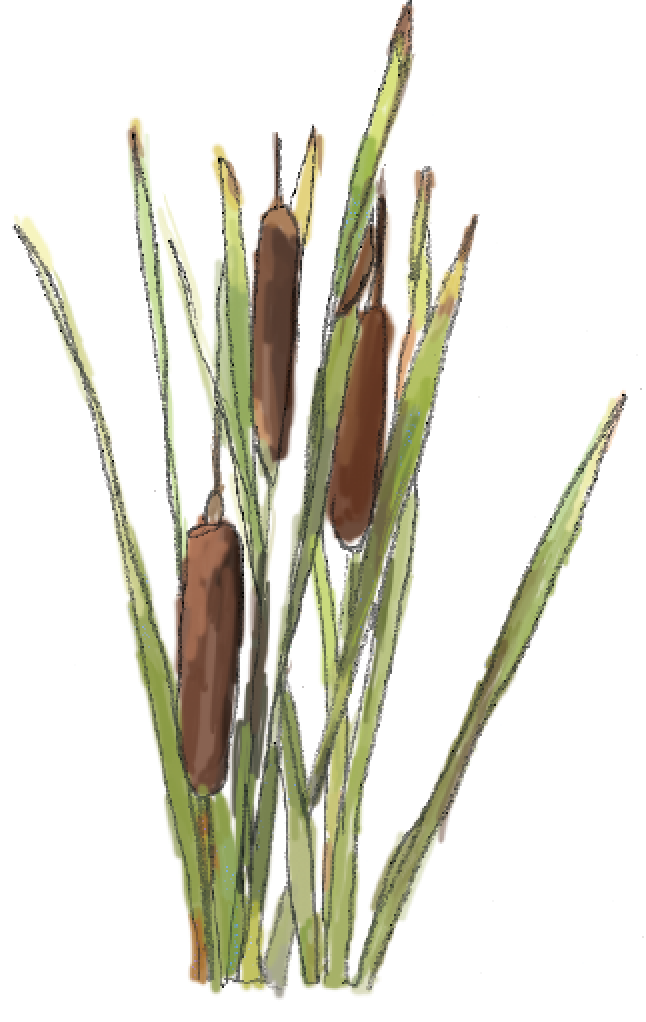
However, for the forager, no matter the weather, no matter the season, there is always something to eat in the wild. The common cattail is a perfect example. The late Euell Gibbons called the cattail the supermarket of the swamp in his book, “Stalking the Wild Asparagus.” From early spring through summer and fall, to the dead of winter, the cattail always has something to offer the hungry forager. Let’s take look a closer look at the plant.

As soon as the swamp begins to thaw, the cattail sends up its first shoots. When these shoots reach a foot or so in height, you can pull the inner core out by gently tugging at the inner leaves. You’ll get a soft, tender white core of undeveloped leaves that can be eaten raw, boiled or steamed like asparagus. Strip off any tough, stringy leaves and leave only the soft inner sprouts. Some folks compare the taste to cucumbers, but I find it much better.

Soon after, the cattail bloom, still encased in its outer leaves, begins to develop, resembling an ear of corn in its husk. Look for swellings along the tops of the long, lance-like leaves. Gathered when still green, these immature blooms make a very acceptable vegetable. Simply boil the peeled blooms for a few minutes, douse them with melted butter, and nibble the tender buds from the inedible stem like corn on the cob.

The blooms you leave soon will produce heavy yellow pollen. Pollen develops on the male flower spikes above the blooms and is easily gathered by shaking the heads into a pail or plastic bag. The pollen is rich in protein and vitamin A and is an excellent substitute for wheat flour. Use half-pollen, half-wheat flour—or all pollen—in breads, muffins and pancakes. The result is a nutty, earthy flavor that will please even the fussiest eater. Bright yellow “sunshine pancakes” make a great start to any day!

The long, rope-like roots of the cattail are an excellent source of white, starchy flour. A digging fork will aid you greatly in harvesting these shallow roots from the mucky bottoms of the swamps. Cattail roots may be gathered at any time of the year.

Gathering flour from the roots is a messy job, but the end result is well worth the effort. Wash and peel the roots by hand, and place them in a pail of clean water. Mash the roots with your hands, washing out all of the starch from between the fibers of the roots. When this is done, strain the water to remove the fibers and other debris, and let it sit for about thirty minutes. By this time, all of the starch will have settled to the bottom of the pail. Pour out the water carefully, fill the pail with fresh water and again let the starch settle to the bottom. Now, carefully decant as much of the water as possible. Pure white, starchy flour that greatly improves the flavor of breads, muffins and biscuits will be left. The flour can be used wet or dried and stored for later use.

As the cattail plant matures, crisp buds appear at the base of the stalks, which will be next year’s plants. These can be eaten raw, added to a salad, or boiled and served with butter. If they are covered in a pickling solution and sealed in glass jars, you will have an excellent pickle in a few weeks.

As if this weren’t enough to ask from a simple plant, the cattail can be used as more than a food source. The “cattail” itself, the brown fully developed head that distinguishes this otherwise modest plant, has numerous purposes. Many people gather them for fall arrangements and centerpieces. When lit with a match and left to smolder, dried heads make an effective insect repellent. Their fluffy down also serves as stuffing in pillows, mattresses, and, at one time, wartime life vests.

The leaves are useful, too. They can be gathered, dried and woven into baskets and chair seats.

All in all, this is one plant that more people should be using, especially the forager.

Continue Reading