Living Downtown: More Residential Planned for Harrisburg

StrawberrySquare

The upper floors of these historic buildings would be converted from office to residential under a proposal by Harristown.

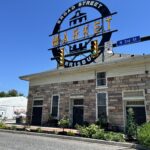
Strawberry Square took the first step in a new direction last night, as the city Planning Commission gave its blessing to a proposed conversion of office space to residential units at the intersection of 3rd and Market streets downtown.

The plan would create six two-bedroom and 16 one-bedroom units on two floors above a stretch of shops along 3rd Street between Strawberry and Market and along Market near the corner with 3rd.

Under the proposal, 21,000 square feet currently used as office space would be converted to residential apartments, along with 6,000 square feet of loft space.

If all goes according to plan, work on the project would begin this fall with completion slated for spring 2016, said Brad Jones, president and CEO of Harristown Enterprises, which owns Strawberry Square.

City approval for the project was required almost as a technicality, as multi-family dwelling units are permitted by right in the downtown center zone. But the code requires a hearing on renovations exceeding 10,000 square feet and involving a change of use, city planners said.

The planning commission’s Vern McKissick noted that, in fact, the conversion would likely restore the property to a prior use, as the units above downtown shops were traditionally shop owners’ residences.

“It seems you’re actually going back to the past,” McKissick said.

Jones agreed, saying that several of the existing office units had fireplaces and natural light better suited to residential use. The plan would not alter the exterior of the buildings, he said.

Harristown’s project would be the latest to convert office to residential space downtown. Over the past year, WCI Partners, Brickbox Enterprises and Vartan Group all have created multi-family dwellings from timeworn downtown office buildings. In June, WCI will debut Walnut Court, a 21-unit apartment building that long housed a law firm at the corner of Walnut and Court streets.

Jones said that Harristown’s market research showed reduced demand for office space and increasing demand for residential units downtown. He also noted that additional parking would not be needed for any new residents, as the Strawberry Square complex has ample spaces available in its garage.

The working title for the apartments is “Flats at Strawberry Square,” Jones said. He said the new units are expected to rent for $800 to $1,300 per month.

Continue Reading

Suds & Sandwiches: “Nano-Brewery” Proposed for Downtown Harrisburg

A few tables at Crave and Co., where you soon may enjoy homemade soup and home-brewed beer.

A few tables inside Crave and Co., where you may one day enjoy homemade soup and home-brewed beer.

If you walk into Crave and Co. in downtown Harrisburg, you’ll be asked right away for your food and drink order–but you also may be asked for your signature.

Recently, owner Kristin Messner-Baker has been gathering signatures in support of a “nano-brewery,” a craft brewery that will produce no more than 1,000 gallons of beer a year.

If her effort is successful, her customers will be able to enjoy artisanal beer brewed on site in her snug café to go along with her menu of organic and vegetarian soups, sandwiches and salads.

“Harrisburg is undergoing a real Renaissance,” she said. “I think this would add to the excitement downtown.”

Tonight, Messner-Baker and her future brewer, Kristen Richards, are slated to make their case before the city’s Planning Commission, as they need a variance in order to set up a beer-making operation in the building’s basement. They also need the approval of the city’s Zoning Hearing Board.

Richards, who lives in Midtown, just blocks from Crave & Co., said that it’s been her dream to commercially produce beer, ever since she first was “bitten by the brewing bug” about 20 years ago.

She’s been active in local homebrew clubs and has entered many beer competitions, even winning the first-place prize for her pumpkin nut brown ale last fall at the Brewery at Hershey’s annual competition for home brewers.

“When people go to a bar, they ask for a craft beer menu,” said Richards. “This isn’t a fad anymore.”

Richards makes her beer in an all-in-one, automated brewing system, which she said she simply would relocate to the eatery’s basement.

That, however, may not happen for a while, even if the nano-brewery is approved this month by the city planning commission and zoning board. The empty basement must be outfitted for brewing, and the operation has to receive federal and state permissions, likely pushing its debut into early next year, said Richards.

Both Messner-Baker and Richards don’t believe that the tiny brewery will impact the immediate neighborhood, already home to several high-volume restaurants along the 600-block of N. 2nd Street. To start, Richards plans to brew just once a week.

The pair see a great fit between their products.

“We make everything with whole ingredients without sacrificing quality,” said Messner-Baker. “She has the exact same intentions with beer as we have with food.”

The women also share a love for Harrisburg and hope that the addition of a high-quality, small-batch brewery will bring more people into the city.

“We want to attract people into Harrisburg,” said Richards. “We really want to help make Harrisburg a destination point.”

Crave & Co. is located at 614 N. 2nd St., Harrisburg. www.craveandco.com

Continue Reading

State Agency Plans To Raze Two of Harrisburg’s Oldest Homes

The houses at 110 and 112 Locust St. slated for demolition, which could date as far back as the 1820s.

The houses at 110 and 112 Locust St., which could date as far back as the 1820s, are slated for demolition.

A state-affiliated agency plans to raze two 19th-century houses, believed to be among the oldest residential buildings in Harrisburg, as part of a bid for more office space in a historic district downtown.

The Pennsylvania Housing Finance Agency, an affordable housing organization whose board is appointed by the governor and state legislators, submitted the demolition proposal to the city for review at planning meetings this week and next.

The agency is simultaneously seeking permission to erect a 12-story addition to its existing office building, a tan-and-gray concrete structure with a built-in garage near the corner of Front and Locust streets, along a stretch of historic mansions.

The proposed tower would exceed the 45-foot height limit in the riverfront zone where the agency’s offices are located, meaning the city would have to approve a variance before the building could be constructed.

“We’re landlocked,” said Brian Hudson, PHFA’s executive director, explaining why his agency has pursued the 12-story addition, expected to add between 43,000 and 45,000 square feet. “And we need the space.”

Hudson also noted that, although his agency is tax-exempt, it makes payments in lieu of taxes, or PILOTs, to the city each year, and will continue to do so on the assessed value of any addition.

Bruce Weber, the city’s finance director, said that PHFA has made PILOTs of $95,237 each year since at least 2012, making it the third-largest contributor of such payments, behind PinnacleHealth and the Pennsylvania Higher Education Assistance Agency.

But the plans have prompted fierce criticism from neighbors and preservationists, who accused the agency of disregarding the historic character of the neighborhood and failing to adequately notify them of the proposals.

“We’re apoplectic,” said David Morrison, interim executive director of Historic Harrisburg Association, a nonprofit that advocates for historic preservation. “That block is an intact historic block, and it’s in a historic district. Once you start taking pieces away, the whole thing starts to crumble.”

Capitol Area Neighbors, a downtown neighborhood association, has prepared a draft position statement urging the city to reject the tower plans in their current form and calling the proposed demolition “tragic and incomprehensible.”

“Locust Street is an entry way to the city that is irreplaceable in its character and beauty,” the statement said. “Perhaps two blocks remain in this heart of the city between Front Street and 2nd Street that retain this type of architectural character.”

“We support positive re-use,” said Jane Allis, the group’s president. “We’re not against any addition. We just don’t want the streetscape disrupted.”

The proposal is the agency’s third attempt in recent years to get city approval on an expansion plan. In 2008, it sought to gut the Hickok mansion, a historic brick building next door on Front Street, and rebuild it as a parking garage with an office tower above it. But neighbors opposed the plan and the city turned it down.

In 2013, however, the city approved modified plans to adapt the mansion as rental office units instead of garage space and limit the height of any addition.

The latest plans significantly surpass the modifications that were approved in 2013, Allis said. “We don’t know why they’d come back with this,” she said.

Hudson, however, described the updated proposal as a “workaround” that preserves the Hickok mansion while adding necessary space for an agency in “growth mode.”

Bids for work on the 2013 plans, he said, came in at $2 million more than expected, largely because of the expense of building on top of the Hickok. Under the new proposal, a taller tower partly occupying the footprint of the demolished houses will preserve the mansion, which Hudson said he understood to be the city’s main priority.

A more recent addition to the Hickok will be removed, but the original section will be remodeled as a community meeting space, Hudson said. The proposal also asks for an exemption from a requirement to provide parking spaces, which the neighborhood association in its draft statement said it supported.

PHFA, which the state legislature created in 1972, is a quasi-governmental agency. Its operations are funded out of program revenues and its employees are not on the state payroll.

Since its creation, it has provided more than 157,000 single-family mortgages, built more than 122,000 rental units for low- and moderate-income residents and saved nearly 48,000 homes from foreclosure, according to data on its website.

"We're landlocked," said Brian Hudson, PHFA's executive director. The agency's downtown headquarters, left, and the Hickok mansion next door.

“We’re landlocked,” said Brian Hudson, PHFA’s executive director. The agency’s downtown headquarters, left, and the Hickok mansion next door.

The agency has occupied its Front Street offices since 2004, when developers completed construction of an eight-story, 168,000-square-foot tower on the site of a former city parking lot.

The two-and-a-half story clapboard houses, at 110 and 112 Locust St., appear to be among the oldest residential buildings in Harrisburg. They go back at least as far as 1889, appearing on a city atlas that year as the homes of John Feehrer and Eliza Shatluck, respectively.

A date on an exterior door identifies the construction year as “c. 1826,” which would make them older than the so-called Joseph Black house, a Georgian revival house on State Street that Ken Frew, in his book “Building Harrisburg,” dates to around 1830.

Even at that age, though, the Locust Street properties would still be younger than at least two extant city residences. One is the John Harris-Simon Cameron house, completed in 1766, while the other is the so-called Elder House, a limestone farmhouse on Ellerslie Street, near 25th and Derry, that dates back to 1740.

Terry and LaDonna King, a husband-and-wife pair, took title to the Locust Street houses in 2006 and restored and modernized them, connecting their second floors and installing central air, among other upgrades.

In 2012, however, the Kings lost the homes in foreclosure, beginning the “sad legacy of neglect” the homes have suffered since, the neighbors’ statement said. PHFA bought them from Mid Penn Bank last May for $140,000.

“I’ve watched them sit there for three years,” Hudson said. “The bank was ready to unload them, and they are deteriorating.”

Anne Yellott, who lived in the Locust Street houses from the early 1980s until 2000, described them as “exquisite” structures that served as a way station for artists and intellectuals arriving on Harrisburg’s budding downtown cultural scene.

“It was a great little place to stay,” said Yellott, who over the years hosted guests as varied as an astronaut, a Holocaust survivor visiting for a stage production of “The Diary of Anne Frank” and a state museum zoologist who came with an iguana, a turtle and two coonhounds in tow.

Her favorite features were a pocket garden and a fireplace where she would burn wood throughout the winter, drawing affection from the attendants in the former city lot, who “loved the smell of firewood,” she said.

Two hearings are currently scheduled for PHFA’s proposal. The first, before the planning commission, will take place Wednesday, April 1 at 6:30 p.m. The second, before the architecture review board, is scheduled for Monday, April 6 at 6 p.m. Both will be held in city hall, in Room 213 of the Public Safety Building.

This story has been updated with information from PHFA and the city about the agency’s payments in lieu of taxes, and to correct the time of Wednesday’s planning meeting to 6:30 p.m.

Continue Reading

Open and Closed: In Harrisburg, the homicide rate is high. But so is the solve rate.

The killing was in early spring, late one Sunday morning.

A taxi van pulled up at 15th and Market, carrying eight passengers who’d been partying the night before in a Swatara Township motel. One of them shot the driver, a 37-year-old man named Atlas Simpson, in the back of the head. Then they all fled.

On the corner, the Unitarian Church of Harrisburg was in the middle of services. The ushers at the back noticed the police cars first. Word rippled through the congregation. Eventually it reached the Rev. Howard Dana, who stood up between songs to make the announcement: there’s been a shooting, police are investigating, we’re safe but we have to stay in the building. “It was pretty traumatic to think somebody had been killed literally right through the wall from where we were,” Dana recalled recently. Parishioners who had parked on the street found their cars were now part of a crime scene.

That was in March 2012. In September, around 4 p.m. on a Wednesday afternoon, police responded to another shooting in the neighborhood. This time, the victim was an 18-year-old named Valdez Cockren. He died of a gunshot wound to the chest, in a grassy lot behind the church’s back alley.

In the six years between 2009 and 2014, there were 87 homicides in Harrisburg. More often than not, the victims resembled Cockren and Simpson in two respects: they were black males, and they died at the barrel of a gun. They were also young. Out of the 61 African-American men killed in those years, 49 were between the ages of 17 and 35, with a median age of 25. (These and other numbers in this story, unless otherwise attributed, were compiled by TheBurg with data from the county coroner, court records and newspaper reports.)

Screenshot 2015-03-30 01.25.25And more often than not, when there was a murder in Harrisburg, someone was arrested and put away for the crime. Out of the 87 homicides in the period surveyed, police made arrests in all but 20 of the cases—about 77 percent. Even when you isolate homicides of African-American men, the proportion of cases solved remains almost the same, at around 74 percent.

The same can’t be said for every city. Jill Leovy, in her recent book “Ghettoside,” discusses the disproportionate representation of African-American men among homicide victims nationwide. As she writes, they are “just 6 percent of the country’s population but nearly 40 percent of those murdered.” But she also cites a disturbing figure about Los Angeles homicides in particular. In a 13-year period, in cases where a black male was murdered, arrests were made only 38 percent of the time. The high murder rate, she argues, is partly a result of the low arrest rate, which leads to a sense of impunity for the murders of young black men. “The system’s failure to catch killers effectively made black lives cheap,” she writes.

Since protests erupted last year in Ferguson, Mo., over the police killing of an unarmed 18-year-old black man, the national conversation on race and policing has been focused on overzealous enforcement and systemic oppression. Harrisburg’s homicide statistics, though, raise a different set of questions. Why are most murder victims young black men? Should law enforcement do more to protect the most vulnerable communities? And does the city’s rate of homicides have anything to do with whether or how they’re solved?

 …

Leovy’s argument invokes what criminologists refer to as “deterrence theory.” If you take the view that a crime is a rational choice, made by a discerning person, it follows that various factors will make committing a crime more or less appealing. One deterring factor, according to Jonathan Lee, a criminologist at Penn State Harrisburg, is “fear of punishment”—a criminal’s sense that his illegal act will be answered with retribution. How strongly a criminal fears punishment depends on how severe the punishment is, how swiftly it’s handed down, and how certain it is to occur, although, Lee said, “severity and swiftness matter less than certainty.”

A police department’s homicide clearance rate theoretically has an effect on deterrence—the higher the clearance rate, the greater the certainty of punishment. But it’s hard to draw meaningful conclusions. For one, despite their share of headlines, homicides are rare. A homicide also often represents the end of an escalating series of events between the murderer and the victim. Understanding it, Lee said, requires understanding “how the prelude to it unfolded, even to the last minute.” It might be possible to reduce property crimes with some well-placed interventions, like more monitoring by police, repairing streetlights and starting neighborhood watch groups. But a domestic dispute that ends in a murder involves a more complex succession of factors, and it can be difficult to determine what kind of intervention might have changed the outcome.

Another way to try to make sense of Harrisburg’s homicide statistics is to focus not on the perpetrator but on the victim. Criminologists call this approach “routine activity theory,” which explains people’s likelihood to become victims of crime by way of the situations they’re routinely exposed to. The theory might help explain some of the racial disparities in local statistics. Between 2009 and 2014, for instance, there were 127 homicides in Dauphin County. According to census data, three-fourths of the county’s 270,000 residents are white. Yet half of the homicide victims in the period surveyed were black men killed on the streets of Harrisburg.

The discrepancy, however, can seem less startling when you consider the prevailing circumstances in the neighborhoods where most of those homicides occurred. Factors like poverty, large numbers of blighted and abandoned houses, high unemployment and even a high proportion of rental properties are all correlated with increased rates of interpersonal crime. Such factors diminish neighbors’ “collective willingness to intervene when there is a commotion or disturbance,” Lee said. If the county’s African-American population is more concentrated in areas with these characteristics, then perhaps the greater exposure to violent crime is not so surprising. “It’s not merely a race concentration, but more about a larger profile of the neighborhood,” said Lee.

At any rate, none of this explains what, if anything, law enforcement can do about it. “Homicide is such a rare event, and is more emotional than economic and rational,” Lee said. “So changes in policing might not make any difference.”

Screenshot 2015-03-30 01.25.05

 …

Harrisburg Police Chief Thomas Carter investigated his first homicide, the slaying of a 27-year-old man in Hall Manor, in 1994. A year prior, two police officers had been shot at a Lower Paxton Township apartment while investigating a missing persons case. Carter, who was then on uniformed patrol, was called up to help in the Criminal Investigations Division, or CID.

Training Carter was Det. Richard Stilo, a long-time veteran of the force who was known for his skill at talking to criminals. “We got the call, and we drove separate cars,” Carter recalled. “And I couldn’t figure out why.” When they arrived at the scene, Carter turned to Stilo and asked, “What do we do now?” “And he looked at me, he said, ‘You wanted to be up here, a detective? You go figure it out,’” Carter said. “So I was like, ‘Huh?’ He walked to his car.”

Carter prides himself on his ability to build relationships in the communities he polices, a trait that may have something to do with the reasons he became an officer. Growing up, he lived next door to a detective who would often stop and talk with him. Another officer, Tom Kohr, would engage Carter and his friends while on patrol in the neighborhood. “We would be out there playing sports, and he would, you know, stop and give us the time of day,” Carter said. “And to me, I thought that was the neatest thing—‘Wow, a police officer is taking time out to talk to us.’ And I became curious. Under what rules do these guys work? What’s governing them?”

He drew on these experiences as an officer. One of his early assignments was on a curfew detail, from 7 p.m. to 3 a.m. “It was very interesting chasing juveniles, and actually, like, getting to know them, building a relationship with them,” he said. “A lot of them weren’t doing anything bad. It was in the summertime. A lot of them were just curious. They just wanted to be outside.”

He also found that his roots in the community helped him solve cases. He is African-American, and a graduate of Harrisburg High. “A lot of people, they knew me,” he said. “I had made a lot of friends.” He routinely gave out his cell number, because people who didn’t want to be seen talking to an officer often would be willing to give information over the phone. Treating people with respect and forthrightness, he discovered, could lead to surprising results, even from criminals. “I had people wanted for violent felony crimes come to my house and surrender to me because they trust me,” he said. “They knew I wasn’t gonna lie to them, I was gonna treat ‘em right. And the respect was there.”

Carter oversaw the CID’s special operations unit from 2009 until 2013, when he was named police chief. In 2009, there were 16 homicides in the city, which, the Patriot-News reported, made it Harrisburg’s deadliest year in almost two decades. All but four were cleared before the year was out, most within a matter of days. (Of the remaining four cases, one was cleared a year later, while the suspect in another was acquitted in 2013. Two cases remain unsolved.) Carter attributed the clearance rate to his detectives, who he said are distinguished by “sincerity and caring.” “I know detectives that have given up vacation time to solve homicides,” he said. He also credited his forensics team, which he described as “second-to-none,” in part because they deal with more homicides than other nearby municipalities.

Still, he acknowledged that one of the most difficult tasks was getting people to cooperate with an investigation. “People in this city do not appreciate the gun violence here, or any kind of violence,” he said. “But they’re put in a situation that they don’t want to jeopardize their lives or the lives of their loved ones. So a lot of them tend to just swallow hard, and don’t say anything.”

At the same time, there are forces working in the detectives’ favor. One, Carter said, is time—a formerly reticent witness or informant might get picked up later on a different charge, and suddenly be more willing to talk. There’s also the influence of people in the community who’ve simply had enough. “There’s times where, people who go to court to testify, some of them are forced to,” he said. “But a lot of them that I dealt with, they wanted to. Because they’re tired of the nonsense.”

In the wake of the 2012 homicides, parishioners at the Unitarian Church and other churches took action. For several years, church members had been involved with Heeding God’s Call, a faith-based movement to end gun violence. After Simpson’s and Cockren’s deaths, the group held vigils to mourn the victims and pray for peace.

Heeding God’s Call formed in 2009, building on the momentum from a gathering of historically pacifist Christian churches in Philadelphia. A theme of the conference, said Belita Mitchell, a pastor at First Church of the Brethren in Harrisburg, was “solidarity in the face of the growing loss of life and violence.” Church members demonstrated outside Colosimo’s, a gun shop near Philadelphia’s Center City, over rumors the shop was facilitating straw purchases. Months later, the federal government revoked Colosimo’s license, following an investigation by the Bureau of Alcohol, Tobacco, Firearms and Explosives.

Screenshot 2015-03-30 01.24.40Following the conference, some of the pastors in attendance brought the work to Harrisburg. Mitchell, who is now the chair of the group’s Harrisburg chapter, said that they had a two-pronged mission: to work with gun shops to curb straw purchases, and to bear “public witness” in the wake of a gun death. With the first prong, Mitchell said, the goal was to “treat all gun sellers as good guys—to say ‘Work with us to close the loopholes.’” The initiative went nowhere. “It was a nightmare,” Mitchell said. “Nobody wanted to talk to us.”

The vigils, however, became the group’s mainstay. “Those were incredible,” Howard Dana, the Unitarian Church’s former pastor, recalled. They gave “black ministers and black lay leaders a place to speak” to their community, and offered a different angle to the press, which was “focused way too much on the sensational.” “We wanted to focus on the grief, the sense of loss, the sense of injustice,” he said.

Ron Tilley, an organizer with Heeding God’s Call, and also a reverend at First Church of the Brethren, said the vigils were also about creating a “cooling off time” following a homicide. “As people of faith, we can interact with people who might be contemplating retribution,” he said. This was especially important, he said, for young people, whom the group offers to train in principles of non-violence through a leadership program. He referred to a time when, “anecdotally,” there’d been a spate of “retaliatory shootings.” “Anecdotally, there has been a decrease in those kinds of shootings,” he said. “I think the vigils have been a part of that.”

The murder of Valdez Cockren has not been solved. But a week after Atlas Simpson’s death, a 20-year-old named Adrian Collins turned himself in. A year later he went to trial. Chief Carter, at the time a sergeant detective, testified, because he had recognized Simpson at the scene. They were neighbors in Steelton, where Carter had often seen Simpson with his dog—a pit bull that was in the cab’s front passenger seat the day he was murdered.

The trial record is a good study in how hard it can be to get an authoritative account of a murder. The state built its case in part on a surveillance video that prosecutors said showed Collins at a convenience store robbery the day before the murder, using a gun like the one that killed Simpson. They also brought witnesses who had been in the taxi, none of whom would say definitively they saw Collins pull the trigger. One witness said she was only cooperating because police told her she might be charged. Another identified Collins as the shooter in a statement to police, but said on the stand he’d been scared at the time and had since tried to “redo” his statement. Witnesses did testify, however, that they saw Collins grab cash from the cab and that they’d seen him carrying what looked like a gun. He was given a life sentence, which was upheld a year later on appeal.

Why does Harrisburg have a relatively high solve rate? Perhaps it has something to do with the compact nature of the city. Perhaps it has to do with good relationships between community members and the police. Perhaps it reflects skilled detective work. Whatever the causes, it’s difficult to conclude that it has much effect on deterrence, when both the murder rate and the solve rate in Harrisburg are high. Homicide, as Lee said, is at the far end of a spectrum of violence—the best opportunity to intervene may be at an earlier stage. “Again, murder is just an extreme version of interpersonal or even property crime that went wrong,” he said. “Most likely, there must have been a prelude to it. How the community reacts to the prelude makes a huge difference.”

Continue Reading

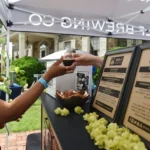
Suds Summit: Soak up brew culture, flavor at the first Harrisburg Beer Week.

Screenshot 2015-03-30 01.25.51It’s funny how, sometimes, everything comes together.

When I started covering Harrisburg’s beer scene almost two years ago, I focused on finding those interesting little stories that sometimes get missed in small cities like ours. While most beer writers focus on trendier and larger places, like San Diego or Chicago, I turned my attention to the incredible people pushing beer culture forward here.

A couple working to open a brewery in Midtown. A local homebrew supply store in Lemoyne. Women who were making an impression in a predominately male culture. A group of ambitious Harrisburg homebrewers.

All of these stories felt like Harrisburg’s best-kept fermented secrets. Well, starting on April 24, Harrisburg Beer Week is intent on letting these secrets out.

Years in Planning

Harrisburg Beer Week is the brainchild of Sara Bozich along with the writers from Stouts and Stilettos, Tierney Pomone, Colleen Nguyen and Chelsie Markel.

I first met Sara and Tierney when I was writing my article on the women who stand in the front of Harrisburg’s beer culture. And considering that all of the organizers for Beer Week are women, I fear I may have undersold their leadership.

I caught up with Sara at the Federal Taphouse in downtown Harrisburg to get a sense of this latest venture.

“Tierney first mentioned the idea for a beer week a few years ago,” says Sara. “But we first started organizing last summer.”

Most of the planning took place in Sara’s home, but it didn’t take long for their energy to become infectious.

“Once we got Appalachian Brewing Company on board as a sponsor, things started to roll,” notes Sara. “But, it took a lot of education to sell the ‘beer week’ concept.”

That’s because this isn’t a typical daylong beer festival, where you pay to spend a day sampling beer (and get a little tipsy in the process). Instead, this is a week jam-packed with different types of events, all centered on the love of fermented grains.

Something for Everyone

Of course, if you are just looking to try some new, local beer, Beer Week will feature a number of tap takeovers and firkin nights at area bars.

In dozens of events, Pennsylvania’s most renowned and successful brewers will descend upon various watering holes, offering specialty brews, complimentary drink ware, specially designed food pairings, and opportunities to meet the minds behind the beers. While such an amazing concentration of special beer nights is reason enough to get excited, there are a number of unique events that require special attention.

The first big event is not a new one. PA Flavor, a yearly Pennsylvania food-and-beer pairing, will be held at the Farm Show Complex on April 25.

The next day, the Sons of Alchemy brew club will host the Battle of the Homebrew Clubs at the Federal Taphouse downtown. Area homebrew clubs will be fighting it out, offering their best and most adventurous beers to determine which club is truly the best in the area. Attendees will receive a commemorative tasting glass, and tastings will be paired with both live music and light fare food.

Pizza Boy Brewing Co., in a partnership with Kint Beverage Concepts, will host a “Beer Science” night on April 28, featuring informative and interactive presentations on various beer styles, the perfect glassware and the perfect pour. If you can’t make it then, there will be a repeat presentation at ABC’s Abbey Bar the next day.

For those looking to expand their knowledge of craft beer, Harrisburg Young Professionals, along with the Brewery at Hershey, will present a class on craft beer concepts led by brewmaster Ryan DeLutis at Café 1500, also on April 29.

Brandalynn and Theo Armstrong, whose Zeroday Brewing Co. will debut in April, will host a screening of “Beer Wars,” a comical profile of the beer industry, at the Midtown Cinema, with three showings from April 29 to May 1.

Sara herself will moderate the first Pennsylvania Women in Craft Beer Conference on May 1 at JPL Creative. Featuring Brandalynn Armstrong, along with Irena Bierzynski from Victory Brewing Co., Sandy Cindrich from Penn Brewery and Valerie Delligatti from Tröegs Brewing Co., this event will explore the continued leadership of women within beer culture.

The week will wrap up with the Little Big Beer Fest, which will feature “big” beers from around the midstate. Hosted by ABC, this exploration of boozier beers will also include light food and a commemorative tasting glass.

Drink for a Cause

While spending a week enjoying central Pennsylvania’s vibrant beer scene is wonderful on its own, I should highlight the real beneficiary.

Sponsorship profits, along with the proceeds of individual events and merchandise sales, will benefit the Harrisburg River Rescue. In the end, Harrisburg Beer Week wants to be about more than the area’s beer scene. The organizers want to leave a positive mark on the whole community.

“We knew we wanted to do a charity, and we wanted to keep it local,” says Sara.

So, you get to enjoy fabulous beer while also giving to a great cause. That’s worth a toast.

Harrisburg Beer Week runs April 24 to May 2. For more details and event schedules, go to harrisburgbeerweek.com.


Hop Highlights

Harrisburg Beer Week features scores of beer-related events over a seven-day period, so make sure to check the schedule online before heading out. A sample of the bigger events includes:

  • Kickoff Party, Appalachian Brewing Co., April 24, 7 p.m.
  • PA Flavor, State Farm Show Complex, April 25, 1-5 p.m.
  • Battle of the Homebrew Clubs, Federal Taphouse, April 26, 1-5 p.m.
  • “Beer Science,” Pizza Boy Brewing Co., April 28, 1-4 p.m., and Appalachian Brewing Co., April 29, 4-7 p.m.
  • Craft Beer 101, Café 1500, April 29, 6-7:30 p.m.
  • “Beer Wars” film, Midtown Cinema, April 29-May 1, 7 p.m.
  • Pennsylvania Women in Craft Beer Conference, JPL Creative, May 1, 5-8 p.m.
  • The Little Big Beer Fest, Appalachian Brewing Co., May 2, 2 p.m.
Continue Reading

A Beer & a Dream: Brandalynn and Theo Armstrong had a vision for a brewery in Midtown Harrisburg. With the help of the community, it’s come true.

Screenshot 2015-03-30 01.29.57Brandalynn Armstrong sits on a high-backed bar chair and surveys the room with her eyes.

She motions to the orange-painted walls, to the space where local artists will display their works, to the windows into the brewhouse.

This was her dream.

This was the dream that she and her husband Theo spoke of nearly two years earlier when they first went public with their hope to open a microbrewery in Harrisburg.

“It will happen,” Brandalynn wrote in a Facebook post after a story entitled “Beer Ambition” appeared in TheBurg.

And, now, incredibly, it has.

This month, Zeroday Brewing Co. will open its doors, and the first thirsty, curious customers will stream in, ready to sample Theo’s artisanal quaffs, from blondes to stouts.

They will gather at the bar made of salvaged corrugated metal from a 100-year-old Perry County barn. They will sit at a counter ledge carved from locally sourced, reclaimed wood. They’ll huddle with friends at the dozen or so tables and high tops, maybe while enjoying a bite of charcuterie or listening to someone from the neighborhood play guitar.

Brandalynn pauses a moment, looks up at the roof timbers they uncovered after removing the drop ceiling; looks down at the freshly poured concrete floor.

“This building was just made for us,” she said.

Where We Left Them

From the beginning, the Armstrongs centered on Midtown Harrisburg as the home of their future brewery.

They liked the neighborhood feel of what they wanted to be a neighborhood place and the complement of nearby destinations like Midtown Scholar Bookstore, Midtown Cinema and the new Susquehanna Art Museum.

They first had their eyes on Midtown’s landmark “Carpets and Draperies” building on N. 3rd Street, but abandoned that plan after calculating the cost of transforming the large, dilapidated structure into usable space.

That disappointment, though, led directly to where they eventually landed. Surveying the outside of the building, waiting for their realtor to arrive, they were approached by Adam Porter, co-owner of St@rtup, the co-working outfit next door. Porter recognized them from TheBurg story, and they got to talking.

“I said, ‘Oh, you’re the brewery folks,’” Porter recollected. “I got their email and later found out that the building they were looking at wasn’t going to be a good fit for them.”

He then thought about the large, unused block of space down the street at the back of Midtown Cinema, where he serves as director of operations.

“I thought it would be a great complementary use for the Cinema,” Porter said.

Built as a grocery store, the squat, circa-1940 brick building long had been cut in two, the back half last serving as a plasma donation center. It had been empty for about 20 years.

“It wasn’t much to look at,” joked Brandalynn.

Indeed, floor and ceilings tiles were damaged and missing. Medical equipment had been left behind. The dust was thick, and debris was scattered everywhere.

But the Armstrongs liked the size and loved the location. They also got the strong backing of John Tierney and Matt Tunnell, principals of Lift Development LLC, which owns the building and the Cinema.

“After Adam introduced the Armstrongs, we saw what they were doing and that they already had a great following,” said Tunnell. “We thought they’d be a terrific addition to the Cinema and to Midtown.”

Cool Area

Brandalynn and Theo had found a place they wanted, but they now needed to find out if the community wanted them.

So, they set out to meet their potential neighbors and get their support before appearing before the city’s Zoning Hearing Board. Some people did object to the proposal, worried about potential traffic, noise and odors. Many others, though, supported the brewery, which strengthened their application for a zoning variance and, just as importantly, gave them assurance that they were welcomed.

“We never could have done this without the community’s support,” said Brandalynn.

The build-out began in August and was completed just a few months later. Licenses, permitting and equipment delivery, however, pushed the open date up several months. The Armstrongs were especially frustrated by the delay of a critical piece of equipment called a mash tun, which got hung up at a port in Seattle during the recent dockworkers strike.

The couple’s greatest disappointment, though, came last year, when they learned that they would have to abandon their original, beloved moniker, Alter Ego Brewing Co.

They had conducted a trademark search before settling on Alter Ego, but a subsequent, more thorough investigation revealed a potential conflict with another company. The Armstrongs didn’t want to run the risk of losing a trademark challenge down the road. So, for the long-term good of their business, they reluctantly changed the name of their brewery.

After brainstorming, they agreed to Zeroday Brewing, after the hiking term, “zero day,” which means a day when no miles are logged. It was a nod to the time that Theo hiked the Appalachian Trail and a statement of how they felt about their new home.

“You only take a zero day to explore a cool area,” said Brandalynn. “We feel that Harrisburg is a zero-day destination.”

Grain to Glass

When I met up with the couple in early March, the tasting room was complete. The tables were set up, the stools positioned, and the USB ports below the Corian bar counter had just been installed.

The 1,500-square-foot space comfortably holds 60 people, and the high ceilings and well-spaced tables give the room a relaxed, uncrowded feel. Brandalynn describes the décor as “man cave chic,” by which she means “manly with warm accents.” Though the intentional absence of that most essential part of the man cave—the TV—might belie that description.

On the other side of the wall, the brewhouse was nearly complete. The seven-barrel system was installed with the exception of the 25-foot exhaust stack, which was erected in the midst of a snowstorm several days later and now towers above the building.

They had even received their first shipments of barley, which sat in piles of large, heavy bags, just waiting for Theo to start the process of milling, mashing, fermenting, kegging, tapping and pouring.

“It is literally 20 feet from grain to glass here,” he said.

On a nearby pallet, two-pint cans called crowlers (can-plus-growler) were stacked, ready for take-out, a perfect portable vessel for movie patrons who want to enjoy a beverage while in the theater.

A few weeks before opening, Zeroday somewhat resembled an empty movie set itself—built out, but just waiting for the action to begin. Behind the scenes, though, the Armstrongs had been attending to a hundred last-minute details, and the mad dash to the final approvals clearly had taken a toll.

“I’m exhausted; Theo’s exhausted,” said Brandalynn. “But, when we push that first pint of beer across the counter, it will be worth it.”

Two years ago, when we first met the Armstrongs, they had a goal to build a business and share their beer with the world. Since then, their mission had grown.

They still wanted to make excellent beer, but they also hoped their brewery would be a credit to the people of Harrisburg, that it would serve the needs of the community and bring in outsiders—“beer tourists”—who might not venture into Midtown otherwise. The newcomers then would be able to experience the charming, historic neighborhood and the destination that it’s rapidly becoming.

“We always say that Midtown made this happen,” said Brandalynn. “It’s taken a community to make this work, and we don’t want to let them down.”


Zeroday Brewing Co. is located at the rear of 250 Reily St., Harrisburg. The grand opening is slated for April 8. For all the information, go to www.zerodaybrewing.com or visit their Facebook page.

Continue Reading

The Millworks, Reborn


Last month, The Millworks in Harrisburg opened to the public, and eager patrons rushed in to get their first taste of the farm-to-table restaurant, artist studios and beer garden. We thought our readers would be interested to see how the project came together. So, we decided to share a few scenes of the construction and the finished product. Of course, to truly appreciate the transformation, you have to see it for yourself. You can make a reservation at www.millworksharrisburg.com or just drop by for a drink and to enjoy the art and artists at 340 Verbeke St., across the street from the Broad Street Market.

Screenshot 2015-03-30 01.28.47Screenshot 2015-03-30 01.29.22Screenshot 2015-03-30 01.29.15Screenshot 2015-03-30 01.29.04

Continue Reading

Student Scribes: The 72-Hour Hangover

Lindsey McKeever, Photo by www.danifresh.com

Lindsey McKeever, Photo by www.danifresh.com

Periodically, TheBurg highlights the work of student writers from Penn State Harrisburg. In this issue, we feature an essay with a lighter look at a serious condition.

The moment you realize that you’ve left your designated “hangover sunglasses” on the counter nestled next to the napkin holder, you’ll be shaking your fist at the sky, cursing out Mother Nature for her all-too-inconsistent weather changes. But, without the protective shield of those mirror-finished, polarized lenses, the only solution now is to pinch the bridge of your nose, squint against the sun’s unforgiving rays, and somehow will away the pounding behind your left eye through the power of your fingertips. Deep breath in, deep breath out. Ignore the wave of nausea rolling through your stomach and the fact that your professor has decided to toss her microphone over her shoulder, and shout the rest of her lecture. Four Excedrin later, you’re laying on the couch with a pillow over your face, counting the hours until you need to be up and back at school again.

Christian Nordqvist of Medical News Today defines a migraine as a severe, painful headache that is often preceded or accompanied by sensory warning signs such as flashes of light, blind spots, tingling in the arms and legs, nausea, vomiting and increased sensitivity to light and sound. While most people find themselves in the dark when trying to understand the easily misunderstood headache, the migraine is an extraordinarily common disease that affects 36 million men, women and children in the United States, according to the Migraine Research Foundation. The clincher? There is no real cure for migraines. In fact, most medical professionals are left scratching their heads while research into the causes and treatment of the migraine is severely underfunded. So, where does that leave the suffering population inflicted by the illness? With a drawer full of expensive painkillers and a notebook full of potential triggers that might have caused the migraine—and a prayer for death to knock on their front door with a promise of peace.

Knowing that migraines genetically ran through my family on my mother’s side, I once asked her how she remembered dealing with them without all of the medical therapies we have today. She said she would treat it by “lying in complete darkness with a big bag of ice over my head.” I considered that a simple enough routine, especially since I usually go for the gallon-sized Ziploc baggies when I’m afflicted.

Interestingly enough, trial-and-error treatment has dated back to 3000 B.C., more commonly known as the Mesopotamian Era. While maybe you can say that you do not personally know any migraine sufferers, the National Migraine Association, or MAGNUM Inc., has constructed a list of a few people who you can find in your history book who were afflicted with the disease, including Thomas Jefferson, Julius Caesar, Cervantes, Sigmund Freud, Ulysses S. Grant, Lewis Carroll and Vincent Van Gogh.

Now certainly Ol’ Caesar didn’t reach into his toga for his trusty stash of Advil; his treatment methods, along with those of his historical companions, were a tad more creative. Some of the prescriptions included applying a hot iron to the site of pain, inserting a clove of garlic through an incision in the temple, purges and bloodletting, and, my personal favorite, drilling a hole in the skull to free “evil spirits,” according to MAGNUM. Even though migraines can still be labeled as a mystery in the 21st century, medical professionals have developed their own theories about the physiological causes of the disease. One of these theories includes the prolonged period of vessel dilation, resulting in the characteristic, throbbing pain, while another discusses the birth of a migraine in the brain, causing major semi-hemispherical cranial vasodilatation, while a sequence of events initiates the release of serotonin.

Of course, not all is grim. Living with migraines can open up a new network of supportive friends and family members who truly understand what you’re going through. Learning to brush off such comments such as, “Well, you’ll be all right; it’s just a headache. What’s the big deal?” and, “You really should drink more water,” can give you the utmost confidence that there’s absolutely nothing crazy about what you’re going through. In my five years of living with migraines, I’ve caught the not-so-hidden eye-rolls, heard the audible whispers of the “It’s just an excuse to get out of work” conversation, and shouldered the blatant sighs of those employers who failed to fully comprehend the painful nature of the situation. But learning to forgive those who simply cannot understand is the first step to releasing an immense weight of guilt and discovering a less-sheltered world hidden above the shadows of doubt.

While most consider a migraine to be just an affliction of head pain, the Migraine Research Foundation lists other symptoms, which can often include visual disturbances, nausea, vomiting, dizziness, extreme sensitivity to sound, light, touch and smell, and tingling or numbness in the extremities or face. I’ve often pondered what it would be like to have a sixth sense, something that would enable access to a sense the world above a normal level. And, while my migraines don’t allow me to see a glimpse of the veil through Haley Joel’s eyes like in the movie “The Sixth Sense,” not that I’d really want to see anything with that sort of heightened awareness, I already have my own five senses on hyperactive-overdrive. Consider a hangover with all the glories of worshipping at the porcelain throne. Now consider a hangover without all of the past memories of the night before to help anchor you to the realm of the living. Now further consider that hangover to not only last a full 24 hours, but to a maximum of 72 hellish hours. I once felt compelled by my own frustration not only to investigate a collection of various hangover remedies, but to try them in an attempt to shake off a migraine. I then concluded my thoughts with the following:

  1. Grease is really not your friend. As Dean Winchester says in the popular sci-fi show “Supernatural,” “You know there’s a really good hangover remedy, it’s a greasy pork sandwich served up in a dirty ashtray.”
  2.  Guzzling water may quench your thirst, but it’s not some miracle purification remedy.
  3. The hair of the dog that bit you is now going to maul you into submission.

For those who aim to cure themselves through a more natural or organic method, a little research on Pinterest or Google can give you a wide variety of steps or cures. Personally, the old shower-with-the-bathroom-door-closed routine never worked for me, so for those searching for a more scientific solution that won’t fog up their vanity mirror, technology has stepped in to lend its assistance. The Cefaly Technology headband, possibly the newest of attempts, is the first cranial analgesic electrotherapeutic device to acquire ISO medical certification proven effective on migraine pain with no side effects. Meaning? It’s an electronic device that is placed around the head that stimulates the nerve center where the pain resides. “Star Trek”called, they want their headgear back. Envision not a cap, but a thin, simple, celestial crown adorning the princess of the latest sci-fi movie. Remove the jewels, substitute the luxury of white gold for gray medical plastic, and what you see is what you get. Although strides have been made, including an approval by the FDA for the United States, it is still a widely underutilized method. Getting your hands on one may require more than a toss of a lucky penny into a wishing well. And the fact is, you may very well be diving back into that well to scrounge for your penny so you can fully pay for it. As for me, I’ll wait for the reviews to come in before picking up my head adornments at the nearest Costco.

I consider being a migraine-sufferer to be more of a strength of character than a weakness. While it may not be possible to simply breathe through the pain, you certainly have acquired the diligence to live through it. Aside from the clichéd notion that what doesn’t kill you, makes you stronger, survival is the ultimate trophy of pride on your shelf of life-struggles.

Lindsey McKeever is a senior English major at Penn State Harrisburg.

Continue Reading

Skate with Cause: Art, boards to benefit kids with autism.

Screenshot 2015-03-30 01.28.02Get on Board for Autism is more than just a skateboard program.

It’s a program tied to a great cause, as well as a personal mission for Ray Young, the owner of Rayzor Tattoos in Steelton and one of the driving forces behind the Get on Board program.

“It’s tremendously enriching for everyone involved in the program, especially the kids,” said Young, who exudes energy when talking about the program.

Get on Board held its first event in April 2013 to coincide with National Autism Awareness Month. This month, the group will take part in the 10th Annual Logan’s 5K Run & Walk for Autism, which is slated for April 11 in Harrisburg.

Fun and Safety

There are two components to Get on Board: an art show and skating clinics.

After seeing tattoo artist Steve Kelly and artist Jimmie Campbell fundraise for another cause, Young approached Skelly about doing a similar fundraiser, with the goal of promoting skating lessons for autistic kids.

Young and the staff of Rayzor Tattoos first partnered with the Autism Society Greater Harrisburg Area. The Rayzor Tattoo staff then tapped into their connections with artists, venues and sponsors to get the program started. Since that first show two years ago, they’ve sold more than 250 skateboard decks, Young said.

The program’s second component involves working directly with the kids.

“The main point is providing fun and safety for these kids in a fun and safe environment,” said Gary Dutson, whom Young described as the head of logistics and the program’s “gatekeeper.”

The clinics, which are free of charge, allow kids to pair up one-on-one with trained instructors to learn to skateboard in 30-minute sessions.

Dutson said there are usually six experienced and well-trained instructors at each clinic, including two master instructors. They work to match kids up with the best instructor for each child’s needs—recognizing that some kids will respond better to different instructors. Kids are not required to bring anything unless they want to, as Get on Board has received support and sponsorship from several businesses.

Dutson and Young said the results are obvious and sometimes downright impressive. They’re clearly proud of the kids as they talk about a young boy who took his first ride within six minutes at one of the recent clinics. Kids are welcome to attend multiple clinics, and Young says the repeat participants’ skill levels are definitely improving.

Get on Board’s first clinic was in May 2014, at the Autism Society Greater Harrisburg Area’s 16th Annual Sensory Picnic. Since then, the program has hosted clinics in Middletown, Pittsburgh, Mechanicsburg and Elizabethtown. They even took the show on the road in December with a clinic in Green Bay, Wis.

Screenshot 2015-03-30 01.28.22Movement and Balance

Young jokingly described Get on Board for Autism, and himself, as a “30-year overnight success.”

He started skating in the 1970s, at 10 years old, as skateboarding was on the rise across the country. He was a semi-pro skateboarder in the 1980s and found the first outlet for his passion at a YMCA summer camp. Young designed and ran a summer skate program and taught nearly 1,000 kids to skateboard during his time there. He then earned a bachelor’s degree in art education from Millersville University.

Based on his experience and education, Young restructured and ran another skateboarding program at Camp Lohikan in the 1990s. He said the program is still running well and that the opportunity at that camp allowed him to refine his teaching method and add an educational development component.

Young came up with the idea of Get on Board for Autism after seeing a close friend’s son struggle with the disorder. He says that autistic children are very kinesthetic and sensory oriented with an innate drive for movement and balance.

The challenge for many autistic kids who want to participate in activities can be the environment. With Get on Board for Autism, kids have the chance to be in a social environment without being competitive. Young said kids can “evaluate their own improvement on an individual basis,” without their success being tied to other people.

The group’s determination to grow the program is palpable. Dutson, who has a son on the autism spectrum, said, “What they’re doing is what these kids need to do to be successful.”

He added that seeing the kids’ improvements in their own abilities and in their self-esteem is tremendously enriching for the instructors, parents and everyone else involved in Get on Board for Autism.

“You’re seeing children engaged, just being kids, having a good time,” Duston said.


To learn about Get on Board for Autism, including events for National Autism Awareness Month, visit www.rayzortattoos.com/getonboardforautism or the Facebook page.

Continue Reading

March News Digest: April Fool’s Edition

Dumping Ground Found

A capital improvement project turned ugly last month after the discovery that the Harrisburg incinerator site long has served as a dumping ground for central Pennsylvania’s infinitives.

“It’s a grisly scene,” said Jim Warner, executive director of incinerator owner Lancaster County Solid Waste Management Authority. “The ‘to be’s’ are just piled up on top of each other.”

State Police spokesman Lt. Gil Sanders said his office long had been searching for the missing infinitives in such phrases as, “That chicken needs cooked,” and, “The dog needs washed,” but couldn’t locate them until now.

“It’s a total massacre,” he said. “All that’s left are parts of speech.”

He added that police suspected pre-meditation, as some of the infinitives clearly had been split before they were dumped. The case is being investigated as a possible word crime.

Jill Stevens, a forensics expert from Penn State Harrisburg’s English department, was brought in to examine and diagram the scene.

Her analysis, she said, revealed that the infinitives clearly were designed to show future action, but had been crudely dismembered from verbs like “drank,” “cleaned” and “driven.”

“I don’t know what to do now,” she said. “I guess they just need buried.”


Zumba Mounts Coup

Zumba, the global dance fitness phenomenon with a rapidly growing base of practitioners, seized control of Harrisburg municipal government last month in a bloodless coup.

The program, which combines samba, salsa, reggae-ton and other dances in a signature workout regime appropriate for all ages, reportedly swept into city hall early on March 30, where it encountered an unsuspecting Mayor Eric Papenfuse preparing for a meeting.

“I’m a victim of the beat,” a flushed and sweaty Papenfuse told reporters in the plaza outside city hall later that day, his voice barely audible over the mambo-like music emanating from inside the locked front door. “Next thing I know, my abs are on fire, my legs feel like jelly, and I’m out on the street.”

Zumba’s plans for the city are not yet known. At press time, the only communication from the new regime was a series of commands to step, bend and “add some hip,” issued over and over by way of the city’s emergency broadcast system.

“We are not, at this time, going to risk angering Zumba with a counteroffensive,” said a breathless Police Chief Thomas Carter, as he engaged in an energetic merengue march back and forth across Market Square. “My advice to Harrisburg residents for now is this: Dance, dance, dance!”


Computer Takes Over

PennLive last month fired all its editors, replacing them with a computer algorithm.

Coverage now will be dictated by the most popular terms in the online paper’s reader comments section.

As a result, content will be approximately one-third partisan harangue, one-third potentially libelous slander and one-third stories about parking tickets.

“Penn State meter SEX hellhole morons Obama Obama Obama,” commented PennLive’s new executive editor, the disembodied presence of its search engine optimization (SEO) application.


Critics Indicted

In a stunning reversal of expectations, a Pennsylvania grand jury last month handed down a string of indictments on what it called “armchair critics” of Harrisburg’s former Mayor Stephen Reed and his 28-year reign over the city.

“We started off thinking the evidence would show that the former mayor’s predilection for risky debts and strained interpretations of state law would be the culprits,” Attorney General Kathleen Kane said of her department’s probe into the causes of Harrisburg’s near-bankruptcy. “To the contrary, as a preponderance of evidence shows, the problem was the people who doubted him.”

In fact, Kane went on, there would likely never have been a financial collapse at all if Reed had been given “just a little more time” to “complete his masterful tapestry.”

“The people at the helms of power had nothing to do with it,” Kane said. “All along, it was the critics in their armchairs, who, despite having no control over events and few, if any, connections to local power brokers, managed to ruin everything with negative thinking and bad vibes.”

In keeping with the results of the probe, convictions will be pursued against all Harrisburg residents who never thought the Wild West Museum and Sports Hall of Fame were particularly good ideas.


Market To Be Sealed

Caught between financial pressures and customer demands, the Broad Street Market board of directors last month announced plans to shroud its ailing stone building in a giant bubble for the foreseeable future.

Under the proposal, vendors who currently operate out of the building, as well as any customers currently shopping or eating inside, will be hermetically sealed inside an enormous, transparent polymer enclosure until further notice.

“This move should help further the market’s goals of fending off critics while simultaneously shielding vendors from the negative effects of competition and the steady advancement of time,” said board President Jonathan Bowser.

“We look forward to one day piercing the bubble, peeling back the layers and taking a peek at what a period of sustained inactivity has done for the interior.”


Neighborhoods Renamed

The Papenfuse administration plans to rename most of Harrisburg’s historic neighborhoods, now that it has dubbed a portion of Allison Hill as “Mulder Square.”

Mayor Eric Papenfuse said he has deployed the same creative team responsible for the name “Mulder Square,” which combines Mulberry and Derry streets.

From now on, Midtown will be known as Vercumbergreen Triangle, Uptown as Curtsixthcampisco and Shipoke as TuscaconnaPennDOT. Downtown will continue to be called Drunkie Lawmaker Quadrangle.


Parking Program Debuts

Amid criticism over city parking rates and fines, Harrisburg officials last month debuted a weekly alternative-parking program, “Tonight We Park In Hell.”

Under the program, drivers will be given a choice of either paying regular parking rates or parking in a special “hell-themed” garage, complete with pitchfork-wielding attendants, eternal fires and pits of brimstone. In exchange for enduring the underworld-type torture, drivers will get free parking all evening.

“Unrelenting torment or $3 an hour—your choice,” said Harrisburg Mayor Eric Papenfuse.

Initial reports of the program were mixed, as some drivers, though clearly unhappy about the intense heat and mocking by horned demons, found the unpleasant experience preferable to meter fees and enforcement fines.

“Sure, I came away with some blisters, and a guy in a flaming red robe kept yelling ‘This is the payment for your sin’ over and over,” said Matthew Kopecky, who parked in the satanic garage last Friday. “But my friend, who parked on the street, had to pay six bucks for two hours. So, in the end, I think I win.”


Beer Week Extended

The founders of Harrisburg Beer Week last month announced that they would extend their event indefinitely.

The new “Beer Years” involves drinking 24 hours a day, seven days a week, 52 weeks a year, for the foreseeable future, an extension supported by 97 percent of Harrisburg area residents.

“Eff it,” said Beer Years co-founder Tierney Pomone. “We’re just gonna drink all the time anyway. Might as well give it a name.”


Anonymous Commenters Honored

Anonymous commenters on local news sites were honored last month at the annual Capital Region News Media gala.

Awards for “Longest Rant,” “Least Relevance to Article” and “Most Blatant Racism” were given out to posters to comment sections throughout the Harrisburg area.

The gala was a cold, eerily quiet affair, as commenters such as ColdDeadHands, ThaHarrisburglar and Th@nksObama accepted their awards remotely, by way of a live-stream comment section projected on the ballroom walls.

The annual “Longevity” award was also bestowed, for the longest amount of time a veiled slur was able to escape censorship. The award-winning comment, though deemed unprintable, can be viewed underneath the Web version of this article.


Same 3 Guys Speak

Those same three guys who speak at every City Council meeting did so again last month during council’s two regular legislative sessions.

For the 135th consecutive meeting, those same three guys informed council of their complaints about the Broad Street Market, noise downtown and the white man, respectively, until told that their time was up.

Council members fantasized about winning the lottery and getting the hell out of Harrisburg until the meeting’s public portion was over.


Drinks Menu Analyzed

On her Facebook page, Messiah College Intersectionality major Denise Duncan last month dissected the drinks menu of a local bar, finding more than two dozen examples of micro-aggressions, triggering words and ableist language in the establishment’s two-page list of on-tap beers.

“India Pale Ale?? Are you kidding me???” Duncan wrote, before giving a lengthy history of the high-alcohol-content beer’s “colonial imperialist roots.”

Among the other drinks Duncan lambasted: all of New York-brewed Doc’s Draft Ciders, for endorsing the country’s “medico-industrial complex”; Colorado-brewed Yeti stout, for being “specist”; and California-brewed Ten Commandments dark ale, for “replicating and perpetuating the female prison of patriarchal monotheism.”

“Seriously, this stops now,” Duncan reiterated at the bar that night to her friends, before consuming two large glasses of white zinfandel and falling asleep in a taxi.


New Marketing Campaign

Young people looking to begin their careers should choose Harrisburg over Ganymede, Jupiter’s largest moon, according to a new marketing campaign launched last month by the Harrisburg Regional Chamber.

The “Live the Life You Want” campaign features a slick online video that tells the story of college graduates Anna and Ben, two attractive white people just beginning their careers. One stays in the Harrisburg area, while the other moves 365 million miles away in search of better job prospects.

“Anna was attracted to the big moon excitement and the magnetosphere,” says the video narrator. “Ben decided to stay in the Harrisburg area and now enjoys a low cost of living and surface oxygen.”

The video wraps up with Ben diving into his new pool, while Anna drowns in the deep salty ocean beneath Ganymede’s icy crust.

“While other places in the solar system may seem more exciting, Harrisburg is right here on Earth,” the narrator concludes.


Candidates Struck

This year’s municipal primary election has been plunged into chaos, as a series of court challenges have struck virtually every candidate from the ballot due to paperwork errors.

Candidates for City Council, school board and other offices were felled by seemingly avoidable errors, such as submitting papers on the wrong date, in the wrong county or with signatures from pets and children. Several apparently struggled to remember their own names.

One candidate’s papers were invalidated, according to elections bureau director Gerald Feaser, simply for being “too sticky.”

“It’s not supposed to be that hard,” Feaser said. “I always tell candidates to remember the three ‘don’ts’: don’t complete your paperwork in the dark, don’t use Klingon script and don’t eat jelly with your hands while filling out your petitions.”

Unaffected were the races for countywide office, as those are filled each year by a lottery among the Republican county commissioners’ friends and family.

It’s possible that the events on this page didn’t happen. Happy April Fools!



Continue Reading