TheBurg Furry Friend

7J7A5073 CPAA_logo

If you’re looking to accessorize your life with fun and happiness, Madison is your girl!

This petite pup with a pretty pink nose couldn’t be any cuter. She loves people and has mastered the art of being a lap dog. One of Maddie’s favorite past-times is simply relaxing, except when she can chew on her rawhide bone or chase her big red ball. For reasons no one can understand, Maddie has been waiting for a very long time to find her forever home. She’s faced some tough times in life, but she never loses that smile…and that’s the best accessory of all!

Make this beautiful girl’s day by inquiring about adoption. To meet Madison or for more information, please email [email protected] or visit www.hopedogs.org

Burg Furry Friend is brought to you by

jezwater-logo (1)

JezWater is Water on a Mission® – a mission to rescue animals.

We’re dog lovers striving to make a difference in the lives of animals in need. We started JezWater – named after Jezzy, our founder and Canine Executive Officer – to raise funds for and improve the lives of animals, as well as to give people who actively seek ways to promote animal rescue a healthy and easy way to get involved.

Buying JezWater makes a difference. https://www.jezwater.com

Join our growing community to support animal rescue on Facebook, Twitter, and Instagram. Follow JezWater, share your stories and help us rescue more dogs that need our help.

Photo of Maddie is by CarisaK Photography (https://www.carisak.com)

Continue Reading

Condensed Luxury: Increasingly, high-end living comes in smaller packages.

Screenshot 2015-06-27 12.20.10It’s been said that, when it comes to urban trends, Harrisburg is often a decade-plus behind larger cities.

Therefore, it may be no surprise that a style of living already rooted in such places as Philadelphia and Washington, D.C., is only now migrating in. More and more, younger people and downsizing retirees are shunning large, mediocre space for well-appointed, well-located apartments that clock in at less than 750 square feet, say local real estate professionals.

“This is driven in large part by millennial preferences,” said David Butcher, president of developer WCI Partners. “In short, small but very nice is much preferred over large but ‘just OK.’”

A prime example is WCI’s Walnut Court Apartments, which has just been completed at the corner of Walnut and Court streets in a building that long housed the Keefer, Wood, Allen & Rahal law firm. Most of the 21 apartments are snug, one-bedroom units, but have high-end finishes and an industrial feel, which, according to Butcher, is popular among younger professionals.

“The market seems to be willing to exchange square footage for high-quality space—and will even pay a premium for it,” he said.

Demand for Convenience

Harrisburg’s flirtation with small-footprint luxury began about five years ago, when the old Boas Elementary School at the corner of Green and Forster streets was re-made into a boutique, executive-style apartment building. Brickbox Enterprises and Greenworks Development then reconstructed the dilapidated Furlow Building, which was rechristened the COBA, featuring units with a modern, clean design, granite countertops and stainless steel appliances.

Brickbox followed that project by tackling the conversion of one of Harrisburg’s premier historic buildings, the former Masonic Temple at N. 3rd and State streets. Today, that building, known as The LUX, features 42 condo units ranging from 545 to 820 square feet, said Pete Weigher, president of TeamPete Realty Services, which manages the building.

At an average sales price of $150,000, the condos tie in granite countertops and stainless steel appliances, as well as luxury cabinetry and flooring. A rooftop patio, community lounge and fitness center also make it appealing for buyers who want a low-maintenance, urban lifestyle, Weigher said.

The short walking distance to downtown restaurants, the riverfront and businesses has been a huge selling point, he added.

“The demand for convenience has gotten higher,” Weigher said. “In this case, you have the architecture of something built in 1909 but with complete renovations. Everything from the plumbing, framing, heating and electric is new, but you’re still within that historical structure. It’s something affordable in a niche market.”

Screenshot 2015-06-27 12.20.20Small Looks Big

WCI stuck its toe into the higher-end, multi-family market with the redevelopment of two apartments above Little Amps Coffee Roasters at the corner of N. 2nd and State streets. After the units rented quickly, the company bought and renovated Locust Street Apartments, which filled up after just two months, said Lori Fortini, operations manager.

Those one-bedroom apartments average just 650 square feet, but are decked out with high-end finishes, such as quartz countertops, tiled showers with frameless doors and bowl sinks. They also come with central air, a garbage disposal and a washer/dryer—necessities for most urban professionals, Fortini said.

And now that Walnut Court is done, WCI is undertaking its most ambitious project to date, building upon the trend for small-sized luxury. It recently received approval from the city’s Zoning Hearing Board to convert the former Moose Lodge/Ron Brown Charter School in Midtown into 33 one-bedroom apartments that will average 500 square feet each.

Kristine Werley, owner of Urban Interiors, is a design consultant for WCI Partners and has helped attract the clientele who walk into the small living spaces.

Having worked in Brooklyn and Philadelphia, Werley is excited to see something that feels like the big city finally coming to Harrisburg. To help the spaces not feel so small, she is drawn to open concept design, in which rooms flow from one to another without the obstruction of walls to divide the spaces. A large kitchen island and bar stools allow residents to cook, entertain and watch TV all in the same area.

Werley said she tries to use neutral colors so that the eye isn’t distracted in a space. The same style floor through various rooms also makes it flow together, she said. In addition, she blends old with the new, such as exposed brick and modern finishes, as a sort of signature for the apartments.

Werley said she sees the development of luxurious, small spaces as necessary to help recruit and retain young professionals.

“Harrisburg has been trying for so long to attract people,” she said. “If you get the right job here but not the place to live, you’re not getting that full, young professional feeling. We’ve found a way to give people a great apartment for that work-life balance, and they don’t have to pay the prices of a big city.”

As plans for the Moose Lodge project take shape, Fortini sees the perks of smaller apartments across the board.

“The biggest benefit for the city as a whole is going to be for the downtown businesses,” she said. “We’re bringing in people who are in the middle-income to higher wage bracket, making it a win for the city itself as an increase to the tax base.”

While forgotten structures finally get the attention they deserve, and life returns to parts of the city that long have been dormant, Harrisburg seems to be waking up to what younger people are after.

When people can really live in a city—work, sleep and play there—“that’s when exciting things can happen,” Fortini said. “That’s what Harrisburg is ready to offer.”

Disclosure: Alex Hartzler, TheBurg’s publisher, is a principal with WCI Partners.

Continue Reading

Playing It Forward: Musician Koji comes home to share The Giving Keys.

Screenshot 2015-06-27 12.18.53

Koji. Photo by Dani Fresh.

Living a life of art and activism is something that many of us who work 9-to-5 jobs can only dream about.

Singer/songwriter Andrew Koji Shiraki (Koji) says that choosing this path has allowed him to connect the dots between the things that he feels most passionate about.

“My lifestyle gives me the opportunity to not only pursue music, which I love, but doing it in such a way that is thinking about community and thinking about service and taking action,” said the Harrisburg native. “I think it’s a really powerful thing that not only do I get to play 150 shows a year, put out records and tour the world, but I’m also able to facilitate a dialogue and create the space for a different conversation to happen around music.”

Koji has been involved with numerous social justice projects throughout the years, and he says that one of his career goals is to honor these kinds of opportunities.

Recently, he was approached by a friend who works for The Giving Keys, a California-based company that sells jewelry with inspirational messages stamped on old keys, to come up with a message for a custom key. Since the company’s mission is to address the enormous homeless problem in Los Angeles and beyond by employing people who want to transition out of homelessness, Koji jumped at the opportunity.

When thinking about the message to put on his Giving Key, Koji decided on “Peacemaker” in memory of friend and fellow activist Nate Henn, who was killed during a terrorist attack in Uganda at a screening of the 2010 World Cup final.

Henn, a former college rugby player who toured U.S. colleges and churches urging people to help children in that war-plagued country, had been visiting some of the youth that he had helped when he was killed. The following year, Koji wrote the song “Peacemaker,” which he dedicated to his friend.

“I thought, for my key, I’d like to honor his story and his mission in terms of bringing peace to Africa,” he said. “But I also wanted to celebrate local leaders here in our communities.”

The Peacemaker key first became available during a concert last month at The Millworks in Harrisburg that featured The Koji Band. The concert was an exciting one for Koji, who often performs solo, because it was the first time in a long while that he was able to bring his band to his hometown. It was also a chance to celebrate with friends and family before heading out for the summer to perform on the Vans Warped Tour.

The Millworks concert was particularly special because three Harrisburg-area residents—Ashlee Dugan, Loretta Barbee-Dare and Stephen Michael Haas—had been chosen to receive a Peacemaker key in recognition of their community leadership.

“Brad Coletta and Dani Fresh, who are a part of the art and activism organization Colormake, were the ones who selected the Peacemaker key recipients,” said Koji. “They both are helping to promote the key, too. Their efforts have helped to forge a connection between The Giving Keys, which is a national initiative, and our Harrisburg community.”

According to the Colormake website “Ashlee Dugan, Loretta Barbee-Dare and Stephen Michael Haas are much like keys themselves; unlocking the goodness, the potential, the beauty of their communities and allowing us into the places that we need most.”

Dugan and Barbee-Dare have had a rich history together of activism and community work, ranging from their time with Food Not Bombs, Association of Community Organizations for Reform Now (ACORN) and Pennsylvanians Against the Death Penalty. Dugan currently works as the interim market manager at the Broad Street Market, and Barbee-Dare works to get members of the community into homes they can love and afford. Haas is a multimedia artist known for his colorful, multi-dimensional works that have honest, positive messages that encourage self-discovery.

In The Giving Keys tradition, Dugan, Barbee-Dare and Haas are encouraged to “pay their keys forward”—giving them away when the right time comes.

To find out more about The Giving Keys, visit www.thegivingkeys.com. To learn more about Colormake, go to www.clrmk.com.

Continue Reading

The Last Stitch: After more than 2 decades, renowned costume designer Gwen Alsedek retires from Open Stage.

Screenshot 2015-06-30 07.36.30There’s an advantage to retiring from theater when you love to watch theater.

Since 1993, when Gwen Alsedek became resident costume designer at Open Stage of Harrisburg—the professional downtown theater established 10 years earlier by her older brother, Donald, his wife, Anne, and Marianne Fischer—she’s been too occupied behind the scenes to be in the audience very often.

Now that Alsedek is retiring, she expects to spend more hours on the other side of the lights.

“I love to go to the theater, and I love being part of an audience,” she said.

Her professional affiliation with Open Stage actually began in 1991, when she costume-designed “Nora,” Ingmar Bergman’s take on Ibsen’s “A Doll’s House,” as a freelancer.

Early on in her tenure, she costumed such diverse plays as “Harvey,” about an imaginary rabbit, and “The Lioness of Berry,” about writer George Sand. Sometimes, she both stage-managed and designed costumes.

Fittingly, she wrapped up her career at Open Stage last month with “Stories from Home: People Who Care,” a celebration of those who have worked hard to make Harrisburg a better place.

“When I look back, I’m amazed how many shows I’ve done and how many the theater has done,” she said. “I wanted to be here because of the plays.”

Coming Home

If not for a family crisis, Alsedek might not have returned to her native Harrisburg. She was a visiting artist at Hofstra University in Long Island when her mother became ill.

“I knew she needed help, so I came home,” she said.

Meanwhile, Open Stage was growing and changing. It had moved from a tiny location in Elizabethtown to its present venue on Walnut Street in Harrisburg, and Alsedek found herself more and more “entrenched.”

“It’s pretty amazing to do in your hometown and make a living doing what you studied,” she said. “As a graduate student, I wrote in my final paper how much I was looking forward to a theater family. Literally, I found it.”

Alsedek studied costume design at the University of Missouri-Kansas City, which is affiliated with the Missouri Repertory Theatre (now Kansas City Rep).

Over the years, she accumulated wonderful experiences and memories. She rattles off the names of many shows, always with awareness that she might be leaving something major out. She mentions “’Master Harold’ . . . and the Boys,” “A Trip to Bountiful,” “Glengarry Glen Ross” and “The Laramie Project,” among others.

“The Big Bang Theory” was particularly memorable, because, as Alsedek described it, “all things had to turn into other things.” There was “The Immigrant,” in which she also performed and “got to wear these cute little outfits.”

The costume designer also had a cameo in Arthur Miller’s “Death of a Salesman”—it took longer for her to get dressed for the part than the time she was onstage.

Alsedek did both the sets and costumes for “The Threepenny Opera,” which remains one of her favorites.

“I love the work of composer Kurt Weill and librettist Berthold Brecht,” she said.

Dynamo

Alsedek’s career at Open Stage has been nothing if not diverse.

Over the years, she has designed for “I Am My Own Wife,” about a transgendered German who survived Nazi and Communist rule, all the way to “Crowns,” a soul-stirring Gospel musical, which meant a lot of hats for the church ladies.

Two annual productions, “A Christmas Carol” and “The Diary of Anne Frank,” gave Alsedek the opportunity to dress (and wig) many different casts over the years.

She recalls actors and staffers, including the late Jim Woland, set designer for the theater, whose talents she admired and whose company she enjoyed. “It’s special if everyone is committed to a project 100 percent,” Alsedek said.

Though she seems like a quiet, one-woman dynamo, Alsedek didn’t work totally alone. She had volunteer helpers “along the way” who came in and sewed with her, especially mothers from the “Christmas Carol” casts.

Then I asked her the obvious question: Is it easier or more stressful to work with family?

She responded that the experience has been overwhelmingly positive. She and brother Don had previously been co-workers in their family restaurant. And, she said, they share the “same work ethic and the same tastes” and get along well.

“I sort of knew what he wanted, and we were always on the same page,” Alsedek explained. “It was very collaborative, but Don gave me full artistic license. We agreed on the message we’re putting out and how to get it out.”

The two siblings also have a younger brother, who is not in theater but whom Alsedek calls “very artistic.”

Other than seeing more theater, Alsedek prefers to remain a little vague about her future plans, including where she may end up living. She does say, “there’ll be some trips and visiting people—both were difficult to pull off,” while working full-time-plus—and there will be “no deadlines.”

Alsedek acknowledges she’ll “truly miss” tech week, when all the elements, all the artists, come together and the play gels.

“There is always a certain wonder in that magical week before the show opens,” she said.

She’ll also think with nostalgia about the “dark, quiet theater with only the sounds of the artists at work. It can be very spiritual.”

Speaking of “spiritual,” she expects to devote more time to her hobby of a decade—studying and creating the sacred art of Byzantine iconography. While today the term is most closely associated with wooden panel painting, in Byzantium, icons could be crafted in many media, including ivory.

Alsedek also hopes to spend more time outdoors—she loves the seashore and mountains and once was an active kayaker.

Unequivocally, though, Alsedek says she’s “really happy” the time for retirement has come.

What message does she have for other costume designers? Ironically, she said, the greatest satisfaction often comes when their work isn’t noticed.

“If clothes don’t get in the way, if people don’t think about it, but about the acting and what a great show it was, I’ve done my job,” she said. “I’m there to support the actors.”

To learn more about Open Stage of Harrisburg, visit www.openstagehbg.com.

Continue Reading

Free Ride: One City Island business hasn’t paid rent in more than 5 years. Is Harrisburg finally ready to crack the whip?

Screenshot 2015-06-27 12.18.26In 1975, Fred Lamke, the son of a Harrisburg police officer and graduate of John Harris High, graduated from Point Park University in Pittsburgh with a journalism degree and returned to the city to look for a job.

“It was the kind of economy just like we just had,” he recalled, in an interview in 2013. He had an offer to work as a reporter for a local radio station, at $110 per week—or to drive a beer truck for more than double that amount. “So I took the job in the beer business,” he said. He spent a few years in the industry, later working as a manager and a salesman, before eventually buying a tavern off Paxton Street with his family.

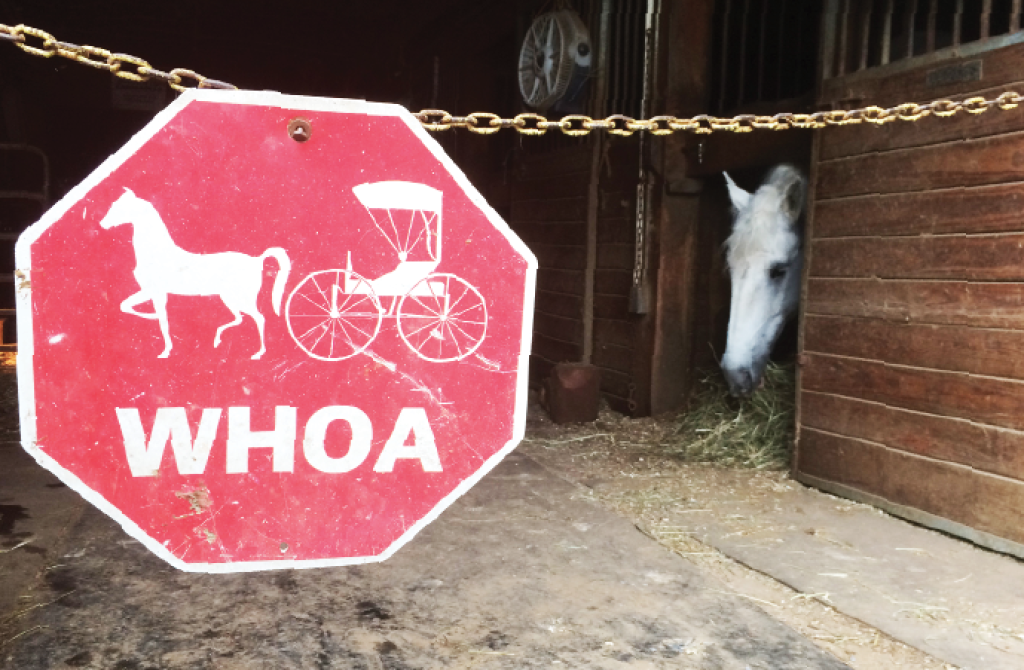
One day, Lamke, who had minored in business, approached his father with an idea. “I said to my father, ‘You know what Harrisburg doesn’t have? Harrisburg doesn’t have any horse-drawn conveyance.’ He said, ‘Were you drinking?’ I said, ‘Well, yeah, I was drinking.’ He said, ‘Well, go sober up.’” But Lamke continued to nurse the idea, convinced it could work in the city. He eventually befriended an Amish man at a carriage auction who agreed to give him driving lessons. After a year and a half of training, he bought a horse and a vis-à-vis, a style of carriage in which passengers sit facing each other on opposite benches. In May 1984, Lamke registered the Harrisburg Carriage Company with the state corporations bureau.

Over the next few years, the business grew. By the summer of 1991, according to an article in the Patriot-News, the company had five horses and three carriages. That April, it had also moved to a new home—a carriage house newly constructed on City Island, which Lamke shared with the police department’s mounted patrol. In the several years prior, then-Mayor Stephen Reed had made the revitalization of the island, which he once described as a “long unused and blighted 63-acre land mass,” a major priority. A visitor pamphlet from the early 1990s highlighted the many facets of the island’s revival: a riverboat, a miniature golf course, a nature walk, the Senators baseball team. Among the photos was a shot of the carriage house at sunset, a crisply painted white carriage in the foreground being drawn by a sleek brown horse.

The company is the city’s only horse-drawn carriage service, and three decades after its founding, it remains something of a Harrisburg institution. It maintains an active Facebook page, where it posts photos of the occasional customer, most often a bride and groom or a couple who just got engaged on the ride. In September, one of Lamke’s carriages bore the coffin of Elijah Massey, a retired city police captain, in his funeral procession. “Fabulous people and lovely horses,” one person wrote in a five-star review. “Harrisburg is a beautiful location for a ride along the river.”

Yet the company’s relationship with the city, especially in recent years, has been far from ideal. Last month, in response to inquiries by TheBurg, the city furnished several records relating to the company. Together, they reveal a history of complacency and neglect dating back at least seven years. Lamke’s operating permit expired in 2008, making Mayor Eric Papenfuse’s administration the third in a row that has failed, at least so far, to renegotiate or renew it. The terms of the permit are generous—for the use of the carriage house, a nearby “corral and staging area” and multiple personal parking spaces, all of which were constructed and maintained at city expense, the Harrisburg Carriage Company pays a monthly fee of $100. (As a point of reference, the monthly rate for a single City Island parking space is $125.) Nonetheless, in 2010, after Mayor Linda Thompson took office, Lamke stopped paying this fee; he is currently more than $6,000 in arrears.

Part of the problem is a willful confusion of government and business functions. Lamke has been a city employee for nearly as long as he has provided carriage rides—he started working as Harrisburg’s animal control officer in 1985. He appears to use the carriage house as a remote office; both of the city’s animal-control trucks are frequently parked outside, whether or not he’s on duty. The city dissolved its mounted patrol unit in 2008, and since then Lamke has had exclusive use of a property that was once shared with a public entity. Papenfuse, contrasting Lamke’s permit with those of other City Island vendors, described it as “singularly problematic.” You “shouldn’t have a city employee renting from the city. Shouldn’t have a city employee in contract with the city for a private enterprise,” he told me. “That’s wrong.”

Last month, TheBurg reported on efforts to revitalize City Island. This year, the Papenfuse administration has reopened vendors’ permits, raising questions about the proper relationship between businesses and a government that wants to encourage them. The Harrisburg Carriage Company offers a case-in-point of how that relationship can go awry.

Among the records produced by the city were two letters addressed to Lamke from 2013, the last year of the Thompson administration. The first was dated Jan. 22 and signed by Brenda Alton, Thompson’s parks director. In the letter, Alton wrote she was “making a personal effort to inform myself about the businesses on City Island.” She noted Lamke’s expired permit term and the delinquent payments, but didn’t make any demands, aside from gently requesting a meeting. The second letter was signed by the city solicitor and dated in June. It described Lamke as “in default” and included language about the city’s right to evict. It’s not clear whether this second letter was ever sent; the version the city provided appears to be a draft.

“That one did not get resolved,” Alton, who left the city in early 2014, told me. “I worked with the police department, tried to get information, tried to work with Fred Lamke. I just couldn’t figure out what the relationship was.” Alton said that, in an effort to be “fiscally responsible on behalf of my department and the citizens,” she had tried to go through all of the island permits and ensure they were up-to-date. In many cases, she found the written permits unclear and gradually learned that several of the vendors had “verbal agreements” with the prior administration. She said that, in most cases, she was able to resolve her questions, but in the case of the carriage company it was “difficult to get the answers I needed.”

To some extent, the city may also have been falling short of its own obligations. The carriage house has badly deteriorated from the gleaming facility in the pamphlet from the ‘90s—the paint is peeling and dingy, vegetation sprouts from the gutters, and there’s a substantial hole in the roof, patched with plastic bags and moldering plywood. Inside, thick cobwebs hang from the rafters. It’s not obvious from the permit who should be held responsible. On the one hand, the permit refers to the company’s duty to repair any damage it causes, but on the other, it’s explicit that the house is city property and that it has been constructed at the city’s “sole expense.” Additionally, the city has neglected the fenced-in paddock the company uses for the horses’ exercise. Jenise Mattern, who volunteers at the stables six days a week, said a missing section of fence, drainage ditches leading from the ballpark and unchecked weeds have made the paddock unsuitable for the horses. “The city doesn’t keep up with it,” she said. The horses “need to get out for their health.”

This has also raised concerns about the safety and well-being of the horses. In May, I got an email from Annie Leguennec, an area resident who was worried the horses were being confined “inside their stable day and night.” A few days later, she posted complaints on the company’s Facebook page, challenging it over whether the horses received adequate time outdoors. The company, which currently keeps a total of eight horses, replied that it exercises them both in the City Island paddock and at a farm in North Annville. “For the safety of the horses, we only use the paddock on the island when there aren’t many people around,” the company wrote. (Aside from general animal cruelty provisions, there are no state laws regulating commercial providers of horse-drawn carriage services. A spokesman for the state public utility commission, which regulated the industry until 1990, said Lamke was issued a certificate in 1984 that was subsequently cancelled in 1989, after Lamke “was found guilty of failing to file his annual reports.”)

In June, after failing to reach him through visits to the carriage house and through Facebook, I reached Lamke by phone. It was around 8:30 in the evening, and he asked me to call him back in the morning, when he could give me his “full attention.” The next morning, he told me he “really can’t talk about anything.” “I’m just not permitted to talk,” he said, citing “longstanding city protocol.” I told him my questions concerned his private business, not his work as a city employee. He demurred, saying he could get fired for talking. (Joyce Davis, the city’s communications director, said there was no such prohibition; when I mentioned Lamke’s claims to Papenfuse, he said simply, “That’s not true.”)

When I first asked Papenfuse about the Harrisburg Carriage Company, he said he’d had conversations with Lamke as part of a “comprehensive review” of all the permits on the island. He described the expired permit and delinquent payments as a “bad situation” that his administration had inherited, though he also said, with regards to the city, “I don’t think we’ve lived up to our responsibilities, either.” He added that he saw the “concept of carriage rides” as a “good thing for Harrisburg.” “I think the city has some interest in hopefully preserving that,” he said. “I think once it’s gone, it’s going to be unlikely it will ever come back.” He also said he was still collecting information and asked me to follow up.

Several days later, I asked him about the company again. This time, Papenfuse said the city was on the brink of sending a letter—Lamke would be asked to fully repay his delinquent fees within 30 days or else cease operations on the island. The city would devote the proceeds to restoring the carriage house, he said, with the understanding that it needed to receive timely rent in order to keep up with maintenance on its end. Meanwhile, Lamke, like the other vendors, would be given a one-year permit renewal until new terms could be negotiated. Neil Grover, the city solicitor, referred to these permits as “holding the status quo” while the city examined the island’s economics and plans for future development.

When I spoke to Alton about the island, she expressed regret that she hadn’t been able to make more progress there. “I always thought City Island could be more and could be bringing in more revenue,” she told me. She blamed herself, saying she never seemed to have enough time, but she also thought the vendors bore some responsibility. “Everybody seemed to want their piece of the pie, but they failed to remember it was the city’s property, that some revenue needed to come back to the city.” She said she believed the island could be an attraction like Baltimore’s Inner Harbor, if it just had the right development. “But we never had the opportunity to look forward,” she said. “We were always putting out fires.”


Continue Reading

Bringing Up Baby: Puppies are adorable, but exercise caution before adopting one.

Screenshot 2015-06-27 12.23.34People often come to me seeking advice on their next dog. Sometimes, before I even have a chance to respond, they will inform me that they want a puppy.

As a Certified Pet Dog Trainer and American Kennel Club evaluator, I can tell you that most of those people end up regretting that decision. Before buying or adopting a dog from any place, thought and consideration need to be taken into the animal’s health and welfare, as well as the cost to feed, train, board, groom and provide veterinary care.

Right Fit

A reputable animal rescue will be informative on all these issues, as well as know the dog’s personality because it has been properly assessed. A reputable breeder will supply the same information and the same support as a reputable rescue, but most purchasers are unaware of what constitutes a “reputable breeder.”

Reputable breeders will be listed or registered with an organization such as the American Kennel Club and will have references, as well as information on their breeding practices and breeding lines. They will have health certificates for their dogs and proper vaccinations. They will have a valid kennel license. The sire or dam will be on site, and only a few litters will be bred a year.

Most reputable breeders also keep their dogs and puppies as members of the household. The breeder will want to stay in contact with you because they care where the puppy ends up and the quality of life it will have. So, they will want to screen potential buyers to make sure the match is a good fit and the dog will not be sold or given away.

Why all the hassle? Unfortunately, many dogs end up in rescues or in shelters due to people purchasing a puppy and then deciding that it is not going to work out. Regrets and excuses are plentiful, but the real reason is that the dog was not what the person expected. Puppies grow, and they chew things, and they urinate and defecate on your stuff, and they require attention and training.

Puppies can be shaped and molded into what you want them to be, but it takes time, patience and training. The breeder will retain properly bred dogs so that there is time for the puppies to have the proper socialization and interaction with their littermates. They will be housebroken, and they will have received their shots and be de-wormed prior to leaving the breeder. It is not uncommon for a reputable breeder to keep the litter together until the dogs are 12 weeks or three months of age.

Other factors to consider when purchasing a puppy include where you live, your lifestyle, who comes and goes from your household and the other animals already living there. You must ensure that the breed of puppy is compatible with the conditions in your home. For example, a hound dog may not be the best match for someone who lives in an apartment or in a house close to other houses because the breed tends to be very vocal. There are exceptions in every breed, but an informed decision should be made rather than one based on impulse.

Research, Research

The Internet is a great source of information for all things puppy dog.

Websites like www.akc.org have listings for breeders that are reputable, as well as information on the different breeds of dogs. A dog show also is a great place to meet breeders. Animal rescues have puppies, too. And, at local adoption events at pet stores, you can meet the puppy and speak to the volunteers about the health and behavior of the dog. Petfinder.com is a great site for finding dogs. It does not always list puppies, but it is a way to find a local rescue organization and begin the search.

To sum up: Before buying a puppy, careful thought and consideration should be taken into what you are committing to, where the dog is coming from and how the relationship develops for the duration of its lifetime. Puppies are fun and adorable. If they come from a reputable source, they then can be a wonderful addition.

Amy Powell is a dog trainer and, since 2004, owner of Doggie U, LLC. For more information, visit the Facebook page: Doggie U LLC.

Continue Reading

Step Right Up: Sundae Best Variety Show wears something bawdy, something blue.

Screenshot 2015-06-27 12.27.45There’s a place in Harrisburg where the drinks flow, everyone is invited, and the popcorn is always free. Oh, then there’s the vaudevillian floorshow, which is probably unlike anything you’ve seen this side of the Susquehanna.

Whether you’re looking for a place to show off your underappreciated talents or you’re more of a spectator wondering where all the fun people are, the Sundae Best Variety Show at Stallions Club in Harrisburg is the place to be on the first Sunday night of every month.

The inaugural show kicked off in March and has been drawing a growing crowd since. The show’s hosts and creators, who go by the names of Felicia O’Toole and Maxwell Treats, have lovingly curated a night to remember, welcoming any and all who wish to participate. The variety show features a mélange of as many as eight acts loosely competing for top prizes.

O’Toole explained that the concept for the variety show came to her after seeing a similar show at the Blue Moon Bar in Pittsburgh.

“I thought it would be a good idea to start something like that in Harrisburg,” she said. “There are a lot of people that don’t do drag and don’t have an outlet for what they do.”

Acts have ranged from drag and standup comedy to burlesque and pole dancing. And then there’s the halftime show that often includes off-the-wall slapstick routines by O’Toole and Treats, along with gloriously campy musical numbers and special guest performances.

For a $5 cover, the audience also can vie for some of the spoils by participating in random games throughout the night. Anything goes, short of nudity or fire.

“We just started a partnership with Athena’s by Jim, which is a sex toy and other retailer,” said Treats. “We’ve also been giving out tchotchkes like piggy banks or a 99-cent pregnancy test.”

Similar Wavelength

For the Treats and O’Toole, Stallions is the perfect place to mount a show like this, as the club’s patrons tend to be open to their kind of humor and entertainment. Besides, the pair met while O’Toole was performing there.

“I feel like we’re on a similar wavelength with the style of drag that we do, which is a little bit out of the box for this area,” said Treats. “I try to do things that are fun and silly, but also kind of perverse in an unexpected way.”

Treats described drawing inspiration from older strains of drag like the gender-bending Cockettes, a California-based avant-garde group from the 1960s and ‘70s that worked with director John Waters and his muse, Divine, at one point.

“When I put my makeup on, that kind of decides who I’m going to be that evening,” said Treats.

For O’Toole, inspiration comes from all over—and when least expected.

“I never know when it’s going to hit me,” she said. “When I started drag, I really wanted to be larger than life. I wanted to be over the top, like huge hair, huge boobs, huge shoes, eyebrows up to Jesus. I’ve branched out from there, definitely. It just depends on the audience, the crowd, how I’m feeling.”

Immersive Experience

Audience members are encouraged to dress in their Sunday best and compete in a “Look Contest,” which is wide open to interpretation and may or may not match the night’s theme.

Everyone is invited to take part in the wide array of games and activities during intermission and after the show, which has included a photo booth with props, a can toss, giant Jenga and limbo.

O’Toole and Treats are also looking for artists and filmmakers to reach out to the show. One night’s theme, called “Out of the Toy Box,” featured an installation reminiscent of artist Mike Kelley’s work, in which hundreds of stuffed animals were sewn together and then mounted to the wall and ceiling.

“We want to create an immersive experience for people,” said O’Toole. “Not just a show every month. We try to take it to the next level. And we always have a movie showing that goes with the theme.”

“That’s what I’m hoping to expand on,” added Treats. “It would be amazing if someone had a short that they wanted to screen, and then we could screen it the whole night.”

The variety show has been gaining traction, developing a loyal crew of helping hands along the way. The show’s resident photographer, Billy Hicks, shot the first month for free just because he wanted to be involved.

“There are a lot of really great spaces in Harrisburg that are accessible to people who want to perform, but they’re very specific,” said Treats. “This show is nice because it gives you the freedom to experiment and workshop new ideas. But also, you have a wider audience range.”

“We want to turn into more of a collective,” explained O’Toole of their vision for the show’s future.

“I love performance art,” said Treats. “Just come on stage and do a weird ritual or shave your head or whatever you want to do in front of people. Confess your undying love to someone. I want people to know that everyone is welcome and everyone will be supportive of whatever it is you want to do.”

The Sundae Best Variety Show is held the first Sunday of the month at Stallions Club, 706 N. 3rd St., Harrisburg. For sign up and information, e-mail [email protected] or visit Facebook.com/SundaeBestVariety. Doors open at 8 p.m.; show at 9 p.m. Post-show activities go until 2 a.m.

Continue Reading

Good Dog, Big Dog: Mastiffs to Mutts focuses on the rescue, placement of large breeds.

Screenshot 2015-06-27 12.22.30Adopting a dog from Mastiffs to Mutts is not as simple as asking, “How much is that doggie in the window?”

Mastiffs to Mutts is an all-volunteer organization committed to placing mastiffs and other giant-breed dogs with families who will commit to them.

“You’re not just adopting a big dog, you’re adding a really large member to your family,” said Peg Benoit, president of the non-profit, which is based in Chambersburg.

Why large-breed dogs?

“Because many rescues only take small- and medium-breed dogs,” said Benoit. “Giant-breed dogs have special considerations. They cost more to feed and medicate than small dogs. And with groomers and boarders charging by the pound, it’s critical that adopters know the expenses they’re accepting responsibility for.”

Giant-breed dogs weigh 100 to 280 pounds, are 23 to 38 inches high, and cost upwards of $124 per month for food and flea/heartworm preventative medicine. They may need basic training, but they definitely need to continue to socialize with people and animals to prevent them from becoming overprotective.

Large dogs do not necessarily need a large, fenced yard, but they do need daily exercise to suit the individual dog’s need. For example, a senior English mastiff may simply need a daily walk around the block. A younger cane corso mastiff (Italian mastiff) may need several long walks per day or a good session of more vigorous activity.

No matter which giant breed you adopt, the dog needs to be kept indoors. Any dog that is isolated and tied outside can become aggressive. Dogs thrive when they spend time with their people, as they consider their family to be part of their pack.

What to Expect

Not just anyone is allowed to adopt a giant dog from Mastiffs to Mutts.

Each adoptive family is thoroughly researched prior to placement, as are the foster families who open their homes to the dogs temporarily. A volunteer will inspect the potential home for safety and pet-friendliness. The careful screening process involves background checks and proof of homeownership.

Volunteer investigators also verify from local shelters and pounds that the applicant hasn’t relinquished animals to them and that there is no record of “dogs at large” or similar violations. They also talk to the person’s references, veterinarian and neighbors.

“You can find out a lot of information from neighbors,” said Benoit. “It’s amazing what they’ll tell you. If an owner is away for weeks at a time or their current dogs are already constantly barking, that’s not a good sign. It’s important to know what kind of people want one of our dogs.”

Applicants who have previous experience with giant breeds is a positive, said Benoit.

“They already know what to expect and how to accommodate,” she said. “It speaks well of an applicant if their vet knows their name without looking at their records. It’s likely they have an ongoing relationship with that vet office.”

The Mastiffs to Mutts adoption committee reviews each adoption application and the details of each investigation. On the list of applicants ineligible for placement are minors, families with children under 6 years of age, renters and residents outside the mid-Atlantic area.

“If the committee believes, for any reason, that the dog would not be served by that family or individual, we deny approval,” said Benoit.

With a low 2-percent return rate, the process used at Mastiffs to Mutts has proven itself to be effective, she said.

Adoptive families pay $150 to $500 in adoption fees. All fees collected and donations accepted are reinvested into rescuing more dogs. Each dog receives food, preventative medicine and medical care (which includes spaying or neutering).

The rescue also regularly purchases bedding, toys, collars, leashes and crates. Some funding goes toward fostering and kenneling if no fosters are available. Other funding is used for more severe medical issues such as orthopedic surgeries, heartworm treatment, medical X-rays and diagnostic testing.

Both adopters and foster families will experience growth in their human families as a result of their new additions, said Benoit. Mastiffs to Mutts makes its wide network of pet support available: veterinarians, trainers, classes, pet-sitters, behavioral experts and other resources.

Together, the Mastiffs to Mutts network helps to make the placement successful and the transition as smooth as possible. Trainers volunteer countless hours via email and telephone to work with families whose dogs have behavioral issues.

“Dog people stick together,” said Benoit. “Rescuers, animal control—we all work together for the best interests of the dog. We’re available during and after the adoption to help the families and give guidance.”

If you think you have what it takes to add a giant-breed dog to your family, check out www.mastiffstomutts.com. You can view profiles and pictures of dogs eligible for adoption. You can also donate funds online. For additional information, you also can email [email protected].

Continue Reading

STEM Sell: Rubber bands today, engineers tomorrow.

Screenshot 2015-06-27 12.26.40

Maurice Cable

Maurice Cable held the glider in his hands. Hardly more than a foot in length, it had a measuring-stick fuselage, a red clay nose and Styrofoam wings cut to look like an eagle’s. “I know that eagles are really good at flying,” Cable explained. “They can glide, like, 20 minutes without flapping their wings.” He was similarly direct about the inspiration for the plane’s decal motif, of basketballs wearing crowns. “Basketballs are popular,” he said, “and kings used to get respect from people.”

Cable, a risingfifth grader, is one of nearly 300 Harrisburg-area students who participated last month in Summer Engineering Experience for Kids, a free, three-week summer camp held at Marshall Math Science Academy. The program, run by the National Society for Black Engineers, aims to attract minority students to the so-called STEM disciplines—science, technology, engineering and math—with a hands-on curriculum taught by mentors.

“Minorities are obviously severely underrepresented in STEM fields,” said Franklin Moore, the program’s national director. “We had to create a STEM pipeline.” Moore founded the program in 2007, with the first camp taking place in Washington, D.C. It has since expanded to 16 cities, including San Diego, Detroit, Chicago and, for the first time this year, Harrisburg.

On a Friday in June, at the end of the camp’s first week, a dozen or so students sat around a podium in a hallway at Marshall, intermittently smiling for the cameras. “The statistics prove that STEM fields are growing,” said Cheryl Capozzoli, who was hired last year as the school district’s STEM coordinator. “By 2018, there’s going to be an influx of STEM professions that we need to fill here in the United States.” She gave a quick sketch of the camp curriculum, which was built around three engineering projects—gliders, fuel-cell cars and “gravity cruisers,” simple vehicles powered by a weighted lever and fulcrum. At the end of each week, students would test their designs in competitions. “We could probably ask them,” Capozzoli said. “Are you having fun this week?”

Yeeeesss,” the students said in unison.

Each camp is staffed with between 40 and 50 mentors, whose stipends are paid, along with other program expenses, by a mix of national and local benefactors. Moore said that Gene Veno, who headed the state intervention in district finances until his resignation in the spring, was “instrumental” in raising money from sponsors, among them Siemens, PNC Bank, McClure Co. and PNG Energy.

“I love seeing the kids strive for excellence and seeing how excited they get about learning,” Joshuah Davis, a four-time mentor and the site director this year for the Harrisburg program, told me. Like most mentors, Davis has a science background—he holds a mathematics degree from Fort Valley State University and is completing a mechanical engineering degree at the University of Arkansas. “My first year as a mentor, I had a lot of kids start crying the last day of camp because they didn’t want to leave,” he said. “We didn’t realize, you know, we really touched the kids like that.”

“It’s important for these young people to see that there are other African-American men and women out there who came from the same kinds of backgrounds that they come from and yet have taken that extra step to engage themselves in this rigorous study of engineering and sciences,” said Joseph Robinson, Jr., president of the Martin Luther King, Jr. Leadership Development Institute, a local nonprofit that helped bring the program to Harrisburg. “I don’t know whether we’ve got a George Washington Carver sitting here on the floor,” he said, “but I know we’ve got some future scientists and engineers sitting right here at this press conference.” On the floor, students straightened their backs and refreshed their smiles.

Later that afternoon, the cafeteria reverberated with the din of some hundred or so students in team colors—red, yellow, blue and green. They took turns firing their gliders from a rubber-band launcher into a landing strip marked off with tape on the tile floor. A series of contests tested the gliders for distance, height, hang time and accuracy. As the green team fitted its aircraft into the launcher, a prayer wafted up from the red team’s benches: “Please don’t make it go so far.” The first shot was a dud: the rubber band snagged, the glider tumbled down, and the young man operating the launcher looked profoundly disappointed. But on the second shot, his teammate sent the glider nearly to the opposite wall. The room erupted.

“We try to teach them with having fun,” said Sierra Butcher, a first-time mentor from Wilmington, Del. She beckoned to Cable, who came over to explain how he resolved his glider’s early design flaw—too much clay. She engaged him in a brief, Socratic exchange:

“What force is the clay?”

“Weight,” Cable said.

“OK. And what is another name for weight?”

“Mass.”

“So, what happened when you took the clay off?”

“It got lighter and it flew farther.”

Butcher said that students had learned the NSBE mission statement, which Cable rattled off on demand: “To increase the number of culturally responsible black engineers who excel academically, and succeed professionally, and positively impact the community.” Asked whether he wanted to become a scientist, though, his answer was more informal. “Yeah, I guess so,” he said. “I’m still working on it.”

Continue Reading

Driving Change: Will Harrisburg ever get a reliable mass transit system?

Screenshot 2015-06-27 12.17.41After five years of city living as a pedestrian, I got a car.

It was not a purchase I made willingly. In fact, it pains me that I had to give in to acquiring a convenient mule for my travels. I was triumphant years ago when I sold my previous one, delighted to be able to walk most places I needed to be. I thought nothing of a 20-minute trip by foot, there and back. If I had to get somewhere outside of that range, I begged a ride or took the bus, but, over time, the challenge of getting from A to B to A to C to B to A has become greater.

The most frustrating part of having to get a car is that I don’t need it to go to places outside of the city since I don’t really do that often.

No, I need it to trek around the city.

That’s because Harrisburg has such inconvenient means of travel if you don’t have access to a vehicle (see my previous “Road Ramble” article [TheBurg, March 2014] to hear what I think of driving improvement needs around here. All of these one-way streets? This city needs to reconfigure!).

Sure, there are buses, taxis and the recently added Uber service. However, those are not the most efficient or most cost-effective ways if I need to get from my upper Midtown office to downtown to Midtown to Allison Hill and back to my starting point, which is exactly how my days are increasingly going. Never mind what any naysayer says—there are many things to do, see and engage in all around the city.

Okay, so I may have more complicated travels than the average person. While I wouldn’t be so sure of that, the city’s deficient transit system is glaringly obvious even in simpler journeys.

Say, for instance, a person wants to go from Uptown to Allison Hill, there and back, for a visit to Hamilton Health Center or Matangos Candies. To walk it is a crisis of crossing Cameron Street, going up hill, and battling broken sidewalks and steps.

These perils are similar for bike riders and skateboarders. This is even more so if said cyclists and skaters are attempting to share the road, which is where we all know they should be—on the street. However, the take-one’s-life-into-one’s-own-hands element of trying to travel alongside vehicles around here results in these un-motorized wheels on the sidewalks. And the result of that is another peril for pedestrians.

A bus trip requires a transfer, which means getting on one bus, going to the Market Square Transfer Station, and getting on another bus. The only circuit route in the city goes from City Island and circles the downtown Central Business District. It’s clear that route isn’t designed for residents as much as it is for commuters.

Then there’s just the plumb unreliability of the bus system. We’ve all seen the people standing in the middle of the street, peering down the road for an anticipated bus running late. It’s also worth pointing out that it can be quite uncomfortable for riders to wait on a bus. Few bus stops have benches or even trees to cut the heated wait.

A taxi cab? Uber? Yes, those are options and ones that can be expensive, especially if these are the only means of travel, especially for work. And, quite frankly, although these services are increasing and getting better in regard to reliability, they don’t make up for the lack of reliable, safe, convenient and inexpensive options in Harrisburg.

In fact, these options can be so expensive and so unreliable that employers will sometimes ask prospective employees about their means of travel to and from work. If someone doesn’t have a vehicle or access to one, chances of being hired can be adversely affected.

Of course, I’m not the first person to call for better mass transit, for safer shared roadways or for a better pedestrian setting. I’m certainly not the first to write about it, and I’m also not the only one to point to other cities and say, “Come on! What’s the hold up? Look at what they’re doing there, and Harrisburg is such a small city. Let’s fix this broken system and provide the residents with better transportation options. We’re a city after all.”

When I do say that, I hear a gamut of reasons why things haven’t changed—from federal bureaucracy to union issues to lack of money to lack of desire.

Bollocks, I say. All of those things can be overcome.

So, it begs the question, what will drive change? Yes, pun intended.

Tara Leo Auchey is the creator and editor of today’s the day, Harrisburg. www.todaysthedayhbg.com

Continue Reading