TheBurg Podcast, Nov. 6, 2015

Welcome to TheBurg Podcast, a weekly roundup of news in and around Harrisburg.

Nov. 6, 2015: This week, Larry and Paul talk about the “Find Your Way Here” city marketing campaign, which the tourism bureau unveiled Thursday night with or without – OK, without – the mayor’s blessing. Then they discuss a stalled development in Midtown, the results of Tuesday’s municipal election and Paul’s November feature on the defunct revolving loan fund.

Special thanks to Paul Cooley, who wrote our theme music. Check out his podcast, the PRC Show, on SoundCloud or in the iTunes store.

TheBurg Podcast can be downloaded by clicking on the date above or by visiting the iTunes store. You can also access the podcast via its host page.

Continue Reading

TheBurg Podcast, Oct. 30, 2015

Welcome to TheBurg Podcast, a weekly roundup of news in and around Harrisburg.

Oct. 30, 2015: This week, Larry and Paul nurse a trick-or-treating hangover by talking about the ongoing negotiations between Mayor Papenfuse and the tourism bureau and another court ruling on the lawsuits over the city’s gun laws. Plus, a call for help from Harrisburg police on an unsolved murder, a new Burg issue and the city’s first distillery since Prohibition (we think).

Special thanks to Paul Cooley, who wrote our theme music. Check out his podcast, the PRC Show, on SoundCloud or in the iTunes store.

TheBurg Podcast can be downloaded by clicking on the date above or by visiting the iTunes store. You can also access the podcast via its host page.

Continue Reading

Conflict and Interests: Is confrontation an effective governing strategy?

Illustration by Rich Hauck

Illustration by Rich Hauck

A few years back, then-ordinary citizen Eric Papenfuse introduced me to the works of Paul Beers.

Papenfuse had selected a series of essays by the former Patriot-News columnist as the inaugural title for his just-formed Midtown Scholar Press, and, to celebrate the book’s publication, held a series of events at his bookstore.

At the time, I had scant knowledge of Beers, who had recently died, having left the newspaper business some years earlier. The book, “City Contented, City Discontented,” reprinted a series of columns that he had penned for the Patriot, each one transformed into a short, punchy book chapter that offered a tutorial (with Beers’ cynical slant) of the city’s history over about 100 years.

It’s all there: the rapid rise, the concentrated wealth, the struggles, the flood, the fall. But, to me, the most fascinating chapters were near the end, the ones that focused on former Mayor Steve Reed.

Reed had been mayor for just two years when Beers wrote his last column, but he captured perfectly both the promise and the peril of the man who eventually would reign for seven terms.

“This columnist has heard hundreds of curbstone and barroom opinions that place Reed anywhere between Herod and St. John the Divine, but never a satisfactory explanation of who the man is,” Beers wrote.

He went on to point out what he considered to be Reed’s virtues—a quick mind, an unfettered optimism, confidence, creativity and a commitment to hard work—as well as his perceived faults—an all-knowing attitude, a stubbornness, a Machiavellian streak and a predilection for conflict over compromise.

Beers described a man of extremes, one who possessed both great strengths and tremendous weaknesses. So, Reed was a whirlwind of action, but was given to impetuousness and lack of preparation. He was pragmatic, yet “mulish.” He had sound ideas, but possessed an “irritating all-knowingness.” He wasn’t taken by flattery, but always insisted on asserting himself as the smartest man in the room.

Beers would not be the last journalist to analyze (psychoanalyze?) Steve Reed, but I think it’s fair to say that, over time, Reed allowed his weaknesses to overwhelm his strengths. By the end, he was left fighting a rearguard action to keep the city from financial collapse, his most evident traits no longer his optimism or his ability to get things done, but his arrogance, pugnaciousness and tendency to blame anyone but himself.

We’re now almost two years into the tenure of Mayor Papenfuse, the man who encouraged me to read “City Contented, City Discontented.” In other words, we’re at about the same place in his mayoralty as when Beers wrote about Reed.

I have stated in the past that Papenfuse and Reed are very different men, and, indeed, they are. Whereas Reed was condescending and didactic, Papenfuse is more frank, straightforward and accessible. Whereas Reed was obsessed with a pharaonic vision of great projects at tremendous cost, Papenfuse believes that putting the city on a sustainable financial course is about the best thing he can do.

I find, however, that these two different men (and, let’s face it, bitter enemies) do have some things in common. Both are whip-smart and are willing to take big risks; both can be obstinate and perhaps too quick to make enemies.

“The mayor can be divisive, accusatory and possessive, an infighter who often prefers confrontation to conciliation,” Beers wrote of Reed.

More than 30 years later, largely the same can be said of Papenfuse.

In his columns, Beers tells of an early (now largely forgotten) battle over a new convention-grade hotel for Harrisburg. The circa-1983 brawl pitted Reed against two of the city’s most important actors and power centers, Harristown Enterprises and City Council, in a struggle over how to construct and finance what would become the Hilton Harrisburg.

That skirmish reminded me of the current contretemps over the National Civil War Museum. Papenfuse believes deeply that the museum is a liability—that it takes money from the city and gives little in return. He’s even called the museum “a monument to corruption” and said it should be shut down entirely.

His fight against the museum, however, has not gone over well with other powerful players, including the county commissioners, the regional visitor’s bureau and some key business leaders. The heat was turned up further last month when the visitor’s bureau said it would use its share of hotel tax money to implement, without the administration’s involvement, a marketing plan for the city, leading Papenfuse to denounce both the bureau and the Harrisburg Regional Chamber & CREDC.

While I respect Papenfuse’s position on the museum, I don’t believe that this issue (and the use of hotel tax money in general) is worth going to the mat for, poisoning relationships with people and entities that the city needs as its allies.

His relationships with certain City Council members have become similarly fraught. Papenfuse and council President Wanda Williams can hardly hide their mutual contempt, and his rapport with the school board is also bad.

When Papenfuse first became mayor, he went on something of a goodwill tour, saying he wanted to have friendly relationships with everyone.

At the time, I told my colleague: “Don’t be fooled. That old firebrand is still in there.” And, increasingly, Papenfuse has shown little patience for those he believes cooperated too much with Reed, facilitating the city’s demise, or for those he believes stand in the way of his initiatives now.

“This Harrisburger should be honored for having some of the enemies he has,” Beers said of Reed.

Papenfuse is making enemies quickly. Should he be honored, as Beers suggested with Reed? Is embracing conflict a sustainable strategy for getting things done?

If there is a lesson to be learned from the Steve Reed years, it may be this: Build upon your strengths, minimize your weaknesses and don’t let your flaws come to define you.

Lawrance Binda is editor-in-chief of TheBurg.

Continue Reading

Community Corner: Notable Events in November


November Community Corner
 
Leads Over Lunch
Nov. 3: Mix and mingle with business leaders at this free lunch hosted by Harrisburg Regional Chamber & CREDC, at AACA Museum, 161 Museum Dr., Hershey, 11:30 a.m. to 1 p.m. For more information, visit harrisburgregionalchamber.org.

Religion and Pop Culture
Nov. 3: Gregory Alan Thornbury, president of The King’s College, will address the topic “Kanye’s Temple: The Hyper-Religiosity of Pop Culture” at 7:30 p.m. in Parmer Hall, in the Calvin and Janet High Center for Worship and Performing Arts at Messiah College. Admission is free, but a ticket is required. For tickets, call 717-691-6036 or visit messiah.edu/tickets.

Economic Forecast Luncheon
Nov. 4: The West Shore Chamber and People’s Bank will host the Economic Forecast Luncheon, an annual event featuring an economic expert to share insights on the previous year and predict trends for the upcoming year. The event takes place at the Radisson Hotel Harrisburg in Camp Hill. Cost is $35 for members and $45 for nonmembers. For more, visit westshorepacoc.com.

Art Lecture
Nov. 5: The Susquehanna Art Museum and Southeastern Pennsylvania Section of the American Chemical Society present “Scientific Analysis of Triumph of David,” a lecture by Dr. Anthony Lagalante about the restoration of Villanova University’s 17th century masterpiece, 7 p.m. at the museum. Advance tickets are $5; space permitting, tickets will be $8 at the door. Visit sqart.org for more information.

Friends of Wildwood Meeting
Nov. 5: Friends of Wildwood holds its annual meeting, which will review the past year’s activities then present “Herons in the Hood” with guest speaker Pam Parson. The event, which is open to the public, takes place at 6 p.m. at the Olewine Nature Center. More information is at wildwoodlake.org.

Biocontrols School
Nov. 5-6: Penn State Extension Cumberland County will host its third annual BioControls School at Lancaster Farm and Home Center, 1383 Arcadia Rd., Lancaster, 9 a.m. to 4 p.m. The program is designed to help organic and conventional farmers build expertise in effective biological control of insects, mites and diseases. The cost is $145 per person until Nov. 3, after which the cost is $175. Registration for single days is also available at $95. For additional information and to register online, visit extension.psu.edu/vegetable-fruit/events.

Dedication and Dinner
Nov. 6: Cedar Cliff High School JROTC, Camp Hill, will host a Heroes’ Landing, honoring Cedar Cliff graduates who died in the armed forces, at 2 p.m. at the Cedar Cliff High School Auditorium. The 5th Annual Veterans Day Spaghetti Dinner will follow from 4:45 to 6:45 p.m. Veterans are free and guests are $7. For more information, call 717-737-8654, extension 223.

Market Square Concert
Nov. 7: Pianist and composer Michael Brown and cellist Nickolas Canellakis will perform “Sonata for Cello and Piano” by Rachmaninoff and compositions by Mendelssohn, Schumann and Janáček at Market Square Presbyterian Church, 20 S. 2nd St., Harrisburg, 8 p.m. For tickets, visit marketsquareconcerts.org or call 717-214-ARTS or 717-221-9599. Remaining tickets available at the door.
 
Self-Directed Education
Nov. 8: The Circle School will host a free multi-media presentation and panel discussion from 2 to 4 p.m. to introduce children, teenagers, parents and educators to self-directed education. Refreshments will be served and limited childcare is available. Event takes place at the school, 210 Oakleigh Ave., Harrisburg. Visit CircleSchool.org or call 717-564-6700 to register.

Second Sunday at the Mansion
Nov. 8: The Historical Society of Dauphin County will host a presentation on Simon Cameron by the Rev. Robert Lescallette, 2:30 p.m. A suggested donation of $5 is requested. Admission is free for members of the Historical Society. A guided tour of the Harris-Cameron Mansion will be offered at 1, 2 and 3 p.m. Free parking is available. For more information, call Nicole McMullen Smith at 717-233-3462.

Young People and Politics
Nov. 9: Pennsylvania Women’s Forum presents “Why Young People Pass on Politics and How to Engage Them,” a conversation with Jennifer Lawless, Ph.D., at Widener University Commonwealth Law School, Harrisburg, 12 to 1 p.m. Admission is $15; students are $10. Register at pawomensforum.org.

Narrow Gauge Railway Presentation
Nov. 10: Harrisburg Chapter of the National Railway Historical Society will host Trains Magazine correspondent Wayne Laepple, who will discuss and present photos of the 2-foot gauge Wiscasset Waterville & Farmington Railway Museum, one of Maine’s legendary “two-footers” at Hoss’s Restaurant, 743 Wertzville Rd., Enola. Business meeting and speaker begin at 7 p.m., with a meal available as early as 5 p.m. For more information, contact Sloan Auchincloss at 717-238-2131.

2015 Business Expo 
Nov. 12: The Harrisburg Regional Chamber and CREDC will host the 29th annual Business Expo at the Pennsylvania Farm Show Complex, 2300 N. Cameron St., Harrisburg, from 8 a.m. to 3 p.m. Bring your business card for free admission; without a business card, admission is $5. Visit www.harrisburgregionalchamber.org for more information.

Foreign Film Friday
Nov. 13: Join Fredricksen Library for “The Attack,” a film about an Israeli-Palestinian surgeon, fully assimilated into Tel Aviv society, whose life turns upside down after a suicide bombing in a restaurant leaves 19 dead. Two showings are scheduled for 2 and 7 p.m. Rated R. Visit fredricksenlibrary.org.

The King’s Singers
Nov. 13-14:Lebanon Valley College will host The King’s Singers, one of the world’s premier all-male a cappella groups, for a two-day campus residency.The residency includes a free concert on Nov. 13 at 7:30 p.m. in Lutz Hall of Blair Music Center, two workshops on Nov. 14 at 11 a.m. and 2 p.m., and a group sing-along at 3:20 p.m. For more information, visit www.lvc.edu.

Volunteer Work Day
Nov. 14: Help beautify Wildwood Park by volunteering for a few hours. Meet at the Nature Center starting at 10 a.m. Snacks, tools and gloves provided. Visit wildwoodlake.org.

FAB 2015
Nov. 14: LGBT Center of Central PA hosts its annual Fall Achievement Benefit, which is a principal fundraiser for the center. The black-tie optional evening features a silent auction, a cocktail hour, awards and more at the Lancaster Marriott at Penn Place, 25 S. Queen St., Lancaster. For more information, visit fab.centralpalgbtcenter.org.

Cartoon Presentation
Nov. 15: The Harrisburg Jewish Film Festival will host “Very Semi-Serious,” a documentary about the cartoons and cartoonists of The New Yorker magazine, with guest speaker Mort Gerberg, at the Jewish Community Center, 3301 N. Front St., Harrisburg, 6 p.m. Tickets are $10 at the door. For more information, visit www.hbgjff.com.
 
Business Networking Mixer
Nov. 17: Join the Central Pennsylvania Gay and Lesbian Chamber of Commerce for a business networking mixer with Harrisburg Gay Men’s Chorus and Central Pennsylvania Womyn’s Chorus at the Krevsky Center, Theatre Harrisburg, 513 Hurlock St., 6 to 8 p.m. Visit cpglcc.org for more information.

Evening Mixer
Nov. 18: The West Shore Chamber of Commerce will hold its monthly evening mixer at Creative Elegance Boutique, 2129 Market St., Camp Hill. The event runs 5 to 7 p.m. Visit westshorepacoc.com for more information.

Business After Hours
Nov. 19: Mingle with business professionals at this free networking event sponsored by the Harrisburg Regional Chamber and CREDC. This month, the event takes place at Members 1st Federal Credit Union, 5000 Louise Dr., Mechanicsburg, 5 to 7 p.m. Visit harrisburgregionalchamber.org.
 
3rd in The Burg
Nov. 20: Enjoy the best of Harrisburg during 3rd in the Burg, the monthly arts and culture event at galleries, restaurants and art spaces throughout downtown and Midtown. Check out all the action at thirdintheburg.org.
 
Local Lunch
Nov. 21: Join Friends of Midtown at their monthly community lunch, which will be held at the Midtown Tavern, 1101 N. 2nd St., Harrisburg, 12 to 2 p.m. Contact [email protected] or visit friendsofmidtown.org.
 
Holiday Parade
Nov. 21: “Childhood Memories” is the theme of this year’s holiday parade in Harrisburg, with the Red Land Little League Baseball team serving as grand marshal. The parade steps off at noon from City Island and winds through downtown. More information is at harrisburgpa.gov.
 
Wildlife Tree Ornaments
Nov. 21: Penn State Master Gardeners in Cumberland County will host a “Wildlife Tree Ornaments” workshop for youth at the Cumberland County Extension office, 310 Allen Rd., Carlisle, 10 a.m. to 12 p.m. Workshop fee is $5 per child. Call 717-240-6500 to register and pay ahead of time or register and pay at the door on the day of the event. Visit extension.psu.edu/cumberland.

Holiday Market
Nov. 21: Shop at the HBG Flea holiday market for gifts by local artists, artisans and vintage collectors in the Capital Ballroom@HMAC, 1110 N. 3rd St., Harrisburg, 10 a.m. to 4 p.m. Visit hbgflea.com for more information.

Art Auction
Nov. 21: Support the cause of art and arts education in Harrisburg at an auction to benefit Sprocket MuralWorks, CASA & Jump Street. Both silent and public art auctions will be held, 5 to 8 p.m., at The Millworks, 340 Verbeke St., with all funds going to the three groups. More information is at millworksharrisburg.com.

Silent Auction
Nov. 21: Join Fredricksen Library, 100 N. 19th St., Camp Hill, for its annual silent auction, 1 to 4 p.m. Items up for bid include books, children’s items, gift certificates, artwork, travel and restaurant gift cards. More at fredricksenlibrary.org.

American Foreign Policy
Nov. 23: Former U.S. Deputy Secretary of State William J. Burns will speak on “American Foreign Policy in the 21st Century” at the West Shore Country Club in Camp Hill. Hosted by the Foreign Policy Association of Harrisburg, this event includes a reception at 5:30 p.m. and dinner at 6:30 p.m. The cost is $35; reservations deadline is Nov. 9. Visit fpa-harrisburg.org.

Small Biz Saturday
Nov. 28: Celebrate Harrisburg’s local businesses on Small Business Saturday with a trip to the Broad Street Market. Friends of Midtown will have for sale its new 2016 Shop Midtown Coupon Book, full of bargains from local businesses, 10 a.m. to 2 p.m. For more information, visit the Friends of Midtown Facebook page or friendsofmidtown.org.

Odd Ones
Nov. 28: The Odd Ones Bizarre returns for its 10th year, offering fun, funky and handcrafted items for the holiday season. Dozens of crafters and creators will sell their wares at The Millworks, 340 Verbeke St., Harrisburg, 11 a.m. to 5 p.m. For more information, visit the Facebook page: Odd Ones Holiday Bizarre.

Continue Reading

Raise the Curtain: This month, Gamut will debut its new theater.

Screenshot 2015-10-30 12.36.52It takes a village, so the saying goes.

But in the case of Gamut Theatre, it took a village and volunteers and craftsmen and cash, as Harrisburg’s classic theater this month debuts its new, permanent home in the historic, former First Church of God, moving out of long-time rental space in downtown Strawberry Square right across the street.

The new theater will open with one main stage, but eventually will be home to two performance venues and more classrooms as it continues to expand both in show offerings and education programs.

“In addition, there will be a small stage in the reception lobby for poetry, singer/songwriter events and other smaller presentations,” said Melissa Nicholson, executive director of Gamut Theatre Group. “We are proud to preserve much of the original architecture and be caretakers for the rich history that accompanies it. It is, in my opinion, the perfect place to perform classic stories.”

Gamut relied on more than 150 volunteers (many with day jobs) who donated some 5,700 hours designing and constructing. The core company of actors worked nights and weekends since August to assure the theater will open on Nov. 5 for a private preview party for donors. On Nov. 6, there will be a ribbon cutting with Mayor Eric Papenfuse and an open house for the community. The next evening is the grand opening of the theater’s production of Shakespeare’s “Twelfth Night.”

To date, the theater has raised more than $1.3 million of the $2.5 million needed to complete the project—all of this without the aid of a professional fundraiser.

“We currently have an ask into the PA Redevelopment Assistance Capital Program to cover the Phase I gap in fundraising and to fund Phase II,” Nicholson said. “Phase II will develop the second stage/education center part of the building.”

“All the world’s a stage,” wrote Shakespeare. And, for Gamut, a new stage means a whole new world ahead.

 
The new Gamut Theatre is located at 15 N. 4th St., Harrisburg. For more information, including how to make donations and buy tickets, call 717-238-4111 or visit www.gamuttheatre.org.


Continue Reading

A Mission to Serve: The work of Tabernacle Baptist fills the belly–and the soul.

Screenshot 2015-10-30 12.31.12The peanut butter jar tumbled off the overflowing grocery bag, flipped on to the floor and bounced past Pastor Brown. With a duck and a scoop, he snagged it and returned it to the man holding the bag. The man acknowledged its return with a nod and a hearty “thank you.”

Tabernacle Baptist Church, located in the Fox Ridge Historic District not far from the Broad Street Market, has been serving the hungry in Harrisburg for 40 years. Each Thursday, the church helps feed about 70 people through its food pantry.

The congregation has a mission—to serve the community.

“God has called all of us to be servants, and we have a mission to serve others,” said Rev. Arthur Brown, church pastor for 10 years. “That is what I live and breathe for.”

Brown added that the church sees itself as a “community of servants, not just a community of church-goers.”

The food pantry distributes typical foodstuffs: canned goods, peanut butter and fresh produce. During distribution, volunteers help participants find low-cost health insurance, nursing students from HACC take blood pressures, and folks assist guests in finding heating cost assistance and affordable cell phones.

Along with these services, Tabernacle dishes out a healthy serving of love.

James, a pantry visitor, said that Tabernacle was “just so friendly, nice and helpful… they are open to everybody.” His partner nodded in agreement.

Pantry regulars who don’t show up for a while can expect a phone call, and anyone in the hospital can expect a visit.

“It turned more into a holistic ministry, more than providing very basic essentials,” said Brown, who refers to those who come to the food pantry as the “Thursday family.”


Fostering Relationships

Tabernacle doesn’t just distribute food, but cooks it.

For 12 years, congregation members have served about 300 home-cooked, traditional Thanksgiving meals to folks in the community, which they will do again this month.

Many of the meals are eaten at the church, but volunteers also deliver meals to people who are ill or shut in and to first responders, who must work on Thanksgiving. Deacon Gonzales Washington described the day like this: “Come in just like at home, enjoy yourself!” He said that guests can watch football on the television, eat and chat, just like in a family atmosphere.

Tabernacle leaders believe in fostering relationships among both worshippers and those within the community. The Fishers of Men Ministry works to connect men on a deeper level.

“Men have very superficial relationships, and men are hurting, suffering in silence,” said Brown.

Here, the men share what’s going on in their lives in a place of non-judgment. The group recently donated more than $1,000 to Bethesda Mission.


Past & Present

All of these services and all of this love happen in Tabernacle’s 1886 church building and attached 1897 parsonage, listed in the National Register of Historic Places.

A German Lutheran congregation built the original 1863 frame church. In 1967, a group of 89 people bought the building from the German congregation, forming the Tabernacle Baptist Mission, then the church.

The modified, Gothic-style brick building holds a three-story square bell tower, stone tracery arches and large, pointed arch windows.

Inside, the sanctuary contains an elaborately carved wooden altar, with a wooden screen, inside a shallow chancel arch. Ornamental gold imposts support the arch. The altar is flanked by lit stained glass windows depicting Jesus in the Garden of Gethsemane and Jesus knocking at the door, a biblical reference to Revelation 3:20. The German inscription under this window says, “Gestiftet von ibren kindern,” which translates to “Donated by the children.” The heavy, dark, wooden pulpit sits centrally in front of the altar, because the word of God is central, explains Brown.

More evidence of the church’s German history exists in the original exterior stained glass windows, which contain German inscriptions acknowledging family sponsorships. Those families included the Henry Neideich Family, the Schaeffer family and Mr. & Mrs. Jacob Kehr. Some members of the former German congregation joined Tabernacle for worship when it celebrated its 150th anniversary two years ago.

The congregation appreciates the history and architecture of the church, but, in some ways, the building limits its ministries. The fellowship hall, where the food pantry is located, is small with low ceilings; the parsonage rooms used for Sunday school and Vacation Bible School are tiny; staircases to the upstairs are steep and narrow. A chair lift provides the only access to the second-story sanctuary for physically challenged parishioners. This layout makes providing programs challenging. Brown said that the congregation finds itself “dialing back [its programs] to meet the space.”

The church recently received a grant to evaluate how it could update the building to better suit the needs of the community, while still maintaining the church’s historic nature. The plan, created by Harrisburg-based McKissick Associates, involves keeping the present building but reconfiguring and opening up the space.

Pastor Brown said a renovation would allow the church to “dream bigger because we have a bigger space.” It could develop new programs, expand programs and make existing programs more efficient, he said. And renovating, rather than moving, would allow the church to maintain its commitment to stay in the city. For now, the renovation plans in Brown’s office remain only a dream because the congregation lacks the funds to make it happen.

Renovation or not, Tabernacle will continue to do what it does. This congregation worships within a historic structure but lives very much in the present. Church members use an old building to feed, guide and comfort—compelled to serve—and endeavor to make a more positive present and future for those they encounter.

Tabernacle Baptist Church is located at 1106 Capital St., Harrisburg. To learn more, visit www.tabernaclebaptist.net.

Continue Reading

Collateral Damage: Harrisburg’s revolving loan fund was supposed to spark business development. Decades later, the fund is dormant, and the city is still trying to figure out who owes what.

Screenshot 2015-10-30 12.29.18It was, as others observed at the time, a kind of public shaming. The administration of Mayor Linda Thompson, at a time when Harrisburg was on the brink of financial collapse, released a list of businesses that owed the city money.

A bakery that borrowed $175,000 in 2009 and soon closed without making a single payment. A bar that got a $160,000 loan in 2005, shut down after running afoul of the law, and never paid back a $150,000 balance—even after its owner won $1 million in the lottery. A downtown restaurant and jazz club that got almost a quarter-million in 1990 and has been in and out of default ever since, having paid back less than a sixth of what it borrowed more than two decades earlier.

They had all received money under a city loan program started under former Mayor Stephen Reed and strongly critiqued by the Thompson administration. “There was not a proactive approach to collecting delinquent loans,” Jack Robinson, then head of the Department of Building and Housing Development, said in 2012. Thompson’s successor, Mayor Eric Papenfuse, questioned the program, too—a year before running for office, he suggested its origins fit into a pattern of “secretive, unsupervised spending” under Reed.

And yet, after more than five years of successive initiatives to improve collections and enable a new round of loans, the city has made little progress. Program records remain incomplete or missing. The city’s security filings with the state, which ensure a creditor’s priority in the event a business declares bankruptcy, have been allowed to expire. With rare exception, businesses that collectively owed $850,000 in past-due payments in July of 2011 have not made a payment since. As of this past July, the total overdue amount owed to the city was $1.1 million—money that could have been used to help fund new enterprises or perhaps even, because of its source, been spent on a variety of non-business projects citywide.

When a government makes economic development loans, past program officials say, they should be expected to default at a higher rate than what might be found in the private sector. “Remember, you’re taking the next-tier loans,” said Jeffrey Schaffer, who headed Harrisburg’s economic development office in the 1990s. “You want to take the ones that don’t quite make it.” The program targeted speculative or risky projects that traditional investors were reluctant to fund. “They’re coming to the city because the city is the last possible resort,” said Kathy Possinger, whose department briefly oversaw the program during the first months of the Thompson administration. “The potential for default is pretty high.”

In many cases, however, the city appears to have increased the risk of loss with its own policies. For several years, the program operated without the involvement of an independent review committee, which had previously vetted prospective borrowers. Many of the now-delinquent loans were made in years where there was no committee oversight. Jeff Baltimore, a City Council member who was a deputy director in the city’s economic development office in the late 1990s, said the loan policies could be “very uncomfortable.” He told the story of one large loan that Reed described at a meeting as “self-amortizing.” The term normally refers to a loan, like a mortgage, where the principal is gradually paid off over the life of the loan. But the mayor was describing something more like a grant—a loan that would be forgiven if the business stayed in town five years.

The Papenfuse administration has said it is pursuing delinquent accounts and reviewing its legal options. Jackie Parker, director of the Department of Community and Economic Development, which now oversees the loan portfolio, said the city sends notices each month to businesses with past-due loan payments. “The approach is review, find out what our standing is, and then go after them legally,” Parker said. “I don’t know about the shaming method.” But Papenfuse, when I asked him about the delinquent accounts, said the city had limited expectations. “In order to collect on some of these loans, it would take a legal strategy and a deployment of legal resources which the city can neither afford nor has the capacity to do at the present moment,” he said. Given the costs of trying to collect the money, and the odds that, in many cases, there is nothing to collect, he said he is not sure the investment would yield a worthwhile return.

The longer-term goal, Parker said, is to start lending again, with a particular emphasis on moderate-sized loans—less than $50,000—to smaller businesses. If the city is going to go back into the banking business, it’s worth asking what can be learned from the first time around.

 …

The city’s original revolving loan program was created in 1984. It was termed “revolving” because it was meant to be self-perpetuating: payments from early borrowers would provide the funding for future loans. A five-person loan review committee, with two members from financial institutions and three from the business community, would approve or reject loan applicants at public meetings. At least a fifth of the loans, by dollar amount, were to go to minority-owned businesses and at least 5 percent to businesses owned by women.

The program’s initial seed money came from federal block grants, according to a budget approved by City Council. But in March 1990, Reed issued an executive order creating a second “special projects” loan program. According to the order, federal grant guidelines were too limiting; the program rules were “appropriate and applicable to some types of economic development projects but not all opportunities related to City economic development.” Among other things, Reed wanted to increase the maximum loan amount from $100,000 to $250,000 and relax a job creation requirement. The order said the mayor’s office would create its own rules for this second program, although the same staff and review committee approved the loans. “The mayor was very hands-off,” Jeffrey Schaffer said.

The source of funding for the “special projects” loans would later become a point of controversy. In the spring of 1990, the city sold its water system to a related government entity, the Harrisburg Authority. In a series of executive orders, Reed dictated how the city would spend around $7 million in proceeds from the sale. He hoped to set aside $4 million for the special projects loan program. In February 1992, a group of residents sued Reed, claiming that City Council alone had the power to spend the money. In an opinion more than four years later, Dauphin County Judge Joseph Kleinfelter agreed. By then, the question of who should spend the money was moot—it had all either already been spent or moved back under council’s control. But Kleinfelter sided with the residents on the question of law, writing that Reed should have known better from a prior decision. Though Reed may have “had the best interests of the City in mind,” Kleinfelter wrote, “it is always a serious matter when a city official disregards a judicial ruling and yields to Machiavellian precepts in assuming authority which is not vested in him.”

For all that, the first round of big-ticket loans seemed to fit within the description of economic development. In 1991, in one of his executive orders, Reed had referred to a “high need” for the loans “during a time of national economic recession hallmarked by tightened commercial bank and other lender credit.” A development company owned by a man named Douglas Russell got a $250,000 loan to renovate a Herr Street building into offices and apartments. A married couple, Sandra Buckley-Rusnov and her husband Cornelius, got a $350,000 loan to build houses along Rudy Road. Richard Engle, who owned a company called Central Business Systems, received $250,000 to relocate to S. 13th Street. “We were competing for businesses,” Schaffer said. “A business might be looking at locating in either Harrisburg or Lemoyne. Well, did Lemoyne have a revolving loan program?”

Minutes from the first two years of loan committee meetings reveal little about how applicants were vetted. Occasionally members tabled a vote, asking for further documentation from an applicant. Here and there, a note might reflect a requirement to create a certain number of jobs or record that the loan was contingent on additional financing from other sources. But for the most part, city staff simply recommended a loan be made, and the committee unanimously approved. Schaffer recalled a time when some reporters showed up to watch a meeting, and afterwards asked him, “Is that it?” “I don’t know what they were expecting, but it wasn’t very exciting,” he said. The companies’ financial records, which were deemed proprietary, were not made public. But aside from that, Schaffer said, the committee “was very transparent.”

Nonetheless, some wondered whether the loans might reflect political influence or favoritism. In September 1991, the Patriot-News wrote about the number of Reed campaign donors who received either loans or grants out of the proceeds of the water system sale. Russell, the Herr Street developer, had given $100 to the Reed campaign; Engle, of Central Business Systems, had given $350. Those amounts might seem small; in fact, one impression you get from the article is that, for a certain period in Harrisburg, the unusual thing was not to donate to Reed’s campaign. (According to the report, Schaffer himself had given $700.) Reed, for his part, told the paper there had been “no undue influence and no action taken by these boards based on political mayoral intervention.”

Still, it’s hard not to wonder about the provenance of some of the program’s early loans. In 1995, the city loaned $250,000 to James Pianka, at the time a city magistrate, to construct batting cages on City Island. The loan came with a 25-year term and a 2-percent interest rate, at a time when the national prime rate was between 8 and 9 percent. Schaffer said he had initially come up with the batting cage idea himself, but that after speaking with the mayor, he had concluded it would be improper for a city employee to have a concession in a city park. He said Reed later asked if Pianka could develop the project instead. (Pianka, after saying he didn’t know who Schaffer was, declined to answer questions for this story.)

Pianka “was always appreciative,” Schaffer said, though he added that the business “could easily have failed.” He suggested that those who saw overly generous terms didn’t understand the business risks. “People said, ‘He got it because he was a magistrate.’ No, he got it because he had the idea and put up the collateral.” Pianka, who still owns the batting cages, continues to make a $1,200 payment each month. He is one of only a handful of recipients current on their loans.

 …

Another of the up-to-date borrowers is Char Magaro. In 2007, Magaro took out a $135,000 city loan to buy a liquor license for Bella Mundo, a fine-dining restaurant in Shipoke. (The restaurant has since relocated to Front Street, as Char’s Tracy Mansion.) She found the application process and the terms—10 years at 4-percent interest—to be “very reasonable.” “They didn’t put me through too many hoops,” she said. The loan was a safe bet, in part, because the liquor license was pledged as collateral. “Liquor licenses are self-collateralizing,” Magaro said. “They have value.”

The city has nearly twice as many delinquent loans as current—25 to 13. In a way, though, it’s remarkable the city has any current accounts at all. In 2010, a consulting firm called Management Partners published an audit of Harrisburg government, as part of an early intervention during a period of mounting financial distress. Included in their report was a survey of the loan program, whose portfolio at the time encompassed more than 60 small-business loans totaling almost $7 million. Or so they believed. According to the report, the city “was unable to provide the exact amount of outstanding loans,” and other information about the program could not be verified. “The fact that they’re making loans to people and don’t have records of it is a problem,” Jerry Newfarmer, one of the consultants who worked on the report, told me recently. “That makes no sense to me.”

The recordkeeping problem seems to date to late 2009 and early 2010, during the transition from the Reed to the Thompson administration. The Mayor’s Office of Economic Development, which had previously overseen the loan program, was dissolved, and the loan portfolio was merged into the Department of Building and Housing Development. The staff did not follow. Linda Walker, a deputy director in MOED who closely oversaw the loan program for many years, told me that was politics—when you took a supervisory position under one mayor, you could expect to leave when the seat changed hands. “Linda Thompson wanted everyone gone, and that was the end of the program,” she said. (Ed Nielsen, MOED’s director at the time, described the transition somewhat differently. He suggested the decision to dissolve MOED started with Reed, who “didn’t see any need for a cabinet-level department like that”; he believed the rationale had been, “Thompson was gonna kill the program anyways, we might as well close it down.”)

Walker starting working for the city in 1985. To this day, she stands by the loan program’s accomplishments. “We were proud of the fact that we could create so many businesses,” she said. She described the loan criteria, and particularly the rules for securing collateral, as strong. “You have to dig deep sometimes to find collateral,” she said, but the city always got a lien on something—buildings, equipment, accounts receivable, liquor licenses. Walker felt the program opened the door to entrepreneurs, especially women and people of color. “Back in the day, minority- and female-owned businesses couldn’t get a loan from the downtown banks,” she said. When she would talk to people in the community, she kept hearing the same complaint: “lack of capital, lack of capital.”

Walker said the loan files were kept in accordion folders, and were voluminous, with some businesses having two or three folders of material. They were stored in a set of lateral cabinets on the fourth floor, which people often mistook for a dividing wall between MOED and the neighboring offices of the Redevelopment Authority. A couple of months after she resigned, she said, she went to city hall to meet some former colleagues for lunch and saw the cabinets were empty. According to Walker, Thompson accused Walker and her colleagues of taking them. She said she got calls from the district attorney asking if she knew where they were. She denied having anything to do with it. “What the hell would I do with loan files?” she asked me. “We left everything there.” Indeed, Kathy Possinger, who stayed on as acting director of the housing department for several months in 2010, said the former MOED staff had been diligent in closing down and transferring their programs. “Everything we needed to know about—hot files, hot topics—we knew about,” Possinger said. She said that the Thompson administration rearranged many things in city hall upon arriving, and that they may have relocated the loan files.

Neil Grover, the city solicitor, told me recently that he suspects there are more files at city hall than people think. The rumor that files were deliberately removed or destroyed “is, frankly, scurrilous,” he said. “That’s accusing someone of a fairly significant crime.” But there are undeniably problems with the records the city does possess. “We have what we have,” Jackie Parker, the economic development director, told me. “But the files are not uniform. Not everybody has collateral. Not everybody had a recorded mortgage. Not everybody had signed papers. And obviously, if they hadn’t signed it before, they aren’t signing it now.”

The program has suffered from other lapses. The committee that used to review the loans has been defunct since 2005. Nielsen, the former MOED director, said that the committee’s dissolution, for him, marked “a real seminal moment figuring out how things work in la-la land.” According to his account, Reed, having concluded he wouldn’t be able to push any nominees through City Council, simply told the office to keep making loans without a committee. Nielsen asked Linda Thompson, then council president, about it. “That was the oddest part—Reed saying council won’t approve anything, and then the conversation with Linda Thompson right after, verifying it,” he said. As mayor, Thompson tried to restart the committee, successfully appointing three members. One of them, a banker named Brittany Brock, told me they met several times to review things like underwriting and eligibility guidelines. But the effort went nowhere, in part because of a lack of direction from the administration. “It just didn’t go,” she said.

With few exceptions, loan clients currently on the books as delinquent stopped paying sometime after Reed left office. This doesn’t account for loans supposedly written off, which reportedly totaled $1 million or more, though confirmation is hard to come by. Grover, the city solicitor, said he had yet to verify that any loans were officially forgiven. “I’m not sure who would have that authority,” he said.

In the case of non-real estate collateral, the city, as a creditor, is also required to renew certain filings with the state every five years, under what’s known as the uniform commercial code. These UCC filings preserve the priority of the city’s claim in the event a business liquidates or goes bankrupt. According to state records, all of the city’s filings on its loan portfolio have expired, some as recently as this year. Juliet Moringiello, a professor of bankruptcy law at Widener Commonwealth Law School, told me that, when a UCC filing lapses, it’s not that a creditor loses all rights to its collateral. It’s more that it loses its place in line with other creditors. “There’s a big burden of monitoring on the lender in the code,” she said. When I told her the city’s claims had all expired, she was astonished. “That is insane,” she said.

 …

Jeffrey Schaffer, who now works on economic development in the Pittsburgh office of U.S. Rep. Mike Doyle, urged me not to think of a loan program’s default rate as the only measure of its success. “There’s a return that isn’t in the books,” he said. A business that fails may nonetheless have brought benefits while it lasted—as a provider of jobs, as encouragement for other investment, even as just a presence on a struggling block. “It helped a lot of people,” he said of the city’s program.

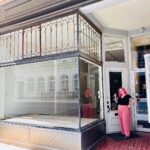
One of the delinquent accounts is held by Steve Pearlman, who sells vintage clothes and 1950s- and ‘60s-era antiques and furniture out of a store on Market Street called Atomic Warehouse. In the early 2000s, the city gave him $60,000 in loans to help finance the renovation of his building, which had previously been vacant and in deep disrepair. “It was horrendous,” he told me. The store now has a bright, teal-colored façade and a retro-looking logo splashed over the door.

As a delinquent borrower, Atomic Warehouse makes an interesting case. Pearlman’s last payment was in 2011, and he is $35,000 in arrears. Even if he pays it all back, as he says he plans to do—he wouldn’t go into details, although there’s a for-sale sign in front of the store—he won’t have been the perfect client. Yet he has stayed open for 13 years on a block that has since seen incremental development.

From another perspective, though, a promise is a promise. Another of the city’s loan clients I spoke with was Matt Tunnell, who, along with his business partner John Tierney, bought the Midtown Cinema on Reily Street in 2008. As part of the purchase, they took over what was then a delinquent $350,000 city loan.

The loan, which is now in good standing, makes an interesting case of its own. “I feel stupid,” Tunnell joked, when I asked him about it. “We’re paying our loan, and no one else is!” But, he added seriously, the cinema was actually happy to pay it off. “That was always part of the revitalization, to pay our obligations and then maybe see it circle back to other businesses,” he said. He gave credit to the original owners, who “poured hours and hours” into the venture at a time when investing in the area was much less certain. “They were trying to jump start Reily Street,” he told me. “They were really the pioneers.”


Continue Reading

In the Key of C-ommunity: Music, friendship play well together at the West Shore Symphony.

Screenshot 2015-10-30 12.36.29Martha Palmquist is a very busy person.

New to the West Shore, she has three young children and teaches preschool music. However, in her limited free time, she still wanted to pursue her passion for music on a more adult level.

That’s when the French horn player discovered the West Shore Symphony Orchestra.

Palmquist started out as a substitute and has been a regular member for less than a year, now playing a part in such works as Beethoven’s Sixth Symphony.

Nonetheless, she also cherished the memory of taking her horn into the audience during a WSSO Family Concert so the kids could see the instrument up close before playing “Twinkle, Twinkle” for them.

“It was something so simple, but it made the kids and their parents light up,” Palmquist said.

Indeed, professional ensembles don’t have a monopoly on quality classical music. Throughout the country, community orchestras play a vital role in exposing people to classical music, while giving local musicians an outlet for their talents.

The West Shore Symphony presents three masterworks concerts a year, each preceded by a family concert, at Carlisle Theatre (40 W. High St.). In addition, its summer pops concerts, held at various venues around central Pennsylvania, provide programs of light classical music, patriotic and Broadway tunes.

Welcoming, Rewarding
WSSO’s members, all volunteers, are diverse in experience and background.

Barb Lambdin began playing viola with the orchestra in 1987.

“A friend said, ‘There’s a community orchestra [out there]. You should come and play,’” recalled Lambdin, a Suzuki method teacher.

Lambdin found the ensemble “very welcoming” and musically rewarding. One highlight occurred when WSSO played the Beethoven Triple Concerto with the prestigious Eaken Trio.

About 16 years ago, Lee Sarka came on board as a trumpeter and today is chair of the orchestra’s board, though by day he provides X-rays and MRI studies to orthopedic surgeons.

“Before, I had been pretty exclusively involved in bands and wind ensembles,” Sarka said. “Many times the music performed emphasized fast and ‘loud’ playing. I look to orchestral compositions as a way to round out my playing abilities.”

They also allow him to become more familiar with, and appreciate, the vast repertoire of classical music.

But the orchestra is also special because it’s a “community of players, who have become outside-of-symphony friends,” said Sarka. “The longevity of many of our players is truly indicative of how much being a member means to them.”

WSSO has always incorporated social activities, such as picnics and potluck dinners—so players get to know each other.

“I look forward to Monday night rehearsals for many reasons,” said Lambdin. “But I’ve especially enjoyed making friends within the group. People with different backgrounds all come together to make good music.”

Special Honor
The musicians’ enthusiasm is matched by that of Matthew Hooper, who was invited to take on the role of the orchestra’s music director and conductor, replacing Dr. Timothy Dixon, in the spring of 2012.

A Camp Hill native, he received his undergraduate training at Lebanon Valley College and later studied at Ball State University in Muncie, Ind.

“I had been applying to groups all over the United States, but it was an honor to have the opportunity to work with musicians so close to my hometown,” said Hooper, who is also a conducting fellow at the professional Allentown Symphony.

A special honor came recently when Hooper announced that the orchestra had been selected as one of the semi-finalists in the community orchestra ensemble division of The American Prize, a set of annual national competitions celebrating excellence in the arts.

Hooper, too, was chosen as a semi-finalist in the community orchestra conducting division.

“Right now, we’re waiting for the next announcement, which will tell us whether we’re finalists or not,” he said. “The winners and runners-up are chosen from among the finalists.”

The American Prize is more than monetary. Semi-finalists, finalists and winners are announced to national arts media and are profiled on the website. They also may use The American Prize logo and official seal on printed programs, documents and the web.

All Ages
Like every arts organization, WSSO is concerned with building future audiences.

The family concerts are free and open to the public, with WSSO Education Director Carrie Seefeldt and Hooper serving as hosts.

“The concerts are kid-friendly, 45 minutes long, featuring excerpts from the pieces that will be performed at the next day’s masterworks concert,” said Hooper. “We encourage children to get hands-on with the music. We bring them and their parents to the front of the theater, where they do different activities—such as dancing, or arts and crafts. They don’t have to sit still.”

Children seem particularly enthused when Hooper demonstrates conducting.

“With the ‘New World Symphony,’ for example, we really got them to feel the music,” he said. “We want to inspire children to be interested in classical music at as young an age as possible.”

One audience member told Hooper that his three grandchildren asked him to put on classical music, because they “wanted to conduct like Matthew.”

The next family concert takes place Saturday, Nov. 14.

The next day’s masterworks concert, subtitled “The Titan,” will include an overture to be announced—in a side-by-side performance with the Northern York High School Orchestra—and Mahler’s Symphony No. 1 in D Major.

“The concerts we present with student musicians are very fulfilling for our musicians and the students alike,” said Hooper. “They’re a great way to have students see they can continue making music following graduation from high school and college, even if they don’t have a [professional] career in music. They also contribute to their musical development.”

With the Mahler work as a case in point, Hooper noted that WSSO’s musicians “love to be challenged.”

“When I came in as music director, I was specifically asked not to program arrangements of pieces,” he said. “The orchestra wants to play the true orchestral pieces by the great composers.”

Hooper also champions new music. This year, WSSO will present Timothy Robertson’s “Concerto for Electric Guitar and Orchestra” at its May concert. The piece was commissioned by WSSO, which is “another first” for the orchestra.

“It will be very exciting and combine traditional acoustic sounds with electric (guitar) sounds,” he said.

How do audiences respond to new music?

That depends on how it’s approached, Hooper said. One way is through the talks he presents before each masterworks concert, focusing on stories about the music, biographies of the composers, and “sometimes even interesting gossip about them.”

If nothing else, audience members get to experience a piece of music they may have never heard before or one rarely played.

One example is Charles Ives’s “Variations on America,” which the orchestra played in 2013. It has some combinations of sounds the audience definitely wasn’t used to.

“Many thought the music was very interesting and wanted to hear it again,” Hooper said. “Some, I think, were startled, and could have been turned off by the strange sounds. But that’s the interesting thing about art. It evokes a reaction and wakes something in us that we did not experience before.”

Playing a Part
The West Shore Symphony Orchestra rehearses in the Camp Hill area on Monday evenings, 7:30 to 9:30 p.m.

Currently, the symphony is looking for string players; there are a few anticipated openings for woodwinds and brass players.

For membership and other information, visit www.westshoresymphony.org.

Continue Reading

Waste Not This Opportunity: Together, we can beautify our city while building our community.

Of late, there has been considerable attention on the subject of waste in Harrisburg.

From revisiting past transgressions about the mismanagement of a waste incinerator, to the perpetual trouble of illegal dumping that continues to plague local neighborhoods, to the ongoing debate on how best to facilitate the city’s sanitation program, waste has been on the minds and tongues of many.

When reported in the news, opined in magazines and blogs or peppered among daily conversations, much of the dialogue positions waste in a negative context. And in some cases, rightly so.

Still, what if waste itself wasn’t the issue? Rather, that these assumed problems derive from how we think about waste and how then we act upon those thoughts.

Consider, for a moment, that waste can actually provide an opportunity to make great things happen in our community. That it can bring people together to connect, collaborate and create—all with the aim of keeping our city clean and beautiful. That it can represent the hope of Harrisburg transformed. This is possible if we change the way we think about waste.

Two valuable, local initiatives come to mind that exemplify this view in action: 2Minute Tuesday and The Great Harrisburg Litter Cleanup.

Many of us are familiar with the 2Minute Tuesday call to action, which asks residents and businesses to invest two minutes each Tuesday to clean up their outside space. This movement demonstrates an important philosophical position: We all create waste, and as such, we all bear a responsibility for its end. The 2Minute Tuesday mantra also illustrates how individual action contributes to greater community pride. The effort of one person, one business or one organization may not appear to make much headway. But, in concert with others, the results can be remarkable.

Then consider The Great Harrisburg Litter Cleanup, a collaborative event where hundreds of volunteers converge on one day, each year, to clean up city streets, sidewalks and other public green spaces. Literally, tons of trash and other littered items are collected by passionate, inspired and committed people who believe in honoring the past, present and future vitality of the capital city. They represent the optimism and action that propel this community forward.

In both examples, waste was not the problem, per se. Rather, it was the consequence of intentional action by people. Where one group viewed something as no longer holding value and indecorously discarded the item to the detriment of their community, others saw the opportunity to make their neighborhood better. Still, there is a silent number who act simply by their non-participation, viewing the “problem” of litter and trash as not their own.

How different are these multifarious perspectives on waste from other challenges we face in Harrisburg? Where one sees waste, the other sees value. Where one perceives hardships, the other envisions opportunities. And some choose to turn a blind eye. All act—one group detracts from progress, another transforms and the third disregards the situation altogether.

The question then remains, how do you think about waste? When you see a piece of trash on the street or sidewalk, will you pick it up or ignore it? When you see an illegal dumpsite, will you continue to pass by or will you collaborate with various stakeholders to plan a cleanup event and empower others in the neighborhood to keep it clean and beautiful?

How do you think about other challenges that Harrisburg faces? And how will you act? This is a principled question we must all ask ourselves.

The following quote by novelist and screenwriter Eric Knight so poignantly frames this perspective: “Waste not the smallest thing created, for grains of sand make mountains, and atomies infinity.”

Knight’s words challenge us to think differently about the world, about our community, about the way we think and about how we act. In the context of waste, how many opportunities do we let slip by because we think of waste as a problem, rather than a resource? Whether it’s repurposed for a new use, recycled into a new product or converted into renewable energy that provides green power to the local community, waste is a resource for our community. It’s about perspective.

So together…

Let us waste not time ruminating on things long past, but create, plan and work together towards a brighter future for Harrisburg.

Let us waste not energy on pointing out all that’s deficient, but invest our time and resources into the continued revitalization of this capital city.

Let us waste not the chance to make a difference in our neighborhoods. Where we see a need, let us each be the solution.

Harrisburg, let us waste not the smallest thing. For these sands of opportunity and progress will be the future mountains of change and transformation in this amazing town.

Kathryn J. Sandoe is communications manager for the Lancaster County Solid Waste Management Authority, a community publisher of TheBurg.

Continue Reading

Independent Minded: In a tough business, local indie bookstores have survived through a mix of expertise, service and community.

“The reports of my death have been greatly exaggerated.”

That famous quote, attributed to Mark Twain, kept flashing through my mind as I interviewed the owners of six independent bookstores throughout central Pennsylvania. After all, these bookshops were, by now, supposed to be gone, kaput, dumped into the ash heap of history, right?

That’s been the common wisdom as e-books increasingly have caught on with readers. But, today, a handful of indie booksellers in our area have not only survived, but thrived.

How did they do it? What’s their secret? I wanted to find out.

 
Mechanicsburg Mystery Bookshop

In the book world, Debbie Beamer is the definition of a survivor as, on Nov. 9, her Mystery Bookshop in Mechanicsburg will celebrate 25 years in business.

“Members of my core group of customers still want to hold a book,” said Beamer, citing one of the factors in her success.

Beamer is always thinking of ways to add value to her shop and, earlier this year, added a lecture series—talks on Native Americans, the Revolutionary War and John Wilkes Booth, among other topics. She even threw in a class on psychokinesis.

As a specialty bookseller, Beamer may have an advantage over more general stores, as mystery book readers tend to be loyal and exacting. They appreciate her selection and knowledge, as well as the environment she’s created.

“The indies provide a community for their customers,” said Beamer. “Bookstores are a gathering place where readers can meet authors, listen to lectures and so much more.”

Sam Marcus

Sam Marcus

The Bookworm Bookstore
 
As I sat across the table from Sam Marcus at the Bookworm Bookstore in Lemoyne, I saw the glint in his eye when he talked about books and found it easy to visualize the college professor he once was.

But it takes more than a love for the written word to survive these days in such a difficult business. Like Beamer, Marcus has a specialty. In his case, it’s classics, literature and history.

“So, the type of books I sell aren’t conducive to e-books,” he said.

Marcus doesn’t shy away from the Internet, as about half of his sales are online, supplementing his brick-and-mortar shop. But he offers things you just can’t get from Amazon or even the large chains—knowledge and quality.

“I couple this approach with individual services for my customers,” he said. “It’s paramount to learn their likes and dislikes and be able to offer suggestions of books they might enjoy reading.”

Marcus is so confident in his shop that he’s even setting the stage for his retirement.

“My children are playing a larger role in the store management,” he said.

 
Canaday’s Book Barn
 
Ted Canaday is another area bookseller who has thrived due to that special formula of knowledge, customer service and quality, as well as having a niche.

“I specialize in out-of-print books, as well as historic maps and charts, so my customers aren’t after the latest bestseller,” said Canaday, owner of the Book Barn in Carlisle. “The market for me is distant and diffuse, my customers coming from as far away as 100 miles.”

Canaday does much of his business on the Internet, so the e-book craze was not a problem, he said. He usually finds his books at estate sales or has customers bring the books to him.

For Canaday, the key is having what his customers want when they arrive, then turning them into repeat customers.With more than 70,000 books, maps and charts, the Book Barn is indeed a fascinating place to shop, attracting people who want a different kind of buying experience.

“I’m actually more like an antique shop than your average bookstore,” he said.
 
 
Aaron’s Books

Ten years ago, Todd Dickinson and his wife, Sam, opened Aaron’s Books, naming it for their son. They wanted to have a business together and do something that Aaron would learn to love.

Soon afterwards, e-books went from afterthought to mass market, but the Dickinsons rose to the challenge, leveraging their strength as an integral part of the community in Lititz.

“The rise of e-books was arguably harder on chain stores,” said Todd. “So, that created an opportunity for independent bookstores to grow because of our closeness to the community.”

The Dickinsons didn’t let e-books change the kind of store they wanted to be. As independents, they’re highly responsive to their customers and stock new and used books that you simply won’t find inside grocery or box stores.

“We enjoy helping people find that book they’re going to love,” said Todd. “We just celebrated our 10th anniversary and look forward to many more in downtown Lititz.”

Michelle Haring

Michelle Haring

Cupboard Maker Books

Michelle and Jason Haring opened a custom-built furniture and bookstore in February 1998. In the spring of 2002, Michelle left her teaching job and made the decision to sell books exclusively.

Over the years, the couple adapted to the market, selling books over the Internet, as well as inside their Enola shop. But what’s really kept them going has been their loyal customer base for genre fiction.

“We carry all types of books, including history, religion, science, military, cookbooks and children’s books,” said Michelle. “However, our main interest area is genre fiction, especially mystery, science fiction and romance.”

This past year, they have focused more on author- and book-centered events. They currently have several genre fiction book clubs,including mystery, romance, young adult and urban fantasy. This past fall, they started “Book Mingles,” which provides a place for book lovers to talkto other book lovers.

“We see continued growth,” said Michelle. “The personal touch is what our customers are looking for.”


Catherine Lawrence

Catherine Lawrence

Midtown Scholar Bookstore
 
When you walk into Midtown Scholar Bookstore in Harrisburg, you immediately see the ornate coffee bar and watch people gathered around tables drinking lattes and socializing.

You then realize that diversification and community are essential parts of the story at Midtown Scholar, owned by Catherine Lawrence and her husband Eric Papenfuse, who now doubles up as the city’s mayor.

“We are honored to be one of the leaders in our neighborhood’s resurgence,” said Lawrence.

In fact, the brick-and-mortar location is the physical manifestation of the store’s main business, selling academic books online.

“We’re the largest scholarly used bookstore in the country,” said Lawrence. “That continues to be our special niche.”

Looking at the shelves and shelves of books in the store, it’s hard to visualize the beginning.

“I can remember sitting in our walk-up book store in the old post office, a block from the Midtown Cinema, with my foot rocking my infant son in his carrier,” said Lawrence. “Below me, our Internet staff was logging the latest tractor-trailer load of books from scholastic publishers into our computers. At that time, we already had seven public storage units stacked floor to ceiling with books we were selling online, as well as an annex in Allison Hill.”

As the Internet division outgrew its first-floor space, the retail operation took over that area with books, as well. That gave them the ability to hold concerts, author talks and public forums. They needed an even larger space for literary activities when people came from as far as Baltimore and New York to participate, and that’s when they bought the larger building across from the Broad Street Market.

Today, Midtown Scholar is an important community asset, hosting a myriad of events each month, including author talks, book clubs, concerts and children’s activities, none of which can be replicated well in a virtual way.

The couple plans a further expansion into another annex to make way for more books. The main store then will be able to offer an even broader range of new, used and rare titles to customers, including more children and young adult offerings.

So, as you begin to do your Christmas shopping this year, stop in at one of these independent bookstores. Who knows—you may just make a life-long book friend. After all, community is the secret of what makes these stores go.

If You Go
 
Aaron’s Books, 35 E. Main St., Lititz, 717-627-1990, www.aaronsbooks.com

The Bookworm Bookstore, 900 Market St. (West Shore Farmer’s Market), Lemoyne, 717-657-8563, www.bookwormhbg.com

Canaday’s Book Barn, 2269 Newville Rd, Carlisle, PA, 717-574-0092, www.canadaysbookbarn.com

Cupboard Maker Books, 157 N. Enola Rd., Route 11/15, Enola, 717-732-7288, www.cupboardmaker.com

Mechanicsburg Mystery Bookshop, 6 Clouser Rd., Mechanicsburg, 717-795-7470,
www.mysterybooksonline.com

Midtown Scholar Bookstore, 1302 N. 3rd St., Harrisburg, 717-236-1680, www.midtownscholar.com

Don Helin published his first thriller, “Thy Kingdom Come,” in 2009. His novel, “Devil’s Den,” was selected as a finalist in the 2013 Indie Book Awards. His latest thriller, “Secret Assault,” was selected as the best suspense/thriller at the 2015 Indie Book Awards. Contact Don on his website, www.donhelin.com.


Continue Reading