Reed Lawyers Demand Fees from City in Records Case

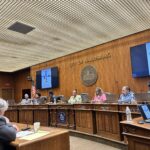
Attorney Henry E. Hockeimer, Jr., left, and former Mayor Stephen Reed after Reed's arraignment July 14 on corruption charges.

Attorney Henry E. Hockeimer, Jr., left, and former Mayor Stephen Reed after Reed’s arraignment July 14 on corruption charges.

The defense team for Stephen Reed has asked a judge to order Harrisburg to pay some of Reed’s legal fees, as part of an ongoing and increasingly bitter fight over access to city records from the former mayor’s tenure.

In his Jan. 29 filing, Henry Hockeimer, of the Philadelphia firm Ballard Spahr, disputed the city’s reasons for withholding documents he is seeking under the state open records law, claiming they are “entirely personal” and without legal merit.

Hockeimer argued the city’s responses have shown “bad faith” and asked the court to require Harrisburg to pay the costs of what he described as the “frivolous litigation” forced by the administration’s withholding of records.

Hockeimer first requested the documents in July, after a state grand jury approved a sweeping array of charges against Reed in an ongoing corruption probe. The city so far has declined to provide them, claiming among other reasons that doing so would force it to violate a judicial gag order and break grand jury secrecy rules.

Hockeimer sharply critiqued those claims in his filing, arguing the city has released similar records to news outlets without complaint. He cited four news stories, including one published by TheBurg, that he said proved the city denied him access “solely because he represents Stephen Reed.”

Two of those stories, one appearing in the Patriot-News and one on abc27, refer to right-to-know requests partially granted by the city this year, although for much narrower sets of records than those requested by Hockeimer in July.

TheBurg article, published in the spring of 2015, detailed receipts of Reed’s purchases that were provided to the magazine by a different entity altogether. Hockeimer’s filing claimed the city provided the receipts, though they were, in fact, provided by Capital Region Water, the successor agency to the Harrisburg Authority.

Reed submitted the receipts to the Harrisburg Authority to support his request for a $33,000 reimbursement in 2003. The article identified Capital Region Water as the source of the documents, but that information was omitted in the legal filing.

The filing similarly mischaracterized a 2012 Patriot-News article, which referred to Harrisburg Authority documents provided in response to a right-to-know request. Nick Malawskey, the article’s author, confirmed Thursday the records were provided by the authority, not the city.

Hockeimer also said the city discriminated against Reed because of his “alleged criminal conduct.” He cited a prior filing in the case, in which the city said it was “fundamentally unfair and unjust” to force the costs of a vast records request by an alleged criminal upon a purported victim of the crime.

City solicitor Neil Grover stood by that argument Wednesday night, saying that the rights of victims of alleged crimes were also relevant in the case, and not only questions about open records laws.

Grover also denied the city had acted in bad faith and said Harrisburg would “fight a question about the awarding of fees as far as the courts will allow us to go.”

“We have acted in good faith,” he said. “If there’s anyone who’s acted in bad faith, it’s the requestor.”

A representative of Ballard Spahr said on Thursday that Hockeimer is out of the country until next week. Terence Grugan, another attorney at the firm identified as also representing Reed on the Jan. 29 filing, said he had no comment.

Findings of bad faith by an agency in records requests do occur, but are exceedingly rare, according to Erik Arneson, director of the state Office of Open Records. Of the 13,000 or so requests that have been appealed to his agency, fewer than 10 have later resulted in a judge making a bad faith finding, Arneson said.

Arneson said he was “extremely confident” in his agency’s prior analysis, which held that at least some of the records, which would have been deemed public prior to any criminal investigation, did not suddenly become privileged because of their more recent connection to a grand jury probe.

At the same time, he said the intersection of open records law and laws regarding grand jury secrecy was “not a settled area,” and that he understood why the city appealed his agency’s finding.

“I don’t fault the city for making the arguments they’re making,” Arneson said. “They’re being cautious. I get where they’re coming from.”

Judge Kevin Hess heard arguments last month on the records case, after the city appealed the Office of Open Record’s prior finding.

Hess is a former Cumberland County president judge who was appointed to oversee Reed’s criminal case after Dauphin County recused itself. He asked the city to submit a legal brief on the records issue, which he is also overseeing, by this Friday.

Continue Reading

Feb. 1-5: This Week in Harrisburg

MLK city hall

Monday, Feb. 1:

City Council Economic Development and Budget Meetings, 5:30 p.m.
City Council Chambers, City Hall, 10 N. 2nd St.

Council holds an economic development committee meeting, with a budget hearing immediately following. Council has reopened the 2016 budget, with new council members poised to consider any changes. Brad Koplinski, who lost his council seat in last year’s election, tried to slash the administration’s budget last month in order to avoid a tax hike on city workers. The administration dismissed the proposals as unrealistic, pointing out that several of the suggested cuts were contractual obligations of the city. Koplinski was unsuccessful, but the new council members could theoretically revisit some of the cuts now that the budget has been reopened.

Tuesday, Feb. 2:

City Beautiful H2O Community Meeting, 5:30-8:30 p.m.
Lincoln School, 1601 State St.

City Beautiful H2O is a campaign by Capital Region Water to promote green infrastructure projects and reduce sewer overflows that can pollute local waterways during heavy rainfall. The meeting will introduce community members to ways they can reduce flooding, beautify their neighborhoods and keep their water cleaner and ask for their input. For more information, click here.


Wednesday, Feb. 3:

City Council Administration Committee Meeting, 5:30 p.m.
City Council Chambers, City Hall, 10 N. 2nd St.

Council will continue to discuss proposed changes to the Harrisburg Strong Plan, the city’s financial recovery plan.


Continue Reading

TheBurg Podcast, Jan. 29, 2016

IMG_2828

Welcome to TheBurg Podcast, a weekly roundup of news in and around Harrisburg.

To listen to this week’s episode, click here.

Jan. 29, 2016: It snowed! Larry and Paul talk about the cost of all that shoveling and plowing, and they give their takes on the city’s response to the epic storm. They also discuss the plans of the City Islanders to play home soccer games at the Senators’ ballpark next year. Then, Paul talks with Capital Region Water CEO Shannon Williams about her company’s efforts to engage the community and reduce flooding and sewer overflows with a campaign called City Beautiful H2O.

TheBurg Podcast is proudly sponsored by Ad Lib Craft Kitchen & Bar at the Hilton Harrisburg.

Special thanks to Paul Cooley, who wrote our theme music. Check out his podcast, the PRC Show, on SoundCloud or in the iTunes storeYou can also subscribe to TheBurg podcast in iTunes.

Podcast bonus: During her appearance on the podcast, Shannon Williams discussed her reaction to the water crisis in Flint, Mich. To further inform the public about lead monitoring and the water supply, Capital Region Water has prepared a fact sheet, which you can access here.

Continue Reading

A Coffee Quest: What’s the secret to a great independent coffeehouse?

Screenshot 2016-01-26 21.10.05I love a good coffeehouse.

The smells. The bustle. The things I imagine being created behind all those laptops. Besides, everyone always seems so happy to be there.

And that made me wonder: What makes a coffeehouse great? Why do some succeed and others fail? And why do people flock to our area’s independent coffeehouses when there’s always another Starbucks up the road?


The Cornerstone Coffeehouse

When you walk through the front door of the Cornerstone Coffeehouse, you know you’re in a special place. You immediately hear the sounds of people talking and laughing. You sniff the enticing aroma of food cooking and then eyeball the wide variety of coffees and teas.

“You can choose from 12 different roasts or flavors of coffee, and about 25 different types of tea,” remarked co-owner Al Pera.

Besides the java itself, great coffeehouses often set themselves apart with the high quality of their food and their events. Cornerstone has both.

“We now have a full lunch menu with healthier options since many of our menu items are either organic or gluten free,” said Pera.

Live music fills the air on Friday, Saturday and Sunday nights, and you’re welcome to stroll through the art gallery, which features a different artist each month. For you foodies, the owners offer weekly cooking classes in their culinary kitchen.

The staff is another key differentiator, as veteran staffers get to know regular customers and the customers them.

“I am really proud of our staff,” said General Manager Nicole Miller. “We have people who have been here for a long time. For example, our baker, Cindy, has been with us for 12 years.”

That stands in stark contrast to the face-of-the-month at a certain coffee chain behemoth. Speaking of which, I asked Pera if it was difficult to compete with Starbucks.

“I don’t compete with Starbucks,” he said. “We’re just different. For example, we order our coffee on a Monday, they roast it and get it to us by Tuesday. We also have many fair trade and organic coffees to choose from. You can sit down and enjoy your coffee in a nice porcelain mug if you’d like.”

I had to agree with the quality of the food as I nibbled on a tuna melt and spooned down a bowl of thick and tasty split pea and ham soup for lunch. I followed it up with a refreshing glass of iced tea.

After 21 years, Cornerstone has not lost a beat, outlasting many other shops that have tried to compete.

“We at the Cornerstone care for the Camp Hill community, and the community cares for us,” said Miller.


Little Amps Coffee Roasters

Aaron Carlson describes his introduction to coffee roasting as half serendipity, half opportunity.

He’s from central PA, but spent years as a musician, traveling around the country before returning to Harrisburg.

“I fell for the style of coffee we do here while living in Oakland, Calif., a few years ago,” he said. “Blue Bottle Coffee was roasting in an alley behind my house in small batches. They’re now a $70 million company, so I thought, hey, why not give it a try?”

For about a year, Carlson roasted coffee in a warehouse, doing mail order and delivery. He opened his first shop on Green Street in Midtown Harrisburg in 2011. Things went well, so he opened a site downtown about two years later. He recently added a kiosk location inside Strawberry Square.

One of his first challenges was to communicate the value of carefully grown and lighter-roasted coffee. Back then, many of his customers wanted drinks that obscure the flavor of the coffee, made with caramel or, as he says, “that gooey pumped stuff” that chains offer.

“That’s OK when it’s cheap coffee or over-roasted,” Carlson said. “Now, my customers’ favorite drinks seem to be focused on the coffee itself and not what’s dumped into it. It’s trickier to roast, but the lighter roasting brings out a better flavor and makes it a little sweeter, so the demand for this style of coffee is expanding. I do all of my own roasting and actually sell roasted coffee beans to other coffeehouses.”

Little Amps also offers a number of events, such as live music most Fridays at the State Street location, and is starting to do more cuppings—coffee tastings—at the Green Street shop.

I asked Carlson what he sees for the future.

“Hopefully, more fun and good vibes,” he said.


Cafe Chocolate of Lititz

The main street of Lititz is a maze of small shops, restaurants and bookstores. Tucked among these places, about one-half block from the General Sutter Inn, is the quaint Cafe Chocolate.

“The Cafe Chocolate has been here almost 10 years,” said owner Janice Dull. “I bought the café about 2½ years ago. It was a fairly easy transition because I trained under the previous owner for a few weeks.”

The shop serves a wide variety of drinks—hot chocolate, espresso, cappuccino, chai latte, to name just a few. But the signature drink is the Turbo Hot Chocolate: a mug of hot chocolate with a shot of espresso to fire it up. And fire up it does.

“We don’t really see Starbucks as a competitor,” Dull said. “Our products are healthier and not loaded with sugar. We make our own whipped cream and use 65-percent dark chocolate. My customers love the many gluten-free dishes we serve, such as Portuguese chicken and rice, West African peanut chowder and even cupcakes.”

I enjoyed looking through the cafe’s menu, which includes flatbread pizza (either whole wheat or gluten free), a vegetable curry Siam with black rice risotto and, of course, “Chili con Chocolate.”

I spent a lot of time trying to decide on a dessert. The café has a dark chocolate fondue that serves four and chocolate-dipped berries. I finally decided on a frozen hot chocolate, which was excellent.

The Cafe Chocolate has a motto—“Chocolate for Life”—and it couldn’t be more appropriate

 Screenshot 2016-01-26 21.09.48

St. Thomas Roasters

Judging by the popularity and success of St. Thomas Roasters, you’d never imagine that it began 15 years ago almost as a notion.

“We had never run a business before and had no experience selling coffee,” said Geof Smith, who runs the shop with wife, Pam. “But Pam had always wanted to own a coffeehouse, different from her experience in the health care field, so when I left AMP, we made the plunge. We researched trade shows and other coffeehouses before we started.”

Learning how to roast coffee was a challenge. They started by roasting their own beans, but soon became a wholesaler, roasting coffee beans for a number of other businesses, which now include such popular spots as Char’s at Tracy Mansion, Café 1500 and Karns.

Linglestown is home to a number of upscale housing developments and is also on the commuting route to Harrisburg, so the shop has a steady flow of customers. At 10:30 on a Friday morning, when I met with Geof Smith, the place was already packed with patrons of all ages.

“Our customers have a number of favorite coffee drinks,” he said. “These include Colombian coffee, our own Linglestown blend, Almond Joy lattes, Americanos and London Fogs. They have a chance to enjoy their coffee and listen to entertainment on most weekends.”

I asked him about Starbucks.

“Starbucks is a competitor, but not a threat,” Smith said. “I must give them credit because they started the whole coffeehouse scene, enabling many of us to continue on with our own models.”

He sees business growth in roasting coffee beans and selling them on a wholesale basis to his customers. He currently roasts about 20 types of coffee beans by doing roughly 11 batches each day. He roasts between five and 30 pounds each time.

“We’re delighted we took the plunge 15 years ago,” he said. “There were many challenges along the way, but I wouldn’t change any of it.”


GOING THERE 

Cafe Chocolate of Lititz
40 E. Main St., Lititz
717-626-0123
www.chocolatelititz.com

The Cornerstone Coffeehouse
2133 Market St., Camp Hill
717-737-5026
www.thecornerstonecoffeehouse.com

Little Amps Coffee Roasters
1836 Green St., 133 State St. and Strawberry Square, Harrisburg
717-695-4882
www.littleampscoffee.com

St. Thomas Roasters
5951 Linglestown Rd., Harrisbur
717-526-4171
www.stthomasroasters.com

Don Helin published his first thriller, “Thy Kingdom Come,” in 2009. His novel, “Devil’s Den,” was selected as a finalist in the 2013 Indie Book Awards. His latest thriller, “Secret Assault,” was selected as the best Suspense/Thriller at the 2015 Indie Book Awards. Contact Don at his website, www.donhelin.com.

Continue Reading

Return Visit: A few years ago, our editor urged Harrisburg to embrace its destiny as a small, charming city. How’s that going?

Screenshot 2016-01-26 21.03.28What do you want your city to look like?

For months, the city’s Planning Bureau, preparing a new comprehensive plan, has asked Harrisburg residents that question and has received hundreds of suggestions, from the prosaic to the fanciful.

From time to time, I’ve expressed my opinion on the topic, perhaps most directly in a 2013 column called “Right-Sizing Harrisburg,” in which I advised casting aside grand, Reed-style ambitions and focusing instead on “doing small city well.”

I continue to believe that, as Harrisburg continues to rebuild, it should play to its natural strengths as a small, Victorian-era city on a gorgeous river. This, I believe, would make the city most appealing to both new residents and visitors.

So, how are we doing? Actually, not bad, I’m happy to report.

Almost three years have passed since I wrote that column and progress, while uneven and always too slow for my taste, is noticeable.

Many of the city’s most significant historic buildings, blighted and largely abandoned until recently, have been restored and reoccupied. Rehabilitation of structures like the Barto Building (now LUX), the Millworks, the Harrisburg Midtown Arts Center and the Moose Lodge Temple show that people want to live, work in and visit gracious historic structures in Harrisburg, just like they do everywhere else.

Their survival stands in stark contrast to decades of misguided “urban renewal,” whose philosophy seemed to be that Harrisburg could only save itself by destroying itself, that it had to replace elegant rows of brick, stone and mortar with cold blocks of steel, glass and concrete. Or that it had to more closely resemble the suburbs. Unfortunately, much of downtown was lost to the “raze it and they will come” mindset, but some of the charm of the historic center remains.

So, a few developers finally woke up to the benefits (aesthetic and financial) of preservation, but what about governments?

Well, the state finally seems to be on board, reversing decades of ruinous policies that destroyed entire historic neighborhoods around the Capitol and turned much of Harrisburg into one big traffic island. The recent redevelopment of Front Street and support for the city’s plan to return much of N. 2nd Street to two-way traffic are both pro-community and pro-small city, making two of Harrisburg’s main thoroughfares less forbidding and better integrated with the city.

The Papenfuse administration seems to get it, too. It has focused on infrastructure and quality-of-life issues, long neglected at the expense of dubious, imposing projects like museums, colleges, art centers, parking garages and big office buildings—often publicly funded via mountains of debt and destructive to the existing, 19th-century cityscape. Despite the city’s tight budget, the administration has found creative ways to finance the installation of new LED lights, to begin years of long-ignored street paving and to improve sanitation services.

So, that’s the good news. What about the bad?

To be attractive to outsiders, a small city must look good, and, in that regard, Harrisburg still needs work.

As I just said, some developers are doing their part, but others aren’t. This city has too many dilapidated structures and empty lots owned by people who have the means to fix and improve them. Also, much of Harrisburg’s building stock remains stuck in the hands of slumlords and negligent commercial property owners who seem intent on sucking the last penny out their buildings before they crumble to the ground.

Then there are the problem businesses.

Lately, the city has been trying to shut down several bars that it deems troubled, which it believes act as magnets for crimes both major (shootings, drugs, assaults) and minor (vagrancy, loitering, panhandling).

No business—whether a bar, a convenience store, or heck, an ice cream parlor—has the right to be a destructive force on a neighborhood. Businesses should add to the quality of life where they’re located, or at least not damage it.

Personally, I don’t care what happens to these businesses as long as they stop contributing to the city’s blight and retarding its progress. There are tons of bars in Harrisburg, most responsibly run, and only a few seem to have constant problems.

Making Harrisburg into a more livable, attractive and enjoyable small city—one where people want to live and visit—is hardly rocket science.

Developers need to develop, respecting the historical context of the city around them; building and business owners need to act responsibly, understanding that they exist not in isolation but within a community of people; the municipal government needs to focus on the basics, such as infrastructure and quality of life.

I’m impressed with the progress this city has made in just a few years. The difference between then and now is real and substantial. Nonetheless, much more needs to be done for Harrisburg to achieve its destiny as a lovely, vibrant small city perfectly located on a wide, gorgeous river


Lawrance Binda is editor-in-chief of TheBurg.


Continue Reading

So You Want to Start a Business: three entrepreneurs share their experiences in the capital city.

Ivan Black, Next Step Performance

Ivan Black, Next Step Performance

Launching a new business is like venturing on a cross-country road trip, but in pre-GPS days, without the luxury of Siri telling you your next move.

Daunting, I know. With endless possibilities, it’s overwhelming to think of what needs to happen between packing your bag and arriving at your final destination, or in business terms, fashioning an initial concept and flinging your doors open to gleaming sunshine and singing birds on opening day.

Hats off to the brave souls who have navigated this uncertain terrain successfully. We spoke with three Harrisburg entrepreneurs with very different businesses to learn how they began and what advice they could offer to those just beginning their journeys.


Know Your Abilities—and Challenges

When Urban Churn owner Adam Brackbill decided to take a dip into the ice cream business, he did so with a family history of ice cream churning behind him and a “why not” mentality in front of him.

“We had a churn at my grandmother’s cottage, and, at every family gathering, my great uncle would make ice cream,” said Brackbill, a serial entrepreneur who also co-owns the co-working space, StartUp, and has his own Web development company. “I thought that there was nothing like that in Harrisburg. So, I started doing research and bought five small churns and began experimenting with flavors.”

His experience with ice cream made his start a bit easier, but it definitely did not eliminate the challenges. These included a lack of funding and confusion around what type of licenses he needed, especially since he was venturing into the regulated terrain of manufacturing and selling food. All five original churns also broke, thanks to an overzealous owner experimenting with flavors.

Adam Brackbill

Adam Brackbill

Like Brackbill, Ivan Black of Next Step Performance built his business off of what he already knew and loved—fitness.

“I’m a life-long athlete, and I couldn’t find anything else that fulfilled me,” he said.

A veteran trainer, Black had years of experience working the floor with clients, but not with the ins and outs of a business venture.

“The business side of things has been the new challenge, but my best asset is my ability to work with people, and that’s been paramount in opening a business,” he said.

To help overcome his perceived weaknesses, Black asked for help and advice.

“I never held a management position with any of the big corps I’ve worked for,” he said. “So, I talked to my coworkers and people who have held those management positions. I talked to them about the business management side of things, which was helpful.”

Those business items included navigating through payroll and learning how to add schedules to a website, he said.

On the other hand, Ruth Prall, co-owner of note. Wine Bar and Bistro, built off of her base of expertise from a previous life as an accountant. She self-identifies as the “spreadsheet queen” and leveraged those skills to work through projections, projections and more projections.

“This is definitely my first business,” she said. “I don’t want to say I don’t recommend it, but I’d say being older and having gone through so many experiences put me in a much better position to do something like this because you just learn over time.”

Prall’s prior career as a nurse also came in handy.

“Being a registered nurse, you learn the experience of dealing with people and dealing with stressful situations,” she said. “So, nothing could be as critical as the things I did before in that job. I could deal with somebody being unhappy with their meal.”

Given that philosophy, Prall confidently launched into her new venture.

“I knew I wanted to run a business that had to do with hospitality, and, through the course of a couple of years, I was planning and thinking and testing other things out through traveling,” she said. “The road kept narrowing until I came to this concept of a wine bar.”


Know the Terrain

As you may imagine, opening a business in Harrisburg is different from opening a business in Philadelphia or even Lancaster. The opportunity to create a unique business—one different from those around it—was something that all three entrepreneurs identified as a positive for Harrisburg.

Brackbill led me through his thinking when he considered starting each of his three businesses.

“For a co-working business, it made sense because there’s no co-working spaces in Harrisburg,” he said. “For ice cream, it made sense because there were no ice cream places in Harrisburg. For Web development, that was just because office space was very affordable in the city.”

Prall also felt that her concept of a wine bar and bistro was unique compared to other restaurants in Harrisburg. In addition, she felt an emotional attachment to the community that is her lifelong home.

“I grew up in Harrisburg. I’ve never lived anywhere else,” she said. “I was one of the complainers about how there’s not much to do around here, but it wasn’t until I moved into Midtown that I spent so much time in this area and realized what a fantastic neighborhood it was.”

This enthusiasm for the community is something Brackbill identified as a common thread among Harrisburg business owners.

“The biggest reason why I’m able to continue doing what I’m doing is because of all the friends I’ve made,” he explained. “As long as you make a big enough noise and try to get involved and try to get to know people, and you’re friendly and you want to be friends rather than just trying to find people to use them, then you’ll succeed.”

New to the capital city, Black did not have the advantage of strong, established relationships here, but he recognized it as something that he needed to build.

“In the beginning, I didn’t have a network here,” he said. “I didn’t train in this area for years on end. Anybody would tell you I was crazy. You don’t open a business in the area unless you have a solid product and a strong way of reaching people. I believed in the product, and I figured I’d reach people eventually.”

Upon arriving in Harrisburg from Washington, D.C., Black immediately joined a baseball team to meet people and started networking every way he could, and he soon started to feel the warmth of the neighborhood.

“Harrisburg has been good,” he said. “I’ve had people who have been supportive of the project.”

Many of his Midtown neighbors are now his friends and clients. But he especially recalls one guy who resisted his exercise pitch.

“He said, ‘I’ll never work out, not here, not there or anywhere, but as a Harrisburg Midtown resident, I wanted to thank you for bringing your operation here,’” Black said. “It was really heartwarming, and I then knew that my business was all about the community.”


Map It Out & Look Ahead

Research, research, research. All three entrepreneurs put in hard work and planning before starting their new businesses.

“Do your research first,” Brackbill said. “I’ve always been a go-with-the-flow type of guy, but that could land me in hot water. So, you can’t just go with the flow. You need to make sure you’re doing everything correctly. Keep learning and ask questions.”

Beyond friends, family and the Internet, Brackbill—to his surprise—found the government to be helpful.

“When you’re trying to be sure that you’re doing everything correctly, the state and the city really help,” he said. “I thought the government would be snub-nosing and slapping your wrist all of the time, but I didn’t find that to be the case. They help a lot. They want to see you succeed, and part of their job is to see that business excels in the state.”

Prall, too, had a hand from a third party, a fellow successful restaurant owner, who, she said, helped her confidence and credibility as a restaurateur. Remember those projections that Prall worked endlessly on? She projected down to the day what she could potentially make in the business to see if it was feasible.

“I really spent two solid years planning,” she explained as she listed off questions she would ponder. “What kind of food would I serve? What feel would the restaurant have?”

Prall remembered one specific moment while obtaining her liquor license.

“I came up with a business plan that was pretty impressive,” she said. “I was pretty proud that the business plan that I had was good enough for them to say, ‘You can feel relatively confident that you’re going to get your money back.’”

Still, she knew that planning wouldn’t make her journey flawless.

“I understood that you might do absolutely everything right and still fail because of the market or a wave of crime or those things out of your control,” she said. “I had a plan. If it failed, I had another plan, but I certainly didn’t want to fail.”

She laughed briefly, then added, “I feel like I’ve been pretty consistent in life with things so I was like, ‘Let’s not fail.’ And so far, so good!”

Black, too, stressed the importance of pre-planning to help avoid mistakes.

“When you’re learning on the fly, in the time it takes you to learn, you could mess up and that could be bad for you,” he said. “But there are so many resources out there for you to do your research. If you have a dream, just go for it. There are some fantastic people doing fantastic things.”


To learn more about these businesses and their owners, visit:

Next Step Performance: www.nsp.fitness

note. Bistro & Wine Bar: www.notewinebar.com

Urban Churn: www.urbanchurn.com

Continue Reading

Community Corner: Notable Events in February


Great Decisions 2016
Feb. 1, 15, 29: The World Affairs Council of Harrisburg will host “Great Decisions,” a discussion program on world affairs organized by the Foreign Policy Association. Sessions are held every other Monday at 1 p.m. at Fredricksen Library, 100 N. 19th St., Camp Hill, through May 9. Cost is $10 per session or $40 for all eight. Visit fredricksenlibrary.org.

Leads Over Lunch
Feb. 2: Mix and mingle with business leaders at this free lunch hosted by Harrisburg Regional Chamber & CREDC, at Mission Central, 5 Pleasant View Dr., Mechanicsburg, 11:30 a.m. to 1 p.m. For more information, visit harrisburgregionalchamber.org.

City Beautiful H2O
Feb. 2: Join Capital Region Water in finding opportunities for green projects to reduce street flooding, sewer backups and combined sewer overflows, at Lincoln School, 1601 State St., 5:30 to 8:30 p.m. The event will include presentations, kids’ activities, free food, music and door prizes. For more information, visit capitalregionwater.com.

Heart Healthy Shopping
Feb. 3: PinnacleHealth will host “Heart Healthy Grocery Shopping Tour” at Giant Food Store, 4510 Marketplace Way, Enola, 6 p.m. Learn how to purchase heart-healthy groceries and comparison shop for nutritional content and value per dollar. Interpret nutrition labels for calorie, fat, sodium and carbohydrate content. Visit pinnaclehealth.org for more details.

Cardiologist Cooking
Feb. 3: PinnacleHealth will host “Cooking with a Cardiologist” at Giant Food Store, 3301 Trindle Rd., Camp Hill, 6 p.m. Join PinnacleHealth cardiologists Michael Bosak and Atizaz Mansoor for a fun, interactive event. The physicians will share heart-healthy Mediterranean and South Asian dishes. Cost is $10 per person. Visit pinnaclehealth.org.

First Friday
Feb. 5: Enjoy First Friday in Hummelstown from 6 to 9 p.m., with shopping, dining, raffle prizes, music and dancing. First Fridays are free, but organizers encourage attendees to bring donations for Morning Star Pregnancy Services. Spots are available for dancers, performers, musicians, DJs, vendors, sponsors, etc. For more details, call 717-991-5105 or email [email protected].

HBG Flea
Feb. 6: The HBG Flea is back with local artists, artisans and vintage shops offering unique items for everyone, in the Capitol Room @ HMAC, 1110 N. 3rd St., 10 a.m. to 4 p.m. Visit hbgflea.com for more information.

Have a Heart
Feb 6: Caitlin’s Smiles’ “Have a Heart Volunteer Day and Craft Fair” will be held at New Hope Church, 584 Colonial Club Dr., Harrisburg, 10 a.m. to 4 p.m. Volunteers will make craft kits and cards for children with chronic or life-threatening conditions. The event includes a craft fair, soup/baked goods sale and a blood drive. Visit caitlins-smiles.org.

Piano Concert
Feb. 6: Maestro Stuart Malina will join Messiah College faculty members Ya-Ting Chang, Patrice Ewoldt and Richard Roberson in an evening of two-piano masterpieces at the college’s Calvin and Janet High Center for Worship and Performing Arts at 7:30 p.m. Free and open to the public. Visit messiah.edu.

PPFF Photo Display
Feb. 8-26: Pennsylvania Parks and Forests Foundation will display winning photographs from its 2015 “Through the Seasons” photo contest in the state Capitol, East Wing Rotunda, open to the public Monday through Friday, 8 a.m. to 6 p.m. All photos are taken in a Pennsylvania state park or forest. Visit paparksandforests.org for more information.

Steam Engine Presentation
Feb. 9: Harrisburg Chapter of the National Railway Historical Society will host Dr. Joseph Winberry for a presentation on “Return of Milwaukee Road’s Steam Engine #261 to the Rails,” at Hoss’s Restaurant, 743 Wertzville Rd., Enola. Business meeting and speaker begin at 7 p.m., with a meal available as early as 5 p.m. For more details, call 717-238-2131.

Economic Forecast Breakfast
Feb. 11: Start your day with some coffee and macroeconomics at the annual Harrisburg Regional Economic Forecast Breakfast. The event begins at 8 a.m. at the Sheraton Harrisburg/Hershey, 4650 Lindle Rd., Harrisburg. Speaker will be Jay Bryson, managing director and global economist for Wells Fargo. General admission is $65 for members and $90 for nonmembers. Information is at harrisburgregionalchamber.org.

Community Free Day
Feb. 13: Join the National Civil War Museum, 1 Lincoln Circle at Reservoir Park, on its free admission day from 10 a.m. to 4 p.m. in honor of Black History Month. Visit nationalcivilwarmuseum.org.

Service Dogs
Feb. 13: Midtown Scholar Bookstore, 1302 N. 3rd St., will host Susquehanna Service Dogs at the Little Scholar, 11 a.m. to 12 p.m. Learn how the dogs are trained and watch how they help people with all sorts of tasks. Visit midtownscholar.com.

Truffles for Couples
Feb. 13 & 14: Hershey Story’s Chocolate Lab, 63 W. Chocolate Ave., will offer an evening of decadence for Valentine’s Day, 6 to 8 p.m. Participants will hand roll and coat rich, dark chocolate ganache in milk and white chocolate, finishing with sweet toppings. Tickets are $18.75; participants must pre-register. Visit hersheystory.org.

Talking Turkey 
Feb. 18: Foreign Policy Association of Harrisburg will present Aydogan Vatandas, a New York-based Turkish journalist, in a free talk on “Turkey as a Pivotal State between East and West” at 7:30 p.m. at the Radisson Hotel Harrisburg, Camp Hill. A reception begins at 5:30 p.m., with dinner starting at 6:30. Cost is $27 or $24 for FPA members. Visit fpa-harrisburg.org.

Music Conference
Feb. 18-20: The 20th annual Millennium Music Conference will showcase more than 300 artists at 30 Harrisburg-area venues, with additional programs at the Best Western Premier, 800 E. Park Dr., Harrisburg. Admission to shows is free and several are all-ages. The conference includes a trade show, music industry panels and workshops, one-on-one mentoring and demo listening opportunities. Visit MusicConference.net.

3rd in The Burg
Feb. 19: Enjoy the best of Harrisburg during 3rd in the Burg, the monthly arts and culture event at galleries, restaurants and art spaces throughout downtown and Midtown. Check out all the action at thirdintheburg.org.

Free Photo Workshop
Feb. 20: Charlie Smith of Canon Professional Services will teach “Getting Started with Digital Photography” at Wildwood Park, Harrisburg, 10 a.m. to 12 p.m. This introductory workshop is for adults ages 18 and older. Pre-registration is required. For more details, visit wildwoodlake.org.

Cabin Fever Walk
Feb. 20: Enjoy a 3-mile walk on Wildwood Way and the Towpath Trail to defeat your winter cabin fever, 1 to 2:30 p.m. Along the way, learn how to prepare for a day on the trail. Visit wildwoodlake.org for more details.

One Hit Wonders
Feb 20: “One Hit Wonders,” an annual silent auction fundraiser featuring some of central PA’s best musicians, will be held at H*MAC, 1110 N. 3rd St., Harrisburg, starting at 8 p.m. Relive 15 minutes of fame from some of pop music’s most unforgettable forgotten people, while supporting the Susan Giblin Foundation’s work with central PA’s animal community. Visit harrisburgarts.com.

Local Lunch
Feb. 21: Join Friends of Midtown at their monthly community lunch, which will be held at Sturges Speakeasy, 400 Forster St., 12 to 2 p.m. Contact [email protected] or visit friendsofmidtown.org.

Legislators’ Forum
Feb. 25: Harrisburg Regional Chamber & CREDC, in cooperation with the West Shore Chamber of Commerce, will host a Legislative Forum Breakfast at the Hilton Harrisburg, 1 N. 2nd St., 8 to 10 a.m., with state Senate members from Cumberland, Dauphin and Perry counties, who will speak about issues that affect the business community. Cost is $65 or $40 for chamber members. Visit harrisburgregionalchamber.org.

Bird Carving
Feb. 26-28: The Ned Smith Center for Nature and Art, 176 Water Company Rd., Millersburg, will host a three-day shorebird carving workshop in its Seraph Education Room, taught by carver Jack Miller. Both carving and painting techniques will be taught. Cost of the three-day workshop is $125. For more information, visit nedsmithcenter.org.

Oscar Nominated Shorts
Feb. 26-27: Join Fredricksen Library, 100 N. 19th St., Camp Hill, to view this year’s Oscar-nominated short films before the awards are given. The five nominees from the following categories will be shown: documentary short films, live action short films and animated short films. Not recommended for ages 17 and under without parental permission. Visit fredricksenlibrary.org.

Wedding Show
Feb. 28: The AACA Museum will hold its annual wedding show at its building at 161 Museum Dr., Hershey. Tickets are $8 in advance and $10 at the door for the 11 a.m. to 3 p.m. event. For more, visit aacamuseum.org.

Oscar Party
Feb. 28: Slip into your tux or gown and stroll over to Midtown Cinema’s annual Oscar-watching party. The red carpet fun begins at 7 p.m., with the ceremony at 8 p.m. at the cinema, 250 Reily St., Harrisburg. There also will be Oscar-themed refreshments and winner predictions. Cost is $25 until Jan. 31 and $35 after. For more, visit midtowncinema.com or their Facebook page.

FOM Winter Social
Feb. 29: Friends of Midtown will host its Winter Social and Annual Meeting at Cafe 1500, 1500 N. 6th St., 6 to 8 p.m. Enjoy appetizers, a cash bar and raffle auctions of Midtown goods and services. Free admission for members, $5 for non-members (or join at the event). Socialize with neighbors, and learn about FOM’s 2015 accomplishments and goals for 2016. Visit FriendsOfMidtown.org/Calendar.


Continue Reading

Clean Slate: After being endorsed by the mayor, three newly elected council members are determined to go their own way.


The public comment portion of City Council meetings has always intrigued me. We live in a representative democracy, not a direct one, and so the challenge for the electorate, in the years between elections, is how to keep the ears of the elected. You can petition, you can email. You can comment on Facebook or Twitter or anonymously on PennLive. But there’s really no substitute for showing up warm-blooded in the place where council does its business. You state your name and address, the mayor seated to your right, the councilors fanned out on the dais before you. For a few minutes, you stand in the spotlight of democracy. It’s a beautiful thing.

And a tedious thing, and a beguiling one. The meetings are broadcast on the city’s television station, WHBG-TV 20, and people milk the free airtime. They pontificate. They self-promote. Occasionally, they heckle. Last month, at council’s first legislative session of 2016, a man identifying himself as Keith Lawson, a resident of S. 17th Street, took to the microphone. He was a big guy with a blue-collar aspect: wool hat, wearing a short-sleeved T-shirt over a long-sleeved one.

“I’m glad we got new council members, because I got a complaint about council,” he began. He said he was speaking on behalf of young people, particularly in poor neighborhoods, claiming they never saw council members “except when it’s time to get voted.” Council President Wanda Williams engaged him, and the exchange quickly got testy. Lawson accused her of ignoring residents’ questions. “Excuse me,” Williams interrupted. “I’m not going to be in a debate with you, nor am I going to allow you to stand up here and say that these council members do not respond to you.” Lawson persisted. He wanted council to address the issue he felt was at the root of violence in the city—idle youth, many of whom couldn’t find employment because of drug problems and criminal records. Eventually, Williams concluded by gently inviting the young people he’d been talking with to come address council any time. “OK,” Lawson said. He sat down and folded his arms.

After the meeting, I caught up with Cornelius Johnson, one of four councilors elected last year. We chatted at the sports bar Rookie’s on Derry Street, over wings and beer. “I think a lot of times, especially when people come to the mike, people make blanket statements,” he said. He didn’t take Lawson’s comments personally—he volunteers at the southside Boys and Girls Club, and he has family all over the city, so he didn’t accept the suggestion that councilors were out of touch. “But I think what he’s basically trying to say is, there is a segment of our community that are affected by criminal charges, who need opportunities,” he said. He also understood why Williams “may take it personal”—you can do a lot of work that goes unacknowledged, and still get publicly blasted for not doing enough. “It’s a lot of work to be on City Council,” he said. He was playing it down the middle, respecting the constituent while being sympathetic to his senior colleague.

Johnson grew up on Holly Street, in South Allison Hill. His mother is from Sierra Leone, his father from Jamaica. Perhaps due in part to his background, he has little patience for the “natives-versus-outsiders” dynamic that inflects city politics from time to time. “I’ll take someone who just moved here six months ago and is about moving the city forward over someone who lived here their entire life and doesn’t want to do anything and is completely negative about the city,” he said. He was a member of the first class to complete four years at SciTech High, a specialized public high school for gifted students in the city. He joined the Sigma Beta Club and served on the student council, though he had no thought of entering politics until years later, when he started working for the city.

Among his colleagues on council, Johnson is perhaps the best positioned to understand the day-to-day operations of municipal government. A year after graduating Penn State, with degrees in general science and toxicology, he took a job as Harrisburg’s health officer, inspecting the city’s 400 or so restaurants. One of the things he said he noticed was a “disconnect between citizens and their government.” People were unaware of the programs available to them, like one that would help pay for lead removal. He left, after a little more than a year, to take a position as the health officer at Susquehanna Township. The job came with a raise, but he also saw it as a chance for professional growth. With fewer restaurants and a more stable budget, the township gave him the opportunity to study other parts of government.

Johnson was one of three candidates endorsed by Mayor Eric Papenfuse last April, about a month before the Democratic primary. Explaining his picks, the mayor said council needed “fresh, independent, new voices”; he also specifically asked voters to oust the incumbent, Brad Koplinski. Among other things, he said Koplinski was propping up the council presidency of Williams, whose leadership Papenfuse thought was “problematic” and the “source of the dysfunction on council.” “If you don’t re-elect Brad Koplinski, we get a new council president,” he said. In the primary, voters obliged, by a narrow margin—in the race for three four-year seats, Koplinski came in fourth by only 16 votes. Addressing the results, Papenfuse said he was “elated” that Harrisburg would be getting “new leadership to move the city forward.”

But when it came time to elect a president, it seemed council was content to preserve a piece of the status quo. At a reorganization meeting in January, members nominated Williams, the incumbent president, to keep her post. When it came time to nominate any challengers, no one made a sound. “I don’t put as much emphasis as the rest of the world does on those positions,” Johnson responded, when I asked him about it. Even if the president is the “face of council,” he said, “it’s only a council of seven. Everyone gets one vote.” He would have been open to supporting other nominees, but he was also confident in Williams’ leadership—she “has shown herself to be fair,” he said. In other words, he played that one down the middle, too.

In the general election of November 1968, Harrisburg voters appointed a charter commission to reevaluate the form of their government. For half a century, the city had operated under a “commission” structure run by five co-equal council members. Each member was both a legislator, proposing and passing ordinances as council members do today, and an administrator, directing a particular department in city hall. The arrangement could be cumbersome, especially as government functions became more complex and social problems more pernicious. Councilors’ department assignments were arbitrary; as the commission’s report put it, the electoral process “seldom attracts trained and experienced departmental administrators.”

The commission recommended the city switch to a mayor-council government, popularly known as a “strong mayor” form. Under that structure, council would handle legislation, while the mayor, as an independently elected executive, would manage the city’s day-to-day affairs. Existing council members fretted about the loss of checks and balances, but the commission dismissed such fears. The “risk of continuing to operate with divided, indecisive leadership,” its report said, “far outweighs the risk of an overconcentration of executive power.” Furthermore, the structure preserved an essential role for council—the commission envisioned a “vital, deliberative body, broadly representative of all segments of the population of the city,” which would “keep a close watch” on the executive.

Battles between council and the mayor in the decades since have tested the boundaries of their respective powers. In the 1990s, a group of citizens sued Mayor Stephen Reed over his use of $7 million in proceeds from the sale of the city’s water system. The power to appropriate the money, they said, belonged to City Council. A decade later, council openly challenged Reed by giving themselves the power to appoint directors to the Harrisburg Authority, the financing arm that had borrowed steeply to retrofit the incinerator. Reed sued, saying he had to “protect his essential executive powers” from a “misguided, power-hungry City Council.” The case went all the way to the state Supreme Court, which sided with Reed, though, by that time, he’d been replaced by the former council president, Linda Thompson. Thompson, too, had notable skirmishes with council, including in 2011, when members tried to outmaneuver her with a 4-3 vote to declare bankruptcy.

In short, some amount of friction between council and the mayor is customary. Sometimes, the disputes are about policy. Other times, they can seem like sport. Jeff Baltimore, another of the council members elected last fall, told me he’d been embarrassed at times to see a public meeting erupt into what seemed like a needless, personal dispute. “I’m not comfortable with other adults seemingly talking disrespectfully to other adults,” he said. “If you’re not gonna respect the person, at least respect the office.”

Baltimore first arrived on council by appointment, after the sudden death of Councilwoman Eugenia Smith in the spring of 2014. Sixteen people applied for her seat; Baltimore ultimately secured it with a tie-breaking vote from Papenfuse. He ran a lackluster campaign last spring, but won handily, perhaps through some combination of an incumbent’s advantage, his eloquence and civility, and his deep roots in the city. His endorsement by Papenfuse likely didn’t hurt, either. While he appreciated the mayor’s support, he told me, he hadn’t sought it, and he wanted to make clear he and the administration weren’t “aligned.”

Baltimore lives on 17th Street, just north of Herr, in the home he grew up in. We spoke there one afternoon last month, in a room adorned with black-and-white photos of family members and famous African-Americans: jazz greats, Frederick Douglass, Jackie Robinson. He described his neighborhood as stable, mostly middle-class, though the population was aging. He recalled how, as a kid, he had roamed freely throughout the city, then reflected, ruefully, that things were “different now”—more territorial, with fistfights replaced by gun battles. This led him to what he saw as his own generation’s failure to pass on the legacy of the Civil Rights era to their children. Young people “don’t feel like they’re a part of any continuum,” he said. “And they are.” He told me he was slow to embrace the Black Lives Matter movement, in part, because he didn’t want to be “policed better.” “I want better housing. I want better education. I want better health care,” he said.

Baltimore is a former city employee, having worked in economic development under Mayor Reed. He seems to support most of Papenfuse’s legislative agenda, particularly with respect to his development goals.He was also broadly supportive of the mayor, who he said he hoped would “be a two-termer.” He favored the tax abatement legislation council passed last year, describing it as a tool to attract developers he thinks will inevitably seek the best deal available. He also supports the local services tax hike, an integral part of the 2016 budget, which the new council has reopened. The $2-per-week increase will affect substantially more commuters than residents, which appeals to what, for Baltimore and many other city residents, is an article of faith about non-resident workers. “A lot of people who live outside the city bad-mouth and bash it,” he said. “So hey, you know, if you’re gonna talk trash about us and use our stuff, you should pay for it. You should have skin in the game, too.”

Baltimore had been interested in challenging Williams for the council presidency, but he hadn’t wanted to nominate himself. When I asked him about it, he said he agreed with a reporter who described him as a “reluctant politician.” He isn’t on social media. He doesn’t hold court at the Broad Street Market, and he doesn’t go to church. He didn’t want to discuss the details of his bid for the presidency on the record, but what he did say gave the impression that Williams out-campaigned him and that he wasn’t sure how to lock down fellow members’ votes. The day after the reorganization meeting, he was out with his sister distributing for Meals on Wheels. “I just don’t feel like a politician,” he told her. “She said, ‘Jeff, shut up, you’re a politician,’” he said. “‘You’re just really not all that good at it.’”

At a briefing in early January, Papenfuse outlined his vision for 2016 in three adjectives: he wanted Harrisburg to be “safer, more self-determined and growing.” The middle term was the most subtle. “Self-determined” was a reference to two forms of long-range planning the city will formally revisit this year—the comprehensive plan, which will guide development and capital projects, and the financial recovery plan, which was passed in late 2013 and is now scheduled to be amended. Papenfuse spoke of the city “seizing its destiny” and exiting Act 47, the state oversight program, but he also acknowledged the process would take years.

Whatever the timeline, the mayor’s relationship with council will be critical to his achieving this goal. Last year, council members largely concurred with Papenfuse’s assessment that the state receiver’s plan for the city was based on inaccurate financial projections. “Right away, in year one, we felt that the revenue projections that the receiver’s team had come up with were off,” said Ben Allatt, council’s budget and finance committee chair. In December, after rejecting cuts proposed by Koplinski, council passed a budget that will require nearly $3 million in new revenue from the local services tax hike. But it will fall to the new council to officially adopt the hike, as well as to vet the adjustments to the recovery plan.

State oversight of the city is largely a bureaucratic function. But it also involves state legislators, to the extent that they set the rules on local taxing authority and appropriate $4.5 million each year to pay for city fire services. For what it’s worth, council has two members with some insight on the Capitol. One is Allatt, whose partner works for the House Republican caucus, in the office of former Majority Whip Stan Saylor. Allatt said he is friendly with Saylor, with whom he will occasionally go back and forth on issues relevant to the city. “It’s an uphill battle, because you have to communicate the needs of an urban community to a legislature that the majority of them are not from an urban community,” he told me. Allatt was elected in 2013, having gotten interested in city politics after being, as he put it, “really unimpressed” with Mayor Thompson. (When it comes to Papenfuse, he said, “I think I’ve been critical where it’s been called for to be critical, and I’ve been supportive where it’s been the right thing to be supportive.”)

The other is Westburn Majors, the third new council member, along with Johnson and Baltimore, whom Papenfuse endorsed last spring. When he ran for office, Majors worked for Gmerek Government Relations, a downtown lobbying firm. (He is now the director of legislative affairs at the Pennsylvania Emergency Management Agency.) Like Johnson and Baltimore, he took an arm’s-length view of the endorsement. He was appreciative, but he certainly didn’t feel he was part of a mayoral “slate,” a term he felt was too reminiscent of the “Reed team” that Papenfuse’s predecessor would traditionally endorse for council. “I don’t think folks are real supportive of slates and teams anymore,” he said. “But I think now we actually have a council that is independent of the mayor. And that doesn’t mean that you’re against the mayor. It means, look, we’re gonna vet our own issues. If things that the mayor brings down to council are right, people will support it.”

Majors grew up on Market Street, across from the former site of Bishop McDevitt, the Catholic high school he would later attend. As a kid, he said, he was a “political junkie.” He went to Lincoln University in Chester County, majoring in sociology and political science, and later to Penn State for a master’s in public administration. Before he got the job at Gmerek, he had a notion that lobbying would be something like what was portrayed in the film “Thank You For Smoking.” In fact, he said, it wound up much less glamorous. “There’s a lot of research and attending committee meetings,” he said. “And you’ve got to have a decent pair of shoes up there, because of the cobblestone. The little flashy shoes—like, no. Get something with a decent sole.”

With the hearings on the reopened city budget approaching, Majors didn’t quite want to tip his hand. He was supportive of the local services tax hike in principle, though he said he wanted assurances it would really be used for services, and not simply to cover salaries and pensions. Like Johnson and Baltimore, he seemed to be waiting to form his opinions at the hearings in the weeks to come. None of the three had run on specific legislative promises—a fact reflected in the mayor’s endorsements, which focused largely on the candidates’ experience and personal biographies.

If, as Papenfuse has suggested, this is going to be a year of self-determination, how far does that concept extend? City council, as the charter commission recognized 50 years ago, was the venue best equipped to open government to the citizenry. But even if the members are “broadly representative” of residents, residents must still make their concerns known. Majors addressed this topic at one point, as we discussed disparities in wealth and investment across different neighborhoods.

“The developers and the folks that are trying to get plans through planning or zoning, they’re coming and they’re going to speak their case,” he said. “So we need residents that don’t feel like they’re getting enough services to come out and speak. Write a letter. Reach out to council members. And, you know, let your voice be heard.”




Continue Reading

Fabric of History: African-American History Quilt tells of a people, a place.

Screenshot 2016-01-26 21.09.02The story starts in the quilt’s upper left corner, with the tale dusted off from history books of a servant named Hercules rescuing John Harris from a group of Native Americans. It circles to the right, recalling centuries of churches and choirs, doctors and morticians, aviators and educators.

It ends with a block devoted to Hyleas Fountain—Olympic-medal winning athlete, and very much alive. This quilt tells the story of Dauphin County African Americans and their contributions to local, state and national history.

“That’s the story of black folks in the county,” says Carol Spigner as she stands by the quilt, brought out of storage at Fort Hunter. “Well, it’s part of the story.”

Spigner is a founder of the African-American Quilters Gathering of Harrisburg, which produced the quilt for Dauphin County’s 230th anniversary in 2015. It was unveiled on Oct. 7 at the National Civil War Museum in Harrisburg.

Dauphin County commissioned the quilt, allocating $2,000 in tourism funds to cover costs, to recognize African-American history and bring “multiple layers” to the 230th anniversary celebration, says Assistant Program Director Michelle Hornberger of Dauphin County Parks and Recreation.

“A lot of people don’t realize how much African-American history is in Dauphin County and how important some of that history is,” says Hornberger, citing the quilt block showing Jacob Cumpton spiriting Abraham Lincoln away from Harrisburg following reports of assassins as the future president made his way to Washington, D.C., for his first inauguration.

The quilters “of course” said yes when asked to produce the piece, even though they had only six months, says Spigner. “And then we looked at each other and said, ‘What have we promised?’”

Working with local historian Calobe Jackson, Jr., the quilters went on a journey of discovery. They found names of people and places they had never known. Others chimed in with memories of the people they knew or had heard of growing up. The group of mostly women made sure that women were well represented.

“It’s all pioneering activity,” says Spigner. “It’s all different kinds of firsts, but they’re the kinds of activities that help build a community and build a legacy.”


Something from Nothing

Using a variety of needlecraft techniques—applique, embroidery, patchwork, tiny pieces of lace representing curtains in a rooming house—the quilters each produced blocks devoted to particular subjects.

There is the Grand Review, held in Harrisburg when members of the U.S. Colored Troops were barred from the Grand Review for Union armies in post-Civil War Washington, D.C. There is William Howard Day, the nation’s first black school board president. The Phyllis Wheatley branch of the YWCA and the Forster Street YMCA were major centers of African-American life. LeGree Daniels, a granddaughter of slaves, was appointed by presidents of both parties to serve on the U.S. Postal Service Board of Governors.

At the unveiling, some people depicted on the quilt were represented by descendants (and former Middletown mayor Robert Reid, a quilt denizen, was there in the flesh). One block recognizes Carrie L. Boulding, the first African-American woman to own and operate a mortuary, and Millicent Hooper, Pennsylvania’s first licensed black female funeral director.

Hooper “had to work so hard in a field that was, of course, male-dominated and an industry that didn’t always accept minorities and women,” says her daughter-in-law, Angela M. Ulen, supervisor of Hooper Memorial Home. It was “truly an honor” to see Hooper, who ran the business her father founded, on the quilt.

“She’d have been so proud,” says Ulen. “She’d have been elated. She was always known for her top hat and her tails, and I can see her waltzing in and giving a small speech of thank yous to her community.”

Members of the quilters’ group, founded around 2008, “really teach and mentor and coach each other,” says Spigner. She recalls an African-American term, “making something out of nothing.” Slaves received two clothing allocations a year, and, when the clothes were beyond mending, “they used it in any way they could.” Scraps were often sewn into quilts to ward off the cold in cabins.

“It’s a story about survival and really making do with what you have, but it’s also a story about art,” she says. While slaves made utilitarian quilts for themselves, the quilts they made for the slave owners’ homes were often expressive works of art made from high-quality fabrics.

Historians are divided over the theory that slaves used coded quilts to direct slaves escaping via the Underground Railroad, but Spigner doesn’t worry about its truth. It’s known that slaves had to use codes, because “they couldn’t have an open discussion about where they were going.” And it’s known that they needed allies to get from one station to another. Whether or not the theory is true, “it symbolizes those things, and it symbolizes ingenuity.”

“Yes, we used codes,” she says. “Is this the specific kind of codes we used? I don’t know, but it’s part of the way people adapted in order to survive. For me, it doesn’t matter. I don’t take it as gospel. I take it as representative of what people had to do to protect themselves.”


Stepping Stones

No one planned the quilt’s confluence with the national dialogue over race, oppression and violence, but its appearance is timely.

“We’re at a period where the accomplishments of the past are at a high risk of being withdrawn,” says Spigner. “Registration, voters’ rights, redistricting, courts equating corporations to individuals. All of the things that people in my age group both fought for and began to take advantage of are at some political risk right now.”

With its depiction of people who fought for their rights and the institutions built “to help people survive in difficult situations,” the quilt “represents years of struggle,” says Spigner.

“I hope it travels well,” she says. “I particularly hope that black kids can see it and have an opportunity to begin to put their arms around the fact that this history is long and deep, and they should be really exploring all the opportunities available to them as a result of this history.”

Reflecting on Millicent Hooper’s appearance in the quilt, Ulen agreed that “you don’t know where you’re going unless you know where you’ve been.”

“That would still be Millicent’s story to tell, that in order for us to grow as a community, you try to find out as much as you can about the stories from before, and you build stepping stones from there.”


Dauphin County African-American History Quilt is on display at the National Civil War Museum, Feb. 13; Greater Zion Missionary Baptist Church, Harrisburg, Feb. 18; and Tabernacle Baptist Church, Harrisburg, Feb. 28. Call Dauphin County Parks and Recreation, 717-599-5188, for details and an updated schedule of public showings.

Continue Reading

Fish Food: Steel-High’s aquaponics program yields school-to-table fare.

Screenshot 2016-01-26 21.18.37Order a dish in a local restaurant—let’s say Mangia Qui, Home 231 or Garlic Poet—and the food on your plate may well be locally grown.

No big deal, right? After all, farm-to-fork is all the rage.

But when I say locally grown, I mean locally grown—like a mile away. And available any time of the year. And raised by school-kid farmers.

Your lettuce, arugula or basil may have originated from the Steelton-Highspire School District, which, last year, launched an aquaponic greenhouse program and quickly found local markets for its goods.

So, what’s an aquaponic greenhouse? It’s a combination of aquaculture, or fish farming, with hydroponics—the science of growing plants in water without soil—into an interdependent system that produces fish, feedstock, fruit and vegetables year-round in a climate-controlled environment.

The aquaponic system filters water from its fishery operations, which, in turn, fertilizes its crops through fish waste. Clean water then is returned from the plants back to fish.

The Steelton-Highspire School District is the perfect site for such a venture, said Bob Welsh, founder and director of the Wheelhouse, a program of Jump Street, a Harrisburg-based organization focused on youth empowerment.

“This school district had an available plot of land and a real eagerness to learn about science, as well as a visionary administration and faculty,” said Welsh. “It’s a good fit.”


Cutting Edge

The Steel-High greenhouse is a collaboration of Aggreco International and the Wheelhouse School to Table Education Program, funded largely through donations and by the Pennsylvania Department of Community and Economic Development. After two years, the district will have the option of taking over the costs to continue the program.

Aquaponic programs also are maintained on a smaller, classroom-level scale at Marshall Math Science Academy and SciTech High in the Harrisburg School District, the Milton Hershey School and several locations in the Philadelphia area.

“It’s cutting edge. It’s a great educational program,” said Steel-High Acting Superintendent Travis Waters. “It’s a great experience and educational opportunity for our kids.”

Junior/Senior High School Principal Mick Iskric, Jr. shares that passion.

“My thought process is that, when any kid is given an opportunity, they rise to the occasion,” Iskric said. “Our juniors and seniors are getting college credits, internship and mentorship through this. They’re making resources that will last them for the rest of their careers. The kids took it and ran with it. They picked it up in a week.”

Screenshot 2016-01-26 21.18.48

Much Healthier

So far, mostly 11th– and 12th-graders have worked in the greenhouse, but all students in grades K-12 get a chance to come into the greenhouse and see how things work.

Waters said that district administrators are developing a multi-grade curriculum for the program. Older students even work in the facility for pay during the summer months.

Zuleyka Folk, a junior, and seniors Jessica Cunningham and Katie Jorich work in the greenhouse during the school year as part of their chemistry class. They were selected for the job as top students with dual enrollment at Harrisburg University.

“This is how the world will be eating in 50 years,” noted Cunningham of Steelton.

“It’s a much healthier way to grow food,” said Folk of Highspire. “There’s not as much contamination as there is with growing food in soil. There’s no spraying of chemicals, either. I like seeing the changes in the ecosystem and how the plants change over time.”

“I love teasing the fish,” joked Jorich of Steelton.

The greenhouse is host to a wide variety of more than 4,000 growing plants, as well as an abundant fish community comprised of tilapia and Malaysian prawn. The plants provide a multitude of collard greens, chard, mint, bok-choy, onions, beets, kale, basil, lettuce, watercress and more. A tropical plant section provides bananas, mangos and cocoa beans.

The fish aren’t forgotten either. Duckweed is grown as fish food.

Fish and produce are delivered to a number of restaurants and markets within a 15-mile radius of the greenhouse.

“Our idea is to build these close to everything to lower the transportation costs,” Welsh said. “Then we can have super-low prices.”


From Steelton to You

In the Harrisburg area, Steel-High aquaponic greenhouse products can be found at:

  • Café 1500, 6th and Reily streets, Harrisburg
  • Garlic Poet Restaurant and Bar, 148 Sheraton Dr., New Cumberland
  • Home 231, 231 North St., Harrisburg
  • Lancaster Brewing Company, 469 Eisenhower Blvd., Swatara Township
  • Mangia Qui, 272 North St., Harrisburg
  • Radish and Rye, Broad Street Market, Harrisburg
  • Rubicon, 270 North St., Harrisburg
  • Stock’s on 2nd, 211 N. 2nd, Harrisburg
  • Suba, 272 North St., 2nd floor, Harrisburg
Continue Reading