In Good Spirits: Midstate Distillery brings local, handcrafted to Harrisburg.

Screenshot 2016-02-26 16.40.18Walk in the door at Midstate Distillery, and the sweet smell hits you first.

It’s molasses, says Dan Healy. He guides you to the line of 250-gallon tubs in frosted plastic lining the wall. All are filled with a dark liquid. Some are warm from the addition of hot water.

“This one’s been fermenting—Saturday, Sunday, Monday, Tuesday, Wednesday—five days, so it’s almost done,” says Healy. “Truly, I could probably start distilling this. It’s maybe 8 percent alcohol at the moment. I may let it go a little bit higher.”

Craft distilling has come to Dauphin County in the appropriately named Midstate Distillery. Established in a former paint manufacturing building near the Farm Show Complex, the venture aims to educate a public that increasingly craves authentic tastes—not mass produced by faceless corporations but crafted by neighbors.

Just why does a world saturated with craft breweries and family wineries now need craft distilleries?

“Need?” says Healy. “Does anyone need more alcohol?”

I would say yes, but he continues. It’s like rooting for the home team and showing the world what the hometown can do.

“There’s always an interest for something new, something handmade, something handcrafted, something made locally,” he says. “People really want to see what somebody in their neighborhood can produce.”


Lots to Learn

Healy and his brother-in-law, Brian Myers, launched Midstate after leaving a cabinetry business where they had worked together. The craft brewing market seemed saturated, but craft distilling was “a very, very young industry.”

Like other craft distillers, Healy and Myers are learning as they go. They have read books and taken courses in Colorado. They have learned to deal with the bureaucracy of liquor. They have learned the science behind turning raw materials into liquor.

“I feel like I’ve learned massive amounts, but there’s huge, huge amounts to learn and incorporate into production,” says Healy during a tour of the space, which got a top-to-bottom makeover, mostly from the elbow grease of Healy, Myers and an army of friends. Dawn Healy, Healy’s sister and Myers’ wife, takes care of the books.

Décor-wise, the bar was meticulously handmade by woodworker Joe Costa from local timber and beams salvaged from the basement. A see-through divider of vintage windows gives visitors a view of the distilling equipment. Barrels, some for aging rum, are used bourbon barrels from Kentucky’s Old Forester distillery.

Upon opening in January, Midstate offered Shakey Jake’s rum, named after Myers’ grandfather, and the hilariously named Pennsyltucky Moonshine, a corn-based whiskey. Iron and Ice vodka, with a label depicting the Walnut Street Bridge, will be released this month.

Learning on the fly extends to potential customers, who have grown up with mass-market products often distilled using an efficient, flavor-stripping process, says Healy. Remember when craft beers tasted funny? Same thing, he says. The distiller’s job is educating consumers to value hand-crafted spirits.

For instance, Midstate has an aged rum, nice and drinkable, which captures “the right aspects from the wood, the vanillas, the caramels. You can even get a cinnamon taste.”

“I’m not saying there aren’t a lot of good products out there, but we’re trying to do one that captures a lot of that flavor that comes from the raw ingredients,’’ says Healy.


Homegrown Tastes

By mid-2016, Midstate hopes to have its products on state liquor store shelves under a program started in 2015 that lets licensed limited distilleries put up to 10 products in 10 stores, to start.

When the Pennsylvania Liquor Control Board created a limited license in 2012 for small distilleries, it issued seven licenses. In 2014, it issued 31. As of October 2015, 74 products from Pennsylvania distilleries were on state store shelves.

Let your imagination soar when thinking of the homegrown tastes available. Sure, Pennsylvania distilleries produce gin, whiskey and rye, but they also concoct absinthe, tequila, eggnog and strawberry liqueur. Over just a few years, PLCB sales of these products have jumped from $3.7 million annually to $4.5 million, a 21 percent increase.

“Spirits have always been distilled in Pennsylvania,” notes PLCB Marketing and Merchandising Director Dale Horst. “There were distilleries going all the way back to the Revolutionary War.”

Oh, that’s right. The Whiskey Rebellion—our homegrown revolt against the young federal government’s first sin tax. The state’s distillery-revival show that “customers have been responding in a very positive way,” says Horst.

“Just as there’s been an increase in limited wineries and an increase in craft beer and microbreweries, the limited distillers have found that people want to buy local, and they can compete with the national brands if their product is of good quality and they market it right,” he says.

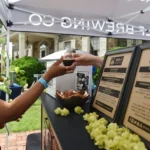
At Midstate Distillery, tastings reveal the subtlety in flavors that tongues have missed over the years. Tours show off the Double Diamond copper still and the rest of the process that is, “at its core, vaporization and recondensation,” which separates and refines the alcohol created in fermented liquid, says Healy.

The major distillers, having seen the surprised look on big brewing’s face when craft brews cut into their business, could be a bit on the offensive. More and more, Healy sees commercials “for products that appear to be more craft-focused.” He’s fine with that. After all, it will “also help turn people on to craft distilling.”

“I’m hoping our products evolve and, as time goes by, we just continue to innovate and release better and newer products as we go,” he says.


Midstate Distillery is located at 1817 N. Cameron St., Harrisburg. For more information, visit www.midstatedistillery.com or call 717-745-5040.
 

Continue Reading

Community Corner: Notable March Events

March Community Corner

Leads Over Lunch
March 1: Mix and mingle with business leaders at this free lunch hosted by Harrisburg Regional Chamber & CREDC, 3211 N. Front St., Suite 201, Harrisburg, 11:30 a.m. to 1 p.m. For more information, visit harrisburgregionalchamber.org.

Taste of the Chamber
March 2: West Shore Chamber of Commerce will host “Taste of the Chamber” at Appalachian Harley Davidson, Mechanicsburg, 4 to 7 p.m. Enjoy culinary masterpieces from the area’s best restaurants, hotels and caterers, as well as a raffle. Tickets are $25. For more information, visit wschamber.org.

Visual Arts in Health Care
March 2: The World Culture Club of Central PA presents a free program, “Visual Arts in Health Care,” at Penn State Hershey Medical Center, 500 University Dr., 5th Floor, featuring speaker Elizabeth Blyler, an art education graduate of Penn State. More information is at worldcultureclubpa.org.

Living Tobacco Free
March 3, 17, 29: PinnacleHealth will host “Introduction to Tobacco Free Living Session” at PinnacleHealth Polyclinic Campus, Landis Building, 2501 N. 3rd St., 6th Floor, Harrisburg, 10 a.m. Visit pinnaclehealth.org for more details.

Lost In Las Vegas
March 5: The Art Association of Harrisburg will host its “Lost in Las Vegas” Bal Masque at the Radisson Hotel, Camp Hill, 6 to 11 p.m. Enjoy live music, hors d’oeuvres, a silent auction, a caricaturist, costume judging, wine tasting and more. Reservations are $100 per person. Visit artassocofhbg.com for more details.

Maple Sugar Festival
March 6: Head to Fort Hunter Park, 5300 N. Front St., Harrisburg, for the Maple Sugar Festival, 12 to 4 p.m. Kids and adults can have hands-on fun tapping a tree and watching spile-making. Have a sample of real maple syrup on ice cream and shop for delicious maple products. Visit forthunter.org.

End of Life Seminar
March 8: West Shore Chamber of Commerce will host the third seminar in a four-part series exploring elder estate planning, hospice care and funeral services at Bethany Village, Mechanicsburg, 6:30 to 9 p.m. This seminar will open with a light meal. For more details, visit wschamber.org.

Steam Engine Presentation
March 8: Harrisburg Chapter of the National Railway Historical Society will host Rick Musser, vice president and assistant chief mechanical officer of Strasburg Rail Road, for a presentation on “Operating and Maintaining Vintage Railroad Equipment,” at Hoss’s Restaurant, 743 Wertzville Rd., Enola. Business meeting and speaker begin at 7 p.m., with a meal available as early as 5 p.m. For more details, call 717-238-2131.

Diabetes Presentation
March 8: PinnacleHealth will host “Diabetes and You: Signs, Symptoms and Treatment” with Dr. Marianna Antonopoulou at Giant Food Store Community Center, 2300 Linglestown Rd., Harrisburg, 7 p.m. For more information, visit pinnaclehealth.org.

Pint Night
March 9: Grain + Verse hosts “Pint Night” with Aldus Brewing Co., 6 p.m. Buy a brew from this Hanover-based brewery and keep the pint glass. More information is at grainandverse.com.

Perry County’s Box Huckleberry
March 10: Join Perry County Penn State Extension Master Gardeners from 7 to 8:30 p.m. for a free presentation on Perry County’s Box Huckleberry at the Perry County Penn State Extension Office, 8 Carlisle St., New Bloomfield. Pre-registration is requested. Visit extension.psu.edu for more details.

Damselflies and Dragonflies
March 10: Ned Smith Center for Nature and Art, 176 Water Company Rd., Millersburg, presents the first installment of its “2016 Discovery Lecture Series: Damselflies and Dragonflies,” with retired educator and volunteer naturalist Tony “Doc” Schoch at 7 p.m. Visit nedsmithcenter.org.

Foreign Film Friday:
March 11: Join Fredricksen Library for “Zero Motivation,” an Israeli film featuring funny, quick-witted female characters. Two showings are at 2 and 7 p.m. Rated PG-13. Visit fredricksenlibrary.org for more details.

Spring Craft Show
March 11-12: Enola Emmanuel United Methodist Church, 22 Salt Rd., Enola, will host its 11th Annual Spring Arts & Crafts Show featuring more than 65 vendors, March 11, 4 to 8 p.m., and March 12, 9 a.m. to 2 p.m. For more information, contact [email protected] or 717-732-6378.

Steam Engine Presentation
March 12: Harrisburg Chapter National Railway Historical Society’s annual Railroad Show & Collectors Market will be held at First Church of God, 245 W. High St., Middletown, 9 a.m. to 3 p.m. Donation at the door is $5; kids 12 and under are free. For more details, call 717-439-9744 or email [email protected].

Local Lunch
March 12: Join Friends of Midtown at the group’s monthly community lunch, which will be held at Zeroday Brewing Co., 250 Reily St., Harrisburg, 12 to 2 p.m. Contact [email protected] or visit friendsofmidtown.org.

Concert & Workshop
March 12: J.S. Bach’s “St. Matthew Passion” will be performed by the Bach Choir of Baltimore, members of the Susquehanna Children’s Chorale and soloists, 7 p.m., at St. Stephen’s Episcopal Cathedral, Harrisburg, with a pre-concert workshop on the “Language of the St. Matthew Passion” preceding at 6:15 p.m. Details at musicbytheriver.org.

Susquehanna Ducks and Geese
March 13: The Ned Smith Center, 176 Water Company Rd., Millersburg, will host its annual “Ducks and Geese of the Susquehanna River” program from 8 a.m. to 1 p.m. Join Scott Bills, retired land management group supervisor at the PA Game Commission, to learn about waterfowl and their seasonal migration patterns. For more details, visit nedsmithcenter.org.

Bowl for Kids’ Sake
March 13-20:  Big Brothers Big Sisters of the Capital Region will host “Bowl for Kids’ Sake” this spring at area bowling alleys: March 13 at Red Crown Bowling Center, Harrisburg; March 19 at Cedar Lanes, Lebanon; and March 20 at Midway Bowling Center, Newville. For details and a complete schedule, visit capbigs.org.

Soup & a Bowl
March 14: The 23rd annual Soup & a Bowl, Harrisburg, will be held at the Radisson Hotel Harrisburg, 11 a.m. to 2 p.m. The St. Patrick’s Day-themed event will include a variety of soups, breads, desserts, live music, pottery throwing and a raffle. Locally crafted limited edition commemorative Central Pennsylvania Food Bank bowls can be ordered in advance. Visit centralpafoodbank.org for more details.

Great Decisions 2016 
March 14 and 28: Fredricksen Library will host “Great Decisions,” America’s largest world affairs discussion program, with topics chosen by Foreign Policy Association experts. Topics for March are “Migration” (March 14) and “The Koreas” (March 28). Cost is $10 per individual session or $40 for all sessions. Visit fredricksenlibrary.org.

Women of Excellence 
March 16: The YWCA Greater Harrisburg will honor 34 outstanding women who dedicate time and talent to making a difference in central Pennsylvania at the Hershey Lodge, 325 University Dr., Hershey, 5:30 to 8:30 p.m. Cost is $100 per seat. For registration and a full list of honorees, visit ywcahbg.org.

Management of PA Forests
March 17: The Cumberland Woodland Owners Association will host Dr. James Finley, Penn State professor of forest resources, at the West Pennsboro Township Municipal Building, 2150 Newville Rd., Carlisle, 7 p.m. For more information, contact Fred Peabody (717-776-3565; [email protected]) or Mike Waldron (717-677-7317; [email protected]).

GreenCon 2016
March 17: GreenCon, central Pennsylvania’s annual Green Building Conference & Expo, will be held at Dickinson College, 28 N. College St., Carlisle, 7 a.m. to 6 p.m. This year’s focus will be on resiliency in the built environment. For more details, visit usgbc-centralpa.org.

3rd in the Burg
March 18: Enjoy the best of Harrisburg during 3rd in the Burg, the monthly arts and culture event at galleries, restaurants and art spaces throughout downtown and Midtown. Check out all the action at thirdintheburg.org.

Ready, Set, Grow
March 19: Join Penn State Extension Master Gardeners and Educators from 9 a.m. to 12:30 p.m. at the Penn State Extension office, 310 Allen Rd., Carlisle, for its “Ready, Set, Grow!” workshop. Registration fee is $10; register by March 16. For more, visit extension.psu.edu/cumberland.

Board Game Day
March 19: Get to know your neighbors with friendly rounds of popular board games at HACC Midtown, 1500 N. 3rd St., Room 224, 11 a.m. to 3 p.m. Food and games will be provided; you may also bring your own games. All ages and skill levels are welcome. For more details, visit friendsofmidtown.org.

St. Patrick’s Day Parade
March 19: Enjoy the 16th Annual Harrisburg St. Patrick’s Day Parade, beginning at 2 p.m. Bring non-perishable food items with you to the parade to benefit the Central PA Food Bank. For more information, including parade route, visit craicpa.org.

Dauphin County Egg Hunt
March 20: Head to Fort Hunter Park, 5300 N. Front St., Harrisburg, for an Easter egg hunt, 2 to 5 p.m. There are hunts scheduled for ages 2 to 3 at 2:30 p.m.; 4 to 5 at 2:45 p.m., 6 to 7 at 3 p.m.; and 8 to 9 at 3:15 p.m. Enjoy face painting, pony rides and kids’ activities. For more details, visit dauphincounty.org.

Evening with Seth Godin
March 23: Harrisburg Regional Chamber will host “An Evening with Seth Godin” at its annual spring gathering at Hershey Lodge, 325 University Dr., Hershey, 5:30 to 8:30 p.m. Godin is one of today’s most influential business thinkers and the author of 18 bestselling books

Latin American Talk
March 24: Foreign Policy Association of Harrisburg will host R. Evan Ellis, professor of Latin American Studies, at the U.S. Army War College at the Radisson Hotel Harrisburg, Camp Hill, 7:30 p.m., with a dinner at 6:30 p.m. Ellis will discuss the region’s emergence onto the world stage. For more information, visit fpa-harrisburg.org.

Practice Patience
March 26: Kalpa Bhadra Kadampa Buddhist Center, 251 Wiconisco St., Harrisburg, will host “Finding Freedom from Frustration: The Practice of Patience,” 10 a.m. to 3 p.m. This course is $35 for the day and will be taught by Julie Francisco. For more information, visit meditationpa.org.

Special Film Event
March 31: Filmmaker Aviva Kempner presents her latest film “Rosenwald: The Remarkable Story of a Jewish Partnership with African American Communities” at the Jewish Community Center, 3301 N. Front St., Harrisburg, at 7 p.m. Tickets are $10 and are available at jewishharrisburg.org or by calling 717-236-9555.


Continue Reading

Why Art? Chekhov–and questions with no answers.

Screenshot 2016-02-26 16.48.40“The role of the artist is to ask questions, not answer them.”

This famous quote from Russian playwright Anton Chekhov is a good indicator of how he viewed storytelling. Chekhov stated the role of the artist in countless quotes—why we make it, why it is important, and how it inexplicably connects to our humanity. Written in 1895, his play, “The Seagull,” is his tribute to these questions, and it continues to captivate artists and audiences alike more than 100 years later.

Chekhov changed theater when he wrote “The Seagull.” By having the courage to create a play in which seemingly nothing happens, he urged his audience to focus deeper within themselves for truth, rather than allowing external elements, like sword fights and dance numbers, to guide them. In doing so, feelings became actions and true action was no longer needed. As a result, the play transcends the ordinary and becomes intimate and engaging. Chekhov opened the door for artists to become more personal with their work by creating characters who are real to the world in which they live.

There is a perception that art is a hobby that one simply takes up out of enjoyment, but Chekhov fundamentally disagreed. In “The Seagull,” Chekhov created characters who are bounded to art and creating, so much so that it hurts them.

In an odd way, “The Seagull” is a story of hope. When detailing the events of the play, you wouldn’t think so. Many characters are miserable and locked in unhealthy patterns. The play even ends [spoiler] in a suicide.

While these aspects are all things Chekhov explicitly states, the greater importance is in the subtext. Thomas Weaver, associate artistic director at Gamut Theatre and the director of this show, says that this is what draws both actors and audiences to the play.

“For actors, it’s what he doesn’t write that fascinates us,” Weaver said. “Chekhov does a wonderful job of telling us that we must create and trusts us to figure out why.”

Beyond what Chekhov overtly expresses, he also implies that one of the most important parts of life is letting yourself be free of the things that hold you back. The seagull in the play symbolizes being unable to draw away from things that hurt you, but it also suggests the tremendous potential for freedom. The play connects to human experience in that it touches on unconditional and irrational love, being true to oneself, societal status and even addiction. Weaver believes that this is what makes it accessible to audiences.

“We realize the powerlessness that we have, and, when we come to that realization, it’s actually quite empowering,” he said.

Although Chekhov leaves us with questions, he is sure to give us enough clues to find the answers. By trusting his audience—giving us the power to interpret his story on our terms as it pertains to our lives—his play is successful.

There is, of course, a cost to creating—a cost to art and a cost to love. Chekhov details these costs repeatedly, but, when a character from the play says, “It’s so hard being in your play… there are no living characters,” Chekhov not only communicates what we all must give away of ourselves but also what we must keep. He presents a universally relatable conflict, and, in his world where the reality is so contained, it is up to us to figure out the truth in breaking free, like the seagull.

 “The Seagull” plays March 12 to 26 at the new Gamut Theatre located at 15 N. 4th St., Harrisburg. The cast features Tara Herweg-Mann, J.C. Payne, Jeff Luttermoser, Amber Wagner Mann and J. Clark Nicholson. For more information, visit gamuttheatre.org or call 717-238-4111.


MARCH
THEATRE EVENTS
AT HARRISBURG’S PROFESSIONAL
DOWNTOWN THEATRES

Through March 5
Popcorn Hat Players present
“STONE SOUP”
at Gamut Theatre
Wednesday and Thursday at 10 a.m.
Saturday at 1 p.m.
Tickets: $8
GamutTheatre.org

March 9 & March 10
2016 Studio Workshop Showcase
presents an evening of scenes
from the comedies of Neil Simon
7:30 p.m. at Open Stage of Harrisburg
Free admission

March 12 at 2 p.m.
Open Stage of Harrisburg presents
“THE DIARY OF ANNE FRANK”
at Whitaker Center
Tickets: openstagehbg.com

March 12-26
Anton Chekhov’s
“THE SEAGULL”
Fridays & Saturdays at 7:30 p.m.
Sundays at 2:30 p.m.
Tickets at GamutTheatre.org

March 29 & March 31
Open Auditions for
“THE MERRY WIVES OF WINDSOR”
More info at GamutTheatre.org


Continue Reading

Razing the Bar: A sober assessment of Harrisburg’s attempt to shut down the Third Street Cafe.

Screenshot 2016-02-26 16.37.13When you walk into the Third Street Café, your first reaction may well be: This is what all the fuss is about?

The bar is basic, unimposing, a snug space that clocks in at no more than 700 square feet, most of it occupied by a long bar with maybe a dozen seats.

It seems an odd place to generate so much passion, one tiny business in a city dense with them.

As a Midtown resident who’s witnessed all manner of human dysfunction near the bar at the corner of N. 3rd and Calder, I have no great affection for the Third Street Café. But, as someone who writes often on urban subjects—and about Harrisburg specifically—I find the issue fascinating.

The case of the Third Street Café is something of a microcosm of so many issues facing cities today, particularly in changing neighborhoods. It’s a battle between private interests and public welfare; it’s a complex story involving class, race and community.

Legal Case: It’s been nearly a year since Harrisburg first notified the Third Street Café that it was revoking its business license. Nonetheless, the bar remains open, which may indicate that the city’s pure legal case is not that strong. That’s certainly what the bar’s attorney, Chris Wilson, believes—and he has let me know his position in no uncertain terms. The thing is: he has a point. The city cited nine alleged criminal incidents in or near the bar to support its contention that it should be closed. Several, however, were not linked to bar patrons, others were relatively minor and the most serious one, an alleged drug deal, involved a Harrisburg police operation. Since then, a December shooting just outside the bar, which included two men who had been briefly inside, may have given the city additional support for its position. Still, to me, the city’s legal case is hardly a slam-dunk, which, to the bar and its attorney, is what matters most.

Business/Property Rights: In this country, denying someone the right to legally run a business is serious stuff, something acknowledged by all sides in the conflict. That’s clearly a principal concern of the Republican county judge, Andrew Dowling, who, last September, allowed the bar to remain open pending a decision because of the “irreparable injury” the bar’s owner, Tony Paliometros, would suffer. Dowling later barred the city from fining Paliometros until the city’s License and Tax Appeal Board issues a verdict on the city’s refusal to issue a 2016 license.

Community Impact: The bar has acknowledged problems near it, but has absolved itself of blame, saying that it has the simple bad luck of operating in a high-crime area. Moreover, Wilson has said the bar has acted in good faith by increasing its vigilance, installing exterior cameras and offering to share camera footage with the police. Nonetheless, the city believes that the bar still attracts people who engage in undesirable behavior—that it acts as a magnet for trouble. On this point, I have to side with the city. I’m on that block almost every day and can attest that, while the December shooting may have been an anomaly, problems near the bar—including vagrancy, public intoxication, littering, loitering, panhandling and loud, drunken arguments—are practically daily occurrences.

Municipal Prerogative: In its business license handbook, Harrisburg explicitly states that it reserves the right to revoke a license for criminal behavior, “gross negligence” or allowing a “public nuisance.” To date, that clause, a potentially powerful governmental tool, has proven difficult for the city to enforce. So, is this the right way for Harrisburg to close down the bar? Wilson says no, that the PA Liquor Control Board is the place to go to seek redress, that the PLCB has an established process to yank the liquor licenses of so-called nuisance bars (a Section 611 action). He told me that closing a bar can be a “quick procedure” and, for proof, linked me to a 25-year-old case against a Harrisburg bar called Vanity that was closed after just 2½ months. I found his example to be selective since, more typically, that process can continue for years (in fact, even the Vanity case took three years to fully adjudicate). To that point, the Pittsburgh Post-Gazette ran a story in December how most Section 611 actions in that city drag on and on, allowing troubled and crime-ridden bars to remain open indefinitely.

Race/Gentrification: The 3rd Street Café’s patrons are mostly—though not exclusively—African American and working class, leading some to claim that Mayor Eric Papenfuse wants to clear the area for more upscale (and whiter) projects. And, whenever this issue comes up, someone points to the mayor’s own business interests in the neighborhood. Papenfuse has countered that he also targeted the Taproom next door, a bar with a more diverse clientele, and the Royal Pub, a bar located Uptown (both have since closed). This may be the thorniest issue in the debate. Closing the bar indeed would shut down a business that caters mostly to black customers (though its owner is a white guy from the suburbs). But several developers have told me that they believe the bar (and what goes on outside it) is holding back revitalization of the critical, centrally located 1400-block of N. 3rd Street.

So, there it is, fascinating complexity in one tiny bar. If you’re the bar’s attorney, the legal case probably matters most; if you’re the judge, it may be the rights of the business owner; if you’re the mayor, it may be the general improvement of Midtown and even Harrisburg itself.

My focus is on community impact. No business has the right to detrimentally affect a community, creating concerns about safety and retarding its development. In my view, that’s what’s happening at the corner of 3rd and Calder.

Lawrance Binda is editor-in-chief of TheBurg.


Continue Reading

A Place for Second Chances: Ex-offenders find a comfy home, respect at Kera’s House.

Screenshot 2016-02-26 16.39.17Most ex-offenders find themselves in dormitory-style halfway houses or shelters after incarceration.

Many have bad credit or cannot return to their previous living arrangements. They tend to live in unsavory places with slumlords who don’t maintain their houses. To make matters worse, most people don’t want to associate with ex-offenders, much less employ them, said Linda Dean, founder of Kera’s House.

Dean is on a mission to help people who have served prison time. She and her late husband opened Kera’s House to assist former inmates who want to become self-sufficient and productive members of society.

“I show them respect when they come through the door,” said Dean, who coined “Kera” from the initials of her children’s names. “I address them as Mr. Brown or Mr. Smith. They call me ‘Mrs. Dean.’ They reciprocate that respect to me and my house.”

Kera’s House helps these men feel like they’re truly at home. The house is clean and mulberry-scented. The shiny hardwood floors reflect light. A 7-foot couch sits in front of an antique woodstove fireplace. The men share a kitchen and common living areas, taking care of the house together, but each has his own bedroom. The house is accessible to shopping, a laundromat and public transportation.

“I provide these men a home I would live in myself,” Dean said. “When they’re surrounded with a safe, positive living environment, they feel motivated about their prospects. They have incentive to live well, because they see it’s possible. I believe it inspires them to make life changes.”


Second Chances

Dean chooses her residents based on their potential for success—people she can invest in.

“They must want to help themselves take advantage of a second chance,” she said.

She requires residents to be working, looking for work, in school earning a degree or learning a trade. She looks for focused men who have a life plan.

Along the way, she helps them find their passion and formulate their plans. Some need a push because they place limitations on themselves. They need someone to believe they can reach their goals so they can believe in themselves. Dean also urges volunteering because “you meet people from all walks who can open doors for you.”

On the housing application is a critical question: “Do you want assistance with your personal goals?”

Dean works closely with probation officers and various community and referral agencies to connect residents with health care, educational, employment and life skill services. She also leverages a partnership with Christian Recovery Aftercare Ministry, Inc., which provides pre-release and re-entry services.


That First Step

Thirteen house rules make up part of an ex-offender’s probationary plan at Kera’s House. These include chores, a curfew, a ban on foul language and no sagging pants below the waist. Dean provides her residents with stern mothering to enforce the rules.

“When they go out on their own, they need to learn to keep a responsible routine,” she said. “Rules make the house run smoothly.”

Three strikes, and they’re evicted. One strike if the offense is drugs.

“They wonder why I’m so tough on them. I don’t stand for whining. I push them to do better,” Dean said. “Some just don’t know how to take that first step.”

Some of the rules, such as “no guests,” may seem harsh.

“There’s no growth when they have drama,” Dean said. “Kera’s House is a place for them to get themselves together. That isn’t going to happen if they let the world in. They stay focused if they keep the outside out.”

When residents’ life plans don’t follow the happy path, Dean encourages them to bring her their problems. Sometimes, their hours get cut at work. They get behind on rent. She helps them find solutions.

“Pride makes it hard for them to reach out sometimes,” she said.

Indeed, many have become hardened through a life of tough times.

“They’ve lived in the gutter, in the street, house-to-house,” she said. “They’re still standing.”

Dean dearly misses her husband’s side-by-side passion for their mission. She admits it’s sometimes hard for her to generate enough money to cover all the expenses to maintain the self-funded house.

“More often than not, I’ve had to dip into the savings that my husband left me,” she said.

Seeing her residents succeed energizes Dean with passion for her work. A recent success story was a young man who focused himself until he reached his goals. He graduated last spring from HACC’s culinary school, working while in school. Then he took a job offer in Pittsburgh. Dean gushed when she said, “People like him fill your heart up.”

Seeing so much homelessness fuels her to continue Kera’s House.

“When you’re disenfranchised, you’re beaten,” she said. “When you have a nice place to live, you have incentive to do better. You start planning to do something with your life. You work hard and carry out your goals.”

Despite the struggle, Dean plans to do everything she can to keep Kera’s House open.

“I hope Kera’s House will continue to provide quality housing,” she said. “I always tell the men, ‘As long as you’re willing to help yourself, we’re willing to help you. Kera’s House is more than just a place to stay.’”

Linda Dean can be contacted at:

Kera’s House, Inc.
c/o Linda Dean
101 S. 2nd Street #804
Harrisburg, PA  17101


Continue Reading

Learning Curve: It’s been an adjustment, but Harrisburg students have built new friendships, lives at DC Tech.

DC Tech students Cedrickia Hawkins, Mohammad Tanveer, Nila Cobb and Jeremiah Ellison.

DC Tech students Cedrickia Hawkins, Mohammad Tanveer, Nila Cobb and Jeremiah Ellison.

It’s been five years since Harrisburg students transferred to the Dauphin County Technical School, following the closure of the district’s Career Technology Academy.

So, how’s it going for city students?

Based on my informal survey, the answer seems to be, “Not perfect, but pretty well.”

Nila Cobb, an 11th-grade web design student from Harrisburg, said she was “so surprised” by the friendliness of students when she first came to DC Tech in the ninth grade.

“Everyone was so nice and polite, and you had so much support,” she said. “Coming here definitely made me a better person, but I’m still myself.”

Cedrickia Hawkins, a 12th-grade carpentry student, admitted that “it was tough” when she first came to the tech school.

“At Harrisburg, there wasn’t a dress code or a lot of rules,” she said. “But coming here was good. It was much friendlier here, especially with the seniors. It was ‘Hi, hi, hi’ whenever you passed somebody in the hall. The teachers were happy here, too.”


So Much Help

It all started in January 2011 when 12 carpentry students transferred to Dauphin County Tech after Harrisburg’s John Harris campus closed its vocational program. Four Harrisburg sophomores attended Tech’s morning session, with juniors and seniors attending in the afternoon.

“One of the students said that this was carpentry on steroids here,” said Dauphin County Technical School Director Peggy Grimm. “The (John Harris) program was dying financially,”

Preceding the Harrisburg students’ arrival was carpentry instructor Tim Carroll, who transferred to DC Tech in November 2010 after teaching 21 years at John Harris.

“We were thrilled that we were able to hire Tim Carroll,” Grimm said. “He was instrumental in our transition process. Everyone involved in that whole transition process had the kids in the forefront. It involved a lot of work.”

Carroll explained the differences between the two programs.

“Both places have their good points,” he said. “It’s so much easier here (at DC Tech) because we have so much help. Carpentry ran smoothly at John Harris; they just kind of left us alone. I worked by myself for so long that I had to get used to having aides.”

Today, 240 Harrisburg students attend DC Tech, with some enrolled in each of the school’s two-dozen programs. The school’s total enrollment numbers around 1,000, pulling students from much of the county.

Harrisburg students attend the tech school on a tuition basis, meaning that the district pays a flat rate per student. Member school districts pay annual fees based on a weighted five-year attendance average. Currently, administrators are considering upgrading Harrisburg’s status to a member school district.


High Expectations

Grimm said there were definitely “bumps in the road” when Harrisburg students first transferred to DC Tech.

“We had expectations for them, and they were high expectations,” Grimm recalled. “We had a few fierce conversations. A few students ended up going back to Harrisburg.”

In particular, some students objected to the uniform requirement.

In 2009, the school adopted a dress and grooming policy that requires students to wear “professional dress.” This involves shirts that clearly display the DCTS logo or an approved design or embroidery for individual programs. Programs such as food service, health assistants or diesel technology require additional garments like scrubs or coveralls.

“Our uniform requirement was a big thing for them, but, as time moved on, we stayed consistent with our expectations,” Grimm said. “Our expectations for respect stayed. Some Harrisburg students still have discipline problems, but so does every district.”

With time, Hawkins, a senior, said she came around to the requirement.

“I really understand now why they have a dress code here,” she said. “It’s more professional.”

Jeremiah Ellison, a 12th-grade drafting and design technology student, said he tended to stick with other Harrisburg students when he first came to the tech school in ninth grade, but began to mix with others after a while.

“As the year went by, I started to talk to more and more people, and it became easier for me,” he recalled.

So what does Ellison find different about DC Tech compared to Marshall Math Science Academy, which he attended in the Harrisburg district?

“There were only about 150 kids at the Math Science Academy,” he said. “It was very small and very quiet. In Harrisburg, we played around a lot more. Here (at DC Tech) we try to mix it up, you know, like with work and play.”

Mohammad Tanveer, a 12th-grade electronics technology student, moved here from Brooklyn, N.Y. He spent a year in the Harrisburg district before moving on to DC Tech. As with other Harrisburg students, it took some time before he got used to his new school.

“I was like, ‘Where are the metal detectors?’” Tanveer recalled with a laugh. “I saw a wide variety of people that I never saw before. I heard barking and said ‘What’s that?’ and then I realized that there’s a veterinary assistant course here.”

New students must get comfortable working not just with new faces but for the good of their team.

“Teamwork is a huge element of what we have here,” said Principal Jon Fox. “The kids have to work together.”

Carroll, the John Harris instructor who moved to DC Tech, views the situation with a philosophical edge.

“Kids all come here with different attitudes, but deep down, kids are just kids,” he said. “We get rid of the rough edges real quick. Over there (at John Harris), they had to act real tough. It was fight or flight there. Here, kids can relax a little bit.”


For more information about Dauphin County Technical School, visit www.dcts.org.

Continue Reading

A Home, Reborn

For many years, Marc Kurowski dreamed of living along the Susquehanna River, and, one day, while walking his dog, spied a duplex for sale on Front Street.

Like many once-grand riverfront homes, the house long ago had been converted to institutional use, owned for years by Teen Challenge, a faith-based residential rehabilitation program. It then was bought for a condo conversion, but, after some demo work, the new owners changed their minds and decided to sell it. In late 2013, by the time Kurowski got his hands on it, the house was a dilapidated, half-destroyed shell, but he saw tremendous potential for a grand home on a magnificent river.

A principal with K&W Engineers, Kurowski knocked down the wall that separated the two sides of the duplex, adjoining the spaces. It then was a matter of redesigning and rebuilding the interior of the circa-1890s structure.

There were many bumps along the way, including construction delays that turned the renovation into a 20-month slog. But, in the end, Kurowski took a building, abused and damaged for so long, and transformed it into a spacious, stunning, single-family home, topped off by a roof deck with breathtaking views of Riverfront Park and the Susquehanna River.

Photos by Elena Jasic.

Screenshot 2016-02-26 16.41.53 Screenshot 2016-02-26 16.41.38 Screenshot 2016-02-26 16.41.27 Screenshot 2016-02-26 16.41.18

Continue Reading

Something Wants to Happen: New leadership and new energy re-make the MakeSpace.

Screenshot 2016-02-26 16.48.03In 2012, a new arts group formed in Harrisburg, full of energy and promise.

It was called the MakeSpace, a collective based on the idea that artists could take a dilapidated building in a transitional neighborhood, renovate it and transform it into a haven for the arts: studios, gallery space, live music, creative collaboration.

Almost four years later, the MakeSpace has carved a niche for itself in Harrisburg, but the energy has dissipated. Nonetheless, the promise is still there.

Enter Mikey Rioux, a 36-year-old multi-disciplinary artist and long-time Chicago resident who has taken over as head of the group—and the building.

“The MakeSpace feels very insular right now,” he said. “That’s something that I think about a lot. I feel a huge responsibility to make this space more available and to serve the community better.”


Pretty Solid

Despite being a Midtown fixture for years, the MakeSpace still feels like one of those things that wants to happen.

Established by artist Liz Laribee and a steering committee in 2012, the renovated row home features eight studios and a gallery portion.

“When the MakeSpace first opened, I had no idea what to expect,” said Michael Fisher, the only original artist who still maintains a studio there. “The energy was pretty clear those first couple months. For six months, we would have, like, 200 people coming through the door for every event.”

In its heyday, Fisher said, there was at least one show per month. “The first year was a pretty solid year,” he said.

That tapered off in the winter of 2013, by which time the collective energy was hard to rally.

“There was no bad blood between anyone,” said Fisher. “There was no specific thing that happened”—though old, bursting pipes didn’t help—“but the energy levels dropped for all of us.”

Moreover, he discovered that people in Harrisburg often prefer to stay home at night than go out.

“It’s ultimately easier not to do something than to do something,” said Fisher in reference to both the MakeSpace’s artists and its audience.


Unique Corner

When Rioux first visited Harrisburg in June 2014, his friends told him he should meet Laribee. They hit it off over coffee at Little Amps and, after he moved to Harrisburg, she took him on a tour of the MakeSpace. He soon took over management of the gallery space.

“We were here for the 3rd in the Burg opening, and I was trying to figure out how much initiative I could take in the space,” he said.

Laribee proposed selling him the LLC and putting the mortgage in his name. Rioux took ownership of the MakeSpace in October.

“I’m so glad that MakeSpace has found a new direction to take,” said Laribee, who, along with many of the artists who initially rented studios there, renovated the building. “MakeSpace has held a unique corner of the arts in Harrisburg. It will be so interesting to see the shapes it takes with new leadership.”

Similarly, artist Meisa Chase said she looks forward to seeing how Rioux drives the mission forward.

“With any project like this, it takes a lot of energy,” said Chase, who’s been with the MakeSpace since its inception. “It’s to be expected, since a lot of us are young, that the energy level will drop off. That’s very usual with artists.”

But it is that very energy that allows the MakeSpace to be agile enough to respond to the needs of those who want a hub for making art in Harrisburg.

“It’s changed,” Chase said. “It’s been free-form, and whoever wants to push it in any direction can.”

Rioux’s vision involves relieving the MakeSpace of having to run solely on collaborative energy and to establish some financial sustainability.

Besides fundraising, he wants to keep more consistent weekly hours so the eight artists who rent studios there have more opportunities for their work to be seen besides during 3rd in the Burg. Otherwise, Rioux is committed to the MakeSpace’s original mission, since it still addresses voids in the arts in Harrisburg.

“We are going to continue doing what the space does really well,” said Rioux. “D.I.Y. music shows. I’d like to get back to offering classes and workshops on a regular basis. Providing gallery space for local and regional artists to exhibit their work—those are the things that we’re already doing that I think we can double down on, do more consistently and do a better job of. I’ve already got the whole 2016 gallery season scheduled out.”

That is not to say there are not plans for expansion should everything come together. Rioux has several big ideas: practice space for bands, showcases for dancers, artists-in-residence and “secular Sunday”-style free lectures. But it is all in the service of helping people—as many people as possible—make art in Harrisburg.

“Harrisburg needs more opportunities for creative expression,” he said.

The MakeSpace is located at 1916 N. 3rd St., Harrisburg. For more information and a schedule of events, visit www.hbgmakespace.com.


Continue Reading

Student Scribes: The Not-So-Invincible Father

Quarter to 8 the morning of March 3, 2013, while I sleep soundly in the next room, my father complained of a headache. He held his head in his hands for a split second, groaning and complaining of pain before his body would deny him self-control, before constants would become variables. At 8 a.m. on that Sunday morning before church and family brunch, my father suffered a hemorrhage stroke. He was 51 years of age.

There are three different kinds of stroke: hemorrhage, transient ischemic and ischemic. A hemorrhage stroke happens when a blood vessel bursts and bleeds, causing tissue damage. A transient ischemic, or “mini stroke,” occurs from a temporary blockage in the brain. An ischemic stroke occurs when a blood vessel that takes blood to the brain becomes blocked, most commonly a blood clot. According to cdc.gov/stroke.htm, stroke is the third leading cause of death in the United States. It claims more than 140,000 people die each year from stroke. Forty percent of those deaths occur in males, and 60 percent occur in females.

My mother rushed into my room, her cell phone crunched against her ear, fear in her eyes. Still in her pajamas, she pulled me from my bed, tore my blankets away from me and, in a professional, secretary-like tone, she instructed me to flag down the ambulance. “It’s okay, I’m sorry. Just go. Daddy is very sick,” she said. She then spoke loudly into the phone as she left me. My hands began to shake as my mind drifted away. I tripped down the stairs, my head so full that my thoughts ceased to exist. As I stood on the frost-covered grass of the barn hill, I ground my teeth until my temples pulsed. The sheep bleated at me as I stared down the road, my feet carrying me to my mailbox. The ambulance promptly pulled in, breaking branches as they drove under the trees covering the driveway. After throwing our belongings away from the front door and showing the EMTs the way upstairs, I stood in the kitchen, listening to the clamor in my parent’s room. Soon, they came tromping down the stairs: my father looking like a lamb for slaughter, his eyes that of a stranger, my scared mother and the cluster of EMTs.

Anyone who knows my father would agree he was always a hard worker. My family would describe him as a workaholic. For as long as I can remember, my father has worked on average eight- to 15-hour days. He owns a repair shop, towing business and car lot, which, until his stroke, he managed on his own, along with a boarding house and the farm where we live. He managed all of this while still caring for his five children, wife and an array of lost souls who seem to gravitate toward his commanding personality. Growing up, working in a feed mill, he learned the value of endless hours of backbreaking work. His garage has always been his escape, full of raggedy friends and broken cars. His hands have been stained with grease since seventh grade. Arguably, from either working around motors or late nights with loud amps around him and chewed up drumsticks in his hands playing in a garage band, his hearing had been damaged. Still, stroke came like a thief in the night.

According to MDStrokeassociation.org, every year approximately 795,000 people suffer a stroke, 600,000 for the first time, 185,000 recurrent attacks. Atrial fibrillation, blood disorders such as sickle cell disease and anemia, diabetes, atherosclerosis and heart disease increase the risk of stroke. The most common risk factors for stroke are high blood pressure, high cholesterol and obesity. Blood pressure of 140/90 or higher is the leading risk factor for stroke. When blood pushes too forcefully against the walls of the arteries, it can damage or weaken them.

Just two weeks before the stroke, my father began taking high blood pressure medication. He was nearly crushed under a car that slipped off the jack, creating muscle strain. He began to display irrational anger, and his temper became unpredictable. He had been complaining for some time of blurred vision and frequent headaches. At the time, we did not recognize these as stroke warnings. Many people are unaware of the warning signs of a stroke. A popular phrase in the stroke awareness realm is BE FAST: balance, eyes, face, arms, speech, time—relating to an individual’s physical appearance when having a stroke. “Balance” is an individual’s ability to equally distribute body weight. A stroke victim loses this ability. “Eyes” refers to a person’s vision, which may become shaky or blurry. “Face” refers to the person’s appearance, which may include drooping of the skin due to the lack of muscle control. This can make the individual appear to be melting. “Arms” refers to the control or lack of in an individual’s arms. “Time” plays a critical role for a stroke victim. If you suspect an individual is having a stroke, seek medical help as soon as possible.

After living in the ICU for 40 days, my father transitioned to rehab, where he remained for another two weeks. On April 20, he returned home, but he would be bed-ridden for two more months. He maintained a physical therapy regimen for the next year. On March 19, 2014, a little more than a year from the stroke, he was released from rehab.

Each year since his stroke, he is required to have a CAT or MRI scan performed to ensure his good health. He will remain on Losartan Potassium, Citalopram, Metoprolol, and levetracctam for the rest of his life. Many of my father’s nurses, doctors and friends refer to him as a “walking miracle.” Those who survive strokes often suffer emotionally and physically crippling disabilities. As my father’s rehabilitation nurse said, “He is a lucky, stubborn man.”

My father now works eight to 12 hours rather than eight to 15. He and my mother run the repair shop, towing business and car lot together. They still own a boarding house and run the 34-acre farm we live on. We live with the threat of a seizure hanging over our heads. My father suffers from vitamin deficiencies resulting in a dependence on electrolyte beverages and snacks high in potassium, as well as anxiety, resulting in the permanent use of medication to manage these deficiencies. He approaches life with a more urgent manner. He suffers from short-term memory loss but his long-term memory became amplified.

“Taking medicine doesn’t really bother me. It makes me slow down, time normal.” he said.

Without the medication, he claims to “move too fast,” feeling as though his brain will “short circuit.” My father has little to no recollection of his stroke, even the time he spent conscious in the hospital is foggy to him. Since his stroke, he has learned the value of a good night’s rest. His sleep is “solid. Fine.” He rarely experiences dreams and when he does, he has no memory of them. He no longer snores. When he over-exerts, he becomes tired, his motor skills slow and his speech slurs. He continues to recover. Although released as “healed” nearly three years ago, he will never be completely healed and that is OK. My family now realizes that every day we have together is precious, frustrating but precious. As my father said, “Stroke or no stroke, use whatever time you have left wisely.”

Galena Conrad is a junior at CASA.

Continue Reading

Get Your Rear in Gear: Don’t shy away from ensuring a healthy colon.

Screenshot 2016-02-26 16.50.09The human digestive tract plays a vital role in our lives and well-being, but we often have an uncomfortable reaction when it comes to discussing it.

Doctors, cancer organizations and others are working to break down barriers such as embarrassment and the “ick factor” to encourage open communication about the colon and rectum, the cancers that can affect them, and important screening tools like colonoscopy.

“Be proud and confident in knowing what’s normal for your body, checking your stool for signs of cancer and getting the appropriate screenings,” said Robert Carman Jr., doctor of osteopathic at Central Pennsylvania Surgical Associates. “I guarantee your doctor has seen and heard it all, so be honest if you have concerns. There’s no place for embarrassment when it comes to saving your life.”

According to the American Cancer Society, early detection and treatment does save lives. When caught early, colon cancer has a 90 percent cure rate, but the right screenings can actually prevent cancer from occurring.

“Colorectal cancer usually develops from pre-cancerous polyps called adenomatous polyps or serrated polyps,” said Carman. “So, in order to reduce the likelihood of colorectal cancer, it is important to have regular checkups and screening to find out if you have polyps and to have them removed if you do.”

The U.S. Preventive Services Task Force recommends screening for colorectal cancer using high-sensitivity fecal occult blood testing, sigmoidoscopy or colonoscopy beginning at age 50 and continuing until age 75. People at higher risk of developing colorectal cancer should begin screening at a younger age and may need to be tested more frequently.

“It is very important to understand that younger people can get colon cancer,” said Carman. “You should be screened before age 50 if you have symptoms such as abdominal or rectal pain, bleeding, change in bowel habits, or a family history of colon or rectal cancer or polyps. If you have a family history of colon cancer, you should be screened 10 years earlier than the age of the family member when he or she was diagnosed, or at age 40—whichever is younger.”

Most people have heard of colonoscopy, a procedure that examines the colon by use of a long, flexible, lighted tube called the colonoscope. Through it, the doctor can view the entire colon and rectum for polyps or cancer. During this same exam, the doctor also can remove pre-cancerous polyps. Because it is the only method that combines both screening and prevention (by removal of pre-cancerous polyps), most gastroenterologists and surgeons recommend colonoscopy as the single best screening exam for colorectal cancer.

“The procedure itself takes about 45 minutes and usually involves sedation, so it’s rarely uncomfortable,” said Carman. “Patients are asked to switch to a clear-liquid diet the day before and use laxatives or a cleansing preparation. The colon must be completely clean for the procedure to be accurate and comprehensive.”

While the cleansing process isn’t pleasant, most gastroenterologists agree that it’s well worth any temporary discomfort to protect your health and your life. When your doctor recommends your cleansing procedure, he or she will account for any medications you take and any health problems you have.

“Right now, only about 60 percent of people who should be screened are getting screened,” said Carman. “Colorectal cancer is the second leading cause of cancer-related deaths for both sexes combined. With the appropriate screening tests, we can significantly reduce that number, detect their cancer earlier and decrease the number of colorectal cancer deaths.”

Lifestyle changes also can reduce the risk of colon cancer. Carman recommends eating more foods that are high in fiber, including whole grains, fruits, vegetables and more cruciferous vegetables, such as cabbage, broccoli, cauliflower and Brussels sprouts.

Increasing calcium intake with low-fat milk, shellfish, salmon and calcium supplements with vitamin D—and decreasing consumption of fats, oils, butter and red meats—are other recommended dietary changes. And, as with all cancers, regular exercise, not smoking and maintaining a normal weight may also reduce your risk.

Patients can also play an active role in their health by choosing the right physician for the colonoscopy procedure.

“I recommend a physician who is board-certified and performs the procedure in a licensed, accredited facility with the appropriate preparation, sedation and monitoring,” said Dr. Carman. “If you’re unsure, ask your primary care doctor for a recommendation, but do your research about experience and credentials.”

Properly administered, colorectal cancer screening is safe and effective, Carman said.

“More than one-third of colorectal cancer deaths could be avoided if all eligible individuals participated in regular screening,” he said. “Take charge of your health and don’t let fear hold you back from getting screened.”

Continue Reading