TheBurg Podcast, April 15, 2016

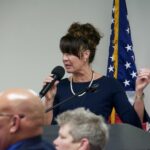
Cluck, left, whose term on the board of Capital Region Water expired in 2015. City Council will consider whether to replace him with a mayoral nominee later this month.

Welcome to TheBurg Podcast, a weekly roundup of news in and around Harrisburg.

To listen to this week’s episode, click here.

April 15, 2016: Larry and Paul discuss why a mayoral board appointment, not usually much of a headline-grabber, drew so much attention this week. They also talk about a traffic conversion study, a Senate hearing on municipal distress and cynicism and growth in city businesses.

TheBurg Podcast is proudly sponsored by Ad Lib Craft Kitchen & Bar at the Hilton Harrisburg.

Special thanks to Paul Cooley, who wrote our theme music. Check out his podcast, the PRC Show, on SoundCloud or in the iTunes store. You can also subscribe to TheBurg podcast in iTunes.

Continue Reading

City Activist Faces Loss of CRW Seat

Cluck, left, whose term on the board of Capital Region Water expired in 2015. City Council will consider whether to replace him with a mayoral nominee later this month.

Cluck, left, whose term on the board of Capital Region Water expired in 2015. City Council will consider whether to replace him with a mayoral nominee later this month.

Capital Region Water is poised to mark the end of an era this month, as the Papenfuse administration seeks to replace board member Bill Cluck, an environmental lawyer and city activist who oversaw a turbulent time in the authority’s history.

At a hearing next week, City Council will consider two nominees, Garvey Presley, Jr., and Charla J. Plaines, to the water and sewer authority’s five-member board.

Presley would fill a spot left vacant by Westburn Majors, who surrendered his seat after being elected to Harrisburg City Council last fall. Plaines would replace Cluck, whose five-year term expired in January 2015.

Council will not cast a final vote on the nominations until April 27, the first legislative session after next week’s hearing. But Cluck did not waste time in objecting to his replacement, urging council at a meeting Tuesday night to meet with him and review his record before agreeing to oust him.

Council members “have absolutely no idea” of Capital Region Water’s achievements during his tenure, he said, nor did they fully appreciate how the authority had fought to maintain public ownership in a period of financial crisis.

“We saved this city from privatizing the water and sewer systems,” he said.

He also said he was disappointed by the way he learned of his replacement from Mayor Eric Papenfuse. “There was no communication other than an email,” Cluck said. “I feel disrespected.”

Papenfuse, for his part, said the decision was not personal and that he was grateful for Cluck’s years of service on the board. “I’m a huge fan of Bill’s,” he said. “I consider him an inspirational model to me personally. I think he’s played just an incredibly important role in bringing accountability to Harrisburg and in the city’s recovery.”

He said the nomination was motivated by his goal to bring greater diversity to the city’s governmental agencies and by a desire “not to burn people out” with too many years of service in any one role.

Even if Cluck’s plea finds favor with some council members, it is unlikely he will be able to hold his seat indefinitely. Papenfuse is empowered by law to nominate members to the boards of city authorities with the advice and consent of council.

“This is my decision for sure,” Papenfuse said.

As a board member, Cluck helped the authority weather a period of crisis and profound transformation. He helped usher it through the transition from the Harrisburg Authority, an all-purpose financing vehicle best known for the spectacular incinerator-related debts that pushed the city nearly to bankruptcy, to a service-focused water and sewer authority with stable finances and a new name.

Since the transition, Capital Region Water has earned a series of affirmations, including a top-five ranking for best drinking water in the country from the American Water Works Association and the 2015 Catalyst Award from the Harrisburg Regional Chamber. Most recently, in March, it secured an investment-grade rating on its municipal bonds from Standard & Poor’s.

In 2011, Cluck also helped initiate a forensic investigation into the Harrisburg Authority’s disastrous borrowings to retrofit the city incinerator. At the time, he was one of only three board members, along with Majors and Marc Kurowski, a civil engineer who is currently the board’s chair.

The findings of that investigation have resonated through Harrisburg politics ever since, drawing citations from the city’s first state-appointed receiver, playing a key role in state hearings on the city’s debt crisis and making a cameo in the 2015 grand jury report approving corruption charges against former Mayor Steve Reed.

“We collectively fly under the radar,” Kurowski said Tuesday night, in reference to the board’s accomplishments during his and Cluck’s tenure. “There was a lot of stuff happening in the last four or five years. It was very intense, and for a long time there it was just Bill, Wes and myself.”

Kurowski said he didn’t know either of the mayor’s nominees and was reluctant to inject himself into the city’s politics. But he said that, if Cluck were replaced, he would miss his skills as an attorney and his dedication.

“Bill’s pretty committed,” he said. “He does his homework. I mean, he reads every single word of every single document. We’d miss that. It’d be a shame to not have that aspect on the board.”

Kurowski also said that he thought Presley, an equipment operator at the Derry Township Municipal Authority wastewater treatment plant, might be able to bring “boots-on-the-ground operational experience” to the position.

Papenfuse said that, in addition to seeking fresh energy on the board, he hopes his nominees will further his goal of bringing diverse voices to city entities.

He hoped that Plaines, a reentry coordinator at the Pennsylvania Commission on Crime and Delinquency, would be instrumental in Capital Region Water’s community outreach during a series of important projects in the coming months.

“I think she can be an excellent community advocate and can perhaps assist in the outreach which CRW is inevitably going to need to do as it upgrades its systems,” he said. “I think we need to have people who connect the community in different ways.”

As for Cluck, Papenfuse added that he hoped he would contribute to other city efforts in the future. “I wouldn’t hesitate to appoint him for something else,” he said.

Continue Reading

TheBurg Podcast, April 1, 2016

chief carter

Welcome to TheBurg Podcast, a weekly roundup of news in and around Harrisburg.

To listen to this week’s episode, click here.

April 1, 2016: This week, Larry and Paul talk about the string of recent shootings hitting the police department close to home, with the murder last Saturday of the nephew of Harrisburg Police Chief Thomas Carter. They also discuss Paul’s feature this month on a $16 million fund controlled by the Harrisburg Firemen’s Relief Association. And, as always, they offer their takes on the Most Harrisburg Thing This Week.

TheBurg Podcast is proudly sponsored by Ad Lib Craft Kitchen & Bar at the Hilton Harrisburg.

Special thanks to Paul Cooley, who wrote our theme music. Check out his podcast, the PRC Show, on SoundCloud or in the iTunes store. You can also subscribe to TheBurg podcast in iTunes.

Continue Reading

“Play Ball,” 3 Decades and Counting: Senators turn 30 with novel promotions, solid prospects.

Screenshot 2016-03-30 00.47.29Aaron Margolis grew up attending Harrisburg Senators games. Idolizing the ballplayers. Enjoying time with his dad. Now, he sees kids doing the same things.

“There’s a responsibility to make this place special for them,” says the Senators assistant general manager. “There’s so much to do that the whole family can be here.”

The Harrisburg Senators celebrate their 30th season this year, looking back on highlights since re-forming in the Eastern League in 1987—and looking forward to increasing their community footprint.

The highlights over three decades encapsulate the aspirations and whimsy that is Minor League baseball:

Ownership and affiliations: Former Mayor Steve Reed’s tattered legacy still includes a handful of shining moments, and restoring baseball to City Island—on the same field graced by Babe Ruth and Satchel Paige—is one of them. Major league affiliation started with the Pittsburgh Pirates, changed to the Montreal Expos in 1991, and, in a happy marriage, shifted to the Washington Nationals when the Expos folded and moved to D.C.

Great players: Vladimir Guerrero. Stephen Strasburg. Bryce Harper. Dozens of future major leaguers have come through Harrisburg. Rehabbers down from the bigs stop here, too.

Great moments: Four consecutive Eastern League championships, 1996 to 1999. A rebuilt stadium, unveiled in 2008 and 2009, including a state-of-the-art video system. And of course, “The Slam”—Milton Bradley’s improbable, rain-soaked, two-out, full-count grand slam to win the 1999 championship (this writer was there—really.)

Great lunacy: Hovering helicopters drying the field in time for Opening Day (1987). Mayflies raining on ticketholders (a problem solved when lightstands were moved). A meandering skunk on the field (2015).

What do team administrators want the people of the Harrisburg area to know as they launch this season?

“They don’t have to like baseball to have a good time,” says President Kevin Kulp.

Kulp, with General Manager Randy Whitaker and Ticket Sales Director Jon Boles, has no say in the on-field product. That’s the Nationals’ job. These guys (and a staff of 18-plus interns) want to get you to the newly renamed FNB Field. You’ll have so much fun that you’ll tell all your friends, and record-breaking attendance will follow.

It worked in 2015. The Senators had a mediocre on-field record of 67-75, but record-breaking attendance of 301,588. Promotions for 2016 promise even more goofiness. Bring your dog to “Wet Nose Wednesdays!” Experience the rare confluence of cowboy monkeys, Community Aid free parking, $2 beers and Cinco de Mayo on May 5. Take a selfie with giant bobbleheads of Floyd, Guerrero and Harper, enshrined in the Senators’ “One & Only World Famous, Life Size Bobblehead Hall of Fame” (an original idea that’s generating national attention).

In Minor League baseball, it’s okay to try new things, says Kulp. When something’s bad, “we just don’t do those anymore.”

“The things we do are not designed necessarily to always appeal to the hardcore baseball fan,” he says. “It’s for affordable family entertainment. It’s friends hanging out for a night together. It’s a place to be, and we try to make it as fun of an atmosphere with a great baseball game in the background.”

Senior Corporate Sales Executive Todd Matthews tells intern interviewees that “it’s not about sports. It’s about entertainment. What we’re here to do is throw a block party every night and have a good time, and oh, by the way, there’s a baseball game that happens.”

Matthews is a veteran Senators fan who attended Opening Day in 1987 and was there for “The Slam” (he has photographic evidence). He sees buttoned-down business clients light up like kids when their names appear on the billboard. In 2015, he showed the staff young’uns that old guys have got moves when he and five other staff O.G.s, including Kulp and Whitaker, started taking the field after third innings to dance to “Uptown Funk.”

“If we could go out and make fools of ourselves, anyone can,” he says. “You’ve got to be a ham in Minor League baseball.”

A baseball season is exhausting for O.G.s and young’uns alike. The Senators’ long-suffering interns work 100-hour weeks during the season. They learn to catch up on sleep after every home stand, says Boles, a former intern whose internship started with grounds maintenance and sucking grease out of the concession stand fryers.

On many nights, the entire staff picks the stadium clean after games. Kulp and Whitaker can often be found directing traffic, and “that’s the right example to set,” says Boles.

“Randy’s out there dodging cars, so don’t complain to me about what you can and can’t do,” he says.

In this 30th season, it could be said that the Senators are reaching a new level of maturity. Kulp says that owner Mark Butler takes a hands-on interest in the team—not micromanaging, but supportive and encouraging even the wacky ideas. Management continues striving to be a community player, noting the $100,000 they’ve helped local groups raise since 2014, while also providing the area’s largest public venue, on the field and over radio broadcasts, for promoting their causes.

“You can’t put a price on that,” says Boles. “We’ve absolutely grown with the community.”

Minor League baseball teaches participants to be nimble, say the Senators staff. Even before the Red Land Little League team vied for the 2015 Little League World Series championship, the Senators reached out to arrange a celebration of their accomplishments, says Margolis. With the team’s national championship in hand, that night turned into “a de facto victory parade,” where the community “showed how much these kids meant to them.”

“This is a special area that takes an incredible amount of pride in the people and things that are here,” says Margolis. “Whenever we are able to be a part of that, we can’t ask for anything better.”

The Harrisburg Senators’ season starts April 7 in Altoona. The first home game is April 14. To learn more, including schedule and ticket information, visit www.senatorsbaseball.com.


On the Way Up
One of the joys of Minor League baseball is spotting fresh young talent on the way up. Still, those hot prospects are rarely household names. Harrisburg Senators officials admit they captured lightning in a bottle when the hotly touted Stephen Strasburg and Bryce Harper came through town two years in a row.

So, whom to watch for this year? Don’t expect the hot players to stay more than half a season, says Andrew Linker, author of “One Patch of Grass,” a history of baseball on City Island. “The minor leagues are as fluid now as they’ve ever been in terms of player development,” he says.

According to Linker, keep an eye out for:

  • Lucas Giolito: “He arguably is the best right-handed pitcher prospect in baseball.” At 6-foot-6, “he’s looking very large out there” to batters, but he needs to learn consistency.
  • Pedro Severino: Catcher, “terrific catch-and-throw guy” with great defensive skills, but in Linker’s opinion, needs to lose some “sloppy habits.”
  • Reynaldo Lopez: Another right-handed pitcher. Native of the Dominican Republic, where youngsters start playing “when they can pick up a rock.”

And Linker’s tip for getting the most out of AA baseball: Ask around, and “find out who the three best players are on the field, whether they’re the top prospects to watch, or statistically. Those are the guys that are gonna go on to the big leagues, probably.”

Continue Reading

Story Time: Untitled tells of life in Harrisburg, one person at a time.

Screenshot 2016-03-30 00.41.16In May 2013, people started coming together in Harrisburg to tell stories.

They did not come to perform for each other or debate one another. Untitled was formed to give people the chance to share true stories. Guests will not hear hot takes or sound bites but uninterrupted testimony from Harrisburg residents.

“Hearing true stories, whether they’re written or whether they’re live, is popular because, sometimes, the craziest stuff is true,” said Caitlin Copus, one of the founders.

Organizing a regular event series in which people are allowed to speak before an audience might, for some, count among that crazy stuff. But, to Copus, the need for people to hear other people share their experiences is undeniable. That’s why Untitled keeps its storytelling live and local.

“You don’t really stop and listen to someone tell a whole story very often,” she said.

But that’s what you hear at Untitled, now in its fourth year thanks to Copus, host Paul Barker (the same Paul Barker who is the senior writer for TheBurg), sound designer Douglas Weaver, graphic designer (and Copus’ husband) Jeff Copus and professor Janet Bixler of Central Penn College. The whole committee works together to organize and plan every event, including finding storytellers.

“For some of our events, we’ve had everyone enter the drawing at the event, and then, at some of our events, we’ve had all pre-selected storytellers,” said Copus. “Now we do half and half—half of our storytellers know ahead of time that they’re going to tell a story, and the other half of our storytellers enter when they’re there.”

The mix keeps the events community-focused and leaves room for surprises.

The most memorable event, Copus said, was one of the first Untitled organized.

“The theme was ‘Fathers,’” she said. “It was June, so it was close to Father’s Day. We had someone tell a pretty powerful story about struggling with a poor relationship with his father who passed away. We had someone talking about how his wife had given birth to a stillborn child.”


Only in Harrisburg

Untitled strives to keep slots open for eight storytellers per event, each of which run roughly for an hour and a half.

When Untitled started, events were held monthly, but that became increasingly difficult for the small team to organize. So, the schedule is now quarterly, which, Copus said, has made them more special.

“We didn’t always have as many stories when we were doing [the events] monthly,” she said. “We’re hoping, with the quarterly format, that we’ll get a full evening of stories at each event.”

Untitled also has a new home at Zeroday Brewing Co. after outgrowing the intimate art space, The MakeSpace, and, for a time, roving every month through various places in Harrisburg.

Every Untitled event has a theme, and it was fitting that, after a transient 2015, Untitled debuted at Zeroday with “Journeys.” Before that, events like “Revolutions” took them to the Susquehanna Art Museum, “Race” was held in the Harrisburg Brethren in Christ Church, and they stopped at the LGBT Center of Central Pennsylvania for “Crush.”

“It was fun to go to different places and to try to bring in different audiences, but I wasn’t sure if it was the easiest thing for people who enjoy our events to follow,” said Copus.

It makes sense that a community bar would be a good fit for some organized storytelling, and Zeroday has been “gracious and accommodating” to Untitled, said Copus. It was in their new home that Untitled held Copus’ favorite event they have organized yet, “Only in Harrisburg.”

“The best themes are the ones that can be interpreted different ways so we get a really wide variety of stories,” she said.

The audience votes one story per event the winner, and the winner of “Only in Harrisburg” was a girl who recounted her experience of being catcalled and then calling out and educating her catcaller.

“Now, she still sees him all the time, and he tries to say all these respectful things that she told him to say,” said Copus.

The reason she and her fellow organizers are still doing Untitled “is probably the same reason that we started it. It’s a really nice community event,” said Copus. “Storytelling is a powerful way to connect with people and for people to connect with each other.”

A lot has changed in the past three years, and Copus is prepared to take forthcoming, inevitable changes in stride. For now, Untitled events are planned for the rest of 2016.

“Storytelling events are getting to be fairly popular,” Copus noted, citing Story Slams that have taken off in York and Lancaster. “It’s really neat that we can be a part of that storytelling community and have that right here in Harrisburg. It’s a great thing to be able to offer to people. Come out to this free event, and you can hear people and meet people.” 

Learn more about Untitled Harrisburg, including the event schedule, at www.untitledhbg.com.

Continue Reading

Slow Me the Money: Millions, just out of reach.

Illustration by Rich Hauck.

Illustration by Rich Hauck.

Welcome to Harrisburg, Pa., site of the world’s slowest gold rush.

In this case, the gold is not the glittery stuff measured in one-ounce bars, but a $13 million pot of cash controlled by Impact Harrisburg, a nonprofit set up as part of the city’s economic recovery plan.

It’s been nearly three years since the concept was unveiled, but Impact Harrisburg has yet to dole out a dime. Basically, it’s been a victim of its own awkward, cautious creation, which has resulted in a slow, bureaucratic creep that threatens to further delay the city’s recovery.

Back in 2013, Impact Harrisburg emerged as one of the more novel ideas of the state-sponsored recovery plan. The state receiver’s team rightly identified two areas—infrastructure and economic development—that could use additional, longer-term funding to get Harrisburg on track towards sustainable progress.

So, it took $13 million from the parking lease deal and dumped it into an account that would be controlled not directly by politicians, but by an independent, nonprofit corporation, which would make decisions on which projects to fund—and how much to fund them.

In theory, this sounded like a great idea, a creative way to avoid a Reed-style stranglehold over the city’s finances—and ensure that money that’s supposed to go to infrastructure and economic development actually does. In practice, however, things have not gone well, at least not so far.

The process of setting up the nonprofit, appointing the nine-member board of directors, getting the go-ahead from the Commonwealth Court and hiring an executive director ate up almost two years. Now, the group is undertaking the drawn-out process of creating application and decision-making guidelines. Once those guidelines are complete and publicized, it finally can begin accepting, considering and approving applications.

The delay wouldn’t be too disconcerting if the city didn’t need access to the money—its own money, by the way. But Harrisburg has decades of unmet infrastructure and other needs that are waiting to be addressed.

The city has identified several priorities for the money.

First, it wants $3.6 million for its ongoing, citywide streetlight upgrade. City Council approved this project last year to remedy the epidemic of streetlight failures, replacing traditional lights with long-lasting LED fixtures. Currently, the project is financed through a bank loan and backed by a guaranteed savings agreement with the contractor. The administration has said that paying for the project upfront would allow it to free up money that could be deployed elsewhere.

Secondly, the administration wants $3 million for matching funds that would allow it to access a larger, $6.7 million PennDOT grant. The nearly $10 million sum would fund a “multimodal transportation project,” which would improve several key roads in the city, including a few hazardous intersections on Allison Hill, and return much of N. 2nd Street to two-way traffic.

Lastly, the administration plans to ask for $6.5 million for buyouts and remediation on behalf of residents of the sinkhole-ravaged 1400-block of S. 14th Street. Interestingly, it plans to make this request from the economic development fund, not from the infrastructure fund, which already would be emptied by the streetlight and transportation projects.

Neil Grover, city solicitor and chairman of Impact Harrisburg, seems confident that the board can act quickly once its procedures are finally in place. He said that infrastructure money should be doled out before the end of this year. He also expects the economic development fund to be drawn down pretty quickly, by the end of 2018.

In general, I support Impact Harrisburg moving quickly to disperse funds once it’s finally able to do so. It’s particularly vital that it approve the $3 million match for the transportation project, which could be a game-changer for the city.

The lighting proposal is, in my view, of lesser concern, due to the city’s guaranteed savings agreement with the contractor. It’s a decent use of the money, but, honestly, those dollars could be used for countless other unmet needs, including water/sewer projects from Capital Region Water, which also is eligible to apply for funding from the infrastructure bucket.

The sinkhole remediation proposal is less convincing, as there’s little clear connection between economic development and turning a part of south Harrisburg into a grassy field. Nonetheless, the residents of S. 14th Street have a real need and a sympathetic cause. Perhaps that money could be split, with some millions going to help the sinkhole victims and the rest for shoring up city-owned assets, such as the Broad Street Market and City Island, which are indeed important attractions and economic generators for Harrisburg.

Back in 2013, Impact Harrisburg seemed like a good idea, as did the thought that its fund would last at least five years. Time, though, has worn away its allure. It now seems more like a bureaucratic slog, an indirect, tedious way of giving the city back its own money—only minus some significant administrative costs (such as $100,000 a year for an executive director).

“I find Impact Harrisburg to be one of the greatest failures of the Strong Plan,” Harrisburg Mayor Eric Papenfuse said recently.

That’s a strong statement, given the many now-evident shortcomings of that plan (parking revenue, anyone?).

Still, it’s a point well taken. What once seemed like a surprisingly fresh, innovative idea has not aged well, slowed to a crawl by process and procedure.

There’s gold in the hills of Harrisburg. Now, if only anyone could get his hands on it.

Lawrance Binda is editor-in-chief of TheBurg.

Continue Reading

Best Frenemies: Life Circles round and round for “The Old Friends”

Illustration by John McNulty.

Illustration by John McNulty.

Frenemies. The word may be new to the English lexicon, but the idea is not.

Literature throughout time is sprinkled with those frenemies—friends who come along with a healthy dose of rivalry. Opening April 15 at Open Stage of Harrisburg, the “frenemies” in Horton Foote’s “The Old Friends” are enduring and relatable. Family battles, money, booze and affairs abound in a small town in Texas that could be a small town anywhere. Including right here in central PA.

“The Old Friends” is set in 1965 and circles around matriarch Mamie Borden and the remaining members of two long-time Texas farming families as they await a visit from Mamie’s son Hugo and his wife, Sibyl. When Sibyl arrives, alone, with news that surprises them all, old friends must address the issues they have carried with them all of their lives. But don’t let the plot fool you. This is no drama, but a comedic look  at these old friends as they stumble through their lives.

“The people are caught within a vortex that just keeps going round and round,” explains Director Donald Alsedek. “If nothing changes, nothing changes. They try to get out and go forward.”

But these characters struggle to break free, reliving high school successes and failures 30 years after the fact. The character of Sibyl Borden is one of the few who did get away—only to find nothing has changed in the 30 years since she left and that her escape was not necessarily worth the cost.

“It’s amazing to watch what these people say!” says Kelli Kauterman, who portrays Sibyl. “They live in a small town. They’re bored. They have enough money to play around, to use their power and money and influence to affect people’s lives.”

“I think there is part of us that can relate to those feelings. When you’re bored, you tend to do things that aren’t the best choices,” says Lisa Haywood who, back on the stage after a four-year hiatus, portrays the wealthy, philandering Julia Price.

While audiences may not be very familiar with playwright Horton Foote—or with “The Old Friends,” which first premiered on Broadway in 2013—this is not a show to be missed. Comparisons to Chekhov abound from the director and the cast. Foote uses characters familiar to us all, portraying them in an honest, if unflattering, light.

Horton Foote was a prolific, award-winning playwright who also wrote for television and film. He garnered two Oscars for “Best Adapted Screenplay” for “To Kill a Mockingbird” and best original screenplay for “Tender Mercies.” Foote was awarded the Pulitzer Prize for his play “The Young Man from Atlanta.” Alsedek says that Foote doesn’t get the recognition he deserves.

“He is a delightful playwright,” he says. “What makes this play fun is the way Foote depicts the characters.”

It’s also an “Open Stage kind of play,” Alsedek states.

“If it’s a comedy, it still gets visitors to ask questions, open their minds, make connections and comparisons,” he says.

Kauterman agrees. “You might not know the show, but you will know these people,” he says. “You’re going to know someone in this play.”

And, he adds, you’ll be guaranteed to laugh—and likely feel better about your own life.

Producing Artistic Director Donald Alsedek directs a skilled cast that includes Anne Alsedek, Lisa Haywood, Kelli Kauterman, Dan Burke, Philip Narsh, Hallie Spencer Harmon, Mark Douglas Cuddy and Ann Rhoads.


“The Old Friends” runs April 15 to May 1. Tickets can be purchased online at openstagehbg.com or by phone at 717-232-6736 or at the box office. Open Stage is located on the street level of the Walnut Street parking garage in downtown Harrisburg. The street entrance to the theater is on Court Street between Walnut and Market streets.


April Theatre Events
At Harrisburg’s Professional Downtown Theatres 

AT GAMUT THEATRE
www.gamuttheatre.org

“Improvapalooza”
An evening of improvisational comedy, featuring five of our area’s top improv theatre troupes
April 1
Tickets $10

Popcorn Hat Players’ presents “Snow White”
April 8 to 10
Friday and Saturday at 7:30 p.m.; Sunday at 2:30 p.m.
Tickets $15

Popcorn Hat Players present “Rumplestiltskin” 
April 13 to 30
Saturdays at 1 p.m.
Wednesday and Thursday performances available for groups of 20+ in advance.
Tickets $8

TMI Improv Troupe MainStage Show
April 15
Bar opens at 6:30 p.m.
Show starts at 7:30 p.m.
Pay what you will

Shakespeare’s Birthday Celebration 
April 17
Annual Spring Fling to support Gamut Theatre!
4 to 7 p.m.


AT OPEN STAGE OF HARRISBURG
www.openstagehbg.com

“The Old Friends”
A comedy by Horton Foote
April 15 to May 1
With these special events:

  • 4/15 opening night with reception
  • 4/21 & 4/28 Thrifty Thursday

w/limited $15 tickets


THE CAPITAL 10-MILER
A Run for the Arts
Saturday, April 2 at 9 a.m.
Registration begins at 8 a.m.


Continue Reading

Huge Relief: As the number of volunteer firefighters in Harrisburg dwindled, a relief fund to benefit them grew and grew. What are they doing with all that money?

Illustration by Aron Rook.

Illustration by Aron Rook.

Glick Fire Equipment Company occupies a hangar-like building in the middle of a field outside Lancaster, just up the road from Bird in Hand, Pa. Behind a red-and-white, split-faced block façade, a six-bay garage looks out on an asphalt strip running through the grass. This is the runway of the Smoketown Airport, which hosts daily aerial tours of Amish country and an annual small-plane enthusiasts’ fly-in.

On a rainy day in February, Harrisburg Fire Chief Brian Enterline made the hour’s drive from the city to the Glick garage. Glick is a distributor for Pierce Manufacturing, a maker of customized fire trucks—what Faulkner is locally to automakers like Honda and Subaru. Enterline, accompanied by two city firemen, had come to pick up a new ladder truck, a mammoth, specialized piece of equipment costing close to a million dollars. By the chief’s reckoning, it would be the first truck with a 100-foot ladder the city had owned since 1981. More important, it was jointed in the middle, meaning it could cut tight turns in the city’s narrow streets.

The truck was waiting in the lot behind the garage, bright red beneath a gray sky. Enterline climbed up into the driver’s seat, while one of the firefighters, Corey Stone, mounted a separate cab in the back. Stone was taking the tillerman’s position, where he could control the truck’s rear wheels. They drove down the road to a nearby gas station. Speaking through a wireless headset, Stone told the chief that his seatbelt had been installed wrong. They finished fueling, turned around and drove back to Glick, where they executed an impossible-looking U-turn in a narrow corner of the lot, the truck folding at the hinge. “That was sweet, Corey,” said Enterline. “That was what she’s all about right there.”

How did Harrisburg, so recently on the edge of bankruptcy, afford a brand-new, million-dollar fire truck? It didn’t. Half the cost was paid with a grant from Dauphin County. The other half was paid by the Harrisburg Firemen’s Relief Association, a fund financed through a state tax on insurance companies.

There are nearly 2,000 such relief associations across Pennsylvania, each of them affiliated with one or more volunteer fire companies. They pay various kinds of benefits to make volunteering more attractive: medical costs in the event a firefighter is injured on duty and family assistance if the injury is particularly debilitating; a death benefit after a lifetime of service. Most of them don’t make grants of half-a-million dollars to help buy trucks, however. That’s because most of them don’t have resources like Harrisburg’s. At the end of 2014, according to federal tax forms, the HFRA had assets in excess of $16 million. That makes it the wealthiest volunteer relief association in the state, in a city that has relied mostly on paid firefighters going back several decades.

The HFRA hasn’t only lavished money on the city fire department. Since 2004, the tax forms show, it has paid $1 million in salaries to its officers. Such compensation, although permitted by state law, is unusual: most of the state’s relief associations pay officers a nominal stipend, if anything at all. The HFRA’s wealth is unusual, too, but there are other relief associations with substantial assets whose board members don’t seem to require compensation. The volunteer firemen’s relief of Lower Paxton Township, for instance, manages a fund of around $2.5 million, and it spends hundreds of thousands per year on equipment and benefits for firefighters. Yet it doesn’t pay its officers.

In 2002, then-Auditor Gen. Robert Casey, Jr., whose office reviews the finances of every relief association in the state, wrote a scathing report about the HFRA’s use of its vast resources. A press release described it as “little more than a secretive social club that exists to compensate the club’s top officials and maintain the clubhouse.” Firefighters’ relief funds, Casey said, “are supposed to provide essential protective equipment and benefits to the volunteer firefighters who bravely serve our communities. They are not to be used by a select group of individuals as an investment club for their own private benefit.”

At the time of the audit, the association’s president was Henry Young, a former executive editor at the Patriot-News. In a story that ran in the Patriot, Young dismissed Casey’s findings. “We have a big bank account. So what?” he reportedly said. “Tomorrow, we could have a fire, and a collapse could kill eight or 10 volunteers. I got to have the money to take care of the families and see the kids all the way through school.” Young did not mention that, at the time, there were more board members than there were active volunteers. Nor did he disclose that the association was paying him nearly $50,000 per year.

The Harrisburg Firemen’s Relief Association was incorporated in 1897. According to its charter, the organization’s purpose was to maintain a fund “for the relief, support and burial of certain of its members, and other beneficial and charitable purposes.” At the time, as detailed in David W. Houseal’s “History of the Harrisburg Volunteer Fire Department,” companies fought fires with steam-powered pumps mounted on horse-drawn carriages. With the exception of the chief and the assistant chief, who were hired by the city, and the paid drivers, the firefighters were volunteers.

Over the next century, volunteerism declined. The city government “chipped away at what the companies were responsible for,” Houseal writes, gradually taking charge of fire services under a paid Bureau of Fire. By 1980, 14 of the city’s 16 volunteer stations had been shuttered or sold. Yet, even as fire duties were assumed under a paid city department, the relief association only seemed to grow. One of the critiques in Casey’s audit had to do with the HFRA board members’ “questionable appointment and eligibility.” In the audit period, the association had paid a total of 29 officers, most of them representing volunteer companies that had long since closed.

If volunteerism was shrinking, where did the HFRA get all its money? The theory I heard from most people I spoke to centered on a quirk in the way the state funded relief associations. The money comes from insurance companies doing business in Pennsylvania, which pay a 2-percent tax on their premiums. The tax on “foreign” companies—those headquartered out of state—is remitted to local governments, which then pass the money along to the relief associations. In the days before zip codes, the theory goes, these “foreign” insurance companies mistakenly earmarked some taxes for Harrisburg that should have been going to neighboring suburbs. A homeowner in the 3000-block of Derry Street, for instance, would have listed his address as being in “Harrisburg,” though he technically lived in Paxtang.

Having the initial seed money is one part of the story. The other part is making smart use of it. Young, who had served as the HFRA’s president since at least the early 1980s, was a “very smart financial investor,” Chief Enterline told me. Through the ‘80s and ‘90s, Young ushered the organization towards a more aggressive investment strategy. “Henry is the one that got them out of the bank account and into the stock market,” said Don Konkle, a former city fire chief and the current director of the Pennsylvania Fire and Emergency Services Institute. The strategy extended beyond stocks, too. Konkle’s institute, for example, rents office space on State Street downtown—in a building the HFRA owns. The association bought it in 1997, adding to a diversified pool of assets that came to include bonds, stocks, cash and mutual funds.

By the time of the Casey audit, the value of the association’s cash and investments stockpile was approaching $11 million. Casey didn’t take issue with the amount of money so much as what the association was doing with it. In the three-year audit period, between 1998 and 2000, Casey claimed the group had spent less than a tenth of its income on member benefits, equipment and training. A third of the money it spent, if you excluded buying investments, went towards compensation of the association’s board members. Based on these numbers, Casey accused the HFRA of an “apparent failure to satisfy the statutory purpose” of relief associations—that is, protecting volunteer firefighters.

The audit also spent several pages attacking the association for refusing to provide an up-to-date roster of its members. That was one of the department’s “biggest gripes,” according to a past senior official there, who spoke on the condition of anonymity, saying he was not authorized to speak on behalf of his former boss. (Through a spokesperson, Casey, now a U.S. senator, declined to comment for this story.) The auditors viewed a complete roster as necessary proof that benefits were being paid to actual firefighters. But the HFRA, alone among the state’s 2,000 relief associations, argued they weren’t required to provide it. “They took the position, and it was preposterous, that they had no obligation to ever disclose to us a roster of the members,” the official said. “We had no way of knowing how many members there were, whether they were living or dead, whether they were actually engaged in fire service. It would be like someone saying they needed VA benefits but refusing to identify what branch of the service they were in.”

Casey’s audit was highly contested. Before releasing their final report, the auditors went back and forth with the board for a year and a half. The HFRA’s attorney challenged the findings in a lengthy letter. The auditors, in turn, replied with a dense counter-analysis, at one point going into a 200-word digression on the meaning of “professional skepticism.” When the audit finally came out in 2004, it “was just the crescendo of a long-standing dispute,” the former senior official said.

Nonetheless, in the years that followed, the association began to make some changes. In the period the Casey audit reviewed, the group spent just short of $60,000 on firefighting equipment; over the next four years, that number climbed to $340,000. The board also slashed its officer ranks, cutting the number by almost two-thirds, to 10 officers by 2009.

In the meantime, the relief association’s stockpile has continued to grow. “There’s no question Harrisburg’s amount is abnormally high,” the state’s current auditor general, Eugene DePasquale, told me recently. “I don’t know anyone that’s close.” Yet the relief association’s last few audits have not been critical. There is no legal prohibition on a relief association hoarding resources, and compensation of officers is still allowed. The appropriateness of such actions, DePasquale said, was a “policy question” for the state legislature.

Chief Enterline, himself a former volunteer, defers to the judgment of the state auditors. “If the AG’s office says everything is good with the organization, then who am I to second-guess it?” he said. In his view, Harrisburg and the HFRA had a “great relationship.” As for the officers’ salaries, he added, “I don’t wanna know.”

These days, the relief association board has nine members, representing the three volunteer companies still in existence: Camp Curtin, Mount Pleasant and Riverside. In January, I spoke briefly by phone with the board secretary, Jim Bailey. He disparaged the conclusions reached by the audit under Casey. “Mr. Casey didn’t give a shit about anyone in the Commonwealth of Pennsylvania,” he said, and “had no clue what he was doing.” He suggested Casey’s findings reflected nothing more than his ambitions for higher political office. He also pressed me repeatedly for my “motive” in pursuing the story and told me I was investigating an “old issue” and should “walk away.” When I persisted, he told me to call the association’s lawyer.

The HFRA is represented by Renee Lieux, a partner at the Lemoyne-based firm Bybel Rutledge, which specializes in business and corporate law. After a few weeks exchanging emails, she arranged for an interview with members of the board at the firm’s offices, on a commercial strip off the Harvey Taylor bypass. Joining Lieux and Bailey were John Fisher, the board treasurer, and Bill Hoyer, who succeeded Young as its president in 2007. (Young died in 2010.)

The current board’s position can be summed up in two main claims. First, they feel validated by the routine scrutiny of regulators, none of whom have ever accused them of breaking the law. The HFRA has “operated totally, totally straight-up legal,” Hoyer said. Aside from the routine state audits, board members claimed they’d also been investigated by both the state attorney general and the Internal Revenue Service, neither of which found any evidence of wrongdoing. The IRS only made one recommendation, they said, which was to reclassify the board members as employees rather than independent contractors. (A spokesperson for the attorney general’s office would neither confirm nor deny the existence of an investigation into the HFRA; federal law prohibits the IRS from discussing the tax account status of individual taxpaying entities.)

And second, the board maintains that what they’re paid is a bargain given the amount of assets they manage and the work they do. For the past five years, the total compensation to board members has been a little over $100,000 each year. But if you tried to replace the board with paid staff, Lieux said, “I’m sure you couldn’t hire enough people with that amount of money to do the job that these guys do.” Bailey elaborated. “If I weren’t in this organization, and these three people came to me and said, ‘Jim, I would like you to do this as a full-time job’? I’d laugh at you for a hundred thousand dollars. I wouldn’t do that for a hundred thousand dollars. I run a little crappy landscaping business that makes more money than that. So why would I have all of this responsibility for that little bit of money?”

Fisher, the treasurer, had brought along a written list of his duties—bookkeeping, recording invoices and checks, reconciling accounts, preparing monthly reports. He read the list out loud, which took a full two minutes. “That’s a partial list of what we do,” he said when he was finished. “It’s not coming in once a month at a meeting and writing a couple of checks and going home and collecting my salary. I’m in there every week working.” Bailey said the routine audits and outside investigations also consumed substantial amounts of time. “When we had our IRS audit, I spent probably a thousand hours on that,” he said.

Despite this, they had fuzzy notions about the relative compensation of board members over the years. At one point, Bailey said the pay for “some individuals” had “dropped significantly” in recent years. I challenged that, pointing out that his own annual salary had increased from $9,600 to $15,600 since 2004. He then told me to look at the “overall” compensation. “What you’re here to investigate is the organization,” he said. “Don’t pick me.” But the total board compensation had increased, too—by $8,000 since 2004, according to federal tax forms. When I pointed that out, Bailey urged me to look at individuals again, saying salaries had gone down “by hours, and by time, and by whatever, by job.” Yet every one of the board’s nine members, as of 2014, was making more than he made in 2004.

It is true that, after Young’s retirement, the board did cut the president’s salary nearly in half, to $25,000. And there was a slight dip in total compensation between 2006 and 2009. But in more recent years, it appears that, after trimming the total size of its board, the HFRA simply consolidated salaries. Where many of the 20-plus members in the past made several hundred dollars apiece, the members of the smaller board now each made several thousand. Hoyer said officers’ salaries these days are adjusted in accordance with cost of living increases. (I asked for a copy of the association’s by-laws, which presumably enshrine such policies, but Lieux declined to provide them, saying they contained “very, very specific” information about members’ benefits and were confidential.)

“This is a very important thing we’re doing,” Bailey assured me. “We have huge amounts of responsibility.” He said that he was more exacting with the association’s assets than he was with his landscaping business. “What I do in firemen’s relief is a hundred times more governed, and I’m more strict with that money that I am with my company,” he said. If anything, he thought the association should be praised for its stewardship of investments that now provided tangible benefits to the city’s fire services. “I am proud that we have done all of the good things that we’ve done with that money,” he said. “I would be embarrassed and probably not even want to talk to you if we had $10 million, and we blew it all.”

The next day, Hoyer, the board president, called me. He felt things had gotten a “little tense” during the interview, and he wanted to “smooth things over.” He was concerned the focus on what officers were paid would be “throwing the wrong message out” and would “bring in some of that negativity.” “People look at those numbers, and they form an opinion,” he said. He also wanted to remind me that the practice didn’t start under his tenure. “There’s always been salaries in Harrisburg Volunteer Firemen’s Relief,” he said.

Hoyer then urged me to look at the compensation of directors of national charities. The board members had brought this up during our interview, too, noting they were paid far less than directors at non-profits like the Red Cross and the American Cancer Society. “We fall way below the allowable salary levels of any non-profit,” Bailey had said. “What we’re getting paid at the end of the day is percentages of what we actually govern.”

It’s an odd comparison, not least because a substantial source of overhead for outfits like the Red Cross is the cost of fundraising, an expense the HFRA does not share. Even so, the association falls short of the spending standards aspired to by reputable national charities. The Better Business Bureau’s “Wise Giving Alliance,” which accredits charitable organizations, recommends that at least 65 percent of a charity’s expenses go directly to program services. Between 2004 and 2014, there were four tax years in which the HFRA spent more on officer compensation than on all “program” expenses—death benefits, family assistance, medical bills, training, insurance and equipment purchases—combined. In the period covered by its most recent audit, from 2011 to 2013, the HFRA spent a total of $1.8 million. Just shy of $830,000, or around 44 percent, went to fire services and benefits for volunteers.

The relief association’s ratio of overhead to services would be significantly worse if not for one category of expense in which it’s been increasingly generous over the years. That category is the purchase of fire equipment for Harrisburg, like the Pierce ladder truck that Chief Enterline went to pick up in February. In the 11 years covered by the federal tax forms I was able to obtain, the HFRA spent a total of $2.3 million on trucks and other equipment for the city. It was the sole category of expense whose totals surpassed the amount the association spent on officer salaries.

When Enterline discusses the HFRA, he focuses on this largesse. “I know they’re doing a good job for the volunteers and the city,” he said. He invoked charities like the Red Cross, too, to explain why he isn’t overly concerned about the association’s overhead. “You hear about CEOs making lots of money,” he said. “I don’t care what they’re making. We have a good relationship with the Red Cross.”

The fire bureau’s “good relationship” with the HFRA is symbiotic: the association supports the 25 or so volunteers who ride with the city’s paid firefighters on emergency calls, while the volunteers get valuable experience and training working at an urban fire department. “We’re the busiest and best show in town,” Enterline said, noting that most volunteers who come to Harrisburg see it as a stepping stone to a firefighting career. What the relief association’s officers are making doesn’t concern him, as long as the mutual support continues. “I gotta put the blinders on to that,” he said. “My focus is on where we are, and how do we make our combination department the best it can be.”

In 2006, Casey’s successor, Jack Wagner, released an audit of the HFRA that repeated many of his predecessor’s findings. Noting that the association’s state aid had been withheld for noncompliance for the past five years, Wagner urged the board to “give strong consideration” to ways they could use their resources “in the best interests of the citizens of the city of Harrisburg.” “While state law does not allow the funds to be simply turned over to the city,” he went on, “association management should consider how it can take some of the burden off the city budget by maximizing the authorized use of association funds.” The audit did not offer examples, aside from suggesting the HFRA might invest in city-issued bonds. It urged the board to explore its options with its “legal and financial advisors.”

The strict rules governing relief fund expenses can be a source of frustration for the board. Determining what is and isn’t a permissible expense can take hours of research, and even then, the association may still be in doubt about a purchase’s legality. Hoyer told me the story of a “finding” in an audit of the association released in 2013, which claimed that the HFRA had made an unauthorized expense of $45,000. The money had paid for the development of a website for the Pennsylvania Fire and Emergency Services Institute, the organization that rents office space out of the HFRA’s building on State Street. The auditors called it an “unauthorized and undocumented expenditure,” resulting from a “lack of due diligence” by the board.

In its response, the board noted that, before approving the expense, it had sought input from the state Department of Community and Economic Development. Because the auditor general is forbidden from giving pre-audit advice, DCED keeps a database of allowed expenses and occasionally advises relief associations on what they can buy. According to the audit, DCED gave a qualified nod of approval on the website purchase: “As you describe how you wish to develop and operate the web site, I would say you may spend VFRA funds on it but I would remain very interested to see it demonstrated.” Nonetheless, the auditors maintained the expense was inappropriate and urged the HFRA to seek reimbursement.

Hoyer’s point was not so much that the expense had been justified, but that the effort spent reviewing it had done more harm than good. The legal fees for dealing with the audit of the website expenditure alone, he said, cost $75,000. “That’s the kind of stuff that upsets me,” he said. “We’d gotten that expense approved. That’s what most frustrates me about the volunteer fire service.” (A DCED spokesman told me that any “information or guidance” provided by his department is “solely informal guidance and does not have any binding authority.”)

Episodes like this show the extent to which the HFRA is a historical curiosity: it has the resources of a large charity, but it’s governed by rules created with a much narrower purpose in mind. This helps to explain its relationship with the city, which seems satisfied with the level of support it’s getting from the HFRA—more than it’s ever gotten before, and perhaps as much as can be expected under current law. Certainly, with assets in excess of $16 million, the association has more than enough funds to pay “for the relief, support and burial” of its members. But what “other beneficial and charitable purposes” it should be financing has been a subject of negotiation for some time.

Chief Enterline told me one story about a meeting he had with Henry Young, the former HFRA president. It took place in the late 1990s, when Enterline was a young volunteer. The city had bought new air packs, but only for its paid firefighters. Enterline decided to ask Young if the relief association would pay for more air packs for the volunteers.

“He was a very staunch guy. Very direct in his thinking,” Enterline recalled. “And he wasn’t swayed very easily.” They met and talked for two hours. In the end, Young agreed to buy the packs, provided Enterline could get a letter from the city’s fire chief promising to pay the cost back if the purchase turned out not to be permitted under state law. “I still have that letter, and we still have those air packs today,” Enterline said. “And the relationship has only blossomed from there.”


Continue Reading

Art of the Fabric: “Threads” brings together textile creations from around the state.

Screenshot 2016-03-30 00.41.39Springtime in Harrisburg is a colorful time, and, this year, residents can expect even more color than usual as huge, vibrant floral displays are popping up at the Governor’s Residence.

The flowery spectacles are part of a new exhibit, “Threads: From Traditional to Today,” which opened recently at the Residence. They originated as part of an outreach project called Pop des Fleurs, started by the Fiberarts Guild of Pittsburgh.

“We sent a bouquet to the Governor’s Residence to help them get started,” said Penny Mateer, a member of the Fiberarts Guild who also has a quilt on display in the “Threads” exhibit.

Philip Horn, executive director of Pennsylvania Council on the Arts, said that “Threads” highlights the textile arts and the important role the industry has played in Pennsylvania’s history.

“What we really wanted to show is that there are all these wonderful folk artists practicing these wonderful things,” said Horn. “There is a rich history in Pennsylvania being passed along from generation to generation and evolving in new ways.”

The council tried to include art that would appeal to different types of audiences, including everything from an Aztec regalia piece created by Brujo de la Mancha to Mateer’s 80-by-80-inch quilt, a black-and-white interpretation of a photograph of Pittsburgh’s skyline, said Norah Johnson, the council’s director of new projects and capabilities.

“We are really interested in giving people, whether they travel to Harrisburg or live here, a chance to see art they wouldn’t normally get to see,” she said.

The Fiberarts Guild of Pittsburgh also contributed panels from a previous outreach project, “Knit the Bridge,” the largest yarn bomb in the United States that covered the Andy Warhol Bridge in Pittsburgh in 2013. The panels are on display around the Residence.

“At the conclusion of the run, the panels will be laundered and given away to local animal and homeless shelters,” said Mateer. “The goal is to recycle the material as much as possible all the time.”

Johnson said there will be other interactive elements as well, including the latest installment of “Woven Welcome,” a participatory art project developed by artist Jill Odegaard, which allows visitors to weave on a loom with recycled fabric.


Passing It On

For visitors interested in seeing a live demonstration, Allie Marguccio is scheduled to visit during “Arts in the Garden.” Marguccio is a lacemaker who was exposed to the art form in 1979, when one of her cousins came to visit from Slovenia.

Years later, she began attending an annual craft festival, where she saw a bobbin lace group and immediately recognized what they were doing.

“One of the reasons I felt compelled to do this was my dad,” Marguccio said. “When he retired, he got very interested in genealogy. I saw lacemaking as an extension of that.”

She continued learning what she could about lacemaking in the United States and eventually was awarded a grant by the Pennsylvania Council on the Arts in 2008 to complete a lacemaking apprenticeship in Idrija, a town in western Slovenia. Marguccio, who retired from her job as an elementary school librarian in 2013, now teaches lacemaking across Pennsylvania and the country.

Horn said that one of the most interesting aspects of this exhibit is that it features artists who don’t necessarily think of themselves as artists.

Johnson added that one artist in particular, Vera Nakonechny, lives to share what she does to make sure it stays alive with future generations.

Nakonechny was born in 1947 in Germany to Ukrainian parents. She lived in Brazil until age 14, when her family moved to the United States. She grew up watching her mother embroider in the traditional Ukrainian style, a technique she now follows.

“Because of communism in Ukraine, much of the history was lost,” Nakonechny said, adding that she has made regular trips there since 1991. “When we go through these villages, we find the elderly were afraid to pass things down or have forgotten things. Younger generations were not always interested in learning the traditions.”

She will have about 12 pieces on display in the “Threads” exhibit, and she hopes that her work will inspire visitors.

“I am constantly learning, constantly searching, and also teaching,” says Nakonechny, who was named a National Heritage for the Arts National Heritage Fellow in 2014. “Life is all about learning and passing it on.”


“Threads: From Traditional to Today” will be on display through the end of August at the Governor’s Residence, Front and Maclay streets, Harrisburg. The Residence will be open this month during 3rd in The Burg, April 15. For more information about tours and events at the Residence, visit www.residence.pa.gov.

More information about the Pop Des Fleur project and instructions on how to create your own flowers are available at www.popdesfleurs.com.

Continue Reading

We’ll Have Another: From firkins to pairings to contests–Harrisburg Beer Week is back.

Last year, four local women put their heads together in an effort to rectify a grave injustice being perpetrated here in Harrisburg.

Despite boasting a number of critically acclaimed local breweries, the area was not celebrating the barley, yeast and hops concoction with nearly as much fervor as it deserved.

Thus, Harrisburg Beer Week was born.

Returning for its second iteration, Harrisburg Beer Week, which runs the last week of April, looks to build on last year’s momentum.

The founders—Sara Bozich, Chelsie Markel, Colleen Nguyen and Tierney Pomone—have brought in some fresh faces to help make the process of putting on a multi-venue celebration a little easier. But they’ve also stuck with what made last year’s fête so great–a commitment to raising funds to help make the city a better place.


Riding the Wave 

Considering the success of last year’s Beer Week, doing it again this year was a no-brainer. And, while 2015 might seem hard to top, the founders didn’t hesitate to assess what worked and what could be improved.

“Our thought this year wasn’t necessarily to top the quantity of events (though that happened), but to fine­-tune our key events and encourage venues and breweries to be even more creative,” said Bozich.

The biggest difference, added Nguyen, was they didn’t need to convince anyone that their idea was for real.

“Last year was such an overwhelming success that we are able to focus more on developing our fundraising effort instead of explaining what we’re doing and why,” she said.

Perhaps the best example of this increased energy can be seen in the changes made to one of last year’s best-received events, the Little Big Beer Fest, where brewers compete over who can make the best full-flavored and high-alcohol beer.

“The Little Big Beer Festival is going to be bigger and better,” said Markel. “More breweries, more collaborations and way more beers ­all created specifically for this event. This year, the breweries are competing against each other to see who can create ‘the crown jewel’ of LBBF as voted by event­-goers.”


Expanding the Team 

While the core of the Harrisburg Beer Week brain trust remains, the team has grown.

In addition to the four founders, Jimi Werner, Lauren McPherson, Asheleigh Forsburg and Chris Harvey have joined up. The need for more help serves as a testament to the enormity of planning Beer Week.

Werner, lovingly referred to as “intern Jimi,” has become essential for making sure the logistics are dealt with smoothly, although he readily admits that he’s learning as he goes.

“As Beer Week grew, so too did my role,” he said. “I went from running errands and folding shirts to writing our emails and working on social media strategies. That’s not to say I don’t still run errands. Someone has to do the grunt work.”

Harvey has come on board as a liaison with other home brewers. As a member of area homebrew club Sons of Alchemy, he provided the energy behind last year’s successful Battle of the Homebrew Clubs. Harvey now helps Beer Week strike a balance between established professional brewers and those exploring new beer frontiers in their kitchens and backyards.

This year, the competition is moving to FNB Field, a welcome expansion as far as Harvey is concerned.

“I have always envisioned being at City Island,” he said. “It’s an amazing venue, a great meeting spot between the East and West Shore. We will be on the party deck this year and will feature three food trucks, live music and over 50 beers being poured by local home brewers.”

Harrisburg River Rescue

Harrisburg River Rescue

Charity at Heart 

Once again, the real heart of Harrisburg Beer Week—beyond celebrating beautiful brews—is raising money for Harrisburg River Rescue. Tony Reigle, who heads up fundraising for the organization, is excited about another opportunity to join as a partner.

“HBW certainly was a unique and innovative way to make deeper connections with the city and community that we serve,” he said.

The partnership also provided very concrete benefits.

“The monies raised during last year’s event were utilized to help offset the cost of building renovations,” Reigle said. “We expanded the bay areas for increased and more efficient equipment and apparatus storage, allowing decreased emergency response time.”

This year, Reigle hopes for an even better return, which would allow the group to expand its presence further.

“We hope to further renovate our building in order to be fully operational as a gathering place for community events and meetings, training center and emergency shelter,” he said.

Bozich is equally bullish on Beer Week’s fundraising ability.

“Last year, we were able to give Harrisburg River Rescue $20,000 ­­and, while I’m hesitant to put out a specific goal number, I feel confident we’ll exceed that substantially this year,” she said.

In all, it seems that Harrisburg Beer Week’s planners are taking the old adage, “if it ain’t broke, don’t fix it,” to heart, with one small caveat—they aren’t afraid to do some tweaking. From the looks of it, Harrisburg Beer Week will once again bring two great things together: beer and community.

“By looking at our events list already, you can see that people not only ‘get’ it, but have embraced it and have really gone above and beyond to create interesting, fun and educational events that will get people out and about to support their community,” Bozich said.

Harrisburg Beer Week runs April 22 to 30 at venues throughout the greater Harrisburg area. For a full schedule of events, visit www.harrisburgbeerweek.com or the Facebook page.


On Tap

Harrisburg Beer Week is so packed with things to do that it’s hard to single out the highlights. Still, here are some of the major events:

  • VIP Kick-off Party, April 22, Appalachian Brewing Co., 5 to 10 p.m.
  • The (Maybe) 5k, April 23, Zeroday Brewing Co., 10 to 11 a.m.
  • PA Flavor, April 23, Farm Show Complex, 1 to 5 p.m.
  • Battle of the Homebrew Clubs, April 24, FNB Field, 2 to 5 p.m.
  • F’n Midtown Beer Mixer, April 24, Zeroday Brewing Co., 3 to 5 p.m.
  • Battle of the Brewers, April 26, Grain + Verse Bottlehouse, 4 to 10 p.m.
  • Harrisburg River Rescue Open House, April 27, Harrisburg River Rescue, 5 to 8 p.m.
  • Brews and Baseball, April 28, FNB Field, 6 to 8 p.m.
  • Little Big Beer Fest, April 30, Appalachian Brewing Co., 2 to 5 p.m.


Continue Reading