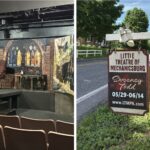
In Her Own Words: “As She Likes It” reimagines Shakespeare by giving voice to women.

Screenshot 2016-06-23 14.56.22William Shakespeare is not exactly known for his female roles.

The revered Shakespearean characters, such as Hamlet, Macbeth, Othello or my personal favorite, Coriolanus (although not typically a crowd favorite), are all men, and the notorious women in their respective plays exist mainly in support of their leading men. This is not a surprise, as women in Elizabethan England held a generally insignificant place in society outside of the home. It was also illegal for them to act.

Today, the status of women has greatly changed. Women have fought hard for their right to have a voice, and we don’t expect men in female roles anymore, like in Shakespeare’s day.

Karen Ruch, the director of Gamut Theatre Group’s Stage Door Series play “As She Likes It,” is adamant about the importance of expanding women’s roles. The larger play contains seven smaller, original plays of about 15 minutes long, in which the female characters are given a closer look.

“The mission I gave the playwrights was to take one or several female Shakespeare characters and broaden their story,” she said. “I wanted to dive into their particular story either within the context of the play from which they came or by transplanting them into another circumstance.”


Dig In and Create

Gamut’s mission of giving power to the classic story is not exclusive to old works, and part of making 400-year-old plays accessible is by continuing the conversation and utilizing the resources available to make that happen.

“Getting to work with playwrights that we have here in central PA is a great opportunity for us,” Ruch said. “And we do have quite a lot of very talented playwrights.”

Part of Gamut’s mission is finding new and exciting ways to examine these stories. That is accomplished when you take a model from Shakespeare—all male actors—and turn it on its head with a modern model of all women. It furthers the discussion on why these stories remain important and relevant after multiple centuries.

“Having played some of the Shakespeare women, themes that are important to the women in the plays are very interesting to me,” Ruch said.

She explained that, since females are not often the focus of the play, there are a lot of questions that an actor playing that role has to answer on her own.

“You need to fill in the history that is not given to you within the play to make a complete human being,” she said. “You can argue that it is a gift to be given a role where you get to dig in and create a world for them, but I also think that, in 2016, it makes sense to give these ladies a broader voice and agency.”


Larger Conversation

“As She Likes It” is a chance for women to express themselves for the individuals that they are in ways that the original plays did not provide. Ruch’s primary focus is giving the characters an opportunity to explore choices and the aftermath of those choices, a theme not traditionally given to female characters in classic theater.

One of the plays details the characters of Gertrude and Ophelia from the be-all-end-all Shakespeare play, “Hamlet.” Both of these characters are fascinating but are not given much introspection in the actual play.

“They meet in the afterlife and have a conversation about what went on in their lives, because we don’t get that in the original play,” Ruch said.

Another takes the three sisters from the tragedy “King Lear” and places them in a modern context after their father has been hospitalized with dementia. This setting allows the playwright to explore the age-old themes of the play while reflecting on how these issues remain important in the 21st century.

These plays are about Shakespearean women. However, Ruch emphasizes that it is only part of a larger conversation happening now about women’s place in the world and how their voices are represented, especially in entertainment.

“It is my desire, but I also consider it my responsibility, as a maker of theater in this area, to create more opportunities for female actors,” she said.

Gamut often does this by gender-swapping roles written as male, but also by exploring what gender really means in the world we live in and by allowing characters to define themselves. This can mean giving characters strength where it is not typically thought that there is any or allowing them to be feminine or domestic without being considered helpless or dependent. “As She Likes It” delves into it all.

“On a level of an actor, but also of the characters within the play, we want to let these ladies really talk,” she said.

Gamut Theatre Group’s Stage Door Series presents “As She Likes It” Aug. 12 through Aug. 22 on the Select Medical Mainstage at the New Gamut Theatre located at 15 N. 4th St. in Harrisburg. Every performance is “Come As You Are; Pay What You Will.” More information is at www.gamuttheatre.org or by calling 717-238-4111.


July Theater Events
At Harrisburg’s
Professional Downtown Theaters

 AT GAMUT THEATRE
www.gamuttheatre.org

POPCORN HAT PLAYERS PRESENT
“Cinderella”
July 13-Aug. 20
Wednesdays and Thursdays at 10 a.m. and Saturdays at 1 p.m.
Tickets $8

TMI IMPROV MAINSTAGE SHOW
July 22
Bar opens at 6:30 p.m. Performance starts at 7:30 p.m.
Tickets are bring your own price; any donation buys a ticket.


AT OPEN STAGE
OF HARRISBURG
www.openstagehbg.com

The “HUNDRED ACRE WOOD” Project
The Wonderful World of Winnie-the-Pooh
starring the OSHKids
Children’s theater for children, by children!
July 8 at 6:30 p.m. and 8 p.m.
Tickets $10

MUSIC THEATER WORKSHOP
“From the Page to the Stage”
a student musical revue
July 28 at 6:30 p.m. and 8 p.m.
Tickets $10

Continue Reading

House Vets: A new breed of animal doctor comes to you.

Screenshot 2016-06-23 14.46.23Kari loved to bask in the sun.

Jeanne DeDay considers Kari, an 8-year-old dog, one of her kids—along with two other dogs and four cats that live with the Carlisle woman and her husband.

When Kari flopped down onto the warm grass that May afternoon, resting in her favorite place, she wasn’t anxious about a thing. She relaxed in the sun under the loving caresses of her parents.

As her family gathered around her to say goodbye, Dr. Tracy Sands of Healing Paws Veterinary Care helped Kari escape from the pain, the seizures and the cancer that had clutched her body.

Kari was put down, not on a cold examine table in a veterinarian’s office, but at home, surrounded by those who loved her.

“Sometimes, the right thing is the hardest to do,” DeDay said, recalling the day.

The mobile services offered by Sands, a veterinarian who travels to animals within 30 miles of downtown Carlisle, has brought convenience to pet owners and comfort to the animals she visits.

When she graduated from veterinarian school, Sands worked as a mixed animal doctor, treating cows, horses, cats and dogs wherever they lived. She saw the benefits of traveling to the animals instead of owners needing to crate screaming cats or drag shaking dogs into a brick-and-mortar location.

She heard from many of her clients about how much they appreciated traveling veterinarian care and, in 2013, started Healing Paws. Two years into the business, she had a two-to-three month waiting list for house calls.

The demand led her to hire a second doctor and put two vehicles on the road, one of which is parked in downtown Carlisle twice a week so people can bring their pets to a central location if they choose. Today, she has about 1,110 clients, most with multiple pets.

In addition to cats and dogs, Sands specializes in what she calls “backyard pets” or the goats, sheep and llamas that many people keep in the area.

The desire for traveling veterinarian services is nothing new, she added.

“Traveling used to be the only way we did veterinary medicine,” Sands said. “At some point, our society got away from that, and it brought a lot of negatives with it.”


No Rush

In an animal’s home, Sands is able to see what might really be causing problems. A home environment can be very telling, especially if a cat is battling litter box problems or a dog struggles with separation anxiety, she said.

Traveling also provides an individualized experience that’s helpful for people who balance work, family activities and other aspects of a busy lifestyle. Instead of packing up their pets and stressing them out for a car ride or a trip to an unfamiliar place, the animals and their owners can relax in their own homes.

For Dr. Debra Benner, mobile veterinary care was something that weighed heavily on her mind for the nearly 30 years she practiced in a traditional office.

The pressure to meet the overhead costs of a full veterinarian practice meant she often had to see patients quickly, not spending the time she wanted to really get to know them.

Two years ago, she started West Shore Veterinary House Calls, where she provides mobile veterinarian services within 15 miles of Mechanicsburg.

“I think, as more people learn that mobile veterinarian care is an option for cats and dogs, we’ll continue to see that trend grow,” Benner said. “Within six months of starting, I was already at my capacity for patients. It’s a service people want to see.”

Benner takes a very personal approach to her care. She often sits on the floor in the living room, she said. She believes she is a guest in the home, both to the pet owner and her furry patient. It might take longer, but she likes to wait for the cat or dog to approach her first.

“Working at that slower pace means I get to know the animals better, and the owner has a chance to tell me how things are going,” Benner said. “There’s no rush, no hurry. This is a relationship.”


Such Value

Providing end-of-life care, such as helping the DeDay family say goodbye to Kari, is also a priority for both Sands and Benner.

After putting down a dog that she had been treating since October, Benner received a call from the owner who wanted to meet for lunch. The two had become friends in the time they both spent caring for the dog.

“It’s that kind of connection to people and their pets that I missed when I worked in a traditional office,” she said.

Allowing pets and owners to say goodbye in the comfort of their home is a privilege, Sands added.

“It’s so hard to say goodbye to an animal when you consider them to be part of your family,” she added. “Being home is easier on everyone, and I’m honored that I can provide that for them.”

For the DeDays, that personal touch—that sacred moment to let Kari go—is one they will never forget. Because of the care that Sands and her staff provide, DeDay said, she considers them family, too. Whether they’re visiting her four cats (Meatball, Daisy, Spot and Tippy) or her two dogs (Spike and Ruprecht), she knows they are all in good hands.

“I think this kind of service is of such value to a pet owner,” DeDay said. “I can’t imagine the same quality of care in a more traditional service. And that means a lot to me and my fur-babies.”

Save

Continue Reading

Sense of Place: An historian reflects on American identity during this patriotic season.

Screenshot 2016-06-23 14.45.39American history, says Brent Glass, is “a resource for understanding our own times and our own lives.” Its study is patriotic, even when it unearths injustice and the fight against oppression.


You might remember Glass. From 1987 to 2002, he was executive director of the Pennsylvania Museum and Historical Commission, helping win PA Keystone funding to maintain historic sites. He left Harrisburg for Washington to become director of the Smithsonian’s National Museum of American History, managing a two-year overhaul before retiring in 2011.

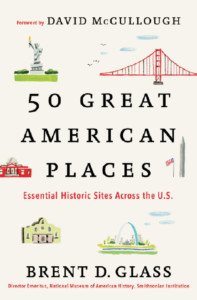
So, when you hear that Glass has written “50 Great American Places: Essential Historic Sites across the U.S.,” with a foreword by no less than his friend David McCullough, you have to figure he knows his stuff.

Glass often returns to Harrisburg to visit family, and on a recent trip, he shared the thinking behind his new book, published by Simon & Schuster Paperbacks. There’s no magic in the list, and it’s certainly not definitive, he said. Presented chronologically, the sites encapsulate the themes of freedom, war, innovation, diversity and land and landscape.

“American identity is defined, I think, by those five things,” Glass said. “Other countries may have those same five things, but not in that unique configuration.”

Hence, the Alamo is followed by the upstate New York birthplace of the women’s movement. The tragic Indian Wars sites of Little Big Horn and Wounded Knee precede “The Bridge and The Statue”—you know the ones—in New York City.

“It’s an introduction to American history, and it’s also an appeal to public memory, that we need to remember and value these places because of how they reflect our traditions and values and ideals,” Glass said.


Overcoming Barriers

The book’s first listing, the National Mall in Washington, D.C., is the only site presented non-chronologically.

As a kid, Glass visited the monument-dotted span he now calls “America’s front porch.” As National Museum of American History director, he stepped onto that porch almost daily. Under his watch, the museum underwent renovations reflecting new thinking in use of public space.

Under those renovations, the preserved fragments of the original Star Spangled Banner got a new gallery, and a replica of the massive 30-by-42-foot original, “meant to be seen at a great distance,” is sometimes unfurled for visitors to hold while singing the National Anthem.

It is, said Glass, “a patriotic moment,” but he added that patriotism means different things to different people. Profiling essential sites doesn’t mean glossing over the dark patches in American history. Someone once asked him, “What’s so great about Wounded Knee?” where U.S. cavalry soldiers massacred 300 Native Americans in 1890.

“What is great about it is that it’s essential to know about Wounded Knee if we’re going to understand how American history involves overcoming barriers,” he said. “And to be a democracy and to really be patriotic, we have to acknowledge the fact that there is some tragedy in our history, and we recognize it, and at least in this country, we talk about it and we acknowledge it. We don’t try to bury it.”

Similarly, from his Smithsonian tenure, Glass cities the counter from the Greensboro, N.C., Woolworth’s, where, in 1960, sit-in participants re-enacted their defiance against segregation. A schoolchild on a museum tour once asked Glass, “Did this really happen?”

“He couldn’t fathom it, that we had laws and customs enforcing segregation,” he recalled. “That was something I was proud of, that we could make history accessible, not only through our collection, which is the best in the world, but using the museum as a stage for providing the content.”


What-Ifs

Asked his definition of patriotism, Harrisburg political consultant Charlie Gerow said that America needs citizens who “know a little bit more about history and a little bit more about civics.” The history buff, who hadn’t yet read Glass’ book but looked forward to picking up a copy, quoted 19th-century U.S. Senator Carl Schurz: “My Country! When right, keep it right; when wrong, set it right!”

But a warts-and-all view of history must be put in context, said Gerow, CEO of Harrisburg-based Quantum Communications. Any discussion of the World War II internment of Japanese-Americans should be paired with the “vicious, malicious, unprovoked attack on the American people by the imperial Japanese government,” he said.

“This is the most exceptional country in the history of the world, built on very high ideals,” he said. “Because we are human beings, we sometimes fall short of those ideals, and, when we do, it’s important to reflect on how it happened and what we need to do to correct it, but that’s not an indictment of the country or its system of government.”

Glass does, indeed, feature consecutive chapters on the Pearl Harbor attack and Minidoka Camp in Idaho, where 120,000 forcibly relocated Japanese-Americans built a community and erected an honor roll of internees who performed military service “even while family and friends were held captive in the high desert of Idaho.”

Pennsylvania appears often in Glass’ book. Gettysburg, the Liberty Bell and the forks of the Ohio River at Pittsburgh’s Point get their own chapters. Other Keystone State sites and people make cameo appearances. Gifford Pinchot butts heads with fellow conservationist John Muir. In charming but tumultuous New Castle, Del., freewheeling descendants of Dutch settlers rebel against control by the conservative Quaker government of William Penn’s Pennsylvania.

By selecting still-standing sites, Glass paid tribute to historic preservationists, including President Dwight Eisenhower, advocate for protection of the Gettysburg battlefield.

“The past is not inevitable,” Glass said. “It is not inevitable that we have these places. People made decisions to save some of these structures. And people made decisions that gave these places their historic meaning. When you go to Gettysburg, you really can appreciate how history is contingent on so many individual decisions and so many what-ifs.”

Even Harrisburg, which receives one mention as the end goal for Robert E. Lee’s Army of Northern Virginia, has scored telling victories with the City Beautiful movement and preservation of its unique riverfront, said Glass.

“You can’t go wrong if you have access to that scene,” he said.

Harrisburg also embodies a theme of the book—that history is in our midst and easily accessible. Glass believes it’s time to stop complaining about the excess of nontaxable state properties in the city and, instead, market their tourism value, especially the Capitol, Forum building and State Museum.

“All those buildings were built at a time when they paid artists to decorate them,” he said. “I would put the Harrisburg Capitol as one of the best, not only for the Capitol building but the whole complex.”

Public disinvestment in heritage sites “is very shortsighted,” Glass said, but the passion that historical assets generate is heartening. Investments in visible history “have such a tremendous effect on the morale of people, to know they are connected to a bigger story.”

“You can’t measure that,” Glass said. “There aren’t a lot of metrics to say, ‘What’s the return on that investment?’ But I’m really convinced that we’re enriched by preserving history and knowing the history and telling that story to the next generation and getting them engaged in it.”

“50 Great American Places: Essential Historic Sites across the U.S.” by Brent Glass is available in bookstores and online.

Save

Continue Reading

Sweet Spot: fudge-O-lutely? Absolutely!

Burg in Focus: fudge-O-lutely from GK Visual on Vimeo.

Sometimes, those little voices inside our heads confuse us with conflicting advice. While one shouts, “Pursue your passions and take risks,” another, in more cautious tones, urges us to be more measured in our approach to career choices.

Jessica Kost can say she has followed both paths and that heading down the road less traveled is the one she prefers—even though it’s not always without a few bumps.

Sitting at her eye-catching, bright green “fudge-O-lutely” stand in the brick building at Harrisburg’s Broad Street Market, Kost reflects on her decision to cross the bridge from a career in criminal justice to selling fudge full time.

“It was terrifying,” said the New Cumberland resident with a smile. “I’m not going to lie. I had good benefits and a steady income, but I just knew if I didn’t try this, I’d regret it.”

It’s not as if Kost didn’t possess the necessary experience to turn out a fantastic product. As a third-generation fudge maker, she learned all about the business early in life.

“My grandma Doris made it, and it was her mom’s recipe,” she said. “She made it in her home, and she had a little store in the back named ‘Karen’s Candy Kitchen’ after my aunt Karen.”

The lure of the candy was not lost on Kost’s father Jim, who, witnessing its popularity, decided to share the creamy, smile-eliciting confection with a larger audience. He started supplying local mom-and-pop stores then branched into larger businesses, before selling wholesale across the country.

Her family’s sweet success inspired her to make a go of it herself. So, when she eyed a Broad Street Market stand for sale back in October, she took the leap.

“All the pieces came together at the right time,” said Kost, who had to do very little to modify the former pizza stand to her needs. “The mixer was already here.”

Market Manager Beth Taylor said that fudge-O-lutely is a welcome addition to Broad Street’s craft food lineup and especially likes that Kost puts her own spin on a family tradition.

“She not only uses family recipes that go back generations, but is also innovative with her flavor combinations and seasonal flavors,” said Taylor.

Kost remarks that, while her grandmother sold four flavors and her father sells eight, she is now up to 40.

“I love playing around with different ingredients,” she said.

Kost sells her fudge in one-half and one-pound increments, as well as in little snack-size cups for $2 for those who want just a little bite of something sweet. She makes 50 to 70 pounds of fudge a week and rotates products so that eight to 10 flavors are available at any time.

“I try to keep it interesting by offering a variety,” she said.

Recently, she featured a lavender honey (which I highly recommend) and a unique IPA fudge in celebration of Harrisburg Beer Week, which John Kelly, owner of J.B. Kelly Seafood Connection, said he and his staff really enjoyed.

“She makes it fresh, and one of us usually walks down to her stand and brings it back to share,” he said, adding that the staff also recently enjoyed a maple/bacon flavor. “I purchased some chocolate cashew for my mother recently for Mother’s Day.”

Rachel Blevins of Middletown visits the stand often.

“I not only think her fudge is among the best I’ve tasted, but I also like her outside-the-box thinking when it comes to flavors,” said Blevins, ticking off a list of her favorites that include vanilla, the aforementioned IPA, chocolate peanut butter and chocolate cashew.

Danielle Pierre discovered fudge-O-lutely during a lunch break from work.

“The fudge truffles are to die for!” she said. “I also love the pecan praline, and the champagne truffles are amazing.”

Working closely with the community is important to Kost, who mentions a few of the local vendors she works with to craft her confections.

“I locally source as many of my ingredients as I can, purchasing milk and butter from local farms—chocolate from Wilbur Chocolate in Lititz, different, random ingredients from One Good Woman in Camp Hill and spices from Calicutts Spice Company in Lemoyne,” she said.

As for taking the leap into full-time fudge making, Kost said she’s glad she did.

“I’ve always been very independent, and fudge is my passion,” she said. “Working for myself is what I’ve always wanted to do. People ask ‘what do you do for fun?’ I tell them, ‘I make fudge.’ It’s seriously my favorite thing to do.”

fudge-O-lutely is located in the Broad Street Market’s brick building in Harrisburg. To learn more, visit www.fudgeolutely.com or their Facebook page.

Check out TheBurg/GK Visual’s “Burg in Focus” video that accompanies this story.


Continue Reading

A Time to Heal: Foot problems are common, but remedies are at hand.

Screenshot 2016-06-23 14.58.36The average person will walk 115,000 miles in his or her lifetime—four trips around the Earth. From the time we’re toddlers learning to walk until we are older adults possibly using a cane, our feet are vital to our quality of life.


The foot and ankle are a fascinating and complex body region made up of 26 bones, 33 joints and more than 100 muscles, tendons and ligaments. They’re responsible for a myriad of jobs, including standing balance, absorbing the shock sent into the body from the ground when we walk and forming a rigid lever to propel us forward as we move.

To complete these tasks properly, the foot and ankle have the unique ability to be, at times, mobile and adaptable and then rigid and powerful. By the time we have moved through a single day, our feet have endured hundreds of tons of force.


Problems, Remedies

About 75 percent of Americans will have a foot problem at some point in their lives, which can decrease one’s quality of life and even lead to additional health issues arising from lack of motion and exercise.

These foot problems may include fractures, ligament sprains and muscle tears. Less obvious ones include plantar fasciitis, which causes heel pain, and tendonitis anywhere around the ankle.

Furthermore, irritation of the nerves and/or blood vessels at the foot and ankle can lead to tarsal tunnel syndrome, causing pain and tingling throughout the foot, and metatarsalgia, or Morton’s Neuroma, which causes pain or numbness at the balls of the foot and toes. While these injuries and inflammations create unhealthy feet, sometimes the foot alone causes the problem.

While the list of possible foot and ankle problems may be unnerving, there are actions you can take to remedy those foot problems and regain your quality of life.

  • After fractures, sprains or surgery, the foot and ankle often demonstrate strength and motion deficits that can make you limp. These can be addressed via joint mobilizations and soft tissue massage done by a physical therapist and with instruction in a self-stretching and strengthening program.
  • Muscle strains and tendonitis that cause swelling and pain often get better with icing, resting and gradual return to or modification of your activity.
  • Pain in the bottom of the feet, balls of the feet and toes may be caused by excessive or abnormal pressure on those areas. It can be addressed by being fit with footwear that is appropriate for your foot’s shape and size, using custom or over-the-counter orthotics, and by having potential joint or motion restrictions treated by a physical therapist.
  • Toe deformities, which may cause balance difficulties, can be supported—and progression of the deformity and disability can be halted—with various in-shoe padding and proper footwear.
  • Diabetes and vascular disease can cause neuropathy (numbness) in the feet. In these instances, it is important to be properly fitted with shoes for foot protection and to regularly check the skin of the feet for cuts or blisters. If you do see cuts or blisters you should make an appointment with your doctor to be checked for infection and to begin healing measures.

No matter how slight or severe the problem may be, don’t sacrifice your function, safety and health on painful feet. Seek medical advice now and avoid running the risk of further injury and dysfunction. Maintain your health by “putting your best foot forward.”

Miranda L. Bednar is doctor of physical therapy (DPT) at Cardin & Miller Physical Therapy and Pedorthics, 6100 Old Jonestown Rd. Harrisburg. For more information, call 717-695-6436 or visit www.cardinmillerpt.com.

Save

Continue Reading

Berry Hot July: Take mid-summer’s bounty and bake it.

Screenshot 2016-06-23 14.49.17My mother Rose was a wonderful baker. And while I have made some good pies and cakes in my time, I have always thought that hers were better. You could mark the seasons in my mother’s kitchen: fragrant walnut orange cakes at Christmas; heart-shaped coconut cakes in February; lemon cheese pies in the spring; and luscious strawberry pies topped with whipped cream in June.

Then in July, there were blueberries. My father worked with someone who grew a prolific crop of blueberries in a large backyard garden in the country. Every summer, we purchased from him (at a very reasonable price) more berries than we could use and turned them into pies, preserves, muffins and pancakes. We froze the extras, laying them out one by one on cookie sheets, and stored them in little baggies for safekeeping, little treasures to be eaten on a cold winter day.

Aside from her cinnamon- and nutmeg-scented blueberry pies (and we couldn’t imagine a Fourth of July celebration without them), my mother’s favorite blueberry treat was her sour cream blueberry cake. It was a type of pound cake or coffee cake that could be served at breakfast or brunch or as an after dinner dessert with vanilla ice cream.

After my mother passed away and our family home was sold, I carefully gathered up some of her favorite cookbooks to keep. Her most beloved one of all was an original version of the “Betty Crocker Cookbook,” now falling apart with its pages dog-eared and torn. There are little notes scribbled everywhere (some to me signed “Love Mommy”), recipes written on small index cards and, as I had hoped, the recipe for her sour cream blueberry cake. She had taken the now-yellowed page from an Aug. 2, 1970 Parade Magazine. I am happy to share it with TheBurg readers.


SOUR CREAM BLUEBERRY CAKE

Ingredients

  • ½ cup (1 stick) unsalted butter
  • 1 cup sugar
  • 3 eggs
  • 2 cups sifted all-purpose flour
  • 1 teaspoon baking powder
  • 1 teaspoon baking soda
  • ½ teaspoon salt
  • 1 cup sour cream
  • 1 teaspoon vanilla
  • 1 teaspoon ground cardamom (or substitute nutmeg or cinnamon)
  • 2 cups blueberries
  • ½ cup brown sugar


Recipe

  • Cream the butter and sugar in an upright mixer (like a KitchenAid or a hand-held mixer).
  • Add eggs one at a time, beating well after each addition.
  • Sift all the dry ingredients together. You can use a sifter or a fine mesh sieve.
  • Gradually add the dry, sifted ingredients to the egg mixture alternating with the sour cream (end with the dry ingredients.)
  • Stir in the vanilla and cardamom and gently fold in 1 cup of the blueberries.
  • Pour half the batter into a well-greased and floured 9x13x2 cake pan.
  • Cover the batter with the remaining cup blueberries.
  • Sprinkle with the brown sugar and top with the remaining batter.
  • Bake in a pre-heated, 325-degree oven for 45 to 50 minutes until a cake tester comes out clean. (Watch carefully and check at 40 minutes.)
  • Cool in the pan for 10 minutes and then turn the cake onto a wire rack. Allow the cake to cool completely.
  • To serve, cut into 12 pieces and top with good vanilla ice cream.

My mother used to say, “Berry season is so short.” Indeed it is. The blueberries of July are worth turning into something special. Enjoy her special cake.

Continue Reading

A Brutal Past: In colonial Pennsylvania, fear turned to violence in the Susquehanna Valley.

Screenshot 2016-06-23 14.46.01Life on the Pennsylvania frontier could be remarkably brutal, and the period of 1754 to 1766 was arguably the fiercest of all.

The raids and battles of the French and Indian War gave rise to an uneasy peace, followed quickly by Pontiac’s Rebellion, another frontier clash between Native Americans and British soldiers, which lasted from 1763 to 1766.

Meanwhile, the Quaker-controlled Provincial Assembly refused to provide money for local militias to protect recently arrived Scots-Irish settlers, who had migrated into the Susquehanna Valley and points west. This tense atmosphere fueled anxiety, fear and suspicion among the settlers, who increasingly took matters into their own hands.

On Dec. 14, 1763, a group of about 50 armed settlers from Paxtang/Pextang, near present-day Harrisburg, attacked a group of peaceful Conestoga Indians at present-day Millersville in Lancaster County.

The so-called Paxton Boys killed six Indians on the notion that they were supporting Pontiac’s uprising and were plotting to massacre white settlers throughout the lower Susquehanna Valley. The surviving Indians sought refuge in a Lancaster workhouse, where, on Dec. 27, groups of armed men broke in and killed, in cold blood, the peaceful men, women and children who were housed there.

In early 1764, several hundred men from Paxtang, still angry about the inattention to Indian raids on the frontier, marched on Philadelphia, intent on killing any Indians and the white settlers who supported them. As Philadelphians learned of the oncoming mob, the city’s most prominent resident, Benjamin Franklin, was selected to speak to the group and attempt to quell the rabble before the situation escalated to a full-scale riot.

Franklin was able to convince the leaders of the Paxton Boys to seek a diplomatic solution. The men sought redress of their grievances through petitioning the Assembly, and they quietly returned home. Though many of their names were known at the time, no one was ever tried, convicted or sentenced for the murders of the Indians at Conestoga or in Lancaster.

As one of the saddest episodes in Pennsylvania colonial history, the massacre of the Conestoga Indians heralded the end of overall Quaker rule in Pennsylvania. William Penn’s almost 100 years of peace with the Indians was over, and, in the end, the strict pacifism of the Quaker minority was forced to yield to the hinterland settlers, who sought protection from the Indians, but also ultimately helped extend the rule of law throughout the commonwealth.

Jason Wilson is an historian with the Capitol Preservation Committee.


Continue Reading

Best in Class: When a dog misbehaves, both animal and owner might need some expert help.

Screenshot 2016-06-23 14.46.44As a dog trainer, I often hear from owners that their dog is not behaving in an acceptable manner. The owner is now exasperated and is ready to throw in the towel instead of trying to figure out a better way to train the pet.

Part of the problem is that dog training looks so easy on television. Terrible behaviors are addressed and corrected in a short amount of time, and the dog seems to be completely exorcised of all past devilish doings.

This is not reality. Dog owners have varying levels of experience, and each dog is an individual. The last dog owned does not resemble the next dog added. Each dog and situation is unique and can possess its own challenges.


Schools of Thought

The average owner does not think that he needs a dog trainer.

Indeed, the majority of dog owners are perfectly capable of teaching their dog boundaries and simple commands like sit, down and stay. Most dogs do not have behavioral problems. Some do, however, and those behaviors can be addressed by a professional dog trainer or animal behaviorist. In those cases, training should begin as soon as the dog is current on all vaccinations.

In general, there are two schools of thought on how to properly train a dog.

The first is commonly referred to as the “Old School” method or “Alpha dog technique,” which is established through various forms of physical manipulation. The other is the “New School,” also known as positive reinforcement or treat training.

Old School methods can be seen on shows like the “Dog Whisperer” and were commonly used in American Kennel Club obedience trials. They employ a form of “touch” to correct the dog when it does something wrong. New School methods were developed by animal behaviorists and dog trainers such as Ian Dunbar and are demonstrated by trainers like Victoria Stillwell and Karen Pryor, who use clicker training or shaping exercises with rewards of treats or play for the correct behavior

Before making a decision, owners should do some research to understand what they are paying the trainer to teach. They also should be comfortable with the fact that they are being taught because, ultimately, it’s the human who gets the training.

Training takes commitment from the owner. Training the dog to sit, down and stay in a classroom setting is great. However, the dog will need to get out and about and socialized to ensure that the training works in all environments and under all circumstances.

Socialization means that the dog is familiar with different people, animals, environments and conditions. When a dog is learning new tricks, the owner or handler should be aware that, if the dog is overstimulated, it is not going to absorb the lesson trying to be taught. Therefore, training should begin in a quiet space and, as each trick is learned, the dog should be taken out to keep increasing the difficulty. By teaching the dog tricks and working with it in different situations, the owner and dog are forming a working relationship and a bond.


Where to Go

Classes are offered in many different places, including pet stores like PetsMart, Petco and Pet Valu, through community and recreational centers like the West Shore Recreation Commission, and through privately owned businesses that can be found online or through veterinarian offices. Dog training classes in these settings offer an excellent opportunity to socialize your dog.

Good online sources include the Association of Pet Dog Trainers (www.apdt.com), the American Kennel Club (www.akc.org) or Bark Busters (www.barkbusters.com). These sources offer information about both dog trainers and animal behaviorists, as well as group classes or personal, in-home training.

You might also consider specialty and alternative activities and classes such as agility, dock diving, freestyle Frisbee or Rally-O. These are fun, social and a great alternative to the traditional obedience dog training classes.

Ownership of a dog requires training for both the dog and the owner. It is a working relationship that should also be an enjoyable experience. There are tips and resources at a dog owner’s disposal to assist in training the dog, to help bridge any gaps in the relationship and to teach the dog to be a part of the household and under control.

Ideally, training should begin as soon as the dog is brought into the home and vaccinated. If the behavior is more than can be handled, it may be time to contact a professional.

Amy Powell is a dog trainer and Owner of Doggie U, LLC.


Continue Reading

Grinding the Mill: Are PA’s efforts to combat puppy mills effective?

Screenshot 2016-06-23 14.47.01When we added our Labrador retriever puppy, Stella, to our family in 2002, we purchased from a licensed, first-time breeder Mennonite family. Their paperwork came from the American Kennel Club. A litter of eight pups romped with kids in a temperature-controlled garage full of clean bedding and toys.

We met Stella’s mother in the backyard. The breeders gave us a picture of Stella’s father, a Labrador from a neighbor’s farm. All were active and healthy. We took Stella home after eight weeks. We felt confident the breeders responsibly bred the litter.

We were only minimally educated on how to spot a responsible breeder. Mostly, we were just lucky.

Those who buy puppies from non-reputable breeders are often not lucky. Their puppies tend toward health and behavioral problems from inbreeding and poor conditions common in puppy mills.

Kept in cramped, unhealthy conditions with little interaction, the dogs aren’t pets. They are profit-driven commodities. Females are bred one litter after another with no recovery time, physically depleting them. When females can no longer breed, they are discarded.


Desired Effect?

Basil Merenda, chief deputy attorney general, director of Bureau of Consumer Protection, cited rural Lancaster County as having a particularly large puppy mill and unregulated backyard breeder presence. Merenda’s office regulates the “Pet Lemon Law,” adopted in 2008, which stipulates that sellers must provide health and registration records.

Unfortunately, that law has not proved very effective in helping buyers or in battling puppy mills, said certified dog trainer Amy Powell.

It gives buyers just 10 days to document that the animal has a contagious or infectious disease and 30 days for a congenital defect. (Some hereditary conditions take more than six months to manifest themselves.)

Buyers must initiate the complaint to the attorney general’s office. They may demand a refund of the purchase price, minus sales tax, plus any veterinary expenses. Sellers, who must be USDA-licensed, can be fined $1,000 for each violation.

Many buyers, though, don’t know about the law, find the process burdensome or don’t realize they have a troubled animal until it’s too late. Also, the law addresses the symptom of puppy mills—how to return a defective puppy—but it does not attack the root cause: irresponsible breeding.

Former Gov. Ed Rendell championed and signed another protection measure—the “Dog Law” in 2008—which implements stricter provisions for kennel conditions, prevents dog abuse and mandates humane euthanizing. It also covers licensing, sale, transportation and estimates for damages.

Under Rendell, Pennsylvania budgeted for dog wardens to enforce the law, with the Department of Agriculture responsible for conducting regular facility inspections. However, where there were once ample wardens to cover a region, there are now not enough, according to Powell.

“That funding went away with Gov. Corbett,” she said. “The enforcement for ‘Dog Law’ is not there anymore. Puppy mills fly under the radar in rural areas. Rescues are over-full. We would like to see puppy mills being held accountable.”

Changes to the “Dog Law,” made in February, still do not provide for socializing the animals, she said. The law also does not specifically address inbreeding or the numbers of dogs being bred.

Meanwhile, for registered boarding kennels and breeders who comply with the “Dog Law,” the increase in regulations has had a negative effect, decreasing the number of registered facilities and driving costs higher for the remaining.

“We were gung-ho activists and rescuers at first,” said Powell. “Then lobbying became costly, ineffective and heartbreaking. Our choice was to lobby for stricter laws or rescue more dogs. We can’t save them all.”

Enter special interest groups. Humane PA is a political action committee that supports candidates who further animal protection legislation. In addition to caring for animals hands-on, the Society for Prevention of Cruelty to Animals and the Humane Society both lobby and politically advocate for animals nationally and at the state levels. The groups also educate.

“Buyers need to be educated about how to spot responsible breeders and also dog laws,” Powell said. ”Buying from backyard breeders is keeping puppy mills in business.”


Hard Decision

The state’s efforts, unfortunately, have had other unintended consequences. For instance, when buyers return a defective dog, it is destroyed or sent to an animal rescue, which are both unwelcome outcomes.

“We often get dogs from puppy mills,” confirmed Denise Durkay, who runs The Dogs’ Den, a rescue in Grantville.

Meanwhile, it remains tough to do battle against puppy mills, as many charged with offenses simply change their business name to a family member’s name, Durkay said.

“They post ‘No Trespassing’ signs,” she said. “They get away with [continuing to operate].”

Bobbie Ditzler, certified veterinary technician at Mechanicsburg-based Rossmoyne Animal Emergency Trauma Center, often sees the results of puppy mill dog breeding.

“We see a lot of parvo[virus],” Ditzler said. “The breeders tell buyers the puppies had fecal tests, but they didn’t.”

Highly contagious, parvovirus can infect an entire kennel. Treatment costs anywhere from $1,500 to $3,000, with only a 50-percent survival rate.

In the end, many owners decide to keep their puppy mill-bred dogs—healthy or not.

“We tell owners about the ‘Pet Lemon Law,’” said Ditzler. “Buy many are too attached to consider returning them. It’s a hard decision.” 

A number of websites offer additional information on efforts to combat puppy mills, including www.consumeraffairs.com/pets/lemon_mn.html, www.unitedagainstpuppymills.org, www.thedogsden.rescuegroups.org and www.mlar.org.


Continue Reading

Car Models: The beautiful, the sleek strut their stuff for Supercars on State Street.

Screenshot 2016-06-23 14.44.13Not every exotic car show is a memorial tribute to a friend’s mother, but that’s exactly what motivated Evan Ross to start Supercars on State Street.

Ross, a 2011 Central Dauphin High School graduate now living in Florida, began the annual event in 2010 to benefit the American Cancer Society in honor of Patti Burkhardt, who lost her life to breast cancer at 42. She was the mother of Evan Ross’ close friend, Sarah Burkhardt.

“It’s a labor of love,” Ross said of the car show.

This year’s event, scheduled for July 30, features makes of cars—Maserati, DeLorean and Lotus, for example—not often seen on the streets of Harrisburg. The show quickly has become one of the largest exotic car shows in the northeast. Last year, 350 registrants hailed from 11 states, numbers that organizers expect to top.

“You typically don’t see a lot of Lamborghinis and Ferraris around Harrisburg,” said Ed Ross of Susquehanna Township, who organizes Supercars with son, Evan. “Other car shows in the area are for cars that are antiques, classics or muscle cars.”

Evan Ross never knew Patti Burkhardt because she died months before he and Sarah Burkhardt met as sixth-graders at Linglestown Junior High. What he did know, however, was that his young friend bore a painful grief from her mother’s early death that would never totally ebb.

Today, Sarah Burkhardt, a first-grade teacher in the East Pennsboro School District, carries memories of her mother that are warm and wistful.

“As soon as you walked into a room, my mom could make you smile,” she said. “She was the glue that held the family together. She was always good at bringing out the best in people.”


Passion for Cars

As teens, Sarah and Evan began taking part in fundraisers like car washes and the “Making Strides Against Breast Cancer” walk held each year on City Island to benefit the Patti’s Light Foundation, named in honor of Sarah’s mother.

Then Evan came up with the idea to hold a car show fundraiser that would benefit the American Cancer Society in Patti Burkhardt’s honor. Supercars on State Street was born.

“I just always had a passion for cars,” Evan explained. “It sparked my interest. I thought (the car show) would be fun and a surprise for Sarah with a check in her mother’s memory. I thought it could be something that she was involved with and not have to do a lot of work.”

Sarah said she didn’t know anything about what was happening until Evan told her to come to State Street one Saturday morning in the summer of 2010. That’s where she spotted 60 exotic cars lined up near the state Capitol complex for what was the first Supercars on State Street.

“She was shocked,” Evan recalled

“I was really surprised. I had no clue,” Sarah recounted. “Evan just told me to that I had to be at State Street. He didn’t say anything about a car show. He was just one of those people who was always there for me. It was just such an honor that he would do this.”

For the first year, Supercars on State Street raised $2,100 for the American Cancer Society. Last year, the show raised around $10,000, pulling in a total of more than $30,000 in its first five years. Ed Ross said he hopes this year’s show earns $20,000.

Ed Ross, who lives in Lower Paxton Township, said that he does most of the “local duties,” while Evan takes care of the show’s website from Florida.

“My son and I have always been interested in cars,” he noted. “We’ve been to a lot of car shows, so we had some idea of what it involved to organize one. However, a lot of cars shows are held at fairgrounds. They don’t have to deal with a lot of logistics that we do.”


Many Friends

The show runs on State Street from Front Street to 3rd Street, and on Front Street from Forster Street to the Walnut Street Bridge. For the first time this year, cars also will be shown on N. 3rd Street from South Street to North Street, which includes 120 parking spaces situated near the steps leading to the Capitol.

One of Ed’s many duties is wrestling with several local agencies to clear parking for the event, which includes pre-show parking on City Island. This year, the job has been made a little easier, said Ed, because Standard Parking has become an event sponsor. Until now, the Rosses were forced to buy out parking meters in the area of the show.

Ed also makes the show’s trophies, which are comprised of a wood base topped with various used car parts. This year’s award categories will highlight five Ferrari classes, with the remainder being People’s Choice awards.

Over the years, the Rosses have made many friends through the show, including Adam Frank of Monroe Township. Frank said he helps out and has participated in the show for the past three years after first learning about it on social media.

“Today, I was passing out show flyers in the State Street area,” he said. “I like being at the show and seeing people from all over the country with their support. I heard that this is one of the biggest car shows on the whole East Coast. We love to do charity.”

Supercars on State Street takes place in downtown Harrisburg on July 30, noon to 5 p.m. Vehicle check-in runs 8 to 11 a.m. For more information, visit www.supercarsonstatestreet.com.

Continue Reading