Extra Attention: Supplements can fill in the gaps for better pet nutrition.

Screenshot 2016-06-23 14.47.19Recently, a number of people have come into my store asking for information on supplements for their pets. Indeed, nutrition is an issue that comes up frequently among my customers.

I tell them that all commercial pet foods must meet Association of American Feed Control Officials (AAFCO) standards and recommendations for a complete and balanced diet. However, even when pet food companies comply with the standards, your individual pet may not get what he needs in terms of nutrition.

Just like people, each pet has needs that may differ from other pets in his age and breed category. It is easy to be fooled by companies that sell you a pet diet that makes claims to be complete and balanced. Does that mean the food is complete and balanced for every pet? If we operate with the understanding that pets are individuals, we know that their nutritional needs differ based on physiological makeup, genetics, environment, age and state of health. Even if you’re providing a high-quality diet, your pet may be missing something important for his wellbeing.

Allergies, joint pain and inflammation, dry skin and occasional loose stool and diarrhea are all common ailments that can be alleviated with proper diet and supplements. It’s always best to be in consultation with a veterinarian that has an understanding of how nutrition and supplements can assist in alleviating these ailments. Good veterinarians know that not every condition warrants an expensive medication, steroid or antibiotic.


Supplemental Help

Supplements that are widely used with great effectiveness include glucosamine and chondroitin, fish oil and probiotics.

Glucosamine and chondroitin are anti-inflammatory supplements used in cases of joint swelling and pain in dogs and cats. They work together to improve mobility and flexibility and alleviate pain. Glucosamine assists the body in building cartilage, and chondroitin helps the body maintain flexibility and fluid in the joints. Other anti-inflammatory supplements include methylsulfonylmethane (MSM), green-lipped mussels, bromelain and curcumin. Several products on the market combine two or more of these ingredients.

For improving the skin and coat, fish oil is probably the most important supplement you can add to your pet’s diet. If you have a pet with itchy, flaky, dry skin, trying a course of fish oil may be the key to relief. EPA and DHA, the omega-3 fatty acids present in fish oil, can also reduce inflammation, ease allergies, regulate the immune system, improve cognitive function and support the cardiovascular system. When beginning to administer fish oil, be careful not to give too much immediately. Ease into the full dose as you would when changing pet foods.

Probiotics are one of the simplest and most effective remedies for poor digestion. Probiotics are comprised of different kinds of friendly bacteria. Bacteria is most often thought of as harmful, but certain bacteria are helpful in keeping us and our pets healthy. Lactobacillus acidophilus, bifidobacterium bifidus and lactobacillus bulgaricus are just a few of the helpful microorganisms that live in a dog or cat’s intestinal tract. There, they play an important role in defending the body against illness. Probiotics can assist with alleviating flatulence, constipation, diarrhea, skin problems and irritable bowel syndrome. For best results, select a high-quality probiotic with live microorganisms.

These common supplements can make a world of difference in the life of your pet, making them more comfortable and energetic. They do not take the place of proper veterinary care, so be sure to discuss any of your pet’s major health changes with your vet.

Kristen Zellner is the owner of Abrams & Weakley General Store for Animals, 3963 N. 6th St., Harrisburg. To learn more, visit www.abramsandweakley.com or call 717-232-3963.

 

Continue Reading

Bag It Up: Summertime’s traveling time.

Screenshot 2016-06-23 14.52.48Honeysuckle wafts sweet along Riverfront Park. Swashing paddles from the Pride accompany the hum of conversation of al fresco diners. Oh, of course, dazzling cowboy monkeys ride on the backs of border collies around a ball field.


Summer in the city.

This is my favorite time of year. Despite 93 short days of this wonderful season, there comes a time when a mouthful of mayflies and a summer vacay to burn push a man to experience surrounding pleasures.

Close proximity to many other wonderful destinations is part of what makes Harrisburg great. An easy train ride to New York, Philly or D.C. could offer a change of pace. Mt. Gretna and the Poconos boast leafy retreats. If you’re up for a four-hour road trip, you could always go down the shore (Google Philly idioms for definition).

Pack the essentials: above-the-knee swim trunk, toothbrush, pocket square (issue of this month’s Burg!). No matter what you bring, I see a lot of guys stuffing their stuff into a drawstring backpack or the ever-popular trash bag.

Functional? Yes. Appropriate? Who are you, Dexter?

Traveling in style should also mean what is slung over your shoulder. It doesn’t take much to elevate your hauler to haute. If you want something low-key, durable and lightweight, Bomber and Co. just launched a no frills, black “bomber duffle” that also comes with a toiletry bag ($60 Amazon.com).

If you don’t have a Prime account, no need to worry. Check out any military surplus store (e.g. Army Navy in Midtown Harrisburg), and you will find inexpensive, rugged rucksacks in manly OD green ($17 to $45). Tactical experts know the benefit of having a plethora of pockets and the importance of weight distribution. That’ll come in handy if you have a long walk to your Airbnb.

If you’re a guy who owns a “timepiece” instead of a watch, you may want to upgrade your Kardashian-inspired, logo-plastered luggage for a more timeless investment. Since we’re celebrating ‘Murica this month, I will offer three Bruce Springsteen-approved travel bags made right here in the U.S.A.

First, you may not know ish from Shinola, but this Motor City-bred leather bag will get your engine going. Shinola’s “Medium Gym Duffle” in “bourbon” is simple elegance at a stiff Pappy Van Winkle price ($995 Shinola.com).

The late, great Prince was not the only legend to arise from the waters of Lake Minnetonka. J.W. Hulme Co. was founded in 1905 and made canvas tents for the U.S. Army during World War I. Tanners have handcrafted a hunter green canvas weekend bag with supple mahogany leather ready to fight for you in the trenches of a rest stop ($595 jwhulmeco.com).

Another Minnesota staple is Duluth Pack, up the road on the shore of Lake Superior. The company was founded in 1882, the same year polygamy was outlawed by Congress….so there’s that. D.P. sources its leather from American bison in Montana and claims its grain is 40-percent stronger than cowhide. They also sell axes—what’s more star-spangled awesome than that, Paul Bunyan?!

I’m partial to Duluth’s “Large Sportsman Duffle” in two-tone maple leather that even comes with a “dust flap,” for you know…tumbleweeds and such. These bags come with a lifetime warranty and cost a Ben Franklin less than J-Dub’s ($495 DuluthPack.com).

There it is. If you must leave Harrisburg this summer, please represent our capital city with class. Others will be eyeing up your stylish sack and, even if they don’t notice where you’re coming from, they’ll definitely ask you where you’re going.


Down the Hatch

A well-traveled gent should embrace the ease of relaxation. So, instead of a simple rum-and-Coke this summer, savor a refreshing Paloma (which means “dove” in Spanish—spread your wings!)

3 parts grapefruit soda (Fresca)

1 part tequila blanco

Pour both over rocks in a glass and squeeze a lime wedge on top.

Our Sharp Press Man, Dave Marcheskie, is a reporter and anchor for abc27 News. If you’d like to ask Dave a fashion question, please email it to [email protected]. He may use it in a future column.

Continue Reading

Summer Sippin’: A variety of fine wines, just in time for the picnic, the grill.

Screenshot 2016-06-23 14.52.37All the seasons in Pennsylvania have images that create wonderful memories, but my favorite is summer. Lightning bugs, fireworks, long, hazy days, that first tomato.

When I attended the recent Chairman’s Selection tasting, I found myself thinking of how these wines can add to our warmest season by enhancing our times with friends and family. Here are my impressions of quaffs that will complement our lives for the present and give us pleasant memories in the future.

Keep sipping, Steve


White Wines

Cantina Trexenta Contissa Vermentino di Sardegna 2014, code #78177, $11.99: A delicious wine with citrus and minerality for seafood dinners or just for drinking.

Claudie Peguet Pouilly-Loché Blanc 2014, code #78039, $19.99: French Chardonnay with flavors of peaches and tropical fruits. Rich and light.

Maison Henry Fessy Pouilly-Fuissé Sous La Roche 2014, code #78097, $17.99: Unoaked French Chardonnay. Very light and lemony. For picnics or the porch.

Maison Louis Latour Puligny-Montrachet Les Truffières 1er Cru 2011, code #33931, $49.99: Big, rich Chardonnay with layers of spicy complexity.

Rémi Niero Condrieu Les Ravines 2013, code #33958, $39.99: A unique French Viognier with complex fruit and floral flavors.


Red Wines

Jermann Red Angel on the Moonlight 2012, code #78103, $19.99: A light and savory Pinot Noir from northern Italy. Fruity and spicy.

Antonin Rodet Clos de Thorey Nuits-Saint-George Premier Cru 2010, code #33885, $44.99: French Pinot Noir with spicy elegance and a velvety, mouth-filling structure.

La Luna e I Falo Barbera d’Asti 2013, code #78232, $12.99: Fruity, easy-drinking red that belongs beside your grill.

Baldetti Alfonso Crano Syrah Cortona 2011, code #78089, $17.99: Unusual Italian Syrah with great fruit and a long finish. Takes on Aussie Shiraz.

Réserve des Oliviers Châteauneuf du Pape 2012, code #78054, $21.99: Elegant, smooth, long-finishing CNP and a bargain to boot.

Lunadoro Vino Nobile di Montepulciano 2011, code #78268, $24.99: Fat Italian Sangiovese with strawberry, spice and leather. Grill wine.

Brandlin Henry’s Keep Proprietary Red Mount Veeder 2011, code #33926, $49.99: Good Bordeaux blend from Napa. Drink now or hold.

Château Martin Cuvée Coutelin Saint-Estèphe 2013, code #33870, $29.99: A complex, classic Bordeaux from the left-bank. Drink now.

Twelftree Shiraz White Hut 2011, code #78085, $39.99: Aussie Shiraz from the McLaren Vale. Richly balanced and fruity. Delicious.

Roger Peguet Hermitage 2010, code # 33639, $37.99: Syrah from northern Rhône. Soft with velvety black fruit. Well-balanced.

Mastroberardino Naturalis Historia Taurasi 2007, code #33668, $44.99: Amazing Aglianico. Fruit and tobacco with enough age to smooth out the tannins. Great depth.

Secoli Amarone della Valpolicella 2012, code #33973, $27.99: Well-balanced with leather, raisins and cherries in complex layers.

Ca‘ Ferreri Amarone Ca‘ Ferreri Amarone della Valpolicella 2009, code #33877, $29.99: Smooth with layers of cherry and plums and a spicy finish.

Sordo Barolo Rocche di Castiglione 2011, code #78267, $38.99: Big, easy Nebbiolo to drink now or lay down for the future. Nice finish.

Save

Continue Reading

Be Alert, Save a Life: 8-year old’s family honors his memory by raising awareness of distracted driving.

Screenshot 2016-06-23 14.42.47Owen Cole Brezitski would have turned 13 this year.


A polite, curious kid with a contagious smile, you never had to remind Owen to say “please” and “thank you.” He was a leader in his classroom, a skilled soccer and baseball player and, more than anything, loved his parents and sisters, Makenna and Kyla.

On March 17, 2011, Owen was taken from this world far too soon—the victim of a distracted, 17-year-old driver. Owen, a second-grader at Holy Name of Jesus School, was struck in a marked crosswalk as he and his family left the former Bishop McDevitt High School on Market Street. They were on their way to McDonald’s for Shamrock Shakes after watching the girls perform at a school concert.

It’s been five years since the tragedy, and Owen’s mother, Karen Brezitski, often wonders what her son would be like today. She sees the hurt in her husband Mark’s eyes when spring rolls around, knowing he would love to have just one more baseball catch with his boy.

“I miss the lost potential,” Karen says. “What could have been, what should have been— that’s the heartbreaking thing.”

The tragedy that turned the Brezitski family’s lives upside down in a matter of seconds is an all-too-familiar story.

The AAA Foundation for Traffic Safety recently released a study on distracted driving. It found that 60 percent of teen crashes involve distracted driving. The summer months are the worst. According to AAA, in the past five years, more than 5,000 people have been killed in crashes involving teen drivers during what it calls the “100 Deadliest Days.” This is the period starting Memorial Day through the end of the summer.

It’s not just cell phone use that causes distractions. The study found the biggest distraction is other passengers in the vehicle. Texting or operating a cell phone and attending to something inside the vehicle are the other top distractions.

There are many ways a driver can be distracted. How often do you notice another driver on their phone, head lowered, while dangerously operating a two-ton vehicle? Maybe you do it yourself.

Whatever it is, it can wait. The motto of Owen’s Foundation is as simple as it is powerful: “Slow Down, Be Alert and Save a Life!”

There are days Karen says she has difficulty getting out of bed. But her mission to save lives through sharing her story is part of what keeps her going.

“I want to help make sure no other family suffers a loss like ours,” she says. “No one is 100-percent distraction free, but examine your own behavior and, if what you’re doing is risky, maybe it’s time to change to protect your loved ones.”

In telling her story, there are moments when Karen is close to tears. She, along with her husband and daughters, are incredibly strong and courageous people. Just after Owen’s funeral, Makenna and Kyla knew they had to honor their brother.

The girls—now 19 and 16—decided to make orange wristbands since orange was Owen’s favorite color. The wristbands grew into a foundation, and, when the foundation became too large for Karen and Mark, they brought in The Foundation for Enhancing Communities (TFEC) to help.

Through it all, thousands of dollars raised and awareness spread, Karen’s orange band remains permanently affixed to her wrist. Starting to fade, it’s a stinging but motivating reminder of what she now believes she was put on earth to do.

In addition to spreading awareness, tangible results in improving driver and pedestrian safety, along with community improvements and opportunities, have emerged from Owen’s Foundation.

The foundation purchased and installed solar LED crosswalk signs at the former Bishop McDevitt High School. They have since been transferred to the entrance of the new campus in Lower Paxton Township.

The foundation donated money to South Central EMS for new cardiac monitors. It also purchased new helmets and catcher’s equipment for Owen’s baseball association, PHR, and painted, furnished and decorated a new bedroom at the new Silence of Mary Home on Market Street in Harrisburg.  Silence of Mary is a home for the poor, sick and dying.

It also set up the Owen Cole Brezitski Memorial Scholarship for a graduating Bishop McDevitt student attending any form of higher education.

Karen says her family’s ultimate goal is to pass legislation to change the rules for drivers approaching pedestrians in crosswalks. By law, drivers only need to yield. She wants drivers to be required to come to a complete stop at marked crosswalks. If they don’t, stiff penalties would apply, especially in school zones.

They are also working to offer free online driver’s education courses and behind the wheel training to novice drivers.

“Everything I do is always out of honor and memory of Owen,” Karen says. “Whatever I can do now helps me move on and feel better as a mom.”

Capital BlueCross has partnered with Owen’s Foundation in the annual “Orange Out” campaign to raise awareness of distracted driving dangers.

Matt Kemeny is a senior communications specialist at Capital BlueCross, one of TheBurg’s community publishers.

Owen’s Foundation is a charitable fund of The Foundation for Enhancing Communities (TFEC). Orange 4 Owen is a project of TFEC, fiscal sponsor. The official registration and financial information of TFEC may be obtained from the PA Department of State or by calling toll-free, within PA, 1-800-732-0999. Registration does not imply endorsement.


Continue Reading

Sweet Dreams (Are Made of This): Midtown welcomes a new bakery to the mix.

Screenshot 2016-06-23 14.48.13When Samra Alic left the corporate world to pursue her passion, she discovered that she had found the perfect recipe for fulfillment.

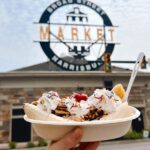

In May, the Summerdale resident claimed her piece of the pie and opened Dalicia Bakery and Coffee Shop in Harrisburg, a stone’s throw from HACC’s Midtown campus.

The ebullient proprietress greeted me with a big smile and a hearty greeting when I entered the charming shop that once housed a salon. I remarked on the chalk pastry art that decorates the walls, and she told me that her daughter had created the cute cake drawings on squares of chalkboard paint.

Walls in hues of sage and tangerine complement the tan tables spaced comfortably around the room. Chair backs containing cutouts that resemble floating coffee cups with steam rising add a bit of whimsy to the décor.

Alic pointed out other special touches.

“See the sign?” she said, pointing to the window emblazoned with the business name. “If you look closely, you’ll see the word ‘Alic’ in there.

And, indeed, the endeavor is a family affair, with her husband Mirsad, daughter Ajla and son Ajdin all contributing in one manner or another.

Originally from Sarajevo, Bosnia, Alic learned to bake at a young age and credits her grandmother for cultivating her talent.

“She taught me all the traditional stuff,” she said.

By age 18, she had fled her troubled home country.

“I was lucky that I could leave,” she said.

As a young woman, Alic spent time in Germany, where she met her husband and honed her skills by working in a bakery. Because of the country’s location in central Europe, she was able to travel to Italy and France to gain even more insight into the bakery business. Today, she pays tribute to those regions with small pictures placed around the restaurant.

In addition to the baked goods, Dalicia’s menu features simple, healthy fare. Breakfast offerings include a “hot pocket,” just not the ubiquitous, frozen, processed kind. Alic’s “hot pocket” is a creamy mixture of egg, cheese and vegetables wrapped in a choice of homemade bread. Other early morning options include Belgian waffles with peanut butter and banana, Nutella or fresh fruit and a yogurt-and-fruit parfait.

Vegetarians, in particular, will enjoy Dalicia.

Patrons can choose from among hot sandwiches like the “Garlic Lovers,” with red peppers, onions, feta cheese and herbs served between two warm slices of artisan garlic bread; the “Roasted Pepper Wheaty,” comprised of mixed roasted peppers, leeks, zucchini and mozzarella on ciabatta; and the “Veggie Sandwich,” with pesto, mushrooms, mozzarella and provolone on artisan vegetable bread.

Cold sandwiches include the “Skinny,” a low-calorie option that includes cream cheese, provolone, cucumbers and tomatoes served on wheat bread; the “tomato basil,” with provolone, tomato, avocado and lettuce on tomato basil bread; and the house wrap on wheat or white, with provolone, vegetables and cheese.

It may seem a bit incongruous to offer healthy fare with baked goods, but Alic succeeds in appealing to those who are calorie conscious but want a little bite of something to satisfy their sweet tooth. With one peek into the glass case located up front, you’ll see that there are plenty of wee-bites from which to choose.

In addition to mini-bonbons and adorable little chocolate mousse cups, Dalicia offers cheesecake, brownies, cannoli, tiramisu and some of the moistest, cream-filled cupcakes you’ll ever taste. Pair any of these with a cup of Little Amps coffee served onsite, and you’ll have a perfect match.

Chris Scott, manager at Midtown Scholar Bookstore up the street, said he is happy for the additional dining option and the reasonable prices.

“I love that everything is vegetarian, but even those who aren’t vegetarian will likely appreciate having nice, light options,” he said.

Scott was glad to learn that the business is open on Mondays, too.

“So many places in this area are closed on Monday,” he said.

One of Scott’s favorite choices is the “Skinny Sandwich” paired with one of many varieties of infused waters like pineapple tangerine, peach mango, lemon mint, berry and ginger cucumber.

As for business, Alic said that things are going well so far.

“I’m reaching my goal,” she said. “And my favorite part about it is seeing their faces when they like it, and I see more and more people coming back.”

Alic said that she is thrilled to be able to finally fulfill her dream and create her idea of the perfect coffee shop and bakery. And, today, Midtown is just a little sweeter for it.

Dalicia Bakery and Coffee Shop is located at 1419 N. 3rd Street, Harrisburg. To learn more, call 717-525-7496 or visit www.daliciabakery.com or their Facebook page.

Continue Reading

It’s in His Blood: Jeb Stuart has spent his life devoted to a single cause—the welfare of the historic capital city.

Screenshot 2016-06-23 14.45.26Ask Jeb Stuart to speak about himself, and he’ll likely steer the conversation right to Harrisburg.

Growing up in Camp Hill, he used to ride his bicycle into the capital city, taking in the church architecture, getting a haircut at the old Penn Harris Hotel, and dropping by his father’s clothing store.

“I gravitated toward Harrisburg,” he said. “It was in my blood from day one.”

Stuart’s maternal grandparents lived on N. Front Street, in a 1927 southern Colonial-style home built by his grandfather, E. C. Snyder—founder of a Harrisburg lumber mill—in 1911.

The Snyder home is now the residence of Stuart and his wife, Robin. Its preservation in near-original appearance has been an extensive labor of love for the couple, one that earned the Historic Harrisburg Preservation Award in 2008.

But that’s just one of Stuart’s many efforts on behalf of the city. Historian, preservationist, developer, civil servant—he’s done it all.

For his lifetime of commitment, Historic Harrisburg recently sponsored “A Toast to Jeb Stuart.” Appropriately, the celebration was held at Harrisburg’s most historic building, the John Harris and Simon Cameron Mansion, which celebrates its 250th anniversary this year.

“Few people have contributed to the vitality of this community as extensively, and with as much dedication, as Jeb Stuart, “ said HHA interim executive director David Morrison. “Jeb has devoted his life to Harrisburg.”


A Different Path

Stuart might easily have become a businessperson—that was in his blood, too. His father, Allan Stuart, opened his first store in 1935. Later, he ran the 212 Men’s Shop in the Mary Sachs store before going off on his own again.

But the younger Stuart took a different path. A special consultant to the city of Harrisburg for 10 years, he helped coordinate the Civil War Trails project. He also was involved in the creation of the African-American Heritage Trail and chaired the Harrisburg SusqueCentennial Commission from 2009 to 2010.

Among other commitments, Stuart is a board member of the Historical Society of Dauphin County, the Harrisburg Cemetery Association and Historic Harrisburg’s Community Historic Preservation Fund.

Previously, he was on the boards of Historic Harrisburg Association and the National Civil War Museum.

In fact, Stuart shares the name of a famous Civil War general, but, ironically, one from the Confederate side. His given name is James Allan III, but even before birth, he was told, his father called him “Little Jeb.”

“My father went to the University of Virginia and was always into the romance of the South,” he said.


A Gem

After graduating with a bachelor’s degree in psychology from Susquehanna University, Stuart went to work for Harrisburg—as city clerk. He hasn’t stopped serving the city since.

It’s hard to summarize all of his accomplishments, so I asked him what he considers to be most significant. One, he said, was historic preservation.

Decades ago, when the Harristown Urban Renewal Plan was being developed, one of the goals of the Downtown Harrisburg Historic Preservation Project, which Stuart directed, was to target buildings for preservation that were potentially included on the plan’s demolition list.

This was particularly true with Old City Hall on Walnut Street. Stuart nominated it to be listed on the National Register of Historic Places, and it was subsequently sold for adaptive re-use and market rate housing.

Another was the Cameron School project, for which Stuart was managing general partner, with Arnie Kogan as his business partner. Stuart oversaw the drive to convert the old schoolhouse, in a transitional neighborhood, to 35 upscale apartments.

“The apartment project, the Simon Cameron School Apartments, at 1839 Green St., planted the seed to transform and stabilize the neighborhood,” Stuart said.

He placed the property on the National Register of Historic Places and gained historic tax credits to bring in an investor. He also managed the building for 12 years.

Stuart also was director of the Dauphin County Office of Economic Development and a charter member of the Susquehanna Area Regional Airport Authority, as well as chair of the Authority’s Economic Development Committee.

From 2011 on, he has been a consultant-at-large. He was instrumental in reestablishing the Harrisburg Parks Foundation, which he chairs. The foundation raises funds to support the preservation, maintenance, expansion and development of parks throughout the city.

A golf outing sponsored by the foundation recently raised $8,000, a portion of which was used to buy a new swing set for an Allison Hill playground. This summer’s outing will raise money for the band shell in Reservoir Park.

Stuart is not a man of intensely pursued hobbies. He works “all the time,” he said, including on his landmark house. But he does enjoy classical music—especially Baroque—and historic photography.

“I’m a stay-at-home guy,” he said.

With one clear exception. He and Robin always make time for the beach they love at their house in Cape Hatteras, N.C.

Still, his ongoing love affair with Harrisburg takes precedence. When David Morrison interviewed him as a “living legacy” as part of the SusqueCentennial celebration, Stuart spoke eloquently.

“The city is a wonderful urban environment,” he said. “The setting is stunning…. It is architecturally a gem.”

Continue Reading

Sense of Loss: Pets offer great enjoyment, but overcoming their death can be hard.

Screenshot 2016-06-23 14.47.36For many of us, experiencing the death of a pet is like losing a loved one.

You grieve. Maybe you feel guilty, wondering if you did all you could for your pet. Anger and depression might surface, too, along with shock or denial.

All of this is normal, said Ruth Karns Rudderow, a trained pet loss bereavement counselor at the Humane Society of Harrisburg Area. It’s also normal to wonder if you could ever love another pet as much as the one you just lost, she added.

“It’s like losing a human,” explained Rudderow, who is also executive vice president of Karns Quality Foods. “From what I’ve seen, for people who don’t have children, it’s harder. It’s harder if you live alone.”

That said—it’s different for every person, she added.

“Some miss the companionship and being greeted at the door by their pet,” she said. “For dog owners, it’s a loss of habit. I’ve had clients who can’t walk the same path that they walked with their dog,”


Best for Them

Since 2013, Rudderow has counseled bereaved pet owners at the Humane Society, veterinarians’ offices and the American Red Cross on as-needed basis. Some weeks, she gets three or four phones calls from bereaved pet owners; some weeks, she gets none. Sometimes, Humane Society staff will give Rudderow’s card to a bereaved pet owner who seems particularly upset.

“It varies,” she said.

Rudderow, who has three cats of her own at home, began volunteering for the Humane Society in 2007 as a cat socializer and helped out with animal adoptions. When she noticed that some human clients cried while there, Rudderow, who carries a bachelor’s degree in social work, was naturally curious and asked why they were sad. As it turned out, the clients invariably were crying over the loss of a beloved pet.

Rudderow googled “pet bereavement” and discovered there’s a whole field devoted to helping people deal with the loss of their animal companions. Soon, she was trained as a pet bereavement counselor through the Association for Pet and Loss and Bereavement, a nonprofit volunteer organization.

Sometimes, Rudderow even has done “anticipatory counseling” for pet owners facing the critical decision of euthanizing an animal. For this, she helps owners evaluate the situation using a quality-of-life scale that assesses a pet’s pain level, happiness, mobility and other factors.

“Animals only know right now,” Rudderow explained. “So, if an animal is suffering, all they know is that they’re suffering. We have to put or our feelings aside and do what’s best for them.”


Saying Goodbye

Two years ago, Kathy and Paul Roberts of Lower Paxton Township were faced with the decision of “doing what’s best” when Flashlight, an 11-year-old pointer mix, was ailing.

Of course, the decision to put Flashlight down wasn’t easy for anyone in the family, but it was particularly difficult for the couple’s son, Sam, now 18, who had lived with the dog for most of his life. It was he who named Flashlight at 3 years old.

Kathy Roberts picked up her son from school the day that Flashlight was euthanized so he could be there, but he still was angry that it was happening.

“At first, Sam wouldn’t come in the room with Flashlight, but then Paul brought him in so he could say goodbye,” she recalled.

Two months later, the Roberts family heard about a mixed cattle dog and Brittany breed puppy that needed a new home. For them, the time seemed right to get another pet.

“We grew up with dogs,” Kathy noted. “When you lose a dog, your whole house feels empty.”

By then, Sam Roberts had gotten over most of his anger about Flashlight’s death, his mother said. He named the new puppy Elsa after Disney’s “Frozen” heroine.

“There’s no right or wrong time to get a new pet after losing a pet,” Rudderow advised. “It’s when your heart is ready, but everyone in the household has to be ready, too.”

Karen Baraniak of Duncannon said her father wasn’t ready to get a new pet after the loss of the family’s 12-year-old German shepherd, Tasha, but her mother got a new dog three months later, anyway. Baraniak, now the Humane Society’s intake center team leader, was so devastated by Tasha’s death that she stayed home from school for a week after it happened. Fortunately, she “started to feel better” after the arrival of Brownie, a 1-year-old Spitz mix, she said. Today, Brownie is her father’s best friend, despite his initial apprehension.


In Your Heart

Charlotte Hassman of Harrisburg always has kept a houseful of pets and, consequently, has had to put several down over the years. The first dog she lost was 14-year-old Phoebe, with the loss perhaps being hardest on Hassman’s son, who grew up with the animal. Hassman, the director of animal care at the Humane Society, admits that there was a void.

“Even if you had five dogs and you now have four, it’s still a loss,” she said.

Even trained pet bereavement counselors grieve over lost pets. Such was the case when Rudderow’s 19-year-old cat, Jasmine, died two years ago.

“A couple of days afterwards, I was very snappy to someone on the phone and I thought, ‘What is wrong with me?’ Then I realized it was anger, a stage of grief,” she remembered.

But it wasn’t long before Rudderow was ready for a new pet to join her two surviving cats at home.

“It wasn’t a replacement,” she explained.” The pet (you lost) is still in your heart. Your heart has lots of pockets. Your pet may no longer be by your side, but it’s always in your heart.”

For more information on pet end-of-life and bereavement, visit the Humane Society of Harrisburg Area at www.humanesocietyhbg.org and the Association for Pet Loss and Bereavement at www.aplb.org.

Continue Reading

In Her Own Words: “As She Likes It” reimagines Shakespeare by giving voice to women.

Screenshot 2016-06-23 14.56.22William Shakespeare is not exactly known for his female roles.

The revered Shakespearean characters, such as Hamlet, Macbeth, Othello or my personal favorite, Coriolanus (although not typically a crowd favorite), are all men, and the notorious women in their respective plays exist mainly in support of their leading men. This is not a surprise, as women in Elizabethan England held a generally insignificant place in society outside of the home. It was also illegal for them to act.

Today, the status of women has greatly changed. Women have fought hard for their right to have a voice, and we don’t expect men in female roles anymore, like in Shakespeare’s day.

Karen Ruch, the director of Gamut Theatre Group’s Stage Door Series play “As She Likes It,” is adamant about the importance of expanding women’s roles. The larger play contains seven smaller, original plays of about 15 minutes long, in which the female characters are given a closer look.

“The mission I gave the playwrights was to take one or several female Shakespeare characters and broaden their story,” she said. “I wanted to dive into their particular story either within the context of the play from which they came or by transplanting them into another circumstance.”


Dig In and Create

Gamut’s mission of giving power to the classic story is not exclusive to old works, and part of making 400-year-old plays accessible is by continuing the conversation and utilizing the resources available to make that happen.

“Getting to work with playwrights that we have here in central PA is a great opportunity for us,” Ruch said. “And we do have quite a lot of very talented playwrights.”

Part of Gamut’s mission is finding new and exciting ways to examine these stories. That is accomplished when you take a model from Shakespeare—all male actors—and turn it on its head with a modern model of all women. It furthers the discussion on why these stories remain important and relevant after multiple centuries.

“Having played some of the Shakespeare women, themes that are important to the women in the plays are very interesting to me,” Ruch said.

She explained that, since females are not often the focus of the play, there are a lot of questions that an actor playing that role has to answer on her own.

“You need to fill in the history that is not given to you within the play to make a complete human being,” she said. “You can argue that it is a gift to be given a role where you get to dig in and create a world for them, but I also think that, in 2016, it makes sense to give these ladies a broader voice and agency.”


Larger Conversation

“As She Likes It” is a chance for women to express themselves for the individuals that they are in ways that the original plays did not provide. Ruch’s primary focus is giving the characters an opportunity to explore choices and the aftermath of those choices, a theme not traditionally given to female characters in classic theater.

One of the plays details the characters of Gertrude and Ophelia from the be-all-end-all Shakespeare play, “Hamlet.” Both of these characters are fascinating but are not given much introspection in the actual play.

“They meet in the afterlife and have a conversation about what went on in their lives, because we don’t get that in the original play,” Ruch said.

Another takes the three sisters from the tragedy “King Lear” and places them in a modern context after their father has been hospitalized with dementia. This setting allows the playwright to explore the age-old themes of the play while reflecting on how these issues remain important in the 21st century.

These plays are about Shakespearean women. However, Ruch emphasizes that it is only part of a larger conversation happening now about women’s place in the world and how their voices are represented, especially in entertainment.

“It is my desire, but I also consider it my responsibility, as a maker of theater in this area, to create more opportunities for female actors,” she said.

Gamut often does this by gender-swapping roles written as male, but also by exploring what gender really means in the world we live in and by allowing characters to define themselves. This can mean giving characters strength where it is not typically thought that there is any or allowing them to be feminine or domestic without being considered helpless or dependent. “As She Likes It” delves into it all.

“On a level of an actor, but also of the characters within the play, we want to let these ladies really talk,” she said.

Gamut Theatre Group’s Stage Door Series presents “As She Likes It” Aug. 12 through Aug. 22 on the Select Medical Mainstage at the New Gamut Theatre located at 15 N. 4th St. in Harrisburg. Every performance is “Come As You Are; Pay What You Will.” More information is at www.gamuttheatre.org or by calling 717-238-4111.


July Theater Events
At Harrisburg’s
Professional Downtown Theaters

 AT GAMUT THEATRE
www.gamuttheatre.org

POPCORN HAT PLAYERS PRESENT
“Cinderella”
July 13-Aug. 20
Wednesdays and Thursdays at 10 a.m. and Saturdays at 1 p.m.
Tickets $8

TMI IMPROV MAINSTAGE SHOW
July 22
Bar opens at 6:30 p.m. Performance starts at 7:30 p.m.
Tickets are bring your own price; any donation buys a ticket.


AT OPEN STAGE
OF HARRISBURG
www.openstagehbg.com

The “HUNDRED ACRE WOOD” Project
The Wonderful World of Winnie-the-Pooh
starring the OSHKids
Children’s theater for children, by children!
July 8 at 6:30 p.m. and 8 p.m.
Tickets $10

MUSIC THEATER WORKSHOP
“From the Page to the Stage”
a student musical revue
July 28 at 6:30 p.m. and 8 p.m.
Tickets $10

Continue Reading

House Vets: A new breed of animal doctor comes to you.

Screenshot 2016-06-23 14.46.23Kari loved to bask in the sun.

Jeanne DeDay considers Kari, an 8-year-old dog, one of her kids—along with two other dogs and four cats that live with the Carlisle woman and her husband.

When Kari flopped down onto the warm grass that May afternoon, resting in her favorite place, she wasn’t anxious about a thing. She relaxed in the sun under the loving caresses of her parents.

As her family gathered around her to say goodbye, Dr. Tracy Sands of Healing Paws Veterinary Care helped Kari escape from the pain, the seizures and the cancer that had clutched her body.

Kari was put down, not on a cold examine table in a veterinarian’s office, but at home, surrounded by those who loved her.

“Sometimes, the right thing is the hardest to do,” DeDay said, recalling the day.

The mobile services offered by Sands, a veterinarian who travels to animals within 30 miles of downtown Carlisle, has brought convenience to pet owners and comfort to the animals she visits.

When she graduated from veterinarian school, Sands worked as a mixed animal doctor, treating cows, horses, cats and dogs wherever they lived. She saw the benefits of traveling to the animals instead of owners needing to crate screaming cats or drag shaking dogs into a brick-and-mortar location.

She heard from many of her clients about how much they appreciated traveling veterinarian care and, in 2013, started Healing Paws. Two years into the business, she had a two-to-three month waiting list for house calls.

The demand led her to hire a second doctor and put two vehicles on the road, one of which is parked in downtown Carlisle twice a week so people can bring their pets to a central location if they choose. Today, she has about 1,110 clients, most with multiple pets.

In addition to cats and dogs, Sands specializes in what she calls “backyard pets” or the goats, sheep and llamas that many people keep in the area.

The desire for traveling veterinarian services is nothing new, she added.

“Traveling used to be the only way we did veterinary medicine,” Sands said. “At some point, our society got away from that, and it brought a lot of negatives with it.”


No Rush

In an animal’s home, Sands is able to see what might really be causing problems. A home environment can be very telling, especially if a cat is battling litter box problems or a dog struggles with separation anxiety, she said.

Traveling also provides an individualized experience that’s helpful for people who balance work, family activities and other aspects of a busy lifestyle. Instead of packing up their pets and stressing them out for a car ride or a trip to an unfamiliar place, the animals and their owners can relax in their own homes.

For Dr. Debra Benner, mobile veterinary care was something that weighed heavily on her mind for the nearly 30 years she practiced in a traditional office.

The pressure to meet the overhead costs of a full veterinarian practice meant she often had to see patients quickly, not spending the time she wanted to really get to know them.

Two years ago, she started West Shore Veterinary House Calls, where she provides mobile veterinarian services within 15 miles of Mechanicsburg.

“I think, as more people learn that mobile veterinarian care is an option for cats and dogs, we’ll continue to see that trend grow,” Benner said. “Within six months of starting, I was already at my capacity for patients. It’s a service people want to see.”

Benner takes a very personal approach to her care. She often sits on the floor in the living room, she said. She believes she is a guest in the home, both to the pet owner and her furry patient. It might take longer, but she likes to wait for the cat or dog to approach her first.

“Working at that slower pace means I get to know the animals better, and the owner has a chance to tell me how things are going,” Benner said. “There’s no rush, no hurry. This is a relationship.”


Such Value

Providing end-of-life care, such as helping the DeDay family say goodbye to Kari, is also a priority for both Sands and Benner.

After putting down a dog that she had been treating since October, Benner received a call from the owner who wanted to meet for lunch. The two had become friends in the time they both spent caring for the dog.

“It’s that kind of connection to people and their pets that I missed when I worked in a traditional office,” she said.

Allowing pets and owners to say goodbye in the comfort of their home is a privilege, Sands added.

“It’s so hard to say goodbye to an animal when you consider them to be part of your family,” she added. “Being home is easier on everyone, and I’m honored that I can provide that for them.”

For the DeDays, that personal touch—that sacred moment to let Kari go—is one they will never forget. Because of the care that Sands and her staff provide, DeDay said, she considers them family, too. Whether they’re visiting her four cats (Meatball, Daisy, Spot and Tippy) or her two dogs (Spike and Ruprecht), she knows they are all in good hands.

“I think this kind of service is of such value to a pet owner,” DeDay said. “I can’t imagine the same quality of care in a more traditional service. And that means a lot to me and my fur-babies.”

Save

Continue Reading

Sense of Place: An historian reflects on American identity during this patriotic season.

Screenshot 2016-06-23 14.45.39American history, says Brent Glass, is “a resource for understanding our own times and our own lives.” Its study is patriotic, even when it unearths injustice and the fight against oppression.

You might remember Glass. From 1987 to 2002, he was executive director of the Pennsylvania Museum and Historical Commission, helping win PA Keystone funding to maintain historic sites. He left Harrisburg for Washington to become director of the Smithsonian’s National Museum of American History, managing a two-year overhaul before retiring in 2011.

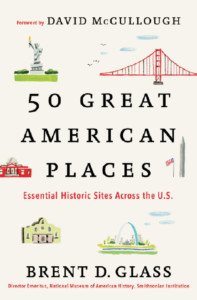
So, when you hear that Glass has written “50 Great American Places: Essential Historic Sites across the U.S.,” with a foreword by no less than his friend David McCullough, you have to figure he knows his stuff.

Glass often returns to Harrisburg to visit family, and on a recent trip, he shared the thinking behind his new book, published by Simon & Schuster Paperbacks. There’s no magic in the list, and it’s certainly not definitive, he said. Presented chronologically, the sites encapsulate the themes of freedom, war, innovation, diversity and land and landscape.

“American identity is defined, I think, by those five things,” Glass said. “Other countries may have those same five things, but not in that unique configuration.”

Hence, the Alamo is followed by the upstate New York birthplace of the women’s movement. The tragic Indian Wars sites of Little Big Horn and Wounded Knee precede “The Bridge and The Statue”—you know the ones—in New York City.

“It’s an introduction to American history, and it’s also an appeal to public memory, that we need to remember and value these places because of how they reflect our traditions and values and ideals,” Glass said.


Overcoming Barriers

The book’s first listing, the National Mall in Washington, D.C., is the only site presented non-chronologically.

As a kid, Glass visited the monument-dotted span he now calls “America’s front porch.” As National Museum of American History director, he stepped onto that porch almost daily. Under his watch, the museum underwent renovations reflecting new thinking in use of public space.

Under those renovations, the preserved fragments of the original Star Spangled Banner got a new gallery, and a replica of the massive 30-by-42-foot original, “meant to be seen at a great distance,” is sometimes unfurled for visitors to hold while singing the National Anthem.

It is, said Glass, “a patriotic moment,” but he added that patriotism means different things to different people. Profiling essential sites doesn’t mean glossing over the dark patches in American history. Someone once asked him, “What’s so great about Wounded Knee?” where U.S. cavalry soldiers massacred 300 Native Americans in 1890.

“What is great about it is that it’s essential to know about Wounded Knee if we’re going to understand how American history involves overcoming barriers,” he said. “And to be a democracy and to really be patriotic, we have to acknowledge the fact that there is some tragedy in our history, and we recognize it, and at least in this country, we talk about it and we acknowledge it. We don’t try to bury it.”

Similarly, from his Smithsonian tenure, Glass cities the counter from the Greensboro, N.C., Woolworth’s, where, in 1960, sit-in participants re-enacted their defiance against segregation. A schoolchild on a museum tour once asked Glass, “Did this really happen?”

“He couldn’t fathom it, that we had laws and customs enforcing segregation,” he recalled. “That was something I was proud of, that we could make history accessible, not only through our collection, which is the best in the world, but using the museum as a stage for providing the content.”


What-Ifs

Asked his definition of patriotism, Harrisburg political consultant Charlie Gerow said that America needs citizens who “know a little bit more about history and a little bit more about civics.” The history buff, who hadn’t yet read Glass’ book but looked forward to picking up a copy, quoted 19th-century U.S. Senator Carl Schurz: “My Country! When right, keep it right; when wrong, set it right!”

But a warts-and-all view of history must be put in context, said Gerow, CEO of Harrisburg-based Quantum Communications. Any discussion of the World War II internment of Japanese-Americans should be paired with the “vicious, malicious, unprovoked attack on the American people by the imperial Japanese government,” he said.

“This is the most exceptional country in the history of the world, built on very high ideals,” he said. “Because we are human beings, we sometimes fall short of those ideals, and, when we do, it’s important to reflect on how it happened and what we need to do to correct it, but that’s not an indictment of the country or its system of government.”

Glass does, indeed, feature consecutive chapters on the Pearl Harbor attack and Minidoka Camp in Idaho, where 120,000 forcibly relocated Japanese-Americans built a community and erected an honor roll of internees who performed military service “even while family and friends were held captive in the high desert of Idaho.”

Pennsylvania appears often in Glass’ book. Gettysburg, the Liberty Bell and the forks of the Ohio River at Pittsburgh’s Point get their own chapters. Other Keystone State sites and people make cameo appearances. Gifford Pinchot butts heads with fellow conservationist John Muir. In charming but tumultuous New Castle, Del., freewheeling descendants of Dutch settlers rebel against control by the conservative Quaker government of William Penn’s Pennsylvania.

By selecting still-standing sites, Glass paid tribute to historic preservationists, including President Dwight Eisenhower, advocate for protection of the Gettysburg battlefield.

“The past is not inevitable,” Glass said. “It is not inevitable that we have these places. People made decisions to save some of these structures. And people made decisions that gave these places their historic meaning. When you go to Gettysburg, you really can appreciate how history is contingent on so many individual decisions and so many what-ifs.”

Even Harrisburg, which receives one mention as the end goal for Robert E. Lee’s Army of Northern Virginia, has scored telling victories with the City Beautiful movement and preservation of its unique riverfront, said Glass.

“You can’t go wrong if you have access to that scene,” he said.

Harrisburg also embodies a theme of the book—that history is in our midst and easily accessible. Glass believes it’s time to stop complaining about the excess of nontaxable state properties in the city and, instead, market their tourism value, especially the Capitol, Forum building and State Museum.

“All those buildings were built at a time when they paid artists to decorate them,” he said. “I would put the Harrisburg Capitol as one of the best, not only for the Capitol building but the whole complex.”

Public disinvestment in heritage sites “is very shortsighted,” Glass said, but the passion that historical assets generate is heartening. Investments in visible history “have such a tremendous effect on the morale of people, to know they are connected to a bigger story.”

“You can’t measure that,” Glass said. “There aren’t a lot of metrics to say, ‘What’s the return on that investment?’ But I’m really convinced that we’re enriched by preserving history and knowing the history and telling that story to the next generation and getting them engaged in it.”

“50 Great American Places: Essential Historic Sites across the U.S.” by Brent Glass is available in bookstores and online.

Save

Continue Reading