Housing Bill Unchanged as Council Turns Back Mayoral Veto

CityCouncilWeb

Harrisburg City Council

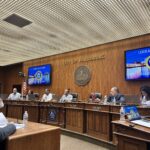
Harrisburg City Council tonight overrode a mayoral veto, thereby permitting seven nonprofit groups to receive federal housing funds.

Council voted unanimously to override Mayor Eric Papenfuse’s first-ever veto, returning from summer recess to cast their votes.

Last week, Papenfuse vetoed the annual bill that distributes federal Community Development Block Grant (CDBG) funds, saying that council selected nonprofit groups to receive funding without sufficient public input.

“There was no public comment on any of these specific changes, many of which drastically altered the funding amounts requested by the sub-recipients,” he said.

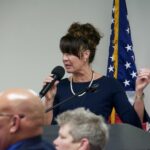
However, council President Wanda Williams tonight disputed Papenfuse’s version of events.

“In 11 years that I have been in this position, it has been the practice and responsibility for council to discuss and enact any changes they feel are in the best interests of the residents regarding CDBG funding,” she said, in a prepared statement. “All discussions were held in public settings, which involved public comments.”

PennLive’s Christine Vendel has reported that, despite two public meetings on CDBG funding, council members reached consensus on final recipients and allocations “through email and private conversations.”

Originally, Papenfuse proposed that the city retain all $1.9 million in CDBG funds for its own needs. However, council unanimously decided to carve out $295,000 and distribute it to a handful of service organizations.

In the end, the following groups received funds:

  • Habitat for Humanity of the Greater Harrisburg Area, $80,000
  • Heinz-Menaker Senior Center, $40,000
  • African American Chamber of Commerce, $30,000
  • East Shore YMCA, $30,000
  • MidPenn Legal Services, $30,000
  • Fair Housing Council, $25,000
  • Christian Recovery Aftercare Ministries, $25,000

MidPenn Legal Services was the only group that received all the money it requested, while others received considerably less. Council also awarded $35,000 to the Ferguson Group, which helps nonprofits with grant writing.

In vetoing the bill, Papenfuse specifically cited the Ferguson Group, saying that it was not eligible to receive CDBG funds. Following tonight’s meeting, he reiterated this position.

“We still won’t be able to fund the Ferguson Group,” he said. “They’re not an eligible sub-recipient.”

Before the override vote, several residents spoke to defend their requests for CDBG money. Members of the Latino Hispanic American Community Center, for instance, went to the microphone to urge council members to reconsider their request. Though the group has been funded in past years, it was denied funding this year.

Melvin Johnson, chairman of the Fair Housing Council of the Capital Region, appealed for additional money, saying that this year’s grant represented just 6 percent of his budget. Meanwhile, the demands on his organization continue to grow, he said, including finding new homes for residents displaced by the recent condemnation of the McFarland apartment building following the collapse of a retaining wall near the Mulberry Street Bridge.

Afterwards, Williams apologized to the room, stating that debt obligations prevented council from being able to fund more groups and at higher levels. In the end, council passed the veto override without proposing any changes to the bill.

The city needed to reserve the single-largest amount of CDBG money—$641,113—to repay a federal loan it backed for the once-bankrupt Capitol View Commerce Center, as well as for other federal community development loans dating back about 15 years.

The Papenfuse administration has sent a letter to Julian Castro, secretary of the U.S. Department of Housing and Urban Development, asking for relief from the remaining balance of the Capitol View Commerce Center loan, as the developer, David Dodd, defaulted on the loan and was later convicted on federal fraud charges. No response has yet been announced.


Continue Reading

Community Parties Planned for CRW Greening Initiative

RiverWeb

Capital Region Water’s greening initiative should help improve the quality of area waterways, including the Susquehanna River.

Capital Region Water will hold a series of community “parties” over the next two weeks to gather information for its greening initiative.

In the three neighborhood parties, CRW will gather information and offer possible solutions as part of its City Beautiful H2O program. It also will offer free food, music, activities and prizes, said Andrew Bliss, community outreach manager.

At the three events, CRW will set up education stations to offer information on water issues and community greening, Bliss said. Other stations will present community greening concepts, giving residents a chance to comment.

The events are:

South Harrisburg Party
July 26, 5 to 7 p.m.
Cloverly Heights Park (18th and Pemberton streets)

Allison Hill Party
July 30, 11 a.m. to 2 p.m.
Heart of the Community Garden (1418 Derry St.)

Uptown Party
Aug. 2, 5 to 7 p.m.
Camp Curtin YMCA (2135 N. 6th St.)

“This is our community’s plan. Your plan for today and for future generations,” said CRW CEO Shannon Williams. “We want you to tell us what you need in your neighborhood. Our job is to see how we can meet those needs through community greening projects.”

City Beautiful H2O is part of a years-long project to improve water quality and reduce combined sewer overflows. The greening plan is partially funded by the Pennsylvania Department of Conservation and Natural Resources, Bureau of Recreation and Conservation and the Environmental Stewardship Fund.

Bliss added that City Beautiful H2O is more than a plan to improve water quality. It’s also a chance to improve and beautify neighborhoods through community greening projects.

Click here to see a video about CRW’s initiative.

Continue Reading

Harrisburg Mayor Vetoes Housing Bill that Disbursed Money to Nonprofits

PapenfuseWeb

Harrisburg Mayor Eric Papenfuse

Mayor Eric Papenfuse today vetoed a bill that dramatically altered his spending priorities in the annual allocation of federal housing funds.

In a statement, Papenfuse said he vetoed the recently passed Community Development Block Grant (CDBG) bill because City Council made major changes to his proposal without any public comment on those changes.

“My primary objection is the lack of public process in debating the substantial amendments that were passed by Harrisburg City Council on July 5,” he said. “There was no public comment on any of these specific changes, many of which drastically altered the funding amounts requested by the sub-recipients.”

City Council is on summer break until late August, meaning that a special session would have to be called to try to override Papenfuse’s veto.

On July 5, council selected seven nonprofit groups to receive federal housing funds, bucking the wishes of the mayor.

Papenfuse had proposed that the city retain all $1.9 million in CDBG funds for its own use. However, council unanimously decided to carve out $295,000 and distribute it to a handful of service organizations, as it has in past years. The following groups received funds:

  • Habitat for Humanity of the Greater Harrisburg Area, $80,000
  • Heinz-Menaker Senior Center, $40,000
  • African American Chamber of Commerce, $30,000
  • East Shore YMCA, $30,000
  • MidPenn Legal Services, $30,000
  • Fair Housing Council, $25,000
  • Christian Recovery Aftercare Ministries, $25,000

MidPenn Legal Services was the only group that received all the money it requested, while others received considerably less. Council also awarded $35,000 to the Ferguson Group, which helps nonprofits with grant writing.

In addition to his objections over public input, Papenfuse specifically objected to the allocation to the Ferguson Group, which, he stated, “is clearly not an eligible sub-recipient and had not even applied for such funding.” Thirdly, he said that several recipients, including the African American Chamber of Commerce, never appeared before council to promote or defend their applications.

Most of the money distributed to the groups came from $165,000 that Papenfuse had earmarked to restart a school resource officer program for the Harrisburg school district. Council, citing a lack of buy-in from the district, killed the proposal in favor of funding the nonprofits. Smaller amounts were taken from grant administration, housing rehabilitation and emergency demolition.

The city reserved the single-largest amount of CDBG money—$641,113—to repay a federal loan it backed for the once-bankrupt Capitol View Commerce Center, as well as for other federal community development loans dating back about 15 years.

The Papenfuse administration has sent a letter to Julian Castro, secretary of the U.S. Department of Housing and Urban Development, asking for relief from the remaining balance of the Capitol View Commerce Center loan, as the developer, David Dodd, defaulted on the loan and was later convicted on federal fraud charges. At press time, no response had been announced.

Continue Reading

Major Sewer Lines to be Cleared, Cleaned

Interceptor Cleaning Equipment Web

Over the next few months, you may spot equipment like this cleaning out major sewer lines in and around Harrisburg.

Capital Region Water has begun cleaning out major sewer lines in its service area, work that will continue through November.

Crews from CRW, Terra Contracting and CDM Smith will be accessing manholes along the lines, called interceptors, to perform the pipe-cleaning work, said Andrew Bliss, CRW’s community outreach manager. The project includes the Paxton Creek, Paxton Creek Relief, Hemlock Street, Spring Creek and Front Street interceptors.

Bliss said that disruptions to traffic flow are not expected, but that CRW would provide notification through social media if they do occur.

Cleaning may be performed during normal business hours, weekends and overnight depending on when sewer system conditions are best, he said. Project crews will provide identification upon request.

“Interceptors are the main arteries of our sewer system that serves over 100,000 customers and the state Capitol,” said CRW CEO Shannon Williams. “It may not be an exciting project to some, but properly maintaining our interceptors is critical to providing reliable service and protecting public health and the environment.”

CRW interceptors are up to 60 inches in diameter and convey about 20 million gallons of sewage every day. Bliss said that initial analysis determined that some sections of the interceptors are 50-percent clogged by sediment, adding that the cleaning will remove about 2,300 tons of sediment.

According to CRW, there is no record of when the interceptors were last cleaned.

Bliss said that the $1.4 million project will allow for more storage in the interceptors, which will help reduce combined sewer overflows as part of CRW’s City Beautiful H2O program. Cleaning also will allow for a more detailed condition assessment of the interceptors, which will identify necessary repairs, he said.

CRW’s interceptor-cleaning schedule is as follows:

Interceptor Name Work Begins Work Ends
Paxton Creek Interceptor June 21 October 31
Paxton Creek Relief Interceptor July 18 July 30
Hemlock Street Interceptor June 30 July 9
Spring Creek Interceptor July 11 July 12
Front Street Interceptor August 1 August 31


Continue Reading

Wine & Town: Come for the Cab, stay for the night.

Screenshot 2016-06-23 14.43.58Screenshot 2016-06-23 14.43.58Wine-lovers—does this sound familiar?

You drive out to a vineyard, passing through scenic vistas and quaint towns. Through your car window, you spy old Victorians, a few antique shops, maybe a farmers market. It all looks so interesting—but then you never set foot outside the winery.

Stop that!

PA wineries make for fabulous daytrips, but most are also near villages, towns and historic sites that will bring even more enjoyment to your excursion.

Recently, I took my own advice and, with my wife, drove to a few spots along the Susquehanna Heartland Wine Trail, vowing to make the most of both the wine tastings and the surroundings. What I found enriched my trip, turning a simple wine outing into an adventure.


Symbiotic

We started our journey traveling north on Routes 11/15 along the Susquehanna River towards Sunbury, stopping at the Spyglass Ridge Winery, a few miles outside of town.

Owners Tom and Tammy Webb have what might be called a symbiotic relationship with Sunbury. Some people head for the winery, then visit Sunbury afterwards. Other times, it’s the other way around.

Sunbury boasts many things to do. It’s the site of the Joseph Priestly home, named for the 18th-century theologian credited with discovering the element of oxygen. Speaking of science, Sunbury is where Thomas Edison first tested the electric light bulb. If Colonial history is your thing, you can visit Fort Augusta, one of the most important forts in Pennsylvania during the French and Indian War.

The winery also benefits from its proximity to Knoebels amusement park, which generates more visitors.

For its part, Spyglass Ridge hosts major concerts—rockers Joan Jett, Foghat, Huey Lewis and Styx have performed—that bring thousands of people into the area.

“In an effort to be more interesting to our customers, we are building a brewpub with a restaurant and will even be adding a bocce ball court,” said Tom Webb.


Ground Up

Next, we traveled a quick 20 minutes north along Route 15 to the Fero Vineyards & Winery, operated by Chuck and Daneen Zaleski. The winery is on land farmed by several generations of Daneen’s family and overlooks the borough of Lewisburg.

“We began from the ground up,” Chuck said. “First, we tested and retested the soil to determine its exact chemical content. Then we searched for the types of grapes to fit our soil, weather and climate conditions. You must have really good grapes to make really good wines. We’re proud to be known for our quality Pennsylvania dry wines.”

When I was there, business was brisk, and, according to Chuck, plans are afoot for a larger building for receptions and events, as well as a bigger area to triple production.

“Eventually, we hope to pass the winery to our children,” said Daneen.

When visiting, a side trip to Lewisburg is a must. The borough’s 19th-century downtown was recently placed on the National Register of Historic Places, and the Chamberlin Iron Front Building and the Reading Railroad Freight Station are both worth a look. Lewisburg, home to Bucknell University, also has a charming, college-town feel. Many of the Zaleskis’ customers migrate up to the winery after some antiquing.

My wife and I stopped in at the Lewisburg Hotel, first opened in 1834. It closed in 1992 and, over the next five years, new owners went to great lengths to return the building to its original grandeur. It reopened in 1997 with six well-appointed rooms on the upper floors and 16 rooms surrounding a courtyard in the adjoining motel.

“Some interesting stories have surfaced in the hotel,” manager Dale Walize said. “Some say it’s haunted. Our staff claims to have experienced the ‘Lady in Red’ on the second floor. They have named her Scarlet. Others report to have seen a male ghost on the third floor they call Mr. Wilson.

There have been three groups of ghost hunters who have toured the hotel.

“I’m not sure about these claims of ghosts, but I know that, if the spirits are here, they’re friendly,” Walize said.

For a lovely walk in town, turn left from the front door of the hotel and stroll two blocks to the river, then turn right on Water Street. You can follow St. Louis Street to see the mansions of the local barons, who ran numerous banks in the 19th century.

We elected to eat at Elizabeth’s Bistro and were glad we did. The wine list is extensive and includes some tasty selections from Fero Winery.

“John, Liz’s husband, is a wine geek,” manager Ron Ott said. “He will sample the wine, talk to the vintner, then buy several bottles for Melissa, the chef, and Liz to determine how it fits with our menu of seasonal, regional and ethnic food.”

The atmosphere is friendly, the staff efficient, and the food excellent. Together with the homemade breads and tasty wine, we had an outstanding meal.


Whirlwind Year

After Lewisburg, we took a short drive over to Shade Mountain Winery. Karl and Carolyn Zimmerman turned their farm into a winery in 1999. The tasting room is located in an 18th-century bank barn and has a deck overlooking the vineyard.

“We are located on Route 104, a scenic alternative to Routes 11/15 and 322,” said daughter Jenny Zimmerman. “This enables us to attract many new customers who travel to Penn State and other getaway spots located north and west of here.”

They are partnering with the Rusty Rail, a new brewery and restaurant in Mifflinburg, a nearby historic town that made a name for itself as a center for buggy production in the 19th century. At the Rusty Rail, you can eat a good meal and enjoy Shade Mountain wine, in addition to the brewery’s craft beer. You can even view several beautifully restored buggies, as the massive building started life as a coach factory.

We left Shade Mountain and headed south on Route 104 until it joined Route 11/15. Then it was just a short ride along the Susquehanna River until we reached the Winery at Hunters Valley.

Driving up the lane to the winery, we were treated to a stunning view of the Susquehanna River Valley and Millersburg. At this point in our journey, we paused to soak up the spectacular scenery.

The Williams family has owned the winery for what son Jamie describes as “one whirlwind year,” having bought it from founders Bill and Darlene Kvaternik.

“We offer 22 wines and are expanding the list each month,” he said. “We connect with our customers by attending festivals and other events.”

They are active locally by helping with fundraising for nonprofits. Jamie believes that the winery is part of the community, so feel a responsibility to help make life a little better in their area.

“We do get traffic from our local historical places,” Jamie said. “The Landis House in Newport and the Millersburg Ferry are two of the ones most often mentioned by customers.”

After relaxing at the winery, I recommend taking the Millersburg Ferry across the Susquehanna River. The ferry, on the National Register of Historic Places, is a wooden, double stern-wheel paddleboat and is believed to be the only one operating in the country.

In Millersburg, visit the Ned Smith Center and see the art displayed in two galleries. Ned Smith, a famed naturalist and artist, was born in Millersburg in 1919 and drew and painted wildlife nearly his entire life. In addition to viewing his work, you can explore trails and see the work of other artists. The center also has an outdoor amphitheater for plays and other entertainment.


Still Growing

Our final stop took us a few miles downriver to Armstrong Valley Winery, which is outside of Halifax. The winery sits on the oldest farm in the area, established in 1769 by Robert Armstrong.

Owners Jake Gruver and Dean Miller bought the property in 2005, and, at first, didn’t intend to open a winery. ”

“That was kind of an afterthought,” said Miller.

Five years later, they are still growing. They’re building a new processing room and expanding the downstairs tasting room to gain more space. They participate in festivals that are within an hour’s drive and host parties, weddings and other community events.

“These events are an indirect method of building customers,” Miller said. “We never imagined the response and support we would receive from our community. It’s been wonderful.”

And so ended a long day visiting wineries north of Harrisburg. Yes, I tasted some amazing local product, but perhaps more importantly, found something I didn’t expect. These wineries are building cooperative relationships with towns and attractions around them, creating an opportunity for wine tourists to come, have a drink and stay awhile.


GOING THERE

Armstrong Valley Vineyard and Winery
212 Rutter Rd., Halifax
717-896-7700
armstrongvalleywinery.com

Elizabeth’s: An American Bistro
412 Market St., Lewisburg
570-523-8088
elizabethsbistro.com

Fero Vineyards & Winery
965 JPM Rd., Lewisburg
570-568-0846
ferovineyards.com 

The Lewisburg Hotel
136 Market St., Lewisburg
570-523-7800
lewisburghotel.com

Millersburg Ferry
333-339 River St., Millersburg
717-692-2442
millersburgferry.org

Ned Smith Center for Nature and Art
176 Water Company Rd., Millersburg
717-692-3699
nedsmithcenter.org

Northumberland County Historical Society
1150 N. Front St., Sunbury
570-286-4083
northumberlandcountyhistoricalsociety.org

Rusty Rail Brewing Co.
5 N. 8Th St. #1, Mifflinburg
570-966-7878
rustyrailbrewing.com

Shade Mountain Winery
16140 PA-104, Middleburg
570-837-3644
shademountainwinery.com 

Spyglass Ridge Winery
105 Carroll Rd. Sunbury
570-286-9911
spyglassridgewinery.com

The Winery at Hunters Valley
3 Orchard Rd, Liverpool
717-444-7211
huntersvalleywines.com

 

Continue Reading

Wonder Wall: Beautiful murals once lined the Mulberry Street Bridge. A group now is trying to put them back on view

Screenshot 2016-06-23 14.53.02For about a decade, two enormous murals adorned the Mulberry Street Bridge in Harrisburg.

You may remember them: 86 panels, 43 panels per mural, spanning 640 feet in total, showing colorful scenes of life in Harrisburg.

In April 2014, PennDOT removed the murals to rehabilitate the bridge, with no plans to reinstall them. So, for the past two years, they’ve been in storage in Harrisburg’s old central post office on Market Street, in space donated by Blue Bell-based Equilibrium Equities, which now owns the building.

But a volunteer group—the Mulberry Street Bridge Mural Preservation and Relocation Committee—has formed to free them from storage and put them back before the public.

“We’re five volunteers with a monumental task,” said member Tara Leo Auchey, who also runs the online publication today’s the day Harrisburg.

The committee has engaged Navarro & Wright Consulting Engineers and has a preliminary arrangement with the YWCA of Greater Harrisburg to display one of the murals, the one that faced north on the bridge, at the corner of Cameron and Market streets.

Despite the all-volunteer effort, the expense to relocate and mount the murals is monumental. Besides their size, the unique makeup of the murals makes their re-display a costly effort.

“They were created on ‘parachute fabric’—polytab mural fabric,” said Lauren Nye, the exhibitions manager at the Susquehanna Art Museum and a committee member. “And that fused to the surface of the bridge, so there was no peeling it off.”

When the committee talks about preserving and relocating these murals, Auchey said, they are not just 86 panels of art. They are enormous sheets of metal, each one 7-feet tall and 7-feet wide.

The north mural depicts a single scene across 43 panels, a history of Harrisburg from its early days through the City Beautiful movement of the early 1900s. The committee is dedicated not only to keeping all of the north mural’s panels together in sequence, but to keeping it at the intersection of downtown and Allison Hill, the two neighborhoods the Mulberry Street Bridge connects.

The south mural is a series of individual scenes across two and three panels each, featuring people affiliated with the arts group, Danzante, and from around Allison Hill.

“We were at the South Allison Hill Multicultural Festival,” said Nye, “So many people—at every event that we go to—walk by and say, ‘Oh my God, I remember these! Do they still exist?’ They’re like, ‘My cousin is on there!’ ‘My daughter is on there!’ ‘A portrait of my friend is on there!’”

These interactions illustrate the committee’s other important mission, besides raising money: outreach to the community.

“That’s the biggest thing we want people to know, that they are still safe and there is still a group of people who are invested in bringing them back to the public,” said Nye.


A Gift

These works of art need to be displayed again not just because they’re beautiful, but to demonstrate Harrisburg’s identity as a unified city and to contribute to its economic development as a source of tourism, say committee members.

“For the 10 years they were up on the Mulberry Street Bridge, there was no graffiti on them,” said Harrisburg artist Nancy Mendes, a committee member. “That shows that people loved and respected it. Why not give it back to them as a gift?”

During its campaign, the committee has formed relationships with people and companies that have helped with various aspects of the project. In addition, they say they have the support of the city, which has promised flood clearances to mount the murals on the Y’s property at Cameron and Market. However, when they applied for tourism funding, Dauphin County rejected their application. So, to raise money, the committee has begun throwing events.

“But it’s not $1,000” they need, said Auchey, referring to the average amount an event pulls in.

In fact, the installation for the north murals alone will require a budget of $250,000.

Auchey said the goal now is to have a small fundraiser every two to three months. Fortunately, both of the artists who worked on the murals are dedicated to preserving and restoring them.

Elody Gyekis, who painted the north murals, donated a piece of art to the committee’s last auction. The committee also wants to launch a Kickstarter campaign featuring photo prints by south mural artist Cesar Viveros of his work on the north Philadelphia mural “The Sacred Now,” which was painted for Pope Francis’ 2015 visit to Philadelphia (the pope signed it).

Indeed, if the Mulberry Street Bridge murals are ever going to be a part of the community again, the effort is going to need to be bigger than just a five-person committee. When committee members attended the Multicultural Festival, Nye said, they saw a man walk by.

“He totally didn’t care about anything,” she said. “He’s walking down the street. He sees our picture and stops. He’s like, ‘Oh my God. I remember those murals! You guys have them?”

Nye told him that, yes, they did. He then pulled out his wallet.

“He said, ‘My wife gave me $2 today to spend however I want. I want you to have it. This is important.’”

To learn more about the effort to save and re-mount the murals, please visit the Facebook page: Mulberry Street Bridge Murals Preservation and Relocation.


Continue Reading

What Kind of City? Harrisburg is changing, redeveloping—and we need to be comfortable with that.

Screenshot 2016-06-23 14.43.34A few months back, a reporter asked to interview me for a story about Midtown Harrisburg.

It was a little strange—one journalist interviewing another journalist. But there I was, sitting at a table in Zeroday Brewing Co. on a cold winter morning, giving my impressions of the redevelopment of the neighborhood.

Maybe 10 minutes into the conversation, he said to me, “What about gentrification?”

Ah, so there it was. The real reason he wanted to talk to me. He planned to do a piece on gentrification.

Now, he hadn’t tipped me off to this beforehand, so the topic, coming with no warning, was a surprise. It turned out that he had received some criticism after a previous, positive piece he had done on development in Midtown, so was looking to balance the scales.

The people who complained, however, wouldn’t talk to him on the record. So, he chose to spring it on me.

I thought about my response for a few seconds.

“To me,” I said, “development comes down to two things. The first is, ‘what is a city?’ And the second is, ‘what do you want your city to be?’”

I’m not sure that this philosophical answer was what he was looking for, but it was my answer. So, then, what is a city?

To me, a city means density, diversity and complexity. It’s a population of people, typically from a variety of backgrounds, living in close proximity. This nearness may create friction, but it usually also produces great dynamism—in culture, in economy, in creativity.

The second question is more a matter of taste. Some people want their city to be large and imposing; others prefer small and quaint. Many people, when thinking of a city, have in mind the so-called golden age, a relatively brief period of time between the late 19th century and World War II, when the Industrial Age and immigration quickly transformed towns and small cities into imposing urban centers.

Harrisburg’s history reflects the American city experience, if on a smaller scale. Steel, railroads and other heavy industry brought in people, money and development, and Harrisburg became an important manufacturing and transportation center. It then suffered punch after punch—the Depression, de-industrialization, suburbanization, floods—so that, by the late 1970s, it was one of the poorest, most desolate cities in the country.

Over the last 20 years, Harrisburg has made progress redeveloping, but it’s hard to shake off decades of depopulation and disinvestment.

So, I ask again—what do you want your city to be?

Is your city supposed to be impoverished? Is it supposed to be a place where commuters flee after work? Is it supposed to be a place dominated by dilapidation, ruled by slumlords? Is it supposed to be a place with vast fields of nothing, where there once were people, businesses and activity? Is that the natural state of your city? Is it the natural state of any city?

When I arrived here, Harrisburg seemed out of whack. The economy was small and focused on a few blocks downtown. Once-grand historic buildings stood empty. The development that did occur was pathologically dependent on one man’s control and his dubious financial dealings. The city looked rundown, and too much of it felt bleak and menacing.

That is not healthy, nor is it sustainable.

Fortunately, things have improved. Harrisburg still has far too many empty fields, dilapidated properties and negligent property owners. However, the trend is a positive one. Over the past few years, historic buildings have been restored and repurposed; wonderful small businesses have opened; the Broad Street Market has revived. Even stodgy old downtown is finding new life as a residential and tech center.

Isn’t that what we want?

For many decades, Harrisburg skewed too far in the wrong direction: too few people, too much poverty, too much crime, too little development. Over the years, there have been many efforts to try to reverse this trend, but none were very successful. Finally, we may be reaching a tipping point.

In the end, it’s about balance. I doubt that Harrisburg will ever be a little San Francisco, where the median cost of a house exceeds $1 million. But it also shouldn’t be satisfied to be a little Detroit—broken and depopulated. The aim should be to be somewhere in the middle: vibrant and appealing, affordable and diverse.

To reach that goal, Harrisburg needs to be comfortable accepting redevelopment. It needs to be comfortable accepting new residents, businesses and visitors, which will lead to a larger, more diversified economy, more jobs, more tax revenue and a healthier municipal budget that can offer greater services to its people.

That’s the kind of city I’d like Harrisburg to be.

Lawrance Binda is editor-in-chief of TheBurg.


Continue Reading

Take a Slow Ride: Bellevue Park neighbors join forces for safety, community.

Screenshot 2016-06-23 14.44.59Bellevue Park is technically a part of Harrisburg, but driving on its winding, narrow lanes lined with greenery, it seems worlds away.

Just blocks from the densely packed row homes more characteristic to Harrisburg, many of the historic and stylish homes of Bellevue Park date back nearly a century. Part of the neighborhood’s story includes the vintage-style “Please Drive Slowly” signs scattered throughout.

Featuring an original design dating back to 1938, they’re not big or bright or flashy; rather, the signs are dainty and artful. Until this past May, only two of the original signs with iron lettering remained, and they were in poor condition.

“They had letters missing,” said Bellevue Park resident Vickie Bucher. “Every year, [they] seemed to deteriorate more and more.”

Retired and looking for a project over the winter, Bucher took on the task of restoring the two signs.

First, she researched if the signs could be repaired and what it would cost to do so. Next, she asked the Bellevue Park Association board of directors for permission to raise the money through donations from residents. Over the course of the next six weeks, Bucher received an unexpected $5,000, enough to commission six new reproduction signs from local artist and metalworker Sephi Itzhaki to accompany the originals.

“Everybody said to me, ‘Oh, we’ve been wanting to do that for years.’ ‘Oh, we wish we would’ve done this,’” Bucher said. “So, it really has generated some excitement in the neighborhood.”

The sense of identity and activism among Bellevue Park residents isn’t exclusive to Bucher’s project.

“We’re very involved with lots of community events, not only in our own neighborhood but in the city as a whole,” said Carl Marshall, a long-time Bellevue Park resident. “For us to do something like this, it’s not a rare thing for us to do. We’re very civically oriented.”


Intentional Design

Bellevue Park was originally created as a planned residential community in the early 20th century, unofficial neighborhood historian Dan Deibler said. He and his wife Elizabeth have lived in the “Park,” as it’s more colloquially called, since 1982.

According to a timeline Deibler compiled in 2007, the Union Real Estate Investment Co. was formed in 1905 and, in 1907, purchased the 97 acres that would become Bellevue Park. Renowned landscape architect Warren Manning designed the neighborhood’s layout, including the “reservations” (common green areas) and ponds that fill in the space between home lots and along roads.

Deed restrictions established around the time of the neighborhood’s founding remain in place today. For instance, plans for any proposed new homes must be approved by the board of directors, in keeping with the original vision of an intentionally designed neighborhood, Deibler said.

“[The real estate company’s] goal was to sell lots for people to build houses,” Deibler said during a breezy afternoon chat on his back porch. “They would review the plans of the houses so they had some control over what they looked like. The first houses tended to be those that were the larger lots, the more interesting kinds of lots.”

The Deiblers’ home was built in the 1930s, as were his neighbors’ houses, visible today but still partially obstructed by thick tree trunks and shrubbery.

Even during the Depression, building continued, both by individuals and real estate companies. By the latter half of the 20th century, development had slowed.

Despite tumult in the rest of Harrisburg over the past several decades, Bellevue Park has maintained its status as a secluded, even secret, haven.

“It always sort of had this slight mystique,” Deibler said.

Older generations in Harrisburg are more familiar with Bellevue Park, he said, while younger generations may not be aware of it.


Eager to Help

The “Please Drive Slowly” signs are part of residents’ efforts to preserve the neighborhood’s mystique.

“I don’t think any of us really think anybody is going to drive much slower, but they were historical, and they’re special to our neighborhood,” Bucher said. “That’s why we did it.”

In mid-May, volunteers installed the eight signs throughout the neighborhood, mostly on common property, on more heavily used roads. The decision to keep them off the main thoroughfares, like Market Street and Hale Avenue, was in the interest of preventing vandalism.

Despite rain and unplanned mishaps, volunteers were eager to help. When the delivery of an auger to dig holes for the signposts was behind schedule, Bucher’s husband and a few others began digging by hand.

Residents pay dues to the Bellevue Park Association for maintenance of outdoor common areas and for the community building, which Deibler helps run. Like Bucher, others raise money for different causes throughout the Park. As more young families move there, they’ve begun raising money for a playground, Bucher said.

Bellevue Park may be secluded, but its residents still appreciate engaging with the rest of Harrisburg. Bucher and Marshall enjoy the convenience of being close to the city’s amenities.

So, escape the city without ever having to leave it. Spend a leisurely afternoon admiring the homes along Bellevue Road, but remember to “Please Drive Slowly.”

To learn more about Bellevue Park, visit www.bellevuepark.org.


Continue Reading

Family Issues: Strong performances rise above a tepid plot in “Fathers and Daughters.”

Screenshot 2016-06-23 14.57.26There are some films that stick out in your mind years after you watch them, and there are some that you enjoy but forget within the week. Though director Gabriele Muccino’s “Fathers and Daughters” presents compelling characters within relatable circumstances, it unfortunately still falls into the latter category—not bad, but not memorable either.

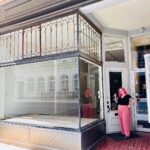
The story follows two threads. In one, we see the life of Pulitzer Prize-winning author Jake Davis (Russell Crowe) as he struggles to keep custody of his daughter, Katie (Kylie Rogers), in the aftermath of a car crash that killed her mother and left him with a manic depressive psychosis and recurring seizures. And, in the other, we see Kate 25 years later (Amanda Seyfried) as she copes with the aftermath of her father’s legacy on her life. Kate works as a caseworker with a young girl (Quevenzané Wallis) who hasn’t spoken for a year, as she simultaneously deals with her own intimacy issues.

The film weaves these two stories intricately together with slow (though apparent) reveals and drama on both sides, introducing both physical and spiritual antagonists. For Jake, the antagonist is Katie’s aunt and uncle (Diane Kruger and Bruce Greenwood), who want to adopt her because of Jake’s condition, and, for Kate, the antagonist is her fear of being left by those she loves—a fear that becomes heightened when she meets and falls in love with Cameron (Aaron Paul).

Despite the complexities of the characters and their conflicts, there is still a certain something that buffs the film’s luster. Perhaps it is the slight incoherence at the juxtaposition of past and future, or perhaps it is the latent sexism strung throughout the central arc (casual sexuality is the constant faux pas that poor Kate gets thrown in her face). But “Fathers and Daughters” is a bit underwhelming past the initial, post-credits conversation.

There is one thing that does shine through the faulty wiring of the film, and that is the cast. Crowe and Seyfried give amazing performances. Jake is tragic and relatable, and Kate deals with her emotions in a very real way. Rogers steals the show with her emotional range, while Wallis is dynamic in her very short, nearly silent role. If anything, let’s hope this part gets them more leading roles.

“Fathers and Daughters” is coming soon to Midtown Cinema.


MIDTOWN CINEMA
JULY SPECIAL EVENTS

Midnight Matinee
“Mortal Kombat”
Saturday, July 2, 10:30 p.m. 

Free Outdoor Film Series
“Godzilla vs. Megalon”
(with live commentary by Down in Front crew!)
Friday, July 8, dusk

“Back to the Future”
Friday, July 22, dusk

Classic Film Series
“Full Metal Jacket”
Sunday, July 10, 6 p.m.

 3rd in the Burg $3 Movie
“Princess Mononoke”
Friday, July 15, 9:30 p.m.

Miyazaki Movie Madness
“My Neighbor Totoro”
Friday, July 15, 7 p.m.
Saturday, July 16, 3 p.m.

“Princess Mononoke”
Friday, July 15, 9:30 p.m. (3rd in the Burg)
Sunday, July 17, 4:45 p.m.

“Castles in the Sky”
Saturday, July 16, 5 p.m.
Sunday, July 17, 7:30 p.m.

“Spirited Away”
Saturday, July 16, 8 p.m.
Sunday, July 17, 2:15 p.m.

Faulkner Honda Family Film Series
“Jumanji”
Saturday, July 16, 12 p.m.
Sunday, July 17, 2 p.m.

15th Anniversary Series
“The Hurt Locker”
Saturday, July 23, 8 p.m.

Save

Save

Continue Reading

Extra Attention: Supplements can fill in the gaps for better pet nutrition.

Screenshot 2016-06-23 14.47.19Recently, a number of people have come into my store asking for information on supplements for their pets. Indeed, nutrition is an issue that comes up frequently among my customers.


I tell them that all commercial pet foods must meet Association of American Feed Control Officials (AAFCO) standards and recommendations for a complete and balanced diet. However, even when pet food companies comply with the standards, your individual pet may not get what he needs in terms of nutrition.

Just like people, each pet has needs that may differ from other pets in his age and breed category. It is easy to be fooled by companies that sell you a pet diet that makes claims to be complete and balanced. Does that mean the food is complete and balanced for every pet? If we operate with the understanding that pets are individuals, we know that their nutritional needs differ based on physiological makeup, genetics, environment, age and state of health. Even if you’re providing a high-quality diet, your pet may be missing something important for his wellbeing.

Allergies, joint pain and inflammation, dry skin and occasional loose stool and diarrhea are all common ailments that can be alleviated with proper diet and supplements. It’s always best to be in consultation with a veterinarian that has an understanding of how nutrition and supplements can assist in alleviating these ailments. Good veterinarians know that not every condition warrants an expensive medication, steroid or antibiotic.


Supplemental Help

Supplements that are widely used with great effectiveness include glucosamine and chondroitin, fish oil and probiotics.

Glucosamine and chondroitin are anti-inflammatory supplements used in cases of joint swelling and pain in dogs and cats. They work together to improve mobility and flexibility and alleviate pain. Glucosamine assists the body in building cartilage, and chondroitin helps the body maintain flexibility and fluid in the joints. Other anti-inflammatory supplements include methylsulfonylmethane (MSM), green-lipped mussels, bromelain and curcumin. Several products on the market combine two or more of these ingredients.

For improving the skin and coat, fish oil is probably the most important supplement you can add to your pet’s diet. If you have a pet with itchy, flaky, dry skin, trying a course of fish oil may be the key to relief. EPA and DHA, the omega-3 fatty acids present in fish oil, can also reduce inflammation, ease allergies, regulate the immune system, improve cognitive function and support the cardiovascular system. When beginning to administer fish oil, be careful not to give too much immediately. Ease into the full dose as you would when changing pet foods.

Probiotics are one of the simplest and most effective remedies for poor digestion. Probiotics are comprised of different kinds of friendly bacteria. Bacteria is most often thought of as harmful, but certain bacteria are helpful in keeping us and our pets healthy. Lactobacillus acidophilus, bifidobacterium bifidus and lactobacillus bulgaricus are just a few of the helpful microorganisms that live in a dog or cat’s intestinal tract. There, they play an important role in defending the body against illness. Probiotics can assist with alleviating flatulence, constipation, diarrhea, skin problems and irritable bowel syndrome. For best results, select a high-quality probiotic with live microorganisms.

These common supplements can make a world of difference in the life of your pet, making them more comfortable and energetic. They do not take the place of proper veterinary care, so be sure to discuss any of your pet’s major health changes with your vet.

Kristen Zellner is the owner of Abrams & Weakley General Store for Animals, 3963 N. 6th St., Harrisburg. To learn more, visit www.abramsandweakley.com or call 717-232-3963.


Continue Reading