Peace, Healing

Last month, Harrisburg was shaken by the police-involved shooting of city resident Earl Shaleek Pinckney.

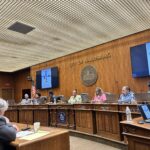
In the wake of the tragedy, Goodwin Memorial Baptist Church hosted a community meeting where many residents and city officials spoke, including Police Chief Thomas Carter. Pinckney’s mother, Kim Thomas, also gave a lengthy, heartfelt speech for peace, justice, patience and healing. Then, in a particularly touching moment, Carter and Thomas embraced. We thought we would share a selection of images from that night taken by our photographer, Dani Fresh.

Screenshot 2016-08-24 17.09.23 Screenshot 2016-08-24 17.08.47 Screenshot 2016-08-24 17.07.44 Screenshot 2016-08-24 17.06.19

Author: Lawrance Binda and Dani Fresh

Save

Continue Reading

Burg in Focus – Harris Tower

Harris Tower tells a fascinating story of Harrisburg railroad history and is our Burg in Focus video for September. Check out the accompanying story.


Continue Reading

Learning Tower: Experience Harrisburg train history at the Harris Tower Railroad Museum.

There’s a small, brick building you may have never noticed, though it’s located in plain sight.

Screenshot 2016-08-24 17.11.20 Screenshot 2016-08-24 17.11.09It’s little more than a stone’s throw from the East Wing of the Pennsylvania State Capitol, nestled between Forum Place and the State Street Bridge. And it’s played a big role in the history of Harrisburg.

Built in 1929, the Harris Tower long served as a critical link in a network of railroad towers that once controlled burgeoning passenger and freight train traffic, especially for the bustling Harrisburg Railroad Station (now the Harrisburg Transportation Center).

It’s been out of service since 1991, a victim to technology and automation. But, now, thanks to the intrepid efforts of the Harrisburg Chapter of the National Railway Historical Society, the tower—renamed the Harris Tower Railroad Museum—has new life and new importance.

Last month, society members and train buffs gathered to unveil a special plaque designating the tower as a site on the National Register of Historic Places, a list of locations and buildings deemed historically significant by the U.S. government.

“We hope this leads to a greater appreciation for the city of Harrisburg’s rich railroad heritage,” said John W. Smith Jr., president of the Harrisburg Chapter of NRHS.


Back in Time

Upon entering the tower and ascending to the open second floor, one has the feeling of being transported back in time. You’re immediately drawn to a bank of restored, chestnut wood-trimmed windows that allow you to peer out upon the sprawling Amtrak and Norfolk Southern railroad yard.

At its operational zenith in the 1930s and ‘40s, Harris Tower was staffed daily by 18 full-time operators, six men for each eight-hour shift. They masterfully choreographed the movement of more than 100 passenger and 25 freight trains among 14 sets of tracks through the bustling train yard and into the nearby Harrisburg station.

Since acquiring the tower, society members have been working quietly to restore it to its 1940s vintage appearance. Work has included refurbishing windows and walls, painting radiators, refinishing floors and baseboards, installing new pipe insulation and toilets.

The centerpiece of the museum is the tower’s “interlocking machine.” The electro-pneumatic interlocking failsafe machine system console helped operators whose job it was to safely orchestrate the movements of massive locomotives and their passenger and freight cars.

Built by Union Switch and Signal Company for the Pennsylvania Railroad in the 1920s, the original system was a technological marvel of its day, designed to control switches and signals in the area to prevent conflicting routes—and collisions—from occurring. It is covered with an intricate array of switches, indicator lamps and more than 100 levers to assist operators in carrying out their critical tasks of safely moving passengers and freight.

“You become train director and sit in the control nerve center to get a hands-on feel for how it feels to actually operate the interlocking machine and other equipment and learn firsthand what running a railroad was like at a time before the advent of modern operation,” Smith said.

To elevate the experience, the interlocking control machine, the model track board, communications panels and other devices have been painstakingly restored and reconfigured to operate via computer, which simulates train movements over the Harris Tower operational terrain based upon actual train schedules from the 1940s.

The tower is among the society’s crown jewels. Others include the PA Railroad GG-1 Electric Locomotive No. 4859. Also listed on the National Register of Historic Places and designated as the state electric locomotive by the Pennsylvania General Assembly, the GG-1 pulled the first electric passenger train into Harrisburg in January 1938. It is joined by the former PA Railroad N6b Cabin Car No. 980016. Restored, owned and maintained by NRHS, they both are housed in a train shed at the nearby transportation center.


 Complete Story

Currently, the tower’s first floor is not open to the public, but that should soon change.

Smith recently returned from a 1,700-mile trip to the Arkansas home of Kathleen Farrell to retrieve a treasure trove of Pennsylvania Railroad model gems collected by her late husband, John. They include 65 Pennsylvania Railroad diesels, four Pennsylvania steam engines, five GG1 HO scale (1/87th scale) engines and several unique Harrisburg industrial/train building models.

These and other items will be included in a diorama planned for the museum’s first floor, which is currently undergoing restoration.

“We’re working to have the first floor open so we can tell more of the complete story on the technology and human interest aspects of Harrisburg railroad history,” said Smith.

The Harris Tower Railway Museum is located at 637 Walnut St., Harrisburg. It is open Saturdays, 9 a.m. to 3 p.m., through the end of October. Admission is free. For more information, see visit www.harristower.org or www.harrisburgnrhs.org.

Watch our Burg in Focus video that accompanies this story.

Author: Bob Bunty


Continue Reading

A Warm Welcome: 100 Men Greeting extend a hand to Harrisburg students.

100GreetersWeb1

A Harrisburg student leaps high as she is greeted at Ben Franklin Elementary during 100 Men Greeting.

The weather cooperated on this day, the cool temperatures and sunny sky adding to the bright faces and cheery “good mornings” exchanged between students and greeters.

The young learners donned new sneakers, pressed clothes and freshly beaded hair. Some jumped up to meet the hand that greeted them; others tentatively held it out for a tap.

The 10 men standing outside Ben Franklin Elementary on Monday were part of 100 Men Greeting, welcoming students to the first day of school in the Harrisburg School District.

100GreeterWeb2

Jamar Johnson, a graduate of Harrisburg High School, helped coordinate the event. He said he feels that young people only hear about negative and violent things that happen in the city and wanted to offer them an opportunity to see smiling, friendly people as they begin the new year.

“If you bring all these men together, they can be a positive movement,” he said.

The concept is simple. Local men greet students and teachers with high fives and words of encouragement. Johnson said all men, from every walk of life, are invited to participate.

On Monday, men greeted students outside all 11 schools in the district, with the goal of having 10 men at each school. Outside Ben Franklin, a financial adviser, a Vietnam veteran, two state employees, an attorney, a housekeeping manager and a web developer participated.

100GreetersWeb3

Many of the men have worked with Floyd Stokes, the program’s executive director, on other projects, including the American Literacy Council’s 500 Men Reading Week.

This is the second year for the event, and Johnson said that district Superintendent Sybil Knight-Burney reached out and asked that they return this year.

While it served as an example of men doing positive things, greeters also started their day at Ben Franklin for another reason.

Calvin Hynson, past PTA president and open gym organizer for Ben Franklin, said he participated because he wants to “show support for the kids and teachers.” As he greeted the students, he admonished them to “get some education and respect your teachers.”

Logan Street resident Charles Ray spoke up from his electric scooter.

“It teaches the kids that we, as a whole, care for them,” he said, adding that his time in Vietnam impressed upon him the need to show kindness at every opportunity.

Students and teachers alike appreciated the morning.

“From a cultural perspective, it’s beyond wonderful to see my brothers greeting the kids,” said 24-year teaching veteran and second-grade teacher Kalem Calien.

Louise Roman thanked the men as she stepped off the sidewalk after bringing her children to school.

“As a single mother raising six kids, to have a male influence that’s not the father is a blessing,” she said,

Ben Franklin Principal Will Towson added the greeting is valuable because “students get to see positive role models on the first day of school.”

The line of students trickled down, and the men began heading off to work, welcoming the stragglers as they went.

“It’s wonderful for fathers and men to take a stand and make a positive impact for children and literacy in the community,” said Nick Linn, who greeted the children, his own two young sons by his side.

Author: Susan Ryder


Continue Reading

From Burbs to Burg: For decades, companies headed in one direction–from Harrisburg to the suburbs. Welcome back!

Screenshot 2016-07-27 19.31.00

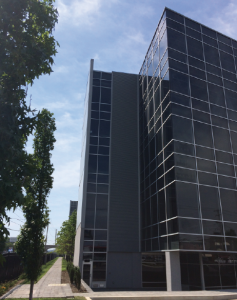
World Trade Center Harrisburg (Capitol View Commerce Center), Cameron and Herr streets.

Once upon a time, in the late 1980s, a group called the Hospital Association of Pennsylvania built its suburban ideal in Swatara Township. Plenty of surface parking. Fun stores and restaurants nearby. Accessible to highways and airport. Even for a statewide association, the struggling capital city wasn’t seen as a good home.

Fast-forward 27 years. Government has gained prominence in a complex health care system. Seeking proximity to lawmakers, what is now the Hospital & Healthsystem Association of Pennsylvania is moving back into Harrisburg proper, where—surprise—there’s convenient parking and fun stores and restaurants nearby.

“To be six miles away from the center of decision-making for Pennsylvania struck me as a lost opportunity to be both visible and accessible to policymakers who are asking hundreds of questions about health care,” said HAP President and CEO Andy Carter, who helped lead the board in making the move. “I want to be there when they ask those questions so we can give our answer as part of their due diligence.”

Nationwide, businesses have been pulling up stakes from suburban campuses or outlying spots and resettling into cities. Likewise, businesses here increasingly are making high-profile moves from the ‘burbs to the ‘Burg. Of course, finances drive the decisions, but so do proximity to power, attracting talent to remain competitive, and commitments to rebuilding the urban hub that powers the region.

“We think we’re stepping into a very rich, diverse field that will accrue many benefits,” said Carter.


Love the Location

This month, HAP moves into a building on 3rd Street, in the shadow of the Capitol dome. Meanwhile, later in August, health care data analyst Geneia will leave its cramped Swatara Township digs to take occupancy in the resurrected Capitol View Commerce Center on Cameron Street. In fact, that building has been renamed “World Trade Center Harrisburg” in honor of its eponymous anchor tenant, which is moving in this fall from York.

And that’s not all. Last year, analytics firm VisiQuate left Rossmoyne to take up one floor of a rehabbed 19th-century mansion. And Chemical Solutions, Ltd., left its overcrowded Mechanicsburg quarters for a former plasma donation center at Herr and 7th streets.

VisiQuate grabbed the opportunity to lease space in the circa-1804 mansion at 111 N. Front Street “because we just loved the location,” said President JK Kolmansberger. With three offices in the United States and two in Eastern Europe, VisiQuate was accustomed to the amenities and convenience of working and hosting clients in urban settings. From Rossmoyne, “it was always a bit of a hassle to get our employees and clients close to where hotels are,” said Kolmansberger.

VisiQuate spotted the national and worldwide trend to reoccupy cities, but Kolmansberger said he hesitated to move into Harrisburg before recovery took hold. Now, “people are starting to come back downtown and are starting to see the city in a better place.”

Geneia left business park space where employees were working “two and three to an office,” or assigned to working from home solely for lack of room, said CEO Mark Caron.

“Many of them are very anxious for the new building,” he said. “It’s cool to have the flexibility to work at home, but it’s also really important to have a connection with teams.”

As needs of the workforce evolve, operating in the city offers businesses “access to an even more diverse potential workforce,” said Carter. People leaving state government for the private or nonprofit sectors “don’t have to change location,” and convenient access from the entire midstate will attract talent from all parts of the region, he said.

Once, Carter led a nonprofit located next to the statehouse in Columbus, Ohio. There, he often struck up “serendipitous conversations” just by “stumbling into the speaker of the House or secretary of human services,” he said. But from the suburbs, HAP often had to ration the trips allowed into Harrisburg.

Moving the organization to 3rd and Walnut streets, catty-corner to the Capitol complex, allows his organization to “take advantage of the stone’s-throw location,” attending more hearings, “more readily scheduling pick-up meetings” with state officials, and enticing busy lawmakers to events.

The location also could make it convenient for visiting HAP members to “tack on some visits” with state officials and lawmakers.

“We want to strengthen the relationship between our members and the policymakers who are helping us to shape the delivery system of the future,” Carter said.


Fun Town

Like Geneia, Chemical Solutions, Ltd., left cramped space.

“We were literally moving people out of their offices to move new instruments in,” said President Brian LaBine, who moved his company into customized space straddling downtown and Midtown Harrisburg.

Many of Chemical Solutions’ employees are chemists who appreciate Harrisburg’s balance of urban environment with livability, he said. One “wonderful chemist” moved from Delaware, where “the cost-of-living differential” was substantial.

“We think Harrisburg is going in the right direction,” LaBine said. “It’s a fun town. We like the Midtown area. Being able to walk out the door and walk to the Broad Street Market or Jackson House is perhaps a nice combination of having that city feel that some of the younger generation really likes, yet not having the traffic or the prices that come with relocating to, say, Philadelphia or a larger city.”

Geneia competes for skilled talent in the “pretty tight” analytics field, said Caron. Its new space offers the “creature features” that tech-oriented people expect, including a healthy café, treadmill desks, a fitness center, “open space for people to ideate,” and high-tech videoconferencing.

“As a techy and nerd, you want the latest software tools to build the latest products,” he said. “You want an organization that’s invested in its people.”

At any technology company, “you’ll find we don’t work 9 to 5,” said Kolmansberger.

Potential hires want to work wherever they can get the job done, whether from home or on a bench by the river, and the new space is “a very functional, high-tech office that our employees find very comfortable and useful. If you need to have a client in for a meeting, it shows very well. Clients like to come here because it’s a bright, cheery office that overlooks the river.”

Downtown sites also create proximity to learning opportunities that help employees grow and that cultivate future talent, especially through internships with Harrisburg University of Science and Technology students. In Swatara Township, HAP was isolated from downtown’s “rich mix of professionals” at universities and advocacy organizations, Carter said.

“Especially, since we think of ourselves as the leading edge of the trend, we hope that more of others in this world will consider moving downtown, as well, and then we’re going to have an even richer environment,” he said.


Part of the Solution

Though the business factors driving their decisions vary, the resettlers agree that helping rebuild a once-shattered city was on their minds. Access to “the best possible workforce” only comes from providing a competitive working and living environment, with quality housing, schools, health care and amenities, “and you aren’t going to get all that if you don’t have enough people who are being hired and brought into the city,” said Carter. Metropolitan areas “struggle to thrive if the city center is withering.”

“In many ways, by moving downtown, along with many other businesses, we’re showing our cards that we believe in the health of the city, and, in promoting its health by working down there and bringing its employees and their pocketbooks into the city, that we’re going to be creating a stronger future for the city,” he said

Chemical Solutions is showing its passion for education with plans to host local students in science and chemistry activities. Employees have helped a Friends of Midtown neighborhood cleanup. The business itself, under the leadership of Technical Director Francine Walker, takes pride in “taking a formerly dormant building, vacant for six years, and transforming it,” said LaBine

“We’re definitely attracted to the concept of urban renewal,” he said. “We’ve loved the decision since the day we made it.”

Geneia has “a real conscience in investing in the community,” said Caron, and the firm has found strong partners in the effort. World Trade Center Harrisburg developer John Moran “has been incredibly accommodating,” and the tax incentives for settling in a Keystone Opportunity Zone are “an attraction to a small start-up where you can save on taxes and put those dollars to other uses investing in people.”

In Kolmansberger’s travels, he finds that “the best areas always have strong downtown life and strong city life and good hotels and good restaurants.” He wanted the same for his clients and employees. Harrisburg, he said, “is definitely a city that is on the rebound.”

“I can sit out in the suburbs and complain that Harrisburg isn’t recovering fast enough or Harrisburg doesn’t have enough good restaurants,” he said. “Or I can try to be part of the solution, and that’s by bringing business to the city and embracing our capital city and embracing the business environment in downtown Harrisburg. That’s ultimately what I decided to do, and I found a good location in the middle of everything.”

Author: M. Diane McCormick

Save

Save

Continue Reading

Land of the Flea: Art, sculpture, odd creations–it’s all at the HBG Flea.

Screenshot 2016-07-27 19.31.23The first Saturday of each month, there’s an artsy party on the street.

A solid block of Midtown Harrisburg closes and, instead of cars whizzing by, there are people and tents and no end of lovely, handcrafted goods.

It’s the HBG Flea.

Founders Mary Imgrund and Meghan Jones brought home the idea of marrying the reliable appeal of a flea market with the flair of an arts festival after witnessing other artsy markets in places like Brooklyn, Baltimore and Philadelphia.

“It went from ‘this is something I wish was in Harrisburg’ to ‘we could make this happen in Harrisburg,’” said Imgrund.

In spring 2015, Imgrund had just graduated from Penn State Harrisburg and Jones, whose graduation was still a year away (the pair met in the English program there) went to revisit the Brooklyn Flea, the bazaar behemoth that operates markets every weekend in New York.

They both saw the flea market as a perfect means to promote local artists and enable visitors to shop locally by showcasing the wealth of creators—crafters, snack-makers, soapers and more—to be found throughout Harrisburg.

Jones, who is into upcycling, and Imgrund, who makes art and jewelry, launched HBG Flea in November, its best-of-both-world qualities mirrored in the city itself.

Harrisburg, Imgrund observes, has the benefits of a city and the feel of a small town, and HBG Flea was created to contribute to and harness the artistic energy that circulates here. Every market has a featured charity as well, with some proceeds having benefited the American Cancer Society’s Relay for Life, Caitlin’s Smiles and other nonprofit organizations.


The Fun One

Imgrund and Jones started out determining which vendors they would accept and building the website. The reality of their undertaking really took shape when they connected with John Traynor at Harrisburg Midtown Arts Center (H*MAC) about space. They then plunged into a flurry of contacting and lining up vendors.

“We’re really focused on making sure that the vendors have a good time,” said Imgrund.

It shows.

HBG Flea is intimate, expansive without being overwhelming. Coffee, candles, succulents, spices, tiny taxidermied creatures—seeing what so many area creators have made by hand, repurposed or curated—puts into perspective what constitutes a “gift.” HBG Flea itself feels like a thoughtful reminder of what exists between close friends—in this case, between market-goers and the city.

The June market was Thomas Weaver’s first as a vendor. He had manned a stand at previous installments of HBG Flea for Gamut Theatre, where he is associate artistic director, and had been coming to the market as a visitor since its first iteration last November.

“It’s an empowering thing, seeing so many local artists here,” said Weaver, and that inspired him to bring his hobby—constructing cigar box guitars—into a market for the first time.

Elsewhere in the market was Sage and Ash, a company that hits farmers markets and conventions with their essences, oils, balms and other botanical goods while maintaining space at the Artisan Cooperative and Gallery in Williamsport.

“We do several flea markets,” said Ingrid Callenberger, an herbalist who co-owns Sage and Ash with April Line, a formulator, “but this is the fun one.”


Powerful Thing

Among the first vendors to get excited about HBG Flea was Amanda Leilani, whose raw crystal jewelry Imgrund and Jones both love. They were also overjoyed to bring Mixology8 on as a vendor, a vintage records retailer that travels to antique malls and marketplaces. Vendors heartily reciprocated enthusiasm for HBG Flea, and that spread from the first market on.

It now is only a few months away from their first anniversary, and Imgrund and Jones no longer have to solicit applications for vendors—they can focus on organizing and expanding the market.

They hope to see HBG Flea grow to several times a month, enabling some of those markets to be themed around different kinds of vendors—vintage goods, food, art, etc.

“We want to grow carefully,” said Imgrund, retaining quality as they scale up.

There have been challenges, like finding out how many permits are involved and reckoning with cars parked overnight on the 1100-block of N. 3rd Street, where they hold the market (in seasonable weather, that is—the market is in H*MAC’s Capitol Ballroom otherwise). That they could pull this all together is a powerful thing for two 20-somethings (Imgrund is 24; Jones is 22), right out of college.

It was at the first market that Imgrund reflected on how happy she and Jones said they would be with 20 vendors—as they looked out over their market and saw about 50.

“I want people to know,” said Imgrund, “that doing something that you’re passionate about is an option.”

The next HBG Flea will be held on Aug. 6 in the 1100-block of N. 3rd Street, Harrisburg. For more information, visit www.hbgflea.com.

Author: Kari Larsen


Save

Save

Continue Reading

A Student Story: Class of ’51 revisits William Penn HS, with memories, regrets.

Members of the class of ‘51 sing their alma mater.

Members of the class of ‘51 sing their alma mater.

Just across from the lush, green, life-filled Italian Lake is a contrasting site.

William Penn High School closed its doors permanently in 2010 and now sits gray, lifeless, crumbling. Its empty halls, once bustling with the sounds of students, lay silent.

Recently, though, a bus stopped at the entrance, its cargo not teenagers of 2016, but students of a past era.

Alumni from the William Penn High School class of 1951, 35 of them, gathered at the school in May to visit their alma mater.

After taking a bus tour of Uptown Harrisburg, the eclectic group, who hailed from as far away as Arizona, mingled and waited for a Harrisburg district representative to let them into the school.

When asked how it felt to be here again, Edgar Alston—“Eggie” as he was affectionately known way back when—chirped an enthusiastic “Great!” When asked about his fondest memories from William Penn, he replied, “Sports.” Fred Dougherty, another alumnus, piped in over Alston’s shoulder, “The best,” referring to Alston.

Alston, who participated in football, baseball and track, proudly recalled that the football team was undefeated in 1951. He received scholarships to attend college, but, after about a year, he left to join the Air Force and head overseas.

“I didn’t wait to go,” he said.

It had been 65 years since many folks had been to the school, and their faces showed them sorting through the tickler file of memories. Some had an easier time than others. The nametags, dotted orange identifying the alumni, helped. Alston said he only remembered one face—that of class President Jim Smith.

Smith recalled with zeal the things he’d done since leaving William Penn. He graduated from Lehigh University and worked as a geophysicist. After retiring from the Office of Naval Research, he bicycled across Cuba in 2000. Classmate Carl Nurick, who traveled from Texas, chimed in about Smith.

“He has retained a position of respect from all of us,” he said.

It was apparent that this class exudes admiration for their school and one another.


Kinder, Gentler

Mara (Layton) Moore lives in the Philadelphia area and hadn’t been to William Penn since she graduated. She recalled that, on nice days, she ate her brown-bag lunch at Italian Lake, riding the bus one way for 7 cents (walking the other) and paying 3 cents for a school milk.

Boyd Strain recollected that it was a kinder and gentler time.

“I don’t even relate to what’s going on in the schools today,” he said.

While times were good, they weren’t perfect.

“We were poor,” Strain said.

He noted that black folks worked mainly janitorial or housekeeping jobs, and white folks had better paying manufacturing and railroad work. He added that school was mainly equal—aside from the segregated sock hops—but life outside of school was not.

“The opportunities weren’t there because our parents didn’t have good jobs,” he added.


Sweat and Tears

John Gallagher, director of facilities for the school district, arrived and unlocked the doors for the eager octogenarians.

As they entered the school, the first thing they noticed was the dark. The electricity was out. Just inside the entrance, to the right, stood a large trophy case—empty.

Smith inquired about the trophies before entering the school and, upon seeing them gone, said, “A lot of people had sweat and tears in those.”

Likewise, a number of his classmates expressed concern about the trophies’ whereabouts.

Next came the auditorium. On the wall, hidden in the inky blackness, rests the school’s life motto. Edna (Heck) Baker didn’t need the light to recall it. She pronounced it aloud: “So teach us to number our days so that we may apply our hearts to wisdom” (Psalm 90:12).

As the group continued to the right, sunlight illuminated the hallways of their youth. The peeling paint and fallen plaster served as a reminder of the school’s age—it opened in September 1926.

For some, it was hard to see the school in such disrepair. Alston, with nostalgia across his face, described the 43-acre campus he remembered.

“That hall goes a quarter-mile that way.”

He pointed left.

“There’s the football field and two tennis courts,” he said. “It was a beautiful school.”

He added that it was a shame that no one could find a way to keep it up.

Kenneth Markley, a member of the reunion committee, joked that he didn’t have a note from his mother.

“It’s been 65 years since I’ve been here,” he said. “I might get detention!”

Some alumni wanted to venture further into the school, but safety wouldn’t allow it. The friendly banter and memory-sharing continued as they meandered outside. Their visit was over.

As the Class of 1951 made their way to the bus, much slower than the last time they boarded here, some walked with assistance from canes or companions. It was impossible not to see the similarities between these people and the building. Both still stand proud, even as age has affected them, and both remain filled with wonderful memories of William Penn High School.

Author: Susan Ryder

Save

Continue Reading

A Crime Story: In Harrisburg, the media often is the message.

Illustration by Rich Hauck.

Illustration by Rich Hauck.

Have you heard about the recent crime wave over this long, hot summer?

  • thefts
  • drug possession
  • hit and runs
  • assaults
  • vandalism

And that’s not all. Since January, there have been numerous burglaries, robberies, assaults, drug arrests and vehicle break-ins.

Where is this pit of criminal activity? No, not Harrisburg, but in the symbol of our area’s safe, wealthy, white suburb—Camp Hill.

I don’t mean to dump on Camp Hill—I like Camp Hill. Nor am I directly comparing Camp Hill to Harrisburg. Harrisburg, after all, is a densely populated city, with many times the people and poverty rate of Camp Hill. So, of course, Harrisburg has more crime—and more serious crime at that.

I’m saying that, when it comes to crime, perception can be reality. PennLive and the TV news push a daily diet of Harrisburg crime, causing people to irrationally fear and avoid the city. But when’s the last time you read about crime in everyone’s favorite, secure, West Shore town? I’m here to tell you that it’s nearly an every day occurrence.

I once had a journalism professor who spoke of the “hidden rich.” These are the people who live in huge houses off of leafy streets with names like Golf View Road and Country Club Place—and you never hear a word about them. What’s going on behind those wrought iron gates and long driveways? No one seems to know, and the state cops sure aren’t saying. But we do know what’s happening on city streets. It’s right in view, it gets all the attention of reporters, and it’s a staple of the click- and ratings-obsessed media.

Now, every media outlet has its own approach to covering crime.

I’ve long been fascinated with how the Washington Post goes about it. Get a copy of the Post, and you’ll see that the front page often has a couple of national and international stories, a policy piece, maybe the start of a lengthy feature. It rarely includes a crime story in a city dense with crime.

In the Washington Post, most crime stories are relegated to the interior pages of the “Metro” section and, even then, are tiny briefs—maybe a few paragraphs long. If you turn to page B3, you’ll see these afterthoughts under the bland heading of “Local Digest.” Here are three samples buried deep in the paper on a recent, random Tuesday.

  • “Man Shot by Agent Is Ordered Detained”
  • “Police Identify Victim in Southeast Shooting”
  • “Deaths Declared Murder-Suicide”

A few days later, there was this item: “Police Chase involving Gun Prompts Capitol Lockdown.” In this case, gunfire from a MAC-11 semiautomatic erupted from a speeding car being chased by police in the middle of the afternoon in downtown Washington, resulting in the U.S. Capitol complex being placed on lockdown, the second time that had happened in a week. This short story, nine paragraphs in total, was hidden on page B-6.

I sometimes wonder how stories like these would be handled in the Harrisburg media. No doubt, each one would include screaming headlines, multiple articles, breathless prose and hundreds of comments from people swearing they’ll never set foot in Harrisburg again for fear of their lives.

Indeed, these are very serious crimes, but the Post doesn’t exploit them. So, readers get a completely different feel for crime in D.C., perhaps a more honest one, since the chances of any individual falling victim to one of these crimes, while not zero, is quite low. It would be a tragedy if someone decided to forgo the many wonderful things in Washington because news coverage made them afraid. As for other crime stories you see each day in the Harrisburg media—muggings, burglaries, drug arrests—they’re so numerous that they don’t even rate an article in D.C.

TheBurg has its own way of covering crime. We’re not really a daily news outlet, nor do we shamelessly chase clicks for money, so we don’t usually cover individual occurrences. When we do cover crime, we typically write a trend story that tries to offer as much context as possible or a feature piece, such as the wonderful long-form story that Paul Barker wrote for our January issue about Rayon Braxton and Braxton Hall.

Sometimes, people ask me if TheBurg would consider publishing more frequently, perhaps weekly. If we did, we would give more coverage to crime stories, but, again, would try to do so in a respectful, contextual, informative and non-exploitative way. For instance, we certainly would have covered the recent tragic murder of Steve Esworthy, but would have done it, as we do everything, with the community firmly in mind.

PennLive may not cover crime in Camp Hill, but that doesn’t mean it doesn’t exist. It may cover nearly every crime in Harrisburg, but that doesn’t mean that’s all there is.

Harrisburg has amazing parks, restaurants, theater and nightlife. It has a professional baseball team, an incredible river, a vibrant community market, the country’s most beautiful statehouse and plenty of history. It is so much more than a crime story. It’s a city worthy of time, understanding, exploration.

To read more about crime in Camp Hill, visit www.camphillpolice.org.

Lawrance Binda is editor-in-chief of TheBurg.

Save

Continue Reading

Lesser Case: From criminal mastermind to common thief?

Illustration by Ryan Spahr

Illustration by Ryan Spahr

It was all so clear a year ago.

Steve Reed, the seven-term, former “mayor for life,” was exposed for what he was—a municipal mastermind, shuffling projects, political allies and toxic debt among the various branches of Harrisburg city government. The grand jury report, made public in July 2015, laid it out in exquisite detail. We learned, or thought we learned, about how Reed handled detractors. (“Thank you. You are fired,” he supposedly told a naysaying engineer.) We learned, or thought we learned, about the “binge artifact buying ‘addiction’” behind his repeated borrowing. (“You’ve got to stop this, you’ve got to cut it out, it’s just going to kill your career,” a key Reed aide supposedly warned.) And we saw, or thought we saw, how the “prudent stewardship and innovative thinking” of Reed’s early years eventually warped into a tendency to “gratify his own interests at the city’s expense.”

With these and other zingers, the report made for good reading. It told a story that one longtime Reed skeptic described as “Shakespearian,” striking upon themes of youthful ambition, the fickleness of fortune, and the corrupting influence of power. But was any of it true? In May, a judge tossed out 305 of the 449 criminal counts against Reed, saying they fell outside the statute of limitations. A month later, the state attorney general’s office announced it wouldn’t appeal. The remaining charges have to do with the alleged theft of artifacts and other city property that residents watched agents haul out of Reed’s Cumberland Street home earlier in 2015. Those are serious charges—the state solicitor general, Bruce Castor, noted that they carry a maximum combined sentence of 886 years—but they don’t include the running of a years-long “corrupt organization” alleged in the complaint. This raises an interesting question about the original grand jury report. If the charges are out, what becomes of the gripping story that supported them?

Earlier this year, the New Yorker’s Jeffrey Toobin profiled Preet Bharara, the U.S. attorney for the Southern District of New York, whose office has brought headline-grabbing cases against Wall Street traders and corrupt state legislators. Among other things, the profile discusses Bharara’s use of “speaking complaints,” in which lengthy, descriptive narratives of the alleged crimes accompany the more legalistic affidavits of probable cause. Toobin ties their use in part to the proliferation of plea deals in federal prosecutions—with some 97 percent of federal defendants pleading guilty, a prosecutor might be tempted to write a detailed complaint telling the story of a crime that would otherwise have come out at trial. But these narratives can also deeply color a case with scintillating accusations that are far from proven. The article quotes a defense attorney, Henry Mazurek, who describes such complaints as “unnerving and disturbing and fundamentally unfair.” “The complaints tell a story and set a tone, especially in the press, that’s very hard to counteract,” Mazurek is quoted as saying.

The case against Reed is a state, not federal, prosecution, and there’s no evidence that the former mayor sought or was offered a plea deal. And, of course, it was Reed’s attorneys who raised the statute of limitations challenge against most of the charges; the fact that he won’t be fighting most of the criminal “narrative” in court is, in the end, a victory for the defense. Nonetheless, it’s worth wondering about some of the more alluring sections in the grand jury report, now that they are unlikely to be interrogated at trial. What to make, for instance, of the “bizarre meeting” with Reed, recalled by former City Council President Richard House, during which House “anxiously, and silently, wrote out and held up a note asking Reed whether he was recording the conversation”? The report concludes, elusively, “Reed responded by writing down that he was not recording the conversation and then asked if Mr. House was recording it.” Was this sinister, or was House simply paranoid? Needless to say, it would have been illuminating to see this fleshed out on the stand. (Jeffrey Johnson, a spokesman for the attorney general’s office, said the presentment is “still a public document” that “gives a detailed narrative,” and that it was released “with every intention of proceeding with the prosecution.”)

Despite the dropped charges, the case appears to be far from over. The grand jury report referred to an “ongoing investigation” into “those named herein and others as yet unnamed”; as several have pointed out, it’s hard to run a corrupt organization on your own. There is still the possibility of a civil suit over the incinerator debt—last September, the state retained a D.C. law firm to pursue potential claims. The attorney general’s office, even if it files no additional criminal charges, could still issue an informational report, as it did in the grand jury investigation into sex abuse in the Catholic Church’s Altoona diocese.

For now, though, the cake is only half-baked. Residents who hoped an investigation would shed light on the city’s political disintegration and crippling debt have only a partial answer—a theory of corruption, but not the proof. (They also have a blanket denial from Reed, who said the grand jury report “contained so many mischaracterizations, so many misrepresentations, so many untrue things that it flabbergasts me.”)

Last summer, we heard a saga spanning three decades, one that began with a “dynamic and forceful” politician and ended with a shopping addiction and a city Reed had built as “a monument to him and not administered for the common good.” After the charges were dismissed, the attorney general’s office released a quieter, narrower statement. “With his fascination for the Wild West, this man used other people’s money to decorate his house and office with antiques,” it quoted Solicitor General Castor as saying. “But, Pennsylvania is not the Wild West. We have the rule of law here. We look forward to presenting our evidence in court.”

Paul Barker is a former senior writer for TheBurg.


Save

Continue Reading

Chill Out: Cold soup flavors a hot summer night.

Screenshot 2016-07-27 19.36.26So, there we were, a weekday summer dinner on the porch.


It was still hot at the end of the day, and I had prepared what I thought was a delicious meatloaf: yellow-gold mashed potatoes with real cream and butter and green beans. What was I thinking? My “better half” met my culinary endeavors with significant resistance—the meatloaf wasn’t bad, but it was too hot to eat like that and something about sweating. (More likely due to the two glasses of wine he had consumed.)

My menu choice was mostly due to the desire for meatloaf sandwiches for the week ahead. What’s better than that? Nevertheless, I violated one of my primary cooking rules—cook seasonally. I was starting to resemble my Aunt Mary, who once made pot roast and gravy for the Fourth of July.

So, I re-visited several of my favorite recipes for dishes more conducive for serving on a hot summer evening: chicken salad spruced up with plump bing cherries, chilled Nicoise salad (a classic combo of fresh tuna, hardboiled eggs, Mediterranean olives, tomatoes and green beans), several uncooked tomato sauces fragrant with fresh basil and chilled soups.

I have always loved cold soups in the summer. But food trends are constantly changing. One rarely sees the classic French vichyssoise made with potatoes and leeks as a restaurant offering anymore or the sweet-cream blueberry soup that could double as dessert.

But one summer favorite seems to have retained its popularity—gazpacho. Traditional gazpacho, which hails from Andalusia, Spain, is usually a tomato-based concoction. Today, endless varieties are popping up, such as green gazpacho, which is honeydew melon-based, watermelon gazpacho and even white gazpacho made with a puree of almonds and cucumber. Chefs are adding toppings such as cold shrimp or crab, diced avocado, sliced celery and chopped herbs that add a nice contrast to the pureed vegetables.

My favorite gazpacho has always been a traditional recipe from an old cookbook of mine entitled “Cold Cuisine.” It is slightly spicy, spiked with vinegar, and, to me, really tastes like each of the summer vegetables contained in it. Its consistency is a cross between chunky and smooth, and all you need is a blender or food processor to make. If you pair it with some melon and prosciutto or a nice cheese and whole grain crackers, it can be dinner.

Gazpacho

Ingredients

  • 1 garlic clove, peeled
  • 2 parsley sprigs
  • 2 large, ripe tomatoes, peeled, cored and chopped (about 1 to 1 ¼ pounds)
  • 1 medium-sweet green pepper, seeded and chopped
  • 2 or 3 scallions, chopped
  • 1 medium cucumber, peeled and chopped
  • 2 tablespoons chopped fresh basil
  • 2½ cups tomato juice
  • 2½ tablespoons olive oil
  • 3 tablespoons red wine vinegar
  • Salt and freshly ground pepper to taste
  • Tabasco or other hot sauce to taste

Directions

  • Chop the garlic and parsley in a food processor.
  • Add the chopped tomatoes, green pepper, scallions, cucumber and basil to the work bowl.
  • With the motor running, add the tomato juice in a stream and process until the vegetables are chopped fine but not completely pureed.
  • Turn the mixture into a bowl and add the oil, vinegar and seasonings to taste. Thin with extra tomato juice if you feel the soup is too thick.
  • Chill until very cold.

Serve the soup in chilled bowls with a garnish of sour cream and some shredded basil. You will be surprised how filling this soup is and how beautiful it looks. You can serve it as a first course, too, along with a grilled main course.

I’m saving the meatloaf until fall, along with my great pot roast and chicken cacciatore. August can bring the hottest days of summer and, by now, if you have read this column before, know I am tired of charred grilled meat and dried-out, boneless chicken breasts. So, I will charm the resident grumpy spouse with a lovely chilled soup (maybe gazpacho?) and a crisp white wine. Dinner on the porch? I think I have it figured out!

Author: Rosemary Ruggieri Baer


Save

Continue Reading