From Harrisburg, with Love: Tanya Weaver works locally to benefit AIDS sufferers in Africa.

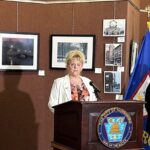
Screenshot 2016-08-24 17.13.54It’s 2013, and I’m having coffee with Tanya Weaver, a woman I met on the Internet.

She’s dark-haired and petite, and we’re sitting at one of the tables at Midtown Scholar Bookstore, our legs dangling. Four weeks earlier, I had posted a for-hire French-tutor ad on Craigslist and received one response—hers.

“What interest do you have in French?” I asked.

“I do humanitarian work in sub-Saharan Africa and want to communicate better with some of our clients,” she replied.

A few weeks later, she made a vocabulary list topped with the words “maturity ward” and “training.” And, like everything else, she has not stopped.


Want the Best

The American Foundation for Children with AIDS (AFCA) was founded in 2004 and has been directed from Weaver’s Linglestown living room since 2005. Providing assistance to children affected or infected with AIDS, the organization targets marginalized communities—it’s currently working in Kenya, Uganda, Zimbabwe and the French-speaking Democratic Republic of the Congo—not served by other humanitarian organizations.

Emphasizing solutions in education, agriculture, medicine, microfinance, hygiene and more, AFCA is almost entirely sustained by volunteer efforts. Back in 2005, 97 percent of HIV-positive children in AFCA’s first partner hospital in Mombasa, Kenya, were dying due to lack of access to medicine. That trend has now reversed as 97 percent of children who receive treatment in this same hospital are thriving.

“Nobody was doing anything,” said Weaver. “So, somebody had to.”

Weaver has a lifetime of international experience under her belt, including five years with Habitat for Humanity in Romania, Portugal, Kyrgyzstan, Russia and Hungary and with Shelter for Life in Afghanistan. She has found that all people, regardless of circumstance, want the best for those around them. This humanity is the anchor of her involvement.

“I was offered this job when I was pregnant [with my first child],” Weaver said. “If my child was born with a disease or a virus—and had the chance of dying very early if nobody helped her—of course, I would want someone to do something. This prompted me to help other children.”

In Africa, AIDS is spread primarily through heterosexual contact and transferred through pregnancy, with the continent home to 88 percent of the world’s HIV-positive children. According to the Foundation of AIDS Research, 1.4 million people became infected in 2014. Yet, due to misconceptions, the problem can be under-acknowledged.

“Either people believe that AIDS has been eradicated or that it’s a virus that only affects the people considered to be at the margins of communities,” Weaver said.

Additionally, regarding Africa, the stereotype still pervades that “everyone’s poor and that nobody wants to work,” when the truth is actually far different.

“Mothers in the Democratic Republic of Congo are the hardest working women on earth,” Weaver said, adding that they just have far fewer resources to care for those they love.


Sustainable Giving

Weaver’s day begins at 6:10 a.m. with emails from doctors, project managers and leaders received throughout the night due to the five- to seven-hour time difference. After preparing breakfast—real food, she says, to keep her family grounded—she dives in.

Daily, she communicates with partners in Africa via Skype, email or telephone. Some days include working with local partners, including Mission Central in Mechanicsburg and Messiah College. Other days, she trains teams of volunteers for AFCA’s “Vacations with a Purpose” program to assist with on-the-ground construction, agriculture or medical projects in Zimbabwe, Kenya or Uganda.

On the days Weaver cancels French class, she heads to AFCA’s 10,000-square-foot warehouse in Lebanon to help volunteer manager Betsy Dorsey load a shipping container with new or gently used school and medical supplies, donated from individuals and hospitals across the United States and shipped to various partners in Africa five times a year.

Weaver herself annually travels to as many AFCA sites as possible.

Despite the burden of distance and need, Weaver insists her work isn’t a “job job.” It’s question-asking, resourcefulness and love.

“Over the years, I’ve created some great relationships,” she said.

Weaver’s eyes light up when discussing her upcoming projects, especially a sisal fiber processing project in Kenya that will employ 200 people normally considered “unhireable”—including 160 HIV-positive women, many with children. The fiber is a drought-resistant, year-round crop, but the work is only three days a week to allow for the care of a family. And it pays well enough to allow the children to go to school and to eat healthfully. The education provides the children with the skills to one day earn a living, breaking out of the cycle of need.

Networks of solutions like these drive Weaver.

“It’s sustainable giving,” she said. “AFCA’s largest goal is to no longer be needed.”

To learn more about the American Foundation for Children with AIDS (AFCA), visit www.afcaids.org.


Getting Involved

Weaver works to provide opportunities for the Harrisburg-area community to engage with those who live half a world away, with 93.1 percent of all proceeds directly going to change lives abroad. Here are two upcoming opportunities to get involved:

Sept. 11 to 25—FeedONE aims to create awareness of the hunger epidemic in Africa by asking people to eat on just $1.90 a day—the World Bank’s definition of extreme poverty. Participants then donate the remainder of their normal weekly grocery budget to AFCA. The goal of $35,000 will help 360 children with seeds, livestock and training. For recipe ideas and to pledge, visit www.afcaids.org/feedone.

Oct. 8—Musicians Ryan Moran, Rivers, Hank Imhof, Shawan and the Wonton, Anthony Francesco and Indian Summer Jars will play live during AFCA’s Second Annual Family Music Fest at Wind in the Willows Inn in Grantville, 2 to 8 p.m. The event also features local food, family activities and a live auction of unique gifts and crafts. The cost is $12 in advance, $15 at the door. Children 10 and under are free. For tickets and information, visit the Facebook page: AFCA Music Fest.

Author: Sylvia Grove

Continue Reading

What We Did Last Summer: While you were away, Harrisburg was busy rebuilding.

Illustration by Rich Hauck.

Illustration by Rich Hauck.

September is here, and, yes, that means we have to kiss summer good-bye.

Like many others, you may be adjusting to the grim reality that it’s time to put away the beach ball and pick up the time sheet.

Your editor also had some time away this summer, and we’ll get to that in a bit. But, first, I thought that we should catch up on some important local news—things that flew a bit under the radar or may have been forgotten somewhere in the middle of that second margarita.


Two-Way 2nd

“Multimodal Collaborative Project.” Have I already put you to sleep? I hope not because behind this dense phrase lies a series of infrastructure projects with the potential to truly transform Harrisburg.

In July, the nonprofit called Impact Harrisburg released nearly $5.5 million, half to the city and half to Capital Region Water. Combined with a match from PennDOT, this money is slated for road (and utility) improvements that could undo some of the tremendous damage wrought in the 1950s, when the state turned charming neighborhood streets into forbidding freeways—making Harrisburg both less livable for residents and easier to flee for workers.

Most importantly, the money allows the city to begin the process of returning N. 2nd Street, from Forster to Division streets, to two-way traffic. Mayor Eric Papenfuse told me that preliminary work would begin next year, followed by actual construction, he hopes, in 2018.

The money would fund related improvements to N. 6th, N. 7th and Division streets, both to handle additional traffic and to make those roads more pleasant and pedestrian-friendly. A chunk of the money also would go to repaving much of N. 3rd Street, a project slated for next year once the utility work is done, and towards making a dangerous section of Berryhill Street safer for pedestrians.

TheBurg has long advocated making 2nd Street in Midtown/Uptown two-way as a vital step in revitalizing Harrisburg, reintegrating neighborhoods and returning this major thoroughfare from commuters back to residents.

Papenfuse wasn’t all smiles over the actions of Impact Harrisburg. He wanted the money that went to Capital Region Water to pay off the city’s loan for the recently completed streetlight project, with the savings then used for repaving neighborhood streets. In his opinion (though not CRW’s), opportunity lost.


Bar Stays Open

Papenfuse also wasn’t wild about county Judge Andrew Dowling’s order that forced the city to issue a business license to the Third Street Café, a Midtown bar that the administration has targeted for closure. Dowling found the city’s argument against the bar (that it attracts crime) to be weak and said, in any case, that state regulation trumps city restrictions for businesses that hold liquor licenses.

So be it. I’ve previously argued that the Third Street Café has a detrimental impact on the quality of life, the redevelopment and potential safety in the heart of Midtown. In my view, those things remain true. However, I can’t disagree with Dowling that city did not present a strong case for closure.

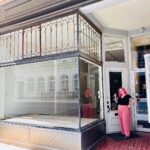
Dowling’s decision, though, is not stopping the redevelopment of one of the most forlorn commercial streets in Harrisburg, one with tremendous potential. Last winter, Zachary Nitzan purchased the block’s two largest historic buildings—the former home of Midtown Paint & Hardware and the former Volunteers of America building—and he spent much of the summer restoring them. One will house his high-end, custom-design rug business, and the other will be divided into two renovated storefronts, returning the building to its original format. Pass by, have a look and smile.

It seems that 3rd Street will have to rise on its own, without the help of the heavy hand of government (that is, unless the city’s long-shot appeal works). In other words, it will have to come back in the way that forsaken blocks in many other cities have—slowly, by risk-tolerant people with vision and patience.


Cut the Tape

Fortunately, Harrisburg has a number of such risk-tolerant people, as this past summer saw the completion (or near completion) of several important projects.

Downtown, Harristown began signing leases for the Flats at Strawberry Square, the first of its three apartment projects in the immediate area. Several blocks away, a few intrepid European investors brought a couple of desolate blocks of N. 2nd Street back to life, opening expansive restaurants called Capital Gastropub (the old Ceoltas) and the Bridge’s Social Club (the old Quarter).

Across Forster Street, WCI put the finishing touches on its renovation of the historic Harrisburg Moose Lodge at N. 3rd and Boas streets. The ground floor is the new home of the co-working outfit, Startup, and the upper levels feature high-end apartments.

Speaking of redevelopment: I spent part of my summer in Portland, Maine, which (like vacations I’ve written about before) provided me with no end of inspiration for things we could do here.

Like Harrisburg, Portland is a small, historic city that had to remake itself following industrial decline. It’s further along in the process, having succeeded in playing to its natural strengths: charm, walkability, waterfront, seafood, tourism and all-things craft.

I was especially struck by a former industrial area, which has been rezoned and repurposed. Where there once were warehouses full of boxes and forklifts, you’ll now find tourists sampling craft beer, sipping small-batch spirits, eating gourmet food truck fare (I had something called “Japanese street food”) and listening to musicians. And I thought to myself—Cameron Street!

The transformation of Cameron has already begun, pioneered by Appalachian Brewing Co., now joined by Midstate Distillery. With their open spaces, high ceilings and rock-solid build, the structures there are ideal for the new urban industry—craft, artisanal, hand-crafted anything—with a little concrete, noise and ductwork no deterrent to foodies, beer snobs, wine geeks and bespoke fans (in fact, it may be an attraction).

Lucky for us, Cameron Street—from the Farm Show complex to the incinerator—is loaded with exactly this type of building. Any takers?

Lawrance Binda is editor-in-chief of TheBurg.

Continue Reading

Border Lines: New exhibit gives voice to the hopes, terrors of the immigrant experience.

Illustration by Eric Garcia

Illustration by Eric Garcia

Immigration isn’t just a hot-button political issue.

It’s also a highly personal one.

An exhibit recently opened at the Susquehanna Art Museum—“Después de la Frontera/After the Border”—that underscores that point.

“[It] is a bilingual group exhibition that honors the stories of recent, unaccompanied immigrant youth, families and young adults who fled their homes in Central America,” said Alice Anne Schwab, museum director.

The multifaceted exhibit provides the cultural and historical context of the countries involved, including the terrors that youth and families face, such as gang recruitment, extortion, drug cartels and persecution.

But it also focuses on the uncertainties that lie ahead. The dangerous journey through Mexico and across the U.S. border may increase the likelihood that young people will be subject to human trafficking, kidnapping, sexual assault and even death.

Should they make the journey safely, the migrants still face the challenges of integrating into a new environment.

Felicitously, the exhibition, visiting from Baltimore, coincides with National Hispanic Heritage Month, which runs from mid-September to mid-October. It also overlaps, of course, with the presidential election, which has highlighted the political side of immigration.

Many artists have contributed to the exhibit, noted Tanya Garcia, a multimedia artist and its curator. A photographer, she developed a video of stories taken from interviews with youth and families. Artists doing work in such fields as illustration, painting, cartooning and video also have contributed.

Creative Alliance, a non-profit, multi-cultural and multi-disciplinary arts center in Baltimore, was commissioned to put together the exhibit, which was a year in the making, said Garcia.

“Different human service organizations came together to talk about ways to portray immigrant youth artistically in order to develop a positive narrative that welcomes families to Baltimore,” she said.

The exhibit, she added, attests to the “inner strength, resilience and resourcefulness” of these youth and families.

As the exhibit content evolved, Garcia did more research and met with them.

“I realized, to tell the story, I would need many artists to be involved in sharing their experience but also the collective experience of many,” she said. “Some of the artwork is abstract, political, documentary or personal.”

In the exhibit, many of the names of the immigrants are not revealed to respect their request for anonymity, she said. Others have chosen to give their names and show their faces to bring awareness to their story.

“As someone who is of the Puerto Rican diaspora, my experience with immigration is very different,” Garcia said. “While the topic of immigration is a big issue in the Latino community, I must also acknowledge this specific experience of immigration from Central America is not my own. That’s why it’s so important to be inclusive of those range of voices.”

The museum will offer special programming in conjunction with the exhibit, including a showing of “Sin Nombre” (“Without a Name”), a film that offers a perspective of two youth—a Honduran girl immigrating to the United States and a boy trying to escape his life in a gang. To be shown Sept. 23, it premiered at the 2009 Sundance Film Festival.

A panel discussion featuring various experts on immigration-related issues will take place on Oct. 15.

Many of the visitors to the exhibit, located in the museum’s Lobby Gallery, may not know the details of this immigrant experience other than in a general way. Garcia and Schwab hope that the artwork will personalize it.

“We can’t be there. We can’t live their experience,” said Schwab. “I myself seek to understand and hope this will do it.”

An exhibit like “Después de la Frontera,” she added, illustrates the conviction that “museums can’t just hang pretty pictures. They need to do something more. We need to be of and for the community.”

“Después de la Frontera” runs through Dec. 4 at the Susquehanna Art Museum, 1401 N. 3rd St., Harrisburg. For more information, visit www.sqart.org.

Author: Barbara Trainin Blank


Continue Reading

Chamber Champion: Entering its 35th season, Market Square Concerts continues to bring the best in chamber music to Harrisburg.

Screenshot 2016-08-25 17.32.59Market Square Concerts’ long, prestigious history isn’t lost on its current artistic director, Peter Sirotin.

MSC has been putting on chamber music concerts for nearly 35 years, presenting world-class musicians for a fraction of the cost of attending their performances in New York or Washington D.C.

And, while recognizing this history, Sirotin also is aware that he must keep things fresh.

“Just to put the 35th anniversary in perspective, I would like to mention that MSC is older than some of the most well-known organizations of this type in the nation,” he said. “Philadelphia Chamber Music Society, for example, is only 30 years old.”

Founded by Lucy Miller Murray, who ran it for 27 years, the organization changed hands from 2008 to 2011, putting well-known area radio personality Ellen Hughes in charge. Now, Sirotin and his wife, Ya-Ting Chang, are beginning their sixth year as executive and artistic directors.

“Both Ellen and Lucy had been our mentors and truly inspiring champions of chamber music as an art form in the region,” Sirotin said.

So, what can concertgoers expect in this 35th season?

MSC’s opening concert at Market Square Church on Oct. 1 features Rebel, a New York-based Baroque ensemble that will explore music written in the 17th and 18th centuries for court, chapel and country.

Then, on Nov. 2, MSC will import the Heath Quartet from Great Britain to perform a program of Haydn, Dvorak and Michael Tippet.

“The November concert will offer a great opportunity to hear a rising start in the string quartet world just a couple of days before its Carnegie Hall debut,” Sirotin said.

MSC’s 35th anniversary celebration welcomes the new year on Jan. 21 at Whitaker Center with the world premiere of Jeremy Gill’s “Duo for Violin and Piano,” commissioned by Martin and Lucy Murray. Other program additions include the haunting “Horn Trio” by Brahms and the delightful “Trout” quintet by Schubert to be performed by Sirotin and Chang, along with some of their closest friends and colleagues.

The next two musical events will take place at Temple Ohev Sholom in Harrisburg. On Feb. 26, the Dover Quartet, the most recent winner of the National Cleveland Quartet Award, will perform works by Smetana, Shostakovich and the 2013 winner of the Pulitzer Prize for Music, Caroline Shaw.

“MSC is one of only 11 other presenters, including Carnegie Hall, who participate in this biannual award,” Sirotin said.

Then, on April 5, Kristof Barati, a violin virtuoso, will return to MSC after his debut here two seasons ago. His all-Bach program, Sirotin said, will be part of a mini-residency in Harrisburg, which will also include a masterclass for the area students at Messiah College and two performances of the Khachaturian violin concerto with the Harrisburg Symphony.

MSC’s final program heads back to Market Square Church on May 3. It will feature winners of the 2015 Concert Artists Guild International competition. Pianist Daniel Hsu and the Verona Quartet will perform a contrasting program of lyrical Piano Sonata Op. 110 and String Quartet Op. 59 No. 1 by Beethoven and the dramatic Piano Quintet by Franck.

Deciding on programming and gathering performers, from both here and abroad, is no easy feat, Sirotin said. It involves finding a date that works for the performer or group, obtaining visas for international artists, and keeping an eye on the weather lest a concert needs to be rescheduled. But, to Sirotin, the challenge is all worth it.

“I love seeing people’s reaction to discovering a great new piece of music,” he mused. “Or perhaps a rather well-known gem that they are just hearing for the first time.”

For more information and tickets, visit www.marketsquareconcerts.org or call 717-221-9599. Remaining tickets are available at the door.

Author: Lori M. Myers

Continue Reading

Family Fare: 3 generations, 1 truck and Harrisburg’s tastiest tacos.

Screenshot 2016-08-25 17.29.16Before food trucks were cool, Eloy Saenz was running one. Before authentic flavor was in, he stayed true to the tastes of his culture.

Thirty years ago, Saenz opened Mexico Lindo to bring authentic Mexican tacos to Harrisburg. Today, his food truck continues to offer Harrisburg some of the tastiest Mexican cuisine around.

A few years ago, Saenz retired and passed the business along to his daughters, Elodia and Anna, and their children. Like many family businesses, the story behind Mexico Lindo is one of hard work, strong values and a lot of heart.

“My father moved to the United States in the 1960s,” said Elodia. “He was one of the people who came to work on the plantations in Arizona on temporary visas. He decided to stay about 30 years ago.”

Saenz eventually moved to Harrisburg and started Mexico Lindo as a little restaurant on Derry Street. The restaurant was put on hold when his brother’s illness prompted a temporary return to Mexico.

“When he came back, he wanted to restart, but as a truck,” Elodia said. “He opened up a little taco truck about 15 years ago. He started working weekends, then, as demand increased, moved to weekdays. I think we’re Harrisburg’s first taco truck.”

The secret to their mouth-watering dishes, according to Elodia, is a simple menu made from the freshest ingredients. Tacos are served in authentic Mexican style: soft tortillas piled high with shredded meat, onion, lime, cilantro and salsa.

“My father never wanted to change the recipe for a more ‘American’ way,” said Elodia. “He kept it how it is in Mexico.”

Carnitas—slow-cooked, braised pork—is the house (um, truck) specialty.

“The carnitas take about seven hours to prepare,” said Elodia. “We purchase the meat from Groff’s in Elizabethtown—always fresh. We begin by braising the meat the day before then cook it slowly. We do things the same way our father did.”

Mexico Lindo is open seasonally, generally beginning in March, weather depending, and staying open until the first week in December. You can even “dine in” at a few small tables located on the porch of the building in front of the truck.

You’re well advised to show up early. To ensure freshness and flavor, Mexico Lindo makes just enough for that day.

“When we run out of ingredients, we’re done for the day,” said Elodia.

Both Elodia and Anna have help from their children, who also work to keep the family business going. Enrique, Elodia’s son, even wears his grandfather’s hat while he’s on the truck.

“They thought my father was so cool,” Elodia said.

Elodia’s son and younger daughter may one day graduate from the food truck. They both currently attend Penn State Harrisburg.

“My kids love to eat good food,” said Elodia. “My son is studying hospitality management at Penn State because he knows how all of this works.”

With no website, Mexico Lindo gets its business the old-fashioned way—through word of mouth.

“Some people come here for the first time, and they like it, and then they recommend it to other people,” said Elodia. “Before they know it, they are coming here for years.”

Elodia herself has lived in Harrisburg for 23 years.

“I like that it is a small city,” she said. “There’s also a lot of diversity. I’m happy to watch my kids grow up in this country. I love the food—I love trying different kinds of food, and there’s a lot of that here.”

The family plans to keep the truck in its current location on Allison Hill, near Market and 15th streets, to keep it accessible to the loyal customers who have been patrons for decades. After all, it’s what her father would have wanted.

“We’re just a little business, but it’s a lot of work,” said Elodia. “You see just the truck, but there’s a lot behind it.”

With tacos this flavorful, let’s hope they never change a thing.

The Mexico Lindo taco truck is located on Market Street, near the intersection of 15th Street, in Harrisburg.

Author: Rachael Dymski

Continue Reading

Cool Jazz, Chill Wines: Jazz and Wine Festival celebrates 10 years of music, fruit and fun.

Screenshot 2016-08-24 17.13.41In 10 years, a lot can change.

For instance, 10 years ago, the local wine scene around Harrisburg was a ghost of what it is now. Wineries like Broad Mountain Vineyard, Spring Gate Vineyard and the Vineyard at Hershey were mere dreams—maybe not even that.

But, this month, all three will be on hand to help the Dauphin County Jazz and Wine Festival celebrate its 10th anniversary.

“It is a natural fit,” said Jason Reimer, president of the Vineyard at Hershey. “The best wineries within 30 minutes of Hershey and Harrisburg are coming together in one venue to celebrate music and community.”

In all, eight area wineries will join 11 national acts, 13 bands and two stages for the three-day festival, Sept. 9 to 11, in historic Fort Hunter Park.

This may be the greatest change over the festival’s 10 years. In the beginning, the wine took a backseat to the music. However, with the growth of the local wine scene, the two now share about equal billing.


Best Venue

The festival began in 2006, when the Dauphin County commissioners asked the county Parks and Recreation Department to get more involved in tourism.

Director Carl Dickson and Program Director Lawrence Moore Jr. led a team to “create events that would add quality of life, build diverse audiences with events at moderate admission prices,” Moore said.

From that effort, the Jazz and Wine Festival was born.

Since then, county officials have traveled to jazz festivals all over the region, including to the Rehoboth Beach Jazz Festival, one of the biggest such festivals in the world. They work to build relationships with vendors, promoters and wineries, Moore said.

Wine-wise, the turning point may have been the formation a few years ago of the Hershey Harrisburg Wine Country. Afterwards, the parks department asked the group to become involved in the festival, and all wineries now are local to central PA, Reimer said. Until that time, participating wineries often came from much farther away, from such places as Bucks and Clearfield counties.

“There is no place we would rather be that weekend,” Reimer said.

He believes the success of the festival comes from the combination of internationally acclaimed jazz artists, handcrafted local wines and “one of the best venues to enjoy a day in central PA.”

The music, as always, will be world class, this year featuring such national acts as Dr. Lonnie Smith, Peter White and Spur of the Moment on the mainstage. Local musicians will take to the second stage courtesy of the Central Pennsylvania Friends of Jazz.

An event that was originally created to attract tourism from within the region now brings visitors from all over the country, said Moore, adding that the economic impact from the festival totals almost $1 million.

The Jazz and Wine Festival has been featured in Smooth Jazz Magazine, based out of California, as one of the best events in the country. Over the years, it has attracted guests from as far away as Florida and Colorado, Moore said.

The festival has something for everyone who visits throughout the weekend, said Dauphin County Commissioner George Hartwick

“You don’t need to travel far—or spend a lot of money—to see outstanding live entertainment,” he said.

A weekend pass is $30 in advance and $40 on the day of the festival. There is no entry fee for children age 12 and under. Tickets are available online, at local outlets and through the Parks and Recreation Department.

Visitors may bring blankets, lawn chairs and picnic baskets, which will be checked upon entry to ensure that no outside alcohol is brought into the venue. Gates open at 5 p.m. on Friday and 3 p.m. on Saturday and Sunday.

Be warned that the weather can still be plenty warm in early September, so prepare accordingly. Reimer, though, has the perfect solution—a cool glass of his vineyard’s unoaked chardonnay.

“It is the perfect wine to sip on while outside enjoying live music,” he said


The Dauphin County Jazz and Wine Festival takes place Sept. 9 to 11 at Fort Hunter Park, 5300 N. Front St., Harrisburg. For more information, visit www.dauphincounty.org or call 717-599-5188.

Author: Courtney Gontz

Save

Continue Reading

Circling Back: After a lifetime of career challenges, Gloria Vazquez Merrick has returned to serve the community where she was raised.

Screenshot 2016-08-25 17.30.46A common assumption holds that successful people set specific goals, create plans, and carefully orchestrate their success. For some, this might be true, but, for others, success happens after life places them along a winding path.

Gloria Vázquez Merrick, executive director of the Latino Hispanic American Community Center, was born in a little alley in Harrisburg—Honey Street. Her father immigrated to the United States in 1951 from Puerto Rico after being recruited by a prominent construction company.

“It was common to come [to the United States] to make money and then send for your family,” she said.

The family moved to Market Street, the first Latino family on the street. This would be one of her many firsts.

She worked odd jobs as a Bishop McDevitt High School student—at Rudy’s Market and the St. Francis Roman Catholic Church’s rectory. In her senior year, she received an opportunity that would direct her whole life. The Governor’s Office of Administration sought high school graduates who were not headed directly to college. Vázquez Merrick took a clerical position, which eventually led her to work for the Pennsylvania Commission for Women.

“It empowered me to learn and to obtain a lot of self-help for myself, which actually pivoted me towards my future direction, building my confidence, my positive self- image,” she said.

This growing confidence allowed her to accept an opportunity at the Pennsylvania Department of Transportation. In her 13 years at PennDOT, she developed an English class for the clerical pool, formed the first foreman academy and created the department’s first new employee orientation program.

Later, she returned to the governor’s office as director of management development. While there, she was invited to participate in the Leadership Development Institute for Women in State Government, a program where she became the director.

“I was never one to be always looking and looking,” she said. “People would find me and call me, and I never said no. I was always up for a new challenge.”

In 2006, after facilitating the Latina Health Summit, she was approached by the Department of Health to work with then-Deputy Secretary of Health Robert Torres.

Vázquez Merrick cites her willingness to take chances as key to her accomplishments.

“You don’t know how many times I went into territory I had never known anything about,” she said.

She had confidence in her ability to perform “because I knew that I had those embedded, transferrable skills that could take me from an executive leadership development arena to now a health arena.”

She left work at the commonwealth in 2007.

“I thought I could just relax and have a nice time and breathe and enjoy life and break out all my cookbooks,” she said. “I wanted to do some traveling and spend some time with my daughter.”


Reciprocity, Growth

As with most of Vázquez Merrick’s transitions, another opportunity soon found her.

She was offered a position on the board of the new Latino Hispanic American Community Center (LHACC). When the executive director took leave in 2011, she assumed the post.

“I thought—I’ve done a full circle back to where I was born, in my community where I grew up,” she said. “And now I’ll take everything that I’ve learned, everything that I did and all those skills, and bring them to fruition by way of working for the Latino Hispanic American community.”

Program development experience proved integral to her work at LHACC. Youth participate in the newly formed Leadership Institute Star Training Opportunity, while senior citizens have the Sharing Wisdom Program. These programs involve reciprocity. Seniors benefit from the program when youth show them proper use of their cell phone and other technology; youth benefit from the years of wisdom shared by the seniors.

Work at LHACC includes creating a bridge between cultures, embracing diversity.

“The richness of those cultures is very important because you grow as a person, you grow intellectually,” she said. “You grow spiritually by experiencing other cultures.”

Vázquez Merrick also noted that the center offers an opportunity for Hispanics to connect and be informed about their own culture. Not all Hispanic cultures are alike, and she said that Hispanic American Heritage Month offers an opportunity for Latinos to “learn about the diversity in the diversity.”

Running an organization like LHACC is not without its difficulties. Recently, the city denied the center Community Development Block Grant funds, which has made up one-fifth of its budget.

“We are now struggling with how we are going to meet the huge void that we are going to begin to feel come October,” she said.

Vázquez Merrick speaks of her achievements nonchalantly, but she said that, each time she took on a new position, she thought, “What am I doing? I can’t do this.”

She credits her many mentors—whom she describes as the voices in the back of her head—with encouraging and empowering her. So, now she shares this advice to others: “Don’t be afraid to go into the area of the unknown because that’s how you grow.”

The Latino Hispanic American Community Center (LHACC) is located at 1301 Derry St., Harrisburg. For more information, visit www.lhacc.org.

LHACC’s Hispanic Heritage Kick Off Festival takes place Sept. 10, 10 a.m. to 3 p.m., on Derry Street between 13th & 14th streets in Harrisburg.

Author: Susan Ryder

Continue Reading

Community Corner: Notable September Events


HBG Flea
Sept. 3: Browse and buy at the HBG Flea outdoor market, 9 a.m. to 3 p.m. at Midtown Cinema, 250 Reily St. Enjoy local art among vendors, theater snacks and coffee, microbrews at Zeroday Brewing Co., music, free parking near the market and more. Visit hbgflea.com.

Chili Cookoff
Sept. 3: The annual Keystone Regional International Chili Society Chili Cookoff will be held at Flinchy’s, 1833 Hummel Ave., Camp Hill, 9:30 to 11 p.m., to benefit the Lower Allen Township Youth Programs and Marine Corps Foundation. Visit chilicookoff.com.

Kipona
Sept. 3-5: Celebrate the 100th anniversary of Kipona along the Harrisburg riverfront and on City Island. This year, the festival boasts several new events, including a beer garden, a Midtown Cinema screening tent and a history wall. And, as always, Kipona will include food vendors, a Native American pow wow, canoe races, music, carnival games, children’s events and more. Visit harrisburgpa.gov/kipona2016.

Civil War Lectures
Sept. 3-24: The National Civil War Museum will host the 2016 Civil War Fall Lecture Series on Saturdays, 1 to 2 p.m. The lecture series is included in the cost of admission and is free to members of the museum. Visit nationalcivilwarmuseum.org.

Arts Fundraiser
Sept. 4: Perry County Council of the Arts will host its annual fundraising event, Country Casual, at the Winery at Hunters Valley, 3 Orchard Rd., Liverpool, 4 to 8 p.m. Join the non-profit arts council for silent and live auctions, live music, local fare, adult beverages and a great view. Visit perrycountyarts.org.

Latte Throwdown
Sept. 8: See and taste the best in latte art as Little Amps Coffee Roasters hosts a Latte Art Throwdown, beginning at 7 p.m. Enjoy some friendly competition, coffee, beer and food at the downtown Harrisburg location, 2nd and State streets. Visit littleampscoffee.com.

Jazz & Wine Fest
Sept. 9-11: The Dauphin County Jazz & Wine Festival celebrates its 10th anniversary with great music and wine in Fort Hunter Park, 5300 N. Front St., Harrisburg. Local and national artists will join eight area wineries for the three-day event. Weekend passes are $30 in advance, $40 at the door. For more, visit dauphincounty.org.

Foreign Film Friday
Sept. 9: Enjoy the British import, “Submarine,” at Fredricksen Library in Camp Hill, with showings at 2 and 7 p.m. The movie is a funny, coming-of-age story about a 15-year-old boy dealing with issues of family and growing up. Not recommended for viewers under 17. Visit fredricksenlibrary.org.

Arts Festival
Sept. 9: The Hummelstown Arts Festival will be held at the Hummelstown Fire Company, 249 E. Main St., 5:30 to 8:30 p.m. Enjoy works by juried artists, a silent auction, live music, a wine bar and catered appetizers. Visit the Facebook page: Hummelstown Arts Festival.

Local Lunch
Sept. 10: Join Friends of Midtown at its monthly community lunch, location to be determined, noon to 2 p.m. Email [email protected] or visit friendsofmidtown.org.

Diversity Festival
Sept. 10: Experience world music, dance, food and culture at the second annual Unity in Diversity Festival, 10 a.m. to 4 p.m., at Schaffner Park in Hummelstown. To learn more, visit their Facebook page.

LHACC Block Party
Sept. 10: Enjoy food, music, dancing and fun at the annual Hispanic Heritage Kick Off Festival. The event, sponsored by the Latino Hispanic American Community Center, runs 10 a.m. to 3 p.m. along Derry Street, between 13th and 14th streets, in Harrisburg. Visit lhacc.org.

Celtic Music Festival
Sept. 10: Enjoy the best of Celtic song and dance at the inaugural Celtic Craic Music Festival, which starts at 12:30 p.m. at Harrisburg Postal Picnic Grounds, 1500 Roberts Valley Rd., Harrisburg. Campfire Ceilidh immediately follows the last band. Tickets are $15 to $20. Visit celticcraicmusicfest.com.

Night Lights
Sept. 10: Harrisburg University of Science and Technology will host “Night Lights” Band and Food Truck Festival, 4 to 10 p.m., at 326 Market St., between 3rd and 4th streets. Visit harrisburgu.edu.

Rugged Trail Run
Sept. 10: Ned Smith Center for Nature and Art, 176 Water Company Rd., Millersburg, will host Tröegs’ Rugged Trail 5k Run for Conservation, 5 p.m. An After Race Party will begin at 5:30 p.m. Visit nedsmithcenter.org.

Gallery Walk
Sept. 11: Two-dozen venues will open their doors for the Art Association of Harrisburg’s 28th annual Gallery Walk. The event runs 11 a.m. to 6 p.m. throughout the city, including in non-traditional art spaces rarely open to the public. Gallery Walk is free. For a list of venues and more information, visit artassocofhbg.com.

 9-11 Observance
Sept. 11: The Pennsylvania National Fire Museum, 1820 N. 4th St., Harrisburg, will host a 9-11 anniversary observance. Throughout the morning and afternoon, the museum will hold a series of events commemorating the 15th anniversary of the attack. Visit pnfm.org.

Power of People
Sept. 11: Beth-el Temple, 2637 N. Front St., Harrisburg, will host “Power of People to Overcome Hatred, Bigotry, and Extremism,” 3 p.m. Imam Mohama Basher Arafat will present the keynote speech, which will be followed by a panel discussion on “Building Bridges Among the Faith Communities.” Visit pachurchesadvocacy.org.

Restaurant Week
Sept. 12-23: Harrisburg’s premier dining event is back. Satisfy your taste buds at dinner time during Harrisburg Restaurant Week. Enjoy three courses for $30 or $40 for a couple, at participating restaurants. Visit HarrisburgRestaurantWeek.com.

Return to the Rails
Sept. 13: National Railway Historical Society, Harrisburg Chapter, will host “Return of Milwaukee Road’s Steam Engine #261 to the Rails,” an illustrated talk with Dr. Joseph Winberry at Hoss’s Restaurant, 743 Wertzville Rd., Enola. Business meeting and speaker begin at 7 p.m., with a meal available as early as 5 p.m. Call 717-439-9744 or email [email protected].

Flower & Garden Show
Sept. 14: The Linglestown Community Garden Club will hold its annual Flower and Garden Show, 1 to 7 p.m., at the Linglestown Fire Co., 5901 Linglestown Rd. For more details, contact Maria Joel at [email protected]. 

Business After Hours
Sept. 15: Mingle with business professionals at Harrisburg Regional Chamber and CREDC’s free networking event at David’s Furniture & Interiors, 5078 Jonestown Rd., Harrisburg, 5 to 7 p.m. Visit harrisburgregionalchamber.org.

Film Festival
Sept. 15-18: The Harrisburg-Hershey Film Festival will be held at Midtown Cinema, 250 Reily St., Harrisburg. The festival will include more than 40 feature, short and documentary films, including “Moving On,” an original short film shot and produced in Harrisburg. Visit harrisburghersheyfilmfestival.com. 

Planetarium Show
Sept. 16: Join the State Museum of Pennsylvania, 300 North St., Harrisburg, at its planetarium to explore the secrets of our cosmic chemistry and explosive origins. Connect the evolution of life on Earth to the formation of the universe. The show will start at 12:15 p.m.

3rd in The Burg
Sept. 16: Enjoy the best of Harrisburg during 3rd in the Burg, the monthly arts and culture event at galleries, restaurants and art spaces throughout downtown and Midtown. Check out all the action at thirdintheburg.org.

Salvation Army Benefit
Sept. 16: The Friendly Sons of St. Patrick presents “All Jacked Up,” a benefit for the Salvation Army Harrisburg Capital City Region, 5:30 to 9:30 p.m. at Federal Taphouse, 324 N. 2nd St., Harrisburg. This 21-plus event is $25 in advance and $30 at the door and includes food, beer, wine and live music. Visit friendlysonshbg.org.

A Novel Idea 102
Sept. 17: Perry County Council of the Arts will host the follow-up to its yearlong writing workshop, A Novel Idea, every third Saturday through September 2017 at Landis House, 67 N. 4th St., Newport, 9:30 a.m. to 12:30 p.m. Learn about the business of becoming a successful author. Visit perrycountyarts.org.

Autumn Soiree
Sept. 17: Darren and Jennifer Shaw will host the Art Association of Harrisburg’s Autumn Soiree at their home on Trayer Lane, Mechanicsburg, 5 to 8 p.m. Admission is $40 or $45 at the door, which includes refreshments and art, with proceeds benefitting AAH programs. Visit artassocofhbg.com.

Leisure Bike Ride
Sept. 18: Harrisburg Bicycle Club will host the 2016 Three Creek Century at the Penn Township Fire Dept., 1750 Pine Rd., Newville. Ride on lightly traveled roads along and over the Conodoguinet, Yellow Breeches and Big Spring creeks. Visit threecreekcentury.com. 

A Day of Hope
Sept. 18: A Day of Hope, Lancaster’s community puppy mill awareness event, will be held at Buchanan Park, 901 Buchanan Ave., 10 a.m. to 3 p.m. The free event includes an appearance by Victoria Stilwell, live music, children’s activities, rescue info, a pet parade and more. Visit puppymillawarenessaap.org. 

West Shore Wars
Sept. 18: West Shore Elks Lodge, 108 N. Saint John’s Church Rd., Camp Hill, presents “West Shore Wars,” a wrestling event to support Elks Charitable Causes, 3 p.m. Admission is a $10 donation for adults and $5 for a child 8 years and younger. Visit westshoreelks.org. 

Picnic and Golf
Sept. 19: Capital Region Council of Governments will hold the 11th Annual Picnic and Golf Outing at Armitage Golf Club, 800 Orrs Bridge Rd., Mechanicsburg, 12 p.m. Admission of $32 includes greens fees and cart. A New York strip steak dinner will be served at 6 p.m. and is $25 per person. Email [email protected] or call 717-761-6211.

PA Authors Series
Sept. 21: The State Library of Pennsylvania, 321 Forum Building, Harrisburg, will host archaeologist Kurt Carr from 12 to 1 p.m. for a presentation on his book “First Pennsylvanians: The Archaeology of Native Americans in Pennsylvania.” For more information, contact Ellen Shenk at [email protected] or 717-783-5969.

Networking Mixer
Sept. 21: Join the West Shore Chamber of Commerce and other local business professionals at the September networking mixer, 5 to 7 p.m., at F&M Trust, 6375 Carlisle Pike, Mechanicsburg. The event is free and open to chamber members. Visit wschamber.org.

Fall Book Sale
Sept. 22-25: Shop the Friends of Fredricksen Fall Book & Media Sale at Fredricksen Library, 100 N. 19th St., Camp Hill. The library will hold a special preview sale on Sept. 22 and a bag sale on Sept. 25. Visit fredricksenlibrary.org.

Foreign Policy
Sept. 22: Shirley Anne Warshaw, a presidential scholar who teaches at Gettysburg College, will speak on “U.S. Foreign Policy in an Election Year,” 7:30 p.m. at the Radisson Hotel Harrisburg, Camp Hill. The talk is free and open to the public. There is a reception and dinner preceding the talk. Visit fpa-harrisburg.org.

Community Cleanup
Sept. 24: Friends of Midtown will host a community cleanup throughout Midtown Harrisburg, 10 a.m. to 2 p.m., followed by a picnic. Meet at 7th and Harris streets. Contact [email protected] or visit
friendsofmidtown.org.

Woofstock
Sept. 25: Celebrate peace, love and puppies at the 12 annual Woofstock, hosted by the Central PA Animal Alliance. The event runs 11 a.m. to 5 p.m. in Riverfront Park in Harrisburg and is the largest adoption event for dogs on the East Coast. Visit cpaawoofstock.com. 

Celebrate Wildwood
Sept. 25: Celebrate Wildwood Park, 100 Wildwood Way, Harrisburg, from 12 to 4 p.m. Enjoy kids’ activities, environmental education, music, food vendors, used nature book sale and a Walk for Wildlife, beginning at 1 p.m. Visit wildwoodlake.org.

Music Over the Mountains
Sept. 25: Help Manada Conservancy celebrate its 20th anniversary with an evening of bluegrass, barbecue and wine, 4 to 8 p.m. at Wind in the Willows, 35 Webster School Rd., Grantville. Proceeds benefit the conservancy’s mission of land preservation and environmental education. Tickets are $50 and can be purchased at manada.org or by contacting [email protected] or 717-566-4122.

Sports History Talk
Sept. 26-27: Author Barry Martin will give a presentation on “Bob Davies: Harrisburg’s Greatest Athlete” on Sept. 26 at 6 p.m. at the Historical Society of Dauphin County, 219 S. Front St., Harrisburg. Martin is the author of “Bob Davies: A Basketball Legend.” Martin will sign copies of his book at Midtown Scholar Bookstore, 1302 N. 3rd St., on Sept. 27, 12-2 p.m.

Voter Registration
Sept. 27-29: The League of Women Voters of the Harrisburg Area will register voters at Harrisburg Area Community College, 1 HACC Dr., on National Voter Registration Day, Sept. 27, 10 a.m. to 2 p.m., and at the Broad Street Market on Sept. 29, 11 a.m. to 1 p.m. Visit lwv.org.


 

Continue Reading

Differences Shared: Festival showcases our area’s growing cultural diversity.

Screenshot 2016-08-24 17.12.58Entering Anju Singh’s snug shop is like entering another world.

Her Hummelstown store is packed floor to ceiling with items like embroidered saris and dresses, brilliantly colored scarves and sparkling jewelry, most imported from her native India.

It’s a sea of cultural diversity in a rather unexpected place—a small, nondescript building on a residential corner in Hummelstown.

Therefore, it may be no surprise that Singh also is the force behind the Second Annual Unity in Diversity Festival, which is slated for this month in Schaffner Park.

Through the event, she hopes to expose people to other cultures through both local vendors and entertainment.

“Our goal is to get the message across that we are all different,” said Singh. “We can choose to use those differences to divide us or to bring us together.”

Singh started the event last year as a way to introduce midstaters to cultures from around the world. She estimates that 200 people came out last year and is hoping to grow each year by getting more nonprofits and cultural communities involved.

“We are all different in a million ways,” said Singh, who also serves as president of the Hummelstown Business and Professionals Association. “We need to love and understand these differences more.”

Visitors can expect vendors to offer everything from food from Passage to India to local, handcrafted jewelry. There will be performances all day, and all of the performers at the Unity in Diversity Festival are volunteers.

“People are more than willing to donate their time with these events because of what they provide the community,” said Toni Petroski, the entertainment coordinator.


Cultures Together

One of the volunteers is Rachita Nambiar, owner of the Rasika School of Dance. Nambiar will conduct a lecture demonstration, and then two of her students will perform an Indian classical dance in the style known as Bharatanatyam.

Nambiar began studying dance when she was 5 years old in Pune, India. As she grew, she continued studying and teaching. After moving to the United States, Nambiar started her own school with a handful of students in 2008.

“I decided to follow my heart and make my passion my business,” she said, adding that she’s now up to 85 students and teaches in Hummelstown, Hershey, Camp Hill and Harrisburg.

Nambiar is happy to be participating in the Unity in Diversity Festival so visitors can glimpse what her culture has to offer.

“It’s important to show the community we live in because there’s so much diversity in a small area,” she said. “This is a neat way to bring different cultures together on one stage.”


Inspired By It

Tammi Hessen is another performer who followed her heart in pursuing her passion.

Hessen is the musical director and lead of the Bumbada! Women Drumming group. She is a drummer and percussionist who studies the West African hand drum tradition of djembe/dununs. She started in a steel drum band in Baltimore and traveled to Guinea about 14 years ago.

“The drum is a very transformative instrument and is very accessible to people,” said Hessen.

This year will be the group’s first performance at the Unity in Diversity Festival, and she expects about 12 women to perform for 20 to 30 minutes.

“When you start to do something like this in the community, it has a place,” said Hessen. “It’s important because people are drawn to it and inspired by it.”

Petroski, the entertainment coordinator, said they learned a lot last year and that this year’s event will have even more to offer visitors.

Other performances, she said, will include classical Chinese dance, ballroom dance and three different styles of belly dancing. One of the musical acts includes a student from Lower Dauphin High School who has started his own band.

Last year, the Lower Dauphin High School Diversity Club put on a fashion show, modeling clothes many teenagers in Hummelstown may not have seen before. Singh said the Diversity Club will be participating again this year and looks forward to having younger people involved as much as possible.

“We’re getting youth involved in the community,” said Singh. “This is something to peel them away from computers, television and phones.”

In the end, the Unity in Diversity Festival is meant to both educate and entertain.

“Come on out, have fun, enjoy the day, and learn what other cultures have to offer,” said Petroski.

 The Second Annual Unity in Diversity Festival is scheduled for Sept. 10, 10 a.m. to 4 p.m., at Schaffner Park in Hummelstown. To learn more about the event, visit their Facebook page.

Author: Valarie Potell


Continue Reading

Brooklyn to the ‘Burg: Gabriel Olivera has risen through the ranks to become the city’s first Latino police captain.

Screenshot 2016-08-24 20.53.15On a late Tuesday afternoon on 2nd Street, Thank Blue, this past July’s event to recognize Harrisburg’s police, was coming to an end. The music and radio DJs rumbled in the distance from where I sat in Café Fresco, waiting for Harrisburg Bureau of Police Capt. Gabriel Olivera.

 As he arrived, he stopped for brief, friendly chats with staff at the restaurant. Looking polished in a stylish and modern suit, you’d never know he was a police officer if you passed him on the street.

Olivera came to Harrisburg from Brooklyn in the early ‘90s to provide his three then-young children with an upbringing free of the violence and crime in his lifelong home in New York. His neighborhood was the birthplace of the crack epidemic on the East Coast and saw 300 homicides per year, Olivera said.

 “I got to see a lot of violence growing up, either personally or indirectly,” he said. “You learned how to survive.”

 When his daughter, in second grade at the time, came home one day and told him one of her classmates’ brothers was killed as though it was no big deal—she’d told him of similar incidents in the past—he knew it was the final straw.

 Olivera’s mother had moved to central PA earlier, settling in Selinsgrove, and, although he wanted to be closer to her, he still wanted to be in a city, albeit one very different from the Big Apple.

 “To this day, I am still amazed at what’s not available on weekend or late nights or holidays,” Olivera said, traces of a New York accent still in his voice.

Olivera was a plumber in New York, so he applied for similar jobs in this area. He received a letter about taking the police entrance exam but didn’t think anything of it until the incident with his daughter’s classmate. 

“I decided that I wanted to do something to make [things] safe for my kids,” Olivera said.

In 1994, he began on the force where all officers do—uniform patrol. For about seven years, he patrolled the streets during the night shift and spent time with his kids during the day when they weren’t in school. 

“It was kind of funny because my kids weren’t sure what I did,” he said. “They knew I was a police officer, but I was always home. They would go to sleep at nine in the evening, and I would leave at 10 o’clock at night, and when they got home, I would be there.”

Olivera moved around the force after leaving patrol, first to auto theft investigations. Next, he worked as a school resource officer, where, after four years, he was promoted to corporal to supervise that unit. 

Coming full circle, he went back to supervise both the uniform patrol and auto theft units. He moved around to supervise other units and helped start the county gang task force in the early 2000s. Surpassing his career goal of becoming a lieutenant, he was named acting captain in September 2015 and promoted to full rank in January.

Olivera has also been a Dauphin County crisis negotiator since 2004, crediting his brains-over-brawn upbringing and bilingualism (he’s Latino and speaks Spanish) for his success in that position in talking to individuals and getting them to safely surrender. 

Over the course of his career, Olivera has evolved with Harrisburg, prioritizing his community-focused approach to try to make it a better place, acknowledging gentrification in some neighborhoods and decline in others.

“You have all the issues—and dynamics of a large urban city but in a big town setting,” Olivera said. “There’s enough happening here that you become a very experienced officer very quickly.”

In light of last month’s police-involved shooting of Earl Pinckney in Harrisburg and other racially charged tensions with police nationally, Olivera emphasized the importance of being involved in the community to address these issues. He also pointed out that the media sometimes presents a generalized picture of police.

“The reality is that our officers have a really good relationship with the community,” he said. 

Dealing with fewer personnel—down to 128 people from 186 when he started—and loss of resources, Olivera works closely with his colleagues and friends Chief Thomas Carter and Capt. Deric Moody to continually improve the force.

Keeping his staff informed and motivated is key, especially during times of heightened stress and particularly demanding work. Olivera still goes out on search warrants and gets in uniform from time to time to maintain perspective for what his staff is going through. 

Plus, as the first Latino captain in the department, his role as community liaison is more important than ever.

“I think a lot of times the Hispanic community feels that they don’t have a voice,” Olivera said.  

He recalled the lasting connections he made with community members when working on Allison Hill and how humbled he felt at the Latino presence during his swearing in as captain.

The presence of community dialogue has been vital in recent weeks for Olivera as the bureau has handled the investigation of Pinckney’s death. 

“I think, unlike many other places where they’ve had violence, I think we’ve created room for dialogue,” he said. “I think everyone’s on the same page where we want to see if we can address things. We want to improve things.”

Author: Rebecca Oken

Continue Reading