Ideas Worth Spreading: TEDx has some thoughts to help Harrisburg “Thrive.”

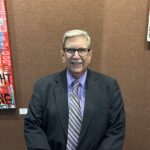
Screenshot 2016-08-24 17.04.05Ashleigh Pollart has spent her whole life in the Harrisburg area, and she’s eager to see her community flourish. When the 25-year-old set out to organize the city’s first TEDx conference, the theme seemed obvious: “Thrive.”

TED (“Technology, Entertainment and Design”) is a nonprofit organization with a mission to promote “ideas worth spreading.” What began as a four-day conference in California three decades ago has grown into a worldwide phenomenon. The two annual TED Conferences feature “TED Talks” from scientists, philanthropists, politicians and other great thinkers on a vast variety of topics.

The TEDx program supports individuals and groups in planning and hosting local TED-style events, and Pollart worked with a team of organizers to craft Harrisburg’s first-ever TEDx Conference, which will be held next month.

“Living in Harrisburg over the past few years, I think we’ve noticed the need for something like this,” Pollart said. “The city is really going in a great direction. I think we’ve been climbing up and up, but we also realize that, if just a few key players stopped their community engagement, Harrisburg could easily fall back to where it was.”

Pollart feels that this event comes at a perfect time in the city’s development, so the theme of “Thrive” is both a celebration of Harrisburg’s progress and an investment in its future.

“I think right now is a really good time to hold an event like this to encourage learning and to highlight the great minds and efforts we have in our small community,” she said. “We hope to empower people to form relationships and keep Harrisburg moving forward along that trajectory.”


Different Perspectives

Months ago, Pollart and the organizing committee put out a call to the community, soliciting applications for speakers. She said she was overwhelmed by the positive response.

“Going into planning, we were unsure of how people would react, since this is our first time doing this,” she said. “We received maybe triple the applications we anticipated, which was a great problem to have.”

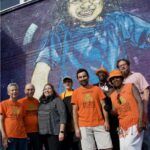
The conference’s 12 speakers run the gamut from the founder of a public art-based nonprofit to the Secretary of the Commonwealth.

“There’s one gentleman who runs a school in Harrisburg,” Pollart said. “His talk will focus on the need to teach students to love learning from a young age. Another speaker came here from Bhutan, and he’ll be speaking about the refugee experience. All the talks center around the theme of ‘Thrive,’ but they all have very different definitions and perspectives on thriving.”

Stephanie A. Jirard, a professor of criminal justice at Shippensburg University, will give a talk titled, “Ordinary People Do Extraordinary Things.” The longtime attorney and former federal prosecutor and public defender will discuss the importance of pursuing social justice—and finding the courage to do so.

“Essentially, the subject of my talk is how people can find the intestinal fortitude to speak out about things they care about, specifically social and racial justice,” Jirard said. “How is it that, for some people, speaking out when they see something they consider wrong comes so naturally, while others are afraid to?”

Her talk will touch on major civil rights moments in history—women’s liberation, civil rights, LGBTQ equality—and the involvement of what she calls “ordinary people.”

“The success of these movements was dependent on ordinary people,” Jirard said. “Take the civil rights movement, for instance. Dr. King was the figurehead of course, but, really, it was everyday people who decided to sacrifice and to face all the societal ills to get us where we are today.”

Jirard said her talk’s central themes of courage and societal justice are well suited to Harrisburg’s inaugural TEDx conference.

“I find that, in Harrisburg, you have a phenomenally disenfranchised African-American community,” she said. “Throughout the state, there are all these resources, and then there’s Harrisburg, which seems like a community stuck in time. It’s like a throwback to a different era. What I would like is to bridge the gap between the communities I see, because the success of Harrisburg is the success of all of us.”

City resident Andy Enders will host the Oct. 10 event. The current HYP president, Enders said he feels a responsibility to begin conversations within the community—and keep them going.

“I think it’s a really beautiful opportunity for us as a community to figure out how others are leading this momentum forward,” Enders said. “I have to be an ambassador for that, to help portray this concept of ‘Thrive’ in a way that engages others. My singular goal is to drive conversation, before, during and after the event, to force the community to reflect on the things we’re talking about.”

Pollart said she hopes Harrisburg’s first TEDx conference won’t be its last. She’s anticipating a sold-out crowd, and ideally, she said, each attendee will leave inspired to help their community thrive.

“I honestly hope the audience leaves with more questions than answers,” she said. “I hope they get a sense of purpose to take action on the things they’ve learned throughout the course of the day. I hope we have a full audience, engaged in the day, and that we’re able to offer TEDx Harrisburg again in the future. One of the most beautiful things the TED brand brings is a sense that it can grow, and people will want to keep coming back.”

TEDx Harrisburg will be held Oct. 2 at Midtown Cinema, 250 Reily St., Harrisburg. For more information, visit www.tedxharrisburg.com.


Who, What

The following speakers and topics are planned for TEDx Harrisburg:

Al Chiardonna
“Life Work Integration”

Secretary Pedro A. Cortes
“From Carolina to the Capitol”

Josh Crain
“How to Talk to Anyone”

Tika Ram Dhungana
“Refugees Are Not the Garbage, They Are the Assets”

Brant Hansen
“Forgiveness in an Age of Anger”

Stephanie A. Jirard
“Ordinary People Do Extraordinary Things”

Bailey Richert
“Life Crisis? Start A Business”

Chuck Russell
“Innovate Harrisburg”

Lynn Shiner
“The ABCs of Dealing with Death”

Bryan Speece
“Virtue of Public Art”

Dr. Melissa Vayda
“What’s Your Story? Family, Addiction and the Brain”

Dr. Eric Waters
“Learning is Breathing”

Author: Kate Morgan
Continue Reading

Savaged by the Bell: Pro Wrestling Empire is bringing the drama, the fun–and the damage–back to Harrisburg.

Illustration by Aron Rook

Illustration by Aron Rook


“I was blown away.”

This was the answer that Colin Bright, owner and general manager of Pro Wrestling Empire, gave when I asked about his first impression of the central PA professional wrestling scene. That impression was formed at a show held in New Cumberland.

“I was expecting to see, you know, guys in cutoff jeans and tank tops bouncing around in front of 40 or 50 people,” Bright said. “But it was a legitimate show.”

Bright, so impressed with what he saw, jumped feet first into the ring and gave the semi-professional world a spin.

“I wouldn’t have gotten involved if I didn’t see something real, and I’m really proud of what we have done,” he said.

By “we,” he means the five main team members that make up Pro Wrestling Empire. What they’ve “done” is build off of that initial show to organize wrestling events from the ground up: a ring manufactured by the same company that works with the WWE, big personalities, big drama and all.

Case in point: in October, the team will welcome one of wrestling’s true legends—Ric Flair (aka “The Nature Boy”)—to their next show, “Clash of the Titans.” It will be held at the historic Zembo Shrine, which has a history of hosting some of the biggest names in wrestling, especially in the 1960s and 1970s.

“There’s a long list of very well-known Hall of Fame-caliber wrestlers that have been in that building and wrestled under the same lights that we get to perform under,” Bright said, citing as examples Hulk Hogan, Bruno Sammartino and Jimmy “Superfly” Snuka.

Spectators and fans attending the show can expect an entire wrestling experience, complete with vendors selling goods such as protein shakes, comics and more. It’s being organized as a true fan experience. The creative juices and passion behind the project are enhanced because the Pro Wrestling Empire team is not only fans, but some are also performers.

A few of the team members even appeared in the last show, threw some punches, and, in the case of Bright, took a very hard hit.

“I got double-crossed at our last show, and a guy almost took my head off with a cheap shot—and the crowd just went nuts,” Bright recalled, showing me a video on his phone. “That’s what’s really rewarding, too. We’re putting on shows that, if I was watching them on TV, I would be pumped!”


A Lineage

Bright considers Pro Wrestling Empire a second chance at a dream. After college, he strongly considered attending a professional wrestling school.

“There’s a well-respected school out in Allentown that’s run by the Wild Samoans that are from the family of the Samoan dynasty,” he said.

For those not in the know, the Wild Samoans are a famous tag-team wrestling pair and members of the WWE Hall of Fame. Since the 1970s, their camp has trained some of the sport’s best-known wrestlers.

“It’s a pretty distinct lineage in professional wrestling, and I was about set to go,” Bright said. “It just didn’t work out. My career got in the way. You know, being an adult.”

He laughed.

“I’ve played it safe if that’s what you want to call it,” he added referring to his regular-guy career in financial planning. “I wanted to take an opportunity before it passed me by again.”

That opportunity isn’t just bringing professional wrestling to more people in central PA. It’s also the opportunity to create and tell a story to the audience.

“That’s another thing that distinguishes us from other companies,” he said. “We do it like they did it in the ‘90s. We run soap opera-style storylines that have multiple pieces to them.”


A Believer

“Clash of the Titans” will be a continuation of the last story shared at a Pro Wrestling Empire show—a story that 800 people came to see.

Besides Ric Flair, there will be thrills like a “Six Pack Challenge” (six wrestlers at once) and a “Hell in a Cell”-style match they’ve dubbed “Chamber of Hell” (a giant cage placed over the entirety of the ring).

With a goal of ensuring the entertainment was not financially out of reach, the team priced tickets at a level more affordable than some movie tickets. Pro Wrestling Empire also provides the Salvation Army in Harrisburg with complimentary tickets and donates a portion of their proceeds to the organization.

“You think professional wrestling, and some people have their opinions about it, but it doesn’t change the fact that it still has to be treated like a real business and run,” Bright said.

I may have had my own pre-conceived notions about professional wrestling, but I’m now a convert. After hearing what this team has in store, even I’ll be making an appearance at “Clash of the Titans.”


“Clash of the Titans” takes place Oct. 22 at the Zembo Shrine, 2801 N. 3rd St., Harrisburg. For more information, visit www.prowrestlingempire.com or follow “Pro Wrestling Empire” on Facebook.

Author: Ashleigh Pollart

Continue Reading

Taste & Tradition: At Greystone Public House, a side of history is served with every meal.

Chef Jason Viscount. Photo by Waxman Photography.

Photo by Waxman Photography.

A stately stone structure situated high on a hill just off Linglestown Road has long commanded the attention of passersby. The historic building dates back to 1798, when Godfrey Fritchey purchased land from Andrew Berryhill and began construction of the fieldstone house.

In a time when simple log-home construction was the norm, this must have been an impressive sight. Fritchey was said to have designed the house to resemble his former home in Bavaria, leaving little doubt that he was, as they say, “a man of means.” The home became known as the Fritchey Mansion, and Godfrey and his wife raised 13 children there before establishing a tavern onsite. Sanctioned in 1805 by Gov. Thomas McKean, the liquor license reads:

“Whereas Godfrei Fritchey hath been recommended to me, as a sober and fit person to keep a House of Entertainment and being requested to grant him a license for the same, I do hereby license and allow the said Godfrei to keep a Public House in the Township of Paxton Dauphin County for selling Wine, Rum, Brandy, Beer, Cyder and all other spirituous Liquors.”

Until just last year, the Fritchey property operated as the Mount Hill Tavern under the eye of Doug Neidich, CEO of Harrisburg-based GreenWorks Development. When, after seven years, Neidich decided it was time to part with the property, he went on the record stating that he hoped that it would continue to operate as a restaurant. As it turns out, his wish was granted.

The property caught the eyes of John G. Frisch, owner of Higher Information Group in Harrisburg, and well-known local chef Jason Viscount. After purchasing the establishment for $1.65 million, the real work began. The two collaborated on extensive renovations, initially announcing a February opening date. As is often the case, the work took longer than expected. By the time the restaurant opened its doors in July, customers rushed the place, and business has been brisk since.

“We’re exceeding our expectations,” said Viscount, with a smile.

Inside, several seating areas accommodate about 135 patrons or guests can make the most of the waning days of summer by dining al fresco on the large patio. A handsome, gray, imposing concrete bar situated in the middle of the action overlooks the main dining room, which is bathed in sunlight during the day from large, geometrically shaped, oversized windows. Wooden tables, sans linens, tie in with the casual “public house” atmosphere, and attractive, handcrafted, custom chandeliers that resemble tree branches hang from high ceilings to further illuminate the area. A gray rug that runs throughout wasn’t quite adequate to douse the din of the diners, so something had to be done, according to Viscount.

“We had to install a rubber sound barrier beneath the carpet,” he said.

A separate seating area features bright yellow banquettes that are illuminated by large, hanging, rust-colored open spheres containing colonial-style candles.

Viscount describes the décor as “soft industrial with a modern touch” and points out special details along the way. As we ascend the steps to a private, but open seating area, he mentions the staircase leading up to the cozy room.

“They use red and white oak and employ a technique using vinegar and rust, which reacts with the tannins in the wood to create that charcoal black color,” he said.


A Twist

Viscount said he created a menu designed to attract a range of customers.

“We try to do dishes with a bit of a twist, but would also appeal to the entire family,” he said.

Appetizers include mussels, roasted oysters, crispy Brussels sprouts and hearty selections like onion soup and French fries with short rib gravy.

Five choices of salad range from Caesar to chopped for those who prefer lighter fare. The popular Greystone salad includes pears, butter lettuce, bleu cheese and candied walnuts and is topped with a champagne vinaigrette.

Handhelds include cheeseburgers, a lean bison burger, a veggie burger and a house-made pastrami sandwich served with sour red cabbage, whole-grain mustard and “Smoked Signal” cheese from Calkins Creamery in Wayne County.

Dinner dishes run the gamut from crab cakes to pork chops, prime rib, fish, day boat scallops, duck ragu with sage pappardelle and a dish that ranks number one among customers—the braised beef short rib.

“The crab cakes and the Salisbury steak aren’t far behind,” said Viscount.


Meant to Be

Shelle Roberts of Harrisburg said she enjoys both the atmosphere and the food at the restaurant.

“The scallops are my favorite because they’re fresh and delicious,” she said. “I also enjoy the décor, which is beautiful.”

She also likes that she feels comfortable bringing her 4-year-old daughter, Evelyn, who plays with an old-fashioned Etch A Sketch with a children’s menu affixed to the back.

“It’s more fun than crayons, and it allows her to be creative,” Roberts said.

Ed Dunlap recently took his family to Greystone Public House and said everyone was pleased.

“My daughter is picky, and she was happy, plus the service was fantastic,” he said. “I don’t think there is a better restaurant in the Hershey/Harrisburg area.”

Joe Wiles from Watts Township said he has followed Viscount since he left Bricco, where he was head chef for many years, and that his favorite dish is the sage pappardelle with duck ragu.

“He brought that one over from Bricco, along with the pork chop, and I’m’ glad he did—it’s a nice alternative to steak,” said Wiles, adding that his wife Rebecca enjoys the pan-seared diver scallops, and he’s looking forward to returning for the braised short rib.

Viscount said that, while the planning and renovation have been a lot of work, it’s been satisfying because of the enthusiasm of the public. After so much time searching for space in Harrisburg, Hershey, the West Shore, Lancaster and York, he finally found the place where he was meant to be.

Fritchey would be proud.

The Greystone Public House is located at 2120 Colonial Rd., Harrisburg. To learn more, call 717-829-9952 or visit www.greystonepa.com or their Facebook page.

Author: Stephanie Kalina-Metzger

Save

Continue Reading

Stand Up, Take a Walk: Sitting is the new smoking.

Screenshot 2016-08-25 17.35.24Whether at school, in the car, at the office or at home relaxing, it’s no secret that Americans spend a lot of time sitting. In fact, we sit an average of 9.3 hours a day—more time than we spend sleeping.

Scientists believe that people who sit more than six hours a day are at greater risk of developing serious health issues. Researchers continue to find evidence that prolonged sitting increases the risk of developing several serious illnesses and chronic diseases. Not only has sitting been linked to a variety of cancers, heart disease, osteoporosis and depression, but it also leads to obesity—a condition that causes numerous health problems on its own.

According to William Beutler, MD, FACS, medical director of the PinnacleHealth Spine Institute, sitting also affects people’s spines, putting 40 percent more pressure on the spine than standing. Poor posture like slumping or slouching causes even more damage. When blood is not circulating and feeding muscles, it results in the weakening of the bones of the spine, an increased risk of osteoporosis, and other problems such as disc degeneration and pinched nerves.

Sedentary lifestyles are impacting more and more people. The American Cancer Society studied 123,000 Americans over the course of 14 years and found that women who sat at least six hours per day were 40 percent more likely to die during that period than those who sat less than three hours per day. Men were 20 percent more likely.


Improve Overall Health

Too much sitting creates an increased risk of developing cardiovascular disease. It affects a person’s lipid profile, blood sugar levels and blood pressure. Sitting can also make people more prone to weight gain, which adds additional risk for other health conditions, like heart disease and cancer.

Fortunately, there are ways to protect the body from some of the primary consequences associated with sitting too long. Tips to get people moving to combat the effects of prolonged sitting include:

  • Take a few 15-minute breaks during the day to walk the halls or stairs.
  • Walk briskly for 30 minutes during a lunch break.
  • If possible, avoid being seated for more than two hours.


A Healthy Spine

“Roughly eight out of 10 people suffer from some sort of back pain,” says Beutler. “Prolonged sitting can be bad for your bones and spine if you don’t take proper precautions.”

In order to protect one’s back, he recommends:

  • Get the angles right. Adjust the height of a desk chair to ensure a right angle at the knees. People should sit up straight with a right angle at the waist/back and arms extended with right angles at the elbows. The lower back can be supported with a small pillow or pad.
  • Look straight ahead. The top of a person’s computer screen should be level with the eyes. Computer users should only look down about 10 degrees to view the screen. If it’s lower, the user moves his or her head downward, which can lead to back and neck pain.
  • Stand up and stretch. Some companies offer specially designed desks that allow workers to stand. Some employers do not offer this option, so computer users can prop computers up on a stack of books, a printer or even a cubicle divider. The goal is to spend time upright and on one’s feet.
  • Make a move. Workers should change positions frequently. That can mean walking to a coworker’s desk instead of calling or emailing. Drinking water throughout the day can get workers on their feet for periodic restroom breaks. Taking the stairs instead of the elevator should become a standing habit.

Even if a person exercises before or after work, it doesn’t prevent the negative effects of sitting all day. According to Dr. Beutler, everyone should make the time during the day to get moving and ensure his or her workstation is set up for good posture and safe computer use. While sitting at the office may be inevitable, making it a priority to get moving and taking the stress off the spine can prevent serious health problems over the long term.

For more information on maintaining a healthy lifestyle, visit www.pinnaclehealth.org.

Author: Christina J. Persson

Continue Reading

Academic Achievement: Marking its golden anniversary, Penn State Harrisburg takes a glance back then marches forward.

Screenshot 2016-08-25 17.32.06 Screenshot 2016-08-25 17.31.55When Kenshay Kerr began considering colleges, the Long Island resident could take his pick from a list of nearby schools in the greater New York area.


Kerr, however, didn’t want to stay in New York. He wanted to attend a high-quality, popular college, one that was out of state. This led him to Penn State Harrisburg, where he now is in his senior year.

“Originally, I was going to spend my first two years of college at the Harrisburg campus and finish my last two years at Penn State’s University Park campus,” said Kerr, a business marketing major with a minor in human resources management. “Then I found out that Harrisburg had everything I wanted.”

So what did Kerr want?

“I was looking for a sense of community,” he explained. “I loved the idea of how comfortable you felt and how it felt like a home away from home. I like all the people, the professors, students, friends. Everybody has a strong bond together.”

Since that day, Kerr has made the most of his decision. He’s a resident assistant and the campus’ current Student Government Association president.

That same sense of community has helped carry Penn State Harrisburg into what is now its 50th year.

The campus opened in 1966, the same year that The Beatles performed their last tour, Adam West was TV’s Batman and the Vietnam War raged. Penn State University purchased the 218-acre parcel off of state Route 230 in Lower Swatara Township from the state for $1. Previously, the land was the site of the former Olmsted Air Force Base. Before that, it was the Keystone Farm.

“The campus used to be a pickle farm, so we will have a ‘Pickle Day’ as part of our 50th anniversary celebration,” said Marissa Hoover, Penn State Harrisburg’s associate director of development and alumni relations. “One of the people on campus will make pickles and give them to the students.”

Of course, Penn State Harrisburg is celebrating with much more than pickles for its 50th year. There’s a “We Are Weekend” on Oct. 14 to 15 that’s chock-full of events and a 50th anniversary movie series in January, among many other events.

When the campus opened in 1966, its enrollment totaled just 18 students and offered courses only in humanities and social sciences. Since then, it’s swelled into a full-fledged, comprehensive graduate and undergraduate school of nearly 5,000 students.

Today, the campus offers more than 65 degree programs ranging from associate to doctorate levels, as well as NCAA athletics, club sports and intramurals, plus more than 70 student clubs and organizations.

In commemoration of the 50th anniversary, a new, 70,000-square-foot Student Enrichment Center just opened. The three-story building includes a 400-seat auditorium and stage area, bookstore, food service area, convenience store, spiritual center, student service offices, and a large living room area for students to gather.

Hoover, who first came to the campus 12 years ago as a major gift officer and has served as the women’s head basketball coach, said that she was there when the campus first opened its doors to freshmen.

“Today, we’re starting to be a destination,” she said. “We have everything they want in a smaller campus. We’re like a plane at the end of the runway. There’s so much more we can do for people in the region. We offer career services and cultural enrichment. We’re looking for an influx of partnerships. We’re growing so fast, but we have the capacity to be even bigger.”

So, after 50 years of continuous growth, what does the future hold for Penn State Harrisburg?

Hoover said that campus administrators are “looking to build a soccer stadium,” as well as initiating lacrosse and field hockey sports.

“With only one athletic building, we need more athletic space,” she noted.

The school hosts international students, but Hoover said that administrators want more U.S. students to travel and study abroad.

“If I could change anything about our school, it’s that we’re a hidden gem,” Hoover said. “We want the region to know how much we have to offer.”

For more information about Penn State Harrisburg, visit www.harrisburg.psu.edu.


Let’s Celebrate

Penn State Harrisburg has events planned throughout the academic year to mark its 50th anniversary. These include:

Sept. 6 to Nov. 4: 50th Anniversary Lyric Writing Contest for students

Sept. 16, 10:30 a.m. to 5 p.m.: United Way Golf Tournament, Sunset Golf Course

Sept. 27 to Oct. 4, 10 a.m. to 6 p.m.: “1+1 Penn State Harrisburg History” interactive installation

Oct. 4, 11 a.m. to 1 p.m.: “Penn State Harrisburg” book signing with Heidi Abbey Moyer at bookstore

Oct. 6, 8 to 11 p.m.: “Bonfire in the ‘Burg” with free food, giveaways, entertainment

Oct. 14 to 15: “We Are Weekend” celebrating the campus’ anniversary, including an alumni awards dinner, time capsule opening, concert, reunions and more

Oct. 27, 8:30 to 11:30 p.m.: Lion Ambassador’s Ghost Tours

Jan. 20, 7 to 10 p.m.: 50th Anniversary Movie Series, Student Enrichment Center

Feb. 9, 12 to 3 p.m.: “Pickle Day,” a pickle tasting to commemorate the campus’ origin as a cucumber farm.

Feb. 16, all day: “Advancement of Entrepreneurship in Central PA” discussion

Feb. 20, 7 to 9 p.m.: American Studies presentation by original faculty member Henry Glassie, library

March 23, 5:30 to 9 p.m.: MBA Group reunion, Capital Union Building

April 8, 6 to 9 p.m.: “Once Upon Our Campus,” Student Enrichment Center

April 20: 50th Anniversary Time Capsule Closing

For a full schedule of events, visit www.harrisburg.psu.edu/50th-events.

Author: Phyllis Zimmerman

Save

Continue Reading

From Harrisburg, with Love: Tanya Weaver works locally to benefit AIDS sufferers in Africa.

Screenshot 2016-08-24 17.13.54It’s 2013, and I’m having coffee with Tanya Weaver, a woman I met on the Internet.

She’s dark-haired and petite, and we’re sitting at one of the tables at Midtown Scholar Bookstore, our legs dangling. Four weeks earlier, I had posted a for-hire French-tutor ad on Craigslist and received one response—hers.

“What interest do you have in French?” I asked.

“I do humanitarian work in sub-Saharan Africa and want to communicate better with some of our clients,” she replied.

A few weeks later, she made a vocabulary list topped with the words “maturity ward” and “training.” And, like everything else, she has not stopped.


Want the Best

The American Foundation for Children with AIDS (AFCA) was founded in 2004 and has been directed from Weaver’s Linglestown living room since 2005. Providing assistance to children affected or infected with AIDS, the organization targets marginalized communities—it’s currently working in Kenya, Uganda, Zimbabwe and the French-speaking Democratic Republic of the Congo—not served by other humanitarian organizations.

Emphasizing solutions in education, agriculture, medicine, microfinance, hygiene and more, AFCA is almost entirely sustained by volunteer efforts. Back in 2005, 97 percent of HIV-positive children in AFCA’s first partner hospital in Mombasa, Kenya, were dying due to lack of access to medicine. That trend has now reversed as 97 percent of children who receive treatment in this same hospital are thriving.

“Nobody was doing anything,” said Weaver. “So, somebody had to.”

Weaver has a lifetime of international experience under her belt, including five years with Habitat for Humanity in Romania, Portugal, Kyrgyzstan, Russia and Hungary and with Shelter for Life in Afghanistan. She has found that all people, regardless of circumstance, want the best for those around them. This humanity is the anchor of her involvement.

“I was offered this job when I was pregnant [with my first child],” Weaver said. “If my child was born with a disease or a virus—and had the chance of dying very early if nobody helped her—of course, I would want someone to do something. This prompted me to help other children.”

In Africa, AIDS is spread primarily through heterosexual contact and transferred through pregnancy, with the continent home to 88 percent of the world’s HIV-positive children. According to the Foundation of AIDS Research, 1.4 million people became infected in 2014. Yet, due to misconceptions, the problem can be under-acknowledged.

“Either people believe that AIDS has been eradicated or that it’s a virus that only affects the people considered to be at the margins of communities,” Weaver said.

Additionally, regarding Africa, the stereotype still pervades that “everyone’s poor and that nobody wants to work,” when the truth is actually far different.

“Mothers in the Democratic Republic of Congo are the hardest working women on earth,” Weaver said, adding that they just have far fewer resources to care for those they love.


Sustainable Giving

Weaver’s day begins at 6:10 a.m. with emails from doctors, project managers and leaders received throughout the night due to the five- to seven-hour time difference. After preparing breakfast—real food, she says, to keep her family grounded—she dives in.

Daily, she communicates with partners in Africa via Skype, email or telephone. Some days include working with local partners, including Mission Central in Mechanicsburg and Messiah College. Other days, she trains teams of volunteers for AFCA’s “Vacations with a Purpose” program to assist with on-the-ground construction, agriculture or medical projects in Zimbabwe, Kenya or Uganda.

On the days Weaver cancels French class, she heads to AFCA’s 10,000-square-foot warehouse in Lebanon to help volunteer manager Betsy Dorsey load a shipping container with new or gently used school and medical supplies, donated from individuals and hospitals across the United States and shipped to various partners in Africa five times a year.

Weaver herself annually travels to as many AFCA sites as possible.

Despite the burden of distance and need, Weaver insists her work isn’t a “job job.” It’s question-asking, resourcefulness and love.

“Over the years, I’ve created some great relationships,” she said.

Weaver’s eyes light up when discussing her upcoming projects, especially a sisal fiber processing project in Kenya that will employ 200 people normally considered “unhireable”—including 160 HIV-positive women, many with children. The fiber is a drought-resistant, year-round crop, but the work is only three days a week to allow for the care of a family. And it pays well enough to allow the children to go to school and to eat healthfully. The education provides the children with the skills to one day earn a living, breaking out of the cycle of need.

Networks of solutions like these drive Weaver.

“It’s sustainable giving,” she said. “AFCA’s largest goal is to no longer be needed.”

To learn more about the American Foundation for Children with AIDS (AFCA), visit www.afcaids.org.


Getting Involved

Weaver works to provide opportunities for the Harrisburg-area community to engage with those who live half a world away, with 93.1 percent of all proceeds directly going to change lives abroad. Here are two upcoming opportunities to get involved:

Sept. 11 to 25—FeedONE aims to create awareness of the hunger epidemic in Africa by asking people to eat on just $1.90 a day—the World Bank’s definition of extreme poverty. Participants then donate the remainder of their normal weekly grocery budget to AFCA. The goal of $35,000 will help 360 children with seeds, livestock and training. For recipe ideas and to pledge, visit www.afcaids.org/feedone.

Oct. 8—Musicians Ryan Moran, Rivers, Hank Imhof, Shawan and the Wonton, Anthony Francesco and Indian Summer Jars will play live during AFCA’s Second Annual Family Music Fest at Wind in the Willows Inn in Grantville, 2 to 8 p.m. The event also features local food, family activities and a live auction of unique gifts and crafts. The cost is $12 in advance, $15 at the door. Children 10 and under are free. For tickets and information, visit the Facebook page: AFCA Music Fest.

Author: Sylvia Grove

Continue Reading

What We Did Last Summer: While you were away, Harrisburg was busy rebuilding.

Illustration by Rich Hauck.

Illustration by Rich Hauck.

September is here, and, yes, that means we have to kiss summer good-bye.

Like many others, you may be adjusting to the grim reality that it’s time to put away the beach ball and pick up the time sheet.

Your editor also had some time away this summer, and we’ll get to that in a bit. But, first, I thought that we should catch up on some important local news—things that flew a bit under the radar or may have been forgotten somewhere in the middle of that second margarita.


Two-Way 2nd

“Multimodal Collaborative Project.” Have I already put you to sleep? I hope not because behind this dense phrase lies a series of infrastructure projects with the potential to truly transform Harrisburg.

In July, the nonprofit called Impact Harrisburg released nearly $5.5 million, half to the city and half to Capital Region Water. Combined with a match from PennDOT, this money is slated for road (and utility) improvements that could undo some of the tremendous damage wrought in the 1950s, when the state turned charming neighborhood streets into forbidding freeways—making Harrisburg both less livable for residents and easier to flee for workers.

Most importantly, the money allows the city to begin the process of returning N. 2nd Street, from Forster to Division streets, to two-way traffic. Mayor Eric Papenfuse told me that preliminary work would begin next year, followed by actual construction, he hopes, in 2018.

The money would fund related improvements to N. 6th, N. 7th and Division streets, both to handle additional traffic and to make those roads more pleasant and pedestrian-friendly. A chunk of the money also would go to repaving much of N. 3rd Street, a project slated for next year once the utility work is done, and towards making a dangerous section of Berryhill Street safer for pedestrians.

TheBurg has long advocated making 2nd Street in Midtown/Uptown two-way as a vital step in revitalizing Harrisburg, reintegrating neighborhoods and returning this major thoroughfare from commuters back to residents.

Papenfuse wasn’t all smiles over the actions of Impact Harrisburg. He wanted the money that went to Capital Region Water to pay off the city’s loan for the recently completed streetlight project, with the savings then used for repaving neighborhood streets. In his opinion (though not CRW’s), opportunity lost.


Bar Stays Open

Papenfuse also wasn’t wild about county Judge Andrew Dowling’s order that forced the city to issue a business license to the Third Street Café, a Midtown bar that the administration has targeted for closure. Dowling found the city’s argument against the bar (that it attracts crime) to be weak and said, in any case, that state regulation trumps city restrictions for businesses that hold liquor licenses.

So be it. I’ve previously argued that the Third Street Café has a detrimental impact on the quality of life, the redevelopment and potential safety in the heart of Midtown. In my view, those things remain true. However, I can’t disagree with Dowling that city did not present a strong case for closure.

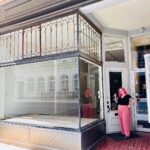
Dowling’s decision, though, is not stopping the redevelopment of one of the most forlorn commercial streets in Harrisburg, one with tremendous potential. Last winter, Zachary Nitzan purchased the block’s two largest historic buildings—the former home of Midtown Paint & Hardware and the former Volunteers of America building—and he spent much of the summer restoring them. One will house his high-end, custom-design rug business, and the other will be divided into two renovated storefronts, returning the building to its original format. Pass by, have a look and smile.

It seems that 3rd Street will have to rise on its own, without the help of the heavy hand of government (that is, unless the city’s long-shot appeal works). In other words, it will have to come back in the way that forsaken blocks in many other cities have—slowly, by risk-tolerant people with vision and patience.


Cut the Tape

Fortunately, Harrisburg has a number of such risk-tolerant people, as this past summer saw the completion (or near completion) of several important projects.

Downtown, Harristown began signing leases for the Flats at Strawberry Square, the first of its three apartment projects in the immediate area. Several blocks away, a few intrepid European investors brought a couple of desolate blocks of N. 2nd Street back to life, opening expansive restaurants called Capital Gastropub (the old Ceoltas) and the Bridge’s Social Club (the old Quarter).

Across Forster Street, WCI put the finishing touches on its renovation of the historic Harrisburg Moose Lodge at N. 3rd and Boas streets. The ground floor is the new home of the co-working outfit, Startup, and the upper levels feature high-end apartments.

Speaking of redevelopment: I spent part of my summer in Portland, Maine, which (like vacations I’ve written about before) provided me with no end of inspiration for things we could do here.

Like Harrisburg, Portland is a small, historic city that had to remake itself following industrial decline. It’s further along in the process, having succeeded in playing to its natural strengths: charm, walkability, waterfront, seafood, tourism and all-things craft.

I was especially struck by a former industrial area, which has been rezoned and repurposed. Where there once were warehouses full of boxes and forklifts, you’ll now find tourists sampling craft beer, sipping small-batch spirits, eating gourmet food truck fare (I had something called “Japanese street food”) and listening to musicians. And I thought to myself—Cameron Street!

The transformation of Cameron has already begun, pioneered by Appalachian Brewing Co., now joined by Midstate Distillery. With their open spaces, high ceilings and rock-solid build, the structures there are ideal for the new urban industry—craft, artisanal, hand-crafted anything—with a little concrete, noise and ductwork no deterrent to foodies, beer snobs, wine geeks and bespoke fans (in fact, it may be an attraction).

Lucky for us, Cameron Street—from the Farm Show complex to the incinerator—is loaded with exactly this type of building. Any takers?

Lawrance Binda is editor-in-chief of TheBurg.

Continue Reading

Border Lines: New exhibit gives voice to the hopes, terrors of the immigrant experience.

Illustration by Eric Garcia

Illustration by Eric Garcia

Immigration isn’t just a hot-button political issue.

It’s also a highly personal one.

An exhibit recently opened at the Susquehanna Art Museum—“Después de la Frontera/After the Border”—that underscores that point.

“[It] is a bilingual group exhibition that honors the stories of recent, unaccompanied immigrant youth, families and young adults who fled their homes in Central America,” said Alice Anne Schwab, museum director.

The multifaceted exhibit provides the cultural and historical context of the countries involved, including the terrors that youth and families face, such as gang recruitment, extortion, drug cartels and persecution.

But it also focuses on the uncertainties that lie ahead. The dangerous journey through Mexico and across the U.S. border may increase the likelihood that young people will be subject to human trafficking, kidnapping, sexual assault and even death.

Should they make the journey safely, the migrants still face the challenges of integrating into a new environment.

Felicitously, the exhibition, visiting from Baltimore, coincides with National Hispanic Heritage Month, which runs from mid-September to mid-October. It also overlaps, of course, with the presidential election, which has highlighted the political side of immigration.

Many artists have contributed to the exhibit, noted Tanya Garcia, a multimedia artist and its curator. A photographer, she developed a video of stories taken from interviews with youth and families. Artists doing work in such fields as illustration, painting, cartooning and video also have contributed.

Creative Alliance, a non-profit, multi-cultural and multi-disciplinary arts center in Baltimore, was commissioned to put together the exhibit, which was a year in the making, said Garcia.

“Different human service organizations came together to talk about ways to portray immigrant youth artistically in order to develop a positive narrative that welcomes families to Baltimore,” she said.

The exhibit, she added, attests to the “inner strength, resilience and resourcefulness” of these youth and families.

As the exhibit content evolved, Garcia did more research and met with them.

“I realized, to tell the story, I would need many artists to be involved in sharing their experience but also the collective experience of many,” she said. “Some of the artwork is abstract, political, documentary or personal.”

In the exhibit, many of the names of the immigrants are not revealed to respect their request for anonymity, she said. Others have chosen to give their names and show their faces to bring awareness to their story.

“As someone who is of the Puerto Rican diaspora, my experience with immigration is very different,” Garcia said. “While the topic of immigration is a big issue in the Latino community, I must also acknowledge this specific experience of immigration from Central America is not my own. That’s why it’s so important to be inclusive of those range of voices.”

The museum will offer special programming in conjunction with the exhibit, including a showing of “Sin Nombre” (“Without a Name”), a film that offers a perspective of two youth—a Honduran girl immigrating to the United States and a boy trying to escape his life in a gang. To be shown Sept. 23, it premiered at the 2009 Sundance Film Festival.

A panel discussion featuring various experts on immigration-related issues will take place on Oct. 15.

Many of the visitors to the exhibit, located in the museum’s Lobby Gallery, may not know the details of this immigrant experience other than in a general way. Garcia and Schwab hope that the artwork will personalize it.

“We can’t be there. We can’t live their experience,” said Schwab. “I myself seek to understand and hope this will do it.”

An exhibit like “Después de la Frontera,” she added, illustrates the conviction that “museums can’t just hang pretty pictures. They need to do something more. We need to be of and for the community.”

“Después de la Frontera” runs through Dec. 4 at the Susquehanna Art Museum, 1401 N. 3rd St., Harrisburg. For more information, visit www.sqart.org.

Author: Barbara Trainin Blank


Continue Reading

Chamber Champion: Entering its 35th season, Market Square Concerts continues to bring the best in chamber music to Harrisburg.

Screenshot 2016-08-25 17.32.59Market Square Concerts’ long, prestigious history isn’t lost on its current artistic director, Peter Sirotin.
MSC has been putting on chamber music concerts for nearly 35 years, presenting world-class musicians for a fraction of the cost of attending their performances in New York or Washington D.C.

And, while recognizing this history, Sirotin also is aware that he must keep things fresh.

“Just to put the 35th anniversary in perspective, I would like to mention that MSC is older than some of the most well-known organizations of this type in the nation,” he said. “Philadelphia Chamber Music Society, for example, is only 30 years old.”

Founded by Lucy Miller Murray, who ran it for 27 years, the organization changed hands from 2008 to 2011, putting well-known area radio personality Ellen Hughes in charge. Now, Sirotin and his wife, Ya-Ting Chang, are beginning their sixth year as executive and artistic directors.

“Both Ellen and Lucy had been our mentors and truly inspiring champions of chamber music as an art form in the region,” Sirotin said.

So, what can concertgoers expect in this 35th season?

MSC’s opening concert at Market Square Church on Oct. 1 features Rebel, a New York-based Baroque ensemble that will explore music written in the 17th and 18th centuries for court, chapel and country.

Then, on Nov. 2, MSC will import the Heath Quartet from Great Britain to perform a program of Haydn, Dvorak and Michael Tippet.

“The November concert will offer a great opportunity to hear a rising start in the string quartet world just a couple of days before its Carnegie Hall debut,” Sirotin said.

MSC’s 35th anniversary celebration welcomes the new year on Jan. 21 at Whitaker Center with the world premiere of Jeremy Gill’s “Duo for Violin and Piano,” commissioned by Martin and Lucy Murray. Other program additions include the haunting “Horn Trio” by Brahms and the delightful “Trout” quintet by Schubert to be performed by Sirotin and Chang, along with some of their closest friends and colleagues.

The next two musical events will take place at Temple Ohev Sholom in Harrisburg. On Feb. 26, the Dover Quartet, the most recent winner of the National Cleveland Quartet Award, will perform works by Smetana, Shostakovich and the 2013 winner of the Pulitzer Prize for Music, Caroline Shaw.

“MSC is one of only 11 other presenters, including Carnegie Hall, who participate in this biannual award,” Sirotin said.

Then, on April 5, Kristof Barati, a violin virtuoso, will return to MSC after his debut here two seasons ago. His all-Bach program, Sirotin said, will be part of a mini-residency in Harrisburg, which will also include a masterclass for the area students at Messiah College and two performances of the Khachaturian violin concerto with the Harrisburg Symphony.

MSC’s final program heads back to Market Square Church on May 3. It will feature winners of the 2015 Concert Artists Guild International competition. Pianist Daniel Hsu and the Verona Quartet will perform a contrasting program of lyrical Piano Sonata Op. 110 and String Quartet Op. 59 No. 1 by Beethoven and the dramatic Piano Quintet by Franck.

Deciding on programming and gathering performers, from both here and abroad, is no easy feat, Sirotin said. It involves finding a date that works for the performer or group, obtaining visas for international artists, and keeping an eye on the weather lest a concert needs to be rescheduled. But, to Sirotin, the challenge is all worth it.

“I love seeing people’s reaction to discovering a great new piece of music,” he mused. “Or perhaps a rather well-known gem that they are just hearing for the first time.”

For more information and tickets, visit www.marketsquareconcerts.org or call 717-221-9599. Remaining tickets are available at the door.

Author: Lori M. Myers

Continue Reading

Family Fare: 3 generations, 1 truck and Harrisburg’s tastiest tacos.

Screenshot 2016-08-25 17.29.16Before food trucks were cool, Eloy Saenz was running one. Before authentic flavor was in, he stayed true to the tastes of his culture.

Thirty years ago, Saenz opened Mexico Lindo to bring authentic Mexican tacos to Harrisburg. Today, his food truck continues to offer Harrisburg some of the tastiest Mexican cuisine around.

A few years ago, Saenz retired and passed the business along to his daughters, Elodia and Anna, and their children. Like many family businesses, the story behind Mexico Lindo is one of hard work, strong values and a lot of heart.

“My father moved to the United States in the 1960s,” said Elodia. “He was one of the people who came to work on the plantations in Arizona on temporary visas. He decided to stay about 30 years ago.”

Saenz eventually moved to Harrisburg and started Mexico Lindo as a little restaurant on Derry Street. The restaurant was put on hold when his brother’s illness prompted a temporary return to Mexico.

“When he came back, he wanted to restart, but as a truck,” Elodia said. “He opened up a little taco truck about 15 years ago. He started working weekends, then, as demand increased, moved to weekdays. I think we’re Harrisburg’s first taco truck.”

The secret to their mouth-watering dishes, according to Elodia, is a simple menu made from the freshest ingredients. Tacos are served in authentic Mexican style: soft tortillas piled high with shredded meat, onion, lime, cilantro and salsa.

“My father never wanted to change the recipe for a more ‘American’ way,” said Elodia. “He kept it how it is in Mexico.”

Carnitas—slow-cooked, braised pork—is the house (um, truck) specialty.

“The carnitas take about seven hours to prepare,” said Elodia. “We purchase the meat from Groff’s in Elizabethtown—always fresh. We begin by braising the meat the day before then cook it slowly. We do things the same way our father did.”

Mexico Lindo is open seasonally, generally beginning in March, weather depending, and staying open until the first week in December. You can even “dine in” at a few small tables located on the porch of the building in front of the truck.

You’re well advised to show up early. To ensure freshness and flavor, Mexico Lindo makes just enough for that day.

“When we run out of ingredients, we’re done for the day,” said Elodia.

Both Elodia and Anna have help from their children, who also work to keep the family business going. Enrique, Elodia’s son, even wears his grandfather’s hat while he’s on the truck.

“They thought my father was so cool,” Elodia said.

Elodia’s son and younger daughter may one day graduate from the food truck. They both currently attend Penn State Harrisburg.

“My kids love to eat good food,” said Elodia. “My son is studying hospitality management at Penn State because he knows how all of this works.”

With no website, Mexico Lindo gets its business the old-fashioned way—through word of mouth.

“Some people come here for the first time, and they like it, and then they recommend it to other people,” said Elodia. “Before they know it, they are coming here for years.”

Elodia herself has lived in Harrisburg for 23 years.

“I like that it is a small city,” she said. “There’s also a lot of diversity. I’m happy to watch my kids grow up in this country. I love the food—I love trying different kinds of food, and there’s a lot of that here.”

The family plans to keep the truck in its current location on Allison Hill, near Market and 15th streets, to keep it accessible to the loyal customers who have been patrons for decades. After all, it’s what her father would have wanted.

“We’re just a little business, but it’s a lot of work,” said Elodia. “You see just the truck, but there’s a lot behind it.”

With tacos this flavorful, let’s hope they never change a thing.

The Mexico Lindo taco truck is located on Market Street, near the intersection of 15th Street, in Harrisburg.

Author: Rachael Dymski

Continue Reading