End of the Lane: The last owner of A. Lane shares his memories, as one of Harrisburg’s oldest stores prepares to close.

A. LaneWeb

Editor’s Note: A Harrisburg institution, A. Lane Used Furniture will close next weekend after 90 years in business. In this essay, the last owner reflects on the long-time family business and its place in the history of commerce in Harrisburg.

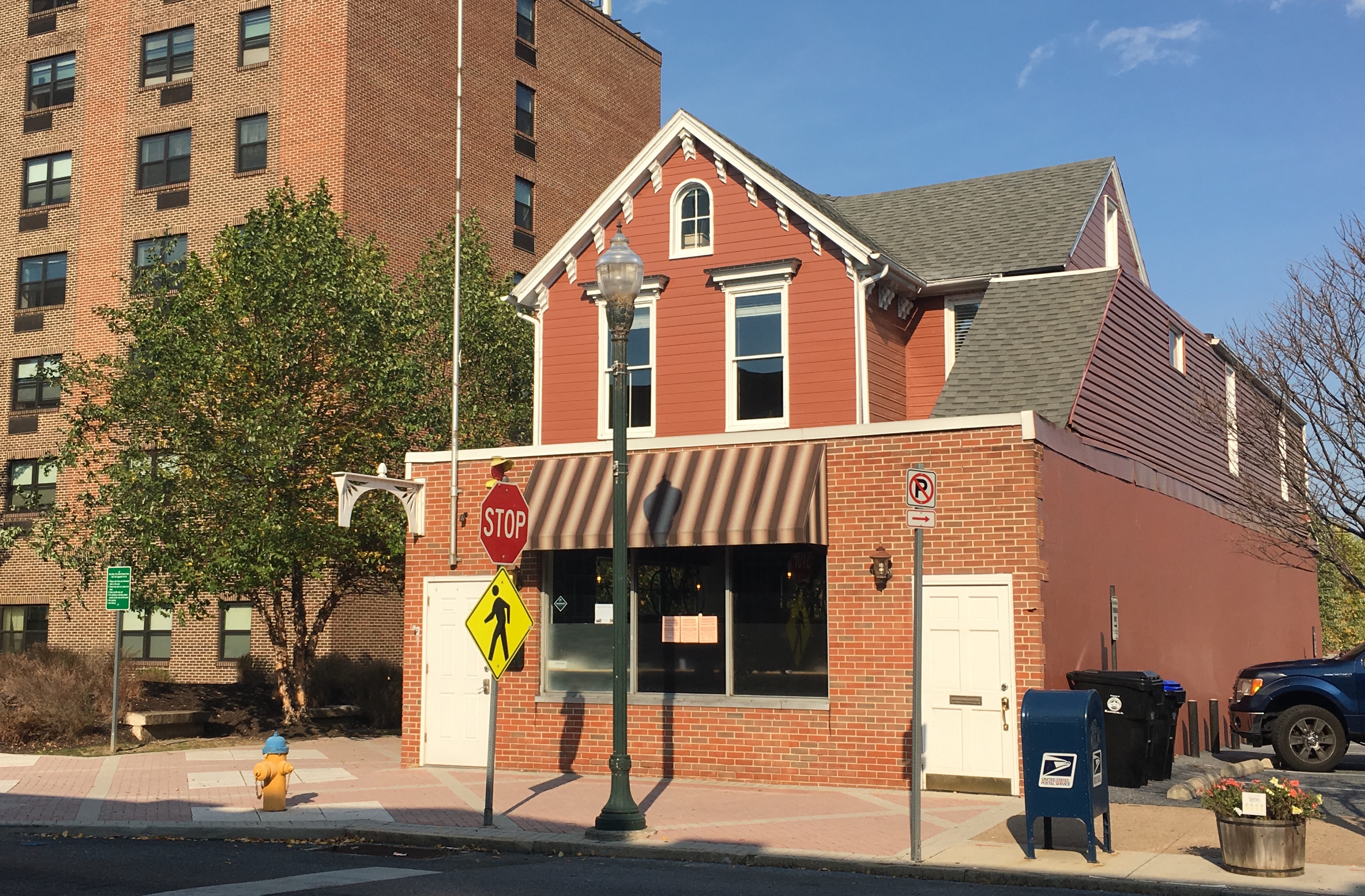
A. Lane Used Furniture store had been in business since 1926, operated by four generations of family members. I was the last proprietor and, by all objective standards, not very good at selling furniture.

The anchor of the store was Gene Fievish. Known as Lane, Gene was a Harrisburg institution and the last vestige of the Eastern European Jewish merchants that once populated Market Street.

Most people never knew his name was Eugene Allen Fievish. During his adult life, he was referred to as: Gene, Gino, Lane, “Moonie,” Mr. Lane, “Popcorn,” Unc, “that old man” or Uncle Gene.

Mr. Fievish co-founded the Lemoyne Sleeper Company and was beloved by the employees. He remained modest and was never officially acknowledged for developing the concept of factory-direct bedding.

Gene worked six days a week at “the store,” did not vacation, but closed the store for the Jewish high holidays. He was a devout Philadelphia sports fan and a loyal patron of the Colonnade and Nick’s 914, as well as local diners too numerous to name. He was a lifelong Philadelphia sports fan and never got tired of telling the story of when Chuck Bednarik almost killed Frank Gifford.

His main pursuit in life was purchasing furniture, selling furniture and attending auctions and estate sales.

A lot of people have paid tribute, shared memories and asked for a discount since my uncle passed on Oct. 31, 2015. Unlike my uncle, I actually spoke to people, and my responses never ended with Lancaster Brand tobacco juice bouncing off of the cement.

GeneWeb

Gene Fievish inside A. Lane

The era of the merchant, peddler and small businessman in the patch of Market Street that stretched from the Patriot News to the Cameron Cut-rate all died with Gene. Sadly, there has been no recent concerted effort—absent the New Baldwin Corridor Coalition—to save what was once one of Harrisburg’s major economic arteries.

There was a time when small businessmen and women populated and built lives for their families on Market Street: five & dimes, clothiers, grocery stores, jewelry stores, locksmiths, record shops, warehouses, used furniture stores and retail shops.

Big box stores, cultural atrophy and the suburbs gave us faceless prefabricated buildings framed with tax breaks, free parking and faceless owners.

The truth of the matter is the store was Uncle Gene’s life. He was the store, but Clyde Ferguson kept A. Lane’s running for the last 15 years.

We withstood the 1936, the 1972 and the 1977 floods as well as a nuclear meltdown. In fact, employees came to work and delivered a kitchenette to Highspire on Saturday, March 31, 1979, during the Three Mile Island core meltdown. And, no, I did not participate in the delivery.

The store then fell prey to arson and was eventually moved to Chestnut Street before moving back home to a “dead zone.”

We were no match for assimilation, the internet, compressed particle board, parking meters six days a week including Saturdays, dim street lighting, unrepaired sinkholes, federal flood insurance, and, most recently, unannounced water and sewage “construction,” which cut off access to the store, but provided decibel-crushing noise and savory sewer vapors.

We contracted and subcontracted with artisans, carpenters, glass-makers, piano men, radio repairers, theater directors, upholsterers, trash haulers and folks on work release or in just need of money for bus fare or a meal.

The 10-mile, free delivery zone was a staple of the store for 90 years. We never accepted credit cards and always used rotary phones. Gene never negotiated. Unc told people, “I ain’t running a charity,” or “The price is the same price I would charge my rabbi.”

On Oct. 29, we will shut the doors for good, and Kerry Pae Auctioneers will conduct an absolute auction. We will bury a culture, bury a store, bury a way of life and bury one of Harrisburg’s true icons. Gene’s passing and the store’s demise mark the end of an era and a 50-year strategy of never negotiating price but always delivering for free.

StorefrontWeb


A. Lane Furniture is located at 1025 Market St., Harrisburg. For more information, call 717-232-8612 and read our story from earlier this year.

Author: Eric Epstein

Continue Reading

Impact Harrisburg awards more than $4 million in grants for economic development

Impact Harrisburg Executive Director Sheila Dow-Ford announced more than $4 million in grants on Thursday.

Impact Harrisburg Executive Director Sheila Dow-Ford announced more than $4 million in grants on Thursday.

Impact Harrisburg announced the first recipients of economic development grants yesterday. Eight organizations received nearly $3 million total in economic development grants. Five organizations received a bit more than $1 million total in grants for community building.

A total of 24 organizations applied for economic development grants. The nine-member board of directors chose to award these 13 organizations the full amount requested rather than giving partial grants.

“When we saw what applications came in, we really did not have a reason not to,” said Neil Grover, chairman of the Board and city solicitor.

Grover said that the grant-giving process is relatively new for the nonprofit.

“We really were forming from scratch,” he said.

The Harrisburg Strong Plan created Impact Harrisburg, a private nonprofit, in 2013 to distribute $13 million in economic development and infrastructure funds as a part of the state-sponsored recovery plan. In July, Impact Harrisburg awarded its first grants – about $5.5 million – for infrastructure projects.

Executive Director Sheila Dow-Ford said releasing nearly $4 million in grants will act as a catalyst in the city.

“These applicants really spoke to the needs of the community,” she said.

Impact Harrisburg broadly defined economic development. Many of the grants will support construction projects that will improve quality of life in the city, Grover said.

“These projects will be bringing people into the city and keeping people in their neighborhoods,” he said.

Jamien Harvey, executive director of the Camp Curtin YMCA, said he expects 500 to 800 kids will be able to attend judo, gymnastics and indoor soccer programs thanks to the $500,000 grant, which will expand program space. Also, adults will have more space for exercise classes that the Camp Curtin location previously could not offer, he said.

Monitoring the grant-funded projects will be the next step.

“There’s a lot that got started here that never got finished,” Grover said.

The monitoring process will differ depending on the project, but will ensure that all projects finish in the manner that was proposed, he said.

After these grants, the nonprofit has $1 million in reserves for economic development, Dow-Ford said.

“We don’t know If we will have a second round of funding,” she said.

Another round of funding would depend upon if Impact Harrisburg receives more funds to distribute.

Eight organizations will receive grants for economic development:

  • $500,000 to the Salvation Army for the completion of a community center on 29th Street
  • $500,000 to Harrisburg Redevelopment Authority to remediate blighted property
  • $250,000 to the Harrisburg and Capital Region Water Playground Resurfacing Collaborative to resurface playgrounds
  • $500,000 to the Camp Curtin YMCA to resurface a pool and expand usable space
  • $500,000 to WebpageFX to complete the construction of their expansion project
  • $81,369 to Harrisburg River Rescue to complete the construction of a facility on Derry Street
  • $500,000 to TLC Construction and Renovations for an incubator project for veteran- and minority-owned businesses
  • $100,000 to Paxton Street Home Benevolent Society to start construction of a senior living facility

Five organizations will receive grants for community building projects:

  • $350,000 to the Tri County Housing Development Corporation for Derry Street corridor development
  • $138,592 to the East Shore YMCA for façade improvement
  • $250,000 to the Gamut Theatre to complete the rehabilitation of former church to theater space.
  • $350,000 to the Community First Fund to set up a pool of loan funds for minority-owned small businesses

Author: Danielle Roth

Continue Reading

State of the City Address reflects on past successes, supports nonprofits

Dr. Roma J. Benjamin left the Camp Curtin YMCA this morning with a little something extra.

The nonprofit she founded and directs, New Sound Literacy and Technology Center, won a raffle at the State of the City address. Benjamin, a former educator, called the unexpected donation “a blessing” for literacy in the community.

“It’s my call, it’s my mission, to give our kids support making it through school,” she said.

Dr. Roma Benjamin's nonprofit, the New Sound Literacy and Technology Center, received a donation from a raffle held at today's event.

Dr. Roma Benjamin’s nonprofit, the New Sound Literacy and Technology Center, received a donation from a raffle held at today’s event.

More than 200 community and nonprofit leaders filled the YMCA’s auditorium to hear Mayor Eric Papenfuse speak about his administration’s accomplishments during his three years in office. Proceeds from the event benefitted seven nonprofits, in addition to the New Sound Literacy and Technology Center.

Traditionally, mayors have held State of the City addresses downtown at the Hilton Harrisburg. Past addresses benefited the Capital Region Economic Development Corporation (CREDC) and the Harrisburg Chamber.

This year, the venue change highlighted the work of Harrisburg nonprofits, 23 of which were represented at the event.

“Camp Curtin is a stellar example of how people come together to nurture our city and inspire our youth,” Papenfuse said.

Papenfuse credited much of the city’s success to Harrisburg’s balanced budget. He said his administration has been “watching every penny” and that the city has amassed a $10 million nest egg this year.

With the budget surplus, the city will purchase body cameras and more Tasers for the police department, he said. Police Chief Thomas Carter said his department is looking for the latest technology, but does not have a timeline for the purchase or implementation of the devices. Tasers and body cameras will increase visibility and accountability, the mayor said.

Mayor Eric Papenfuse addressed a croud of more than 200 nonprofit and community leaders at today's State of the City address.

Mayor Eric Papenfuse addressed a croud of more than 200 nonprofit and community leaders at today’s State of the City address.

Papenfuse included other highlights from the past year:

  • Nearly 1,500 new business licenses in the city
  • A $3 million state grant for revitalization in a blighted area of Allison Hill dubbed MulDer Square
  • Federal government support for residents affected by sinkhole damage
  • A $50,000 state grant to improve Reservoir Park
  • Increased community policing programs such as the Police Recreation League
  • The Byrne Criminal Justice Innovation program to reduce crime in the Camp Curtin neighborhood

While Papenfuse reflected on his administration, Benjamin looked forward.

“I have lots of new books to purchase,” she said with a smile.

Author: Danielle Roth


Continue Reading

Creative Thinking

FloridaWeb3

Urbanist Richard Florida speaks at Penn State Harrisburg.

Postindustrial cities like Detroit, Pittsburgh and Harrisburg have had an uphill economic climb since the glory days of cars, steel and railroad. But bringing industry and manufacturing jobs back into cities may not be the solution to grow urban areas and draw in the next generation of workers.

So says renowned urbanist and author Richard Florida, who spoke last week at the “PNC Thought Lecture Series” held in Penn State Harrisburg’s new Student Enrichment Center.

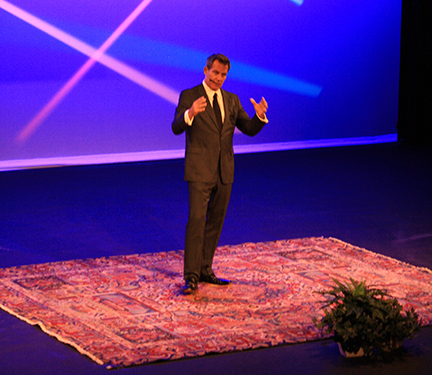
On a stage straight out of “TED Talks,” Florida outlined his theory on urban renewal. It’s based not on looking back at our manufacturing past, but in looking forward to our creative future and what he describes as the ”creative class.”

In his book “The Rise of the Creative Class,” Florida defines the group to include “people in science and engineering, architecture and design, education, arts, music and entertainment whose economic function is to create new ideas, new technology and new creative content.”

“We [once] used physical labor and natural resources to create wealth,” said Florida, who serves as the director of cities at the Martin Prosperity Institute at the University of Toronto. “[Today], the human mind is the means of production.”

Florida asserted that people like artists, musicians, entrepreneurs and technology professionals add to the vibrancy of an area. It’s this vibrancy—not necessarily jobs per se—that attract young people to a city.


Quality of Place

Florida said that he began to question the basic economic model of “if you have good jobs, the people will come” as a professor at Carnegie Mellon, when he asked his class if they would stay to work in the Pittsburgh area. The answer, he said, was a resounding “no.”

“They wanted to go to San Francisco, New York City or Seattle because these places had energy and excitement, places they could fit in,” he said.

“Quality of place” is what draws people to a city, Florida said. This quality includes natural features, open space, a diverse feel and a variety of activities such as symphonies, operas, ballet, cafes and restaurants.

Another part of city renewal is the presence of gay and lesbian communities, but not necessarily because of the individuals themselves. Florida asserted that communities that welcome gays and lesbians also embrace diverse ways of thinking. He said that great cities invest in the three “T’s”: talent, technology and tolerance.

One of these creatives is Jessica Bacon, creative director of design at Smile Spinners, a fabric and sewing boutique in Marysville. She attended the Florida speech at Penn State Harrisburg.

“I wanted a creative opportunity,” she said, explaining why she came to the Harrisburg area. “I want to build something.”

Karl Singleton, senior advisor to Mayor Eric Papenfuse, was also in the crowd. He advocated, “capturing local talent to enliven the school system,” hence encouraging the kind of creativity that Florida says is necessary to revitalize cities.

Rob Shoaff and Shaina Carter, two Maker Fellows from the Foundry Makerspace, are on board with that idea. In their jobs, they bring STEAM (Science, Technology, Engineering, Arts, Mathematics) into the classrooms of Harrisburg schools. Carter, who fellows at Downey Elementary, said that the program is “bridging the gap between community and school, bringing in community partners and bringing in technology.”

The quality of schools is vital because, as Florida said, young people often stay in a city until their children are of school age—then move out for a better school district.


Innovation and Growth

According to Florida, the numbers for the Harrisburg area shake out like this: 93,000 creative class workers, 67,000 working class workers and about 151,000 service class workers, who typically have the lowest paying jobs.

In some cities, creative class workers are moving into lower-income areas, pushing up property values and displacing long-time residents. So, how does a city bring everyone into the fold as neighborhoods change? Florida’s conclusion is to increase the pay of lower-income service jobs.

He likened this idea to the state of factory jobs prior to World War II and used his father as an example. He stated that, before the war, nine members of his father’s family needed to work in factories and other jobs just to keep the family afloat. Post-war, however, factory jobs paid better, allowing parents to own homes, purchase cars and send their children to college.

“We decided, as a society, led by Franklin Roosevelt and Henry Ford, that, in order to grow the economy so that working people could buy clothes and buy cars and buy air conditioners, we needed to pay them enough,” he said.

We can, he said, do the same thing for service workers today.

“We can give them higher pay, make their jobs better and involve them in innovation,” he said.

This, he said, would help invest all workers in their communities and foster the collaboration needed for a city to grow.

“When people get together in communities, we are more productive, we are more than the sum of its parts,” he said. “We create great, powerful communities that create innovation and growth.”

Author: Susan Ryder

Continue Reading

Used Bike Shop Rolls into Harrisburg

Underground Bike Shop will open this winter.

Underground Bike Shop will open soon in this building in Midtown Harrisburg.

Ian Morrison spent summers in Dillsburg fixing 1950s-era tractors with his grandfather. When he returned to his family’s Mechanicsburg home, he still wanted to grease his hands with a project.

“I had no use for tractors in a suburban neighborhood,” he said.

He found bicycles—lots of bicycles.

He filled his family’s garage, porch, shed and yard with more than 100 bicycles he refurbished. Soon, he will have a new location to share his obsession with others.

Morrison is opening Underground Bike Shop, a used bicycle store at 1519 N. 3rd St., the first of its kind in Harrisburg. He has refurbished about 200 bikes, which will cost $100 to $350.

In fact, $350 generally is the starting price point for a new bicycle. Morrison hopes that the lower price range and his personal service will encourage more biking in Harrisburg.

“I want to see more people on bikes,” he said.

Ross Willard of Recycle Bicycle, a nonprofit that helps put low-income individuals on safe bikes, likens the store to a used BMW dealership. Morrison strips the bikes down then builds them back up again. He said that he will ensure that his bikes are completely safe and operational before selling.

The coworking space st@rtup and the Midtown Scholar previously operated at this Midtown location, which started life as the Midtown post office. In June, CPenn Patriot Properties Midtown bought the building from GreenWorks Development.

On Monday, the city’s Zoning Hearing Board unanimously approved Morrison’s request for a special exception from parking requirements. If all goes according to plan, Morrison hopes to open sometime this winter.

“I want to connect with people and provide a service,” he said.

For more information about The Underground Bike Shop, visit its Facebook page: The Underground Bike Shop.

Author: Danielle Roth


Continue Reading

Burning for You: LCSWMA has owned the once-infamous Harrisburg incinerator for almost three years. How’s it going?

Screenshot 2016-09-28 10.54.03

LCSWMA’s James Warner and Kathryn Sandoe.

My trash that morning included food-encrusted paper plates from a family gathering, the never-read insert from a contact lens solution package, and the usual assortment of home-office detritus.

Now, just maybe, it was rolling past me in a white City of Harrisburg garbage truck, practically molecular amid the tons of trash delivered every day to the Susquehanna Resource Management Complex.

You might know this place better as the Harrisburg incinerator. It hasn’t been in the news much lately, and, yes, that’s perfectly fine with owner Lancaster County Solid Waste Management Authority (LCSWMA), whose officials showed me around on a recent, warm day.

Not that things are standing still there. This is a facility in flux, already the recipient of $10.6 million in upgrades and slated for $25 million more by around 2031. LCSWMA sees the plant as part of a broad strategy to make trash disposal and waste-to-energy creation a regional effort.


What They Acquired

The quasi-governmental LCSWMA has photographic proof of the distressed, dilapidated facility it acquired on Dec. 23, 2013. This 59-acre tract between S. 19th and Cameron streets included an auto graveyard, a scrubby entrance guarded by a rusty gate, potholed roads, and lots littered with every form of trash imaginable—corrugated metal, concrete blocks, rotting wooden poles, soda bottles.

LCSWMA’s first task was site cleanup. The 180 tons of scrap collected sold for $42,000. About $1.5 million was pumped into aesthetics—a new entrance and fencing, repaved roads, landscaping. Even today, staffers cruising the site in golf carts stop to pick up every stray piece of trash.

“We care about what our neighbors think,” said CEO James D. Warner.

And, while aesthetics matter, LCSWMA also had to bring operational functionality to a facility that had suffered many botched upgrades, plus years of deferred maintenance. There was the inefficient collection system, forcing haulers to wait hours to tip their loads. Worn-out elements of the burning system weren’t replaced. The water-cooling system, essential to operations and now in the replacement rotation, demands constant repairs.


Improvements

LCSWMA’s investment touched on every square inch of the site.

For instance, the main entrance, moved to 19th Street, now flows directly to a new scale house, with separate inbound and outbound scales.

A new, $5 million transfer building is where recyclable metals, pulled from the waste stream, are collected. It’s also where such small-haul customers as landscapers, contractors and plumbers unload their trash by hand. This step streamlined incoming traffic by keeping the slow unloaders from clogging up the line also occupied by automatically unloading trash trucks.

Overall, the plant received $3.9 million in upgrades, including three new boilers (they’re the equipment that do the actual incinerating), new fans and a $1.5 million emissions monitoring system. The new emissions monitoring system supplanted a creaky old one that symptomized many of the problems LCSWMA inherited.

“If you lose your (emissions) data, you lose your ability to prove your compliance, which means you’re automatically out of compliance,” said Warner.


How It Works

While LCSWMA is the site owner, operator Covanta—on a contract that expires in 2017 and currently negotiating a new agreement with LCSWMA—manages day-to-day functioning.

An average of 152 vehicles enter the site on weekdays. All are weighed coming in, their exit weights compared to determine the weight of the trash left behind. When exiting, municipal garbage trucks don’t have to cross the outbound scale because it’s already known how much these vehicles weigh when empty, another new streamlining procedure.

From there, garbage trucks enter the incinerator building and back up into the tipping area, high ceilinged and concrete floored. They disgorge their contents onto the floor while a worker known as the compliance officer operates a wheel loader to push the trash below an open arch.

From behind the arch, giant mechanized claws (TheBurg’s brilliant former staff reporter Paul Barker once called them “teddy pickers”) descend and grab great gobs of garbage. The crane-operated pickers drop the trash into hoppers, which feed chutes where it’s agitated and fed with combustion air for burning. The burners run 24/7, creating ash that moves through a conveyor system designed to corral both the heavy particles and the fly ash that likes to flitter off on its own.

The ash is then collected in trucks and trundled to a collection area just a couple hundred yards away on the site, waiting to be reloaded a fews days later for transport to LCSWMA’s Lancaster-area landfill.


Waste to Energy

Keep in mind that this is a waste-to-energy facility. Your garbage burns in a kind of box with a ceiling made of tubes. The fire heats water in the tubes to create steam, which is further super-heated and pumped through pipes to power turbines. Those turbines create the power that lights up the dark recesses of the Capitol complex. Any excess is sold to the regional power grid.

The Capitol complex arrangement was part of the multifaceted LCSWMA purchase deal that gave new life to a wheezing facility. LCSWMA needed revenue guarantees to justify the above-market purchase price of about $130 million. One part of the guarantee involved selling 110,000 megawatt hours of electricity a year to the state for 20 years, at about 4.3 cents per kilowatt hour.

The other part guarantees that my garbage—and yours, if you live anywhere in Dauphin County—will come to this facility until 2033. The city of Harrisburg is committed to delivering 36,800 tons a year, paying $190 for every ton tipped. Dauphin County’s commitment, at $80 a ton, is measured in revenue—$10.1 million worth of trash every year.

“We paid upfront based on how much trash they were going to generate over a fixed time,” said Warner. “They got all their money upfront in the acquisition price, and that’s why we have the obligation for a certain amount of business.”

City and county are delivering about 200,000 tons of trash a year, he said. If they deliver less, they would still pay up, but neither is falling short. In fact, keeping the facility functioning optimally requires trucking in another 100,000 tons from New Jersey.

“Power plants like to run at capacity,” he said.


The Vision

If the proverbial can kicked down the road can have a resting place, perhaps this was it, amid the old trash-strewn lots and the visible signs of deferred maintenance. Much of LCSWMA’s investment has focused on whittling down the maintenance backlog. Boilers are now much less likely to break down, reaching “record highs” in their availability to process waste, said Warner.

“The asset is doing a wonderful job at doing what it’s supposed to do,” he said.

Shockingly, this is a rather new development.

“When things would break down [before] and the trash would back up, they would just say, ‘Hey, customers, you have to go somewhere else today,’” he said. “That’s a sin of all sins in this business to tell your customers to take their business elsewhere.”

Looking ahead, LCSWMA is instilling a scheduled maintenance discipline, blended with a broader vision of regionalizing the waste-to-energy scene. Though it’s a facility on the upswing, it remains hampered by the burn system installed by a company named Barlow before it went bankrupt. The system is so nonstandard that, according to Warner, it’s the only one in use today. It produces heat value—the amount of energy recovered from each ton burned—of only 80 percent, considered below industry standard.

Changing that burn system isn’t financially feasible, but LCSWMA’s plant upgrades and regular maintenance are meant to squeeze out a few more BTUs per ton. They include a scheduled turbine cleanup next year and replacing the facility’s cooling tower, now an assembly of six huge drums, with a system capable of cooling more water and helping the whole plant run more efficiently.

Another 2017 upgrade will replace the clunky, two-step ash collection and transport system—“the armpit of this facility,” Warner called it—with a process putting ash directly into trucks for hauling to Lancaster.

Waste-to-energy systems such as this plant constitute one of three options for managing our waste stream, he said. We can landfill it, recycle it, or burn it. Waste-to-energy opponents, claiming that municipal waste is non-renewable and derived from finite resources, call for more recycling. In Lancaster County, LCSWMA is both the recycling and waste disposal authority, and while it “works hard to increase recycling rates, there’s always enough waste to process,” he said.

“We process that post-recycling waste, we make renewable energy, and we take that ash and use it in lieu of dirt at our landfill to cover waste that couldn’t be processed,” he said.

Without burning, LCSWMA’s Lancaster landfill, established in 1989, would have been full in about 11 years, instead of the 30 now projected.

“Because we burn the trash and reduce the waste, we got 20 more years out of our landfill, and we generated millions and millions of kilowatt hours of renewable electricity,” said Warner.


A Neighbor

Acquiring the Harrisburg facility brought a regionalized face to the Lancaster-based LCSWMA, whose facilities include a waste-to-energy facility in Bainbridge, Conoy Township. It also added operational redundancies that expand waste-handling options. When there’s a problem or scheduled outage at one LCSWMA plant, waste can be transferred to another. In the next two decades, as the Lancaster facility reaches capacity, Harrisburg will be able to handle the overflow, Warner said.

“We felt that by regionalizing and acquiring this asset, we could bring our expertise here to serve the city and the county, but we also saw that there was processing capacity—that, after it serves the local community, it can combust for energy more waste than they produce,” he said. “As we continue to grow in Lancaster, where our plant is relatively full, we have the ability in the future to ship waste from Lancaster and process it here because we can’t process it at our plant.”

Transporting trash wouldn’t negate the green advantages of waste-to-energy.

“Route 283 gives us that ability to get here by truck in 50 minutes,” Warner said. “It’s not transportation-sensitive because we can access it in a short distance and a short amount of time.”

As part of its mission and outreach, LCSWMA has committed to community service that supports the goal of greening the area. It’s the lead sponsor for the nearby Capital Area Greenbelt Association’s “Tour de Belt” fundraiser. The company waives tipping fees for Tri County Community Action’s annual “Great Harrisburg Litter CleanUp.” It’s also working with the Susquehanna Area Mountain Bike Association on trails.

It’s about asking, “How are we a neighbor to the city of Harrisburg?” Warner said.

“We are much more than a waste agency,” he said. “We think as a public authority whose main responsibility is to manage the trash. However, we need to connect in our community.”

To learn more about the Lancaster County Solid Waste Management Authority, visit www.lcswma.org.

Author: M. Diane McCormick

Continue Reading

Printing Pressure: Let us now praise the collapsing newspaper.

Illustration by Rich Hauck.

Illustration by Rich Hauck.

In northern Vermont, there’s an elderly gent who wants to retire.

To do so, he needs to sell his small-town weekly newspaper, but hasn’t been able to find someone willing to pay a decent price. So, he did something unconventional—he’s selling it through an essay contest.

If you write to Ross Connelly and tell him why you want to run the Hardwick Gazette—and, importantly, submit an entry fee of $175—you could be the next owner of the 127-year-old stalwart of Vermont’s Northern Kingdom, with the building and other assets thrown in.

That may sound like quite the deal, but Connelly has struggled to attract the 700 entries he needs to make the numbers work so he can call it quits. Therefore, he recently extended the deadline by a month to give people more time to apply.

And that’s about what you need to know about the health of the newspaper industry these days.

By now, the dire state of newspapers is common knowledge, with some industry commentators even employing the old cliché that the last reporter out should turn off the lights. In a video clip that lit up depleted newsrooms throughout the country, comedian John Oliver recently decried (and parodied) this desperate situation, brilliantly describing its seriousness and why the demise of newspapers is so devastating for our country and our communities.

Here in central Pennsylvania, we need look no further than our own front stoops. Nearly eight years ago, TheBurg launched into a daunting sea of competition for local readership. Mode and Fly had cornered the market on entertainment/nightlife coverage, while the Patriot-News was a 150-year-old, seven-day-a-week local newspaper monopoly—and pillar of the community.

Today, Mode is gone, Fly recently exited the Harrisburg/York market, and the Patriot-News has dissipated into something called PennLive, a click-baiting, page-view obsessed beast that churns out a hundred online stories a day and is rapidly losing its local character. Even the homegrown Central Penn Business Journal was recently sold to GateHouse Media, a sprawling national chain based in upstate New York.

As someone who has spent his academic and professional lives in print media, I find these changes fascinating. However, as someone who lives and spends nearly all day in Harrisburg every day, I find them quite distressing.

A few years ago, TheBurg published a little piece about the history of Harrisburg newspapers. For a long time, Harrisburg was a multiple-paper town, with titles like the Patriot, the Evening News and the Telegraph competing fiercely for readers and advertisers. As a result, hardly a thing moved without someone reporting on it. Arts, sports, theater, film, government, politics, police, schools, society news; the coming and going of VIPs; what the legislature was up to; clothes that had come in for the season; businesses that were opening and closing; who had been promoted; speeches that were made; meetings, events, charities, obits; columns on nearly every subject.

Yes, some of the stories would seem rather silly by today’s standards. Would I have ever cared enough to read a story titled, “Mr. and Mrs. Fairchild Entertain Many Friends” (Harrisburg Telegraph, Feb. 14, 1914)? It seems unlikely.

Nonetheless, these papers served a profoundly important role—they helped build and sustain community. A hundred years ago, if you hopped a streetcar down to Market Square, approached a news kiosk and bought one or several papers, you could be reasonably certain that you’d be up to date on who was doing what, from the most vital happenings to the most trivial. Reading a paper was like sinking into warm bath called your community.

The dispersed, distracted, sterile nature of the Internet simply does not lend itself to the same experience. For an example, I’ll use TheBurg itself. Each month, we post nearly the entire content of our print magazine to our website. However, people—of all ages and backgrounds—tell me they go out of their way each month, leaving the warm comfort of their glowing screens to seek out the print issue. They prefer the paper version, they say, because they like the cover, the art, the design, even the ads—the way it all fits and flows together in an integrated whole. It tells the story of their community, they say to me, from front to back, in a way the Internet simply can’t replicate.

But enough of my own magazine. Recently, I brought my car to the dealer for a service checkup and, naturally, had plenty of time to kill in the waiting area. A paper copy of the Patriot-News was on a table, so I picked it up, leafed through it, read a few stories, looked over some pictures and studied a colorful, informative graphic. It was designed well, read well and told a little story of the previous day. I thought to myself, “That’s a nice local product.” Which is exactly the opposite feeling I get every other day when I suffer through PennLive, the digital mess that Advance Publications (the New York-based parent company) has forced on us.

I wish Mr. Connelly the best, with the hope that he can raffle off his newspaper and shuffle off to well-deserved retirement. But I also hope his successor realizes something that is getting lost amidst the five-alarm panic in the industry, which, so far, has led to little more than terrible ideas like “digital first.” Sure, you need to support yourself, but you also have a mission and responsibility to your community. That’s the business you’re in. That’s the business I’m in. That’s the path we’ve chosen.

 Lawrance Binda is editor-in-chief of TheBurg.

Continue Reading

Confection Connection: Two of Harrisburg’s best-known bakers join forces at Raising the Bar.

The search for the perfect pastry can be challenging, particularly if you have a discerning palate or just crave baked goods that are created with basic ingredients and loving care.

Just ask Isabelle Rousseau, a Harrisburg resident and native of Quebec, Canada. Since moving to Harrisburg, Rousseau has been on a mission to find the perfect croissant—and that quest took her to Raising the Bar, a recent addition to the Broad Street Market.

Owned by Casey Callahan and Timishia Goodson, the bakery opened in July, and Rousseau has been visiting since day one.

“It’s so hard to find good croissants in the city,” Rousseau said. “The day they opened, I purchased a croissant, and, 15 minutes later, I returned to tell them how good it was.”

No doubt that Rousseau knows a thing or two about the buttery pastries—they’re a staple in many French Canadians’ diets. In recent months, she has become a Raising the Bar regular, stopping faithfully for the made-from-scratch treats.

Callahan, a graduate of the Restaurant School of Philadelphia, and Goodson, who attended Lancaster County Career and Technology Center and HACC, are passionate about their craft. They honed their skills while forging a friendship working 10 years together at Ciao! Bakery on S. 3rd Street in downtown Harrisburg.

Callahan, a classically trained chef, was honing her baking skills, while Goodson worked there “just helping out” in the kitchen, adding that she never had an interest in baking until seven years ago, when she found herself in front of the oven. And the rest, they say, is history.

Both are still working multiple jobs but hope, as their business continues to grow, they can spend more time focusing on their entrepreneurial endeavor at the market, which has proven to be the perfect spot for Raising the Bar.

“We were looking at places in Lebanon and Elizabethtown, but the market is so up and coming, and we have clientele from our prior job who have followed us here,” Goodson said.

Callahan added that the pair pondered a long time before making the move.

“We talked about this over the past year, realizing we were working in a corporate environment and really wanted to do something different,” she said. “I like the idea of something community focused. I am raising my children here, and I wanted to work where I live. And, because we source many of the ingredients we use in our recipes from vendors right here at the market, it just makes sense.”

Raising the Bar—a name Goodson came up with—references the baked bars they make, including lemon and pecan, which, Callahan says, she’s been baking since culinary school. The shop also offers breads, breakfast strata, cookies, tarts and cakes.

The women focus on recipes that are simple, fresh and uncomplicated, saying that, sometimes, the more complex and clever some recipes aspire to be, the farther away they get from their culinary roots. That’s not to say they don’t enjoy coming up with new ideas to keep things fresh or adding little twists to items to appeal to customers. But each takes a different approach: Callahan prefers reading cookbooks and magazines, while Goodson looks to the Internet. They recently found a great cake recipe that they are trying to modify and develop into one of their famous namesake bars.

Callahan and Goodson are looking toward fall and winter when, they say, they hope to collaborate with other business owners at the market to develop special events that attract new visitors to their location. They already participate in the popular 3rd in the Burg each month in Harrisburg. Patrons also can visit their Facebook page and Instagram account to find out what’s new and for listings about upcoming events.

Raising the Bar is located in the stone building of the Broad Street Market in Harrisburg. The bakery is open during market hours.

Screenshot 2016-09-28 10.59.24

Author: Ann Knaus

Continue Reading

31 Days of Pinktober: This month, the battle against breast cancer takes center stage.

Screenshot 2016-09-28 11.08.08Apple-picking. Pumpkin spice. All pink everything.
For many, the month of October brings endless piles of leaves, lazy football Sundays and an abundance of deliciously sweet Honeycrisp apples at the Broad Street Market. It also brings shades of pink to city storefronts, sports team uniforms and community events. Even the fountain at the Capitol complex gets in on the action—all aimed at raising awareness for National Breast Cancer Awareness Month.

But for Elaine Hough, October carries a powerful reminder of the greatest fight of her life. In August 2012, fewer than five months after a normal mammogram, Hough found a small lump in her right breast. A lumpectomy and further testing revealed that it had spread to a lymph node in her arm. At 45, Hough was diagnosed with breast cancer.

“I was shocked and angry,” she recalled. “I thought I was going to die.”

What followed were months of chemotherapy, 33 radiation treatments and a long-term prescription drug regimen to mitigate the side effects and inhibit the production of estrogen in her body.

According to the National Cancer Institute, about 230,000 American women are diagnosed with breast cancer every year. That equates to 26 women per hour, making it the most common cancer in women. Despite these numbers, advancements in life-saving treatments, combined with a nationwide effort to promote breast health, have resulted in a steady increase in survival. If caught early, localized breast cancer five-year survival rates approach 98 percent. The takeaway: awareness—generated by all the pink—matters.


Conversations

Hough acknowledges that pink everything is great. She noted, though, that there has to be something behind it.

“Self breast exams are the best thing,” she explained.

They saved her life.

Locally, the Pennsylvania Breast Cancer Coalition is the largest organization promoting breast health through early detection—offering education and support to both newly diagnosed patients and long-term survivors. The group also happens to be the mastermind behind the pink fountain at the Capitol and the Breast Cancer Coalition Conference, held yearly at the Hilton Harrisburg.

Another non-profit—The Feel Your Boobies Foundation—also promotes early detection, but it focuses on reaching a younger audience. Founder and Harrisburg area resident Leigh Hurst is also a breast cancer survivor, but her battle began when she was only 33, seven years prior to the recommended age for diagnostic medical screening.

Born from a T-shirt intended to spark conversation among her peers, the Feel Your Boobies Foundation identified a gap in awareness—a gap Hurst had found herself in. Using an innovative approach to promote breast health, the foundation provides free exam kits and educational resources to colleges across the country.

This year, Feel Your Boobies is also hosting a series of “Bras Across Campus” events and the “Unexpected Boobies” social media campaign, from which page visitors can post images of everyday items that look like breasts.

“We are really creating a peer-to-peer conversation about breast cancer in a way that makes you chuckle,” Hurst said.


Victories

While breast health education is a large component of Pinktoberfest, other nonprofits focus on research and patient support efforts. For example, the American Cancer Society allocates more than half of its revenue to research and patient support, hosting events like the annual Strides Against Breast Cancer Walk at City Island.

The support for patients already in treatment is important, too. Hough experienced numerous physical and emotional side effects.

“I was extremely nauseous,” she said. “But the fatigue, that is indescribable.”

Hough also experienced hair loss, a common side effect of the chemotherapy.

“I was OK with losing my hair,” she said. “But losing my eyelashes and eyebrows was by far the worst. There was no covering that up.”

Organizations like Pink Hands of Hope provide emotional support and celebrate women’s breast cancer victories in a fashion show held in early October. It also partners with local salons and day spas, providing a day of pampering for women in treatment.

“Women don’t need breasts to be beautiful,” said Brian Gaughan, who co-founded the group with his wife Laurie, a breast cancer survivor. “But, if we can make them feel like a queen for a day, then we can lift their spirits, and that’s extremely important in their recovery.”

Financial support is also critical. Treatment costs can place a tremendous strain on a family.

“Breast cancer is extremely expensive,” said Hough.

In addition to long-term oral prescription drugs, Hough must also undergo yearly MRI screenings, bone scans and CAT scans, as well as a yearly mammogram. Pink Hands of Hope and another local nonprofit, Vickie’s Angel Foundation, offer financial help. Depending on insurance, Gaughan points out that a cancer diagnosis “has the potential to financially wipe a family out.”

Both Gaughan and Hurst emphasize the importance of supporting the fundraising efforts.

“We need the donations to continue if we want to help people in our community,” Gaughan said.

And Hurst noted that support doesn’t always have to be monetary.

“The littlest actions—sharing a post or participating in an event—matter to the success of the organization’s efforts and reach,” she said.

Hough encourages everyone to get involved because those in treatment need support. She credits her family and the relationships she formed with other women as a key reason for her ability to cope—and to survive—breast cancer. She recalled a conversation with another woman while she was in treatment.

“She helped me during a point when I didn’t think I could make it through,” she said. “She reassured me it would be OK. And it was.”


What, Where & When

As National Breast Cancer Awareness Month, October features many local events to continue the battle against the disease, including the following:

Feel Your Boobies Foundation’s “Bras Across Campus” Events
For more information, visit www.feelyourboobies.com.

Shippensburg University, Oct. 10
Central Penn College, Oct. 12
Elizabethtown College, Oct. 17
Penn State Harrisburg, Oct. 18
Lebanon Valley College, Oct. 20
York College, TBD

Pink Hands of Hope’s 3rd Annual “I’m Bald and Beautiful” Fashion Show
Oct. 1, 12 p.m.
201 E. Green St., Mechanicsburg
For more information and to purchase tickets, call 717-620-8264.

Vickie’s Angel Walk to benefit Vickie’s Angel Foundation
Oct. 8, beginning at 8 a.m.
New Cumberland Borough Park
Learn more and register at www.vickiesangelfoundation.org.

The American Cancer Society’s “Making Strides Against Breast Cancer” Walk
Saturday, Oct. 15, beginning at 8:30 a.m.
City Island, Harrisburg
For event details, volunteer opportunities and registration information, visit www.main.acsevents.org.

Pennsylvania Breast Cancer Coalition Events
For details, tickets and registration for any of the events listed below, visit www.pabreastcancer.org.

Bowl Down Breast Cancer
Saturday, Oct. 1, 12:30 p.m. to 3 p.m.
ABC North Lanes
5303 Locust Lane, Harrisburg

Fastpitch for a Purpose
Saturday, Oct. 1 & Sunday, Oct. 2, 8 a.m. to 6 p.m.
Crist Field Complex
495 Emig Road, York

Pink Party
Sunday, Oct. 9, 6 p.m. to 8 p.m.
Hilton Harrisburg

PA Breast Cancer Coalition Conference
Monday, Oct. 10, 7:30 a.m. to 3:30 p.m.
Hilton Harrisburg

Jazzing Up the Capitol
Tuesday, Oct. 18, 6 p.m. to 8 p.m.
501 N. 3rd St., Harrisburg

Pony Up for Pink Horse Show
Thursday, Oct. 20
PA Farm Show Complex, Harrisburg

Author: Jen Fertenbaugh

Continue Reading

Changing the Story: With the help of the United Way, we’re strengthening our community in central PA.

Screenshot 2016-09-30 08.40.17As we embark on an historic presidential race, many of us will be thinking about the size of our government and the resources it takes to keep it running. On my Facebook page, I list my political affiliation as the “low tax balanced budget party.” Sadly, there is no such party.

One of the major tasks of our government is to help those who are less fortunate. However, in my opinion, there is an even better way: “Give, Advocate and Volunteer”—the mission of the United Way.

I am passionate about the United Way because the organization allows Gunn-Mowery to donate at a level that makes us comfortable, gives us flexibility to designate funds to specific community organizations, and empowers volunteers to determine where non-designated funds are most needed in our community. We are able to give to the best of our ability, and our donations are distributed to organizations that we believe help those in need. My personal passion lies in helping children and fostering educational opportunities for low-income families. The United Way allows me to direct my giving to individual institutions that support my passion. I believe this method is a win for our community and a better way to help those that need it most.

In fact, our local United Way of the Capital Region (UWCR) chapter takes it one step further. With already low administrative and fundraising costs, UWCR has been able to count on a number of supportive cornerstone partners to underwrite those costs. This allows 100 percent of the money raised to be directed to programs and services in our community.

For too long, we have paid our taxes and let our government handle the causes that they deemed necessary. Many of us don’t ask questions and don’t help with any of the initiatives. It’s time to change that story. We all need to step up by donating, advocating and volunteering to help support our local communities.

In 2014, UWCR formed a unique and diverse partnership with the Harrisburg Regional Chamber of Commerce, the West Shore Chamber of Commerce, the Foundation for Enhancing Communities, Dauphin County, Cumberland County and Perry County.  These entities came together to develop a broader understanding of the needs in our community. A comprehensive assessment was completed, the findings were published, and community conversations were held to figure out what to do to positively impact our communities with respect to health, education, income and basic needs. Thousands of individuals participated in the discussions. We found that critical areas of focus were disparities in school readiness and school achievement, lack of access to health care, children and families living in poverty, and the recent increase in the number of families needing safety net services.

This year, expert task forces were convened around each focus area to help create potential solutions and strategies. As these task forces conclude their work, their findings will be shared with the community for feedback. After the feedback is received, the task forces will recruit solution partners to develop initiatives and share common visions, goals and solutions. What I’m most excited about with this new work is our ability to come together as a community to move the needle on the most pressing issues we face in the areas of health, education, income and basic needs. It’s a road map for creating a stronger and more vibrant community.

This is a plan we can all get behind. We can all be part of the solution and change the story. Three ways you can contribute to the story are to give, advocate and volunteer. By giving, you are helping to improve the lives of individuals and families in your community. By advocating, you are acting as a champion to the cause, participating in discussions and sharing information with coworkers, friends and family. By volunteering, you are engaging in the many opportunities available to making a difference in the capital region. You are putting your thoughts and passions into action.

Central Pennsylvania has been wonderful to my family and me. It is a tremendous place to work, play and raise a family. It has been a great place to start and grow my business. It has provided my children with rich educational, athletic and artistic opportunities in a warm, nurturing environment. My wife Val and I are honored to have been able to call central Pennsylvania “home” for all of our lives. It is important to us to give back, although we could always do more. We all could. Central Pennsylvania deserves our support—let’s all come together to change the story. Give. Advocate. Volunteer. 

G. Greg Gunn is managing partner of Gunn-Mowery LLC, one of TheBurg’s community publishers.


Continue Reading