Seasonal Business: Calicutts brings craft spice blends to Harrisburg

The clean lines, bright whites and warm wood decor of Calicutts Spice Co.’s Lemoyne shop provide the perfect backdrop for the colorful wares: the bright yellow of a curry, a shockingly red paprika and a gentle green Israeli thyme and sumac blend.

Each has been sourced then hand toasted, ground and packed into neat jars by proprietor Robert Orth. Orth’s journey to spice connoisseur began in 2011, while he was pursuing his Ph.D. in a totally unrelated field.

“I was really into smoking meats, and a big part of that is the spice rubs you use,” Orth, 30, said. “I’d gotten really into it, and then coming off the first semester of my Ph.D. program, I had a full month with nothing to do. That’s when I started making my own spice blends at home and began to think it could turn into a business.”

Orth quickly grew dissatisfied with the ground spices he found commercially available and looked into sourcing his own, unground, spices directly from the people growing them.

“You go to a grocery store, and some of these spices are like $12 or $14,” Orth said. “You could easily spend close to $100 to make your own blend, and then everything is bland. You don’t know when it was made or where it came from. At the end of the day, I didn’t have anything I considered quality, so I started getting whole spices.”

Screenshot 2016-10-31 10.41.58

Better, Fresher

Orth, the consummate academic (he also works as a research professor at a nearby university), uses tangible evidence to prove his points, pouring large, green cardamom pods from a jar onto a table in the shop’s back room.  

“This is how we get it from our farmer in India; the outer green hull has no flavor,” Orth explained. “Most of the commercial cardamom crop is grown in Guatemala and sprayed with tons of pesticides. When it’s harvested, the major producers will just toss the whole thing in the grinder. So, when you buy cardamom in the grocery store, you’re getting mostly hull.”

At Calicutts, things are done much differently. Orth takes the time to remove each seed from the pod, grinding fresh cardamom with a scent and flavor profile that is vastly different from what one expects of the common spice. That’s the way everything is done here—by hand, in small batches, and, Orth hopes, better than anywhere else.

“Our goal for existing is to take something that people have known and do a better job of making it better, fresher and more flavorful,” he said.

Even the name of his business—which began on Etsy.com in 2012 before expanding to the storefront in the summer of 2015—is an homage to a time and place when, Orth says, the business of spice was a simpler thing.

“We say we’re an artisan-crafted spice company because we want to take it back to the days of Calicut, India,” he said. “In the 15th century, it was nicknamed ‘the birthplace of spices.’ It was the major trading port that moved spices from the eastern world to the west, and everyone was coming to that city because of it. I wanted to be like that again, where people are coming because we’re doing it right.”

Orth aims to do right by his customers—the visitors to the shop and the many local restaurants and vendors who use his products—and by the farmers around the world who grow them. Though most modern spice trade happens through a supply chain of brokers, importers, wholesalers and distributors, Orth makes an effort to cut out the middleman, lowering own prices and benefitting both his customers and suppliers.

“Most of the time, we’re able to work directly with the farmers,” he said. “That’s completely abnormal in the industry, but it means we can say, ‘OK, we want 20 pounds of coriander,’ and, when they send it to us, we have a single-origin spice. We know about the growing methods and standards, and we can pay that farmer a fair wage.”

Done Right

Orth says much of his business is education, and he is certainly eager to educate, sharing historical anecdotes and little-known spice facts (for instance, New York exists because of nutmeg, and you’ve probably never had real cinnamon). A visit to his shop can easily last more than an hour and can be an almost overwhelming sensory experience. This, despite shelves that seem under-stocked, which is entirely intentional.

“Everything in the shop is made within a week to two weeks,” he said. “We wait until something is sold out, and then we grind more. We’re doing three to six jars at a time for ground spices and 12 to 24 jars for blends, so when we say, ‘small batch,’ we mean it.”

Those blends are what started Calicutts, and they remain Orth’s bestsellers. It’s easy to see why. There’s something for everyone, from the rotund Cardamom Coffee blend, which features Little Amps Coffee Roasters’ Yirgacheffe, to the super-popular and versatile Chipotle Honey. Orth likes to mix it up, too, with seasonal offerings like Autumn Harvest, a rich blend of cinnamons, nutmeg, cloves and direct-from-Vermont maple flakes.

Orth keeps his price points low—most jars start around $8—but customers may find they actually get more mileage out of his sustainably sourced, hand-ground spices than from pricier grocery story offerings.

“Because everything is so fresh, it’s potent,” Orth said. “We tell people they can cut back on what they’d normally use. Sometimes, you can halve the amount of a spice called for in a recipe. It’s superior quality, it’s affordable and it’s done right.”

Calicutts Spice Co. is located at 226 S. 3rd St., Lemoyne. For more information, visit www.calicutts.com.

Author: Kate Morgan

Continue Reading

Almost History: This year’s U.S. Senate race sparks a remembrance of what might have been.

Screenshot 2016-10-31 10.42.46As this year’s U.S. Senate race in Pennsylvania has unfolded with Katie McGinty as the Democratic nominee, many residents have been surprised to learn that, if she wins, she will be the first woman elected to the Senate from this state. That’s right, starting with William Maclay and Robert Morris in 1788, there have been 58 senators from Pennsylvania, and every single one has been a man.

There was one race, however, when we came oh-so-close to having a woman in the Senate. In 1964, a Harrisburg resident named Genevieve Blatt came within 1 percentage point of making history.

Blatt was actually a native of Clarion County, but spent much of her adult life living on North Street in Harrisburg. And she was very much part of the community here. As an altar boy at St. Patrick’s Cathedral, I would always see her sitting in the front pew for 6:45 a.m. Mass.

She was a woman way ahead of her time. She was the first woman to ever gain statewide office when she was elected secretary of Internal Affairs in 1954 by a 52 to 48 percent margin. (The closeness of her races became such a constant in her career that she was given the sardonic nickname “Landslide Blatt”). Later in her career, she became the first woman to serve on the Commonwealth Court.

And she was one of the first Pennsylvania politicians to grasp the growing importance of television. For years, she hosted a Saturday morning TV show called “Coffee with Genevieve,” in which she interviewed Pennsylvanians famous and not so famous about aspects of life here. (She once had my brother and his friend, Jerome O’Leary, both grade-schoolers at the time, on the show to talk about the various rocks to be found in the state).

And so, in 1964, she set out to break another glass ceiling by running for the Senate. To put the endeavor in context, remember that women had not been granted the right to vote until 1920, and no woman was elected to the Senate until Margaret Chase Smith won a seat in Maine in 1948.

But, feeling herself more than qualified, Blatt announced her candidacy—and was completely ignored by her own state party. The Democrats had their own man, a flamboyant Supreme Court justice named Michael Musmanno. He quickly received the party endorsement.

Musmanno was an entertaining figure who was proud of his Italian heritage and was the author of many books, including one called “Columbus Was First,” which he wrote to refute claims that other Europeans preceded Christopher Columbus to America. (A sought-after speaker, Musmanno agreed to speak to my father’s Knights of Columbus council if they agreed to buy copies of the book to be re-sold to council members. Boxes of the books sat unopened in our attic for years afterwards.) A fervent anti-Communist, Musmanno once demanded that the Cincinnati Reds change their nickname.

The lack of the party endorsement did not dissuade Blatt, and she ran anyway. In one of the many similarities to this year’s race, there were three candidates for the Democratic nomination that year. The third, performing the role that John Fetterman played this year, was a massive man from Allegheny County named Dave Roberts. Roberts would have a key role in the race by taking votes from Musmanno.

Musmanno had the support of virtually every Democratic power broker except Blatt’s patron, U.S. Sen. Joe Clark.

The race was perilously close, even by Blatt’s standards. On election night, she emerged with a 491-vote edge over Musmannno. Sort of.

Musmanno challenged 5,600 votes in Philadelphia because of faulty ballots. In a precursor of the Bush-Gore fight over Florida, the court challenges dragged on for months until the state Supreme Court finally ruled in Blatt’s favor on Aug. 21, and her general election race could finally begin.  

The late start would have been a challenge under any circumstances, but Blatt’s Republican opponent was an entrenched incumbent named Hugh Scott. Not only had Scott served six years in the Senate, but he had been in the House for 16 years before that. And, while Blatt was badly underfunded, Scott had access to resources from around the country.

But Scott had a problem, too. The Republican candidate for president, Barry Goldwater, was considered too extreme for Pennsylvania, and Scott was doing his best to avoid any association with him. The best he could do was to say that he supported Republicans “at all levels,” a response that satisfied nobody.

In the end, Scott won by a little more than 1 percent, despite the Lyndon Johnson rout at the top of the ticket. His greater resources were too much to overcome. As an example, one night, the Blatt campaign staff received a frantic phone call from the candidate who was stuck in an airport because she did not have enough money to buy a plane ticket. Clark was called off the floor of the Senate, and he wired her the money.

There are only a few political veterans who remember that race. I am one of them because it was my first political campaign. I was 15, and my brother dragged me along some nights to the Blatt headquarters to stuff envelopes. It was only in retrospect that I realized how close we had come to making history.

According to her friends, Blatt never dwelled on what might have been. She went on to a distinguished career as a jurist. In perhaps her most famous case, she wrote the opinion demanding that the Pennsylvania Interscholastic Athletic Association provide gender equality in high school sports. For that and her numerous accomplishments, she is honored by a historical marker in Riverfront Park at Liberty Street, close to building she called home for much of her life.

Sadly, though, but for a difference of 1 percent of the votes cast, Genevieve Blatt would have had another accomplishment on the marker—first woman U.S. senator from the Commonwealth of Pennsylvania.

Joseph Powers is a native of Harrisburg and an adjunct professor at Saint Joseph’s University.

Continue Reading

Community Corner: Notable November Events

Community Corner

Leads Over Lunch
Nov. 1: Mix and mingle with business leaders at this free lunch hosted by Harrisburg Regional Chamber & CREDC at the AACA Museum, 161 Museum Dr., Hershey, 11:30 a.m. to 1 p.m. For more information, visit harrisburgregionalchamber.org.

Mid-Day Getaway
Nov. 2, 16 & 30: Unwind over your lunch break at the McCormick Riverfront Library, 101 Walnut St., Harrisburg. Bring your lunch to the library between 11:30 a.m. and 1:30 p.m. for coloring, card games, board games or other low-stress activity. Visit dcls.org for more details.

Evening in the Shadows
Nov. 3: Vision Resources of Central Pennsylvania will host the fifth annual “Evening in the Shadows,” a dinner that support its mission. The blindness awareness event starts at 6:15 p.m. at the Lodge at Liberty Forge, 3804 Lisburn Rd., Mechanicsburg. Tickets are $77 per person, and attire is business casual. Visit www.vrocp.org or call 717-238-2531.

Networking Mixer
Nov. 3: Join the West Shore Chamber of Commerce and other local business professionals at the November Networking Mixer from 11:30 a.m. to 2:30 p.m. at the Art Center, 18 Art Craft Dr., Mechanicsburg. The event is free and open to chamber members. Potential members may attend up to three free chamber events per year. Visit wschamber.org.

Annual Banquet
Nov. 3: Penn State Extension Cumberland County will host its annual banquet at Carlisle Fire and Rescue Services, 177 Carlisle Springs Rd., 6:30 to 9 p.m. Enjoy a milk punch reception served by the Cumberland County Dairy Princess, dinner by Kathy’s Deli in Shippensburg and a presentation by wildlife expert Jack Hubley and his live critters. Visit extension.psu.edu/cumberland.

Hummelstown First Friday
Nov. 4: Aanchal Apparel and Accessories will host First Friday at the Perking Point, 257 Hershey Rd., Hummelstown, 6 to 9 p.m. Shop for locally made arts, crafts and more and enjoy live entertainment. Donations of gently used clothing and baby items will be accepted for Morning Star Pregnancy Services. For more details, call 717-991-5105 or email [email protected].

HBG Flea
Nov. 5: The HBG Flea market goes indoors this month, held from 10 a.m. to 4 p.m. at Strawberry Square in downtown Harrisburg. Shop for local art, handmade gifts, vintage wares and more. Visit hbgflea.com.

Haunted Museum Tours
Nov. 5-6: Winters Heritage House Museum, 41-47 E. High St., Elizabethtown, will offer haunted museum tours, 6 to 9 p.m. The tours will take visitors through spooky scenes staged inside the museum’s colonial log rooms. Tours are family friendly, but parents should use discretion with young children. Visit elizabethtownhistory.org.

Minersville Steam Engines
Nov. 8: National Railway Historical Society Harrisburg Chapter will host “Steam Engine Revival in Minersville,” an illustrated talk with Bob Kimmel at Hoss’s Restaurant, 743 Wertzville Rd., Enola. Business meeting and speaker begin at 7 p.m., with a meal available as early as 5 p.m. Call 717-439-9744 or email [email protected].

Foreign Film Friday
Nov. 11: Join Fredricksen Library for “Blancanieves,” a tribute to silent films. Follow the story of a little girl who flees her family to run away with a troupe of dwarves and becomes a legend. Two showings are scheduled for 2 and 7 p.m. Rated PG-13. Visit fredricksenlibrary.org for more details.

Holiday Craft Show
Nov. 12: Winters Heritage House Museum, 41-47 E. High St., Elizabethtown, will host its 26th annual Holiday Craft Show from 9 a.m. to 3 p.m., with a sneak-peek shopping opportunity on Nov. 11, 4 to 8 p.m. The show features local food, handmade jewelry, clothing, holiday décor and more. Admission is a $3 donation or free with a food bank donation. Visit elizabethtownhistory.org.

Volunteer Work Day
Nov. 12: Head to Wildwood Park, 100 Wildwood Way, Harrisburg, to help with continuing park and habitat enhancement projects, 10 a.m. to 1 p.m. Snacks, tools and work gloves will be provided. To reduce plastic usage, bring along a water bottle. Refreshments will be available. Visit wildwoodlake.org.

Nutcracker Preview
Nov. 12: Join The Pennsylvania Regional Ballet for excerpts from “The Nutcracker” at Midtown Scholar Bookstore, 1302 N. 3rd St., Harrisburg, 11 a.m. to 12 p.m. Visit midtownscholar.com.

CF Foundation Gala 
Nov. 12: The Cystic Fibrosis Foundation will host a gala to honor the 2016 class of “Foundation’s Finest” at the Sheraton Harrisburg-Hershey at 6 p.m. This select group from central PA demonstrates strong leadership, are active in their communities, excel in their profession or business and have made a commitment to the CF Foundation. For more details, visit finest.org.

Veterans Day Service
Nov. 13: In partnership with the U.S. Department of Veterans Affairs, Tabernacle Baptist Church, 1106 Capital St., Harrisburg, will host a public commemorative event to honor Vietnam-era veterans identified within the Harrisburg community during its 10:45 a.m. service.

Appalachian Trail Stories
Nov 13: Fredricksen Library, 100 N. 19th St., Camp Hill, will host a presentation at 2 p.m. with Lauralee Bliss, who has hiked the Appalachian Trail twice in each direction. Bliss will share stories and pictures from her 4,000-mile journey. Visit fredricksenlibrary.org for more details.

Historical Presentation
Nov. 13: Historical Society of Dauphin County will host a presentation with Howard Parker, Harris-Cameron Mansion docent and Thomas Elder re-enactor, at 2:30 p.m., at the mansion, located 219 S. Front St., Harrisburg. Admission is a donation of $5; free to historical society members. Visit dauphinhistory.org.

Harvest Party
Nov. 13: Have fun and enjoy a great meal at the annual Harvest Party hosted by Love the Hill. The event will feature a Thanksgiving dinner, games, prizes, family photos and more, running from noon to 3 p.m. at the Mansion, 333 S. 13th St., Harrisburg. For more information, call 405-234-0866.

World Record Attempt
Nov. 14: Join Caitlin’s Smiles, an organization that creates craft kits for children in hospitals, as its members attempt to set a Guinness World Record for the most people coloring simultaneously. The event begins at 7 p.m. at Elizabethtown College’s Koons Activity Venue in Brossman Commons. Visit caitlins-smiles.org for more details.

Holiday Story Times
Nov. 14-Dec. 9: Join Fredricksen Library, 100 N. 19th St., Camp Hill, in the Pollock Children’s Library for young children’s holiday programs that promote literacy and provide a fun library experience. For more information, visit fredricksenlibrary.org.

Fall Concerts
Nov. 15-16: Enjoy some fine music as several Lebanon Valley College ensembles hold their fall concerts in Lutz Hall of the Bertha Brossman Blair Music Center. On Nov. 15, “An Evening of Woodwinds” will feature four different ensembles, followed by the Percussion Ensemble concert on Nov. 16. Both events begin at 7:30 p.m. and are free to the public. Visit www.lvc.edu.

2016 Business Expo 
Nov. 16: The Harrisburg Regional Chamber and CREDC will host its 30th annual Business Expo at the Pennsylvania Farm Show Complex, 2300 N. Cameron St., Harrisburg, from 2 to 7 p.m. Bring your business card for free admission. Without a card, admission is $5. Find more details at harrisburgregionalchamber.org.

Business After Hours
Nov. 16: Mingle with business professionals and meet your elected officials at Harrisburg Regional Chamber and CREDC’s free networking event at Pennsylvania Farm Show Complex & Expo Center, 2300 N. Cameron St., Harrisburg, 5 to 7 p.m. harrisburgregionalchamber.org.

City Living Workshop
Nov. 17: Friends of Midtown will host “How Our Interactions Make Harrisburg Better…or Worse,” 7 to 8:30 p.m. at st@rtup, 922 N. 3rd St. In partnership with today’s the day Harrisburg, this hands-on workshop is designed to help residents develop a better understanding of city living to build better relationships with the city and its diverse people. Visit friendsofmidtown.org.

3rd in The Burg
Nov. 18: Enjoy the best of Harrisburg during 3rd in the Burg, the monthly arts and culture event at galleries, restaurants and art spaces throughout downtown and Midtown. Check out all the action at thirdintheburg.org.

Holiday Parade
Nov. 19: The City of Harrisburg will host the 2016 Holiday Parade, featuring local celebrities, music, floats, food and more. The parade steps off at noon from City Island and winds through downtown. More information can be found at harrisburgpa.gov.

Silent Auction
Nov. 19: Join Fredricksen Library, 100 N. 19th St., Camp Hill, for its annual silent auction, 1 to 4 p.m. Items up for bid include books, artwork, children’s items, gift certificates, vacation packages and restaurant gift cards. For more details, visit fredricksenlibrary.org.

Dinner Party
Nov. 19: Historical Society of Dauphin County will host a Gala Victorian Dinner in the public rooms of the John Harris-Simon Cameron Mansion, 219 S. Front St., Harrisburg, 6 p.m. Enjoy hors d’oeuvres and champagne punch, wine and craft beer, harp and string music, and a dinner inspired by Victorian-era dishes. Tickets are $150 per person or $250 for supporting patrons. Visit dauphincountyhistory.org.

Antiques Appraisal Fair
Nov. 20: Determine the value of your antiques at the Friends of Fort Hunter Appraisal Sale with Cordier Auctions at Fort Hunter Centennial Barn, 5300 N. Front St., Harrisburg, 1:30 to 4 p.m. Proceeds benefit the Friends of Fort Hunter. Visit forthunter.org for more details.

Holiday Bazaar
Nov. 20: The Circle School of Harrisburg, 210 Oakleigh Ave., will host its annual Holiday Bazaar from 1:30 p.m. to 4:30 p.m., featuring handcrafted and gift-quality items for sale, with a portion of the proceeds benefitting the Circle School. Soup, bread and hot beverages will be provided for guests to enjoy. For more information, visit CircleSchool.org.

Local Lunch
Nov. 21: Join Friends of Midtown at its monthly community lunch, which will be held at the Broad Street Market, Harrisburg, 12 to 2 p.m. Contact [email protected] or visit friendsofmidtown.org.

Toy Train Exhibit
Nov. 26-Dec. 18: Keystone Model Railroad Historical Society returns to Fort Hunter Centennial Barn, 5300 N. Front St., Harrisburg, with a display of HO gauge trains that travel over a large layout representing communities in central PA, Saturdays and Sundays, 12:30 to 4:30 p.m. Free and open to the public. Visit forthunter.org for more information. 

Small Business Saturday
Nov. 26: Celebrate Harrisburg’s local businesses on Small Business Saturday with a trip to the Broad Street Market. Friends of Midtown will have new Shop Midtown Coupon books for sale, full of bargains from local businesses, 11 a.m. to 2 p.m. For more details, visit the Friends of Midtown Facebook page or friendsofmidtown.org.

Odd Ones Bizarre
Nov. 26: The annual Odd Ones Holiday Bizarre will be held at The Millworks, 340 Verbeke St., Harrisburg, 11 a.m. to 5 p.m. Shop for funky and handcrafted items for the holiday season at this annual alternative arts and crafts event. Dozens of crafters and creators will sell their wares, in addition to the Millworks’ featured studio artists. Visit millworksharrisburg.com.

Festival of Trees
Nov. 26-Dec. 18: View Christmas trees decorated with handmade ornaments and trimmed by local garden clubs, on display at the Fort Hunter Tavern House, 5300 N. Front St., Harrisburg, 12:30 to 4:30 p.m. Trees are available for raffle and a selection of ornaments are for sale. For more details, visit forthunter.org.


Continue Reading

A Reflection of Life: New Narcisse Theatre Company reveals the unconventional, the complex

Screenshot 2016-10-31 10.33.16The Broadway mega-hit “Hamilton” has shone a bright spotlight on nontraditional casting in the theater, with actors of different backgrounds and races playing the rapping, singing founding fathers.

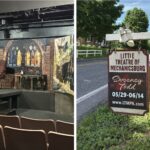
Locally, the new Narcisse Theater Company, founded just months ago, takes a similar approach in its productions.

“Unless it’s specifically stated in the script that the character must be one race or the other, I’ll be fluid with casting,” said founder Frank Henley Jr., a local dramatist, actor and poet. “My goal is to find the best actors and to unite the two different arts communities in the area.”

Other goals are to “showcase to the Harrisburg region’s culturally diverse and intellectually engaging live theater, both original plays and revivals,” as well as the inclusion of multimedia art, explained Henley, who is also the company’s artistic director.

Narcisse presented its inaugural play—Jean Paul Sartre’s “No Exit” (“Huis Clos,” in the original French)—in May at the Harrisburg Midtown Arts Center. This month, it will mount its second production, “The Itch of Gloria Fitch” by Harrisburg playwright Paul Hood.

Not the Usual

It took Henley some 30 years to bring to fruition an idea that was lodging in the back of his brain—to create his own theater company.

“It would give me the opportunity to help select plays and direct them,” said the Harrisburg native. “It would be an opportunity to express myself in another artistic vein.”

His experience as an actor and poet with local companies such as Gamut Theatre Group—where he performed in the “Stage Door Series”—inspired him, as did what he calls “an incredible cast of local talent.” And he has other big dreams, too, such as establishing a young person’s branch and maybe an acting school.

“We’d like to have a lot of community involvement,” he said.  

That means, in part, trying to expand the composition of audiences beyond the traditional “older, white ones”—an issue faced by many theaters, he said.

Henley is also dreaming of “an all-color” version of Arthur Miller’s classic tragedy, “Death of a Salesman.” Its protagonist, Willy Loman, is one of the roles he is eager to play. Another is Shakespeare’s Othello.

Narcisse plans for two productions a year, one in the fall and the other in the spring.  

“Fifty percent of our seasons will be works by local playwrights, while the other 50 percent will be revivals,” Henley noted. “I’m particularly fond of comedies.”

Hood’s absurdist play, “The Itch of Gloria Fitch,” reflects that preference.

The four-character play concerns a young woman struggling with something internal that causes her skin to itch. Ultimately, she realizes the root of the problem, and that discovery leads to personal growth.

There’s also a love interest, noted Hood. However, both individuals realize “they’re good for each other but not in the capacity of a long-term relationship.”

The play, he said, is really about self-love.

“It’s fun, not heavy, probably my least heavy play,” Hood added. “But it does have a message: Anyone who struggles with self-esteem issues should not isolate him or herself from the world.”

The playwright is excited to be working with Henley, as the two have been friends for years.

“Narcisse is the theater company we’ve all been waiting for—not doing the usual,” Hood commented. “It’ll be a good outlet for local playwrights.”

Double Meaning

An evening of one-act plays by 20th-century Irish playwright-poet John Millington Synge will follow in March. It will include a tragedy, “Riders to the Sea,” and a dark comedy, “In the Shadow of the Glen.”

“His work doesn’t get done often,” said Henley. “I love Irish literature, and Synge was able to take the lilting quality of the language and translate it into English.”

But what’s the secret behind the new theater company’s intriguing name? It has a double meaning, according to the artistic director.

“Narcisse was my paternal grandmother’s name,” he said. “I never met her but heard she was an incredible woman.”

The company’s name also invokes Greek mythology—the story of the handsome youth Narcissus who falls in love with his own image in a pool of water.

“Actors have to have a bit of narcissism,” Henley said with a chuckle.

Narcisse Theatre Company will perform “The Itch of Gloria Fitch” by local playwright Paul Hood on Nov. 18 to 20 at Harrisburg Midtown Arts Center (H*MAC), 1110 N. 3rd St., Harrisburg. For more information on Narcisse, email [email protected] or call 717-777-1374.

Author: Barbara Trainin Blank

Continue Reading

Planting a SEED: Dickinson College program reaps agricultural education, community connections

Screenshot 2016-10-31 10.42.15Dickinson alum Lizzie Wilford isn’t doing what she thought she would be doing the year after graduation.

An art major, she spent her years studying ceramics, photography and the value of aesthetics. Today, she holds a one-year position as a coordinator at the Dickinson College Farm, situated on a 200-acre spread just outside Boiling Springs. She puts together programs, organizes events and helps to run its sustainable education program. And she couldn’t be happier.

“I am so excited to be here,” Wilford said, looking around the vast land dotted with greenhouses, sheep, chickens and barn cats. “I’ve always been interested in education, and this is truly a place for students of all ages.”

A SEED Grows

It’s hard to find something not to love about the farm. The land, peppered with rolling hills and scenic views, was donated to the school by an alumnus in the 1960s with one caveat—it couldn’t be developed.

At first, according to Wilford, the school did very little with the land. It sat unused and undeveloped. Dickinson had a student garden that began to outgrow its space at the campus in Carlisle. It then was proposed that the donated land be used as a farm.

In 2012, Dickinson student Heather Livingston started the SEED program on the farm as a senior project with help from farm manager, Jenn Halpin. SEED (“Sustainable Earth Education”) was meant as a living laboratory, designed to provide agricultural instruction for members of the community.

Today, the program is thriving, run by Dickinson students and recent graduates. It offers classes to the community on a variety of topics, including soap making, wild plants, remedies, art on the farm and composting.

“We like to offer our groups customized classes, depending on what they are looking for,” said Wilford. “At the end of the month, we have a group of Girl Scouts coming to do a class on outdoor art. We’re going to look at animals, have an informational tour, and do some nature photography.”

SEED also functions as a way to connect current Dickinson students with the greater community. A student educator runs most classes, while student volunteers support the lesson. In fact, the best part about SEED, according to Wilford, is that it can involve many different parts of the community, including ones with little connection to agriculture.

“We run a ‘Farm, Cook, Eat’ program at LeTort Elementary,” she said. “It’s a weekly program after school. One of our student educators will teach about where good food comes from.”

The SEED program, essentially, allows people throughout the community to work towards a single goal—the vibrant life of the farm.

“It’s pretty amazing,” said Wilford. “We think so, at least.”

Full Circle

Of the 200 acres donated to the school, a total of 60 are currently used for the farm’s purposes. The land is divided into livestock and production fields. A barn on the property was renovated for use, and greenhouses were put up for growing produce. 

“We work on a rotational grazing schedule,” said Wilford. “The animals are moved around year to year. Cows like tall grass, so they’ll be in a field one year. Sheep like shorter shrubs, so they’ll go in next. Then chickens go through and dig out what’s left. The fields then become a pasture and get planted with alfalfa.” 

The farm has a growing number of animals. It currently has laying hens, meat birds, sheep and cows. The farm offers a CSA (Campus Supported Agriculture) to the community. Members can sign up for a share of vegetables, eggs or meat from the farm. The farm also sells vegetables to Dickinson’s dining hall. 

According to Wilford, one of the greatest parts about the farm is the opportunity for students and community members to develop skills they wouldn’t otherwise learn.

“I was an art major, not a science major, so before coming into this, I didn’t know a whole lot about how compost worked,” she said. “I’m learning so much.”

The land is also teaching Wilford the value and reward of hard physical work.

“We harvested garlic this summer,” she said. “Some students who planted it last fall were here to harvest it, so they got to see it go full circle. It took a day and a half, and it was so hot outside at times we wondered why we were doing this. Then, we harvested enough garlic to cover the entire floor of the barn.”

She paused, and her face broke into a smile.

“You look at that, and it’s pretty rewarding.”

To learn more about the Dickinson College Farm, visit www.dickinson.edu/farm. For more information about SEED, including scheduling a group, contact Lizzie Wilford at [email protected].

Author: Rachael Dymski

Continue Reading

Lights, Camera, Tandoori: Mumbai meets the midstate at Bollywood Bar & Grille

Photo by Waxman Photography.

Photo by Waxman Photography.

Lavish sets. Melodrama. Elaborate song and dance.

That’s what comes to my mind when I hear the word, “Bollywood.”

Downtown Harrisburg? Not so much.

Yet, there I was, in the middle of 2nd Street, opening the door to downtown’s newest restaurant, Bollywood Bar and Grille.

When I entered, a server immediately welcomed me, guiding me to a small table then telling me to help myself to the buffet.

Immediately, I noted how different the space looked from the prior occupant, the Italian-themed Zia’s Red Door—or from any other Indian restaurant I’d been in.

The custom-made chairs were plush and inviting, the atmosphere relaxing. I looked around at the large Bollywood movie poster collages located next to the bar and on one of the walls in the main dining room. As I sat and took everything in, I found it hard to believe that this expression of India was in Harrisburg.

Owner Dinesh Purohit stood behind the bar ringing guests out and welcoming them to come back soon. Talking to him, you immediately sensed how proud he was of his creation.

“I hope to make a name as the best restaurant in the town or region,” Purohit said. “For me, the food has always come first, money second.”

Breaking Boundaries

Purohit started in the restaurant business through good sense and savvy.

Living in Wyomissing, a town outside of Reading, he owned a cigar shop. The closest Indian restaurant was miles away, he said. Seeing an opportunity, he opened Laxmi’s Indian Grille with the help of a friend. When his family recently moved to the Harrisburg area, he brought his restaurant expertise to the capital region.

“This location was exactly the way I like it,” he said. “And we needed a name that we could build the restaurant around.”

“Bollywood” fit the bill, the theme now visible throughout the restaurant, from the décor to the menu—riddled with Bollywood trivia—to the cocktails, named for famous Bollywood movies.

Though the restaurant has been open just a few months, Venkat Radhakrishna is already a regular. A contractor for the state Department of Health, he got excited when he heard that a restaurant specializing in northern Indian cuisine would open just two blocks from his job. Now, he can be found there at least once a week enjoying his favorite “comfort foods.”  

“This restaurant has done a good job of breaking the stereotype of Indian food and just breaking boundaries,” said Radhakrishna, whose patronage is so dedicated that it inspired Purohit to create a loyalty card for frequent guests.

You can thank head chef Prem K.C. for the magic in the kitchen. He has worked in the food industry for 20 years, including as a chef for 17 years. Purohit met him through a mutual friend and, once he tried his cooking, knew he wanted to work with him.

“His food speaks for itself,” Purohit said. “Go online and read the reviews, and you will see for yourself.”

Over the course of a day, Bollywood Bar and Grille changes pace to meet the needs of diners. For lunch, the affordable buffet takes center stage, featuring numerous Indian staples, some with flavorful twists on classic dishes. At dinner, it becomes a sit-down restaurant, with creative takes on chicken, lamb, seafood and vegetarian dishes.

“The food is non-traditional, but has amazing taste,” Purohit said. “Dinnertime, we turn into an upscale restaurant that people expect when they go for dinner.”

If you stick around long enough, you may witness the restaurant again changing form. Late night, you might find yourself amidst a Bhangra dance party with a DJ spinning Bollywood remixes. There are also two separate rooms for private parties, and a hookah is available upon request.

Purohit even has an answer for the parking-obsessed. Present your parking receipt, and it will be taken care of on your bill. He may be a recent transplant to Harrisburg, but Purohit clearly understands this place he now calls home.

Bollywood Bar & Grille is located at 110 N. 2nd St., Harrisburg. For more information, including a menu, visit www.bollywoodbarandgrille.com or call 717-972-0708.

Author: Courtney Gontz

Continue Reading

The Fight for the 15th: Teplitz, DiSanto stake out their positions for the state Senate race.

Election Day is nearly upon us and, locally, there may be no more fraught race than the battle for the 15th state Senate district.

To help voters make a decision, we asked the two candidates, Democratic incumbent Rob Teplitz and Republican challenger John DiSanto, about their positions, priorities and prospects. They responded with the answers that follow.

Senator Rob Teplitz

Senator Rob Teplitz

Sen. Rob Teplitz (D)

What do you believe are the greatest issues facing voters in the 15th Senate District in this election cycle? What are voters telling you as you campaign?

Over the past four years, I’ve taken on the most important issues in this very diverse senatorial district that includes the City of Harrisburg, most of Dauphin County and all of Perry County—great schools, good jobs, government reform, Harrisburg’s financial recovery, and the preservation of family farms. That’s what I’ll continue to do in my second term, and I’ll also continue to be the most accessible, responsive and transparent public official I can be.  

What are your plans to try to solve the most important issue or two?

Details of my positions and accomplishments on these and many other issues can be found on my campaign website at www.robteplitz.com/issues. In this space, I’ll address government reform because it is the key to achieving progress on all other issues. As the founder and co-chairman of the Government Reform Caucus, I lead a bipartisan, bicameral effort to change business as usual in the Capitol. Our caucus has focused on banning gifts to public officials, and I have dozens of my own bills as well. I’ve also tried to lead by example, such as by refusing my own paycheck when there wasn’t a state budget, returning my mid-term cost of living adjustments to the state Treasury and posting my office expenses on my official website for the public to review.

The City of Harrisburg is showing some positive momentum in terms of its local economy. What would you try to do, if anything, to try to sustain and further that momentum?

I’m proud of my work to help the local economy: securing greater state investments in our schools and economic development projects; forcing the state to finally pay the full cost that the city incurs in providing public safety services to the Capitol and other tax-exempt state government buildings; drafting legislation to prohibit the kind of risky financial deals that nearly bankrupted the city; pushing law enforcement to hold those responsible for the financial crisis accountable for their actions; working with local businesses and entrepreneurs through my Small Business Advisory Committee; helping dozens of constituents find family-sustaining jobs; and supporting the efforts of our vibrant nonprofit community. I am committed to continuing to do everything I can to help our capital city and its residents thrive.

The 15th Senate District has changed considerably since the last election. What impact do you think this will have on the race?

As an active member of the Redistricting Reform Work Group, I’ve sponsored legislation to take the politics out of the redistricting process.  It’s time for our democratic system to work the way it’s supposed to, with voters choosing their legislators and not the other way around. As the first Democrat to be elected to this Senate seat in almost a century, I wasn’t surprised by the GOP leadership’s attempt to take it back through partisan gerrymandering. That should offend everyone, regardless of their political affiliation. Yet despite the change in geography, I’m running on my record, and I’m confident that the voters will respond favorably.  

The budget process in Pennsylvania is, in my opinion, badly broken. Do you advocate reforms to the process? If so, what are they?

Yes.  I introduced my “Judgment Day” package of legislation to facilitate a responsible, on-time state budget. My bills create a process for enacting a budget by the June 30th constitutional deadline, and then impose increasingly harsh consequences on legislators and the governor if the deadline isn’t met—suspending our pay, forfeiting our cost of living adjustments, and subjecting us to recall elections. My goal is for the effects of a budget impasse to be felt by those of us inside the Capitol, rather than by our constituents outside the Capitol.

There has been much talk about eliminating or significantly reducing property taxes in Pennsylvania, but nothing has happened. What is your stance on this issue? If you would like property tax reductions, how specifically would that revenue be made up?

We must address the critical issue of high property taxes. However, the proposals most often discussed—increasing and expanding other taxes, as my opponent favors and I oppose—would merely trade one set of winners and losers for another.  Instead, I want to see real progress on this issue. I have introduced legislation to provide targeted relief to seniors and others who are most affected, and to fix the dysfunctional process by which all homeowners are supposed to receive the tax relief we were promised when casinos were legalized a dozen years ago. This can be done within a responsible and balanced state budget.    

Feel free to take a quick swipe at your opponent regarding any of the issues above.

A campaign is a reflection of the candidate. I’m running a positive campaign focused on the issues that are important to central Pennsylvania families and taxpayers. I trust your readers to judge my record fairly and vote accordingly.

John Disanto

John DiSanto

John DiSanto (R)

What do you believe are the greatest issues facing voters in the 15th Senate District in this election cycle? What are voters telling you as you campaign?

People talk to me all the time about how we need to elect decent people with real world experience in solving tough problems. People are frustrated with career politicians and politics as usual, and I’ve been encouraged by people who want to see real change. Jobs are a big issue, and I think that people know that my experience as a job creator for 35 years will be an asset in the state Senate that they currently do not have.  

The other issue that keeps coming up is elimination of property taxes. I oppose tax increases, but I do support a shift from property taxes to income and sales taxes to help continue the type of economic development that has started in Harrisburg and to alleviate the burden on seniors.

What are your plans to try to solve the most important issue or two?

When it comes to creating jobs, we need some common sense in Harrisburg— eliminate wasteful spending, stand up to special interests, invest in and improve education, and reform our tax code to make it more business friendly. We also need to eliminate property taxes—and that will help every community, including Harrisburg.  

The City of Harrisburg is showing some positive momentum in terms of its local economy. What would you try to do, if anything, to try to sustain and further that momentum?

I believe Harrisburg is the economic hub of our region, and the next state Senator has to know that and believe it. We must provide the city with the tools to manage the high cost of municipal pensions that have become a major burden on its budget and the source of a continuous search for more revenue from city taxpayers. Also, eliminating property taxes will continue the momentum Harrisburg has seen—development and redevelopment will continue to rise thanks to lowering the tax burden in the city.  

I would also support efforts to enhance the livability of the city, such as recreational opportunities, parks and bike lanes. And, I would advocate for opportunities for small and minority-owned businesses in the city to grow their markets and expand.

Having a senator in the majority will help the city considerably. This will give us a louder voice in the Capitol, and anyone who knows me knows I won’t be a wallflower.  

The 15th Senate District has changed considerably since the last election. What impact do you think this will have on the race?

The addition of Perry and upper Dauphin County to the district requires that the senator be knowledgeable about and involved in rural issues. Because of my varied business experience and farm ownership, I am just as comfortable meeting with developers in Harrisburg as I am talking to farmers in Perry County, and I think that gives me a distinct advantage.

Overall, though, I find that the residents of Harrisburg, upper Dauphin County and Perry County pretty much want the same things: good schools for their kids and grandkids, job opportunities, safe communities, good roads and transportation and affordable taxes.

The budget process in Pennsylvania is, in my opinion, badly broken. Do you advocate reforms to the process? If so, what are they?

Government was set up to have natural tension between the executive and legislative branches, and we saw that in the budget debates in the past. However, our legislators and governor should be able to meet the constitutional deadline of June 30 for a balanced budget. Our current senator’s proposals in this regard are gimmicks that have no chance of passing and, in fact, would lead to higher spending and taxes as self-serving politicians scrambled to protect their pay.

What we need instead is for our legislators to actually do their jobs rather than introduce unnecessary legislation. Imagine someone telling their boss to issue another company policy before they were going to follow their job description. Legislators should start discussions sooner and negotiate in good faith to meet the existing constitutional deadline. The only way we’ll get there is to have fewer career politicians and more citizen-legislators who can actually get things done.

There has been much talk about eliminating or significantly reducing property taxes in Pennsylvania, but nothing has happened. What is your stance on this issue? If you would like property tax reductions, how specifically would that revenue be made up?  

I do not think we should make “reductions”—I think we should eliminate them.  There should be no excuses for keeping property taxes—they are unfair and anti-growth. This is a big difference in this race—I oppose tax increases, but I would support a shift to income and sales tax to eliminate the property tax that places an unfair burden on seniors and young families.  

Feel free to take a quick swipe at your opponent regarding any of the issues above.

My opponent talks a lot about “reform,” but his proposals are nothing but unnecessary, counterproductive gimmicks. Meanwhile, he took a job with a politically connected law firm that lobbies the Senate, so he’s being paid by the same interests that want his vote. He’s constantly spending his constituents’ tax dollars to send self-promotional newsletters. He voted against moving legislators into a 401(k)-style retirement system and refuses to even acknowledge we face a pension problem.

I believe voters want a senator who will lead and can get things done and a senator who will stand up for taxpayers every time, so I feel very good about my chances of winning and finally giving the residents of the 15th district an effective voice in the state Senate.

TheBurg: Election Day is Nov. 8. Please remember to vote!

Author: Lawrance Binda

Continue Reading

Prominence and Complexity: Major exhibit of post-war African American art arrives at SAM

Screenshot 2016-10-31 10.33.33To great fanfare, the National Museum of African American History and Culture opened recently in Washington, D.C., the newest member of the Smithsonian Institution.

Therefore, it seems like perfect timing that the Susquehanna Art Museum is mounting an exhibit of post-war works entitled, “African American Art since 1950: Perspectives from the David C. Driskell Center.” The exhibit opened last month in SAM’s main gallery and continues through Jan. 22.

The exhibit is a potpourri. Forty-two artists are featured, including such established names as Romare Bearden, Elizabeth Catlett and Sam Gilliam, as well as new visionaries like Chakaia Booker, Lorna Simpson and Kara Walker, said Dorit Yaron, its co-curator along with Dr. Robert E. Steele.

A variety of media are represented, including paintings, sculpture and mixed media.

The traveling exhibit is part of a large, permanent collection assembled by the David C. Driskell Center, housed at the University of Maryland in College Park.

Focusing on the last six decades, the exhibit is a follow-up to, and was inspired by, another exhibition featured in 1976 at the Los Angeles Museum of Art. “Two Centuries of African American Art: 1750-1950” was curated by Prof. David C. Driskell, for whom the center is named.

“The current exhibition collectively reflects the growing prominence and complexity of the field of African American art over the past 60 years,” said Yaron, who also is deputy director of the Driskell Center.

One of the works included in the exhibit is by Driskell himself. His “Woman in Interior” is a 2008 silkscreen, collage and woodcut.

Currently, the center contains more than 1,500 art works and an archive of some 50,000 items, including Driskell’s correspondence, lecture notes and brochures. In recent years, it has grown substantially, moving to the University of Maryland in 2007 with only 100 works.

For a long time, Yaron continued, African American art was not included in the field of American art in general, and “maybe it represented less than 1 percent of the holdings in the museums that did.” The Driskell Center’s aim is to integrate the story of African American art into the whole of American art.

The overall discounting of African American art began to change in the 1920s, with the advent of the Harlem Renaissance, a flowering of cultural, social and artistic expression.

“The Renaissance brought about racial awareness of the important art being created by African Americans in the first quarter of the 20th century,” said Driskell, who is both an artist and art historian. “Mainstream institutions began to note the creative work African Americans had been engaged in since the 19th century. Before then, the work of black artists was not widely seen and not appreciated.”

Driskell was one of the people consulted by former President Bill Clinton to help select art for the White House and is a Medal of Honor recipient. He is widely considered the foremost authority in the field of African American art history, said Yaron.

Accompanying the exhibit will be one special event and one special artistic feature.

On Nov. 5, there will be a lecture by Curlee Raven Holton, the executive director and distinguished artist in residence at the Department of Art at the Driskell Center, starting at 6 p.m.

“His presentation will reflect on the work and provide engaging conversation about the collection,” said Alice Anne Schwab, executive director of SAM.

Holton said the SAM exhibit will help tell a more complete story of the contributions of all of its citizens.

“It is a testimonial to that commitment and shared pride that African American artists, in particular, have brought to the American experience,” he said.

As an added attraction to the exhibit, SAM is offering a “Quilted History of African Americans in Dauphin County.”

“In celebration of the 230th anniversary of Dauphin County, the members of the African American Quilters Gathering of Harrisburg created this quilt,” said Schwab.

What would Driskell like people to take away from the exhibit?

“I would like for the visitor to this exhibition to see that African American artists create their work from the same sources as other American artists and that their responses to human conditions and life experiences are what make them artists of note, not the color of their skin,” he said. “Their work helps to make American art more inclusive.”

“African American Art since 1950: Perspectives from the David C. Driskell Center” runs through Jan. 22 at the Susquehanna Art Museum, 1401 N. 3rd St., Harrisburg. For more information, visit www.sqart.org.

Author: Barbara Trainin Blank

Continue Reading

Groom to Grow: Take good care of that man face

Screenshot 2016-10-31 10.33.47When I was sitting in the studio makeup chair the other day and speaking to our stylist—said nobody ever in local news. One of the biggest misconceptions of the (local) TV news industry is that we have all the bells and whistles of a network setup equipped with a catered greenroom. Ha!

I say this because there is one thing I wear every single day whether I’m on-air or not—my face. Other than shaving, there isn’t much else men focus on when it comes to the ol’ mug. As I’m learning past 30—we should. I’m starting to. It’s easier than you think.  

Let’s begin with the obvious—facial hair. For those like me who need or prefer a clean shave look, know this: Men will spend 3,000 hours shaving over a lifetime. Let’s be better than using a 19-blade razor with micro-beaded hydro-goop that smells like a car air freshener.

Men began shaving around 330 BC by using sharpened stones and clamshells—ocean fresh! Those men who were unshaven were called “Brooklynites”—I mean—“Barbarians” because they were un-barbered. Our manlier grandfathers likely did it best. Using shave soap or cream, lather with warm water in a mug or bowl and use what’s called a double-edge safety razor or Merkur. I use a cream called Proraso ($10 Amazon.com) with a Merkur razor ($30 royalshave.com or antique shops for vintage).

It takes a few tries and nicks to the skin to get used to it. But, when you do, it’ll give you the closest shave at home. Double-edge razors can be found on eBay for $10 for a 100-pack. That’s a fresh blade twice a week for a year! Compare that to $10 for 5 Mach 3 blades.

Since this month is “Movember,” make sure all of you barbarians check out Chops Barbershop in Midtown for beard products, soaps and aftershaves that’ll make you smell like Ron Burgundy’s apartment.

Between scraping your face with steel, sun exposure, workout sweat and all those dehydrated mornings from a previous night’s indulgence (shout out to those reading this in Zeroday’s bathroom), a man’s face gets beat up on a regular basis.

Most women in my life have face regimens that rival a NASA checklist before launch. For men, just like dancing, the safest moves involve two-steps.

A daily face wash and moisturizer with SPF is the best way to go. But, here’s the thing—the cheaper the creams, the more money you’re losing. The best product I’ve used is “SOOTHE” from Rodan + Fields. This is the only stuff that’s helped me battle razor burn. I was skeptical, but my wife convinced me.

I know men get the benefit of being called distinguished as we age. However, there’s something to be said for not looking like a leather Shar Pei later in life. As a self-trained stylist, novice makeup artist and person who wants to keep an on-air gig, it doesn’t hurt to pay more attention to the moneymaker. There’s always groom to grow.

Now, in the spirit of a good groom, here’s my cocktail of the month:

“Close Shave”

2 ounces bourbon (Booker’s)

1 ounce ginger liqueur (SNAP)

Dashes of orange bitters

Stir over ice, strain into glass, garnish with orange peel—feel the burn.  

Author: Dave Marcheskie

Continue Reading

Little Bit o’ Soulville: The search for the little-known story of Soulville Records

Screenshot 2016-10-31 10.42.32One day, an album appeared in a Harrisburg coffee shop, sparking a search for the little-known story of Soulville Records.

This past April, a few days before Little Amps Coffee Roasters’ annual celebration of Record Store Day, a man named George Luckette came into the coffee shop on Green Street, unannounced, to donate two wrapped vinyl copies of the album, “Soulful Sounds of Soulville.”

We put the album on the turntable and swooning voices and soulful tempos from another time filled the café. I happened to be working that day, and Luckette nonchalantly mentioned that all of the songs were produced in Harrisburg.

Later, after Luckette had left, I thought more about that album, about the old songs, about the times they evoked and about the oddity that the record was made right here, in Harrisburg. And so began a months-long quest as I set out to discover exactly what—and who—Soulville was and, in the process, learn more about Harrisburg’s place in the legendary soul music era of the 1960s and ‘70s.

Things Took Off

“It’s a long story,” said Rev. Bobby Fulton, one of Soulville Records’ founders, when we spoke in August.

Tracking down the right people to tell me about Soulville was a challenge, especially because Fulton had moved to Pittsburgh decades ago.  When I finally did reach him, he was happy to talk about the start of his label.

“I can’t take all the credit for Soulville,” he said. “I just like to say that Soulville was all [the people] really from the village where we lived in Harrisburg. The whole city, in my coming up, had so many people that never get talked about.”

Fulton was raised in the neighborhood of the Greater Zion Baptist Church, which, at the time, was at 4th and Reily streets. Today, it’s on Progress Avenue.

Soulville grew out of Harrisburg’s rich entertainment scene during Fulton’s upbringing in the 1940s and ‘50s, he said.

“Even before Soulville, Harrisburg was a central crossroads between New York, Baltimore, D.C. and Pittsburgh,” Fulton said.

Many venues, especially clubs along the 6th and 7th street corridors, hosted famous black artists passing through, and the city became known for its vibrant jazz and blues scenes.

Growing up around music and the church, Fulton started writing and playing music early on, and it was always his dream to record. The Hallelujah Chorus at Greater Zion “was most impactful on my coming up,” he said. His parents and aunts played piano at church.

As a young adult, Fulton was in a popular group called the Emperors, which performed locally and on the college circuit. Around 1964, he and two friends formed the Bobby Fulton from Soulville Band, scoring some hit songs and playing in New York. Then local musician Hulie Diggs, whom Fulton idolized, “came knocking on my door one day to tell me I was in the recording business.” This, Fulton recalled, was the moment that Soulville was officially born.

With his friends and business partners—radio personality George “Toby” Young and financier Jimmy Walker—Fulton was able to make his dream of recording his music a reality. Word of the new label got out in the tightly knit Harrisburg music community and in nearby bigger cities, partially thanks to the van that Fulton drove around with “Bobby Fulton’s Soulful Sounds from Soulville” plastered on the side.

The first group Fulton, Young and Walker signed to Soulville was the Soulville All-Stars, made up of both black and white musicians.

“I hate to mention color, but it was very unusual for us to start like that,” Fulton said. “But that’s been the way we grew up, and the way we live today.”

Another one of Soulville’s more popular groups, The Continental Four, had chart-topping soul music hits.

“So, it was all kind of miraculous to me,” Fulton said.

Groups from Harrisburg and Philadelphia became interested in working with Fulton, and “things just took off,” he said. Some acts recorded in studios in the cities where they were based, and, without any equipment of its own, Soulville’s local groups often recorded in a place in Mechanicsburg.

We Like That

Throughout our phone conversation, Fulton apologized for jumping from thought to thought. There were too many people and events involved in Soulville for each part to make perfect linear sense.

At the end of our talk, Fulton suggested I get in touch with Young, who he knew lived at the Homeland Center nursing home. When I reached out to the center to speak with Young, who suffers from dementia, I was told I could but under one condition: his friend had to be there with him. Coincidentally, that friend was Luckette, whose phone number I had lost shortly after he gave the albums to Little Amps months before. It seemed like fate, that everything was finally falling into place for me to tell Soulville’s story.

“Wherever I can go, or whatever I do, I try to speak highly of Soulville because it meant so much to me, the fact that they were in Harrisburg, and they were people that I knew,” Luckette said.

During our meeting at the Homeland Center in September, he spoke passionately and lovingly on behalf of Young, who was present but didn’t talk.

Luckette credits Young, who had established himself on the radio long before Soulville, for his role in connecting the label’s music with the public. Despite adversity and racial prejudice from radio executives, Young remained on the radio in Harrisburg until he became ill a few years ago.

“Bobby Fulton worked with so many groups, and then Toby was the connection between the record and the people, because a lot of people couldn’t go see the Emperors at [the club] Superette,” Luckette said. “But we could hear it if Toby was playing it, and we could go, ‘Hey we like that!’”

Blessed

Luckette recalled his first real experience with Soulville as an example of how Fulton and Young ran their business: They came to his house to sign his brother’s group.

“But my brother acted a fool, and they picked up all their papers nice and neat, told everybody, ‘thank you,’ and left and never came back,” he said.

Fulton and Young stayed true to Soulville’s Harrisburg roots and to their strong ideals, not trying to mimic bigger labels like Motown or Soul Train Records.

“Toby told me a long time ago, ‘Everybody stands on their own merit,’” Luckette said. “He said, ‘What they’re doing in Philadelphia is fine and wonderful. What we’re doing in Harrisburg is our thing.’”

Fulton moved to Pittsburgh from Harrisburg in 1971 to get involved with a friend’s record label. Soulville continued for a short time after his move, releasing material from various independent producers around the country, and eventually lost momentum.

Decades passed. Fulton became an ordained pastor, and he remains involved to this day in music through gospel projects and ministry. Years ago, when a record convention took place in Pittsburgh, Fulton went to see if anyone there had ever heard of Soulville. He was amazed to find some record store owners who were collecting and selling Soulville albums.

Eventually, Fulton connected with Gregg Kostelich, CEO of the Pittsburgh-based label Get Hip Records.

“He had all these records, and I had all of the photos, and he said, ‘We have to do an EP,’” Fulton said.

In 2001, the double-LP compilation, “Soulful Sounds from Soulville,” was released.

Otherwise, though, little of Soulville’s physical history has been documented, except for what Luckette has collected. During our meeting with Young, Luckette filled the table with old soul albums featuring Soulville and Harrisburg acts and pictures of Young as a youthful radio personality.

“I saved it only because I’m a music collector, and I knew there was so much stuff that [Young] did,” Luckette said.

Despite the value Soulville held for Harrisburg, its community and its music, Luckette thinks it was about 15 years ahead of its time, and, for that reason, didn’t have the same revolutionary impact as Motown and other major African-American-led labels.

“Had Soulville Records come on the market in, I would say, 1975, everybody would’ve been a millionaire,” Luckette said.

But that’s irrelevant, he emphasized, because the legacies and culture that came out of Soulville are rich.

“Rev. Bobby Fulton, George Young, Jimmy Walker and all those involved in formulating it, they were blessed,” he said. “And because they were blessed, they were able to bless others, and they’ve touched people that they don’t even know they’ve touched.”

Author: Rebecca Oken

Continue Reading