Winter Respite: What’s the best way to spend a frigid afternoon? With tea and biscotti

screenshot-2016-12-28-10-35-45I read with some guilt the letter from our editor, Larry Binda, in the December issue of TheBurg. He was talking about the fact that “some people adore winter” and shared that he “didn’t understand those people.”  

Sigh. I am one of those people.

I have always loved the wintertime, especially a long January afternoon with the slanted rays of the sun casting blue shadows on the snow. I know it can be wet, soggy and 57 degrees in January around these parts. But I do love snow and always hope for a snowy winter. I love the coziness of a warm house, a fire in the fireplace and something yummy bubbling on the stove.

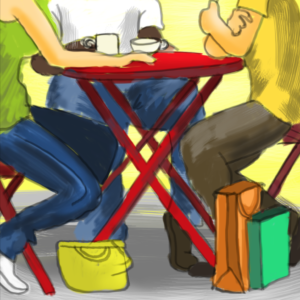
But I especially love a cup of afternoon tea with the cookie for all seasons, the Italian biscotti.

Biscotti are said to have originated in Tuscany and, because they are “twice-baked,” they were considered a perfect “dry” treat for sailors traveling on long sea voyages. Today, these Italian cookies can be found at your favorite coffee shop, as well as in the cookie aisle of the average grocery store. While traditional biscotti are baked with almonds or the sweet licorice-like flavor of anise extract, they can be made with an almost endless variety of fruits, nuts and spices.

Biscotti can be studded with chocolate chips or dipped in luscious melted white, dark or milk chocolate. Dried cherries or cranberries and golden dried apricots make perfect biscotti for winter holidays. A new favorite of mine are the tiny biscotti offered for dessert at Harrisburg’s Note Bistro and Wine Bar. They are served with a small pot of tiramisu spread and are a fabulous accompaniment to the restaurant’s strong, French-pressed coffee.

So, why make your own biscotti at home? Well, they are fun to make, and I think are so much better than the jaw-breaking ones often found commercially. They make an easy dessert for company along with some gelato or stewed fruit. And they keep a long time. The recipe below is for biscotti uniquely flavored with orange and a bit of cornmeal from one of my favorite cooking “bibles,” “Savoring Italy.”

This makes a lot of cookies, perhaps enough to share with a friend. Biscotti are wonderful when dipped in sweet Italian dessert wine like Vin Santo or Moscato. You can also dip them in espresso and hot chocolate. And, when sitting by the fire, what could be better?

I’m thinking I could get our editor, Larry, to really like winter.

Ed. Note: I still don’t like winter, Rosemary, but I love biscotti!

Biscotti all’ Arancia (Orange Biscotti)

Ingredients

2 cups all-purpose flour

¼ cup fine yellow cornmeal

1 ½ teaspoons baking powder

1 teaspoon salt

3 eggs

1 cup sugar

1 tablespoon grated orange zest

1/3 cup finely chopped candied orange peel (If you can’t find this ingredient, increase the fresh orange zest to 2 tablespoons.)

Directions

  • Pre-heat oven to 325. Butter 2 large baking sheets and dust with flour (alternately use PAM baking spray or parchment paper).
  • In a large bowl, stir together the flour, cornmeal, baking powder and salt.
  • In another bowl, using an electric mixer set on medium speed, beat together the eggs and sugar until pale yellow and foamy. Beat in the grated orange zest.
  • Reduce the speed to low and stir in the flour mixture and candied orange peel just until blended. (The dough will be soft and sticky.)
  • With 2 spatulas, divide the dough into 3 parts. Shape into 3 “logs” about 12 inches long and place on the prepared sheets. (Place the logs as far apart as you can as they will expand.)
  • Moisten your hands with cool water and pat the surface of the dough until smooth.
  • Bake until lightly browned, about 25 minutes. (But check often toward the end and don’t over-brown.)
  • Remove the baking sheets from the oven, leaving the oven on.
  • Slide the logs onto a cutting board and let cool for a few minutes. With a very sharp knife, slice the logs on the diagonal about ½ inch thick. Arrange the cut slices back on the baking sheets, arranging them at least ½ inch apart.
  • Return the biscotti to the oven and bake again until lightly toasted, about 15 minutes. Transfer to racks to cool completely.

Author: Rosemary Ruggieri Baer

Continue Reading

Encore! Cork & Fork—so nice, they built it twice

Photo by Waxman Photography.

Photo by Waxman Photography.

It’s been said that you can’t get too much of a good thing.

So, when the word spread that Cork & Fork was opening on the West Shore, customers like Craig Nye were excited to hear the news. Nye, who frequents the original Harrisburg restaurant, lives just a mile away from the second incarnation, known as Cork & Fork Osteria.

“I love the atmosphere of the Harrisburg location and really look forward to trying the new restaurant,” he said.

Owner Nick Laus said it was an idea whose time had come.  

“Ever since I’ve been in business, people have been asking why I’ve never opened on the West Shore,” he said.

You could say that the “seasoned” restaurateur cut his teeth on pizza crust.

“I grew up in the pizza industry and worked for an organization called Luca Pizza, where I had really good teachers,” said Laus, adding that part of the education involved adopting a good work ethic.  

That paid off with the success of his first business venture, Italian Pizza & Subs in Swatara Township. The popularity of the restaurant inspired Laus to dream even bigger, and soon plans were afoot to bring a slice of the big city to the Harrisburg area.

“Being in this industry, you work a lot of hours,” he said. “When I had a day off, I would drive to Philadelphia or Baltimore to treat myself to dinner and would wonder why we couldn’t have similar places here.”

And so it began. Laus’ entrepreneurial instincts kicked in, and he began opening them, one by one, each with a different concept. Places like Home 231, South Philly Hoagies, Café Fresco, Burger Yum and Cork & Fork were all well received, and the last one just earned an encore.

Looks Beautiful

Customers who visit the new West Shore location will recognize a décor comparable to that on the East Shore, from the custom-blown spherical glass chandeliers imported from Germany to the open kitchen, marble bar, rich dark woods, attractive wrought-iron fencing and floor-to-ceiling windows that bring the outside in.

“We mirrored the décor from downtown,” said Laus, adding that part of his passion is restaurant decor. “It’s almost like having a canvas, and it’s gratifying when, in the end, it works and looks beautiful.”

As for the menu, that too was carried over from the Harrisburg location and features small plates, meats and cheeses, pasta, salads and dessert.

“The whole concept revolves around ordering small plates and having conversation,” said Laus.

A perennial Cork & Fork favorite is the pizza, which is unique to the area.

“We use special flour and cook them at an 860-degree temperature in an Earthstone oven, which results in a nice char,” Laus said.

Those who have yet to experience a Laus pizza may get hooked, according to customer Vince Calamia.  

“The unique combinations are fantastic,” said the Harrisburg resident, who recommends the asparagus pizza.

That may not sound mouthwatering—that is, until you learn that shaved asparagus is just part of the equation. When you pair the earthy vegetable with an Italian cured meat made from pig jowl called guanciale and top that with truffle oil and bianca sauce, you get a to-die-for combination. Calamia, who has an office in Camp Hill, said he is looking forward to treating his clients to meals at the convenient, new location.

As for Nye’s favorite dish, he has a hard time choosing just one, so he makes several recommendations, such as the meatballs made with veal, beef and ricotta, the salads and the homemade pasta.

“I like that you can order several things and not be stuffed,” said Nye, who also speaks highly of the service.

Pat on the Back

Those who enjoy an adult beverage with their food will be glad to know that lead bartender Tommy McGrath is dedicated to crafting the perfect cocktail.

“We use fresh ingredients and take our cues from what’s going on in the New York and D.C. cocktail bars,” he said. “I travel a lot and get to see what bigger cities do and what’s working well for them.”

The libation menu changes seasonally, and wines are offered by the bottle or glass in a range of prices for a variety of budgets.

Verella Pierre, a Harrisburg resident, is also a fan of Cork & Fork, not only for the food, but also for the socialization.

“I like that you can get together with a group and split small plates,” said Pierre, who recommends the roasted Brussels sprouts, the buffalo chicken meatballs and the margherita pizza.

Pierre predicted that Laus’ reputation for serving good, quality food, paired with his attention to consistency, will ensure his success on the West Shore.

Laus said the 4,200-square-foot restaurant, which has been 10 months in the making, has been highly anticipated by people in the region, so it’s nice to finally open.

“It’s not just another chain restaurant,” he said “When Italian people come here and compliment the gnocchi, or the sauce, it’s a big pat on the back.”

Cork & Fork Osteria is located at 4434 Carlisle Pike, Camp Hill. To learn more, call 717-317-9366, or visit www.corkandfork.us or the Facebook page.

Author: Stephanie Kalina-Metzger

Continue Reading

10 for ‘16: Our editor picks his top Harrisburg news stories for the year just past.

Five years ago, when I started my annual list of top Harrisburg news stories, I remarked that I was surprised that each one of my “Top 10” was positive.

Not this year, which is ironic since the city was in far better shape in 2016 than it was in 2012. But, sometimes, that’s the relative nature of the big news. Overall, 2016 was, in my opinion, the most promising year I’ve experienced as a denizen of Harrisburg, but, along the way, there certainly was no lack of highs and lows.

Illustrations by Rich Hauck.

  1. The Apartments

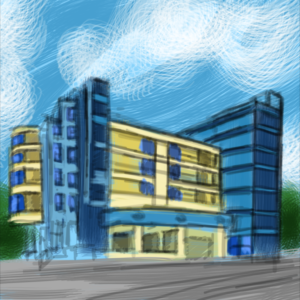
screenshot-2016-12-28-09-55-32My leadoff story of the year is a positive one. It didn’t get quite the ink (or, sorry, the pixels) as many other stories, but I included it because it indicates something new and potentially significant for Harrisburg. During the year, four new apartment buildings opened, three in downtown and one in Midtown, putting almost 100 high-end units onto the market in a short timeframe. In the end, I view this as a grand experiment, a test of whether, like in other cities, there’s demand for beautiful, if pricey, one-bedroom, apartments. Is there enough desire for $1,000/month units when there’s no lack of less-nice, but far more spacious townhouses for about the same price? According to the developers I’ve asked—so far, the answer seems to be yes.

  1. Full Impact

screenshot-2016-12-28-09-57-02Nothing seems to happen in Harrisburg without controversy, and so it was with Impact Harrisburg, a nonprofit set up to dole out about $13 million to help the city with its unmet infrastructure and economic development needs. It took years to get Impact Harrisburg off the ground. It then came under fire for a lack of openness, got sued by the Patriot-News and, naturally, took some verbal abuse from Mayor Eric Papenfuse. In the end, Impact Harrisburg disgorged its bounty in just a few months, despite expectations from the Commonwealth Court that its impact should last at least five years.

  1. 6th Street Awaits

screenshot-2016-12-28-09-55-21In its long history, N. 6th Street has been a working-class enclave, a depressing example of post-industrial decay and a big, long expanse of nothing. It’s now turning again. In April, the commonwealth announced it would build the new Pennsylvania State Archives building at N. 6th and Harris streets. Then, Rep. Lou Barletta (much to my surprise) began hammering through Congress funding for a new, $194.4 million federal courthouse at Reily Street. Could The Vartan Group’s big bet of anchoring its vast neighborhood holdings with The 1500 Condominium building actually work out? Well, there’s an old saying on Wall Street that being early is being wrong. However, if you have the rare luxury of patient capital, you might find yourself profiting handsomely in the long run.

  1. Flattened Tires

screenshot-2016-12-28-09-56-15Let’s say that, on some random Thursday, you’re busy at work when the world comes crashing down on top of you. That’s rather what happened to Howard Henry, the owner of a tire shop and garage on Cameron Street. After a springtime downpour, a concrete retaining wall holding back a hill collapsed, raining a mountain of dirt and the remains of a parking lot (including a Nissan Altima) onto the roof of his building. Seven months later, the entire mess remained, as PennDOT and the owners of the McFarland Apartments slugged it out over responsibility. Henry tried to remain open, but, eventually, was forced to close as he waited for someone to accept blame and pay for the disaster.

  1. Sudden Deaths

screenshot-2016-12-28-09-55-51From time to time, I’m asked why the news media treats some murders differently than others. This question came up again after the homicide of Steven Esworthy, who was killed in June after being hit on the head as part of an apparent robbery. Is it a matter of race, class or location? To some extent, yes but it’s often more a matter of the specific circumstances of the crime. In this case, Esworthy was walking home from a wedding in the wee hours of the morning when he was clubbed from behind, and random murders always seem more tragic and, thus, generate more press attention. The neighborhood’s reaction also was strong, which kept the story around. Likewise, the murder of John Carter, another random victim (and the nephew of the city’s police chief), received a lot of coverage last year.

  1. The Way of Weed

screenshot-2016-12-28-09-56-51If you judge a story’s importance by the volume of people attending meetings, the city’s pot law changes would have ranked first last year. Harrisburg held several meetings about reducing penalties for marijuana possession, attracting more than 100 people in all. In the end, City Council eased its possession laws, reducing fines, but the changes weren’t as dramatic as some activists had hoped.

  1. Bar Brawl, part 2

Who knew that such a little bar could create so much fuss? In the only repeat item from 2015, the battle between Mayor Papenfuse and the Third Street Café slogged through its second year. Once again, the corner bar emerging victorious as a Dauphin County judge ordered the city to issue it a business license. The administration appealed the decision to the Commonwealth Court, a case that should be heard later this year. And, in a big middle finger to the mayor, the business owners even bought the building next door, a bar that Papenfuse had successfully shut down a year earlier.

  1. Police Shooting

screenshot-2016-12-28-09-56-37Nationally, 2016 may be remembered as a year when relations between police and African Americans hit a troubling low. Harrisburg found itself in that controversy after the shooting death of 20-year-old Earl Shaleek Pinckney. Police said an officer shot Pinckney because he was holding a knife to his mother’s throat, an account that she denied. The shooting sparked marches, protests and a unity meeting, which was attended by both police and family members. Dauphin County District Attorney Ed Marsico later agreed with the police account, clearing Officer Tony Elliott of any wrongdoing.

  1. Presidential Visits

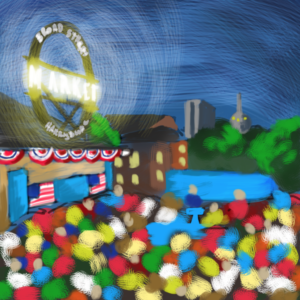
screenshot-2016-12-28-09-56-02Harrisburg may be the state capital, but it rarely finds itself rolling out the presidential welcome mat. That changed in 2016, as central PA emerged as a swing region in a swing state. Following the Democratic National Convention, Hillary Clinton rolled through town, practically shutting down the city with an outdoor rally in front of the Broad Street Market. A few days later, Republican nominee Donald Trump attracted a long line of folks in red caps to the PA Farm Show Complex. Even Vice President Joe Biden stopped by to offer a pep talk in the waning days of the campaign. However, as is his tendency, Trump made the biggest splash when, after a visit to the west shore, he remarked that Harrisburg looked like a “war zone” from his airplane, prompting criticism for this ridiculous remark from many local media (including TheBurg) for the man who will be sworn into office this month.

  1. Normalizing Harrisburg

screenshot-2016-12-28-09-57-33I didn’t grow up in Harrisburg, so have no nostalgia for the long-defunct businesses and colorful shop owners whose names pop up in places like the popular, “If You’re Really from Harrisburg, You Would Know,” Facebook group. However, I am quite familiar with Harrisburg as calamity, an essentially bankrupt city that seemed to have no future beyond lurching endlessly from crisis to crisis. This past year was the first I’ve experienced when Harrisburg felt like, well, a normal city, one that is fiscally solvent, competently delivers an acceptable level of service and offers enough stability so that residents and businesses can feel comfortable investing, operating and just being. Perhaps, in other cities, reaching “average” would be nothing to write about. However, given the recent history of Harrisburg, normalcy is an achievement indeed. Sure, this top news item may have a “Dog that Didn’t Bark” quality about it. But, unlike other media, I believe that news isn’t just about dysfunction, but about when things go well, which should be noted and applauded.


So, there you have it—my top 10 Harrisburg stories for 2016. It was tough to cull the list down from all the possibilities in this small, yet news-rich place. Should I have included the still-unsolved Civil War Museum thefts, the Papenfuse/Patriot-News cold war, the ongoing saga of fake student Artur Samarin or all the twists in the search for money to pay for sinkhole fixes? A case could be made for any of these. Certainly, the trial of former Mayor Steve Reed would have been a top news story if it had not been delayed until this month.

As we enter the new year, I have a resolution that directly pertains to news in Harrisburg. I resolve that TheBurg will strive to do a better job than ever before in covering what happens around here. We have a commitment to this community that we take very seriously and, as we enter a local election year, the time is right for us to up our game.

Lawrance Binda is editor-in-chief of TheBurg.

Illustrations by Rick Hauck.

Continue Reading

Story Super Bowl: Our area’s best storytellers face off on one big night

Untitled finalists, clockwise from top left: Stuart Landon, Rachel Moore, Maria Thiaw, Tracy Kerchner, Ellen Hartman, Elizabeth Piscioneri

Untitled finalists, clockwise from top left: Stuart Landon, Rachel Moore, Maria Thiaw, Tracy Kerchner, Ellen Hartman, Elizabeth Piscioneri

The first story Tracy Kerchner told moved the audience to tears. The theme of the night was “Homecoming,” and Kerchner spoke about her 11-year-old son, diagnosed with brain cancer in 2013.

At that storytelling event, hosted by local group Untitled, Kerchner, 41, talked about bringing her son home after brain surgery and a month-long hospitalization.

“We didn’t know then how much he was understanding, or how much of a recovery it was going to be,” Kerchner said. “It was overwhelming. But then I started thinking. The Sunday before he was diagnosed was the Boston Marathon bombing. That bomb went off and killed an 8-year-old child, and a family went home incomplete. I was bringing home my child, who was suddenly very different, but I was bringing my son home, and they didn’t get to.”

Kerchner’s story about the perspective she gained through that experience was voted the best story of the night. Thanks to that win, she’ll be one of the storytellers featured at Untitled’s “Grand Slam” event at Midtown Cinema this month, where the theme will be “Unexpected.”

Untitled was founded in 2013 by Caitlin Copus and a committee including her husband, Jeff, sound designer Douglas Weaver and Central Penn College professor Janet Bixler. Participants at Untitled events tell true stories without the use of notes. Each night of stories has a different theme, and Copus said the topic the committee chose for the Grand Slam is intentionally vague.

“Normally, when we select a theme, we’re also trying to find storytellers we think will have a good view on that theme,” Copus said. “For the Grand Slam, we’re going to have some of our best storytellers, so we wanted to pick something we thought would be open-ended.”

Each person slated to tell a story at the Grand Slam has won the night at a previous Untitled event, held quarterly at Zeroday Brewing Co. Copus said audiences have grown considerably since the events moved to Zeroday in the beginning of 2016.

“I think the combination of beer and stories has been a good one,” Copus said. “It’s a fun place to be. They have great beer and food, and they’re wonderful people. I think it’s helped us attract a great audience. Since we’ve been at Zeroday, it’s been crowds of 60 to 80 people—pretty much standing room only.”

To accommodate the larger audience expected for the Grand Slam, Copus and the committee decided to move next door to Midtown Cinema, where she expects there will be a seat for each attendee. Untitled will return to Zeroday in April.

To prepare for the Grand Slam, Kerchner said she first brainstormed ideas that fit within the topic of “Unexpected.” Though her “Homecoming” story was an emotional one, she said most of her stories, which tend to center on family life, are upbeat and funny.

“When my son started cancer treatments, I left my job, got pregnant and had another baby on top of the three I already had,” Kerchner said. “I talk about my family a lot, about the surprise of being pregnant at 39, about the 10 years between my two youngest children. I tend to naturally push away all the heavy stuff that comes with that, so the stories are more lighthearted.”

Kerchner said, despite her family’s support of her storytelling, she attends Untitled events alone.

“The first time I went was right after my baby was born. I brought her with me the first few times, until she got too mobile,” Kerchner said. “Over time, Untitled got to be a nice outlet, an evening when I could look forward to getting out of the house and doing something really different.”

Copus sees the Grand Slam as an opportunity to introduce Untitled—and the art of storytelling—to a much wider audience.

“I hope people will leave understanding what a great art form it is to have someone get up there and tell a story,” she said. “You learn such interesting things about people, and you feel like you really get to know them. They’re telling true stories from their own lives, and that’s a great moment to connect with someone.”

Untitled records its storytelling events, and podcast versions of stories dating back to September 2015 are available for free on the group’s website. Copus urges unsure prospective audience members to listen to a podcast or two.

“I think, once you start hearing people tell stories, you just want to hear more of them,” she said. “And we want to make sure we can bring great stories to as many people as possible.”

Untitled’s Grand Slam event will be held on Tuesday, Jan. 10 at 7 p.m. at Midtown Cinema, 250 Reily St., Harrisburg. Tickets are $5 and can be purchased online through Eventbrite. For more information, visit www.untitledhbg.com.  

Author: Kate Morgan

Continue Reading

“Harrisburg Houdini”: Bob Davies emerged from the local hardwood to become one of professional basketball’s most famous players.

screenshot-2016-12-28-10-01-16The year was 1938, and spectators at the annual John Harris-William Penn high school alumni basketball game didn’t realize that they were about to witness sports history.

At that game, 18-year-old Bob Davies unveiled the then-unheard of behind-the-back dribble, which he called the “dipsy doodle dribble.”

“Bob began to dribble down the court with his right hand,” wrote Bus Funk in his Harrisburg Patriot’s “Cruising Around” column. “And, when a guard closed in on him, he made a motion as though he would pass the ball backward to a mate, but instead of doing that, he twisted the ball around his back to his left side and continued to dribble down the court without missing a stride…. It was the slickest thing your motor man has seen on the hardwood for many a moon.”

That was just the beginning for Davies. A few years later, he debuted the maneuver before a national audience at the 1942 National Invitational Tournament (NIT) game in New York’s Madison Square Garden before going professional.

“You can take the whole Hollywood lexicon of superlatives and still be at a loss for words to describe the utterly fantastic operations of the Harrisburg Houdini,” remarked a New York Herald-Tribune sportswriter. “The things Mr. Davies does with a basketball have to be seen to be appreciated, but even then you don’t believe them. You think it is a mirage or some optical illusion made possible by side-show mirrors.”

Walter E. Kirker, assistant director of the Harrisburg Central YMCA, gets credit for introducing Davies to the sport. When Davies’ father lost his job after the 1929 stock market crash, however, the family could not afford the 25-cent Y weekly dues. So, he had to be resourceful to continue playing. He and his friends marked off a court in an alley, nailed a 5-gallon paint can to a board on a telephone pole, and used a tennis ball.

As a youngster, unable to afford a ticket to local high school basketball games, Davies peeked through a crack in a door in the Chestnut Street Market House’s second floor Madrid Palestra Ballroom.

“I’d see these great black players jump in the air, throw the ball, hit somebody with a pass, or shoot the ball,” he recalled. “And I guess that stuck in my mind.”  

Davies has also been recognized as a pioneer of the penetration game, driving into the lane and passing off to a teammate, and of the transition game, getting down court fast in superior numbers to get an easy shot.

Davies was John Harris High School’s second four-sport (basketball, baseball, football and track) letterman. The school’s outstanding athlete trophy used to have a lifelike statuette of him wearing a basketball uniform. Athletes at rival William Penn High School compared him to Jack Armstrong, the “All American Boy,” a fictional radio show character who often won games in the last minute for his high school team.

As a two-hand set shooting All-American, Davies led the Seton Hall College Pirates to 43 consecutive wins, tied for the sixth longest streak in NCAA Division I history. The Sports Illustrated book, “100 Years of Hoops,” ranks him as one of the eight most influential players in the first century of college basketball.

According to 1950s-era New York Knicks coach Joe Lapchick, Rochester Royals backcourt ace Bob Davies, Minneapolis Lakers center George Mikan and Philadelphia Warriors jump shooter Joe Fulks were the three stars who saved the early NBA with their crowd appeal.  Compared to today’s NBA icons, Davies was as popular as the Cleveland Cavaliers’ LeBron James and the Golden State Warriors’ Steph Curry and Kevin Durant.

Davies’ hometown appreciated him as a national sports hero and role model. On Feb. 1, 1950, the John Harris High School-Edison Junior High School Booster Club sponsored “Bob Davies Night” at the Philadelphia Arena. Three hundred Harrisburg residents made the journey to the event.

“We consider this night in your honor a small token of our appreciation in return for the aspirational hopes you have given to the youth of our city,” said Booster Club president Bob Holmes.

The ultimate moment in Davies’ professional career occurred on April 21, 1951, in Rochester’s Edgerton Park Sports Arena. With 44 seconds remaining in the seventh game of the NBA’s first final playoff series and the score tied, Davies drove to the basket, and New York Knicks guard Dick McGuire fouled him hard. A timeout was taken for medical attention. Davies responded by swishing two underhand free throws to clinch the championship.

On April 22, 1990, Davies, age 70, died of prostate cancer. Pennsylvania Gov. Robert B. Casey memorialized him “for not only his athletic achievements, but the joy he brought to others and his devotion to making God’s work here on earth truly his own.” In a proclamation, Harrisburg Mayor Steve Reed urged the city’s residents “to further strive to live their lives in as an exemplary manner as he did.”

Davies’ plaque in the Naismith Memorial Basketball Hall of Fame states that he was considered the “First Super Star Of Modern Pro Basketball.” The road to superstardom began with some tips in the Central YMCA, peeks through a crack in a ballroom door, and pick-up basketball in an alley in Harrisburg.

Barry S. Martin is author of “Bob Davies: A Basketball Legend,” recently published by RIT Press. To learn more about his book and order a copy, visit www.rit.edu/press/bob-davies-basketball-legend, Amazon.com or other bookseller.

Continue Reading

The Choice Is Yours: At Gamut, growing up, making decision—and fighting space vampires

screenshot-2016-12-28-10-38-11When the “Choose Your Own Adventure” series— what would eventually become the “Gamebooks” genre—began, its creator was bored with telling bedtime stories to his children. So, he decided to give them the option for how the story would play out.

The idea was groundbreaking for children of the 1980s and ‘90s, who were able to be the heroes of stories that they could control.

Luckily, the legend lives on. Not only are the books back in print, but Gamut Theatre Group’s “Stage Door Series” has taken on its own adventure of converting book #71, “Space Vampire,” onto the stage as an interactive theater performance adapted by three local actors and Gamut veterans: Jeff Luttermoser, Philip Mann and David Zayas.

This particular play, adapted from Edward Packer’s original story, gives the reins to the audience in a way that lets them become not only the most important character, but also a playwright to the story. At the end of each scene, the audience is presented with a choice that will eventually lead them either to another choice or to one of 10 possible endings. Since death is, of course, an option, each audience gets three lives, and with that, three chances for a do-over if they are unhappy with the outcome. They shape their world via text message, where choices are live-fed through an app, and the play changes to suit their decisions.

Unlike a typical theater production, the audience has complete control over the play they’re seeing, and, with this play only, the world gets second chances.

“This is what is unique about it as a theatrical experience,” said Thomas Weaver, Gamut’s associate artistic director. “A normal play is supposed to unfold as life does, and wouldn’t it be a nice thing to have control over that when you wanted?”

On the other side, the play is also unlike the books for the opposite reason—there is an element of responsibility. Like most kids who read the books, it was easy to read an ending, decide you did not like that outcome, and go back and choose differently. While you have some choice to do that in the production, the stakes are higher. As an adult version of the children’s book, audiences have to own up to their decisions in a more realistic way—there are not unlimited choices. This is not anything to worry about, however, and is part of the fun.

“All of the endings, no matter if the outcome is good or bad, are very entertaining and engaging,” Zayas said.

Creating an original piece of theater from such an iconic series is a task that involves a lot of care.

Luttermoser, Mann and Zayas simplified the story from a whopping 25 endings down to 10 and had to consider the substance and overall “readability” or, in this case, “watchability,” to create a coherent narrative that is interesting, energetic and engaging, while retaining the same unpredictability of the original stories.

“‘Space Vampire’ has some choices where something happens, and it’s just because, and not for any reason,” Zayas explained. “We had to eliminate and move stuff around some so that the story remained cohesive.”

Mann added that they had to make sure they weren’t setting audiences up for failure or making them feel like they are being cheated in their adventure.

“So, every choice has substance,” he said.

This clarification might seem obvious, but readers of the original stories might remember games being played on the reader in some of the stories, such as never-ending page loops or endings that can only be discovered by readers who are cheating or accidentally stumble on the wrong page. Above all, reading the story is a game, and Gamut has taken care to make sure that it is a game worth playing.

The show is a marathon for actors to rehearse, learning to work their brains in a way that’s not reliant on clear-cut cues and that holds so many variables. They have to work on their feet, as there are many elements of improv, even with the scripted show. This makes the adventure extend from the audience to the actors themselves, who get to be pawns in the story dictated by the audience. The play changes every night as different choices are made.

As an adventure story with sci-fi references, control over the game and an air of nostalgia, “Space Vampire” is really a show for everyone. It is active and immersive and is sure to be a unique experience.

“Space Vampire” runs Jan. 13 to 22 at Gamut Theatre, 15 N. 4th St., Harrisburg. For more information, call 717-238-4111 or visit www.gamuttheatre.org.

Upcoming Theater Events At Harrisburg’s Professional Downtown Theaters

At Gamut Theatre
www.gamuttheatre.org

Popcorn Hat Players Present

“The Brementown Musicians”
Jan. 11 to 28 Saturdays at 1 p.m. Wednesdays and Thursdays at 10 a.m. available by request for groups of 20 or more.

Stage Door Series Presents

“Choose Your Own Adventure: Space Vampire” Jan. 13 to 22
Doors and bar open at 6:30 p.m.; performance starts at 7:30 p.m.
Tickets are pay what you will; any size donation buys your admission.

At Open Stage of Harrisburg
www.openstagehbg.com

Court Street Cabaret 2017: An evening of song from Broadway and beyond!
Jan. 13 & 14 at 7:30 p.m.

“Father Comes Home from the Wars Parts 1, 2 & 3”
A new play by Suzan-Lori Parks
Feb. 3 to 26

Author: Meghan Jones

Continue Reading

The Common Cold—or Something More?

screenshot-2016-12-28-10-39-18As the cold winter months drag on and kids share germs with their classmates, parents start to worry if their child may have more than the common cold. Often, children have illnesses this time of year that are severe and may linger for extended periods. Parents can become concerned that their child may have a sinus infection.

When a cold or virus makes a child sick, the sinus tissue becomes swollen and produces more mucus. Sinuses, the head’s empty spaces lined by the same tissue as the nose and mouth, fill up with mucus. The mucus filling up these empty spaces prevents bacteria that is normally found in the sinuses from escaping.

Most of the time, the virus resolves on its own. Then drainage resumes like normal. But occasionally bacteria trapped by mucus will multiply, and this will cause a sinus infection.

Children fully form sinuses at 6 or 7 years old. Not all sinuses are present at birth. This means that children under this age are less likely to have a sinus infection than an older child or adult.

Diagnosing sinus infections can be tricky, and detecting the infection from a regular patient exam can be inaccurate. This puts pediatricians in a hard place. Does my patient have the common cold (viral upper respiratory tract infection) or a sinus infection (acute bacterial sinusitis)?

We do not want to treat viruses with antibiotics because this will not help the patient return to health. Rather, antibiotics create more harm. They may cause unnecessary side effects like diarrhea, infections and allergic reactions. Furthermore, unnecessary antibiotics will increase future antibiotic resistance. Bacteria that have adapted to resist antibiotics are harder to treat. Sometimes, a patient will need to be hospitalized to receive stronger antibiotics given directly into a vein.

On the other hand, we want to treat sinus infections so our patient feels better and avoids complications from untreated infections.

In 2013, the American Academy of Pediatrics created guidelines to help general pediatricians diagnose and treat sinus infections. If a child has continuing nasal discharge or a daytime cough for more than 10 days without improvement, worsening symptoms or a fever after initial improvement, or a high fever and abundant and thick nasal discharge for at least three days at the start of an illness, then the child should be considered for the diagnosis of bacterial sinus infection. Color of the nasal discharge does not determine if the infection is bacterial or viral.

If a child fits one of the above criteria, the AAP guidelines recommend that a pediatrician monitor the child for three days for improvement of symptoms or start antibiotics. Which antibiotic to use depends on where you live and your child’s history.

A prolonged or bad illness in your child is frustrating. Hopefully, this information will help you ask more questions to help ensure the best care for your child.

Dr. Brittany Ann Massare is a pediatrician with Penn State Hershey Medical Group.


Continue Reading

Bad News: How the local media often fail us.

St@rtUp, Harrisburg.

St@rtUp, Harrisburg.

The national election season is over, and a new president will be sworn in later this month. However, the debate about the media’s role continues. 

The national discussion over “fake news” took on real urgency last month after an armed gunman showed up in Washington, D.C., to do a self-investigation about a totally fabricated story regarding a pizza shop and supposed crime ring. Many cringed or rolled their eyes at how ignorant and uninformed the gunman had to be to take extreme action on a false story he read online.

The heightened use of Facebook and Twitter as leading news sources has left national media reeling and forced them to examine their traditional roles of informing and educating the public. This is not an inconsequential role in our American democracy; it is a foundation upon which our democracy rests.

Arguably, the decline in trust of the national media has heightened the need for informed, engaged and responsible local media that the community can rely on.  Local media need to clearly and honestly report not only the facts, but also provide the larger context of the facts about the community they serve. Too often, though, the local media, due to the same pressures that affect the national media—declining revenues, reduced qualified staff and reporters, the need to sensationalize and incite biases to gain attention—also fail at this important job.

A mid-December story that ran online and on TV on the local CBS affiliate, Channel 21, offers an example of how our local media often fail us. Channel 21 is ranked at or near the bottom of the local television outlets and, for a time, even abandoned its local news reporting altogether. So, maybe no one cares, but it is emblematic of what is wrong with local television reporting.

On Monday, Dec. 12, Dennis Davin, the secretary of the Department of Community and Economic Development (DCED) for the Commonwealth of PA, paid a visit to St@rtup, a Harrisburg based co-working facility that had recently expanded and relocated within Midtown Harrisburg. (Disclosure: I happen to be the developer of the building in which St@rtup is located, but I did not attend the secretary’s visit, which was solely for St@rtup.)

CBS21’s headline, “Wolf’s ‘Jobs that pay tour’ visits Harrisburg business” was ostensibly about this important event. However, the story started out by violating basic journalistic rules and common sense. The reporter didn’t bother to interview the owners of the business they visited. She also didn’t realize that the “abandoned building and construction site” that she was standing in front of—and holding up as an example of urban decay—was, in fact, the same development project that is connected to the St@rtup space, and that it will be completed in early 2017. She reported nothing about the block or how it sat vacant for 10 years after a charter school based in Atlanta went bankrupt, leaving it in disrepair. She took no time whatsoever to understand the context of the story.

The real story was the secretary’s visit to highlight businesses that have received some form of state assistance to grow their business, create jobs and expand the economy. It was part of a statewide tour that has led to some 200,000 similar jobs, a fact that was briefly mentioned at the end of the piece.

The focus was supposed to be on St@rtup. St@rtup is the local version of a burgeoning national trend of relatively low-cost, all-inclusive, shared workspaces that encourage entrepreneurs to start new businesses and employ themselves and others in the creative economy. Many of the folks who are attracted to this type of facility are not looking for jobs so much as they are looking to work independently, be among other creative types and pursue their passions in the business world.

One of the more famous nationally branded versions of St@rtup is a company called “We Work,” based out of New York City, which has the tagline, “The Community of Creators.” The company has received hundreds of millions of dollars in financial backing and is valued in the billions of dollars. It is a remarkable national story about the nature of how the local economy functions in the changing global economy. 

Yes, St@rtup is truly at the leading edge of the modern economy. Right here in Harrisburg. And it is successful. Really.

Unfortunately, a CBS21 viewer or online reader would not know anything remotely about the story of St@rtup and its larger context. Instead, the reporter led with an interview of a man who she just happened to run into outside the building when she walked in for the press event. That the man happened to say that he was “recently homeless” makes the encounter no less random. But the story became about homelessness in the Harrisburg region (and a superficial one at that) instead of a very real and positive discussion about this business and the growing local economy.

Think of the randomness of this. If the reporter had been five minutes earlier or later to arrive at the event, she likely would have missed this encounter. So, scores of people do millions of dollars of work, create dozens of jobs and investment, are symbolic of large national trends, and yet one person wandering by becomes the story. To make matters worse, there was no context to this man or his predicament, no discussion of the circumstances surrounding his situation or where he would go from there. After the interview, the man merely continued on his way down the street.

Let’s agree that stories about the homeless, particularly during the wintertime, are important. Local media should report them. Local media should talk to people who work to solve those problems, talk to shelters and nonprofits and give us in-depth discussion on what causes those very real societal problems and how to solve them. This story did none of those things.

The only thing this story did, from my perspective, was to reinforce the insidious, dare I say, anti-urban and anti-Harrisburg bias from media types who live in the suburbs and can’t for the life of them understand why anyone would invest, live and work in Harrisburg (there are homeless people walking the streets!). Even when proof of the counter-narrative is literally right in front of their camera, they turn away and cling to their biased views.

As I have said previously, this false and misleading narrative has real consequences for Harrisburg. For whatever ills the city may have, the local media is complicit in hindering attempts to overcome them and for perpetuating a false narrative because it’s a narrative that helps them incite biases, grab attention and drive revenue. This, unfortunately, is often the situation of our local media in the Harrisburg region today.

J. Alex Hartzler is publisher of TheBurg.

Continue Reading

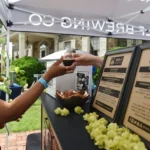
Beer Meet: Boneshire envisions its new brewery as a place for great beer, great company

screenshot-2016-12-28-10-31-10“What kind of beer do you like?”

Alan Miller asked me that question as I bellied up to the bar at Boneshire Brew Works, the Harrisburg area’s newest entry to the craft beer scene.

I told him that I like both dark beers and light beers. So, he poured a Russian imperial stout, brewed with honey and oats (the dark). Next came a Belgian white ale brewed with coriander and bitter orange peel (the light).

And, if you visit, Miller probably will ask you the same question. He told me that the answer helps him gauge what to pour, what you might enjoy sampling.

Two months ago, Miller and his partners opened Boneshire in an industrial space that once made parts for muscle and drag racing cars. Turning a former machine shop (and, later, a batting cage) into a brewery involved removing old floor tiles, running new sewer lines and making space for the brewing equipment.

Miller noted a few more reasons for bringing his establishment to Derry Street in Swatara Township. The location is halfway between Hershey and Harrisburg and can tap into the West Shore traffic. He also wanted a retail front and a place where he could easily and effectively get materials in and out. The space he designed is open and inviting, and people can see the brewing process in action.

Who We Are

Miller grew up in western PA, and his family still lives there.

“The first beer I ever had was Iron City,” he said, affirming his roots.

Later, a friend lured him away from weak macro-brews by introducing him to flavor-rich craft beer. He was hooked. He soon was attending beer festivals, noting how much people enjoyed tasting and sampling the creations.

Miller began brewing at home and later became part owner in a small craft brewery, Millbock Brewing Co. in Linglestown, which he described as a pilot project that closed after four years. He decided to bring in other investors, 10 in all—friends and family who now help cleaning, bartending, managing, accounting and catering—and opened Boneshire. It took eight months, and the partners did most of the work themselves. They built the bar and the walk-in freezer and grinded the concrete floors.

There were stumbles along the way. One surprise came when Miller placed his first order for glassware—the glasses didn’t arrive in time for opening night, and he made a dash to a local supplier.

“Four cases disappeared in the first week,” he said.

They have plenty of glassware now, and, if you order a beer, it’ll be served in Boneshire-branded mason jars.   

So, where did the name Boneshire come from?

“It’s a combination of my son and my dog,” Miller said.

His son is nicknamed Hambone, and his dog is a Yorkshire terrier.

“I wanted to trademark something without any name infringements and tie it in to something meaningful and to develop our unique brand,” he said.

And then there’s the pig logo.

“My family were pig farmers in western PA,” he explained.

Miller plans to eventually open and operate a barbecue joint for all those pork junkies out there.

“Pit style,” he said. “The whole pig, cooked slow and served over the weekends.”

He paused for a moment.

“I also want to make sauerkraut because it’s something my dad likes to do and is good at, and it tastes good while being made in a traditional manner that reflects who we are.

Gathering Place

Miller described a typical day in the brewery.

“The system is manual,” he explained. “It’s pretty labor intensive. I’m in at 5:30 a.m. by myself. It takes about eight to 10 hours to brew and clean. I shovel the grain, mash and bring the kettle up to boil. Add hops and other ingredients. Cool and transfer to fermenters. Pitch the yeast. Then it’s time for cleaning.”

The brew works is BYOF (bring your own food), and the plaza fortunately has two restaurants attached, specializing Italian and Chinese cuisine. I asked Miller why he wanted to bring a brewery to Derry Street.

“I’ve asked myself this question a million times,” he replied. Then, with a smile, he added, “Anytime you can do what you love, and see others enjoy it too, well, that’s something I love and appreciate.”

He also enjoys meeting a wide variety of patrons and hearing their stories.  

“We have good crowds here,” he said. “I was surprised and pleased by the local support. I think the support comes because this brewery provides locals with a sense of ownership. This is their brewery in their town, brewed with the same water they drink at home.”

Miller said that he’s resisting putting in a TV and is doing everything possible to get folks, as they enjoy a beer, to converse or even break out one of the board games that are piled on a baker’s rack along a wall. He envisions his brewery as community oriented. He even plans to have movie nights, using an old-fashioned projector to show classic films.

“Ultimately, this is a gathering place,” he said.

Boneshire Brew Works is located at 7462 Derry St., Harrisburg (Swatara Township). For more information, call 717-469-5007 or visit www.boneshire.com or the Facebook page.

Author: Cathy Jordan

Continue Reading

December News Digest

Harrisburg Budget Passed

Harrisburg City Council last month approved a $65 million budget for 2017, largely reflecting the spending plan that Mayor Eric Papenfuse proposed in November.

The budget, a nearly $6 million spending increase from last year, includes $2.5 million for a new public works facility, $127,754 for police body cameras and Tasers and $90,000 to repair Reservoir Park’s band shell.

City Council voted 6-1 to approve the spending plan. Only council Vice President Shamaine Daniels voted against it.

Overall, the budget largely reflected what Papenfuse proposed during his November budget presentation.

As per capital expenditures, the Bureau of Police will receive new Tasers for every officer and the deployment of a 303 impact device on every shift. The budget also funds body cameras for every officer, as well as two new positions—a public safety information technology specialist and a crime analyst.

The new budget gives $130,000 to the Bureau of Fire to replace a straight truck and to upgrade inspector vehicles.

Other infrastructure spending was approved for projects such as traffic signal upgrades, accessibility improvements per ADA requirements and streetlights.

City Council last month also passed a tax bill, which will keep the city’s property tax rate unchanged for 2017.

Broad Street Market to Become Nonprofit

Harrisburg’s historic farmers market was given the all clear to transition to a nonprofit entity, as City Council approved a lease and management agreement last month with the soon-to-be-formed Broad Street Market Alliance.

A resolution to enter into the agreement was approved by a unanimous vote after council brought it up from the floor at the December legislative session.

After the meeting, market Manager Beth Taylor said the management agreement will allow the market to enter a new era, able to tap into grants reserved for nonprofits and raise funds more easily for upgrades and improvements.

For decades, the market, which dates back to 1861, was squeezed among various entities, run by the for-profit Broad Street Market Corp. under the auspices of Historic Harrisburg Association. In addition, the city owns the two market buildings and property and had been liable for all maintenance and repairs. That responsibility now will fall to the Broad Street Market Alliance.

Moreover, council introduced a resolution that would add more free parking for the market. Under the resolution, James Street, William Street and N. 4th Street would become two-hour market parking from Verbeke to Sayford streets.

Currently, those streets are residential permit parking for the Marketplace neighborhood, though most are lightly developed. Having been introduced, the resolution likely will be voted on by council in January.

Market Street Corridor Concepts Unveiled

PennDOT last month unveiled conceptual designs for the Market Street corridor, including a flood-controlled Paxton Creek, a beautifully redesigned and landscaped Market Street and the possible relocation of the bus transfer station to the area.

PennDOT shared the concepts with the public at the transportation center, the result of a three-month process that began with “Visioning Week” in September, when members of the public weighed in on what types of transit-oriented development they’d like to see in the rundown area just east of the station.

Angela Watson, PennDOT’s director of the Office of Multimodal Planning, explained that the concepts unveiled were of three types: for the transportation center itself, for Paxton Creek and for Market Street.

The transportation center stands first in line for improvements, with $15 million already pledged to continue a years-long renewal of the station. The next phase, which will take place later this year, will rehabilitate much of the interior, with updated design work followed shortly afterwards by the actual renovation work, she said. 

An effort to control Paxton Creek is also underway, with a study to identify ways to lessen the flood risk due for completion in April. Flood mitigation is considered critical if the area is to be revitalized.

The other concepts involved improvements along Market Street. One concept showed a redesigned and vastly improved streetscape. Other concepts illustrated the possible relocation of the city’s bus transfer station to either Harrisburg’s former central post office or, across the street, to the site of the old Patriot-News building. Funding is not yet in place for this work.

Park Harrisburg Board Meets

The board for the city’s parking system held its semi-annual meeting last month, with Standard Parking Regional Manager Jon Kemp saying his company decreased expenses by $60,000.

First, changing electricity providers from PPL Electric Utilities decreased the rate for electricity, he said. In addition, updating to energy-efficient LED lights in the four most outdated garages—River Street, Walnut Street, 5th Street and Chestnut Street—saved Park Harrisburg $33,000 from July to September, Kemp said.

John Gass, the director of parking system manager Trimont, said that Park Harrisburg will announce a rate increase in late December. He did not say what type—for street parking, garages or enforcement—or give any specifics to the increase.

In order to make bond payments, Gass said he sees the only two options as increasing revenue and decreasing expenses. He said revenues and operating expenses are on budget for 2016.

Storm Water Issues Addressed

Capital Region Water last month released a draft of its “City Beautiful H2O” plan, a long-term community greening plan to address storm water issues.

The plan envisions using green infrastructure to filter and improve storm water that flows into the area’s waterways. Currently, when even moderate rain falls, the city’s combined sewer system overflows, causing storm water to mingle with sewage, which leads to pollution and flooding caused by system backups.

Three pilot projects will kick off City Beautiful H2O.

In the draft, a rain garden, two storm water planters and porous basketball courts will be installed at the 4th and Dauphin playground near the Pennsylvania National Fire Museum. A bioswale, a type of landscape design, will remove pollution from the runoff water. Along N. 6th Street, storm water planters, rain gardens and a storm water storage trench are planned for the Camp Curtin YMCA and the adjacent block.

The third project features water bump outs, rain gardens, tree trenches and a community garden in the Summit Terrace neighborhood along N. 12th and N. 13th streets.

The plan also encourages residents to play a role by employing natural solutions to control storm water, such as planting trees, building rain gardens and installing vegetation on their roofs.

“We want the community to drive what they want to see,” said City Beautiful H2O Program Manager Claire Maulhardt. “Our vision is to be a key facilitator in helping find partnerships, link it up with potential funding and be that player in moving the pieces around to make projects happen.”

County Tax Unchanged

Dauphin County residents will see no change in their county tax rate for a 12th straight year, as the county commissioners voted last month to hold the line on property taxes for 2017.

The three-commissioner board voted unanimously to pass a $249 million county budget, which increases spending about 2.7 percent over 2016. They moved money from the reserve fund to pay for the higher spending amount.

The county’s budget adds five positions, mostly in the court system, the county’s single greatest category of expenditure. 

Homes Sales Up

The Harrisburg area experienced another strong month for home sales, as sales increased 28 percent in November.

The Greater Harrisburg Association of Realtors reported last month that sales totaled 738 units compared to 575 units in November 2015. The median price jumped to $169,950 versus $158,000 in the year-ago period.

In Dauphin County, 253 homes sold versus 202 the year before, while in Cumberland County, sales totaled 243 units compared to 185 in November 2015. Median sales prices also were up in those counties.

GHAR coves all of Dauphin, Cumberland and Perry counties and parts of Lebanon, York and Juniata counties.

Changing Hands

Balm St., 59: Broad Street Funding Trust 1 to D. Ford, $47,500

Boas St., 408: G. Eby to T. Fuller, $80,000

Calder St., 118: River Front Development Group LLC to Lynch Financial, $135,915

Cumberland St., 257: 717 Properties LLC to CPenn Patriot Properties Midtown II LLC, $68,000

Cumberland St., 259: 717 Properties LLC to CPenn Patriot Properties Midtown II LLC, $62,700

Derry St., 1439: Greene Mosca Associates LLC to D&F Holdings, $30,000

Grand St., 926: R. Lyell to M. & D. Soisson, $74,000

Green St., 1717: D. Jackson to T. Holder, $179,000

Green St., 1530: J. MacNamara & S. Huggins, $125,000

Green St., 1622: R. & D. Miller to T. Menard, $87,000

Green St., 1826: J. & M. Desmarais to D. & J. Kalbach, $170,000

Green St., 3208: L. Welsh to G. Arrieta & K. King, $134,500

Hamilton St., 236: BFI LP to T. & R. Broms, $60,000

Holly St., 2018: P. Spong to J. Santiago, $42,000

Hummel St., 234 & 342 and 1508 Hunter St.: CJR Rentals LLC to Equity Trust Co. Custodian Terry Casey IRA, $86,000

Kelker St., 319: J. Marks to Standing Tall LLC, $69,000

Kelker St., 634: Mid Atlantic IRA LLC Paul Rawls Sr. IRA to PA Deals LLC, $40,000

Kensington Rd., 2221: Matz Investments LLC to D. Tran, $46,000

Kensington St., 2340: Redtop Property Management LLC to X. Sanchez Lopez, $43,000

Market St., 1701: H. & S. Yi & CO Suns Food Market to D&F Holdings LP, $30,000

N. 2nd St., 1317: 717 Properties LLC to CPenn Patriot Properties Midtown II LLC, $58,300

N. 2nd St., 1709: 717 Properties LLC to CPenn Patriot Properties Midtown II LLC, $61,000

N. 2nd St., 1825: MidFirst Bank to CPenn Properties Old Uptown LLC, $47,525

N. 2nd St., 2540: J. Farris to G. McGrath, $125,000

N. 3rd St., 1402: DJ Larche LLC to Karnouskos & Paliometros Partnership, $92,000

N. 3rd St., 1606: Anselmo Brothers Partnership to J. Merrill & D. Wilburne, $165,000

N. 3rd St., 2329: Bank of New York Mellon Trustee & Ditech Financial LLC to CPenn Properties Old Uptown LLC, $37,905

N. 4th St., 1720: E. Kleiss to J. Duris & J. Gray, $170,000

N. 5th St., 1621: L. Oden to C. Fuentes & E. Martinez, $69,900

N. 5th St., 2632: E. & D. Sampson to B. Landrigan, $79,900

N. 6th St., 2130: N. Matika to Willow Investment Group LLC, $46,000

N. 6th St., 3220: B. Meppurathu & E. Rosen, $68,500

N. 17th St., 1202: I. Hooper to W. Freeman III, $36,500

N. 18th St., 44 & 1164 Mulberry St.: KAB Rentals LLC to M. & I. Ripa, $92,200

N. Front St., 1201: D1 LP & Brickbox Enterprises Ltd. To Linden Terrace PA LLC, $8,500,000

N. Front St., 1525, Unit 210: D. Forney to N. & D. Burke, $72,000

Peffer St., 435: L. Blanton & R. Parr to K. Kessler, $80,000

Penn St., 1625: S. & P. Fraser to W. Yankey, $132,500

Penn St., 1919: WCI Partners LP to A. Brofman, $136,000

Rudy Rd., 1827: Gary Neff Inc. & City Limits Realty to S. & B. Duncan, $39,200

Rudy Rd., 1920: John Hoover Trust to R. Carter II, $54,000

Rumson Dr., 345: Secretary of Housing & Urban Development & Information Systems Networks Corp. to A. Tenorio, $60,000

Seneca St., 245: Secretary of Housing & Urban Development to CPenn Properties Old Uptown LLC, $59,500

Showers St., 583: A. & C. Stoudt to M. & V. Chambers, $92,000

S. 18th St., 169: T. Casteel to R. Irvis, $60,000

S. 18th St., 200: A. Behari to J. Valdez Ramos, $160,000

S. 18th St., 1339: J. & L. Patton Jr. to R. & C. Soto, $40,000

S. 25th St., 608: LSF9 Master Participation Trust to T. Vu & A. Tran, $36,000

S. Cameron St., 414 & 436: 44 Cameron Street Associates LP to D&F Holdings Inc., $100,000

S. Front St., 331: L. Brice to A. Wycheck, $75,000

State St., 211: Paceline Properties to H. Sreg LLC, $296,500

State St., 231, Unit 804: LUX 1 LP to C. Houck, $169,900

Susquehanna St., 2132: P. Dobson to J. & C. Sanderson & A. Pletcher, $31,000

Taylor St., 42: J. & A. McHale to D. Hodges, $103,900

Author: Lawrance Binda

Continue Reading