Five years ago, when I started my annual list of top Harrisburg news stories, I remarked that I was surprised that each one of my “Top 10” was positive.
Not this year, which is ironic since the city was in far better shape in 2016 than it was in 2012. But, sometimes, that’s the relative nature of the big news. Overall, 2016 was, in my opinion, the most promising year I’ve experienced as a denizen of Harrisburg, but, along the way, there certainly was no lack of highs and lows.
Illustrations by Rich Hauck.
- The Apartments
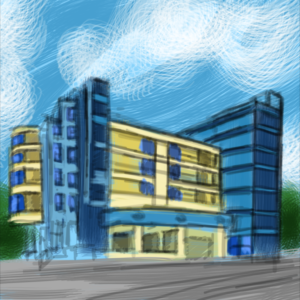
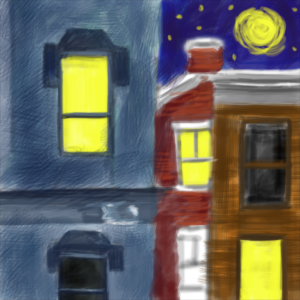 My leadoff story of the year is a positive one. It didn’t get quite the ink (or, sorry, the pixels) as many other stories, but I included it because it indicates something new and potentially significant for Harrisburg. During the year, four new apartment buildings opened, three in downtown and one in Midtown, putting almost 100 high-end units onto the market in a short timeframe. In the end, I view this as a grand experiment, a test of whether, like in other cities, there’s demand for beautiful, if pricey, one-bedroom, apartments. Is there enough desire for $1,000/month units when there’s no lack of less-nice, but far more spacious townhouses for about the same price? According to the developers I’ve asked—so far, the answer seems to be yes.
- Full Impact
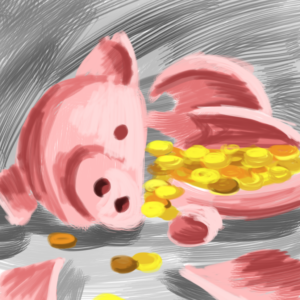 Nothing seems to happen in Harrisburg without controversy, and so it was with Impact Harrisburg, a nonprofit set up to dole out about $13 million to help the city with its unmet infrastructure and economic development needs. It took years to get Impact Harrisburg off the ground. It then came under fire for a lack of openness, got sued by the Patriot-News and, naturally, took some verbal abuse from Mayor Eric Papenfuse. In the end, Impact Harrisburg disgorged its bounty in just a few months, despite expectations from the Commonwealth Court that its impact should last at least five years.
- 6th Street Awaits
 In its long history, N. 6th Street has been a working-class enclave, a depressing example of post-industrial decay and a big, long expanse of nothing. It’s now turning again. In April, the commonwealth announced it would build the new Pennsylvania State Archives building at N. 6th and Harris streets. Then, Rep. Lou Barletta (much to my surprise) began hammering through Congress funding for a new, $194.4 million federal courthouse at Reily Street. Could The Vartan Group’s big bet of anchoring its vast neighborhood holdings with The 1500 Condominium building actually work out? Well, there’s an old saying on Wall Street that being early is being wrong. However, if you have the rare luxury of patient capital, you might find yourself profiting handsomely in the long run.
- Flattened Tires
 Let’s say that, on some random Thursday, you’re busy at work when the world comes crashing down on top of you. That’s rather what happened to Howard Henry, the owner of a tire shop and garage on Cameron Street. After a springtime downpour, a concrete retaining wall holding back a hill collapsed, raining a mountain of dirt and the remains of a parking lot (including a Nissan Altima) onto the roof of his building. Seven months later, the entire mess remained, as PennDOT and the owners of the McFarland Apartments slugged it out over responsibility. Henry tried to remain open, but, eventually, was forced to close as he waited for someone to accept blame and pay for the disaster.
- Sudden Deaths
 From time to time, I’m asked why the news media treats some murders differently than others. This question came up again after the homicide of Steven Esworthy, who was killed in June after being hit on the head as part of an apparent robbery. Is it a matter of race, class or location? To some extent, yes but it’s often more a matter of the specific circumstances of the crime. In this case, Esworthy was walking home from a wedding in the wee hours of the morning when he was clubbed from behind, and random murders always seem more tragic and, thus, generate more press attention. The neighborhood’s reaction also was strong, which kept the story around. Likewise, the murder of John Carter, another random victim (and the nephew of the city’s police chief), received a lot of coverage last year.
- The Way of Weed
 If you judge a story’s importance by the volume of people attending meetings, the city’s pot law changes would have ranked first last year. Harrisburg held several meetings about reducing penalties for marijuana possession, attracting more than 100 people in all. In the end, City Council eased its possession laws, reducing fines, but the changes weren’t as dramatic as some activists had hoped.
- Bar Brawl, part 2
Who knew that such a little bar could create so much fuss? In the only repeat item from 2015, the battle between Mayor Papenfuse and the Third Street Café slogged through its second year. Once again, the corner bar emerging victorious as a Dauphin County judge ordered the city to issue it a business license. The administration appealed the decision to the Commonwealth Court, a case that should be heard later this year. And, in a big middle finger to the mayor, the business owners even bought the building next door, a bar that Papenfuse had successfully shut down a year earlier.
- Police Shooting
 Nationally, 2016 may be remembered as a year when relations between police and African Americans hit a troubling low. Harrisburg found itself in that controversy after the shooting death of 20-year-old Earl Shaleek Pinckney. Police said an officer shot Pinckney because he was holding a knife to his mother’s throat, an account that she denied. The shooting sparked marches, protests and a unity meeting, which was attended by both police and family members. Dauphin County District Attorney Ed Marsico later agreed with the police account, clearing Officer Tony Elliott of any wrongdoing.
- Presidential Visits
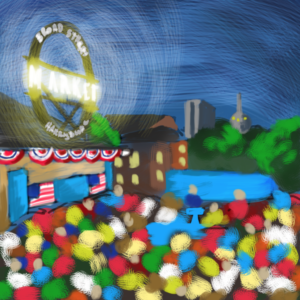 Harrisburg may be the state capital, but it rarely finds itself rolling out the presidential welcome mat. That changed in 2016, as central PA emerged as a swing region in a swing state. Following the Democratic National Convention, Hillary Clinton rolled through town, practically shutting down the city with an outdoor rally in front of the Broad Street Market. A few days later, Republican nominee Donald Trump attracted a long line of folks in red caps to the PA Farm Show Complex. Even Vice President Joe Biden stopped by to offer a pep talk in the waning days of the campaign. However, as is his tendency, Trump made the biggest splash when, after a visit to the west shore, he remarked that Harrisburg looked like a “war zone” from his airplane, prompting criticism for this ridiculous remark from many local media (including TheBurg) for the man who will be sworn into office this month.
- Normalizing Harrisburg
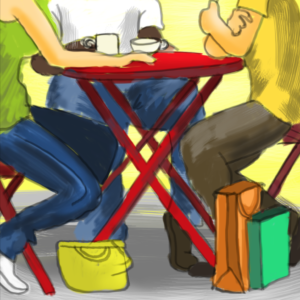 I didn’t grow up in Harrisburg, so have no nostalgia for the long-defunct businesses and colorful shop owners whose names pop up in places like the popular, “If You’re Really from Harrisburg, You Would Know,” Facebook group. However, I am quite familiar with Harrisburg as calamity, an essentially bankrupt city that seemed to have no future beyond lurching endlessly from crisis to crisis. This past year was the first I’ve experienced when Harrisburg felt like, well, a normal city, one that is fiscally solvent, competently delivers an acceptable level of service and offers enough stability so that residents and businesses can feel comfortable investing, operating and just being. Perhaps, in other cities, reaching “average” would be nothing to write about. However, given the recent history of Harrisburg, normalcy is an achievement indeed. Sure, this top news item may have a “Dog that Didn’t Bark” quality about it. But, unlike other media, I believe that news isn’t just about dysfunction, but about when things go well, which should be noted and applauded.
So, there you have it—my top 10 Harrisburg stories for 2016. It was tough to cull the list down from all the possibilities in this small, yet news-rich place. Should I have included the still-unsolved Civil War Museum thefts, the Papenfuse/Patriot-News cold war, the ongoing saga of fake student Artur Samarin or all the twists in the search for money to pay for sinkhole fixes? A case could be made for any of these. Certainly, the trial of former Mayor Steve Reed would have been a top news story if it had not been delayed until this month.
As we enter the new year, I have a resolution that directly pertains to news in Harrisburg. I resolve that TheBurg will strive to do a better job than ever before in covering what happens around here. We have a commitment to this community that we take very seriously and, as we enter a local election year, the time is right for us to up our game.
Lawrance Binda is editor-in-chief of TheBurg.
Illustrations by Rick Hauck.








 I read with some guilt the letter from our editor, Larry Binda, in the December issue of TheBurg.
 My leadoff story of the year is a positive one. It didn’t get quite the ink (or, sorry, the pixels) as many other stories, but I included it because it indicates something new and potentially significant for Harrisburg. During the year, four new apartment buildings opened, three in downtown and one in Midtown, putting almost 100 high-end units onto the market in a short timeframe. In the end, I view this as a grand experiment, a test of whether, like in other cities, there’s demand for beautiful, if pricey, one-bedroom, apartments. Is there enough desire for $1,000/month units when there’s no lack of less-nice, but far more spacious townhouses for about the same price? According to the developers I’ve asked—so far, the answer seems to be yes.
 Nothing seems to happen in Harrisburg without controversy, and so it was with Impact Harrisburg, a nonprofit set up to dole out about $13 million to help the city with its unmet infrastructure and economic development needs. It took years to get Impact Harrisburg off the ground. It then came under fire for a lack of openness, got sued by the Patriot-News and, naturally, took some verbal abuse from Mayor Eric Papenfuse. In the end, Impact Harrisburg disgorged its bounty in just a few months, despite expectations from the Commonwealth Court that its impact should last at least five years.
 In its long history, N. 6
 Let’s say that, on some random Thursday, you’re busy at work when the world comes crashing down on top of you. That’s rather what happened to Howard Henry, the owner of a tire shop and garage on Cameron Street. After a springtime downpour, a concrete retaining wall holding back a hill collapsed, raining a mountain of dirt and the remains of a parking lot (including a Nissan Altima) onto the roof of his building. Seven months later, the entire mess remained, as PennDOT and the owners of the McFarland Apartments slugged it out over responsibility. Henry tried to remain open, but, eventually, was forced to close as he waited for someone to accept blame and pay for the disaster.
 From time to time, I’m asked why the news media treats some murders differently than others. This question came up again after the homicide of Steven Esworthy, who was killed in June after being hit on the head as part of an apparent robbery. Is it a matter of race, class or location? To some extent, yes but it’s often more a matter of the specific circumstances of the crime. In this case, Esworthy was walking home from a wedding in the wee hours of the morning when he was clubbed from behind, and random murders always seem more tragic and, thus, generate more press attention. The neighborhood’s reaction also was strong, which kept the story around. Likewise, the murder of John Carter, another random victim (and the nephew of the city’s police chief), received a lot of coverage last year.
 If you judge a story’s importance by the volume of people attending meetings, the city’s pot law changes would have ranked first last year. Harrisburg held several meetings about reducing penalties for marijuana possession, attracting more than 100 people in all. In the end, City Council eased its possession laws, reducing fines, but the changes weren’t as dramatic as some activists had hoped.
  Nationally, 2016 may be remembered as a year when relations between police and African Americans hit a troubling low. Harrisburg found itself in that controversy after the shooting death of 20-year-old Earl Shaleek Pinckney. Police said an officer shot Pinckney because he was holding a knife to his mother’s throat, an account that she denied. The shooting sparked marches, protests and a unity meeting, which was attended by both police and family members. Dauphin County District Attorney Ed Marsico later agreed with the police account, clearing Officer Tony Elliott of any wrongdoing.
  Harrisburg may be the state capital, but it rarely finds itself rolling out the presidential welcome mat. That changed in 2016, as central PA emerged as a swing region in a swing state. Following the Democratic National Convention, Hillary Clinton rolled through town, practically shutting down the city with an outdoor rally in front of the Broad Street Market. A few days later, Republican nominee Donald Trump attracted a long line of folks in red caps to the PA Farm Show Complex. Even Vice President Joe Biden stopped by to offer a pep talk in the waning days of the campaign. However, as is his tendency, Trump made the biggest splash when, after a visit to the west shore, he remarked that Harrisburg looked like a “war zone” from his airplane, prompting criticism for this ridiculous remark from many local media (including TheBurg) for the man who will be sworn into office this month.
 I didn’t grow up in Harrisburg, so have no nostalgia for the long-defunct businesses and colorful shop owners whose names pop up in places like the popular, “If You’re Really from Harrisburg, You Would Know,” Facebook group. However, I am quite familiar with Harrisburg as calamity, an essentially bankrupt city that seemed to have no future beyond lurching endlessly from crisis to crisis. This past year was the first I’ve experienced when Harrisburg felt like, well, a normal city, one that is fiscally solvent, competently delivers an acceptable level of service and offers enough stability so that residents and businesses can feel comfortable investing, operating and just being. Perhaps, in other cities, reaching “average” would be nothing to write about. However, given the recent history of Harrisburg, normalcy is an achievement indeed. Sure, this top news item may have a “Dog that Didn’t Bark” quality about it. But, unlike other media, I believe that news isn’t just about dysfunction, but about when things go well, which should be noted and applauded.


 The year was 1938, and spectators at the annual John Harris-William Penn high school alumni basketball game didn’t realize that they were about to witness sports history.
 When the “Choose Your Own Adventure” series— what would eventually become the “Gamebooks” genre—began, its creator was bored with telling bedtime stories to his children. So, he decided to give them the option for how the story would play out.