A Matter of Trust: In Harrisburg, more social space is a step towards greater social trust.

Illustration by Rich Hauck.

Illustration by Rich Hauck.

As some of you may know, for several years, TheBurg hosted a weekly podcast of Harrisburg political and government news.

Now, I’m an old print guy. So, when we began, I knew nothing about audio. Eager to learn, I began listening to podcasts to understand how they were structured and how I could do a better job presenting information to listeners.

Quickly, I got hooked and now listen to several podcasts a week, mostly discussions of news, politics and economics. One of my favorites is “Freakonomics,” a podcast that looks at financial issues from unique perspectives, often making unexpected connections between money and, well, just about anything.

A recent episode examined the issue of “social trust,” saying that societies marked by high levels of trust among people were both healthier and wealthier. Unfortunately, social trust in the United States has been declining for decades, the podcast said, ever since people began abandoning their social clubs, softball teams and even corner bars to bask in TV’s (and now Netflix’s) “warm glowing warming glow,” as Homer Simpson once described television’s hypnotic effect.

As is my tendency, I immediately thought of Harrisburg, a city that, on some days, seems singularly divided (and I spent 25 years in Washington, D.C.). But I’ve been told it wasn’t always this way.

A couple of months ago, announcing for mayor, Harrisburg native Gloria Martin-Roberts spoke wistfully of the many gathering places from her youth: the record store, the bowling alley, the farmers market, the fish house and the shake shop. And I’ve heard many stories about such legendary community spots as the Penn Harris Hotel, the Mary Sachs store, Pomeroy’s Tea Room, Harry’s Tavern and William Penn High School. These all helped foster a sense of place and shared identity among Harrisburg’s residents, as did the myriad of social and political clubs throughout the city.

But deindustrialization, disinvestment and depopulation took a heavy toll, hollowing out the community and its bonds of trust. By the time I got here, Harrisburg seemed mostly to have social distrust. Suspicion and finger pointing prevailed with the collapse of the omnipresent Reed administration, which, for a time, had offered at least the illusion of common purpose.

Now, an interesting thing about social trust is how dependent it is on tangible stuff: stores, schools, bars, restaurants, churches, clubs and, I might selfishly add, newspapers. You’re not going to build trust by spending all day in the virtual worlds of the Internet and all night in the make-believe worlds of television. People need places where they can gather and interact in a genuine way—converse, make friends, have fun and build community.

On this front, I find there’s both good and bad news. The bad news comes mostly from the continuing fallout from the digital revolution—fewer bookstores, newspapers and libraries; the loss of retail; the coarsening of civic discourse, especially online; and, now, the viral spread of sensationalized, partisan and fake news.

The good news, though, is that, at least in Harrisburg, there’s a countertrend. When I arrived, I saw the ghost of a once-great city. Pedestrians were scarce, grand, historic buildings were crumbling, and there were few places where social trust could take root. Since then, however, Harrisburg has quietly enjoyed what might be called a social space revolution, much of which has taken place along the 3rd Street corridor.

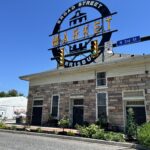
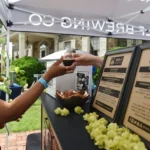
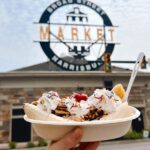
So, today, you might gather for a storytelling event at Zeroday Brewing, take in an outdoor film at Midtown Cinema or attend an art class at the Susquehanna Art Museum or the Millworks. At some point, you’ll probably pop into Midtown Scholar for a lecture, event or meeting. The beautifully restored Harrisburg Midtown Arts Center has become a focal point for culture and fun, while St@rtup’s stunning new space offers opportunities for collaborative work. Even Strawberry Square is refocusing on the community, hosting the HBG Flea and other events. Then there’s the revived Broad Street Market, a remarkable community asset where people flock to meet, eat, shop and linger. Just off the corridor, Little Amps and the new Gamut Theatre both deserve praise for quickly becoming important social centers.

Amazingly, until a few years ago, most of the buildings I just mentioned were abandoned or profoundly underused.

This said—we still have a ways to go. When I first came here, I remarked that many restaurateurs and merchants seemed to have a hard time seeing outside their four walls to the community beyond. That often remains the case. And I sure wish that the city’s few surviving social clubs would change with the times, drawing up their blinds, fixing their facades and showing they care about the world around them.

In addition, this resurgence hasn’t reached all parts of the city, though several organizations, such as the Camp Curtin Y and the YWCA, long have offered safe social spaces and community programs in their neighborhoods.

It’s fascinating—the podcast that inspired this column blamed falling social trust mostly on technological forces, such as TV and the Internet. I don’t disagree with that generally. However, social trust in Harrisburg was not destroyed primarily by technology but by people’s rejection and desertion of the city itself. Harrisburg’s social infrastructure now is being rebuilt—one restaurant, theater, café and meeting space at a time. The ground is being set for a renewed sense of camaraderie and common mission, for a revival of social trust, lost so long ago.

Lawrance Binda is editor-in-chief of TheBurg.

Ed. Note: Since suspending “TheBurg Podcast” last year, I’ve been asked many times if and when it might return. Good news, podcast fans, we’re in the planning stages to bring it back.

Continue Reading

Past Ball: Negro League Conference comes home to Harrisburg.

“Giants Come Home,” a painting by Dane Tilghman, depicting Harrisburg Giants players throughout the history of the team.

“Giants Come Home,” a painting by Dane Tilghman, depicting Harrisburg Giants players throughout the history of the team.

In the late 1930s, Calobe Jackson, Jr., often went with his grandfather to City Island.

There, he saw players whose legends still live today—Josh Gibson, Roy Campanella, the colorfully named Double Duty Radcliffe. The baseball was tremendous, but even as a child, Jackson recognized the unjust premise behind it.

“We realized most of the Negro League players were good enough to make the Major Leagues, but we saw the discrimination,” he said.

As a Negro League baseball hotspot, Harrisburg hosted most of the greats, and, this July, the legacy will be relived as the city hosts the 20th annual Jerry Malloy Negro League Research Conference. Also known as the Society for American Baseball Research Negro League Committee Conference, it’ll be the event’s fourth appearance in Harrisburg—the original host city—since its launch in 1998.

Study of Negro League history reveals “the evil of segregation and discrimination,” said Ted Knorr, the Harrisburg-area resident who founded the conference. The conference agenda includes speakers on teaching Negro League history in K-12 education as part of American history, not separated into the category of African-American History Month subjects.

“No baseball fan can tell me with a straight face that they know baseball history in the first half of the 20th century unless they have a good working knowledge of the Negro Leagues,” Knorr said. “Forty percent of the game was outside of the Major Leagues. The audience for this conference is not a pigeonhole. It’s anyone who wants to know the rest of the story.”

Like many great endeavors, the conference was born late at night, over beer. Knorr and colleagues at a Society for American Baseball Research conference—all members of SABR’s Negro League Committee—were sharing Negro League stats and stories. It was the sort of sidebar meeting that happened at every SABR conference, and one of them said, “We really should have our own conference focused strictly on the Negro Leagues.”

Knorr took the ball and knocked it out of the park. He organized the first conference, in 1998, in Harrisburg. Since then, it has rotated among other cities, including Kansas City and Newark, and returned to Harrisburg in 2000 and 2003.

The conference includes a tour of notable Negro League sites in and around Harrisburg. At City Island, attendees will see the diamond and home plate on FNB Field, which haven’t changed location since 1890. On 16th Street, they’ll see the still-standing home of Negro League legend Oscar Charleston—player, manager of teams including the Harrisburg Giants, and husband to the daughter of a Harrisburg minister. They’ll visit the Steelton grave of Herbert “Rap” Dixon, the first African American to hit a home run in Yankee Stadium.

When it comes to Negro League baseball, Harrisburg is “not quite Kansas City or Homestead, but it’s on the map,” said Knorr. According to Jackson, the city’s place in Negro League baseball dates to 1867, when journalist and educator Thomas Morris Chester and his brother founded the Harrisburg Monrovians, named after the capital of Liberia, where Chester had studied.

The Monrovians played a game against the Philadelphia Pythians—Jackson has the box score—and the Pythians are famous for being denied an application to play in the Major Leagues of the day, “one of the first instances of discrimination against black ballplayers,” Jackson said.

As a regional transportation hub, Harrisburg found itself in a sweet spot for Negro League play, said Jackson. Teams now legendary—the Pittsburgh Crawfords, the Homestead Grays, the Philadelphia Stars, the Baltimore Giants, including Campanella—found it easy to come to the city and play in the ballpark by the river.

“They remembered it because of the flies and the bugs,” Jackson said. “Nothing changes.”

Negro League history deserves study because it shows “how things have changed through the years and the opportunities that have come about for us through their vigilance,” said Jackson.  

Although some 19th-century teams were integrated, a “gentleman’s agreement” late in that century blocked African Americans from Major League play, said Raymond E. Janifer, Sr., Shippensburg University professor of English and Ethnic Studies and a conference presenter. From there, Negro League history reflects the U.S. reliance on the Supreme Court’s “separate but equal” doctrine for legal cover that justified segregation, discrimination and Jim Crow laws.

Negro League games “were very well attended,” he said. “People went to those games saying, ‘Those guys should be in the Major Leagues.’”

American Literacy Corp. Executive Director Floyd Stokes worked with Knorr to develop a children’s activity book on Negro League history and will help present the conference. Negro League players “achieved great things,” he said. “Their stats, their history, their achievement is just as important as anybody else who played in the Major Leagues. They just didn’t have the opportunities because of the color of their skin.”

That, he added, is American history “that needs to be told. The stories need to be told because the young people just don’t know the great folks right here in our yard. Not just our backyard. In our yard.”

After panels featuring researchers, biographers and a 1950s Negro League player, the conference will wrap with an awards banquet, plus music by the Crawford All-Stars—a combo featuring a player whose father played Negro League baseball.

“This is family,” said Knorr. “Many of these people were there years ago, white and black, male and female, old and young. We still gather together to break bread and talk baseball.”  

The Jerry Malloy Negro League Research Conference takes place July 27 to 30 based at the Hilton Harrisburg. To learn more, visit www.sabr.org/malloy.

Author:  M. Diane McCormick

Continue Reading

This Song Is Your Song: Gather round to hear the music of protest.

Doug Morris

Doug Morris

Doug Morris started bringing evenings of protest music to the Cornerstone Coffeehouse in Camp Hill about four years ago.

First, he played for Woody Guthrie’s 100th birthday, a celebration of the iconic songwriter/performer who wrote, “This Land is Your Land.” He then started organizing around different themes and songwriters such as Pete Seeger, Utah Phillips, Bob Dylan and Bruce Springsteen.

“Pete Seeger offered the following: Some music can help us escape our troubles; some music can help us understand our troubles; and some music can help us overcome our troubles,” Morris said. 

Morris, who plays monthly at Cornerstone, attempts to provide “some of each.”

He next will perform at the popular Camp Hill café on Feb. 18, holding a “Woody/Bruce Heavyweight Championship,” during which he’ll pair Guthrie and Springsteen tunes. He’ll also offer commentary about how both songwriters, though very different, have sought to raise public consciousness about struggles for social justice and against inequality.

“So, Woody’s ‘This Land is Your Land’ could be paired with Bruce’s ‘This Hard Land’ and Woody’s ‘Bound for Glory’ with Bruce’s ‘Land of Hope and Dreams,’” said Morris. 

Audience members are encouraged to sing along at the free event.

For his day job, Morris is a professor at West Chester University, and, before that, played jazz guitar and studied with Philly guitar legend Joe Federico. Morris also has written scholarly papers about the history of protest music and has done studies on the connections between progressive politics, radical music and social transformation.

Morris has been captivated for years by Guthrie’s humanist politics and finds his music gripping and transformative. As a prolific songwriter, a satirical cartoonist and newspaper columnist, Guthrie turned complex ideas about democracy, human rights and economic equality into simple drawings, stories and songs that all Americans could embrace.

His catalogue of songs includes favorites such as “Pastures of Plenty,” “Goin’ Down the Road Feeling Bad,” “Union Maid” and “Bound for Glory.” His most famous song, “This Land is Your Land,” was written in 1940 as a socialist response to Irving Berlin’s “God Bless America.” Guthrie wanted to write about the Depression-era America he knew, so he wrote lyrics addressing liberty, individual rights, poverty, freedom, equality and property ownership.

“The song should really be heard as a rousing anthem for working people—i.e. most of us,” Morris said.

According to Springsteen, it’s “the greatest song ever written about America. It gets right to the promise of what our country is supposed to be about.”

Many Springsteen fans may not recognize how politically informed his music is or that he considers that his work “has always been about judging the distance between American reality and the American Dream,” Morris said. Throughout the years, Springsteen has become progressively more vocal about social injustice and inequality, which, he believes, get in the way of making America great.

Springsteen’s contributions were recognized this past November when President Barack Obama awarded him the Presidential Medal of Freedom. In his remarks, Obama called Springsteen “a songwriter and a humanitarian” and said, “Through stories about ordinary people from Vietnam veterans to steel workers, his songs capture the pain and the promise of the American experience.”

“Woody and Bruce are among the world’s preeminent protest songwriters as both are informed by an expression of workers’ struggles against exploitation,” said Morris. “Their work is grounded in and alive with history.” 

Their music often addresses such issues as the horrors of war, social marginalization and economic inequality.

“They’ve demonstrated an engagement with our most serious social crises and challenges,” Morris said. “They are critical and hopeful observers who have been able to interject into their songs our human capacities for empathy, creativity, solidarity and love.”

Morris performs monthly at Cornerstone Coffeehouse, 2133 Market St., Camp Hill. He’ll perform the “Woody/Bruce Heavyweight Championship” on Feb. 18 at 7 p.m. He’ll also present the show at Crave and Co., 614 N. 2nd St., Harrisburg, on Feb. 17 at 6 p.m. For more information, visit www.thecornerstonecoffeehouse.com or www.craveandco.com.

Author: Jess Hayden

Continue Reading

Humanity Questioned: Robots in the past—and future.

Screenshot 2017-01-31 08.22.11

What exactly is a robot?

Is it, specifically, a machine? Or is it, simply, characterized by being “artificial” or “non-living?” Can a robot be programmed to have feelings, and, if so, do humans become irrelevant?

All these, and more, are questions that Gamut Theatre Group explores in its upcoming production of “R.U.R.” by Karel Capek. R.U.R. stands for Rossum’s Universal Robots, the company the drives the entire story. While Capek’s story is best known for introducing the word “robot” to science fiction, the robots in Capek’s story are more similar to what we know as androids. That is, they look and act like humans and can speak and communicate with humans.

While Capek may have introduced the word into science fiction proper, robots of varying types had already existed. In fact, the word “robot” is nothing all that unique. It derives from the Czech word “robota,” which means “forced labor,” and is further derived from “rab,” meaning “slave.” The etymology of the word is incredibly important when considering the issues Capek raises in his play.

“R.U.R.” was written in 1920, but takes place starting in 1932 and seems closer to present day in its exploration of technology. It is about a company on an island that makes humanoid robots programmed to perform a specific task, by the thousands, and ships them out all over the world. One day, a woman named Helena (Michelle Kay Smith) comes to the island with idealistic visions of freeing what she views as enslaved robots, only to find out the robots lack a soul. Over time, Helena convinces scientists to program feelings into the robots. However, once the robots understand their position as slaves, they begin to rebel, and the resulting events put all of humanity at risk.

Gamut’s Associate Artistic Director Thomas Weaver, who also acts in the show, said that the play reminds him of the classic horror story, “Frankenstein.”

“There is a strong parallel in that, just because you are able to do something, does not mean you should do it, and then once you do it, you now have a responsibility to own what you did,” he said. “I think the moment when the scientists realize that the robots are a threat to their existence, what they feel is very similar to how I think Victor Frankenstein felt the moment his creature opened its eyes.”

In both stories, the creators face consequences brought about by having not taught their creations how to navigate their new, human-like feelings.

“For the robots, they now can do more than tasks like putting together a car,” Weaver said. “They now need a kind of parent.”

These issues have been addressed repeatedly in sci-fi. Where does the line get drawn between being a robot and being a human? What, really, separates us, once robots are sentient, and is it wrong to continue to oppress them when this happens?

Weaver said that he suspects that Capek and other science fiction writers of this era were “writing about a reality, but the only way they could write about it is to make it this fantastical story… and ‘R.U.R.’ was the safest way that he could make that statement.”

This oppression has many historical precedents, including in American slavery, which had only been abolished for 55 years. It would have provided a frame of reference to what happens when those in control deprive human beings of what makes them human and attempt to turn them into machines to do their work. The parallels exist in Rossum’s ideology behind the robots when he suggests that, if we make robots do all of our farming, humans will have more time to better themselves.

Even more prominent in Capek’s everyday life would have been the eugenics movement, which was in full force in Europe by 1920. The idea that one race—or a set of characteristics—made someone more “human” than another was the cornerstone, of course, of what was only a decade away: Nazi Germany and World War II. Primo Levi, a Holocaust survivor, has famously stated that concentration camps were a “great machine to reduce us to beast, and we must not become beasts.”

All of these connections can be made and should be taken as a warning, Weaver said.

“It’s interesting because the story was written in 1920, but it was written in the future so it’s actually a 1920s idea of what the ’40s would be like, and then what today would be like,” he said. “When you experience that now, it’s like a warning about what is happening around you, from people who saw it coming.”

This is why a story that raises such questions lives on—the issues are still relevant. “R.U.R.” may be exploring robots on the surface, but deeper, there is contemplation over what it means to be human and the potential problems that arise when humanity is repressed. Does Capek offer a solution or even hope? Yes, but you must see the show to find out what that hope is.

“R.U.R.” runs Feb. 11 to 26 at Gamut Theatre, 15 N. 4th St., Harrisburg. For more information, call 717-238-4111 or visit www.gamuttheatre.org.

Upcoming Theater Events

Gamut Theatre
www.gamuttheatre.org

“R.U.R. Rossum’s Universal Robots”
By Karel Capek
Feb. 11 to 26
Fridays and Saturdays at 7:30 p.m.
Sundays at 2:30 p.m.
Doors and bar open one hour prior to the performance.
Tickets are $30 on Fridays and Saturdays.
Bring your own price on Sundays, where any size donation buys your admission

Author: Meghan Jones

Continue Reading

National Colors: Carlisle shop specializes in the beauty, function of American-made art.

Screenshot 2017-01-31 08.18.47Pam Fleck has been selling American-made goods nearly her entire life, starting as a child with produce at a fruit stand.

Today, the products she sells are less edible, but far more lasting and beautiful. Fleck is the owner of the American Artisan Gallery in downtown Carlisle, a shop that features fine and folk art exclusively by American artists.

Fleck, a painter, has always collected art and, after stints as a bank manager, sales specialist for an e-commerce company and owner of a leasing business, decided to follow her passion and open a gallery.

“We feel it’s important to support small business, the American arts, and we feel that you get not only better made but more unique and sometimes more affordable work than you do at the mall,” said Fleck.

The shop itself has an interesting history. A building has stood on the site since the 1750s but has had the misfortune of burning down twice. The present building, an early-1900s structure, hosted a Bon-Ton store, Snyder’s Hardware and other retail shops, but had been empty for 12 years before Fleck arrived. She restored the original tin ceilings, kept the skylights, and installed oak floors in the front of the building to coordinate with those in the back. 

Today, the space features works by about 80 artists in a variety of mediums, including pottery, glass, textiles and wood. Fleck said that shoppers can expect to find “good quality, functional fine art” at her gallery.

Fleck sells a wide variety of art, including what she calls “investment pieces” such as woodworks by Dauphin County artist Al Fox. One especially striking piece, a vase entitled “Budding Out,” was created using canarywood, redheart, tulipwood and holly. The pyrographed leaves, shadowed using a burning technique, curve off the midsection of the vase like flanges, exposing a light center. Another of Fox’s works contains 1,636 individual pieces fitted together to form a circle, with a long-handled lid. Called “Pyxis,” it resembles sixth-century pottery used to hold jewelry.

Also featured are paintings by Lynne Yancha and hand-carved birds by Bob Triplett.

More functional, but nonetheless beautiful, are the granite beverage dispensers. Any long-necked bottle can be flipped upside down, slipped into the granite block and served from the tap. 

Wearable items include copper earrings with metal recycled from the Frank Lloyd Wright Unitarian Meeting House; ornate cotton silk crocheted hats decorated with flowers of the same material; and hand-sewn leather briefcases and messenger bags.

Fleck explained how she chooses her gallery artists.

“Number one, they must attain a certain quality of work,” she said. “We don’t want work here that people could do themselves after a trip to a craft store. And, number two, we like to make sure that we’re not competing with anyone who’s already working with us.”

Locally themed art is well represented in the shop. Charles Clevenger paintings of life in south-central Pennsylvania feature scenes like a fruit stand in Camp Hill, houses decorated for Christmas in Boiling Springs and Mechanicsburg’s Frankenberger Tavern. I was especially drawn to whimsical items from Carrolltown, Pa.’s Roland Metal Art, which uses recycled railroad spikes to create representations of everyday life, such as a figure golfing or playing soccer.

This selection attracted Megan Morrison from Landisburg, who said she stopped in on her way to the Gettysburg outlets, knowing the area’s reputation for great shops. 

Morrison said she was holiday shopping for others, but then added that she’d like to return to shop for herself.

“I know where to come after Christmas,” she said.

Items in the store reflect Fleck’s taste. I asked her about her favorite pieces in the gallery.

“I’m drawn to everything,” she said. “All of this is something I wouldn’t mind having in my own home.”

American Artisan Gallery is located at 35 N. Hanover St., Carlisle, and will participate in the upcoming Carlisle Ice Art Festival, Feb. 10 to 12. The festival will include carriage rides, food vendors, an indoor art show and 35 ice sculptures at locations throughout downtown Carlisle. For more information on the gallery, call 717-254-6136 or visit www.americanartisangallery.com.

Author: Susan Ryder

Continue Reading

Have Bike, Will Fix: Up from the basement, The Underground Bike Shop opens this month.

Burg in Focus: Underground Bike Shop from GK Visual on Vimeo.

Ian Morrison’s parents gave him an ultimatum: Get rid of some bikes or you can’t get any more.

About 100 bikes overflowed from the shed, garage and porch of his parents’ Mechanicsburg home. The 20-something bike mechanic accumulated spare parts in a scrap pile in the backyard.

Unwilling to part with his collection, he created a third option. Morrison and his bikes moved to Midtown Harrisburg, where he joined forces with bike mechanics Andy Hollinger and Zach Spellman. They created the Underground Bike Shop, which will open Feb. 4 for a soft opening.

“It’s not going to be a big shindig,” Morrison said. “I’ll just be here consistently Monday, Tuesday, Thursday, Friday, Saturday, Sunday working.”

Noting that the bike shop’s light is on whenever I walk down 3rd Street, I interjected, “Isn’t that already the case?”

Ian Morrison

Ian Morrison

“Yes, except I’m typically working seven days now, not six,” he said.

In October, Morrison and his team started renovating the space, the original locations for two other successful Midtown businesses: st@rtup and the Midtown Scholar Bookstore. Renovations will be nearly finished in February. A grand opening in April will kick off the spring biking season and celebrate the completion of the renovation.

The front area, which Hollinger jokingly dubbed the “chill zone,” will entice customers to hang out. Right now, a few comfortable couches and chairs circle a coffee table. A countertop lines the front window, like in a coffee shop. The team envisions customers munching on snacks and drinking tea or coffee. Local art will hang on the walls, and bands will perform.

“I want it to be an open environment where people can come in and do that and not feel pressure to buy a bike,” Morrison said.

Of course, the main attraction of the Underground Bike Shop is the bikes. Customers can have their bikes serviced or purchase used, newly rebuilt bikes costing $100 to $300.

The partners buy bikes from Craigslist and other buy-sell-trade agreements. They look for high-quality rides—like those found in a specialty bike shop, not department stores.

Then Morrison reduces the bike essentially to the frame and starts the rebuilding process. He leaves no surface untouched, putting 10 to 12 hours into a bike depending on its original state and the customer’s needs.

“I’d rather rebuild everything entirely and not short-cut it, even though I’m confident that everything will work,” he said.

Though the Underground Bike Shop specializes in used bikes, it will sell one new brand, Virtue Cycles. This California-based brand of city commuter bikes has a “hip, retro feel,” Hollinger said.

Zero to $350

When Morrison sold new bikes at a Harrisburg-area shop, he realized that expensive, quality products excluded a market of customers.

“There’s this zero to $350 range that is often met with places like department stores, Dick’s Sporting Goods, Wal-mart,” he said. “The problem with [those stores] that is you get a bike that isn’t good quality and needs work constantly.”

Before coming together, the two halves of the Underground Bike Shop team worked separately fixing up bikes for friends.

“We were basically doing the same model of finding used bikes, making them road ready, and selling them at a used price,” Hollinger said.  

They worked out of basements, hence the name, “The Underground.”

In addition, Hollinger and Morrison both volunteered at Recycle Bicycle, an Uptown bike repair nonprofit run by Ross Willard, Harrisburg’s go-to bike guy.

“Recycle Bicycle is the closest thing to a bike shop that exists in the city of Harrisburg, and not everybody can afford to go to a nice bike shop to get their work done,” Hollinger said. “We intend to meet in the middle ground. Come have us do it for cheap.”

Their location across from HACC’s campus puts them in the heart of the Midtown neighborhood.

Morrison saw a neighboring building for sale while riding his usual route up Reily Street. After his inquiry for the neighboring building petered out, he was pointed toward this space after st@rtup moved to a much larger location down 3rd Street.

“I liked it because of its location right in between where Midtown is being revitalized commercially and residentially,” Morrison said. “It’s just enough space.”

Plus, ironically, there’s plenty of off-street car parking—just in case your new bike doesn’t fulfill all your transportation needs.

The Underground Bike Shop is scheduled to open Feb. 4 at 1519 N. 3rd St., Harrisburg. For more information, visit the Facebook page.

Author: Danielle Roth

Continue Reading

Heart of the Matter: Increasingly, our community is taking heart health seriously.

Screenshot 2017-01-31 08.16.04The heart of a community is its good health.

When we’re healthy together, we can build businesses, learn new things, participate in activities, strengthen our community through volunteerism and so much more. Illness, on the other hand, prevents us from being productive. It impacts our ability to work, volunteer and be engaged.

One of the greatest assets to our collective good health is having a healthy heart. February is National Heart Month, and it’s a great way to bring awareness to our hearts and keeping our hearts healthy. Sadly, heart disease is still the number-one reason both men and women die in the United States.

Coronary artery disease is the most common type of heart disease we face. Many people with the disease feel chest pain and discomfort in the early stages. For other people, the first sign is a heart attack. Long before we get to that stage, there are things we can do to lower our risk for coronary artery disease.

One of the easiest ways to improve your heart health is being aware of how important your heart is to feeling good and living a quality life. If you’re in constant pain or discomfort, odds are you are not going to be active in your community or productive at work. If you have any concerns about your heart or how you’re feeling, always check in with a doctor. Any illness or disease is always better managed when it’s caught early.

Like reducing the risk for many other diseases, the secret to having a healthy heart is no secret: eat a balanced, healthy diet, exercise and make better lifestyle choices. These choices include avoiding tobacco use and secondhand smoke and drinking in moderation (or avoiding alcohol entirely).

If you have already been diagnosed with heart disease, ask your doctor if you need to limit exercise. However, for most people, even those with moderate heart disease, walking is a great form of exercise. It’s easy on the joints and can be as easy or challenging as you wish. Regular moderate exercise has been shown to reduce blood pressure, cholesterol and other risks for heart disease.

Plus, walking is available to everyone in our community. Many organizations, including PinnacleHealth’s West Shore campus, offer walking trails on their premises. In central PA, we have access to City Island, Front Street and beautiful parks that offer enjoyable walks. If you have a dog, he or she would certainly appreciate a stroll to get exercise and also enjoy some mental stimulation.

Walking is also a great way to give back to the community. Throughout the year, many charitable organizations sponsor walks to raise money for their worthy causes. An organized walk is a fun way to stay motivated and get family and friends involved.

Going for a walk is an option no matter what the weather holds. If you have a gym membership, a treadmill is a great way to keep walking. As treadmill technology improves, many are including tools to provide interest and keep you motivated, like screens that simulate beautiful scenery. If you don’t have access to a treadmill, many local malls open early to allow people to go for a walk out of the elements.

Add good food choices to exercise to really help your heart. Fruits, vegetables and whole grains are staples in a healthy diet. As a community, we are starting to do a better job in making healthier options available.

We are lucky to have several farmers markets in our area that offer fresh produce in season, which makes it more affordable. Frozen vegetables and fruits are also nutritious options.

If you’re not sure how to shop or how to prepare healthy food, check with your local grocery store, hospital, community center or food pantry. Many offer healthy shopping tours, free or reduced-cost healthy cooking classes, and instruction on making healthier food choices.

As we celebrate American Heart Month, I encourage you to talk with family, neighbors and friends about improving heart health. Work together for ideas on exercise, better eating and keeping one another motivated. Many free and low-cost activities will be available to commemorate Heart Month, so take advantage of them to jumpstart your pursuit of a healthy heart. Together, we can build better health and create the foundation for a vibrant, productive community.  

Michael A. Young is president and CEO of PinnacleHealth System, one of TheBurg’s community publishers.

Continue Reading

Worth of a Man: Freedom, identity explored in “Father Comes Home.”

Leonard Dozier

Leonard Dozier

How does a man define his own worth?

That is the question at the core of “Father Comes Home from the Wars (Parts 1, 2 & 3),” a play set in the Civil War-era and running this month at Open Stage of Harrisburg.

“Father Comes Home” focuses on Hero, a slave in Texas, who has to choose between staying home with his wife and joining his master and fighting for the South in return for his freedom. The play offers a moving insight into the epic journey of a slave coming to terms with what it means to be free—and if freedom is even desired.

Leonard Dozier, who returns to Open Stage of Harrisburg in the role of Hero, explains why the focal character struggles with the possibility of freedom.

“Being a lifelong slave, slavery is all that is known,” he said. “He equates slavery with value—he is worth something. If he is free, he’s free to do what? Free from value? Freedom is the unknown. Freedom represents no value. Freedom represents losing all sense of one’s self.”

Written by Suzan-Lori Parks, the first African-American woman to receive the Pulitzer Prize for Drama, “Father Comes Home from the Wars (Parts 1, 2, & 3)” is the first three of a nine-play cycle, which begins with the Civil War and ends in modern times.

Dozier is excited by the concept of the show.

“Each of these ‘acts’ represents a totally different thematic concept,” he said. “Each part is really its own play. I think it’s neat—the idea that the audience is watching this ‘miniseries’ in one night and yet it moves fluently, poetically, historically, dramatically.”

The first part of the play, “The Measure of a Man,” focuses on the difficult choice facing Hero. Should he fight for the South and trust that his master will deliver on his promise of freedom or stand his moral ground and stay at home with his wife? The question—and which answer Hero should choose—is discussed, in detail, by Hero and his fellow slaves. Part 1 tackles the personal effects and impossible situation of slavery head-on.

In the second part of the play, “A Battle in the Wilderness,” Hero faces a white, imprisoned Union soldier who is guarded by his master, now a colonel in the Confederate army. The plight of the slave is discussed both by the Colonel and his prisoner, named Smith—and by Smith and Hero. Hero finds himself examining his self-worth, unable to comprehend a life in which he’s free, while Smith works to open his mind to the possibility.

The third part, “The Union of My Confederate Parts,” returns to Texas, where Hero’s wife and Homer, a fellow slave, are harboring three runaway slaves. Hero’s return is preceded by the tale of the last year and a half from the perspective of Odd-See, Hero’s dog. Only Hero is now Ulysses, having changed his name on his journey. With his trek complete, and the Emancipation Proclamation in place, Hero-turned-Ulysses still struggles to imagine a future where he is free.

The themes of the show are timeless.

“I do think, particularly with this political and cultural climate we’re in, we’re very much revisiting the divide this country has known,” said Dozier. “That division magnified against the backdrop of the Civil War will provide real food for thought as to how we can potentially avoid another one.”

At times deeply moving and unexpectedly comedic, “Father Comes Home from the Wars (Parts 1, 2 & 3)” is a play resonant throughout time, tackling issues that have carried through from the Civil War to today.

“If you love a war story, a love story, this is a play to see,” Dozier said. “It really paints an alternative view of history that is provoking and challenging.”

“Father Comes Home” also features Tanisha Hollis, Louis Riley III, Mark Douglas Cuddy, Aaron Bomar, Ciera Spencer, Diane L. Hetes, Caliph White, Ron Chapel and Jedidiah Franklin.

“Father Comes Home” was named the winner of the 2015 Edward M. Kennedy Prize for Drama and was a finalist for the 2015 Pulitzer Prize for Drama.

“Father Comes Home from the Wars (Parts 1, 2 & 3)” runs Feb. 3 to 26 at Open Stage of Harrisburg, 25 N. Court St., Harrisburg. Tickets and information are available at www.openstagehbg.com.

Upcoming Theater Events

Open Stage of Harrisburg

www.openstagehbg.com

“Father Comes Home from the Wars (Parts 1, 2, & 3)”
A new play by Suzan-Lori Parks
Feb. 3 to 26

Studio Workshop at Open Stage
Free evenings of one-act plays
March 8 & 9 at 7:30 p.m.
No reservations required

Sundae Best Variety Show
March 11 & 12 at 7:30 p.m.
At Open Stage of Harrisburg

“The Diary of Anne Frank”
Open Stage’s 18th annual production
At Whitaker Center
Sunday, March 12 at 2 p.m.

Author: Laura Dugan

Continue Reading

Hey, Ms. DJ: Lei Row may roam, but Harrisburg is always home.

Photo by Leon Laing

Photo by Leon Laing

The melodic lyrics of Stevie Wonder’s “Ribbon in the Sky” play in the background of the local eatery where I meet the “urban retro songstress” Leilanda Rowland.

Her natural hair falls around her black-frame glasses. Her easy-going demeanor matches the easy-listening selections playing by chance. The smooth style reminds me of the melodic lyrics and retro inspiration Rowland is known for.

As a singer, Rowland’s urban retro sound has entertained East Coast audiences from The Sugar Bar, a New York City club owned by Motown legends Ashford & Simpson, to the Miami Music Festival. She’s collaborated with artists, producers and songwriters as far away as France.

But the Harrisburg native always finds her way back home.

After she graduated from Bishop McDevitt High School, Rowland studied communications at Millersville University in Lancaster County. She then moved further east to Philadelphia, where she received a master’s degree in higher education administration from Drexel University.

She’s played the career ladder game, working in student affairs at Penn State Harrisburg and admissions at ITT Tech. But, ultimately, she decided pursue her musical passions fulltime. She calls leaving the 9-to-5 grind in 2015 the best thing to happen to her.

“It was scary, but a blessing in disguise,” she said.  

On Her Craft

The career change allowed Rowland to zero in on DJing, singing and songwriting.

Under the moniker Lei Row, she dropped her first mixtape, “Lei Row Presents Euphoria,” in 2010 after she and her fiancé broke up. Her vocals effortlessly ride the beats of the late hip-hop producer J Dilla in “Luvwounds” and “Luvstruction.”  

Four years later, Rowland released the mixtape “Urban Retro Life Volume 1.” This recording, she said, draws from different topics like spirituality and relationships, which are recurring themes. The mid-tempo song, “How I Feel,” addresses expressing feelings in a relationship. Her airy, ethereal voice sings lyrics like, “If you only knew how my heart beats inside.”

In 2012, Rowland coined the nickname DJ worrieL (Lei Row spelled backward) and joined the ranks of the few women in Harrisburg’s DJing scene. She draws inspiration from women DJs like DJ Spinderella of iconic hip-hop duo Salt-N-Pepa and the legendary DJ Cocoa Chanelle.

Undaunted by the male-dominated industry, Rowland focuses more on her craft and less on her gender. She spins hip-hop and rhythm and blues. She’s open to other music genres, as well.

Daisha Hunter, a Harrisburg native and DJ, said the area’s lack of women DJs reflects the situation nationally.

“Hip-hop is a male-dominated culture, so you’ll see that reflected in the elements of hip-hop, DJing being one of them,” she said.

She then added, “There isn’t a shortage of females wanting to DJ.”

Rowland gives props to local male DJs such as Alf Dawg, Godfather and Herbie Hall. She would watch her cousin Alf Dawg spin at Mr. Mike’s Records.

“DJ Alf Dawg took me under his wing,” she said.

A Blessing

The mentorship she’s found in Harrisburg has helped her find success in this market.

She reached a high point DJing when she played to her biggest crowd to date at the city’s 2014 New Year’s Eve celebration. She also opened when rap veteran Slick Rick performed in Harrisburg in 2013. She’s performed all over the city, even at summer community events in Hall Manor.

Harrisburg-based singer and songwriter Dexter Kendrick calls her a visionary.

“We’ve worked together behind the scenes as a sounding board for each other’s creative pursuits,” Kendrick said. “Lei is always excited, creating and willing to lend an ear.”  

She calls Philadelphia, where she used to live, a second stomping ground. She took a six-week course with Scratch DJ Academy in Philly, a school co-developed by Jam Master Jay of Run-D.M.C. She’s a member of Philly’s chapter of The Recording Academy.

When she’s not DJing, singing or writing songs, she drives in Philadelphia for Lyft, a ride-sharing service like Uber.

“It places me in that market,” she said about being in a large urban music scene. “While I’m there, I really make most of my time.”

She drives and performs in Philly and received her advanced education there, but she always makes her way home.

“Being here is a blessing,” she said about living in Harrisburg.

Find Leilanda Rowland’s music on SoundCloud at www.soundcloud.com/leirow.

Author: Leon Laing

Continue Reading

Deliciously Bad: At a Down in Front show, first comes the cringe, then comes the laughter.

Screenshot 2017-01-31 08.22.30Most moviegoers don’t enjoy when other audience members talk loudly during a film. But at Midtown Cinema’s monthly improv show, “Down in Front,” people pay for just that.

At each Down in Front event, performers let loose during a notoriously bad B-movie. The month’s film must fulfill one requirement—it can’t be too self-aware. It must be “earnest” in its awfulness, said Stuart Landon, a core DIF member and director of community engagement at Midtown Cinema.

For instance, in December, for the fourth year in a row, DIF featured the 1964 film “Santa Claus Conquers the Martians.” Before the show, crowlers of Zeroday Brewing Co. beer cracked open to help warm the funny bone as the night’s four performers—Jennie Adams, Matt Golden, Felicia O’Toole and David Ramon Zayas—mingled at the front of the room.

Shortly after 9:30 p.m., Adams gave a short introduction to a sold-out room, the lights dimmed, and the whole cast announced, “Down in front!” as they sat down with their microphones. The roasting of “Santa Claus Conquers the Martians”—chock full of cheesy dialogue, creepy characters, offensive makeup and bad special effects—was underway.

Different Moods

When Landon became Midtown Cinema’s community engagement director, he looked to other arthouse cinemas around the country to see what they were doing to connect with the public.

“It was one of those group efforts back in the day when I first started at the cinema as the manager,” Landon said. “Many of us were big fans of ‘Mystery Science Theater 3000.’”

“Mystery Science Theater 3000” was a quirky 1980s and ‘90s TV series in which a janitor, trapped in a theater, is forced by his mad scientist overlords to watch bad movies. To preserve his sanity, he builds robots to keep him company, and, together, they mock the awful dialogue, sets, acting and everything else.

The first Down in Front show took place in the fall of 2013 with the screening of the cult classic, “Little Shop of Horrors.”

“It was the first piece of programming we did that wasn’t our normal programming,” Landon said, adding that it took about a year before they attracted consistent crowds.

Landon recruited Adams, who was involved in local improv. Within the first year, the two founders and Golden became the core company of DIF. At first, they emulated the three-performer format of “Mystery Science Theater 3000.” Instead of two robots and a man, though, “it was two gays and Jennie,” Landon joked.

Today, they perform with a fourth guest each month, agreeing that an extra person helps to balance different moods.

Throughout DIF’s three-year history, a few “deliciously bad” movies have become yearly staples, like “Santa Claus Conquers the Martians,” “Plan 9 from Outer Space” and “Trolls 2.”

For the rest of the schedule, Landon, Adams and Golden have an ongoing Facebook thread to brainstorm and pick movies a few months in advance, Golden said. The team has learned from experience that the films have to meet a universal standard of bad.

The group showed “The Notebook” a few years ago in honor of Valentine’s Day, even though Adams was reluctant because “people really love that movie.”

On another occasion, they chose “The Creature from the Black Lagoon.” During the show, an audience member, misunderstanding the premise, got angry at the performers for talking over the movie and left.

So, now, we make a statement before each show: ‘We will be talking into microphones and making fun of this. If it is your favorite film, you can leave now and get a refund!’” Golden said.

Collaboration & Community

The improvisers donate their time to each show, but the close-knit nature of the Harrisburg theater community has helped build a diverse roster of regular and enthusiastic performers.

“It’s been nice to pull different improvisers and comedians from different groups around this little community, which is crazy that there’s so much comedy in such a small city,” said Adams, who also is the education director at the Harrisburg Improv Theater.

Generally, they don’t prepare much for each show or watch the films beforehand. In the case of “Santa Claus Conquers the Martians,” though, it was the fourth time Golden and Adams were witnessing the atrocity.

“Oh, I’m dreading it!” Adams said.

Nevertheless, they were able to feed off O’Toole, Ramon Zayas and the audience to come up with new jokes.

O’Toole, a local drag performer and co-creator of the Sundae Best Variety Show, compared DIF to what she does in her living room watching terrible movies with her roommate.

“This honestly doesn’t make me nervous,” she said.

The goal is simple, O’Toole said.

“People have so much stuff going on in their lives,” she said. “If I can give them two hours of a show at Down in Front where they can just forget about that and laugh, yeah, that makes me feel good.”

Down in Front performs monthly at Midtown Cinema, 250 Reily St., Harrisburg. The next show is slated for Feb. 10 at 9:30 p.m. For more information, visit www.midtowncinema.com.

Author: Rebecca Oken

Continue Reading