Fire Funds Update: Bureau of Fire to receive $250,000 to renovate 1980s-era fire stations

Firehouse #1 is a brown concrete building with four garage doors for fire trucks. A firetruck is seen the the background.

Built in 1980, this fire station is slated to receive renovations to the dormitory.

Harrisburg’s two fire stations will receive a $250,000 grant to update the 1980s-era facilities.

This morning, the Dauphin County commissioners unanimously voted to approve this grant and 48 others, which come from a fund generated by revenue at Hollywood Casino at Penn National Race Course. The unanimous vote came after the commissioners reviewed the Dauphin County Gaming Advisory Board’s award recommendations last week. 

The $250,000 is earmarked to renovate Fire Station #2’s roof and the dormitories in Fire Stations #1 and #2, both built in 1980.

“Really, the projects we have are overwhelming,” said Brian Enterline, Fire Bureau Chief. “We are just trying to hammer away and get the most bang for the buck.”

The current dormitories lack privacy, Enterline said. Right now, 16 beds sit in large, square rooms in each fire station. The renovation plans include adding walls to divide the space and installing locker rooms, he said.

“We are trying to utilize the most space possible so we don’t have a ton of wasted space,” he said. “Right now, we have a ton of wasted space.”

This will be the first major change to the dormitories since the stations were constructed, he said.

The roof renovation for Fire Station #2 includes incorporating aspects of Capital Region Water’s community greening project, an environmentally friendly way of managing stormwater runoff.

Enterline said the last roof renovation was in 1988 and now its deteriorating state threatens to lead to leaks and damages.

“Everything is original. It’s been a real challenge,” Enterline said. “We are trying to do projects as we get the money to do them, and we are trying to be the best stewards of that money.”

This funding is part of $5.6 million county-wide grants generated from a tax on Hollywood Casino in accordance with the Pennsylvania Gaming Act. A September State Supreme Court ruling determined this act violated the state constitution, leaving the future of the grant program in jeopardy.

Hollywood Casino agreed to provide grants for the first half of 2017, said Jeff Haste, chairman of the county board of commissioners.

“If it was not for Penn National Gaming coming forward … being a good partner in the community, [these grants would not happen],” Haste said at today’s meeting.

The casino has made $150 million in local-share grants since its opening in 2008, said Mike Pries, board of commissioners vice president.

“If we didn’t do these gaming grants, the cost would be passed onto the taxpayers,” he said, with Haste adding that the grants give local municipalities leverage to receive additional funds.

Enterline also doesn’t want to see this funding disappear.

“The Fire Bureau has always gotten great support from the [Gaming Advisory Board],” he said. “It’s a huge benefit for our city, the region and everybody.”

These other local projects will receive funding:

  • $350,000 to Dauphin County Parks & Recreation for Detweiler Park acquisition
  • $163,236 to Susquehanna Township for public safety building debt reduction
  • $151,000 to Lower Swatara Township for bridge replacement and fire apparatus debt reduction
  • $140,650 to Paxtang Borough and Central Dauphin School District for school building safety improvements
  • $217,100 to Lower Paxton Township for park playground project, Penn Colonial Pool improvements and Linglestown Fire Co. Building improvement
  • $39,250 to Steelton Borough for firefighting equipment replacement
  • $110,154 to Swatara Township for water rescue response boat and vehicle and Reliance Hose Co. Station improvements
  • $55,000 to Penbrook Borough for Elm Street Park improvements
  • $43,152 to Highspire Borough for firefighting equipment
  • $30,000 to Dauphin County Human Services to purchase a van for transportation program
  • $200,000 to Dauphin County Court Administration for the construction of MDJ buildings
  • $127,000 to Dauphin County Conservation District for agricultural stewardship project
  • $69,001 to Dauphin County Land Bank Authority to renovate two vacant homes
  • $100,000 to PinnacleHealth for an addiction and substance abuse urgent care clinic
  • $33,000 to Dauphin County General Authority for maintenance equipment acquisition
  • $35,000 to Steelton Borough/Homeland Center for upgrades to emergency back-up generator
  • $70,000 to Salvation Army for new headquarters and services facility
  • $50,000 to Steelton Borough/Boys & Girls Club of Harrisburg for John Hall Clubhouse renovation
  • $50,000 to Steelton Borough/Monumental AME Church for HVAC upgrade and boiler removal
  • $26,204 to Susquehanna Township/Jewish Family Services for headquarters renovations
  • $35,000 to Susquehanna Township/American Literacy Corps for Books in Barbershops program

Author: Danielle Roth


Continue Reading

School Voice: Karen Snider left a tremendous legacy, and big shoes to fill, at the Harrisburg Public Schools Foundation.

Karen Snider

A screen drops down in the cafeteria where 400 students gather before the school day starts at Downey Elementary School. While some children eat breakfast, a five-minute newscast featuring two young broadcasters appears on the screen.

“They do the pledge, talk about the weather and any important information coming up,” said Principal Travis Peck, explaining the morning routine. “Things like that.”

Peck also pointed out the ways the Harrisburg Public Schools Foundation, under the leadership of late Karen Snider, played a part in this routine.

The cafeteria’s speaker system? The foundation helped the school afford that, he said, plus the screen displaying the student journalists. The equipment used to record the broadcasts? The foundation helped the school purchase that as well.

This is part of the legacy left by Executive Director Karen Snider, who passed away unexpectedly on Jan. 12. Snider, 77, may be best known as secretary of the state Department of Public Welfare under Gov. Robert P. Casey, who appointed her in 1991. Others may know her from her leadership roles with organizations such as the Rotary Club of Harrisburg, United Way of the Capital Region and Girl Scouts in the Heart of PA.

“There are 24 hours in a day, and she would squeeze in 26,” said Dr. Sybil Knight-Burney, superintendent of the Harrisburg School District.

Knight-Burney met with Snider every other Thursday to coordinate programs with the foundation, she said.

“If it was something that would help students, she was always for it,” Knight-Burney said. “Her finger was in everything.”

The foundation provides enrichment programs and financial support to the entire district. Students participate in a writing contest, dual enrollment, science camps and health education programs, to name a few programs.

Snider did much more than required for the position, said foundation Chairman Morton Spector.

“I’d say the part-time job was 20 hours, and she put in 60 hours,” he said. “She was there nights and weekends.”

When the district wanted to bring “The Leader in Me” initiative to the Downey School, Snider and the foundation helped the school obtain a matching grant to start the process.

Now, the school is in its fourth year as a “Leader in Me” school, which applies principles from Franklin Covey’s book “7 Habits of Highly Effective People” in a school-wide and age-appropriate way.

“It’s about students finding their voice, finding their leadership styles and their intrinsic value,” Peck said. “They take leadership roles that inspire them to do better.”

First grade teacher Tracy Lechthaler, who has taught at Downey for 19 years, said the initiative helps her students find their voices. Her 26 students each apply for “leadership jobs” like “shoe sheriff” (in charge of helping peers tie their shoes) or “electrician” (turns on and off the lights).

“Giving them a leadership job, something they’re in charge of, gives them a sense of belonging,” she said. “It gives them a sense of, ‘Oh I can do this,’ and they love that.”

The foundation affected Lechthaler’s classroom in another way.

Her classroom has been sponsored as part of the foundation’s “adopt a classroom” since the program began.

“A lot of times, teachers, we buy our own stuff,” she said, while flipping through one of the hardcover books purchased with foundation funds. In one, a porcupine with a mullet of quills learned how to be responsible for his feelings after bully Biff Beaver said his quills look like toothpicks.

Spector said the board decided to honor Snider by adopting a classroom in her name. Board members individually contributed so at least one room per year will be adopted in her name, he said. Knight-Burney said her portrait will be displayed at the Camp Curtin mental health center already named after her.

“If I were in any other school district, [these programs] would just be a regular item on the budget,” she said. “But because we have some of the types of challenges that we have, it’s something that we know is a necessity.”

Stepped Forward

Much of Snider’s position of executive director dealt with fundraising, and she was known for her power to persuade.

Spector said her talent for fundraising shined in 2012. The district had a multi-million-dollar deficit, and the school board announced the district would have to cut music and sports programs.

Spector and Snider, who started as a foundation board member, attended that school board meeting.

“When the board looked at the financial condition and said they were going to have to cut the sports program as well as the band program, we looked at each other, and she stepped forward to the board,” Spector said.

Snider told the school board something along the lines of, “We’d like to make sure those programs continue and exist. We, the HPSF, would like to be able to help. We would like to attempt to raise the funds so you will have those programs,” said Spector.

“And that’s when we began to work,” he said. “That’s when her talent came forward. She had the connections, the person-to-person connections.”

She stepped up to become the executive director in 2012, amid the district’s financial distress and a transitional period for the foundation.

Foundation members started making calls to raise money. Money started coming in. A couple thousand dollars here, a six-figure corporate donation there. They raised more than $400,000, Spector said.

“She did an awful lot of that personally, one handedly, more or less,” he said. “I was able to make some calls, too, but she just outshined all the rest of us.”

Snider’s personal brand of persuasion left others feeling grateful to have been summoned.

Knight-Burney outlined how meetings with Snider went.

“She would say that she had some things that she wanted me to look over,” she said. Snider would push the most important item to the top of the list and delineate what would need to be done, she said.

“She would say you need to do this, this, this and this to make this happen,” Knight-Burney said, while Kirsten Keys, the district’s public relations coordinator, laughed in the background as if she also experienced this.

“But she would also tell you what she was going to do,” Knight-Burney said. “And most of the time she had already done it.”

Knight-Burney said working with her was like a call and response.

“If Karen called,” Keys said, and Knight-Burney finished the sentence, nodding, “You responded.”

Keys continued, “And, guess what, you were honored to respond. You were compelled to respond,” she said. “She had a way of bringing out your gifts, talents and abilities. Things that you had back in the recesses. You could bring them fourth and dust them off. And not only meet her request, but you could help others in the process.”

The foundation’s programs will continue.

Chris Baldrige, a board member with 30 years’ experience as an educator, stepped up at the January meeting to become the next executive director, Spector said.

“Because of his public-school exposure and because he is a person that most of us knew from the community, we are satisfied that he has the capability to do the job,” Spector said.

Knight-Burney also attended that late January meeting. She explained how the projects Snider was managing before her death would continue moving forward. She said she asked “Isn’t that what Karen would have wanted?”

“And everyone responded, ‘That’s right,’’ she said. “The board members are all on one accord. We have to continue because Karen would have wanted it that way.”

To learn more about the Harrisburg Public Schools Foundation, visit www.harrisburgschoolsfoundation.org

Author: Danielle Roth

Continue Reading

Get the Blues: Every Thursday, the Blues Society of Central PA spreads the jam.

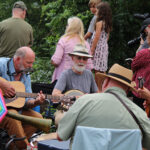
Blue lights shine on the guitarists, percussionists and bassists lining the stage of Champions Sports Bar & Grill in Highspire. They warm up alongside musicians wielding trumpets, harmonicas and flutes as a 50-person audience watches. A few couples begin to dance.

“Most new people coming in hear the band’s set thinking they’re an organized band,” said Andrew Kehe, secretary of the Blues Society of Central PA.

The band is entirely improvised. Some players didn’t even know each other when the night began.

Musicians who want to perform write their name and instrument on a clipboard. The host mixes and matches musicians from the list to create and expand their sound. The big moment comes when they see their name on a set board by the stage. Then the players join forces on an improvised, four-song set.  

“The cool thing about it to me is that you never know who you’re going to play with,” said Gary “Rocky” Rothrock, treasurer of the Blues Society.

A longtime attendee, he now facilitates and manages the jam nights.  

“There’s a core group that comes out to play, but we get new people all the time,” Rothrock said. “Touring musicians will hear about it and come out. You never know who’s going to come.”

One key element draws people into the jams—the randomness of the sets.

Most performers decide to play covers, but some play their own material. One person leads and cues the musicians, who listen and try to complement the sound of the group. Solos rotate from instrument to instrument, so everyone has a chance to jam. The styles of blues can vary from country to classical to rock ‘n’ roll to jazz depending on the instruments included in the set and the musician’s personal sound.

“It’s great music. It’s free. It’s a cheap night out,” Kehe said.

Rothrock describes the jam as different from other ones that he’s experienced.

“Most jams have a house band, they play a set, and then they invite one or two people to sit in,” Rothrock said. “We’ve never done that. We’ve always just thrown the sets together, come on up, and play. You really need to learn how to listen to each other and feel out where the music is going.”

The Blues Society provides instruments and sound equipment, so musicians can come in and pick up something if they don’t have an instrument on hand. Society volunteers come early to set up or stay late to tear down the stage.

“We store all of the gear here, and we even have a big organ that was donated to us 15 years ago,” Rothrock said. “That’s a feature that a lot of keyboardists like.”

Despite not knowing what people and instruments will play together, Rothrock said there is a secret to performing well together.

“We all have the same sort of foundation in the music, and there’s a basic structure to blues,” he said. “So, once you know the basic structure, then you just kind of improvise on top of it. The more you do this, the more you get the feel. You know, it’s a cooperative thing, and it’s really good training.”

The jam has been going on continuously for 18 years. Champions is their fourth venue, after starting at the Lochiel Hotel in Harrisburg in 1998. The group changed locations after a 2001 flood badly damaged the old building. The group tried jamming in other locations, eventually settling in at Champions three years ago.

The society is involved with other events such as the Lancaster Roots and Blues Festival, the annual Mississippi Railroad show, the Dauphin County Music and Wine Festival and a members-only holiday party. But the weekly jam provides the all-volunteer Blues Society with a musical meetup just for fun.

“People in this organization work really hard to do what they do,” Rothrock said. “It’s pretty remarkable. We’re like a big family.”

To learn more about the Blues Society of Central PA and the weekly jams, visit www.bscpblues.org.

Author: Kait Gibboney

Continue Reading

Musical Notes: Shake It Off (The Cold, That Is)

Finally!

Winter is almost over, and spring is starting to spread around the city. It’s time to banish seasonal depression, and what better way to do it than with some music? This time, I’ve picked a few bands that are upbeat and lively to help you brush off the snowflakes and embrace the sunshine. For those of you soured by the cold and seeking sunnier days, warm up to the new season with these upbeat tunes.

SCYTHIAN, 3/3, 9PM, ABBEY BAR, $15

There’s bound to be at least one Irish group in this month’s column with St. Patty’s Day coming up, and here’s one sure to lift the spirits. Scythian (pronounced sith-ee-yin), named after Ukrainian nomads, is a self-described “Immigrant Rock/Celtic-Gypsy-Americana”
group from Washington, D.C. Music critics from sources such as The Bluegrass Situation, iHeart Radio and Nashville’s Music City Roots affirm that Scythian brings a high-energy fiddle fest to each memorable performance. Near the end of this year, the band starts a tour across Ireland after traveling around the United States. If you decide to come to one of their performances, it’s highly advisable to bring some dancing shoes along with you.

AORTIC VALVE, 3/17, 9PM, RIVER CITY BLUES CLUB, $5

This local-ish favorite band knows just how to lure you out of hibernation mode. You may know Aortic Valve from their longtime stint at H*MAC, but River City also hosts these audio/visual artists. If you’ve never seen them, you’ll be wowed by their experimental style, which blends with vivid imagery set up on several screens. Sometimes, they create their own mixes from current songs, and sometimes they blow you away with their uniquely styled originals. Dancing shoes also recommended for this one, folks.

THE JIGSAW SEEN, 3/24, 9PM, H*MAC STAGE ON HERR, $10

All the way from Los Angeles, H*MAC is luring The Jigsaw Seen to the east coast for some feel-good Indie rock. This band’s been around since 1989 and has seen some serious action in their day. No stranger to television, The Jigsaw Seen’s music has been featured on shows such as “Futurama,” “Wilfred” and “Shameless.” The group is also known as a seasoned touring band, opening for acts such as The Smashing Pumpkins and Kara’s Flowers, also known as early Maroon 5. Reintroducing themselves to the touring scene, this band is perfect for newcomers or for longtime fans searching for some good vibes.

Mentionables: Sons of an Illustrious Father, March 2, The Underground Bike Shop; Shea Quinn’s The Band Who Sold the World, March 10, H*MAC at the Capitol Room; Low Lily, March 11, Fort Hunter Mansion and Park; Animal Logic, March 17, Little Amps downtown; Larry Keel Experience, March 24, The Abbey Bar; Babel Map, March 24, Little Amps downtown

Author: Kait Gibboney


Continue Reading

Downtown’s Town Hall: Brad Jones and the re-imagining of Strawberry Square.

The mayor of Strawberry Square is holding court on this Tuesday morning. From his soaring chamber, he greets his constituency.

Some passersby get a wave and a hello, as in “Hi, Mr. Regan,” who happens to be state Sen. Mike Regan. Others stop at his table for a quick word about their businesses or schools. When he notices grandparents and their preschool-aged grandson looking at the centerpiece Chockablock Clock, silenced for the moment, he obligingly takes out a key and turns on the clanking, whirring, Rube Goldberg-ian centerpiece of Harrisburg’s downtown mall.  

It’s all in a morning’s work for Brad Jones, president and CEO of Harristown Enterprises. He is, of course, not a mayor at all. But from a table at Little Amps Coffee Roasters—one of the new businesses in Strawberry Square—he sometimes presides over the moving pieces of Harristown’s ambitious plan to transform a dated, 1970s-era idea of urban renewal into a fresh, 21st century hub for live, work and play.     

“We’re trying to create community here,” he said. “This was always the town hall.”

A brief history: Under the aegis of Harristown, a private nonprofit created in 1974, urban revitalization bulldozed into downtown Harrisburg with demolition of the iconic, if distressed, Penn Harris Hotel, making room in 1979 for a retail-office complex along Strawberry Alley. By 1990, phase two incorporated historic 19th- and 20th-century buildings along Market Street, where retail once flourished.

Verizon rented much of the upper-level office space, but, despite the presence of such mainstay businesses as Auntie Anne’s, the Strawberry Patch and Ideas and Objects, Strawberry Square, with its massive atrium, seemed empty and lost in time.

The recession years were especially chilling, but Harristown’s volunteer board of directors had already launched a reinvention plan seeking revitalized retail, the addition of residential units and support for what Jones calls an “education corridor.”

The pending 2016 vacancy of the Verizon Tower was the launching point. Painstaking negotiations with the state relocated 900 Department of General Services workers into the heart of downtown from their old digs at the former State Hospital grounds at the edge of the city.

Getting that 17-year lease with the state, and its power to nearly erase $41.6 million in debt obligations on the facility, “was like breathing again,” said Jones. Those 900 workers didn’t displace existing bodies but filled a space where only about 250 people knocked around by then. As Jones put it, “Retail follows people.” And so does residential.

One of the first signs of new life was a childcare facility, immediately popular among office workers happy to drop off, visit and pick up their kids right where they work. New office tenants included highly desirable tech businesses and a health care consultant. A space accessed both from an interior corridor and the street was converted into the bright Market on Market, stocked with convenience-store fare like soda, Tastykakes and Hershey’s Ice Cream pints, plus millennial chow like okra chips and a bin of fresh onions.

In a survey, Strawberry Square workers, residents and patrons clamored for a drug store, so Harristown obliged by luring in Rite Aid from across Market Street, coming soon to 14,000 square feet in the same corner once occupied by a Thrift Drug.

“We’ve been working on this for 10 years,” said Jones, who declined to share Rite Aid’s lease length but promised it’s lengthy. “This is a business that is clearly going to prosper here.”

Reasons to Stay

Amma Johnson, who sells her bags and other boutique ware in her shop, Amma Jo, cheers the innovation of a mixed-use complex, in contrast to shopping malls where she would be “next to a million other people selling handbags.”

Today’s customers seek experiences, she said. For her, they include state workers on lunch breaks, attorneys on Dauphin County Courthouse business, contractors working in Pennsylvania’s capital city or Strawberry Square residents.

“People want to come downtown,” said Johnson, who opened in December 2015 then, last year, gobbled up the storefront next door. “They want to browse. They want to eat. They want to have a cup of coffee, and they want to have it all in one place.”

In short, they “need more reasons to stay,” she said, just before two browsing Amma Jo customers left the store with a cheery, “We’ll be back with money tomorrow.”

Not every vendor agrees with Strawberry Square’s new direction. Vendors who asked to remain anonymous said they worry that the one-stop shop convenience of Rite Aid, stocked with some things also sold at surrounding specialty vendors, will drain their customer pools.

But what “The Square,” as Jones often calls it, takes away, it also gives. Twenty-two upscale apartments, carved out of former office space, opened last year and filled immediately, bringing in full-time residents for the first time, all with their own need to eat and drink and buy. Many of the new tenants work at DGS or Harrisburg University or with a Harristown-tenant business, Jones said. Harristown pitches the residents’ easy access to retail, restaurants, entertainment and nature. In his usual energetic manner, he enthusiastically explained that tenants can stay entirely roofed during the course of a day: eating in the food court or at the Hilton Harrisburg, seeing a show at Whitaker Center, taking classes at Harrisburg University, working out at FitnessU. All are directly linked to the complex.

As for restaurants, Harristown is helping slake the city’s seemingly insatiable appetite for new eateries. From the owners of El Sol Mexican Restaurant, Fresa Bistro (“Fresa is Spanish for strawberry,” remarked Jones. “How cool is that?”) is slated to offer sandwiches and wraps, paninis and salads.

Harrisburg might not ever be an 18-hour city, but 12 or 14 hours of ceaseless activity seem feasible, Jones said.

“Some days, you might have a shot at a 16-hour city, but we’ve got to do more,” he said. “We’ve got a lot of density, but we’ve got to continue to do more and capitalize on the opportunity to help these corridors grow.”

In addition to Harrisburg University, the education corridor includes the Capital Area School for the Arts Charter School, for which Harristown recently added new music-room space, and Temple University, which offers undergraduate and graduate degrees, certificate programs and professional development. Harrisburg High School SciTech Campus is across the street.

Strawberry Square aligns with HU’s notion of city as campus by offering such amenities as eateries, banks and a fitness center.

“These are all important assets that we don’t have to provide,” said HU President Dr. Eric Darr.

HU interns have worked with Harristown entities, and WildFig, a data analytics startup that launched from HU and employs HU students, rents Harristown space. Jones also serves on HU’s board.

As in any marriage, there are occasional differences. Darr said he would like HU to be “THE university in the corridor,” but added that he recognizes the collaborative advantages of nearby university students and faculty.

“In general, we’re aligned with the direction Harristown is trying to take the corridor, particularly the more recent movement toward trying to attract technology businesses and analytics businesses, and providing nice, yet affordable housing for younger workers,” he said.

Future collaborative plans for HU and Harristown include an expanded, “more formal” business incubator and accelerator, to replace HU’s outgrown Blackberry Alley incubator, Darr said.

“We all know there’s a lot of work to do in the corridor,” he said. “Generally, as long-term players, we’re focused on some of the basics of trying to improve the basic corridor itself and the buildings and the facilities and the infrastructure, some of those basic pieces that have to be taken care of. Unfortunately, the city’s not in a position to do it themselves, and, so, we’re left as private entities to try to piece together ways to do this. When you’re talking infrastructure, that’s a pretty expensive proposition.”

About People

In all this, there is still the matter of Strawberry Square’s design, that living tribute to the disco era. Jones and Harristown are trying to give it new life.

A $16 million energy efficiency retrofit replaced every light fixture in the complex, saving money and brightening up the place. A $400,000 rebuild brought a wheezing escalator into the modern age (“As one who uses the escalator almost every day, I appreciate the undertaking,” said Darr). HVAC systems were revamped and bathrooms renovated. Badly needed elevator and skylight refurbs are on the 2017 docket, said Jones.   

Of course, nobody hangs around to admire light fixtures, but the Harristown board elected to tackle needed infrastructure upgrades first, “reinvesting in the systems of the buildings,” Jones said. Attention should turn to cosmetic improvements by 2018, the year when a Christmas tree, now on order and proportionally big enough for the atrium, will deck the halls for the holidays, he added.

In the meantime, the push is on to attract what Strawberry Square needs most—living bodies spending money. Among new businesses, Little Amps opened its third café in 2015, warming up the cold, open atrium and offering an attractive, central meeting place for workers, students and residents. Inside the vast space, the HBG Flea found a winter home for its monthly craft market, and pop-up events like craft beer tastings increasingly encourage mingling and socializing.

Jones said that Strawberry Square’s growth spurt originated with his predecessor, Russell Ford, and the Harristown board. Jones took over the helm in January 2015, 13 years after starting there as corporate director for public and community services. His career in economic development went from the state and federal levels to “nose right to the ground,” with oversight over “just about every brick, every fire hydrant, every tree.”

“I went from 10,000 feet to ground level,” he said. “I have to say, ground level is a lot more fun.”

To Jones, this is all perfectly natural. The son of Cliff Jones, legendary Pennsylvania Chamber of Business and Industry president and cabinet secretary for six governors, Brad Jones grew up with economic development, attending ribbon cuttings at 5 years old. “If you try to make somebody’s day every day,” Cliff Jones would say, “you’ll make your own day.” He also preached that, “It’s not about projects.”

“It’s about people,” Brad Jones said. “Helping people get jobs. Helping people find places to live. Helping people start businesses. Those kinds of lessons stuck with me.”

Jones is a Camp Hill resident with three children, one still in high school. He hopes that Harristown’s support for CASA and SciTech help create opportunities for more families to find quality schooling for their children. He is also a guitarist who once played with a band in Washington, D.C. Sitting at his de facto conference table by Little Amps, he says he is “the luckiest guy.”

“To me, this is the best job in the city,” he said. “It couldn’t get any more fun than this. You’re building your environment, adding to it every day. It’s exciting.”
For more information about Strawberry Square, visit www.strawberrysquare.com.

Author: M. Diane McCormick

Continue Reading

Steve and the City: A final assessment of Harrisburg’s “Mayor for Life.”

Illustration by Rich Hauck.

It’s complicated. Very complicated.

That may best describe Harrisburg’s relationship status with its former mayor for life and now-convicted felon, Stephen R. Reed.

Following Reed’s recent plea deal on 20 counts of theft-related charges, the conversation began once again about the legacy of the man who served for nearly three decades as the city’s chief executive.

Reed’s judge, the Hon. Kevin Hess, didn’t hesitate to share his personal opinion with the courtroom.

“He revitalized the city of Harrisburg in ways clearly visible to anyone who bothered to look out the windows of this courthouse,” said Hess, paying tribute to an admitted felon who he was about to sentence for his crimes.

So, was Reed a mayor of great vision who singlehandedly revived Pennsylvania’s dying capital city? Or was he a financially reckless dictator who drove Harrisburg headlong into a ditch?

Personally, I tend toward the second explanation because, as I stated once in another column, leaving a city you ran for 28 years in grave financial distress, essentially bankrupt, forced into receivership, is pretty much the definition of failure. To me, that ends the argument.

However, even I can’t ignore the physical legacy that Reed left behind: Harrisburg University, Whitaker Center, the Civil War Museum, the Hilton, restaurant row. These happened on his watch—several were basically his ideas—and there’s no denying that.

That said—what marks a successful project? Is it the initial idea? The launch? Or is it the ability for that project to carry on year after year, to grow, to become institutionalized in a community?

For an example, let me discuss a project that’s especially close to my heart—TheBurg.

About a decade ago, two guys had an idea, and, well, everyone has some crazy idea for a business, right? Maybe it’s a community magazine, but maybe it’s a restaurant or a shop or a new school. I can tell you that the idea is the easy part, the most fun part.

Next come the plan and the financing. That’s harder, but, if you’re determined, you can probably jump those hurdles, too. We used our own cash—and seriously underestimated how much capital we needed to make TheBurg sustainable. Reed used everyone else’s—and, likewise, severely underestimated how much capital he needed.

So, in January 2009, after much planning and our own money at stake, we launched TheBurg with three strikes already against us. We began a print publication as print was declining (strike one); as the Great Recession reached its frightening depth (strike two); and in a city itself in financial free fall (you’re out!). At that time, “shorting” TheBurg (betting against us) would have been the smart move.

However, we’ve succeeded far beyond my expectations. Sure, there were major hiccups along the way, but we were able to make our project work with continual hard work, a talented staff, solid leadership, community involvement, a bit more capital and maybe some good luck.

To me, this is what gets lost when someone credits Steve Reed for what downtown Harrisburg has become. He may have set the wheels in motion in some cases, but the truly hard, day-to-day work fell to people like Eric Darr, Michael Hanes, Brad Jones, Tom Scott, Steve Weinstock, Juan Garcia, Nick Laus, Qui Qui Musarra, Staci Basore and many others. They’re the ones who deserve the real credit for making downtown successful.

Along the journey, they’ve had their own version of TheBurg’s “three strikes,” including the city’s financial crisis, skyrocketing parking rates and years of skewed, harmful press coverage. In several cases, Reed’s crazy financial schemes proved themselves to be major burdens. Imagine starting a project under such a load of debt that it’s hard to understand your obligations, much less pay them—yet still succeeding. Now, that’s leadership!

So, looking at Reed’s legacy, I don’t want to dismiss his contributions out of hand. He had some successes. Of course, to make an honest assessment, you also have to examine the opportunity costs involved (how many roads could have been paved and pipes laid for some $18 million spent on artifacts?), as well as his many failures (everything from three abandoned museum projects to the never-built city gateways to the Verizon Tower bond insanity). And then, my God, there’s the broken-down, leveraged-up city incinerator. Talk about an unmitigated disaster.

In the end, I simply can’t get beyond Reed’s financial destruction of the city and the school district, which both needed state intervention to survive. Is that success? In defending my position to Reed supporters, I’ve often asked them what they could have done with the essentially blank check that Reed had, with the $1 billion or so in debt that he and his cohorts piled on the city and the school district. For that money, shouldn’t tiny Harrisburg be in far better shape than it is, with solid roads, sewer, safety and schools?

There’s an old saying—I’m sure you know it—that a hungry person may order too much because his eyes are too big for his stomach. That’s rather how I feel about Steve Reed. He had a raging desire to impose his solutions on Harrisburg, remaking the city in his image and indulging his own appetites in the process. However, he had very limited financial ability to make it happen. Unfortunately, that didn’t stop him.

Lawrance Binda is editor-in-chief of TheBurg.

Continue Reading

My Place or Yours? Designer Alison McIndoe has some beautiful ideas inside her new shop.


The door to the showroom was open and inviting the day I arrived in downtown Lancaster, as was owner Alison McIndoe.

Her warm and friendly smile welcomed me to the Shoppe at AK Interiors. The colorful flowers adorning the window out front made an elegant entrance, and the design continued with classic furnishings inside.

Unique items kept catching my eye as I perused the store, but one begged for my attention—a little, black-and-white dog figurine in front of the window. His name is Bergere, after the chair, and he has become a beloved mascot in the store.

As dog lovers, McIndoe and her staff thought Bergere would be a perfect fit for the store.

“I hand-select all of the items in the shop, seeking out unique pieces,” she said. “In the design business, our main focus tends to be classic, timeless interiors with a fresh approach. Therefore, much of our inventory reflects that, as well.”

McIndoe has been in the design business for most of her life, starting with her parents’ store.

Growing up with parents who were business owners, I got to see and experience first-hand my parents at work,” she said. “The store really became like a part of the family. My parents worked harder than anyone I knew; my admiration for them is beyond description. I guess I wanted to grow up and be just like them.”

With a degree in interior design and lots of experience working in the design and building industry, McIndoe opened AK Interiors in 1996, working from her home at first. At the time, she was a single mom, and this allowed her to be easily available. A little more than a year ago, she decided it was time to venture out and open a boutique home furnishings shop.

Now that my son is a teenager, he has his own schedule with activities and such,” she said. “It just seemed like the right time, and it was getting increasingly difficult to find great accessories to share with my clients. Having a shop enables me to have these accessories right at my fingertips, as well as the convenience of having the design studio in the building.”

The 1,100-square-foot space includes offices for the design team and a room for meeting clients. AK Interiors works with all different types of customers: residential and commercial, new build and renovations.

One unique service is “Room in a Day.” Basically, the staff uses clients’ existing furnishings and accessories, sometimes borrowing from other rooms. Then they re-design the space.

“It’s amazing to see what a difference we can make in just a day with fresh eyes,” she said.

A longtime customer, Karen Mitchell recently used AK Interiors for a new house she and her husband purchased.

“Alison was extremely detailed in the design process,” she said. “She listened to us and provided us with a vision that exceeded our expectations. She was able to take a floor plan from the 1950s and create a space that fits perfectly with our modern-day living.”  

Mitchell also loves the shop.

“The space is beautiful, and I love to go in to purchase statement pieces for my home as well as gifts for special occasions,” she said. “The team members who work in the shop are extremely helpful. They can assist in helping you select a large piece, as well as smaller hostess gifts. It’s definitely my go-to spot when I need to purchase a gift or want to update my home.”

While I was looking around the shop, I noticed a long hallway filled with artwork. I was intrigued, so asked Alison about it. It turns out that she participates in Lancaster’s “First Friday,” a celebration the first Friday of each month when city shop owners feature local artists’ works, even offering music, drinks and nibbles.

“It’s so much fun to be part of the city’s energy,” she said.

I found the Shoppe at AK Interiors to be a great place to get ideas, purchase items for gifts and furnish a home or business. As for Bergere the dog, if anyone is interested, he is for sale.

“As long as he goes to a good home, we’d be okay to see him go,” McIndoe said.

The Shoppe at AK Interiors is located at 246 W. Orange St., Lancaster. For more information, visit www.akinteriorsllc.com or call 717-872-6966.

Author: Carissa Bannister Kauwell

Continue Reading

The Right Stuff: Takes steps to ensure the correct care, treatment.

We’ve all been there—a sudden illness or injury interrupts your day. Is your situation an emergency? Or is your primary care provider (PCP) or pediatrician’s office the right place to go for treatment? You’re feeling lousy, and you think an antibiotic will make you feel better.

The first thing to know is that, while you may be feeling bad, an antibiotic isn’t always the answer.

“If we keep misusing medications, bacterial illnesses that used to be curable will no longer respond to antibiotic treatment,” said Dr. Christian Caicedo, interim chief medical officer at PinnacleHealth. “This is not science fiction. Around the world today, antibiotic-resistant illnesses are causing sickness and even death.”

Caicedo said when your doctor tells you that your illness is viral and not bacterial, listen carefully. That means you have a virus that needs to run its natural course and an antibiotic will not help your illness. If you take an antibiotic when you don’t need one, you may be hurting yourself and others.

Taking antibiotics unnecessarily could kill your good bacteria or cause side effects. Antibiotics are powerful drugs that are used to treat bacterial infections. Misuse or overuse can cause problems such as:

  • Altering the effectiveness of other medications and causing side effects or allergic reactions.
  • Killing most of the bacteria in your body that are sensitive to them, including good bacteria, which may cause stomach upset, diarrhea, nausea or other problems.
  • Making birth control pills less effective or leading to vaginal yeast infections in women.

“Using antibiotics against viral infections will not cure the infection or help you feel better,” said Caicedo.

To feel better when you or your child has a viral infection, ask your healthcare professional about over-the-counter treatment options that may help reduce symptoms, he said. Self-care like drinking more fluids and getting more rest can provide some relief. In addition, if you are diagnosed with the flu, there are prescription drugs called flu antivirals that can be used to treat flu illness.

“Just because your healthcare professional doesn’t give you an antibiotic doesn’t mean you aren’t sick,” Caicedo said. “It just means an antibiotic won’t help you. Talk with your healthcare professional about the best treatment or symptom relief for you or your child’s viral illness.”

Is It an Emergency?

This time of year, emergency rooms often are swamped with people who have the flu—or even just a cold or cough. Before visiting the ER, please judge whether your problem actually is an emergency, as it may take valuable resources from someone with a serious or life-threatening condition.

“Going to the ER when it’s not an emergency means you may be waiting many hours to receive medical attention,” said Caicedo. “And, while insurance coverage varies, most insurers require you to pay a lot more out of pocket for nonemergency care in the ER.”

Emergency doctors report several conditions for which appropriate care can be provided elsewhere. While exceptions occur, many illnesses (colds, cough, vomiting, diarrhea, sprains, earaches, sinus infections, etc.) are not serious and can be treated in a primary care or urgent care setting.

When it’s not an emergency, calling your PCP or pediatrician is typically recommended for immediate medical advice. Walk-in care and retail clinics like PinnacleHealth Express and FastCare Clinics are convenient options when you can’t get in to see your regular doctor, especially after hours.

“Our Express and FastCare locations are staffed by primary care providers who can treat multiple concerns, including coughs, colds, rashes, urinary issues, eye or ear drainage and fever,” said Caicedo. “While these conditions have the potential to get worse, they are not emergencies requiring hospitalization. We can treat patients appropriately and in a timely manner.”

Emergency room visits should be for just that—an emergency.

“Chest pain, broken bones, possible stroke, poisoning, severe burns, lacerations and major loss of blood are some examples of emergencies,” he said. “If you aren’t sure, contact your PCP and use your best judgment.”

For instance, those with high-risk health issues should call the doctor first when they get the flu and consider getting care through their primary care doctor or urgent care center instead of going to the emergency room—unless symptoms worsen.

“We’re in the heart of flu season, and it can cause some really uncomfortable symptoms, especially high fever,” Caicedo said. “It’s a good idea to know whether you or a family member is at high risk for complications from the flu.”

When it’s not an emergency, use your PCP or walk-in care. Many doctors’ offices have extended hours or 24-hour nursing support. And most walk-in centers are open on the weekends and have flexible hours.

By receiving the right care in the right setting, you can help yourself in many ways, make the most of your time and potentially save money.

To learn about the CDC’s recommendations for flu symptoms that require emergency treatment, visit www.pinnaclehealth.org/flu.
For more information about walk-in care options and finding the right care for you, visit www.pinnaclehealth.org/rightcare.

Author: Christina Persson

Continue Reading

Masters & Modern: HSO brings two very different concerts to the Forum this month.

Ann Hampton Callaway

Composer-pianist-conductor Leonard Bernstein once said there is no serious or unserious music, only good and bad music.

The Harrisburg Symphony Orchestra will demonstrate that maxim this month, presenting both Masterworks (classical) concerts and Pops (contemporary) concerts—to wit, the music of masters Stravinsky, Debussy and Richard Strauss, as well as a tribute to pop icon Barbra Streisand.

There is something unusual in HSO’s playing of Igor Stravinsky. Often, when orchestras play “The Firebird”—the breakthrough piece by the Russian composer, written for the 1910 Paris season of Sergei Diaghilev‘s Ballets Russes—they serve up not the entire work but the shorter “Suite” based on it.

But, when HSO sits down on March 18 and 19 to perform “The Firebird,” it’ll be the full ballet, just as Stravinsky created it.

“That’s 45 minutes long,” said Jeff Woodruff, the orchestra’s executive director.

Based on Russian fairy tales of the magical glowing bird that can be both a blessing and a curse to its owner, Stravinsky’s work was an instant success with both audiences and critics.

“The piece marked the beginning of the revolution period of modern music, showing a new way of composing,” said Woodruff. “It’s beautifully colorful.”

Also on the program that day: Debussy’s “Prelude to the Afternoon of a Faun” and Strauss’s “Death and Transfiguration.”

For something entirely different, HSO will offer one of its “Pops” concerts in March, as the orchestra accompanies Ann Hampton Callaway singing from the songbook of Barbra Streisand—vocalist, songwriter, actress and filmmaker.

“Music is a big tent—a lot fits in,” Woodruff said of the orchestra’s diverse programming. “But, ultimately, we try to be faithful and true to the [classical] orchestral world.”

That said, HSO tends to focus on more recent works, even for classical music concerts.

“There are thousands of pieces we could play, but we don’t play works much before the 18th century,” Woodruff said. “We do a lot of 20th-century pieces.”

The orchestra’s wide repertoire for its “Masterworks” concerts encompasses symphonic music and concertos, as well as suites for operas and ballets. The traditional format of these concerts is a large-scale work, usually with a soloist, and a shorter piece, such as an overture or symphonic poem, typically encompassing 80 minutes of music.

The “Pops” concert series has a completely different focus, featuring Broadway tunes, Hollywood film scores, ensembles like the Canadian Brass, and special events, such as a “Tribute to Star Wars” and a Disney program.

“Stuart [Malina, HSO’s music director and conductor] presents a variety of music, a sampling of various periods and styles,” Woodruff said.

The decisions about programming are made by Malina, with some input from staff and the Artistic Advisory Committee. And, of course, as with any other cultural institution, budget plays a part.

Only about one-third of the orchestra’s revenue comes from box office.  The rest of the $2.7 million budget has to be raised.

The “Pops” series is much more recent than the birth of the orchestra; it goes back to the early-90s, “at the end of the Larry Newland era,” said Woodruff, referring to a former music conductor.

Although there is some overlap between audiences of the “Masterworks” and “Pops” series, the latter brings in people who generally are not attracted to the classical offerings and want to hear more-contemporary pieces.

“Most orchestras are doing something like the ‘Pops’ series to broaden the funding base and diversify the audiences,” he added. “We cater to people with a range and variety of tastes.”

Another difference is that “Masterworks” concerts are introduced by pre-concert talks—which are part of the orchestra’s educational activities—while “Pops” concerts are not.

Another significant part of the HSO is the very active Youth Symphony for high school students and the all-string ensemble of middle schoolers. These are volunteer orchestras, although one has to audition to be accepted.

HSO itself is fully professional, with players part of the American Federation of Musicians. Most live outside of the Harrisburg area, drawing from the major metropolitan areas of Baltimore, Philadelphia, Washington and New York.

“It will be a special season: Stuart’s 20th season, the orchestra’s 90th and the 30th of the Harrisburg Symphony Society (a group of volunteers who support HSO),” Woodruff said.

Aside from all those milestones, there is something to celebrate—the orchestra “keeps getting better and better,” he said.

“Ann Hampton Callaway Sings the Barbra Streisand Songbook” runs March 4 and 5 at The Forum, N. 5th and Walnut streets, Harrisburg. The “March Masterworks Concert” runs March 18 to 19, also at the Forum. For more information on both concerts, visit www.harrisburgsymphony.org or call 717-545-5527.

Harrisburg Symphony Orchestra March Events
www.harrisburgsymphony.org

Ann Hampton Callaway Sings the Barbra Streisand Songbook

The Forum, Harrisburg
March 4, 8 p.m.
March 5, 3 p.m.

“Stuart & Friends”

Annual Chamber Music Concert
Gamut Theatre, Harrisburg
March 15, 7:30 p.m.

“The Art of Personal Style”

New Style Fashion Show
Hershey Lodge, Hershey
March 16, 11 a.m.

“March Masterworks Concert”

The Forum, Harrisburg
March 18, 8 p.m.
March 19, 3 p.m.

Author: Barbara Trainin Blank 

Continue Reading

February News Digest

Crime Rate Falls

Harrisburg isn’t commonly known as a low-crime city, but it may be trending that way as overall crime dropped for a third straight year.

Mayor Eric Papenfuse last month announced that total crime dropped 17.7 percent last year compared to 2015. Violent crime fell 3.9 percent while nonviolent crime decreased 31.4 percent versus 2015.

Papenfuse attributed these statistics to Chief Thomas Carter’s leadership, the implementation of a community policing strategy and recruiting talented new hires.

“I think he has set the tone for our Police Department and, as a result, his strategies are effectively trickling down to everyone, and the department is working more effectively than ever before,” Papenfuse said.

In 2016, an 18.47 percent drop in robbery led the decrease in crime compared to 2015. The city’s murder rate also fell. In 2016, Harrisburg recorded 16 murders, compared to 19 in 2015.

For 2016, auto theft was one of the few types of crime to experience an increase. Olivera said the 27.43 percent increase in auto theft reflected the past year’s cold winter when thieves take advantage of motorists warming up cars unsupervised.

Over the past three years, violent crime has dropped 27.5 percent, while nonviolent crime has fallen 29.6 percent, according to the city.

Leading the violent crime category’s three-year drop is a 50.82 percent decrease in robberies and a 36.59 percent decline in burglaries.

Free Parking Zones

There’s some good news for downtown Harrisburg motorists—more free and reduced parking options.

Last month, Park Harrisburg expanded a program that allows 15 minutes of free parking in downtown Harrisburg.

Last year, under pressure from the city administration and business owners, Harrisburg’s parking operator agreed to permit a quarter-hour of free parking in four loading zones along busy N. 2nd Street.  That program has now been expanded to 26 zones throughout the central business district.

The zones are marked by new signage and curbs painted white.

In addition, the city last month announced a new mobile parking app through Atlanta-based Parkmobile LLC. Through the downloadable app, parkers pay just $1 an hour to park under a pilot program during “happy hour” times, 5 p.m. to 7 p.m.

The new app also allows merchants to pre-purchase parking validation codes in bulk at a discounted rate for customer use. Moreover, the “LUVHBG” code, which allows four free hours of parking on Saturday, will remain in effect with the new app.

The parking news, however, wasn’t all good.

Last month, Park Harrisburg stopped allowing those using a credit card to buy only a half-hour of parking. Credit card users now must purchase at least one full hour of parking, which costs $3 downtown and $1.50 in Midtown and south of downtown. Afterwards, they can extend their parking sessions in half-hour increments.

When using coins, motorists can continue to buy parking in smaller amounts. For a quarter, parkers get five minutes of time downtown and 10 minutes elsewhere.

Zembo for Sale

One of Harrisburg’s most unique historic buildings is up for sale, as the Zembo Shriners have placed their iconic temple on the market.

In January, the Lemoyne-based Bill Gladstone Group listed the 62,621-square-foot building for sale for $950,000.

The building, at N. 3rd and Division streets, long has served as meeting space for the fraternal society, in addition to hosting the annual Zembo Shrine circus and other large-scale events.

“It’s been a kick in the gut,” said Michael T. Govora Jr., a past potentate. “But we simply can’t afford to do it anymore. It’s a matter of manpower and money.”

Govora said that declining membership and increasing costs are forcing the sale. Moreover, the Shriners want to make certain that they’re able to continue with their principal mission—raising money for 22 children’s hospitals.

“We’re looking at this as a positive,” Govora said. “We’re looking for our fraternity to be fruitful for years to come and not run out of money keeping something we can’t afford.”

The local organization has about 2,200 members, he said, down from about 10,000 four decades ago.

Built in 1928-29, Zembo was designed in the Moorish Revival style, by noted local architect Charles Howard Lloyd.

Both Govora and Gladstone said that it may take awhile to sell the cavernous stone-and-masonry building, given its unique design and features, which include rooms full of dazzling, imported tiles, a large auditorium, a 120-foot minaret and 300 parking spaces.

“So much history is attached to it, so many events have been held there,” Gladstone said. “To their credit, they realized that the time had come to sell.”

Reed Gets Probation

What began as a man’s ambitious vision to develop a network of museums in a city of 50,000 people has ended with two years of probation for former Harrisburg Mayor Stephen Reed.

Judge Kevin Hess sentenced the former “mayor for life” to probation for 20 counts of receiving stolen property. Reed must also pay a $2,000 fee plus the cost of the prosecution.

Hess gave Reed’s stage-four cancer, guilty plea and clean criminal record as reasons for the probation sentencing, as opposed to jail time. He also cited improvements made to the city during Reed’s tenure as mayor.

Hess received numerous letters about the case, including a victim’s impact statement filed by the city.  In it, the city requested a two-to-five-year jail sentence.

“We felt that would have been an appropriate sentence given the magnitude of the crime and a continued pattern by the mayor for not accepting the responsibility of his actions,” said current Mayor Eric Papenfuse.

Papenfuse did see some positives. Reed’s guilty plea on the 20 counts leaves the door open for civil suits and possible charges against others from the Reed administration, he said. The city also is seeking the return of the artifacts and “tractor-trailer loads” of public documents from Reed’s 28 years as mayor, he said.

Reed said he will now focus on his stage-four prostate cancer.

“It is a relief for the whole thing to be over,” he said.

More Market Parking

Harrisburg City Council last month added more free parking for patrons of the Broad Street Market.

Council voted unanimously to make James Street, William Street and N. 4th Street two-hour market parking from Verbeke to Sayford streets, starting March 10.

Previously, those streets were residential permit parking for the Marketplace neighborhood, though most of the effected blocks are lightly developed.

New Police Substations

Harrisburg soon will have more police closer to the action, as a new precinct is planned for Allison Hill while a substation opened downtown.

Harrisburg City Council last month took a step toward opening a precinct in Allison Hill, a key aspect of the mayor’s goal to implement a community policing strategy.

Council unanimously approved a resolution to work with SGS Architects Engineers of Carlisle for design and construction management. After a three-month design phase, the construction to complete the renovations will go out to bid, said Mayor Eric Papenfuse.

The Allison Hill precinct on 15th Street is the second of three “full-time, fully staffed” precincts that the mayor aims to create. The Uptown neighborhood will receive its own precinct next, he said.

A Community Development Block Grant from the U.S. Department of Housing and Urban Development will fund the construction. 

Also last month, Harristown Enterprises and the Harrisburg Downtown Improvement District (HDID) opened a security and safety sub-station on 17 S. 3rd St. near Strawberry Square.

The new “S-5” sub-station serves as a hub for unarmed security officers contracted by HDID to cover the district. Pairs of officers man the sub-station five days per week to supplement the daytime presence of the Capitol police, said Brad Jones, CEO of Harristown.

“We will have patrol units continue to canvas the DID to look for situations that are unsafe and, when appropriate, call in the emergency,” he said.

State Hospital Report

The state should move quickly to sell the former Harrisburg State Hospital grounds, potentially transforming the lightly developed area into a mix of commercial and residential uses, while preserving some of its historic structures and open spaces, according to a report sent last month to the General Assembly.

The 161-page report by Lancaster-based RGS Associates recommends selling the entire 295-acre property as a single package at first. If a buyer can’t be found after a 180-day bidding period, the state should consider breaking up the land into four separate, saleable parcels, the report states.

“The Department of General Services fully supports the top recommendation to sell all four parcels together in order to put forth the most appealing opportunity for potential developers and enable them to develop the property in a way that will be most beneficial to the community,” said state General Services Secretary Curt Topper.

Nearly all of the land lies in Susquehanna Township. Only five acres is in Harrisburg proper. The RGS report recommends putting the property on the market in the first quarter of 2018.

The vast site, which extends in a meandering, broken path from N. Cameron Street to I-81, is best suited for a mix of commercial and residential uses, said the report. However, RGS recommends putting in place a covenant to preserve three of the most historic structures on the property: the dedication stone for the original 1851 main building, the 1854 Dixmont Cottage and the 1854 Dix Library.

Parkland Donated

Dauphin County this year will open a new public park, 411 acres of green space in Middle Paxton Township.

The county commissioners last month announced the formation of Detweiler Park, named for the family that is deeding the land to the county. It will be the largest of Dauphin County’s eight parks.

The Detweilers donated $897,500 of the land’s $2.4 million purchase price to the county. The remaining money came from an $887,500 grant from the Pennsylvania Department of Conservation and Natural Resources and $607,500 in county gaming grant money from Hollywood Casino. 

The property includes a farmhouse, nine miles of walking trails and a fish hatchery maintained on Clark’s Creek. This summer, temporary parking and an entrance to the trails will be available at the Dauphin County Conservation District’s headquarters, 1415 Peters Mountain Rd. 

Public meetings will be held later this year to get input for a master plan on what features should be developed, including a permanent parking area, fields for sporting events and potentially converting the farmhouse to a nature center.

Home Prices Up

Home sale prices climbed higher in January in the Harrisburg metro, though the number of units sold ticked down.

Throughout the area, house sales totaled 503 units compared to 557 units in January 2016, according to the Greater Harrisburg Association of Realtors. The median sales price rose $1,000 to $153,000.

In Dauphin County, sales decreased 10.8 percent to 165 units versus the year-ago period, but the median price increased 4 percent to $139,900. Trends were similar in Cumberland County, as sales declined 19 percent to 163 units, and the median price rose 15 percent to $200,198. In both counties, the average days on market for houses sold fell significantly.

In Perry County, 21 houses sold versus 27 in the year-ago period, while the median price was $124,000 versus $147,000 in January 2016.

GHAR covers all of Dauphin, Cumberland and Perry counties and parts of York, Lebanon and Juniata counties.

Falcons Return

For the 17th straight year, peregrine falcons have returned to nest at the Rachel Carson state office building in downtown Harrisburg.

The pair arrived at the nesting site last month on the 15th-floor ledge of the building, according to the state Department of Environmental Protection. Following a courtship period, eggs typically are laid in mid-March.

You can watch the falcons in real-time by visiting the DEP’s FalconCam.

So Noted

Dauphin County Bar Association last month named Matthew M. Haar, a partner at Saul Ewing LLP, as the organization’s president for 2017. The association recently also honored James P. DeAngelo as Pro Bono Attorney of the Year and Clarissa L. Freeman with the Hon. Clarence C. Morrison Diversity Award.

Harrisburg Christian School announced last month that it acquired the West Shore Christian Academy, unifying under the Christian School Association of Greater Harrisburg. The two schools will continue to operate at their current campuses in Linglestown and Shiremanstown, respectively.

Melissa Nicholson, co-founder of Gamut Theatre Group, has been named president of Shakespeare Theatre Association, an international association for theaters dedicated to the works of William Shakespeare. Nicholson had served as vice president of the group for the past two years.

Rep. Patty Kim (D-103) opened a new district office last month in Kline Village in Harrisburg. The office is open weekdays, 8:30 a.m. to 4:30 p.m.

S&T Bank has promoted Zach Dixon of Harrisburg to assistant vice president, business banker. Dixon formerly was a credit analyst at Integrity Bank, a division of S&T.

The State Library of Pennsylvania now offers time in its “Makerspace” in the Forum building, downtown Harrisburg, for maker projects or to test out technology. Hours are weekdays, 8:30 a.m. to 5 p.m., by appointment. For more information visit www.statelibrary.pa.gov.

In Memoriam

Mike Bowers died last month from a fall after a balcony railing gave way at an apartment house on N. 2nd Street in Harrisburg. Bowers was widely known in Harrisburg as both a flooring contractor and as a children’s magician for his company, The Magic Workshop.

Changing Hands

Barkley Lane, 2522: A. & A. Mekonnen to W. Workie, $30,000

Boas St., 407: T. Buda to L. Savageau, $156,000

Boas St., 1915: Dobson Family Limited to J. Koons, $30,000

Briarcliff Rd., 211: C. & M. Purdy to Donald L. Pong Trust, $143,000

Briggs St., 219: B. Heivly to D. Skerpon, $175,000

Calder St., 208: J. Martin to K. Landers, $99,900

Chestnut St., 1722: J. Palmer to J. Alverez, $39,000

Conoy St., 102: J. Hagan to P. Taylor & St. Gaus, $130,900

Cumberland St., 251: B. Ausubel to Keystone Properties Group LLC, $104,000

Emerald St., 234: J. Baker & C. Landry to D. Pena, $53,000

Forster St., 1837: K. Bethea Jr. to D. Hall, $34,000

Green St., 1416: J. Karns to G. & K. Fava, $145,000

Green St., 1417: T. Hayman to B. Williams, $40,000

Kensington St., 2235: Federal National Mortgage Assoc. to K. Dinh, $33,100

Locust St., 126: 126 Locust Street LP to JKC Properties LLC, $170,000

Muench St., 236: WCI Partners LP to J. O’Hara, $184,000

2nd St., 2343: G. & E. Zubrod to S. & T. Dunford, $163,500

2nd St., 2525: Sirva Relocation Credit LLC to P. & A. Ramos, $169,900

3rd St., 1619: Bank of New York Mellon Trustee to T. Fridirici, $72,539

3rd St., 2333: Well Fargo Bank NA Trustee to R. Oberton Sr., $51,333

6th St., 3131: J. & C. Kuntz to T. McDougal, $40,000

15th St., 1301: PA Deals LLC to Donegal Properties LLC, $500,000

Cameron St., 1400: 1400 N. Cameron Inc. & Consolidated Scrap Resources to Sunset Key Investors LLC, $1,400,000

Rudy Rd., 1903: K. Stratton to R. Williams Jr., $40,000

Front St., 563: R. Hostetter Jr. to K. Bernhard & K. Schwab, $109,000

State St., 219: K. & B. Sidella and J. & N. Jones to Public Sector Solutions LLC, $245,000

Susquehanna St., 1809: S. Boshnakov to S. Sehar, $45,000

Swatara St., 1436: H. & S. Yi to D&F Realty Holdings LP, $100,000

Tuscarora St., 96: C. Schemeck & J. Lilly to S. Meara & W. Satterwhite, $116,000

Waldo St., 2618: PA Deals LLC to MidAtlantic IRA LLC & Cynthia Hampton IRA, $55,000

Harrisburg property sales for January 2017, greater than $30,000. Source: Dauphin County. Data is assumed to be accurate.

Author: Lawrance Binda

Continue Reading