April News Digest

Primary Slate Set

Five candidates for mayor, seven candidates for City Council and 10 candidates for school board: Harrisburg voters will have three very competitive local races to consider come the May 16 primary.

For mayor, incumbent Eric Papenfuse will face off against former council President Gloria Martin-Roberts, former city police officer Jennie Jenkins, newcomer Anthony Thomas Harrell and former candidate Lewis Butts in the Democratic primary. No Republicans submitted petitions to run.

Notably, two candidates who stated an interest in the race did not submit petitions for the primary: former state Assembly candidate Gina Roberson and former council candidate Chris Siennick, who has indicated that he may run as an independent in the general election in November.

For council, three incumbent Democrats filed for four, four-year seats: Wanda Williams, Shamaine Daniels and Ben Allatt. They will face four challengers: former council candidate Jeremiah Chamberlin, school board member Ausha Green, activist Angela Kirkland and Dauphin County Young Democrats leader Dave Madsen. No candidates filed to run on the Republican side.

The Democratic roster for four, four-year seats on the school board includes incumbents Judd Pittman, Danielle Robinson and James Thompson and challengers Brian Carter, Carrie Fowler, Richard Soto, Gerald Welch and Cory Williams. Newcomer Percel Eiland is the only candidate running for the board’s sole two-year seat. Thompson also filed on the Republican side.

Incumbent city Treasurer Dan Miller and incumbent city Controller Charlie DeBrunner are running unopposed in the Democratic primary. There is no Republican challenger for either office.

Because Harrisburg is overwhelmingly Democratic, the primary is typically the most significant election in selecting the city’s office-holders.

School Report Mixed

The Harrisburg School District is showing improvement financially and academically, but significant challenges remain, according to a recent report.

The report, a mid-year update to the amended HSD Recovery Plan, ranked the district’s initiatives on a scale of complete, in progress and not completed. Of the 85 initiatives, 50 have been completed, 31 are in progress and four have not been completed.

“I was encouraged because I know how far we have come,” said school board President Danielle Robinson. “We still have a lot of work to do, but I was encouraged to see the growth and the movement.”

Chief Recovery Officer Dr. Audrey Utley, with the assistance of PFM, a Philadelphia-based consulting group, prepared the report using information from the district, financial reports and interviews with district staff.

Major gaps remain for the academic goals. If these goals are not met or have not shown advancement, the district risks having a state receiver appointed.

“If the District fails to meet these targets or show significant progress in each building toward the goal by the end of the Plan period, the CRO and the [State] Secretary of Education can take steps to appoint a Receiver effective for the 2018-19 school year,” according to the report.

The phrase “significant progress” saves the district from entirely having to meet academic targets, Robinson said. This phrase, added in the amended recovery plan in May 2016, means that the district will exit recovery next year “as long as there’s growth toward these numbers,” she said.

“We fought to make sure the language was in [the amended recovery plan],” Robinson said. “It’s always under review how can we can make this better.”

The recovery plan’s academic goals challenge the district to “eliminate the gap” or “close the gap by 50 percent” between the district’s testing, attendance and graduation metrics and state averages by June 2018, according to the report.

Gaming Funds Released

Harrisburg’s two fire stations will receive a $250,000 grant to update the 1980s-era facilities, part of $5.6 million in gaming grants announced last month by the Dauphin County commissioners.

The money is earmarked to renovate Fire Station #2’s roof and the dormitories in Fire Stations #1 and #2, both built in 1980.

The current dormitories lack privacy, said Fire Bureau Chief Brian Enterline. Right now, 16 beds sit in large, square rooms in each fire station. The renovation plans include adding walls to divide the space and installing locker rooms, he said.

“We are trying to utilize the most space possible so we don’t have a ton of wasted space,” he said. “Right now, we have a ton of wasted space.”

This will be the first major change to the dormitories since the stations were constructed, he said.

The roof renovation for Fire Station #2 includes incorporating aspects of Capital Region Water’s community greening project, an environmentally friendly way of managing stormwater runoff.

The commissioners awarded grants to 48 other projects derived from slot revenue at Hollywood Casino at Penn National Race Course, including:

  • $350,000 to Dauphin County Parks & Recreation for Detweiler Park acquisition
  • $163,236 to Susquehanna Township for public safety building debt reduction
  • $151,000 to Lower Swatara Township for bridge replacement and fire apparatus debt reduction
  • $140,650 to Paxtang Borough and Central Dauphin School District for school building safety improvements
  • $217,100 to Lower Paxton Township for a park playground project, Penn Colonial Pool improvements and Linglestown Fire Co. building improvement
  • $39,250 to Steelton Borough for firefighting equipment replacement
  • $110,154 to Swatara Township for water rescue response boat and vehicle and Reliance Hose Co. station improvements
  • $55,000 to Penbrook Borough for Elm Street Park improvements
  • $43,152 to Highspire Borough for firefighting equipment
  • $30,000 to Dauphin County Human Services to purchase a van for a transportation program
  • $200,000 to Dauphin County Court Administration for the construction of MDJ buildings
  • $127,000 to Dauphin County Conservation District for an agricultural stewardship project
  • $69,001 to Dauphin County Land Bank Authority to renovate two vacant homes
  • $100,000 to PinnacleHealth for an addiction and substance abuse urgent care clinic
  • $33,000 to Dauphin County General Authority for maintenance equipment acquisition
  • $35,000 to Steelton Borough/Homeland Center for upgrades to an emergency back-up generator
  • $70,000 to the Salvation Army for a new headquarters and services facility
  • $50,000 to Steelton Borough/Boys & Girls Club of Harrisburg for John Hall Clubhouse renovation
  • $50,000 to Steelton Borough/Monumental AME Church for HVAC upgrade and boiler removal
  • $26,204 to Susquehanna Township/Jewish Family Services for headquarters renovations
  • $35,000 to Susquehanna Township/American Literacy Corps for Books in Barbershops program

Home Sales Still Strong

Despite rising interest rates, home sales remained strong in central PA in February, according to the Greater Harrisburg Association of Realtors.

Overall, residential sales totaled 552 units for February, versus 524 units in the year-ago period in GHAR’s coverage area. The median price increased to $157,500 versus $145,000 in February 2016.

In Dauphin County, 216 homes sold compared to 182, while the median price dipped to $132,750 from $134,950, said GHAR. Cumberland County saw sales of 182 homes compared to 175, while the median price rose to $181,000 from $169,900 in the prior February, according to GHAR.

In Perry County, 16 homes sold compared to 13, while the median price dropped to $93,000 versus $121,200, GHAR said.

GHAR covers Dauphin, Cumberland and Perry counties and parts of Juniata, York and Lebanon counties.

So Noted

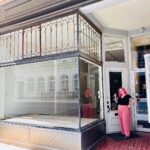
Blackberry Technology Center officially opened last month at 316 Blackberry St. in downtown Harrisburg. The fully renovated brick building, once a hardware store and abandoned for about three decades, now houses three technology concerns, all affiliated with Harrisburg University.

Fresa Bistro opened last month in Strawberry Square in downtown Harrisburg. Fresa features a menu of sandwiches, panini, salads, wraps and soups and a 60-seat dining area, accessible from both inside and outside of Strawberry Square.

Kyle Wasilkowski began last month as the new sports and fitness coordinator for Harrisburg Young Professionals. Wasilkowski is a recent graduate of York College of Pennsylvania, receiving a bachelor’s degree in sports management.

Parkmobile, Harrisburg’s new parking app, went live last month, offering discounts and an easy-to-use interface. The app replaces the previous Pango app, which some users said was difficult to use and unreliable.

Phil Guarneschelli last month was named the new president and CEO of Harrisburg-based PinnacleHealth System by the board of directors. Guarneschelli, formerly the company’s chief operating officer, replaced Michael Young, who left suddenly.

Whitaker Center has announced the appointment of Ted Black as its new CEO and president. Black replaces Dr. Michael Hanes, who will continue as president emeritus and will serve as head of Whitaker Center Productions until his retirement in January.


In Memoriam

Lt. Dennis DeVoe, a Harrisburg firefighter, died last month after his car was hit while he was responding to a fire. The Uptown fire, preliminarily blamed on a faulty hoverboard, also killed two girls, 10-year-old Savannah Dominick and 2-year-old Ashanti Hughes.

Changing Hands

Adrian St., 2418: A. Graves to G. Brown, $52,500

Bellevue Rd., 2403: H. & F. Jespersen to K. & D. Brown, $145,000

Berryhill St., 2424: B. Pursell to PCONS Investments, $46,389

Boas St., 1716: D. & K. Edmonds to E. Ruth Sr., $36,000

Briarcliff Rd., 135: A. Sawyer to A. & J. Gant, $223,000

Calder St., 104: S. Knoble to M. Freeman, $90,000

Calder St., 108: R. Purtle & W. Nattress to W. Nattress & F. Hummert Jr., $70,600

Calder St., 205: K. Landes to Equity Trust Co. Custodian, $132,000

Cumberland St., 256: Bricker Boys Partnership to A. & L. Kanagy, $75,000

Derry St., 2200: K. & D. Culley to J. Chirdon & M. Gordon, $70,000

Forster St., 1844: S. Martin to J. Cuevas & I. Padua, $85,000

Grand St., 918: R. Line to J. James, $87,500

Green St., 2109: N&R Group to CWJK Holdings LLC, $317,752

Green St., 2230: WK Rentals to A. Manderino, $37,500

Kelker St., 429: R. Waibel to K. Hall, $40,000

Lewis St., 327: S. Lowe to L. Seidel, $54,500

Market St., 1239: V&F Inc. to C. Plata, $120,000

Mulberry St., 2007: R. Lewis & T. Bretz to K. Brann, $148,900

N. 2nd St., 804: US Bank National Association to E. & L. Sippel, $174,000

N. 2nd St., 906: Federal National Mortgage Assoc. to E. Neilson, $110,000

N. 2nd St., 1805: T. Nguyen to Keystone Properties Group LLC, $30,000

2nd St., 2507: D. Paterson to K. Aulenbach & A. Paradise, $125,000

N. 2nd St., 2319: G. & R. Warner to J. Crosset & M. Hochstetler, $62,500

3rd St., 3132: PA Deals LLC to D. Blumenthal, $78,900

N. 3rd St., 3210: K. Malesic to J. Yeatter, $112,000

16th St., 1202: K. Gilbert to D. Grant & D. Franklin, $94,000

N. Front St., 1525, Unit 311: C. Price Jr. to J. Eirkson, $135,000

Race St., 606: Kathy Y Marley Trust to K. Mash, $160,000

Rolleston St., 1027: D. Whittaker to R. Castillo, $67,000

Rudy Rd., 2017: Wells Fargo Bank NA to B. Meppurathu, $83,500

Rumson Dr., 2772: PA Deals LLC to MidAtlantic IRA LLC, $79,900

S. 19th St., 1336: Deutsche Bank National Trust Co. Trustee to Kuprat Property & Investments LLC, $38,964

27th St., 806: Wells Fargo Bank NA to PA Deals LLC, $36,874

S. 29th St., 738: S. Maurer to J. Guizado, $69,900

Front St., 625: Federal Home Loan Mortgage Corp. to Redheads Helping Property LLC, $80,000

Verbeke St., 262: J. Chapin to J. Reyes Lua, $135,000

Wayne St., 1712: D. & S. Shepler to T. & D. Patterson, $75,000

Harrisburg property sales for February 2017, greater than $30,000. Source: Dauphin County. Data is assumed to be accurate.

Author: Lawrance Binda and Danielle Roth
Continue Reading

Knead a Slice? A pizza passion fires up at the Broad Street Market.

Baseball legend Yogi Berra once said, “You better cut the pizza in four pieces because I’m not hungry enough to eat six.”

Knead could have changed his mind. The new craft-made, hearth-fired pizza shop is the latest business to open in the Broad Street Market’s stone building, filling a noticeable void with hand-tossed pies and locally sourced ingredients.

The brainchild of Harrisburg native Jennie O’Neill and her husband Terry Hanley, Knead was borne out of the couple’s passion for pizza, one that took them on a winding path until they settled down in O’Neill’s hometown.

The two met while attending Fordham University in New York City. With O’Neill majoring in economics and Hanley in accounting, they were not exactly a traditional recipe for prospective pizza stand owners. But they shared mutual interests, including an appreciation for good food.

“I fell in love with Italian-American food while living in the Bronx,” said O’Neill, who grew up on N. 2nd Street. Added Hanley, a Staten Island transplant, “The Bronx is the true Little Italy of New York.”

O’Neill has spent years in and around the restaurant industry, including her most recent stint as general manager for Appalachian Brewing Co.’s Cameron Street location. She also worked in Philadelphia’s oldest restaurant as Hanley pursued a law degree in the city. And it’s there where she really found her inspiration and passion.

After stints living in both Philadelphia and, most recently, Queens, both agreed it was time to leave. They chose Harrisburg because O’Neill’s parents still live here, and the couple loved the area. They decided to put down roots and set up shop—a pizza shop.

The three-year experiment, as they describe it, has been trying different recipes to arrive at the perfect dough for their pies. And because practice makes perfect, they installed a pizza oven in their yard to help them hone the craft. From there, the jump to Broad Street made sense.

“The market didn’t have pizza, and we happened to have been working on pizza recipes for a long time,” Hanley said.

The pizza they make is fresh and simple, with a deep focus on quality ingredients.

“The dough is everything,” said Hanley. “We tried 40 different flours before we arrived at the one we use today.”

The flour is imported from Italy, a super-high protein, finely milled flour that makes a tremendous difference in the taste. Unlike most traditional pizza shops that make their dough in the mornings, O’Neill and Hanley cold ferment their dough in the refrigerator for two days. The process gives it a better flavor. They make their sauce—a mix of plum tomatoes, salt and olive oil—ahead of time to allow for quick preparation on site. The brick oven heats to 900 degrees and can cook a pizza in two minutes, the perfect convenience for customers in a hurry.

Knead offers patrons two options: Sicilian by the slice and 12-inch pies. Customers can pick their own toppings, which run the gamut. Even vegans have a choice, as Knead makes pizzas with vegan cheese. The couple currently is looking for gluten-free flour to make dough for customers with special dietary needs.

Both O’Neill and Hanley emphasize the warm reception they’ve received since setting up in the market and the customer base that continues to grow, including little ones with special cravings.

“Little kids are adorable,” O’Neill said. “We have a little girl who is into mushrooms and will eat an entire mushroom pie. And a little boy who just loves Kalamata olives. It has exceeded our expectations.”

The added benefit, said Hanley, the native New Yorker, is being in an environment where you can say hello to people and then actually get to know them.

O’Neill and Hanley are thinking about Knead’s future, but, for now, they’re just enjoying doing what they’re doing, which is filling a hole in the market’s offerings and serving up fresh pizza. From the outset, their mission has been about keeping things simple.

“Everybody loves pizza; don’t mess it up,” Hanley said.

Knead is located in the stone building of the Broad Street Market, N. 3rd and Verbeke streets, Harrisburg. For more information, visit their Facebook page: Knead HBG.

Author: Ann Beth Knaus 

Continue Reading

Student Scribes: SOL: A Twenty-First Century Story

I am Sol. Let me tell you a little about myself. I am not named after the sun, or the G note in music. It is not short for Solomon. It is not short for the word “solution,” either. It is S.O.L. I am pretty much convinced that it stands for “Shit Outta Luck.” Why? Because I was born in the wrong century. It was the summer of ‘69.  Unfortunately, not the same summer the old Canadian rock artist Bryan Adams used to sing about. I am talking about a hundred years later.  

I was a fully random, authentic baby. Some hipsters think it’s cool. Some others look down on it. They call it traditional, conservative. My parents could not afford to customize my gender, my eye color, my imperfections, and so on. Customizing your baby used to cost a lot more than it does nowadays. Well, a lot of young parents still can’t afford it. For most, it is not a priority. They would rather pay their bills; make ends meet. The religious ones believe that it is interfering with God’s business. The purists are strictly against it for different reasons. On the other hand, some wealthy parents, who can easily afford it, prefer to be surprised or have an authentic baby experience. They even go with vaginal delivery.

I am also what you would call a fully authentic human to this day. However, I must admit that it’s not necessarily by choice. Body augmentation is incredibly expensive. None of the insurance companies cover your body augmentations under any circumstances. Unless you pursue a military career, or you are a police officer or your parents are wealthy, you will be a simple, pure human whether you like it or not. At least purist groups would never harm you. Nowadays, dozens of different purist organizations have mobs on the streets, protesting body augmentations. There have been a few cases of murder along the way. Angry mobs of extreme purists sometimes will attack augmented people.

I had a hard time in school. Apparently, I was always using too many words and that was impractical. Who did I think I was to steal everyone’s precious time? While some teachers appreciated my vocabulary, others often told me, “What are you rambling about? Just speak your mind, kid.”

I read a book that claimed the rise of digital communication in early 21st century drastically changed the way we talk to each other and the way we write. I couldn’t have agreed more. But I was different. I used to read a lot of 19th and 20th century literature. The dictionary in my smartphone and my Kindle books were my only friends. I was the odd one out.

I used to annoy some of my classmates by talking like Gertrude Stein, one of my favorite poets. It was my way of having fun in school, although sometimes it backfired and I got beaten up. I would say, come here John, I have something really important to tell you. Then, I would just read parts of her Tender Button poems, which made absolutely no sense: “A box is made sometimes and them to see to see to it neatly and to have the holes stopped up makes it necessary to use paper. A custom which is necessary when a box is used and taken is that a large part of the time there are three which have different connections. The one is on the table. The two are on the table. The three are on the table.” Oh, it would drive them crazy. It goes without saying that they did not appreciate the excitement of the pure being of a box or how rhythmic I sounded while reciting her. “What are you, stupid?” No wonder I was bullied so much. I was the ultimate dork, “A rose is a rose is a rose,” I would shout during the class breaks. My one and only friend Miguel would repeat after me, “Arroz is arroz is arroz.”

After a lot of bullying and getting my ass kicked by both augmented and pure kids, (I can certainly confirm that the augmented hurts a lot more), I graduated from high school in 2087.  That summer, I had the worst fight with my parents, who strictly forbade me to pursue a degree in history in the University of Washington. Myriads of humanities department had been shut down due to lack of funding, so my parents wanted me to study engineering, but I would have none of that.

The bullying stopped in college. I loved the history department. I started doing my Ph.D. in history in 2092, specializing in the Gilded Age. I was hoping to earn a teaching position in any university in the world that still cared about humanities in the face of the increasing need for engineers and scientists. The early 90s were not easy for me as I struggled to find my place in this world that had turned into a soulless place, where everything that mattered focused on tangible outcomes. So, I abstracted myself from the real world. I could simulate anything in my living room with my virtual reality box. This magic box could cater to all my senses. I could see, hear, taste, smell, and touch whatever was being simulated. In seconds, I could go from flying on a dragon above the mighty mountains of some fantasy land to sleeping with an incredibly hot, corporate woman that I just saved from the hands of purists. The lines between reality and virtual reality were blurred. Spending a lot of time in the VR box would make me feel numb. But there was always something missing. It was still not real. On the other hand, the reality was incredibly boring. And, sometimes the things that I did in real life would not feel as good as its simulation. It had to stop.

In 2094, the university cut the funding for the history department. My funding package was gone along with the chances of me earning my Ph.D. Unless, however, I could come up with a hundred thousand dollars to pay the tuition fee for two years.

I was not just going to give up. The first thing I did was to sell my virtual reality box. But that did not help much. I considered taking the income options of most people in the late 21st century: advertisements in their cars or electronic identifications on smartphones. I wasn’t sure I would go as far as a lot of desperate people, who resorted to advertisements tattooed on their legs, arms, foreheads, you name it. People who do not need to rent or sell their bodies for advertising because they are doing financially well, are called the premiums. I had to go against my principles when I decided on advertisements in my car and my ID. However, I was not ready to sell my body to the corporations yet.

The fact that my funding was cut changed the way I lived to a great extent. Without my virtual reality box, I had to put up with the monotony of living the reality of our time. As I had to cut my expenditures; I had to give up so many things that I used to take for granted. Because I could not afford the monthly fee anymore, I started driving in the economy class lanes, which were prone to unbearable Seattle traffic. I had to cancel the premium membership of my apartment, which meant I had to watch advertisements before I could use just about any digital appliances. It is incredibly annoying to watch an advertisement of the latest and smartest microwaves through the screen of your not-so-cool microwave, before you microwave your cheap cheese pizza. But it was better than asking for money from my parents, or renting my forehead for advertisements, or selling my kidney to a private hospital, which was perfectly legal after the massive deregulations that took place in the 80s. The market was as free as it could get and there was nothing beyond its reach. As much as I tried to escape its reach, I kept getting sucked into it. I hated the time that I was living in.

As I was getting closer to earning my degree, the tuition fee was taking its toll on me more than ever. That year, I had one of the worst days of my life. It was early November. We had been having a tumultuous day even more so than usual. There were anti-body augmentation riots in several major U.S cities, which coincided with the celebrations of Chicago Cubs winning the World Series for the first time after their 2016 title. Even though the majority the police officers were augmented and every one of them was wearing powered exoskeletons, they were having a hard time suppressing the riots. There were numerous attacks on big body augmentation corporations and a few cases of mob attacks on the augmented individuals. They were chanting, “Purity for equality.”

It was a rainy morning. There were two days left for me to be able to pay the delayed tuition fee for my last semester. I did not have nearly enough money in my bank accounts. I had to do something. People make bad decisions when they are desperate. I took my coat and left the apartment. I did not have a hat or umbrella, and I could feel the rain beating my scalp. But I was indifferent to everything. I could not give up my Ph.D. It was my ultimate prize, a gift for myself. My motivation was purely academic. I did not care if I was going to be unemployed. I still needed that degree.

I could not have chosen a worse day to do this. I was justifying the true meaning of my name. Shit out of luck. I walked through the fancy door of Relicus Inc., one of the leading companies in body augmentations. I went directly to reception. On the huge TV screens inside the building, an ad was playing about a unique opportunity to go scuba diving in Atlantic City, part of which was buried under water because of rising sea levels. The ad said you could experience the new aquatic life in the sunken underwater city. I felt as if I was slowly sinking myself.

“I would like to learn about advertisement opportunities, please,” I said. It was as if the words did not want to come out of my mouth.

“Excuse me?” asked the lady with some impatience in her voice. I could feel her dirty, degrading look all over my body.

“I am here for advertisement opportunities.” Repeating it only made it sound more stupid in my head.

“32nd floor, A 343. Elevator is right there on your right,” she said with an emotionless face, pointing.

“Thank you.”

I took the elevator to the 32nd floor. On the way up, some employees were sharing their concerns about the purist riots. I did not mind. I was about to sell my body to the devil. They could come and destroy this place for all I cared.

First, I got an advertisement tattoo on my forehead. But I was surprised to learn I had to get a new body modification every month, if I wanted to keep getting paid. I was to start with elf ears, which was expected to be the new trend. The operation only took 10 minutes. The robot practitioner was fast and flawless. After the operation, I was offered complimentary cognitive enhancers that would cover me for a month. They could impact my dissertation positively.

As I was heading out, I went to the restroom. I looked in the mirror with disgust. All the bullies from my childhood flashed through my eyes. They were all laughing hysterically. I felt an immediate regret. I felt dirty. I paid a few quarters for the automated public shower pods. As much as those pods wash you so well as if you were in a Turkish bath, they could not wash away the way I felt. I had just been turned into a living commodity.

“Purity for equality.” I could hear the mobs chanting. They were heading towards here. I was headed toward the exit. A few security guys warned me to stay inside for my safety. I did not listen. It was obvious that I would be targeted because of my brand-new appearance but I was in denial.  

What I saw outside was beyond my wildest imagination. A massive crowd. Thousands of people were gathered around to protest body augmentation. I was seized immediately. I could not put up much of a fight. Their leader had a megaphone and a mocking tone in his voice as he was speaking: “Look, what we have here. A corporate bitch with elf ears. He even has an ad on his forehead.”

The crowd was going wild, chanting the scariest words that I have ever heard in my life: “kill, kill, kill…” I could not speak. I wanted to tell them how I had to pay my tuition, that I got the ad and the ears because I had to. I could not force the words out of my mouth.

The man with the megaphone continued to speak: “This person here seems to have sold his humanity for a few grand. He is already going to live with shame all his life. He is not a human anymore. He is impure. He is not with us. But we must find the real threat to our purity, and destroy it.” He was pointing towards the Relicus Inc. headquarters angrily. “Let the poor bastard go.” I took a deep breath but I was still grasped tightly by two strong men.  The crowd surged toward the headquarters, chanting their slogans furiously. Then, I felt a cold metal in my ears, followed by a very sharp pain. I was lying on the ground bleeding heavily from my cut-off ears. The cold metal touched my forehead. I felt it cutting through my skin.

I opened my eyes in a hospital. Both my ears were cropped. My forehead was skinned. As the nurse told me, I had almost died of blood loss. After long hours of medical attention, I was stabilized. To my surprise, I could still hear. Almost all the money that I made thanks to the body augmentation ad had to be used for the hospital bill. I filed a police report and left the hospital. Later, I found out that the Relicus Inc. was destroyed and plundered, leaving many employees dead. The extreme purist mob also had casualties because the police interfered.

I had never felt worse in my life. I had no place in this world. Everything was against me. Everybody despised me. The bullies back in school, who mocked me all my childhood, the purists, who thought I was impure and cut my ears, the hospital, and the university, who cared only about how I make my payment. I had to leave. I had to leave society. I knew I would not be missed.

It turned to my books for an answer. Could I follow in the footsteps of Thoreau? Could I embark upon a journey to find my own Walden? I decided to choose a hostile environment and adapt to its rules, but only the rules of nature, not the rules of humans Could I find a place that I could call home without making any payment, getting any permission, or following any rules?

Northern Greenland was the answer for me. I packed professional equipment for the harshest winter conditions. Northern Greenland still had pretty harsh winters, although I hear they are not what they used to be because of climate change.

The first few weeks in Greenland were very tough but I slowly adapted to the hostile environment. To be honest, it was not as hostile as the society I had left. Besides, my ears could never get too cold as I did not have any. There was nobody around except for animals. My best friend was a dog. I called him Waldo. Some nights, I would still have nightmares about my ears being cropped repeatedly as if I had too many of them.

I did a lot of reading and writing. I could fully live every moment out here in the wilderness without worrying about bills, the traffic, the purists, the ads, the people.  I felt a deep connection with nature. I was part of everywhere. I could finally feel something for the first time in my life. It was real. The blurry lines between virtual reality and the reality now was very clear to me.

The turn of the century finally arrived. It was New Year’s eve. I drank a bottle of wine. I wished I wasn’t so lonely. I had a long talk with my dog friend about how much I hated the 21st century. I could tell from his eyes that he agreed. I kept talking, “I am Sol. Let me tell you a little bit about myself…”

Ugur Ozturk is a graduate student working on a M.A. in American Studies at Penn State Harrisburg. 

Continue Reading

To a Person: “Uncanny Valley” explores what makes us human.

Since Isaac Asimov’s “I, Robot” was first published more than 80 years ago, mankind has been struggling to find the answer to what it means to be human.

Is it the ability to make our own decisions? To have a unique personality?  To sense and feel emotions?

Putting a new twist on this idea is Thomas Gibbons’ “Uncanny Valley,” which opens this month at Open Stage of Harrisburg. The play tackles what it means to be a human in unique and unexpected ways.

“Uncanny Valley” takes place in the not-so-distant future and centers on Claire, a neuroscientist responsible for the training of Julian, an artificial human.

“There’s a phenomenon known as the uncanny valley,” Claire says to Julian early in the play, explaining that he is programmed to surmount the valley. “People are fascinated by an artificial being with a humanlike appearance. The nearer you come to being truly convincing, though, our fascination turns into an instinctive, inexpressible sensation of eeriness…wrongness.”

When we first meet Julian, Claire is teaching him the most basic of skills: blinking, raising eyebrows, smiling. As the play progresses, Julian grows rapidly and begins to understand emotions, perspective and a sense of self. He and Claire even forge a friendship, as Claire shares details of her estrangement with her daughter and her husband’s failing health.

When Claire has deemed Julian “ready,” she shares his true purpose. He will receive the memories, traits and experiences of a terminally ill man, Julian Barber, who has paid a fortune so that he may continue to “live” through Julian after his human body has died. As Julian develops into the deceased man, he becomes involved in a court case with his son, who refuses to acknowledge that a robot with artificial consciousness is his father.

Ultimately, Julian, Claire and the world around them struggle to define what encompasses humanity.

“In the end, humans are all very alike,” said Jeff Luttermoser, who portrays Julian. “We all seek purpose. We all seek connection. When we create artificial version of ourselves, they would ultimately do the same thing.”

Anne Alsedek, who portrays Claire, said that Julian is like Claire’s child.

“She wants to hold on to him and watch him develop and keep track of him like a pet,” she said. “He is not willing to do that because the more human you get, the less predictable behavior you’re going to get.”

Both Alsedek and Luttermoser struggle to define exactly what Julian is—human, robot or something in between?

“What human beings do is very different from what a robot would do, no matter how sophisticated the intelligence is,” Alsedek said.

Analyzing his character, Luttermoser said that Julian wants so much to be human and to do well at being human.

“There’s one part where Julian is exploring Claire’s face, and he notices she has scars,” he said. “Scars, physical and metaphorical, are something an artificial person may not have, especially if their memories and perceptions and truths have been fabricated or fixed in some ways. We spend our lives trying to ignore or cover up our scars, but, in the end, those may be what make us more human.”

Alsedek said that the play is timely, in that technology is moving in the direction of greater artificial intelligence.

“I’m hoping the audience will come away from the show understanding what that means,” she said.

A one-act play, “Uncanny Valley” is directed by Donald Alsedek, founder and producing artistic director of Open Stage. It’s his penultimate production, as he and his wife Anne, who also serves as Open Stage’s education director, will retire at the end of June. Don’s final production, “Ah, Wilderness,” runs June 2 to 25.

“Uncanny Valley” runs April 7 to May 7 at Open Stage of Harrisburg. For more information and tickets, visit www.openstagehbg.com.

Upcoming Theater Events At Harrisburg’s Professional Downtown Theaters

At Gamut Theatre
www.gamuttheatre.org

PHP Young Acting Company Presents “The Wonderful Wizard of OZ!”
April 7 to 9
Friday and Saturday at 7:30 p.m.
Saturday and Sunday at 2:30 p.m.
Tickets are $15

The Popcorn Hat Players Present “Pinocchio”
April 19 to May 11
Saturdays at 1 p.m.
Wednesdays and Thursdays at 10 a.m. available by request for groups of 20 or more.
Tickets are $8.

Shakespeare’s Birthday Celebration An annual Spring Fling to support Gamut Theatre
Sunday, April 23
4 p.m. to 7 p.m.
Celebrate Gamut Theatre and the life of William Shakespeare.
Open Bar. Silent & Live Auctions. Entertainment. Tasty Food.
Tickets are $100 each or $150 per couple.


At Open Stage Of Harrisburg
www.openstagehbg.com

“Uncanny Valley”
A new play about artificial intelligence By Thomas Gibbons
April 7 to May 7

“SHELabration!”

A celebration of everything Shel Silverstein By the OSHKids
May 11 to 14

Author: Laura Dugan

Continue Reading

Songs & Sunshine: Get some positive energy into your life

Xiu Xiu. Photograph by Cara Robbins.

It seems that, as soon as spring is in full force, everybody is out doing things and being active. Positive energy is all around, and events around the city are in full swing.

If you’re still getting over feeling cooped up over the long winter like I am, you may be in need of a good concert to get you into the spring mood. This month, I’ve found a few different bands with some feel-good sounds. No matter what your tastes, you’re bound to find something here to give you the energetic boost you need to get through those inevitable April showers.

XIU XIU, 4/8, 7PM, DER MAENNERCHOR, $15

I’m not going to lie—I’m super excited for this show. Xiu Xiu is an underground indie rock band known for their experimental, supernatural sounds. Last year, while finalizing their new album “FORGET,” the band released another album, “Plays the Music of Twin Peaks.” Around the same time, they collaborated with singer-songwriter Mitski on a song for a soon-to-be-released John Cameron Mitchell film, composed music for Danh Vo for his art exhibitions, recorded an album with Merzbow, and scored their own reworked, experimental version of Mozart’s opera, “The Magic Flute.” Whew! These guys have clearly been busy with some new material, so now is the time to see them. If you need another excuse to go to Der Maennerchor, Moviate, Harrisburg’s source for underground and independent entertainment, is turning 20. So, come out and celebrate!

SAMANTHA FISH, 4/15, 9PM, H*MAC CAPITOL ROOM, $20

Blues has slowly been making its way into my heart, so here’s your chance to get into that Americana roots mood with me. You may have heard Samantha Fish’s song, “Let’s Have Some Fun,” featuring some skillful, southern-esque guitar and playful, yet sultry, vocals. Her most recent album release, “Wild Heart,” is her third studio release featuring Samantha on guitars, Luther Dickinson on various strings and Brady Blade on drums, and featuring other guests such as Lightnin’ Malcolm on guitar, Shardé Thomas on drums and Memphis session singers Shontelle Norman-Beatty and Risse Norman. The album was recorded in three different studios while on the road from Louisiana to Mississippi, so you know it’s dripping with that southern soul. Join her in the Capitol Room at H*MAC for some down-to-earth tunes.

SPIRITUAL REZ, 4/21, 9PM, ABBEY BAR, $10-12

Nothing gives you better vibes than reggae music, and that’s a fact. Spiritual Rez is like what happens when reggae, funk and ska mix with Sublime and the Red Hot Chili Peppers at a dance party. Their sound is full of layered, groovy instrumentals and soulful vocals, providing the perfect conditions to work on your rusty dance moves. You can find their latest album, “Setting in the West,” on their website and listen to it if you want a taste of what’s to come. I recommend “Together Always” for a relaxing yet upbeat song to start your day.

Mentionables: Shakespace, April 1, H*MAC; Solar Federation Performing the Music of Rush, April 1, The Abbey Bar; Black Black Beast, April 7, Little Amps downtown; GL8TM, April 15, River City Blues Club; Country Music Festival, April 22, Spring Gate Vineyard; Average White Band, April 27, Whitaker Center

4/7 – BLACK BLACK BEAST
LITTLE AMPS DOWNTOWN
133 STATE ST., HARRISBURG
STARTS AT 7 PM

4/8 – XIU XIU
DER MAENNERCHOR
221 NORTH ST., HARRISBURG
STARTS AT 7PM

4/15 – SAMANTHA FISH
H*MAC CAPITOL ROOM
1110 N. 3RD ST., HARRISBURG
STARTS AT 9PM

4/21 – SPIRITUAL REZ
ABBEY BAR
50 N. CAMERON ST., HARRISBURG
STARTS AT 9PM

4/27 – AVERAGE WHITE BAND
WHITAKER CENTER
222 MARKET ST., HARRISBURG
STARTS AT 7:30PM

Author: Kait Gibboney

Continue Reading

Take a Seat. Exercise. Chair Yoga is a hit for seniors with limited mobility.

On a recent morning, about 15 senior citizens gathered in the activity room at Susquehanna View Apartments in Camp Hill.

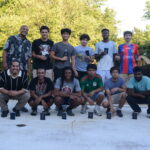
They were there to get some exercise, but, first, they had to sit down. It was the once-a-month gathering of a unique form of meditative exercise called “chair yoga.”

“Bring your chest in,” advised the group’s leader, 23-year-old Angela Conforti, a physical aide at Conforti Physical Therapy of Lemoyne.

She continued in a calm, soothing voice.

“Exhale,” she said. “Go at your own pace. Don’t worry about what your neighbors are doing.”

Participants, seated in a circle centered by four flameless candles and a small, lit tree, started with warm-up exercises that included rolling their shoulders in one direction, then another, then rolling their wrists in figure eights, all while remaining seated in their chairs. Strength exercises followed: raising arms forward one at a time, inhaling, exhaling, raising legs on at a time, and finally, raising an arm and leg on each side one at a time.

Nobody objected until it was time to cross ankles over knees.

“Oh, no,” a women in the group jokingly protested. “We don’t need to call 9-1-1 today.”

Conforti didn’t argue. Instead, she encouraged everyone to do only what felt comfortable. About one-third of the group followed through, setting an ankle over an opposite knee until told to relax.

When it was done, participants said they felt better than when they started.

Linda Cook, 73, who has “a little bit of arthritis everywhere,” said that Conforti’s “very restful voice” helped her to relax. Chair yoga, she added, is “very conducive to sleep.”

Robert Forsythe, 77, said chair yoga helps the pain in his hands.

“It’s very relaxing,” he said. “I’ll be back.”

Melvin Eichelberger, 72, was there because chair yoga helped his right hip and leg that “have really been hurting” for several years. The trouble began when he broke his leg at 5 years old, plus he believes that one of his legs is shorter than the other.

Susquehanna View Program Coordinator Michael Stewart said he introduced monthly chair yoga sessions to the senior apartment complex to enhance a twice-weekly traditional exercise program already in place.

“When you get older, your body starts falling apart,” he said. “If you don’t do exercise, your muscles start falling apart. Exercise also helps to lower your cholesterol.”

Stewart said he heard about chair yoga while taking a wellness program at Conforti Physical Therapy, where he was a patient. Angela’s father, Jeff Conforti, runs the business.

In general, yoga uses postures to focus concentration on specific body parts, as well as breathing techniques to integrate the body with mind and mind with soul. It is reputed to help with mood, lower blood pressure by reducing stress, improve strength and flexibility, and even provide better sleep.

“Our residents love yoga,” Stewart said. “It’s very relaxing and comforting.”

It’s hard to say who invented yoga as yogis practiced it before any written account existed, according to medicinenet.com. It’s believed that the earliest written record of yoga was by Patanjali, an Indian yogic sage who lived 2,000 to 2,500 years ago. Pantanjali wrote the “Yoga Sutras,” the guiding principles, philosophy and practices of yoga that still are followed today.

Conforti cited a Johns Hopkins University study noting that chair yoga has been found to decrease rheumatoid and osteoarthritis, biomechanical issues such as joint pain, and reduce depression and anxiety.

Conforti, who is pursuing a master’s degree in physical therapy through Marymount University, has been doing yoga for eight years and teaching chair and mat yoga for a year. She visits the senior residents at Susquehanna View Apartments once a month on a volunteer basis.

“I enjoy making people feel better,” she said. “Happier people make for a happier atmosphere.”

Chair yoga, she added, “empowers (participants) to find their own strength and power.”

The difference between young and senior yoga participants, Conforti continued, is that the young tend to “push themselves too hard.”

“There’s no place for ‘no pain, no gain’ in yoga,” she noted.

To develop appropriate exercises for seniors, Conforti uses “my expertise and what I know about anatomy and how they move. So, if they move good with a certain move, you’ll keep doing it.”

Susquehanna View resident Nancy Garman had a simpler explanation about Conforti’s techniques.

“She’s very good,” she said. “Her voice is very tranquil. I hope she comes back.”

Susquehanna View Apartments is located at 208 Senate Ave., Camp Hill. To learn more, call 717-763-1184.

Author: Phyllis Zimmerman

Continue Reading

House of Ideas: For Sacunas, relocation to the King Mansion reflects evolution of the firm, commitment to Harrisburg.

Kim Riley and Adam Vasquez

Back in 2005, Nancy Sacunas moved her namesake firm into a specially designed building in Union Deposit. The layout and colors reflected her vision for the marketing/communications company.

So perhaps it’s no surprise that the company’s once-client, now-owner Adam Vasquez has followed suit, recently relocating the firm on his own terms, to the historic King Mansion, a reflection of the vision he has as part of Harrisburg’s rapidly growing creative class.

“We’re articulating the Sacunas brand in a modern way to connect our clients with their customers,” said Vasquez. “The King Mansion provides us an iconic, sophisticated presence in Harrisburg to give our clients a compelling partnership experience.”

Great Culture

The King Mansion, perhaps the most majestic of the many grand buildings along Front Street, has a history of successful occupants. Built in the booming 1920s by lawyer Horace King, the 22,000-square-foot building has been office space for decades, home to a series of quickly growing enterprises.

Vasquez swears by the prosperous flow and energy in the grandiose rooms. With its ornate touches and sculpted woodwork, the King Mansion is reminiscent of a life-sized Clue board game.

For the Sacunas team, the King Mansion is a jar of clay. Since moving in in January, team members have added personal decorative touches to their workspaces. Sketched unicorns grace different surfaces in breakout spaces, hovering like a spirit animal, hinting at uniqueness. A portrait of a Russian admiral overlaid with Vasquez’s face hangs in the mansion’s largest workspace, representing just one of the many private jokes critical for team cohesion.

“We’re serious about our work, but not always in the office,” Vasquez said. “We want to change the industry and make our partner brands great in a way that you can’t ignore them.”

Vice President Kim Riley said that the firm sets out to become part of a customer’s story, which is critical to their success.

“We define where they are in the market,” she said. “We help them fix their weak spots. Then they become part of our collaborative formula.”

Vasquez credits the majority of Sacunas’ success to his team’s capabilities—and their continuous desire to learn.

“I have worked with small companies that want to grow, but aren’t willing to invest in their talent,” he said. “That makes sure they can never grow.”

His confidence in his staff’s abilities frees time to focus on the Sacunas vision, which has included recent expansions into the major markets of Chicago and Portland, Ore. According to Vasquez, future growth opportunities include offices in northern Europe and the south-central United States.

Though Vasquez’s hometown is Vienna, Va., he feels strongly about having a Harrisburg headquarters. All of his staff members have lived in other places, including in traffic-choked Washington, D.C., he said.

“[Harrisburg] is a great place to live,” he said. “We want to build an organization that allows all walks of life to live incredible lives. The creative culture is supported in cities, but raising families is not.”

Sacunas is able to compete for business as a big-city firm. Riley asserted Harrisburg’s proximity to larger cities as another attraction.

“Some clients have said that we won bids based on kindness, that the people in our company are nicer than our big-city competitors,” she said.

Riley owns a house within walking distance of the new office, something that Vasquez hopes many of his associates will continue to do as a commitment to Harrisburg.

“There’s no reason Harrisburg can’t be on the map,” Riley said. “There’s a great culture here.”

Cheryl Rhein, CEO and owner of York-based Penn-Air & Hydraulics Corp., started partnering with Sacunas as a customer last August.

“When we first visited them in Harrisburg, it felt like we were home,” she said.

She said she chose Sacunas because their people, culture and expertise aligned with her own approach to conducting business.

“[Sacunas has] a way of attracting highly qualified and, well, awesome people,” she said.

City’s Heartbeat

As a collective, Sacunas fills a need for creative employees looking for more than just a paycheck. The King Mansion has homey touches like a huge basement kitchen, workout spaces and a billiard room (again, just like Clue!)  

“Sacunas is a lifestyle brand,” Vasquez said. “Everyone leans in. We all come together to do our best work.”

Sacunas, Vasquez said, invests in each employee, providing funding and sabbatical time for continual learning. Not only does that enable associates to attend conferences, take classes and complete degrees, but it also allows them special perks, like an all-expenses-paid Napa Valley vacation as an employee thank-you.

As Sacunas spreads its wings around the globe, it remains committed to being a neighbor ready to integrate and contribute to the Harrisburg community. Plans include open houses, a speaker series, hosting startups, pro bono work for nonprofits and movie nights.

“We want to be a piece of the city’s heartbeat,” Vasquez said.

Sacunas is located in the King Mansion, 2201 N. Front St., Harrisburg. For more information, visit www.sacunas.net or call 717-652-0100.

Author: Gina Napoli

Continue Reading

Preservation and Progress: Manada Land Conservancy celebrates 20 years of land protection.

When the Manada Land Conservancy was formed in 1996, its five members were Hanover Township residents who wanted to see the farmland around their local waterway, the Manada Creek, preserved.
Today, the group totals more than 400 members, and they have helped protect nearly 2,000 acres in Dauphin County.

“So often, you talk to someone who says, ‘My community looks so different from when I was growing up,’” said Jennifer Hine, executive director. “They don’t know they can have some control over that. Our primary mission is to preserve the wetlands, forests and valuable farmland here.”

While the Manada Land Conservancy does own some of the preserved acres outright, the primary method of preservation is through perpetual easements.

“We work with landowners who voluntarily want to preserve their land,” Hine said. “Over 90 percent of the land we’ve preserved has been done through easement. We put permanent restrictions on the subdivision and development of the property, and it’s our responsibility to uphold those in perpetuity.”

Once the easement is in place, the landowner can still sell or bequeath the property, and Hine said preservation doesn’t mean the land becomes useless to its owner.

“There are different protection levels,” she said. “If there’s already a house, that might mean minimal protections, and the owner can still build outbuildings or put an addition on the house. There are typically no restrictions on hunting and some land might still be logged if there’s a stewardship management program.”

The Manada Land Conservancy receives occasional grants, but the organization largely depends on the support of local businesses and individual members.

“Over 70 percent of our general operating funds comes through membership,” Hine said. “We have a lot of business supporters and hundreds of individuals who like what we’re doing. That’s our most stable source of income.”

Currently, the Manada Land Conservancy is focused on preserving the land surrounding the Swatara Creek and the Kittatinny Ridge.

“We’re committed to creating a greenway around the creek,” Hine said. “A 35-foot buffer of vegetation along the sides of the creek really helps the storm water control and absorbs pollutants coming off the roads and off our lawns before they enter our waterway.”

Hine thinks some residents of the county—particularly the younger generation—may not entirely grasp the creek’s importance or impact on their lives.

“A lot of people in this area don’t realize the Swatara Creek is their drinking water source,” she said. “I think kids in later generations especially have a big disconnect when it comes to knowing where their water comes from. You turn on the faucet and there’s your water. You don’t realize it’s actually coming from the creek down the street.”

Manada Land Conservancy is working with other local and national organizations to preserve the land along the Kittatinny Ridge—known locally as Blue Mountain, Endless Hill or Great Mountain. The 185-mile long ridge is the easternmost edge of the Appalachian Mountains.

“The ridge is a globally recognized migratory bird flyway,” Hine said. “We’re under a grant from the Nature Conservancy that allows us to reach out to landowners on the ridge to work toward preserving the recreational areas and wildlife habitats.”

After land preservation, the Manada Land Conservancy’s secondary mission is environmental education. The organization offers community lectures on land preservation, native plant initiatives and the importance of pollinators. Hine said programs like guided hiking and kayaking trips help people experience their local land resources firsthand.

“I think we’re unique in the sense that we have the ability to preserve these special areas in a way no other group does,” Hine said. “We connect with the community in a unique way.”

Part of the reason the group started doing outdoor recreation programs, in fact, is to help link people with their local natural resources.

“They can connect with us to realize we’re doing something to keep these resources great,” Hine said. “We’re pulling people into the things they already love about their communities.”

For details about upcoming events and more information about Manada Land Conservancy’s preservation efforts, visit www.manada.org

Upcoming Events At Manada Land Conservancy

Tree Planting

April 21 – Plant trees in a previously flooded area along the Swatara Creek with volunteers from Troegs Independent Brewing.

Native Plants & Pollinators Lecture

April 27 – Join nationally recognized plant gurus Doug Tallamy and Rick Darke to learn about native plants, pollinators and wildlife.

Spring Native Plant Sale

April 29 – Fill your yard with native flora from the annual plant sale in Boro Park, Hummelstown.

Music Over the Mountains

Sept. 24 – Enjoy BBQ and local bluegrass music at this annual benefit in Grantville.

Author: Kate Morgan

Continue Reading

Another Round: Let’s all toast the return of Harrisburg Beer Week.

The craft brew scene has been bubbling over in recent years, with several new breweries and tasting rooms popping up throughout the midstate.

So, just when beer lovers didn’t think it could get any better, along comes Harrisburg Beer Week, which runs the last week of April. The event promises high-end connoisseurs and weekend beer warriors alike more events, new brewers, an expanded homebrew battle and the opportunity to take classes in the art of beer-making.

And did I mention drinking  beer?

Now in its third year, Harrisburg Beer Week, the brainchild of Sara Bozich, Chelsie Markel, Colleen Nguyen and Tierney Pomone, has helped to promote local beer tourism by drawing visitors to the capital area for a chance to imbibe, celebrate, learn and support charity. From its inception, the event has grown greatly in participants and customers.

This year’s event features several new kids on the block, like a mini golf outing on City Island, as well as the usual fan favorites, such as the Little Big Beer Fest and Battle of the Homebrewers. And, throughout the week, there’s no end to the beer pairings, tap takeovers, brewery collaborations and firkin nights.

Dizzying Array

The fun starts on April 21 with a VIP kickoff party in a new venue—the historic Pennsylvania Room of the Harrisburg Transportation Center. But, even if you can’t make it there, numerous local bars, restaurants and breweries will host their own celebrations on that first night.

The next day is PA Flavor, the longstanding festival that matches our state’s homegrown food with natively brewed beer. One participant will be HACC, which developed a certificate in brewing science program last year, and Beer Week will help showcase the results.

“HACChiato, created by the students in our Brewing Science Program, will be spotlighted in collaboration with Zeroday Brewing Co.,” said Abigail Peslis, director of corporate and business services at HACC. “Additionally, we will hold mini brewing education sessions—‘Brewing Abridged’—on April 25, instructed by local brewing experts.” The classes will be held at HACC’s Midtown campus.

Next-door neighbor Zeroday will play host to a dizzying array of events. Its biggest event, “Freaky Friday” on April 28, is a switcheroo that will transform Zeroday’s tasting room into Carlisle-based Molly Pitcher Brewing Co., while Molly Pitcher makes over its tasting room into Zeroday, with each brewery’s respective libations on tap at the other place.

“This is the first year something like this has been done,” said Brandalynn Armstrong, Zeroday co-owner and Lindsay Lohan stand-in.

Zeroday also will feature a collaboration brew with Molly Pitcher Brewing Co. and Middletown-based Tattered Flag Brewery & Still Works. The brewers worked together to design the recipe for the beer—“Marketing Gimmick,” a juicy, hopped saison—but will be brewing the same recipe independently with an official release on April 26 at the Midtown Tavern in Harrisburg. The new beer will be available for sale in the breweries’ tasting rooms, and guests will receive a punch card that is included in the Harrisburg Beer Week brochure. Customers who visit all three breweries during the week will get a specially printed, 32-ounce growlette.

“We really want to encourage travel to all three places,” Armstrong said.

Rich Heritage

Once again, Harrisburg River Rescue is the beneficiary of Beer Week proceeds. The organizers hope to top last year’s windfall of $40,000, which was double the inaugural year amount, to improve the rescue’s facility.

To that end, Garlic Poet in New Cumberland will offer tickets to its exclusive Chef’s Table Beer Dinners. These dinners will provide guests with the opportunity to eat and discuss the beer-making process, as well as meet Executive Chef Kurt Wewer.

The Garlic Poet’s sister restaurant, Grain + Verse Bottlehouse, located right next door, features more than 300 different craft beers. The unique bottle shop will hold a number of events, including the first-ever Tröegs beer trivia night, featuring a limited scratch beer to be tapped at the start of every round of trivia. Tröegs’ very own Ffej Herb will emcee the event.

“We have a rich heritage of producing beer in Pennsylvania, and this week celebrates it,” Wewer said.

Some new sponsors and features have been added to this year’s roster. Among the sponsors is Weis Markets, which will host events in the pub of its new flagship store on Valley Road in Hampden Township. Among the new events: the inaugural Mini Golf outing on City Island (hint: both putters and beer may be involved).

One of the most popular annual events, “The Battle of the Homebrewers,” has moved and expanded. It will be held April 23 at the Broad Street Market. Market vendors will be open during the competition, and 35 home-brewers are slated to participate for top prizes. Attendees will receive a commemorative tasting glass to sample the brewers’ creations and will be treated to live music.

“Beer Week is a wonderful addition to the area, and the organizers are truly dedicated to making Harrisburg a cooler, more worldly place,” Wewer said.

Harrisburg Beer Week runs April 21 to 29. For more detailed information and a full listing of Harrisburg Beer Week events, visit www.harrisburgbeerweek.com.

Author:  Ann Beth Knaus

Continue Reading

Scaling Up: HSO campaign “lets the music grow.”

Maestro Stuart Malina has seen a lot of progress in the 17 years he’s been conducting the Harrisburg Symphony Orchestra.

More programming, a broader range of concerts, exciting guest performers.

But now he’s itching to do even more.

So, HSO began “Let the Music Grow,” a campaign to raise $1.8 million to fund initiatives outside of its annual operating budget, which is already committed to its Masterworks, Pops and Youth Symphony programming. A few months ago, HSO surpassed the $1 million mark with a celebration at the Susquehanna Art Museum.

Executive Director Jeff Woodruff said the campaign is intended to spark artistic innovation, grow education programs and “add excitement to concerts.”

“In essence, we want to become a better orchestra and touch more lives in the capital region,” he said.

Added Maestro Malina: “The audience will see a little bit more pizzazz, the kind of programming that big orchestras can afford.”

Malina said the campaign is intended to give the orchestra more venture capital for “artistic leeway,” such as purchasing music for “new kinds of concerts,” inviting more guest artists and performing movies from motion pictures or with dance.

Specifically, the campaign involves these elements:

Artistic Innovation Fund, $600,000: This fund is intended to help attract a younger audience through such means as high-tech, multimedia shows, classic films with live orchestral accompaniment and other special events.

“I look at the Artistic Innovation Fund as a sort of a ‘venture capital fund,’” Malina said. “In return for the community’s investment, we’ll be able to deliver an artistic product that’s bigger and better than anything they’ve experienced before.”

Educational Opportunity Fund, $350,000: This allows HSO to expand its existing educational programs in area schools and explore collaborations with music educators. HSO representatives already visit and perform in area schools, and the organization sponsors the Harrisburg Youth Symphony Orchestra.

Sound and Lighting Enhancements, $350,000: This fund will help pay for new sound shields and sound-projecting acoustic shells that will boost performance clarity, as well as new speakers, microphones, amplifiers and theatrical lighting. Instrument purchases will eliminate rental costs, upgrade the percussion section—especially for timpani drums—and will provide the Youth Orchestra with specialized woodwinds not typically available to high school students.

Stage Extension, $150,000: A 10-foot removable stage extension at The Forum will provide more possibilities for performances. “Our stage is not very deep and extremely wide,” Malina said. “During my first season there, the brass section was literally sitting in an alcove offstage because there wasn’t enough room for them onstage.”

Champions Fund for Deficit Elimination, $350,000: This goal has been achieved. “We already took care of the deficit. Now we are solvent,” Malina noted proudly, adding that few community orchestras can say this.

“It takes a lot of money to support a professional orchestra, but this community stands behind us year after year to make it happen,” said Ted Reese, HSO’s director of development. “I’m always thrilled to see how surprised people are when they come to their first HSO concert. They expect a stuffy—dare I say boring—concert from an OK orchestra, and they leave The Forum saying, ‘Wow! This is Harrisburg?’”

The HSO is comprised of 75 contract players. Some are from the Harrisburg area, but most come from cities across the east coast, such as New York, Philadelphia, Baltimore and Washington, D.C. Musicians are sent their parts several weeks before each concert then meet in Harrisburg for four, 2½-hour practice sessions immediately before their scheduled performances.

“We put them up in a hotel, per diem,” Malina said. “It’s sort of like a college summer camp for them. They’re all professional musicians, but they’ve been playing here for a very long time, so they feel very attached to Harrisburg. Plus, this is where I made my home.”

As the HSO heads toward its 90th season, Malina expressed a solid confidence in the quality of the group’s performances.

“I worry about how great it’s going to be, not if it’s going to be great,” he said.

To learn more about and donate to “Let the Music Grow,” visit www.harrisburgsymphony.org/let-music-grow.

Author: Phyllis Zimmerman

Continue Reading