Burg Blog: Wrong Place

The scene outside the state Farm Show Complex today.

Last Saturday, during my weekly trip to the Broad Street Market, a fellow reporter stopped to tell me that President Donald Trump planned to host a 100-day-in-office celebration, campaign-style, at the state Farm Show Complex. Right here in Harrisburg. In a week.

And my reaction was, “Huh?”

It wasn’t just me.

Over the course of the coming days, several other people I spoke to had the same reaction: Why here? Why Harrisburg?

Eventually, the conventional wisdom seemed to be that Trump, wanting to bask in the glow of a fawning crowd, needed a large venue (check) in a swing state he won (check) that was close to D.C. (checkmate).

So, Harrisburg it was, a few minutes north from the White House as the plane flies.

However, if Trump’s people had done more checking, they may have decided to put a little more fuel into Air Force One and gone farther afield to, say, Bradford or Erie or Ohio. The city of Harrisburg, after all, went for Hillary Clinton by an overwhelming margin, and Dauphin County was one of just two counties between Philadelphia and Pittsburgh to turn blue during the last presidential election.

It wasn’t always this way.

Harrisburg was reliably Republican until the 1970s and Dauphin County even longer. However, today, every political office in the city is held by a Democrat, the city so blue that not a single Republican is competing in the May 16 primary for mayor, City Council or school board. Therefore, the Democratic primary winners almost certainly will be victorious in November’s general election, barring a shock from an independent or write-in.

It turns out that Harrisburg is following national urban trends, just a decade or so later than everywhere else—as usual. In large, northern cities, Democrats displaced Republicans almost entirely by the late 1960s. The close-in, older suburbs followed, and Republicans, now largely a rural party, today have trouble getting elected even in the wealthy, sprawling suburbs and exurbs outside cities like New York, Philadelphia and Washington, D.C. So, I personally wasn’t surprised that Clinton won Dauphin County by nearly 3 percentage points, bucking the larger trend in central Pennsylvania.

This is all a prolonged way of saying that Trump, seeking friendly ground, could have chosen more wisely.

Could this be why, 24 hours before he’s due to take the stage to great adulation, tickets are still available for his campaign rally? I find this very surprising, as Trump, though low in the polls, still has many passionate supporters and is coming here to celebrate a milestone as president (and poke a stick into the eye of the White House Correspondents Dinner in Washington). I’m shocked he’s had trouble filling the New Holland Arena, as I expected the 10,000 or so tickets to be gone in minutes or, at most, hours.

However, I personally know more people planning to attend the counter-protest than the actual campaign rally, which, if nothing else, says something about the general mood within the city proper.

So, Mr. President, welcome to Harrisburg. I hope you’ll enjoy your motorcade ride in from the airport, and looking out the rear window of your limo, discover that we have a charming little city and hardly the “war zone” you once claimed it was.

But you also should know that Harrisburg isn’t really Trump country. It’s deep blue, a Democratic stronghold, an urban island and the seat of a county that also preferred your opponent. So, if you’re looking for blind adoration—and I’m pretty sure you are—I’m sorry to report that you’re holding your campaign event in the wrong place. Is it too late to book something outside Lancaster?

Lawrance Binda is editor-in-chief of TheBurg.

Continue Reading

Movies to Nosh On: Global flavors, Jewish stories set the table for the annual Harrisburg Jewish Film Festival.

To learn about a culture, taste its food. 

The Harrisburg Jewish Film Festival enters its 23rd season with this idea fueling its opening night event. 

Filmgoers can taste a spectrum of Israeli gastronomy with a buffet highlighting stops on the culinary journey featured in the night’s film, “In Search of Israeli Cuisine.” Award-winning Israeli chef Michael Solomonov takes viewers on a tour of the people driving Israel’s dynamic food scene.

Beyond opening night’s medley of yummy offerings (which also includes post-film desserts), attendees will enjoy a feast of Jewish-themed stories all week long.

The festival’s diverse offerings always impress audiences, said Julie Sherman, festival coordinator. But this year, it’s a “wow,” she said. 

“It’s really balanced—kids’ movies, documentaries, special events, dramas and comedies,” she said.

Some films, such as “In Between,” show a slice of life. This film takes place in present-day Tel Aviv and follows three young Palestinian women as they negotiate life and share a flat in the city.

Other documentaries, such as “Operation Wedding,” take on more serious subjects.

In 1970, young Jewish dissidents tried to hijack a small plane to fly to Israel after being denied permission to emigrate from the Soviet Union. This group used the pretext of attending a bridal ceremony as a reason to rent the entire plane. The daring escape attempt became known as “Operation Wedding.”

Filmmaker Anat Zalmanson-Kutznetsov, daughter of dissidents Eduard Kuznetsov and Sylva Zalmanson, created the documentary of the same name.

“It wasn’t so much anti-Semitism that motivated my parents,” Zalmanson-Kuznetsov said. “They just didn’t feel Russia was their home. They wanted to be free.” 

The Soviet Union considered the dissidents “terrorists.” But, all her life, the 37-year-old filmmaker said she has been asked, “Do you know your parents were heroes?” 

The film captures this complexity and will be followed by a local angle—a panel discussion of Soviet Jews who immigrated to Harrisburg. 

Another documentary film in the festival, “On the Map,” takes place in Israel but under the shadow of the USSR. In 1977, the Maccabi Tel Aviv basketball team unexpectedly won the European Cup after beating the Soviet team that initially refused to compete against them. 

“[This win is] a big story in Israel, maybe like in America the walk on the moon,” said Director Dani Menkin. 

A few films center on the Holocaust and World War II. 

The French-Belgian war drama, “Fanny’s Journey,” was inspired by the true story of a group of children fleeing Nazi-occupied France to Switzerland.

The German historical thriller, “The People vs. Fritz Bauer,” takes viewers into 1950s Germany. Bauer, a German attorney general, shared information about Adolf Eichmann, who was responsible for the mass deportation of Jews.

The World War II theme takes a lighthearted turn to Uruguay, with the comedy-drama, “Mr. Kaplan.” In it, an older Jewish man experiencing an existential crisis thinks a new-to-town German might be a Nazi. He tries to capture and bring him to justice.   

Other lighthearted films also should give viewers a laugh or two. 

“The Women’s Balcony,” a hit Israeli comedy-drama, depicts women in a modern Orthodox synagogue and the charismatic, young rabbi who challenges them. He appears at first to be a savior, but slowly starts pushing fundamentalist views. 

The family-friendly drama, “Abulele,” plays with the idea of the monster that Israeli parents use to threaten misbehaving kids. In this film, the monster is “pretty friendly,” Sherman said. 

“It’s a really sweet movie,” she said. 

The festival highlights famous Jewish Americans, such as Star Trek icon Leonard Nimoy and novelist Philip Roth.

For 3rd in the Burg on May 19, Midtown Cinema presents “For the Love of Spock,” a documentary about Nimoy made by his son, Adam.  

On May 21, the annual “Sunday Morning Book Club” will gather to discuss Roth’s novel, “Indignation,” and watch the film based on the book. The New York Times’ Stephen Holden wrote that this film is “easily the best film made of a Roth novel, which is saying a lot.”  

Literature and writing professor Yelena (Helen) P. Khanzhina-Wexler will join the group at that event to help guide the discussion about the book and its film adaptation. 

Once again, food will play an important role, as bagels and coffee will precede the event.

The Harrisburg Jewish Film Festival opens May 18 at the Jewish Community Center, 3301 N. Front St. The festival continues until May 25 at Midtown Cinema, 250 Reily St. For more information, visit www.jewishharrisburg.org or www.hbgjff.com. Find ticketing information for the rest of the festival at www.midtowncinema.com.

2017 HARRISBURG JEWISH FILM FESTIVAL SCHEDULE

Thursday, May 18 
Jewish Community Center
6 p.m.: Israeli Buffet Feast (reservations required)
7 p.m.: “In Search of Israeli Cuisine,” followed by a dessert reception

Friday, May 19
Midtown Cinema
6 p.m.: “For the Love of Spock”

Saturday, May 20, 8:30 p.m.
Midtown Cinema
“The Women’s Balcony”

Sunday, May 21
Midtown Cinema
10 a.m.: “Indignation,” followed by a book club discussion
2 p.m.: “Abulele”
4 p.m.: “Mr. Kaplan”
7 p.m.: “On the Map”

Monday, May 22
Midtown Cinema
3 p.m.: “The Pickle Recipe”
5:30 p.m.: “Fanny’s Journey”
7:30 p.m.: “Sabena Hijacking: My Version”

Tuesday, May 23
Midtown Cinema
11 a.m.: “In Between”
3 p.m.: “The Women’s Balcony”
3:15 p.m.: “My Hero Brother”
5:15 p.m.: “Mr. Kaplan”
5:30 p.m.: “On the Map”
7:15 p.m.: “The Pickle Recipe”
7:30 p.m.: “The People vs. Fritz Bauer”

Wednesday, May 24
Midtown Cinema
3 p.m.: “Sabena Hijacking: My Version”
5:30 p.m.: “In Between”
7:30 p.m.: “Operation Wedding,” followed by a panel discussion 

Thursday, May 25
Midtown Cinema
3 p.m.: “The People vs. Fritz Bauer”
5:30 p.m.: “The Women’s Balcony”
7:30 p.m.: “Fanny’s Journey,” followed by closing night reception 

Author: Barbara Trainin Blank

Continue Reading

Cooking with Qui: Rosemary teams up with Harrisburg’s dean of Italian cuisine—and the result is a springtime delight.

Burg in Focus: Cooking with Qui from GK Visual on Vimeo.

When TheBurg suggested I get together and cook with Qui Qui Musarra, chef/owner of three premier Harrisburg restaurants (Mangia Qui, Suba and Rubicon), I had a few moments of apprehension.  

I knew she was extraordinarily busy. And while food is my passion and favorite “pastime,” I am a home cook. I read cookbooks like novels and try to learn as much as I can about Italian food, the cuisine of my heritage. But I am an amateur. I couldn’t imagine Qui would want to make time for something like this, or even had the time.

But, after speaking with her one evening at Rubicon, I sensed she was eager to do it.  And, for me, I knew it would be a wonderful adventure and that the resulting column would be a unique addition to the annual food issue of TheBurg.

I was honored for the opportunity to cook with Qui. So, we discussed possible dishes and decided on one that would celebrate spring and all of its bright green vegetables that are with us so briefly. I told her I’d always wanted to cook with fresh fava beans, a broad bean popular in Italian cooking, but have never been able to find them. I also love artichokes and freshly shelled peas and suggested that we might use them, too.

Qui suggested a dish called Roman vignarola, which is a mix of spring vegetables cooked together into a savory stew that can be a meal in itself. In Rome, locally grown artichokes serve as stars of this dish, but I learned that many other combinations of vegetables can be used according to personal preference and availability. We included little Yukon Gold potatoes, which I love, and that added more substance to the dish.

Photo by Dani Fresh

I was a little nervous putting my cooking skills on display, but Qui very kindly gave me some pointers on slicing and chopping and grasping a sharp knife properly. She showed me how to use a mandolin, which is used for making thin and uniform vegetable slices (only one close-to-finger-slicing encounter!). I had many questions for Qui as we began to put the vignarola together:

  • How do you shell fresh fava beans? (The outer pods and inner skins must be removed.)
  • Can you substitute baby lima beans if fresh favas are unavailable? (Yes, as favas are hard for the home cook to find.)
  • What kind of onions should be used, and what is the easiest way to slice them? (Qui used yellow cooking onions, while I usually cook with Vidalia or another sweet onion.)
  • Do you use any special olive oil? (She used regular extra virgin.)
  • What type of sauté pan are you using? (Qui used an aluminum skillet but any good, heavy piece of cookware will do.)
  • Is a mandolin necessary to slice the little potatoes? (Regular slicing with a sharp knife is fine.)
  • Why do you add water to cook the potatoes instead of just olive oil? (The potatoes absorb the water and oil mixture to become creamy and soft.)

Since we didn’t have artichokes to accompany the potatoes that day, we used fava beans, fresh pod peas, yellow cooking onions, garlic, sliced Italian green beans (my mother called them Roma beans), and lots of chopped fresh herbs. We didn’t measure our ingredients but, in the directions below, I have tried to approximate the amounts we used.

Ingredients

  • 2 medium, yellow cooking onions, cut in half and then sliced into half-moons
  • 1 pound of small Yukon Gold potatoes, unpeeled, and cut into thin slices (either by hand or by using a mandolin)
  • Several fresh garlic cloves, peeled and minced
  • 1 cup of water and about ¾ cup extra virgin olive oil (or more if needed)
  • About 2 cups shelled, fresh fava beans or frozen baby lima beans
  • 1 to 2 cups of shelled fresh pod peas
  • 1 cup of fresh Italian green beans, sliced into 1-inch pieces
  • Fresh oregano and chives, chopped
  • Freshly grated Parmesan Reggiano cheese
  • Salt and pepper to taste

Directions

  • Gently sauté the onions and garlic in the olive oil until softened and golden in color.
  • Add the sliced potatoes, additional olive oil, water, salt and pepper and cook over medium-low heat until the potatoes are tender.
  • Add the fava beans, Roma beans and peas, and cook gently until tender and most of the liquid has evaporated. (Do not cover the pan or the vegetables will lose their bright green color.)
  • Mound the vignarola on an oval platter and shower it with a handful of chopped oregano and chives and freshly grated Parmesan. (Dried herbs will not do!)

Our finished dish was wonderful. Topped with some edible flowers, it seemed like a real celebration of spring (I kept sneaking little spoonfuls hoping no one would notice). How lovely it would be to serve vignarola for a simple lunch with some crusty bread and a cold white wine. It could be part of dinner, too, along with grilled chicken or pan-fried flounder or sole. Qui told us vignarola may soon be making an appearance at one of her restaurants paired with some tender spring lamb.

As my special afternoon with Qui at Rubicon came to an end, I studied the beautiful still life she had set up for TheBurg photographers: the platter of vignarola, a big wedge of Parmesan, a sauce boat of green olive oil, a cheese grater that resembled a witch’s hat and several of the raw ingredients we had used.

The afternoon sun was streaming through the front windows of the lovely bistro that is Rubicon, and I thought how lucky our little city is to have this talented and unique chef in Qui Qui Musarra. Our editor at TheBurg, Larry Binda, once wrote that Harrisburg “needs to do small city well.” Qui certainly does, but I think she could do big city, too.

Author: Rosemary Ruggieri Baer

Continue Reading

And The Winners Are… 25 years of the best in Harrisburg arts.

Jeff Lynch and Bebe Mullaugh were munching on some lunch with Mike Greenwald at Mangia Qui when Greenwald announced to the pair that they would be recipients of an award recognizing their contributions to the area’s cultural life.

“We were surprised and deeply flattered to be in the company of past recipients, many of whom are also friends,” Lynch said later.

Flattered? Yes, and for good reason. The 2017 Awards for Distinguished Service to the Arts in the Capital Region (aka the “Arts Awards”) is now in its 25th year of celebrating extraordinary individuals (Stuart Malina, Lois Lehrman Grass, Steve Rudolph to name a past few) whose magic touch is felt throughout art arenas.

Surprised? The pair, Harrisburg residents, shouldn’t have been. Lynch, a commercial filmmaker, designer, photographer, musician and local impresario, has presented, produced, performed, mentored and supported some of the major music organizations in the region. Mullaugh, an attorney with McNees Wallace & Nurick and president of the Capital Area School for the Arts Charter School, shepherded the plan that led to the school’s creation. She also served as past board member and board chair of Concertante, the chamber music ensemble.

“The level of artistry available to this community is on a strikingly high level and, in many cases, equal to or exceeding many major metros,” Lynch said. “For us, it’s particularly satisfying to provide some degree of support and guidance to aspiring artists as they work to create inspiring work going forward.”

Lynch and Mullaugh will be joined by other honorees whose accomplishments are just as impressive.

The Central Pennsylvania Youth Ballet (CPYB) is a recipient this time around, 25 years after its founder, Marcia Dale Weary, received the award for her solo efforts in bringing this Carlisle-based organization worldwide recognition for offering the finest in classical ballet training. Many alumni have gone on to perform as principals, soloists and corps de ballet members in some of the most prestigious ballet companies in the world, including the American Ballet Theatre, New York City Ballet and National Ballet of Canada.

“Right now, 81 of our dancers are active and performing professionally,” said Nicholas Ade, CPYB’s chief executive officer. “But there are much more than 81 who are lawyers and doctors and working in other professions who have been trained by us, and we are equally proud of both. Dance teaches life skills. It teaches resilience, strength, self-confidence. It creates a more well-rounded person. It creates better lives.”

Despite all sorts of accolades CPYB has received over the decades, receiving this award is special. Ade admits he was thrilled when Greenwald phoned him to let him know that the group would be added to a historic list of arts honorees.

“I was elated,” Ade said. “I immediately called our board members to let them know about this high honor. At the ceremony, we are planning to have our youngest dancers perform and our older current dancers. We will also have a surprise alumni guest.”

Another recipient, Dr. George Orthey of Newport, will be given a special achievement award at the ceremony in June. Orthey is a premier autoharp maker who has had a folk arts award named after him. In fact, he annually hosts the Mountain Laurel Autoharp Gathering at Little Buffalo State Park, where hundreds of autoharpists from around the world arrive for five days of workshops and concerts.

Greenwald, the producer for the event, a noted arts advocate and the bearer of good news for this year’s winners, was himself an honoree last year, though a reluctant one.

“I initially declined it because I didn’t see myself as a candidate,” he said. “I felt my role was as a producer and not wanting or needing to be chosen. After further consideration—and encouragement and sentiments expressed to me by past recipients—I felt terribly honored to be embraced in such a way and ultimately decided to accept.”

Using the Kennedy Center Honors concept, the Arts Awards were initially staged as “Accolades & Applause” by Harrisburg Community Theatre, now Theatre Harrisburg. Barbara L. Schell, a former theater board member, chaired the special events committee when the concept turned into reality.

“So many wonderful people have been involved over the years,” she said. “To that end, the Arts Awards event has continued to evolve over the years from honoring just artists and philanthropists to including corporations and foundations. This award represents their achievements in our community and is a way of saying thank you for bringing their talents to life for all of us to enjoy.”

The 2017 Awards for Distinguished Service to the Arts in the Capital Region will be presented June 4, 5:30 p.m. to 9 p.m., at Whitaker Center for Science and the Arts, 222 Market St., Harrisburg. For more information about the awards and the event, visit theatreharrisburg.com.  

Author: Lori M. Myers

Continue Reading

A Place at the Table: The faces behind Harrisburg’s women-owned food businesses

Photo by Hartman Benzon Media

They’re newbies, seasoned veterans and family members continuing a culinary legacy. These women happily find themselves part of a boom of female-owned food businesses in Harrisburg.

For a long time, Harrisburg didn’t have much of a dining scene.

Then, in the early 2000s, a few pioneers took a risk, mostly downtown, and, over the past few years, another wave of restaurants opened. But one thing was different this time around—many, perhaps most, were owned and operated by women.

A few women said they entered the business to continue a family legacy. Others said they wanted to work for themselves. Then there are those who, like many business owners before them, simply had a dream to do it.

They pull long workweeks, doing everything from preparing meals to washing the dishes to managing the finances.

“I’m under the sink with a wrench,” said Kristin Messner-Baker of the Vegetable Hunter, a vegetarian restaurant downtown. “It’s not glamorous.”

Some said they’ve encountered sexism on the job, from customers or in a business setting.

“I go into a place, and I have to spend the first 15 minutes to half hour convincing people that I’m worth listening to,” said Andrea Grove of Elementary Coffee, adding that customers sometimes think her male employees run her popular stand in the Broad Street Market.

Though their jobs are stressful, challenging and risky, these owners and co-owners said they wouldn’t have it any other way. In the following pages, we briefly introduce several of the women shaking up Harrisburg’s food scene.

Staci Basore, Elide Hower and Qui Qui Musarra: Rubicon, Mangia Qui and Suba

Though in charge of five menus, four kitchens and three restaurants, the owners of Mangia Qui, Rubicon and Suba still find time for afternoon adventures.

“We like to go biking, kayaking, play golf,” Staci Basore said. “If we can squeeze an hour in between lunch and dinner service, we’ll do that and come back.”   

These seasoned restaurateurs thrive in the freedom that comes with self-employment.

“We answer to each other,” Qui Qui Musarra said.

They chuckle at romanticized visions of running a restaurant. Each woman clocks in 60 to 70 hours per week. Plus, working weekends “comes with the territory,” Basore said.

The trio opened Mangia Qui nearly two decades ago. They credit consistency in a quality product for sustaining a supportive customer base, “vital members to our families,” Basore said.

Each woman came to Harrisburg with professional restaurant experience from across the country and world. Their three restaurants’ internationally inspired menus and drinks reflect this.  

They stay abreast of food trends, adapting as needed. Unceasingly, they stay true to themselves.

“It has to come from within,” Musarra said. “What Staci does, what I do, what Elide does—it’s all based on who we are.”

And that’s another reward to running an independent restaurant.

Andrea Grove: Elementary Coffee

Running a lemonade stand with her brother at 8 years old taught Andrea Grove her first business lesson.

“You can’t drink the lemonade because that’s drinking profits,” she said.

Since starting Elementary Coffee at the Broad Street Market in 2014, the former English major has learned a few more.  

“When it comes to how to run a successful business, it comes down to meeting people and connecting with them,” she said.

Her shop partners with local businesses such as Calicutts Spice Co. in Lemoyne and Frederic Loraschi Chocolate in Colonial Park. These relationships extend internationally, too. Grove is developing a partnership to bring in ethically sourced coffee from Ugandan farmers.

She wants her specialty coffee shop to connect with all members of the community.

“Coffee shouldn’t exclude anyone,” she said. “You can almost leave people behind, based on price point or … based on atmosphere,” she said.

A small cup of specialty coffee costs $2, with creative espresso drinks a buck or two more. The market location attracts folks from all walks of life.

Though she initially hesitated to open in the Broad Street Market, seen as risky before its remarkable renaissance, the community has embraced Elementary Coffee, she said.

“I feel like this is such a self-supporting community,” she said. “I feel like, in general, people are warm and really willing to help.”

Leena Shenoy: Passage to India

Leena Shenoy likes to share a story that shows just how much Passage to India has become an essential part of the Harrisburg community.

For decades, one special guest celebrated his birthday at the Shipoke restaurant. Ten years ago, after marking his 90th, he told Shenoy, “I don’t know if I’ll see you next year.”

This past April, the day of his 100th birthday, he said the same thing after Shenoy brought his favorite dishes to a birthday celebration at his senior living facility.   

“He was so happy to see us,” she said. “To do something like that was the best thing I’ve ever felt in my life.”

Over the course of the restaurant’s 24 years, she’s met some guests as newborns, and, now, they’re married. The restaurant has also hosted countless Indian wedding ceremonies with “nothing less than 300 people,” she said. Meeting guests and learning their stories keep the restaurant business fun.

“That’s what puts me back into my shoes,” she said.

Her husband, Vishnu, ran the business until his sudden passing in 2011. She said he emphasized treating guests as if they were royalty. Now, as the owner, she carries forward this vision.

“Every guest is like god, and you have to treat them like a god,” she said. “That’s what we believe in our customs. That’s what I believe.”

That’s what keeps customers coming back.

Nora Proctor: P&R Bakery

Nora Proctor’s mother always prepared her southern sweet potato pie from memory, never considering this dessert to be special. But to Proctor, her husband Ed and customers at P&R Bakery, the pie was an instant favorite.  

Eager to replicate the dessert, she watched her mother closely. Then, she spent a whole day in the kitchen figuring out the recipe. “I think I got it!” she told Ed when he came home that evening.

“He blew my bubble,” she said, smiling. “He said, ‘You don’t know if you got it until I taste it.’”

He confirmed it. She had discovered her mother’s recipe.

Since then, this recipe has been a mainstay in their decades of selling homemade pies, cookies and other baked goods.

P&R Bakery sustains her mother’s legacy in more ways than just the pie. After her mother passed away, the couple took a “leap of faith,” as Ed called it. In 2006, they opened in the Broad Street Market. Six years later, they moved to Midtown Scholar Bookstore.

The consistent quality keeps customers coming back, she said.

“We use the old-fashioned ingredients,” she said. “Real butter, eggs.”

Plus, the sweet potato pie hasn’t changed significantly since the moment Proctor put the recipe to paper.

Elodia and Ana Saenz: Mexico Lindo

To sisters Ana and Elodia Saenz, preparing tacos from authentic recipes keeps family traditions alive.  

The co-owners of Mexico Lindo, the taco truck parked at 15th and Market streets, serve cuisine derived from the region their father Eloy calls home. After two decades of serving the people of Harrisburg, he retired to his native Michoacán four years ago.

That’s when the sisters stepped up to run the family business.

They use fresh ingredients to prepare tacos from scratch, “because that is the Latino way,” Elodia said.

Customers appreciate the authenticity. Many find the truck through word of mouth. Some have eaten Saenz family tacos since 1990, when Eloy opened shop.

“They’re like part of the family,” Elodia said.

Knowing they’re continuing a family business motivates the sisters to each work about 70 hours per week. Ana’s daughter and Elodia’s son work weekends to “make some money and eat,” Elodia said.

A third generation may take over the shop. Elodia’s son studies hospitality management at Penn State, after being inspired by his grandfather and the family business.

“Because my father began this, I don’t want this to die,” Elodia said. “I can pass it on to my family.”

Mihye Pak: Yami Korean Food

Mihye Pak runs her stand at the Broad Street Market “the hard way,” she said.

She starts each week driving to Baltimore to purchase ingredients at a Korean market. Then she and her four employees hand-cut all the vegetables (because there’s more crunch and flavor than machine-cut, she said) and prepare fresh sauces (“So I know what’s in there.”).

She does all this work so that, when the market is open, Thursday to Saturday, she is able to serve authentic, home-style Korean food.

“When you make things the easy way, you’re not going to last long,” she said. “Customers, they know.”

She’s owned Yami for four years, after the previous owner reached out to her. Though scared, she said she would try it.

When Pak took over the shop, she swapped the old recipes—prepared with shortcuts and unhealthy MSG—with a new menu of dishes cooked as the customer ordered it.  

She’s picky, she said. Her employees know this, too.

“I tell employees, ‘If you don’t want to eat it, don’t give it to the customers,’” she said.

Though, she admitted, if she cut corners, she could work less.

“I’m the last one to leave [the market’s stone building],” she said. “I never shut down unless the market shuts down.”

Kristin Messner-Baker: The Vegetable Hunter

Adaptability serves Kristin Messner-Baker well.

She studied creative writing, practiced law and entered motherhood, all while nurturing a dream to open a café.

Then, in June 2014, she and her husband John seized an opportunity to open a vegetarian restaurant called Crave & Co. on N. 2nd Street.

As the co-owner, she does everything from manage employees to fix what needs fixing.

Most importantly, she stays flexible.

Over time, the café evolved into the Vegetable Hunter, the name better reflecting its focus on vegetarian and vegan dishes. It even recently started selling its own craft beer. Messner-Baker plans to roll out a new menu, too.

“If you are stubborn and stick to one vision, and it doesn’t work, you are out of business,” she said.

Crave & Co., she believes, sounded too generic. The new name positions the businesses well for its future, she said.

The Vegetable Hunter feeds a hungry niche of veggie lovers in the Harrisburg area. Throughout the changes, the friendly atmosphere and quality food have remained the same.

“I love creating this atmosphere of a happy home,” she said. “[I love] meeting different people. Everyone’s friendly.”

Author: Danielle Roth

Continue Reading

At Peace, Refreshed: With her music, Carly Clark wishes her audience a gentle escape.

Some of the world’s greatest singers had humble beginnings.

Bob Dylan got his start in Greenwich Village cafés. Even the Beatles began in small places like the Cavern Club. Carly Clark follows in this long tradition.

Recently, I caught Clark during a performance at Little Amps Coffee Roasters in Harrisburg. After a relatively long set by Kevin Bock (who added percussion on the cojón for a few numbers), she joined him and her bassist husband, Todd, opening with Foster the People’s “Pumped Up Kicks.”

Her smoky voice reminded me of Norah Jones. While originals like “Where I Belong” and “Oh, Darling” don’t quite possess the same jazzy progressions as on Jones’ debut, “Come Away with Me,” their dreamlike quality is equally enticing. Indeed, Clark cites Jones as an inspiration, as well as Colbie Caillat, John Mayer and Nina Simone.

In fact, Mayer’s influence showed on “Where I Belong.” The third song and first original she played, it rode along on a wave of soft, strummy chords and a breezy melody. The rhythmic changes and flow displayed the chemistry between the three performers.

A cover of Fleetwood Mac’s “Dreams” followed, with Bock leaving the group to join the audience. Sipping a cup of strong coffee, he suddenly became less the musician and more the music fan.

The first song Clark and her husband played as a duo, “Dreams,” offered an intimate look at what it’s like when couples make music together. According to Carly, Todd learned the bass so he could accompany her at shows. There is a certain bond that people get when locked in a steady groove, and this is certainly true in their case.

They are an interesting pair from a visual standpoint. Carly’s small stature is offset by Todd’s height. While he towers over the bass, keeping a lock down on the rhythm, her guitar appears at times as if it could knock her down without a fight.

One thing that Clark feels is important to her art is positivity.

“I like to write about positive things and love most of the time,” she explained. “With everything that goes on with the world, it is nice to have something positive to think about and share with people around you.”

Indeed, this sense of love filled the cozy venue during “Oh, Darling.” The track, which she said was recently released as a single, carries the hypnotic quality found in “Breathe It Out.” At one point in the song, she requested that listeners snap their fingers. They did, and the song moved along without a hitch.

Clark’s ability to command attention was marvelous, and it showed her presence and ability to put on a show. Many performers seem eager to either shut out the audience or put up a wall, but, here, we had someone who wanted to get right in there and bond.

Following a cover of Nina Simone’s “Feeling Good,” Clark closed her set with an original, “Is it Too Soon?” All of her songs had a well-crafted edge to them, and this is most likely due to how long she’s been at it. By her own admission, she began writing songs because she “found it easier to write my own songs than play covers.”

I left with a feeling that Carly Clark’s songs offer plenty for a casual listener, along with a wealth of things for those who dig deeper. As the artist herself said, she wants her audience “to feel at peace, refreshed,” and to “have fun at the same time.”

For more information about Carly Clark, visit www.carlyclarkmusic.com or look her up on Facebook: Carly Clark Music. Two shows are planned for May 6—one at noon at the Winery at Hunters Valley, 3 Orchard Rd., Liverpool, and another at 8 p.m. at Victor’s, 554 S. Ogontz St., York.

Author: Trey Knarr

Continue Reading

In the Groove: Vinylphiles go for a spin at RecordSmith.

If I had to make up a word to describe Paul Smith, owner of RecordSmith in Mechanicsburg, it would be “vinylphile.”
The music aficionado bubbles over with enthusiasm when speaking of his favorite music medium—vinyl records—and he is eager to share that zeal with the many customers who frequent his small shop located on N. Market Street.

Smith, who also works in furniture restoration, runs the operation with the help of manager Dan Blacker, a friend and fellow music lover.

The Mechanicsburg resident is no stranger to the industry, having dabbled in the record business prior to opening the brick-and-mortar store in 2010.  Previously, he ran an online store and sold records in a couple of antique malls.

“I also worked in radio for eight years and wanted to be a little more hands-on,” he said. “I suppose I have a bit of a rebel spirit about me.”

His work in radio likely served him well in predicting when such a business model would be viable. According to an article in Forbes magazine, vinyl sales began surging in 2010, at an average year-over-year rate in the 30 to 40 percent range. Though, for Smith, it’s also a labor of love.

“I do this because I love music,” he said.

And it shows, as his friendliness and in-depth knowledge have earned him a loyal following.

Today, Smith’s inventory is somewhere in the range of 4,000 mostly used records, with more in storage, although he does carry a few new here and there.

“They’ve gotten so expensive though,” he said. “Adele came out with vinyl, and it was selling for $27.98. They do themselves a disservice by starting out with a high base price. It hurts business in the long run.”
A Divergence

According to Smith, the vinyl resurgence started in college towns because that’s what kids could afford. Over time, more and more people became nostalgic as CDs started to die and digital downloads became popular.

“In a way, it was a divergence,” Smith said.

For the avid record collector, there’s a bit of a reverence for the tactile permanence of it all, and it’s not hard to find more than a few who are willing to comment on their devotion to the medium.

Those who remember the shops Sight & Sound and Music Fair may have purchased a few records from Jim Gordon, who worked as a manager at both locations in the Harrisburg area. These days, Gordon plays in the band, Jump the Gun, and continues to add to his collection of vinyl.

“I love the package, the cover art, the readable content,” said the Harrisburg resident. “Listening to it is an experience, and the quality of downloads doesn’t nearly match that of vinyl.”

Smith caters to a diverse demographic that spans decades.

“I’d guess the average age ranges are between 20 and 60,” he said, with a laugh. “There’s a bit of a novelty aspect to it. It’s kind of the newest thing for the younger generation, and it’s almost a counter-reaction to digital downloads.”

He likens streaming to renting music.

“With streaming, there is something missing there,” he said. “For the record collector, it’s somewhat of a tribal thing. There is a bit of a formality to it.”

Customer Fred Trout, Jr., has been patronizing the store for about three years and said he enjoys browsing the large selection, the shop’s welcoming, hometown feel and chatting with Smith.

“Paul always takes time out of his busy schedule to talk and share his knowledge of the music industry,” he said.

Trout added that he likes the personalized service and the fact that Smith is knowledgeable about the artists and willing to play various tracks for the curious.

“All genres of music are on display when you walk through the door, from Loretta Lynn to Led Zeppelin to today’s artists like Adele and The 1975,” he said. “He even carries a nice collection of CDs, for those who are interested.”

Rock Star

Another draw for RecordSmith customers are the live performances on the small stage at the front of the store. Trout said he makes it a point to attend the shows on First Fridays, the borough’s monthly arts walk. The musicians seem to appreciate the opportunity, as well.

“I feel that two things would survive if there were ever a nuclear fallout—cockroaches and RecordSmith,” said Manian Van Hacker, a Harrisburg-based singer/songwriter.

He called Paul a “rock star” for supporting the local music scene.

“He and Dan have opened their establishment to me so many times and have given me a stage to share my truth to those who would listen,” he said.

Colby Dove of Carlisle is another a singer/songwriter who has enjoyed performing at RecordSmith.

“I love the fact that Paul and Dan provide us with an intimate venue that allows us to play while surrounded by the history and legends of music captured on vinyl,” he said.

As for Smith, he’s in it for the long haul, even if vinyl sales start slowing.

“Hey, if it starts slowing down, the big box stores will quit carrying vinyl, and we’ll get some of that business,” he said. “But, right now, we’re going to continue riding the wave and see how long it goes.”

RecordSmith is located at 16 N. Market St., Mechanicsburg. For more information, call 717-713-1636 or visit www.recordsmithpa.com or the Facebook page: RecordSmith.

Author: Stephanie Kalina-Metzger

Continue Reading

Freedom, Up in the Air: A community’s spirit is elevated in “The Women’s Balcony.”

You have probably been told to avoid the topics of politics and religion at parties—they are always contentious subjects and best left alone in polite conversation. But as the subject of a film? Perfectly acceptable.

One such film is making its way to the big screen this year: Director Emil Ben-Shimon’s “The Women’s Balcony,” a film about a local Orthodox community in Jerusalem that is disrupted when the balcony in the synagogue collapses, leaving the entire building in disrepair and hospitalizing Rabbi Menashe’s wife. The rabbi immediately falls into poor health, psychologically unable to cope with his wife’s unresponsiveness, and the community is essentially left without a leader—and without funds to repair the synagogue.

The men turn to a neighboring synagogue for help, and Rabbi David (Avraham Aviv Alush) comes to their aid. He quickly puts forward the funds to renovate the synagogue, even in time for Purim. But there is a problem—the women enter the synagogue to find that their balcony has not been built.

In many Jewish synagogues, men and women are separated. Sometimes, there is a simple separation down the middle of the synagogue, and sometimes there is almost a separate room. And, sometimes, the women have their own bright, open balcony, watching the service from behind the men. The latter is what the women of this congregation have been accustomed to, and the loss of freedom in their place of worship is apparent.

The film focuses on Ettie (Evelin Hagoel) and her husband, Zion (Igal Naor), a couple who, while not particularly strict in their orthodoxy, are certainly heavily involved in the work of their synagogue. After Rabbi David theorizes that it may be the women’s impurity that has caused this problem to begin with—and encourages the women to wear head scarves—Ettie takes matters into her own hands. The men may seem enraptured by Rabbi David’s sermons, but Ettie leads the women in bristling with the injustice of the circumstance, trying to right the wrong that has been done in their community.

This is a fascinating story about the battle between a loving community and orthodox religion, a topic that many can relate to. Rabbi David reflects the staunch immovability of those who strive to uphold the religious laws to a tee, regardless of whether they hurt others.

Each member of the ensemble cast partakes in creating a blend of comedy and thought-provoking politics. Alush’s simultaneous piety and slippery affect make him an uncomfortable rabbi, and Naor’s evolving character is delightful to watch. But it is Hagoel who really shines in this film, strong and exasperated in the true air of a woman with a mission. She effortlessly carries the film.

Whether it’s grappling with religious politics or women’s rights, “The Women’s Balcony” has much going for it. This film is in the lineup for this year’s Jewish Film Festival, and it is one you won’t want to miss.

MAY SPECIAL EVENTS

Jewish Film Festival
May 18-25
Schedule at www.hbgjff.com

TED 2017
Opening Event: Monday, May 1, 7 p.m.
Prize Event: Wednesday, May 3, 7 p.m.
Highlights Exclusive: Sunday, May 7, 7 p.m.

Faulkner Honda Family Film Series
“Charlotte’s Web” (1973)
Saturday, May 6, 7:30 p.m.
(Children 12 and under get in for free when accompanied by an adult)

Dance on Screen
“A Hero of Our Time”
Sunday, May 7, 5 p.m.

Hitchcock Collection
“North by Northwest” (1959)
Friday, May 12, 7:30 p.m.

“Psycho” (1960)
Saturday, May 13, 2 p.m.
Sunday, May 14, 7:30 p.m.

“Rear Window” (1954)
Saturday, May 13, 7:30 p.m.

Down in Front!
“Carnival of Souls” (1962)
Friday, May 12, 9:30 p.m.

3rd in the Burg $3 Movie
“Star Trek” (2009)
Friday, May 19, 9:30 p.m.

19th Annual Moviate Underground Film Festival
“Crispin Glover’s Big Slide Show”
Part Two: Friday, May 26, 7 p.m.
Part One: Saturday, May 27, 7 p.m.

Author: Sammi Leigh Melville

Continue Reading

World-Class Discourse: The Foreign Policy Association of Harrisburg recruits speakers of global renown to the midstate.

In August 2016, I moved back to the Harrisburg metro area after a 24-year hiatus. Coming from the fertile cultural environment of Boston, I wondered if I could find activities to satisfy my yearning for intellectual growth.
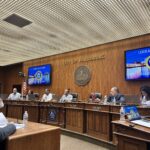

Fortunately, a blurb in TheBurg helped ease this concern.

In the “Happenings” section of the September issue, I noticed that Gettysburg College political science professor Shirley Anne Warshaw would be giving a talk to the Foreign Policy Association (FPA) of Harrisburg. Her topic: U.S. foreign policy in an election year. Given my interest in international affairs, this was an event I was not going to miss. 

The meeting room at the Camp Hill Radisson Hotel was packed. FPA President Michele Sellitto delivered some opening remarks, announcing that the October speaker would be former NSA and CIA Director Michael V. Hayden.

Warshaw then proceeded to captivate the audience with her lecture on how U.S. foreign policy would likely differ depending on the election’s outcome. A spirited Q&A followed, with questions coming from all over the political spectrum. I was hooked. Within days, I mailed a $25 annual membership check.

 Unknown to me at the time, I was joining this nonprofit, non-partisan organization at a time of great growth. In fact, the Radisson recently moved the regular meetings to a larger location, the main ballroom. Fueled by the energy of Sellitto, but also by a highly contentious national election and what Sellitto calls “the Trump effect,” FPA’s ranks have swelled in just the past few months.

“The FPA’s membership held steady at around 125 for a long time,” Sellitto said. “This year, we set a goal of 160, but we have far exceeded our goal. We’re now close to 200.”

FPA traces its roots to 1949. Although the Harrisburg group is nominally affiliated with a national Foreign Policy Association, it operates independently. The Harrisburg chapter’s stated mission is “to offer, in an unbiased way, information about international issues and policies to our citizens to help them make informed judgments about their relations with neighbors in our global space.” 

Sellitto added that, when she became president in June 2015, her objective was to respect FPA’s history while working to grow the organization. In particular, she wanted to expand its role in helping Harrisburg-area residents understand how U.S. foreign policy affects their lives.

FPA accomplishes its mission in several ways.

Most visibly, it conducts eight regular meetings and one president’s speaker series lecture each year. The meetings run from September to May, on the third or fourth Thursday of the month. These meetings feature talks by university and U.S. Army War College professors, scholars from Washington think tanks and other leading experts. Recent lectures have covered the geopolitics of climate change, the Israeli-Palestinian conflict and the future of American-Cuban relations. Most members attend a pre-meeting banquet at the Radisson.

 Sellitto came up with the idea for a president’s speaker series to increase membership. In 2015, she asked an initially reluctant board of directors if the FPA could invite a big-name speaker—former Deputy Secretary of State William Burns. The board assumed financial risk by renting a large room at the West Shore Country Club and paying an honorarium. With encouragement from FPA board member (and former Camp Hill mayor) Lou Thieblemont, Sellitto’s proposal was accepted and ultimately proven correct. Burns’s talk drew 200 attendees, a record.

This enabled Sellitto to invite Michael Hayden for the second installment of the president’s speaker series. All the talks I’ve attended have been highly informative and engaging, but I found Hayden’s lecture to be utterly absorbing.

He explained how U.S. intelligence agencies navigate a fine line between protecting the American public and playing within the boundaries established by national and international laws. Speakers are instructed to be non-partisan, but Hayden indicated his strong preference for Hillary Clinton in the election. He stressed that, if Donald Trump became president, the military would refuse to obey unlawful orders.

The FPA also runs annual bus trips to Washington, D.C., so members can visit the U.S. State Department and a foreign embassy. Past excursions have included the embassies of Germany, France, China, India, Greece, Turkey, Egypt and Morocco. This year’s Washington trip, on May 10, will feature a visit to Poland’s embassy, followed by dinner at a Polish restaurant.

Members also can attend an annual event to meet international fellows at the Army War College. Thieblemont recalled that, during one of these visits, he met War College fellow Abdel Fattah el-Sisi—who is now the president of Egypt. 

In what Sellitto calls “a new era for the club,” FPA member Phyllis Skok is organizing the first membership tour of a foreign country. This trip will take several dozen members to Cuba for a nine-day “people-to-people” tour next January.

“I want to have trips to places that many of our members have not visited, because that will lead to heightened interest,” Sellitto said.

In my six months as an FPA member, I’ve been impressed by the quality and scope of its activities. I’ve taken copious notes at recent meetings, signed up for the Washington tour, and plan to go on the Cuba trip. But, most of all, I’ve enjoyed meeting informed and engaged people from a variety of backgrounds. I’m very glad I saw the blurb in TheBurg! 
To learn more about the FPA and see a schedule of upcoming events, visit www.fpa-harrisburg.org.

Author: Robert Naeye

Continue Reading

Student Scribes: If I Could Paint

If I could paint, you’d be a glob of brown
I’d add blues and greens to darken your hue
You’d be scribbled with no shape and no form
One couldn’t tell your legs from your arms
Your eyes would be yellowed and your heart in your feet
When I’m done you’d be black as the street
Scumbling would be my next technique
I’d do it to hide what’s beneath
I’ll call you Chameleon, that’s what you are
Upon closer inspection what’s underneath will come into view
Even if marked free no one would want you

If I could paint you’d be a cool breeze
You would sway to and fro and rattle the willow trees
Your pale cool colors would fade away
Just like the dawning of a new day
First orange, then yellow then back again
No matter how hard I’d try, your color wouldn’t stay
Fair well my friend
As memories of you get smaller and smaller
You would end up a dot on my page
And in time, we would disengage

If I could paint, you would be a glass of merlot colored wine
Paper, cotton, linen, perhaps a mural on a wall
Mixed media art, definitely big, not small
I’d start with old gold
You, near my heart, I would shape and mold
Add royal purples, you would be regal and fine
My love for you would stand the test of time
You would be big, strong, and never sold
Looking at you would never get old
Bold strokes of black would accentuate your form
And the stem of your glass would be a vast strong arm!

If I could paint, you would never be complete
I’d start with white then add a red tint
Or, add a touch of white to dark green then you’d be mint
I’d wrap you in softness, easy on the eyes
The color of milk and billowy like the sky
I would never sell you, your value is too high
I’d cover and protect you from pain and danger
You’d be my babe and I your mother
To depart from you would be to die
Like a chain, forever we are linked
There’d be two of you, similar but distinct

If I could paint, rainy days would be great
Boys and girls would be outside having fun
There would be no weapons, no guns
I would paint big strong acorn trees, and kids with scrapped knees
Row homes would be all around,
An ice-cream truck would be coming down the street
And little girls jumping double-dutch to a beat
Children leaping up and down in the water plug
There would be acorn fights and lightning bugs
Your colors would resemble a rainbow, they would ebb and flow
I’d paint you big and place you out front for all to see
When viewing you all anger and sadness would flee

If I could paint . . .


Angela Larks is a recent graduate and communications major at Penn State Harrisburg.

Continue Reading