Weekend Roundup with Sara Bozich

Happy Weekend!

You almost made it. The weekend is basically here — again! — so power through (I know you’re still recuperating from a long 4th of July holiday).

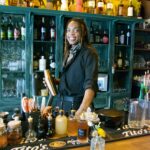
Tomorrow night, we’ll be at Tapas & Tasting at Cornerstone Coffeehouse (congrats to Fina S., our ticket winner — see you there!).

On Saturday, follow along as we treat our Poured in PA winner to a guided tour along the Cumberland Valley Beer Trail. Follow: #FoundItInCV

What are you doing this weekend?

(more…)

Continue Reading

To Buy or Not to Buy: Police, opponents give views on new riot gear.

Harrisburg Police Chief Thomas Carter and Capt. Derric Moody showed City Council the protective gear they wish to buy, on the right, with an old shield on the left. People who objected to the proposal sit on the far right.

Vocal opponents of a proposed police spending measure packed Harrisburg’s government center tonight, as City Council chewed over whether to allow the department to purchase new riot gear.

More than two dozen activists attended a council work session, some decrying a Police Bureau plan to purchase 30 “top to toe” protective suits.

“Simply possessing more militarized gear . . . escalates the situation further,” said Amanda Arbour of Harrisburg. “We have seen it’s not the police getting hurt at these types of situations.”

Police are asking council to approve the transfer of $65,000 in unspent personnel funds to buy the equipment. The bureau’s current gear is old—about 25 years old—and inadequate, according to Capt. Derric Moody.

Chief Thomas Carter stated that the Harrisburg police need the equipment as the rate of protests in the state capital—and their volatile nature—is making the force more vulnerable.

“Protective gear is used to de-escalate the situation,” he said. “Protective gear is used (by police) to protect themselves. Without the proper gear, a situation would be escalated more.”

Moody emphasized that the purpose of the gear is protection.

“How can we protect others if we can’t protect ourselves?” he said.

Carter said that the bureau has deployed its existing gear several times recently, including two visits by now-President Donald Trump and a June protest that attracted both “anti-Sharia” activists and masked, black-clad members of a group called Antifa, which stands for “anti-Fascist.” During that event, several fights broke out between the opposing groups, and one woman was arrested for allegedly injuring a state police horse.

“Anytime there’s a potential for harm, potential injury to persons, you would see this gear come into play,” Moody said, who added that the gear wouldn’t be deployed for protests where there is no apparent threat of violence.

Police brought along samples of the suits to show council. Currently, city police riot gear consists mostly of aging helmets, shields and gas masks, Moody said. The requested money would buy full protective suits, which Moody has described as “scalable,” meaning that parts—individual pieces for shoulders, hands, legs, chests, shins, etc.—could be deployed as needed. The suits also come with helmets, shields and riot sticks, which are longer than standard police sticks, Moody said.

Several residents urged council to divert the money to other community needs, perhaps even asking residents what they believe will make the city safer.

“I don’t know that we need to be spending that money on this at this very time,” said Patricia Stringer, a former city councilwoman.

Council members appeared alternatively supportive and skeptical of the bureau’s request.

“There have been protests at the Capitol for a very long time,” said Councilman Cornelius Johnson. “The message got to the masses of people that, because of the increase in the amount of protests, we need to update our gear.”

Moody said that, in fact, protests have become more frequent and virulent.

A vote on the measure was expected tomorrow during council’s final legislative session before its six-week summer hiatus. However, council delayed a vote on the issue until after the recess as police rushed out of the meeting during their presentation to attend to protests at Sen. Pat Toomey’s town hall at ABC27 News studio on N. 6th Street.

Author: Lawrance Binda

Continue Reading

Burg View: The state must regularize its annual payment to Harrisburg.

Where state and city meet.

Bruce Weber isn’t typically known for his serenity.

By his own admission, he’s a worrier, which is probably the correct disposition when you’re Harrisburg’s budget and finance director.

However, even by a calmer standard, the recent struggle over the state’s annual payment to Harrisburg was a nail-biter.

When asked recently what would happen without the state payment, which, in recent years, has represented about 8 percent of the city’s general fund, Weber thrust his hands into the air, making a “who knows” gesture. Without it, Harrisburg’s budget would have a massive hole in it.

How would it be filled? Who knows?

Back in February, Gov. Tom Wolf’s proposed 2017-18 budget contained $5 million to Harrisburg for services in lieu of taxes. Then it was stripped out, in its entirety, by the state Senate. At the last minute (i.e. this week), the money suddenly reappeared, thanks to the Herculean efforts of state Rep. Patty Kim and Sen. John DiSanto. This is no way to run a city—or a state.

I’m not going to address the issue of exactly how much the payment should be. Is $5 million a year a fair figure for an entity that owns 42 percent of Harrisburg’s land yet pays no taxes, but still needs 50 buildings and 30,000-plus workers and visitors served and protected each day?

It’s probably in the ballpark, although city Councilman Ben Allatt, citing New York’s greater payment to its capital of Albany, argues it should be much more.

Whatever the figure, it’s time for the state to own up to the fact that it depends upon Harrisburg for fire protection and other services—and that those services cost money to provide. Moreover, Harrisburg, still financially fragile, cannot afford to wait until halfway into its own fiscal year to learn whether or not it’s going to receive a state payment—and, if so, how much.

Therefore, we call upon the state to enter into a long-term agreement with the city to provide a knowable, mutually agreed-upon annual payment, which would not be subject to the vagaries of partisan politics and the whims of politicians.

Doing so would allow the city to budget responsibly, while fostering a more respectful and beneficial bond between city and state. It also might help calm Weber’s nerves—and ours.

Author: Lawrance Binda

Continue Reading

Capitol Capital: State restores annual payment to Harrisburg.

The state legislature is expected to pass a 2017-18 budget today, which includes a $5 million payment to Harrisburg.

Harrisburg looks likely to receive its full state funding after all, as the legislature has re-inserted a $5 million payment to the city in its final budget agreement.

A vote is expected today on a $32 billion state budget for 2017-18 that includes full funding of the “Capitol fire protection” line item, a type of payment in lieu of taxes that the city counts on to help fund emergency services.

“This is great news for Harrisburg,” said Mayor Eric Papenfuse. “And I’d like to thank (Rep.) Patty Kim and (Sen.) John DiSanto for working hard on behalf of the city.”

Over the decades, this annual payment has ranged widely from nothing to the current $5 million, an amount decided upon while the city was under state receivership. However, the money is not guaranteed, meaning that Harrisburg isn’t certain it will receive the funds until the always-fraught state budget is passed.

The money lands in the city’s general fund, but Harrisburg officials say it offers compensation for services that the city provides to about 30,000 state workers, in addition to many others who come to Harrisburg to do business with the state. The state pays no property taxes on its massive holdings in the city, which includes some 50 state-owned buildings on about 42 percent of the city’s land.

The payment was included in the proposed budget released in February by Gov. Tom Wolf. However, the Republican-controlled Senate later stripped it from its budget proposal, with some legislators criticizing the city for tripling the local services tax, which affects everyone who works in Harrisburg. At the time, Kim and DiSanto both said they’d fight to have the money restored.

Once passed by the legislature, Wolf is expected to sign the budget into law.

Author: Lawrance Binda

Continue Reading

Foot Falls: What are the most dangerous spaces for pedestrians in Harrisburg?

With just nine minutes remaining before his 5 p.m. shift, Chris* peddled his aluminum bike from his Midtown apartment toward the downtown restaurant where he worked as a server. No helmet, headphones playing underground rap music, he glided down the sidewalk along Front Street to pause at the sidewalk’s mouth as it opened to the six-lane behemoth of Forster Street.

Chris said he watched the traffic light controlling Forster Street’s rush-hour traffic turn red, started pedaling, and collided with the front bumper of a silver sedan.

The next thing he remembers was lying on the pavement, thinking, “I got to get up.” With a dented bike, broken leg and blooded face, he could not move.

Chris, who has since recovered, represents one of many Harrisburg residents and visitors who navigate the city without a car, either by need or by preference. Over the years, TheBurg reporters have heard of many other accidents involving pedestrians—and nearly been victims a few times themselves. So, we paired with Steve Cline, owner of map-making project Urban 3D Modeling, to find out how the city interacts with its walking population.

Cline mapped the car crashes that involved pedestrians in Harrisburg by using PennDOT Open Data from 2012 to 2016.

The top four areas of accidents probably won’t surprise those who don’t use cars, and neighborhoods prone to foot traffic showed more incidents.

Cameron and Market streets topped the list with seven crashes involving pedestrians at a single intersection.

A whopping 58 crashes took place along Derry Street. The map shows a concentration along 13th and 17th streets, plus the intersection of Derry and Mulberry streets.

Forster Street, where Chris’ accident took place, clocked in at nine crashes along the downtown portion. Four crashes took place at the 3rd and Forster intersection.

The downtown corridor bordered by Front, Chestnut, 4th and Walnut streets saw 20 crashes with pedestrians. Many took place along Front Street, and three pedestrian crashes (of 25 crashes of all types) took place at Front and Market streets near the Market Street Bridge.

A cross-shaped region around N. 6th and Maclay streets showed 12 crashes with pedestrians out of a total 508 crashes.

“At some point in every journey, everybody’s a pedestrian, even if you park in a lot and you’ve got to cross a street to go to an office,” said Geoffrey Knight, the city’s director of planning. “Pedestrian infrastructure is important for everybody, not just people who rely on walking to get around most of the time.”


A Change

Knight’s office dreams up the “pie in the sky” ideas to design the city for pedestrians—larger sidewalk “bump outs” that trick drivers to slow down, trees placed for shade and safety and well-designed crosswalks.

“From a conceptual standpoint, we are always trying to make the city as accommodating to pedestrians and all road users as possible,” he said.

This perspective on city planning marks a change from past generations.

“A lot of last centuries’ engineering as far as streets … in many cities, was designed to get people in and out the city as fast as possible,” Knight said. “So, now communities are having to correct that.”

Roads such as Forster and Front were widened to accommodate more cars, which benefited commuters, but gave pedestrians dauntingly wide streets to cross.

A few projects are in the works to make the city more appealing for those who don’t drive cars.

A $3 million state grant-funded project is in the works with the goal of transforming the streetscape near the intersection of Mulberry and Derry streets. This Allison Hill intersection, known as Mount Pleasant or MulDer Square, saw nine total crashes, with five incidents involving pedestrians, according to the PennDOT data.

“The purpose of this project is green infrastructure and pedestrian activity because that is what is going to increase property value and safety,” said City Engineer Wayne Martin.

Project leaders also plan to develop a safe path to Cameron Street (following the “goat paths” that walkers already have worn into the dirt) and to transform Nectarine Alley—an alley so rife with potholes that cars cannot pass; I tried it and failed—into a green space.

Martin called this Y-shaped intersection a “sea of asphalt.” A small mini-mart sits at the crux of the Y. The expanse of asphalt makes it difficult for a pedestrian to pop between parked cars to see when a car will whir pass and in which direction.

“What if we made it plaza space, green space,” Martin said about underutilized space. “Give it back to the pedestrian, because it’s not really needed for roadways for traveling vehicles.”

Pinch Points
Though Derry Street, combined with stretches of S. 13th and S. 17th streets, saw the greatest number of pedestrian-related crashes, the intersection of Cameron and Market streets clocked in as the most dangerous intersection for pedestrians.

Cycling community advocate and founder of the bike repair nonprofit, Recycle Bicycle, Ross Willard called this area a “death wish” to cross.

“We have an island that starts from downtown to Midtown to Uptown,” he said. “[This means the city] has pinch points. All the pinch points are deadly because we have high speeds, lots of walkers and lots of traffic.”

Already this year, on a Monday evening in late January, a taxi driver hit a 25-year-old city resident attempting to cross the four-lane, industrial-zoned behemoth. The pedestrian was taken to Hershey Medical Center because of multiple injuries, according to the Harrisburg Bureau of Police.

Last month, a drunk driver killed a woman walking on State Street, another “pinch point,” on an early Saturday morning.

For many residents and workers, crossing these “death wishes” is a day-to-day necessity. Residents staying at a halfway house on Cameron Street can only bike or walk, Willard said. Knight pointed out that the PA CareerLink Center attracts walkers crossing Cameron Street.

To get to jobs downtown, this intersection presents the most convenient route. Over at Front and Forster, that’s what Chris was doing when he got hit. He was just following his normal daily routine.

Now, about a year after the crash, he’s mostly recovered. He continues to bike (on a new one he called “a beauty”). He said he wears his headphones about half as much.

Most importantly, he’s altered his route. He still needs to bike downtown and cross Forster at Front street. But now he opts for the more controlled crossing at Riverfront Park.

*Chris is a pseudonym for the real biker, who asked not to be named.

Author: Danielle Roth and Steve Cline

 

Continue Reading

Small Town Escape: Take a day to take in Mifflinburg.

When people think of small Pennsylvania towns, they often aren’t aware of the jewels that may be found there.

Such is the case with Mifflinburg. Recently, my wife and I made a day out of it, starting with a morning hike in the Tall Timber Natural Area before enjoying a repast at the Rusty Rail Brewing Co. and finishing up with a visit to Penns Creek Pottery.


A Rhythm

Tall Timber Natural Area is located at the base of Jacks Mountain, about an hour north of Harrisburg. There, we hiked the Swift Run Trail along the creek. There are some ups and downs, but most of the easy-walking trail follows the creek through a forest of white pines and other hardwoods, then up the mountain. Listen for the musical calls of the thrushes and other birdsong along the way.

Once you finish your hike and the appetite begins to build, it’s an easy, 20-mile drive to Mifflinburg. Turn left off of Route 45 at 8th Street and, in half a block, you’ll see the Rusty Rail Brewing Co. on the left, located in a historic, red-brick building. Inside, you’ll find everything you need to fuel back up. You can even relax with some pool or darts and even take in a dose of Pennsylvania’s industrial past.

The Rusty Rail occupies an enormous, century-plus-old building that, over the years, has made everything from automobile bodies to pool tables to kitchen cabinets. 

A few years ago, brothers Paul and Eric John decided to convert the cavernous building into a brewpub and events space, which entailed a complete redesign and remodel, as well as an enormous investment. General Manager Rich Schrader said that they used many existing elements during the renovation and construction, repurposing materials and objects to reflect the industrial heritage of the building and the town.

Next, they recruited a team—chef, brewer, restaurant manager, events coordinator and brewery/sales manager—to lead the different areas of the operation.

“Like any startup, we had our share of turnover, but, overall, we have retained the largest portion of our original staff,” Schrader said. “We had to find a rhythm with the team. On our busiest days of opening the restaurant, 350 customers a day seemed like a lot. Two years later, we are serving over 800 people on our busiest days.”

The restaurant now smokes its own meats, bakes its own breads and creates its own bases, sauces and desserts. The specialties of the house include smoked brisket, cheesesteak spring rolls, Asian veal short ribs and venison meatballs.

Beer-wise, the brewery has six core brands, including an IPA, a pale ale, a blonde ale, a stout, a witbier and a lager, as well as various seasonals. In the near future, the Rusty Rail plans to start brewing sour and barrel-aged beers and to add canning to its packaging.

“The production and distribution side of the brewery has grown tremendously,” Schrader said. “We are present in most of Pennsylvania, New Jersey, and we plan to continue to expand into surrounding states and beyond.”

The Rusty Rail’s events side—for weddings, live music and other happenings—also has grown substantially, which should be enhanced further once an outside pavilion and beer garden are complete.

“The future looks very bright,” Schrader said.


One of a Kind

After our meal, we ventured down to Penns Creek Pottery, located on Route 104, about 3½ miles south of Mifflinburg—right on your return trip to Harrisburg. Owners Bill and Sharon Lynch have been at this location since the late 1970s.

“We moved to Mifflinburg in 1978 and didn’t know a soul,” Bill said. “The ice jam of February 1979 flooded our home and workshop, and recovering from that natural disaster was quite a job. It took at least six months to put things back together, while trying to establish a market for my pottery and a brand for myself.”

Another challenge was restoring the 200-year-old, water-powered flourmill on the property and turning it into a production studio and retail gallery. The mill was in derelict shape after ceasing operation in 1951 and serving as a chicken coop for many years. They set a goal for themselves—making and selling pottery in the mill within a decade.

They met that goal and, over his career, Bill has earned many prestigious honors, including the Phil Patterson Memorial Award for Outstanding Design and Craftsmanship from the Pennsylvania Guild of Craftsmen.

“I think pottery is so important today because we live in an increasingly impersonal world,” he said. “Most of what we use today in our everyday lives is made anonymously, often in factories halfway around the globe.”

People are hungry, Bill said, for things that are not mass-produced—that are one of a kind and made locally.

“Everything I make at Penns Creek Pottery is sold right here,” he said. “Visitors can see pots being made as they browse through the collection of finished pottery, and they can meet the potters and learn something about the process while they shop. People really like that.”

Once you leave Penns Creek Pottery, consider a stop at Shade Mountain Winery. It’s right on the way back to Harrisburg and a perfect way to end your day trip.


GOING THERE

Tall Timber Natural Area: Follow Route 322 West until you reach Thompsontown, then exit at Route 333. Drive north on Route 333 until the road intersects with Route 235, then enjoy a scenic drive over Shade Mountain until you reach the tiny town of Troxelville. Turn left at the sign for the Snyder-Middlesworth Picnic Area and follow the road, partially paved, partially gravel, until you reach the area.

Rusty Rail Brewing Company, 5 N. 8th St., Mifflinburg. Visit www.rustyrailbrewing.com or call 570-966-7878.

Penns Creek Pottery, 30 Pottery Lane, Mifflinburg. Visit www.pennscreekpottery.com or call 570-837-3809.

Shade Mountain Winery, 16140 PA Route 104, Mifflinburg. Visit www.shademountainwinery.com or call 570-837-3644.

Author: Don Helin

Continue Reading

Sit, Stay and More: Once your dog knows the basics, you can take training to the next level.

Dog training isn’t just for dogs. It can bring many moments of discovery and learning for both pet and owner.
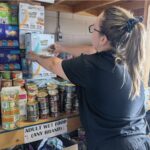


At first, instruction will be directed towards basics such as potty training and how to sit, stay and go for walks. Just having a well-mannered four-legged companion can be an enjoyable experience and bring a sense of accomplishment.

But, once the basics are mastered, the training doesn’t have to end. In fact, taking it to the next level is pretty simple. The key is to figure out your dog’s strengths and then pursue an outlet for those behaviors, which can be shaped into something constructive and amazing. These may include teaching your dog tricks, dock diving, agility, lure coursing, freestyle Frisbee or flyball. He or she can even be trained for search and rescue or to be a therapy pet that visits the infirmed or interacts with children.

Figuring out what your dog has to offer is the key. If your dog has a great nose and likes to hunt, then search and rescue or tracking might be a great outlet to shape its behavior into a useful and productive activity. Dogs that have an obsession with balls or playing catch may do well in activities such as freestyle Frisbee or flyball, a type of relay race for dogs. There are activities that include dancing with your dog and traveling with other dog-lovers (and their pets) to great vacation spots.

Your dog does not have to be selectively bred to perform such feats. Yes, certain dogs, such as service dogs, are bred for specific jobs and tasks. However, dogs are quick learners and, if given the right instruction and bond, will do almost anything to please their humans.

Age is of no matter. Most people think that training must be started at the puppy stage, but just like with humans, a certain level of maturity needs to be attained before development is fully possible. There are many YouTube sensations that were once pound puppies and are now stars of the internet. Dogs have personality and the potential to learn new tricks at any age. Just because your pup was not selectively bred to be a therapy dog does not mean it cannot be a grand champion in other arenas.

Facilities that offer basic obedience classes sometimes offer advanced classes that include introduction to agility, Rally-O, therapy dog programs and other specialized activities. The internet is a great resource to find classes or clubs that specialize in the activities offered in the local area.

Here in central Pennsylvania, we have clubs that offer activities for both the novice and the competitor. Internet resources include www.akc.org and www.apdt.com, which not only provide information on local facilities and clubs but also offer descriptions of the different activities that are available beyond the basics.

Canine Spa, located in Dillsburg, is a great place to visit if your dog is a water hound. You can see, for instance, if your pet would make a good dock diver, a sport in which a dog leaps off the end of a dock to retrieve a lure thrown into the water. The sport part is how far your dog can jump. There also are several facilities that offer agility classes in our area. In agility, a handler/owner guides the dog through an obstacle course that might include jumps, teeter-totters, tunnels and chutes. Several dog-training facilities offer classes for “Canine Good Citizen” certification, which is the first step in attaining therapy dog status.

Whatever your pet’s hidden talent, it’s great to be able to tap into his or her potential and take the human/dog bond to the next level, fully enjoying your dog’s unique personality and your relationship.

Amy Powell is a dog trainer and Owner of Doggie U, LLC.

Author:Amy Powell

Continue Reading

Gone to the Dogs: An abandoned block of Harrisburg gets a new leash on life.

Illustration by Rich Hauck

Ginger and Matt Coleman are the happy parents of a 3-year-old boxer rescue named Apollo.

“He’s very, very active,” said Ginger, who lives on N. 3rd Street in Midtown Harrisburg. “So, he really needs a dog park.”

I walked with Ginger recently to a very green, very empty plot of ground at the corner of N. 7th and Granite streets, a dogleg-shaped parcel (natch!) that, if Friends of Midtown has its way, will be Harrisburg’s first dedicated, off-leash dog park.

“We’ve gone to the one on Union Deposit Road,” said Ginger, referring to Kohl Memorial Park in Lower Paxton Township. “But it would be nice to have one closer to home.”

After searching for several years, Friends of Midtown decided upon this three-quarter-acre patch of grass as the best option for pooches to get their run and sniff on. It even comes with some of Fido’s favorite playthings already in place: squirrels, groundhogs and rabbits, which, at least for now, run around unimpeded, blissfully ignorant of what may be in their future.

Ginger and I visited on a cool evening, a little before dusk, along with several other dog-lovers. The group reviewed the details—the timeframe (early 2018), how much money Friends of Midtown needs to raise ($18,000) and the design (separate areas for large and small dogs). Vartan Group, which owns the land, is letting them have it for the next two years.

A few people chose to walk the grounds, picturing, I’m certain, their own dogs jumping and frolicking and playing in the grass. As a student of this city, I saw things a little differently. I perceived emptiness and eerie quiet, and I began to wonder what had happened to this long-abandoned city block so that a dog park now constituted, to put this in economic terms, a higher and better use.

The story of the 1700-block of N. 7th Street actually tells a story shared by other parts of once-industrial Harrisburg. By the mid-19th century, one large family, Dr. Luther Reily and his children, owned the entire area—what would become 96 city blocks. Over the decades, pieces were sold off and subdivided so that, by 1889, there were eight landowners on this block and, by 1901, 14, with the Reily heirs still claiming several parcels, according to city maps.

The 1932 Polk city directory showed the block to be fully developed with dozens of small, attached houses, many likely occupied by the working-class, railroading families that populated the area. By the 1958 directory, the block had become almost completely industrial, home to small warehouses, paint shops and junkyards, with some houses remaining, mostly up Kelker Street.

The ensuing years were not kind to this now-gritty block of scrap-metal salvagers and junk dealers. As the city de-industrialized, businesses closed, owners died and properties sold for taxes. Investors and speculators moved in, renting out increasingly dilapidated houses to poor families. In some cases, the city became an owner of last resort. The Vartan Group has been buying up land there for some 20 years, knocking down whatever structures remained, so that it now owns nearly the entire city block.

On that cool, cloudy early evening, as I stood scanning the grassy field, I felt a bit like the character of the time traveler from H.G. Wells’ “The Time Machine,” a man who, from his machine, witnesses a block of London rise and fall and rise again, ever changing, over the course of many years.

I suspect that Vartan eventually will find a use for the land and develop it. It may be many years away, but the seeds of the neighborhood’s redevelopment—the pending state Archives and U.S. courthouse buildings—are being planted right now nearby on 6th Street. Some day, new construction will overrun this block, too, putting the fallow property back into productive use, returning it to the city’s built environment, a contributing part of its urban density.

Until then, at least for a few years, the block seems destined to have happy hounds and terriers, spaniels and shepherds, romp and yelp, scamper and play. This will be the first, small step back for a forsaken, forgotten piece of Harrisburg at 7th and Granite streets.

Lawrance Binda is editor-in-chief of TheBurg.

Friends of Midtown continues to collect money for the creation of a dog park at N. 7th and Granite streets. If you would like to contribute, please donate by visiting www.friendsofmidtown.org or mail a check, indicating “dog park” in the memo line, to Friends of Midtown, P.O. Box 5291, Harrisburg, Pa., 17110.

Author: Lawrance Binda

Continue Reading

Black, Beautiful, Healthy: Black Girl Health strives to educate minority women about their bodies.

Porcha Johnson

With their yoga pants, water bottles and natural hair tied tight, more than 300 women filed into the Hilton Harrisburg last month to see the Black Girl Health national online movement in action.

While holding meditation poses, announcing their fears into a smoky blue room and following the workout moves of an Olympic silver medalist, these women learned about personal health at BGH’s “Kickstart Your Health Women’s Wellness Expo.”

BGH, a Harrisburg-based digital publication, promotes health and wellness for women of color. Experts on beauty, fitness and medical health weigh in on their website and social media platforms.

“Black Girl Health is a woman who is in control of her life and her health,” said founder Porcha Johnson, who also is a reporter for WGAL News 8. “It’s a woman who feels good about where she is and where she’s going.”

Johnson created BGH as a platform to discuss the specific issues that affect African-American women.

“It’s very cultural,” Johnson said. “In our community, many of us have grown up on processed foods and ‘soul foods.’ We’re not educated on healthier food options. We need to increase our education and awareness.”

African-American women are prone to higher rates of health problems such as high blood pressure, diabetes and stroke, according to the Centers for Disease Control and Prevention. For example, high blood pressure (hypertension) affects more than 45 percent of black women compared to 42 percent of black men, according to WebMD.

“Black women are living in disparities of disease,” said LaToya Burden, Black Girl Health’s project coordinator.

This became clear to Johnson when dealing with the health struggles that pushed her to create BGH.

Johnson’s mother suffered from three miscarriages before discovering she had fibroids, non-cancerous tumors. This condition prevented her from expanding their family.

“She probably had them years before, but they were out of control at that point [in her 30s],” Johnson said.

A few years later, when Johnson was in her early 20s, she found out she had the same condition. Seeing her mother struggle with fibroids encouraged Johnson to take preventative measures and early examinations, she said.

“But that’s just my own battle,” she said. “Everyone has their own.”

As she researched this condition, she discovered her experience is similar to many women of color.

“When I started to see other women my age getting hysterectomies, I thought, ‘There needs to be more awareness,’” Johnson said. “I wanted to create a platform for women, not just with fibroids, but for women who have heart disease, obesity or diabetes.”

Starting as a blog in May 2014, BGH now reaches more than 2,000 Facebook followers and hundreds more in-person with the annual “Kickstart Expo” event.

Sessions at this year’s event at the Hilton included local leaders and national champs.

Charisse Grayer and Sandra Johnson of “Zoombalicious,” a Harrisburg-based exercise group, excited the crowd with their hip-hop style workout moves. Olympic silver medalist Hyleas Fountain taught a strength class. Food and nutrition experts educated guests on healthful diets. Candice Johnson, a certified reiki practitioner, flew in from San Diego to teach meditation techniques to reduce stress. Other sessions covered sexual health, spiritual well-being and self-defense

“My favorite session was the pound class,” said guest LaShon Mcintosh. “You exercise with two drumsticks, and together they weigh about a pound. It was so much fun. I’m going to try to find more classes like that around me.”

Along with treats from vendors and sponsors, Kickstart ran free health screenings from Hamilton Health Center and Alder Health Services.

“We want them to be aware of their physical health and what’s inside,” Burden said. “Just because you look good doesn’t mean those numbers are good.”

And, she said, they chose to have their event in Harrisburg for a specific reason.

“Not Philadelphia, not D.C.,” Burden said. “Right here in Harrisburg, so people can see that there’s a population, there’s a demand here that matters.”

The event attracted women of many races, including those who live outside of the Harrisburg region. Even men participated.

“You show me a person not of color that does not have connection, care or concerns for some woman of color somewhere,” Burden said. “[We’re] inclusive in the sense that we want people to care about our health as much as they care about everyone else’s.”

For the finale, the Hilton’s ballroom transformed into a talk show studio for “BGH Live.” Johnson channeled her reporter skills and chatted with Women’s Health Magazine’s “The Next Fitness Star” Selena Watkins; the oldest competitive female bodybuilder, Ernestine Shepherd; 2016’s Miss USA Deshauna Barber; and social media star and natural hair guru, Temitope Adesina.

“[The Kickstart Expo] turnout and our followers speak volumes,” Johnson said. “People want to live a healthier lifestyle.”

For more information about Black Girl Health, visit blackgirlhealth.com.

Author: Yaasmeen Piper

Continue Reading

He Sells Seashells: From Paxtang, you can “hear” the ocean.

People who enter Rob Burton’s small shop encounter items that are more likely to be spotted at the shore than in a converted two-car garage in Paxtang.
Shelves and tables are topped with lobster claws, hammerhead oyster shells, ghost crabs, horseshoe crabs, shark jaws with teeth, starfish, large conch shells and dozens of varieties of small seashells. Contributing to the beach theme are blue walls, portions of old telephone poles wrapped with rope to resemble piers, fishing rods hanging on a wall and a kayak suspended from the ceiling.

“When people come here, they look around in awe,” Burton said. “It’s overwhelming. It’s a lot to take in. They’re never going to forget it.”

The shop has been five years in the making for Burton, 47, and his three children, ages 13, 16 and 18. Currently hidden in an alley out of street view, the business will expand into the lower floor of the adjacent, 100-year old house, where it will have a storefront facing Derry Street. Following extensive renovations this summer, Burton expects the expanded shop to open to the public in September.

“My target market is interior decorators and beach-lovers,” he said, adding that, “everyone loves seashells.”

Burton buys some merchandise from wholesalers and collects the rest during trips to East Coast beaches, where he and his children gather shells and other marine life that has washed up on shore.

“How many parents walk past and say ‘Don´t touch that?’” he said. “And we stop and pick it up. We all have backpacks on, and we’re saying, ‘This is cool, and that’s cool.’ Mother nature has already done a lot of the work. We clean it up, dry it out and put a clear coat on it.”

His children have filled dozens of decorative glasses with shells and sand, which are for sale in his shop.

Because Burton owns the building, he doesn’t have to pay rent, which, he said, allows him to keep prices reasonable. Shells start at 10 cents apiece, and costlier items carry price tags in the $30 range.

Former marine life that stands out for its unique appearance includes a puffer fish and the egg casing from a whelk, a kind of sea snail. Some people love the prehistoric-looking, deep-water sea robin, which others could consider ugly, Burton said.

“It´s in the eye of the beholder,” he said. “There’s no rhyme or reason.”

One local man who was wowed by the shop requested Burton’s business card. Months later, he returned with his interior decorator and purchased items for his beach house in Delaware.

Burton can also take requests from customers. One woman from Wrightsville who discovered his shop on Craigslist wanted a specific item to add to her collection.

“She saw the lobster claw and tail, and she said she would love an entire lobster,” he said. “I asked her to allow a month for turnaround. She saw it and fell in love with it.”

Another customer said he couldn’t display fragile items on tables because of his pet dog. That gave Burton the idea to sell wall-mounted items.

Although the shop’s name isn’t official yet, Burton is leaning toward “Harrisburg Framing and Sea Gallery.”

Burton provides custom framing with help from his 16-year-old daughter, Makayla, who attends Capital Area School for the Arts Charter School. She paints the frames according to people’s preferences. For eco-conscious customers, he plans to offer an organic line of stains for framing, including coffee, walnuts and tea.

Burton also restores pool tables and antique furniture. An art deco Victor pool table from the 1920s or 1930s serves as a display table for sea creatures. He has restored pool tables that date as far back as the 1860s.

“During World War II, they started using plywood and particle board,” he said. “The old oak ones will outlast us.”

Burton is in the process of covering one pool table with sand and shells to give it a beachy look. He also plans to leave a section of his shop for Makayla to display her photography.

“I’ve preached to my kids to take the path less traveled,” he said. “Be yourself. Be unique, and you don’t know what you can become.”

The shop is located at the rear of 3428 Derry St., Harrisburg (Paxtang), and is currently open by appointment only. Burton can be reached on his cellphone, 717-574-3551.

Author: Kathryn Walson

Continue Reading