Fact-Free: “Not a Scientist” calls out politicians’ willful ignorance.

“Not a Scientist” display at Midtown Scholar Bookstore

In 1980, when Ronald Reagan compared the CO2 levels of Mount St. Helen’s to those produced from automobiles, his words were as follows:

I’m not a scientist, and I don’t know the figures, but I have a suspicion that that one little mountain out there has probably released more sulfur dioxide into the atmosphere of the world than has been released in the past 10 years of automobile driving…”

Science journalist David Levitan now has called out Reagan and other politicians who mischaracterize science in his book, “Not A Scientist: How Politicians Mistake, Misrepresent and Utterly Mangle Science.”

This debut work breaks down the errors politicians make when it comes to science and how those errors affect the public. Controversial topics, such as vaccinations, abortion, and of course, climate change, appear in the book.

“Those [controversial] issues are pretty important for the public to have a good understanding of them,” Levitan said in a recent phone interview. “It’s important for the public to just be aware of what the science tells us rather than just what the correspondents on cable news tells us. They’re not exactly speaking from a position of authority there.”

In 2015, after years as a freelance science journalist, Levitan landed a position at Factcheck.org as the site’s first ever, full-time science writer.

“My job was to basically call out politicians who got science wrong and to explain why they were wrong,” said Levitan, who will drop Midtown Scholar Bookstore for a reading and signing on Aug. 26. “I got a lot of people mad at me for telling them that they were wrong. My particular corner of the site tended to focus on one side of the aisle because one side of the aisle gets science wrong more often.”

Over that course of time, Levitan started to detect similar patterns in mischaracterizing scientific issues.

“The times that I would see politicians getting science wrong, I would see them doing it in very similar ways,” he said. “It would be similar rhetoric, similar word choices, the same methods of getting science wrong.”

He began to collect those methods and track those patterns, eventually gathering enough data to create “Not a Scientist.”

Each chapter analyzes recurring errors politicians make when it comes to science. Some of the errors include “Lost in Translation,” a type of political game of telephone in which information is lost and changed as it’s passed from one person to another, and “Straight-up Fabrication,” which, well, speaks for itself.

“Sometimes, it’s hard to tell where they got [the information],” Levitan said. “Sometimes, you can trace it back to certain sources—sort of think tanks that would put out position papers, or something that a certain institute said. Or they’re just sort of talking points that have been recycled over and over, and the origin almost doesn’t matter. The more times that you repeat them, the more they sound like they should be true.”

According to Levitan, politicians choose not to consult scientists for the benefit of their reputation.

“They have an ideological position or a policy position they are trying to defend, but they know, on some level, the science won’t back them up,” he said.

The book’s forward message begins by disappointing readers’ hopes of seeing Donald Trump’s name between the pages. Levitan started writing “Not a Scientist” before Trump even won the Republican nomination. But that doesn’t mean he’s completely off the hook.

“Do not let his absence from these pages fool you: what the new president does not know about science could fill a book on its own,” Levitan writes in his forward.

One bit of optimism prevails. Levitan believes that the public’s science knowledge is increasing, even if it’s not to the extent he’d like.

“My impression is that the public is getting a little better with things like that, but obviously not to the extent that there is sort of a penalty for politicians who continue to ignore the science,” he said. “So, I would say it’s sort of a middle ground. There is evidence that people are getting better informed, but I’m not sure it has the desired effect just yet.”

The long-term solution, said Levitan, is STEM (science, technology, engineering and mathematics) education.

“Having people better appreciate how science is done, the methods behind it, and basically the idea that you should demand evidence in claims that people make,” he said. “If we improve the overall scientific literacy in the public, then we reduce the possibility politicians can get away with this stuff.”

To learn more about “Not a Scientist,” visit David Levitan’s website at Davelevitan.com and see him on Aug. 26, 4 to 6 p.m., at Midtown Scholar Bookstore, 1302 N. 3rd St., Harrisburg.

Continue Reading

Rock On: 11-year-old starts rock hunting group with a little help from her community.

A painted rock by Joey White.

While taking a summer stroll in New Cumberland, you may just stumble on one or more prettily painted rocks scattered around town for the passerby to find.

These rocks are more than just decoration, as children in the community have been painting and “rock hunting” all summer long.

Rock hunting has become popular in communities around the nation recently, but “NC Rocks” was the brainchild of 11-year-old Joey White. When visiting her grandparents near Scranton, she was told about “Lake Region Rocks” and wanted to start the activity in her local community.

“I like doing crafts and stuff, so I thought it’d be a cool idea to paint rocks and hide them for people to find,” White said.

In any of the rock hunting groups around the nation, the timeline of events is nearly identical. Rocks are painted and hidden around the community, with a tag for the specific rock group on its back. The hope is that those who find them will post a picture on the Facebook page and re-hide for another person.

The group was started at the end of May, with the “NC Rocks” Facebook page created for White to follow the rocks as they traveled. The page has gained nearly 350 likes, nearly the same number of rocks that Joey and her family have personally painted and distributed around the community.

“We have a little one, and we pile all our painted rocks in the back of her bike, and we just walk down the street and put them out,” said Jen Barrett, Joey’s mother. “It’s fun to kind of watch people find them as we’re walking around.”

While some of the rocks from New Cumberland have traveled as far as Wildwood, N.J., and Assateague Island in Maryland, many of the rocks have simply disappeared completely. White and her family have been painting and hiding more rocks as the amount dwindles, but it has been a challenge to keep up.

“If you find one that you really like, go ahead and keep it, but paint a couple more and put them out out there,” Barrett said. “I think the more people that know about it, they’re playing along.”

In the past few weeks, Michelle Bohrer and her daughters Kayla and Brielle have painted four-dozen rocks and go rock hunting nearly every day. While the newfound activity lets her daughters get creative and spend time away from electronics, Bohrer understands the impact it has on the community.

“Every time I paint a rock, I think of the little kid who finds it, and the look on his face,” Bohrer said. “It’s the cutest thing ever. It kind of brings the town together.”

With support from the community, White and Barrett hope to keep this going in New Cumberland through all seasons. Rock groups also have started in Mechanicsburg, York, Gettysburg and Hanover, to name a few, and can be found on Facebook.

“It’s definitely fun to watch people find them and get the big smile on their face,” said Barrett.

Find out more about NC Rocks on their Facebook page.

Continue Reading

Burg View: PennDOT needs to find ways to improve safety at Front and Forster.

The intersection of Front and Forster streets is blocked following an accident on Thursday morning.

And it happened again.

Yesterday, on the way from my house to Sunday breakfast at Yellow Bird Café, something caught my eye as I looked down Forster Street.

Flashing lights, police vehicles, a few wrecked cars.

I’ve seen this before. In fact, it was the second time in three days that I witnessed the aftermath of a crash at the foot of the Harvey Taylor Bridge. On Thursday morning, a multi-vehicle accident caused a big mess in the eastbound lanes just off the bridge, calling out the usual regiment of police, ambulances and fire trucks.

I have to give our emergency workers credit. They’ve become quite efficient at clearing that intersection since, I suppose, practice makes perfect.

Over the years, I’ve seen the stone Miller’s Mutual sign at the corner wiped out and traffic lights and pedestrian signals on all corners—as well as on the small traffic island—destroyed. Street signs have been knocked down so many times I’ve lost track.

An analysis of PennDOT data shows 14 automobile accidents just in 2016 directly in the intersection, with several others very close by. And many of these weren’t mere fender-benders, as six people ended up being taken to the hospital.

But it’s not just vehicle-on-vehicle crashes. In June, TheBurg ran a lengthy story about the most dangerous intersections in Harrisburg for pedestrians, and this intersection was among those. In fact, the person we featured in the story was hit in the crosswalk on Forster Street.

It’s time to do something.

In my personal experience as a pedestrian, bicyclist and motorist, I’ve witnessed three recurring problems at the intersection of Front and Forster streets, both state roads.

First, motorists run the light on Front Street. Secondly, drivers make illegal left-hand turns from Forster onto Front to avoid crossing the bridge. Finally, worst of all, cars exiting the bridge run the light at a high rate of speed, losing their chancy bet with the changing traffic signal.

In the 1950s, the state and the city, with the Taylor Bridge completed, together turned once-quaint Front and Forster streets into multi-lane urban highways. We can’t undo that mistake easily. However, we must try to make the intersection safer to avoid the constant accidents.

Certainly, better enforcement of traffic rules would help, as a well-positioned cop could pick off people all day speeding through the intersection, running red lights and making illegal turns.

Absent that, PennDOT needs to find ways to reduce traffic speeds on the Harvey Taylor Bridge as it approaches Front Street. There are numerous ways to do this, including, though not limited to, a reduced bridge speed, a “your speed” sign, flashing lights and an altered road surface.

No, this won’t stop everyone from thinking a yellow light is a reason to speed up, not slow down. But it may stop some drivers from blasting through a red light at 60 mph, leaving in their wake fragments of cars, poles and people.

Author: Lawrance Binda

Continue Reading

Strength & Fragility: Novelist Zinzi Clemmons reads, signs at Midtown Scholar Bookstore.

Author Zinzi Clemmons signed copies of her debut novel, “What We Lose,” after a reading at Midtown Scholar.

“I was called to the office at school on the day of the appointment,” read Zinzi Clemmons from her critically acclaimed novel “What We Lose.” “I was almost relieved to learn what it was even though it was the worst possible outcome, because it ended this period of not knowing.”

Clemmons took to Midtown Scholar’s stage on Wednesday night to read passages from her freshman novel, a coming-of-age story that depicts the life of Thandi as she struggles with race and identity, losing her mother to cancer, falling in love and eventually creating a family of her own.

The novel, which an audience member referred to as “beautifully all over the place,” is told through terse passages, photography, articles, passages from memoirs from Nelson Mandela and Barack Obama, one-sentence pages, and even lyrics from the Notorious B.I.G.

“I think it’s wonderful that people have talked about the book in terms of form, in terms of questions about race and gender and all of these things,” Clemmons said. “I really was pleasantly surprised by that.”

“What We Lose” flips between fiction, nonfiction and memoir, with Thandi and Clemmons sharing links between their lives. Like Thandi, Clemmons’s mother is South African and her father is American, raised in the suburbs of Philadelphia, where the novel is based. Since an infant, Clemmons switched between her life in the states and her summers in South Africa.

“The best thing has been that people have connected to the book because of their own experience in some way,” she said. “That has been, more often than not, people who have lost parents, people who identify with some of the things I talk about in terms of identity, women and black women especially.”

Clemmons started writing the novel while she was home with her mother, who was suffering from cancer. She put her grad school education on pause and returned home to be with her in her final stages. As she watched her mother dissolve, she wrote down her experiences and practiced what she called “anticipatory grief,” writing as if her mother were already gone.

“Some of them were in the finished book pretty much unchanged,” Clemmons said. “I didn’t intend to publish them at the time—it was just a journal entry. But, some of those notes started to creep up in the manuscript, so I decided it was important to focus on them.”

Writing about the loss of Thandi’s mother was therapeutic for Clemmons, though she admitted that, if the novel were a complete memoir, she wasn’t sure she would be able to read it in front of an audience.

“Part of loss is acceptance,” she said. “You see what happens to people who can’t accept loss. Writing this, and writing from my mother point of view, helped me accept it.”

Another early portion of the novel focuses on crime and anti-blackness in South Africa. The novel dipped into creative non-fiction as Clemmons used found articles and photos from photojournalist Kevin Carter of a vulture stalking a visibly weak child and another of a person running toward a cloud of smoke.

“All of the ugliest parts: anti-blackness, the colorism, homophobia, gender bias, those things,” Clemmons said. “The first step is to acknowledge that they are there.”

She insisted that “What We Lose” be sold in South Africa.

“I wanted [my family] to read it and see it in the bookstore,” she said.

Clemmons also wanted South African citizens to see their neighborhood from the outside.

“Crime and anti-blackness in South Africa may not be something everyone wants to talk about, but it’s important,” she said.

Currently, Clemmons lives in L.A. with her husband. She teaches and is a contributing writer to Literary Hub, a website for contemporary literature. For her next novel, she plans to switch gears and return to nonfiction. In the meantime, she hopes her readers who also are struggling with grief will find acceptance through Thandi’s story.

“Externalizing as much as possible, especially for black women and other women who find themselves because of culture mainly, they have a duty to hold it all together and put on a strong face,” she said.

Clemmons recommended writing, talking to friends, and strongly encouraged therapy.

“The times that I really struggled were the times that I was just trying to be strong,” she said. “And that’s never the answer.”

To read more of Clemmons’s work, visit her website Zinziclemmons.com.

Author: Yaasmeen Piper

Continue Reading

Strawberry Care: PinnacleHealth to open doc’s office in Strawberry Square.

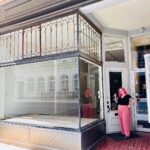
PinnacleHealth Strawberry Square Family Care will occupy these storefronts next to Rite Aid.

At Strawberry Square, you can grab a bite to eat, buy a greeting card, deposit a check, get a latte, even rent an apartment.

And, come this fall, you’ll be able to get that bruise checked out or find out what’s wrong with your aching knee.

Around mid-November, following a build-out, PinnacleHealth plans to open a 3,000-square-foot primary care medical office, appropriately right next to the new Rite Aid store.

“I don’t remember the last time a family doctor’s office opened in downtown Harrisburg,” said Brad Jones, president and CEO of Harristown, which owns Strawberry Square. “This is one more thing that will make your life easier if you live or work here.”

PinnacleHealth Strawberry Square Family Care will feature six exam rooms, a community/conference room, a patient check-in and waiting area, a laboratory area, and several offices. Six to eight employees are expected to staff the office at any one time, Jones said.

“PinnacleHealth is pleased to bring this full-service primary care practice to the community,” said Robert Nielsen, president of PinnacleHealth Medical Group. “We have a long-standing commitment to the health and well-being of the city, and providing patient-centered, integrated care reflects our focus on offering easy access to the right care when and where patients need it.”

The Pinnacle facility will take the space long occupied by Modern Jewelers, which is relocating just across the atrium, next to the PSECU branch, said Jones.

The new medical office continues the recent transformation and modernization of Strawberry Square.

This fall, an urban-style market, Provisions, will open on the N. 3rd Street side of Strawberry Square, and, at 3rd and Market streets, Freshido, a 2,200-square-foot fast-casual Asian restaurant, will debut in space once occupied by Plum Sports. Last year, numerous new businesses opened in Strawberry Square, including Fresa Bistro and the Flats at Strawberry Square, the first apartments in the building.

Click here for more information about Strawberry Square.

Author: Lawrance Binda

Continue Reading

Weekend Roundup with Sara Bozich

Sending good weekend vibes from Philly!

We’ve been in Philadelphia all week shooting for our craft beer documentary, Poured in PA, and we’re capping things off tonight with a wrap party at Free Will Brewing Co. If you’re nearby, please join us!

The rest of my weekend will be somewhat restful.

What are you doing this weekend?

(more…)

Continue Reading

Too Much Air? Harrisburg officials ponder how to accommodate Airbnb.

Shipoke resident Thomas Lupkie (far left) makes a point as others listen in during last night’s Airbnb meeting.

A fantastic way to attract budget-conscious travelers into Harrisburg.

Or . . .

A tax-dodging menace to the city’s historic neighborhoods.

As they say, where you sit is where you stand, and that cliché may never have been more appropriate than during last night’s city-sponsored confab on all things Airbnb.

Harrisburg officials hosted the meeting (meant to be invitation-only until the press ruined that plan) to hear from a select group of proponents and opponents, as to how—or if—the city should regulate the run-your-own hospitality service.

“We’re here tonight to take information from you, the current operators,” said Michael Hughes, Harrisburg’s tax and enforcement administrator. “Cities all across the United States are treating this in many different ways, and we’re going to develop our own way.”

Over 90 minutes, Hughes and other officials, including Fire Chief Brian Enterline, Planner Geoffrey Knight and Solicitor Neil Grover, heard arguments for and against so-called short-term rentals, which include Airbnb and other Internet-based room reservation services. The wide-ranging discussion included such issues as zoning, taxation and safety.

Dee Fegan, chair of the board of the PA Association of Bed & Breakfast Inns, was the first to speak up, objecting that Airbnb hosts do not currently pay the Dauphin County hotel tax or, in many cases, other taxes, such as sales and mercantile taxes, which apply to traditional B&Bs.

“I just want to point out that rules are already in place,” she said. “It’s just up to people to follow them.”

Mike Wilson, owner of the Manor on Front Bed and Breakfast, made a similar point.

“I have nothing against Airbnb,” he said. “But I just want to make sure they follow the same rules and regulations as we have to.”

Besides taxes, the regulations that apply to traditional B&Bs may involve issues of fire prevention, parking and access for the disabled.

Ted Hanson, who owns a short-term rental on Boas Street, said that some B&B regulations would not apply to him because most Airbnb properties do not serve food. In addition, he long has leased out his two-bedroom Airbnb house, which is next door to his own home, on an annual basis, but now is just renting it in a different way. Besides, he said, he’s helping to stimulate the local economy.

“I feel like I’m doing a service for the city,” he said. “I send people to businesses all over Midtown.”

From a zoning perspective, Knight said he could see carving out a niche for short-term rentals within the current code, such as mandating that owners occupy their rental buildings, take out a mercantile license and not hang signs.

Those requirements might solve some of the problems that Thomas Lupkie is having with an Airbnb two doors down from his Shipoke home. At last night’s meeting, Lupkie spoke at length about Airbnb guests blocking his driveway and trampling his flowers while staying in a house that he said is owned by a man who lives in Texas.

“Occupants are running through my yard, and I can’t get into my garage,” he said. “I have grave concerns about short-term rentals.”

In contrast, both Hanson and Teena Brinkley, who rents a couple of spare bedrooms in her house on N. 2nd Street in Uptown, said that their guests often behave better than some of the people who live in the neighborhood. Brinkley added that, without Airbnb, most of her guests otherwise could not afford to stay overnight in the city.

“My average rental is $40 a night,” she said. “They’re not going to stay at these fine bed and breakfasts.”

Devan Drabik, Harrisburg’s business development director, said that banning Airbnb would simply push that lower-end business to other short-term rentals just outside the city.

“It will just cause people to go one mile away,” she said.

Hughes said that the city now needs to ponder what changes, if any, to make to laws and regulations to accommodate short-term rentals. He’d like any changes to take effect on Jan. 1.

“Airbnbs were never contemplated when the rules were passed,” said Solicitor Grover. “Now, we have to answer the question—do those rules apply or not?”

Click here to read our recent feature about Airbnb in Harrisburg.

Author: Lawrance Binda

Continue Reading

Open Seat: Jeffrey Baltimore Resigns from Harrisburg City Council

Jeffrey Baltimore, far left, at a recent Harrisburg City Council meeting.

Harrisburg City Councilman Jeffrey Baltimore announced his resignation today from Harrisburg’s seven-member City Council.

In his resignation letter, Baltimore said he made this “difficult” decision after “person reflection” and “deliberation with his family,” according to Joyce Davis, the city’s communications director. He further said that he was “proud” to have served with “a creative, talented, caring and enthusiastic team” on council, Davis stated.

Baltimore was appointed to his council seat in 2014 following the death of Councilwoman Eugenia Smith. The next year, he was elected to a four-year term.

Baltimore has served as chairman of council’s Public Safety Committee and currently is chairman of the Community & Economic Development Committee. His resignation is effective Aug. 11.

“Councilman Baltimore was a great asset to Harrisburg City Council,” said Council President Wanda Williams. “He is very passionate about public service, community development and an outstanding role model to the youth of our city. On behalf of City Council, we wish him the best in his future endeavors.”

Council now must pick a replacement for Baltimore. Council members will begin accepting applications on Aug. 14 to fill the vacant seat. The person selected will serve until January, and an election for a two-year council term will take place this November.

Author: Lawrance Binda

Continue Reading

Camera-Ready: Funding secured for first Midtown security camera.

The view up 2nd Street from Forster Street, where a new security camera soon will capture the action.

A wireless security camera will be coming soon to Harrisburg’s Midtown neighborhood, as a community group has received a grant to extend the city’s video surveillance system.

Midtown Action Council (MAC) today announced it received a $15,000 grant from the Pennsylvania Commission on Crime and Delinquency to help fund the extension of Harrisburg’s wireless security infrastructure to N. 2nd and Forster streets. Currently, the system’s downtown component ends at 2nd and Pine streets.

“Safety is our No. 1 priority as a community group, and it’s on the mind of every resident in Harrisburg,” said MAC President Jonathan Hendrickson. “This grant will help us access the infrastructure we need to eventually place wireless security cameras in the neighborhood.”

Before the system can be installed, MAC must raise $4,120 in matching funds. However, the organization is confident it can secure the funding for deployment this fall, said Dan Fulton, MAC’s secretary/treasurer.

“It should move pretty quickly,” he said.

In 2013, Harrisburg began deployment of a wireless security infrastructure, including 10 cameras downtown, Uptown and on Allison Hill, which allow city police and Dauphin County to conduct real-time surveillance. The $425,000 system was funded by Dauphin County’s Crime Task Force.

In Midtown, the first wireless camera will be installed facing north on 2nd Street, from the intersection with Forster Street.

Johnson Controls, which installed the city’s original system, also will deploy this one, Fulton said. The project includes a wireless node, camera mount, antenna, software, electrical improvements and one camera, among other components.

Fulton said this project “sets the stage” for future wireless cameras to be installed strategically through Midtown.

“This is just a first step, but it’s arguably the most important step because it gives us a foundation to build on,” said Fulton, who served as project manager for the grant, which MAC applied for last summer.

“It’s something we’re really proud of doing,” he added. “It’s one of the benefits of having these types of neighborhood organizations that are project-oriented.”

If you would like to make a tax-deductible contribution to MAC to cover its share of the matching grant, checks can be mailed to Midtown Action Council, 1230 N. 3rd St., Harrisburg, Pa., 17102.

Author: Lawrance Binda

Continue Reading

Weekend Roundup with Sara Bozich

Cheers to the weekend!

We have a big week of Poured in PA shoots next week, so I’m hoping for a restful weekend.

Friday night, though, join us and the Down in Front pundits for an 80s Preparty at ZerØday ahead of the screening (and riffing) of Xanadu at Midtown Cinema.

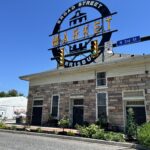
Saturday morning is my usual: Next Step, Broad Street Market + since it’s first Saturday, I’ll swing by the HBG Flea, as well.

What are you doing this weekend?

(more…)

Continue Reading