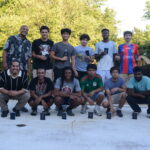
Mom Made: Josue Osorto steps up to the plate with traditional Salvadoran fare.

Photo by Waxman Photography.

In El Salvador, it’s considered polite to leave a small amount of food on your plate when you’ve finished eating.

Visitors to the newly opened restaurant, Mom’s Tamales and Pupusas in Midtown Harrisburg, might have a difficult time following tradition once they’ve tasted the pupusas, the authentic national dish of El Salvador.

Pupusas, which are unique to the country, are thick corn tortillas, resembling small stuffed flatbreads, that literally can be filled with anything savory a diner wants—so vegans and vegetarians, fear not. That’s the most appealing aspect of this dish: They’re made to order.

“You cannot make these ahead of time,” said Mom’s Tamales owner Josue Orsoto, adding with a smile, “That would disrespect the culture.”

Orsoto, a first-generation American who opened his restaurant last month, has already garnered a following for his traditional Salvadoran food.

The new business is a neighborhood standout, housed in a building with a brilliant, beautiful mural that adorns the entire front façade, just across the street from Midtown Cinema. The mural was Orsoto’s idea. It depicts, as he explained, “a Latin mother warrior,” and the inspiration was his own mother, who escaped the Salvadoran Civil War in the 1980s.

She and Orsoto’s father (the couple have known each other since they were 13) made their long journey to a safer life through Mexico, eventually settling in San Diego. His mother, one of 13 children, had family on the East Coast, so it was off to New Jersey and finally Bethlehem, Pa., where Orsoto went to high school. Along the way, he came to value hard work and learned lessons that helped to shape his life today.

He fondly recalls how his mother used to clean a restaurant in West Orange, N.J., from 5 a.m. to 7 a.m. each day.

“I would be late for school most days because she needed to finish her work first and then would drive me, and I needed to be there by 7:38 a.m.,” he said.

Her commitment to that job gave him early exposure to the restaurant business and helped him recognize his mother’s tireless work ethic.

Orsoto, an accomplished athlete, followed his brother to the Harrisburg area because he wanted to continue his wrestling career. His brother was pursuing studies at Messiah College in Mechanicsburg. Orsoto wanted to try out for the college team, but a cracked fibula ended those plans. It didn’t deter him from his studies or passions. He attended HACC while continuing to work in the restaurant business.

Local foodies may recognize Orsoto from his posts at popular downtown establishments, most recently at the Hilton, but also El Sol Mexican Restaurant, MoMo’s BBQ and Grill, Firehouse Restaurant and nightclubs Egypt and Mars, among others. His biggest industry immersion came when local legend Nick Laus asked him to open Cork & Fork’s downtown location.

“This was an eye-opener for me,” Orsoto said. “I was in charge of a huge punch list that included plumbers and electricians, always checking to make sure everything was there for our health inspections.”

Now that Orsoto has taken the plunge as a business owner himself, he is leaving no stone unturned. He wants to keep his menu simple, with just 13 items, including the pupusas and tamales, which, unlike Mexican tamales, are wrapped in plantain leaves instead of cornhusks. Many of the recipes are his mother’s own, thus the restaurant moniker.

The atmosphere is casual and welcoming. Diners can eat inside the restaurant or choose to sit outside at café-style seating. The quick service makes it easy for a time-limited lunch crowd to get in and out. The restaurant also offers free wi-fi for those who want to eat while on the job or simply stay connected.

“This is the most stressful thing I have ever done in my life,” Orsoto said, reflecting on his new venture. “It’s been my calling, and I stepped up to the plate and went for it. This is really letting me be a part of the community.”

Mom’s Tamales and Pupusas is located at 263 Reily St., Harrisburg. It is open 10 a.m. to 10 p.m., Monday through Saturday. For more information, visit their Facebook page.

Author: Ann Beth Knaus

Continue Reading

United State: Estamos Unidos helps unify, elevate our area’s growing Latino population.

 It all began 16 years ago with a picnic on a sunbaked summer afternoon in Steelton.

Hispanic immigrants were beginning to stream into the Harrisburg area, but were finding that central Pennsylvania definitely wasn’t Central America. Thus, a few people organized Estamos Unidos de Pennsylvania—“We Are United”—reflecting a desire to preserve their Latin roots and fulfill unmet needs in their new country.

EU’s first picnic was held in Emeric Cibort Park, featuring tacos, rice, enchiladas and salsa dancing, marking the arrival of a new immigrant group in an area once synonymous with the culture of steel, polka and hearty Croatian meals.

Sixteen years later, this celebration has become an intrinsic part of Steelton’s culture, so much so that members of government, emergency services, academia, health care and other community organizations joined the throngs who recently gathered for food, face-painting, games and music. It was a “sweet 16” celebration for a powerhouse group of volunteers who have given so much over the years.

Strong Record

For evidence of success, one need look no further than EU’s new president, Amanda Batista-Brgulja.

The 28-year-old was once a struggling student at CD East. But she became an EU volunteer and a scholarship recipient who went on to earn a master’s degree in public administration.

Batista-Brgulja, who now works in the Dauphin County Judicial Center in Halifax, said everyone on the board has a niche. She and Treasurer Maria Tran share a criminal justice bent. Immediate past president, Dr. Patricia Silveyra, was focused on steering Hispanics toward careers in science.

While the group may have a relatively small number of official, dues-paying members, they can tap into 200 to 400 volunteers at each major event, Batista-Brgulja estimated.

Case in point: about eight years ago, the group’s annual Christmas party was short about 600 toys. A rescue came from then-Dauphin County Republican Party Chairman John McNally, who enlisted the aid of the Republican State Committee. Together, they donated more than 1,000 toys.

McNally, who attended this year’s picnic, said he brings his three young children each year to help set up tables and wrap gifts for the Christmas party.

“It is about making other people feel special,” he said.

That sentiment pervades the group’s culture.

This year’s parking attendant at the picnic was a straw-hatted Dr. Oralia Dominic, an assistant professor of public health sciences at Penn State’s College of Medicine and a past president of EU.

She said the annual picnic replicates the plaza of any quintessential town in Central or South America, which typically features a church and a town square, where boys meet girls, kids play soccer and get ice cream, and moms come to chat.

Dominic, a leader in diabetes education, became involved in EU after she received the group’s Multicultural Citizenship Award in 2009. She said that, to her, the takeaway is quite simple.

“You don’t have to abandon your ancestry and cultural beliefs and attitudes and influences to become a leader,” she said.

McNally added that EU has a “strong record of educating the community about resources.  They’ve done a great job of getting the message out to pockets of the community, and that helps them come out of the shadows.”

He added that co-founder Hector Ortiz, now an assistant professor at Central Penn College, was his ticket to the program.

“This group has gone from hosting one event to serving as a year-long support network,” he said. “It’s not just Fiesta Del Nino or the Multicultural Picnic, it’s all about what they do the other 363 days a year.”

Another picnic guest, Dr. Sarah Ramirez, assistant professor at Penn State’s College of Medicine, hopes to make health care more culturally accessible. She notes that a Penn State health clinic in Harrisburg has Spanish-speaking providers on hand, and she brings medical students in to volunteer for EU.

Ramirez has helped to translate medical forms and recruit bilingual health care providers, a critical need since 19 percent of the Harrisburg area is Spanish-speaking, she said.

“I saw the disconnect between doctor and patient,” she said. “I want to narrow the gaps in health care disparities for the Hispanic population.”

Validation

EU tries to close educational, interpersonal and economic gaps, as well.

Its annual gala is a whirlwind of food, music and culture, highlighted by the presentation of scholarships to deserving students. It’s also become a signature social event in the midstate, where you just might bump into a governor, lieutenant governor, CEO or cabinet official such as Pedro Cortes, secretary of the Commonwealth, and Pedro Rivera, Pennsylvania’s education secretary.

“If you want to be a banker, you can meet George Nahodil, who is now the acting president of Members 1st Credit Union,” Dominic said of EU’s founding treasurer.

You also may run into now-TV star Graham Hetrick, Dauphin County’s charismatic coroner.  Hetrick’s wife Esmeralda, who has Mexican and Texan roots, has served as EU’s president and is a frequent performer at its events.

Dominic underscored that 100 percent of the money raised at the EU gala stays in the community.

“This is evidence that EU is an organization that works,” she said.

In fact, many past scholarship recipients are now physicians, musicians and business owners.

“It validates our mission when people reach their goals,” Dominic said.

As Ortiz enjoyed a plate of homemade food under the merciful shade of Cibort Park’s pavilion, he said that he views EU’s biggest success as simply “community engagement.”

“It’s an opportunity to receive something and give something,” he said.

His goal was encapsulated by two objectives—“to share culture and make people feel at home.”

He recognized a commonality among people from so many different Spanish-speaking nations, whether from Mexico, Puerto Rico, Cuba, Honduras, Colombia or points beyond.  They all came to America with a strong love of family, a strong faith and strong values.

He recalled the joyful holiday celebration.

“Every single year, you see the faces of the children who get gifts,” he said. “And the people who line up just to say, ‘thank you.’”

To learn more about Estamos Unidos de Pennsylvania, visit www.estamosunidospa.org. The group’s annual gala is slated for Nov. 4.

Author: Diane McNaughton

Continue Reading

Place in History: Christine Turner returns home, with an eye on the past.

Burg in Focus: Historical Society of Dauphin County from GK Visual on Vimeo.

Christine Turner has, in her own words, “moved around a lot,” both within the United States and overseas

Now she’s happy to be home.

Wanting her son and child-to-be to be close to their grandparents, Turner and her husband have at least temporarily moved back to her parents’ farm until the couple can refurbish their house in upstate New York and put it on the market. Then they’ll look for their own home locally.

“My mom is having fun watching my son during the day,” she laughed.

Turner lived in Harrisburg until the sixth grade, at which point her family relocated not far away—to Millerstown in Perry County.

But she also had a professional reason to come back to the area. She is the newly appointed executive director of the Historical Society of Dauphin County.

The society’s portfolio is large: an unmatched county archives, a lecture series, historic exhibits and a few good parties every year. But it’s probably best known as the keeper of the John Harris/Simon Cameron Mansion Museum. 

As executive director, Turner is responsible for all operations, including fundraising, programming, finance and facilities management. She also oversees the administration of the mansion, a National Historic Landmark, and the Alexander Family Research Library.

Before beginning at the historical society, she had a varied career.

Perhaps most colorfully, she was one of the few women to be an assistant manager of a Major League Baseball team. But it was something she had always wanted to do.

“I started by working for the Harrisburg Senators after high school,” Turner said. “And I interned with them between my college years. I was lucky enough to work for the Cincinnati Reds.”

A Red Sox fan, Turner was associated with Major and Minor League teams in Cincinnati, Savannah and Troy, N.Y. In 2009-10, she served as assistant general manager and Major League Baseball consultant for the Victoria Aces in Melbourne, Australia.

Another love of hers is history. It’s what she majored in at Beloit College (graduating with honors) and what she’s glad to be immersed in now at HSDC.

What has been the biggest surprise of her new position?

“I’m amazed at the number of people who come in every day, researching their family or some piece of Harrisburg history,” she said.

Immediately before coming to the historical society, Turner was director of corporate relations and events for Ronald McDonald House Charities of the Capital Region in Albany, N.Y. She was responsible for overseeing and executing nearly 60 events and appeals, raising more than $2.2 million annually for the charities. She also raised $2.4 million for a Ronald McDonald House expansion campaign.

“The first thing we needed in choosing an executive director was a person who could do and has done fundraising,” said John Robinson, a board member of the historical society and its immediate past president. “It’s such an important need.”

Fundraising helps maintain the mansion, the library and archives.

But it isn’t just about money, Robinson added.

“We need to expand our reach for new audiences, especially involving children and young adults,” he said. “Christine has worked with many age groups. We believe she has the vision and foresight to imagine how the historical society can be.”

Turner’s long-term goal is to increase and diversify the number of events HSDC sponsors. Again, drawing on her experience at the Ronald McDonald House, Turner said, “It was very event-heavy there, not just an annual gala.”

She’s “still putting things on paper,” to see what types of events she believes will work here and have not been “overdone” in the area. “Nothing is set in stone yet,” she said.

Another major goal is to increase the number of people who donate to HSDC.

“Financing is our greatest challenge,” said Turner. “We aim to broaden the base of those supporting us. There are many nonprofits here, and history is a harder sell. We have to come up with new and creative ways.”

HSDC is supported by grants from the county and state, but much of its funding comes from foundations and individual donors.

Turner is hoping that the popularity of websites like ancestry.com will inspire more interest in the historical society.

Back in the area that was once and now is again home, Turner is catching up on relearning it.

“It’s changed,” she said of Harrisburg and its environs. “There are more restaurants and breweries. There’s a lot going on. There are more festivals and events.”

Besides going back and forth between Perry County and New York to work on their house, Turner and her husband enjoy different kinds of travel, like hiking and kayaking. In January, they’ll be visiting Italy, full of historic sights, where her husband lived for a while but that is new to her.

But it’s also exciting to preserve the history of the area closer to home. 

The Historical Society of Dauphin County is located at the rear of The John Harris-Simon Cameron Mansion, 219 S. Front St., Harrisburg. For more information, visit www.dauphincountyhistory.org.

Author: Barbara Trainin Blank

Continue Reading

Unsafe at Home: Childhood stress can become a lifetime affliction.

My friend, Kelly, described her difficult childhood this way: “I didn’t live in the kid bubble. I understood the concept of need—that no matter what it was, I couldn’t have it.”

She lived in an environment of domestic violence and poverty. When Kelly was 14, her sister ran away, and it would be years before she saw her again. One month later, her father left, deepening the family’s financial hardship.

There’s a word to describe Kelly’s continual childhood adversity—trauma. And there’s an acronym to describe the incidents that made it up— Adverse Childhood Experiences (ACEs).

I was unfamiliar with ACEs when I entered John Harris High School several months ago to view the documentary, “Resilience: The Biology of Stress & the Science of Hope,” hosted by Communities in Schools of Pennsylvania, an affiliate of the largest dropout prevention organization in the United States, and Mission Central, which helps people overcome traumatic situations.

I knew that stress affected children’s learning and behavior, but not much about why that happens. I also considered these behaviors exclusively a mental health issue and lacked the knowledge to connect the dots between ACEs and long-term physical and emotional outcomes in children. Over the coming months, I learned a lot about children and trauma.

Just Surviving

The idea of ACEs originated from a 1995-97 Kaiser Permanente study.

About 17,000 patients completed a survey about their upbringing and present health status. Ten questions were categorized into three types of events: abuse directed toward the participant; neglect, directly involving the participant; and household challenges, which included domestic violence in the home, substance abuse, divorce or imprisonment of a family member.

Each event was given a score of one. Participants’ ACE scores were compared to their present health status. The results showed that the higher the ACE score, the increased likelihood of bad health outcomes such as alcoholism, drug use, depression, suicide attempts and cancer, among others.

Kelly scored an eight.

The study surprised me. I had never considered that terrible events could influence a person’s physical health. But what I found even more compelling were the mechanisms at work in the body during trauma that cause these outcomes.

Trauma, also known as toxic stress, affects children physiologically.

“It’s not just that they are hungry, not just that they don’t have a place to live,” said Ryan Riley, president and state director of Communities in Schools PA. “It’s toxic stress, causing a physiological nightmare.”

Here’s what that physiological nightmare looks like. Stress causes the body to respond with an increased heart rate, higher blood pressure and the release of stress hormones adrenaline and cortisol. Typically, the stress passes— the worst doesn’t happen, or the child receives support, and the body returns to its normal state.

In the toxic stress model, the stress is recurrent. The fighting happens over and over; the fear of where the next meal will come from never leaves; the anticipation of the next physical assault is ever-present. In this scenario, the body’s fight-or-flight response never turns off—it can’t. It needs to remain vigilant against the next onslaught.

A child’s developing brain takes in all this information and spends energy developing the lower levels of the brain, the survival levels, thus neglecting the upper levels of the brain—the higher thinking, learning and relational levels.

Armed with this information, I spoke with Ashley Kettering, a multi-systemic therapist who worked with youth in the juvenile probation system and the county’s Children and Youth Services. I wanted some information about how these experiences play out in a child’s life.

“You look at all these phases you are supposed to normally go through, but now you’re under stress, now you’re under trauma,” she said.

Basically, trauma changes the brain. Instead of energy being focused on learning how to get along with friends and how to read, the brain focuses on just surviving.

Wanting more information, I spoke with Ellen Smith, a retired general practitioner who has started a grassroots effort to inform the community about ACEs, an organization called Peace 4 South Central Pa. She compared the effects of trauma on the body as similar to the feeling one gets when a fire alarm goes off, except the feeling never goes away.

“The potential for fire is always there,” she said. “You can’t do math problems if there’s a fire in your house.”

Kelly’s fire was domestic abuse and hunger, especially in the summer when there was no free school lunch program. Summer consisted of two meals a day because there wasn’t enough to go around.  The “fire” interferes with typical emotional responses.

“Chronic stress affects the way you are able to react in situations, affects the way you can process things,” Kettering said.

Feelings, turn into actions without going through the typical thought processes.

“Fear goes straight to anger,” she said, adding that it makes it difficult to cope with life’s daily stresses.

This inability to cope leads to fighting because the fight-or-flight response is stuck “on.” A simple interaction can lead to an altercation, or the lack of self-control can cause a child to damage property, which then places them in contact with law enforcement. The toxic nature of this continued stress may cause young people to choose drugs as a survival mechanism, also putting them at risk of arrest.

Some Support

Thankfully, Kelly did not turn to drugs to deal with her childhood trauma. Not unscathed though, she has been diagnosed with post-traumatic stress disorder (PTSD). She works for a women’s abuse advocacy group, and, by all accounts, is making a good life for herself.

So, how did Kelly set herself on a path to success? First, she said that, even with her challenges at home, she had a few advantages.

“I’m lucky because I am the societal standard of something that passes,” she said. “I’m quick-witted, thin, athletic and able to make friends and connections easily. Take a few things out, it would be different.”

She also received some support from adults.

Her high school athletic trainer, for instance, helped ease the strain. Injured frequently as a volleyball player, Kelly was often in the athletic training room, where she developed a friendly relationship with the trainer. She could go there to hang out, use the microwave or help herself to a PB&J. She said that they didn’t talk about her life, but that she just knew she could retreat there.

Kelly and Kettering both emphasized that, when kids get into trouble, it’s important to try to understand the lives they’ve been leading.

“We need to be more focused on how we can help them and less focused on how we can punish them,” Kettering said.

Kelly added that the consequences for misbehaving are often worse for children from traumatic environments, as they usually have little or no support from their families.

“If you said the wrong thing or did the wrong thing [at home], you would get ridiculed, disrespected, made to feel stupid,” she said.

All the Difference

Fortunately, there are resources available to help people understand and cope with the impact of toxic stress.

Through therapy, Kelly has discovered that what happened to her as a child was not “normal,” and it has a name—abuse. She described how she still feels the effects of trauma.

“I feel like I’m still waiting for the next shoe to drop. That’s not a feeling that goes away,” she said. “If I am not focusing on accomplishing something, my brain goes to all the things that can go wrong.”

Moreover, organizations like Communities in Schools offer support for students who struggle. Located in schools, the group provides a place where students can decompress when they feel overwhelmed, a respite like Kelly’s athletic training office. It offers someone to talk to, someone who understands the extent of their struggle.

“Programs don’t change kids, relationships change kids,” said Darria Stafford-Williams, site coordinator for Communities in Schools at John Harris High School. “If there’s at least one positive adult in that child’s life—that the child knows they can depend on them—they can trust them. It makes all the difference in the world to that child.”

Sometimes, the trauma comes from a child’s neighborhood, and organizations like Boys and Girls Club of Harrisburg offer islands of calm. Surrounded by caring adults, children enjoy clean, safe, fenced playgrounds and ball fields, allowing them to relax and just enjoy being kids for a while. The club also provides tutoring and meals, recognizing that food and learning help provide stability and a sense of wellbeing.

Children (and their families) who have lost a loved one can go to Highmark Children’s Place and find assistance. Children come, have a meal, and talk through their feelings with peers or just listen as others participate.

People also can teach themselves about trauma. Anyone can hop on a “TED Talk,” watch documentaries like “Paper Tigers” or “Resilience” on Netflix or Vimeo, or surf the web and find a vast library of information on childhood trauma and ACEs.

Acknowledging that a child is experiencing trauma, recognizing that this trauma can cause physical and emotional problems, and a showing a willingness to address those problems are keys to helping children rise above events beyond their control.

Rather than berate ourselves for not knowing, hiding from the truth, or feeling stifled by the enormity of dealing with trauma, we should perhaps consider the words of Maya Angelou, “I did then what I knew how to do. Now that I know better, I do better.”

 For more information on the ACEs, visit acestoohigh.com. Learn more about Communities in Schools of Pennsylvania at cisofpa.org. “Kelly” is a pseudonym. She asked that her real name not be used in this story.

Author: Susan Ryder

Continue Reading

Mystery and Fear: “Beach Rats” tells a complex tale of self-acceptance.

We may be the only ones who really know Frankie.

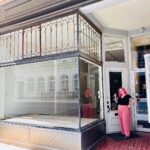
His friends know one shade of him, and his family another. Frankie (Harris Dickinson) is who they need him to be—the teenage hooligan who runs around, stealing and smoking with the boys, or the son who spends time with his sick, dying father. But only the men he meets from Brooklyn Boys, an online site for gay men, know any shade further.

In Eliza Hittman’s “Beach Rats,” we come to know Frankie as a soft-spoken, hard-boiled egg, reliant on mystery to win over his acquaintances. It is what draws Simone (Madeline Weinstein), his new girlfriend, to him. But perhaps he is still figuring out his own mystery. Refusing to label himself (or, more importantly, see himself) as gay, Frankie struggles to keep his head in the game with Simone and to hide that part of himself at all costs, a struggle that grows more serious as the story continues. The film makes use of quiet, visual storytelling to unravel this compelling tale of societal fear.

This is not a coming out story; this is a case study of the difficulty of coming out. We like everything to be black and white. We will name someone as homophobic or a hooligan or any sort of label that tells others what we assume about a person. But Frankie is a puzzle that is slowly put together over two hours, in such a way that you can see the black and white converging to become an uncomfortable gray.

Dickinson does a phenomenal job wrestling with his character. You would do well to catch this gem of a film.

“Beach Rats” starts on Sept. 15 at Midtown Cinema, 250 Reily St., Harrisburg.

Author: Sammi Leigh Melville


MIDTOWN CINEMA

SPECIAL EVENTS

www.midtowncinema.com


Down in Front!

“Star Crystal” (1986)

Friday, Sept. 8, 9:30 p.m.


3rd in the Burg $3 Movie

“The Sandlot” (1993)

Friday, Sept. 15, 9:30 p.m.


Digital Theatre

“Falsettos”

Sunday, Sept. 10, 7:30 p.m.
“Peter Pan”

Sunday, Sept. 24, 2:15 p.m.

Monday, Sept. 25, 7 p.m.


Harrisburg-Hershey Film Festival

Sept. 15-18


Middle Earth Marathon

Saturday, Sept. 23


Stanley Kubrick Collection

“The Shining”

Thursday, Sept. 28, 7:30 p.m.
“2001: A Space Odyssey”

Friday, Sept. 29, 7:30 p.m.

Saturday, Sept. 30, 7:30 p.m.
“A Clockwork Orange”

Saturday, Sept. 30, 7:30 p.m.

Continue Reading

Perfect Pesto?: Take your basil and blend it.

Every year, I grow a small patch of sweet basil in my herb garden.


Growing herbs is my very modest attempt at home gardening these days, having abandoned tomatoes, peppers, eggplant, arugula and all of my other favorite Italian vegetables a long time ago. But as September approaches, I’m giving my little basil crop a grade of perhaps B-minus. My plants are smaller and shorter than usual, and their color is not as bright green as I think it should be. I am blaming the frequent torrential rainstorms that hit us this season—almost 10 inches of rain in July alone.

Nevertheless, it is time for the basil harvest at the Baer household, and my annual pesto project should still be successful. There is no substitute for pesto made on the same day the basil is picked.

I have a lot of Italian cookbooks, and almost all have a recipe for basil pesto. The formula is pretty much the same: fresh basil leaves, good Parmesan, extra virgin olive oil, garlic and pine nuts. I have often omitted the pine nuts (especially if guests have a nut allergy) or substituted walnuts (also very good). But in my experience, one recipe step is always a constant. After washing the basil leaves, make sure each leaf is thoroughly dry before proceeding. I always followed this religiously, often washing the basil early in the day to make sure no moisture remained when I was ready to cook.

Enter a new recipe and a new concept based on the award-winning pesto of Paolo Laboa, a chef from Genoa (“Genova” in Italian), Italy, and now at Solo Italiano, a restaurant in Gloucester, Mass. Chef Laboa’s pesto won the gold medal at the 2008 Genova World Pesto Championship, a competition of 100 chefs from around the world. I have tried his method, and it is indeed very good, resulting in a sauce that’s bright green, delicate (not overly garlicky) and very creamy.

But chef Laboa has exacting standards for making his pesto, which most of us can only approximate. He uses Genovese basil, which is only officially grown in Italy’s Liguria region. Chef Laboa suggests looking for Genovese-style basil either when purchasing plants or seeds. His recipe calls for Parmesan cheese that is aged 24 to 36 months and a type of pecorino called fiore sardo, a Sardinian sheep’s milk cheese. (I always just used a good Parmesan Reggiano, which I grate on my Microplane grater.) But the most startling difference in Laboa’s pesto is that he first soaks the leaves for 15 minutes in cold water to remove “bitterness” and what he describes as “unwanted licorice notes.”

And finally, chef Laboa makes his pesto in a blender, which he has first chilled in the freezer rather than the traditional mortar and pestle. Since I have a very inefficient blender from the Stone Age, I always use my food processor, which has worked pretty well. So, here is Laboa’s unique recipe for Pesto alla Genovese.

Genovese Basil Pesto

Ingredients

  • 6 cups loosely packed basil leaves
  • ½ cup pine nuts
  • 1/3 of a small garlic clove
  • ½ cup good, fruity olive oil
  • 1 teaspoon sea salt
  • 2/3 cup freshly grated, good, imported Parmesan cheese (use half pecorino Toscano cheese if you can find it, but not pecorino Romano, which is very salty)

Directions

  • Place the glass (only glass) blender container in the freezer.
  • Submerge the basil leaves in cold water and let stand for 5 minutes.
  • Using your hands, gently lift leaves from the water. (Have lots of clean dishtowels nearby.) Repeat this process twice, using fresh water each time. Then rinse the bowl and soak the basil leaves for 15 minutes. (This is tedious, I know, but not hard.)
  • Remove the blender container from the freezer. Combine the pine nuts and the small piece of garlic in the chilled container, cover with the olive oil and puree until the mixture is chopped and creamy. Then add the salt.
  • In 4 additions, lift basil leaves from the water and shake off the water. Leave some water on the leaves to add in blending.
  • Puree for 3 to 4 short pulses after each addition but do not over blend.
  • Finally, add the cheese using 2 to 3 short pulses of the blender.

If you are using the pesto the same day, place it in a bowl and cover the sauce with plastic wrap, pressing it down directly on the sauce to avoid discoloration. If you are not using right away, place the pesto in a jar and cover it with a thin film of olive oil. It will keep in the fridge for three days and the freezer for three months.

Toss the pesto with a pasta of your choice but add a little of the pasta cooking water to heat the pesto and smooth it out. Don’t microwave or otherwise heat the pesto. I always add some extra grated cheese to each serving.

Making pesto at summer’s end is a culinary treat. Give this technique a try if you can. I would be interested in knowing what my Burg readers think of it.

Author: Rosemary Ruggieri Baer


Continue Reading

Magic Man: Upon retirement, Dr. Guillermo Garcia reflects on 40 years of caring for the children of central PA.

During a recent visit to the doctor, my 6-year-old son pointed down the hall from the waiting room.

“There’s the guy who saw the giraffe inside my ear,” he said. “He does magic, you know.”

In the offices of Tan & Garcia Pediatrics, tales of animals and magic tricks are commonplace, and so are expressions of adoration and respect. Just ask any one of three generations of patients seen by Dr. Guillermo Garcia during his 40 years as a pediatrician in central Pennsylvania.

Since 1977, Garcia has conducted countless office visits and phone calls, dedicating his professional life to caring for the community’s children. This summer, however, he made the difficult decision to hang up his stethoscope and retire from practicing medicine.

“I have been so fortunate to be able to do what I do,” Garcia said. “It’s been absolutely incredible.”

Garcia explained that he wanted to be a doctor since elementary school, where he dissected chickens and armadillos in a small town in Mexico.

“It was crazy,” he said. “It was anatomy live.”

Garcia moved to Mexico City and attended La Salle University, later completing medical school at the National University of Mexico. He attributes the development of his passion and his patient approach to the authentic learning experiences working with one of his professors, a man he holds in high regard.

“Our teacher, Dr. Ramirez, told us to buy a white coat, get a pair of gloves, show up in the emergency room and offer your help,” recalled Garcia.

It was in the emergency rooms of Mexico City where Garcia delivered his first baby when he was only 17 years old.

“I could write a book about my clinical experience,” he said. “That’s how we learned, and it was incredibly valuable.”

Garcia’s experiences—both during his internship in Canada and later in Guanajuatillo, Mexico, where he completed his service commitment—provided him with a profound perspective. He spent a year as the doctor of the small town, treating various maladies and delivering countless babies. Garcia dedicated substantial time to improving conditions there, explaining that he was most proud of his work that resulted in a new school and sanitation system.

“There was so much need there,” he said.

Garcia applied and was accepted into the residency program at Polyclinic Hospital, later completing a fellowship at the University of Rochester, where he met Dr. Frank Procopio.

“He and Dr. Tan started a practice in 1976,” Garcia said. “They opened the office in Camp Hill, and I joined them the following year.”

In 1978, they opened a second office in Union Deposit. Procopio retired in the mid-1990s, and Tan & Garcia Pediatrics has been caring for the Harrisburg region’s children and their families ever since.

“I have seen grandmothers who were my patients, who now bring their grandchildren to see me,” Garcia said. “It’s such a privilege to witness the metamorphosis.”

And although the patients have changed, Garcia said his approach to practicing medicine remains steadfast, central to the spirit of his practice.

“I need to make the connection,” he said. “We need to care not just for the patient, but for parents, too.”

But care, he said, is a two-way street, as he’s also learned so much from his patients and their families.

“They are the ones who taught me what pediatrics is all about,” he explained. “It’s a different tier of medicine.”

His gratitude extends to his partnership with Dr. Yoke Tan, the colleague with whom he spent 40 years of professional practice.

“It was a good marriage,” he said of their partnership.

Dr. Tan returned the compliment, noting Garcia’s compassion for his patients and his ability to connect with children and their parents.

“He is an astute clinician—a very good friend and colleague,” Tan said.

Although he will miss Garcia, Tan said he is happy for the new opportunities retirement will offer his friend.

“I wish him well, and I wish him good health,” he said. “And I wish him the time to do the different things he has always wanted to do.”

Garcia has mixed emotions about moving on.

“It’s hard to go,” he said. “I’m going to miss the patients. The children, my children, are amazing. I’m honored to have been part of the greatest profession.”

Nonetheless, he looks forward to spending more time with his family—especially his grandchildren. He said the change of pace will afford him new adventures, like trips to Mexico where he can involve himself in projects like volunteering to teach English in schools. He also is interested in the environmental health and preservation of Mexico’s natural resources.

“I’m looking forward to the new adventure,” he said. “And I like the challenge of trying to figure things out. So, I’m going to help.”

Author: Jen Fertenbaugh

Continue Reading

Oh, That’s That Cantautor!: Singer-songwriter Sergio Figueroa makes his smooth voice heard.

The soft sound of Sergio Figueroa’s voice drifted through Los Tres Cubanos.

The singer, whose style resembles a Latin Nat King Cole, warmly serenaded the Shipoke restaurant’s diners and even shook the hand of a restaurant regular while belting out a Frank Sinatra tune.

Eight years ago, Figueroa brought his voice, which he describes as “romantic with power,” to Harrisburg. He got his start playing local restaurant and house jams with fellow artists John Catalona and Patrick Murphy. He worked his way into eateries such as Suba, Rubicon and Bridge’s Social Club, then through the West Shore and cities across the country.

“I started playing everywhere—in private parties, different restaurants,” Figueroa said. “And everyone was saying, ‘Oh that’s that cantautor—the singer! the singer!’—because those guys saw me everywhere.”

Figueroa’s performances include a diverse set of covers from other Latin singers, American artists such as Sinatra, Michael Bublé and Nirvana, and a few originals.

According to Figueroa, his fans mirror the fusion of different cultures in his music.

“The music I make is not only for Latin people. It’s for everybody,” he said. “American people love me. Sometimes, they don’t understand my music, but they love my voice.”

One of Figueroa’s many accomplishments was opening for “La India,” known as the “Princess of Salsa” music, and for her collaboration with Marc Anthony. Another is the creation of the monthly “Latin Night” at HMAC.

“HMAC opened their doors all the time for me. I love it,” he said. “I love Latin Night at HMAC. And even though it’s Latin Night, everybody [goes].”

Felt Free

Figueroa started singing 21 years ago in his home country of Mexico. His first encounter with music came from his grandmother, whose ever-present voice floated through their kitchen.

“She sung different styles of music,” he said. “Eventually, it started to rub off on me.”

He sang anywhere he could—at home, in school groups, then local bars and popular cafés in Veracruz. Eventually, he recorded two songs there, one pop and the other salsa.

“When I sung for the first time, I felt free,” he said. “It felt like I was breathing real air for the first time.”

At 31, he fled his home country for America, leaving two of his three daughters behind. In the middle of the night, he and 18 other strangers crossed the desert into the states. Three days later, they made it to Arizona with only a group of 15.

“People believe Latin people come into this country to steal and make problems, but it’s not true,” Figueroa said. “You come here to work hard. You come to live the ‘American Dream.’”

For Figueroa, that dream has come at a cost.

Once, when Figueroa was talking to his daughter in their native language in a mall, a woman yelled at them to “go back to their country.” Declining a reply, he just nodded and kept walking. However, not everyone has used just words.

Even with his brother, Angel, already in Pennsylvania, Figueroa struggled to meet new people. So, when two men invited him out for drinks when his shift at a Lemoyne restaurant was over, he was happy to accept.

“They lured me to their house through the woods,” Figueroa said. “Out of nowhere, they just started smacking me, pouring water on me. The whole family. I kept asking them, ‘Why? Why are you doing this?’”

Though he ended up escaping with only a few cuts and bruises, he still lives in fear.

“I never make problems; I just make music,” he said. “But there are some people who look for problems. You know how the situation is now with U.S. immigration, so, of course, I feel scared. For the next four years, I’ll feel scared.”

Figueroa puts those fears into music, even if the lyrics belong to another artist.

“For me, everyone is the same,” he said. “You have a heart, you have eyes, you have love. Nothing makes a difference.”

Now, Figueroa helps others as often as he can by donating music and the proceeds from it. His recent donations were to the people of Uruguay and citizens dealing with inflated food prices in Venezuela.

Up next for Figueroa are more performances in Baltimore, Chicago and the release of his self-titled CD.

“The music helps,” he said. “It helps bring people together. I make different music so different crowds can hear the music. This is music for the world.”

To hear more of Sergio Figueroa’s music, visit his YouTube Channel and add him on Facebook to see his upcoming performances.

Author: Yaasmeen Piper

Continue Reading

2 Centuries Afloat: For 200 years, the Millersburg Ferry has crisscrossed the Susquehanna.

The sun peeked above the horizon, casting a long shadow across the river as the boatman put his long pole into the water and pushed off the eastern shore of the Susquehanna River, careful to check the current. He loved the dawn. Silent. Peaceful.

In 1817, there were no fancy wineries or restaurants along the great road (now Route 11/15), no trains, no bridges across the Susquehanna River, and believe it or not, no Red Rabbit Drive-In. There were only a few houses scattered in the areas where Liverpool, Newport, Duncannon and Marysville are now. None of these early log homes would have electricity or indoor plumbing for another 100 years.

“Ferries were critical to farmers and trappers working the fields and iron mines of the land,” said Dennis Hocker, a member of the Perry County Historical Society. “The founders of towns normally reserved ferry rights for their own early transportation and income.”

Nestled along the Susquehanna River at the mouth of the Wiconisco Creek, just north of Berry Mountain, lies the Victorian hamlet of Millersburg, founded by Daniel Miller in 1807. Ten years later, Michael Crow established what would become a permanent ferry crossing, said Melanie Morrison of the Millersburg Ferry Association.

“Even though Mr. Crow may have operated the ferry before 1817, it is a written lease that establishes the date of continuous operation at this location,” she said.

The Millersburg Ferry, first known as Crow’s Ferry, is the last ferry operating on the Susquehanna River. It runs from Millersburg in Dauphin County to Buffalo Township in Perry County. 

Two Boats

Today, the Roaring Bull V and the Falcon III continue the 200-year-old tradition of the Millersburg Ferry.

The hulls of both boats are built of white pine, and the bows of each boat have a covered open deck and a pilothouse. They are powered by 57-horsepower diesel engines with hydraulic systems. Each ferry can accommodate as many as four vehicles or 20-plus motorcycles. Walk-on passengers are most welcome.

Much has changed over its 200-year history, other things not so much.

When the ferry is running, it’s still the quickest way to get from Millersburg to Liverpool, taking about 20 minutes for the one-way trip of nine-tenths of a mile. Otherwise, the nearest crossings are bridges 29 miles upriver at Sunbury or 15 miles downriver at Clark’s Ferry.

In an average season, assuming favorable river conditions, some 20,000 passengers buy a ticket for the ferry. Most are tourists, though the Amish have long depended on the ferry as a vital means of transport across the river. 

Year after Year

Over the two centuries, numerous families have owned the ferry. In recent times, Robert Wallis became the sole owner in 1972, and the Community Bank of Millersburg purchased it in 1990, donating it to the Millersburg Chamber of Commerce. The chamber formed the association to oversee the ferry’s operations, run by a nine-member, working board of directors.

“Some do the actual repairs and maintenance on the boats, and others take care of fundraising and grant-writing,” Morrison said. “Each member of the board brings a unique talent and perspective to the board, which keeps the board successfully operating year after year.”

The Millersburg Ferry Boat Association currently employs four captains, six first mates and one operations manager. They are all part-time employees, passionate about their positions.

Without skilled captains and first mates, the association would not be able to remain in operation. The association works closely with the U.S. Coast Guard to ensure the program is run in compliance with all rules and regulations.

“We’re optimistic about the future,” Morrison said. “Due to the recent retirement of Capt. Donald Lebo this year, who piloted the ferry for 27 years, we had to reduce the operating schedule from seven days per week to four days per week.”

This, he said, got the attention of the local community, and the board now has a number of people interested in becoming captains.

In August 2006, the Pennsylvania Historic Commission approved the nomination of the Millersburg Ferry to the National Registry of Historic Sites. This recognition celebrates the ferry’s significant historic impact to the state and nation. The boats themselves are not registered as historic landmarks as they are not stationary objects.

“I receive many positive reviews on our boats and crew,” Morrison said. “It’s a pleasure hearing how well they are all doing. Our crews make guests feel welcome and answer their questions regarding the history of the ferry and the general operations of the boats.”

If You Go

The Millersburg Ferry is located on River Street, Millersburg. It’s open Monday, Friday and on the weekends from May through October (closed Tuesday through Thursday). Before going, always check the website to ensure service has not been interrupted. The ferry also is available for private charters during off-hours in the regular season. For more information, call 717-692-2442 or visit www.millersburgferry.org.

Author: Don Helin

Continue Reading

Stronger Together: Celebrating 5 years, Urban Snob has built a chic shop, a network of support.

Stepping into Midtown’s Urban Snob, I felt transported to a New York City boutique.


From the outside, the store seems like your regular accessory store, but, inside, each surface told a story—from the landscape paintings and hand-painted desk made by an employee to the message wall hidden in the changing room.

“[Fashion and jewelry] was something that was always fun for me. It was a way for me to play up my personality,” said Urban Snob’s owner Dimitra Diggs. “I was just an insurance broker before doing this so, you know, in such a conservative environment, fashion was just a way for me to be more creative like my personality.”

Five years ago, Urban Snob opened with just a few accessories and “funky” handbags. Today, the store has developed into a full-on boutique with clothing to match its bold accessories, handbags (one filled with a rubber chicken and fries), swimsuits, shoes and a new line of velvet matte lipsticks.

Diggs is one busy woman. Besides running Urban Snob, she has a full-time job as an insurance broker, spends time with her family, and travels to Los Angeles and New York to buy pieces from her trusted vendors.

“I can tell by looking at the quality of the item, the uniqueness of it,” she said. “Is it something that is too trendy, like something that will only be in style for a while? Sometimes, I might get something just for fun.”

Cool Kids

Urban Snob’s store manager, Alexus Miller, said her favorite thing about the store is the atmosphere and the customers it brings in.

“A lot of people who perform at Stallions and the drag shows shop here, so that’s fun,” she said. “We get younger people, we get older women. It’s all a different mix, but all the people that come here are—cool. The cool kids shop here.”

It seems the cool kids work there, too. Though Urban Snob is their first priority, employees each have their own side artistry.

Miller, a self-titled “snob,” has a makeup business on the side. Josh Ari Selvey (the “urban” to Miller’s snob) is a visual artist and is responsible for the painting on the store’s checkout desk.

Diggs also partners with ResCare, a service provider dedicated to helping low-income communities, and hires their students who match Urban Snob’s style.

Staying afloat for five years may seem like an achievement itself for a boutique in Harrisburg. Consistency, perseverance and faith are what kept Urban Snobs’ doors open, said Diggs.

To mark the milestone, the Urban Snob team recently celebrated with “Snob Fest”—a beached-themed festival thrown in the back of the store, the release of a documentary about the shop that has amassed 11,000 views, and a partnership with two woman-owned businesses to give customers a new experience.

In the beginning of the year, Urban Snob welcomed Cachet Adams of Pampered Peacock Vintage and Sheena Lansanah, owner of She is Shic shoes.

A decade ago, Adams actually had a shop in Urban Snobs’ current storefront. Her first year of business proved successful, but in the second year, the recession hit, and customers became scarce, sending her business to a screeching halt, she said.

After shutting down the store, Adams laid low for a few years. Raising her son and working a full-time job, she still managed a few popup shops and home appointments. With her life coming back into balance, she was re-launching Pampered Peacock when she received a phone call from Diggs.

“When I first decided to open, she was a resource I sought after,” Diggs said. “I wanted to know what worked for her, what were her challenges, and what to expect.”

From their first meeting, the women immediately clicked and decided to add a section of Pampered Peacock Vintage into Urban Snob.

“Dimi is such a cool, down-to-earth, selfless, stylish, effortlessly fly chick,” Adams said. “Sometimes, I feel like she can’t see herself the way that I see her. She’s so sweet and so giving, it’s disgusting, but you just want to support someone like that.”

Sheena Lansanah met Diggs at a family barbecue. Lansanah thought Diggs would be the perfect person to speak at her up-and-coming Women’s Empowerment event. From there, their business relationship and friendship blossomed.

“Working with a friend isn’t hard when it comes to working with Dimi,” said Lansanah. “We blend well because there is no hidden agenda. I want to see her do well, and she wants to see me do well.”

She is Shic’s product line—transparent pumps, fur-covered slides and other unique shoes spewing with rhinestone and glitter—matches the tone of Urban Snob.

“I would describe our shoes as sophisticated chic, hence the name,” said Lansanah. “I’m very much a conservative woman, but I also like to be fly and sensual.”

Together, the young, black, female entrepreneurs empower one another while creating a successful and stylish store.

“It’s important to give these authentic images of black female unity because it contradicts the narrative that is put out there about us,” Adams said. “It’s so untrue that it is almost heartbreaking sometimes.”

This type of unity makes the pressure easier to handle, Diggs said

“We know how challenging it is, and it is frustrating, and those times when you need someone that can understand what you’re going through,” she said. “So, it’s good to have that support system, and I’m glad that I was able to build with this group of women that are all supporting each other.”

According to Lansanah, there is always a seat at the table.

“We’re stronger together,” she said. “I feel like if we can start to understand that and start that movement, we can get a lot further.”

The Urban Snob is located at 1006 N. 3rd St., Harrisburg. For more information, visit www.theurbansnob.com, the Facebook page or call 717-298-0434.

Author: Yaasmeen Piper

Continue Reading