The War Comes Home: The Vietnam War ended long ago. But, for many veterans, it never truly stopped.

Search the term “Vietnam War” online, and you’ll get more than 30 million results. There will be pictures, descriptions of the war, a lot of websites with facts and a few with opinions.

Most online accounts list April 1975 as the end of the war. But if you ask anyone who lived through that era, that date may be more opinion than fact.

The United States had already pulled out of Vietnam two years earlier with the signing of the Paris Peace Accords in 1973. After a short ceasefire, fighting resumed between North and South Vietnam until April 30, 1975. That was the day Communist North Vietnamese and Viet Cong troops captured the South Vietnamese capital of Saigon, forcing South Vietnam to surrender, officially bringing an end to the war, at least in the eyes of most historians.

Many people who have served in war zones say that the war doesn’t end just because you get your orders to go home.

Ann Thompson was an Army Nurse in Vietnam working at the 93rd EVAC Hospital in Long Binh, Vietnam, from 1964 to 1965.

“When I got home, I felt such a sense of relief, until I understood that war doesn’t stop the minute you land at Dulles,” she said. “It keeps on playing for you.”

Thompson knows that the “tape that keeps playing” is not unique to her own experiences in a war zone. Today, she volunteers at the Lebanon VA Medical Center, helping other veterans suffering from post-traumatic stress disorder (PTSD).

“If you talk to Vietnam veterans, they say this tape is running in my mind—this particular battle, this particular day,” she said. “We ask young men to make life and death decisions, and they’re 18!”

Very Stressed

Flashbacks, upsetting memories and anxiety were common for those returning from Vietnam, as it was for veterans of the world wars, Korea and every conflict since. For hundreds of years the symptoms have been the same, but they’ve gone by different names like “shell shock” and “battle fatigue.” Vietnam vets were the first to have the term “PTSD” applied to them.

Thompson recalled an experience from years ago when she was shopping at a mall with a friend.

“They were having a sidewalk sale, so there all these tables out there,” she said. “Ten pair of tube socks for $1.”

The pathway between the shops was narrow, and it was hot, she said.

“I was with my friend, Carolyn, and she was walking ahead of me, and behind me I heard this Vietnamese chatter, and, all of a sudden, I thought, ‘Wait a minute, where am I?’ I didn’t know that I was in Lebanon.”

Carolyn saw that Thompson was suddenly very stressed.

“And she said, ‘What’s the matter with you?’” she said. “And I said, ‘We need to get a soda.’  That Vietnamese chatter was just enough to remind me of the markets in Saigon. You know, that are crowded and hot and noisy, and everybody’s chattering away.”

Without any warning, her memories triggered the old feelings of stress and anxiety she had experienced while working in a war zone.

“And I didn’t feel safe in Lebanon, Pennsylvania,” she said. “I didn’t feel safe.”

In 1998, Thompson traveled back to Vietnam. There, she met a former soldier wearing a cap that said, “Vietnam Veteran.”

“So I went up to him and asked, ‘Why are you here?’ and he said, ‘I came to change the tapes in my mind.’”

Past the Past

Bob Smoker, a veteran from York, traveled back to Vietnam on a mission trip. He was surprised to find the trip to be very therapeutic. While talking to local men, he found out that most Vietnamese soldiers have not held onto memories of the war like their American counterparts. Why?

“Well, suppose you and I loved the same girl,” he said. “We date the same girl at the same time, and we have good times and bad times with her. But I marry her and you go home. Twenty years later, all you have left is memories of the girl, whereas she and I have built a whole new life together. We’ve built a new history together. All you have are memories.”

Smoker now helps other vets travel to Vietnam so they can replace the old memories with new ones.

“We all deal with things that are difficult,” he said. “But I’ve come to believe firmly that we don’t have to let the past dictate who we are today. For the average person, it’s possible to get past the past. That doesn’t mean you have to go back to Vietnam. There’s ways of building a new history without going back to Vietnam. But (creating new memories) is an important thing that can be done, and (it will) help a person get past the past.”

He’s been back 13 times.

Thompson agrees with the concept of replacing old memories with new ones. She now volunteers at the Lebanon VA Medical Center, helping other veterans work through their own experiences with PTSD. She said that talking about past events can be therapeutic.

“If you talk about it out loud, it doesn’t seem quite as horrible as your mind projects it to be,” she said. “It’s difficult, but we think it’s important that people understand that war doesn’t end when we come home.”

For Thompson and Smoker and many veterans, PTSD remains a reality of everyday life.  But like any good soldier, they aren’t giving up the fight. 

Michael J. Williams contributed this story on behalf of WITF, a community publisher for TheBurg. On Sept. 17, WITF will premiere, “The Vietnam War,” a 10-part, 18-hour documentary directed by Ken Burns and Lynn Novick.

 

Continue Reading

Welcome to Harrisburg: Diverse music for newcomers, old-timers.

Some Hands. Photograph by Joey Ulrich.

If you’re new to Harrisburg, this column is especially for you. Welcome! If you’re a veteran reader, glad you’re back for more music. Something you should know about me is that I love calling Harrisburg my home, and I also love  giving others the chance to love it, too. One way that I get people into the city is by taking them to a show at one of our growing number of venues. I’m always excited to know what’s going on around town, and I love getting people excited about it. Continuing to follow my heart, I’m here to showcase our September shows for all of you lovely readers both old and new. This month, I’ve created the quintessential Harrisburg experience filled with local artists, touring artists,  dance parties, rock n’ roll, musical throwbacks and fresh new sounds. There’s something for everybody’s tastes in the city. You just have to know where to look.

PLUSH JUSTICE, 9/8, 8PM, RUBICON, FREE

Picture a perfect evening out: an excellent dinner and then a rockin’ show. At Rubicon, you can have both! Plush Justice is a newer local touring group around Harrisburg. The band is made up of  frontman Josh Ari and guitarist Kevin Bock, both Harrisburg natives. “[Ari] is the only other constant member so far,” Bock said. “We have a rotating rhythm section depending on the needs of each venue.” Plush Justice is known for their original renditions of R&B and hip-hop music from the ‘90s and ‘00s, energizing popular local venues such as H*MAC. If you want another take on Bock’s music, check out his soulful solo act Some Hands, performing later this month at Bridge’s Social Club. Get some local flavor into your life with Plush Justice.

P.O.D., 9/10, 7PM, H*MAC CAPITOL ROOM, $25-$30

From personal experience, H*MAC’s Capitol Room is the perfect place to catch some rock n’ roll in Harrisburg. P.O.D. headlines on their Soundboy Killaz tour, featuring special guests Alien Ant Farm, Powerflo and Fire from the Gods. Also known as “Payable on Death,” P.O.D. is a nu-metal band that formed in 1992 in San Diego. The group has released eight albums since its conception, only pausing in 2008 to renew their passion for performing. If you want a sense of their sound, check out their definitive album, “Murdered Love.” “This is the best record we’ve ever done,” said vocalist Sonny Sandoval. “And that can only come from what we’ve put into this. We’re the same four down-to-earth guys we were when we were putting out indie records. There’s an honesty and an underdog vibe to everything we do that you can definitely hear in our music.” So far in their career, the group has sold more than 10 million albums and reached triple platinum on their record, “Satellite.” This group is truly a modern rock tour de force that can’t be missed.

THE APRIL SKIES, 9/23, 8PM, THE ABBEY BAR, FREE

This show is shaping up to be quite the throwback. The April Skies formed in the early ‘90s, influenced by college radio and alternative music. Their popularity grew fast, and their debut album, “A Strange Western Mood,” was revered by some critics as the best indie album of 1991. After touring their 1992 EP “Drive-In,” the band took a lengthy break and came back in 2002 with another EP, “Breathe.” Since then, they’ve been sharing the stage with artists like The Ocean Blue, Riverside and The Dashboard Saviors, among many others. For this eventful evening, The April Skies will be performing newer material as well as some fan favorites in a surprising way. The first part of the show will feature its current members, David Kemper, Jake Crawford, Jason Leidich and Mitchell Curry, while the second half will feature the re-release of “A Strange Western Mood” on CD and a musical performance by the ‘90s lineup of Eric Moore, Jake Crawford, Cary Brown and Mark Tritico, featuring music from their early career. Something old, something new.

Mentionables: MarchFourth, Sept. 1, The Abbey Bar; Yam Yam, Rivers & Jr Wolf, Sept. 16, H*MAC Stage on Herr; Black Bunny Party, Sept. 16, River City Blues Club; The Dead Boys, Sept. 20, H*MAC Stage on Herr; Some Hands with Ben Brandt, Sept. 22, Bridge’s Social Club

9/8

PLUSH JUSTICE

RUBICON

270 NORTH STREET, HARRISBURG

STARTS AT 8PM


9/10

P.O.D.

H*MAC CAPITOL ROOM

1110 N. 3RD ST., HARRISBURG

STARTS AT 7PM


9/20

THE DEAD BOYS

H*MAC STAGE ON HERR

1110 N. 3RD ST., HARRISBURG

STARTS AT 8PM


9/22

SOME HANDS WITH BEN BRANDT

BRIDGE’S SOCIAL CLUB

321 N. 2ND ST., HARRISBURG

STARTS AT 9PM


9/23

THE APRIL SKIES

ABBEY BAR

50 N. CAMERON ST., HARRISBURG

STARTS AT 8PM

Author: Kait Gibboney

Continue Reading

Craft Community: At Mount Gretna, come for the beer, stay for the people.

Mount Gretna Craft Brewery throws a party every night. At least that’s what it feels like to owners Brad Kleinfelter and Todd Holsopple.



I sat down with head brewer Kleinfelter and business partner Holsopple in the brewery’s lounge—in what looks like a cabin living room complete with leather chair and couch, a shelf stocked with books and games, a mounted wildebeest head over the large brick fireplace and hardwood floors.

There, I got a sense of where the party happens. The place is deceptively large with a pub, event room, windowed brewery room where patrons can watch the process and outdoor seating area.

Breakfast and lunch are served along with specialty drinks and locally baked goods inside the attached Red Canoe General Store, which is a coffee bar and a small market. Coffee—roasted in the large coffee roaster nestled in a corner—also winds up in the beer. As far as the suds go, Kleinfelter considers himself more of a traditionalist.

“I like a medium-body beer,” he said. “But, we have everything from pale ales, IPAs, ambers, porters and Belgiums. I just tapped a honey basil pale ale this morning.”

“Did you taste it?” Holsopple asked Kleinfelter.

“Oh yeah,” Kleinfelter responded with a smile. “It was pretty good.”

Love of Movement

Holsopple said they looked at other sites before buying the former Leed’s Corner, conveniently situated at the corner of routes 322 and 117.

“The first location fell through when the owner decided not to sell, and the second didn’t work due to zoning rights,” he said. “This spot wound up being a blessing.”

Kleinfelter piped in.

“Every corner of this place has a story. Let me show you the bathroom.”

He led me toward the men’s room, where old kegs serve as urinals and the bathroom sinks are antique feed troughs.

Back at the bar, one of the original Leed’s Corner signs hangs on the wall. The lone television played a video showing the 30-foot long, 2-foot wide and 3-inch thick bar top, community table and window ledge being cut from the same slab of oak. The oak slabs were dried right inside the unfinished brewery in a kiln. Cabinets behind the bar are reclaimed wood from an Elizabethtown barn. The wood on the walls came from Kleinfelter’s property, and the floorboards came from trees cut down on Holsopple’s property.

And the bicycle shop next door to the brewery is not there by chance. The space was originally an auto body shop when owned by founder Harry Leed and was later a gun shop. Holsopple, who has lived in the area for 30 years, is a cyclist, and he said he always liked the idea of a bicycle shop next to a brewery. According to Allison Kleinfelter, they sought out a bike shop to reinforce active outdoor values.

“We also are expanding our yoga offerings through our general store and brewery,” she said. “So, we really bring in the love of movement indoors and out.”

Although Kleinfelter and Holsopple bought Leed’s Corner in July 2016, Kleinfelter said he’s been brewing for more than 20 years.

“I had bought a pilot home brew system,” he said. “Then I used friends and family as guinea pigs.”

Given the positive reaction, he thought he was onto something, but it took a long time before seriously considering going pro.

“Five years ago, my wife Allison and I had this crazy idea to get into brewing,” he said. “We live in Mount Gretna and liked the idea of having a brewery here. Mount Gretna is all about art, refined products, and a craft brewery fits that idea.”

A Hub

Leed’s Corner boasts tremendous local history. For decades, people swung by for such diverse goods as gas, shotgun shells and baseball cards.

“People stop in and share good memories from when they used to come in here as a kid,” said Kleinfelter. “It was a hub.”

Kleinfelter and Holsopple still think of it that way, and they reconstructed the building to include a centralized area where the brewery regularly hosts book readings, musical performances, art classes for kids and adults, ladies nights out, craft classes, yoga and more. People stop by in the morning for coffee and breakfast, afternoon for lunch and evening for family entertainment, dinner and a craft beer.

“All the food will be locally sourced with local vendors,” Kleinfelter said. “We want to keep the menu small and continually rotate with the seasons.”

The pair recruited their chef, Marc Achenbach, from Hotel Hershey.

“He’s a vital part of the operation,” said Kleinfelter. “He’s very creative.”

Achenbach offers upscale pub food, like gourmet pizza and burgers, fries, salads and soups. Additionally, he plans to always have something new to draw interest.

“The chef will come up with a weekly item along with a seasonal item,” Kleinfelter said.

The food should get people coming back to the brewery, even after the craft beer phenomenon has peaked, Kleinfelter said, as should the strong sense of community.

“Our unique niche is this corner—our sense of community,” he said. “If you’re from the area, you know Mount Gretna. People come here to unwind. We can offer that relaxing lifestyle with our coffee shop, bike shop, comfortable environment and restaurant. And really good beer.”

Mount Gretna Craft Brewery is located at 2701 Horseshoe Pike, Palmyra. For more information, visit www.gretnabrewery.com.

Author: Cathy Jordan

Continue Reading

Mom Made: Josue Osorto steps up to the plate with traditional Salvadoran fare.

Photo by Waxman Photography.

In El Salvador, it’s considered polite to leave a small amount of food on your plate when you’ve finished eating.

Visitors to the newly opened restaurant, Mom’s Tamales and Pupusas in Midtown Harrisburg, might have a difficult time following tradition once they’ve tasted the pupusas, the authentic national dish of El Salvador.

Pupusas, which are unique to the country, are thick corn tortillas, resembling small stuffed flatbreads, that literally can be filled with anything savory a diner wants—so vegans and vegetarians, fear not. That’s the most appealing aspect of this dish: They’re made to order.

“You cannot make these ahead of time,” said Mom’s Tamales owner Josue Orsoto, adding with a smile, “That would disrespect the culture.”

Orsoto, a first-generation American who opened his restaurant last month, has already garnered a following for his traditional Salvadoran food.

The new business is a neighborhood standout, housed in a building with a brilliant, beautiful mural that adorns the entire front façade, just across the street from Midtown Cinema. The mural was Orsoto’s idea. It depicts, as he explained, “a Latin mother warrior,” and the inspiration was his own mother, who escaped the Salvadoran Civil War in the 1980s.

She and Orsoto’s father (the couple have known each other since they were 13) made their long journey to a safer life through Mexico, eventually settling in San Diego. His mother, one of 13 children, had family on the East Coast, so it was off to New Jersey and finally Bethlehem, Pa., where Orsoto went to high school. Along the way, he came to value hard work and learned lessons that helped to shape his life today.

He fondly recalls how his mother used to clean a restaurant in West Orange, N.J., from 5 a.m. to 7 a.m. each day.

“I would be late for school most days because she needed to finish her work first and then would drive me, and I needed to be there by 7:38 a.m.,” he said.

Her commitment to that job gave him early exposure to the restaurant business and helped him recognize his mother’s tireless work ethic.

Orsoto, an accomplished athlete, followed his brother to the Harrisburg area because he wanted to continue his wrestling career. His brother was pursuing studies at Messiah College in Mechanicsburg. Orsoto wanted to try out for the college team, but a cracked fibula ended those plans. It didn’t deter him from his studies or passions. He attended HACC while continuing to work in the restaurant business.

Local foodies may recognize Orsoto from his posts at popular downtown establishments, most recently at the Hilton, but also El Sol Mexican Restaurant, MoMo’s BBQ and Grill, Firehouse Restaurant and nightclubs Egypt and Mars, among others. His biggest industry immersion came when local legend Nick Laus asked him to open Cork & Fork’s downtown location.

“This was an eye-opener for me,” Orsoto said. “I was in charge of a huge punch list that included plumbers and electricians, always checking to make sure everything was there for our health inspections.”

Now that Orsoto has taken the plunge as a business owner himself, he is leaving no stone unturned. He wants to keep his menu simple, with just 13 items, including the pupusas and tamales, which, unlike Mexican tamales, are wrapped in plantain leaves instead of cornhusks. Many of the recipes are his mother’s own, thus the restaurant moniker.

The atmosphere is casual and welcoming. Diners can eat inside the restaurant or choose to sit outside at café-style seating. The quick service makes it easy for a time-limited lunch crowd to get in and out. The restaurant also offers free wi-fi for those who want to eat while on the job or simply stay connected.

“This is the most stressful thing I have ever done in my life,” Orsoto said, reflecting on his new venture. “It’s been my calling, and I stepped up to the plate and went for it. This is really letting me be a part of the community.”

Mom’s Tamales and Pupusas is located at 263 Reily St., Harrisburg. It is open 10 a.m. to 10 p.m., Monday through Saturday. For more information, visit their Facebook page.

Author: Ann Beth Knaus

Continue Reading

United State: Estamos Unidos helps unify, elevate our area’s growing Latino population.

 It all began 16 years ago with a picnic on a sunbaked summer afternoon in Steelton.

Hispanic immigrants were beginning to stream into the Harrisburg area, but were finding that central Pennsylvania definitely wasn’t Central America. Thus, a few people organized Estamos Unidos de Pennsylvania—“We Are United”—reflecting a desire to preserve their Latin roots and fulfill unmet needs in their new country.

EU’s first picnic was held in Emeric Cibort Park, featuring tacos, rice, enchiladas and salsa dancing, marking the arrival of a new immigrant group in an area once synonymous with the culture of steel, polka and hearty Croatian meals.

Sixteen years later, this celebration has become an intrinsic part of Steelton’s culture, so much so that members of government, emergency services, academia, health care and other community organizations joined the throngs who recently gathered for food, face-painting, games and music. It was a “sweet 16” celebration for a powerhouse group of volunteers who have given so much over the years.

Strong Record

For evidence of success, one need look no further than EU’s new president, Amanda Batista-Brgulja.

The 28-year-old was once a struggling student at CD East. But she became an EU volunteer and a scholarship recipient who went on to earn a master’s degree in public administration.

Batista-Brgulja, who now works in the Dauphin County Judicial Center in Halifax, said everyone on the board has a niche. She and Treasurer Maria Tran share a criminal justice bent. Immediate past president, Dr. Patricia Silveyra, was focused on steering Hispanics toward careers in science.

While the group may have a relatively small number of official, dues-paying members, they can tap into 200 to 400 volunteers at each major event, Batista-Brgulja estimated.

Case in point: about eight years ago, the group’s annual Christmas party was short about 600 toys. A rescue came from then-Dauphin County Republican Party Chairman John McNally, who enlisted the aid of the Republican State Committee. Together, they donated more than 1,000 toys.

McNally, who attended this year’s picnic, said he brings his three young children each year to help set up tables and wrap gifts for the Christmas party.

“It is about making other people feel special,” he said.

That sentiment pervades the group’s culture.

This year’s parking attendant at the picnic was a straw-hatted Dr. Oralia Dominic, an assistant professor of public health sciences at Penn State’s College of Medicine and a past president of EU.

She said the annual picnic replicates the plaza of any quintessential town in Central or South America, which typically features a church and a town square, where boys meet girls, kids play soccer and get ice cream, and moms come to chat.

Dominic, a leader in diabetes education, became involved in EU after she received the group’s Multicultural Citizenship Award in 2009. She said that, to her, the takeaway is quite simple.

“You don’t have to abandon your ancestry and cultural beliefs and attitudes and influences to become a leader,” she said.

McNally added that EU has a “strong record of educating the community about resources.  They’ve done a great job of getting the message out to pockets of the community, and that helps them come out of the shadows.”

He added that co-founder Hector Ortiz, now an assistant professor at Central Penn College, was his ticket to the program.

“This group has gone from hosting one event to serving as a year-long support network,” he said. “It’s not just Fiesta Del Nino or the Multicultural Picnic, it’s all about what they do the other 363 days a year.”

Another picnic guest, Dr. Sarah Ramirez, assistant professor at Penn State’s College of Medicine, hopes to make health care more culturally accessible. She notes that a Penn State health clinic in Harrisburg has Spanish-speaking providers on hand, and she brings medical students in to volunteer for EU.

Ramirez has helped to translate medical forms and recruit bilingual health care providers, a critical need since 19 percent of the Harrisburg area is Spanish-speaking, she said.

“I saw the disconnect between doctor and patient,” she said. “I want to narrow the gaps in health care disparities for the Hispanic population.”

Validation

EU tries to close educational, interpersonal and economic gaps, as well.

Its annual gala is a whirlwind of food, music and culture, highlighted by the presentation of scholarships to deserving students. It’s also become a signature social event in the midstate, where you just might bump into a governor, lieutenant governor, CEO or cabinet official such as Pedro Cortes, secretary of the Commonwealth, and Pedro Rivera, Pennsylvania’s education secretary.

“If you want to be a banker, you can meet George Nahodil, who is now the acting president of Members 1st Credit Union,” Dominic said of EU’s founding treasurer.

You also may run into now-TV star Graham Hetrick, Dauphin County’s charismatic coroner.  Hetrick’s wife Esmeralda, who has Mexican and Texan roots, has served as EU’s president and is a frequent performer at its events.

Dominic underscored that 100 percent of the money raised at the EU gala stays in the community.

“This is evidence that EU is an organization that works,” she said.

In fact, many past scholarship recipients are now physicians, musicians and business owners.

“It validates our mission when people reach their goals,” Dominic said.

As Ortiz enjoyed a plate of homemade food under the merciful shade of Cibort Park’s pavilion, he said that he views EU’s biggest success as simply “community engagement.”

“It’s an opportunity to receive something and give something,” he said.

His goal was encapsulated by two objectives—“to share culture and make people feel at home.”

He recognized a commonality among people from so many different Spanish-speaking nations, whether from Mexico, Puerto Rico, Cuba, Honduras, Colombia or points beyond.  They all came to America with a strong love of family, a strong faith and strong values.

He recalled the joyful holiday celebration.

“Every single year, you see the faces of the children who get gifts,” he said. “And the people who line up just to say, ‘thank you.’”

To learn more about Estamos Unidos de Pennsylvania, visit www.estamosunidospa.org. The group’s annual gala is slated for Nov. 4.

Author: Diane McNaughton

Continue Reading

Place in History: Christine Turner returns home, with an eye on the past.

Burg in Focus: Historical Society of Dauphin County from GK Visual on Vimeo.

Christine Turner has, in her own words, “moved around a lot,” both within the United States and overseas

Now she’s happy to be home.

Wanting her son and child-to-be to be close to their grandparents, Turner and her husband have at least temporarily moved back to her parents’ farm until the couple can refurbish their house in upstate New York and put it on the market. Then they’ll look for their own home locally.

“My mom is having fun watching my son during the day,” she laughed.

Turner lived in Harrisburg until the sixth grade, at which point her family relocated not far away—to Millerstown in Perry County.

But she also had a professional reason to come back to the area. She is the newly appointed executive director of the Historical Society of Dauphin County.

The society’s portfolio is large: an unmatched county archives, a lecture series, historic exhibits and a few good parties every year. But it’s probably best known as the keeper of the John Harris/Simon Cameron Mansion Museum. 

As executive director, Turner is responsible for all operations, including fundraising, programming, finance and facilities management. She also oversees the administration of the mansion, a National Historic Landmark, and the Alexander Family Research Library.

Before beginning at the historical society, she had a varied career.

Perhaps most colorfully, she was one of the few women to be an assistant manager of a Major League Baseball team. But it was something she had always wanted to do.

“I started by working for the Harrisburg Senators after high school,” Turner said. “And I interned with them between my college years. I was lucky enough to work for the Cincinnati Reds.”

A Red Sox fan, Turner was associated with Major and Minor League teams in Cincinnati, Savannah and Troy, N.Y. In 2009-10, she served as assistant general manager and Major League Baseball consultant for the Victoria Aces in Melbourne, Australia.

Another love of hers is history. It’s what she majored in at Beloit College (graduating with honors) and what she’s glad to be immersed in now at HSDC.

What has been the biggest surprise of her new position?

“I’m amazed at the number of people who come in every day, researching their family or some piece of Harrisburg history,” she said.

Immediately before coming to the historical society, Turner was director of corporate relations and events for Ronald McDonald House Charities of the Capital Region in Albany, N.Y. She was responsible for overseeing and executing nearly 60 events and appeals, raising more than $2.2 million annually for the charities. She also raised $2.4 million for a Ronald McDonald House expansion campaign.

“The first thing we needed in choosing an executive director was a person who could do and has done fundraising,” said John Robinson, a board member of the historical society and its immediate past president. “It’s such an important need.”

Fundraising helps maintain the mansion, the library and archives.

But it isn’t just about money, Robinson added.

“We need to expand our reach for new audiences, especially involving children and young adults,” he said. “Christine has worked with many age groups. We believe she has the vision and foresight to imagine how the historical society can be.”

Turner’s long-term goal is to increase and diversify the number of events HSDC sponsors. Again, drawing on her experience at the Ronald McDonald House, Turner said, “It was very event-heavy there, not just an annual gala.”

She’s “still putting things on paper,” to see what types of events she believes will work here and have not been “overdone” in the area. “Nothing is set in stone yet,” she said.

Another major goal is to increase the number of people who donate to HSDC.

“Financing is our greatest challenge,” said Turner. “We aim to broaden the base of those supporting us. There are many nonprofits here, and history is a harder sell. We have to come up with new and creative ways.”

HSDC is supported by grants from the county and state, but much of its funding comes from foundations and individual donors.

Turner is hoping that the popularity of websites like ancestry.com will inspire more interest in the historical society.

Back in the area that was once and now is again home, Turner is catching up on relearning it.

“It’s changed,” she said of Harrisburg and its environs. “There are more restaurants and breweries. There’s a lot going on. There are more festivals and events.”

Besides going back and forth between Perry County and New York to work on their house, Turner and her husband enjoy different kinds of travel, like hiking and kayaking. In January, they’ll be visiting Italy, full of historic sights, where her husband lived for a while but that is new to her.

But it’s also exciting to preserve the history of the area closer to home. 

The Historical Society of Dauphin County is located at the rear of The John Harris-Simon Cameron Mansion, 219 S. Front St., Harrisburg. For more information, visit www.dauphincountyhistory.org.

Author: Barbara Trainin Blank

Continue Reading

Unsafe at Home: Childhood stress can become a lifetime affliction.

My friend, Kelly, described her difficult childhood this way: “I didn’t live in the kid bubble. I understood the concept of need—that no matter what it was, I couldn’t have it.”
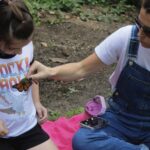


She lived in an environment of domestic violence and poverty. When Kelly was 14, her sister ran away, and it would be years before she saw her again. One month later, her father left, deepening the family’s financial hardship.

There’s a word to describe Kelly’s continual childhood adversity—trauma. And there’s an acronym to describe the incidents that made it up— Adverse Childhood Experiences (ACEs).

I was unfamiliar with ACEs when I entered John Harris High School several months ago to view the documentary, “Resilience: The Biology of Stress & the Science of Hope,” hosted by Communities in Schools of Pennsylvania, an affiliate of the largest dropout prevention organization in the United States, and Mission Central, which helps people overcome traumatic situations.

I knew that stress affected children’s learning and behavior, but not much about why that happens. I also considered these behaviors exclusively a mental health issue and lacked the knowledge to connect the dots between ACEs and long-term physical and emotional outcomes in children. Over the coming months, I learned a lot about children and trauma.

Just Surviving

The idea of ACEs originated from a 1995-97 Kaiser Permanente study.

About 17,000 patients completed a survey about their upbringing and present health status. Ten questions were categorized into three types of events: abuse directed toward the participant; neglect, directly involving the participant; and household challenges, which included domestic violence in the home, substance abuse, divorce or imprisonment of a family member.

Each event was given a score of one. Participants’ ACE scores were compared to their present health status. The results showed that the higher the ACE score, the increased likelihood of bad health outcomes such as alcoholism, drug use, depression, suicide attempts and cancer, among others.

Kelly scored an eight.

The study surprised me. I had never considered that terrible events could influence a person’s physical health. But what I found even more compelling were the mechanisms at work in the body during trauma that cause these outcomes.

Trauma, also known as toxic stress, affects children physiologically.

“It’s not just that they are hungry, not just that they don’t have a place to live,” said Ryan Riley, president and state director of Communities in Schools PA. “It’s toxic stress, causing a physiological nightmare.”

Here’s what that physiological nightmare looks like. Stress causes the body to respond with an increased heart rate, higher blood pressure and the release of stress hormones adrenaline and cortisol. Typically, the stress passes— the worst doesn’t happen, or the child receives support, and the body returns to its normal state.

In the toxic stress model, the stress is recurrent. The fighting happens over and over; the fear of where the next meal will come from never leaves; the anticipation of the next physical assault is ever-present. In this scenario, the body’s fight-or-flight response never turns off—it can’t. It needs to remain vigilant against the next onslaught.

A child’s developing brain takes in all this information and spends energy developing the lower levels of the brain, the survival levels, thus neglecting the upper levels of the brain—the higher thinking, learning and relational levels.

Armed with this information, I spoke with Ashley Kettering, a multi-systemic therapist who worked with youth in the juvenile probation system and the county’s Children and Youth Services. I wanted some information about how these experiences play out in a child’s life.

“You look at all these phases you are supposed to normally go through, but now you’re under stress, now you’re under trauma,” she said.

Basically, trauma changes the brain. Instead of energy being focused on learning how to get along with friends and how to read, the brain focuses on just surviving.

Wanting more information, I spoke with Ellen Smith, a retired general practitioner who has started a grassroots effort to inform the community about ACEs, an organization called Peace 4 South Central Pa. She compared the effects of trauma on the body as similar to the feeling one gets when a fire alarm goes off, except the feeling never goes away.

“The potential for fire is always there,” she said. “You can’t do math problems if there’s a fire in your house.”

Kelly’s fire was domestic abuse and hunger, especially in the summer when there was no free school lunch program. Summer consisted of two meals a day because there wasn’t enough to go around.  The “fire” interferes with typical emotional responses.

“Chronic stress affects the way you are able to react in situations, affects the way you can process things,” Kettering said.

Feelings, turn into actions without going through the typical thought processes.

“Fear goes straight to anger,” she said, adding that it makes it difficult to cope with life’s daily stresses.

This inability to cope leads to fighting because the fight-or-flight response is stuck “on.” A simple interaction can lead to an altercation, or the lack of self-control can cause a child to damage property, which then places them in contact with law enforcement. The toxic nature of this continued stress may cause young people to choose drugs as a survival mechanism, also putting them at risk of arrest.

Some Support

Thankfully, Kelly did not turn to drugs to deal with her childhood trauma. Not unscathed though, she has been diagnosed with post-traumatic stress disorder (PTSD). She works for a women’s abuse advocacy group, and, by all accounts, is making a good life for herself.

So, how did Kelly set herself on a path to success? First, she said that, even with her challenges at home, she had a few advantages.

“I’m lucky because I am the societal standard of something that passes,” she said. “I’m quick-witted, thin, athletic and able to make friends and connections easily. Take a few things out, it would be different.”

She also received some support from adults.

Her high school athletic trainer, for instance, helped ease the strain. Injured frequently as a volleyball player, Kelly was often in the athletic training room, where she developed a friendly relationship with the trainer. She could go there to hang out, use the microwave or help herself to a PB&J. She said that they didn’t talk about her life, but that she just knew she could retreat there.

Kelly and Kettering both emphasized that, when kids get into trouble, it’s important to try to understand the lives they’ve been leading.

“We need to be more focused on how we can help them and less focused on how we can punish them,” Kettering said.

Kelly added that the consequences for misbehaving are often worse for children from traumatic environments, as they usually have little or no support from their families.

“If you said the wrong thing or did the wrong thing [at home], you would get ridiculed, disrespected, made to feel stupid,” she said.

All the Difference

Fortunately, there are resources available to help people understand and cope with the impact of toxic stress.

Through therapy, Kelly has discovered that what happened to her as a child was not “normal,” and it has a name—abuse. She described how she still feels the effects of trauma.

“I feel like I’m still waiting for the next shoe to drop. That’s not a feeling that goes away,” she said. “If I am not focusing on accomplishing something, my brain goes to all the things that can go wrong.”

Moreover, organizations like Communities in Schools offer support for students who struggle. Located in schools, the group provides a place where students can decompress when they feel overwhelmed, a respite like Kelly’s athletic training office. It offers someone to talk to, someone who understands the extent of their struggle.

“Programs don’t change kids, relationships change kids,” said Darria Stafford-Williams, site coordinator for Communities in Schools at John Harris High School. “If there’s at least one positive adult in that child’s life—that the child knows they can depend on them—they can trust them. It makes all the difference in the world to that child.”

Sometimes, the trauma comes from a child’s neighborhood, and organizations like Boys and Girls Club of Harrisburg offer islands of calm. Surrounded by caring adults, children enjoy clean, safe, fenced playgrounds and ball fields, allowing them to relax and just enjoy being kids for a while. The club also provides tutoring and meals, recognizing that food and learning help provide stability and a sense of wellbeing.

Children (and their families) who have lost a loved one can go to Highmark Children’s Place and find assistance. Children come, have a meal, and talk through their feelings with peers or just listen as others participate.

People also can teach themselves about trauma. Anyone can hop on a “TED Talk,” watch documentaries like “Paper Tigers” or “Resilience” on Netflix or Vimeo, or surf the web and find a vast library of information on childhood trauma and ACEs.

Acknowledging that a child is experiencing trauma, recognizing that this trauma can cause physical and emotional problems, and a showing a willingness to address those problems are keys to helping children rise above events beyond their control.

Rather than berate ourselves for not knowing, hiding from the truth, or feeling stifled by the enormity of dealing with trauma, we should perhaps consider the words of Maya Angelou, “I did then what I knew how to do. Now that I know better, I do better.”

 For more information on the ACEs, visit acestoohigh.com. Learn more about Communities in Schools of Pennsylvania at cisofpa.org. “Kelly” is a pseudonym. She asked that her real name not be used in this story.

Author: Susan Ryder

Continue Reading

Mystery and Fear: “Beach Rats” tells a complex tale of self-acceptance.

We may be the only ones who really know Frankie.

His friends know one shade of him, and his family another. Frankie (Harris Dickinson) is who they need him to be—the teenage hooligan who runs around, stealing and smoking with the boys, or the son who spends time with his sick, dying father. But only the men he meets from Brooklyn Boys, an online site for gay men, know any shade further.

In Eliza Hittman’s “Beach Rats,” we come to know Frankie as a soft-spoken, hard-boiled egg, reliant on mystery to win over his acquaintances. It is what draws Simone (Madeline Weinstein), his new girlfriend, to him. But perhaps he is still figuring out his own mystery. Refusing to label himself (or, more importantly, see himself) as gay, Frankie struggles to keep his head in the game with Simone and to hide that part of himself at all costs, a struggle that grows more serious as the story continues. The film makes use of quiet, visual storytelling to unravel this compelling tale of societal fear.

This is not a coming out story; this is a case study of the difficulty of coming out. We like everything to be black and white. We will name someone as homophobic or a hooligan or any sort of label that tells others what we assume about a person. But Frankie is a puzzle that is slowly put together over two hours, in such a way that you can see the black and white converging to become an uncomfortable gray.

Dickinson does a phenomenal job wrestling with his character. You would do well to catch this gem of a film.

“Beach Rats” starts on Sept. 15 at Midtown Cinema, 250 Reily St., Harrisburg.

Author: Sammi Leigh Melville


MIDTOWN CINEMA

SPECIAL EVENTS

www.midtowncinema.com


Down in Front!

“Star Crystal” (1986)

Friday, Sept. 8, 9:30 p.m.


3rd in the Burg $3 Movie

“The Sandlot” (1993)

Friday, Sept. 15, 9:30 p.m.


Digital Theatre

“Falsettos”

Sunday, Sept. 10, 7:30 p.m.
“Peter Pan”

Sunday, Sept. 24, 2:15 p.m.

Monday, Sept. 25, 7 p.m.


Harrisburg-Hershey Film Festival

Sept. 15-18


Middle Earth Marathon

Saturday, Sept. 23


Stanley Kubrick Collection

“The Shining”

Thursday, Sept. 28, 7:30 p.m.
“2001: A Space Odyssey”

Friday, Sept. 29, 7:30 p.m.

Saturday, Sept. 30, 7:30 p.m.
“A Clockwork Orange”

Saturday, Sept. 30, 7:30 p.m.

Continue Reading

Perfect Pesto?: Take your basil and blend it.

Every year, I grow a small patch of sweet basil in my herb garden.
Growing herbs is my very modest attempt at home gardening these days, having abandoned tomatoes, peppers, eggplant, arugula and all of my other favorite Italian vegetables a long time ago. But as September approaches, I’m giving my little basil crop a grade of perhaps B-minus. My plants are smaller and shorter than usual, and their color is not as bright green as I think it should be. I am blaming the frequent torrential rainstorms that hit us this season—almost 10 inches of rain in July alone.

Nevertheless, it is time for the basil harvest at the Baer household, and my annual pesto project should still be successful. There is no substitute for pesto made on the same day the basil is picked.

I have a lot of Italian cookbooks, and almost all have a recipe for basil pesto. The formula is pretty much the same: fresh basil leaves, good Parmesan, extra virgin olive oil, garlic and pine nuts. I have often omitted the pine nuts (especially if guests have a nut allergy) or substituted walnuts (also very good). But in my experience, one recipe step is always a constant. After washing the basil leaves, make sure each leaf is thoroughly dry before proceeding. I always followed this religiously, often washing the basil early in the day to make sure no moisture remained when I was ready to cook.

Enter a new recipe and a new concept based on the award-winning pesto of Paolo Laboa, a chef from Genoa (“Genova” in Italian), Italy, and now at Solo Italiano, a restaurant in Gloucester, Mass. Chef Laboa’s pesto won the gold medal at the 2008 Genova World Pesto Championship, a competition of 100 chefs from around the world. I have tried his method, and it is indeed very good, resulting in a sauce that’s bright green, delicate (not overly garlicky) and very creamy.

But chef Laboa has exacting standards for making his pesto, which most of us can only approximate. He uses Genovese basil, which is only officially grown in Italy’s Liguria region. Chef Laboa suggests looking for Genovese-style basil either when purchasing plants or seeds. His recipe calls for Parmesan cheese that is aged 24 to 36 months and a type of pecorino called fiore sardo, a Sardinian sheep’s milk cheese. (I always just used a good Parmesan Reggiano, which I grate on my Microplane grater.) But the most startling difference in Laboa’s pesto is that he first soaks the leaves for 15 minutes in cold water to remove “bitterness” and what he describes as “unwanted licorice notes.”

And finally, chef Laboa makes his pesto in a blender, which he has first chilled in the freezer rather than the traditional mortar and pestle. Since I have a very inefficient blender from the Stone Age, I always use my food processor, which has worked pretty well. So, here is Laboa’s unique recipe for Pesto alla Genovese.

Genovese Basil Pesto

Ingredients

  • 6 cups loosely packed basil leaves
  • ½ cup pine nuts
  • 1/3 of a small garlic clove
  • ½ cup good, fruity olive oil
  • 1 teaspoon sea salt
  • 2/3 cup freshly grated, good, imported Parmesan cheese (use half pecorino Toscano cheese if you can find it, but not pecorino Romano, which is very salty)

Directions

  • Place the glass (only glass) blender container in the freezer.
  • Submerge the basil leaves in cold water and let stand for 5 minutes.
  • Using your hands, gently lift leaves from the water. (Have lots of clean dishtowels nearby.) Repeat this process twice, using fresh water each time. Then rinse the bowl and soak the basil leaves for 15 minutes. (This is tedious, I know, but not hard.)
  • Remove the blender container from the freezer. Combine the pine nuts and the small piece of garlic in the chilled container, cover with the olive oil and puree until the mixture is chopped and creamy. Then add the salt.
  • In 4 additions, lift basil leaves from the water and shake off the water. Leave some water on the leaves to add in blending.
  • Puree for 3 to 4 short pulses after each addition but do not over blend.
  • Finally, add the cheese using 2 to 3 short pulses of the blender.

If you are using the pesto the same day, place it in a bowl and cover the sauce with plastic wrap, pressing it down directly on the sauce to avoid discoloration. If you are not using right away, place the pesto in a jar and cover it with a thin film of olive oil. It will keep in the fridge for three days and the freezer for three months.

Toss the pesto with a pasta of your choice but add a little of the pasta cooking water to heat the pesto and smooth it out. Don’t microwave or otherwise heat the pesto. I always add some extra grated cheese to each serving.

Making pesto at summer’s end is a culinary treat. Give this technique a try if you can. I would be interested in knowing what my Burg readers think of it.

Author: Rosemary Ruggieri Baer


Continue Reading

Magic Man: Upon retirement, Dr. Guillermo Garcia reflects on 40 years of caring for the children of central PA.

During a recent visit to the doctor, my 6-year-old son pointed down the hall from the waiting room.

“There’s the guy who saw the giraffe inside my ear,” he said. “He does magic, you know.”

In the offices of Tan & Garcia Pediatrics, tales of animals and magic tricks are commonplace, and so are expressions of adoration and respect. Just ask any one of three generations of patients seen by Dr. Guillermo Garcia during his 40 years as a pediatrician in central Pennsylvania.

Since 1977, Garcia has conducted countless office visits and phone calls, dedicating his professional life to caring for the community’s children. This summer, however, he made the difficult decision to hang up his stethoscope and retire from practicing medicine.

“I have been so fortunate to be able to do what I do,” Garcia said. “It’s been absolutely incredible.”

Garcia explained that he wanted to be a doctor since elementary school, where he dissected chickens and armadillos in a small town in Mexico.

“It was crazy,” he said. “It was anatomy live.”

Garcia moved to Mexico City and attended La Salle University, later completing medical school at the National University of Mexico. He attributes the development of his passion and his patient approach to the authentic learning experiences working with one of his professors, a man he holds in high regard.

“Our teacher, Dr. Ramirez, told us to buy a white coat, get a pair of gloves, show up in the emergency room and offer your help,” recalled Garcia.

It was in the emergency rooms of Mexico City where Garcia delivered his first baby when he was only 17 years old.

“I could write a book about my clinical experience,” he said. “That’s how we learned, and it was incredibly valuable.”

Garcia’s experiences—both during his internship in Canada and later in Guanajuatillo, Mexico, where he completed his service commitment—provided him with a profound perspective. He spent a year as the doctor of the small town, treating various maladies and delivering countless babies. Garcia dedicated substantial time to improving conditions there, explaining that he was most proud of his work that resulted in a new school and sanitation system.

“There was so much need there,” he said.

Garcia applied and was accepted into the residency program at Polyclinic Hospital, later completing a fellowship at the University of Rochester, where he met Dr. Frank Procopio.

“He and Dr. Tan started a practice in 1976,” Garcia said. “They opened the office in Camp Hill, and I joined them the following year.”

In 1978, they opened a second office in Union Deposit. Procopio retired in the mid-1990s, and Tan & Garcia Pediatrics has been caring for the Harrisburg region’s children and their families ever since.

“I have seen grandmothers who were my patients, who now bring their grandchildren to see me,” Garcia said. “It’s such a privilege to witness the metamorphosis.”

And although the patients have changed, Garcia said his approach to practicing medicine remains steadfast, central to the spirit of his practice.

“I need to make the connection,” he said. “We need to care not just for the patient, but for parents, too.”

But care, he said, is a two-way street, as he’s also learned so much from his patients and their families.

“They are the ones who taught me what pediatrics is all about,” he explained. “It’s a different tier of medicine.”

His gratitude extends to his partnership with Dr. Yoke Tan, the colleague with whom he spent 40 years of professional practice.

“It was a good marriage,” he said of their partnership.

Dr. Tan returned the compliment, noting Garcia’s compassion for his patients and his ability to connect with children and their parents.

“He is an astute clinician—a very good friend and colleague,” Tan said.

Although he will miss Garcia, Tan said he is happy for the new opportunities retirement will offer his friend.

“I wish him well, and I wish him good health,” he said. “And I wish him the time to do the different things he has always wanted to do.”

Garcia has mixed emotions about moving on.

“It’s hard to go,” he said. “I’m going to miss the patients. The children, my children, are amazing. I’m honored to have been part of the greatest profession.”

Nonetheless, he looks forward to spending more time with his family—especially his grandchildren. He said the change of pace will afford him new adventures, like trips to Mexico where he can involve himself in projects like volunteering to teach English in schools. He also is interested in the environmental health and preservation of Mexico’s natural resources.

“I’m looking forward to the new adventure,” he said. “And I like the challenge of trying to figure things out. So, I’m going to help.”

Author: Jen Fertenbaugh

Continue Reading