Going Up: Building permit revenue rises sharply in Harrisburg.

Construction is underway on a two-story expansion to the Alex Grass Building on the PinnacleHealth Harrisburg Campus on 2nd St. The project will expand the hospital’s maternity ward.

Revenue from building permits in Harrisburg has far exceeded projections for the 2017 fiscal year, a trend that city officials attribute to a stabilizing business climate and a few large projects.

Harrisburg met nearly 300 percent of its projected building permit revenue for the 2017 fiscal year by the end of August. The city budgeted $290,000 in revenue from building permits for the entire year, said City Finance Director Bruce Weber, but so far has collected $856,723 from 671 permits.

According to city codes administrator David Patton, the city netted $423,566 from 881 permits in all of 2016.

Weber conceded that permit revenue accounts for a very small percent of the city’s annual budget. Almost 90 percent of the city’s revenue comes from taxes, including those on local services, earned income and real estate. However, he said that the building permit revenues raised eyebrows during the city’s mid-year budget assessment.

“Generally, building permit revenue doesn’t vary much, but that changed this year,” Weber said.

He reported that the city had met 200 percent of its expected building permit revenue by June 30, the mid-point of the fiscal year.

Patton said that the cost of a building permit depends on the value of the building project. For example, a $2.5 million parking lot project at Harrisburg Area Community College carried a permitting fee of $23,023, and the permit for a $28-million expansion at PinnacleHealth brought in $214,273.

Though permit revenue contributes to the city’s bottom line, building projects do not necessarily indicate a growing real estate tax base in the long term. Some projects, such as the PinnacleHealth facility, operate as non-profits and do not pay real estate taxes to the city. In addition, many building and renovation projects can qualify for a LERTA tax abatement, which holds property taxes steady for a period of up to 10 years.

Weber said that while the city’s real estate tax base hasn’t grown for the last 10 years, building projects still contribute to the positive economic momentum in the city.

“It’s good to have building,” Weber said. “It feels like entities want to reinvest in the city, and that had not happened here for a really long time. It shows that there is stability and confidence that I hope will continue to grow.”

Patton, whose office processes all building permit applications, agreed.

“The development that is occurring is at a phenomenal level, and one that is beyond my recollection in my 22-plus years as an administrator,” he said.

Encouraging as this year’s surge may be, Weber said that the city cannot count on matching the same revenue next year. He said that the city might increase its revenue projections for 2018, but only slightly – perhaps up to $350,000 from this year’s $290,000.

“I think they’ll be higher but not like this,” Weber said. “You don’t really know what’s really going to happen.”

Continue Reading

Roundabouts to Rain Gardens: MulDer Square designs eyed, debated.

Attendees pondered designs for MulDer Square at tonight’s meeting on Allison Hill.

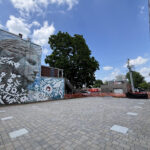
Residents from Allison Hill mulled over bike lanes, roundabouts and rain gardens at an open house on Thursday, as the city displayed plans to improve transportation in the area known as MulDer Square.

The purpose of the open house was to solicit public opinion on design proposals for a redevelopment project on Derry and Mulberry Streets in Allison Hill. The intersection of these streets is called MulDer square, and Harrisburg officials and residents hope that they can spur economic development there, in part, by improving pedestrian access and calming traffic.

The event, which was also attended by city officials and project consultants, was held at Harrisburg First Church of the Brethren on Hummel Street.

The city has proposed designs that include creating a linear park with bike lanes on Derry Street and a public gathering space at the intersection of Derry and Mulberry. The project managers are also considering two options for improving walkability at that intersection: a traffic roundabout or a traditionally signalized intersection with green space and large sidewalks.

Deborah Rodriguez, a resident on Sylvan Terrace in Allison Hill, was happy to see plans targeting pedestrians in her neighborhood.

“You see a lot of people walking over the bridge to work in the city, so I’m glad to see attention drawn to this area,” she said.

Rodriguez called the proposed projects “wonderful” but expressed concerns about their long-term upkeep.

“I want to know whose responsibility it will be to maintain it,” she said.

She suggested that school children or community organizations could have a stake in keeping the spaces clean and functional.

“These plans are beautiful as long as they have organized maintenance,” echoed Shirley Blanton, president of the South Allison Hill Homeowners Association.

Chris Eby, a software engineer who lives on Market Street in Allison Hill, comes into the MulDer Square area every week to volunteer at the church. He hopes that the city will look beyond its target area to maximize pedestrian and cyclist safety.

Eby pointed out that the areas receiving pedestrian improvements and bike lanes are not necessarily connected to other areas with the same amenities. For example, Mulberry Street meets Cameron Street at a busy intersection that is a frequent site of pedestrian accidents. And though the city is proposing a bike lane for Derry Street, it would not intersect with any other bike lanes in the area.

“We need to think about where pedestrians will go when they leave this area and where cyclists are coming from,” Eby said.

Residents who attended the open house were invited to complete comment sheets for the project planners. City Engineer Wayne Martin, who is the project manager, said that one quickly emerging theme was the neighborhood’s desire for public art.

“They want us to include art and murals,” Martin said.

He plans to provide a new mock-up of the Derry Street project that will include the Mulberry Bridge Mural, which was dismantled and put into storage when PennDOT renovated that bridge in 2014.

Martin remarked that the event turnout exceeded expectations and generated valuable input for his team. He expects that at least one more round of designs and public meetings will take place this year.

The city hopes to begin construction on the projects in March 2019, Martin said, and complete them by that fall.

Continue Reading

Pre-K program in Allison Hill slated to grow with Hamilton Health expansion

Hamilton Health Center will expand its current campus, above, by adding a parking lot and 25,000-square foot building by next fall.

A planned expansion at Hamilton Health Center in Allison Hill will increase pre-K access for children in that neighborhood, while also providing additional parking for the facility’s patients and employees.

On Tuesday, Harrisburg City Council approved Hamilton Health’s application to add a new parking lot and a 25,000-squre-foot building to its facility on S. 17th Street. The building will house classrooms for Capital Area Head Start and another child care facility.

Jo Pepper, executive director of Capital Area Head Start, said that the Hamilton Health expansion will allow her organization to direct more resources to its highest-need area. They will increase Head Start enrollment in Allison Hill by 80 slots starting next year.

“Every year, one of our biggest problems is finding safe, age-appropriate facility space in our areas of need,” Pepper said. “We’ve been looking for additional space in Allison Hill for three to five years now.”

Capital Area Head Start will occupy five classrooms in the new Hamilton Health building, where 80 children will attend pre-K for six hours a day, five days a week.

Pepper said that the 17104 zip code, which encompasses Allison Hill, currently has a list of 224 children waiting for a spot in pre-K – the highest of any area served by Capital Area Head Start. Within that zip code, 391 children are currently enrolled in Head Start pre-K programs operating in public schools.

Capital Area Head Start obtained federal funding earlier this year to increase facility space and classroom hours across their programs, which serve Dauphin, Perry and Cumberland counties. They subsequently moved some enrollment slots from their low-need areas to high-need ones like Allison Hill.

Pepper said that the Hamilton Health project, which administrators hope to complete by fall 2018, was a major factor in deciding where to distribute future enrollment.

“It’s our highest-need area, and now we have great facility space,” Pepper said. “It can be difficult to apply for more funding if I don’t have appropriate facility space.”

Federal funding will also allow Capital Area Head Start to pay rent for the Hamilton Health space, which Pepper said meets fair market value. Their rental space will also house early Head Start programs and offices for home visit counselors.

Jeanine Peterson, CEO of Hamilton Health, said that her staff decided to pursue a building permit when Capital Area Head Start approached them in 2015 about renting space on their campus. At that time, the Hamilton Health facility was at full capacity, but Peterson believed a partnership would help parents access Hamilton Health’s services for children.

A third of Hamilton Health patients are children receiving health and dental care and school immunizations, said Peterson. Hamilton Health also houses a federally-sponsored Women Infants and Children (WIC) program that offers nutritional supplements for pregnant women and young children.

“We are a one-stop shop for families to access what they need,” Peterson said. “Co-locating with Head Start eliminates a lot of the barriers that a lot of families have in ensuring that their kids get quality health care.”

Pepper agrees that the new space will benefit programming at Head Start and Hamilton Health.

“I can’t wait to break ground,” she said. “We’re very excited about the opportunities and the initiatives that we’ll be able to develop by providing educational services on the campus of an important community health care provider.”

Peterson also said that the 30,000 patients who get treatment at Hamilton Health make the neighborhood a ripe spot for other business opportunities. She wishes that more investors would look past downtown development areas when choosing the sites for future projects.

“I think that a lot of attention is paid to the downtown and midtown areas, and we forget that there’s tremendous opportunity in the city in areas like Allison Hill,” Peterson said. “Getting other businesses to take a look at this corridor would be a major asset to entire city.”

Continue Reading

Weekend Roundup with Sara Bozich

Happy Weekend!

As you read this, I’m likely en route to our last round of Poured shoots, at least for a little bit. I’m home this weekend, though Andy’s not, that’s his loss because I’m going to the Chef’s Table at The Garlic Poet on Saturday.

Since I learned that the stupid CBS All Access app is not, in fact, all access (what the hell do I need an app for to play the same damn game that is on my television??), I’m going to a stupid bar to watch stupid football. THANKS ROGER GOODELL. Thankfully, next weekend I can finally watch from the comfort of my own couch. There will be nachos.

Of course, this is all after I hit up Next Step Performance and Broad Street Market Saturday morning. I might miss this routine the most.

What are you doing this weekend?

(more…)

Continue Reading

Back in the Groove: Justin Arawjo delivers soulful set at Little Amps.

Justin Arawjo as he played at Little Amps last week.

Justin Arawjo doesn’t wish to make music his career.

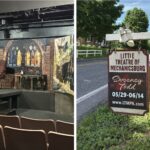
His day job as one half of Fennec Design keeps him plenty busy. But he does like to share his love of the guitar with an audience. So, last Friday, he set up inside Little Amps on State Street in Harrisburg, fingerpicking solo before sharing the stage with Congis Fizz.

Attesting that he “feels better in front of a crowd,” Arawjo executed his short set with the fluidity of a seasoned professional, despite the fact that he was just “getting back into the groove.” Seated in a single chair, under the dim lights, he plucked through tracks drawing from deep wells of inspiration.

In between verses, Arawjo’s fingers danced across the frets and fingerboard. I found myself watching them, mesmerized. His lyrics swept over me like a fall breeze, a night beneath the stars – cool and crisp.

Though Arawjo describes his music as “simple,” his lyrics are complex. I would describe both as soulful and authentic. I didn’t want the set to end, a feeling, I think, shared with the rest of the audience as no one spoke or made a sound except to follow each song with vigorous applause.

“I have no illusions about making this full time, being a full-time musician,” he told us.

Working as a studio artist at the Millworks, Arawjo said that music is just a part-time hobby. It’s one he’s always had but that he came back to with renewed vigor after the election. His music, however, is not political at all.

This concert was one of a few solo ventures for Arawjo. Although he’s been playing music for 15 years, mostly serving as guitarist for various bands, he’s only played solo for six or seven years. He re-released his album, “Ghostless Limbs,” on Bandcamp earlier this year with new art and design, but with the same songs he originally penned and recorded in 2008.

He had compact disc copies available for the audience. Arawjo donates the proceeds from his performances to various charities and relief efforts. He said that he planned on donating the money he made at Little Amps that night to hurricane relief efforts.

And, ultimately, that seems to be what motivates him.

For information about Justin Arawjo and his music, visit https://justinarawjo.bandcamp.com.


Continue Reading

HBG Council Recap: Madsen sworn in, Hamilton expansion OK’d.

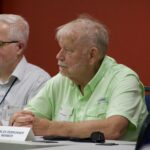
Dave Madsen was sworn in as a Harrisburg councilman just as tonight’s meeting started.

Harrisburg City Council swore in a new member and approved a major building project during a legislative session this evening.

Dave Madsen, a technician in the Pennsylvania Department of Revenue, took the oath of office from Dauphin County Judge Lori Serratelli, officially assuming the seat formerly held by Jeffrey Baltimore.

Madsen was appointed to a four-month term on council last week, and, just two days later, nabbed the Democratic nomination to run for his seat in the November election. Since Madsen currently has no Republican challenger in that race, he will likely serve the remaining two years of Baltimore’s term. His seat has been empty since Baltimore’s resignation on Aug. 11.

After Madsen was sworn in, council voted on a number of resolutions awaiting final approval. Most significant among them was a building permit application by Hamilton Health Providers, which now has the green light to expand its facility on S. 17th Street to include additional parking spots, patient visiting rooms and classrooms for the Head Start pre-K program.

Council also brought to the floor two new resolutions, including one calling for the creation of a task force to explore community policing policies, law enforcement and training initiatives, and the creation of a civilian review board for the police bureau. Council agreed to consider such legislation as a condition of allocating $65,000 to the bureau for the purchase of new protective gear.

A resolution approving the city’s agreement with the National Civil War Museum was also brought to the floor tonight and moved to the Economic Development Committee. Mayor Eric Papenfuse announced the plan to resolve disputes with the museum in a press conference at city hall yesterday. The agreement, reached jointly by city officials and museum directors, will allow the museum to buy its collection of artifacts from the city for $5.25 million. In turn, the city will begin to charge the museum rent and will pay for some capital repairs to the museum building in Reservoir Park.

Council will discuss both of the new resolutions at its Sept. 19 work session.

Continue Reading

Peace Declared: City, Civil War Museum reach accord on artifacts, rent.

Gene Barr, a board member of the National Civil War Museum, speaks at a press conference today announcing a deal with the city.

Harrisburg’s mayor and a city museum have put aside their contentious past in a deal that would give the museum ownership of its permanent collection.

At a press conference today, Mayor Eric Papenfuse and board members of the National Civil War Museum outlined an agreement in which the city would sell the collection to the museum for $5.25 million and begin to charge the museum rent.

“My goal has always been to reach an agreement in the city’s best interest, and I believe this is in everyone’s best interest,” Papenfuse said.

This agreement seems to resolve a longstanding dispute between the city and the museum board.

After becoming mayor in 2014, Papenfuse strongly objected to deals reached under former Mayor Steve Reed that allowed the museum to display the city-owned artifacts at no cost and that charged the museum just $1 a year in rent for the city-owned building, even while the city remained on the hook for building maintenance and repair.

The new agreement addresses both those issues.

First, the city would sell the artifacts to the museum for $5.25 million. In turn, the city would put $1 million into a reserve fund to pay for capital improvements to the building, which the city would continue to own. The other $4 million would pay for improvements to Reservoir Park, where the museum is located.

Under the deal, the museum has five years to raise the $5.25 million to purchase about 25,000 artifacts. If it fails to raise the money within that time, the city would be allowed to sell 20 percent of the museum’s collection.

Papenfuse acknowledged that $5.25 million is below the retail value of the artifacts, which were not appraised for purposes of the agreement. But said he believed the price was in the best overall interest of both parties.

“The museum now will have a legitimate path forward to sustainability,” Papenfuse said.

The $5.25 million figure, he said, was arrived at through negotiation, taking into account the amount of money the museum could reasonably raise.

He added that it was unknown exactly how much Reed paid for the artifacts, given poor recordkeeping, but that it likely exceeded $10 million. The market for Civil War memorabilia has generally softened since Reed bought most of the artifacts in the late 1990s, he added.

The agreement also outlines a graduated schedule for the payment of rent.

For the first five years, the museum would pay the city $45,000 per year in rent. However, no money would change hands, as the cumulative amount over that period almost equals the amount of money that the museum claims it is owed by the city for unreimbursed building maintenance and repair costs dating back to 2009.

“We’re going to credit that initial rent in the five-year period,” Papenfuse said.

The rent then would increase incrementally, capping off at $100,000 per year for 10 years starting in 2029.

The museum’s board of directors approved the deal last week. Before the agreement can take effect, Harrisburg City Council also must OK it.

“It took us a long time to be here, but I think we realize that this made a heck of a lot of sense for both (parties),” said Gene Barr, a museum board member.

Continue Reading

“Prime” Location? Harrisburg area suggested for new Amazon headquarters.

Could the old State Hospital grounds be the perfect spot for a new Amazon.com headquarters?

Amazon.com announced this morning that it is scouting locations for a second headquarters complex—and cities across the country are gearing up to woo.

The announcement that Amazon would build a $5 billion facility supporting 50,000 jobs immediately lit up social media. Some local activists and officials suggested that the sprawling, for-sale Harrisburg State Hospital grounds off Cameron Street would be a perfect fit.

Indeed, the Harrisburg metropolitan area is already home to four Amazon warehouses. But what else would it need to beat other cities vying for the headquarters project?

For starters, another half-million people, said David Black, president of the Harrisburg Regional Chamber of Commerce & CREDC.

“Harrisburg is too small to put in a bid, but I do think there’s an opportunity to put in a bid with partners in York and Lancaster,” Black said on Thursday.

He said that the population of the Harrisburg metro hovers near 560,000 people, falling short of Amazon’s preference for metro areas with more than 1 million people.

Black thinks that the city could offer a competitive application if it works as part of a regional team. He said that the region’s existing relationship with Amazon distribution centers could distinguish it from other cities, as could its proximity to highways, major East Coast cities and the resources of the Penn State network.

“Working with the broader region is the only way this will work,” Black said.

In the press release announcing the location search, Amazon CEO Jeff Bezos said that the new headquarters will be a “full equal” to the company’s 8.1-million-square-foot headquarters in Seattle. That location, which comprises 33 buildings housing more than 40,000 employees, has a yearly operating budget of $1.4 billion.

Harrisburg might score better on a few other criteria that Amazon outlined: a stable and business-friendly environment; urban or suburban locations with the potential to attract and retain strong technical talent; and communities that think big and creatively when considering locations and real estate options.

One potential pitfall of a regional application is that it would require a patchwork of incentives, since most of these programs are created at a municipal level.

Harrisburg has a LERTA tax abatement program to encourage building in the city, and Black said that neighboring municipalities have programs ranging from LERTAs to Keystone Opportunity Zone designations. Since applications for the program are due Oct. 19, there is no hope of creating uniform incentive programs on a regional level.

“We can only offer what’s in place now,” Black said, adding that there are 103 municipalities in Dauphin and Perry counties alone.

He did say that input from the commonwealth could strengthen the incentives portion of the application, since it has successfully negotiated with Amazon in the past to build warehouses.

“The state did work with Amazon on some of their distribution facilities in PA, and they put together a nice package,” Black said. “Since this is a generic application, the state can say, ‘We offer incentive packages based on more detail.’”

On the whole, Black believes that business and political leaders in the midstate could put together a thoughtful bid for the Amazon project. He thinks that workforce data from the Penn State Data Center will strengthen the bid, as will the region’s established relationship with the company.

“We have a track record with Amazon,” Black said. “They’re here, they know the workforce, and it’s not like we’re coming in out of the cold.”

Black cautioned the public from becoming too excited about the prospect of Amazon breaking ground in the midstate, but said he believes that the application process itself will benefit the community.

“Whether or not we get it, the exercise is worthwhile,” Black said.

Members of the city’s legislative branch made moves on Thursday to begin considering an application. Councilman Westburn Majors said he contacted city officials and business leaders shortly after seeing the morning announcement.

“It is my hope that the administration can work with the county, the commonwealth, local business groups such as the Chamber, CREDC, etc., to determine if putting in an application is something that they would consider,” Majors said.

“We would love to have Amazon come here and will see what we can do as a collective team to make it happen,” said Ben Allatt, chair of the council’s finance committee.

Continue Reading

Weekend Roundup with Sara Bozich

Welcome to September!

I’m headed to State College tonight — not for the Pitt/PSU game — but to rep Poured in PA at the Brewers of Pennsylvania Mid-Atlantic Symposium.

Back in time Friday for our podcast recording with Beer Busters (You’re invited!), then hopping on the turnpike Saturday for a baby shower (mine), then turning around and heading back to see if I can actually watch the Steelers game with the CBS All Access app.


What are you doing this weekend?

(more…)

Continue Reading

Back to Back: County Democrats nominate Dave Madsen for Harrisburg Council seat.

Dave Madsen makes his pitch to members of the Dauphin County Democratic Committee before tonight’s nomination vote.

Dave Madsen’s service on City Council got a likely two-year extension on Wednesday night, thanks to a vote of confidence from the Dauphin County Democratic Committee.

At a packed nomination meeting in the Kline Library, DCDC voted to make Madsen the party candidate for the November city council election. Madsen beat out four other nominees to clinch his spot on the ballot.

His victory came one day after he was appointed by council to serve a four-month term, filling the seat vacated by Jeffrey Baltimore in August. Madsen will run for the same seat in November to serve out the remaining two years of Baltimore’s term.

Madsen’s win in November is all but inevitable, since the county Republicans have not put forth a candidate for the seat.

Madsen secured 21 of the committee’s 44 votes at Wednesday’s nomination meeting. Devan Drabik, the city’s business development director who said she would quit her job to take a council seat, followed with 18 votes. Three votes went to former city Councilwoman Patricia Stringer. Steven Williams, who was absent from the meeting, and Jennie Jenkins, who announced her withdrawal before the vote took place, got a single vote each.

Since Madsen faces likely election in November, he plans to focus most of his energy during the campaign season on promoting other Democratic candidates, he said.

“It’s about pushing the ticket,” he said after the meeting. “We have competitive races for the state Supreme Court and at the county level.”

Madsen said that his most immediate priority as a council member will be helping the city approve a 2018 budget. After that, he hopes to work on local campaign finance reform.

“It’s something that’s talked about a lot at the national and state level, and I’m looking forward to promoting it locally,” Madsen said.

He also came out in favor of mayoral term limits, a topic of debate at last night’s council work session. Madsen said he supports 12-year term limits for both the executive and legislative branches.

When asked about long-term financial planning for the city, Madsen said that he would approve a Home Rule charter “as a last ditch effort” and only after a one-year campaign to engage and educate the public. He also supports the city’s application for a three-year extension on its Act 47 status and intends to speak with Harrisburg’s state representatives about maintaining the local services tax at its current rate.

Author: Lizzy Hardison

Continue Reading