Advancing the Story: Harrisburg has bookmarked a spot on the literary map, thanks to Midtown Scholar’s new manager.

Midtown Scholar Bookstore may be the largest used bookstore between New York and Chicago, but, when publishers schedule tours for major authors, stops in central Pennsylvania have been rare.

Store Manager Alex Brubaker is changing that. Since coming on board, he’s been emphasizing the promotion and sale of new works. And, along with that, he’s worked to attract increasingly big names to town, including, in September, one of the best known and highly regarded authors in the world—Salman Rushdie.

“I love new books, and I love author events,” Brubaker said. “They wanted new books, but they didn’t have the person to do it.”

Brubaker came to Harrisburg from Minneapolis, where he was an editorial assistant at the nonprofit book review “Rain Taxi,” covering newly published books from a variety of small presses—the kind that, even a year ago, Midtown Scholar did not carry.

He started as the coordinator of literary programs, and the promotion to manager has freed him up to fuse his passion with the strategic vision for the bookstore.

“The infrastructure was already there,” he said of Midtown Scholar. “They just let me get to it.”

A Destination
Recently, Zinzi Clemmons included Harrisburg on her itinerary while promoting her widely praised debut novel, “What We Lose.” During her intimate reading, she acknowledged the importance of bookstores like Midtown Scholar for first-time authors like herself.

It was equally important for Brubaker to share Clemmons’s work with a local audience.

“I want the bookstore to be that place in central Pennsylvania where a literary community thrives,” he said. “I want Midtown Scholar to be a destination. Creating a sustainable literary culture is the goal.”

Bridging the gap to audiences in Lancaster and York is a part of that, as, he notes, those cities are only about 40 minutes from Harrisburg.

“There are places in Philly where, if you want to go to a reading, you’ll have to drive for 45 minutes anyway,” he said. “We want to be a destination.”

To make that happen, Brubaker reached out to people like Donna Talarico, who runs an online literary nonfiction journal, Hippocampus Magazine, in Lancaster. She connected Brubaker with Eliot White, also in Lancaster, who runs the literary organization, The Triangle, with a mission to connect the “triangle” of York, Lancaster and Harrisburg by increasing awareness of and producing literary events.

The Triangle has sponsored several author events at Midtown Scholar this year.

“What Alex is trying to do perfectly fits within our mission at The Triangle,” said White. “Alex really does have his finger on the pulse of the local and national literary scene, and he’s working hard to bring those things right into our backyard.”

Grateful
Harrisburg’s strategic location along the East Coast also works to Midtown Scholar’s advantage.

For instance, the city was a logical stop when Riverhead Books was scheduling a tour for poet Patricia Lockwood, whose memoir, “Priestdaddy,” was published this past spring.

“Other colleagues of mine were familiar with Midtown Scholar,” said Riverhead’s Senior Publicity Manager Elizabeth Hohenadel, who had not been there prior to the Lockwood reading. “I have an affinity for the area and know a lot of people are big readers. It would be fantastic if the region became a literary destination.”

In bringing Lockwood to the bookstore, Brubaker also consulted with the Almost Uptown Poetry Cartel, which has, like The Triangle, sponsored visiting authors.

“I’m extremely grateful for the work he’s doing,” said cartel booker Gillian Branstetter. “I think, a lot of times, people keep turning over their shoulder and thinking, ‘I can’t believe something like this is happening in Harrisburg.’ If it happens enough times, then maybe Harrisburg is just a place where that kind of thing can happen. I’m glad that Alex views it that way, as well.”

When Lockwood arrived in June, she held a crowded room rapt and inspired frequent eruptions of laughter. The event drew new people to the meetings of the Poetry Cartel and to Nathaniel Gadsden’s Wordshop, which both hold their events at Midtown Scholar.

“It just goes to show that a literary community can thrive here,” Brubaker said.

Midtown Scholar Bookstore is located at 1302 N. 3rd St., Harrisburg. For more information, visit www.midtownscholar.com.

Continue Reading

I’ve Got a Secret: Some of the best places in Harrisburg are worth searching out.

Illustration by Rich Hauck

This column started with a sandwich.

Last month, I was in Strawberry Square, sitting at one of those high tops near the Little Amps coffee kiosk, when newly minted Harrisburg Councilman Dave Madsen walked by. We chatted for a few minutes, and then he asked me about the awesome sandwich I was about to bite into.

“It’s a ‘Chestnut Street’ from Ciao! Bakery,” I said.

Madsen knew of Ciao’s baked goods, but didn’t know they also were in the sandwich business.

“One of the best-kept secrets in Harrisburg,” I responded.

After encouraging Madsen to break his Subway sandwich habit, I thought about other places I regarded as well-kept Harrisburg secrets—some hidden in plain sight and some plain hidden. These may not surprise certain people (for instance, the outstanding sandwiches at Ciao! are probably not news to nearby office workers), but they don’t seem to have the broader recognition they deserve, especially among newcomers to our city.

Let’s start on Allison Hill, which, to the flatland dwellers along the river, can be one big mystery.

Allison Hill is rich with great places to visit—from authentic cuisine at Mexico Lindo and Tacos La Barca to the stunning beauty of Reservoir Park and Harrisburg Cemetery. However, I’d like to focus on two: Matangos Candies and the Asia Mall.

Matangos Candies emphatically breaks the old rule of success: location, location, location. To get there, you have to wind your way through a residential section of South Allison Hill that’s seen better days, at which point you think to yourself, “This can’t be right. I must be lost.”

But there it is, a simple brick-and-clapboard building on the corner of S. 15th and Catherine streets. Mantangos, run by the same family and located in the same place (their house) since 1947, is a genuine throwback. But the candy is homemade, delicious and, to my knowledge, unavailable anywhere outside of this odd location that you have to hunt down to find. Did your GPS break down? No, you’re just going to Matangos.

A few blocks down S. 13th Street, you run into a place that is easier to locate, but seems just as out of place.

The Asia Mall occupies a chunk of land at the corner of 13th and Sycamore streets, across from a housing project, and is home to a funky Asian market and a few restaurants. Kanlaya is my go-to Thai restaurant in the Harrisburg area, and I feel fortunate that it’s a quick, five-minute drive away. For even more character, check out Bangkok 56, located in a squat little building off of busy Paxton Street, which also dishes up traditional Thai fare.

Since I’m on everyone’s favorite subject—food—let’s explore a few more places back along the river.

The secret’s long out on Alvaro Bread and Pastry Shoppe, as a weekend dinner reservation there can be as tough to get as a glimpse of the Harrisburg beaver. The trick is to go at lunchtime. Skip the sandwiches and bready pizza and head straight for the daily specials, which are similar to the coveted, rustic-style Italian dinner entrees and a good deal, to boot. You won’t need to eat for the rest of the day.

Speaking of deals—my hands-down favorite food deal in Harrisburg is half-priced tacos at Suba, the snug, hip restaurant atop Mangia Qui. How good are Suba tacos? Among the best this taco-lover has ever eaten. Other great secret-not-a-secret deals include ad hoc Monday happy hours at Note Bistro and Thursday pasta nights at Aleco’s.

The Broad Street Market is no one’s idea of hidden, but I want to highlight one vendor that I think gets overlooked amid the head-spinning array of deliciousness pouring out of the stone building. Ougi’s Cocina offers Latin staples like mofongo and empanadas and meat/bean/rice “meals” that weigh more than your average baby. Oh, that pulled pork! Oh, those plantains!

Speaking of the market—we’re all sad that it’s open just three days a week. But you can still get your fix on other days by dropping into an unexpected location, Midtown Cinema, which offers products from several market vendors (Elementary Coffee Co., Raising the Bar) seven days a week. Enjoy your treat in the comfortable lounge, and they won’t even make you buy a ticket.

Since you’re in the vicinity of the cinema, go around back to Zeroday Brewing Co. and ask to sample the chemistry experiment they call “the daily infusion.” Did you ever wonder what an IPA would taste like steeped with dried chipotle peppers, or what happens when you toss some Sour Patch Kids into a saison? You may not like the result—or you may love it—but it’s a fun mystery either way.

My final two secrets stray from gastronomy. I’m sometimes asked about the best free wi-fi in Harrisburg, and I immediately respond, “Capital Joe.” Often, the response is, “Where’s that?” It’s Harrisburg’s lesser-known independent coffee shop, just across Forster Street from the state Archives. Capital Joe has a large back room that may be the best publicly accessible workspace in the city: large desks, excellent wi-fi, proximity to caffeine and often no one else to bother you. So, you can be all alone with your thoughts, your MacBook and your world-changing screenplay.

Lastly, I want to bring you right along the city’s waterfront. There are so many interesting monuments, memorials, nooks and crannies in Riverfront Park that are worth exploring. But, for a greater adventure, journey just beyond the PennDOT building into Phoenix Park.

A little creepy, a little weird, Phoenix Park is the overgrown site of what was once the sprawling Phoenix Steel Corp. (and, before that, Central Iron & Steel Co.). There, you’ll find industrial ruins, lots of nature, people who may be homeless and a few bicyclists taking the long way around the Greenbelt. There’s also what remains of Harrisburg’s 9-11 memorial, a bench or two and fantastic views of the river. It’s a serene break from the busy city nearby, though some people may find it too quiet and remote for their comfort.

In all my years in Harrisburg, I’ve never heard anyone—officials, residents, park workers, no one—mention Phoenix Park, a public park hiding in plain sight along the Susquehanna, the final resting place of the city’s industrial past. That may make it the best-kept secret in Harrisburg.

Lawrance Binda is editor in chief of TheBurg.

Do you have a best-kept secret to share? Email it to our editor at [email protected].

Continue Reading

Broken DREAMer: Jose Ramirez’s story is one of achievement and success; now, his future has been thrown into uncertainty.

When Jose Ramirez immigrated to Pennsylvania from a rural town in Mexico’s Michoacan province, the then-8-year-old wasn’t struck by the chilly January temperatures or urban streetscapes.

What he remembers most vividly was encountering people who looked different from him.

“Seeing other ethnicities was a culture shock,” recalled Ramirez, now 24, about his arrival in Harrisburg in 2001. “I thought, ‘Wow, there are so many groups of people.’”

Sixteen years later, the same diversity that defined Ramirez’s early memories of America faces unprecedented threats from President Donald Trump’s administration. Ramirez is one of the nearly 800,000 young, undocumented immigrants who received relief through the federal Deferred Action for Childhood Arrivals (DACA) program. DACA was signed into law by then-President Barack Obama in August 2012, and Trump announced on Sept. 5 that he would terminate the program, leaving DACA enrollees, commonly called DREAMers, vulnerable to deportation.

Trump has since equivocated on his early promises and is using the DACA program as a bargaining chip while negotiating with Congress to build his border wall. Ramirez shows how DACA enabled young, undocumented immigrants to flourish and what they have to lose if the program is rescinded.


Total Gift

Multiculturalism was what shocked Ramirez when he arrived in America, but it’s what saved him when he started elementary school. Since he didn’t know any English, he struggled to meet other students and keep up with school work. He came to rely on the other foreign-born students he met in his ESL class.

“It was such a big help, knowing I wasn’t the only one going to school not knowing what people were saying,” Ramirez recalled.

By the time he graduated from Scott Elementary School, his grades were strong enough to earn him a spot at Marshall Math and Science Academy. He set his sights on college and a career in medicine.

Ramirez knew that he’d have to start saving early to finance college. He worked from the time he was a young teenager, traveling as far as Williamsport for jobs picking fruit and vegetables. He picked up landscaping gigs around Harrisburg when he could. But without a legal work permit, the only jobs available to him were temporary and low paying.

“For me, it was never about not wanting to work—it was that I couldn’t work,” he said about life when he was undocumented. He finished his first semester of college unsure if he could afford a degree.

But that changed with DACA. Ramirez was almost 19 when the program began, and he said he was “ecstatic” to learn about the benefits it carried. He could obtain a Social Security card and work permit, and he’d be protected from deportation for two years.

Most importantly, he’d be able to sit for board examinations and receive a medical license. His dream of becoming a nurse was suddenly possible.

“It was a total gift, honestly,” he said.

To receive DACA benefits, Ramirez had to pass a criminal background check and fingerprint test. Within a month of obtaining his work permit, he landed a job at UPS. He qualified for college tuition assistance through the company’s “Earn & Learn” program and took a second job at an Amazon.com warehouse to make ends meet. By working 40 hours a week during the semester, Ramirez was able to support himself through a nursing program without taking out student loans.

He was in his final semester of college on Sept. 5, when Trump announced that he would end the program and begin phasing out benefits in the next six months.


Smack in the Face

According to Carrie Carranza, an immigration legal counselor with Church World Services in Lancaster, DACA gives undocumented immigrants privileges that many native-born and naturalized Americans take for granted: the ability to drive, build credit and employment history and live without fear of deportation.

CWS serves 100 DACA clients in south-central Pennsylvania, Carranza said, and losing any of these privileges can render their futures uncertain.

For a DREAMer like Jose Ramirez, Trump’s announcement put years of hard work in jeopardy.

“It was a huge smack in the face,” said Ramirez, who is on schedule to finish his nursing degree this year. “It was upsetting because I put so much effort into studying and working, and it feels like it’s very uncertain.”

The worst fear facing DREAMers is that of deportation. Since most DACA recipients arrived in the United States between ages 3 and 6, according to the New York Times, deportation would mean returning to a country that they remember only distantly.

Ramirez only recalls bits and pieces of life in Mexico. He knows he still has uncles living in the small town his family left, but said he doesn’t know where he would go if he were deported.

“I have no plans of going back, but I wish I did because it’s very much a possibility,” said Ramirez, whose DACA benefits expire in March 2019.

His situation is typical of the clients that Carranza serves as a legal counselor. DACA recipients must renew their status with the federal government every two years, a process that includes submitting pay stubs, tuition bills and receipts as proof of residency and employment.

The last deadline for the two-year renewal passed on Oct. 5. If the Trump administration succeeds in fully repealing the program, work permits will be allowed to expire starting on March 5. Returning to their undocumented status leaves DREAMers vulnerable to deportation.

“It was infuriating to tell my clients, who want to be nurses, who parent U.S. citizens, who are in college, or are newlyweds planning their future, that they can really only see clearly for the next two years,” Carranza said. “After that, things get cloudy and uncertain.”

Like many DREAMers, Ramirez only knows the life he’s built in America. His revolves around work and school, as well as trips to the gym and soccer matches with his friends.

“This is my home; I have everything here,” he said Ramirez.

He currently lives with his mother and sisters. Another brother also lives in the United States, and all of Jose’s siblings receive DACA benefits.

Since he can’t plan far into the future, Ramirez is focused on more immediate goals—finishing his degree, sitting for medical board exams and launching a career of helping other people.

“What people don’t understand is I’m that I’m not here thinking, ‘Oh I want to take your job,’” he said. “I’m here to make myself a better person. I don’t want to be begging. I’d rather be the nurse helping you when you’re sick.”

Continue Reading

Moe Style, No Problems: Pal’s Apparel want to primp you up.

Mohammed Rammouni and Dave Marcheskie. Photo by Dani Fresh.

Crimson plush carpet caressed my Red Wing soles as I stepped inside Pal’s Apparel.

This newly minted menswear store on 2nd Street is cemented between the epicenter of Pennsylvania power and forgotten nights downtown. Skyline gray walls, alabaster trim and rich burgundy leather accents invoke a stark—not sterile—sublime. Pal’s, like contemporary Harrisburg, is a story of hopeful vision.

Mohammed Rammouni sells you on his easy stature and smile before his clothes. The 28-year-old shop owner likes to go by “Moe.” His colloquy is calming; his story is inspiring. It’s hard not to root for the guy.

Moe’s entrepreneurial spirit intersects with his love for the capital city.

The CD East grad helped his family run a mini-mart on Derry Street for several years. Once they sold the market, he worked in retail at the Harrisburg Mall. This is where he fell for helping the style-less feel stylish.

“It always stuck with me,” he said. “When they loved that outfit just as much as you did—it was a great experience.”

Moe left high-styling for ground flooring when his family opened up Big Bob’s outlet. Sure, he can wax about wood grain and tile, but his passion lies within denim and cotton. Moe remains a manager at the flooring outlet, helps his brother flip rentals, and also runs Pal’s. Hustle.

Moe said his friends would often travel to Philly, Queens and D.C. to get clothes nowhere to be found in Harrisburg. He saw opportunity.

He traveled to trade shows in Las Vegas and New York as well as spoke with city residents on what they want to wear. Pal’s Apparel proudly opened around Labor Day. Millennium design icons True Religion and Buffalo David Bitton, as well as rare boutique brands like CIVIL and Mondo New York are in the repertoire. Graphic T-shirts, moto jeans, fresh suede boots and edgy leather jackets are just a few pieces currently on hangers.

“Now, you can get New York here,” Moe said.

My question is: Can the Big Apple survive in the Strawberry?

Moe’s T-shirts range from $15 to $40, jeans from $70 to $125, and leather jackets will run you about a buck-fifty. Honestly, that’s a bargain compared to boutiques in bigger cities. Like many things in Harrisburg, it’s not about price but population. Moe has tapped into a niche market he hopes will be a wellspring. I just hope enough street-style savants see eye-to-eye with his vision. Pal’s promise lies within unique trunk shows, DJs spinning after hours, and a willingness to be flexible with market cravings.

Moe styled me in a camo T (CIVIL) and hoodie leather jacket (Buffalo) with distressed moto jeans (RAW-X), boots (Red Wing Heritage Moc Toe) and aviators. I still firmly believe a crisp suit can make you feel sharp. But, man, nothing boosts confidence like wearing attitude. That’s a feeling you can’t put a price on.


Pal’s Apparel is located at 306 N. 2nd St., Harrisburg Moe Rammouni said he soon will offer men’s blazers and button-downs, as well as ladies’ options. For more information, visit www,palsapparelhbg.com or the Facebook page.

Continue Reading

Old World Eats: At Fraulie’s, a quick trip to Germany, with connections through Lemoyne.

Mimi Wutz. Photo by Waxman Photography.

The Food Network show “Diners, Drive-Ins and Dives” has popularized the notion that food treasures can exist in the humblest of structures. Fraulie’s is such a place.

Situated in a snug space, Fraulie’s German Delicatessen & Import Shop carries authentic, hard-to-find European favorites. Walking into the store from bustling Third Street in Lemoyne, customers are engulfed in flavors from the Old World, surrounded by German bread, cheeses, meats and sweets.

Margo Wutz, a native of Germany, has operated the store for 44 years, after she discovered that the previous owner planned to close it.

“I couldn’t see that we should close the only German source for our food,” she said.

She named it Fraulie’s after a term of endearment given to her by her daughter, Mimi.

Our Food

In the beginning, Margo traveled in her VW Beetle to Philadelphia every week to pick up supplies. Sourcing goods isn’t so cumbersome now, she said.

The cold case is filled with German meats unfamiliar to most folks, like Alpine sausage, which contains sunflower seeds, carrots, peppers and poppy seeds. Another favorite, cervelat, tastes much like prosciutto but smokier. Also available are wiener sausages, bratwurst, salami and smoked ham.

Alongside the many types of meat sits a lovely, fragrant variety of cheeses, including Limburger, hand cheese and cambozola, which Mimi described as, “a cheese to die for—a cross between blue and brie.”

Bread lines the top of the deli case, heavy, dense loaves of Klosterbrot rye, sunflower seed rye and Black Forest rye. Margo said the first thing she noticed when she arrived in the United States was the bread.

“It was like cotton, had no substance,” she said.

More loaves, vacuum-sealed into solid cakes or “brick bread” as Mimi calls them, sit in a basket—muesli, pumpkin seed and linseed bread.

Customers can purchase these delicious choices to enjoy at home or they can order a sandwich to munch in the shop. A nice accompaniment is a hot cup from Kauffman’s Coffee, Tea & Spice Shop, just a threshold away.

What customers don’t have to purchase is the hospitality. Mimi described Fraulie’s as “the place where things slow down.”

The store has many regulars. One such customer arrived, and Mimi asked if he wanted “the usual” Landjäger or “hunter sausages.” He left with a bag and a hearty “auf wiedersehen” from the others in the store. Heidi Castle, friend and frequenter of Fraulie’s, said that Germans never say good-bye, but always “until we meet again.”

“This is where we come and get the things we are used to, love and want to continue the tradition of our food,” she said.

A 20-something Polish woman, Klaudia DeFrank, entered the store and gave the elder Wutz a warm hug. She said that, after coming from Poland four years ago, she was happy to find Fraulie’s.

“It feels so European in here,” she said.

Fun Place

Folks in the store are happy to share their knowledge of the food and its use.

Castle helped with one unique item called Back Oblaten, literally “bake thin wafer.” These small, round wafers, which resemble communion wafers, are used for baking. Cookie dough is scooped directly on the wafer and baked. It becomes a part of the cookie, with no sticking and no waste.

Mimi described some of the other, more distinctive items, such as “rollmops,” not the one used to clean the floor but marinated herring rolled around a pickle; sugar beet syrup, similar to molasses and eaten on bread; and head cheese, a gelatinous loaf containing pig head meat. It’s sliced and placed on sandwiches.

The jarred and canned items are popular at Christmas. Mustards in tubes make great stocking stuffers, interesting teas abound and jellies include rosehip, plum and gooseberry. Of course, there also are the famous German chocolates, marzipan and Haribo Gold-Bears.

Those who venture into this tiny shop either purposefully or serendipitously can savor a sandwich, try some uncommon delicacies, and experience the German culture.

“It’s just a fun place!” Margo said, summing it up.

Fraulie’s German Delicatessen & Import Shop is located at 224 S. Third St., Lemoyne. For more information, call 717-763-7616 or visit their Facebook page.

Continue Reading

Cold or Flu? The symptoms are alike, but it’s important to know the difference.

Cold and influenza season is upon us, and, often times, people are not sure which one they have since the symptoms can be very similar. However, knowing the difference between the two is key to getting better if you become sick.



The flu produces more serious symptoms, and it’s especially important to treat yourself correctly if you have it. The flu can lead to complications such as pneumonia, bronchitis, bacterial infections, sinus and ear infections, and even hospitalization. Children under

5 years old, pregnant women, those over 65, and people with compromised immune symptoms are at higher risk for flu-related complications.

The flu is highly contagious and can be spread through coughing, sneezing or even talking to someone who is infected. Most people can infect someone with the flu one day before their symptoms develop and five to seven days after they’ve become sick.

Symptoms of the flu include: 

  • Fever, body aches, chills and exhaustion. You may have a dry cough.
  • Treatment: Rest, drink plenty of fluids and take medication to decrease your symptoms. Call your doctor if you experience severe symptoms such as shortness of breath, very high fever or pain in your face/eyes or teeth that doesn’t improve.
  • Prevention: The best protection is to get a flu shot. Since strains of the flu are different each year, it’s recommended that you get a flu shot annually. Also, wash your hands often and keep them away from your face to prevent the spread of germs. Eating a balanced diet and staying well rested will also help to build your immune system.

If you do come down with the flu, prescription antiviral drugs can decrease your symptoms and shorten the amount of time you are sick. They also can help you avoid more serious complications. They are not sold over the counter, so you must see a physician to get an antiviral. As a reminder, antivirals are different than antibiotics. Antibiotics won’t help your flu symptoms.

While you can get a common cold any time of the year, your chances are higher during the winter months. Having a cold can be pretty annoying and make you feel just plain lousy. While it is a respiratory illness like the flu, colds are much less serious. They can last seven to 10 days, and the first sign is usually a sore throat and a runny nose.

Symptoms of the common cold include:

  • Runny and stuffy nose, sneezing, cough and sore throat. This can last up to two weeks and can lead to other issues like ear or sinus infections.
  • Treatment: Slow down your regular routine and get rest. Drink plenty of fluids, especially hot teas or soups to relieve your stuffy nose and head.

Gargling with warm water will help with postnasal drip.

  • Prevention: Wash your hands often and get plenty of sleep to keep your immune system healthy.

Unfortunately, there is no cure for a cold. It’s one of those things that just needs to run its course. Over-the-counter medications can give you some relief from your symptoms, but only time will make you feel like yourself again.

While colds are usually more of an annoyance than a serious health threat, when it comes to children, there are times when you should call your doctor. The Centers for Disease Control recommends that you call your doctor if you or your child has one or more of these conditions:

  • A temperature higher than 100.4 degrees Fahrenheit
  • Symptoms that last more than 10 days
  • Symptoms that are severe or unusual

If your child is younger than 3 months old and has a fever, you should call your doctor right away. They can determine if your child has a cold and can recommend proper treatment to help with symptoms.

Prevention and good health habits are the best way to keep yourself well during cold and flu season. Get a flu shot for yourself and your children, wash your hands often, sneeze and cough into a tissue or your elbow to prevent spreading germs, and, most importantly, stay home if you are sick. We can all play our part in keeping our community healthy this winter by practicing these simple steps.

Dr. Denise Harr, board certified in family medicine, is senior medical director of Medical Value Initiatives at Capital BlueCross, a community publisher for TheBurg.

Continue Reading

Beautiful Pain: Difficult truths, complex characters board “A Streetcar Named Desire.”

“A Streetcar Named Desire” is one of the most iconic plays of all time, made especially popular by the 1951 movie, in which Marlon Brando played the character of Stanley Kowalski.

Sean Adams, who plays Stanley in Gamut Theatre’s production of the 1947 play written by Tennessee Williams, grapples with the reputation of both the character and the assumptions about the play. He describes the importance of seeing the point of view of the character, regardless of the terrible things that he does.

It is not enough to classify any character as good or bad, or even evil. Adams plays a character who is abusive, domineering and, as he explains, “more unlike me than any character I’ve ever played.”

These complicated characteristics are exactly what Williams was getting at as he shows the honest life of a destructive family unit: Stanley, the World War II veteran with an explosive temper and increasingly aggressive tendencies (played by Adams); Stella, his pregnant wife who confuses destruction with love (played by Michelle Kay Smith); and Blanche, Stella’s sister, who has come to stay with the couple after some personal struggles in her life and who has a tense, antagonistic relationship with Stanley (played by Amber Mann). The story unravels as these characters live and breathe with each other, with all of their dysfunction, through extreme heartache, pain and loss of innocence.

Although most people know the play because of Brando’s film portrayal of the character, Adams believes that it is actually Blanche’s story and encourages audiences to seek an experience with live theater that is far different from film. He describes the play as, “the tragic and beautiful attempt by a fading southern belle to cling onto something to save herself,” and Williams shows us how truly difficult this can be in the America where old-money stories are being replaced with the fresh ideas of upward mobility by a new, post-war working class.

Trying to live up to an iconic portrayal helps no one, Adams explains.

“Really, I can’t do what Brando did,” he said. “Nobody could do what Brando did. So, all I can do is my own thing.”

That is exactly what Adams intends to do. His aim is to get to the bottom of Stanley’s character—to explore how he can do terrible things and yet still be human.

“He is not just this monster,” Adams said. “He is a real living human, and Tennessee Williams wrote these incredible characters for a reason.”

That is, Stanley is not only there to do horrible things and cause destruction without end, which has been his reputation.

If we are to trust Adams when he says that, in his eyes, this is really Blanche’s story, then we have to trust that his particular portrayal of Stanley will do right by the play—that it will highlight how dangerous it can be for a woman to be in a situation in which not only viewpoints clash, but where there is also a power dynamic that silences her impact, both as a character within the play and as an observable character, by the dominating force that is Stanley Kowalski.

Adams makes clear that a role is not defined by the actors who play them, and it is in his best interest to make his character as true and as honest as possible—and really make it his own.

All of this proves that the play is more than just a characterization of abuse or toxic family relationships. Adams states that the play addresses what most actors are looking for “to get that really ugly kind of moment—to play that and find the truth in it.”

The ugly truth is a primary reason why this play, and Tennessee Williams plays in particular, is fascinating to audiences, Adams said.

When it was first performed, and for some even today, it is a different kind of acting— a different kind of story— where the characters try desperately to do right and still do wrong. We like it because, above all, it demonstrates beautiful pain, in the realest sense, where sometimes there isn’t a hero, and sometimes there isn’t a happy ending.

“A Streetcar Named Desire” runs Nov. 4 to 26 at Gamut Theatre, 15 N. 4th St., Harrisburg. For more information and tickets, call 717-238-4111 or visit www.gamuttheatre.org.

Upcoming Theater Events
At Harrisburg’s Professional
Downtown Theaters

At Gamut Theatre
www.gamuttheatre.org
717-238-411 

“A Streetcar Named Desire”
By Tennessee Williams
Nov. 4 to 26
Fridays and Saturdays at 7:30 p.m.
Sundays at 2:30 p.m.
Doors and bar open one hour prior to performance.

TMI Improv Show
Nov. 16
Doors and bar open at 6:30 p.m. and remain open throughout the event.
Tickets are $10 and can be purchased online or at the door.

The Popcorn Hat Players Present
“A Popcorn Hat Christmas Carol”
Nov. 29 to Dec. 16
Saturdays at 1 p.m.
Wednesdays and Thursdays at 10 a.m. available by request for groups of 20 or more.
Tickets are $8 online or by calling the box office

At Open Stage
Of Harrisburg
www.openstagehbg.com

Court Street Cabaret: Jukebox Edition
An evening of song from Broadway and beyond!
Nov. 3 and 4

“A Christmas Carol”
A dazzling new production of the classic Dickens tale
Dec. 1 to 23

“The Santaland Diaries”
David Sedaris’ irreverent one-man-show
Dec. 3 to 22

Continue Reading

The Landlord Vanishes: Harrisburg has tried to rein in absentee property owners, but the scourge of blight continues.

Two halves of a blighted duplex sagged side by side. Tri-County HDC, developer of affordable housing, bought one half and eyed the other, hoping to demolish both and build new for a revitalizing neighborhood.

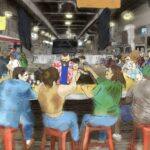
“Then somebody came out of the woodwork and bought that property,” said Executive Director Gary Lenker. “There was someone there who put a new window in the kitchen and did about a day and a half’s work, and you never saw him again.”

Meet the newest villain in urban housing: the absentee property owner. This is not your father’s slumlord, milking revenue from beleaguered tenants. This is an internet-enabled bad guy who buys a blighted house for less than the cost of a refrigerator, for no other reason than to sell the rotting carcass to somebody else.

The 21st-century absentee property owner stems from the foreclosure process. Seized homes land on the “upset sale list,” where buyers pledge to pay all back taxes and utilities plus the bid price. If no sale, it’s on to judicial sale, for a purchase clear of encumbrances. Finally, the lowest rung is the repository sale. Asking price: $500.

You know who has $500? A lot of people, some from as far away as Australia, who stumble across the repository list from some obscure place called Harrisburg, Pa. The internet is “a speculator’s dream,” said city Codes Administrator David Patton.

From the repository, properties can land on eBay or Craigslist.

“One guy from Philly bought a house, sold it to someone in Florida, who sold to Utah, and back to someone else in Florida,” Patton said.

They hardly have “noble intentions” for the property, he said.

“It’s all about flipping it and making some quick cash, and we’re the ones that end up paying the price for it.”

Lenker’s Tri-County HDC pays the price in dollars and in time. Tearing down existing properties to make way for new, affordable homes requires a “quiet title” search, assuring clear title for the new buyer. If the owner is AWOL, that search gets lengthier and costlier.

Take the proposed MulDer Square redevelopment on Allison Hill. Tri-County HDC planned to demolish five blighted rowhomes, and the mayor “even signed an order saying they were unfit, uninhabitable.” Demolition could have proceeded in summer 2016, but the search for one absentee owner kept the bulldozers idle until spring 2017.

“For about a year, I worried,” said Lenker. “We did get to the end, but there was a delay.”

Chasing Phantoms
In recent years, Harrisburg has tried to corral in neglectful rental property owners and add teeth to its codes enforcement. For instance, it now requires out-of-area owners to assign a “local” property manager who must live within 50 miles of the city.

However, owners often flout these rules with impunity, especially those who live out of state and, worst still, out of the country.

As physical distance increases, Patton’s enforcement abilities diminish, he said. A summary violation for letting a property languish “has no traction out of state,” and even violations elevated to misdemeanor charges “simply turn into a warrant, which again has no traction out of state.”

“It’s like chasing a snowflake,” he said. “The end result—it always ends up on our demolition list.”

Absentee owners have learned to game the system. A property’s condemned, so they sell it to someone else, forcing the process back to square one. Warrants pile up, so owners meander into Dauphin County Courthouse and flip the property to a new owner, who doesn’t have to sign off or even know they’re now the proud owner of a ramshackle eyesore.

“Any time someone can go over and put their properties in someone else’s name without that person even being there, that’s a problem, because then we’re chasing phantoms,” Patton said.

Harrisburg City Councilwoman Shamaine Daniels, chair of the building and housing committee, wants to see the city impose additional fines allowed by a 2015 ordinance on real estate speculators, to compensate for the extra costs of searches and enforcement.

“It would be nice to see what happens when these ordinances are enforced,” she said. “It’s hard to gauge the effectiveness of an ordinance when it’s not used at all.”

Patton confirmed that the anti-speculation ordinance has not been effective. Without evidence of an owner’s intent to speculate, “I cannot issue a citation under this ordinance,” he said.

And, as for imposing ever-increasing fines, guess what? Courts offer payment plans. One violator is paying off a $7,000 fine at $22 a month. “A lot of times,” said Patton, “they’ll default on the payment plan, and it goes into warrant.”

Yes, a warrant, which can’t be enforced out of state.

Heartbreaking
Among the phantoms Patton chases are absentee owners who create corporations that shield their identities and create smokescreens. One address was a vacant lot in Philadelphia. On another, a Google search revealed “an intersection in Brooklyn.”

Additional legislative action might help, Patton said.

Corporations are meant to protect personal property. Few would dispute that doing business should not put your family’s home at risk. But Patton’s nemeses are “using subterfuge just so they can purchase properties and leave the legacy of their dilapidated properties to us,” he said.

“We need to at least have some agent or principal responsible for the conduct of that corporation so they can be accountable for what their property is doing to our community,” he said.

Through roundtables sponsored by the state Senate Policy Committee, lawmakers hear “loud and clear” that municipal officials need powers to track down the “bad actors” hiding behind corporate protections, said state Sen. John DiSanto, a Republican whose district includes Harrisburg.

“When you’re in a defined blighted area and when there are certain numbers of abandoned homes, we can be more aggressive in taking those properties back and getting them back into use where they’re creating a real hardship on the community,” he said. “But we have to offset that where the LLC is being used in thriving areas and doing what it’s supposed to do.”

Getting the names behind corporations “would make the work easier in terms of who to serve and who to cite,” said Daniels, but she returned to her unanswered question about whether the city’s unused anti-speculation ordinance works or not.

“Similarly, would being able to be named be enough of an incentive for someone to fix their property?” she said. “I don’t know.”

Even when the city proceeds with demolitions after proving that owners can’t be found, the problem lingers. Those vacant lots—still owned by the mystery entity—become overgrown, attracting abandoned cars and illicit activity. Once in a while, neighbors take responsibility for tending to them.

Patton, who keeps a weed-whacker in his truck for those lots, grew up on Allison Hill. His grandfather was raised on Hummel Street. Grandpa met grandma while delivering newspapers on Nectarine Street, around the corner. On those streets, and in Uptown Harrisburg, too, absentee owners find blighted houses ripe for exploitation.

“I see these unique architectural features on these homes built in the early 1900s, and I have to demolish these things,” Patton said. “It’s heartbreaking. You just get vacant lots, vacant lots, vacant lots, and they themselves turn into problem situations.”

Continue Reading

Family Dance: At Pennsylvania Regional Ballet, some are treated like family–others actually are.

Photos courtesy of Pennsylvania Regional Ballet. Photos by Eduardo Patino.

The first time Gillian Murphy danced the Sugar Plum Fairy, she was a high school freshman at the North Carolina School of the Arts.

Since then, she has performed it many times with the world-renowned American Ballet Theatre—where she is principal dancer—and in guestings around the country.

In Tchaikovsky’s beloved “Nutcracker” ballet, the Sugar Plum Fairy rules the Land of the Sweets.

“I’ve always loved dancing it because the music and the role are so uplifting and iconic,” Murphy said.

This year, she’ll have a special treat. Murphy will perform the role with the Pennsylvania Regional Ballet for the first time with her frequent partner, ABT principal James Whiteside. But also, for the first time, she’ll be on stage with her niece, Allegra Inch.

The 12-year-old is a student at PRB, based in Enola.

“It will be so special to share the stage with her and watch from backstage as she dances as a soldier in the battle scene and leading a divertissement in Act II,” said Murphy.

PRB is “thrilled” to have Murphy, “one of the best-known ballet dancers in the country,” said Kathryn Aumiller, executive director. “It’s really a family affair, because Allegra’s mother, Erin Stiefel Inch, is a teacher in the school.”

Allegra calls the experience “an enormous honor.”

“Having my mom as one of the teachers and Gillian as the Sugar Plum Fairy is so special and will be an incredible memory,” she said. “I think it really sums up how we feel as dancers about Pennsylvania Regional Ballet. We are a family.”

That feeling is one consciously cultivated by PRB Artistic Director Sandra Carlino.

Aside from providing professional dance training for students ages 3 to 18 and nurturing individual artistic quality and versatility, PRB is “known for the faculty’s dedication to the emotional and physical well-being of the students,” Carlino said.

Alumni are currently attending university dance programs, performing with professional companies, choreographing, teaching and serving as artistic directors internationally.

One of those alumni who remembers PRB fondly is Kristen Weiser, director of ballet at Columbia (Mo.) Performing Arts Centre.

Weiser was only about 11 when she realized she was more interested in contemporary dance than classical ballet. She had enrolled in the Cumberland Dance Company—as PRB was then known—at 6 years old.

“Sandy did a piece that appealed to me,” said Weiser, who went on to the famous Juilliard School. “It was en pointe (on toe shoes) but neoclassical, and I fell in love with it. She was the best teacher.”

At the time, PRB was the only area company that taught modern dance and contemporary ballet, as well as classical. It also offers tap and jazz for musical theater.

Carlino, a former dancer with New York’s Joffrey Ballet, came to central Pennsylvania in 1987 and was appointed ballet mistress and rehearsal director of Cumberland Dance Company.

In 2001, she became artistic director, but considers the origin of PRB to be the earlier date. A few years later, the school hosted the conference of Regional Dance America, a national association of dance companies.

Carlino started with 45 students. That number now fluctuates between 125 and 130.

After performing in a church for 15 years, PRB purchased a former florist shop in Enola.

“We had two months, between the time we bought it and classes were going to start, to get it ready,” she said. “We completely gutted it and turned it into a ballet school.”

The family atmosphere has attracted staff as well.

Jeffrey Gribler has been freelance teaching and choreographing at PRB regularly. A former principal dancer with the Pennsylvania Ballet and later its ballet master, he is now part of the school’s faculty for the 2017-18 season.

“PRB is a second home to me,” he said. “The atmosphere is so positive and so headed in the right direction. The kids get better all the time. I love the quality of the work.”

Gribler met Carlino as an adjudicator for Regional Dance America and considers her “family.”

A few weeks before the “Nutcracker” performances, PRB will host the family-oriented “Enchanted Nutcracker Tea.”

“This is our fourth year for the tea, which is nice for our kids and their parents,” said Aumiller. “It includes a child-friendly luncheon, narrative preview from the ‘Nutcracker’ production, and autograph signings and photo opportunities with the major characters.”

Everyone in the local dance world knows Central Pennsylvania Youth Ballet in Carlisle for its rigorous training and quality performances. But Carlino is unperturbed.

“In all fairness, CPYB is one of a kind,” she said. “You can’t imitate it.”

But she pursued a different model, inspired by the “kind of trendy classical ballet and neoclassical pointe work” at the Vineland (N.J.) Regional Dance Company.

“I thought to myself—these are our bodies; this is what we should try to go after,” she said. “Some of our dancers won’t be ballet dancers. Some may pursue Broadway careers. We found a way to balance good training with flexibility.”

For pre-professional students, who have daily classes and rehearsals and may not get to eat with busy working parents, Carlino said, “Everyone cares. It is a family thing.”


The Pennsylvania Regional Ballet will perform “The Nutcracker” on Dec. 2 at 1 and 5 p.m. and Dec. 3 at 2 p.m., at the Scottish Rite Theatre, 2701 N. 3rd St., Harrisburg. For more information and to purchase tickets, visit
www.prballet.org or call 717-732-2172.


The “Enchanted Nutcracker Tea” takes place Sunday, Nov. 12, at the West Shore Country Club, 100 Brentwater Road, Camp Hill.

Continue Reading

Imagine This: Harrisburg-area kids take inspiration from Mollybee Toys.


Melissa Rhen.

The idea for Mollybee Toys began to germinate about seven years ago, following a well-timed trip to Europe.

“I was pregnant, and my husband returned from a trip to Germany and brought home Haba building blocks, which my kids, now age 5 and 6, play with to this day,” said owner Melissa Rhen.

The couple admired the quality of the beech wood blocks and the creative purpose behind the design. Soon, Rhen’s husband Dave began toying with the idea of purchasing more products with an educational component.

“He sent me an email about three months after my daughter Ella was born which said, ‘Let’s start a toy store,’” Rhen said.

She was game, and the couple decided to throw the dice by opening up an online shop. They named it Mollybee as a tribute to Rhen’s sister, Molly.

As time passed, the couple contemplated expanding into a physical location. At the same time, Rhen’s friend, Rebecca Werley, who was also a stay-at-home mom, was weighing the idea of starting a business of her own. So, the two worked as a team to strike the right balance between business and family life.

Each opened a shop in the same Market Street building in Camp Hill, where Werley runs Sweet 504, an interior design space adjacent to Mollybee Toys.

“We cover for each other when there are doctor’s appointments or field trips, things like that. It works out well,” said Rhen, adding that her children Ella and Landon, now school-aged, help out too. “They have jobs here too like helping me stock the shelves.”


Happy Place
Rhen’s store may be cozy, but there’s something to see at every turn.

There are the European-style educational toys that inspired the shop, such as sturdy wooden puzzles and early learning items. She added to that a range of gift and baby shower items like adorable “onesies” that feature magnetic buttons and colorful “chew bead” necklaces and bracelets designed to be worn by mom and tugged on by little hands.

For older kids, the shop carries many “analog” items, though you won’t find your typical board games like Candyland and Sorry. Rhen opts instead for more unusual merchandise like The Peaceable Kingdom series, which enables children to play against the game rather than each other. She discovers such finds by attending industry events in New York on a regular basis.

She also carries an award-winning series of products called Nancy B’s Science Club, kits designed to spark young girls’ interest in STEM learning, and Elenco Snap Circuits, which teach children about the world of electronics.

Janean Searfoorce, who is a regular MollyBee shopper, said she can always count on finding a good gift there.

“Because it is small, she has to be particular about what she has there, and they are all high-quality items that I can feel confident won’t be duplicated,” she said.

Alexis Schrock of Marysville, who has a 5-month-old and a 3-year-old, said she brings both children to the store.

“I can let them pick out anything, and I know it’s going to be a good toy that’s a mix of education and fun,” she said. “You can tell that every toy has some thought behind it, even the board games.”

When asked to describe the favorite part of her unique business, Rhen doesn’t think twice.

“It’s when the children run into the store and look around and realize that they are allowed to touch everything,” she said.

She added that it’s fun to see how many kids play with the same toy, like the LEGO Light Stax, which have a tiny LED bulb inside each toy brick.

“About five times a day, this is built into a different configuration,” she said.

Rhen said she’s looking forward to celebrating “Neighborhood Toy Store Day” on Nov. 11, when independent retailers across the nation will hold events in their stores.

“We’ll have giveaways and make-your-own Christmas ornaments and other activities,” she said.

Working in a toy store does have its perks, and you can tell Rhen is in her happy place, with children and smiles all around.

Mollybee Toys is located at 1849 Market St. (rear), Camp Hill. For more information, visit www.mollybeekids.com or their Facebook page.

Continue Reading