What to Bring? Our wine guy shares his notes for your holiday meal.

At this time of year, conversations often turn to the subject of the upcoming holiday meal.

In my family, tasks are divided between the food and the beverages. Since I don’t consider myself much of a chef, my responsibility is to bring wine that will match the dishes that my relatives create.

Therefore, I was looking for inspiration when I was invited to the Chairman’s Selection tasting this past fall. I sampled many wines and made notes that would keep me up to date when it became time to shop for the quaffs that will make our holidays a memorable occasion.

I hope you find my choices helpful and that they make the holidays brighter for you and yours.

Keep sipping,

Steve.

White Wines
Olivier Lebrin Chateau de L’Aujardiere Muscadet Sur Lie 2016, $12.99, Code #78690
France’s oyster wine with citrus flavors and long finish. Very good.

Jean Cavaille Apremont Cep Noir Vielles Vignes 2016, $17.99, Code #78702
Palate-scrubber from French Alps with citrus fruit and bright acidity. Unoaked.

Domaine V La Grange Viognier 2016, $14.99, Code #78704
Flowery example of Rhone’s great white grape. Excellent holiday table wine. For ham or shrimp.

Red Wines
Rock Point Pinot Noir 2015, $10.99, Code #78686
Savory Oregon Pinot with strawberry nose, cherry and herbs on the palate.

Montague Winery Pinot Noir Reserve 2014, $17.99, Code #78730
Nice Cali Pinot with big mid-palate fruit and a long finish. For turkey.

Z’ivo Pinot Noir Eola-Amity Hills 2012, $19.99, Code #78695
Light, easy-drinking Pinot from Oregon leaning towards Burgundy. Velvety finish.

Renato Ratti Barbera D’Alba Battaglione 2014, $11.99, Code #78678
Tasty red from Italy. Spicy and fruity. Good food wine.

Bersano Generala Barbera D’Asti Superiore Nizza 2011, $14.99, Code #78721
Well-balanced red from famous Italian village. Big mid-palate, fruity.

Babylon’s Peak Shiraz-Carignan 2015, $13.99, Code #78605
Spicy, well-layered Rhone blend by way of South Africa. Good beef wine.

Rhebokskloof Cellar Selection Flat Rock Red 2014, $12.99, Code #78606
Another South African blended red with Pinotage and French grapes. Easy-drinking.

Les Vignobles Foncalieu Latoque Reserve 2015, $10.99, Code #78715
Bordeaux meets Rhone in this rich blend from southern France. Tasty.

Domaine Les Evigneaux Rateau 2015, $14.99, Code #78727
Big, punchy Rhone red with a blend of five grapes. Good winter quaff.

Aranleon El Arbol Tempranillo 2015, $19.99, Code #78670
Rich, dark wine from one of Spain’s most well-known grapes.

Precision Cabernet Sauvignon 2014, $24.99, Code #78717
Light wine from Napa Valley. To drink now or lay down. For the grill.

Havens Winery Cabernet Sauvignon 2015, $29.99, Code #78663
Delicious example of Napa Valley Cab that won’t break the bank. Very smooth.

Napa Valley Cattle Company Cabernet Sauvignon 2013, $29.99, Code #78738             Heavy blend of four Cabs from mountain vineyards. Best to lay down.

Havens Winery Cabernet Sauvignon Spring Mountain District 2013, $39.99, Code #78664
Balanced Cab with cassis, blackberry and dusty tannins.


Continue Reading

Sweet Break: A scrumptious snap at Brittle Bark.

Brittle Bark could quite possibly be the happiest place in all of central Pennsylvania—especially during the holiday season.

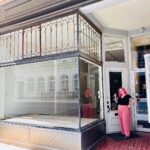
Tucked into a tall corner storefront along Main Street in Mechanicsburg with a brightly decorated seasonal front window, the chocolate and candy shop has earned a sweet reputation over the past 10 years.

“Everybody who comes into a candy store is happy,” manager Vonny Getz said. “It’s an extremely fun job because we’re able to help people find unique gifts that make them happy.”

Brittle Bark—think peanut brittle, evolved into 15 varieties—is the product that launched the business and transformed owner Diane Krulac from a software executive into one of central Pennsylvania’s most famous specialty careers: chocolatier.

“Our Brittle Bark covered in dark chocolate and sea salt is my personal favorite,” Getz said. “It’s crunchy, sweet and salty, and I recommend it all the time.”

Hand-Dipped

It was 1992 when Krulac whipped up a batch of peanut brittle for her daughter’s preschool fundraiser. Requests for more poured in, and a decade later, Krulac founded Brittle Bark as a side business.

Krulac, originally trained as a dental hygienist, was enjoying a second career in the software and IT industry after earning her undergraduate and master’s degrees in computer science.

“As many women do, I needed a clean break,” she said. “So I went back to school again—this time to become a chocolatier. At 66 years old, this is my third career, and I’m fascinated. There’s never a dull moment, and I have so many ideas.”

By 2008, Krulac opened Brittle Bark as a brick-and-mortar retail shop in Mechanicsburg. In addition to the namesake product, the shop offers chocolate-covered pretzels, fruit such as blueberries or strawberries dipped in chocolate, gourmet popcorn in several varieties, Oreos encased in chocolate—many of which are adorned with colorful and artistic transfer art.

A candy case features about two dozen types of gourmet and artisan chocolates, including classic varieties like raspberry truffles, sea salt caramels, peanut butter cups, chocolate-covered cherries and Krulac’s favorite—buttercreams. More creative varieties include truffles infused with coffee, cappuccino, key lime, Earl Grey tea and cabernet flavors.

“I never set out to own a retail candy store,” Krulac said. “But I’ve always had a sweet tooth.”

Getz said that they know the favorites from all their regular customers.

“We know everyone’s vices,” said Getz, with a laugh.

The one thing all Brittle Bark products have in common?

“Everything is hand-dipped,” Krulac said.


Find Your Niche

“Buy local” is one of Krulac’s guiding principles.

Nearly all of the chocolate melted into the shop’s creations begin as Wilbur Buds, produced in Lititz, Pa. Krulac has established a relationship with Wilbur Chocolates’ chocolatier, who supplies her with both milk and dark chocolate varieties.

“Wilbur Buds are very cocoa-rich and creamy,” Krulac says. “It’s fun when we do a chocolate tasting of international and American chocolate varieties—by far, the favorite is always Wilbur.”

Additional local flavors intertwined with Brittle Bark’s products include Snyder’s of Hanover pretzels and fruit from Mechanicsburg’s Oak Grove Farms. “Fire Salt” sprinkled atop Aztec Truffles hails from Lemoyne’s Calicutts Spice Co. The shop even invested in candy molds shaped like the state Capitol so visitors can purchase dome-shaped chocolates.

Sweet holiday treats include a peppermint-flavored Brittle Bark, pumpkin spice and sugar plum truffles, artisan s’mores and a wide variety of holiday gift baskets.

Krulac said that one of the biggest advantages to “buying local” chocolates and candies is that everything in her shop is fresh. In contrast, commercially produced holiday candy is manufactured six to nine months before the holidays, she said.

She especially enjoys the challenge of creating customized chocolates and candies for customers, including branded goods for businesses.

“We are not afraid to do crazy things,” she said. “Chocolate is a great marketing tool and leaves a delicious lasting impression much better than a ballpoint pen.”

Brittle Bark’s local partnerships extend to events, as well.

Their maroon and white “Downtown Mechanicsburg Partnership” flag flies outside during shop hours. Recently, the shop partnered with Mechanicsburg’s Rosemary House for a chocolate-and-tea pairing. They also created a beer brittle for a local brewery’s fall event, and planning is underway for the “Cha Cha Cha Chocolate Extravaganza” on Feb. 2.

If the idea of becoming a chocolatier—at least for one day—sounds appealing, Krulac has you covered. Brittle Bark offers seasonal chocolatier classes, including those designed for teens and younger children, plus “mommy and me” sessions. Participants learn how to melt milk, dark and white chocolate, incorporate flavorings such as raspberry, create special effects, decorate the candy and much more. Current classes allow participants to create holiday gifts complete with gift packaging, ribbons and bows on top.

Krulac’s own chocolate education also continues.

“You’re never too old to learn,” she said. “I try to take a class every year.

She said that creating vegan chocolates is the field’s “new frontier.”

“Chocolate making is a very creative field, especially today,” Krulac said. “There are high expectations because of the specialty food industry. You have to find your niche and then you can express your creative soul to the enjoyment of others.”

Brittle Bark is located at 33 W. Main St., Mechanicsburg. For more information, call 717-697-6950 or visit www.BrittleBark.com.

Author: Karen Hendricks

Continue Reading

Slip into Chemise: Women’s clothier bolsters “boutique row” in Camp Hill.

Siena McLees in her new shop.

Fashion maven and Vogue editor-in-chief Anna Wintour once said, “You either know fashion or you don’t.”

For those who are in need of a little advice, experts like Siena McLees are ready, willing and able to step up to the fashion plate. The Shipoke resident recently joined the ever-growing list of female entrepreneurs setting up shop in Camp Hill.

Her new store, Chemise, slipped into its little niche on Market Street in mid-October among other boutiques that are increasing in number as the borough’s business district continues to expand.

McLees describes her shop as a “curated collection for modern dressing,” and her personal style is a reflection of that collection—elegant, understated, textural. She suggests that her interest in fashion may be inherited.

“My father’s mother was a seamstress,” she said. “She made beautiful clothing.”

The shop owner, who majored in theater at Penn State, discovered her calling while working on a school assignment.

“We were required to complete 40 hours of technical theater, and I gravitated towards costume design,” said McLees, whose face lights up when she recalls seeing her creations come to life on the big stage for the first time. “I sewed a suit for production, and my professor said that’s what I should do.”

Her attention then turned to retail.

“I decided I didn’t want to be a performer,” she said.

After McLees’ daughter was born, the family relocated to Philadelphia, where she spent time working for clothing giant Max Mara, founded by Achille Maramotti, a leading fashion entrepreneur in postwar Italy. She worked her way up to the position of Northeast merchandise manager before returning to the Harrisburg area.

“My husband took advantage of a great job opportunity here,” she said.

When she heard that Meeka Fine Jewelry was relocating on the same street and the building was ready for a new tenant, she knew the time was right.

“I had been thinking of opening up my own shop for 15 years, and I loved this little pocket right here on Market Street. We all offer something a little different,” McLees said of her neighboring shop owners.

She enjoys bringing a little bit of the Big Apple to Camp Hill.

“I have family that lives in Brooklyn, so I go to New York often,” she said. “The designers that I bring here are in my favorite boutiques.”

Perfect Addition

Inside of the new shop, shoppers discover a minimalist and elegant décor with an industrial chic vibe that features Edison bulb pendant lighting, attractive wood flooring and a front desk crafted from reclaimed barn wood and festooned with an Art Deco postage stamp design.

Racks of clothing line the walls and range from shirts and dresses to pants, jeans, capes and coats. Accessories include handbags and a special collection of what McLees describes as “non-massed produced” jewelry, as well as a selection of shoes to pull it all together.

Customers are provided with plenty of room to browse as Audrey Hepburn’s famous Vogue cover hangs on the wall, overseeing the entire enterprise.

Kara Beem describes McLees as her “go to” person for fashion advice.

“Siena is great at pulling a wardrobe together for anything from a casual event to date night,” said the Camp Hill resident, adding that she also appreciates that McLees offers customized advice based on lifestyle and personal preference. “With her background in working with Max Mara, she has an incredible ability to pull various textures together.”

Laurie Kennedy of Camp Hill considers the collection “contemporary, with an edge.”

“Siena has a skill for not only determining what will look great on a customer based on their body type, but also how various pieces will fit into their lifestyle,” said Kennedy, adding that the boutique owner is able to envision how something will look, often before a customer is aware of it.

“She showed me a pair of brocade pumps that I didn’t think were for me until she put them on me,” she said. “They work with so many outfits.”

Kennedy said that she likes that McLees has put so much thought into selecting pieces that work together for wardrobe-building and describes the merchandise as “versatile and wearable.”

“When I purchase one of her pieces, I find myself reaching for them time and time again,” she said. “They always fit well and look good.”

Kennedy, who also is a member of the Camp Hill school board, said she is delighted that another enterprising woman has chosen to open in Camp Hill.

“We, as a community, are trying to develop our business area on Market Street, and she is a perfect addition to our retail offerings,” she said.


Chemise is located at 2205 Market St., Camp Hill. For more information, call 215-740-9598 or visit
the Chemise Facebook page.

Author: Stephanie Kalina-Metzger


Continue Reading

Novel Gifts: Christmas, in the present tense.

E-books have their place, but good, old-fashioned print remains dominant as a holiday gift. After all, it’s still rather difficult to wrap up a bunch of pixels and put them under a Christmas tree.

With that in mind, I compiled a selection of great books worthy of giving this season, broken into a number of categories. I’m sure that you’ll discover something here for the book-lover on your list.


The Novel of the Year  

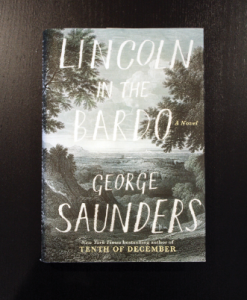
“Lincoln in the Bardo” by George Saunders

Here it is, folks—this year’s must-read novel. Not only is George Saunders one of the most celebrated American writers working today, but his debut novel recently won one of the most prestigious international awards in all of literature—the Man Booker Prize. In “Lincoln in the Bardo,” Saunders deftly blends historical realism with supernatural elements to deliver one of the most original and moving novels of the year. Taking the death of Abraham Lincoln’s son, Willie, as its historical genesis, “Lincoln in the Bardo” is a literary masterpiece that proves Saunders’ place in the pantheon of American writers. Oh, and Saunders happens to be visiting the Midtown Scholar Bookstore on Friday, Feb. 9. To reserve your book and ticket, visit www.midtownscholar.com.


Related Recommendations:
 “Sing, Unburied Sing” by Jesmyn Ward; “Little Fires Everywhere” by Celeste Ng; “The Ministry of Utmost Happiness” by Arundhati Roy


For the Rare Book Enthusiast

“Meetings with Remarkable Manuscripts” by Christopher de Hamel

Brighten your literary nerd’s heart with this journey into some of the world’s most ancient, elusive and remarkable manuscripts. With stunning photographs to boot, “Meetings with Remarkable Manuscripts” takes us on a deep dive into 12 of the most fascinating manuscripts in the world, including “The Canterbury Tales,” “The St. Augustine Gospels” and a 6th-century Greek manuscript illustrating the life of Christ. Don’t let its scholarly subject matter fool you—Christopher de Hamel makes this book fun, insightful and the perfect gift for the rare-book lover in your life.


Related Recommendations:
 “The Written World: The Power of Stories to Shape People, History, Civilization” by Martin Puchner; “The Rise and Fall of Adam and Eve” by Stephen Greenblatt; “An Odyssey: A Father, A Son and an Epic” by Daniel Mendehlson


For the True Crime Addict

“Killers of the Flower Moon: The Osage Murders and the Birth of the FBI” by David Grann

New York Times bestselling author David Grann is quickly turning himself into a master of eminently readable narrative non-fiction. After watching his bestselling “Lost City of Z” turned into a major motion picture, Grann is back with his latest—“Killers of the Flower Moon: The Osage Murders and the Birth of the FBI.” The breadth and scope of this true story border on the unbelievable, and Grann is here to uncover the mystery. After oil is discovered beneath Osage land in 1920s Oklahoma, those belonging to the Indian nation begin to disappear, one by one. Featuring a young J. Edgar Hoover, the dawn of the FBI and one of the most chilling conspiracies in American history, “Killers of the Flower Moon” will leave you breathless, angry and hopeful that Grann will be back sooner rather than later with his next project.


Related Recommendations: “
The Fact of a Body” by Alexandria Marzano-Lesnevich; “Death in the Air” by Kate Winkler-Dawson; “The Man From the Train” by Bill James


For the Politically Conscious

“We Were Eight Years in Power: An American Tragedy” by Ta-Nehisi Coates

In a time of tragedy, whose voice do we turn to for our collective conscience? In “We Were Eight Years in Power: An American Tragedy,” national correspondent for the Atlantic, Ta-Nehisi Coates, collects his most powerful and vital essays written during the eight-year Obama administration. In our current political moment, Coates has proven time and time again to be the leading intellectual of our generation, offering insights and reflections that are despondent, yet propitious—pragmatic, yet hopeful.


Related Recommendations: “
Democracy in Chains” by Nancy MacLean; “Notes on a Foreign Country” by Suzy Hansen; “Origins of Others” by Toni Morrison


Best Fiction of Pennsylvania

“Heat & Light” by Jennifer Haigh

If you enjoy novels like Jackson Taylor’s “The Blue Orchard” that resonate with a sense of place and history, you’ll find Dickinson grad Jennifer Haigh’s “Heat & Light” immensely satisfying. Her sharply drawn characters from the contemporary fictional town of Bakerton, Pa., reveal secret desires, fears and regrets to the reader, even as they hide essential truths from one another. Nurses, ministers, addicts, farmers, gas-drillers, tavern-keepers and scientists wrestle with the impact of fracking on the former coal mining town, while the energy industry’s machinery, from 19th-century oil wells to Three Mile Island’s generators to a Texas gas company’s extractors, prove monumental actors in their own right. Haigh spoke at the Harrisburg Book Festival about her affinity for the life of a hermit, but her characters leap off the page with a verve and passion that belies this, and her Bakerton novels deserve a place on your shelf alongside the classics of Americana fiction.


Related Recommendations: “
The Signal Flame” by Andrew Krivak; “The Readymade Thief” by Augustus Rose; “Love is No Small Thing” by Meghan Kenny


Not Your Ordinary Presidential Family Biography

“Never Caught: The Washingtons’ Relentless Pursuit of Their Runaway Slave” by Erica Armstrong

Drawing on what might be the only recorded narrative of an 18th-century Virginia fugitive to have escaped slavery, University of Delaware Professor Erica Armstrong Dunbar recovers the fascinating, previously untold life of Ona Judge in her National Book Award-nominated biography, “Never Caught: The Washingtons’ Relentless Pursuit of Their Runaway Slave.” Judge was among the enslaved workers in Martha and George Washington’s households at Mount Vernon and their Philadelphia Executive Mansion. For biography fans seeking a new view on our first presidential family, Dunbar offers a compelling other-side-of-the-story. In an impressive act of scholarly reconstruction, she recasts the Washingtons’ domestic family life in the early Republic matter-of-factly, as Judge might have seen, felt and experienced it. The free black community of 1790s Philadelphia showed Judge what freedom could be like and aided her escape. Her life afterwards is traceable thanks to New England abolitionist newspaper reporters’ interviews with her, 50 years later. Now thanks to Dunbar’s vivid historical re-imagining, we can finally learn her story, too.


Related Recommendations: “
Grant” by Ron Chernow; “The Earth Is Weeping” by Peter Cozzens; “Thunder in the Mountains” by Daniel J. Sharfstein


Alex Brubaker is the manager of Midtown Scholar Bookstore.

Continue Reading

Awfully Festive: It’s the most hideous time of the year.

It’s that magical time of year—snowmen, Santa Claus, trees with glittering lights, presents wrapped with festive paper and tied with color bows, and really, really, REALLY ugly sweaters.

Times have changed. Instead of hiding that tacky Christmas sweater from grandma under a ski jacket or shoving it into the back of the closet, people proudly show off their gaudy apparel at “ugly Christmas sweater parties.”

Why have ugly Christmas sweater parties become so popular? Well, for the simplest of reasons.

“They’re fun,” said Justine Yelk of New Cumberland.

The dress code at the Dauphin County Courthouse, where she works, is very strict. Everyone works hard, and the business is serious.

“We wanted to come up with fun ways to brighten up the office,” she said. “We came up with theme days. For one, we wore sports-related apparel; for another, we wore red for women’s health. We thought tacky sweaters would be the perfect way to brighten things up for the holidays.”

Yelk said that the sweaters attract a lot of double takes, laughter and jokes.

“The sweaters lightened the mood and gave people something to laugh about throughout the day,” she said.

She added that holiday parties frequently can be formal and stuffy, and the ugly sweater concept is a “nice break.”

Harrisburg resident Alex Craver said the ugly sweater party was a collaborative idea at his office, as well.

“About three-fourths of the firm was excited about it,” he said of his colleagues at Camp Hill-based accounting office Brown Schultz Sheridan & Fritz.

Craver himself was a bit on the fence until he won first prize with his sweater.

“It’s a fun conversation starter, especially when everyone is wearing them,” he said. “You talk about where you got it, why you picked it, and you have a good laugh.”

Wormleysburg resident Randall Gooding, whose friends have an ugly Christmas sweater party annually, described the practice as a stress reliever, a break from a year of hard work.

“This is a chance to relax, have fun and be social,” he said. “We laugh at each other and just have a good time.”

His friends have taken the ugly sweater concept a step further. People wear their tacky tops on a scavenger hunt that takes them to various establishments—stores, bars and restaurants—in the area.

“You have to take pictures of yourself at the different locations,” he said.

Mostly, people just point and laugh or make a joke. However, he admitted that one establishment was not amused and asked the group to leave.

“It’s not for everyone,” he said, with a shrug.

He added that his friends ask people to bring food donations for a local non-profit group, and the charitable focus of the party makes it more meaningful for him.

The Beholder

It is difficult to pinpoint the origin of the ugly Christmas sweater party tradition.

The popularity of the ugly sweater dates back at least as far the 1980s. Actor Chevy Chase wore one in “National Lampoon’s Christmas Vacation,” and kitschy, tacky, vintage clothes started to gain popularity.

Ugly is in the eye of the beholder, Craver said, but he knew his prize-winning sweater was a champ when he saw it.

“It had to be hideous, and this one fit the bill,” he said. “The colors were awful, and the design was just so tacky.”

Santa is a popular theme, and the one Yelk chose.

“On my sweater, Santa is huge, and he has a big plush beard,” she said. “He takes up the entire front of the sweater. It’s just ridiculous.”

Basically, said Yelk, an ugly sweater is anything that is ridiculous, absurd and laughable.

“I think you basically want to look for something that is very bright and colorful, with lots of textures and add-ons such as lights, pompoms and buttons—things that wouldn’t normally be on a sweater,” she said.

One-Stop Shop

Most people agree that the first rule of ugly sweater shopping is price.

“I wanted something cheap,” Craver admitted.

So, he headed to one of the CommunityAid thrift stores in the area, which is where Gooding also got his sweater. In fact, the organization has made itself a sort of ugly Christmas sweater headquarters.

“We realized that there is a demand for ugly sweaters and that people want to get them affordably,” said Bob Haur, director of communications for CommunityAid. “It made sense to us to be the one-stop shop for these items. We have thousands of them across five stores, and they’re all $9.99 or less.”
Not surprisingly, a lot of the thrift store sweaters come from donations, but the company also contracts with a vendor that brings them a large supply every year.

“It’s so funny to watch people shopping for ugly sweaters,” Haur said. “They laugh and scream, and you hear, ‘You’ve got to see this!’”

There are so many to choose from, he noted, many people walk out with two or three.

“Some people will gravitate toward something that matches their personality,” he said.

For example, animal-lovers may pick a sweater with a reindeer, cat or polar bear, though Haur said he’s seen people go in the opposite direction.

“Sometimes, people will pick something that is totally not like them at all,” he said.

Discount stores such as Wal-Mart and Target also have some deliberately tacky sweaters for the holidays, featuring everything from traditional images such as Santa, reindeer and snowmen to cartoon characters such as Snoopy and Mickey Mouse.

These may be a bit more expensive, ranging from about $15 to $30. If you want to spend a little more (around $15 to $45), a whole range of outrageous and tacky Christmas sweaters can be found online. You even can buy a kit to make your own ugly Christmas sweater.

Haur isn’t surprised that ugly sweater parties have become so popular.

“It’s kitschy and silly. It’s a simple way to make the holidays more festive and fun,” he said. “It has become an important tradition for some people. It’s even been competitive among some friends and families with a little one-upmanship at play.”

To learn more about CommunityAid, including the location of local thrift stores, visit www.communityaid.net.

Author: Joanne Kaldy

Continue Reading

Yule of Yore: A Victorian Christmas touches down at Fort Hunter.

Christmas is a magical season, made even more charming with Victorian traditions.

It could be the Charles Dickens’ “A Christmas Carol” renditions played repeatedly on television, hearkening back to a simpler time. Perhaps it’s a holdover from Queen Victoria’s reign, proving that the colonists’ fascination with the royal family has deep roots.

Harrisburg’s Fort Hunter Mansion celebrates a Victorian-era Christmas with a full month of festivities, ending the day before Christmas Eve. Many of the activities overlap each other, immersing holiday season visitors into a bygone experience.

“If you like history and feel comfortable in it, this is a page out of a history book,” said Julia Hair, Fort Hunter’s park manager.

The annual Christmas season begins at Fort Hunter on the Saturday after Thanksgiving. In the Centennial Barn, the Keystone Model Railroad Historical Society arranges a large layout of rural communities in central Pennsylvania, with an HO gauge train running through the idyllic scenes. The display is large enough to fill the room, leaving just enough space to skirt the edges of the model.

That same weekend begins the “Festival of Trees,” co-sponsored by the Harrisburg Area Garden Center. Six different local garden clubs decorate a tree in the mansion with handmade ornaments. Then the trees are raffled off. It is held in the Tavern House on Saturdays and Sundays, although Hair asserted that there is no longer alcohol permitted on the premises.

Much of Fort Hunter’s seasonal magic centers on the mansion, which is decorated in Victorian style for most of December. The Harrisburg Garden Club adorns the rooms with fresh greens and dried flowers. Replicas of Victorian ornaments and decorations grace the fixtures.

“You can smell the evergreens and spices,” Hair said. “With no electric lights or modern conveniences, it turns us back to celebrate an earlier time.”

The first weekend in December breaks a long-standing rule for museum curators everywhere. They allow food in the mansion—not just food, but a Victorian tea party complete with music, “servants” in Victorian finery, sweets, savory items and sandwiches courtesy of Hummer’s Meats.

“It’s the only time we allow food in the mansion, so it’s a rare opportunity for visitors,” said Hair. “We see families return year after year. It’s quite an honor to be part of families’ holiday traditions.”

A wide variety of old-style activities for both children and adults take place on the grounds, beginning that same December weekend. Dauphin County Parks & Recreation partners with many other local organizations and sponsors to make visitors’ loads a little bit lighter.

“The holiday activities are gracious and low-key, without the usual stress of the season,” said Becky Boone, a member of the Friends of Fort Hunter.

In the Centennial Barn, a group of artisans called Craft Reunion will hold a show featuring traditional folk arts and crafts. The Friends of Fort Hunter will have its annual “Greens Sale,” consisting of handmade centerpieces, wreaths and swags made from natural elements. While the adults are busy, the kids can go shopping at the “Kids Only Holiday Shop.” Parents supply spending money, and Santa’s elves help the children shop, then wrap the presents for the children to take home and place under the tree.

Both children and adults can head to the stable for “Fort Couture.” Transforming the idea of a Christmas tree skirt, you can bring your own materials to decorate an antique seamstress’s mannequin. Hair has seen some inventive creations over the years.

“Some of them have themes,” she said. “We’ve seen snow angels, Christmas tree dresses, fans, pheasant feathers, harvest fruits. One little girl even used old wrapping paper that her grandma saved from unwrapping presents.”

Each annual Victorian Christmas event hosts an open-hearth cooking demonstration in the summer kitchen. Local artisan George Kopp will show visitors how to make traditional clear toy candy, a forgotten Pennsylvania German folk art that can be traced back to Victorian times.

“Hardly anybody makes clear toy candy anymore, so it’s important to preserve the tradition,” said Kopp.

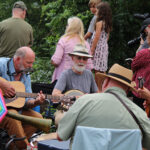
During the December days that follow, the Saint Thomas Dulcimer Society will conduct a holiday sing-along, and an eight-piece brass ensemble will regale attendees with holiday music. Mrs. Santa and her reindeer will pay kids a special visit, too.

Though the Christmas season lasts only one month at Fort Hunter, almost 50 staff and volunteers collaborate for months to bring the event to the public. Boone said the team tries to maintain the beauty and grace of an old-fashioned Christmas, while bringing new events to the celebration.

“Christmas at Fort Hunter transports you back to a simpler time, a more traditional time,” said Michelle Hornberger, assistant program director for Dauphin County Parks & Recreation. “You and your family can put the brakes on your busy lives and enjoy the slower pace.”

Fort Hunter Mansion and Park is located at 5300 N. Front St., Harrisburg. For more information, visit www.forthunter.org.

A Fort Hunter Holiday

Nov. 25 to Dec 17

Saturdays and Sundays

Festival of Trees

12:30 to 4:30 p.m., Tavern House, free


Nov. 25 to Dec 17

Saturdays and Sundays

Toy Train Exhibit                                  

12:30 to 4:30 p.m., Centennial Barn, free


Dec. 1 to 23

Christmas at Fort Hunter

Decorated for the season

10 a.m. to 4:30 p.m., Tuesday to Saturday

12 to 4:30 p.m., Sunday

Fort Hunter Mansion, regular admission


Dec. 1 to 3

Craft Reunion

Traditional craft show

Friday, 12 to 9 p.m.; Saturday, 10 a.m. to 7 p.m.; Sunday 11 a.m. to 4 p.m.

Centennial Barn, free


Dec. 2 to 3

Greens Sale

Featuring ornamental, handmade greens

Saturday, 11a.m. to 2 p.m.; Sunday, 11 a.m. until sold out

Centennial Barn, free


Dec. 2 to 17

Saturdays and Sundays

Fort Couture: Christmas Tree Dresses

Dress forms decorated like Christmas trees

12:30 to 4:30 p.m., stable, free


Dec. 2 to 17

Saturdays and Sundays

Kids Only Holiday Shop

Holiday shopping for kids, 12 and under

12:30 to 4:30 p.m., Centennial Barn

Parents provide spending money


Dec. 3

Victorian Tea

Traditional Victorian tea and a clear toy candy demonstration

1 to 4 p.m., Fort Hunter Mansion

$10 per person


Dec. 6

Saint Thomas Dulcimer Society in Concert           

Holiday and traditional dulcimer music and a sing-a-long
7 p.m., Centennial Barn, free


Dec. 9

Santa’s Reindeer and Mrs. Santa

Visit with Santa’s reindeer and Mrs. Claus

12:30 to 2:30 p.m., Centennial Barn, free


Dec. 17

Triumphant Brass Concert

Sounds of the season with eight-piece brass ensemble

2 p.m., Centennial Barn, free


Author: Gina Napoli

Continue Reading

Circular Motion: Settled in a new facility, the Circle School continues its educational mission.

Yellow buses line the cul–de-sac to usher students home after a long day of learning at the Circle School. Though the building resembles other public schools, the students at this private institution experience a very different kind of school day.

They are engaged in “self-directed” learning, in charge of their own education. The school is also democratic, in that all students participate in its rules and how it operates.

“It’s a scaled-down version of the real world,” said Jim Rietmulder, one of four founders.

The Circle School—and its distinctive approach to education—has been around for 33 years. This year, however, has been particularly special, as the school moved to a new location, the eight-acre “Meadow Campus” just outside of Harrisburg in Susquehanna Township.

The new, $2.7 million facility, the third building in its history, was needed to accommodate growing enrollment, as the school had outgrown its prior spot at the circa-1931, former Harrisburg Children’s Home Infirmary in Swatara Township, Rietmulder said.

The move was the culmination of years of fundraising and site searches, including the donation of land by the George M. Leader Family Corp.

The new campus was specifically designed with the Circle School’s mission and methods in mind. The 9,000 square feet of space includes a centrally located reception area, Judicial Hearing Room and large commons area, as well as a mud room, play room, music and drum rooms, library, art and science rooms, multiple activity rooms, administrative space, kitchen, records office and storage.

“Academics are an important part of life— but they are just a part of life,” Rietmulder said.  “We want to help kids cultivate themselves in a whole host of ways, many of which go beyond academics.”

Briana Pierce, whose two daughters attend The Circle School, couldn’t agree more.

“Life is about learning to communicate, it’s about learning to problem-solve, and learning skills you need as an adult, a citizen, as a human being,” she said. “That’s what the Circle School does better than anywhere I’ve ever seen.”

Pierce began looking for a school alternative for her daughter Celina who has Asperger syndrome, a developmental disorder on the autism spectrum. Pierce was sold immediately on the ideals of the Circle School, but her 15-year-old daughter, Caitlyn, was skeptical. That skepticism melted away, and both girls are now thriving, said Pierce. Caitlyn is pursuing her interest in music, German, geometry and preparing for the SATs. She receives help from teachers when she desires it, but is creating her own path.

In the real world, each day can be very different depending on how a person decides to spend it. The same applies to the Circle School. Of course, students are required to attend school, but how they spend their school day is mostly up to them. If they love reading, they can read all day. If they enjoy science, they can spend their entire day in the science room.

“There is never a time when we will sit a child down and say, ‘Now it’s time to learn math,’ or any other subject,” Rietmulder said.

While the school follows this self-directed model, it is not free-for-all. There are many rules that the students need to follow, an entire binder of them, created by the students themselves. Students establish and amend rules by taking their suggestions to “School Meeting.”

Rule-breakers are seen by the Judicial Committee, a group of students and teachers who handle complaints. The group meets two hours a day to hear grievances. On this particular day, a student filed a complaint against Keena because she “keeps running inside and taking Adrianna’s Minnie Mouse.” Consequences for such an offense could include BSRT (walking in baby steps for the rest of the day), or for serial offenders, the next day, also.

The school offers what Rietmulder thinks is imperative for children— less adult-directed time.

“Many kids have just zero opportunities in their lives for time that isn’t adult-directed and yet that is extremely rich, valuable time to be able to explore the world,” he said.

How does this type of education play out after graduation? Very well, says Rietmulder. A 2015 Circle School study showed that, of students who spent the last eight years of their schooling there (affectionately known as “lifers”), 91 percent went on to college, while 84 percent of those who spent their last four years there headed to higher education. He added that Circle School graduates hold more degrees at all levels than their counterparts.

This isn’t because the school woos only the most academically capable and wealthy students. Of the 82-person student body, 55 percent come from families earning less than $50,000 a year. Also, the school has an open admissions policy, welcoming students at all learning levels.

Finding their own direction, following their aspirations, and directing their own education seems to develop grit, said Rietmulder.

“Got a challenge you have to meet, OK, go ahead just do it, make it happen,” he said. “That’s what Circle School students are like.”

The Circle School is located at 727 Wilhelm Rd., Harrisburg. For more information, visit www.circleschool.org or their Facebook page.

Continue Reading

HBG Budget: 2018 plan shows growing revenues, no new tax hikes.

Harrisburg Mayor Eric Papenfuse and Budget and Finance Director Bruce Weber tonight presented the proposed 2018 municipal budget to City Council.

Touting healthy cash reserves and rising revenue, Harrisburg’s mayor this evening made his annual budget presentation to City Council, calling for the creation of new salaried positions and millions of dollars in capital investments for 2018.

The budget that Mayor Eric Papenfuse proposed would not raise city tax rates. Instead, it leverages higher revenue from a growing tax base to increase the city’s operating budget from $61 million this year to $65 million in 2018.

Papenfuse said his plan would allow Harrisburg to pay down debt while hiring more city workers and investing in capital improvements. He added that the city’s growing tax revenue this year, which is $2 million more than what was projected in the 2017 budget, shows rising employment, more valuable property stock and increasing incomes.

“The city is showing improving fiscal health, and we’re in a better position than we were a few years ago,” he said.

Papenfuse said that the city expects to balance its budget this year for the fourth consecutive year. It’s on track to meet or exceed all of its revenue projections for 2017, with property, earned income tax and local services tax revenues all greater than expected. The exception is parking and lease revenues as both categories fell roughly $200,000 short of their $1.8 million and $1.2 million projections, respectively.

Expenditures in 2018 would increase in two main categories: personnel and capital projects.

On the personnel front, the city would budget for $32.5 million in salaries compared to $31 million in 2017. That figure, which excludes healthcare costs, would create seven new management positions and two new sanitation positions. The budget would permit the Fire Bureau to make five hires and the Police Bureau to recruit 20 new officers.

The additional personnel funds would also increase salaries for two positions in the law bureau and award raises to sanitation workers represented by the AFSCME union.

Papenfuse also wants the city to spend some of the $20 million in cash that has built up in its general fund. He proposes withdrawing $2 million to make an early debt payment and $6.5 million to spend on capital projects.

The city defines a capital project as any expenditure exceeding $5,000. In 2018, proposed capital projects include $1 million on new radios and patrol cars for police, $700,000 for work on the 15th street police substation and $80,000 for police body cameras. About $450,000 would go towards renovating city playgrounds, and projects to renovate Reservoir Park would receive $285,000 in funding.

The Public Works Department would have a $1.5 million capital project budget, which would fund ADA ramp renovations and allow the city to match grant money for paving projects.

The $6.5 million budget for capital improvements would bring the city’s total general fund for 2018 to $72 million.

Tonight’s presentation was the first step in a weeks-long budgeting process. Council members will have until Dec. 5 to review the mayor’s presentation and submit questions to the city clerk. Public budget hearings will be held on Dec. 12 and 13, and council is expected to approve a budget by Dec. 19.

Council President Wanda Williams and finance committee chair Ben Allatt declined to comment on the presentation on Tuesday night, saying they needed time to review the budget and prepare questions.

Continue Reading

Peace in Our Time: City, Civil War Museum finalize accord over artifacts, rent.

Harrisburg Councilman Ben Allatt speaks to TV reporters following tonight’s legislative session.

Harrisburg’s years-long battle with the National Civil War Museum reached a permanent peace tonight, as City Council approved an agreement that should allow the museum to own its own artifacts and begin paying rent to the city.

Council unanimously OK’d a deal that will sell the city-owned permanent collection to the museum for $5.25 million. The museum now has five years to raise the money to pay for the purchase of the 25,000-plus artifacts.

“I think this is an important step forward,” said Councilman Dave Madsen in announcing his support for the deal.

The agreement ends a longstanding feud between the city and the museum board.

After entering office in 2014, Mayor Eric Papenfuse strongly objected to deals reached under former Mayor Steve Reed that allowed the museum to display the artifacts at no cost and that charged the museum just $1 in yearly rent to use the city-owned building, even as the city remained on the hook for building maintenance and repair.

The new agreement addresses both those issues.

First, the city will sell the artifacts to the museum for $5.25 million. In turn, the city will put $1 million into a reserve fund to pay for capital improvements to the building, which the city will continue to own. The other $4 million will pay for improvements to Reservoir Park, where the museum is located.

Under the deal, the museum has five years to raise the money to purchase the artifacts. If it fails to raise the money within that time, the city would be allowed to sell 20 percent of the museum’s collection.

“I think this is tremendously positive for the city,” said Papenfuse, emphasizing that most of the improvements envisioned as part of the Reservoir Park master plan would be funded from the museum’s purchase of the artifacts.

Papenfuse previously acknowledged that $5.25 million is below the retail value of the artifacts, which were not appraised for purposes of the agreement. But he said that he believed the price was in the best overall interest of both parties.

The agreement also outlines a graduated schedule for the payment of rent.

For the first three years, the museum will pay the city $45,000 per year in rent. The rent then increases incrementally, capping off at $100,000 per year for 10 years starting in 2029.

However, no money will change hands for the first five years, as the cumulative amount over that period almost equals the amount of money that the museum claims it is owed by the city for unreimbursed building maintenance and repair costs dating back to 2009.

Also tonight, council voted 6-1 to hire Maverick Strategies to represent the city in matters before the state legislature. The agreement retains the Harrisburg-based firm for $5,000 a month, for up to 12 months, to lobby the legislature as it tries to retain its extra taxing authority after it leaves Act 47.

The city also wants to make permanent the state’s annual payment to the city for emergency services. That payment currently is $5 million, but must be renewed as part of the state’s annual budget process, which places it in jeopardy each year. This year, for instance, the legislature twice stripped the payment from its proposed budget, only to reinsert it at the last minute.

“This is an important step for us to take,” said Councilman Ben Allatt. “I think this gives us a first foot forward to achieve these objectives.”

Allatt, in fact, has said that the state’s annual payment to Harrisburg should be even greater than $5 million.

Papenfuse said that, if Maverick is successful, there would be no need for a Home Rule charter, an extensive process that would give Harrisburg more leeway to set its own tax rates apart from those allowed in Pennsylvania’s third-class city code.

Councilwoman Shamaine Daniels was the lone vote against the agreement with Maverick.

Continue Reading

Gone to Seed: Blighted Schell building set for demolition.

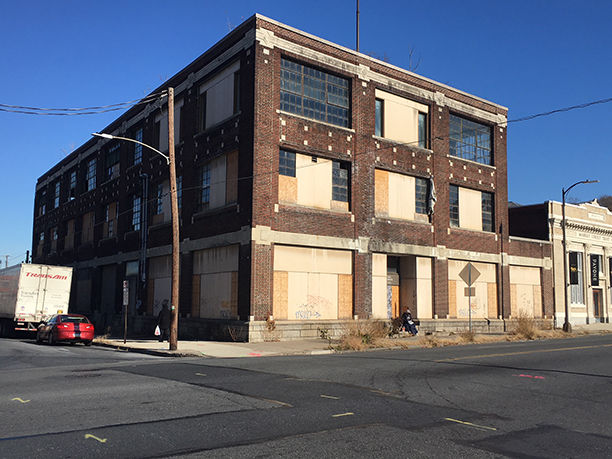
The 101-year-old Schell Seed building in Harrisburg is about to be razed.

Another piece of Harrisburg’s industrial past is set to disappear, as the century-old building at 10th and Market streets will meet the wrecking ball next week.

On Monday, the Pennsylvania Housing Finance Agency (PHFA) plans to begin demolition of the so-called Schell building at 1000 Market St., a long-blighted, vacant industrial structure.

“The building has been deteriorating,” said Brian Hudson, PHFA’s CEO and executive director. “The brick started to deteriorate, and there were health and safety concerns.”

The three-story, 28,000-square-foot building was originally constructed in 1916 as the Standard Baking Co., founded by the Graupner family, whose flagship brewery was located directly across the street. In 1920, it became the Schell Quality Seed Store after Walter S. Schell moved his quickly growing seed distribution and retailing business to that location from farther up Market Street.

The store, which also sold gardening supplies, lasted until 1972, when rains from Tropical Storm Agnes swelled nearby Paxton Creek, flooding the building and destroying the business.

The building later became home to Geiger & Loria court reporting service. After passing through several other owners, Susquehanna Township-based developer Moyer and Williams bought the building in 2007, planning to redevelop it as loft apartments with first-floor retail. PHFA financially backed the project, which never got off the ground, and then bought it out of foreclosure in 2016.

Hudson said that PHFA originally hoped to preserve the building, but that it had deteriorated too much, with trees even sprouting up from the roof. The condition is so bad that it threatens the building next door, an old bank branch now the headquarters of Pavone, an advertising and marketing agency, he said.

Hudson said there is some interest in new construction at the site.

“There are a number of partners interested in developing something on it,” he said.

Hudson declined to name any specific developers or projects but said that it could work as either a residential or office project.

David Morrison, executive director of Historic Harrisburg Association, said several members of the city’s preservationist community had contacted him over the last few days after learning that the building was about to be destroyed.

“It’s always a shame when a building can’t be rescued,” he said. “I wouldn’t say it would be impossible (to save it), but maybe it’s impractical from PHFA’s standpoint.”

The two-block stretch of Market Street between the railroad underpass and Cameron Street was once a thriving industrial and retail corridor. In addition to the brewery and the seed company, it was home to such diverse businesses as the Patriot-News, the city’s central post office, the state’s printing operation and A. Lane used furniture. Today, none survive, and empty buildings and surface parking lots line the corridor.

In 2011, Philadelphia-area developer Adam Meinstein bought the post office site, but that building remains underused. This past June, New York-based Twenty Lake Holdings, a commercial real estate company, purchased the sprawling former Patriot-News site for $644, 286—a fraction its original, 2010 list price of nearly $4 million—but has yet to state its intentions.

About a year ago, PennDOT unveiled concepts for a revitalized Market Street corridor, including the relocation of the city’s main bus depot from Market Square to either the site of the old post office or the Patriot-News building.

Hudson said he hopes that PHFA can assist in that revitalization. To guard against future floods, he envisions a building with parking on the first floor and apartments or offices above.

“We’re going to take a look at what makes the most sense there,” he said. “Our whole issue is to revitalize that area.”

He also said that his agency has the ability to take on projects that other financial institutions avoid.

“We don’t mind being the first ones in,” he said. “We do that all the time.”

Continue Reading