City readies for financial report card as Act 47 deadline nears.

City Council holds its bi-weekly work session tonight in city hall.

“The clock is ticking” on the next step in Harrisburg’s path to financial recovery.

That’s the message that a state official had for Harrisburg’s administration and City Council tonight, as both bodies were briefed on the timeline for the city’s remaining six months in the state’s Act 47 program for distressed municipalities.

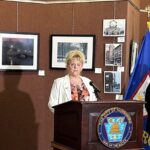
Marita Kelley, Harrisburg’s Act 47 coordinator, appeared at a council work session to explain the city’s duties before Act 47 status expires on Sept. 23.

Here’s what lies ahead, according to Kelley: the mayor and the city clerk will receive a financial condition report, prepared by Kelley and the Pennsylvania Economy League, on March 22. The mayor and council then will have 15 days to review the report and 20 days to schedule a public meeting on its contents.

After that public meeting, which Kelley said would take place around April 11, she and the Pennsylvania Economy League will have 90 days to prepare a final exit plan for the city. In that plan, they’ll make a formal recommendation for what the city should do in September: extend its Act 47 status, exit the program or enter the oversight of a state-appointed receiver.

The exit plan should arrive before city officials in mid-July. After another round of commenting and a public meeting, Kelley will finalize the exit plan in time for the Sept. 23 expiration deadline.

Kelley thinks it’s highly unlikely that Harrisburg will enter receivership in September. She was hesitant to recommend an action to the city tonight, but said during budget meetings in December that Harrisburg will likely to spend another three years in the program, at least.

Kelley reiterated tonight that the city’s fiscal health has improved significantly since it entered Act 47 in 2012, but upcoming capital expenses could preclude it from making a clean exit in September.

“There are some items on the horizon that will be tough for everyone to digest, but the leadership of administration and City Council has been very good under the Strong [financial recovery] Plan,” Kelley said. “I think that bodes well for the city and its ability to manage finances.”

Act 47 helps municipalities balance their budgets by, among other things, granting them enhanced taxing authority. In Harrisburg, that’s translated into a heightened Local Services Tax, which is paid by anyone who works in the city – including more than 30,000 commuters. Harrisburg’s LST tripled from $1 per week to $3 per week in 2016, and Mayor Eric Papenfuse insists that reverting to its former level would cause financial ruin for the city.

During budget talks last year, city officials said that Harrisburg could lose as much as $13 million in revenue if it exited the program in September.

As a result, it’s unlikely that the city can afford to shed its Act 47 designation until Pennsylvania lawmakers amend the state’s antiquated Third Class City Code, which caps tax rates for cities across the commonwealth.

In November, council authorized the hiring of a lobbying firm, Harrisburg-based Maverick Strategies, to help push for legislative change in the statehouse. Papenfuse said then that Harrisburg deserves special taxing authority as the state’s capital city, since it provides services to a large commuter class and cannot collect taxes on state land.

The lobbyists Harrisburg hired could push for amendments to the Third Class City Code or could advocate for the creation of new laws specific to the capital city. Legislative action could provide an alternative to a Home Rule Charter, which would give the city more leeway in setting tax rates.

Continue Reading

Ready to Read: “500 Men” pours into classrooms to read, listen.

Correspondent Ron Claiborne of “Good Morning America” kicked off the annual “500 Men Reading” event today at Camp Curtin Middle School.

“I’m probably a journalist today because of a book I read when I was 6 years old,” said “Good Morning America’s” Ron Claiborne this morning at Camp Curtin Middle School.

That book, he said, was “Freddy and the Bean Home News” from the “Freddy the Pig” series.

Claiborne helped to open the weeklong “500 Men Reading Week and Career Exploration” event, which kicked off today in the Harrisburg area.

The American Literacy Corp, (ALC) has held this event for 17 years. More than 500 men will read and participate in career awareness in 20 schools in four different school districts this week: Harrisburg, West Shore, Susquehanna and Steelton-Highspire.

Local author and ALC founder Floyd Stokes said he began the event “because I love reading to kids, and I figured that others would enjoy it, too.” He also wanted “to expose kids to men who enjoy reading and value education.”

The readers themselves echoed Stokes’ sentiments and expressed a few reasons of their own.

“Law enforcement is more than lockin’ up the bad guys,” said Harrisburg police Sgt. Russell Winder.

As a child, he said, his mother and aunts read him “everything from Dr. Seuss to the Bible.”

Chatting with Winder was Calvin Hynson. Hynson said he began reading for the group in the beginning, when it was the “100 Men Reading Week.” He said he participated “because you love kids and we men need to give back.”

Both Hynson and Winder served in Operation Desert Storm, and they said that today’s event was another way for them to serve the community.

Mayor Eric Papenfuse was also on hand, continuing a decade-long commitment to the event. He planned to read Edgar Allan Poe’s “A Tell-Tale Heart” to middle-schoolers.

“This is one of my favorite events,” he said.

There were some newbie readers in the group, as well. Robert Jenkins said that he was reading for the first time.

“I’m just trying to give back, trying to inspire the youth coming up,” he said. “Trying to do my part.”

“The Cat in the Hat” and other Dr. Seuss books were his favorites growing up, he said.

Like Jenkins, other men were happy to share their favorite childhood reads. For Winder, it was “Oh! The Places You’ll Go!”; for Stokes, “Animal Farm”; for Hynson “Cat in the Hat”; and, for Claiborne, “Charlotte’s Web,” which he’ll read later in the day.

Some young people joined in, too. Austin Assoko and a few of his classmates from Carson Long Military Academy volunteered to read.

“Volunteerism and community service are the things that get me up in the morning,” Assoko said.

What purpose does all this reading serve?

“It’s not just about literacy. It’s about what it can do to prepare you for life,” said Gary D. St. Hilaire, president and CEO of Capital BlueCross and honorary chair of this year’s read.

He added that “Froggy Gets Dressed” was his children’s book of choice, but that reading was as much about time spent together as the books themselves.

Jamar Johnson, co-coordinator of the week, said he began reading for the event in 2009 and that the students “were excited to have me read to them.” Johnson also said that “there were a lack of men in schools and neighborhoods” and this event demonstrated a collective effort to show that men care about today’s children and youth.

Ultimately, “500 Men Reading Week and Career Awareness” wants to encourage a new generation of readers and leaders. Claiborne said.

“A single book, like a single teacher, can change your life,” he said.

Continue Reading

TheBurg Podcast: Bluster Edition

On this week’s episode of TheBurg Podcast, Larry Binda and Lizzy Hardison discuss developments in the city’s never-ending parking saga, new efforts to bring more minorities and women into city contracts, and the administration’s quest to hire a financial advisor.

Stream the latest episode via Soundcloud, or subscribe to TheBurg Podcast in the Apple or Android podcast apps.

Read more about the topics discussed in this show here:

Harrisburg parking system meeting projections, but negotiations on 2018 rates still ongoing.

Harrisburg Council confirms CRW appointments, delays action on financial advisor, downtown parking

No Charge: Could free parking be coming to downtown Harrisburg?

Open for Business: As Harrisburg prepares to spend millions on capital projects, it seeks to re-engage minority and women-owned business.

Continue Reading

Harrisburg parking system meeting projections, but negotiations on 2018 rates still ongoing.

Harrisburg didn’t get its full share of parking revenues in 2017, but it wasn’t because the city’s municipal parking system underperformed as a whole.

Financial statements show that Harrisburg’s parking system generated $25 million in revenue in 2017, falling just $130,000 short of its budgeted projections once taxes were applied.

“The system is healthy,” said John Gass, managing director of bond administration at Trimont Real Estate Advisors, the international firm that manages Harrisburg’s parking assets through its subsidiaries Standard Parking and PK Harris Advisors, LLC.

Though the parking system met its goals for the year, individual revenue categories—such as monthly garage parkers and enforcement revenue—fell slightly short of projections, and some parties, including Harrisburg, are still waiting on funds. An interim operating budget for 2018 calls for increased operating expenses and revenues, even though rates for enforcement, metered and garage parking are being applied at 2017 levels on an interim basis.

Gass said those rates will hold steady “as discussion continues on the 2018 rates for the parking system.”

Revenue from the city’s metered and garage parking spots have fluctuated in the four years since Harrisburg privatized its municipal parking system as part of its financial recovery plan.

Under that agreement, the city erased some of its billion-dollar debt burden by leasing its metered parking and garage assets to Standard Parking, a private company, for $400 million over 40 years. The Pennsylvania Economic Development Financing Authority and Dauphin County helped finance the transaction by acting as bond issuers, effectively assuming liability for the transaction.

Keeping with the annual terms of that transaction, 2017 revenues were split between multiple accounts in a series of so-called “waterfall payments” based on a priority hierarchy. Those accounts include debt service, operating expenses and the capital reserves, which covers repairs and maintenance. Bond holders, the city of Harrisburg, the Pennsylvania Economic Development Financing Authority and Standard Parking (through its asset manager PK Harris and parent company Trimont) also get annual cuts of the parking system proceeds.

In addition, Harrisburg and the Harrisburg Parking Authority took in $2.64 million in 2017 compared to a total due of $3 million, according to Gass. That’s not including the $3.4 million that the city grossed from the parking tax. Gass confirmed that $825,934 of system revenues are being held back from Harrisburg and HPA until different parties agree on the payment of unpaid amounts from prior years.

Since funds were being held back, Gass said, asset managers at Trimont and Standard Parking did not take performance bonuses for 2017. Gass hopes that the parties can resolve their differences in the next few months, at which point the holdback money will be distributed and Harrisburg will get its 2017 due in full.

Both Gass and Bruce Weber, Harrisburg’s finance director, declined to comment on the details of those disputes.

Disagreements over past unpaid balances were one reason that the city’s Parking Advisory Committee did not meet in 2017. According to the terms of the 2013 parking transaction deal, the Advisory Committee must meet at least twice a year to hear public comments about rates and enforcement. Gass expects that the committee will meet again in the first half of 2018, once disputes between stakeholders are resolved.

Trimont usually announces a yearly budget, including any rate or enforcement hikes, at the annual, year-end Advisory Committee meeting. Currently, the parking system is operating under an interim budget, which Gass said increased operating expenses in accordance with the original 2013 transaction agreement.

In order to sustain a higher operating budget, SP also had to increase revenue projections for the year, even though 2017 rates are still being applied.

For instance, SP hopes to rake in $1.5 million from enforcement revenues in 2018, compared to the $1.4 million budgeted and $1.3 million actual revenue in 2017. Gass declined to say if the system would make up the discrepancy by issuing more tickets or increasing ticket rates for the year.

Harrisburg Mayor Eric Papenfuse said that ticket fines are “high enough” at the current rate of $30 per ticket. He also firmly opposes increasing metered parking rates.

“We believe doing so would actually have a negative effect on system revenue,” he said.

Papenfuse thinks that the system needs to cut operating costs and bring in more parkers through initiatives like on-street residential parking plans. He also thinks that discounted specials, such as the proposed deal to eliminate evening meter enforcement in Harrisburg’s downtown business district, could paradoxically result in more revenue.

Earlier this year, officials from Harrisburg, Dauphin County and the Harrisburg Downtown Improvement District reached an agreement to front the costs of parking from 5 to 7 p.m. in much of downtown Harrisburg from Monday to Saturday. The $270,000 annual figure that they settled on would fully cover the meter and enforcement revenues that the system generates downtown during those 12 hours each week.

Papenfuse also thinks that the proposal could drive more people to visit downtown, which could, in turn, increase demand for garage parking once the metered parking supply is depleted.

City council is expected to vote on that proposal at its March 10 legislative session.

Click to view the 4th Quarter 2017 Financial Report and the 2018 Park Harrisburg Interim Budget.


Continue Reading

Harrisburg Treasurer: EZPay service terminated for city bills.

EZPay service, which allowed online payment of municipal bills for Harrisburg residents, has been terminated, according to the city treasurer.

Treasurer Dan Miller said today that EZPay appears to have gone out of business. Therefore, residents will need to pay their bills by mail or at city hall until the city contracts with another online processor. Miller’s full statement is as follows:

The Harrisburg City Treasurer’s office has just been notified today that our online credit provider, EZPay Automated Payment Services, has permanently terminated services as of February 28, 2018. The company appears to have permanently ceased operations. We are currently in the process of searching for another provider. Until further notice we will only be able to accept payments in cash, check or money order. Payments can be mailed, brought to our office or placed in the city drop box. The drop box is located outside of city hall to the right of the rear entrance.

Automatic bill payments are not impacted by EZPay service termination. If you pay city bills by automatic payment they will continue to be paid without interruption. If you would like to enroll in no-fee automatic bill payment you may do so by calling our office at 717-255-3046 or completing the automatic bill payment form found on the City’s website.

Continue Reading

Steel Solution: CREDC buys, plans to clean up old Harsco site.

The entrance to the former Harsco site on Herr Street near Cameron, now owned by CREDC.

At one time, a sprawling steel factory hovered over much of N. Cameron Street in Harrisburg.

The Harrisburg Steel Corp. stretched down about a mile from Herr Street, employing thousands of people but also belching out smoke that shrouded the city in haze on a windless day.

Then, decades ago, as the steel industry died off, so did the factory.

The Capital Region Economic Development Corp. (CREDC) now hopes to bring life back to this forlorn stretch of brownfields hard against the railroad tracks. Last month, it purchased 21.3 acres of industrial land and old buildings from Harsco, the corporate successor to the Harrisburg Steel Corp.

“We bought it at risk,” said CREDC President David Black. “We felt we could handle anything that was on there.”

That “anything” could include a number of toxic agents and contaminants that, over time, seeped into the soil and groundwater.

And, by “at risk,” Black means that CREDC performed a “phase 1” environmental assessment, which typically involves reviewing records and conducting interviews, before making the $505,000 purchase. It now needs to perform a more demanding “phase 2” assessment, which usually means extensive site, soil and water testing.

After testing, the site will need to be cleaned of contaminants before it can be sold to a new buyer.

If any problem areas are identified, CREDC will remediate the site with the help of the commonwealth’s Industrial Sites Reuse Program, Black said.

“This is in our comfort zone,” he said, citing CREDC’s work with the Dura-Bond site in Steelton. “We have a lot of experience doing this.”

Typically, CREDC invests in a property only when it feels confident that the land can be sold after it’s cleaned up. Black confirmed that there is “interest in the site,” but declined to name the interested party.

Not all of the land of the former steel plant site is fallow. Part of the property is now occupied by the World Trade Center Harrisburg, formerly called the Capitol View Commerce Center. The building, at the corner of Cameron and Herr streets, houses several companies, including the major logistics company, Moran Industries.

Notably, the sale marks the end of a significant presence in the city for Harsco, which traces its roots to 1853 with the formation of the Harrisburg Car Manufacturing Co., which produced railcars. The company later went into the pipe manufacturing and steel businesses. Now based in Camp Hill, Harsco is a worldwide, diversified industrial company.

Continue Reading

Weekend Roundup with Sara Bozich

Happy Weekend!

Well, this year escalated quickly. Welcome to March, I guess.

I’m spending much of this weekend working on Harrisburg Beer Week stuff — Yep, it’s that time of year already! You’re going to want to get your tickets for our signature events, stat, because they will sell out. Don’t want to miss anything? Make sure you’re on the email list!

What are you doing this weekend?

(more…)

Continue Reading

Women in Business

Continue Reading

Community Corner: Notable March Events

March Community Corner

Open Houses
March 1-2: Harrisburg Catholic Elementary will host open houses for 2018-19 registration, 9 a.m. to 3 p.m., on March 1 at the Cathedral campus, which houses pre-school and 5th through 8th grades, and March 2 at the Holy Family campus, which houses kindergarten through 4th grade. Visit hbgcathelem.org for more details. 

Diabetes Dining
March 1-31: Penn State Extension will offer a “Dining with Diabetes” class from 12:30 to 3 p.m. at Messiah Village, Mechanicsburg. Classes will be held March 1, 8, 22 and 29, with a follow-up on May 31. Dining with Diabetes is a nationally accredited program for adults with or at risk of developing Type 2 Diabetes. Visit extension.psu.edu.

Winter HBG Flea
March 3: Explore the HBG Flea, 10 a.m. to 4 p.m., at Strawberry Square, 320 Market St., Harrisburg. Shop for local art, handmade gifts and vintage wares. For more details, visit hbgflea.com.

Maple Sugar Festival
March 4: Head to Fort Hunter Park, 5300 N. Front St., Harrisburg, for the Maple Sugar Festival, 12 to 4 p.m. Kids and adults can have hands-on fun with tree tapping, eating real maple syrup on ice cream and shopping for PA maple products. Visit forthunter.org.

Soup Cook-Off
March 4: The AKT Foundation will host the 9th Annual Soup Cook-Off for children with cystic fibrosis. Held from 12 to 4 p.m. at the Radisson Hotel in Camp Hill, the soup cook-off gathers about 40 local chefs, both professional and amateur, to showcase homemade soups, with attendees voting for their favorites. Visit TheSoupCookOff.com for details and tickets.

Red Carpet Evening
March 4: Join Midtown Cinema, 250 Reily St., Harrisburg, to celebrate the best films of 2017. Dress to the nines and gather your best guesses for winners on the big night. The red carpet begins at 7 p.m.; show starts at 8 p.m. Admission of $35 includes themed buffet and beverages. Visit midtowncinema.com for details.

Blood Pressure Screenings
March 5: Stop by the food court pavilion at Harrisburg Mall, 3501 Paxton St., 8:30 to 10:30 a.m., for free blood pressure screenings offered by UPMC Pinnacle. For more information, visit shopharrisburgmall.com.

Decisions 2018
March 5, 19: The World Affairs Council of Harrisburg will host “Great Decisions,” a program on world affairs organized by the Foreign Policy Association. Sessions are held every other Monday at 1 p.m. at Fredricksen Library, 100 N. 19th St., Camp Hill, through May 14. Cost is $10 per session. Visit fredricksenlibrary.org for additional information.

Choreo-Poem
March 8-11: The Capital BlueCross Theatre at Central Penn College, in partnership with The Harrisburg Chapter of The Links, will host “Reclaiming My Time: An American Griot Project,” a staged poetic form production by award-winning central PA poet, performer and professor Maria James-Thiaw. The choreo-poem presents Civil Rights era experiences through the eyes of women and girls who lived it. Visit centralpenn.edu.

Railroad Show
March 10: National Railway Historical Society Harrisburg Chapter will host the 32nd annual Railroad Show & Collectors Market at I.W. Abel Union Hall, 200 Gibson St., Steelton, 9 a.m. to 3 p.m. Donation at the door is $5; kids under 12 are free. Call 717-439-9744 or email [email protected].

Volunteer Work Day 
March 10: Enjoy the outdoors and help with continuing park and habitat enhancement projects at Wildwood Park, 100 Wildwood Way, Harrisburg, 10 a.m. to 1 p.m. Snacks, tools and work gloves will be provided. To reduce plastic usage, bring a water bottle. Refreshments will be available. Visit wildwoodlake.org.

Kids Club Event
March 10: Fit4Mom offers a class for moms with kids in strollers, incorporating the strollers into the workout, at the Harrisburg Mall, 3501 Paxton St. Kids Club events are the second Saturday of each month, 10:30 a.m. to 12:30 p.m. Free admission. All kids and families are welcome to attend. For more details, visit shopharrisburgmall.com.

Handbell Fest
March 10: The 14th Central PA Handbell Festival will be held at Lebanon Area Evangelical Free Church, 600 Shepherd St., Jonestown, 3:30 p.m. Eighteen bell choirs from Pennsylvania and New Jersey will ring under the direction of Dr. Kimberlee Strepka. A good will offering will be received. For details, contact [email protected].

Celtic Bal Masque
March 10: The Art Association of Harrisburg will host its Celtic Ceilidh Bal Basque, 6 p.m. to 10 p.m., at the House of Music, Arts and Culture (HMAC), 1110 N. 3rd St., Harrisburg, with proceeds supporting Art Association exhibits, education and programming. For event details, visit artassocofhbg.com.

Sports Card Show
March 10, 31: Head to Harrisburg Mall, 3501 Paxton St., Harrisburg, for the CC Collectibles Sports Card Show, held during mall open hours. Hundreds of sports cards and collectibles will be available for purchase throughout the lower level of the mall. For more information, visit shopharrisburgmall.com. 

Ducks and Geese
March 11: The Ned Smith Center, 176 Water Company Rd., Millersburg, will host its annual “Ducks and Geese of the Susquehanna River,” 8 a.m. to 1 p.m. Learn about waterfowl and seasonal migration patterns with Scott Bills, retired land management group supervisor at the PA Game Commission. Stay for the annual Waterfowl Watch. Visit nedsmithcenter.org.

Free Community Day
March 11: Hershey Gardens will offer free admission from 9 a.m. to 5 p.m. Browse the gardens, the Milton & Catherine Hershey Conservatory and the indoor butterfly atrium. Between 10 a.m. and 3 p.m., enjoy presentations from local gardening and horticultural organizations. Visit ­­hersheygardens.org.

Book/Movie Event
March 11: Join the Harrisburg Young Professionals book club for a book/movie event from 12 to 3 p.m. at Regal Great Escape, Harrisburg Mall, 3501 Paxton St. This month, the club will enjoy the classic, “A Wrinkle in Time.” Visit hyp.org for more details.

Charter Day
March 11: Celebrate the commonwealth’s 337th birthday with free admission to the State Museum of Pennsylvania, 300 North St., Harrisburg, 12 to 5 p.m. Through March 16, view the original 1681 charter that granted the land of Pennsylvania to William Penn. Visit statemuseumpa.org for details.

Train Talk
March 13: National Railway Historical Society Harrisburg Chapter will host “Reading and Northern in the Anthracite Region,” an illustrated presentation by Oley Taremae at Hoss’s Restaurant, 743 Wertzville Rd., Enola. Business meeting and speaker begin at 7 p.m., with a meal available as early as 5 p.m. Call 717-439-9744 or email [email protected].

GreenCon 2018
March 14: GreenCon, central PA’s annual Green Building Conference & Expo, will be held at Dickinson College, 28 N. College St., Carlisle, 8 a.m. to 6 p.m. Co-hosts of “Sustainability Defined” podcast, Jay Siegel and Scott Breen, will be the keynote speakers. Visit usgbc-centralpa.org for more event details.

Climate Change Talk
March 14: Dr. Robert D. Bullard, known as the “Father on Environmental Justice,” will kick off Temple University Harrisburg’s new speaker series, “Social Justice Innovators: The Value of a Healthy Community,” at Gamut Theatre, 15 N. 4th St., Harrisburg, at 7:30 p.m. Register for this and other programs in the series at Harrisburg.temple.edu/speakers.

U.S.–Iran Talk
March 15: Iranian-born Trita Parsi, president of the National Iranian American Council, will address the hostile relations between the U.S and Iran in a free talk hosted by the Foreign Policy Association of Harrisburg at the Radisson Hotel Harrisburg, Camp Hill, 7:30 p.m.  A dinner precedes the talk. Visit fpa-harrisburg.org.

3rd in The Burg
March 16: Enjoy the best of Harrisburg during 3rd in the Burg, the monthly arts and culture event at galleries, restaurants and art spaces throughout downtown and Midtown. Check out all the action at thirdintheburg.org.

Job Fair & Fitness Fest
March 17: Spend the day at the annual One Stop Shop Job and Resources Fair with Fitness Fest at the Harrisburg Mall, 3501 Paxton St., 11 a.m. to 4 p.m. Visit a variety of vendor tables to get connected with employment opportunities, resources and programs. Free admission. Visit shopharrisburgmall.com for more details.

Soup Cook-Off
March 18: East Shore Area Library, 4501 Ethel St., Harrisburg, will host the 2nd Annual Soup Cook Off, 1 p.m. Bring your soup in a crock pot, visit the tables and sample the soups. Pick a favorite soup and find out who wins. A trophy bowl will be awarded to the winner. This program is for adults. For more details, visit dcls.org.

St. Patrick’s Parade
March 18: The Harrisburg Downtown Improvement District will host this year’s parade, which steps off at 2 p.m. and features pipe and drum bands, marching bands, Irish dance groups and more. For details, visit harrisburgstpatricksday.com.

New Member Social
March 20: Join Harrisburg Young Professionals for its new member social at 6 p.m. at Café 1500, 1500 N. 6th St., Harrisburg. This event is for new and prospective members who would like to learn more about HYP. Please RSVP to attend. A cash bar and full menu will be available. Visit hyp.org.

MLK Speeches
March 20: Kline Library 530 S. 29th St., Harrisburg, will host “Words Have Power: The Speeches of Dr. Martin Luther King, Jr.,” 6:30 p.m. Discuss their meaning and the impact they have on you and on society. This program is for adults. Registration is requested. Visit dcls.org for details.

Women of Excellence 
March 23: YWCA Greater Harrisburg will host the 29th annual “Tribute to Women of Excellence” awards dinner at the Hershey Lodge, 325 University Dr., Hershey, 5:30 to 8:30 p.m. The tribute will honor 33 outstanding women who dedicate time and talent to making a difference in central Pennsylvania. Cost is $100 per seat. Visit ywcahbg.org.

Easter Event
March 24: Enjoy an Easter performance by the Pennsylvania Regional Ballet at Harrisburg Mall, 3501 Paxton St., 12 to 12:30 p.m. Kids can also enjoy crafts, live puppet shows, face painting and photos with the Easter bunny. Visit shopharrisburgmall.com for event details.

Built in the Burg March 28: Harrisburg Young Professionals hosts its bi-monthly “How It’s Built in the Burg” with Jason Webb, founder of Soccer Shots, at the Abbey Bar at Appalachian Brewing Co., 50 N. Cameron St., 6 to 8 p.m. The series is based on the NPR Podcast “How I Built This” about innovators, entrepreneurs and idealists, and the stories behind their companies. Visit hyp.org.

Art in the Wild
March 31: Meet the artists as they finish up their trailside art installations for “Art in the Wild,” Wildwood Park’s annual outdoor art exhibit, on display from April 7 to Oct. 31. From 1 to 3 p.m., take a self-guided, three-mile trail walk to meet the artists and observe the inner workings of creating outdoor art. For more information, visit wildwoodlake.org.

Blue Moon Hike
March 31: Join a park naturalist at Detweiler Park, 1451 Peters Mountain Rd., Dauphin, for a 1.5-mile hike and to enjoy the night sky, 7 to 9 p.m. Learn about moon folklore and look at constellations, stars, planets and possibly shooting stars that may be visible. Bring a blanket and a flashlight. Visit wildwooodlake.org for more details.


Continue Reading

Open for Business: As Harrisburg prepares to spend millions on capital projects, it seeks to re-engage 
with minority and women-owned business.

Employees from Dr. Roof roofing company at residential job sites in Harrisburg. Owner Dean Carter knows that his MBE status could qualify him for many jobs with the city, but says it’s easier for his small business to take private, residential jobs instead. Photo provided by Dean Carter.

When Harrisburg officials broke ground on a vacant parcel on 3rd Street in November, they hailed it as a landmark day for the city.

The Public Works Department and Capital Region Water were finally starting a long-awaited repaving project, which would improve the heavily trafficked artery for a two-mile stretch from downtown to Uptown. It was the first such undertaking on that street since 1999.

But where many saw progress, Councilman Cornelius Johnson saw a problem. The project had a budget of $5.5 million, but less than 5 percent* of the funds were pledged to go to businesses owned by women and minorities.

“3rd Street was an eye-opener,” Johnson said last month. “We have to be able to divide up work to make sure it’s fair and equitable to everybody.”

Since the 3rd Street repaving began, Johnson has forced a conversation among council members and city officials about Harrisburg’s commitment to hiring disadvantaged business enterprises (DBEs)—a recognized business category that includes minority business enterprises (MBEs) and women business enterprises (WBEs). A business can seek MBE or WBE certification if 51 percent of its ownership is controlled by minorities or women, respectively.

Most large cities across the country have policies designed to draw DBEs into public projects. Harrisburg has its own ordinance, passed in 1983, that sets minimum rates for DBE participation in city contracts. The ordinance established reporting procedures for each city department and appointed a DBE coordinator to enforce them. In the decades since it passed, however, Harrisburg’s finances collapsed to the point of near-bankruptcy. The city halted its capital improvement spending, and the systems put in place to track DBE participation 
also deteriorated.

In December, as City Council considered a budget that included $6.5 million in capital improvement projects, Johnson brought the issue back to the fore. He wanted to know how many DBEs partook in city projects as contractors and sub-contractors, and what share they formed of the city’s total vendor base.

As it turns out, answering those questions wasn’t so easy. Due to a lack of data, it’s not clear if the city is in compliance with the rates set forth in its own ordinance. City officials also doubt whether it holds up to current affirmative action law. Marc Woolley, the city’s new business administrator, said he’s in the process of rebuilding the systems that encourage DBE participation.

“I think people have been trying to adhere to the ordinance as written, but it’s been really decentralized,” said Woolley, who started his job in city hall last October. “Right now, I’m trying to get my arms around it and centralize it.”

As the city prepares to spend millions of dollars on capital projects, Woolley thinks it’s imperative that Harrisburg markets itself to local DBEs. But some small business owners say that, without more opportunities for vocational training and professional enrichment, the pipeline might be short.

A Fair Shot
Both Johnson and Woolley know that Harrisburg’s ability to hire more DBEs is constrained by supply in the local labor force.

The city currently maintains a list of certified MBE/WBE vendors, who offer services from welding and bricklaying to architecture and consulting. Though the majority are based in the Harrisburg metro area (including York and Lancaster), a handful hail from Pittsburgh, Philadelphia, New Jersey and Delaware. The roster reveals a tradeoff that might face the city in the short term: Should departments keep their contracts close to home, or award them to certified DBEs that will boost participation rates?

Woolley favors keeping business local. He said that Harrisburg’s years of financial hardship led to some attrition in its business network, but he’s optimistic that the city can reach more DBEs without going far afield. It’s a matter of seeking out local firms, adding them to the city’s Rolodex, and informing them of opportunities for work, he said.

“We know these businesses are out there, but we have to turn on the ‘open for business’ sign,” Woolley said. “We have more lucrative projects coming up, which will increase some interest, and we want to make sure everyone has a fair shot.”
Woolley is currently verifying the DBE status of every vendor that the city has hired in the past three years—a list of more than 400 firms. He hopes to wrap up the “painstaking” process by April, at which point he can update the DBE directory and calculate the city’s participation rate. As Harrisburg taps back into DBE networks, Woolley hopes he will encounter new businesses to add to its directory.

Even so, both Woolley and Johnson know that adding a DBE to a city roster won’t necessarily net them contracts. Public entities are required by law to award a contract to the lowest responsible bidder—the qualified company that proposes the smallest budget for a project. Affirmative action and employment laws constrain a city’s right to give preference to a DBE over another bidder. City Solicitor Neil Grover said that affirmative action hiring policies are under constant evaluation in city halls across the county. Oftentimes, he said, a city won’t know the limits of the law until it finds itself as a defendant in a lawsuit.

“It’s an issue of competing rights,” Grover said. “You may want to give the job to an MBE, but the lowest responsible bidder may say ‘you have to give that to me.’”

If Harrisburg wants to raise DBE participation in public projects, it will also have to work with businesses to make them more competitive bidders, and encourage prime contractors—the large firms that lead major projects—to hire DBEs as service providers. Johnson hopes that process will start on March 7, when the city will host a DBE workshop with Capital Region Water. The free event will brief participants on bidding practices, DBE certification options, and upcoming project opportunities within the city. It will also instruct DBEs how to seek out work as subcontractors.

“We have to make sure we’re developing an environment where all of our clients are mixing and mingling with minority subcontractors, so they know who’s in the game and who does what,” Johnson said. “Then, when it comes time for a project, people are already connected.”

Faster Money
Dean Carter is exactly the type of businessman that Harrisburg wants to hire. He’s an African-American man who has run Dr. Roof, a roofing company in Harrisburg, since 1989. He’s included in Harrisburg’s DBE directory but generally doesn’t advertise his MBE status “unless someone asks.” He knows that what makes him attractive for public projects could preclude him from getting jobs in the private sector.

“Ninety percent of the time, when someone calls me on the phone, they can’t tell if I’m black or white until I get to the job site,” Carter said. “But numerous times, I’ve been in situations where I get to the job, and I can see the apprehension.”

Carter did a roofing job for the city at Hall Manor last year, but doesn’t bid on many public projects. He tends to favor private, residential jobs instead.

“When you’re dealing with a homeowner, you can get going right away,” Carter said. “It’s faster money.”

He contrasted that with his experience at Hall Manor. During that project, he recalled waiting two or three weeks to get his down payment, due to the city’s schedule for cutting checks and allocating grant funds. Carter also explained that public projects can carry risk for small businesses, since firms are always trying to shave their prices to produce the lowest bid. He said that he’s lost money on some bids because he didn’t budget a large enough profit margin.

Since Carter runs the company himself, he also can’t always justify the time and energy required to prepare bids for public projects. He thinks he would bid more often if he had an in-house administrative team to help him prepare the paperwork. He hopes that this month’s DBE workshop will give him insight on how to navigate more public projects and produce professional, competitive bids.

A graduate of now-closed William Penn Technical High School, Carter learned his trade as an apprentice to Bill Jackson, who owned Jackson Roofers and Siding in Harrisburg until his death last year. Carter relies on a small corps of contract employees to help out with jobs, many of whom are in their 50s and 60s. His workforce illustrates another problem that Harrisburg will have to overcome if it wishes to create a pipeline of tradespeople.

“There’s not that many younger people to hire with roofing skills,” Carter said. “These older guys have been doing it a long time, but I’ve learned the skill level is not there with the younger guys. They’re not happy with them.”

Johnson and Woolley both recognize that their efforts to empower DBEs will only succeed if they cultivate the next generation of entrepreneurs and tradespeople through education, guidance and mentorship. Johnson said the city may look to Capital Region Water as an example.

In 2016, CRW launched its diversity business partners program, which aims to diversify CRW’s pool of vendors and encourage women and minorities to enter the trades and start businesses. According to Marc Kurowski, chairman of CRW’s board, this means marketing Harrisburg and the surrounding region as a profitable business climate.

“There’s going to be a lot of money flowing through the city pretty soon,” Kurowski said. “Just from CRW projects alone, if someone wanted to start a business in the city, they could kill it.”

Kurowski was referring to the $315 million in sewer upgrades that CRW has planned for the next two decades, part of an effort to bring the system into compliance with federal environmental standards. It’s one of many large-scale building projects expected to inject jobs and dollars into Harrisburg’s economy in the coming years.

The city is also slated to be the site of new federal courthouse and state Archives buildings. Harrisburg’s own city government plans to spend millions in 2018 renovating Reservoir Park, repairing roofs on fire stations, paving roads, and installing ADA ramps on sidewalks. In the private sector, Harrisburg University has proposed building a $150 million downtown skyscraper.

In short, Harrisburg has a string of promising investments on the horizon. According to Johnson, that makes it even more important for the city to build a diverse business network today.

“We have a lot of money that will be spent locally, and, if we’re not thinking about [DBEs] now, it’ll be business as usual,” Johnson said. “This is an issue where the city can be a leader.”

*City Engineer Wayne Martin pointed out that the 2 percent figure only included contracts that were committed at the start of the project, not potential contracts that were still in negotiation. As a result, the total participation of MBE/WBE businesses could be higher than 2 percent by the time the project is completed. Eight percent of funds disbursed to date have gone to MBE or WBEs, though Martin said that number could drop as the project continue.

Continue Reading