Weekend Roundup with Sara Bozich

Happy Weekend!

Ah, May, the start of summer holidays. This Saturday is both Derby Day AND Cinco de Mayo, so whether you’re sipping on Mint Juleps and betting on the ponies or are face-deep in chips and salsa and margs, you’re set for a good day. (And if the next day is not so nice, read this.)

But FIRST! TONIGHT: SoMa Pop-Up Block Party! We’ve scooted just a bit from S. Third St. to accommodate construction, but you won’t want to miss this great night outside with LIVE MUSIC from Funktion Quintet, beers from Zeroday, Boneshire, and Ever Grain, cold brew from Elementary, and food from our neighbors at Bricco + El Sol. It’s free. BE THERE.

What are you doing this weekend?

(more…)

Continue Reading

Burg Review: Tara Stark–Songs & Community

“Ask, and just about all of those star acts—that weren’t born into wealth/fame—will tell you they started in the DIY scene, doing house shows.”

This is how local singer-songwriter and activist Tara Stark explains the power and wonder of underground music.

In late April, I caught a performance that Stark gave at Harrisburg’s Underground Bike Shop. The venue certainly wasn’t underground in a literal sense. Situated along N. 3rd Street in Midtown, it was a very accessible location, still maintaining a feeling of obscurity and almost a “home-away-from-home” atmosphere.

It was no different inside. Bicycles of various styles, prices and applications were centrally placed on a rack, and there was no shortage of accoutrements and accessories for patrons to window-shop and purchase, if they so desired and could afford.

I arrived at 8 p.m. to see Stark setting up, doing a sound check. After a short, five-minute break, the artist opened with “Some Days,” a jaunty little song that set the tone for how the set would proceed. Full of exuberant strumming and the occasional screaming, it got the entire audience up and moving—a testament to the power of a good song.

The performances weren’t always perfect, more like the DIY punk of the ‘80s or early ‘90s or the “guerilla gigs” somewhat popular in the early 2000s indie scene (in which a band or artist would announce a location and time via social media at random, spontaneous moments).

“When playing live, forget about perfection,” Stark explained. “Learn to love everything that doesn’t go as expected, because the beauty of live performance is that it’s ethereal. No two notes will ring the same, no two rooms will resonate the same, no two crowds will have the same energy, and even on camera, no performance will truly leave that moment. If you do flub, laugh at it.”

As with many original artists, Stark made sure to include tributes to those who have offered inspiration and help. So, I wasn’t too surprised that Stark included a cover of The Killers’ 2004 smash “Mr. Brightside.” But what got me was the personal style. Intriguing rhythmic turns and an almost off-rhythm vocal pattern leant a fresh new groove, reviving a piece of pop that, like Toto’s megahit “Africa,” has become something of an Internet cliché.

But what does Stark feel makes the independent music scene so crucial—not just in Harrisburg, but other places as well?

“First of all, community,” Stark said. “And underground and DIY communities can try new things and push the envelope in ways that the larger, profit-driven musical scene—or ‘the industry’—can’t afford to risk.”

It would be a lie to say that community and those who are a part of it are the only reason anyone makes art. At the end of the day, artists create for themselves, and ultimately, that’s really how their day should begin.

“I’m still playing my music for me,” Stark said. “But it is a hope, and I’m excited to see how just doing my thing could help others find their voice.”

Then Stark said something that, in a way that echoes the sentiments of every creative person, from some kid in Minnesota with a Bandcamp account, to the highest-paid rock musician in the world.

“I want to make something I love and can be proud of. And I hope to inspire folks the way they inspired me.”


Listen to Tara Stark’s music at tarastark.bandcamp.com.

Find Stark on social media: @TaraStarkMusic (Music-only, on all platforms)
or @TheTaraStark (Personal, on all platforms)

Continue Reading

Changes to Sanitation Code, Billing Weighed by Harrisburg Council

Harrisburg’s existing rules governing trash collection may soon get canned.

City Council is considering a new, more comprehensive sanitation ordinance that would usher in stronger enforcement tools and more efficient billing for its trash collection services and lay out clearer rules for city recycling programs, Mayor Eric Papenfuse announced tonight.

It would also waive annual trash fees for the owners of vacant lots and properties, eliminating an intensely unpopular provision of the current ordinance, Papenfuse said.

The revised sanitation code aims to curb the city’s perennial problems of illegal dumping and excessive trash accumulation. It would grant the city stronger enforcement powers by creating two categories of offenses and a new fine structure.

Under the proposed ordinance, serious offenses – including illegal dumping, accumulation of trash exceeding 1,000 pounds, improper waste disposal and failure to register as a private trash hauler – would be considered category 1 violations punishable by a $1,000 fine or up to 90 days in jail.

Category 2 violations are more minor acts that are likely to recur without deterrence, Papenfuse said. These violations, which include failure to bag waste, obstruction of streets and sidewalks or interference with enforcement, would be met with fines starting at $100. Fines would increase up to $500 for each subsequent offense.

The ordinance would also permit the Public Works Department to designate enforcement officers to patrol public streets for violations. It also would authorize police officers to issue citations and enforce the ordinance.

Papenfuse said that the new legislation also would codify the city’s free and mandatory recycling services, including its new glass recycling program.

“This will bring us into the new century in regard to recycling,” Papenfuse said. “We’ve more than tripled recycling in the last few years but very little is laid out in existing code.”

One of the most significant changes in the proposed ordinance is an annual billing structure designed to save money for the city and its residents.

Harrisburg residents currently make monthly payments for trash services. Under the new ordinance, the city treasurer’s office would include trash fees in property tax bills. The separate charges would appear on the same invoice and would be subject to the same due date and discount period.

Residents may opt out of once-yearly billing in favor of monthly direct deposit payments. However, those who pay their trash fees within 60 days of billing would receive a 2-percent discount.

City Treasurer Dan Miller said that streamlined bills would save the city $100,000 in mailing and labor costs each year. He also hopes it will increase the city’s collection rate and improve early-year cash flow.

Miller said that the city has a 98-percent collection rate for its real estate tax, with 70 percent of that revenue coming in during the 60-day discount period.

“We assume trash will be the same, which would increase cash flow and generate more interest for us throughout the year,” he said.

The city will host a series of public meetings to hear input and answer questions about the proposed ordinance. The first will be held on May 16 at 5:30 p.m. at the Public Works building on Paxton Street.

Council tonight also heard from members of the Harrisburg Police Bureau, who are asking for an additional $165,000 to construct a substation on S. 15th Street.

That sum represents a 13-percent increase over the project’s $817,000 budget.

City engineer Wayne Martin said that bids for the project came in above early estimates and insisted that the added cost was “not an unusual” margin for error in publicly bid projects.

Several council members lamented the fact that the project’s timeline has lagged as its costs increased.

“Three years ago, we planned a $300,000 precinct with a turnaround of three to six months,” Councilman Cornelius Johnson said. “Now, it’s more expensive, and it’s only a substation.”

Public Safety Commissioner Thomas Carter said that early plans to retrofit a facility at S. 15th Street became impossible once it was found to be structurally unsound. That structure was razed in December to make way for a new modular building.

Police officials say they don’t have enough manpower to staff a full-time precinct, but they still think a substation would benefit officers and residents. Carter reported that increased police presence in South Allison Hill has helped drive down homicides there this year.

“The cost is what it is, but I know that, since we’ve been concentrating on that area, we have not had homicides,” Carter said.

Continue Reading

School Board can’t un-do action on superintendent contract, solicitor says.

A recent attempt by the Harrisburg school board to reverse action on the superintendent’s contract does not stand under state law, district officials announced today.

Following a judgement from its solicitor, the board must now continue its search for a new superintendent, board president Judd Pittman said this morning.

Sitting superintendent Sybil Knight-Burney may participate in that search process if she wishes to keep her job. Her contract with the district expires on June 30.

Pittman welcomed the solicitor’s decision, saying it offered clarity for a board that has been tensely divided over Knight-Burney’s tenure.

“We need to have a clean break so we can start our search,” Pittman said in an interview last week.

The board voted in March to open a search for a new superintendent, but then rescinded that vote in a surprise action earlier this month.

Board Solicitor Samuel Cooper determined that the attempt to rescind the March vote conflicted with Pennsylvania School Code, which requires boards to take action on superintendent contracts at least 90 days before they expire. Before that deadline, the board must either notify the sitting superintendent that her contract will be renewed for a period of 3-5 years, or that other candidates will be considered for her job.

If the board fails to act before the deadline passes, the superintendent’s contract is automatically renewed for a one-year period.

Some board directors – including Tyrell Spradley, who motioned to rescind the March vote – believed that nullifying the board’s action from March would result in a one-year contract extension for Knight-Burney.

But Cooper’s reading of school code determined that the some of the options before the board were mutually exclusive. When the board chose to act before the 90-day notification deadline, it eliminated the possibility of a one-year contract extension.

However, the decision to launch a superintendent search does not prevent the board from offering Knight-Burney another three to five-year contract. They may do so if she participates in the search process and emerges as the best candidate, or if they decide to abandon the search all together in favor of retaining her for another term.

An expert on school code questioned the board’s rescission vote in an interview last week, offering an interpretation of school code that was consistent with Cooper’s ruling.

“An attempt to rescind that after the deadline has passed is of questionable validity,” said Stuard Knade, chief legal counsel at the Pennsylvania School Board Association. “You can’t un-ring that bell.”

Continue Reading

Full-day kindergarten on the chopping block, tax hikes loom, as Harrisburg District struggles to balance its books.

School Board members at tonight’s budget meeting.

Faced with a structural deficit that threatens to eat its savings by 2020, the Harrisburg School District has proposed cutting back its kindergarten program to half-days indefinitely starting next year.

That’s even if the board authorizes maximum tax hikes over the same time period.

Almost 50 people heard budget projections at a public meeting tonight, where tempers ran high among board members, administrators and Harrisburg residents. Many residents demanded to know why the district’s finances had deteriorated so rapidly, given that administrators had been able to add to the fund balance as recently as 2016, when it reached almost $30 million.

Interim CFO Jim Snell explained that the district’s financial recovery plan had merely deferred difficult decision-making since it was implemented in 2013. The program is set to expire in June, the same month that the school board is required to adopt a final budget for the 2018-19 school year.

Snell explained that the district is facing healthcare and pension costs that are “beyond what they ever imagined.” He cited charter school enrollments and a stagnant real estate tax base as revenue limitations.

The district has not levied a tax hike since 2012, but, this year, administrators are proposing an increase of 1.0008 mills, or 3.6 percent of its current 27.8 millage rate – the maximum rate allowed under the Act 1 Index.

With a median home value of $42,800, the tax hike will cost the average city homeowner an additional $43 a year, said district business manager Bilal Hasan.

Budget projections call for an annual 3.6-percent tax hike every year through 2021.

Even with the additional tax revenue, the district will not be able to pay its employee salaries and benefits without cutting some of its programs.

Since it gutted its staff and academic offerings under its financial recovery plan, the district has very few non-mandatory offerings left to eliminate, Snell said. But Pennsylvania does not require schools to offer full-day kindergarten, making it one of the few areas where the district can cut back.

Reducing kindergarten to half-days would net the district $1.2 million in annual savings and eliminate 14 teaching positions, Hasan said.

Hasan said that no other combination of cost-cutting measures would generate the same amount of savings. Eliminating the entire athletic program would only save $700,000, and Snell said that cutting all other extra-curricular programs would not make up the difference.

Many residents pleaded with the school board and administration to preserve full-day kindergarten.

“The only way we can increase our tax base is by offering the services you want to cut,” said Kia Hansard, a district resident and parent. “How will we get people to move into the city, buy homes and stay if we cut kindergarten?”

Jodi Barksdale, president of the Harrisburg Education Association, said that reducing early learning opportunities put students at a disadvantage for the rest of their educational careers.

“Kindergarten through fourth grade is the foundation of education,” Barksdale said. “If we do not invest all of our efforts into the foundation of our children, we are going to crumble and fall.”

Board members said they would do what they could to keep the kindergarten program intact, but the funding gap before them is significant. Board President Judd Pittman said that district would approach private sources of wealth, such as the Foundation for Enhancing Communities, to appeal for assistance.

Even when combined with maximum tax hikes for the next five years, the proposed cuts are not enough to prevent the district from depleting its fund balance by 2020.

The fund balance stood at $21 million going into the 2017-18 school year. But the district’s expenditures have consistently outpaced its revenues, requiring a yearly drawdown of the general fund to bridge the gap.

Budget discussions will continue at the board’s monthly budget and finance meetings at 5:30 pm on Monday, May 7 and Monday, May 14. The board meets in full on May 21, one month before a final budget is due.


Continue Reading

To Zero: “Vision Zero” aims for no auto-related deaths in Harrisburg.

A past accident at Front and Forster streets in Harrisburg.

Car crashes are falling across Pennsylvania, but they’re on a dramatic rise in Harrisburg.

Vehicle-related fatalities have quadrupled in the city in the last four years, according to PennDOT data, rising from two deaths in 2013 to eight deaths in 2017.

City officials say enough is enough. Harrisburg is adopting a new vehicle safety policy, “Vision Zero,” which aims to eliminate vehicle-related deaths within the next decade, city Engineer Wayne Martin said today.

The city is also undertaking a rapid-response study to improve transportation safety on State Street, the site of five pedestrian deaths in the past 17 months.

Martin couldn’t say what’s caused the rash of pedestrian deaths in Harrisburg, but he hopes the Vision Zero plan will help the city find an answer. He cited reporting from PennLive and TheBurg as an impetus for the city’s new scrutiny on its vehicle safety policies.

“We really have to figure out what’s going on,” Martin said. “The stats are really bad for Harrisburg.”

The Vision Zero policy, which has been adopted by such cities as Bethlehem and Philadelphia, represents a data-driven approach to curtailing vehicle accidents and improving pedestrian and cyclist safety. Harrisburg’s plan will consist of a public outreach and data-gathering period to determine hot spots for crashes and potential danger zones.

Martin said that the city has isolated patches of data from traffic studies. This more ambitious data-gathering project will help the city compile a comprehensive profile of its roadways and traffic patterns, he said.

Project leaders will combine data from official sources, such as hospitals and PennDOT, with input from residents. Martin said that the city needs citizens to report areas with reckless driving to help identify potential danger zones.

“Near-misses and reckless driving are things that don’t show up in police reports,” Martin said. “Lots of municipalities have outreach efforts where residents can record risky behavior.”

The data collected over the next four months will lead to official recommendations and, eventually, to changes in city infrastructure and policy, Martin said. He expects public outreach to take place at every step of the way.

“Nothing will be implemented without community input,” said city Communications Director Joyce Davis.” “There will be outreach and meetings, lots of opportunities for people to dialogue and discuss this.”

Those changes could include adjustments to the size of traffic lanes or the addition of bike lanes or transit lanes on busy thoroughfares.

Martin couldn’t comment on potential changes to police enforcement under the Vision Zero plan. He noted that the Police Bureau is perennially short-staffed and that the city could qualify for grants to fund additional police presence on dangerous roadways.

City officials are finalizing a $335,000 contract with McNees Wallace & Nurick to implement the Vision Zero plan and undertake the State Street study. The budget includes a $94,000 public outreach component that will be conducted by Eluminat, a Washington, D.C.-based firm.

The funds for the project will come from the city’s general fund, Martin said.

Continue Reading

2018 Midstate Table

2018 Midstate Table

Continue Reading

In the Year 2050, 2050: Predictions, progress and unintended consequences.

Illustration by Rich Hauck.

From her perch at Zeroday Brewing Co., a friend recently texted me with a question about Harrisburg’s parking system.

A fellow barstool-sitter wanted to know how long Harrisburg’s lease ran with Standard Parking. So, naturally, she texted me.

“Is it 75 years?” she wrote.

“No,” I responded back. “Forty years. Thirty-six more to go.”

Afterwards, I began to think about the passage of time, how I may or may not be walking the Earth by the time the agreement expires (conclusion: probably not). Then I pondered Harrisburg itself, how it might be different by then.

Predicting the future may be a fool’s game, but this fool is game, if only because I’m fascinated by the changes in this city, current and planned. In addition, I believe that Harrisburg has entered a new phase in its story, the fourth in my estimation (the prior ones being pre-industrial, industrial and post-industrial).

I’m not certain exactly what we’ll call this new era, but I expect it will be driven by Harrisburg’s strong advantages (old, dense housing stock, walkability, beautiful setting, superb location), along with and facilitated by, a heavy dose of technology.


Parking will fade as an issue (in a way).

There’s a huge problem with a 40-year deal, and that problem is, whether or not you even realize it, you’re making a bet on the future. You’re gambling that the conditions on the ground at the time of the agreement will remain substantially unchanged throughout it. But will they?

My guess is that, with the parking deal, they will change. In fact, just four years in, we’re already seeing possible problems that were not evident in 2014.

The agreement rested on the reasonable assumption that demand for parking would remain the same or even increase over time. But that’s probably wrong.

No, I haven’t turned into a Harrisburg hater, one of the legions of trolls who seem to delight in (and exaggerate) every problem the city has. In fact, over the long turn, I’m bullish on both business in and visitors to the downtown.

However, I’m not bullish on the use of private automobiles.

I live downtown, so walk almost everywhere anyway. But, when I meet up with a friend who lives Uptown or outside the city—even as near as Midtown—they take Uber downtown, whereas, until recently, they all were driving and paying for parking. If, five or 10 years down the road, driverless cars become common, this trend will only accelerate.

So, my prediction—more people downtown, but fewer cars. This will be great for downtown businesses, but potentially disastrous for the parking deal.


Harrisburg’s population will increase substantially

Do I hear 5,000, 10,000, 20,000 more people?

In recent years, Harrisburg’s population has stabilized, which may be the first step in reversing decades of decline. This isn’t wishful thinking, but the result of simply seeing what’s happening around me.

Ten years ago, the city’s streets seemed empty, the sidewalks even more so, and downtown and Midtown were thick with once-grand buildings that had fallen to ruin. Change has come in a short timeframe. Many blighted buildings have been put back into productive use, and street life is returning.

The future seems even more promising. Over the just the past few months, Harrisburg University announced a mixed-used high rise, the new federal courthouse received funding and the first new house was sold at MulDer Square, to name just a few projects. There are now ambitious proposals for Paxton Creek, the train station area, Market Square and 2nd Street, which could revitalize entire swaths of the city.

Despite this progress, much of Harrisburg remains in poor shape, with empty lots, underused buildings and not enough people.

The upside here is that there’s great opportunity for infill and expansion. Harrisburg easily can accommodate tens of thousands more people, as long as the demand exists for that housing.

To accomplish this, though, the city will need to reach some type of psychic comfort with development and growth. Outsiders and investment should be welcomed, not treated with disdain.


The city/suburb, east shore/west shore split will ease.

Years ago, when I lived in Washington, D.C., the Potomac River divided that city and its suburbs much like the Susquehanna River does here today. Suburbanites claimed they were afraid to come into D.C. less they be mugged or worse, and early Internet bulletin boards were full of the same racist nonsense and fearmongering that you often see today in the PennLive comment section.

In Washington, much of that has faded. Today, there is far more fluid movement between city and suburb, with the entire area more comfortable in identifying itself as a unified region. Finally, the “National Capital Area” has, indeed, become exactly that.

But what about Pennsylvania’s capital region? As Harrisburg continues to redevelop, I believe that greater unity will be found here, too. The city once again will be regarded as the center of an integrated urban area, not as the hole in the doughnut.


Harrisburg has a destiny to fulfill. Someday, it will take its place as a gem of a small city perfectly situated on a grand river. It will just take some time, patience, capital and the good will, mutual support and understanding of well-intentioned people.

Lawrance Binda is editor-in-chief of TheBurg.

Continue Reading

No Small Plans: Club XL supersizes Harrisburg nightlife.

The people mingled and gathered, the lights flashed on, the band took the stage.

It was go time at Club XL.

Harrisburg’s newest entertainment venue opened last month to a crowded house, which is saying something given the sheer size of the place.

Let’s just say that, at Club XL, nothing is small.

Big space, big patio, big stage, big bars, huge screens.

That’s the grand vision of owner Phil Dobson, who opened the 18,500-square-foot club and music venue in an old, 1940s-era warehouse near S. Cameron and Hanna streets in Harrisburg.

“Everything is big, hence the XL,” Dobson said.

The club is the latest piece of Dobson’s redevelopment puzzle for this once-industrial and later forsaken area. Across one street, he opened Savannah’s on Hanna in 2009 and, across another street, River City Blues Club and Dart Room in 2014.

Dobson has owned the Club XL building for about eight years, buying it without a solid plan, but with the thought that he wanted to control the small, several-block area just off I-83, gradually transforming it into a nightlife destination.

Now those plans are firm, and they are of the extra-large variety.

Walking in, a reception area leads to an enormous dance floor with one of the largest stages in Harrisburg, the ceiling outfitted with an industrial lighting system.

“I went all out with the lighting and the sound to give a true nightclub experience,” he said, adding that he’s gone as far as to install Co2 cannons. “When you’re here, it’s all sensory appeal. This brings it to a higher level.”

A 24-tap bar winds around the entire back and leads to a long room on the side, which features a concession area for food orders, with tables. Six giant screens grace the walls, capped off by a 200-inch behemoth. Upstairs, there’s a VIP area, with bottle service available, and, outside, a large bar and patio built around a 200-year-old sycamore tree.

Dobson said that he was inspired by Las Vegas clubs and wanted to bring that type of big-city nightlife to Harrisburg. To that end, he features big dance parties on Friday nights, but it won’t all be DJs.

Dobson also is booking live music for touring bands that need a mid-sized venue that can hold about 1,200 people. The alt-rock lineup of Puddle of Mudd, Saving Abel and Tantric came to town for the debut concert last month. Local bands also will be featured, and Smooth Like Clyde and Honeypump played for Club XL’s soft opening the night before.

This month, the venue will feature performances by Tyler Bryant & the Shakedown, among other bands. It also will host several tribute bands, including In Gratitude (Earth, Wind & Fire), Back in Black (AC/DC) and Bark at the Moon (Ozzy Osbourne).

Club XL also will host sports, comedy and other events that can use a large open space, a stage, lights, giant screens and other amenities, Dobson said.

“When people come here, I want them to be wowed,” he said. “I want to give them so many options that it’ll be an experience.”

Club XL is located at 801 S. 10th St., Harrisburg. For more information, call 717-409-8975, email [email protected] or visit www.xlhbg.com.

Continue Reading

The New Urban Guardians: How ordinary people played a role in the great crime decline.

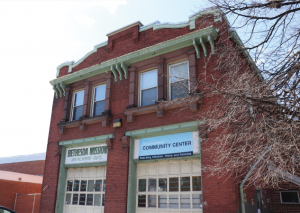
The Bethesda Mission Youth center has provided after school tutoring and other enrichment activities for children and teens since 1990. They’ll soon expand to another building to double their 75-student enrollment capacity.

On Dec. 28, 1990, in the final days of one of the most violent years in the 20th century, the Harrisburg Patriot-News ran an editorial mourning the American city. “Urban life in America is in the throes of a social meltdown,” it read. “The symptoms of decay are everywhere. Violence has become an epidemic, and many major cities will set record rates of homicides this year.”

The image of an urban dystopia proliferated in the 1980s and 1990s, as American cities—abandoned by manufacturers, forgotten by policymakers and besieged by poverty—battled unprecedented levels of violent crime.

At the turn of the 21st century, though, almost as quickly as crime rose, it began to fall. Violent crime has plummeted in almost every American city since 1990, with some cities, including Harrisburg, cutting their violent crime rates almost in half. Harrisburg recorded a violent crime rate of 2,191 incidences per 100,000 people in 1990; in 2014, it had fallen to 1,113. With the exception of homicides, almost every category of violent crime—robbery, burglary, assault, property crimes and motor vehicle thefts—has fallen by a similar magnitude.

But why? Mayors, police chiefs and other students of crime data can say with certainty that cities have gotten safer since the great crime wave of the 1980s and 1990s. How it happened is a subject of more intense debate. Increased policing, prosecution and incarceration have contributed at least partially to the decline in crime. Researchers have pointed to other, non-intuitive societal shifts that could have curbed violent behavior, including increased access to abortion and decreased exposure to lead, and changes in the economy.

Patrick Sharkey, a sociologist and crime researcher at New York University, acknowledges these influences but also offers a more encouraging, hopeful thesis for why urban spaces have gotten safer. As the criminal justice system expanded and became more punitive, Sharkey says, another force began to coalesce in America’s parks, streets and neighborhood centers. The people responsible weren’t police officers or prosecutors, but ordinary residents.

In his latest book, “Uneasy Peace,” Sharkey calls these people the “new urban guardians.” He says that local nonprofit groups successfully fought crime by building playgrounds, opening youth centers, organizing neighborhood watch groups and picking up trash. As they slowly reclaimed their neighborhoods, working long hours with little to no pay or recognition, these citizens made a crucial, but often overlooked, contribution to safety in American cities.

“The changes that took place weren’t just about the expansion of the prison system and the increasing aggressiveness of police,” Sharkey said during a recent conversation at Midtown Scholar Bookstore, where reporters interviewed him about his research. “It was also a mobilization among the residents and organizations in the communities hit hardest by violence. That has been completely left out of discussions about why violence fell, but I think it’s a crucial part that deserves much greater credit.”

Sharkey explained that, since the 1990s, the nonprofit sector exploded as residents in neighborhoods mobilized against violence. New groups focusing on youth mentorship and neighborhood enrichment proliferated. This trend was partly a direct response to rising crime rates, but was also enabled by a separate expansion in private, philanthropic wealth, possibly due to strong gains in the national economy in the 1980s.

With the help of a research assistant, Sharkey tried to quantify the effects of neighborhood nonprofits on crime reduction. Drawing on data from the National Center for Charitable Statistics, the pair determined that, in a given city with 100,000 people, every new organization formed to confront violence or build stronger neighborhoods led to about a 1-percent drop in violent crime.

“These organizations were designed to take back city streets, not through law enforcement but by building stronger communities, and they were extremely effective,” Sharkey said.

Someone to Trust
As Emily Badger writes in the New York Times, Sharkey’s findings validate what community leaders across the country know to be true about the relationship between neighborhood development and violent crime. While many of the active nonprofit organizations in Harrisburg aren’t explicitly involved in violence prevention, their leaders recognize that, by providing essential services to their community—including mentorship, education and beautification—they’ve become participants in the fight against crime.

“Nurturing relationships and building community is an absolute prerequisite to keep violence from occurring,” said Scott Dunwoody, executive director of Bethesda Mission. “We’re reaching out into the community one man, woman and child at a time.”

Founded in 1914 as a men’s ministry and homeless shelter, Bethesda Mission began to expand its programs in Harrisburg at the same time as crime rates climbed. In 1983, it opened a women and children’s shelter on S. 18th Street; in 1990, it started a youth center in an old fire station on Herr Street. Whereas its shelters offer residential programs, Bethesda Mission’s youth center bleeds into the community surrounding it. Today, more than 75 kids from the 1st through 12th grades attend programs there after school, on weekends and throughout the summer. Volunteers help students with homework, teach cooking classes and supervise sessions in the gym or computer lab. These services are so in demand that Bethesda Mission has made plans to expand its youth center into an adjacent building next year, which will allow it to double its programming capacity.

Both Dunwoody and Serina Brown, director of the Youth Center, say they’re in the business of building relationships and strengthening families, not policing the behavior of kids and their parents. But Brown said she wasn’t surprised to hear about the causal relationship between community nonprofits and violent crime rates. While tutoring sessions and leadership classes may not look like violence prevention techniques, they do offer kids attractive alternatives to criminal activity.

“When you’re with someone through the good and the bad in life, it would make sense that it would prevent crimes because you have someone to trust,” Brown said. “Imagine if every family in the city had that.”

When asked how the center measures its efficacy, Dunwoody cites a fact about graduation rates. Over the course of five years, 86 percent of the students who participated in Bethesda Mission’s youth programs graduated from high school—much higher than the city’s district-wide rate of 55 percent. He also points to the North Allison Hill neighborhood where the center is located. Quiet, leafy and well maintained, North Allison Hill has less visible blight and fewer incidences of violent crime than the South Allison Hill neighborhood close by.

“We don’t want to brag and say we’re the reason why this neighborhood is stable, but we are a big part of it,” Dunwoody said. “Centers like this can have an immense role in giving life to a community. It’s the heartbeat.”

Common Sense

Some neighborhoods have anchoring institutions and physical spaces like the Bethesda Mission Youth Center where residents can meet and build relationships. Others have anchoring organizations for citizens to address their shared challenges. These groups, many of which rely on volunteers, are responsible for countless cosmetic and institutional enhancements across Harrisburg.

In 2008, residents in Camp Curtin formed Camp Curtin Neighbors United to address problems of blight and trash, crime and economic development in their Uptown neighborhood. The all-volunteer organization held beautification days, mapped blighted buildings and drafted a strategic plan to outline short-term and long-term neighborhood objectives. They opened a tool co-op on the grounds of Wesley Union AME Zion Church and later started a grant-funded pre-school in the church’s basement. It currently employs two teachers who care for 15 children five days a week.

Jean Cutler, a founding member and former president of CCNU, said that the neighborhood organization has become an organized, effective forum for citizens to voice their needs and find recourse. By investing in education and beautifying the neighborhood through tree plantings and trash cleanups, Cutler and the other members of CCNU hope that Camp Curtin will shed its reputation as one of Harrisburg’s most distressed, crime-ridden neighborhoods.

“Making the environment around you better is a huge part of trying to stop the crime,” Cutler said. “People will be more respectful of the neighborhood, and we will have lower tolerance for outliers. I’m not a criminologist, but most of this is common sense.”

According to Sharkey, that’s sound logic. He explained that having more eyes and ears in public spaces reduces the opportunities for criminal activity and signals to would-be criminals that a neighborhood isn’t theirs for the taking. Essentially, residents must respond to crime the same way they might regard at an unsightly building project or waste site: by saying, “Not in my back yard.”

“Violence doesn’t come out of nowhere; it comes when a place is abandoned,” Sharkey said. “It comes when a place empties out, when there are not strong institutions, when the community isn’t organized, and it’s left on its own.”

Just ask Jeannine and Jeremy Domenico, who literally have eyes on the street from their residence in South Allison Hill. The Domenicos moved into their rowhome on South Summit Street, a narrow one-way that connects the busy thoroughfares of Derry and Mulberry streets, just before Christmas 2013. When they first bought their home, Jeremy (who goes by Jay) wouldn’t let the couple sit in the living room that looks out onto the street. They watched TV and took visitors in another room on the first floor, which was set back from the main entranceway, closer to the backyard. That way, Jay said, any stray bullets would travel farther to hit them.

“There were gunshots every night,” he said. “Our main concern was drive-bys, and we figured, if we were in the back room, there would be four walls for bullets to go through.”

The Domenicos may not have landed in a neighborhood of choice in 2013, but the neighborhood was theirs—and they wanted people to know they were there to stay. By their account, they spent the better part of the next year trying to build a community. They hosted their first block party, which is now an annual event. They led trash cleanups and gained local fame for the elaborate decorations they put on their doors for every holiday – as well as for the four security cameras that keep watch over the front of the street and the alley behind their home.

Over time, they say, the space around them transformed. They no longer had to lead trash pickups—neighbors were doing it themselves. Gunshots sounded less frequently, and drug dealing no longer took place on their street. Cars still speed down the street the wrong way, but the activity that drove them inside their homes has dramatically fallen.

“It’s easy to go inside and shut your door when you see bad behavior,” Jay said. “It seems like, if you live in a bad area, you get terrorized into staying in your house. But, when we’re outside working, we messed up people’s game plans.”

Repaying a Debt

The idea that social cohesion can inoculate neighborhoods against crime isn’t lost on law enforcement officials.

Capt. Gabriel Olivera, chief information officer for the Harrisburg Police Bureau, said that line of thinking is “absolutely” consistent with trends he’s seen in the city over the past two decades. He pointed to Harrisburg’s Midtown neighborhood as one example. In the 1990s and early 2000s, he said, the intersection of Green and Muench streets was known among police officers as “Green and Murder.” Over time, as residents bought homes, beautified streets and formed a neighborhood watch association, the police bureau received fewer calls to the area.

The progress that’s been made against urban crime has relied, in part, on vast amounts of unpaid labor by volunteer residents. If crime across the country is going to continue its downward trajectory, Sharkey said, the people who fight it at every level ought to be compensated.

“The people who volunteer time to make communities safe are doing work on behalf of their city,” Sharkey said. “When they’re given respect and that role is valued, it makes a huge difference.”

Mayor Eric Papenfuse said that he finds that argument compelling, and paying the work of community organizers is something that the city can consider in the future.

“It’s an intriguing concept, and one that warrants thoughtful consideration,” he said. “There are some serious questions surrounding implementation, but I’m willing to explore them and possibly put forth some funding in next year’s budget.”

But not all of Harrisburg’s urban guardians agree that they should be paid for their work.

Claude Phipps, a community organizer who lives in Bellevue Park, has seen local institutions wax and wane in Harrisburg his whole life. Growing up at 6th and Peffer streets, he watched the city reel from the devastation of Hurricane Agnes in 1972 and from financial hardship that followed. He reckons that the city hit “rock bottom” in the early 2000s and made a turn for the better in 2010.

Today, Phipps said he’s happy to volunteer his time as a neighborhood watch coordinator and conflict mediator. He sees it as “repaying a debt” to the long-ago neighbors who guarded over him as a child.

Cutler, the Camp Curtin advocate, said that citizens ought to have “sweat equity” in their neighborhoods.

“When you fund salaries, there’s no money left for projects,” she said. “There needs to be some volunteerism, because, bottom line, you’ll need money to do these projects.”

I posed the question of pay to a coalition of faith-based community leaders, who were meeting in the chilly basement of Derry Street United Methodist Church to plan a summer camp for children. They stressed that the diminishing funds in a crowded nonprofit sector made it hard to ensure programming year to year.

Bill Jamison, a leader of the Allison Hill Ministry, which provides after-school mentoring, outdoor education and field trips for students, said that he earns $17,000 a year while working 60 hours a week. Some years, his program receives more funding; other years, it gets less. He wouldn’t object to more funding for his volunteers, but he also knows his work is too essential to cease over money disputes.

“If we take these services away, that’s where crime comes from,” Jamison said.

But Nashon Walker, CEO of Hoodrise Global, a mentorship program that works in Harrisburg city schools, thinks that community leaders and mentors should demand more pay for their work.

“Inner-city outreach has been underfunded and undervalued,” Walker said. “I don’t have a poverty mentality.”

Walker also pointed to an irony that has led politicians and researchers across the political spectrum to call for criminal justice reform. America’s incarceration spree, effective though it may have been in curbing criminal activity, has borne immense social and economic costs.

“This country pays billions to incarcerate,” Walker said. “Why can’t we pay now to set people free?”

When presenting his research, Sharkey is careful to note that America’s progress against crime is tenuous. Many cities across the country are seeing upticks in violent crime after years of decline. This crossroads, he said, should force American lawmakers to trade in the country’s punitive criminal justice policies for programs that focus on reinvestment and economic development in cities. The good news is that these programs could look a lot like what is already in place in cities like Harrisburg, where neighborhoods self-police by tending to their public spaces, their children and their shared social bonds.

“This is how violence is confronted in a sustainable way without the collateral costs of locking up half the community’s population,” Sharkey said. “It’s an alternative model, and it should be the model.”


Continue Reading